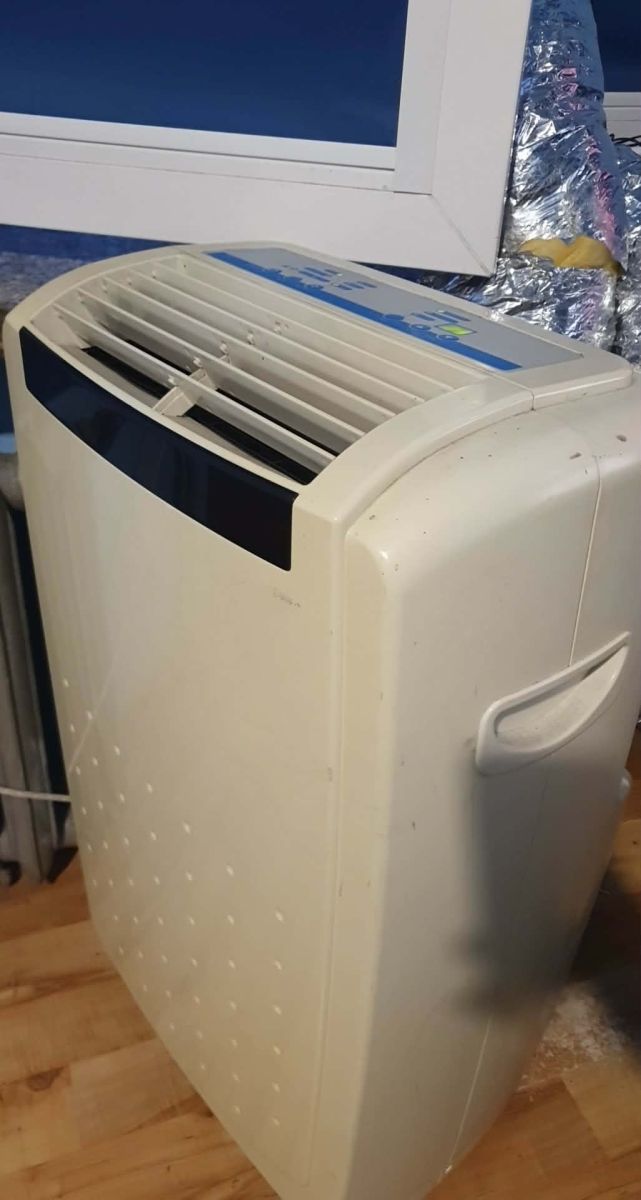




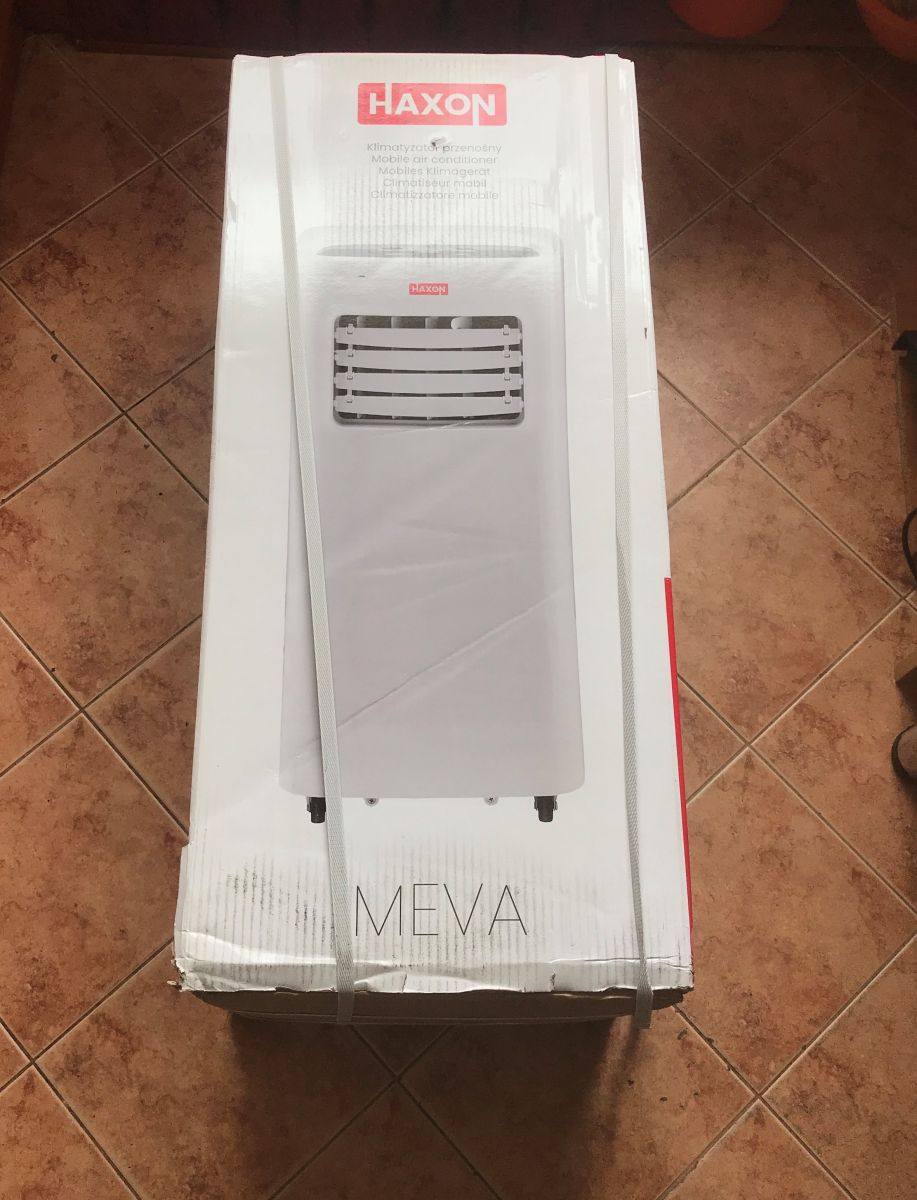
Here, I will share my three years’ experience and conclusions regarding the use of the HAXON MEVA 2.34 kW portable air conditioner. It is designed for use in rooms with an area of up to 25m² and has a single exhaust pipe for expelling hot air. The window sealing sleeve itself must, of course, be purchased separately. Here, I will test its performance and cost-effectiveness, and show the results using thermal imaging.
Reason for purchase
Portable air conditioners are, by their very nature, not particularly efficient, and the noise significantly reduces user comfort. Unfortunately, however, living conditions sometimes force one to make such a decision. When there is no option for a fixed installation, one has to make do with simpler and cheaper solutions. I paid just under 1,000 zł for the unit shown here.
First impressions
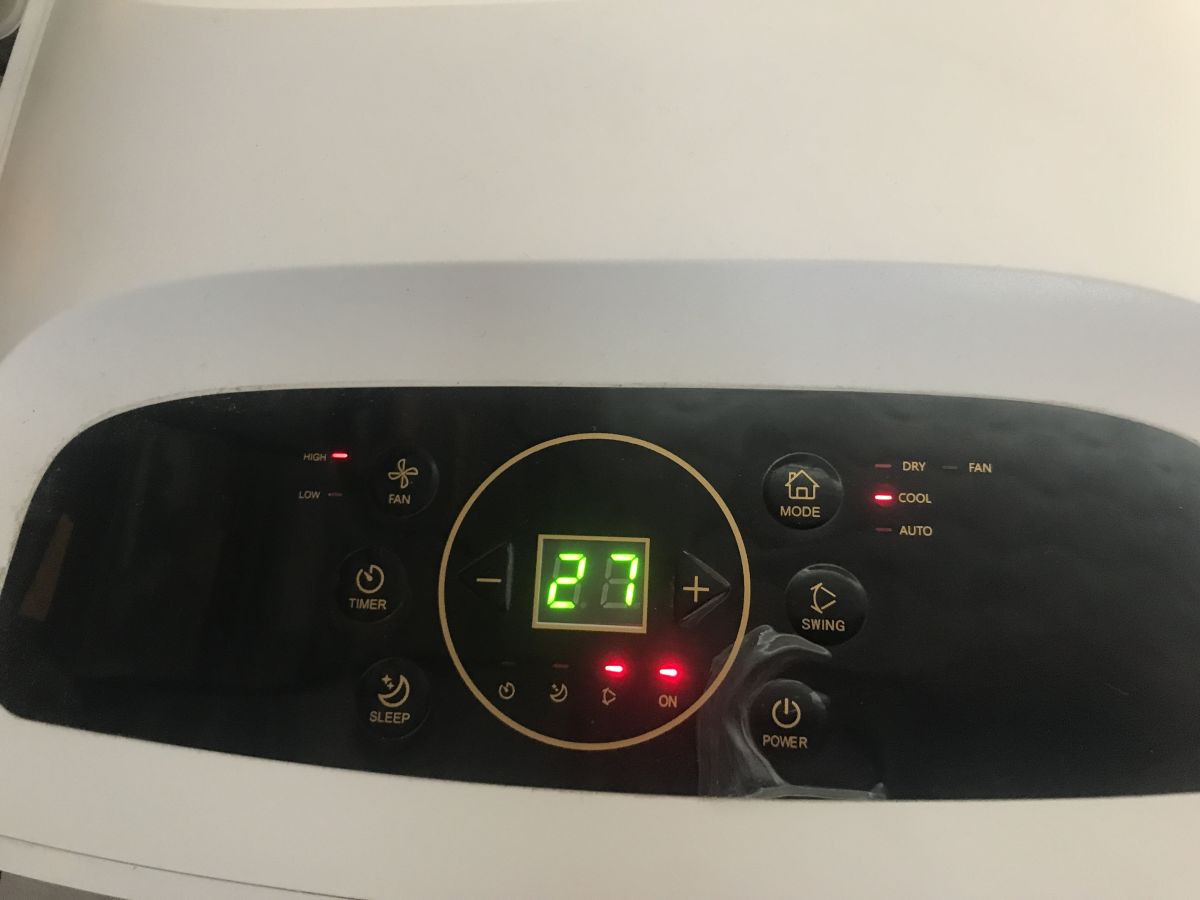
The unit itself is large and heavy. The set includes a remote control, and the control panel features a simple display and several options, including two operating levels, an additional ‘silent’ mode, and cooling, dehumidifying and fan modes. However, after cycling through the available modes, you quickly realise that the noise level is similar across all settings, and the ‘Night’ button is really just for show.
Installation
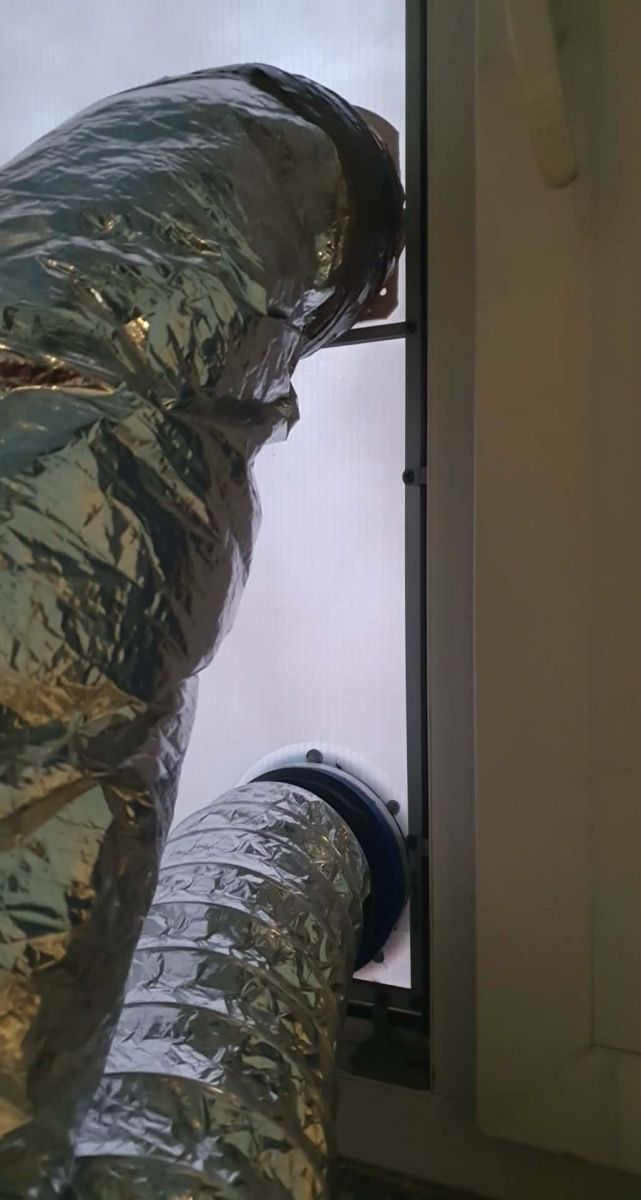
This device can be installed completely non-invasively. All you need is a sleeve that fits over the window. You can buy it for less than 100 zł. The catch, however, is that the poorer the insulation, the poorer the cooling performance. This brings us back to the same point I mentioned at the start – we pay for mobility with a loss of efficiency.

Performance and operation
The device displays the current temperature on the top front panel, and you can also set the target temperature there. However, I find this a pointless gimmick. I’ve never been in a situation where using this made sense during a heatwave, and I always cool the room down to an unattainable 15°C. What’s more, I don’t even see the temperature on the display dropping significantly after cooling.
Another issue here is air circulation. Nothing is lost in nature, so since the portable air conditioner has one pipe through which it expels air, it must draw in a fresh supply of air into the room from the other side. This creates a vacuum and draws in warm air from outside (e.g. through draughts and doors), which unfortunately noticeably reduces the actual cooling efficiency. Dual-pipe air conditioners are the solution to this problem. You can also easily find online guides on how to add a second pipe yourself, but I haven’t tested this myself.
Brief measurements
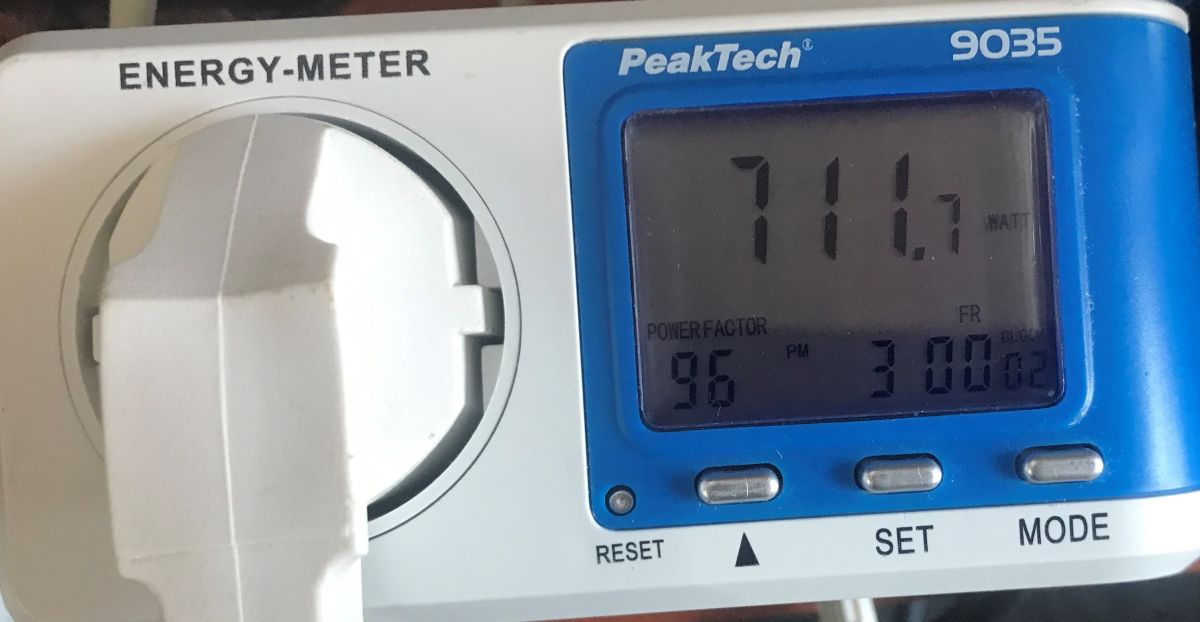
For the tests, I used a standard plug-in energy meter and an InfiRay P2 PRO thermal imaging camera with a resolution of 256×192. The first thing I checked was how much power was drawn from the mains in different operating modes. Fan mode draws around 100 W, whilst Cooling costs us around 700–750 W, regardless of the selected setting or night mode – the differences are in the region of 20–30 W; on ‘Low’, the noise is indeed slightly lower.
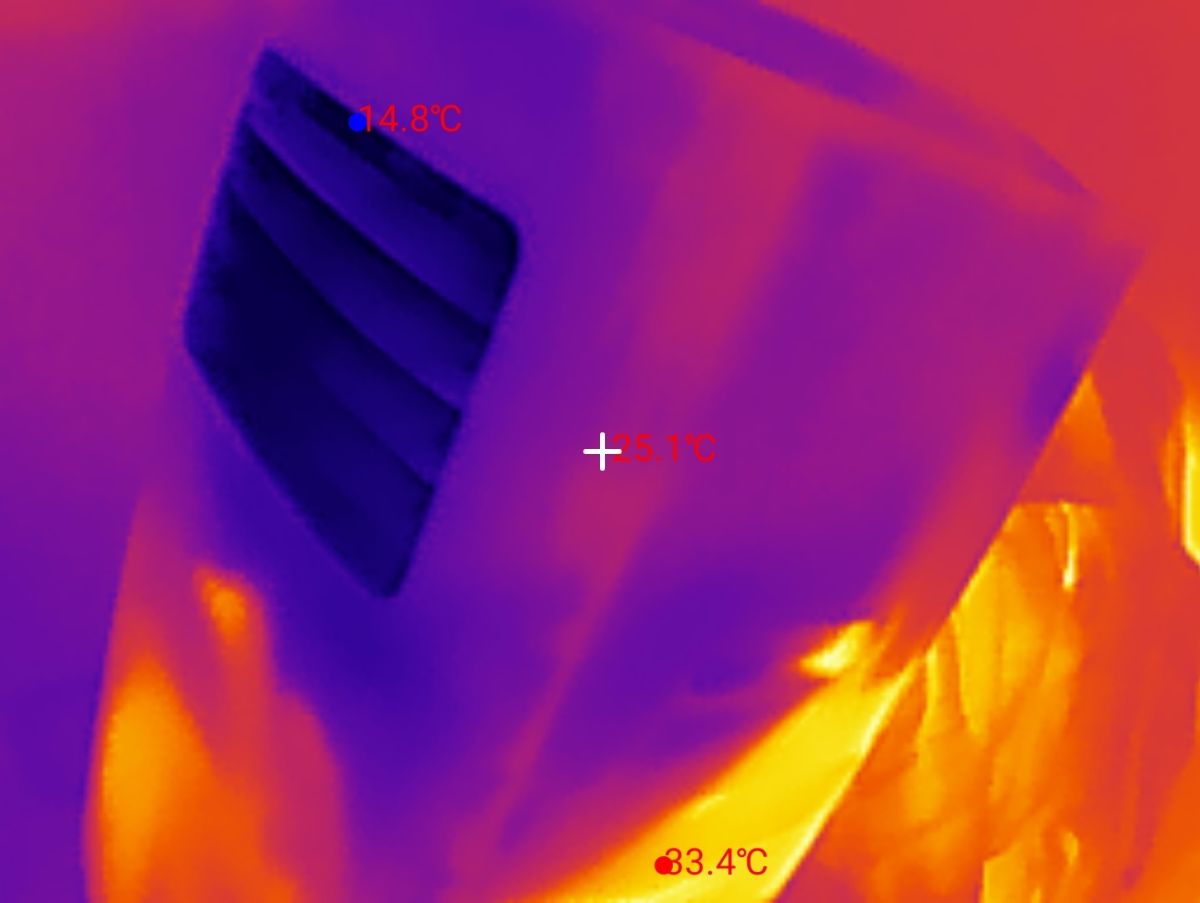
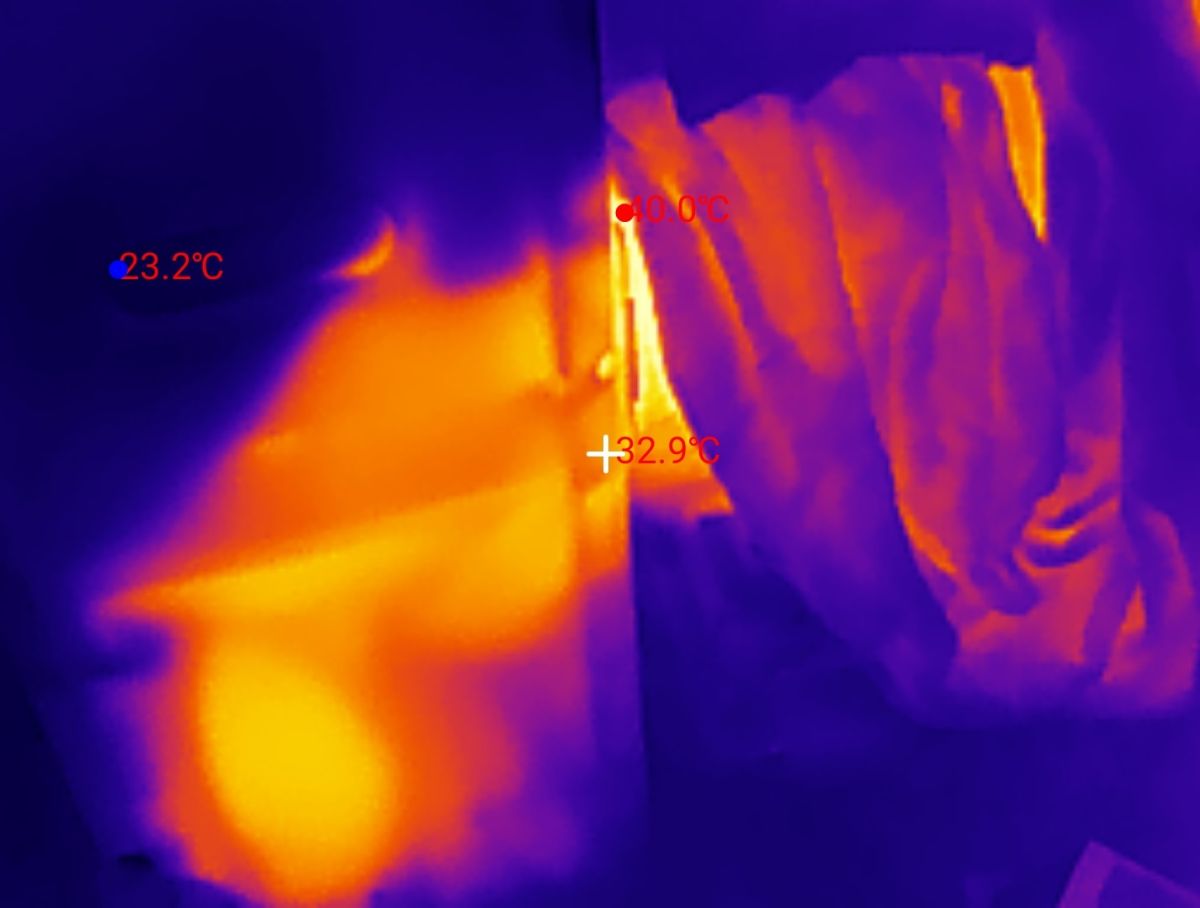
A quick look at the thermal imaging, however, reveals that the unit is indeed working; the outlet temperature reaches up to 15 °C, and the exhaust pipe heats up to 40 °C or more.
What to watch out for
A portable air conditioner (commonly known as a ‘tubular’ model) may not be very efficient, and it may be as noisy as a vacuum cleaner, but it does the job. However, on the market, under similar names (air cooler, air conditioner), you can find devices based on cooling cartridges, water, or simply fan units with fancy names. As they lack a compressor, they do not lower the room temperature at all; they merely increase the humidity, providing a temporary sensation of coolness. I believe that buying them is a waste of time.
Summary
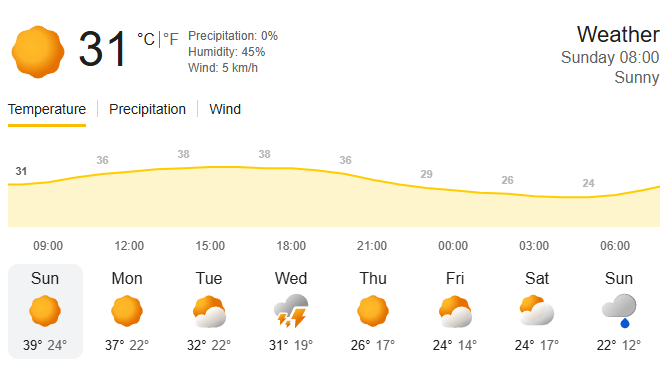
The unit, albeit with some difficulty, is capable of cooling a room of around 10 m² to a comfortable temperature whilst a computer (up to 200 W) is running inside and the heat outside is reaching 35 °C. It consumes around 0.8 kWh of energy per hour (roughly the cost of just under one zloty), but we also pay the price in terms of reduced working comfort, as the noise is rather like a vacuum cleaner running. For this reason, the unit isn’t really suitable for a bedroom, unless we cool it down right up until bedtime, in which case the night-time drop in temperature will come to our rescue. Personally, I think the purchase was worth it, although if I could, I’d opt for a proper wall-mounted air-conditioning unit (split-type). A portable air conditioner is really only for people who, for example, are renting a flat.
How do you cope with the heat? Do you use air conditioning?
Cool? Ranking DIY Helpful post? Buy me a coffee.


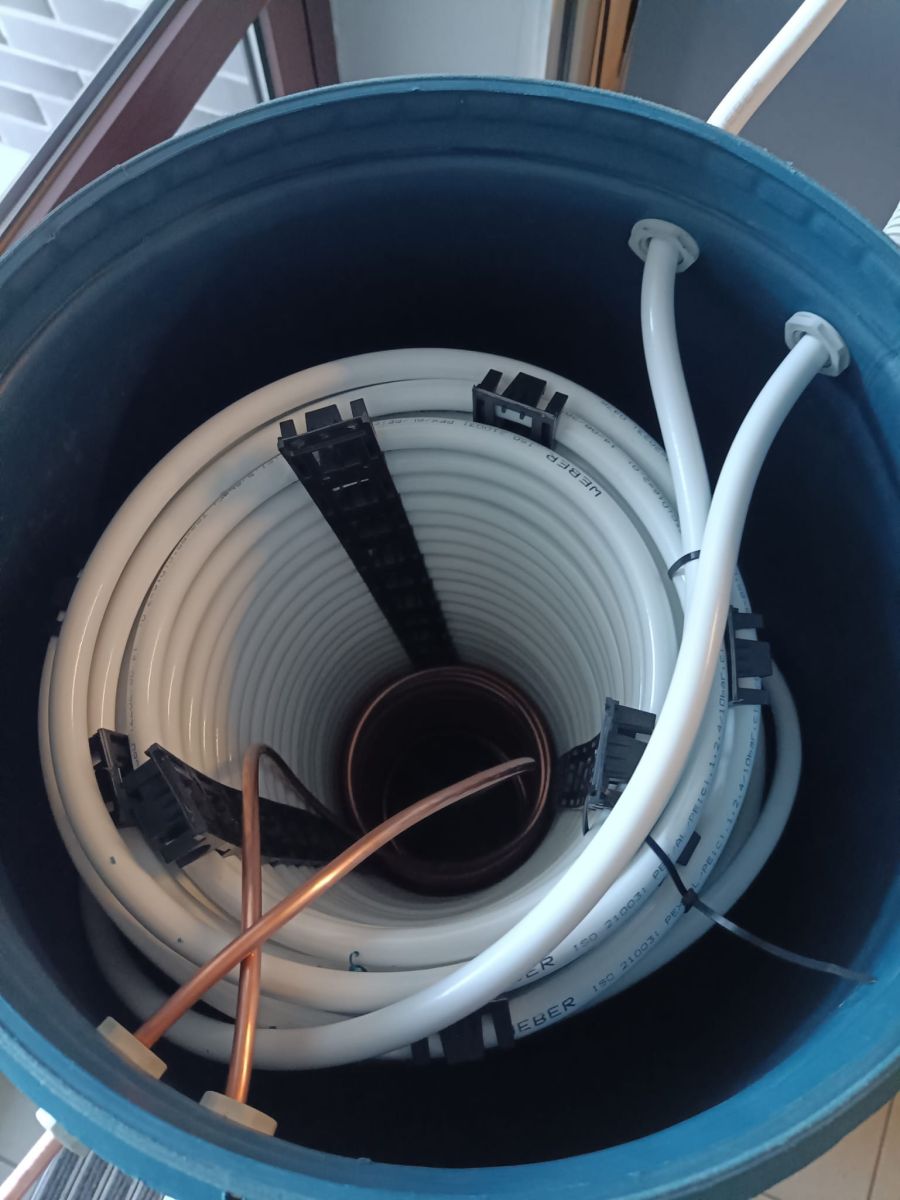
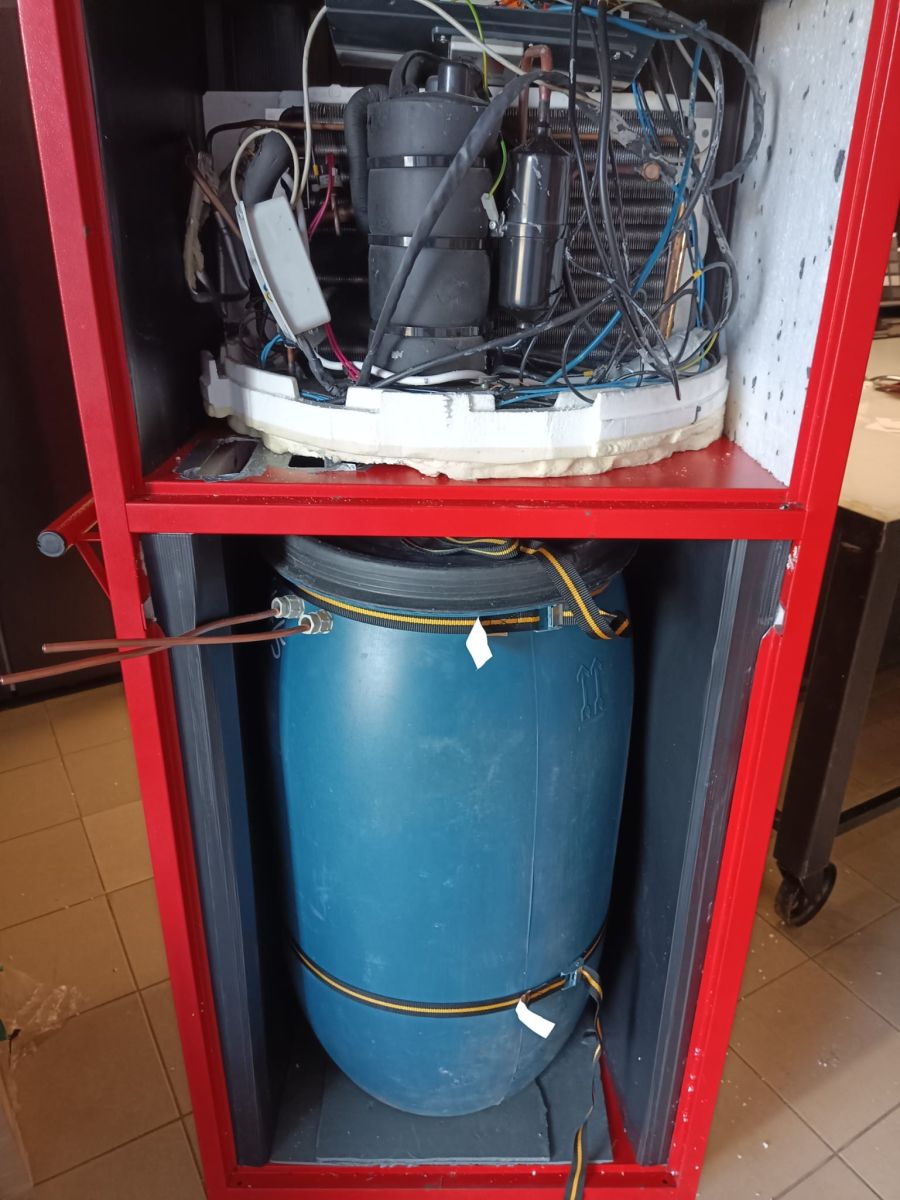
 I had a fireplace-based hot-air distribution system in the loft. I decided to use it for cooling. The hot-air outlet pipe is connected to the chimney. The air conditioner’s outlet (at the top) has been covered with the polystyrene that the unit came in – it fits the shape of the unit nicely. I cut out the top of this polystyrene insert and glued on a 12cm-thick layer of polystyrene, with a hole cut out for the pipe. This 12cm-thick polystyrene was leftover from insulating the house. I chose such a thick piece so that the pipe would sit securely. This pipe (thermally insulated spiral duct) leads to a 300 m³/h axial fan and on to three rooms. The air conditioner draws in air for cooling from the rear – I’ve fitted a wooden frame and a connection spigot to the fireplace fan. Air is drawn in from beneath the fireplace on the ground floor, goes to the fireplace fan, and then to the air conditioner’s intake. From the outlet, it is drawn in by the fan and blown into the three rooms upstairs. The circuit is therefore closed. Does this sort of thing work? I have to admit that it does! It’s not an air-conditioning system that will bring the temperature down to 20 degrees, but when it runs all day (non-stop), it can be cooler upstairs than on the ground floor. It’s warm, but you can still go about your business as normal. When the air conditioning is running, it gets very hot in the loft. Unfortunately, this worsens the air conditioner’s performance, as the air from the second circuit is drawn in from the loft (the exhaust, as I mentioned, goes into the chimney). Another advantage of this type of air conditioning is that there’s no condensation. Interestingly, I looked for a ready-to-use unit – that is, a unit with four pipes (two for the cooling circuit and two for the secondary circuit without condensate drainage). I couldn’t find anything like that. I don’t know the actual air flow rate – that fan is certainly restricted by the whole system, but the air being blown out is around 11–12 degrees.