logo elektroda
logo elektroda
X
logo elektroda
Dostępna jest polska wersja

Czy wolisz polską wersję strony elektroda?

Nie, dziękuję Przekieruj mnie tam

Adapter for rapid programming of WBR3 Wi-Fi modules (design and 3D printing, pogo pins)

p.kaczmarek2  0 1071 Cool? (+13)
📢 Listen (AI):

TL;DR

  • A 3D-printed pogo-pin adapter lets soldered WBR3 Wi-Fi modules be programmed without hand-soldering seven wires.
  • The adapter matches the module footprint and provides holes for BOOT and RESET buttons while spring-loaded pins contact the underside pads.
  • The design uses 3.5mm-high pogo pins and targets the W701-VA2-CG (RTL8720CF) based WBR3 module.
  • BK7231GUIFlashTool successfully reads and programs the RTL87X0C through the adapter.
  • The module still must be removed from the board first, but the programming step becomes much faster and cleaner.
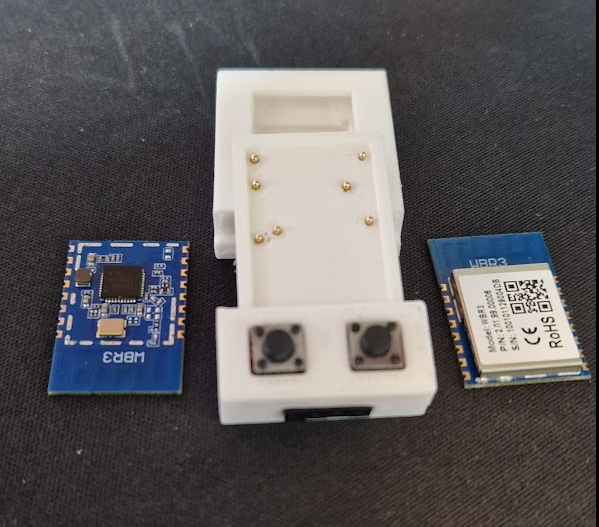
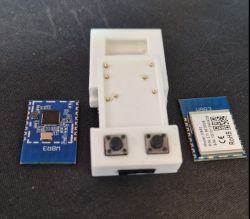
Programming adapter with pogo pins and two WBR3 modules on black background
WBR3 is a distinctive Wi-Fi module based on the W701-VA2-CG (RTL8720CF) chip. The WBR3 is distinguished by the fact that the necessary signals for its programming are located only on its underside, making it necessary to solder the module off the board for firmware changes. Additionally, its programming requires as many as 7 signals, which makes it worth the struggle to simplify the process. Here I will show how we achieved this.

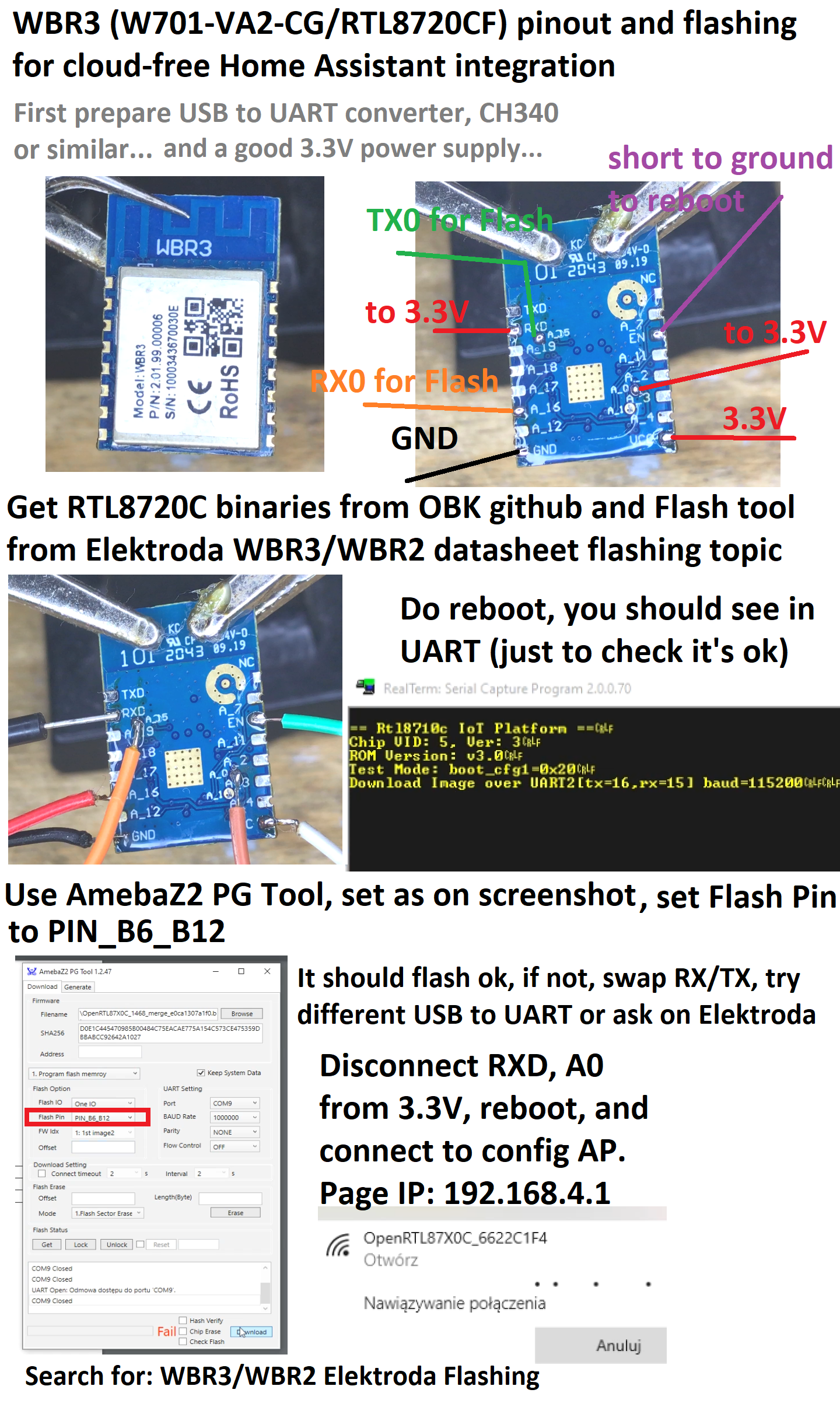
First, I will remind you how we used to program the WBR3:
1. first the module must be soldered off the board (with hot air)
2. then the 7 wires are soldered
3. then we desolder these wires and the module is back in place
Stage 2/3 is shown in our video:
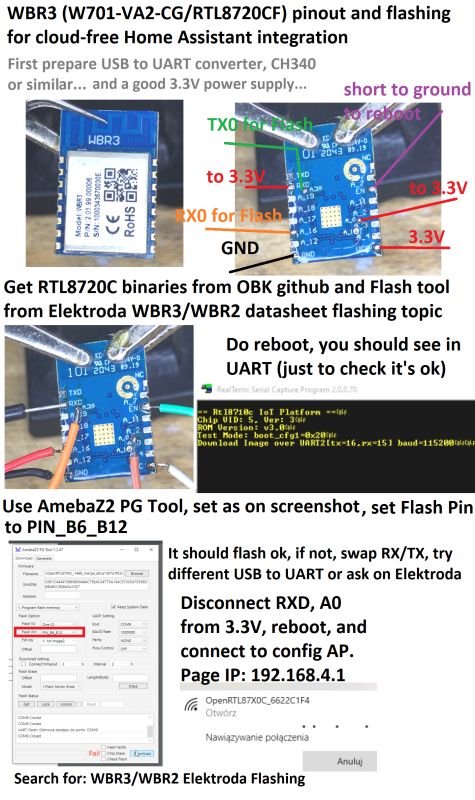


Pinout and flashing instructions for WBR3 module with RTL8720CF chip
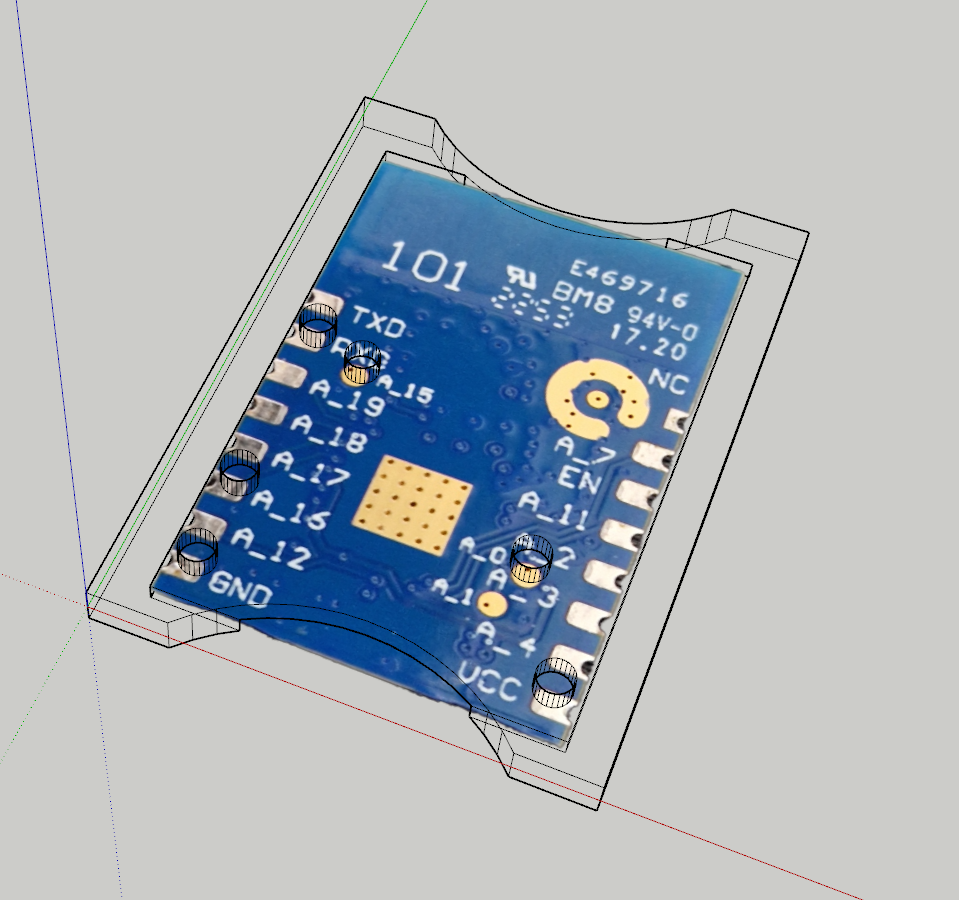
Recently, however, @DeDaMrAz has been reworking quite a few WBR3-based devices, hence the need to simplify the process. The idea was to make an adapter that allows an already soldered WBR3 module to be programmed without additional soldering. The module still needs to be removed from the board, but the rest of the process is greatly simplified. We started by dimensioning the board:
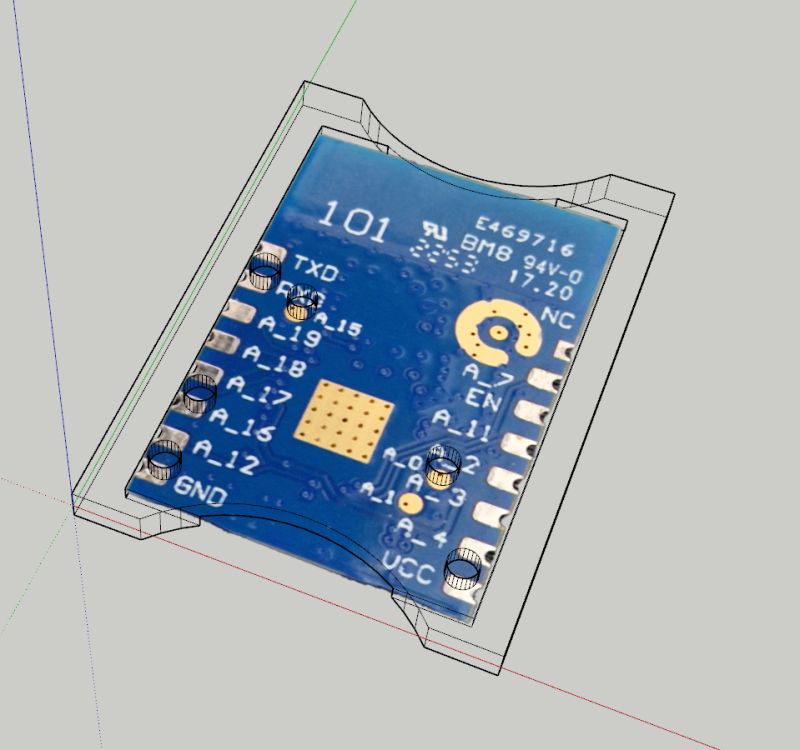
3D view of the WBR3 module in a transparent adapter with labeled signal pads.
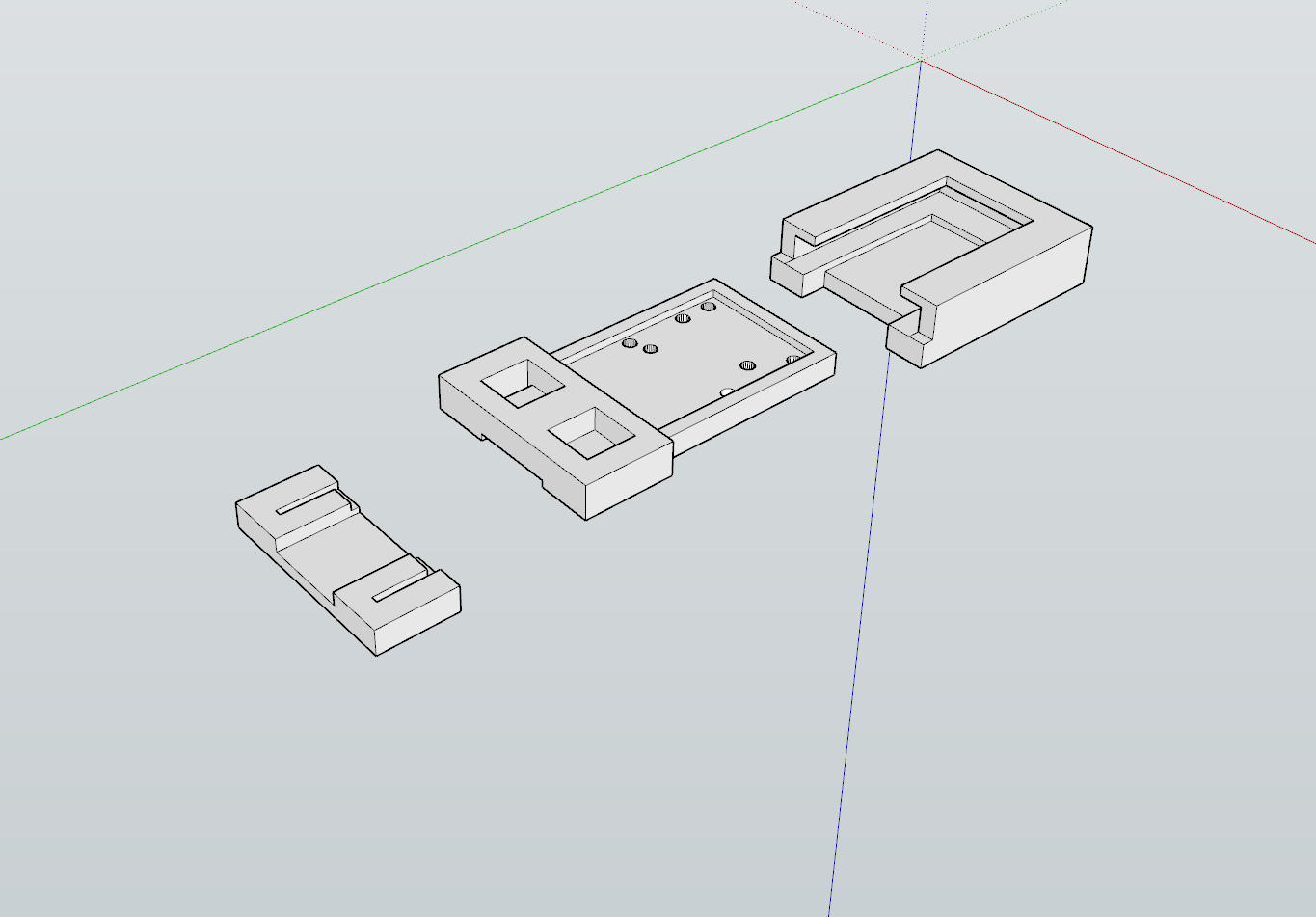
Then the adapter was modelled - several versions were tested, below is the final one:
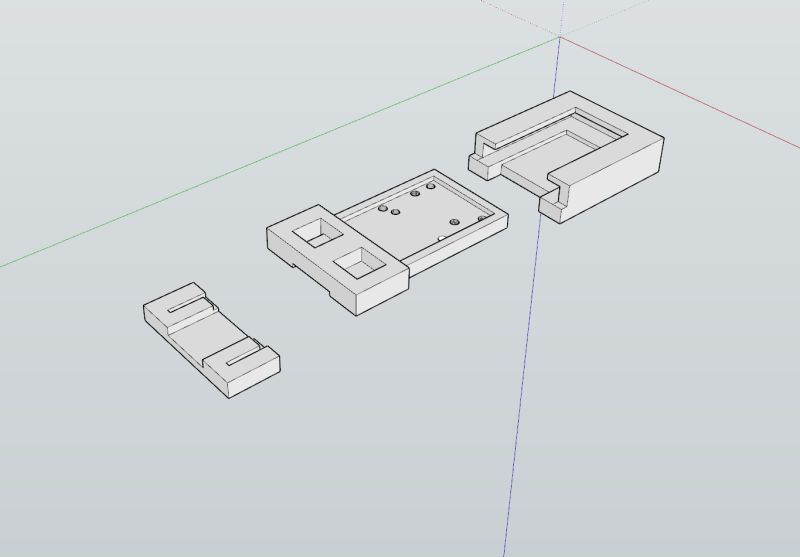
3D view of three-part adapter for programming WBR3 Wi-Fi module
The holes are for the BOOT and RESET buttons.
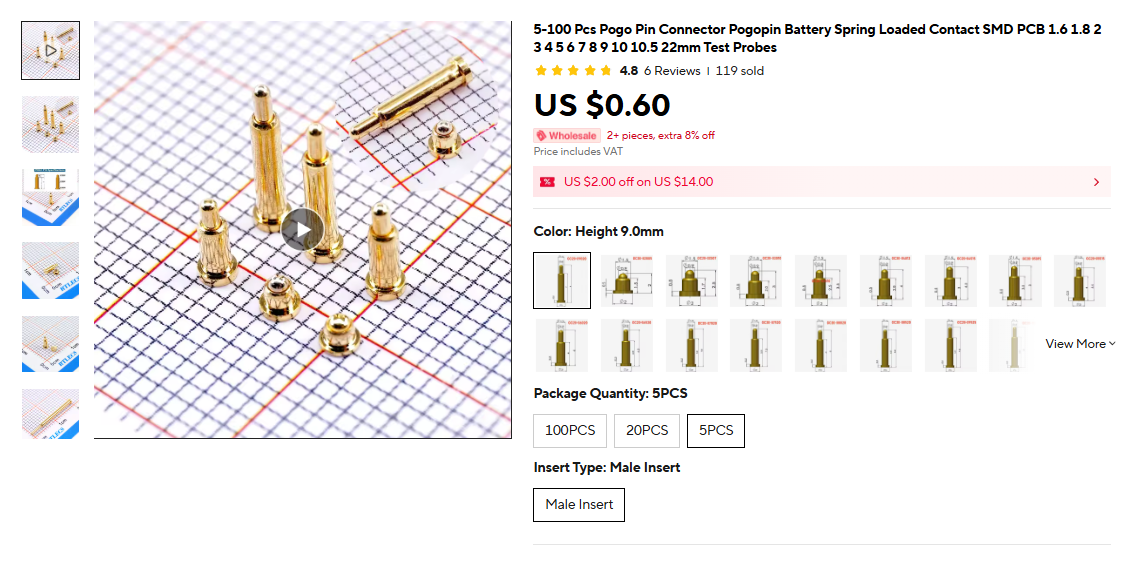
However, you still need to take care of the contact with the pads. The pogo pins are used for this:
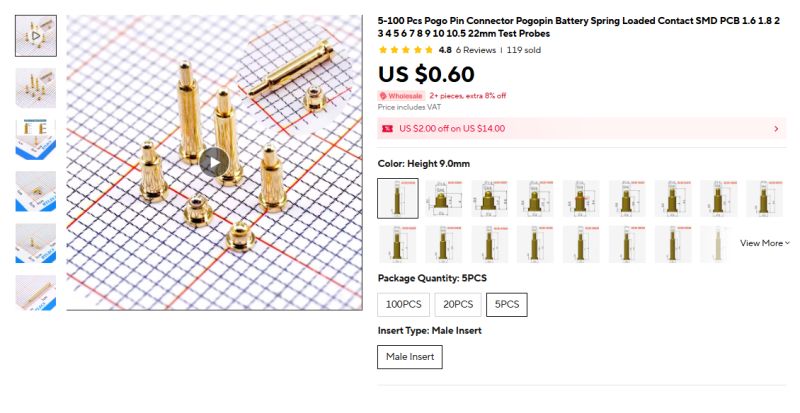
Set of 5 gold-plated pogo pins, 9 mm high, on millimeter grid background
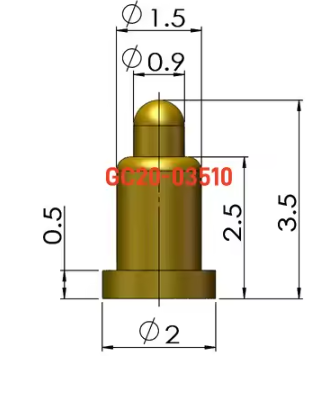
These pins come in different versions, but all have a built-in spring - this ensures good contact with the pad. We chose the 3.5mm high version:
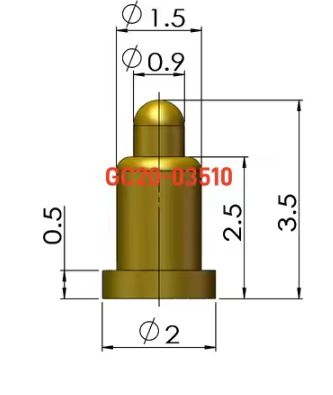
GC20-03510 pogo pin with dimensions: 3.5 mm height, 0.9 mm tip diameter
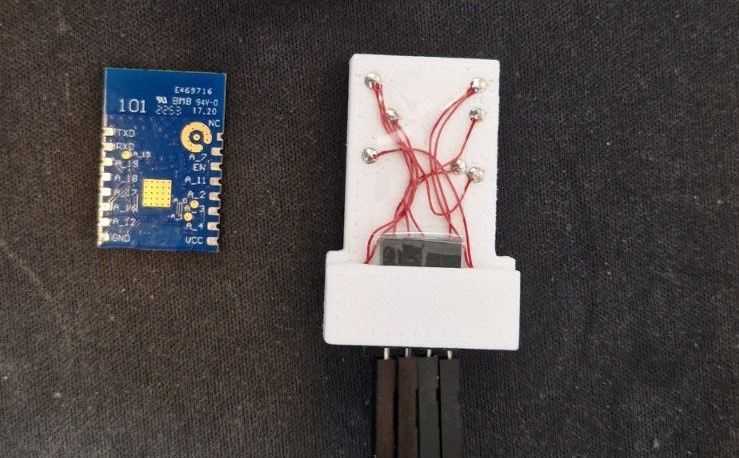
All this has been suitably connected inside the adapter:
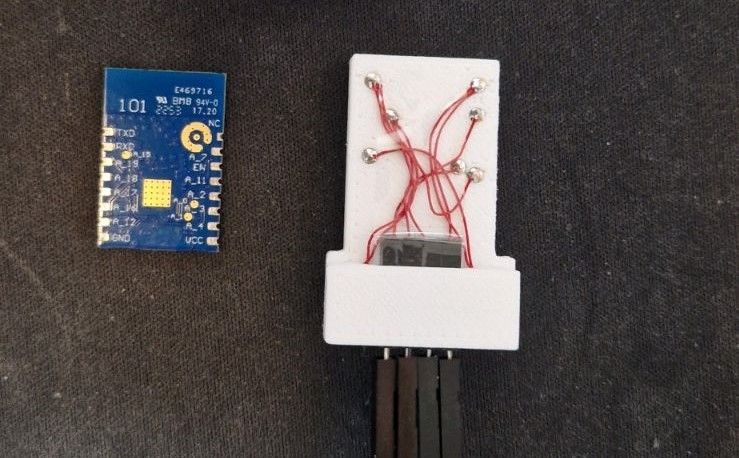
WBR3 module next to a programmer adapter with red wires and pogo pins in a white housing
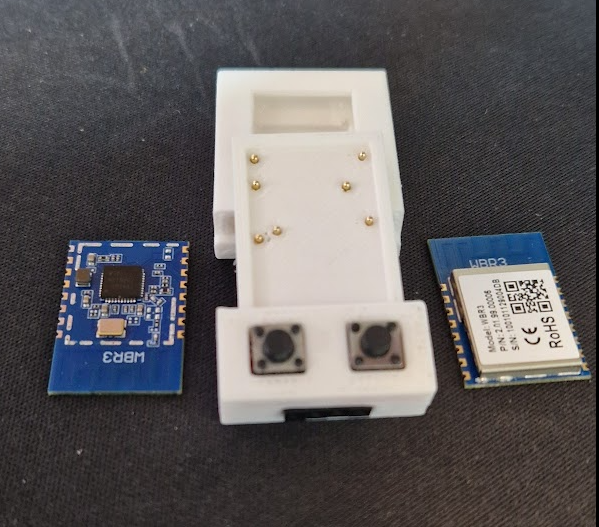
The completed adapter and two WBR3 modules (one with the screen removed):
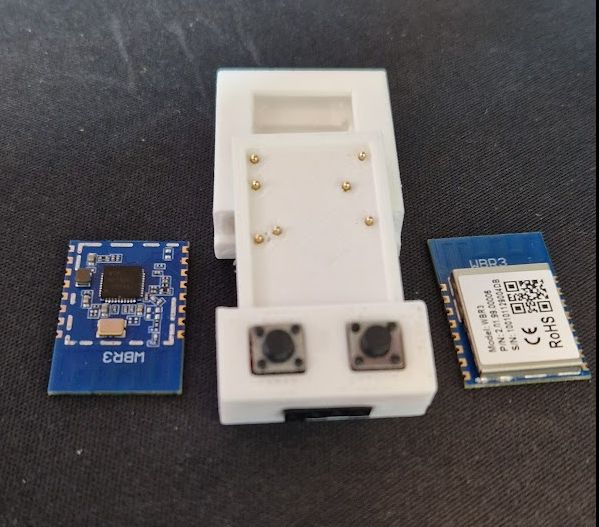
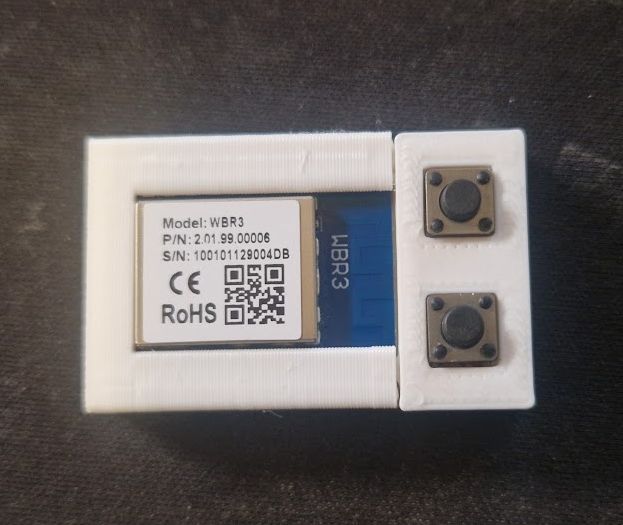
WBR3 module and white adapter with pogo pins and two buttons
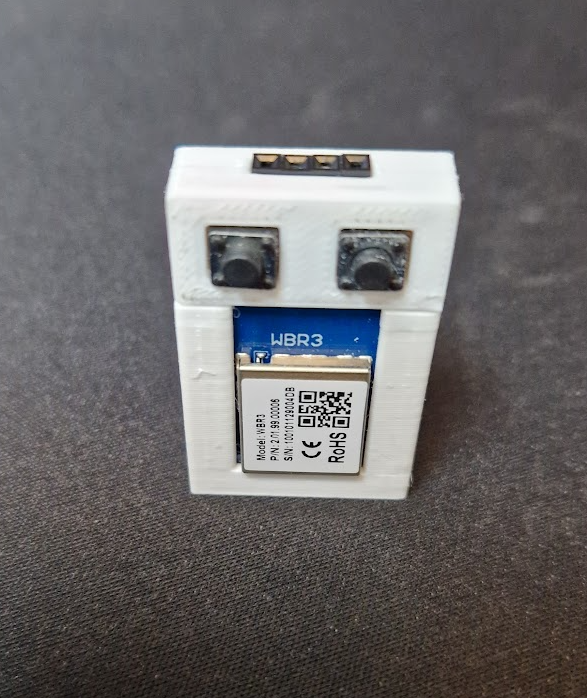
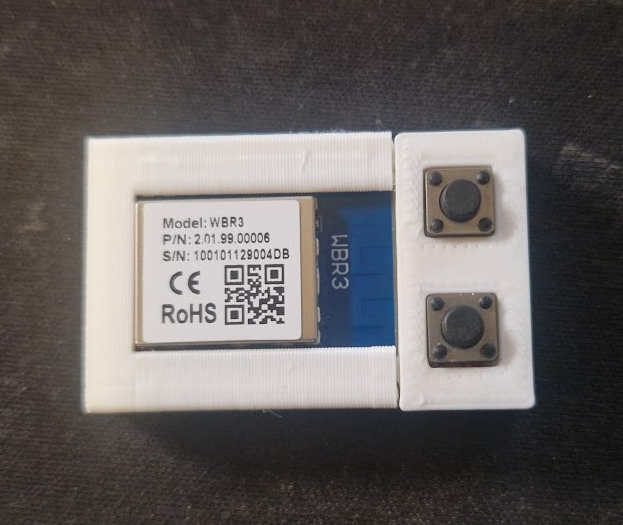
Adapter together with programmable module:
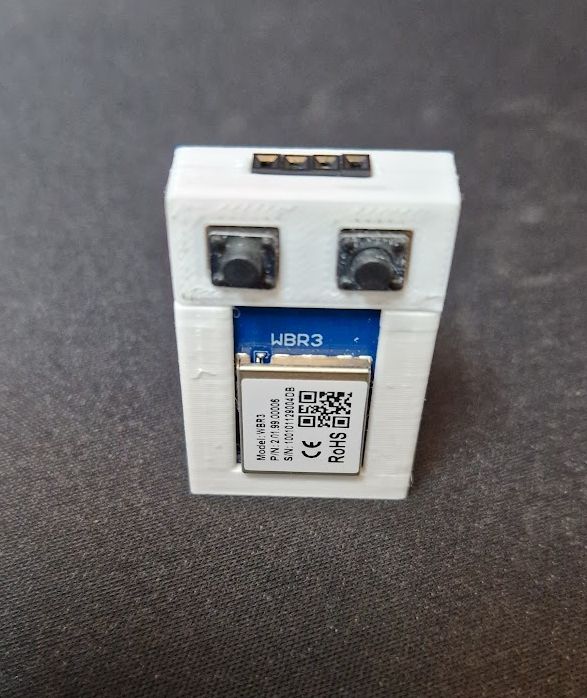
Programming adapter for WBR3 module with BOOT and RESET buttons
WBR3 Wi-Fi module in a white adapter with BOOT and RESET buttons
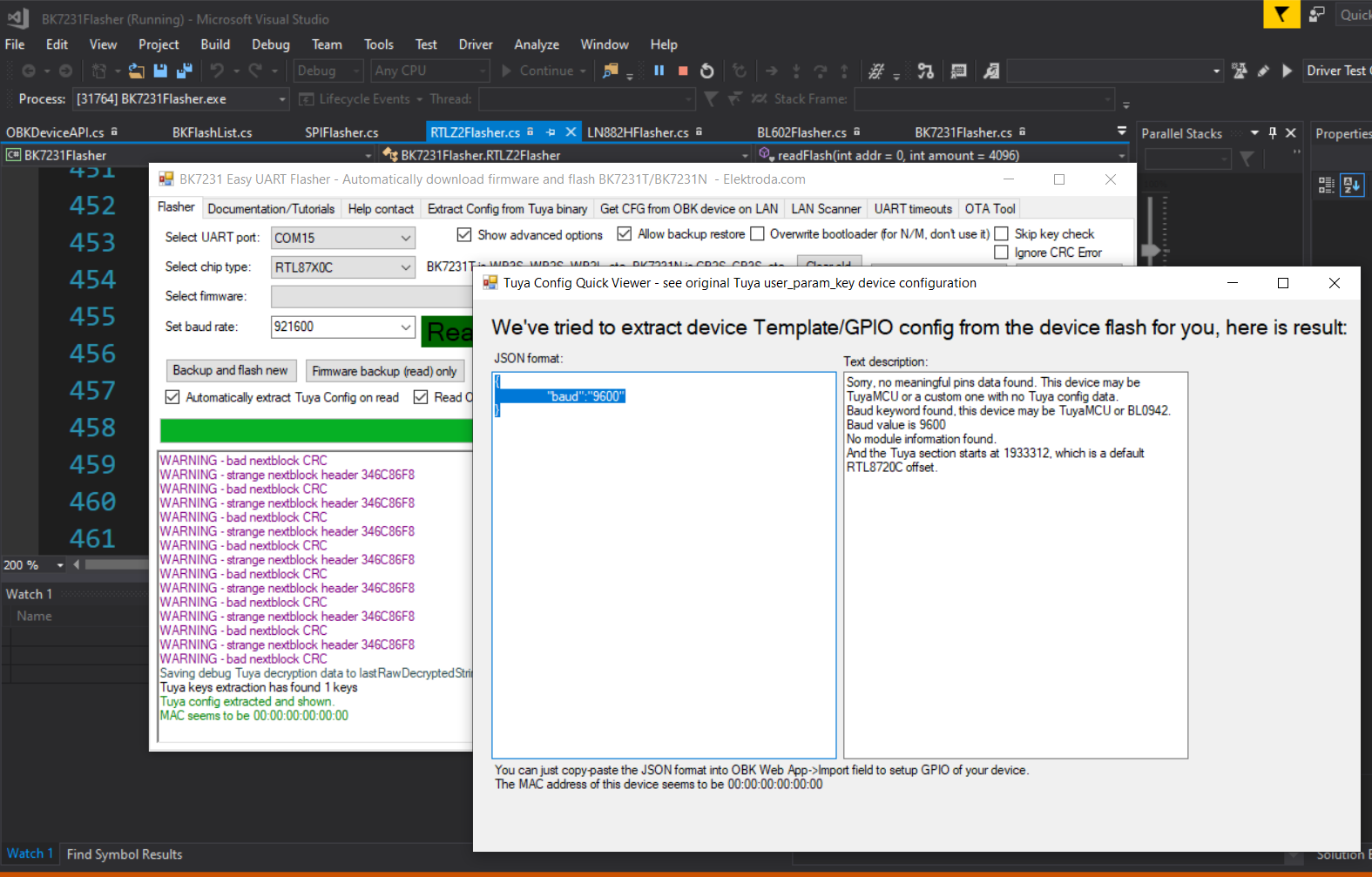
We used our flasher to test the adapter:
https://github.com/openshwprojects/BK7231GUIFlashTool
It correctly reads and programs the RTL87X0C:
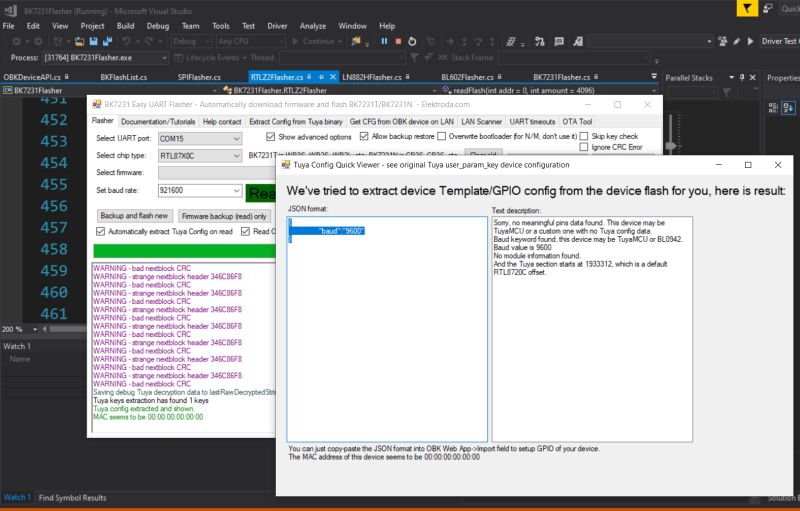
BK7231GUIFlashTool interface with warning messages and Tuya config result window
That's basically it - from now on we can conveniently upload our open source software .

In summary , the WBR3 Wi-Fi module is distinguished from other modules (WB3S, TYWE3S, CB3S, etc.) by the fact that it has the necessary programming signals brought out on pads available only on its bottom. This makes it necessary, firstly, to solder it off the board before changing the firmware and, secondly, to solder cables to it separately, of which there are also quite a few here. The requirement to solder it off the PCB is unlikely to be helped (because how else to get to the signals? Unless, of course, to remove the screen and get to the QFN?), but we managed to speed up the next stage considerably. Instead of soldering the wires, all we need to do is use our adapter. The matter is made all the easier by the fact that no bonding or cleaning of its pads is needed to desolder and solder the WBR3 in place, so the whole thing can happen quite quickly, as long as you have some basic experience of working with hot air. In this way, we have been able to significantly speed up the cloud release of WBR3-based IoT devices.
Have you also encountered the WBR3 module? Or perhaps you are familiar with another similar situation where a proprietary adapter from pogo pins can speed up the work?
Attachments:
  • WBR3 needle bed.zip (1.34 MB) You must be logged in to download this attachment.

About Author
p.kaczmarek2
p.kaczmarek2 wrote 14224 posts with rating 12120 , helped 647 times. Been with us since 2014 year.

Comments

FAQ

TL;DR: WBR3 needs 7 signals to flash; "requires as many as 7 signals." A 3D‑printed pogo‑pin adapter plus hot‑air desolder simplifies programming of RTL87X0C modules and speeds repeated work. [Elektroda, p.kaczmarek2, post #21742049]

Why it matters: This helps repairers and IoT tinkerers ask “how do I program WBR3 without soldering wires?” and finish jobs faster.

Quick Facts

What is the WBR3 module and why is it tricky to flash?

WBR3 is a Wi‑Fi module based on W701‑VA2‑CG (RTL8720CF). Its programming pads exist only on the underside. Access requires removing the module from the host PCB. It also needs seven distinct programming signals, which increases wiring complexity. The post shows a purpose‑built adapter that removes most solder‑wire steps. “We managed to speed up the next stage considerably.” [Elektroda, p.kaczmarek2, post #21742049]

Do I still need to desolder the WBR3 to change firmware?

Yes. You must lift the module to reach the underside pads. The adapter eliminates the separate step of soldering seven wires, but it cannot access buried pads while the module stays on the board. Hot‑air rework skills are recommended for safe removal and re‑installation. [Elektroda, p.kaczmarek2, post #21742049]

How does the 3D‑printed pogo‑pin adapter work?

The printed jig aligns spring‑loaded pogo pins to the WBR3’s underside pads. Holes provide access to BOOT and RESET buttons. Internal wiring routes each pogo pin to the flasher interface. You place the freed module into the adapter, press, and program without soldering wires. [Elektroda, p.kaczmarek2, post #21742049]

Which programming signals are required for WBR3?

The author notes the WBR3 needs seven signals for flashing. The adapter brings all required lines to a convenient header and supports BOOT and RESET control. This reduces handling time compared with soldering seven jumpers directly to pads. [Elektroda, p.kaczmarek2, post #21742049]

What pogo pins and hardware choices were used?

Spring pogo pins with a 3.5 mm height were selected for reliable contact pressure and travel. The adapter body is 3D‑printed, with through‑holes for BOOT and RESET. Internal wiring ties pins to the flasher. Tested units showed consistent pad contact. [Elektroda, p.kaczmarek2, post #21742049]

Which flashing tool works with RTL87X0C/WBR3?

The team used the OpenSHWProjects flasher to read and program RTL87X0C successfully. Screenshots confirm correct device detection and data transfer. Connect the adapter to this flasher and follow its standard sequence for BOOT and RESET control. [Elektroda, p.kaczmarek2, post #21742049]

Can I avoid cleaning or re‑tinning pads after removal?

Yes. The author reports no bonding or pad cleaning is required to desolder and re‑solder WBR3 for this workflow. That further shortens turnaround time when doing many modules. Use proper hot‑air technique to preserve pad quality. [Elektroda, p.kaczmarek2, post #21742049]

Three‑step: how do I use the adapter to flash WBR3?

  1. Hot‑air desolder the WBR3 to expose underside pads.
  2. Place it in the adapter, align pogo pins, set BOOT/RESET.
  3. Connect the flasher, read, and program the RTL87X0C firmware, then re‑solder the module. [Elektroda, p.kaczmarek2, post #21742049]

What if the RF shield is still on the module?

The post mentions an alternative: remove the metal screen and reach the QFN if you choose that route. However, the presented process expects underside pad access and continues to lift the module for speed and repeatability. [Elektroda, p.kaczmarek2, post #21742049]

Will this adapter work with WB3S, TYWE3S, or CB3S?

Those modules are referenced for contrast. WBR3 is unique because its programming pads are only on the underside. The adapter is tailored to WBR3 pad geometry. Other modules may not require this approach or may need different pin spacing. [Elektroda, p.kaczmarek2, post #21742049]

Any risks or failure modes to watch for?

Expect normal hot‑air risks during removal and re‑soldering. The adapter simplifies wiring but does not eliminate the desoldering step. Maintain firm, even pressure so pogo pins seat correctly on pads before triggering BOOT/RESET. [Elektroda, p.kaczmarek2, post #21742049]

What firmware can I load with this setup?

The team uses their open‑source firmware from OpenSHWProjects (OpenBK7231T_App) with the adapter and flasher. The post shows successful reads and writes on RTL87X0C, enabling custom builds for WBR3‑based IoT devices. [Elektroda, p.kaczmarek2, post #21742049]

Who benefits most from this adapter?

Repair shops, integrators, and power users who rework many WBR3‑based devices. The adapter cuts repetitive wiring, speeds cycles, and reduces operator fatigue. The author created it after processing many WBR3 units. [Elektroda, p.kaczmarek2, post #21742049]

Does this speed up batch or cloud release workflows?

Yes. The adapter significantly accelerates flashing once the module is lifted, which helps rapid cloud release of WBR3‑based IoT products. It removes the time‑consuming step of soldering seven wires per unit. [Elektroda, p.kaczmarek2, post #21742049]

Are design files or iterations shown?

Yes. The post shows sizing, several modeled versions, and the final adapter with internal wiring photos. It documents the evolution from concept to tested hardware, including alignment and control features. [Elektroda, p.kaczmarek2, post #21742049]
%}