Are 'smart' LED lights designed to overheat? What temperature will such a "led" light reach after a quarter of an hour of operation? Is it somehow possible to reduce its heating and prolong its life? I invite you to a presentation of the interior, measurements, and firmware changes of the SL20, a Wi-Fi controlled LED lamp offering control over brightness level and white temperature.
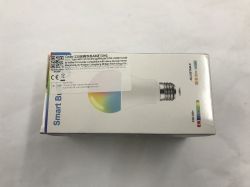
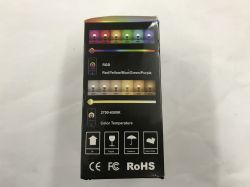
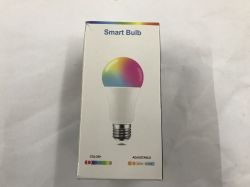 Pairing with application
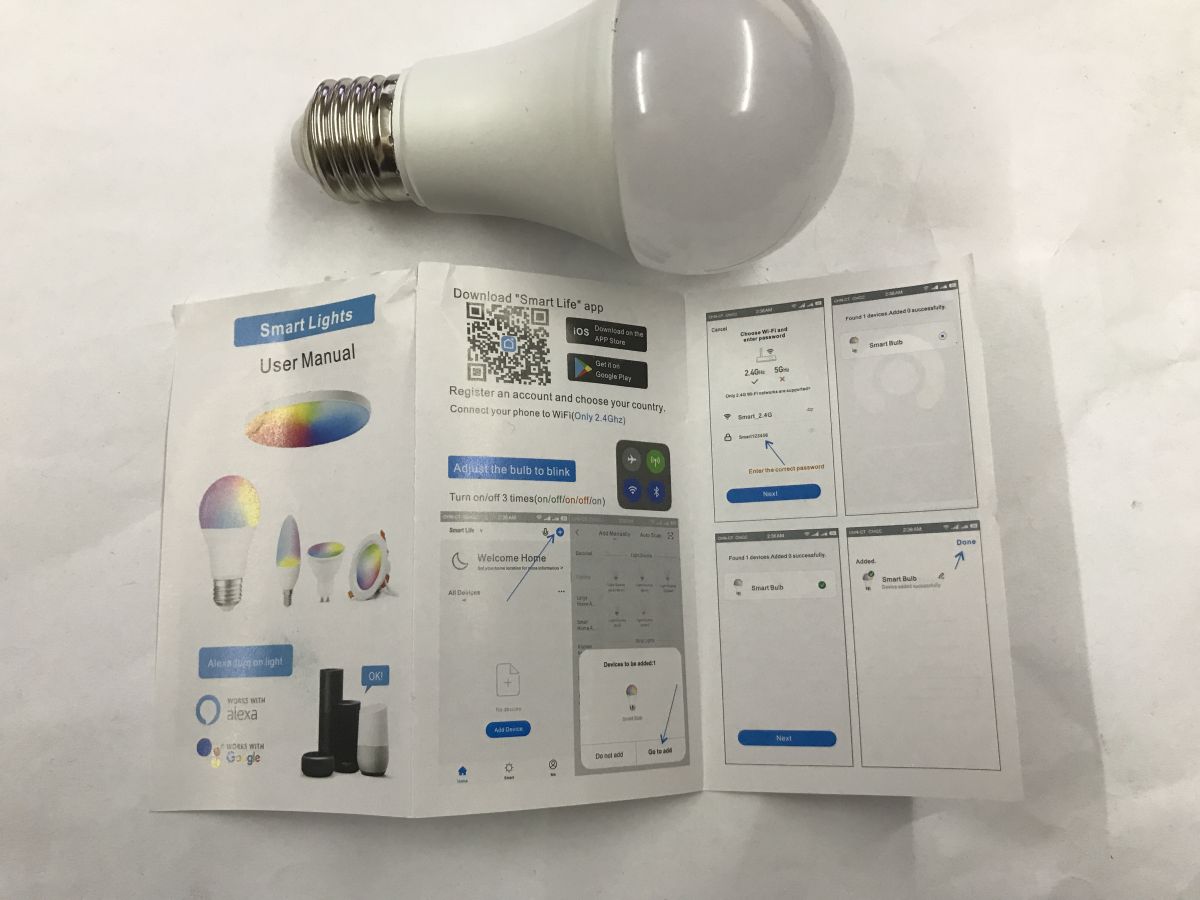
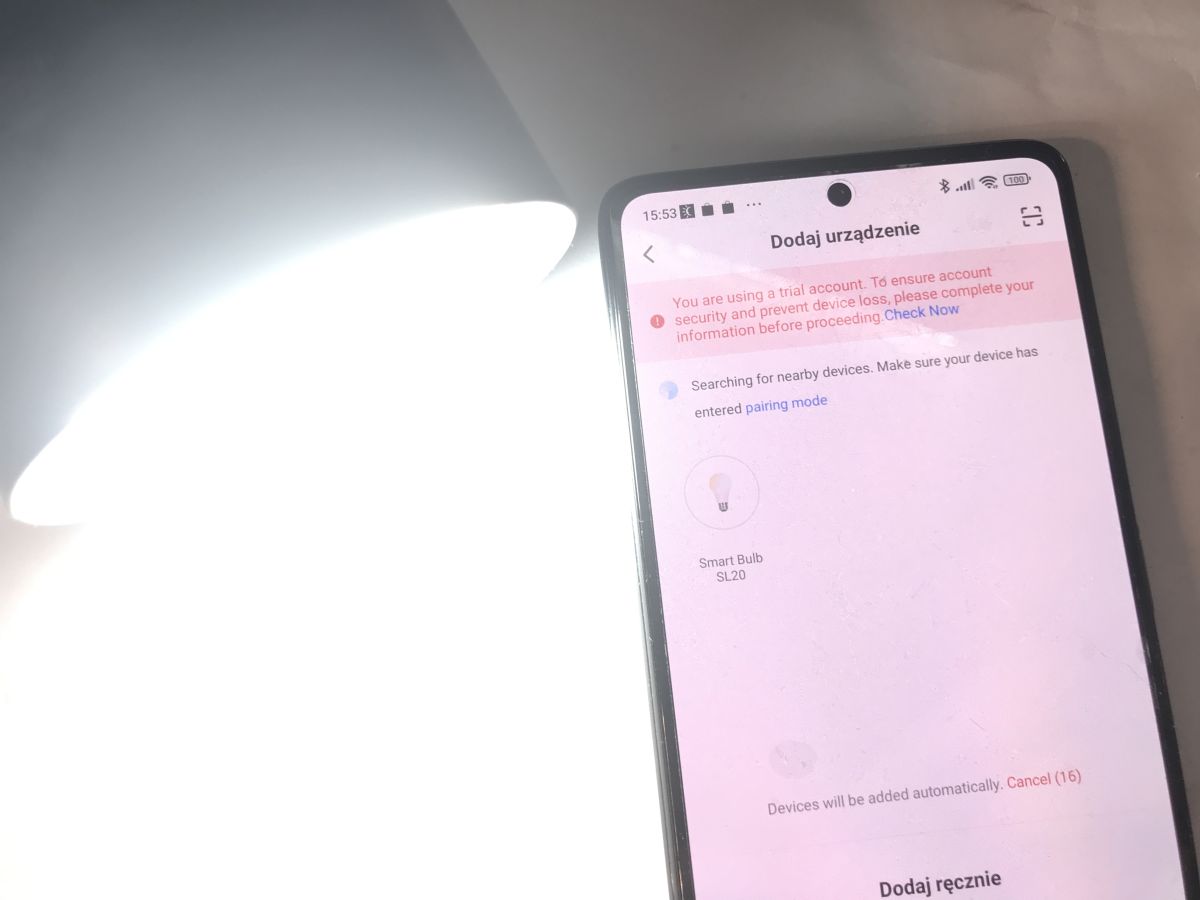
The instructions describe the pairing process well - you need the Tuya app, a Wi-Fi network (necessarily 2.4GHz) and you also need to turn on Bluetooth, as the first scan for the device is over BT. We do three quick power on and off. The lamp should start flashing.
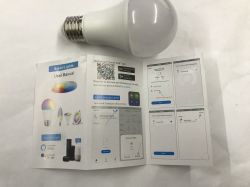
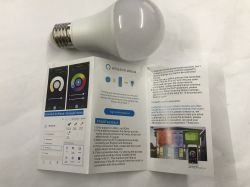
Tuya sees it as SL20:
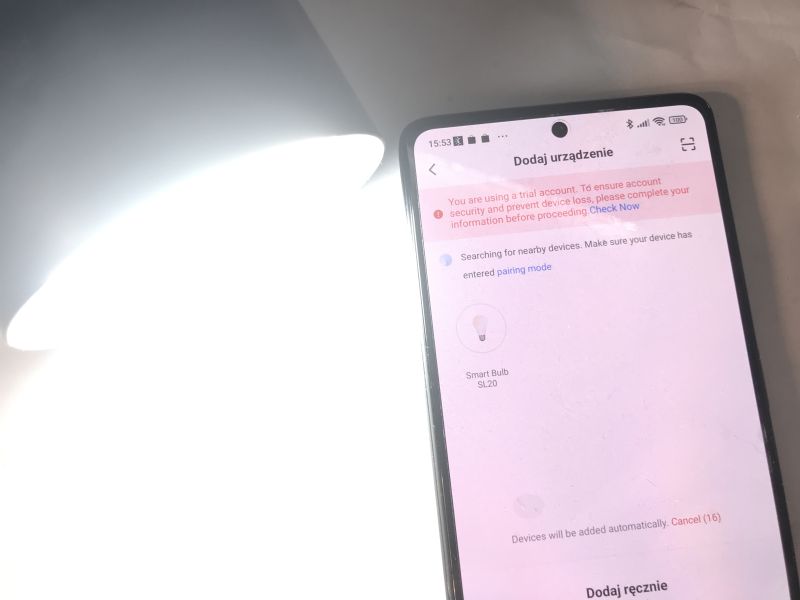
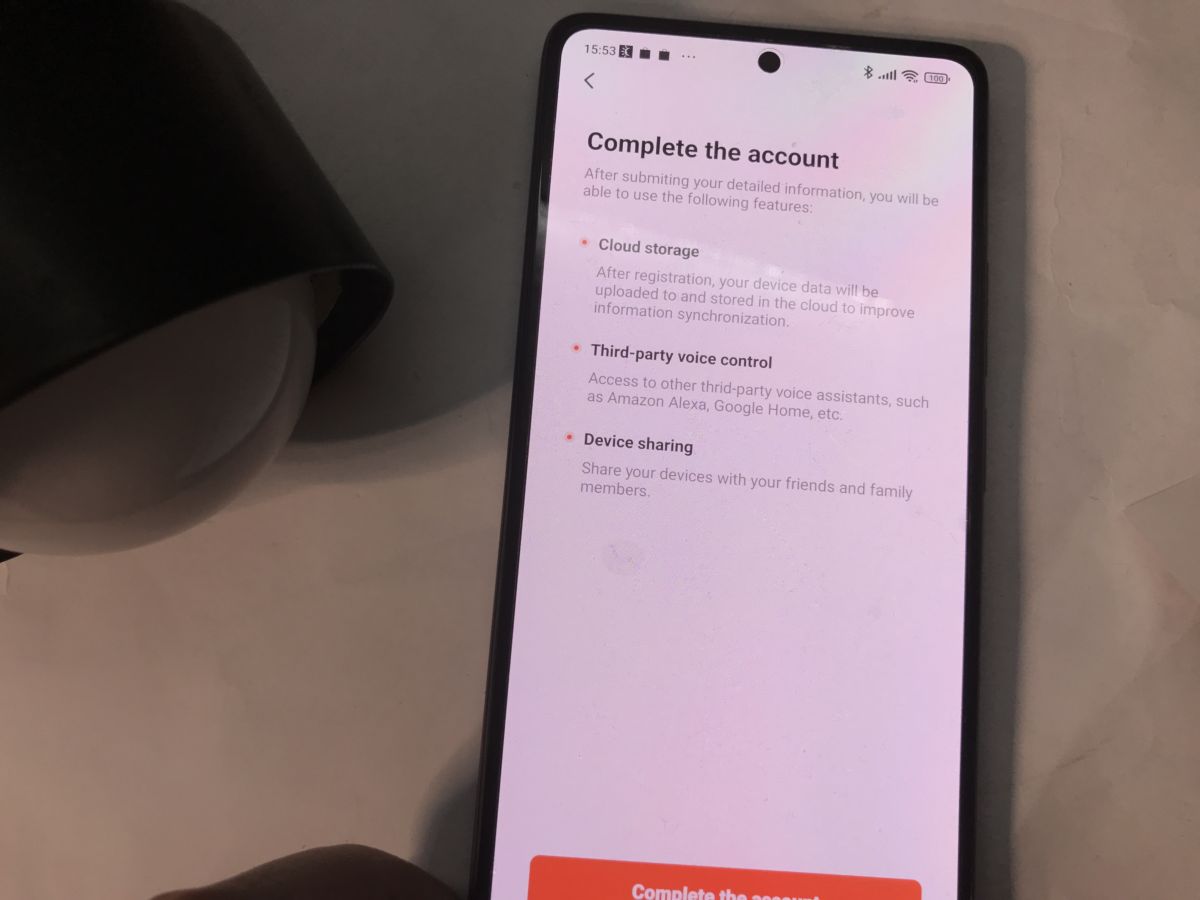
It cannot be paired without logging in:
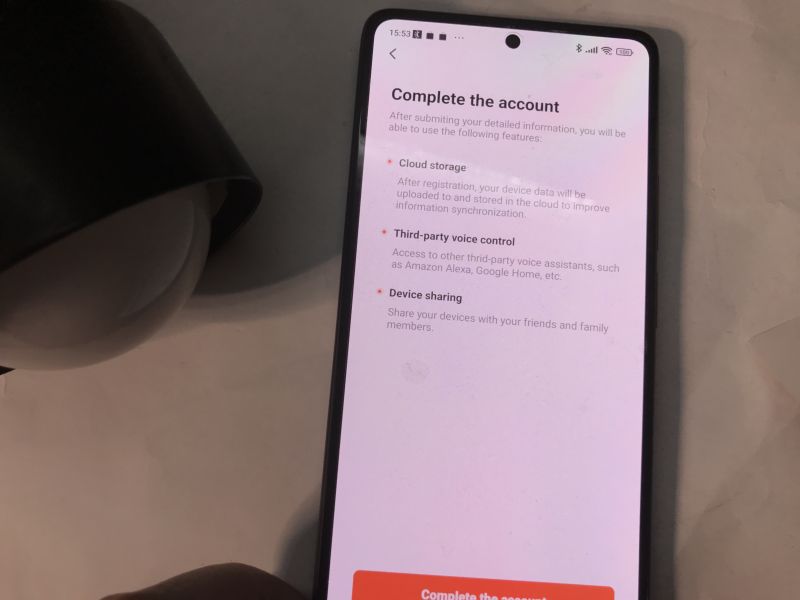
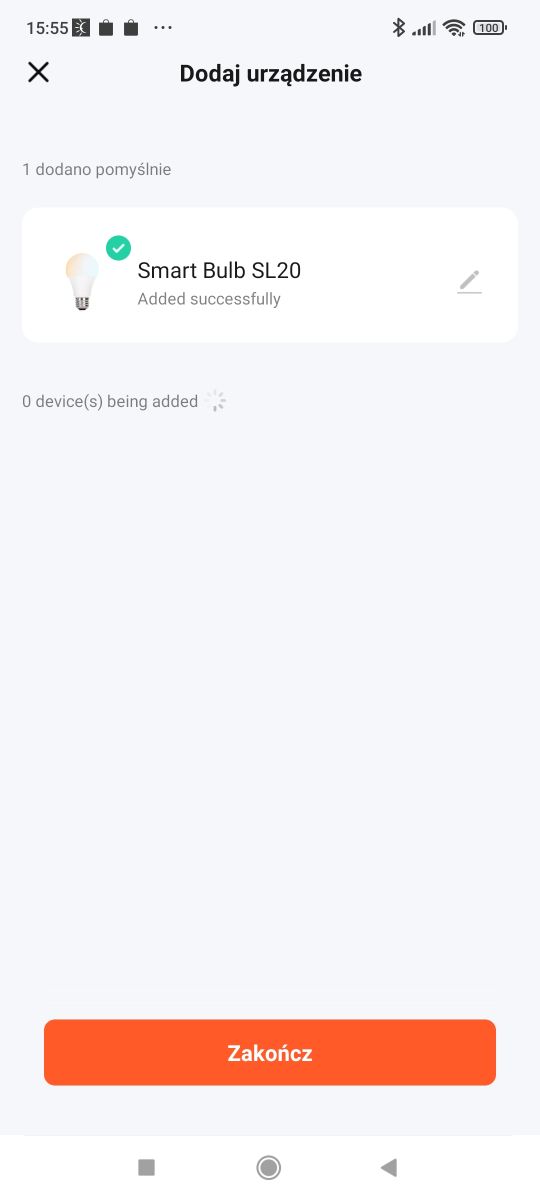
Success:
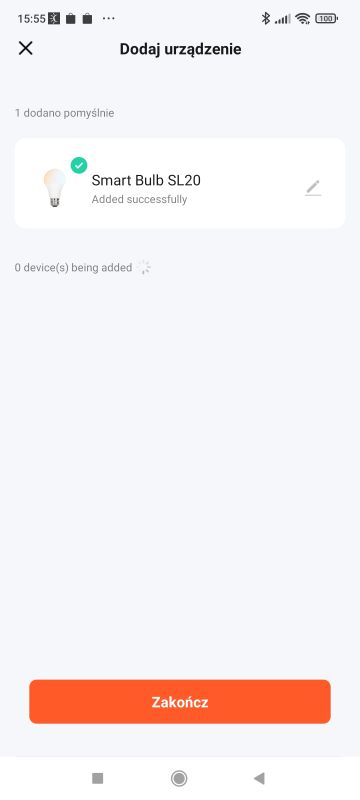
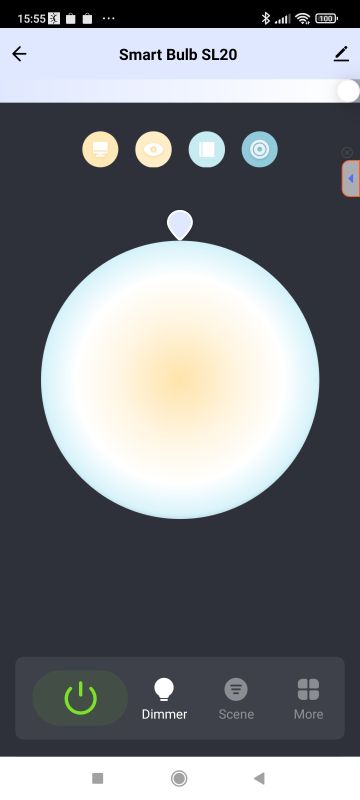
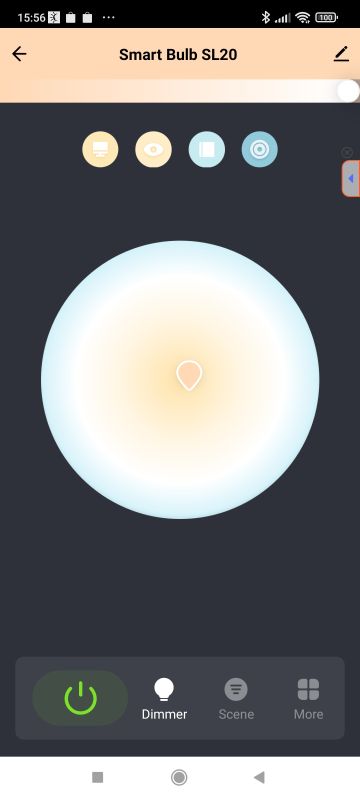
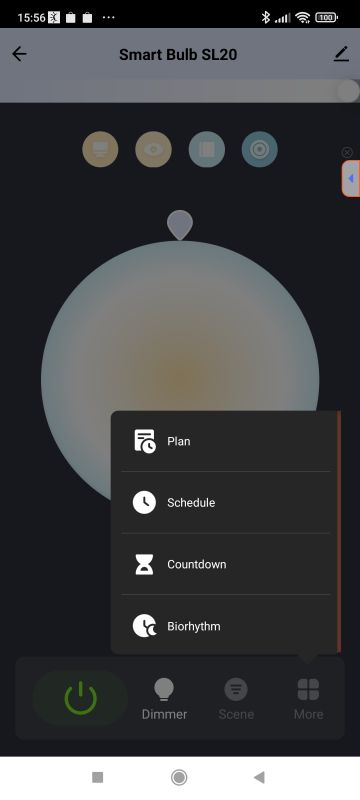
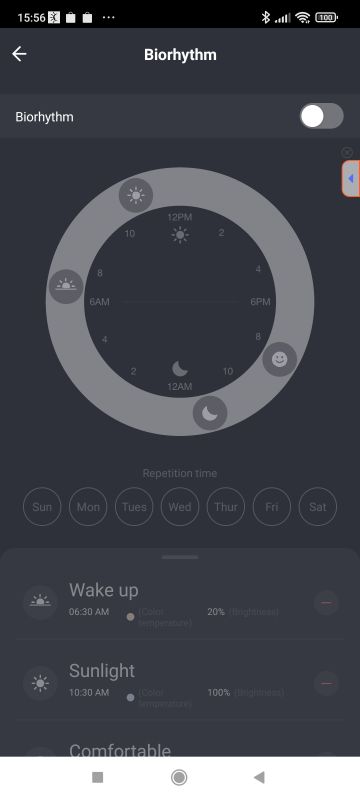
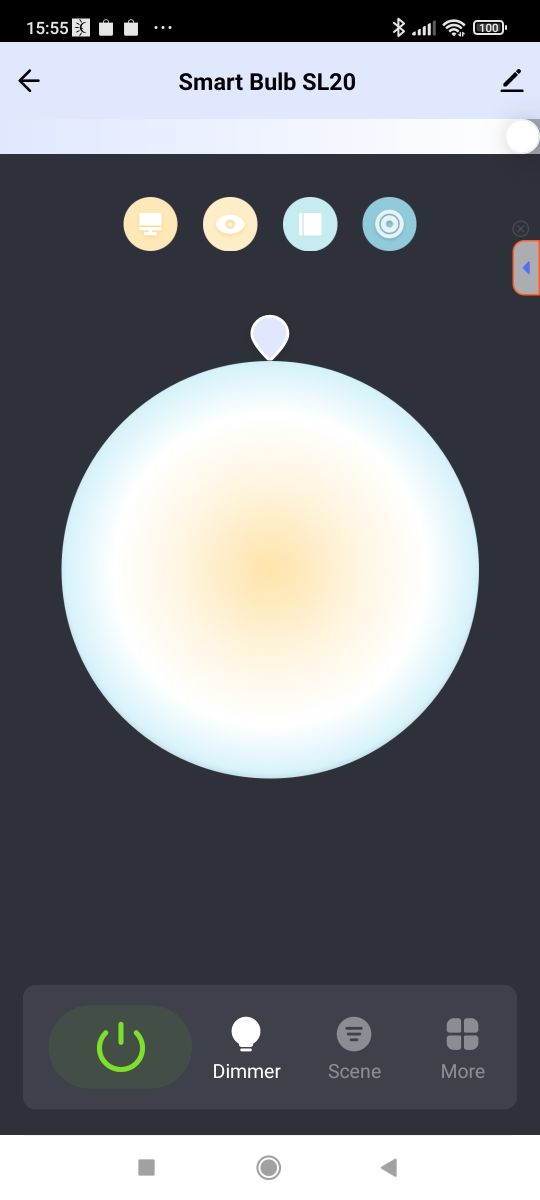
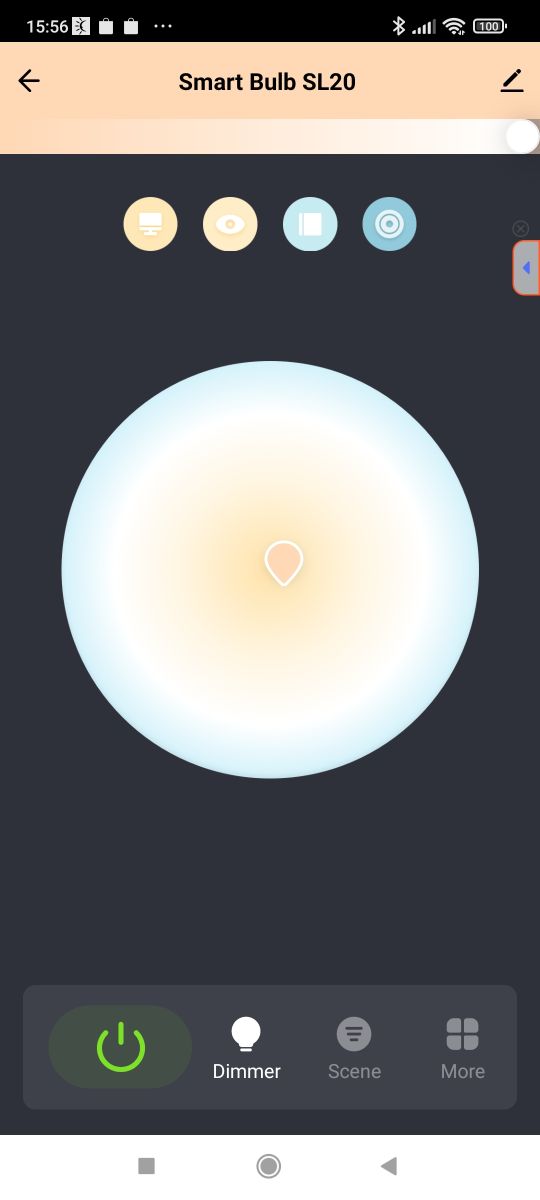
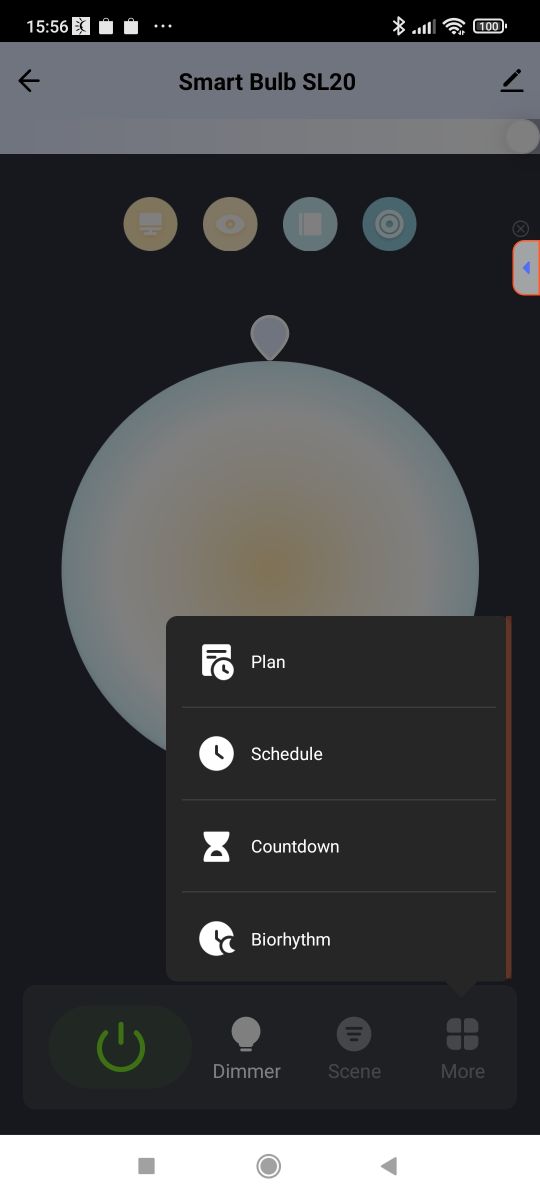
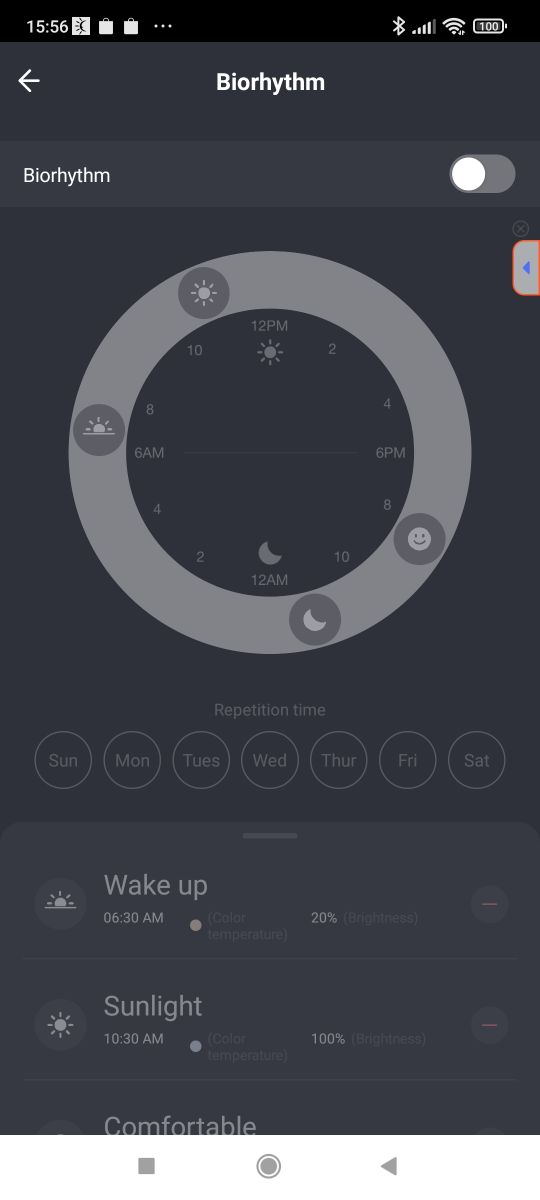
With the app itself it's standard - we have control over the lighting temperature and over the brightness level. We have a countdown timer and automations. In addition, we have various animations and modes, including a 'biorhythm' mode that adjusts the light temperature according to the time.
 Heat-up test
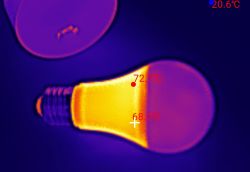
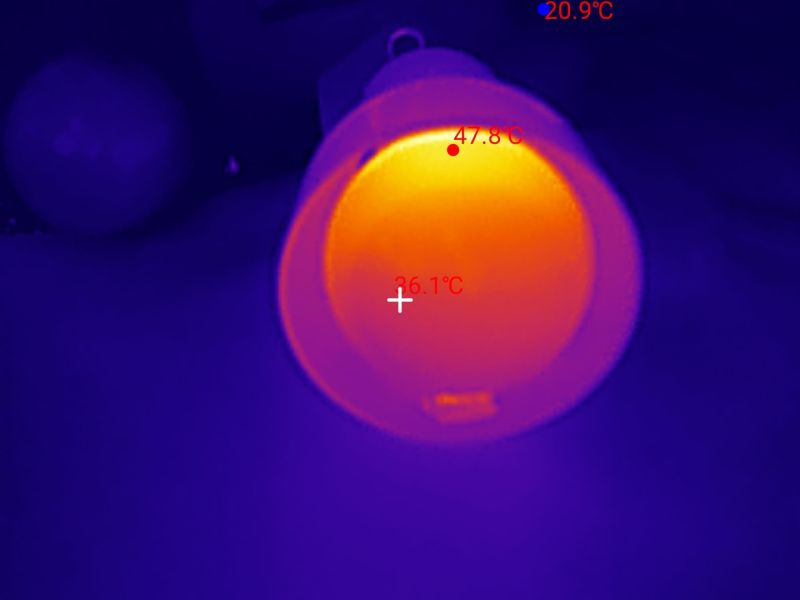
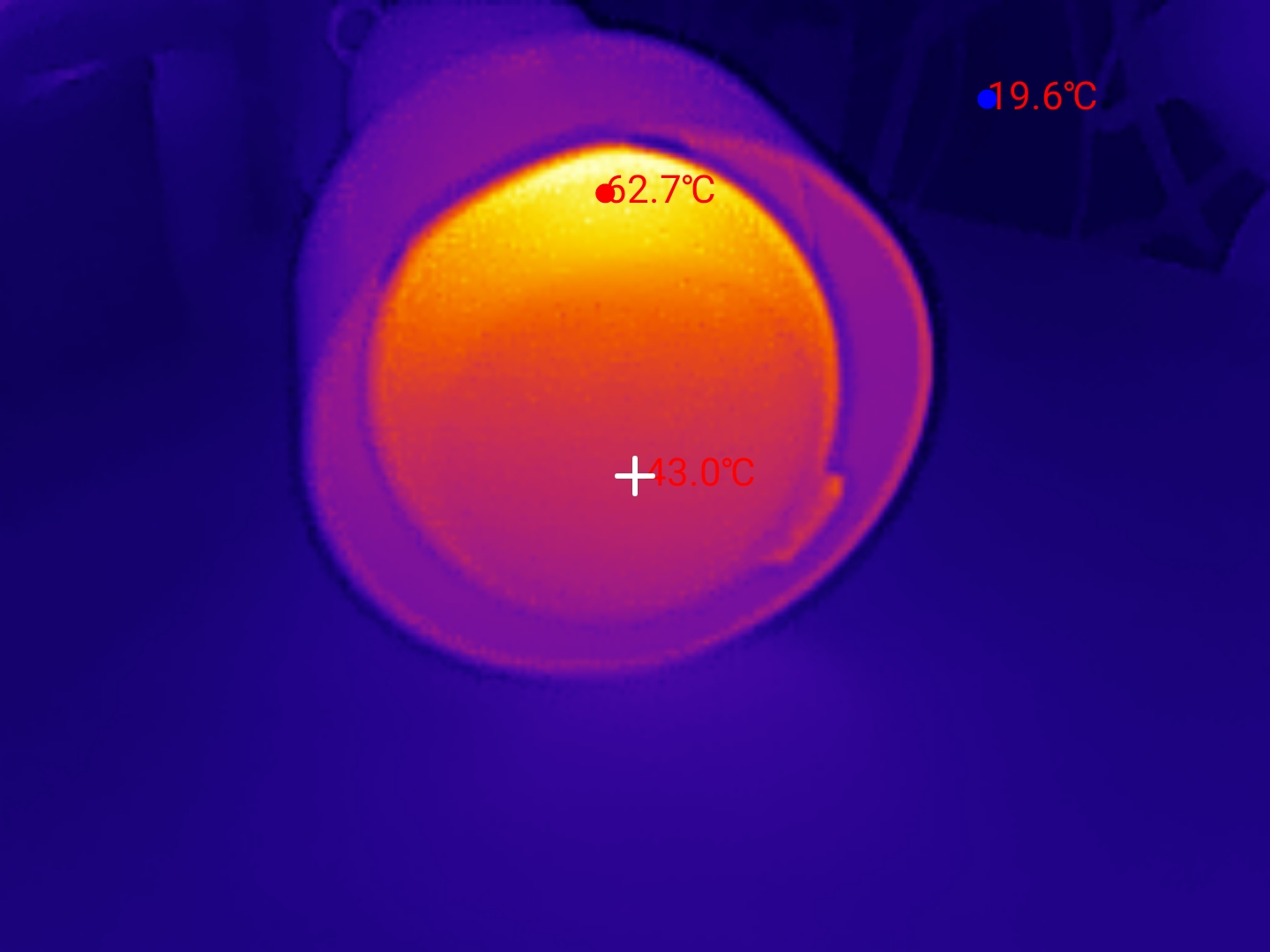
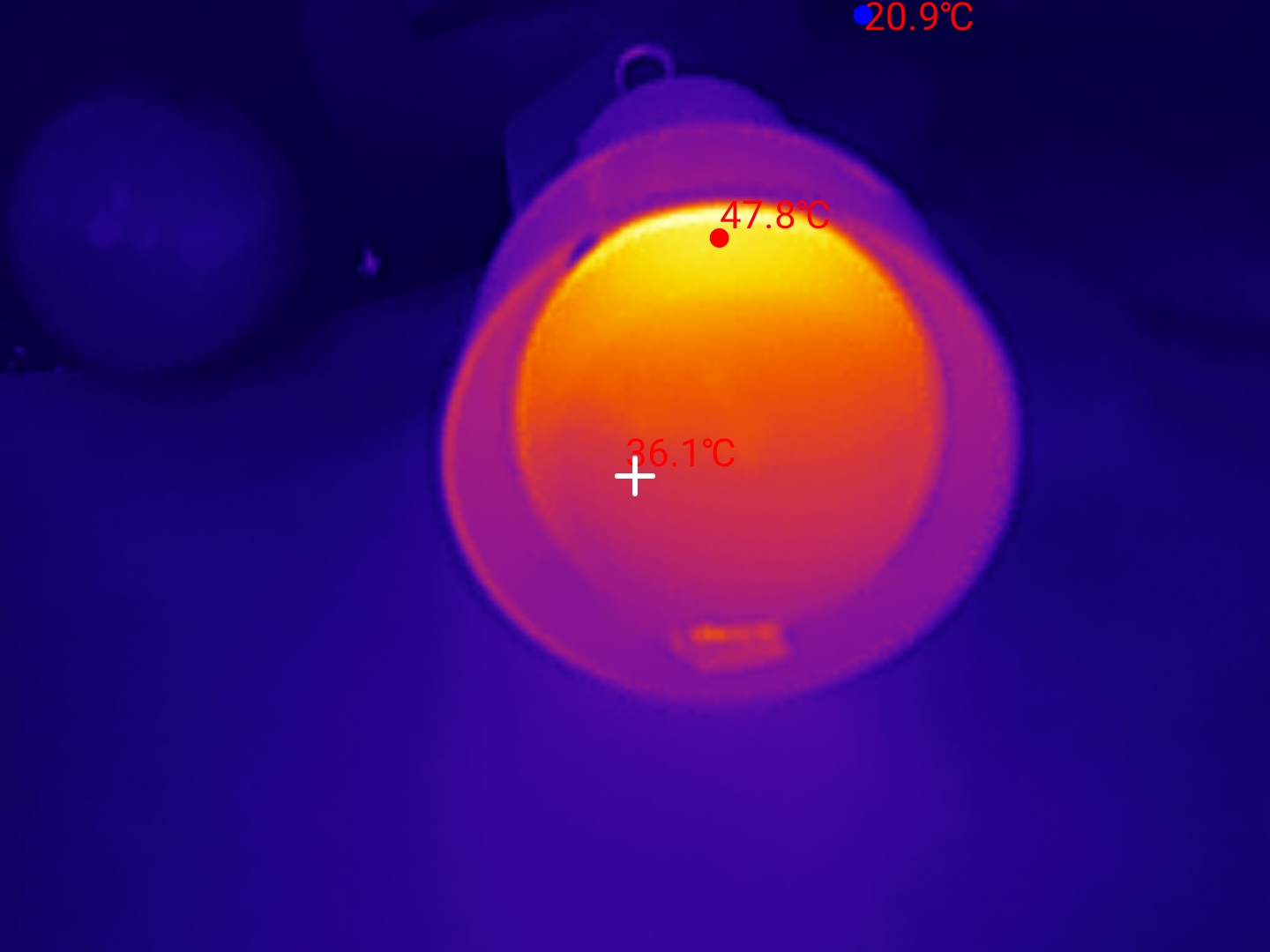
The first thing I wanted to check was the heating of the product in the factory configuration. I waited fifteen minutes. The luminaire may not have been the best, as it's not ventilated, but that's what's used after all. You can see about 60°C before wringing it out:
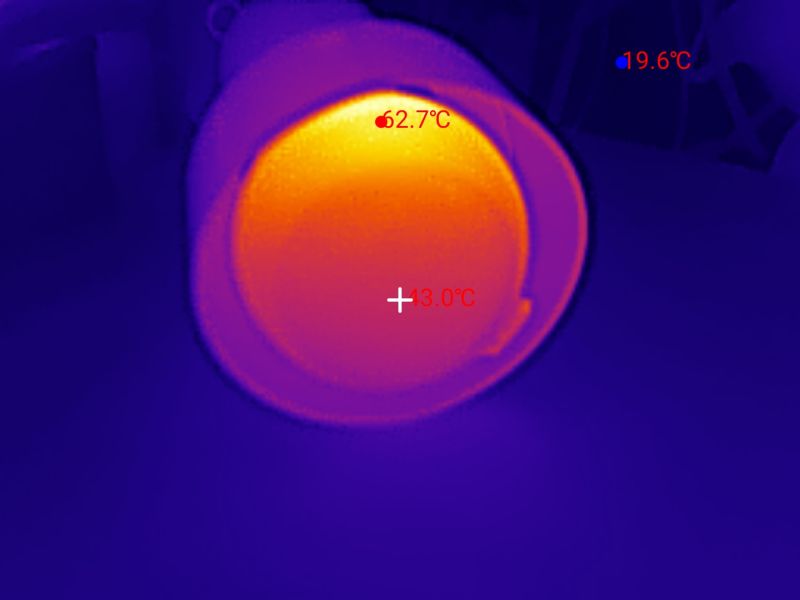
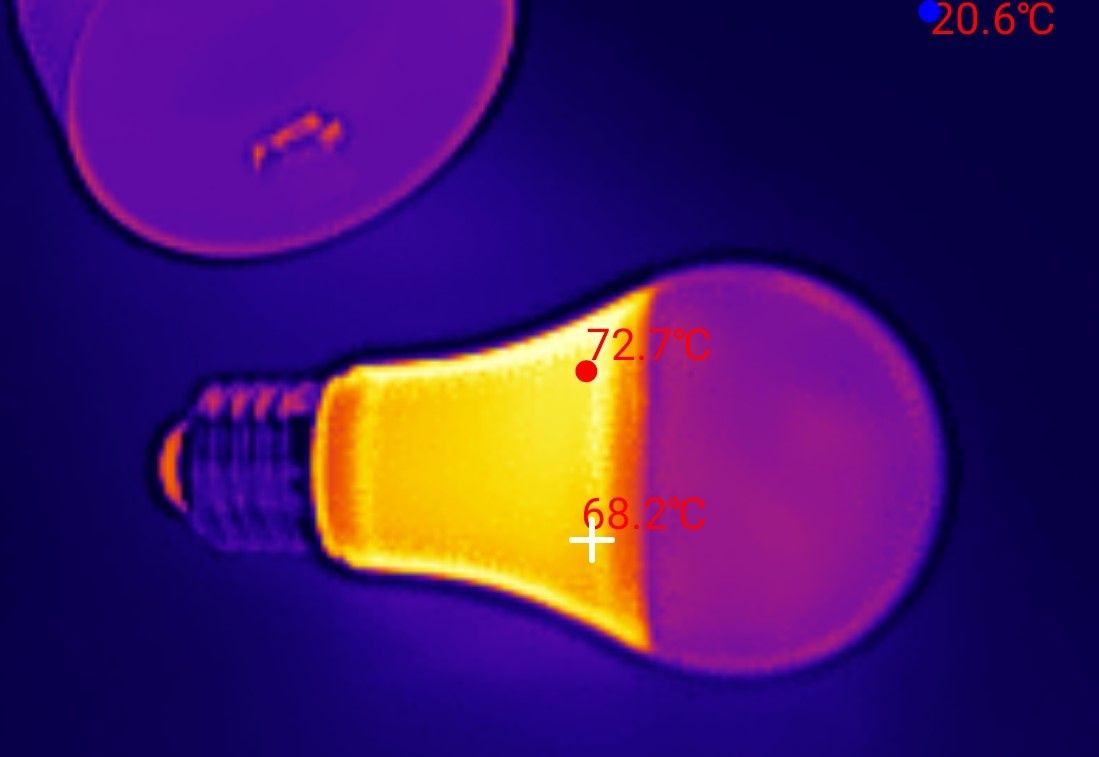
The housing is metal, only the outside is covered with plastic. The whole thing is hard to touch. It will be interesting to see what happens inside.
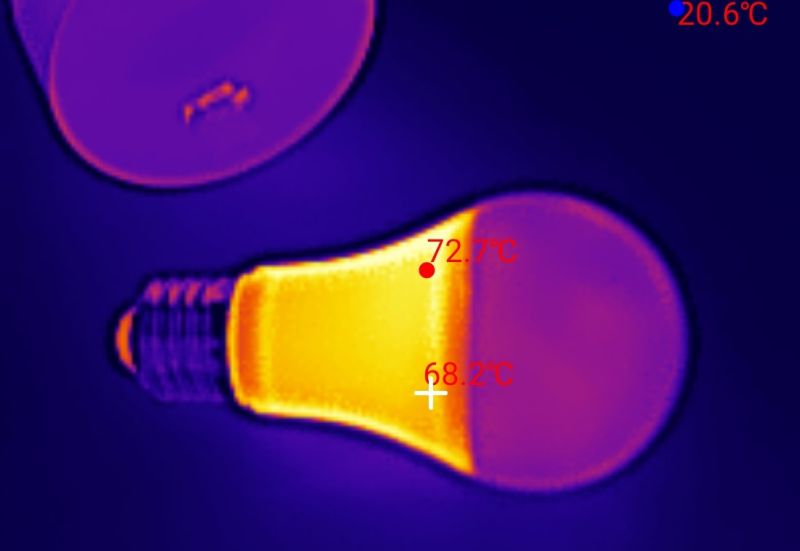
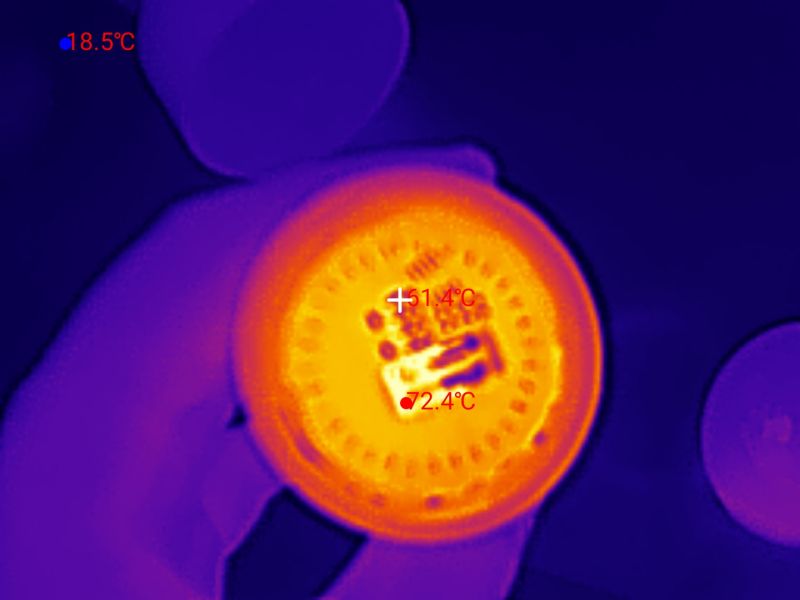
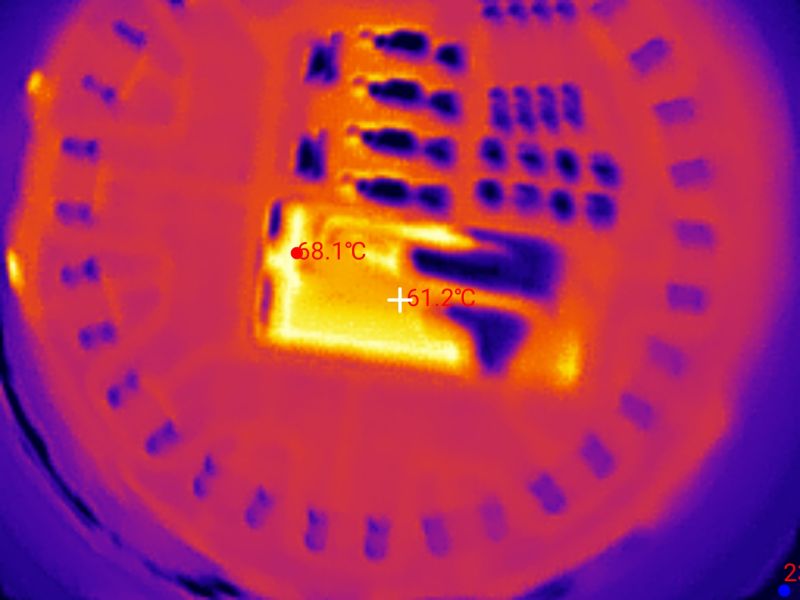
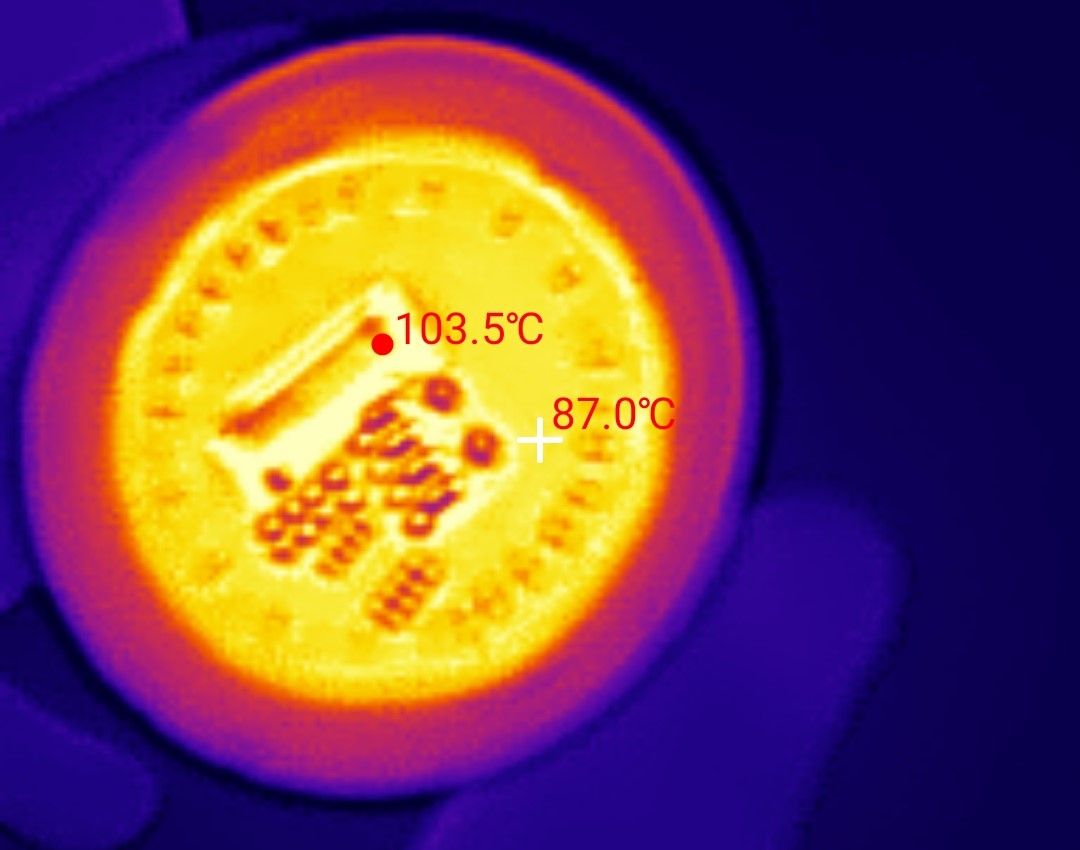
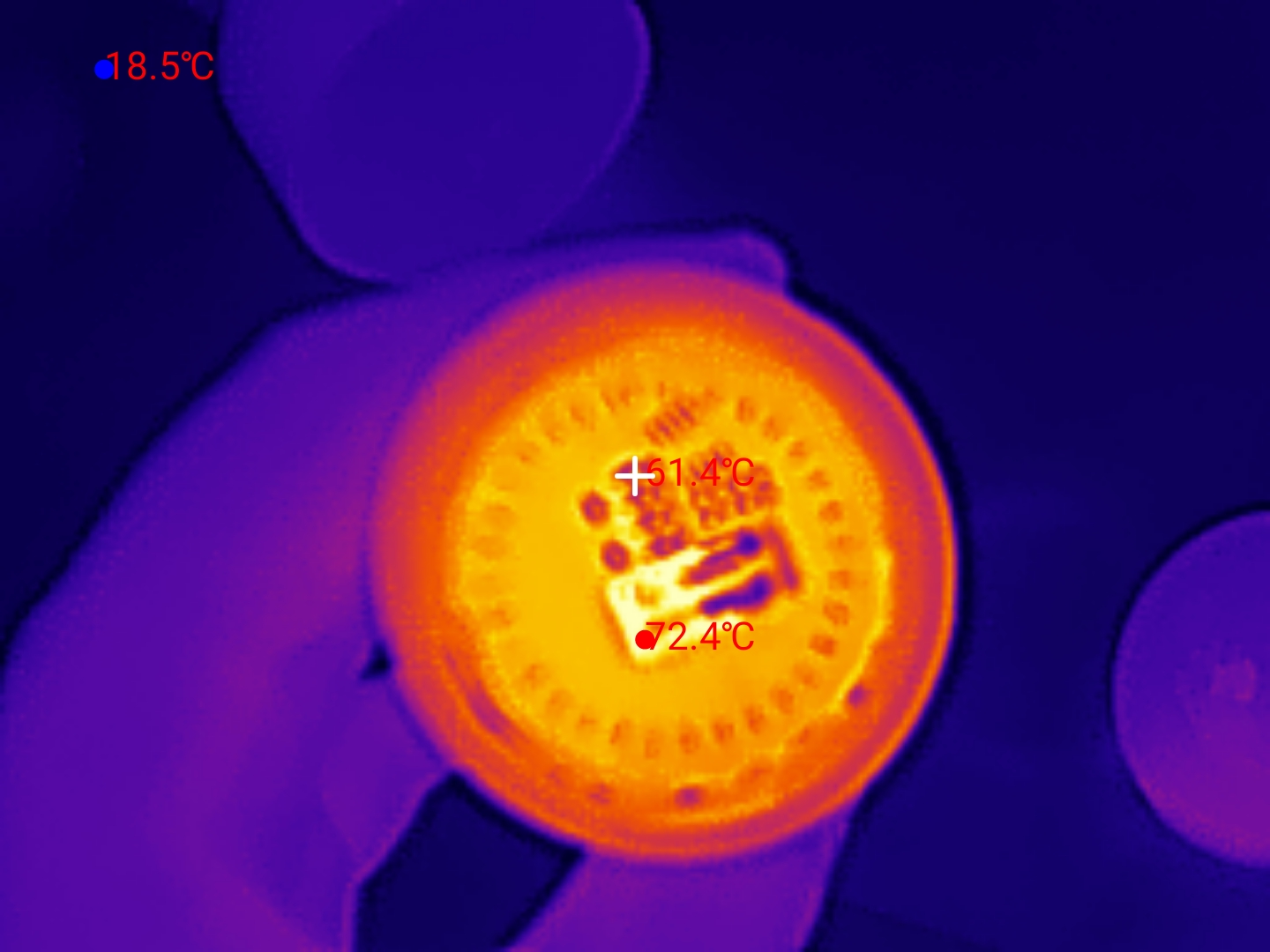
I couldn't delay as everything cools down quickly. Dome removed:
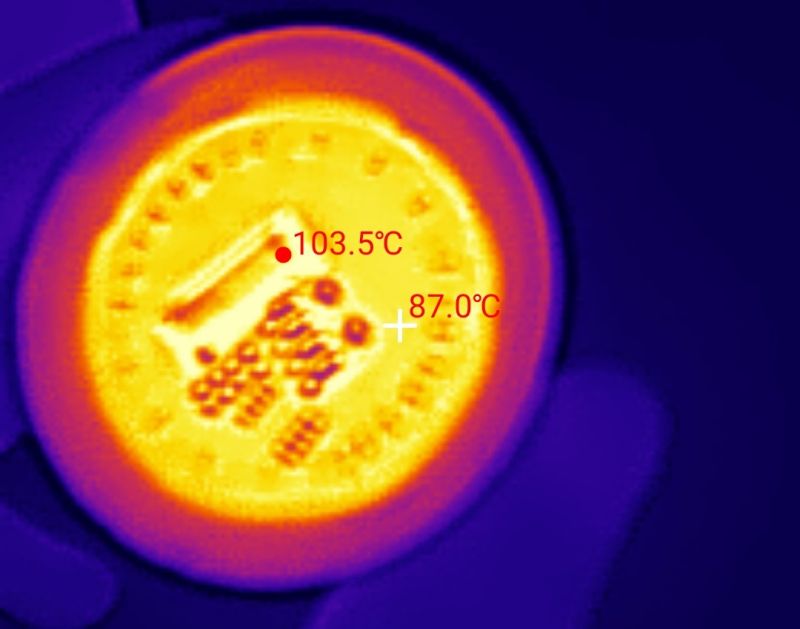
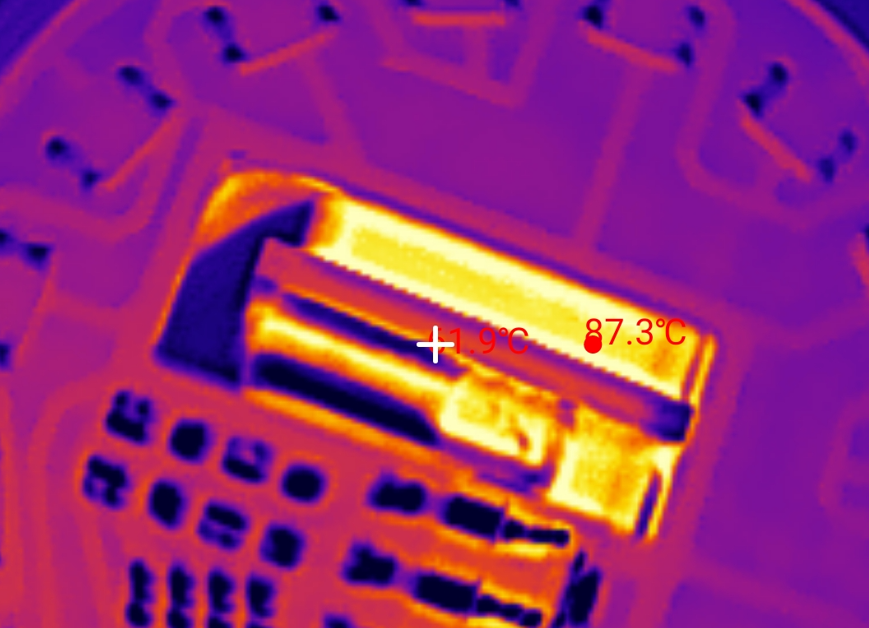
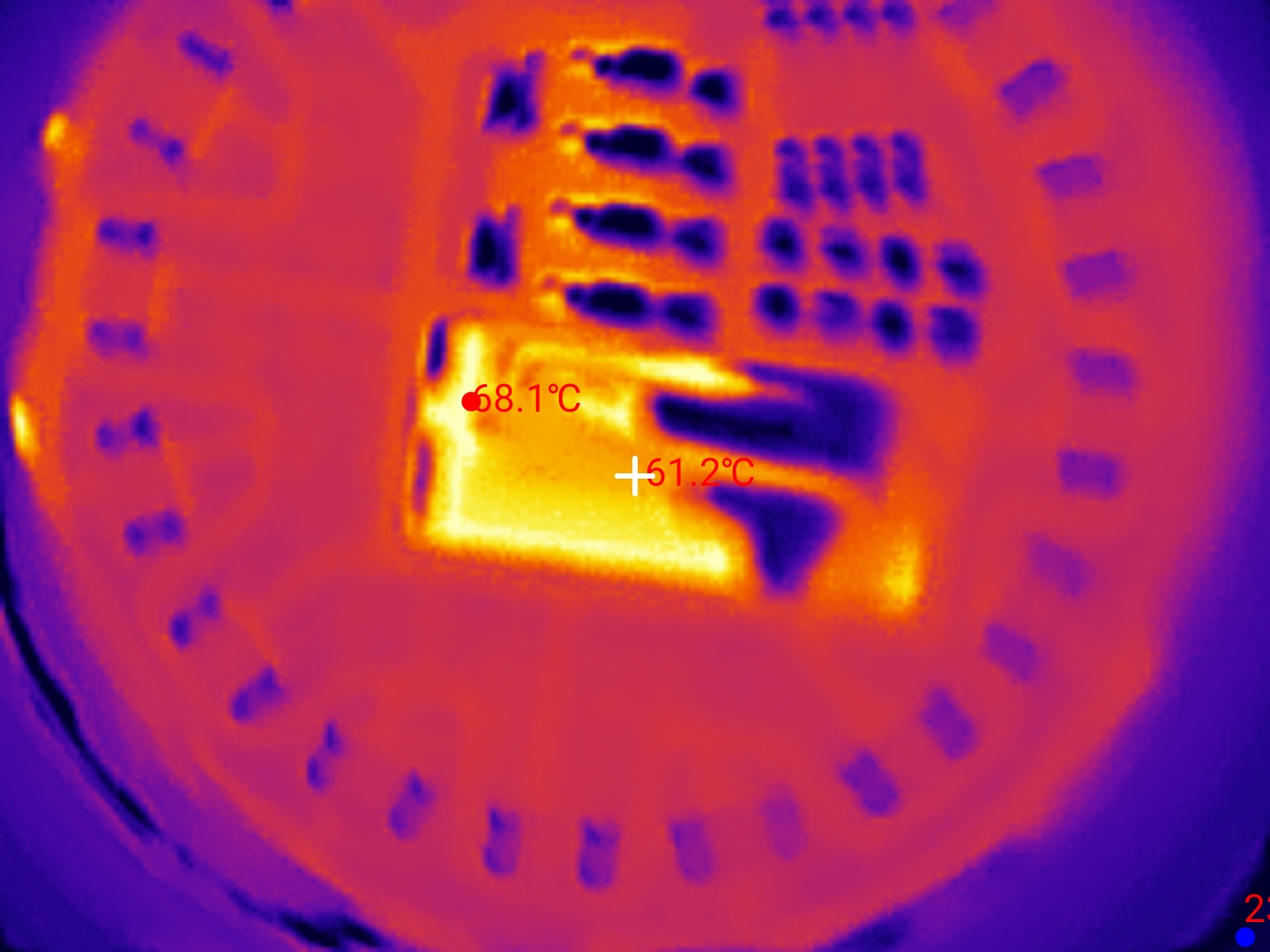
The 100°C barrier has been crossed, although the power supply and Wi-Fi module are probably the most heated, not the LED board itself. I still tried to take a picture with the macro lens:
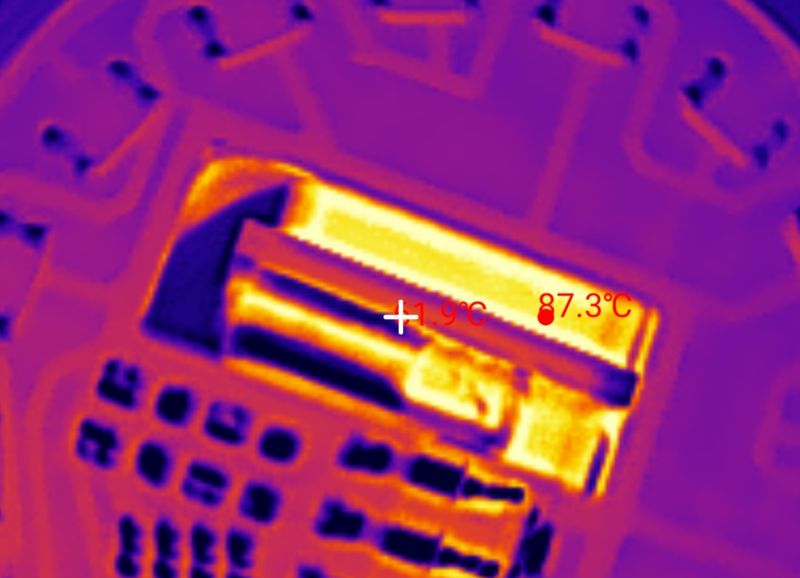
The LEDs are unlikely to be suitable for continuous operation in such conditions. Let's see if anything can be done.
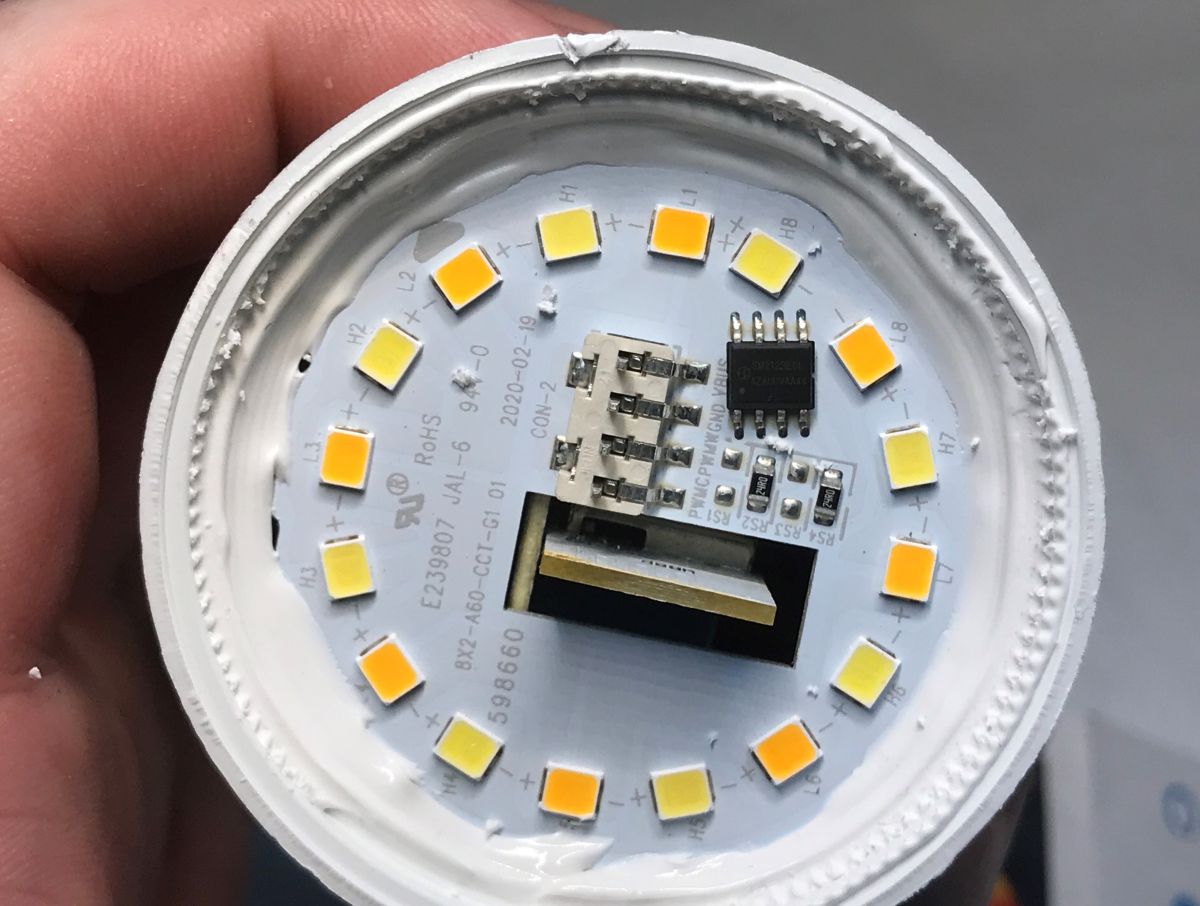
Interior of product
The dome is glued, it can be peeled off, or possibly levered up, but you can't insert a screwdriver too deeply.
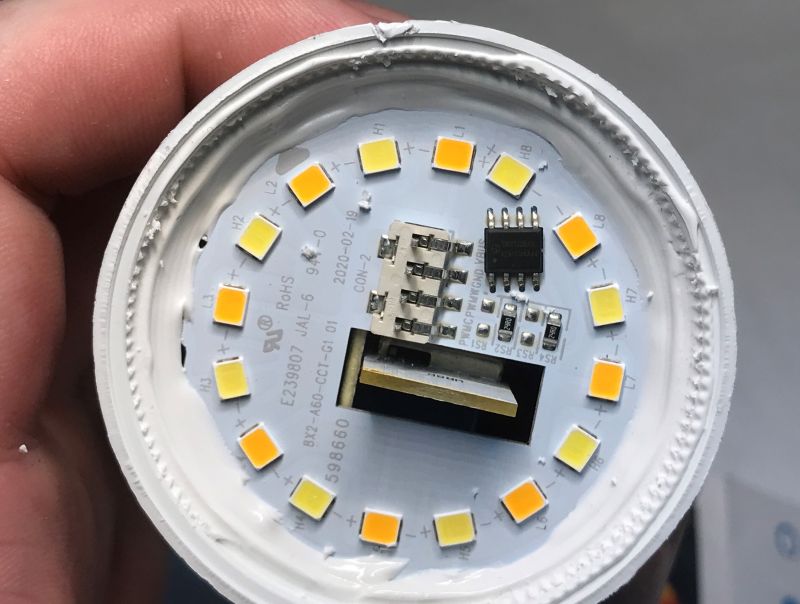
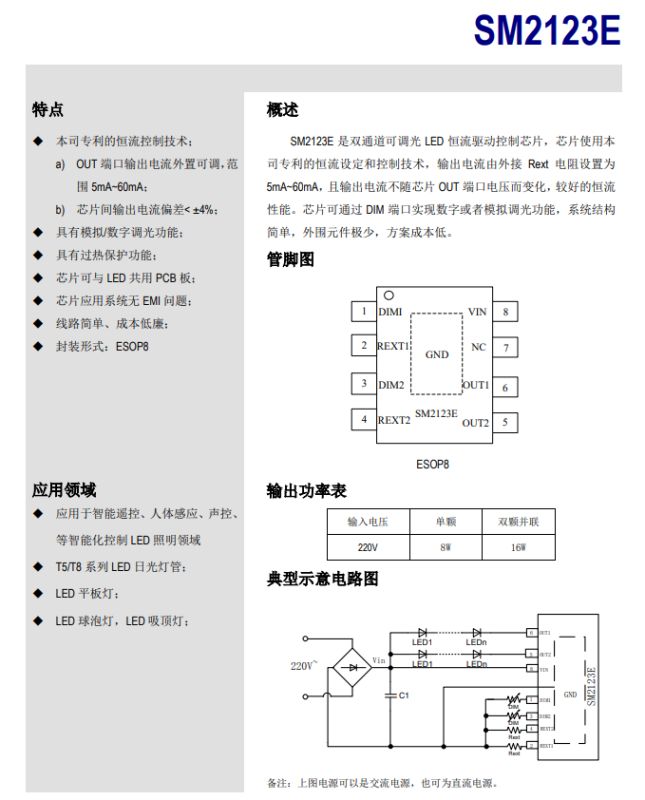
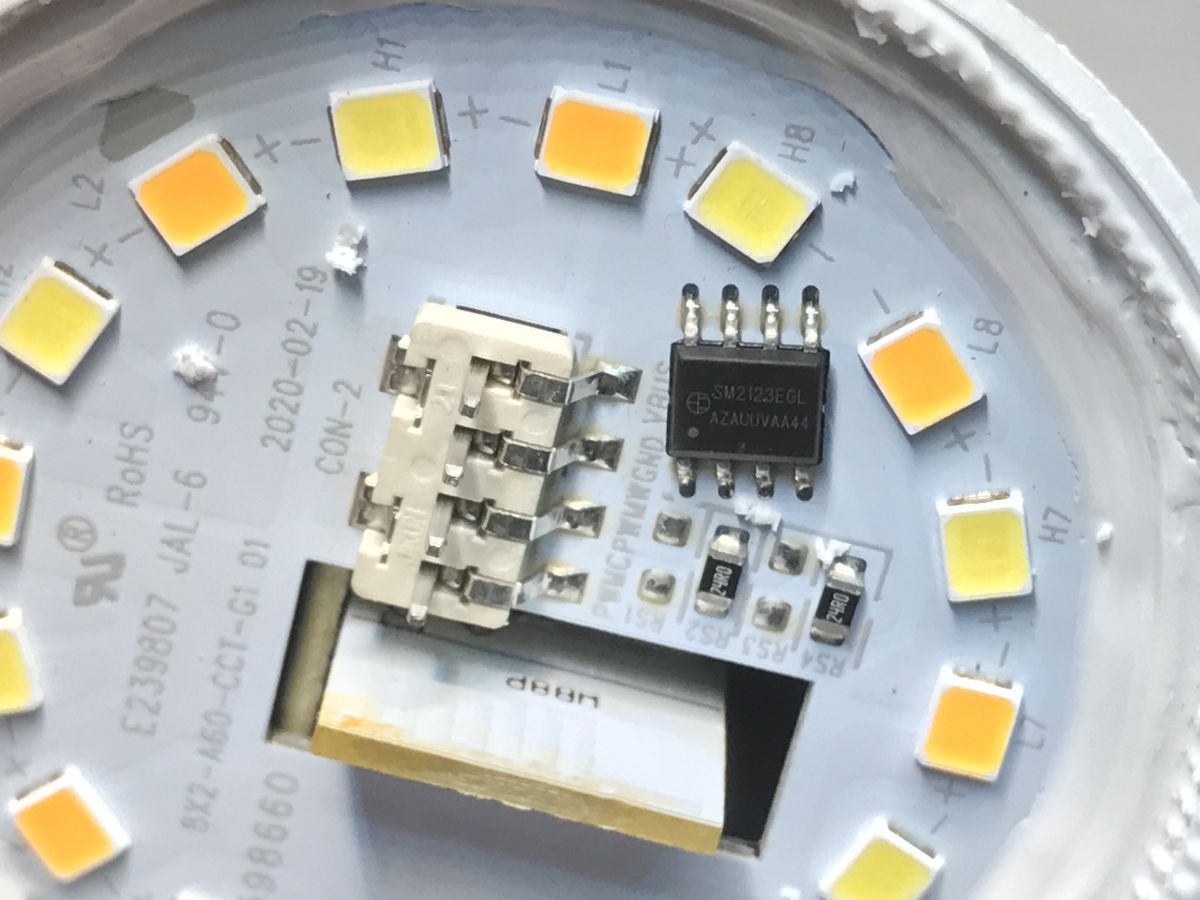
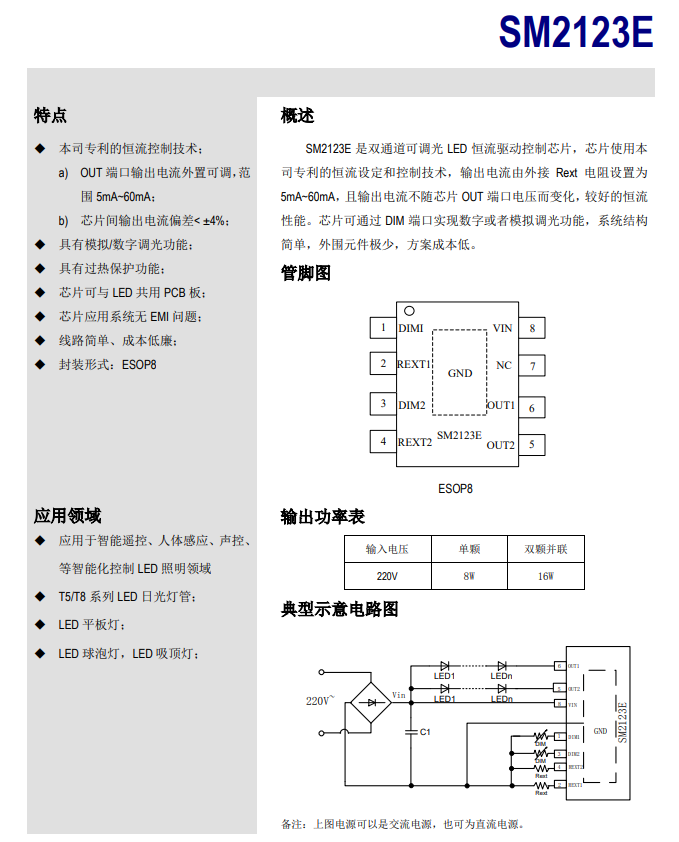
The LEDs are controlled by the SM2123EGL:
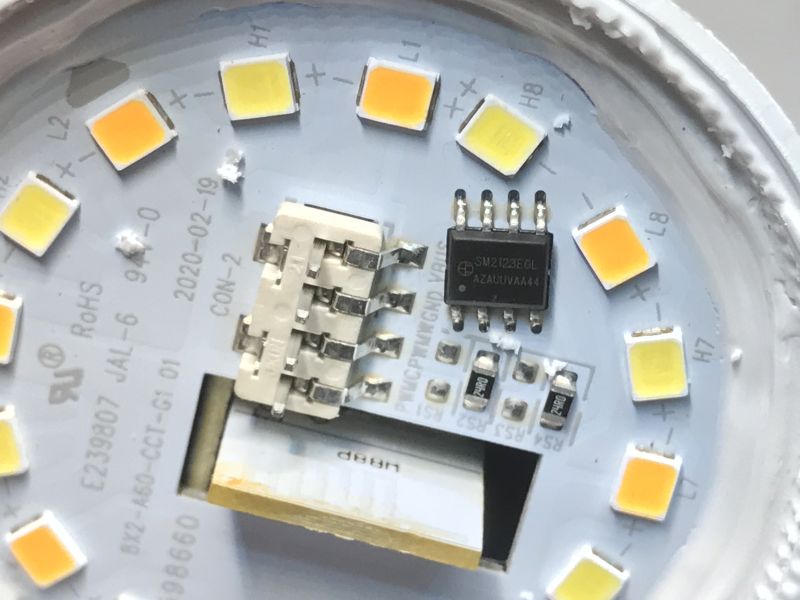
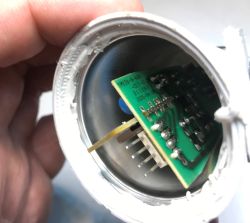
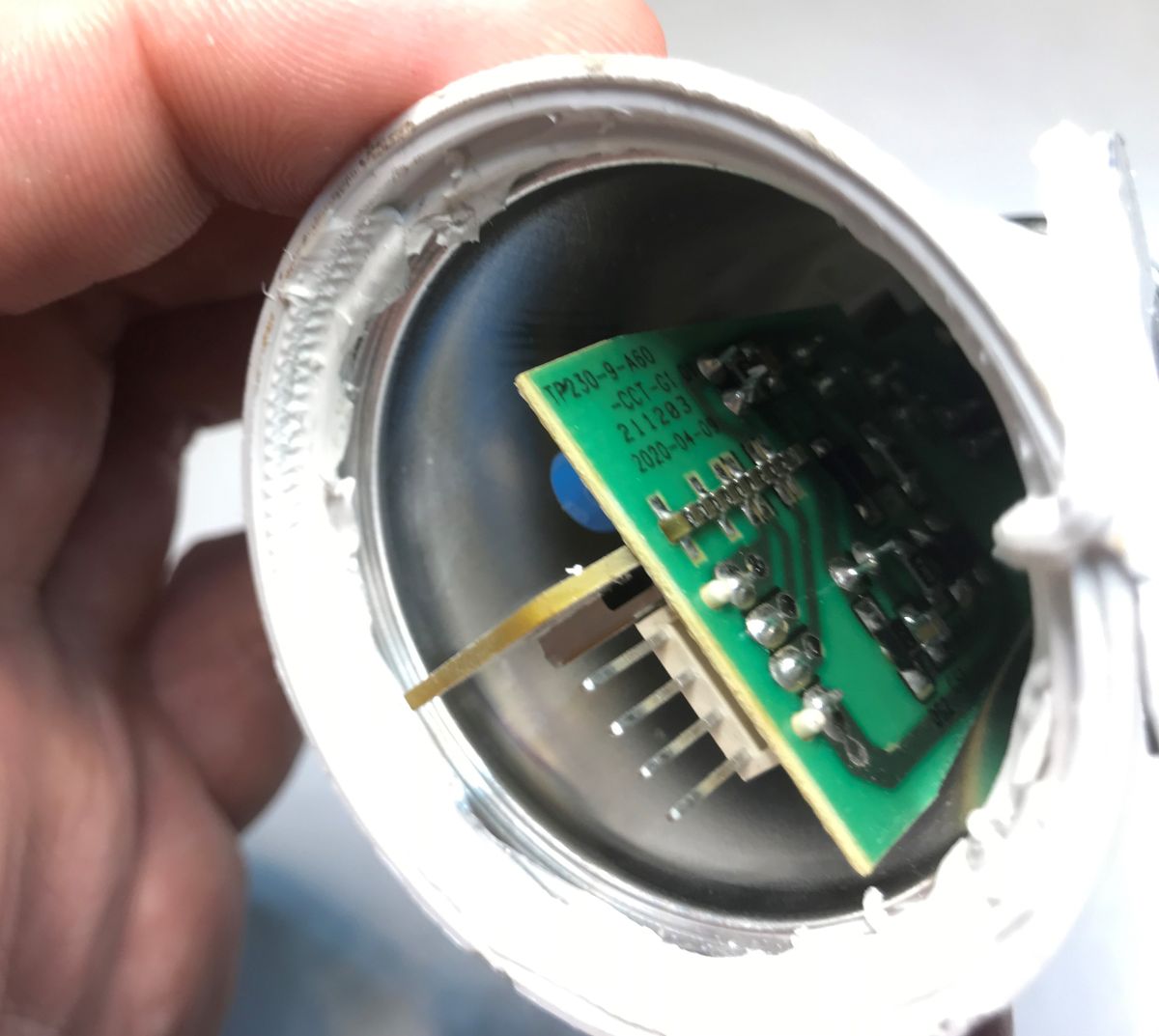
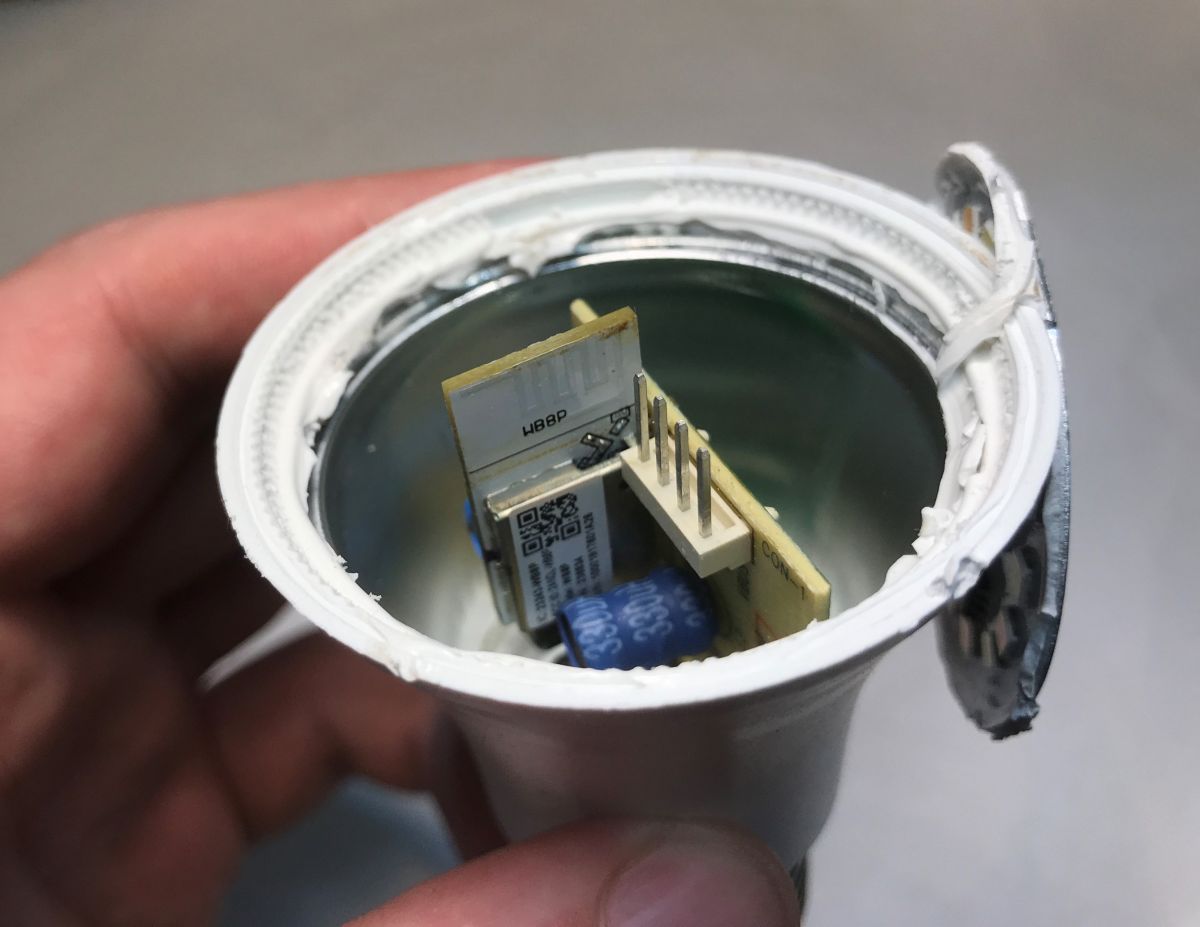
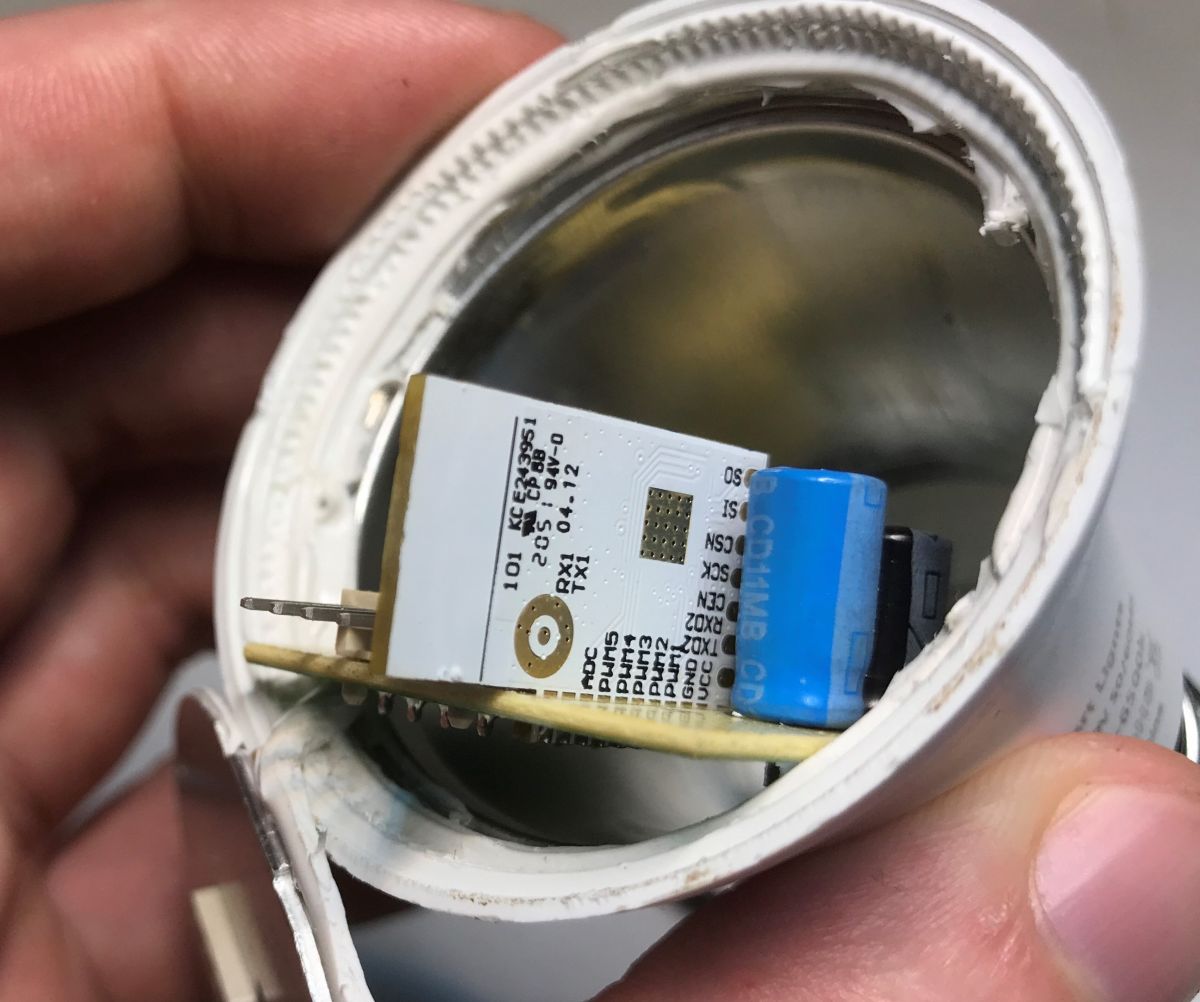
After removing the LED board, we can see the Wi-Fi module and the power supply:
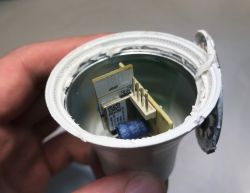 Firmware change
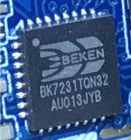
The WB8P is based on the BK7231T. It can be uploaded
OpenBeken via UART.
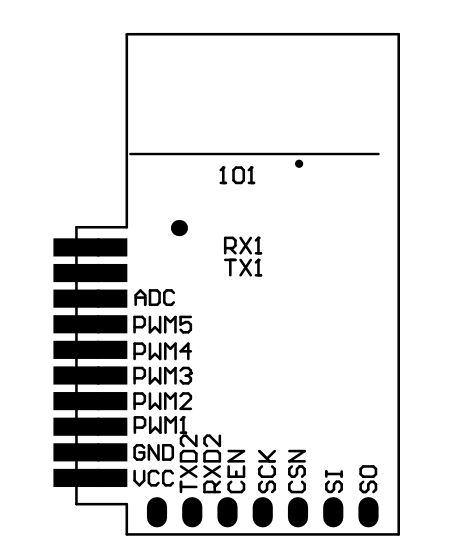
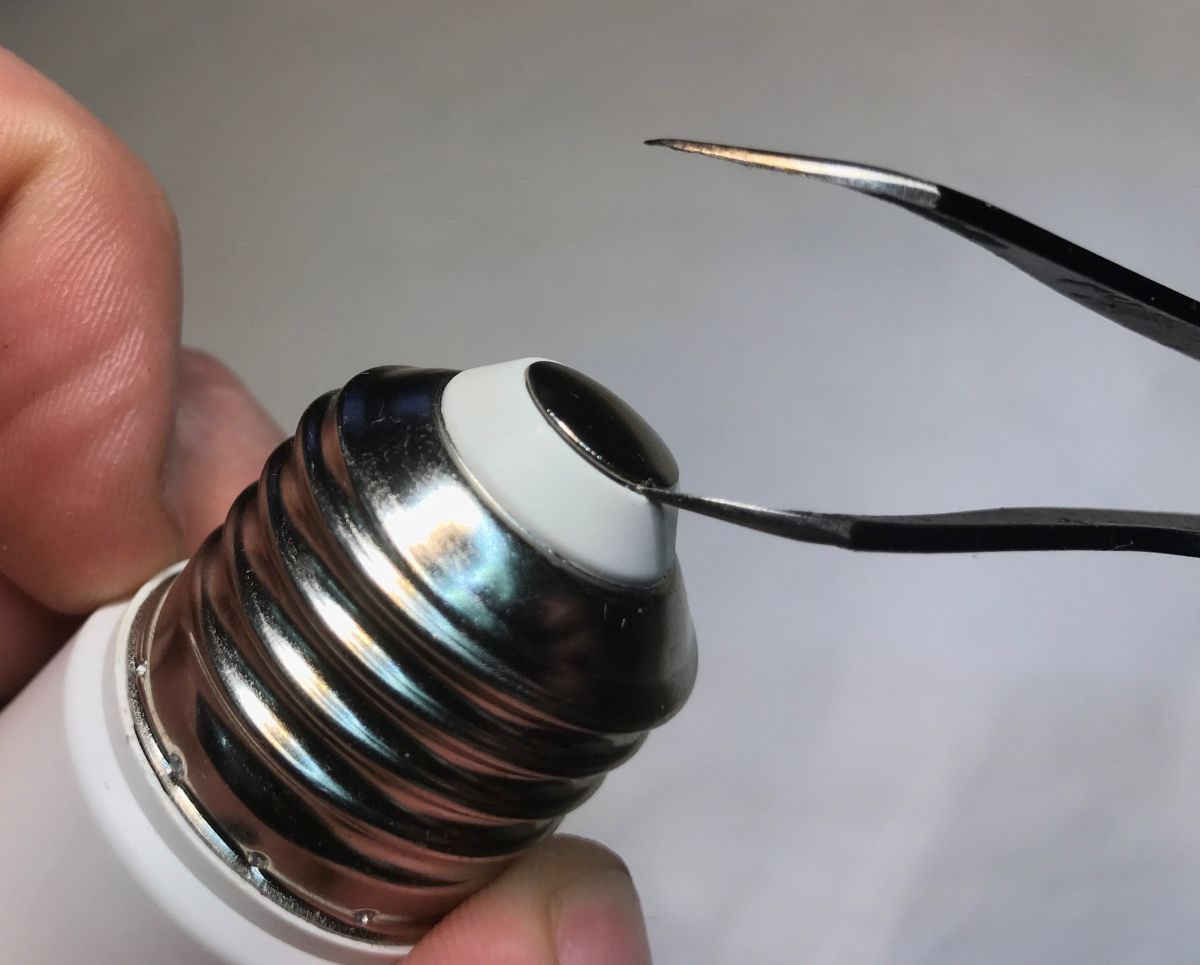
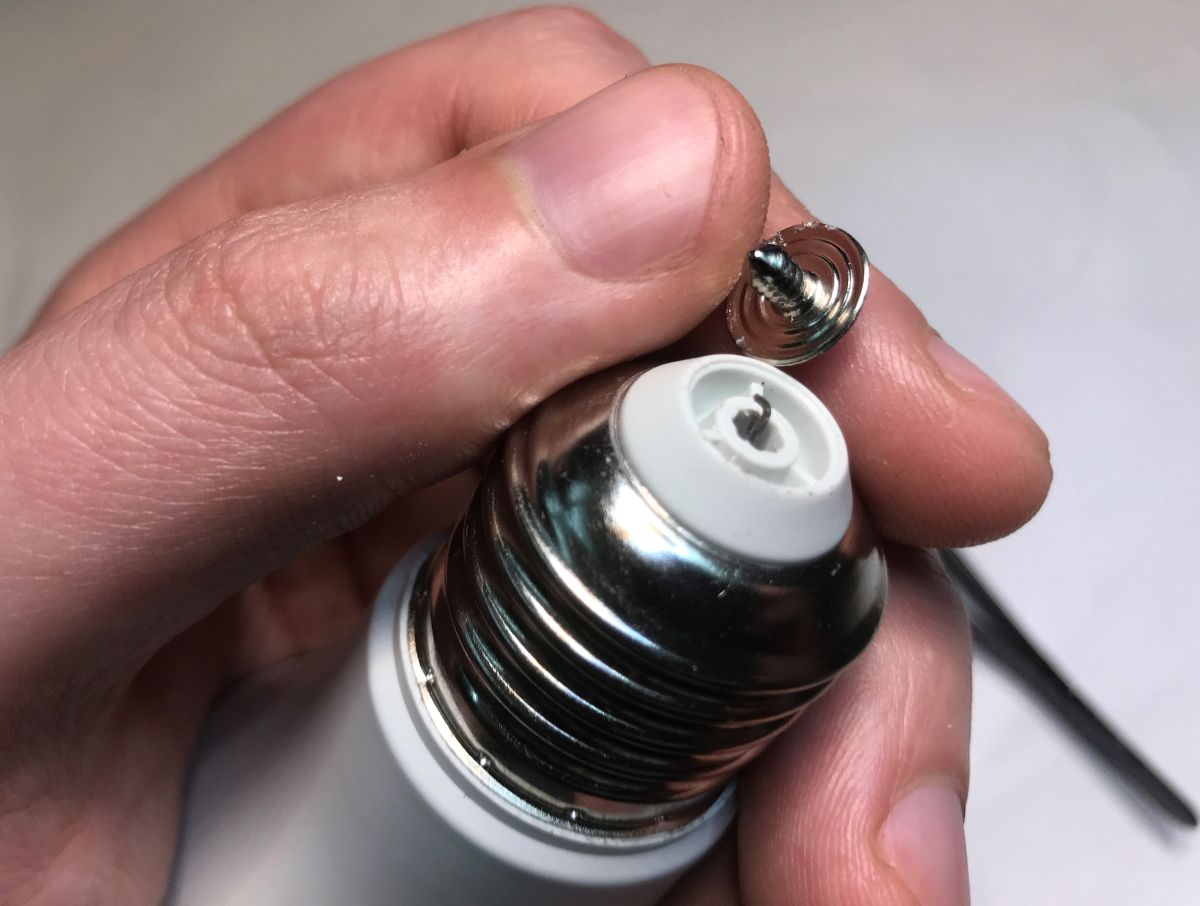
You need to get to the power supply and RX/TX. To do this I slightly freed the PCB by removing the "button":
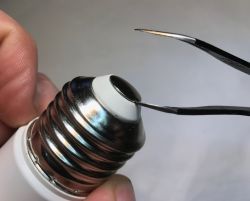
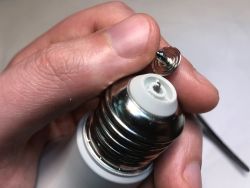
The plate can now be ejected:
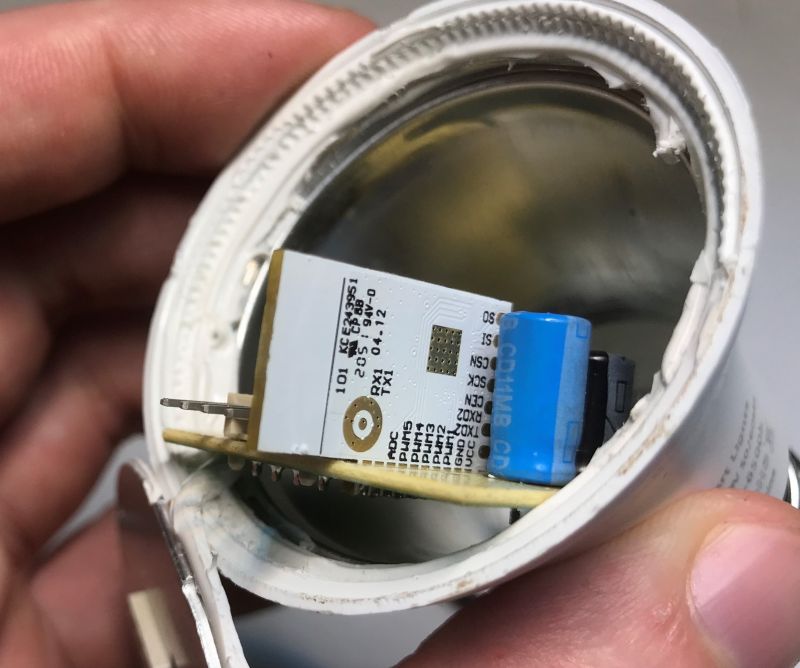
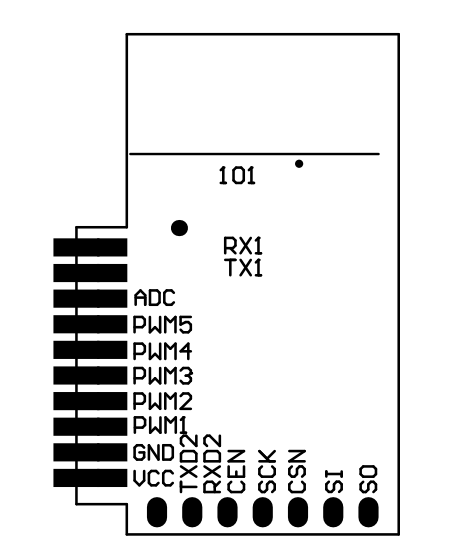
I stripped the wires and soldered two directly to RX and TX, and two to the capacitor legs from 3.3V - you can see by the tracks that it is connected there.
We flash according to the instructions of the BK7231GUIFlashTool, a comprehensive UART tool, not only for Beken:
https://github.com/openshwprojects/BK7231GUIFlashTool
You need a solid 3.3 V power supply and a USB to UART converter.
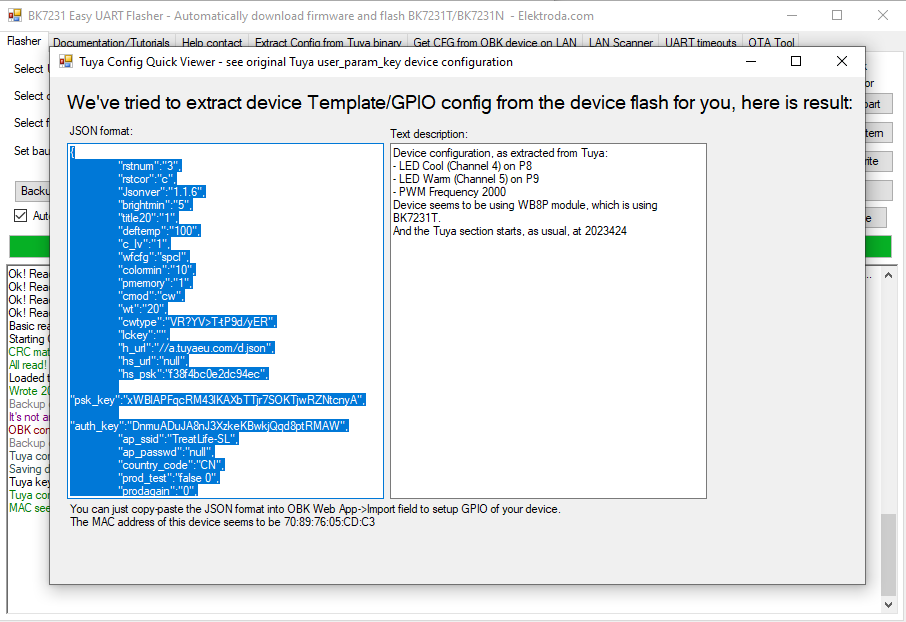
Flasher correctly discovers the GPIO configuration:
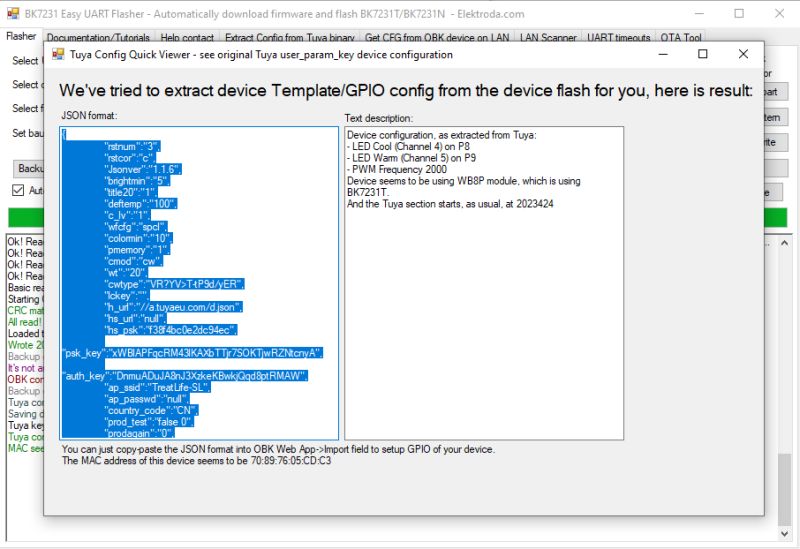
JSON Tuya:
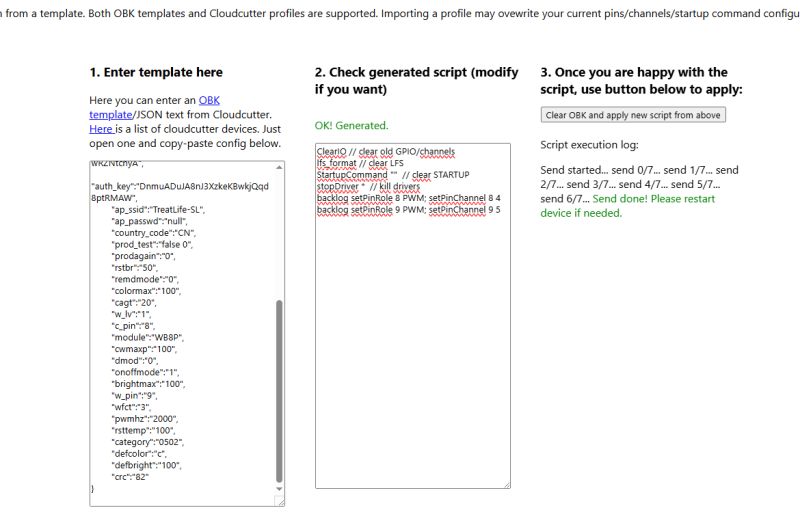
Even the PWM frequency was able to be extracted - 2 kHz. Template
OpenBeken :
Then you can quickly configure
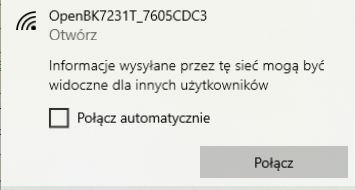
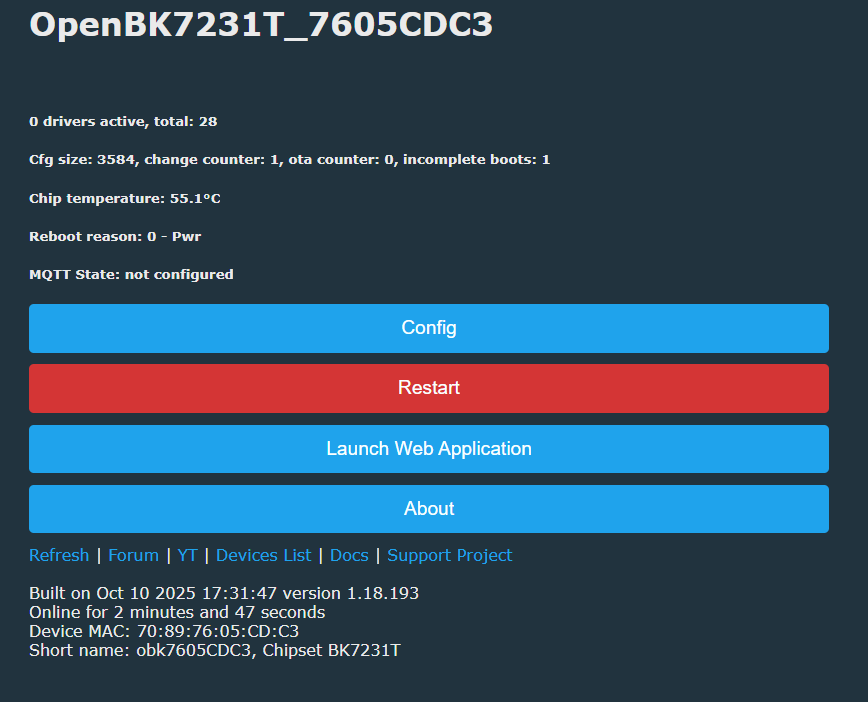
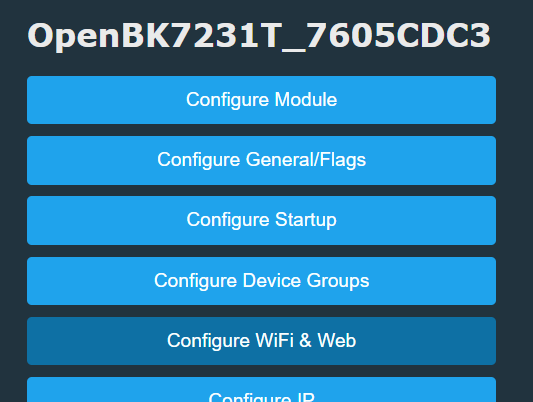
OpenBeken - we connect to the AP, the configuration IP is 192.168.4.1, we set a bearing to our network:
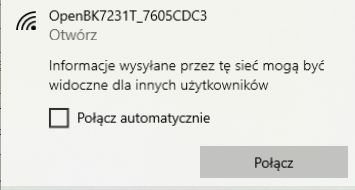
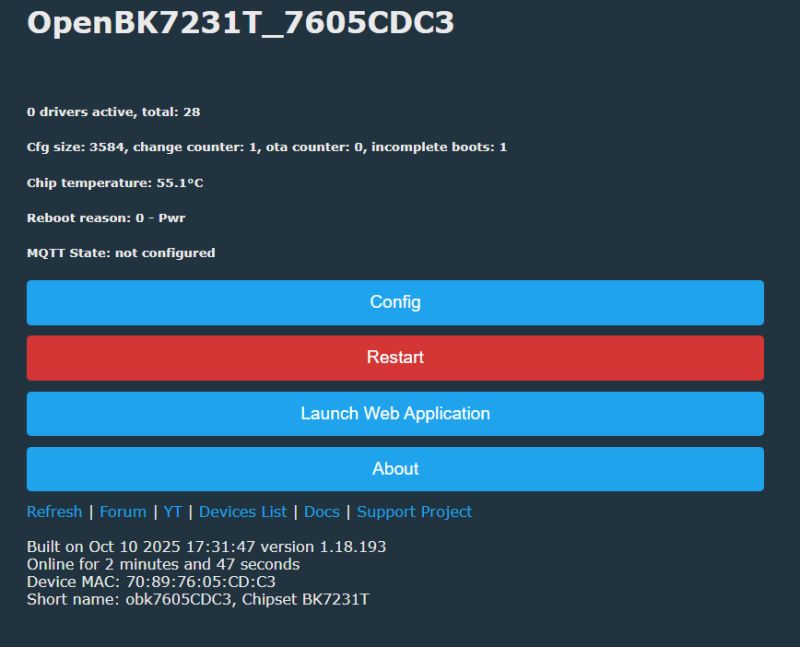
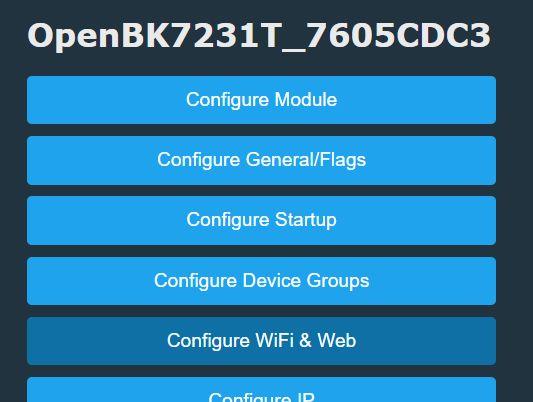
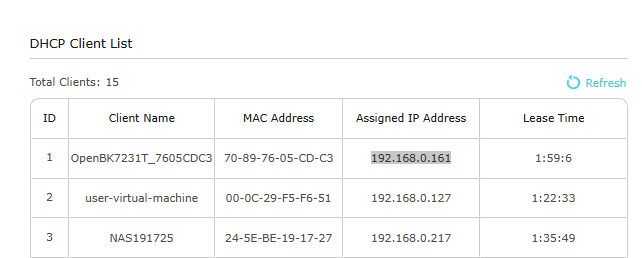
The device joins our Wi-Fi:
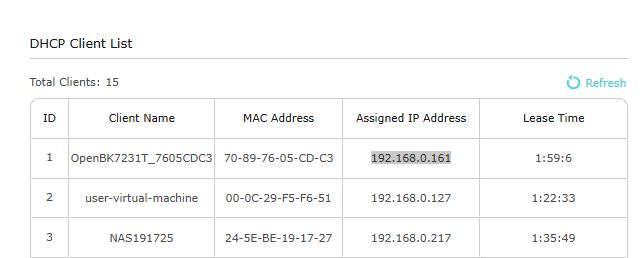
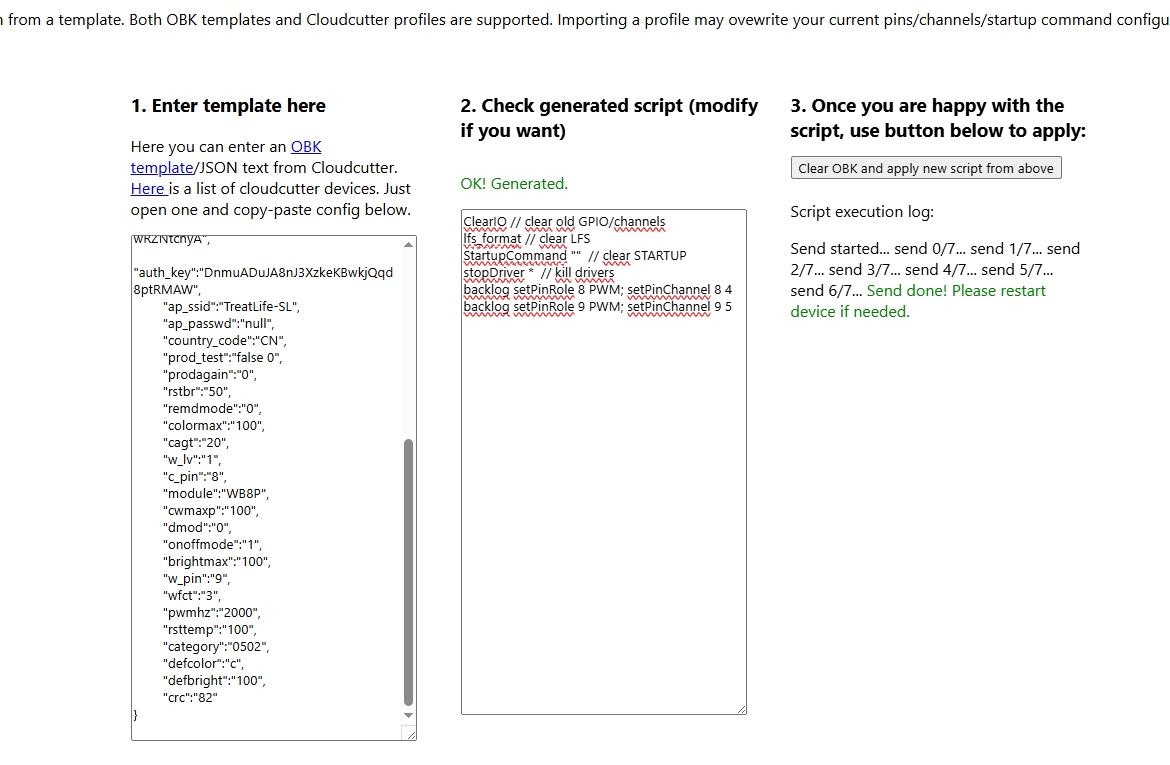
We then import the template in the Web App - > Import:
 Heat-up test - 80% PWM
OpenBeken
Heat-up test - 80% PWM
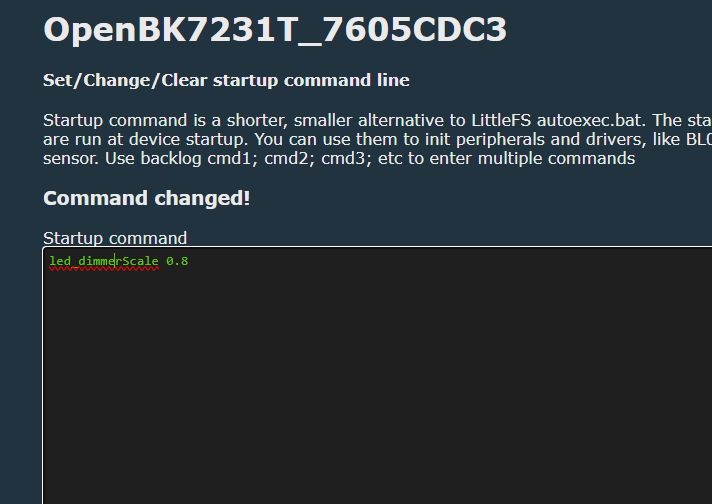
OpenBeken allows you to artificially limit the PWM range so as to reduce power consumption and heating of the LEDs. This is not a primitive way on the principle of "remember to set 80% brightness", but an elegant method that hides everything in the firmware, and the UI and Home Assistant still operate on an apparent range of 0-100%, where the displayed 100% is actually the limit we set.
It's time to check the effects:
 Wi-Fi module power saving - PowerSave
OBK
Wi-Fi module power saving - PowerSave
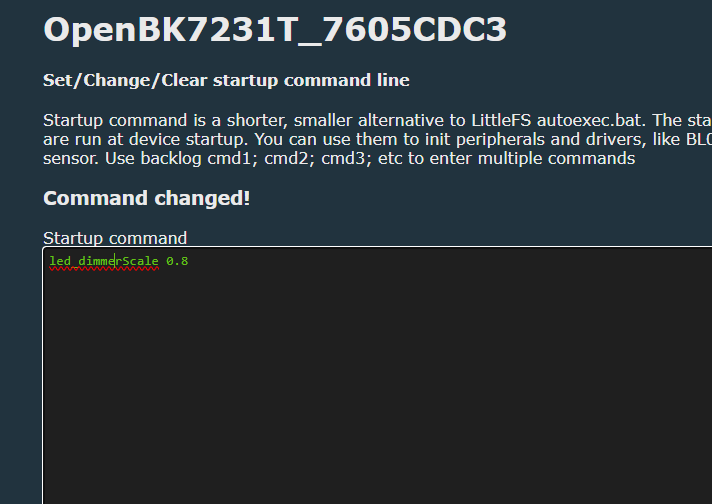
OBK still has a dynamic sleep option for the Wi-Fi module - this saves power, but works best when not operating on the device's web panel. The system's activity is adjusted according to the load. The command is activated by typing:
As before - if you are testing on the fly, you can type this in the command line. Otherwise, you need to add it to the startup command so that the device remembers it between reboots.
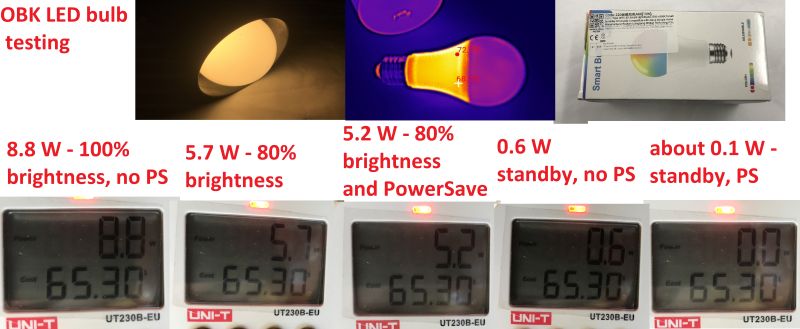
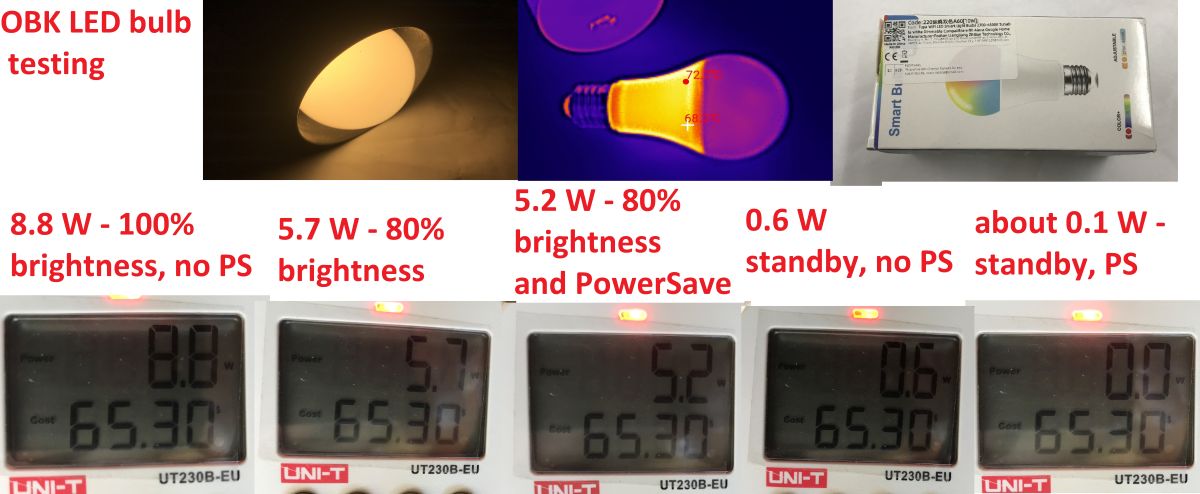
I have included the results of the measurements in the graphic:
 Summary
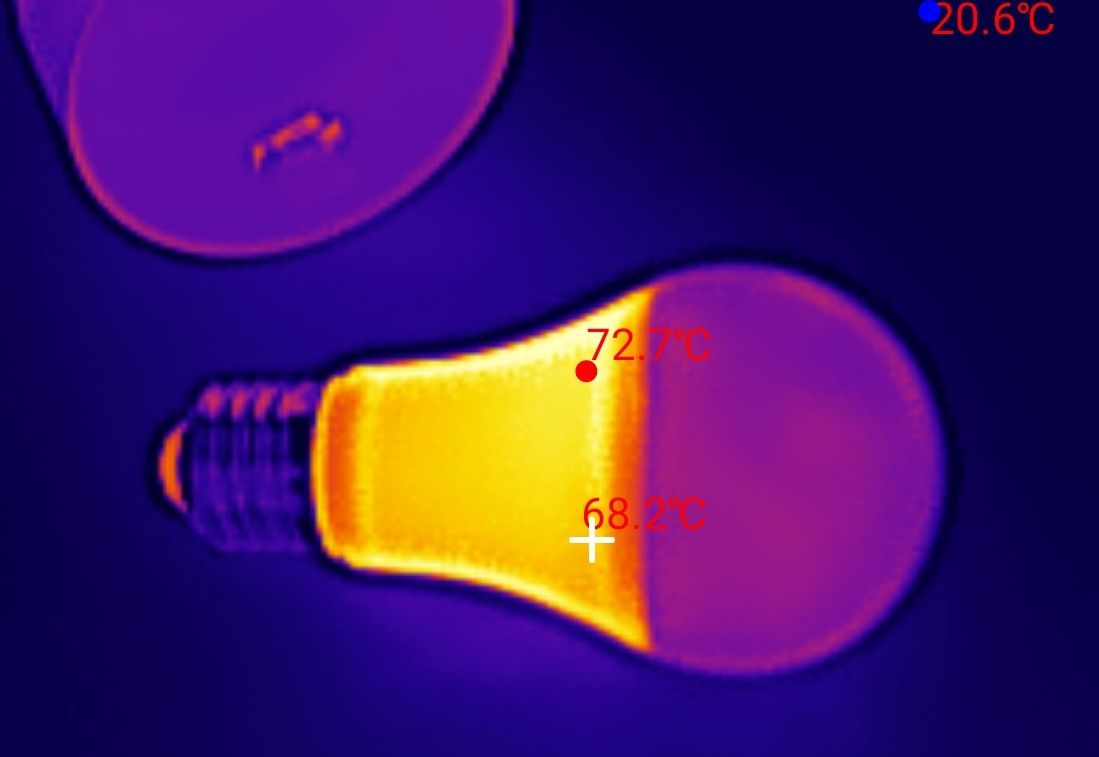
At full brightness, the lamp draws 8.8 W and heats up to over 100°C. When the brightness is reduced to 80%, the power drops to 5.7 W and the temperature reaches 70°C. In addition, I also checked the power saving of the Wi-Fi module - when it is switched on, the power drops from 5.7 W to 5.2 W, which allows us to estimate that this saves about 0.5 W, which is also quite a good result. Finally, I checked the power without the LEDs lit - 0.6 W without power saving, with power saving much less - my UT230B then shows 0, I assume it's probably around 0.1 W.
The conclusions are obvious - so-called "smart bulbs", or at least the series shown here, tend to overheat which can significantly shorten the life of the LEDs. Reducing the maximum brightness by 20% can significantly reduce the heating, it may be worth the temptation.
Additionally, changing the firmware allows us to control the product locally and integrate it with various services and environments, such as Home Assistant.
Do you use Wi-Fi controlled lights, have you noticed excessive overheating? 






Comments
For the future, it would be useful to measure how the luminous flux decreased with reduced power (comparative measurement even with a lux meter from a phone). LEDs have it in common that a reduction in... [Read more]
Is such a measurement with the "lux meter" application at least a little bit reliable? I can at any time on my devices run the command led_dimmerScale with any value and compare the effects. [Read more]
Certainly these are not real values but having a measurement with the same 'tool' under the same conditions gives the opportunity to compare the results. Maybe someone has compared an app measurement... [Read more]
I happened to have a Sonel LXP-1 lux meter at hand and did a quick comparison of the readings with the Huawei P30 light and iPhone 16e out of curiosity. A 75W light bulb was used as the light source. On... [Read more]
Light sensor or front camera? [Read more]
From the description in the programme, it appears that it uses the front camera. [Read more]
I bought an A-rated bulb when the others can't be held in my hand after unscrewing this one is only warm. Actually, it would be even better if they got rid of the glass bulb and it would shine just the... [Read more]
Filamentless bulb... Interchangeable diodes a manufacturer's dream - instead of a profit for the whole led bulb some measly pennies for the diodes.... Buy, consume, because it's the basis of capitalis... [Read more]
Quite an interesting and accurate description of the subject. I think I have a similar bulb bought for a smart home that I will be running as I find free time. [Read more]