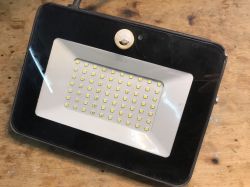
I would like to invite you to a destructive demonstration of a powerful outdoor LED lamp with a PIR motion sensor. The equipment came to me completely inoperable, so I decided to check its construction for teaching purposes. I was mainly puzzled by what was broken, and how the LED control and the motion sensor were implemented.
I don't know the model of this lamp, so the whole thing will be based on guesswork.
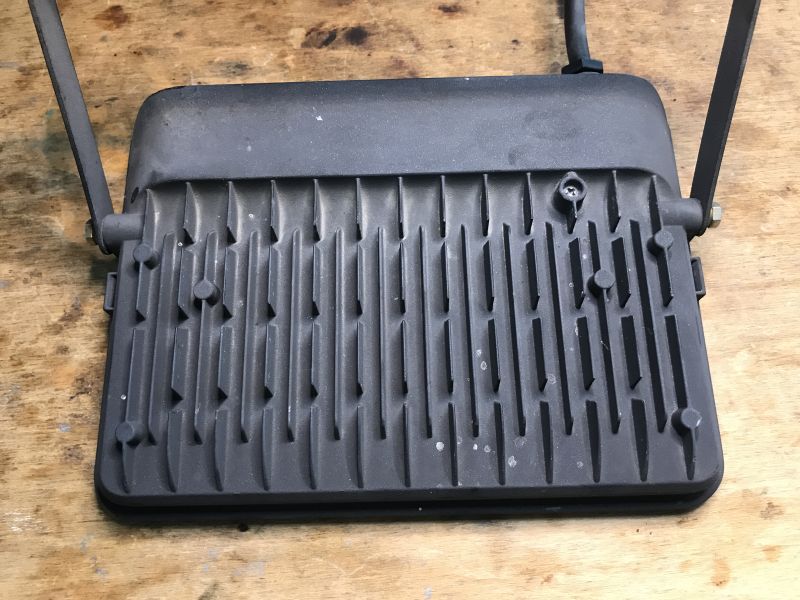
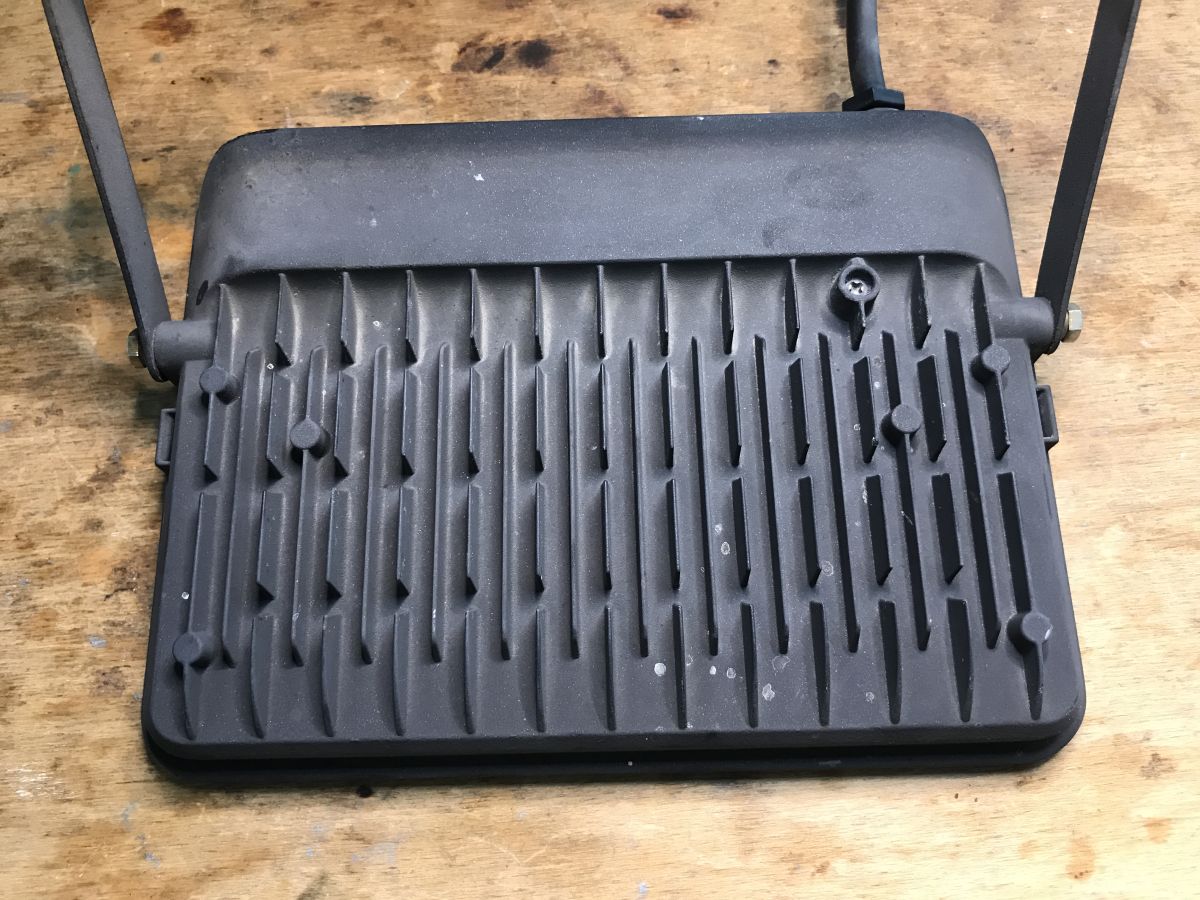
The housing is metal and solid, and you can also see that it has 'fins' on the back for heat dissipation. 50 W in LEDs is a lot of power though, and after all, not all of it turns into light. I wonder what efficiency the LEDs are in there.
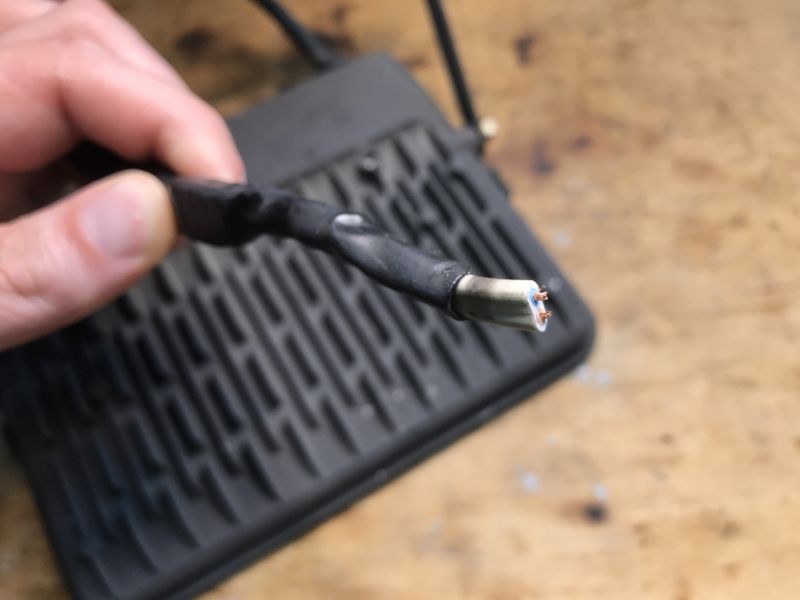
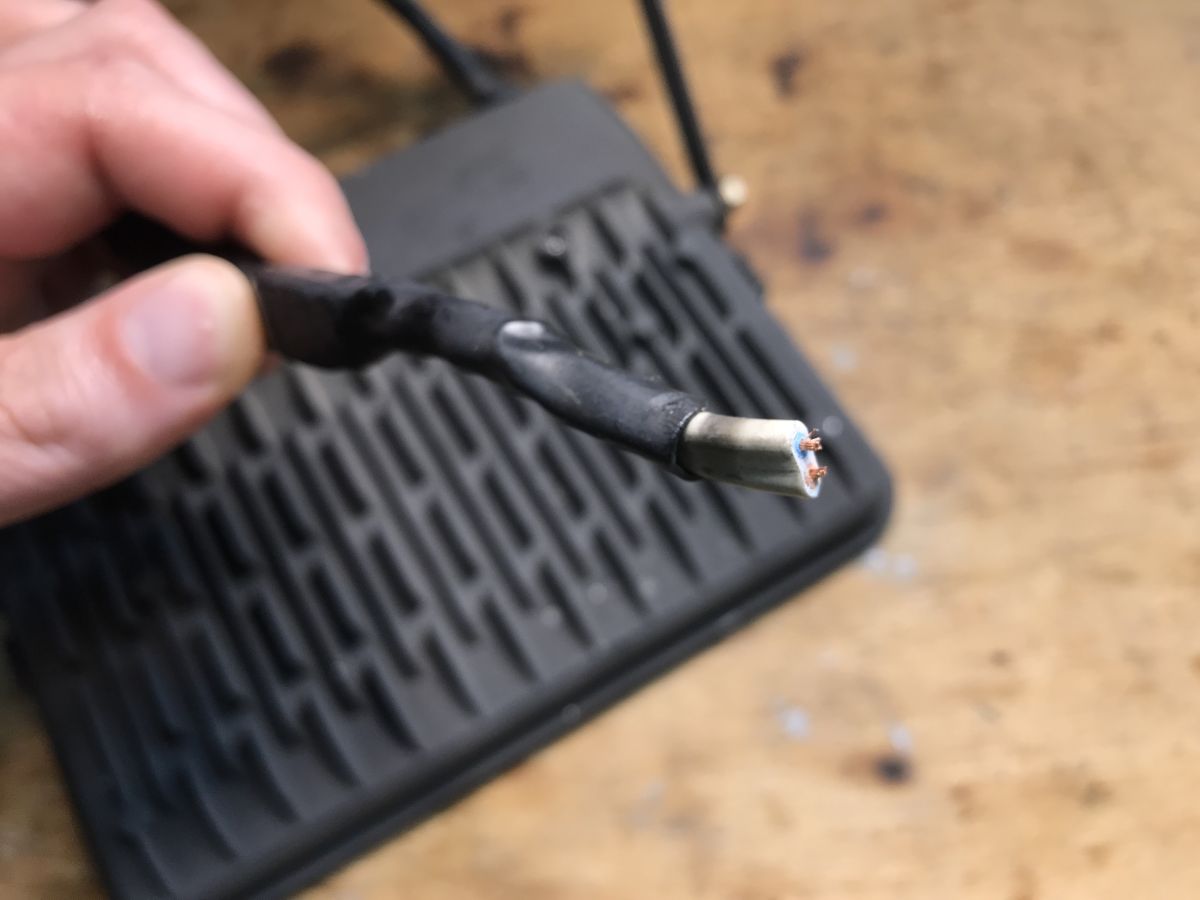
I guess the previous owner decided that earthing was unnecessary and wired the whole thing with a two-wire wire.
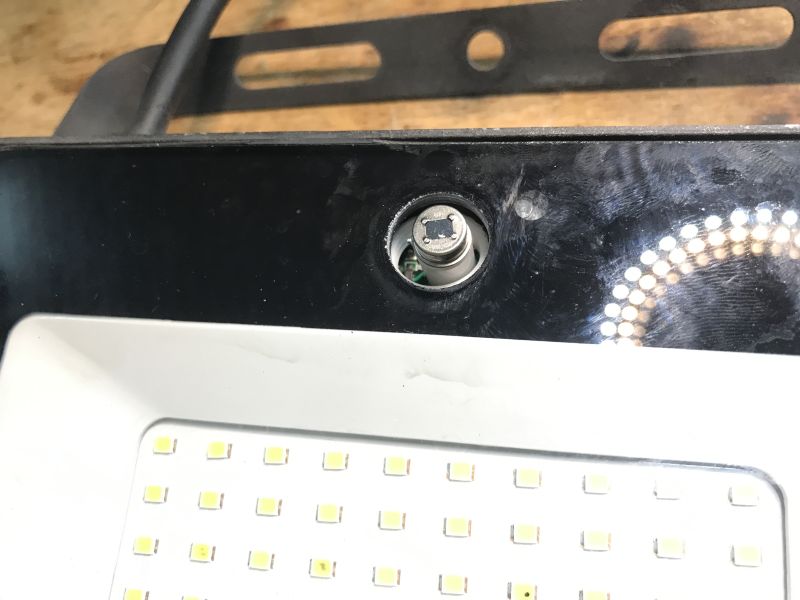
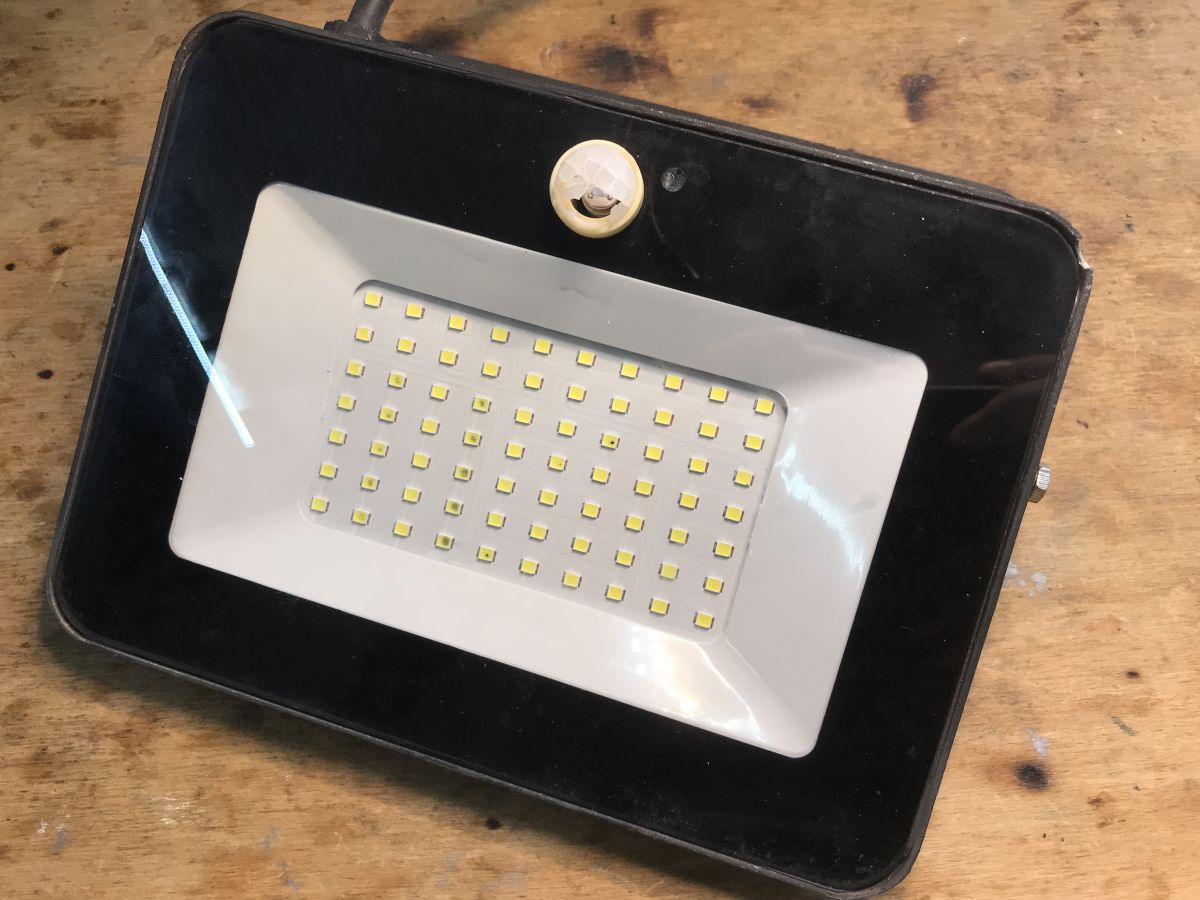
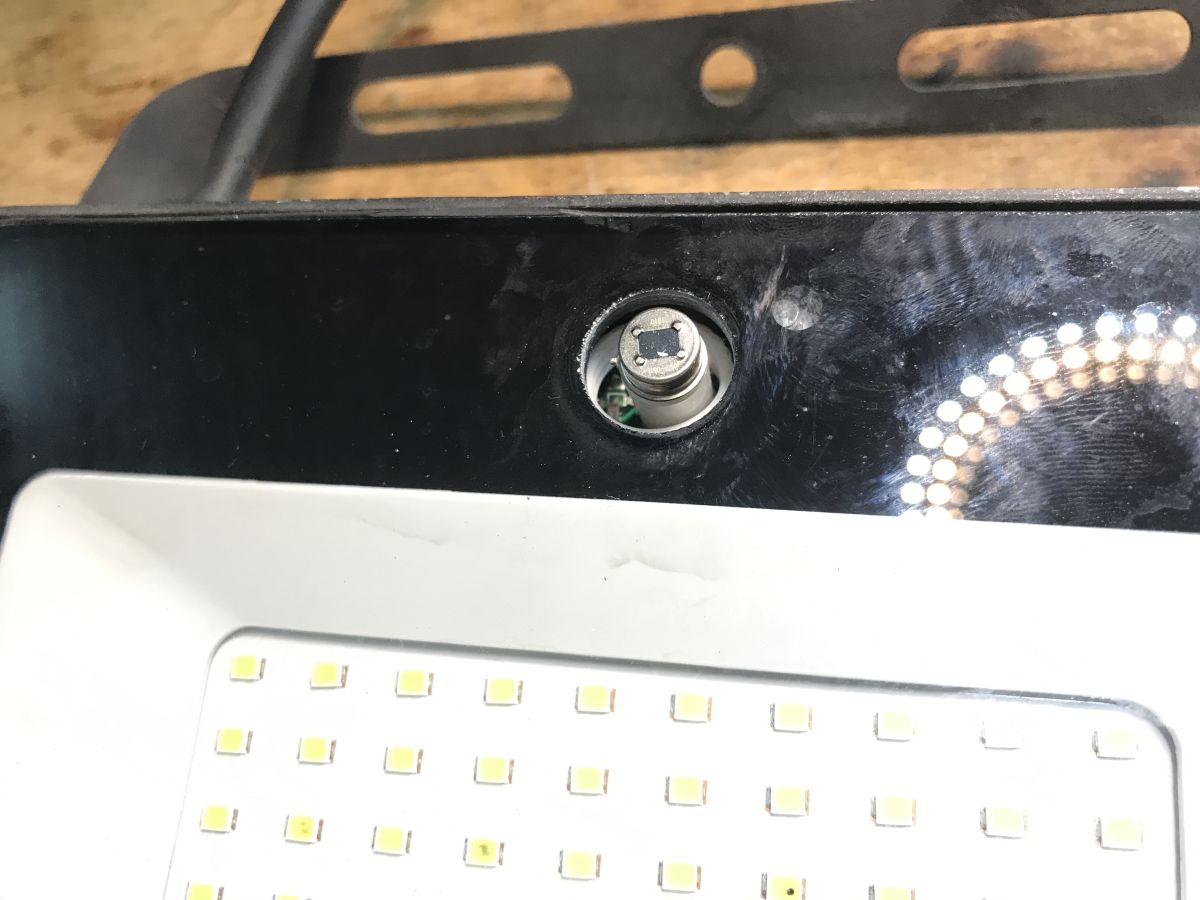
Here you can see a PIR sensor, I associate such from various other hardware, there are also such ready-made modules for Arduino. You can also see the LEDs punctured, this is probably how this hardware ended its life.
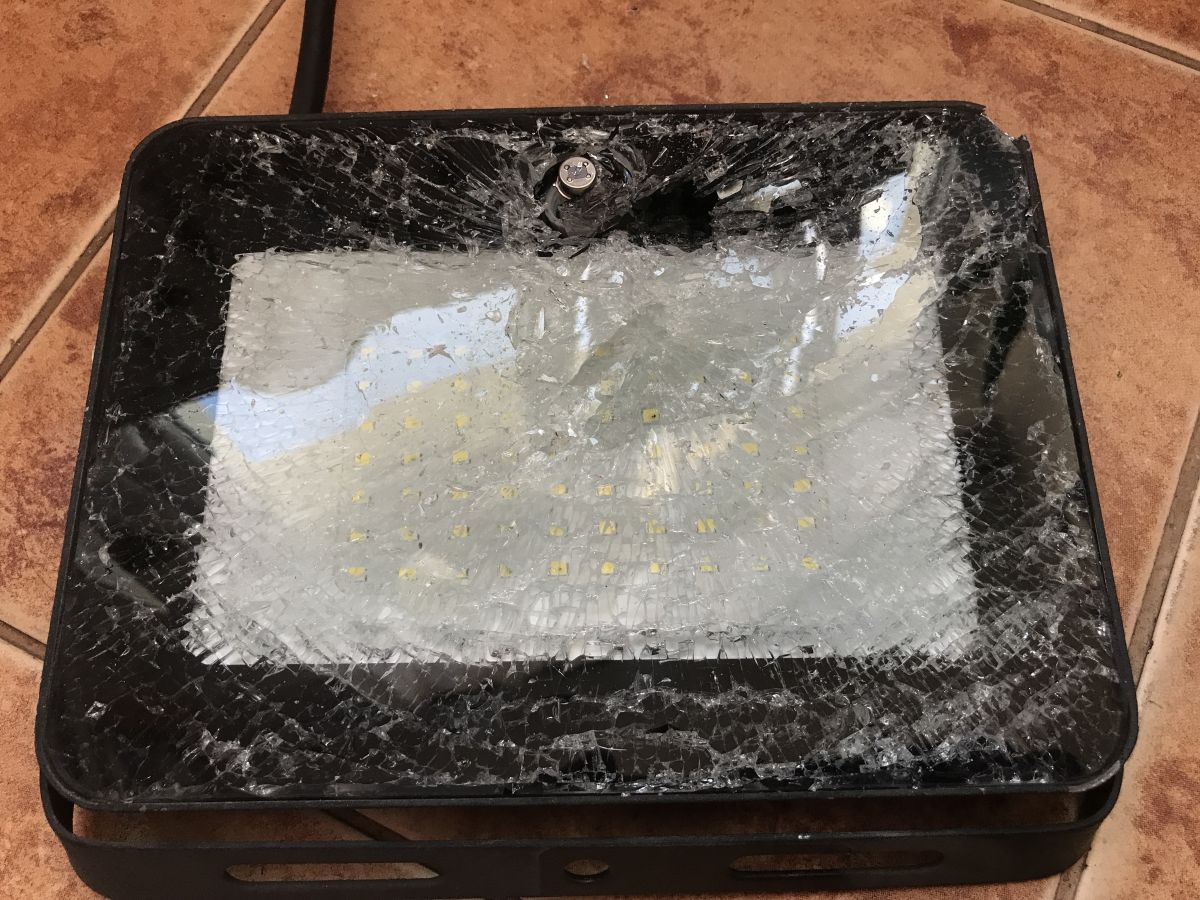
Unfortunately I have not found a way to get inside in a non-destructive way .
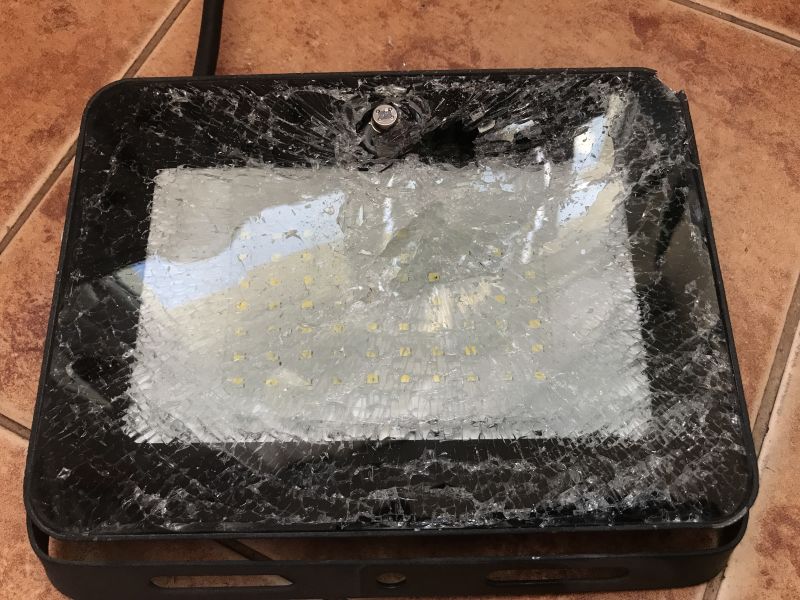
Hammer and drive. Good thing the whole thing is made of special glass that doesn't shoot shards left and right.
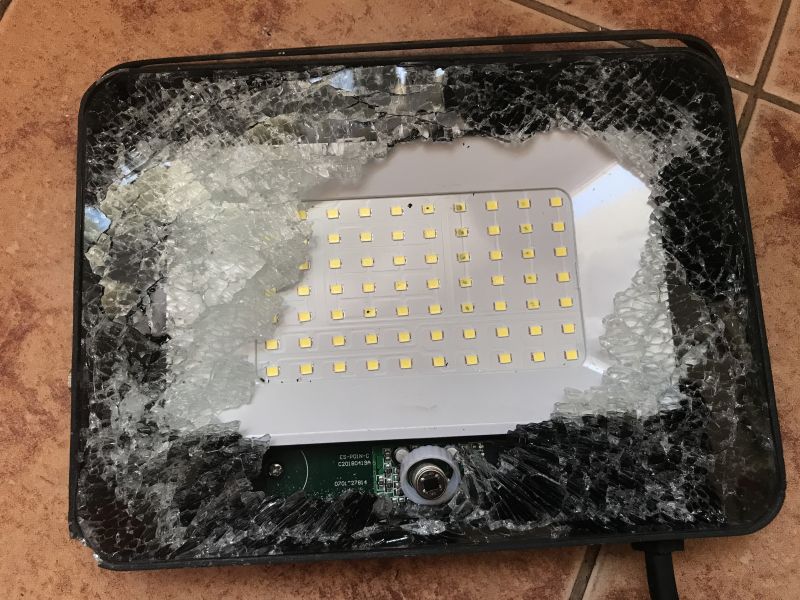
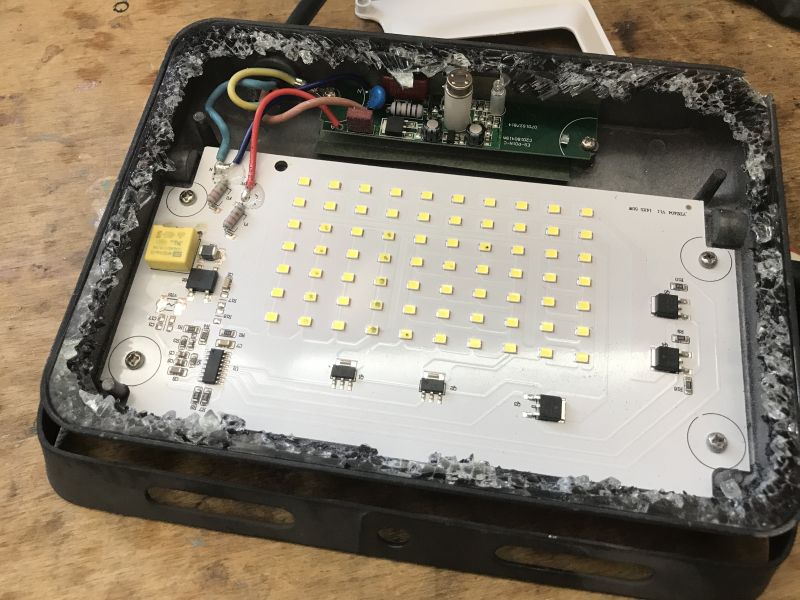
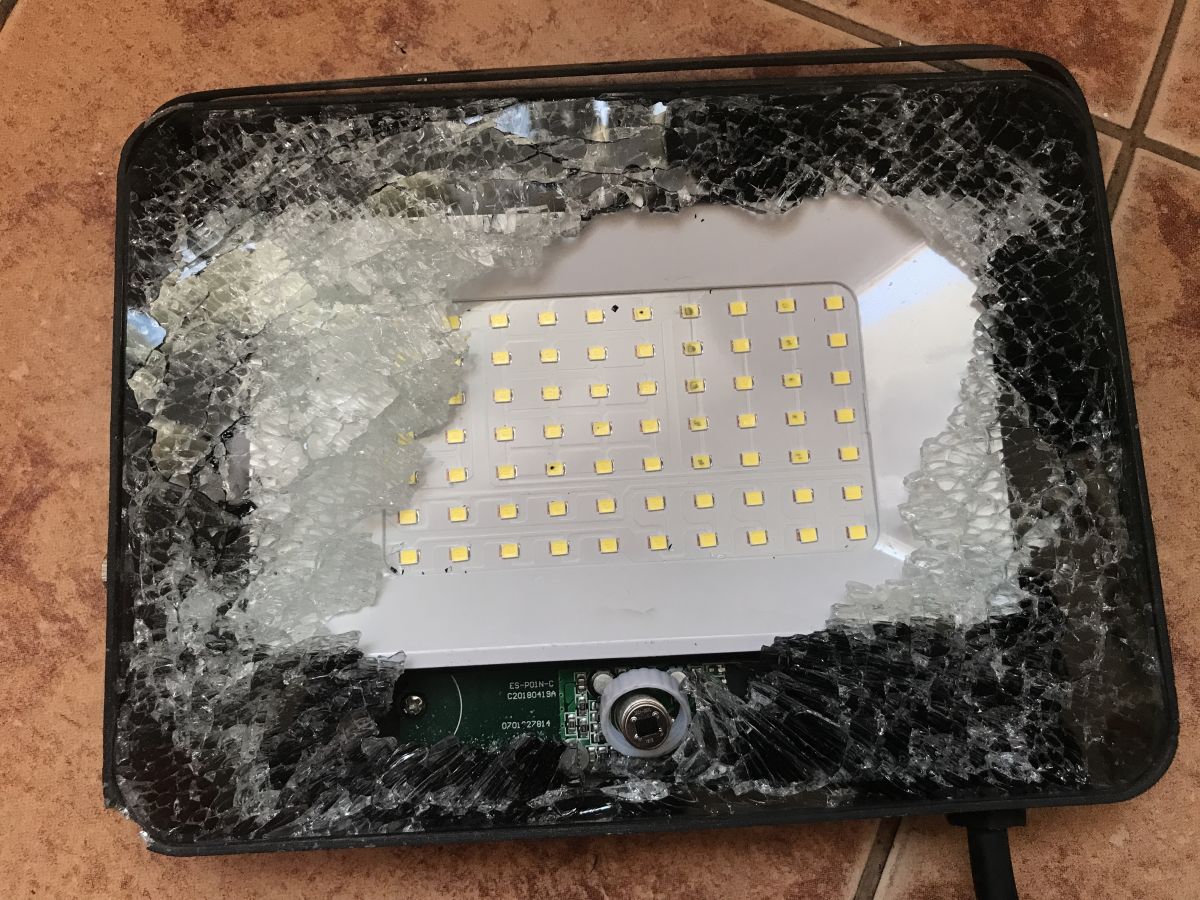
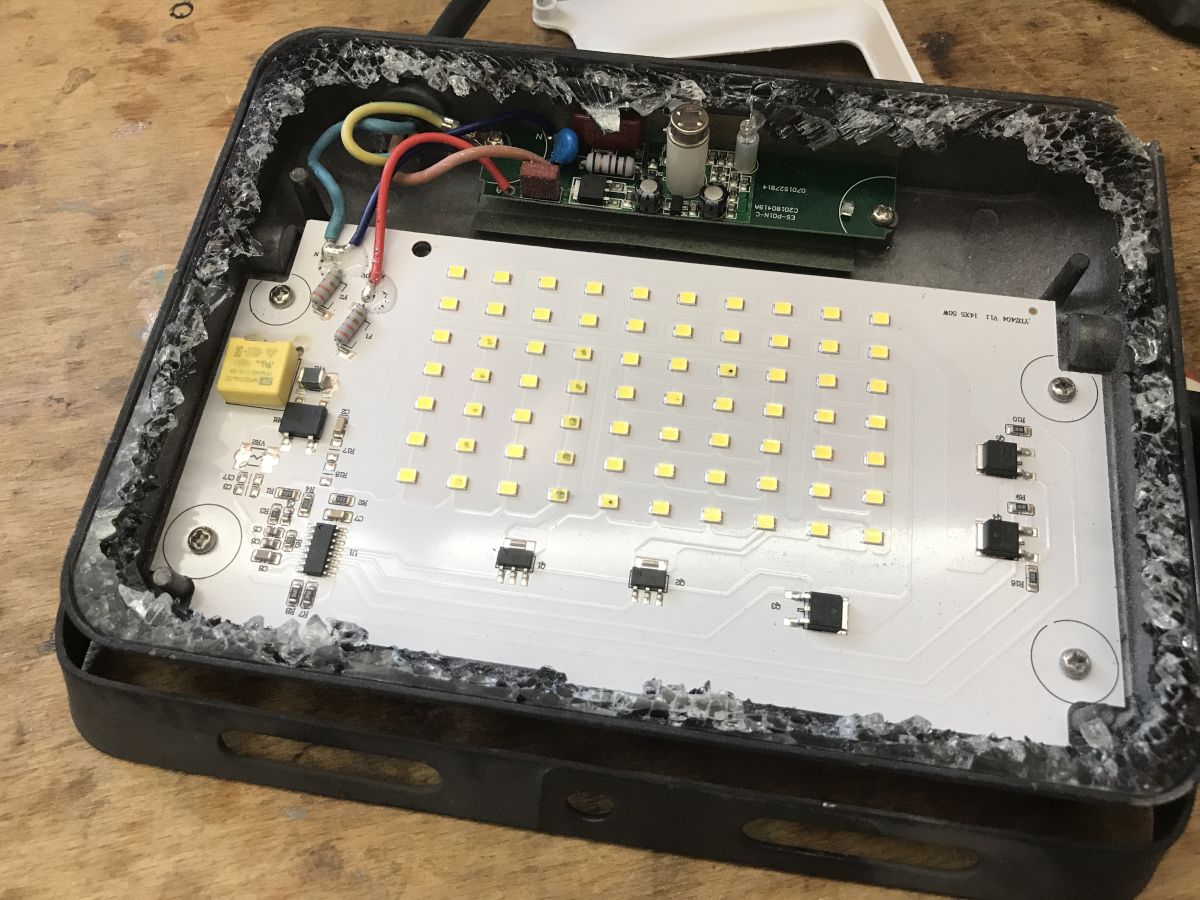
This way we almost have the interior. You can see that there are two separate modules inside. Probably copies without the PIR sensor are also produced. This module with PIR probably works.
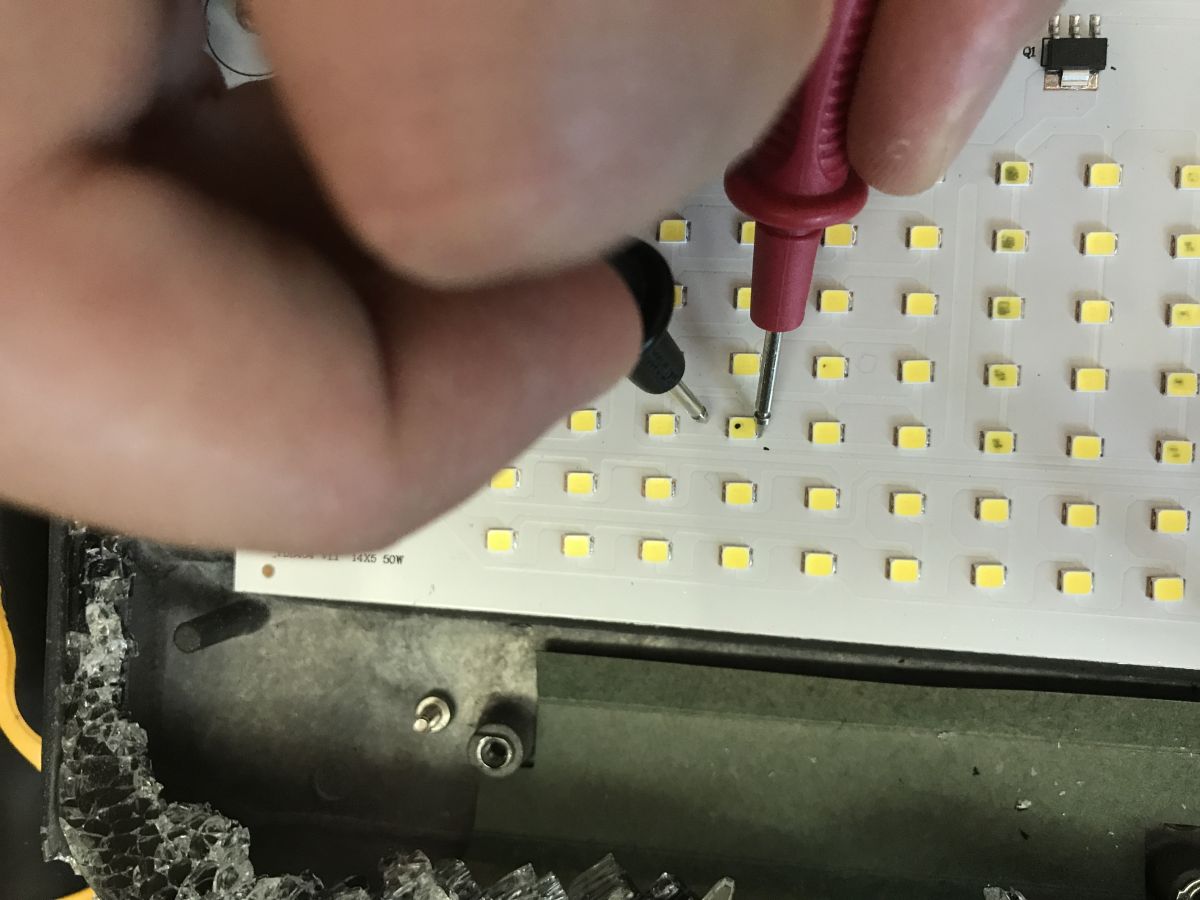
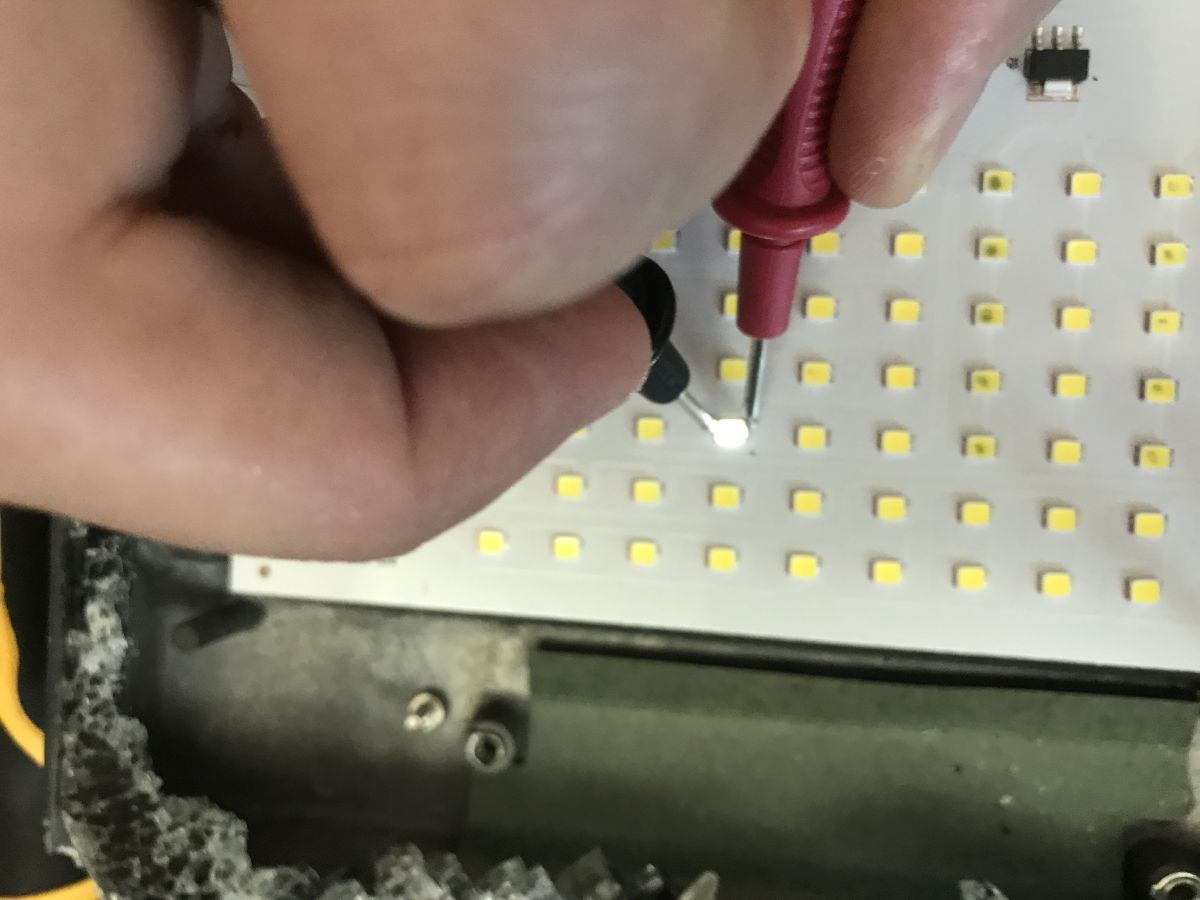
Out of curiosity I tested the LEDs - some are faulty and a break in the circuit. Interestingly, some with black dots still work:
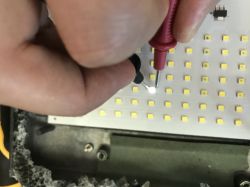
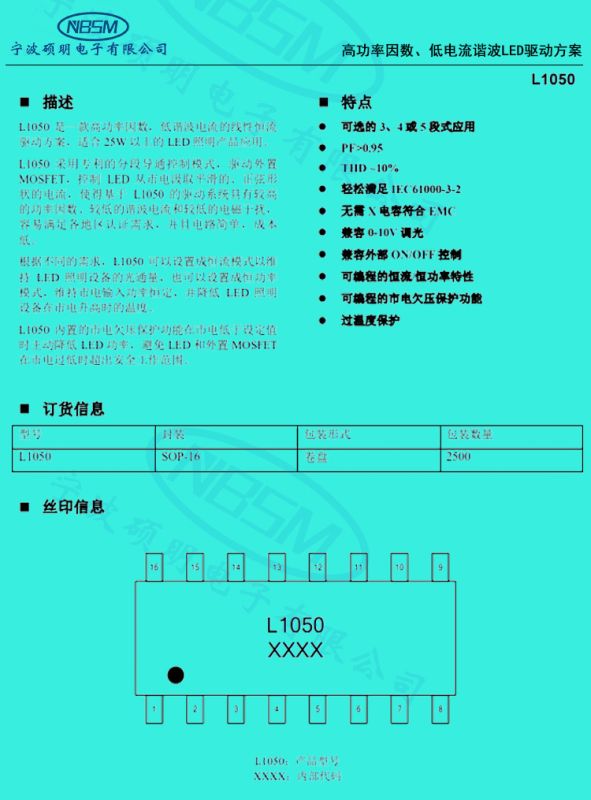
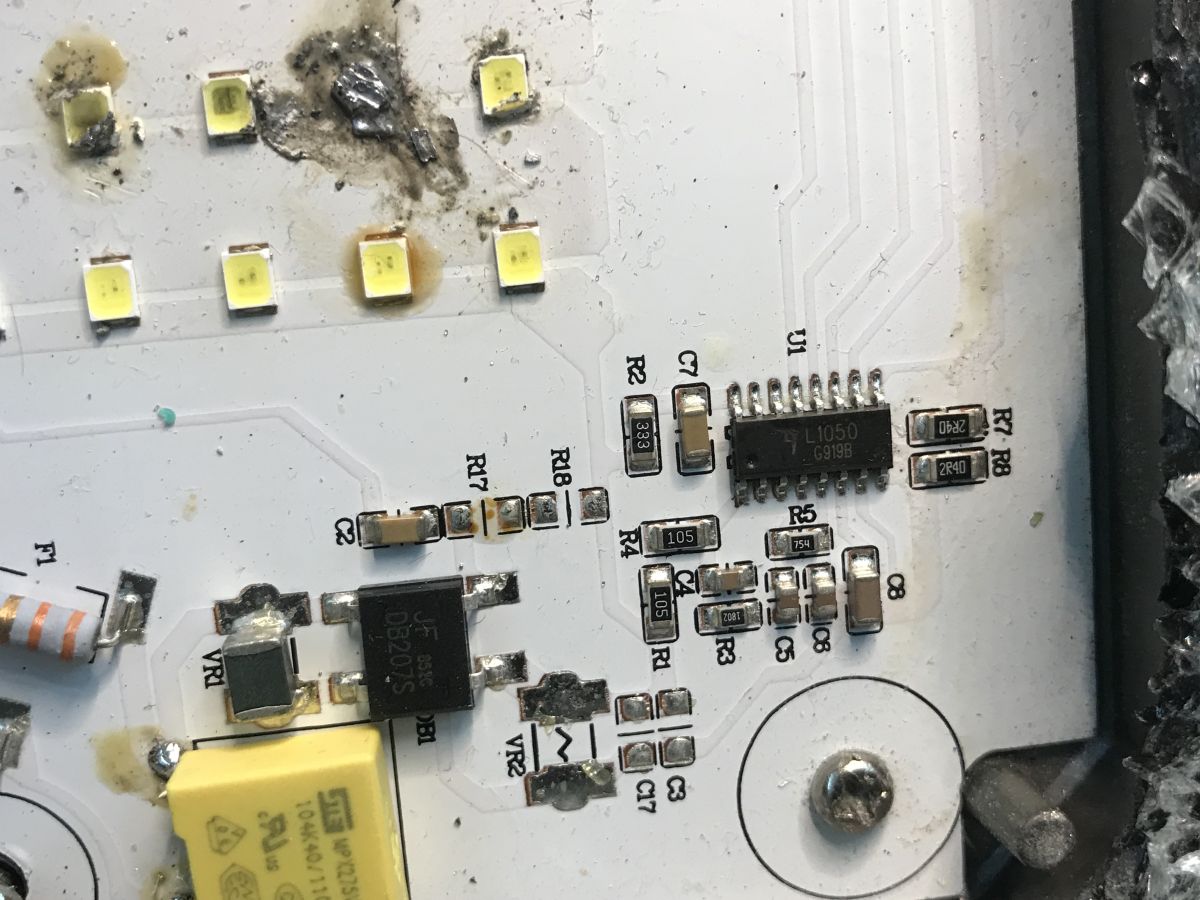
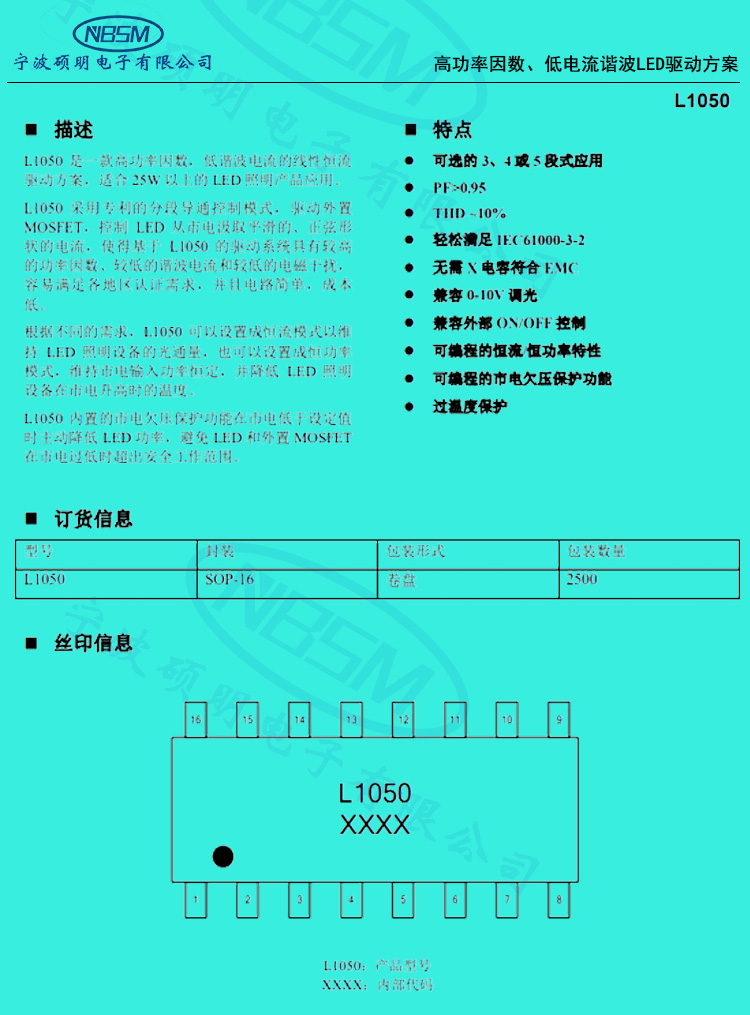
However, let's start at the beginning. There is a phase wire and a neutral wire to the board, with the phase wire connected through the motion sensor. Then we have two fuses, an anti-interference capacitor and a rectifier bridge. Circuit U1 (L1050) appears to be a constant-current LED controller and is powered directly from the mains.
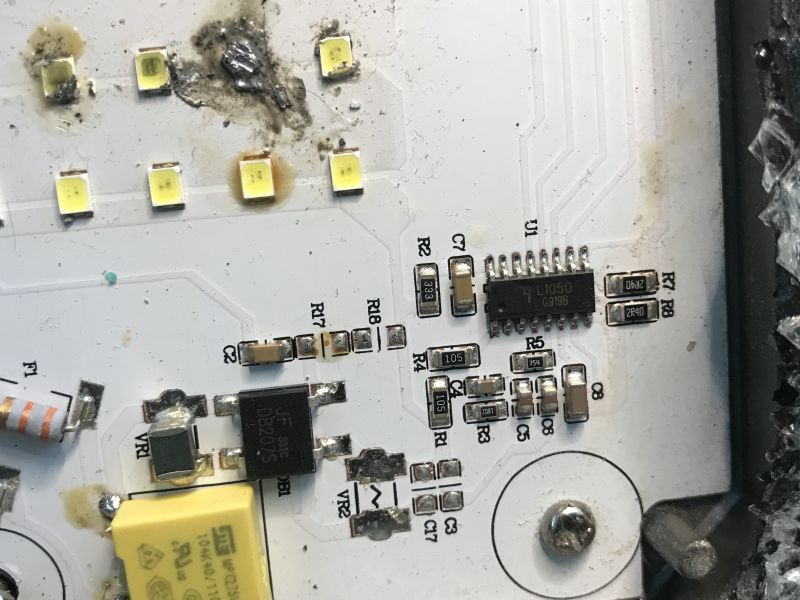
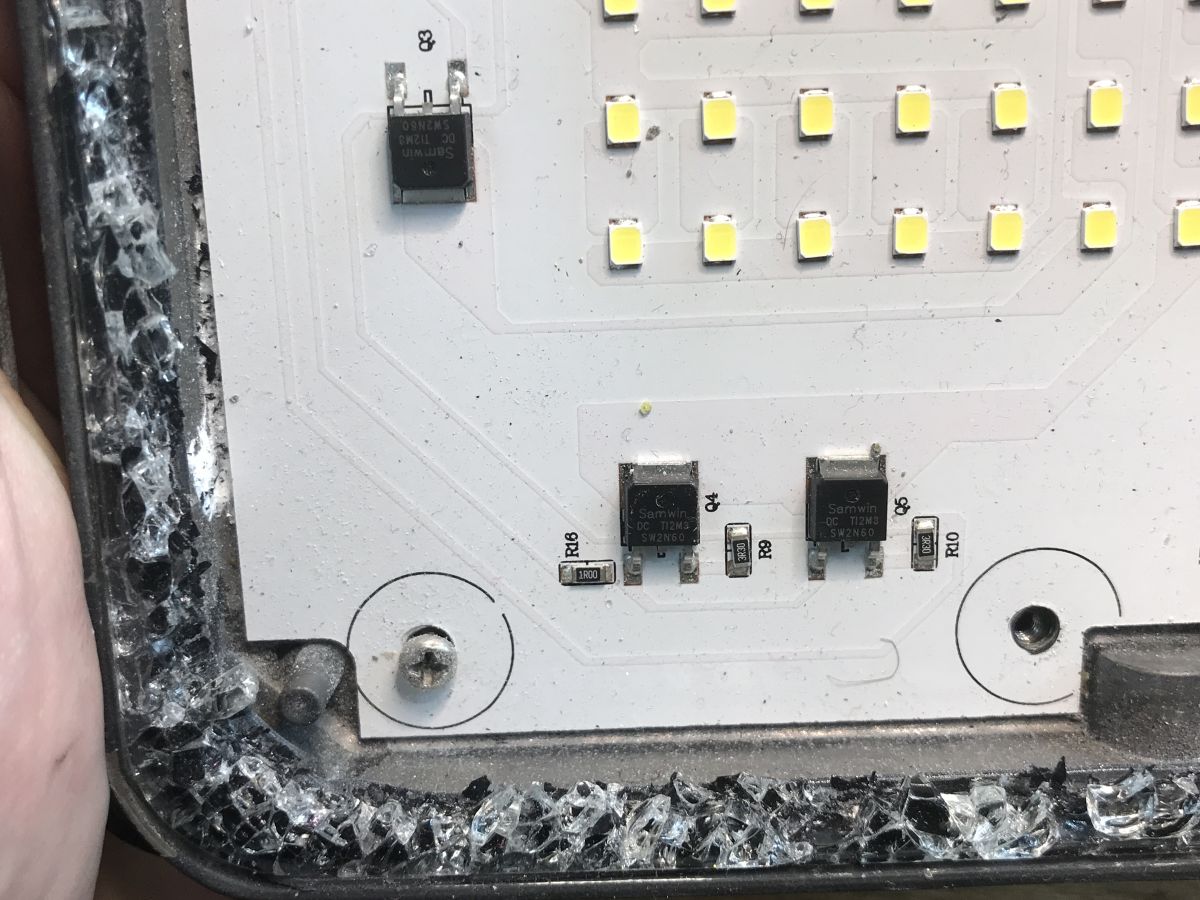
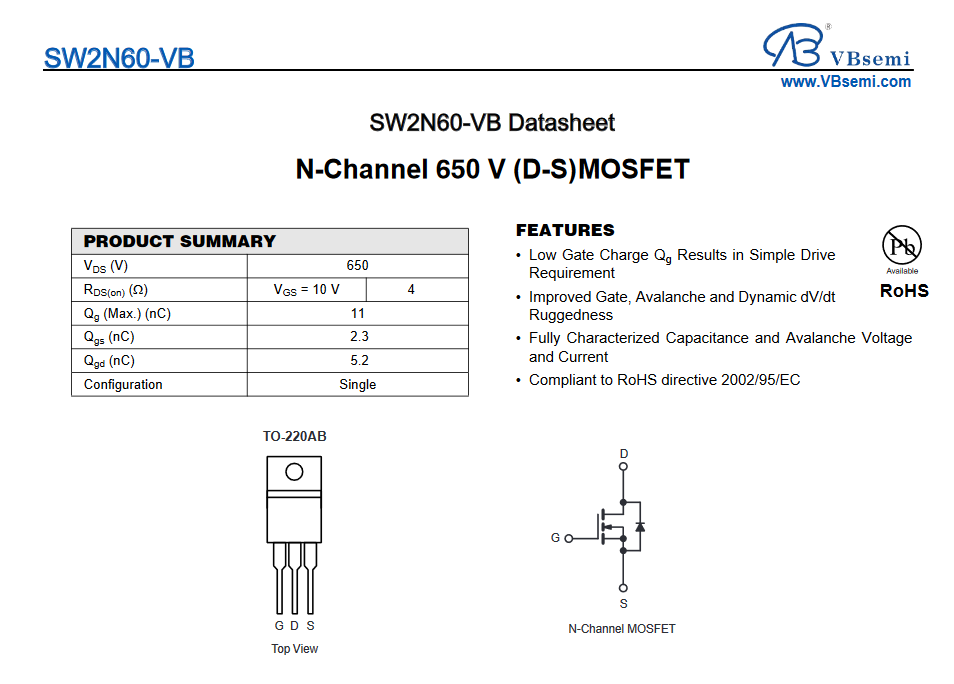
Next we have the transistors, primarily I see the SW2N60 there:
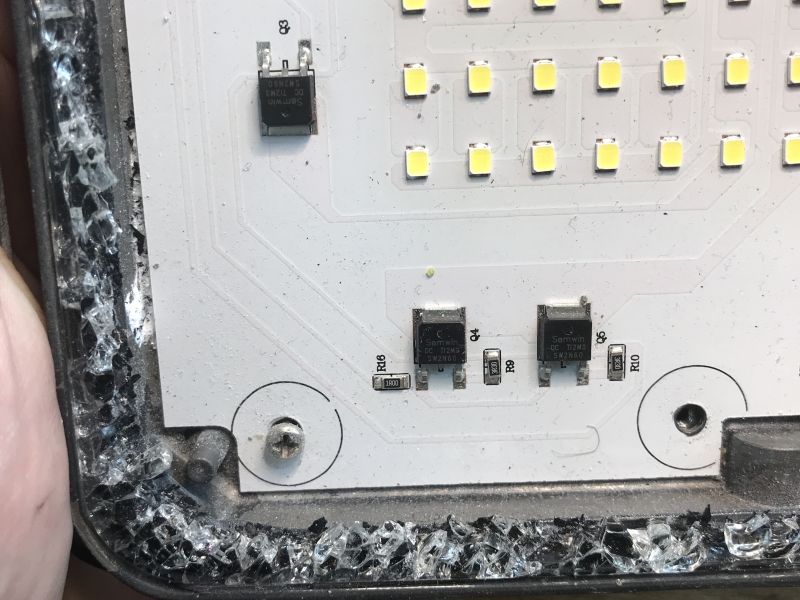
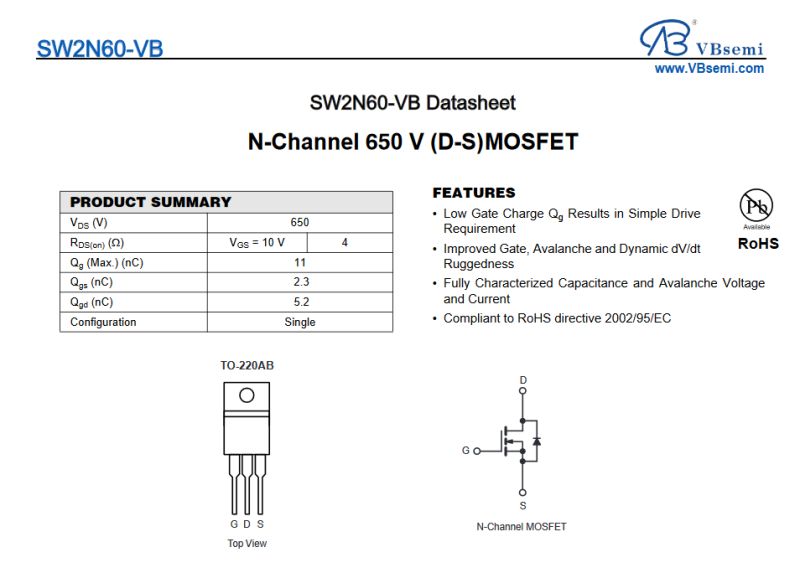
These are MOSFETs with an N-type channel for high voltage, I was surprised by their resistance in the open state:
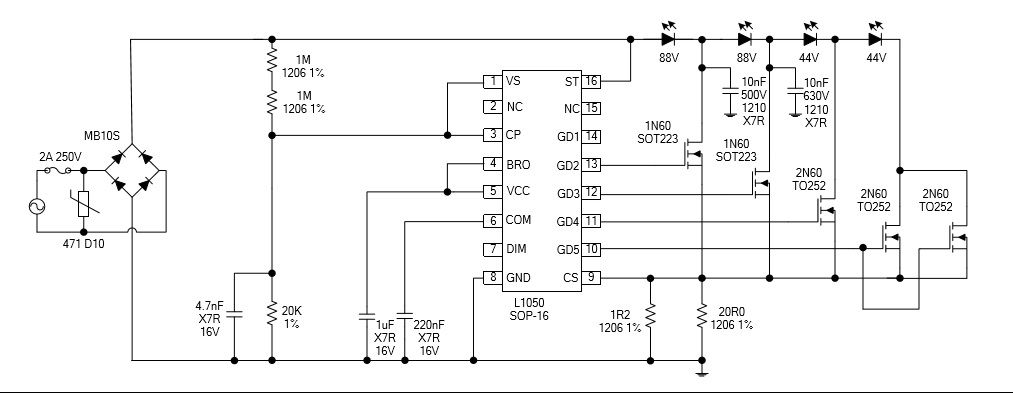
I managed to find a whole schematic showing a similar circuit:
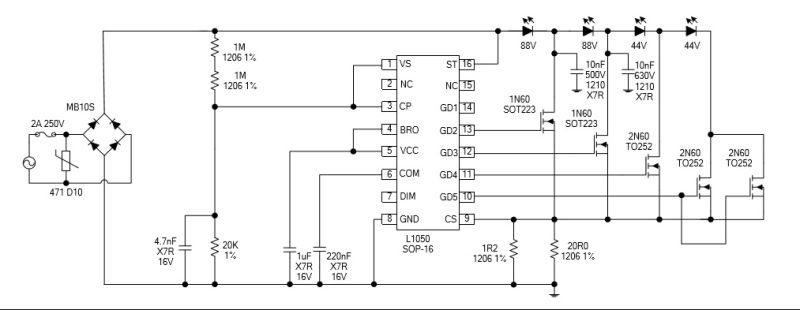
I was quite surprised by the way the LEDs are connected, anyone know what purpose this is used for? The rest is pretty clear, the CS pin is used to measure current (via the voltage drop across the shunt resistor), the 1MΩ resistors to power the controller circuit.
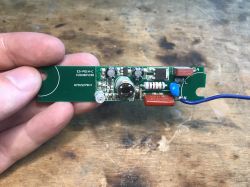
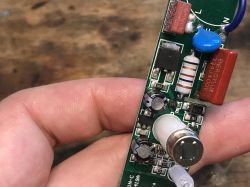
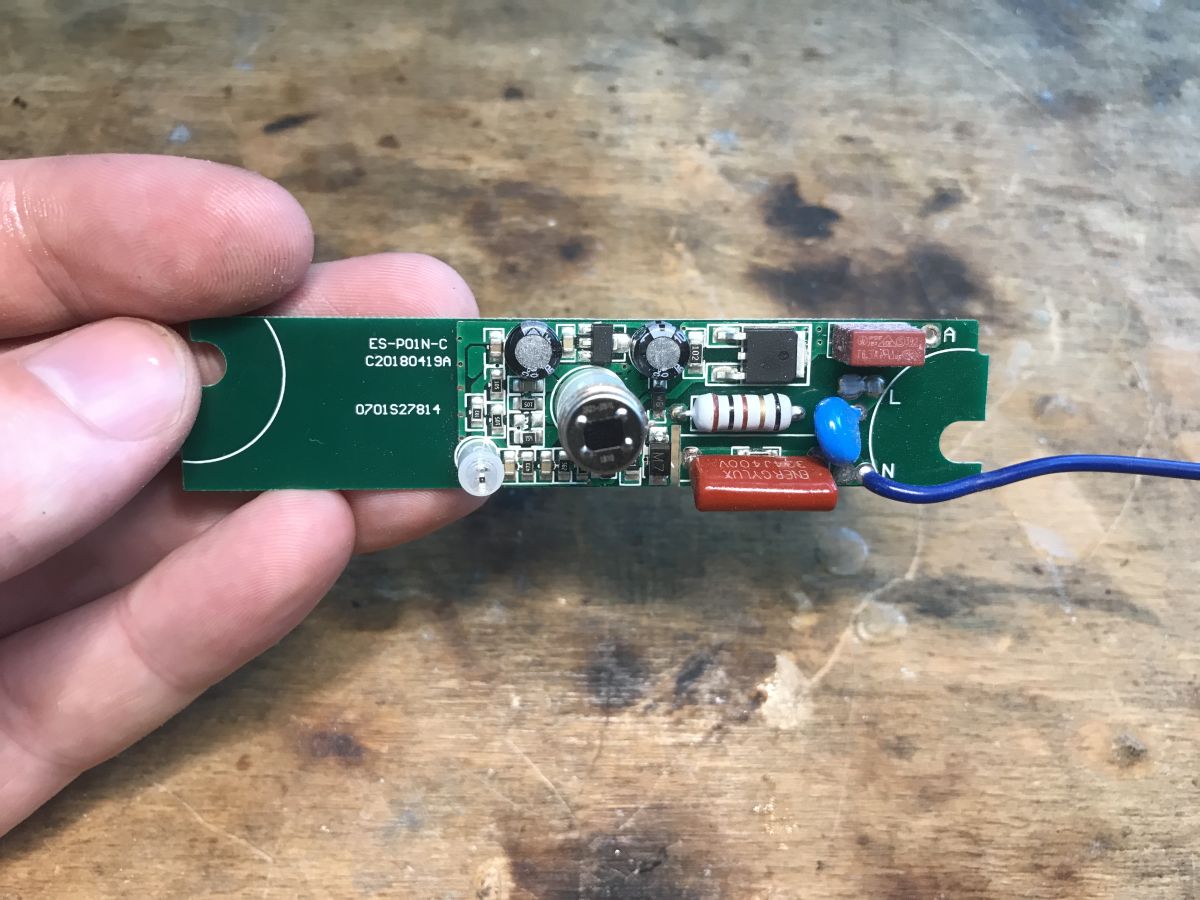
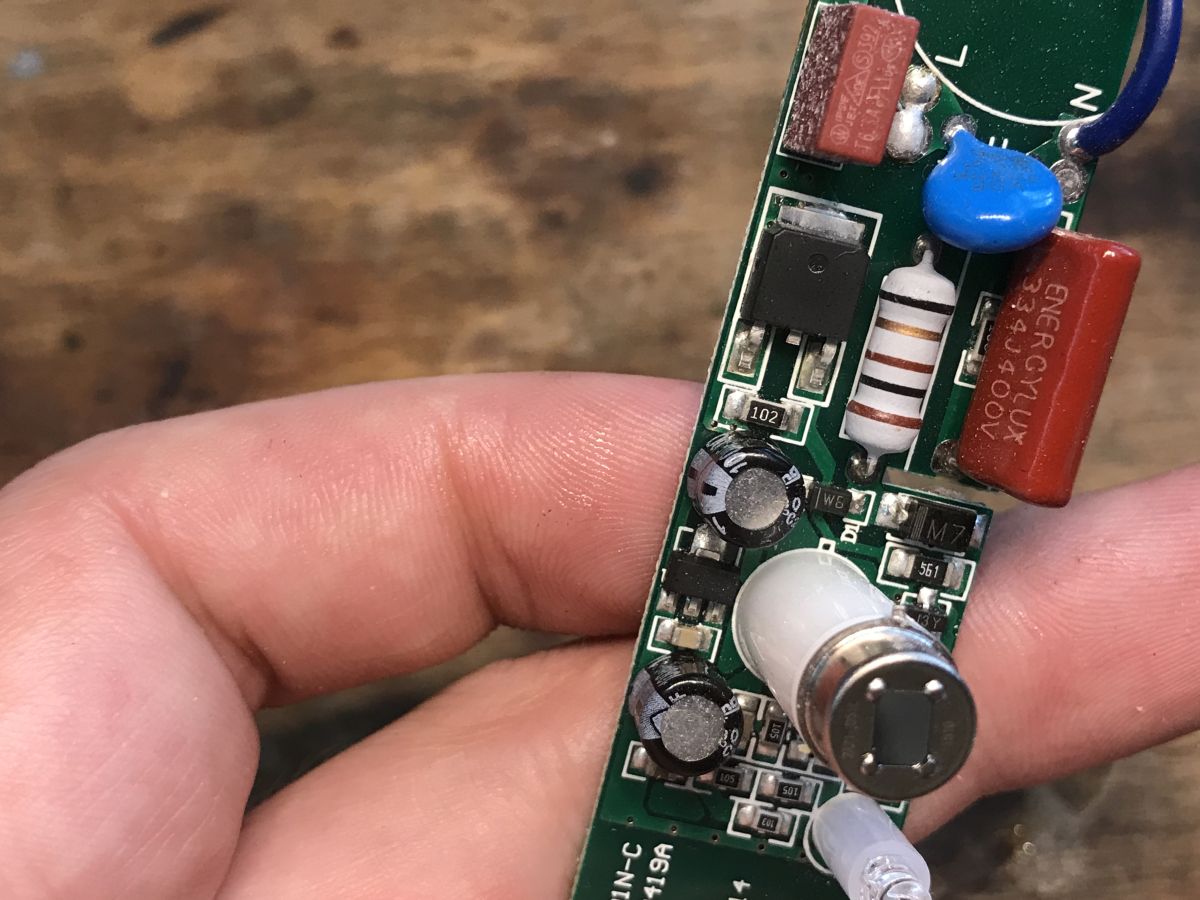
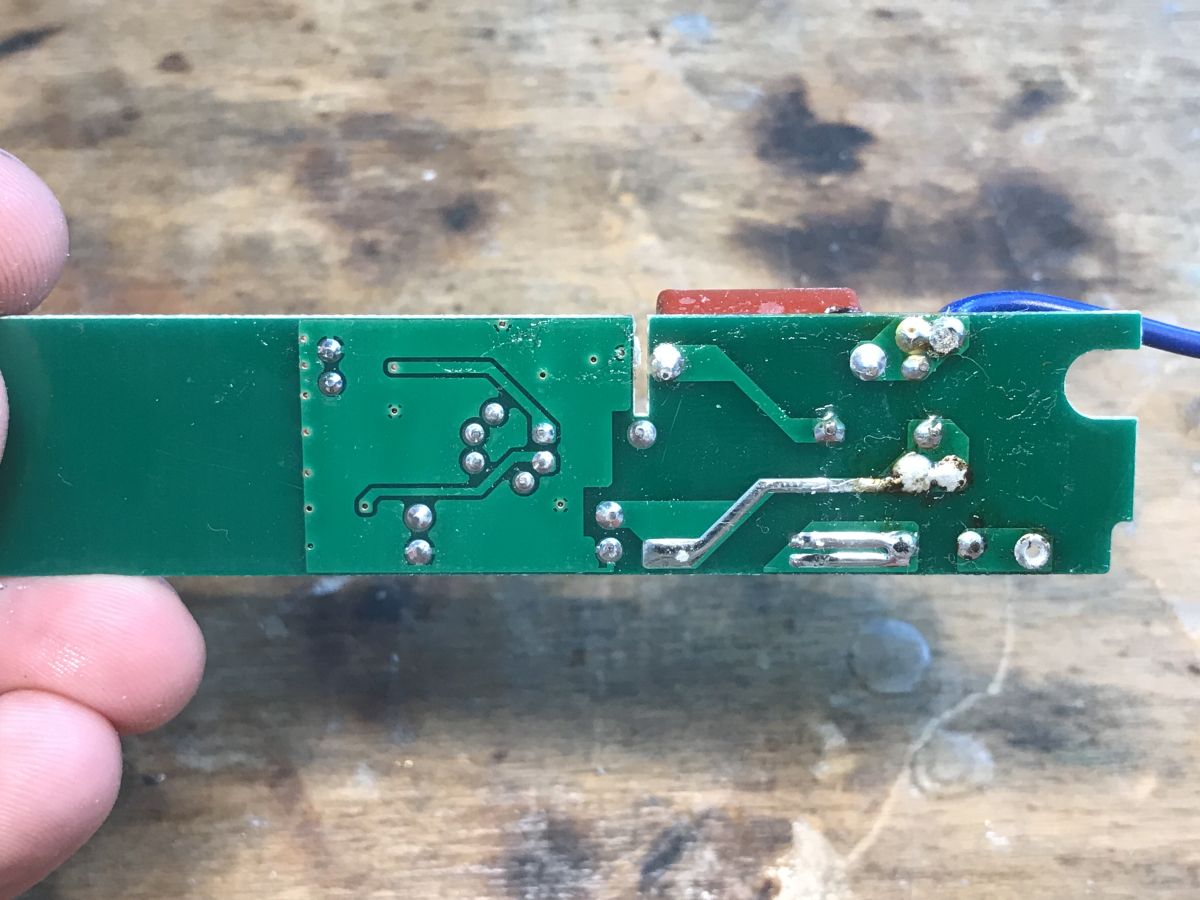
What's left is the PIR module. A cool little gadget. There's even a fuse and a varistor.
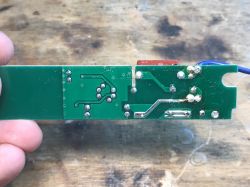
The lamp is potentially repairable but it is now without glass and in addition soldering in new LEDs is difficult, the whole thing effectively dissipates heat. A heater would be useful.
In summary , this was more of a one-off. There was a separate PIR module and a separate LED board with a constant current controller supporting several strings. Looking at the damage to the LEDs I get the impression that the strings were failing sequentially, although given the attached diagram I have my doubts as to why this is (if it is) wired this way, perhaps someone else can explain.
Do you use these types of LED lights, how do you find their failure rate and longevity?








Comments
I don't know if they are all glued with the same black glue, but I've dealt with some that, when the metal part was heated at the contact with the glass, the glue mass became flexible. I lifted the glass... [Read more]
The LEDs are supplied with full, rectified, pulsating mains voltage. To minimise flicker, when the voltage is lower than the conduction voltage, a piece of the section is cut off. Will work well with a... [Read more]
What results, the black "ooze" could be cut out? [Read more]
Even if you were to replace with new LEDs, it is a matter of a short time when the new LEDs will dislodge the old ones. This is why these and similar lamps are disposable. [Read more]
I have repaired several similar headlights for myself that were written off, except that they do not have a motion sensor. You can get the glass out in its entirety with a bit of self-denial using GSM... [Read more]
I have repaired quite a few such lamps. Usually the cause is low quality diodes, so the repair is also for a while. Firstly, the method of opening. There is a simple method. Drill a small hole fi 2-3 mm... [Read more]
And has anyone tried reducing the controller's current setting so that the LEDs glow a little dimmer but live longer? [Read more]
Isn't it sometimes the case that the lamp starts to glow from around 100 volts? [Read more]
For me, the worst floodlights because of the blinking during operation. Not everyone notices this. You can see it perfectly when trying to record a video or take a photo with your phone. Typical importer... [Read more]
These illuminators are useless, total rubbish. [Read more]
That's why I use what I call "mixed light" when using this type of lamp at the workbench. [Read more]
I only buy these for myself. 1. Bolted on, no glue, only gaskets. 2. LED COB 36 V also bolted to the heat sink with thermally conductive paste, zero glue. Repair is a pleasure. Although none have damaged... [Read more]
Welcome. I have such a spotlight acquired from a junkyard mounted in a work lamp on a tripod. I replaced the LED with a higher wattage one and used an external Osram power supply. [Read more]
And why complicate things? Isn't it better to improve the heat dissipation with the existing power? You need to unscrew the diode board and level the surface to which the board is screwed and give better... [Read more]
I occasionally buy scrap for the parts themselves and let me just say that the new COBs are a failure. The old ones had copper PCBs and the new ones have aluminium PCBs. The housings are also so-so and... [Read more]
And what do you illuminate with it? If I have a torch, is it an illuminator or a hand-held illuminator? Is it worth repeating stupid names invented by stupid people for stupid people? A disposable lamp... [Read more]