





Simple 3D design: vertical phone holder for recording electronics
TL;DR 
- A lamp-mounted vertical phone holder lets a phone rotate 90 degrees for portrait recording of electronics work.
- The holder was modeled in Blender, iterated with test prints, mirror modifiers, boolean cuts, and tree supports, then printed in PLA on an Ender 3 Pro.
- The finished piece prints in 1 hour 40 minutes at 0.2 mm standard quality, weighs about 22 grams, and uses PLN50-per-kilogram PLA.
- The phone is held well, but the design is tailored to one phone model rather than an adjustable grip.
AI summary based on the discussion. May contain errors.
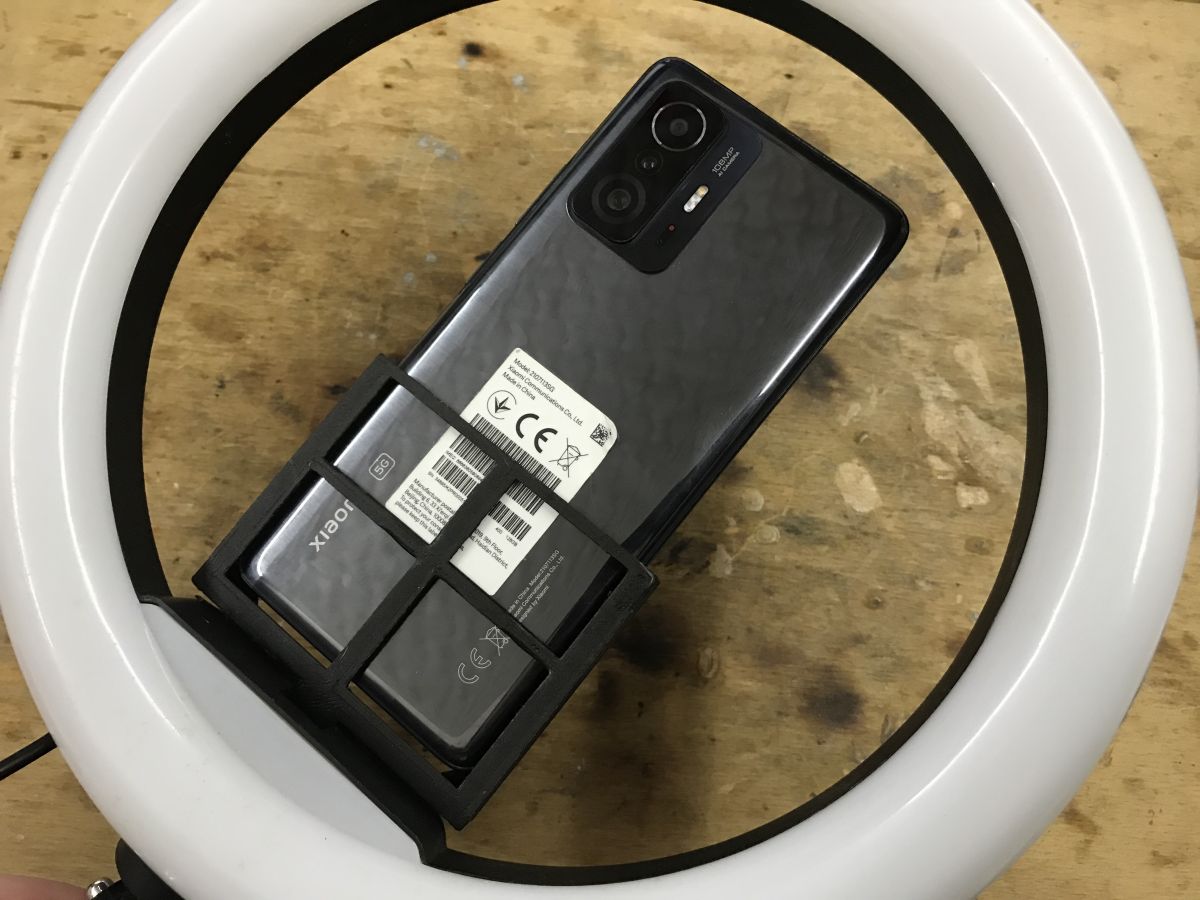
I invite you to a short presentation showing the process of creating a simple 3D printable item. I will design and print a lamp-mounted phone holder that allows you to use your phone vertically. I will show the step by step design process along with test prints.
In a way, this topic will be a continuation of the "phone as microscope" presentation:
Phone as "microscope" and TQFP soldering - step by step video presentation
I simply needed the option to rotate the phone 90 degrees, and the factory kit with the lamp does not offer this.
I'll do the design in Blender, although it's not directly designed for this type of application - I'm just familiar with that program. This can be taken as a curiosity, or as an encouragement for people who already know Blender and would like to print something quickly. I won't describe the keyboard shortcuts etc. here, because that wouldn't be practical, I'll focus on the general methodology.
I will print the target piece from PLA filament on an Ender 3 Pro printer.
In the beginning there was a cube...
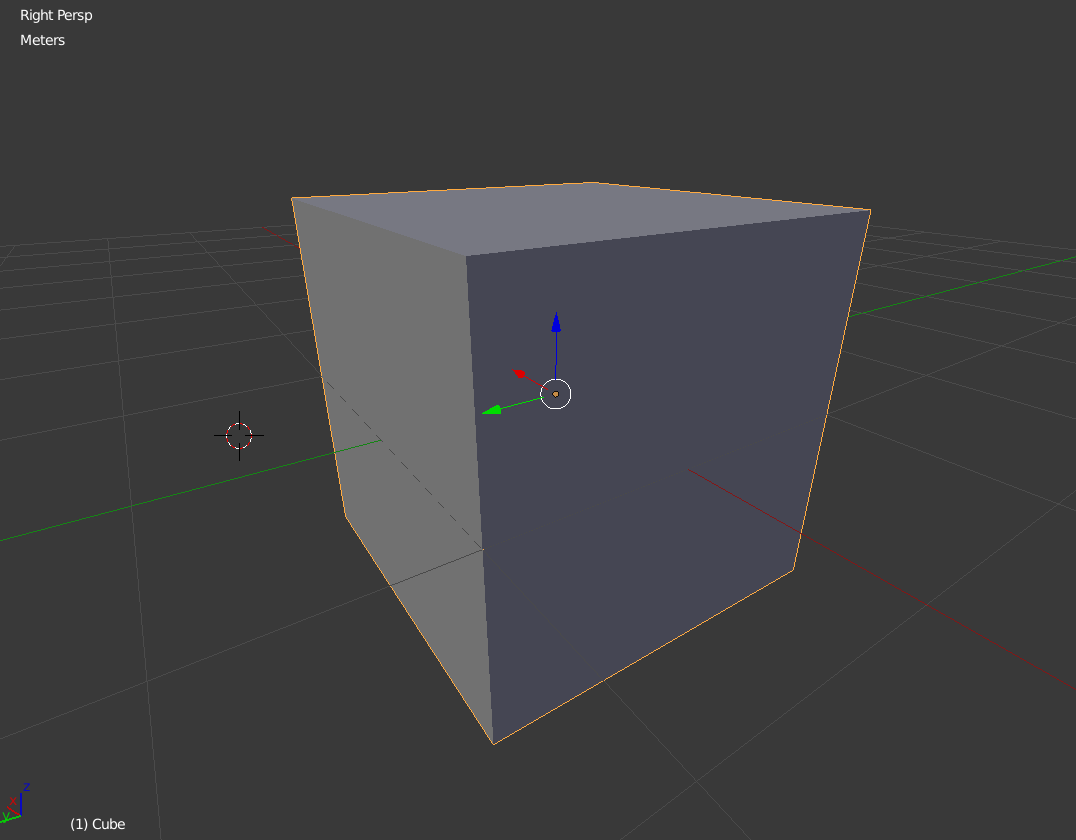
I then dimensioned the indentation I wanted the mount to go into. I used the cheapest caliper. I adjusted the cube to fit, based on the "extrude" operation by the given offset:
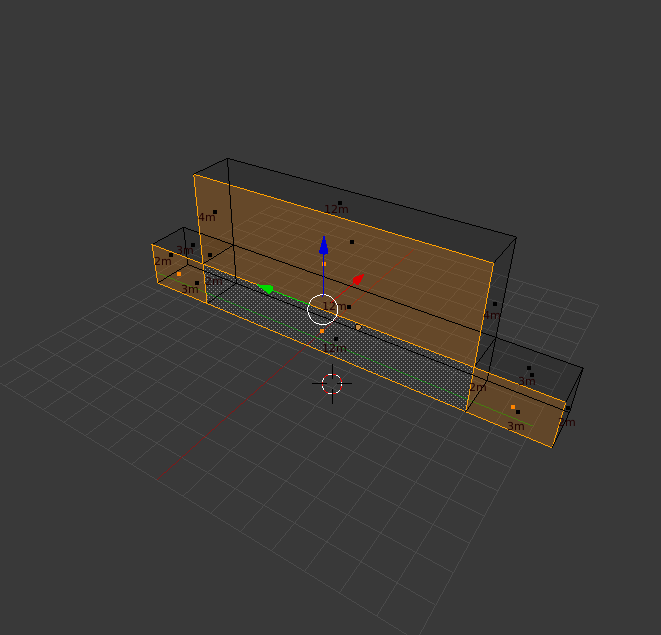
At this stage it was time for a test print. Such a tiny piece will print in a few minutes, and will allow you to check tolerances and actual dimensions.
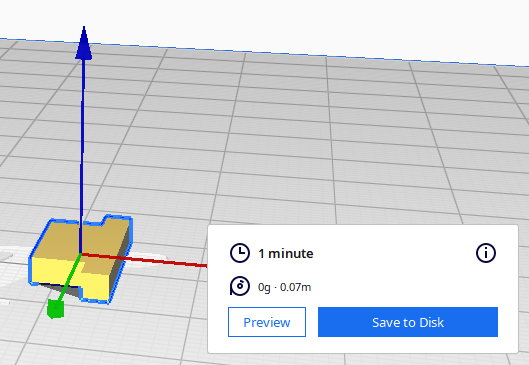
See how quickly it prints. It also matched up with me straight away:
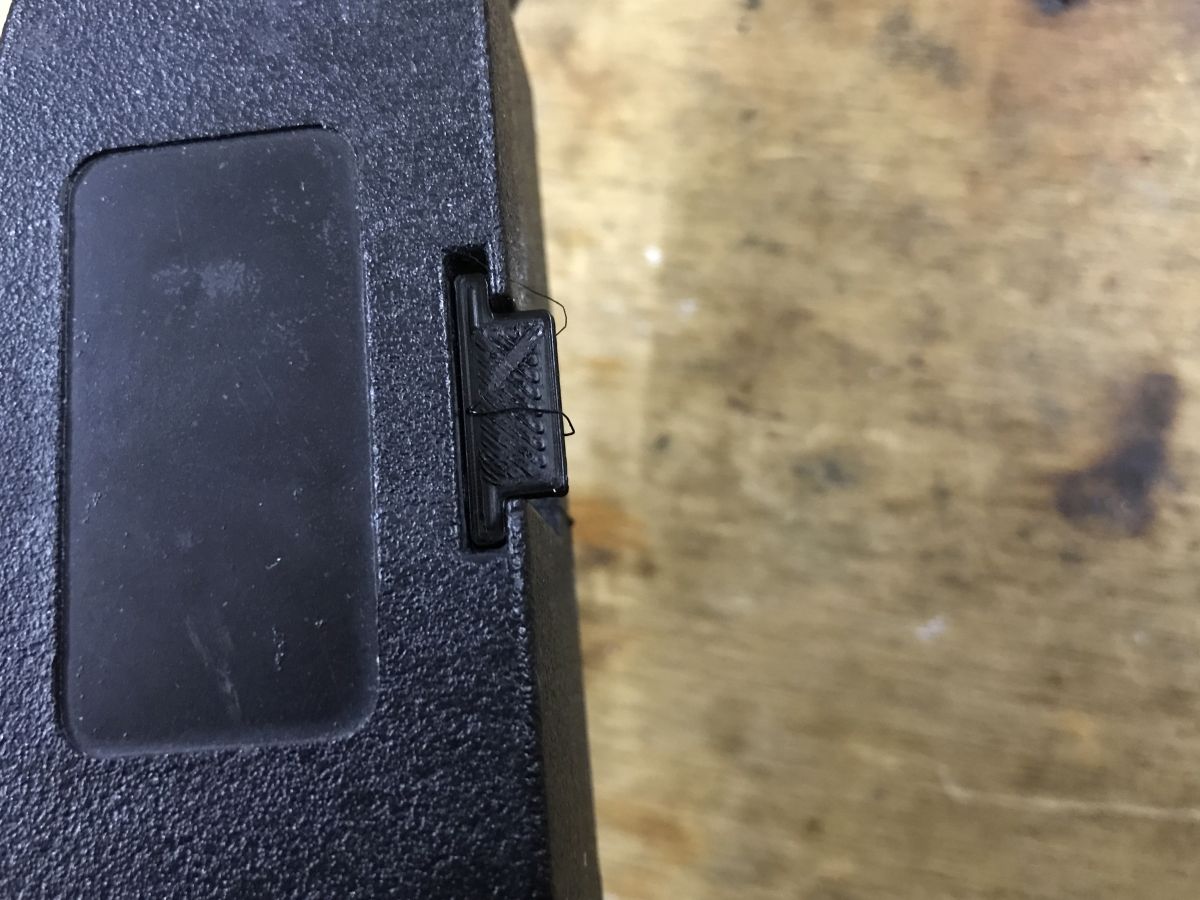
It fits, it's fine - just in time for the squeeze. You can move on, i.e. make the "protruding" part:

In addition, I partitioned the element separately to have further fields to "extrude". I used "loop cut and slide" for the parting.
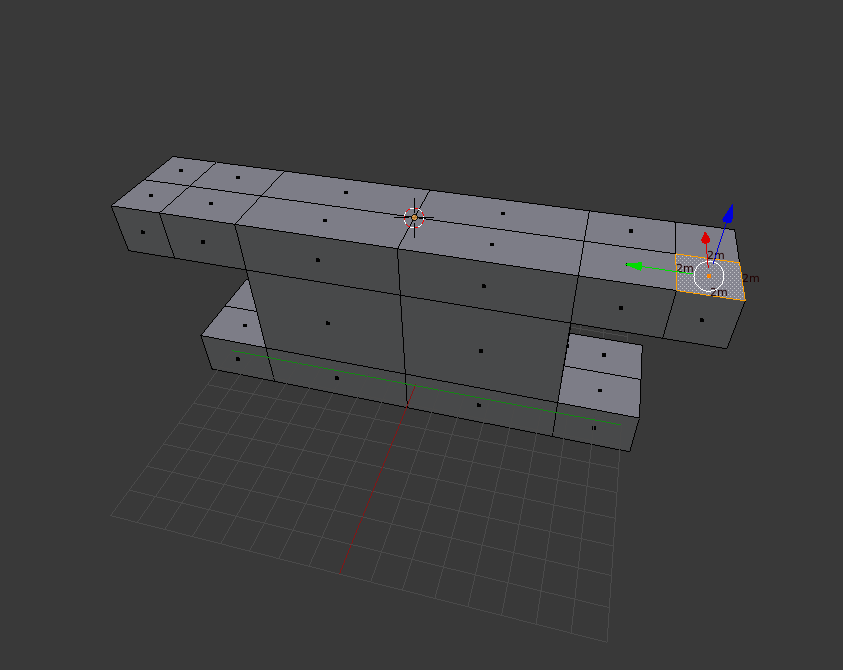
At some point, however, I realised I was adding work to myself and flipped the model into mirror mode. I made sure its centre ('origin') was in the expected location and removed half of it, then added a 'mirror modifier' to recreate that side.
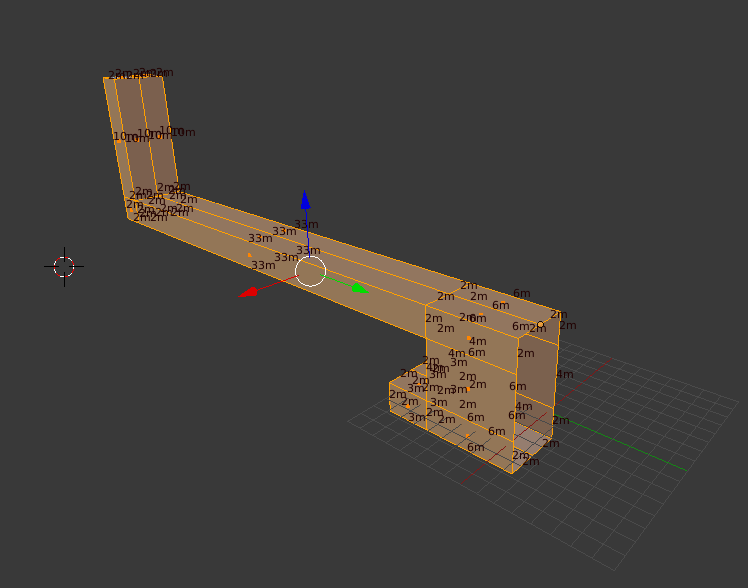
This way I can only edit one page and the other will follow.
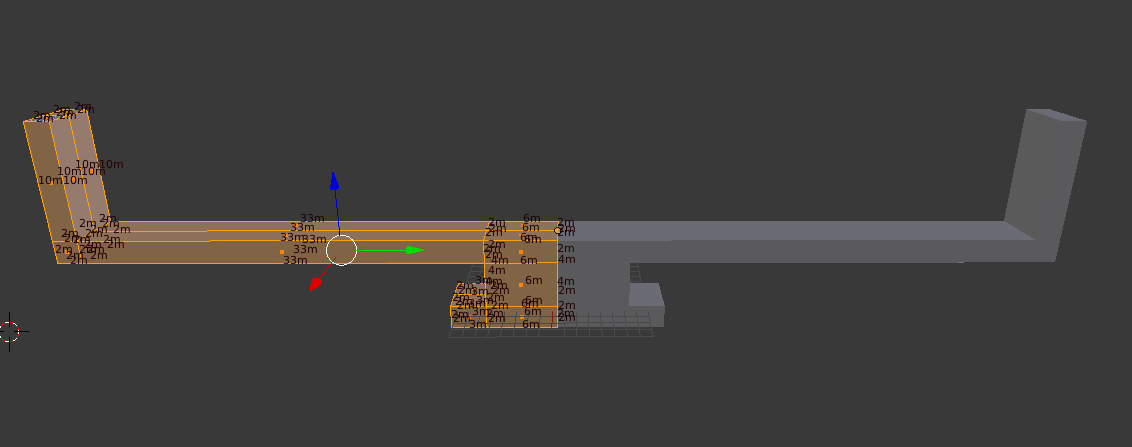
It was time for another print and fitting:

At this stage I have already made a "pocket" for the phone. It has to hold it at least a little on both sides, on the front it can be built in, on the back no longer - because it would obscure the screen.

However, enclosing the pocket at the front can significantly increase the print time and weight of the component. The element is not filled 100%, there is a setting for this in Cura, but it is still worth optimising this manually too. For this reason, I added a separate object - a suitably sized cube - and clipped it using the 'boolean' operation from the created element, or more precisely, set its clipping and did not accept the 'modifier'. In this way, it will be clipped dynamically and will respect the changes I will later implement in the shape.
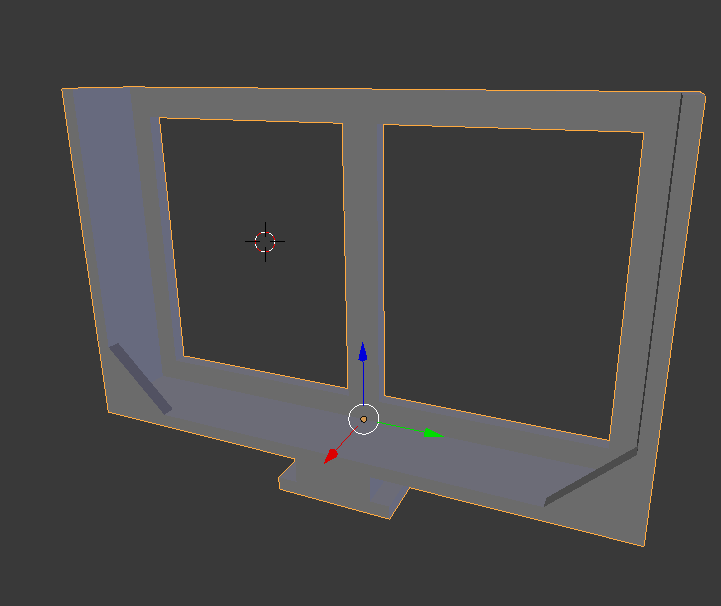
Finally, I duplicated the cube and made minor adjustments:
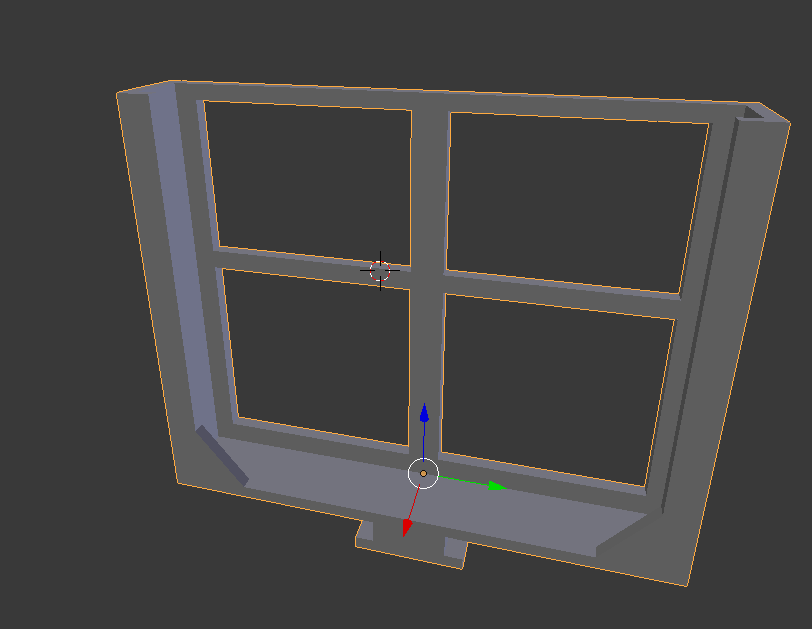
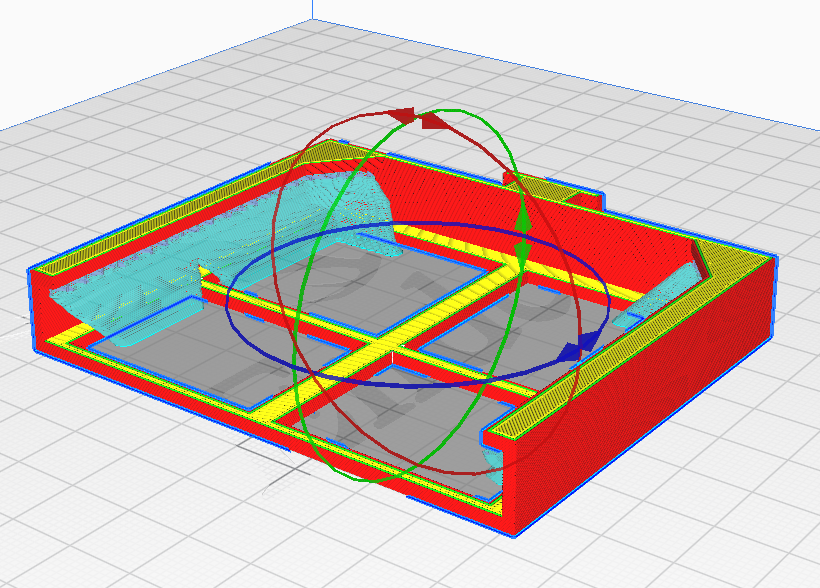
Because of the added "hooks", the piece had to be printed with so-called "supports", or supports. I used "tree supports":
The item fits, but does it hold the phone?
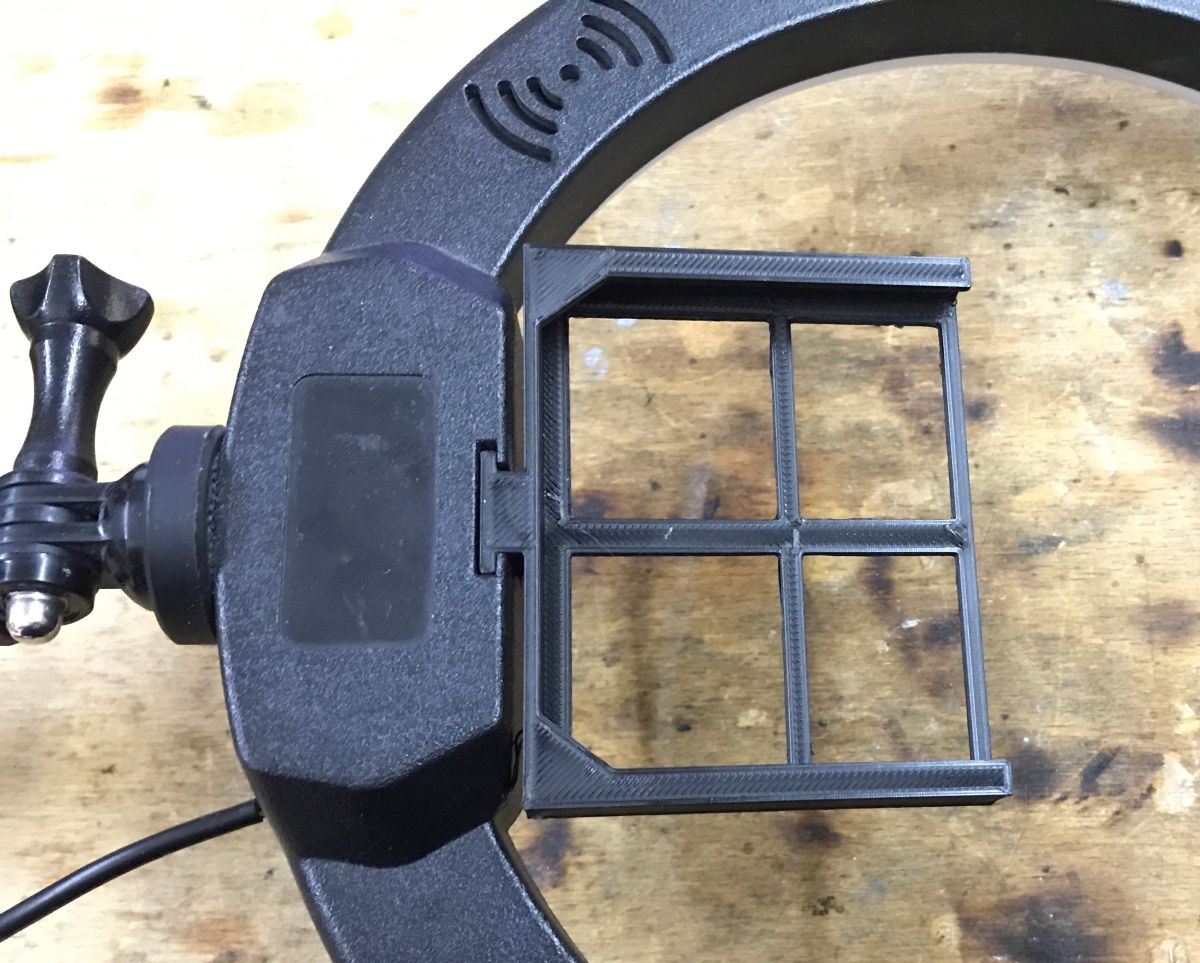
The phone is held well, everything is fitted for the model I am using. You could do a gripper with an adjustment (based on a screw for example), but given the ease of adding a new model as I change phones I decided it wasn't worth the complication.
In summary , this was a brief demonstration of designing a vertical phone holder for the light. From now on, I can shoot videos in vertical format. It remains to be seen how much it cost me:
- time - I didn't count, but it can be chalked up in a few minutes
- energy - basically it's printing time, the final piece prints for an hour and 40 minutes in "Standard quality" (0.2mm), and 20 minutes less in "Draft", for the printer what I have is assumed to be an average of 120 watts of power
- filament - the final piece weighs about 22 grams, 1kg of PLA I buy for PLN50
The cost of test prints is negligible.
The piece is robust, as the acicular direction of printing is perpendicular to the potential direction of breakage on set up, I'm not worried about its durability.
The project was enjoyable and successful, and I have designed and printed countless gadgets of this type.
And what have you used a 3D printer for recently?
p.kaczmarek2 wrote 14795 posts with
rating 12945 , helped 659 times.
Been with us since 2014 year.
Comments
The topic of 3D printing is super interesting, only the long print time is a bit annoying, for prototyping this seems to be totally OK. Perhaps in some cases it might be easier to make a hole or cutout... [Read more]
"Good morning to you in the new year. Actually, you're right, but I've made absolutely every 3D printable model in Blender. If you are stubborn, you can even (with the help of external websites that generate... [Read more]
However, sometimes and some people print small productions. See here the case from mH-BLR LAN-Radio: F&Home - a Polish building automation system, first step-by-step commissioning Drilling... [Read more]
I read somewhere that some people print a slightly smaller hole and then: ream (or thread) it → then there is little waste and at the same time a reinforced and smooth hole. [Read more]
Threads as much as possible, also you can hot fit a nut, see for example these DIY: TP-Link Deco M4 - OUTDOOR MOD [Read more]
This only makes sense if the wall has 100% infill. With lesser fills it can be poor. With thicker walls of the order of a few millimetres the infill is sometimes only 20% and after cutting a hole in the... [Read more]
This is also how I check, I do a boolean product operation between the cube and the model fragment and print the result of this operation. [Read more]
Hello Then in place of the hole at the design stage you insert reinforcement in the form of an additional solid cylinder, cuboid, etc. To this you can add additional "paws" fixing them in the... [Read more]
You can. I reinforced corners this way recently. But I prefer to print the hole ready-made. [Read more]
That's also what I meant when I wrote "you cut out" - in FreeCad or another program ;) Back on topic - super use of what you have on hand without spending $ unnecessarily [Read more]