





Minitest and interior presentation - retro M8 console/emulator with two pads, RetroArch
TL;DR 
- A retro M8 HDMI plug-in console based on RetroArch, sold with two wireless pads, a 64 GB SD card, power cable, and HDMI extender.
- It boots a simple menu for Atari, Nintendo, PlayStation, GameBoy, Sega, MAME, and more, with search, platform grouping, save states, controller setup, and factory reset.
- The unit is model N00031125K50, uses a Rockchip RK3036S, 128 MB flash, and DDR3 256 MB RAM, with firmware V1.0.0 2024-09-26/20:10.
- Games ran well overall, but the only notable annoyance was a persistent 'insert coins' message and some reports of occasional SNES frame drops.
- The pads work wirelessly over 2.4GHz, need batteries, feel clunky and noisy, but the receiver also works on Windows as two independent USB controllers.
AI summary based on the discussion. May contain errors.
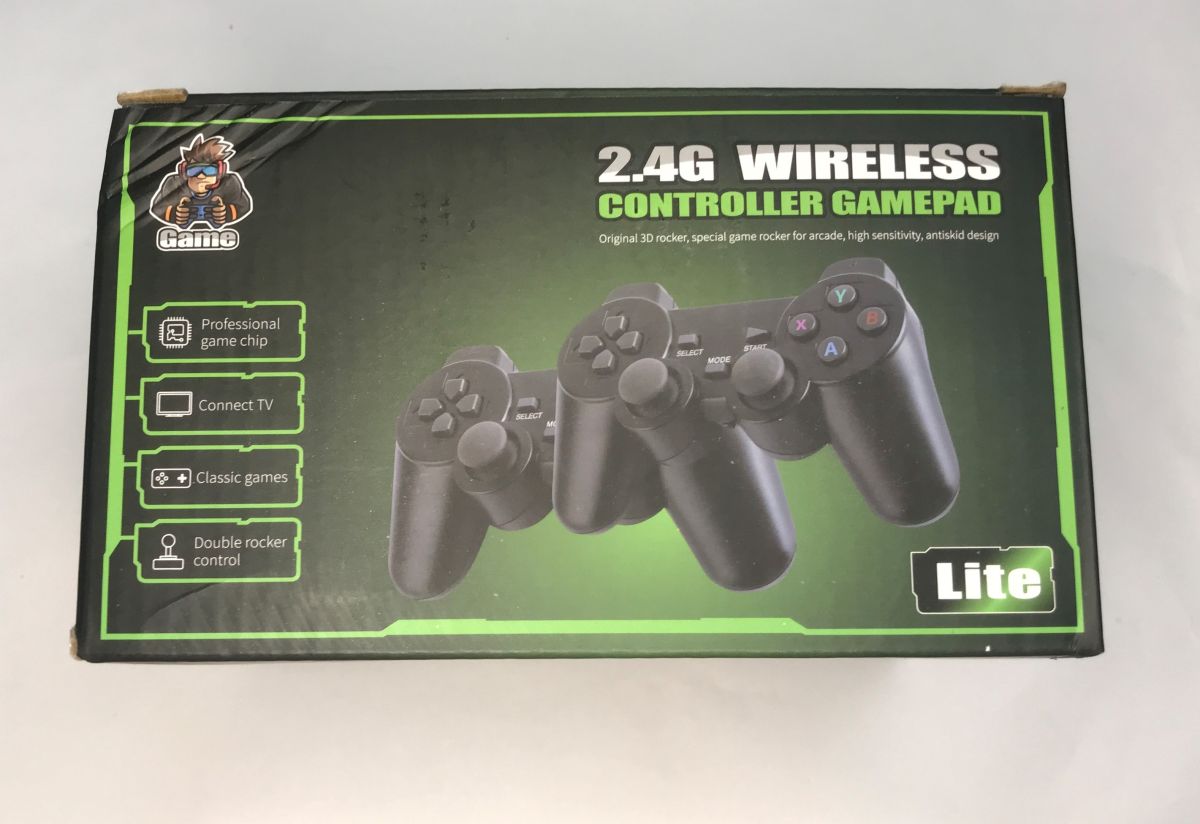
I'd like to invite you to a short presentation of a video game console bought for PLN80. The device shown here is based on the RetroArch system and allows you to run games from platforms such as Atari, Nintendo, PlayStation, GameBoy, Sega, etc. The product has around 20,000 games preloaded, and there is also the option to upload your own ROMs. The console is in HDMI plug-in form and the pads communicate with it wirelessly.
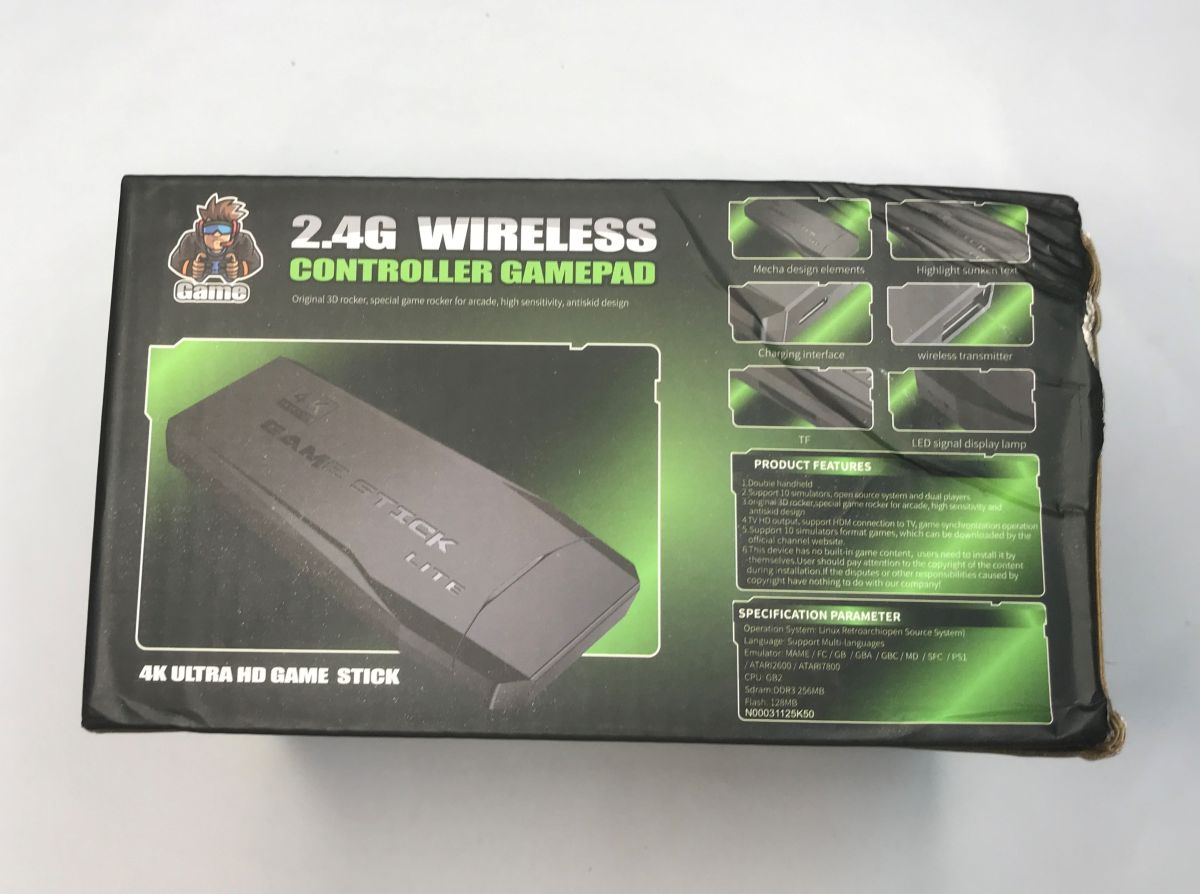
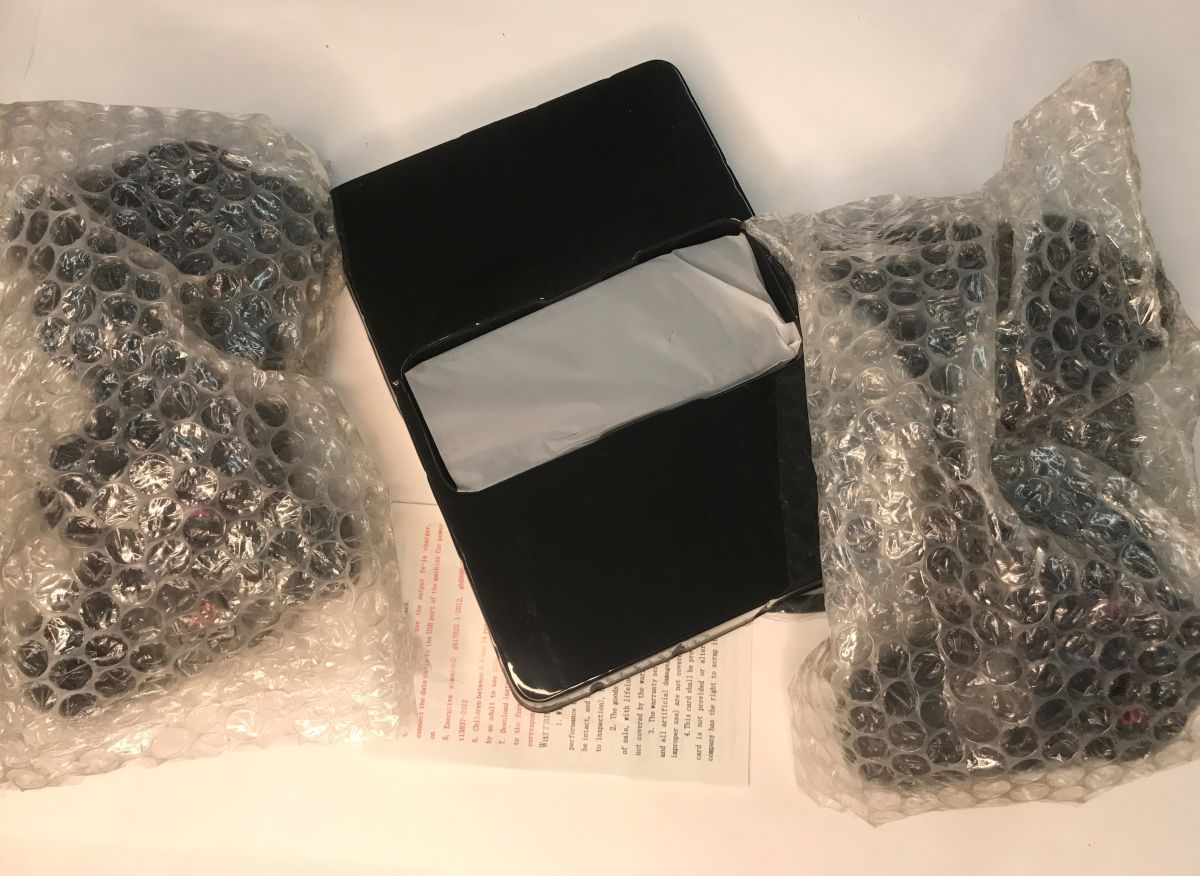
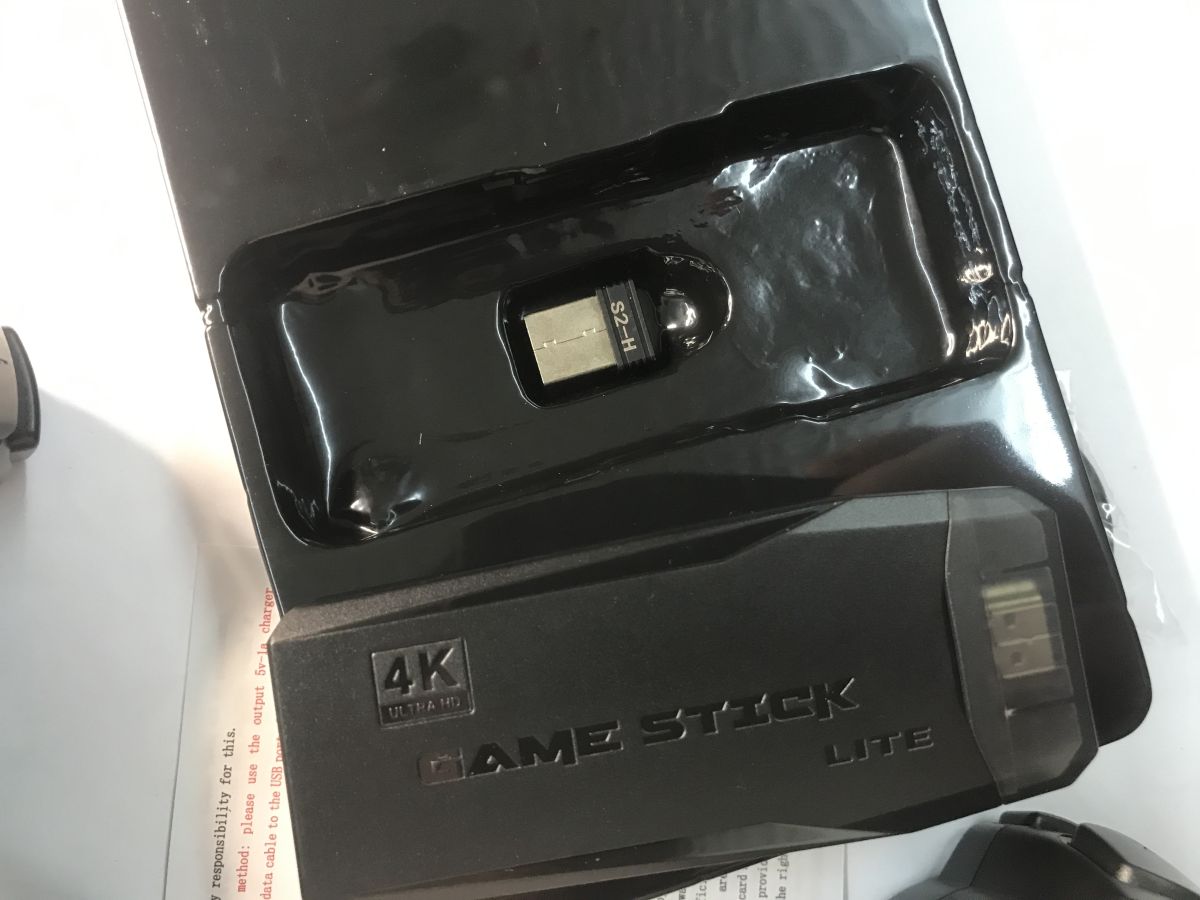
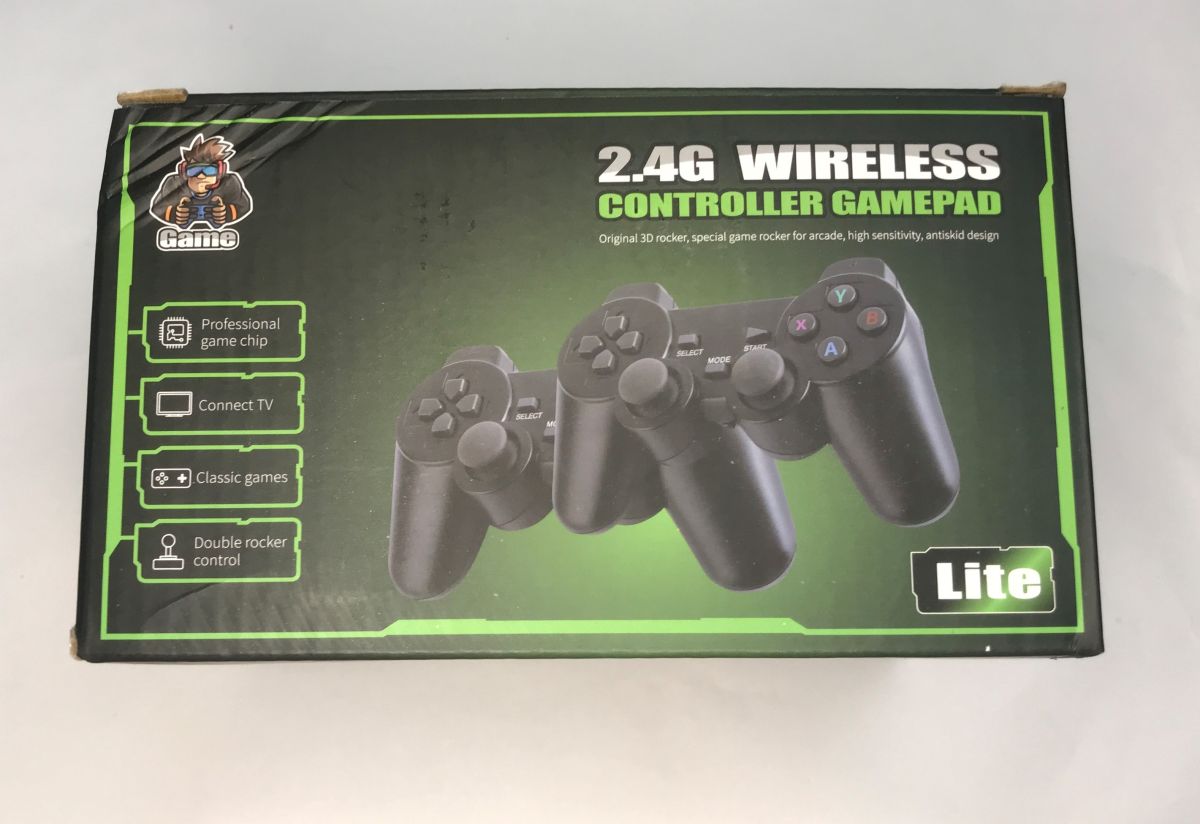
Model: N00031125K50, Flash size - 128 MB, RAM - DDR3 256 MB
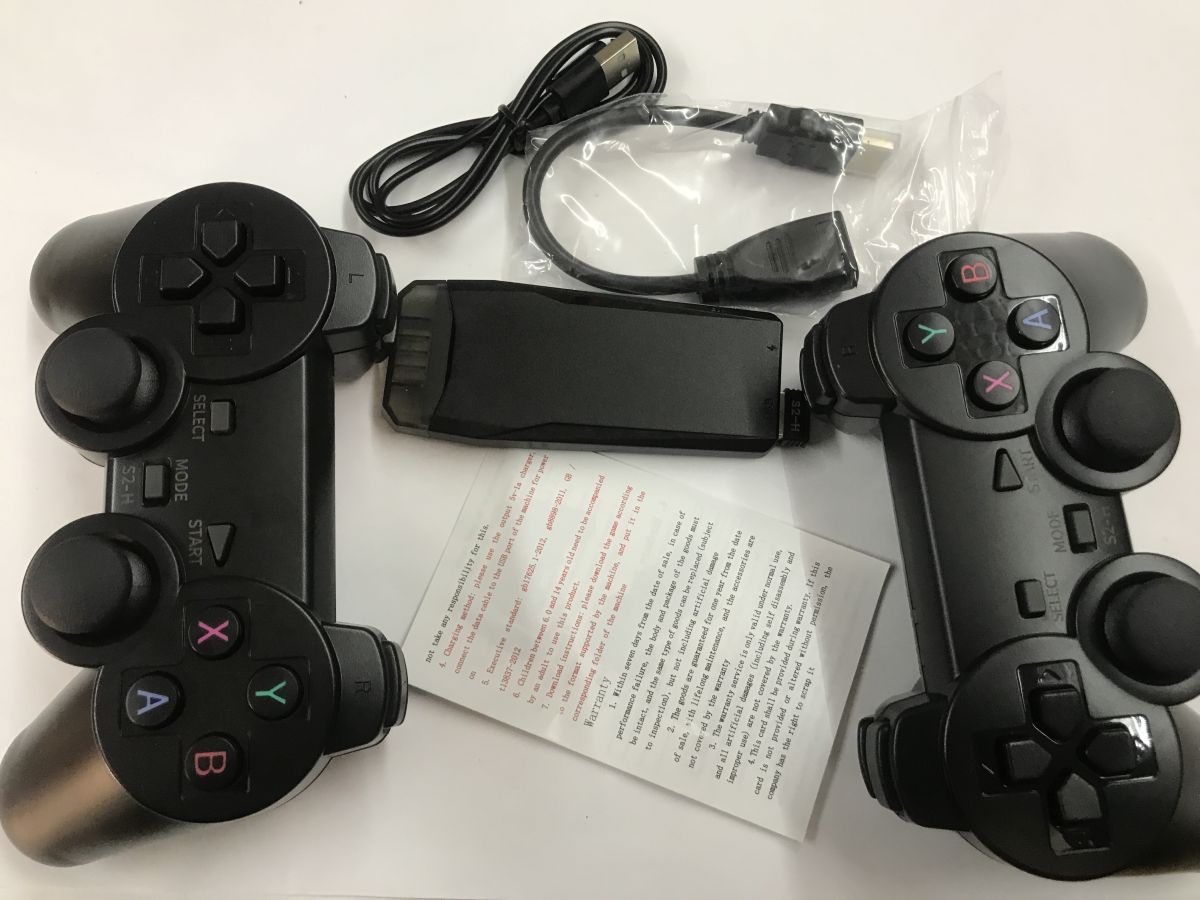
The whole thing came to me from China, the package got a bit battered on the way, but you can't see the damage on the product itself. The pads were protected by bubble wrap. Also included is a USB cable (for power) and an optional short HDMI extender, this is in case you are short on space behind your TV.
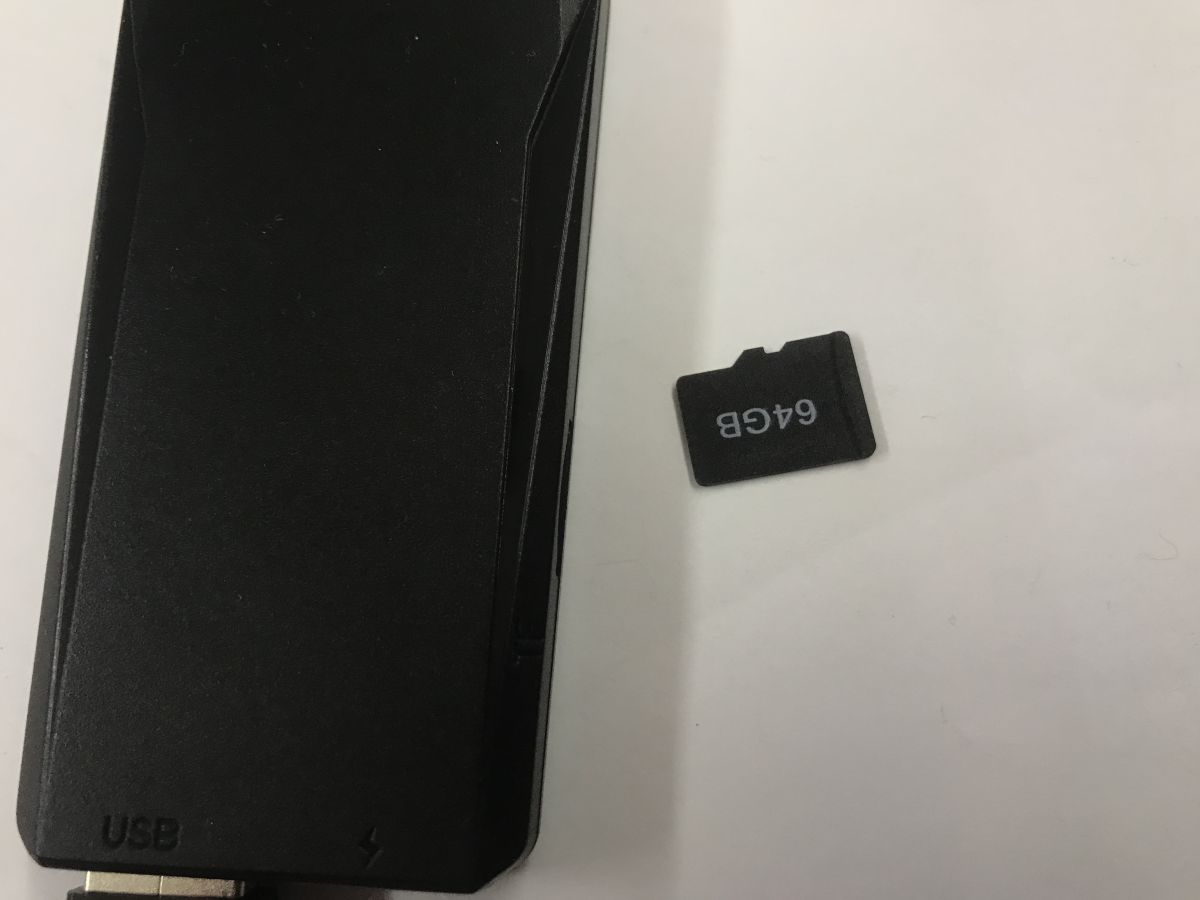
A 64 GB SD card is included:
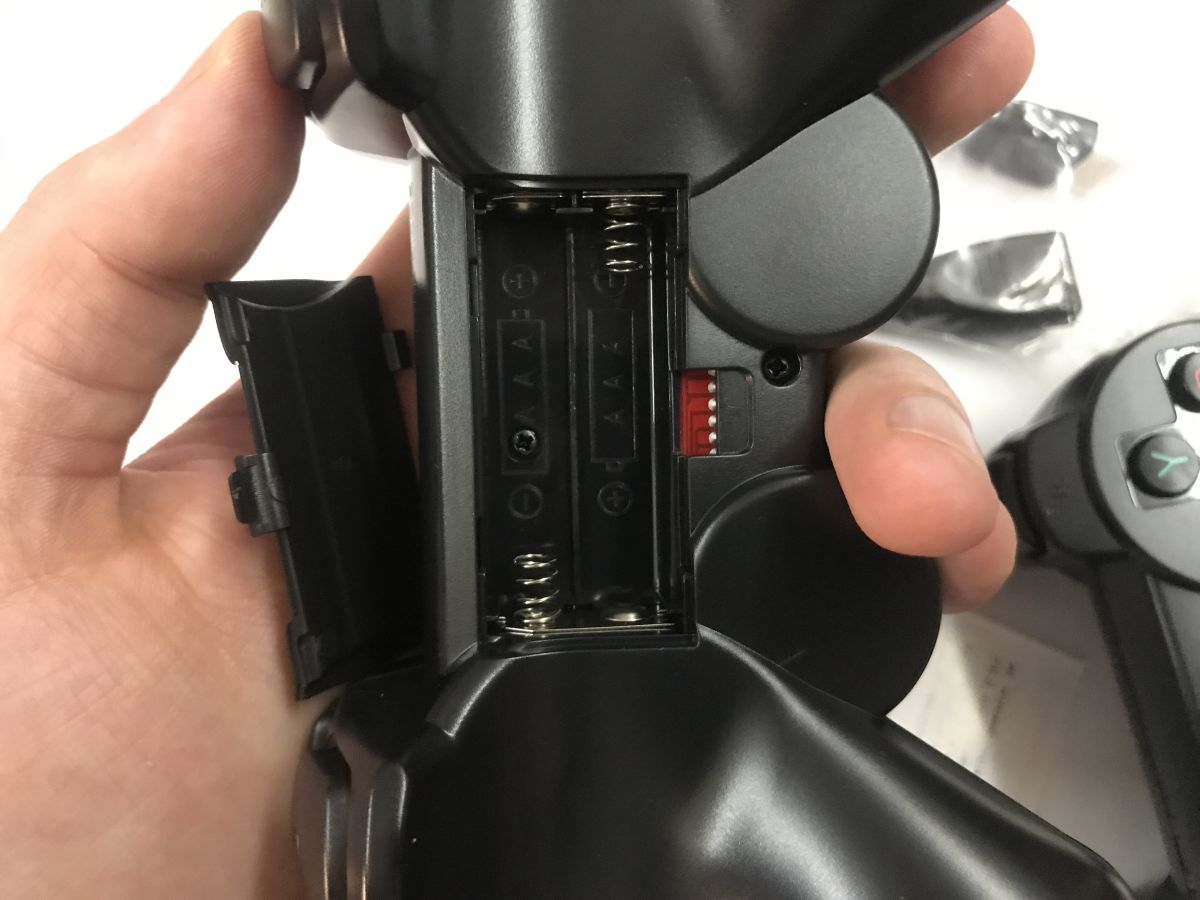
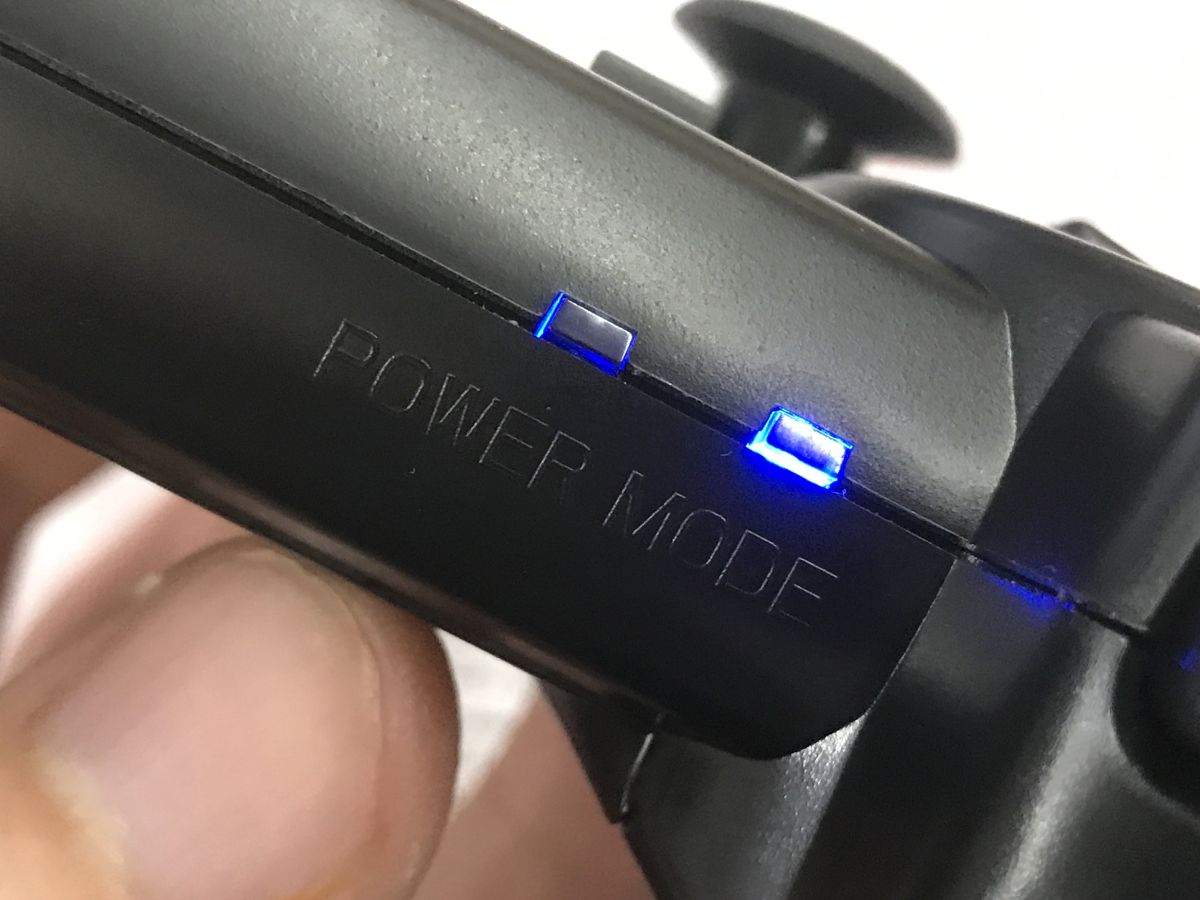
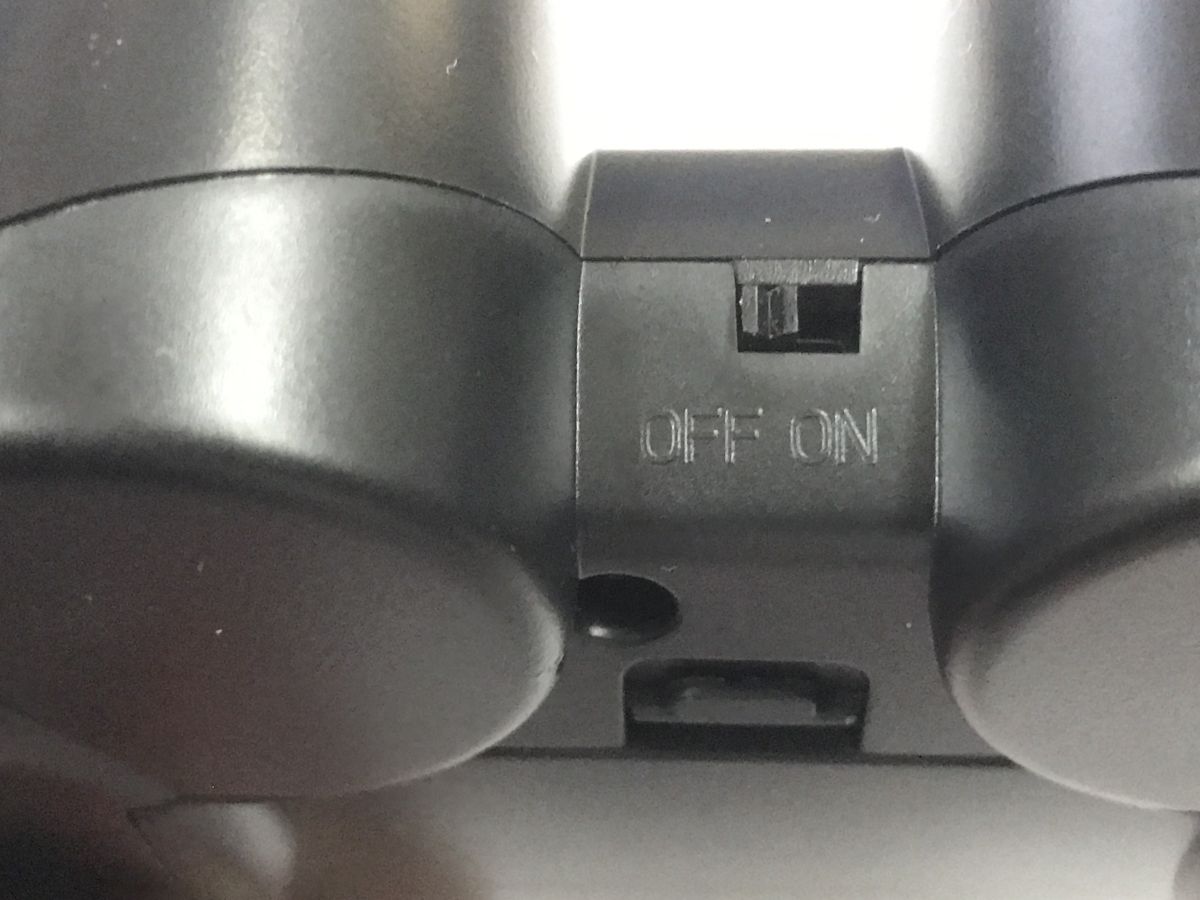
Battery not included:
English language manual:
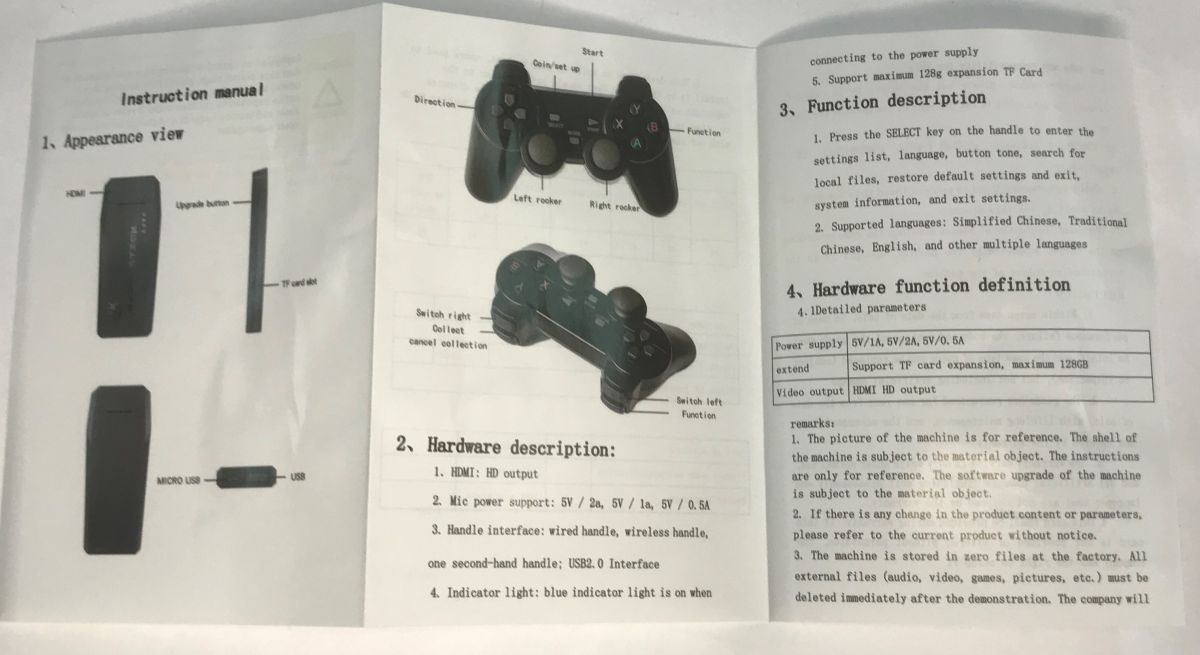
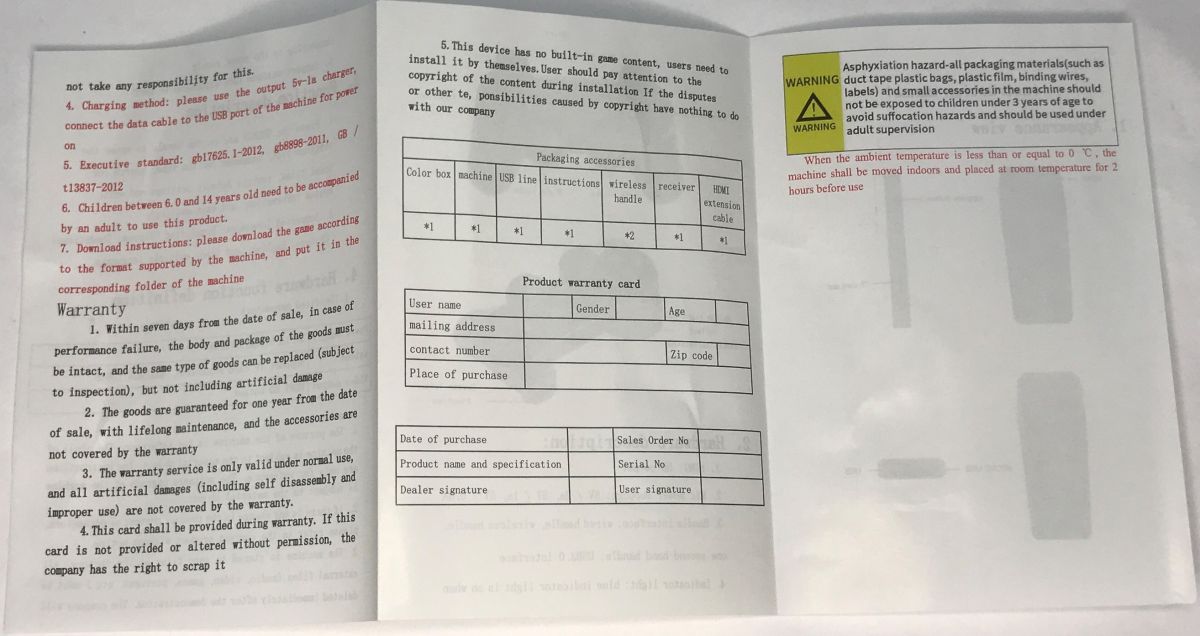
According to the manual, the device also supports wired pads, although I did not test this. The card size limit is 128 GB.
First startup
Connect the device to the TV, plug in its power supply (USB cable included) and the receiver from the pads. Switch on the pads. The pads establish a connection.
A simple menu with a myriad of games greets us:
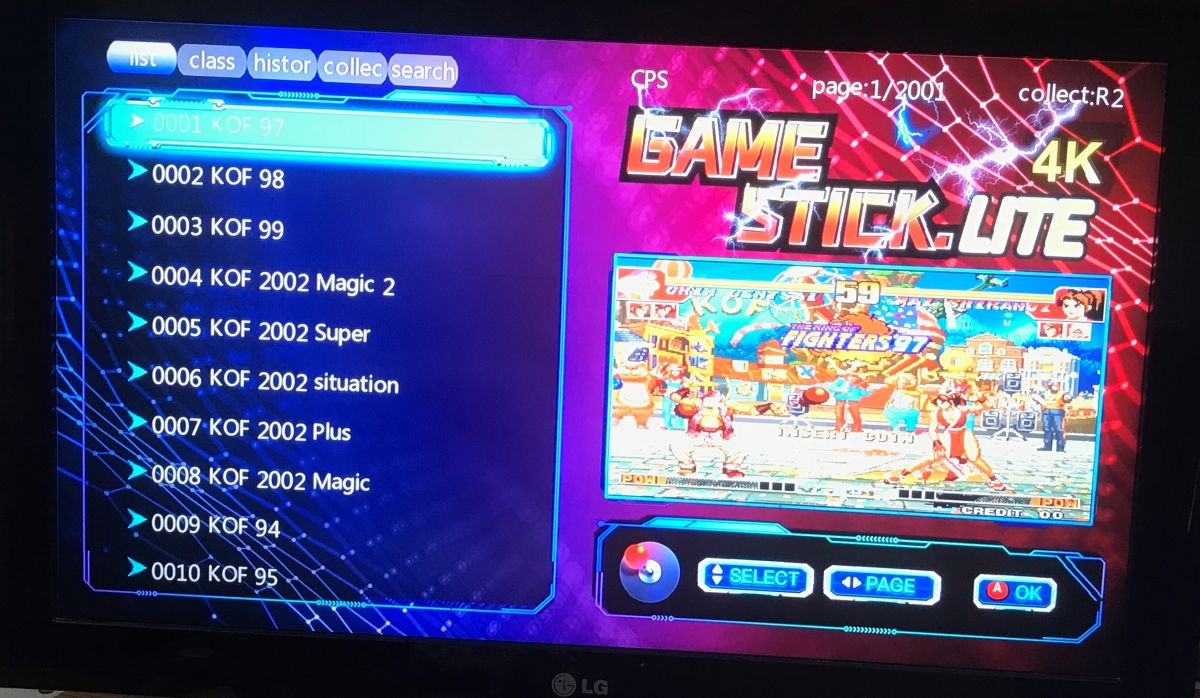
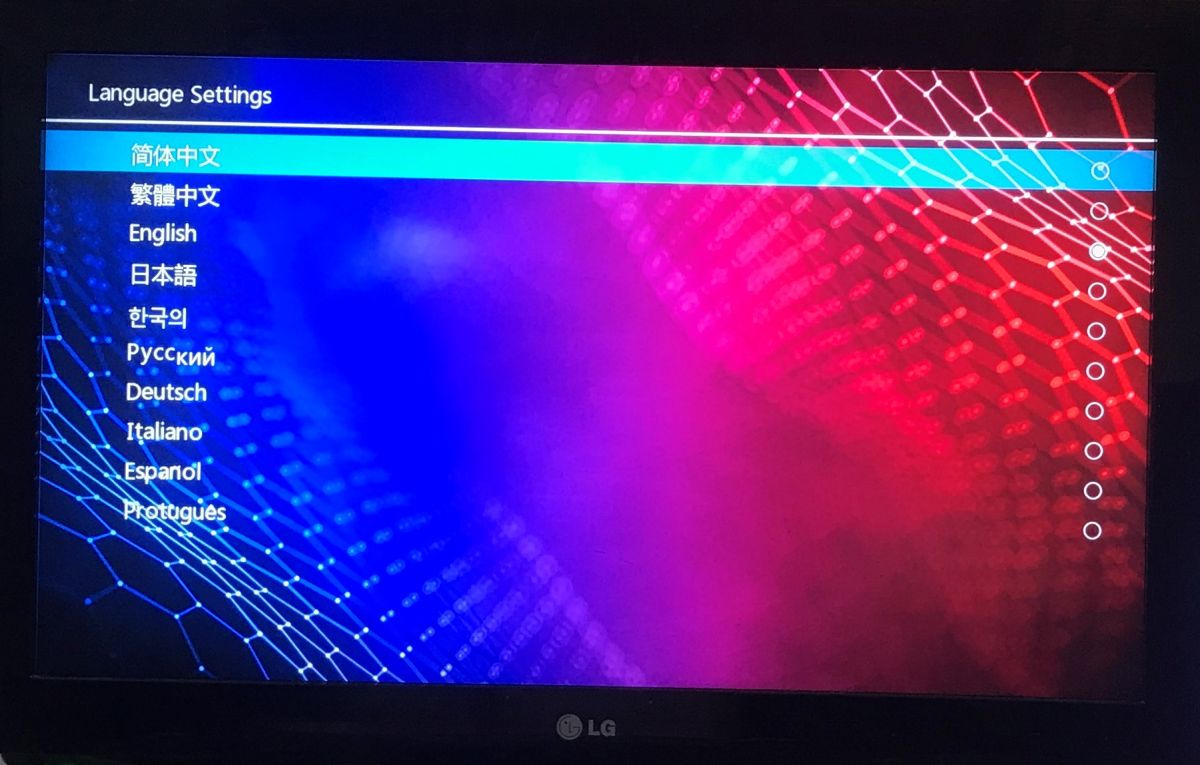
When you can search by name or group by platform (MAME, FC, GB, GBA, GBC, MD, SFC, PS1, ATARI...). We have an overview of the history of the games we run. Of course, settings, language change, controller configuration, as well as system information and factory reset are also available.
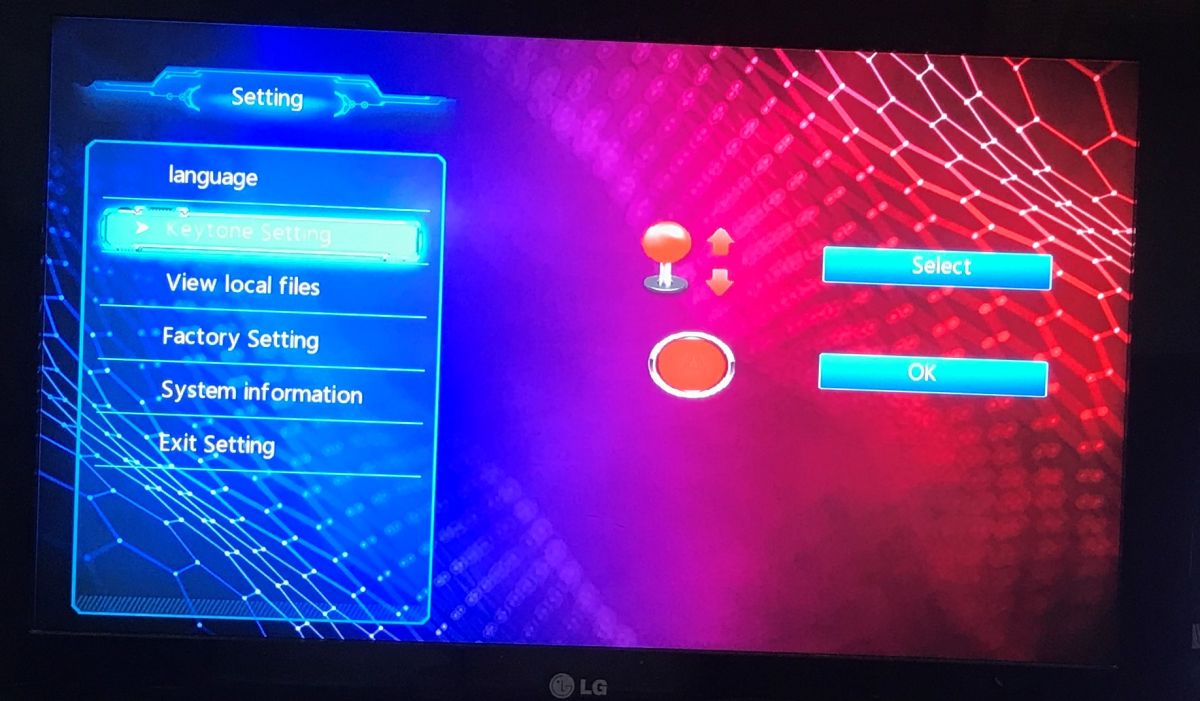
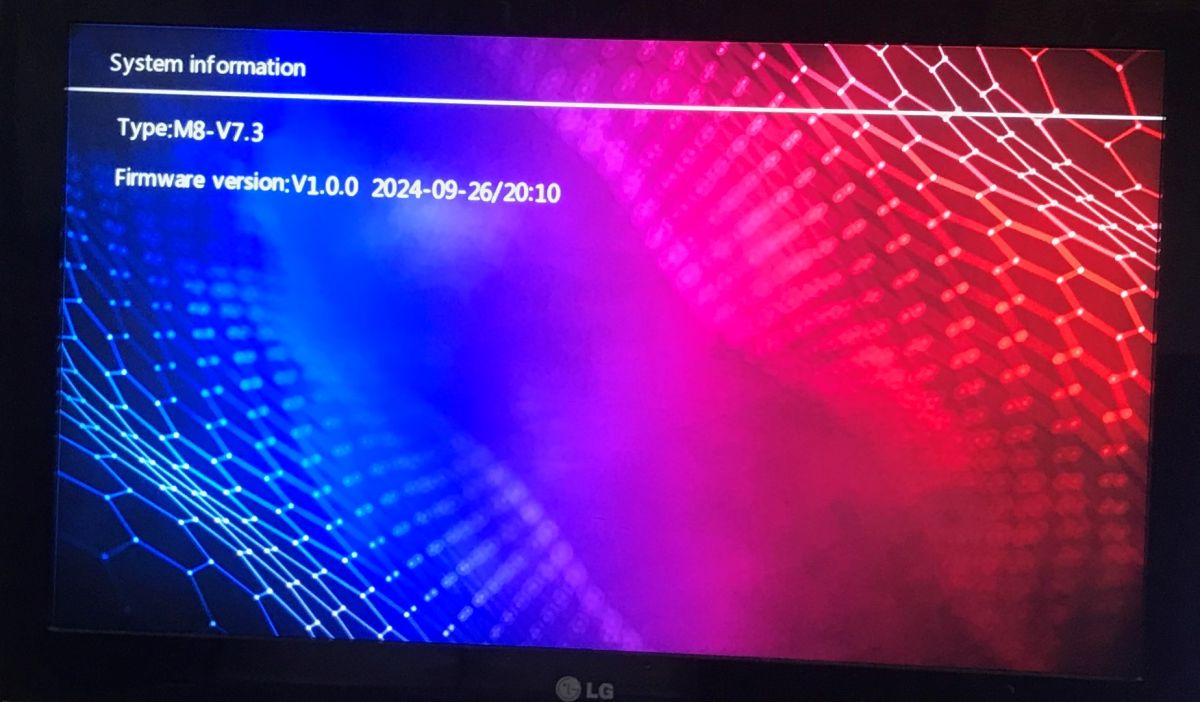
Device type: M8-V7.3, firmware V1.0.0 2024-09-26/20:10
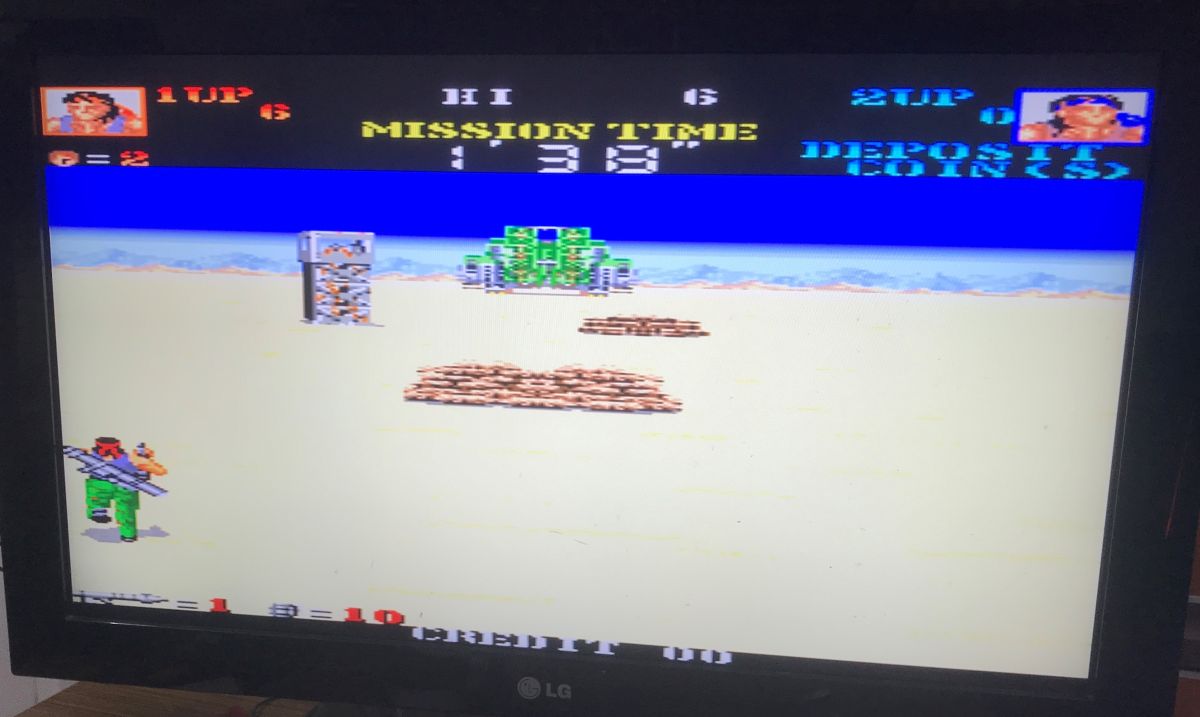
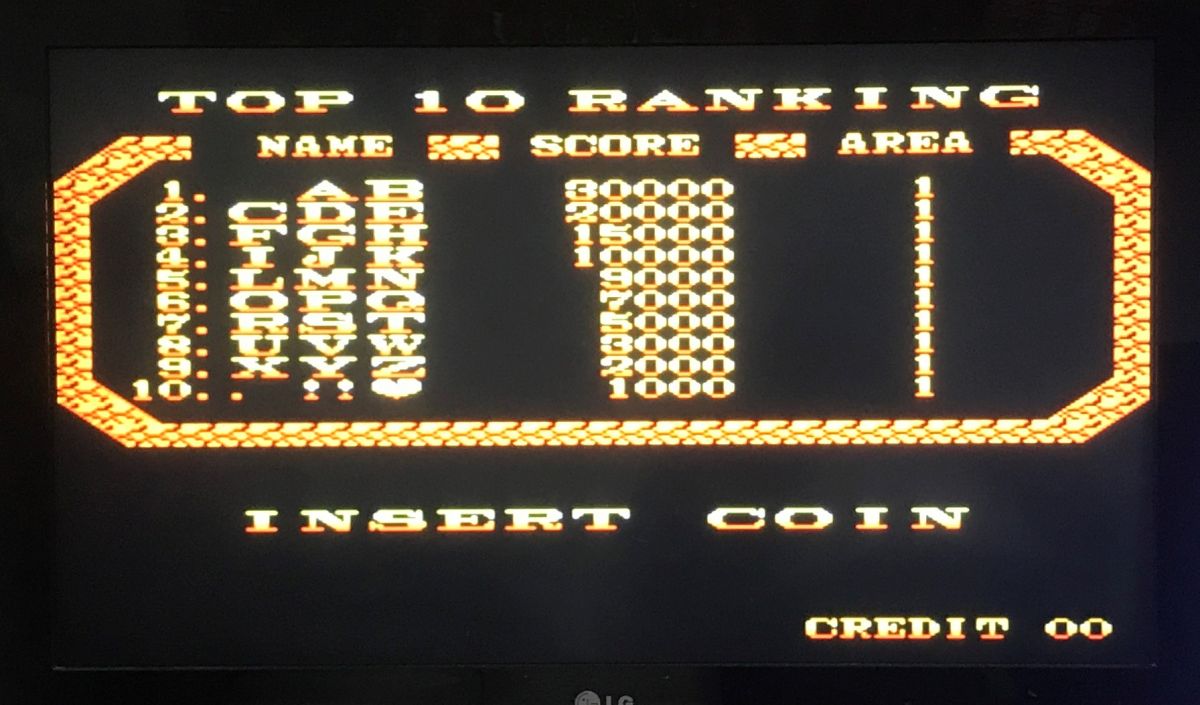
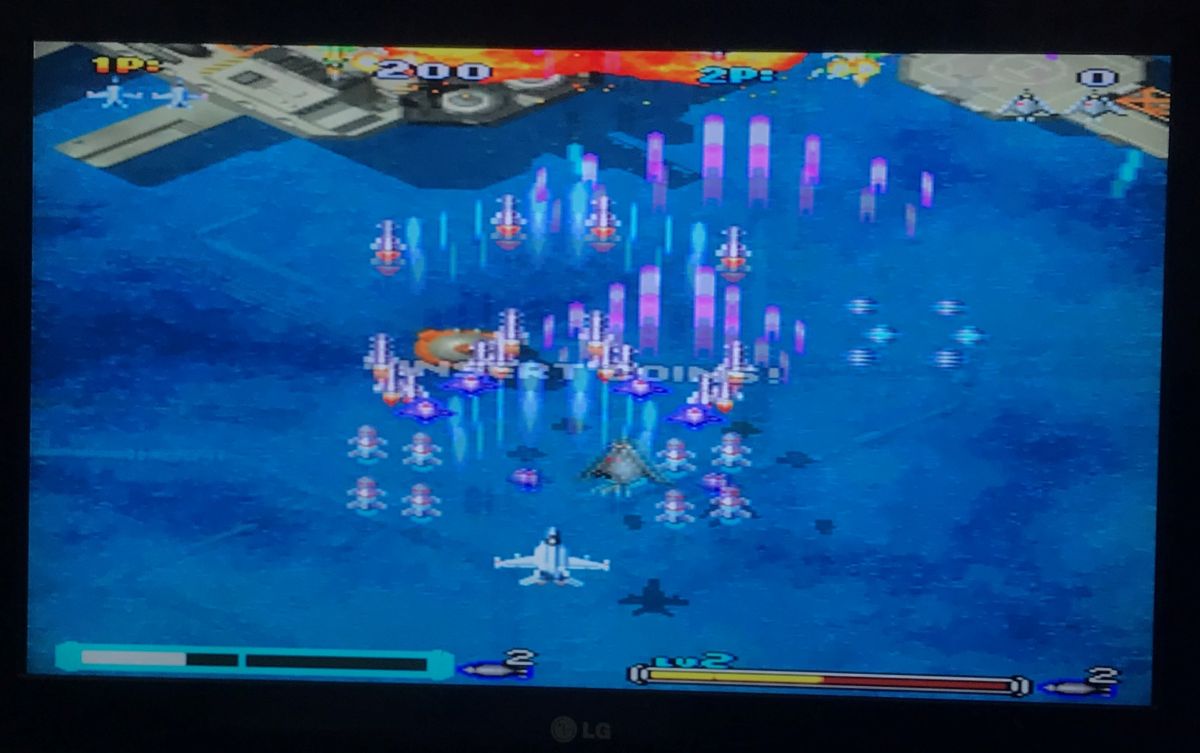
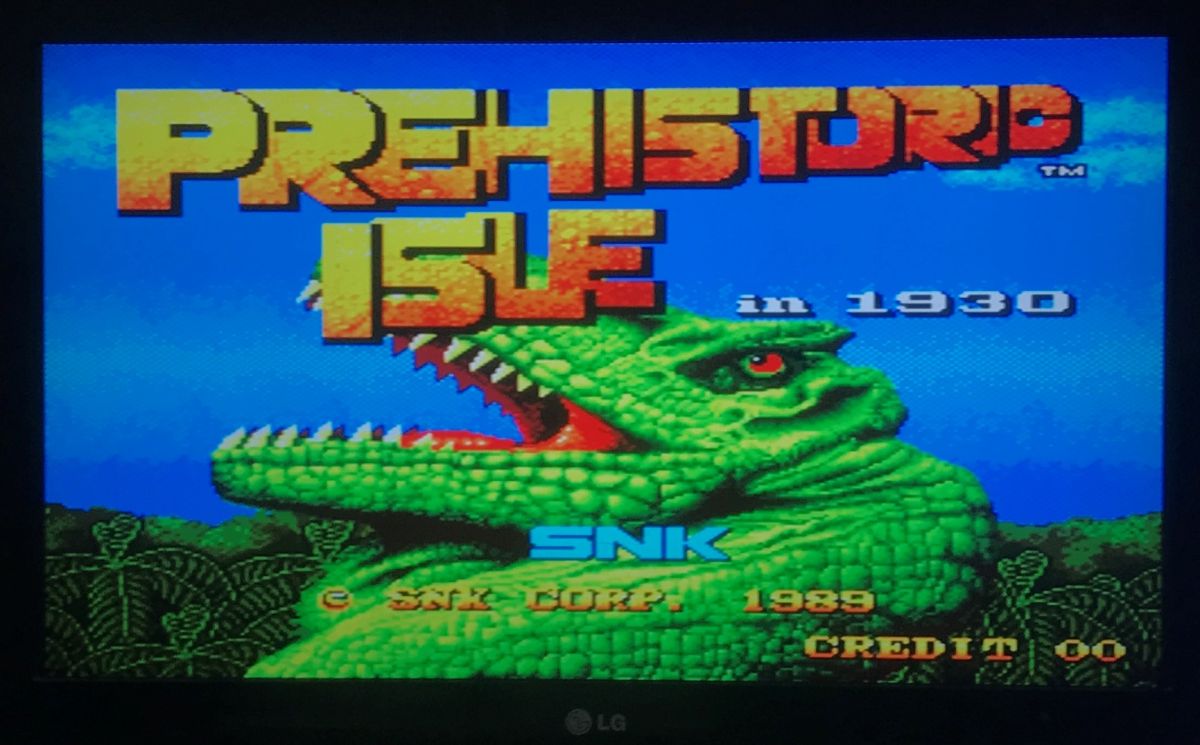
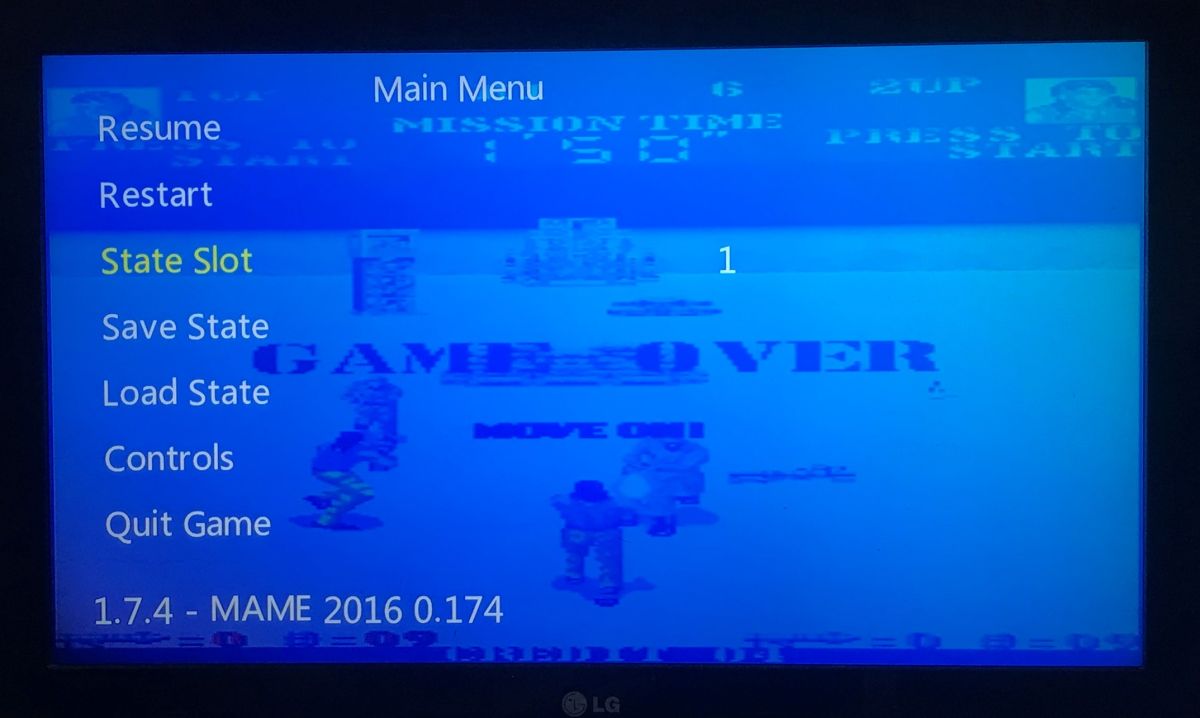
The games work fine. In the pause menu we have emulator save and read options for each game, additionally the emulator version is given there.
The only thing that puzzled me was this persistent "insert coins" message, could it be that some of the games are designed for slot machines?
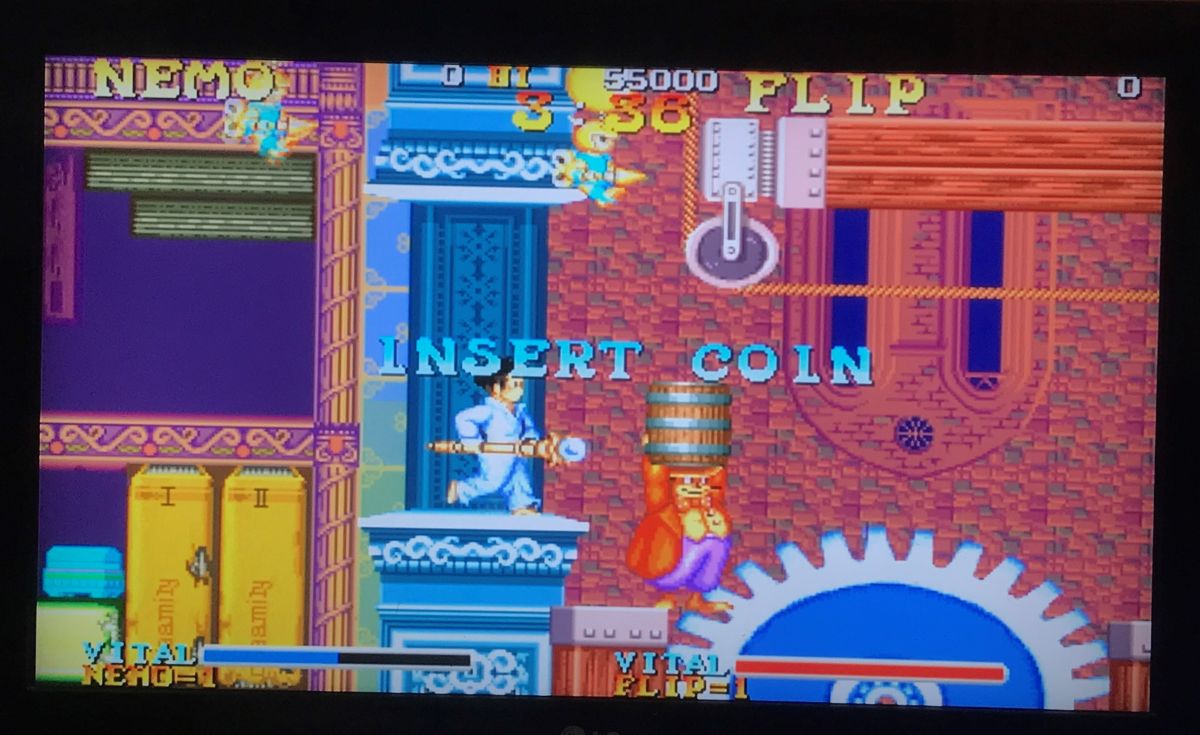
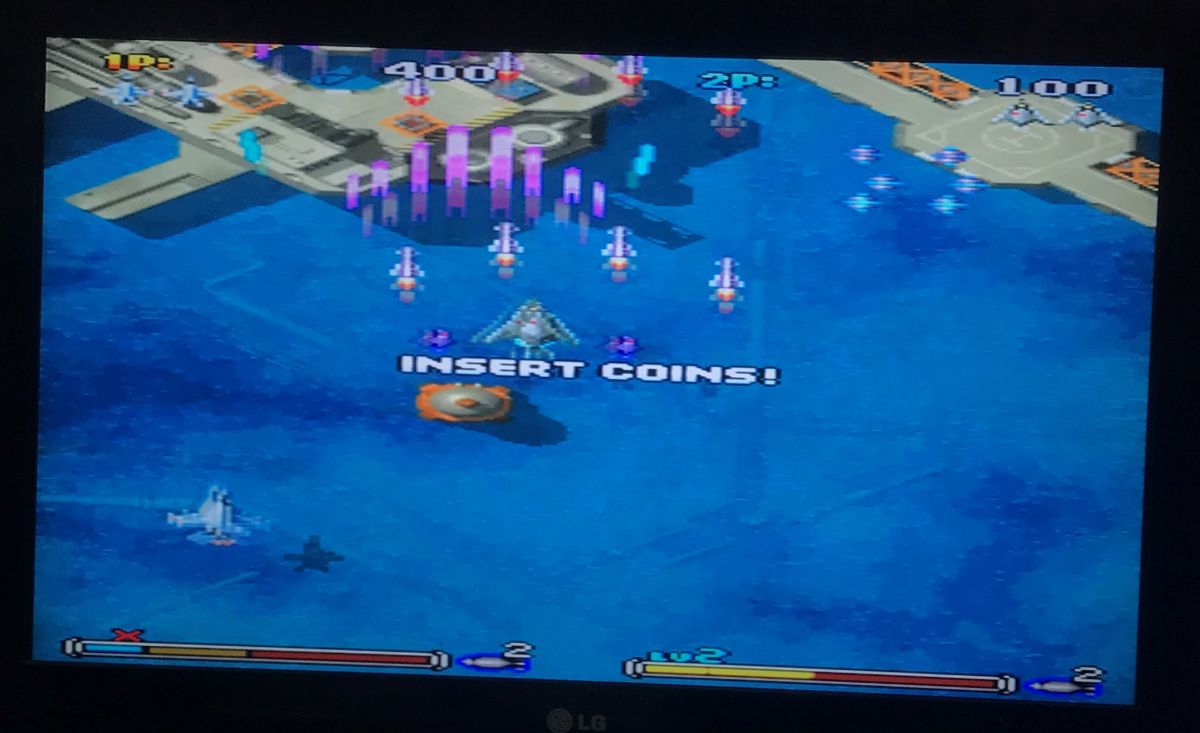
I have no other complaints about the games, it's time to look inside.
Interior of the pad
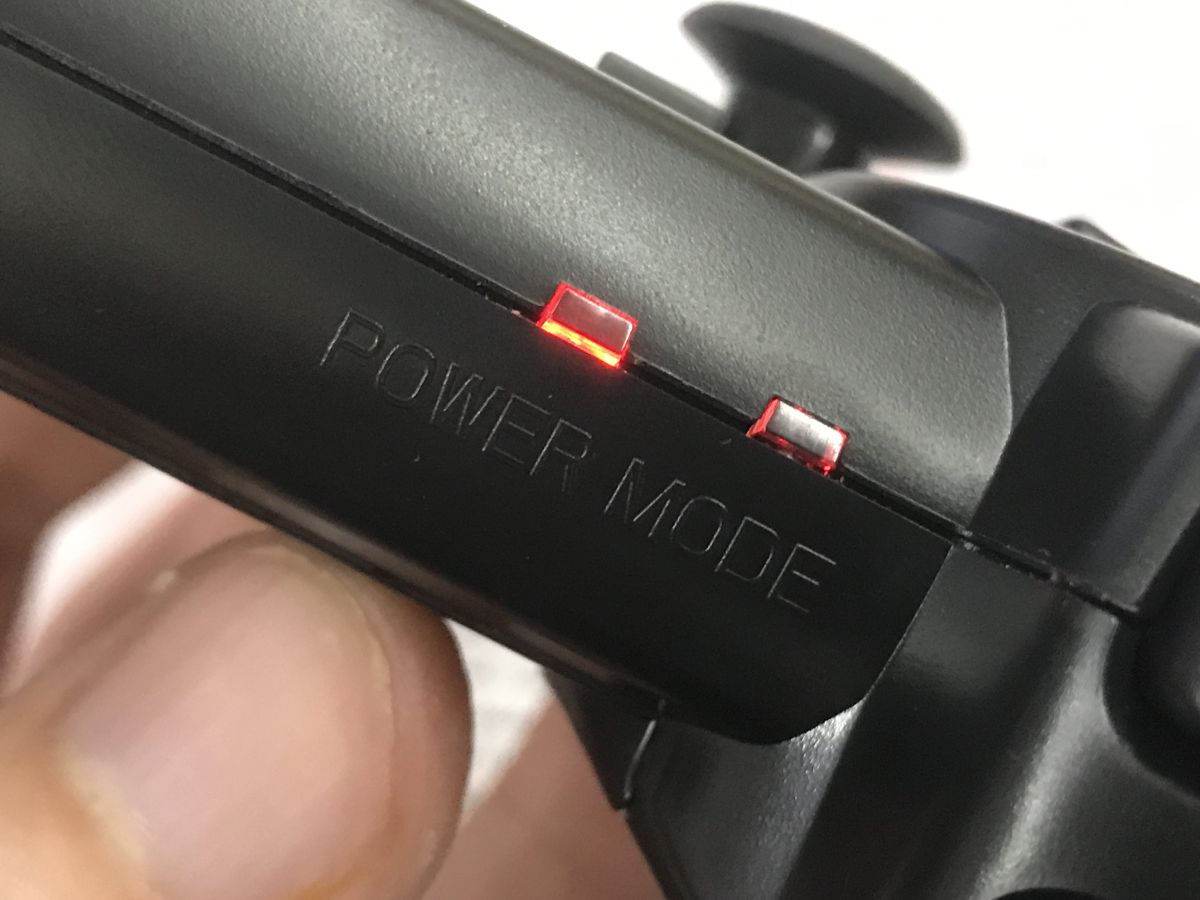
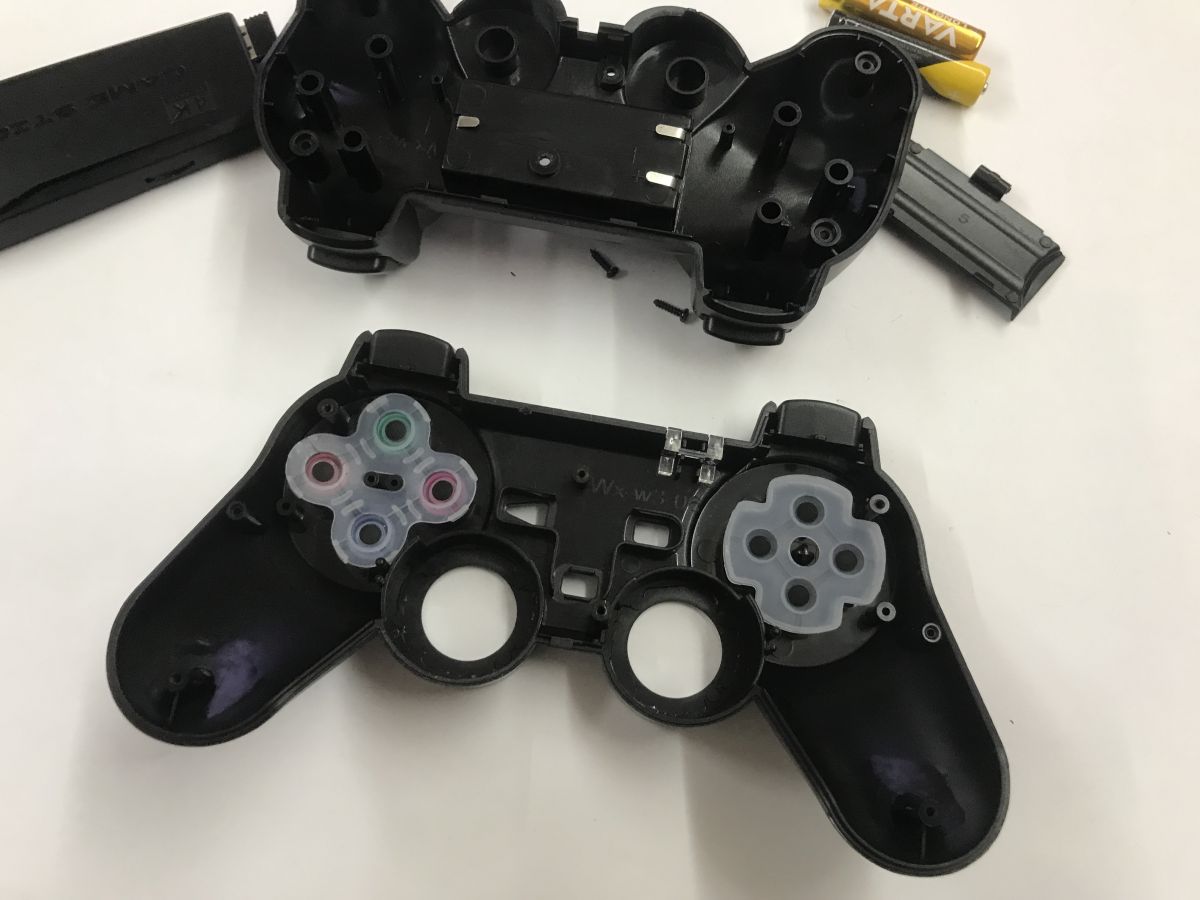
The pad is constructed from two larger plates. It reminds me of a PS2 pad in appearance, but feels lower in quality. It does not use Bluetooth communication, but rather 2.4GHz.
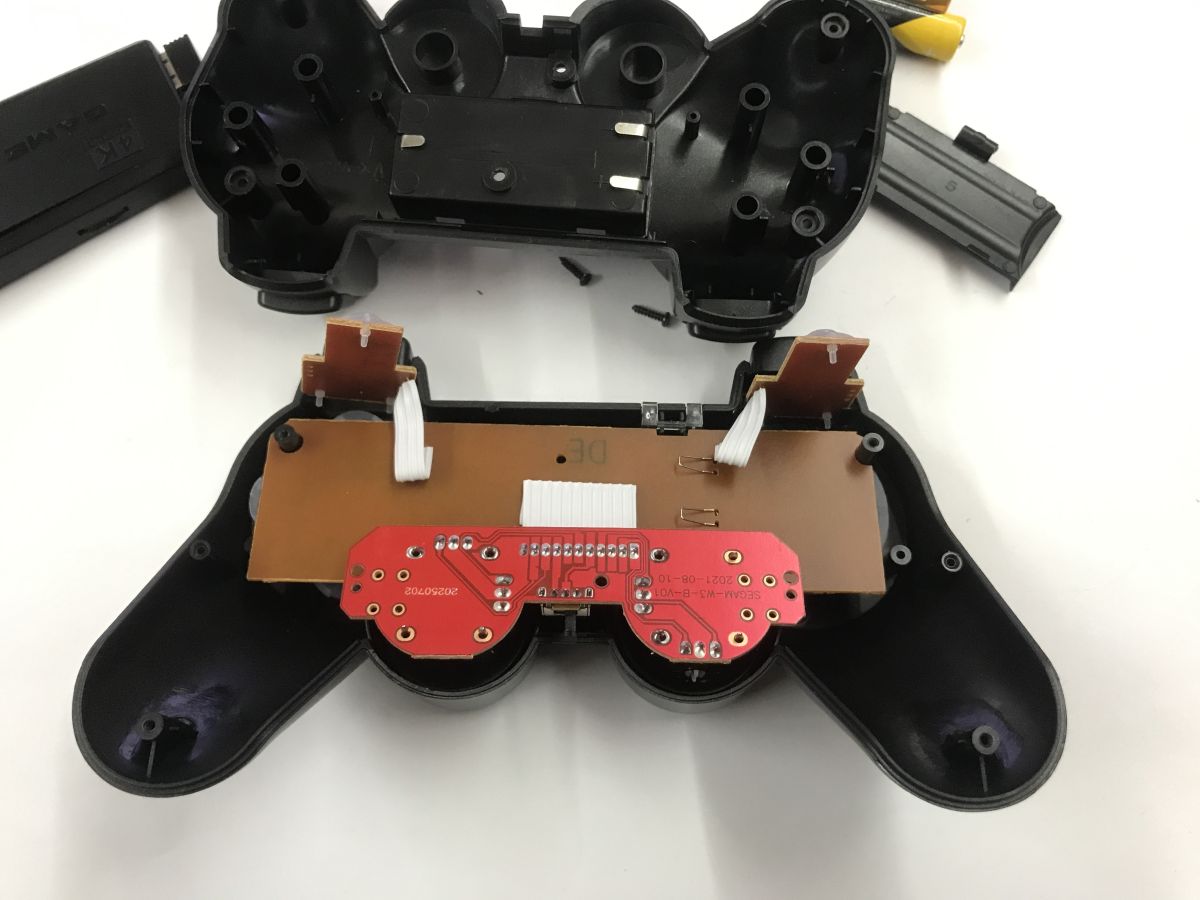
Joystick board designation: SEGAM-W3-B-V01
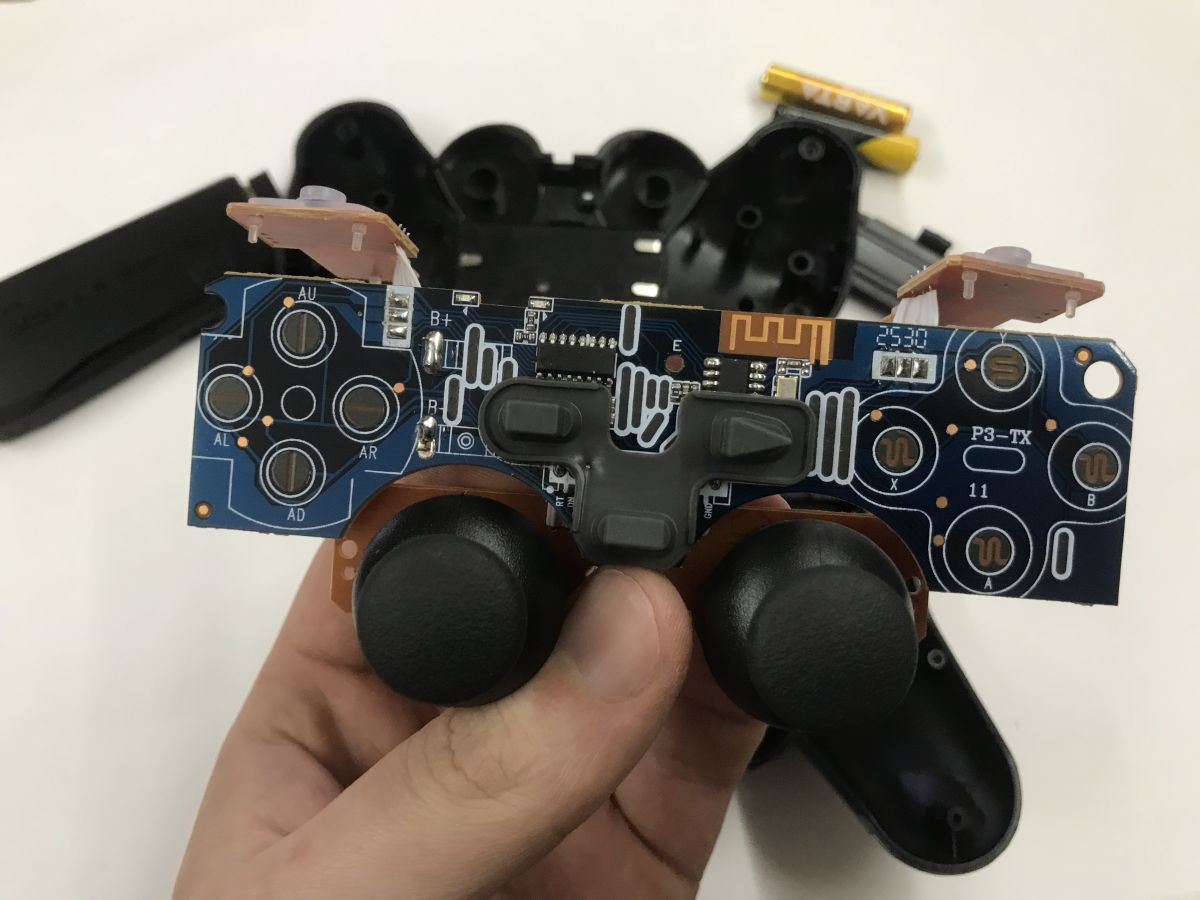
There are two unmarked circuits on the PCB, perhaps a microprocessor and a transmitter.
Interior consoles
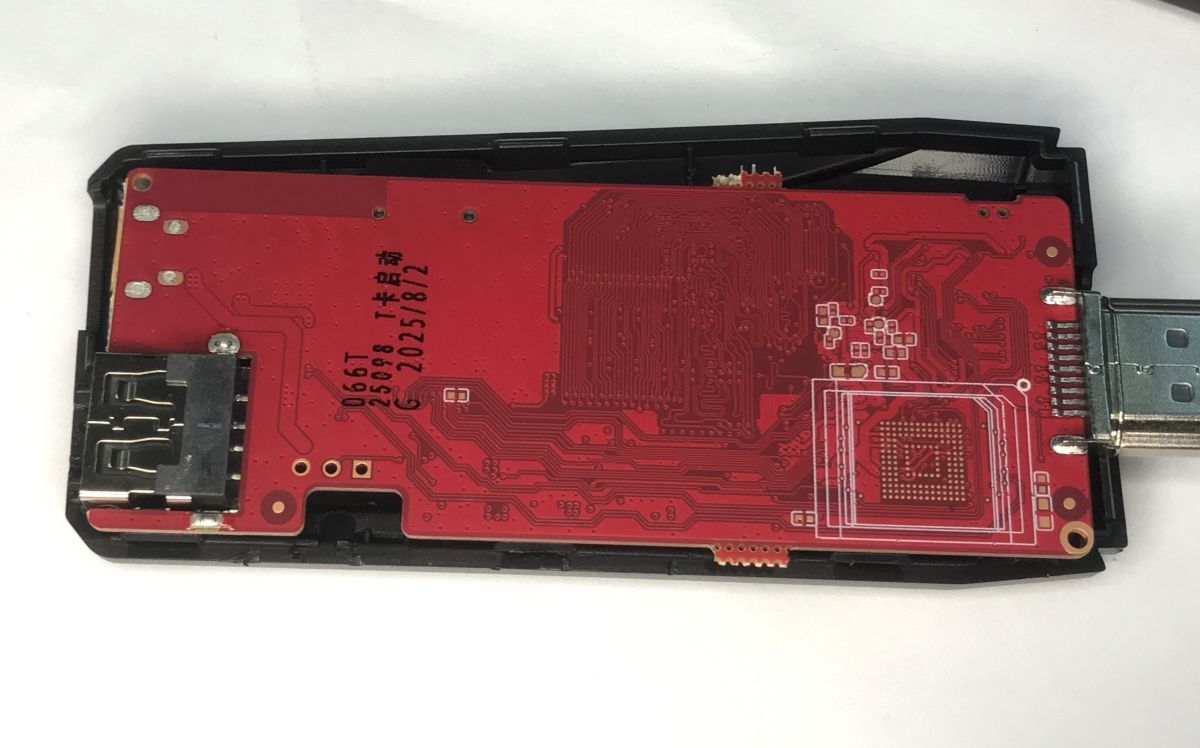
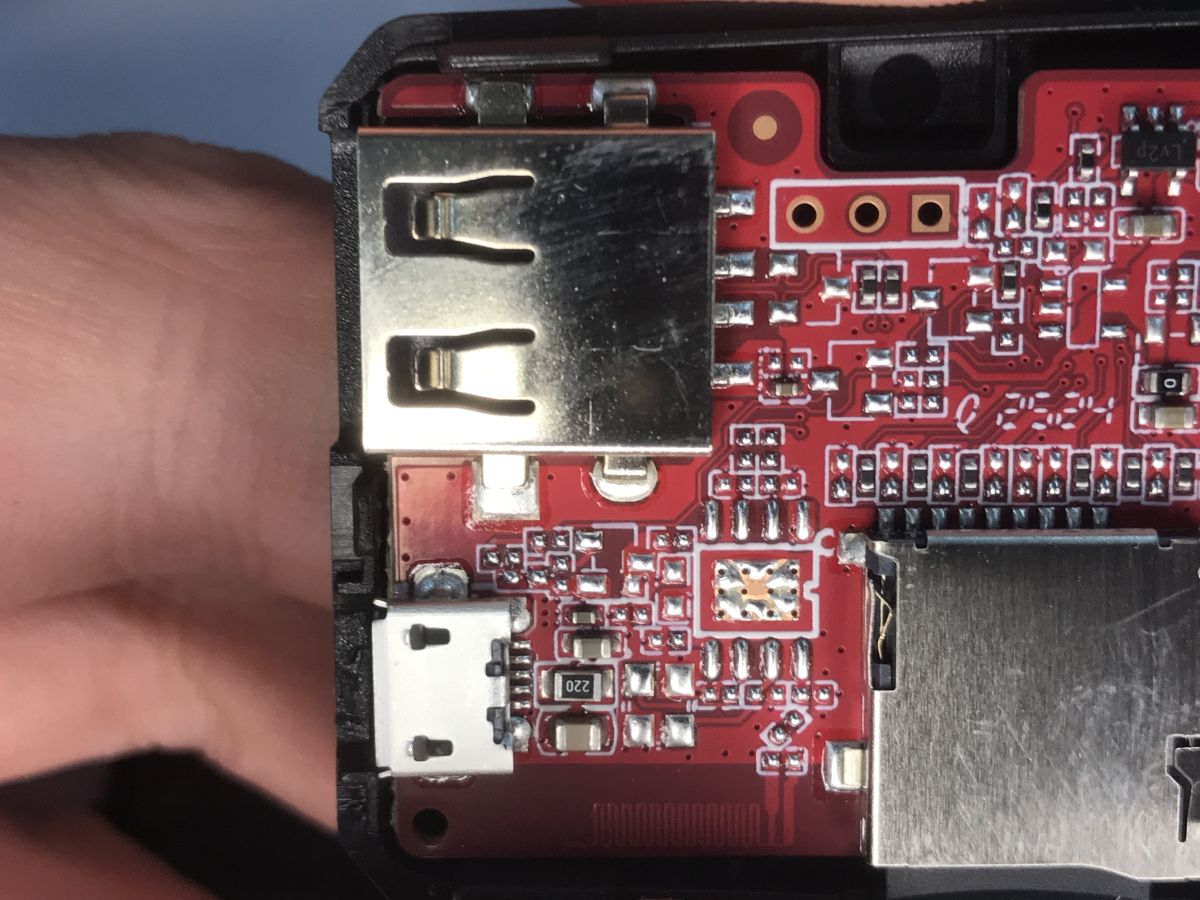
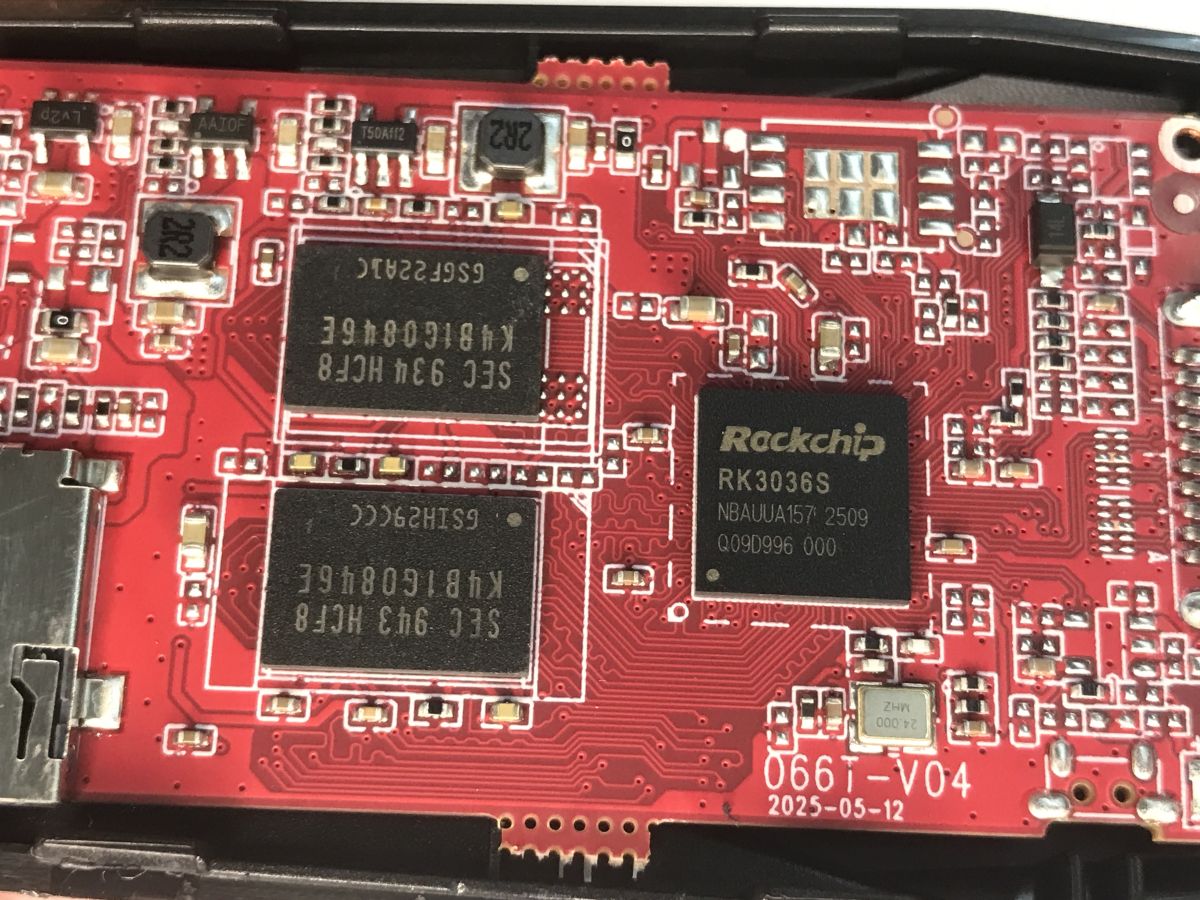
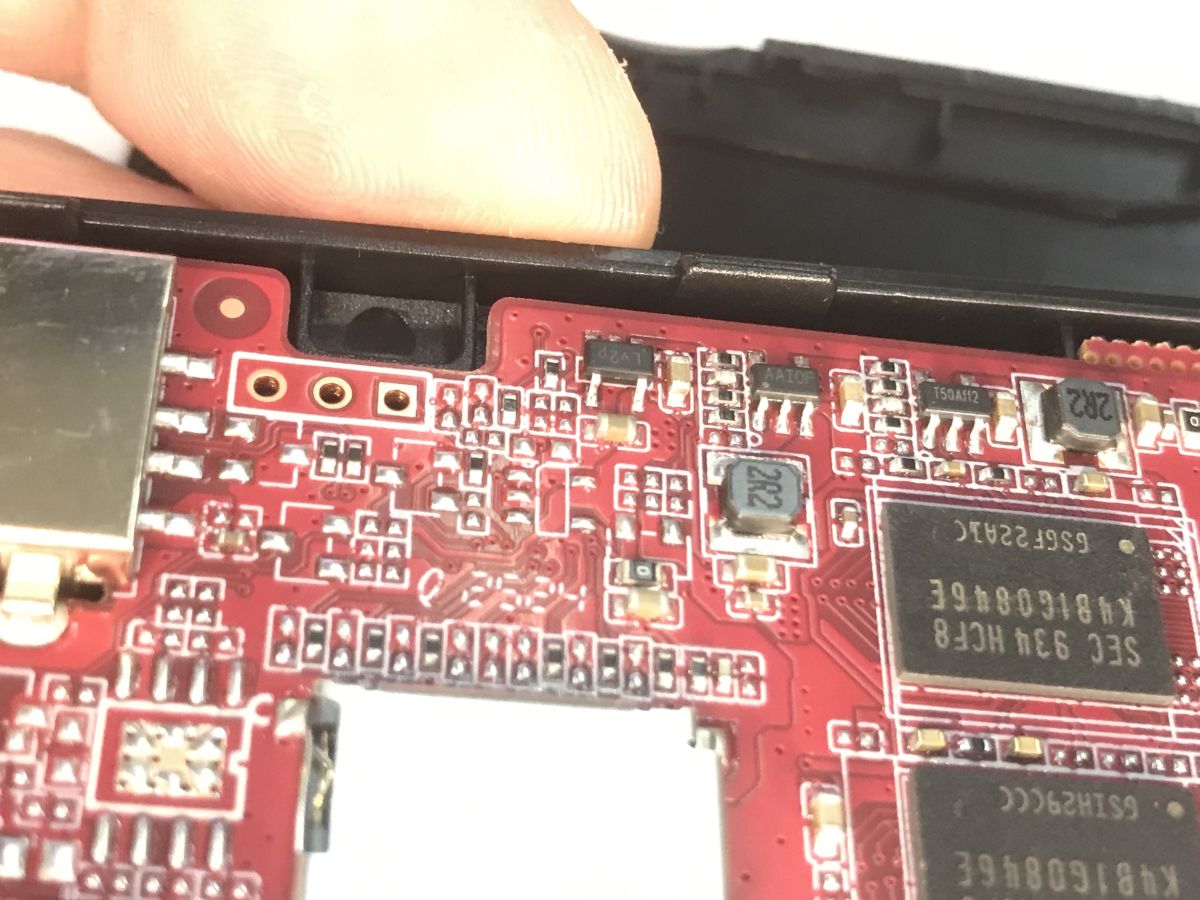
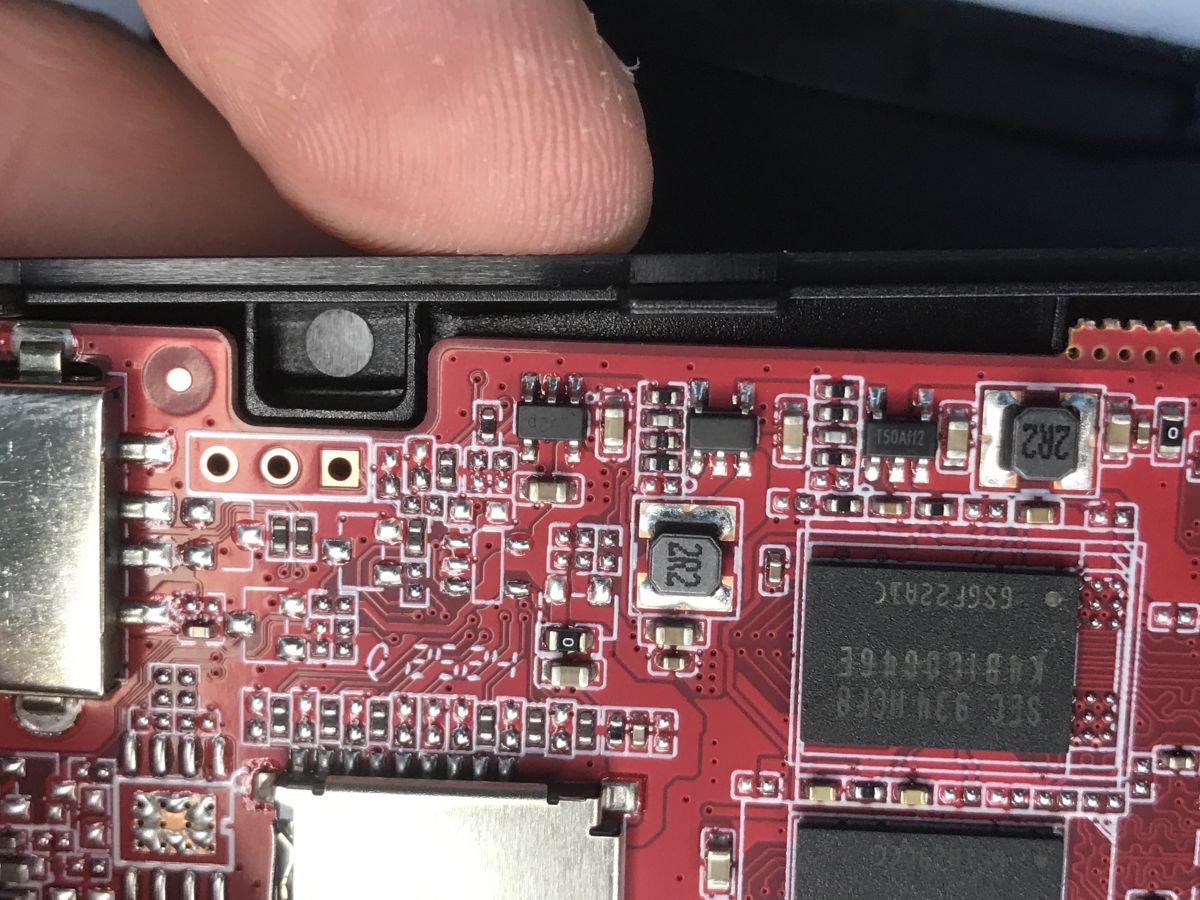
The console is realised on a Rockchip RK3036S. PCB designation: 066T-V04 2025-05-12, a fairly fresh product. On board you can see memory bones, inverters, and an empty space for what looks like an RF transceiver with an antenna on the board. I'm also puzzled by the three pads, is this some kind of programming connector? UART RX/TX and ground?
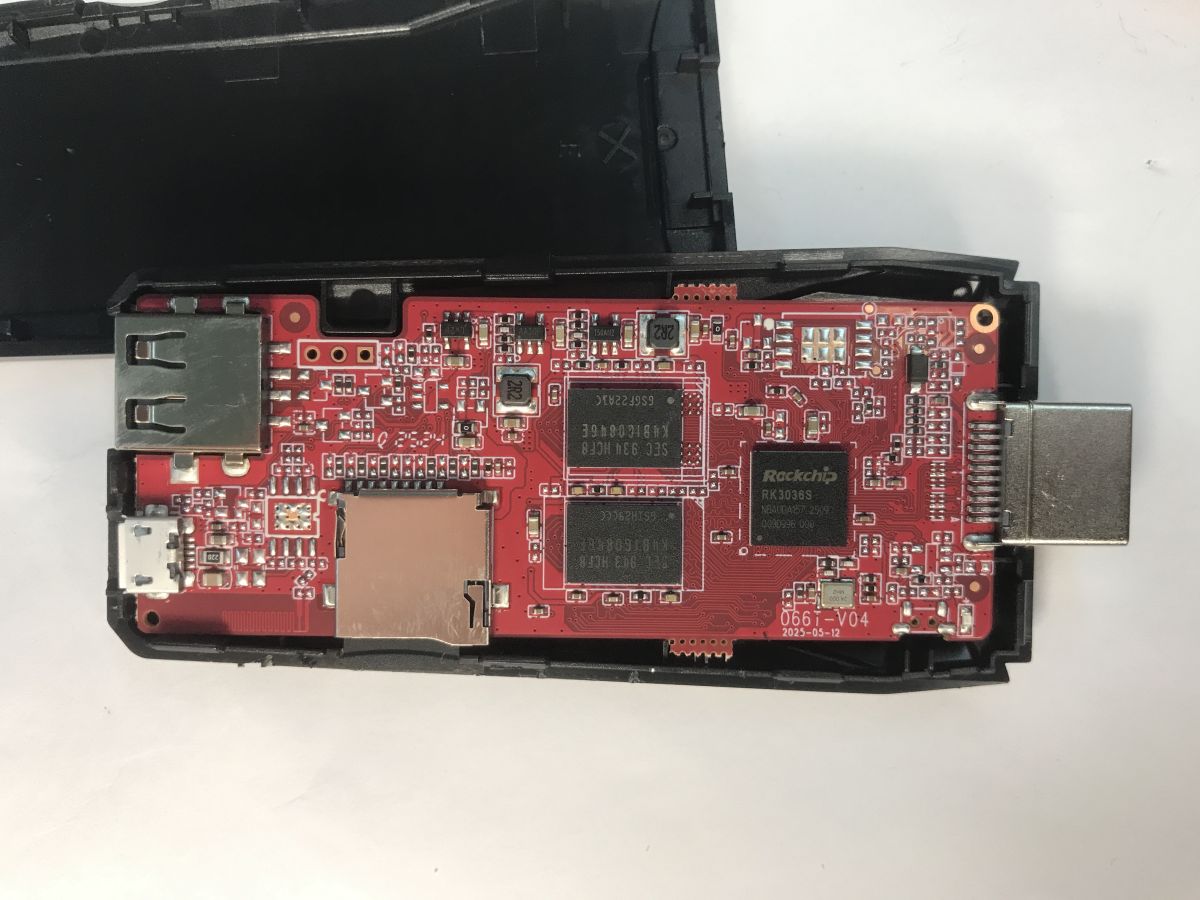
On the other hand there is almost nothing, only that chip slot in the BGA is interesting - a version under an alternative CPU?
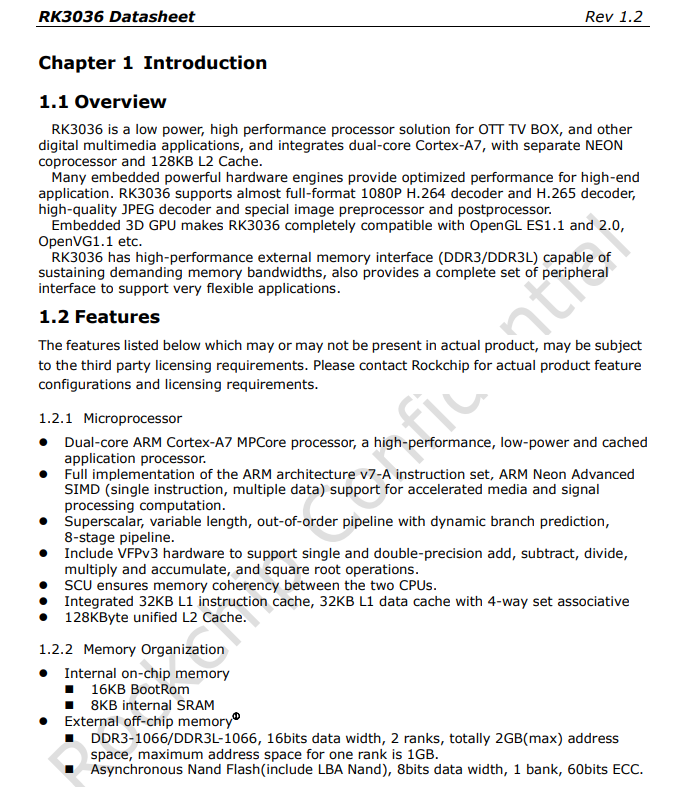
The RK3036S is a dual-core ARM Cortex-A7 MPCore processor
Windows pad test
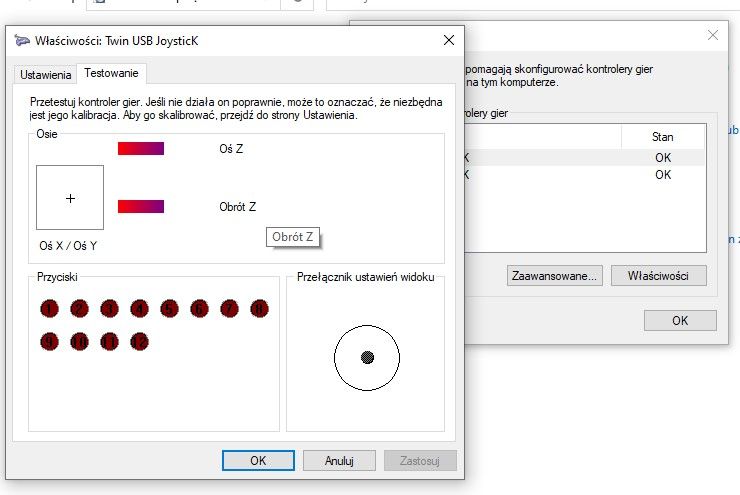
Out of curiosity, I checked the Windows pads. I switched their receiver to the computer. The USB device is correctly seen and supported, we essentially have here two functional wireless pads that can be used independently of the console.
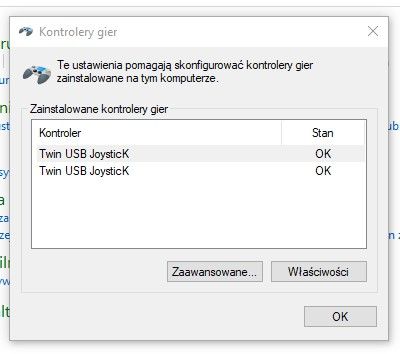
I verified their operation in the system tool joy.cpl:
Summary
The kit looks pretty good for its price. You could probably get it cheaper too. There are a lot of games, the whole thing works with the TV via HDMI, and the set comes with a cable to be able to connect the console comfortably even if the distance to the wall is small.
I have no complaints about the emulation, but I have encountered the opinion that the SNES can occasionally frame here.
The only major drawback I see here are the pads, which require batteries to work. I'd prefer USB-charged ones. Additionally, the buttons are quite clunky and noisy, but this can be survived.
Interestingly, the pads work normally with a PC - so perhaps it would be possible to go the other way and connect your own, better pads to this console, but I haven't tested that.
And what consoles do you guys recommend, was it a good buy at this price, or would it be better to go for something else?
p.kaczmarek2 wrote 14827 posts with
rating 13009 , helped 659 times.
Been with us since 2014 year.
Comments
Could you take a look at some ps1 games to see how they work? nesa was emulated 20 years ago by phones [Read more]
Those pads on the other side are probably the space for the eMMC memory. Some retro consoles have it soldered in and that's where the system sits. Have you checked what's on the memory card? If it's a... [Read more]
And a question, does this console have the typical Mario, IceClimber and Tank-i classics (Battle City)? [Read more]
Testing and presenting on a retro gaming setup: using a Retro M8 console or emulator with two controllers, developers can run Minitests and showcase gameplay via RetroArch, enabling cross-platform retro... [Read more]
I have this gamestock but do not recommend it. There are lags and delays when playing Contra. Instead, I recommend the slightly more expensive Y6 hdmi game stick. You can change the OS to EMUelec and do... [Read more]
I also have this "console". I recommend that you immediately do a dump of the SD card or replace it with some better one because it died quickly for me. You can find the batches on the net but it can be... [Read more]
"Insert Coin" is about slot machine games and the MAME emulator, which is in an archaic version on this device. [Read more]
Sellers write in the descriptions that you can add your games and updates. Has anyone tried adding other games to this console's card? Is it possible to rip a CD from a PS1 and run the game of your... [Read more]
Yes, I did. Only then it doesn't appear in the list and you have to go into the file manager and run it from there. It should appear in the history if I remember correctly. I suspect making an img from... [Read more]
For fans of this cheapest model and its clones, I recommend switching to the community-enhanced software – "OpenWorld v0.90plus ML_Store Edition Wave 5". It includes updated versions of the emulator cores... [Read more]