





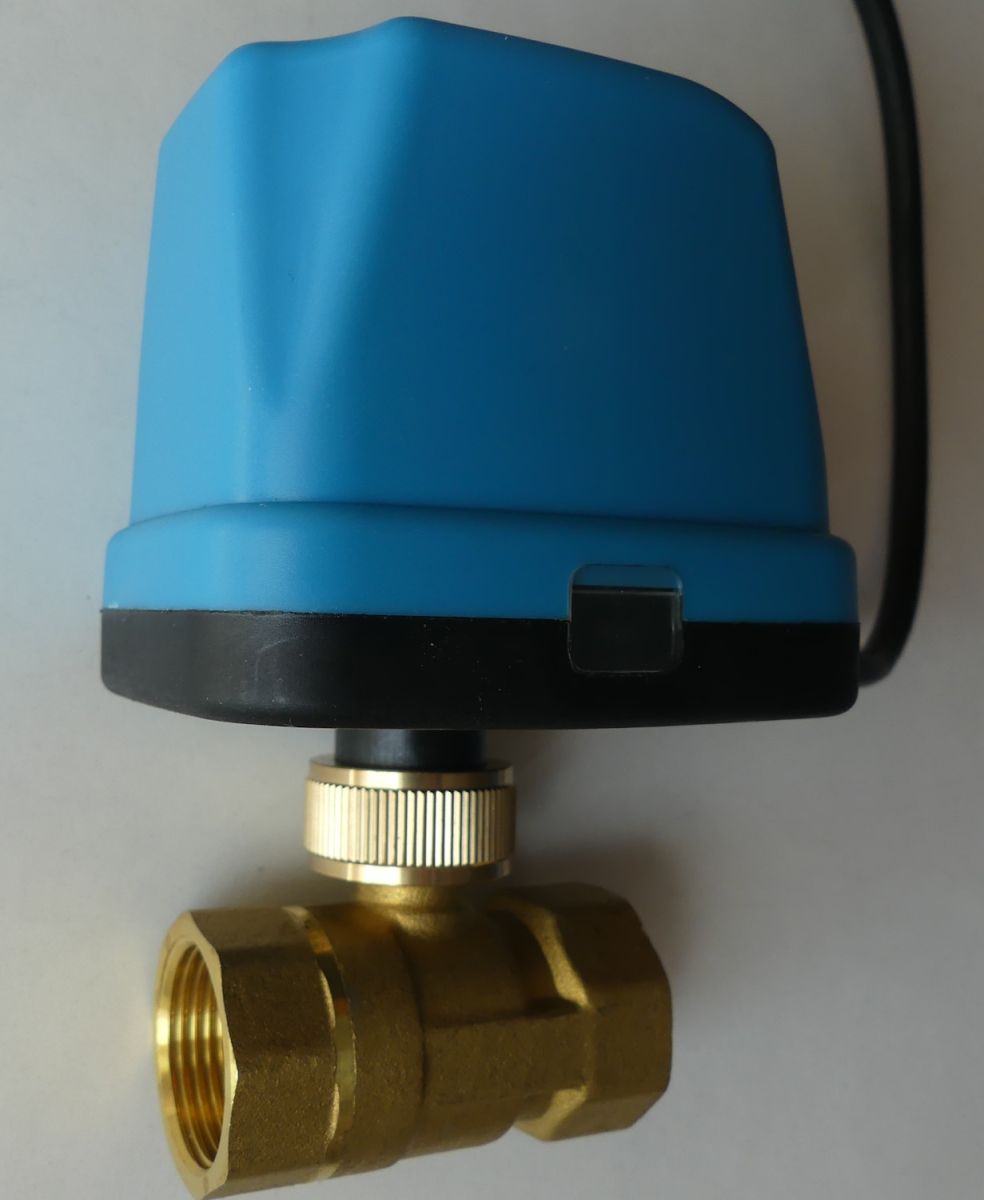
Internal view of a solenoid valve with a motor and gearbox
TL;DR 
- A teardown reveals a water shutoff valve built from a 12V DC brush motor, gearbox, cams, and a ball valve.
- Three leads control it: GND plus +12V on either of the other two wires opens or closes the valve.
- The 12V DC motor draws about 60–100mA, and power disconnects automatically once the valve reaches its end position.
- Applying power to both control wires makes the valve oscillate open, while the housing only offers limited protection against water and dust ingress.
AI summary based on the discussion. May contain errors.
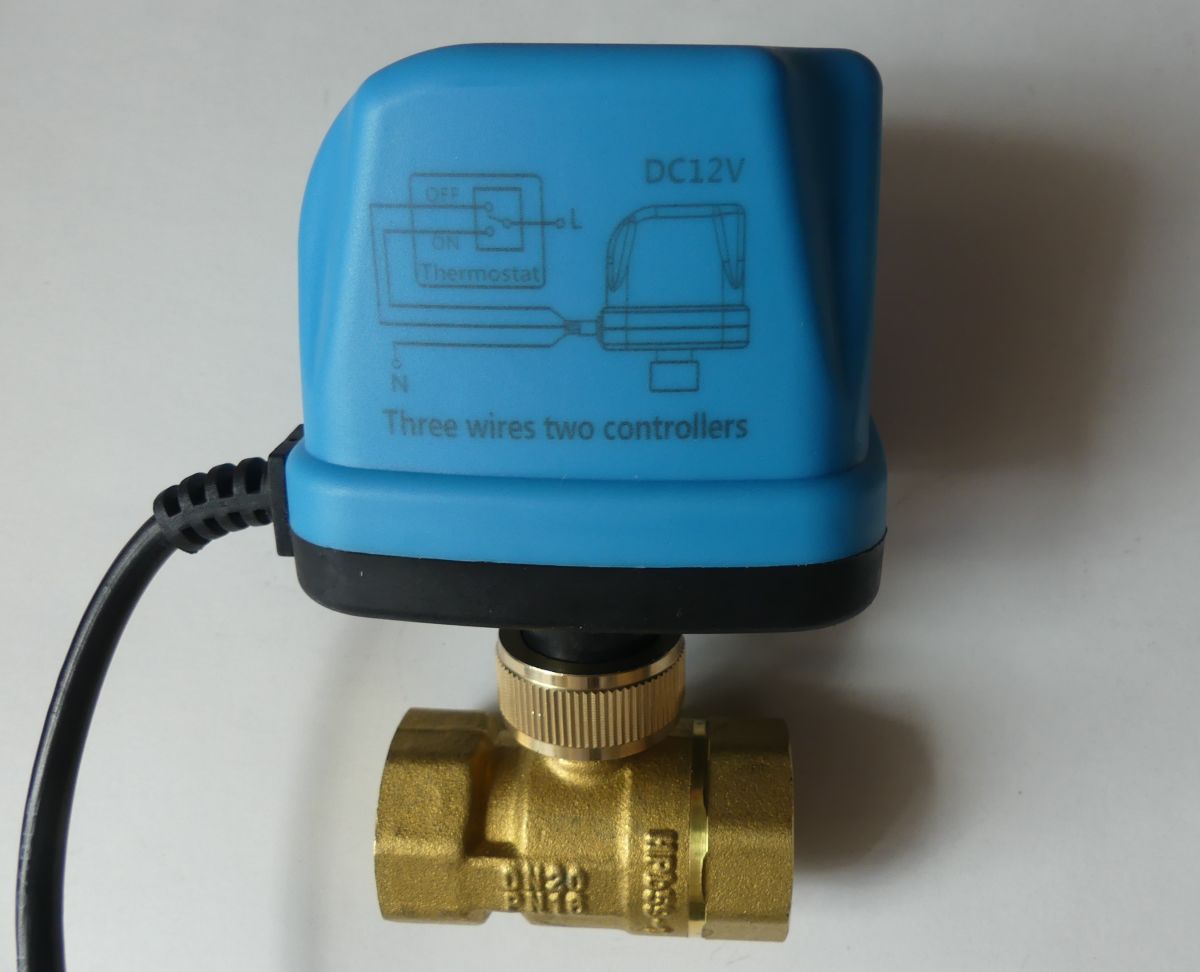
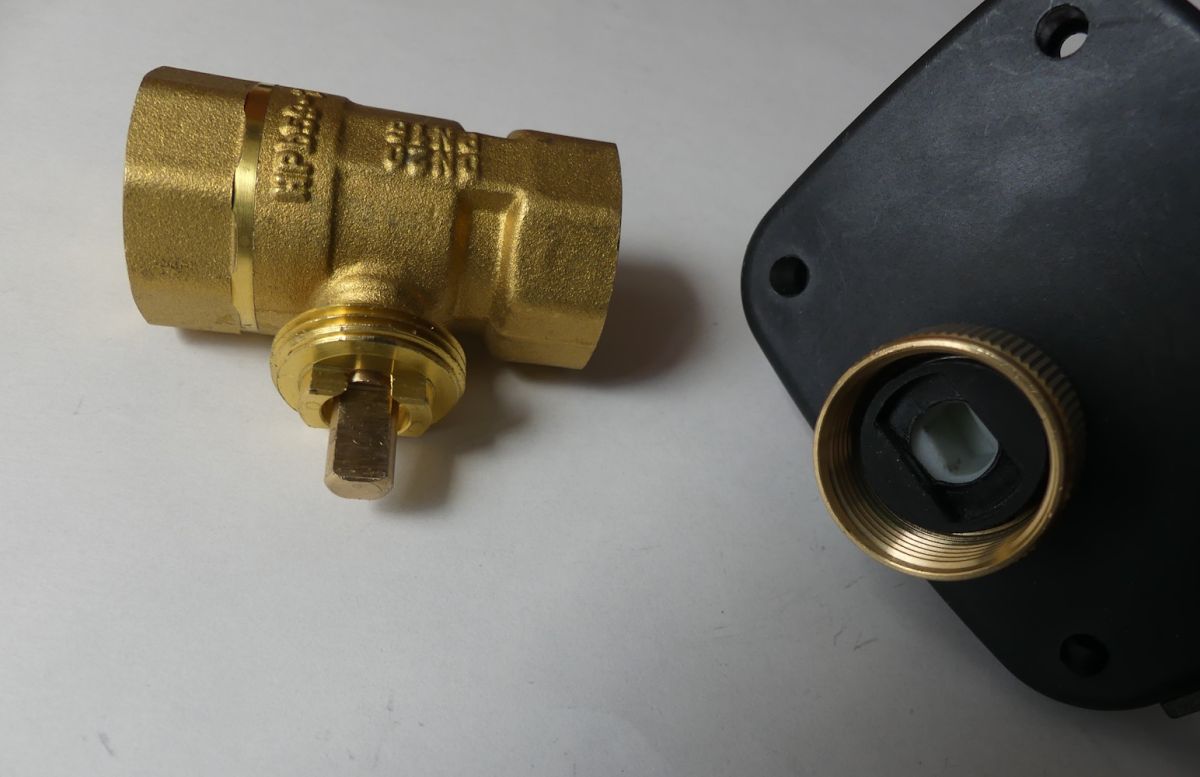
The solenoid valve has three leads; one is connected to GND, whilst applying +12V to one of the other two causes the valve to close or open.
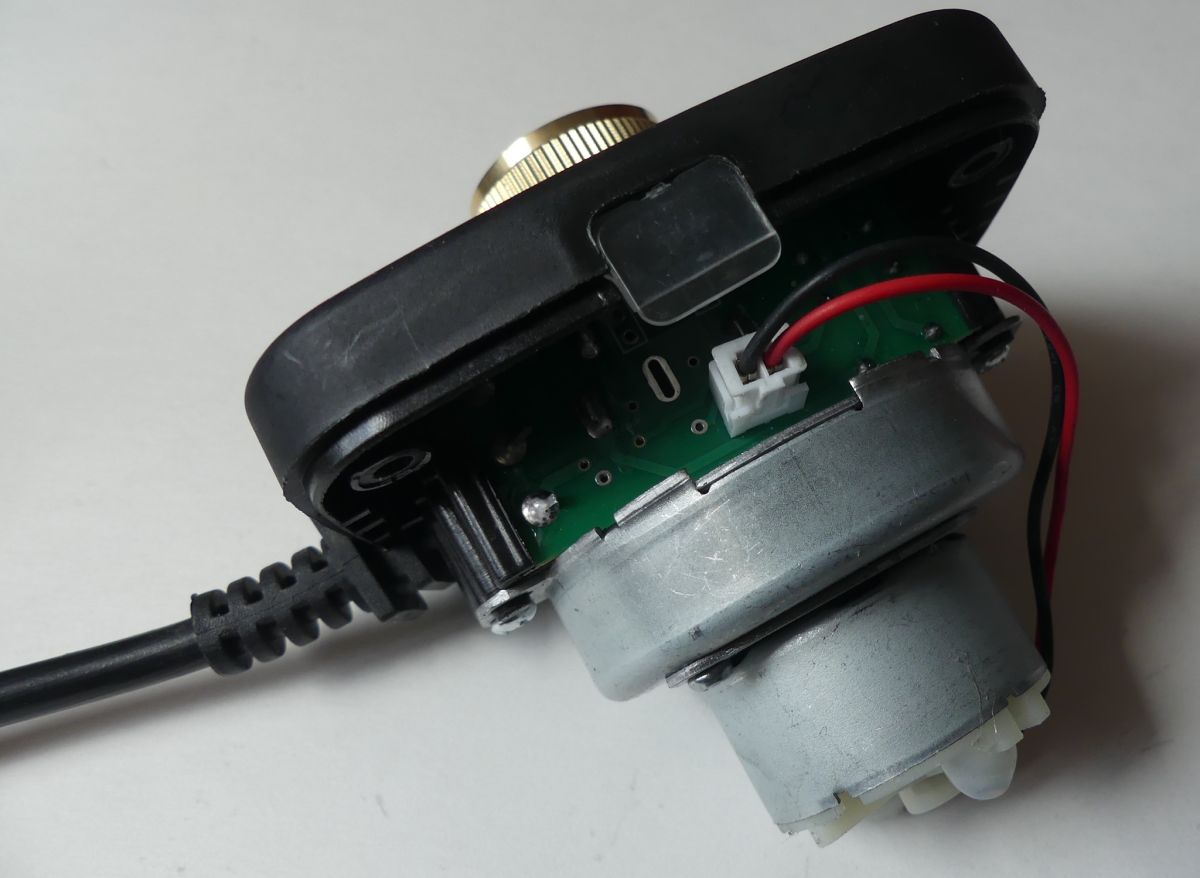
Once the valve reaches its end position, the motor power supply is disconnected. Applying power to both wires simultaneously causes the valve to oscillate in the open position.
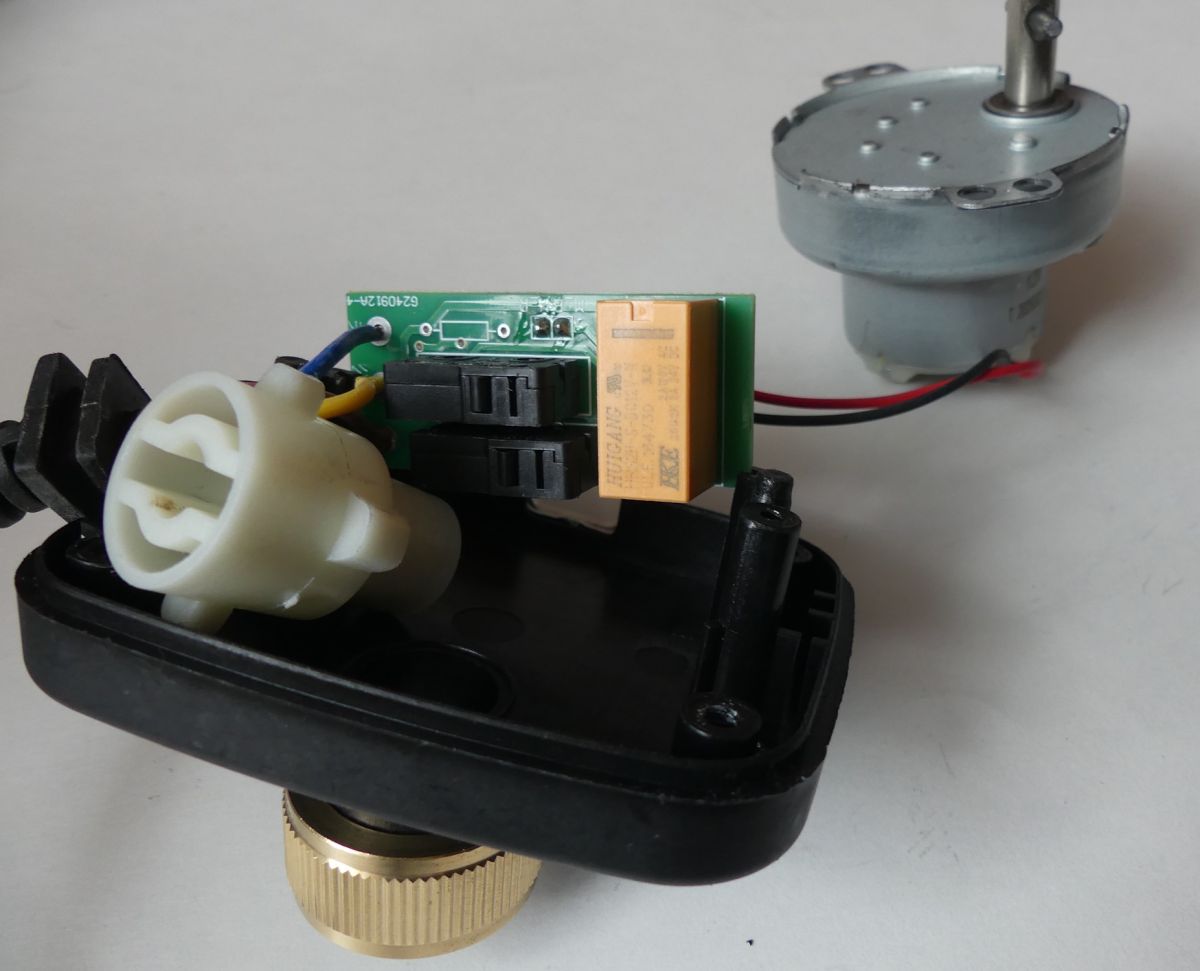
Inside, we can see a 12V DC brush motor, a gearbox and a set of cams. The motor power supply is controlled via two momentary-action buttons and a relay.
The housing is not hermetically sealed, but it does provide some protection against the ingress of water and dust.
This is what the device looks like in operation and the valve’s closing speed.
Do you know of any similar electromechanical valves that can cut off the water supply upon detecting a fault?

TechEkspert wrote 7352 posts with
rating 5719 , helped 17 times.
Been with us since 2014 year.
Comments
I have an AQARA Zigbee. Battery-powered: https://obrazki.elektroda.pl/6883688300_1780518711_thumb.jpg This controller is fitted onto an existing valve. It is compatible with both lever and butterfly... [Read more]
https://obrazki.elektroda.pl/2378444200_1780547248_thumb.jpg I use one like this. My unit is powered and controlled via a three-wire 12V DC connection (one wire is negative, the other two are positive... [Read more]
I once tested a valve cover like this with additional Wi-Fi control: https://obrazki.elektroda.pl/8004281100_1780555087_thumb.jpg That was about three years ago; it was still based on the ESP8266: ... [Read more]
These external actuators are an interesting option for retrofitting an existing system. Do they also allow for manual control? If this Chinese ball valve is of poor quality, perhaps the actuator could... [Read more]
You’ve got your units mixed up a bit; 1 bar is ~1 atm, and 1 atm is 9.81 metres of water column, so for 1 metre you’ve got a pressure of about 0.1 bar there. [Read more]
Actually, a bar is about 10 m of water column – I confused an atmosphere with a metre of water column. So the pressure is 0.1 bar or one atmosphere. Either way, for a diaphragm valve, that’s not enough... [Read more]
With this AQARA motor, there are two ways to do this – electrically by pressing a button on the device, or by disengaging the mechanism and manually moving the lever. [Read more]
Everything would be great if plastic gears weren’t used so widely in the gearbox. They’re not suitable for use in hot environments or for frequent operation. After the dedicated one wore out quickly –... [Read more]
How many open/close cycles will the battery last for? Does it cope well even with butterfly valves that are hard to operate? Because I assume that, as a precaution, this cover should close and open... [Read more]
The valve is shut off every time the alarm is triggered. I can’t remember when I last changed the batteries (4 AA), but they last for several hundred cycles. It’s hard for me to say how it will perform... [Read more]
These valves look sturdy; the fact is, there’s no screw-on gland. But do you think it’s leaking at the shaft? Or could it be condensation forming inside the housing? The housing is sealed, the motor gives... [Read more]
I’m a bit wary of these Chinese valves. Personally, I prefer a proper Valvex with a gland. I’ll fit a decent valve, and if the shut-off mechanism breaks, I’ll simply replace it. However, if anyone decides... [Read more]
It’s a shame that the Chinese valve doesn’t have an external thread – that would have made it easier to use a half-coupling. [Read more]
I haven’t taken a valve like that apart, but are you sure there are limit switches for opening and closing? A limit switch requires a greater amount of movement to activate. Or perhaps there’s an electronic... [Read more]
Actually, it would be quite easy to make a cover like that yourself. And whilst you’re at it, you could extend the spindle and make it possible to turn it by hand. [Read more]
But not a hundred… because that’s how much spilled out. Definitely – have a look at the photos in the author’s first post. Such integrated valves are really just auxiliary – for shutting off the toilet... [Read more]
I’m just wondering about this leak from the valve – if it occurred at a lower pressure, the leak would be even worse in a normal water supply system; could it be a faulty unit? [Read more]
I’ve had this one in the 3-way version, rated for 230V AC, for several years now and so far I’ve had no problems or leaks. It’s true that it’s powered via an RCD. [Read more]
It spent the winter outdoors (though the water had been drained) – perhaps that caused some damage. Once the tomatoes are finished, I’ll remove the pump and keep an eye on the valve itself, applying pressure... [Read more]