logo elektroda
logo elektroda
X
logo elektroda
Dostępna jest polska wersja

Czy wolisz polską wersję strony elektroda?

Nie, dziękuję Przekieruj mnie tam

Internal view of a solenoid valve with a motor and gearbox

TechEkspert 1836 25

TL;DR

  • A teardown reveals a water shutoff valve built from a 12V DC brush motor, gearbox, cams, and a ball valve.
  • Three leads control it: GND plus +12V on either of the other two wires opens or closes the valve.
  • The 12V DC motor draws about 60–100mA, and power disconnects automatically once the valve reaches its end position.
  • Applying power to both control wires makes the valve oscillate open, while the housing only offers limited protection against water and dust ingress.
Generated by the language model.
ADVERTISEMENT
Treść została przetłumaczona polish » english Zobacz oryginalną wersję tematu
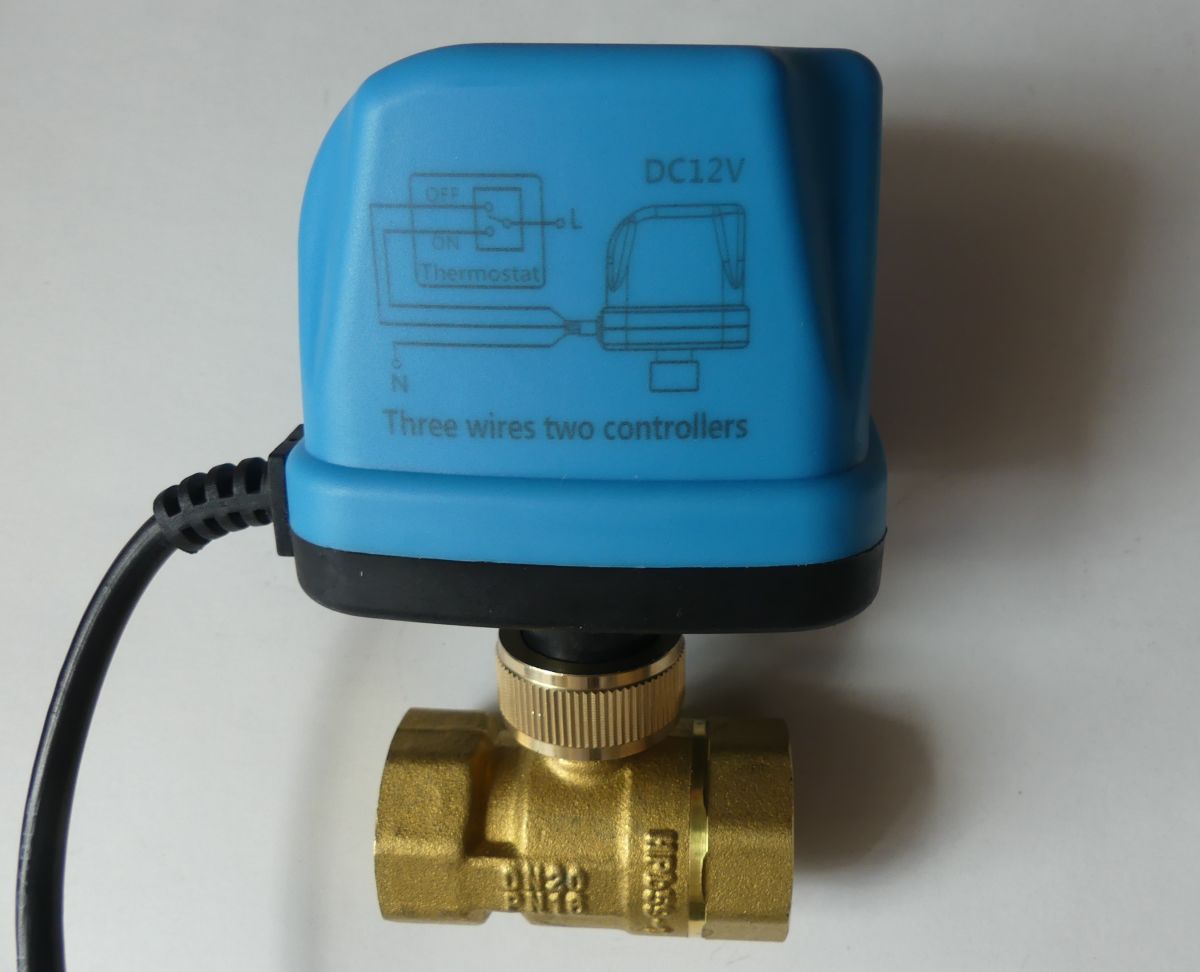
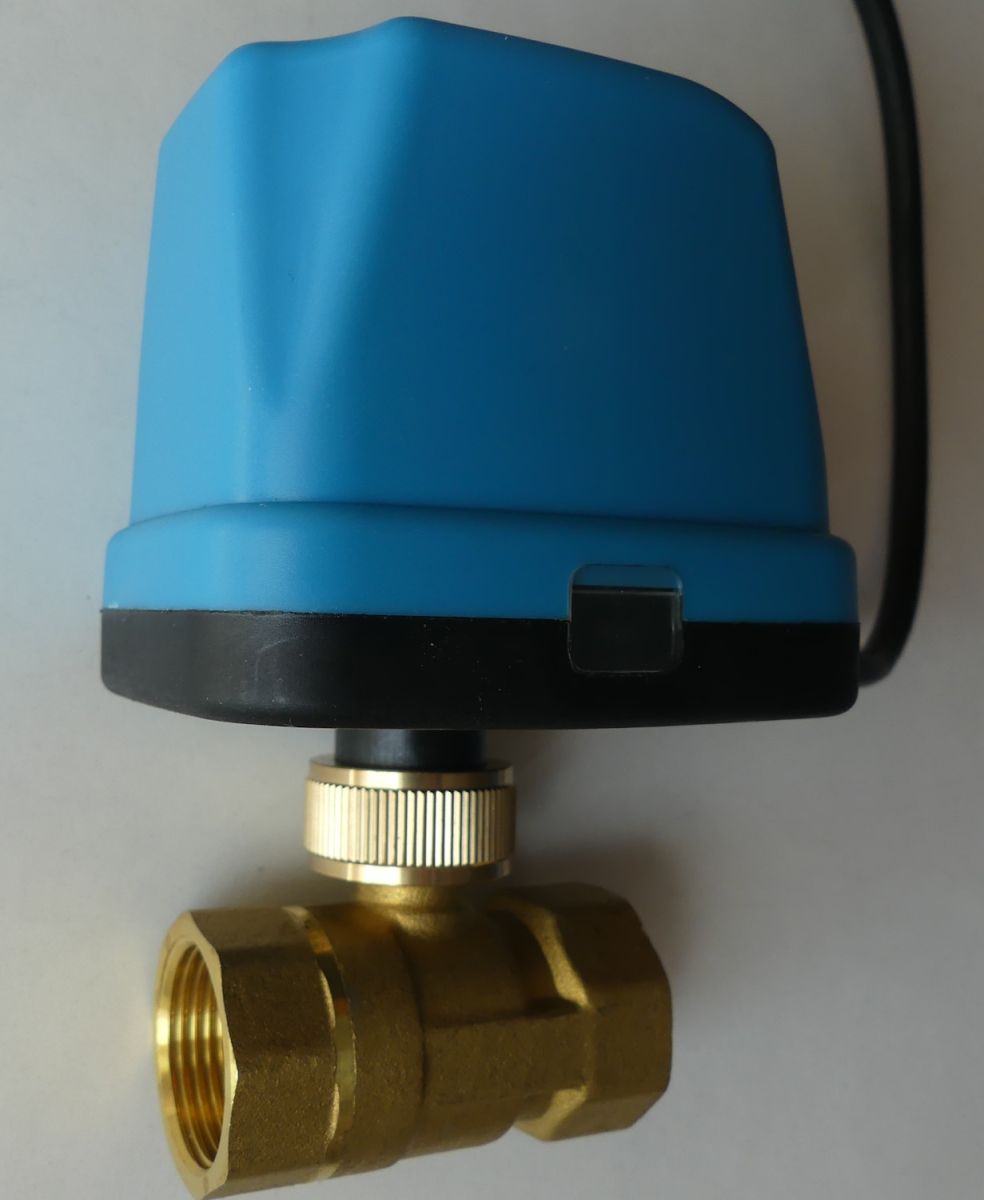
  • Blue DC12V actuator on a brass valve with a cable, on a light background
    A water leak can cause surprisingly extensive damage in a short space of time. We can minimise the impact of a fault by installing a solenoid valve to shut off the water supply should a fault occur whilst we are away. To detect flooding, we can use a water leak sensor . Solenoid valves are typically associated with devices fitted with electromagnets, such as the standard solenoid valves found in automatic washing machines. The device shown in the photograph uses a ball valve connected to a gearbox and a motor. The 12V DC motor draws a current of approximately 60–100mA during operation.

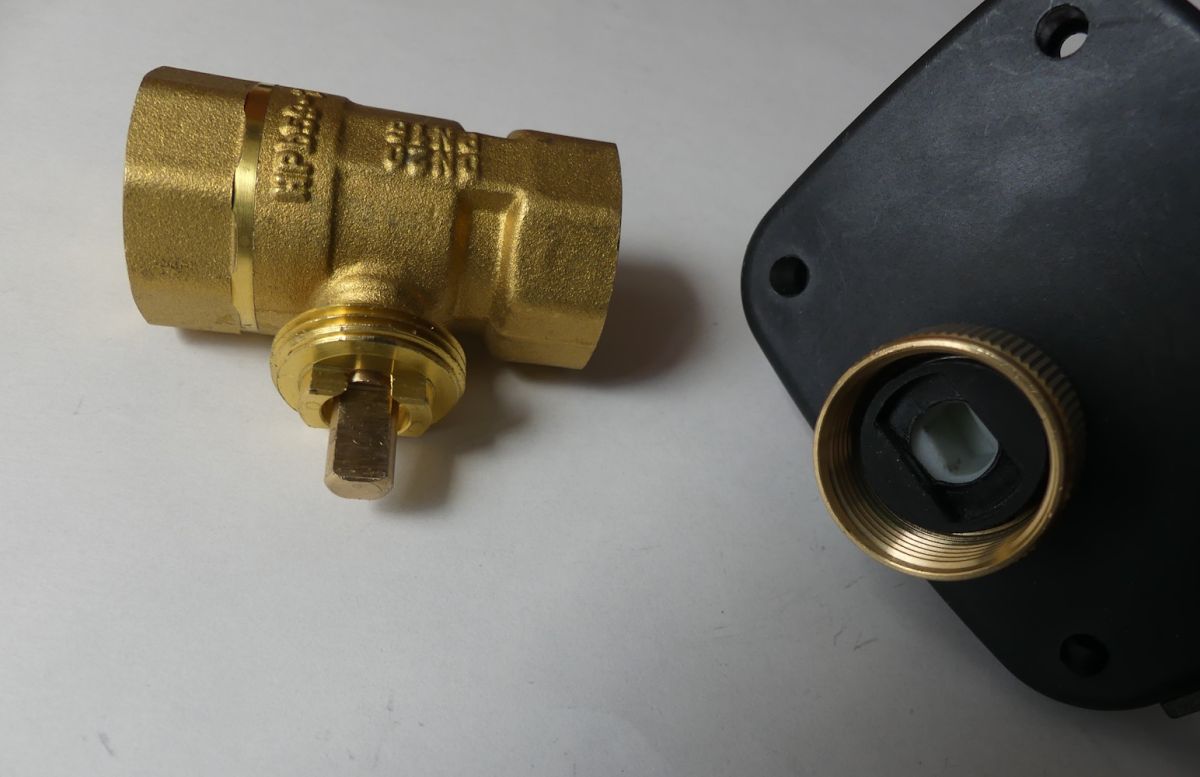
    Brass valve with a square stem and threads next to a black housing with a brass threaded ring


    The solenoid valve has three leads; one is connected to GND, whilst applying +12V to one of the other two causes the valve to close or open.

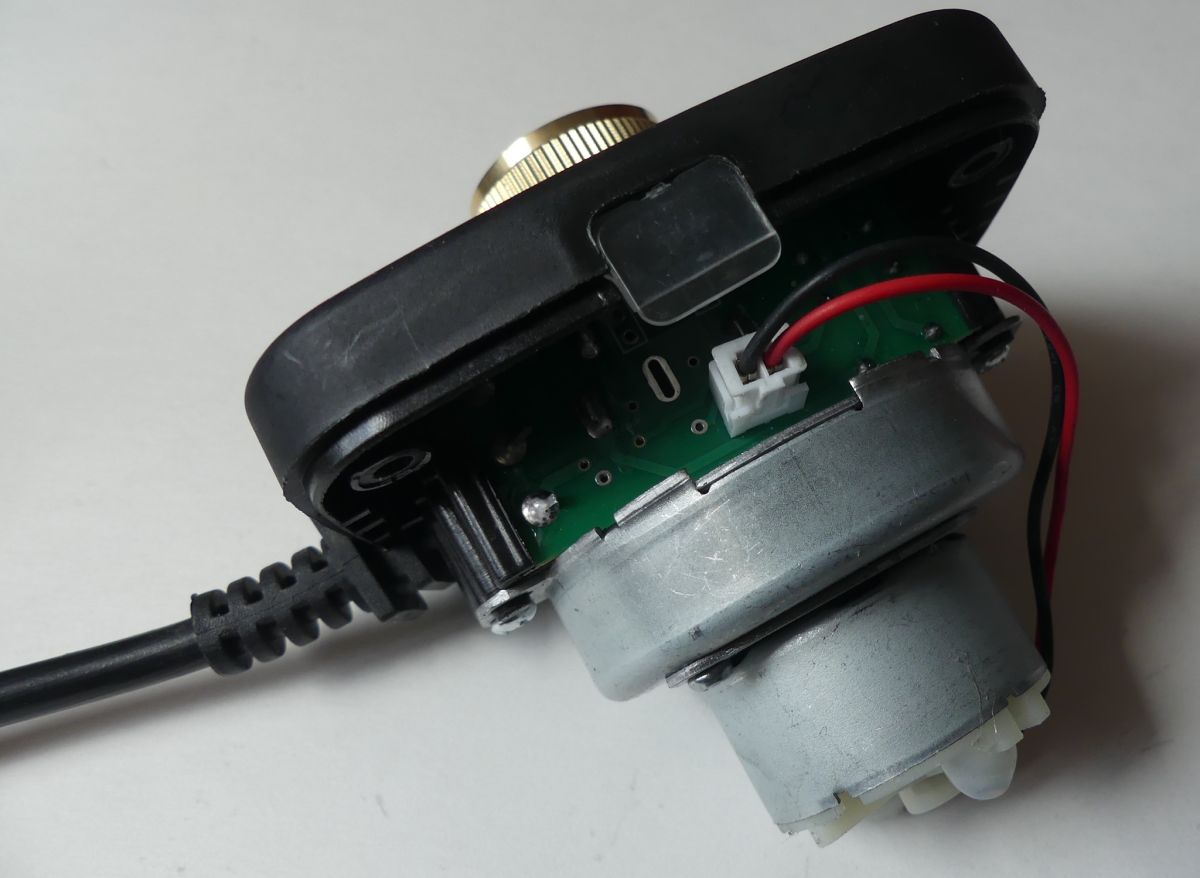
    Inside an electronic device with a green PCB, red and black wires, and a metal DC motor attached


    Once the valve reaches its end position, the motor power supply is disconnected. Applying power to both wires simultaneously causes the valve to oscillate in the open position.

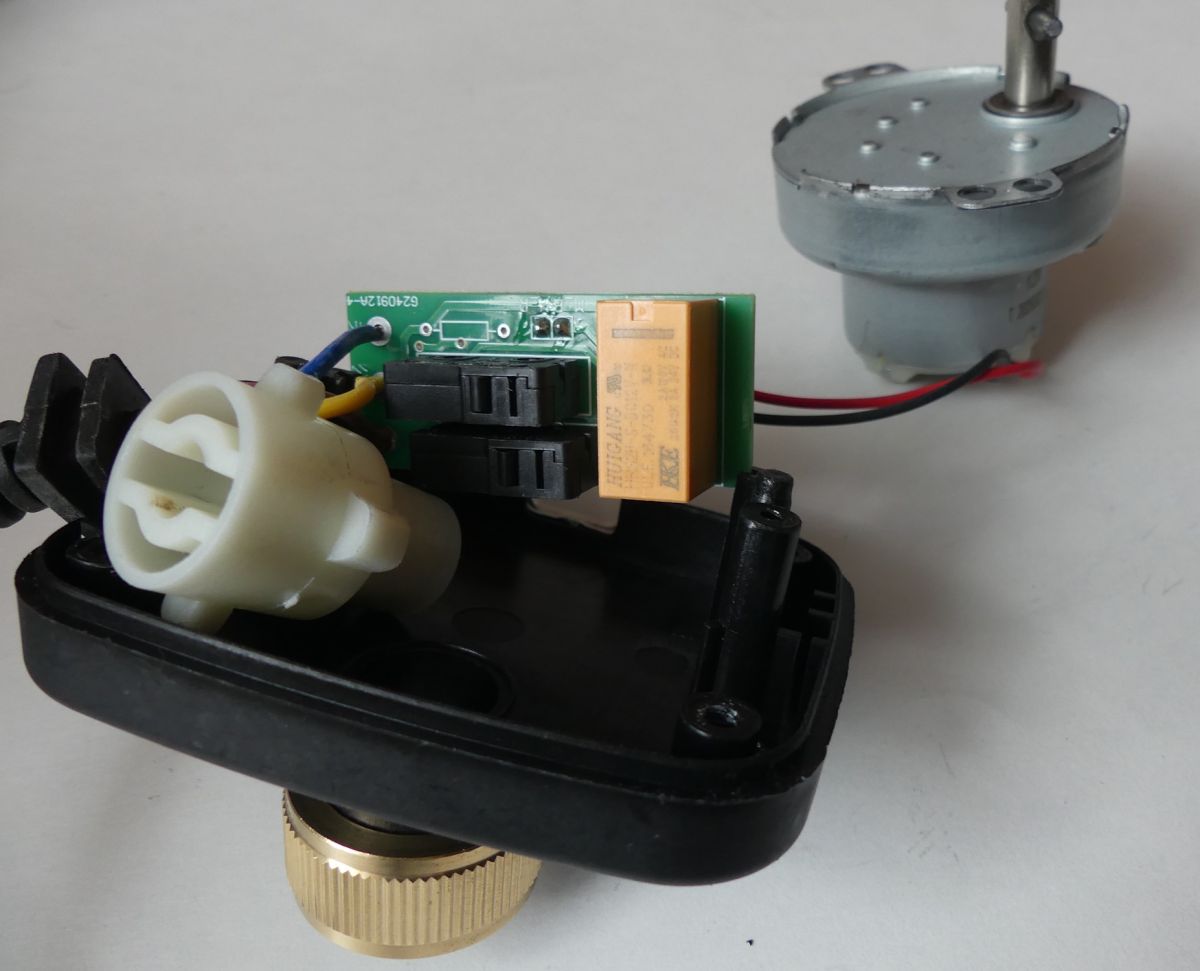
    Electronics module with PCB, relay and wires, plus a separate electric motor on a light surface


    Inside, we can see a 12V DC brush motor, a gearbox and a set of cams. The motor power supply is controlled via two momentary-action buttons and a relay.

    The housing is not hermetically sealed, but it does provide some protection against the ingress of water and dust.

    This is what the device looks like in operation and the valve’s closing speed.


    Do you know of any similar electromechanical valves that can cut off the water supply upon detecting a fault?

    Blue actuator on a brass valve with threaded ends, on a light background

    Cool? Ranking DIY
    About Author
    TechEkspert
    Editor
    Offline 
    TechEkspert wrote 7192 posts with rating 5571, helped 16 times. Been with us since 2014 year.
  • ADVERTISEMENT
  • #2 21915157
    krzbor
    Level 29  
    Posts: 1763
    Help: 41
    Rate: 1064
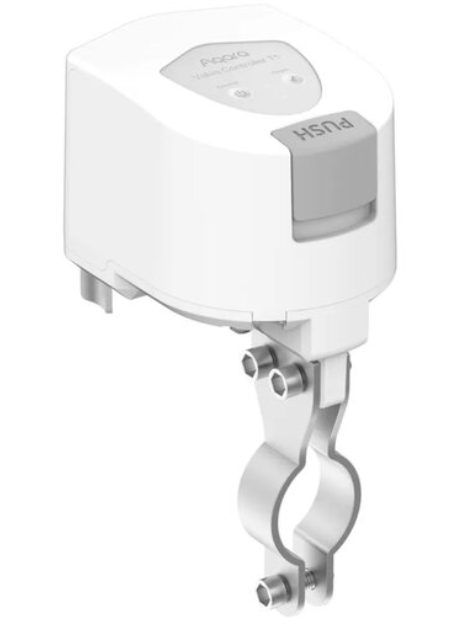
    I have an AQARA Zigbee. Battery-powered:
    White Aqara valve controller with “PUSH” label and a metal mounting bracket
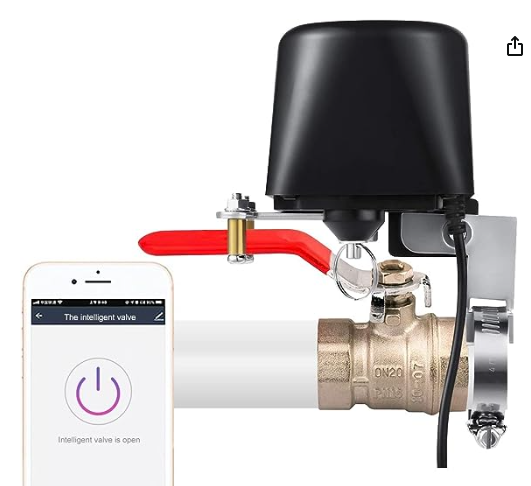
    This controller is fitted onto an existing valve. It is compatible with both lever and butterfly valves. It isn’t cheap, but it works reliably.
  • Poor shaft sealing lets water flood the valve

    #3 21915226
    kotbury
    Gantry automation specialist
    Posts: 9552
    Help: 2094
    Rate: 3614
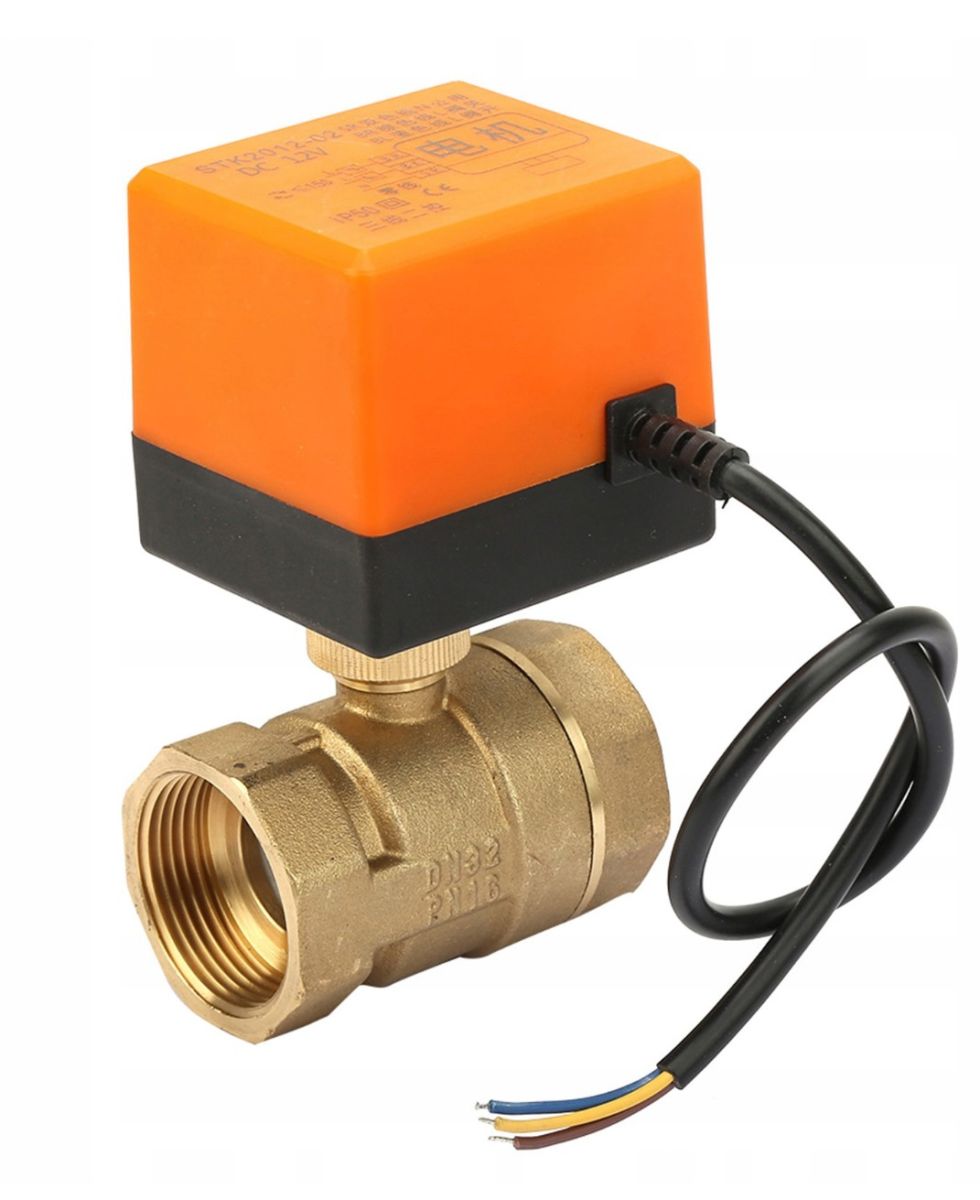
    Brass motorized ball valve with an orange-black actuator and a three-wire cable

    I use one like this. My unit is powered and controlled via a three-wire 12V DC connection (one wire is negative, the other two are positive – open or closed; just like the valve in the title, it is fitted with limit switches, and the circuit board in the title looks identical to mine. There are also versions for 24V DC and 230V AC) . However, presenting it solely as an emergency valve limits its applications. In my case, for example, it functions as a water supply for drip irrigation. Due to the low pressure in the system (the water is supplied by gravity from a cistern positioned at a height of 1 m, meaning the pressure is just over 1 bar), standard garden watering timers didn’t work – the diaphragm valves integrated into them require at least 2–3 bar to operate. The ball valve mentioned above (and the modification of a Lidl timer to operate on 12V DC) proved to be a lifesaver.

    Now for the downside – the valve has stopped working twice this year already – it turned out to be flooded with water inside. Fortunately, apart from the limit switches and the relay, and of course the motor, there’s no electronics in there, so bringing it back to life proved straightforward. The first time, I put the fault down to the valve being exposed to rainwater – the housing isn’t very well sealed and the valve would occasionally get a few drops of rain on it. After the first failure, I sealed the valve housing properly and tucked the whole valve away under the tank so that it wouldn’t come into contact with rainwater. And six months later, it was the same story all over again – it was splashing inside.
    It seems that water seeps through the poorly sealed ball valve shaft and continues on through the equally poor O-ring on the drive shaft. As the ball valve itself on my unit is identical to the one in the thread, this problem may also affect the kit mentioned in the title (unless the drive has a better O-ring than mine).
    Tightening the gland on the valve shaft might help, although here it looks as though it’s permanently pressed in – I didn’t try to move it, replacing the O-ring with a decent machine-grade one, or getting round the issue by drilling a drain hole at the bottom of the housing – which is what I did. We’ll see if it helps (the hole in the bottom of the housing certainly will... ;) )
    Due to the aforementioned issue, I’d advise against using the 230V version of the valve unless you’re not afraid of getting electrocuted....

    The risk of flooding does not apply to the version of the actuator described by the previous speaker – the one fitted over an existing ball valve. Even if the valve itself is leaking, the water has no chance of getting inside the actuator; however, the actuator is noticeably more expensive than the aforementioned integrated valves from the PRC.
  • Earlier Wi-Fi valve teardown references and chip variants

    #4 21915252
    p.kaczmarek2
    Moderator Smart Home
    Posts: 14669
    Help: 656
    Rate: 12684
    I once tested a valve cover like this with additional Wi-Fi control:
    Internal view of a solenoid valve with a motor and gearbox
    That was about three years ago; it was still based on the ESP8266:
    [TYWE3S-ESP8266] SM-AW713 valve controlled via Wi-Fi – internal view, firmware update
    A similar product, but in the version with the Beken BK7231T, was featured here:
    [WB3S/BK7231T] Tuya Smart Valve (UJV Ufairy) – teardown and firmware update
    And here’s an even newer version, now based on the BK7238 (the thread includes a schematic sketch):
    Generic motorised actuator for a smart valve – from BK7238 to ESP8266
    Helpful post? Buy me a coffee.
  • ADVERTISEMENT
  • #5 21915257
    TechEkspert
    Editor
    Posts: 7192
    Help: 16
    Rate: 5571
    These external actuators are an interesting option for retrofitting an existing system. Do they also allow for manual control?

    If this Chinese ball valve is of poor quality, perhaps the actuator could be adapted to a valve with better sealing performance, such as KFA, Ferro or Eqation?
  • #6 21915268
    Janusz_kk
    Level 39  
    Posts: 5815
    Help: 221
    Rate: 1456
    kotbury wrote:
    Due to the low pressure in the system (water is supplied by gravity from a cistern situated at a height of 1 m, meaning the pressure is just over 1 bar)

    You’ve got your units mixed up a bit; 1 bar is ~1 atm, and 1 atm is 9.81 metres of water column, so for 1 metre you’ve got a pressure of about 0.1 bar there.
  • Manual override by removing the actuator

    #7 21915308
    kotbury
    Gantry automation specialist
    Posts: 9552
    Help: 2094
    Rate: 3614
    Actually, a bar is about 10 m of water column – I confused an atmosphere with a metre of water column. So the pressure is 0.1 bar or one atmosphere. Either way, for a diaphragm valve, that’s not enough to ‘break through’ the relief. A ball valve is a full-bore valve and offers almost no resistance to the fluid.
    Quote:
    Do they also allow manual control?

    Unfortunately not. Only a motor. There are actuators in heating systems designed for, for example, three-way mixing valves, and these have the option of manual control via a lever, but they are in a different price bracket (five times as much).
    In the case of an emergency, you can easily remove the actuator from the valve (knurled nut that fits between your fingers) and turn the spindle protruding from the valve itself.
  • #8 21915472
    krzbor
    Level 29  
    Posts: 1763
    Help: 41
    Rate: 1064
    TechEkspert wrote:
    These external actuators are an interesting option for retrofitting an existing system. Do they also allow for manual control?

    With this AQARA motor, there are two ways to do this – electrically by pressing a button on the device, or by disengaging the mechanism and manually moving the lever.
  • #9 21915507
    fachman1964
    Level 5  
    Posts: 383
    Rate: 61
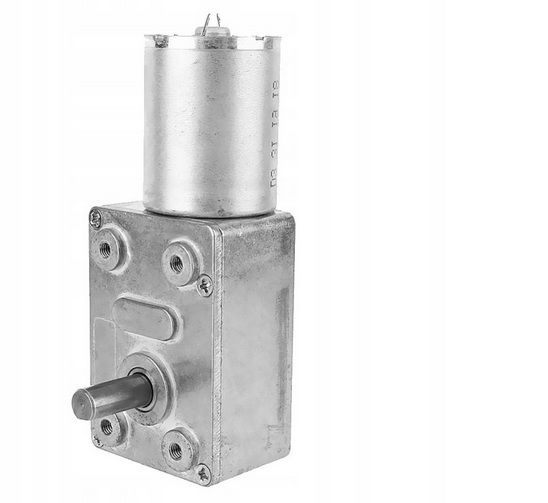
    Everything would be great if plastic gears weren’t used so widely in the gearbox. They’re not suitable for use in hot environments or for frequent operation. After the dedicated one wore out quickly – I made one myself based on that model (it has brass gears).

    Internal view of a solenoid valve with a motor and gearbox
  • #10 21915675
    kris8888
    Level 41  
    Posts: 6976
    Help: 532
    Rate: 1901
    krzbor wrote:
    I have an AQARA Zigbee. Battery power:

    How many open/close cycles will the battery last for? Does it cope well even with butterfly valves that are hard to operate?

    Because I assume that, as a precaution, this cover should close and open the valve at least once a month to prevent it from ‘seizing up’.
  • Battery lasts several hundred valve cycles

    #11 21915703
    krzbor
    Level 29  
    Posts: 1763
    Help: 41
    Rate: 1064
    kris8888 wrote:
    How many open/close cycles will the battery last for? Does it cope well even with butterfly valves that are hard to operate?

    The valve is shut off every time the alarm is triggered. I can’t remember when I last changed the batteries (4 AA), but they last for several hundred cycles. It’s hard for me to say how it will perform with a butterfly valve, but the actuator is relatively powerful. It might seem as though a butterfly valve requires more force, but that’s due to the short lever arm. For the actuator, this doesn’t matter – it rotates with a specific force along the axis of rotation.
  • Poor shaft sealing lets water flood the valve

    #12 21915801
    tata1
    Level 20  
    Posts: 786
    Help: 43
    Rate: 260
    kotbury wrote:
    Brass motorized ball valve with an orange-black actuator and a three-wire cable

    I use one like this. My unit is powered and controlled via a three-wire 12V DC connection (one wire is negative, the other two are positive – opening or closing; just like the valve mentioned in the title, it is fitted with limit switches, the circuit board in the title image looks identical to mine. There are also versions for 24V DC and 230V AC). However, presenting it solely as an emergency valve limits its applications. In my case, for example, it functions as a water supply for drip irrigation. Due to the low pressure in the system (water is supplied by gravity from a cistern positioned at a height of 1 m, meaning the pressure is just over 1 bar), conventional garden watering timers did not work – the diaphragm valves integrated into them require at least 2–3 bar to operate. The ball valve mentioned above (and the modification of a Lidl timer to supply 12V DC) proved to be a lifesaver.

    Now for the downside – the valve has stopped working twice this year already – it turned out to be flooded with water inside. Fortunately, apart from the limit switches and the relay, and of course the motor, there’s no electronics in there, so bringing it back to life proved straightforward. The first time, I put the fault down to the valve being exposed to rainwater – the housing is poorly sealed and the valve would occasionally get a few drops of rain on it. After the first failure, I sealed the valve housing properly and tucked the whole valve away under the tank so that it wouldn’t come into contact with rainwater. And six months later, it was the same story all over again – there was a splashing sound inside.
    It seems that water seeps through the poorly sealed ball valve shaft and continues on through the equally poor O-ring on the drive shaft. As the ball valve itself on my unit is identical to the one in the thread, this problem may also affect the kit mentioned in the title (unless the drive has a better O-ring than mine).
    Tightening the gland on the valve shaft might help, although here it looks as though it’s permanently pressed in – I didn’t try to move it, replacing the O-ring with a decent machine-grade one, or getting round the issue by drilling a drain hole at the bottom of the housing – which is what I did. We’ll see if it helps (the hole in the bottom of the housing certainly will... ;) )
    Due to the aforementioned issue, I’d advise against using the 230V version of the valve unless you’re not afraid of getting electrocuted....

    The risk of flooding does not apply to the version of the actuator described by the previous speaker – the one fitted over an existing ball valve. Even if the valve itself is leaking, the water has no chance of getting inside the actuator; however, the actuator is noticeably more expensive than the aforementioned integrated valves from the PRC.


    These valves look sturdy; the fact is, there’s no screw-on gland. But do you think it’s leaking at the shaft? Or could it be condensation forming inside the housing? The housing is sealed, the motor gives off a bit of heat (I know it’s minimal and not constant), but perhaps this condensation over a longer period is causing the water to build up inside? It’s simply the effect of the sealed housing and temperature fluctuations.
  • ADVERTISEMENT
  • Add screw unions for future valve replacement

    #13 21915931
    krzbor
    Level 29  
    Posts: 1763
    Help: 41
    Rate: 1064
    tata1 wrote:
    These valves look sturdy; the fact that they don’t have a screw-on gland is a plus.

    I’m a bit wary of these Chinese valves. Personally, I prefer a proper Valvex with a gland. I’ll fit a decent valve, and if the shut-off mechanism breaks, I’ll simply replace it. However, if anyone decides to use such an integrated valve within the system, I think a good solution would be to add screw connections on both sides. That way, there’ll be a chance to replace the valve in the future.
  • #14 21916040
    TechEkspert
    Editor
    Posts: 7192
    Help: 16
    Rate: 5571
    It’s a shame that the Chinese valve doesn’t have an external thread – that would have made it easier to use a half-coupling.
  • #15 21916047
    henry57
    Level 12  
    Posts: 28
    Rate: 2
    I haven’t taken a valve like that apart, but are you sure there are limit switches for opening and closing? A limit switch requires a greater amount of movement to activate. Or perhaps there’s an electronic motor overload protection system for opening or closing, just like in car window mechanisms.
  • #16 21916423
    marycyś
    Level 12  
    Posts: 365
    Rate: 26
    Actually, it would be quite easy to make a cover like that yourself. And whilst you’re at it, you could extend the spindle and make it possible to turn it by hand.
  • Recommend a manual ball valve with add-on automation

    #17 21916480
    kotbury
    Gantry automation specialist
    Posts: 9552
    Help: 2094
    Rate: 3614
    Quote:
    Could it be condensation forming inside the casing?

    But not a hundred… because that’s how much spilled out.
    Quote:
    . Surely there are limit switches for opening and closing?

    Definitely – have a look at the photos in the author’s first post.

    Such integrated valves are really just auxiliary – for shutting off the toilet or the dishwasher/washing machine… or, as in my case – for watering.
    On the main supply line, however, I’d recommend a proper ball valve with a lever (although I’ve seen even those – brass ones – crack due to vibrations from steel pipes; the most reliable and, incidentally, repairable option is a sturdy cast-iron globe valve) mounted on threaded fittings, with the automation fitted as an add-on – as in posts #2 or #4 – a leak won’t cause any harm, virtually every component can be replaced, and manual control is also possible
    Quote:
    And whilst you’re at it, extend the spindle so you can turn it manually.
    – it’s not possible to add manual operation to the model mentioned in the title or to mine in any way – you can’t make the spindle extend all the way out, there’s no clutch, just a non-disassemblable gear mechanism.
  • ADVERTISEMENT
  • #18 21917225
    TechEkspert
    Editor
    Posts: 7192
    Help: 16
    Rate: 5571
    I’m just wondering about this leak from the valve – if it occurred at a lower pressure, the leak would be even worse in a normal water supply system; could it be a faulty unit?
  • #19 21917351
    mfac
    Level 17  
    Posts: 246
    Help: 18
    Rate: 65
    >>21917225
    I’ve had this one in the 3-way version, rated for 230V AC, for several years now and so far I’ve had no problems or leaks. It’s true that it’s powered via an RCD.
  • #20 21917513
    kotbury
    Gantry automation specialist
    Posts: 9552
    Help: 2094
    Rate: 3614
    It spent the winter outdoors (though the water had been drained) – perhaps that caused some damage. Once the tomatoes are finished, I’ll remove the pump and keep an eye on the valve itself, applying pressure for a few hours.
  • Ali DN15 5V valve works at 3.5–4V with CR05 limit outputs

    #21 21919596
    DanielOls
    Level 10  
    Posts: 43
    Help: 2
    Rate: 9
    I’ve been using a valve from Ali for a few years now – the sort that comes up when you search for ‘DN15 valve DC 5V’.
    It works perfectly outdoors, used only in the summer – controlled by an Arduino, it opens the water flow at night to the drip line for watering the garden. Although it’s rated at 5V, it works perfectly well with a 1S LiPo battery (i.e. around 3.5–4V). And because it only draws power twice a day for a few seconds at a time, a 1W mini solar panel is easily enough to keep the 18650 battery constantly charged.
    I use the CR05 version – because it has additional outputs shorted to earth, signalling when the valve is fully open or closed.
  • #22 21923995
    ACCel
    Level 22  
    Posts: 716
    Help: 24
    Rate: 217
    Jan, I didn’t dare use the Chinese one; I bought a reasonably well-known brand, Afriso.
  • #23 21924018
    kkknc
    Level 43  
    Posts: 23666
    Help: 1910
    Rate: 6667
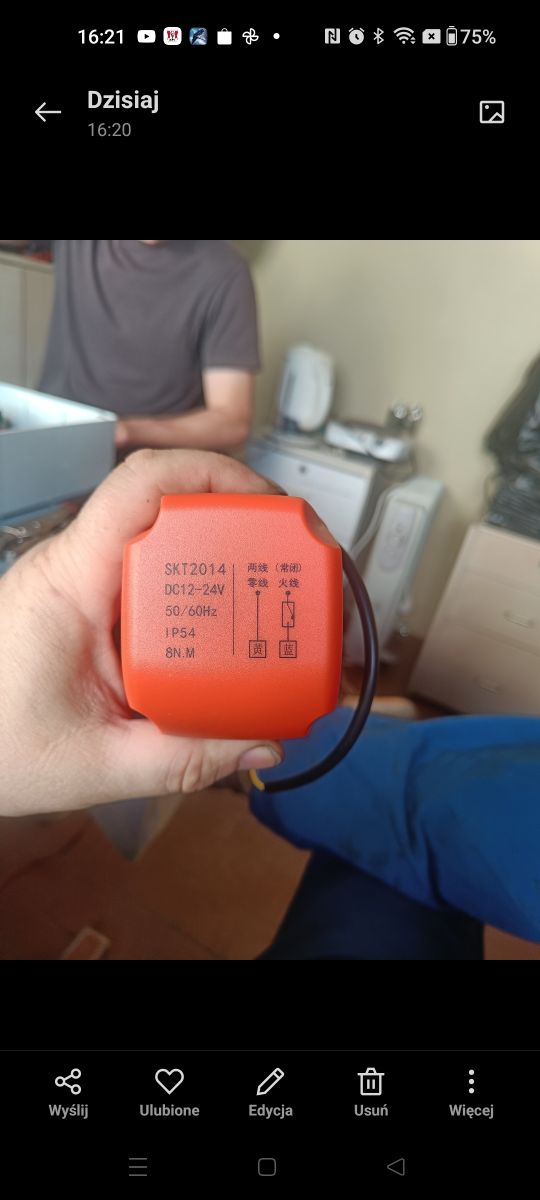
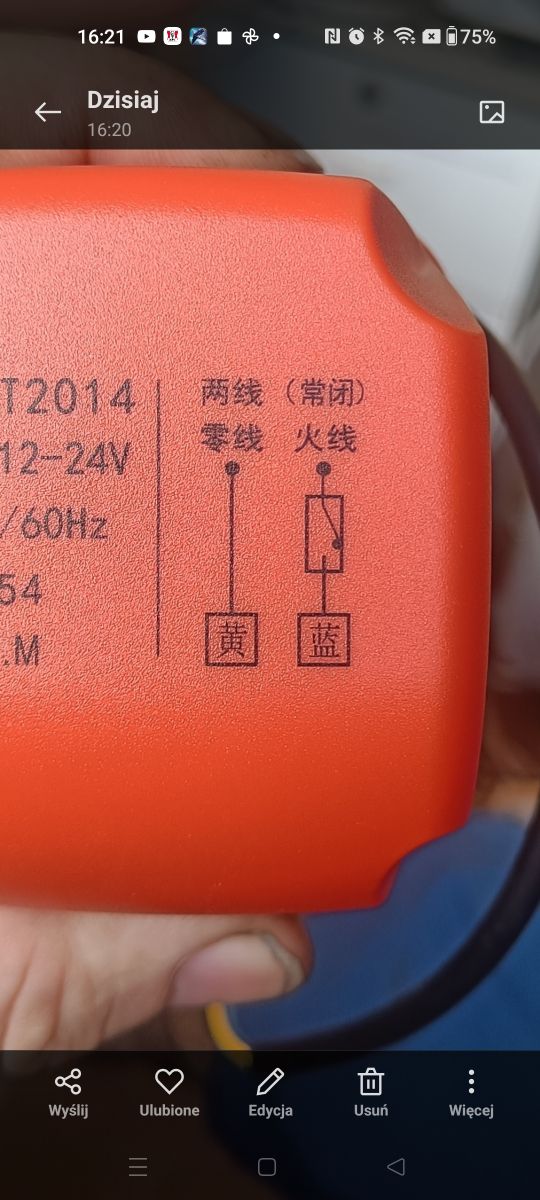
    Orange actuator labeled “SKT2014” held in a hand, with a cable visible Close-up of an orange device housing with a printed wiring diagram and Chinese characters.
    Two-wire control: when voltage is applied, the valve opens and remains in the open position; when the voltage is cut off, it closes. There is a spring mechanism inside.
  • #24 21925309
    PPK
    Level 30  
    Posts: 1950
    Help: 94
    Rate: 424
    I wonder how it will perform in the Polish water supply network after 2–3 years, particularly in the networks of large cities. Two years after the replacement, I’m having trouble manually shutting off the water at the riser; I have to use a ‘clamp’ because the caps are made of plastic.
  • #25 21925356
    ACCel
    Level 22  
    Posts: 716
    Help: 24
    Rate: 217
    Just like circulation pumps, this valve needs to be operated once a week to prevent it from seizing up and becoming clogged with all sorts of stuff from the mains water supply.
  • #26 21925405
    TechEkspert
    Editor
    Posts: 7192
    Help: 16
    Rate: 5571
    This two-wire system is interesting, but no electricity means no water.
ADVERTISEMENT