





Is it possible to build a high-quality reel-to-reel tape recorder yourself? A beginner’s experience.
TL;DR 
- The article argues that a high-quality reel-to-reel tape recorder can be built at home, but only with both electronics and precision mechanical skills.
- The high-end design uses separate motors for winding and tape feed, plus a flywheel shaft, pressure roller, and separate recording and playback heads.
- The early prototype ran at 9.52 cm/s, while Hi-Fi equipment needed at least 19.05 cm/s.
- The simple build eventually played tapes through a radio, but the later high-end recorder was never completed.
- Modern components and microcontrollers now make low-distortion circuits and speed stabilization easier, though homemade PCBs, vibration, and machining remain the main obstacles.
AI summary based on the discussion. May contain errors.
Recently, there has been a noticeable trend towards a return to analogue audio equipment. Manufacturers are offering a wide range of vinyl records and turntables, i.e. the players used to play these records. Tape recorders, however, are much less common on the market. There are a few companies producing analogue tape recorders, both reel-to-reel and cassette models, but these tend to be high-end devices, costing as much as a car, due to the small scale of production and their mechanical complexity. To a large extent, even in factory settings, their manufacture requires time-consuming manual labour.
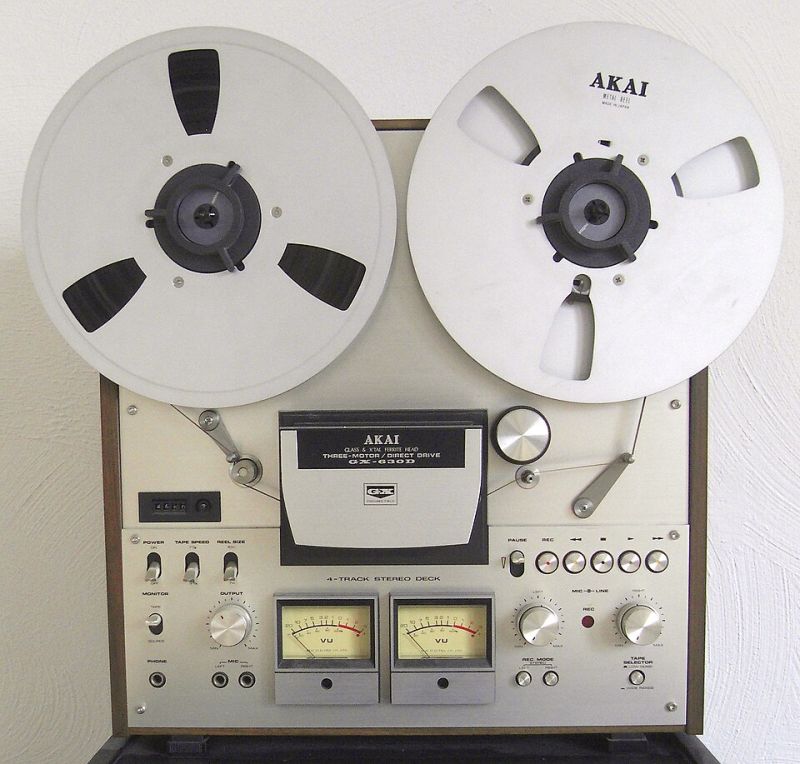
This raises the question: is it possible to build a high-quality reel-to-reel tape recorder yourself? In my opinion, under modern conditions, it certainly is. However, it is a project requiring knowledge and skills not only in electronics but also in mechanics.
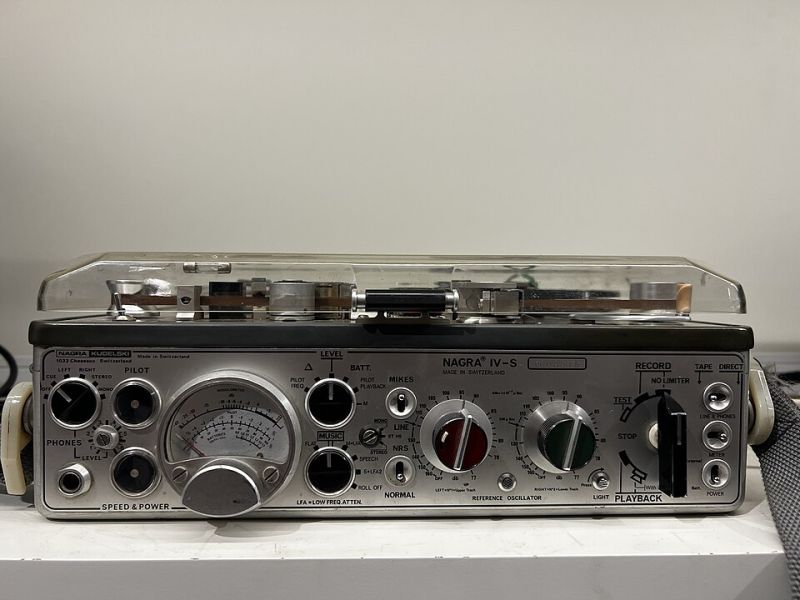
It should be noted that the popularity of tape recorders coincided with the post-war period, whilst the heyday of this technology was in the mid-1960s. Many models were produced at that time, including in Poland (ZK-120, ZK-240, etc.). The Hi-Fi segment was dominated by Japanese manufacturers, including AKAI. In the professional market for news and studio tape recorders, the best-known products are those of the Swiss company NAGRA, founded by the Pole Stefan Kudelski.
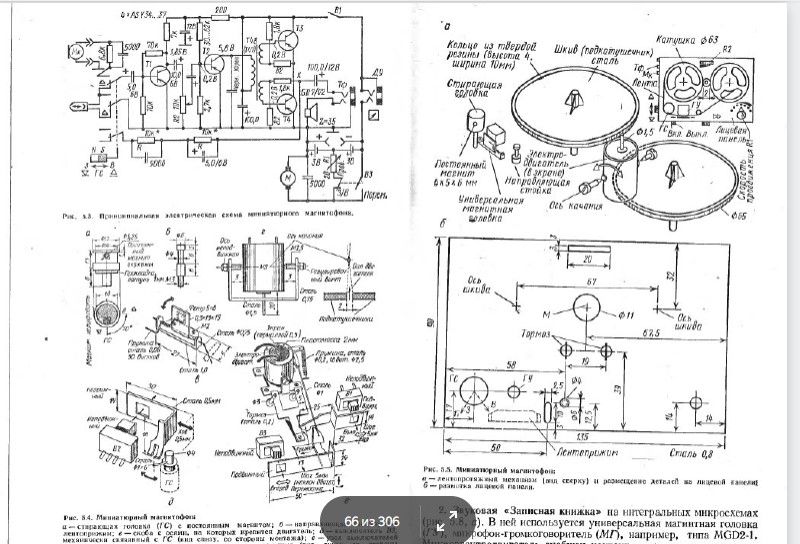
Due to the price of mass-produced tape recorders and the desire to achieve better performance or ease of use, many amateur designs were created. Here, one could find a wide variety of designs — ranging from toys and pocket tape recorders right through to semi-professional equipment. Among the former, it is worth mentioning Janusz Wojciechowski’s popular book *Contemporary Electronic Toys*, which describes several designs.
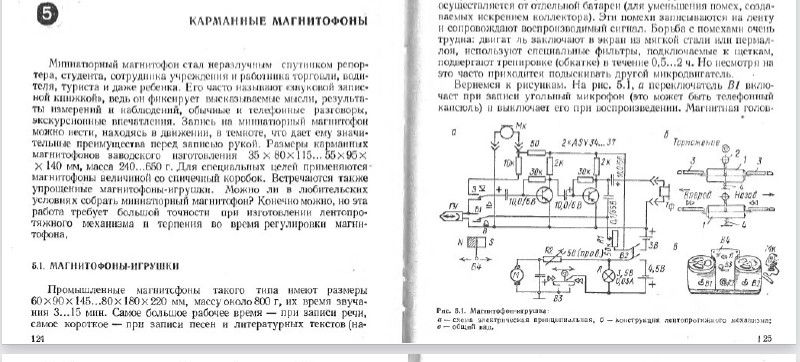
In my opinion, they are very complex from a mechanical point of view; they require precise workmanship and a tight fit between the mechanical components. I am not sure whether anyone would be able to replicate one of these designs. A drawback of these designs is the absence of a belt drive shaft, which causes the belt’s speed to be uneven — it increases as it is wound onto the take-up spool.
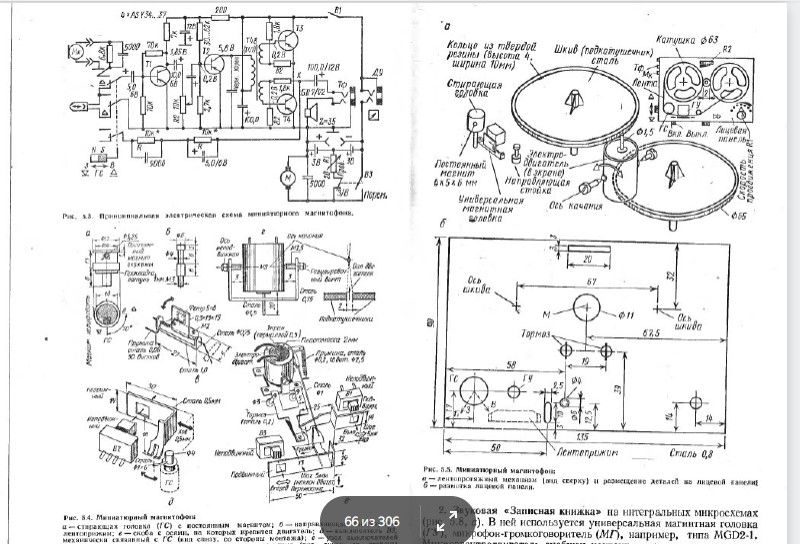
As a beginner, I once built a simpler design, described in the magazine ‘Radio’ No. 8, 1974.
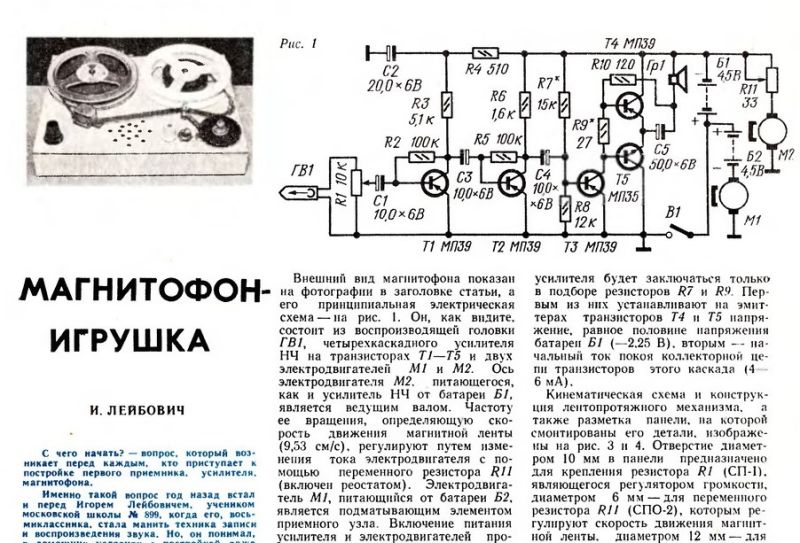
Its mechanical part consisted of two electric motors from toys. One of these drove the spool winding mechanism, whilst the other served as the tape feed shaft and flywheel. I mounted the entire mechanical assembly on a plywood panel, although the article recommended using a plastic sheet, which I couldn’t find in the countryside. I took the rubber ring, which presses the tape against the shaft, from an old record player, as recommended by the author. It had a larger diameter and was thinner than a typical one, but it worked perfectly.
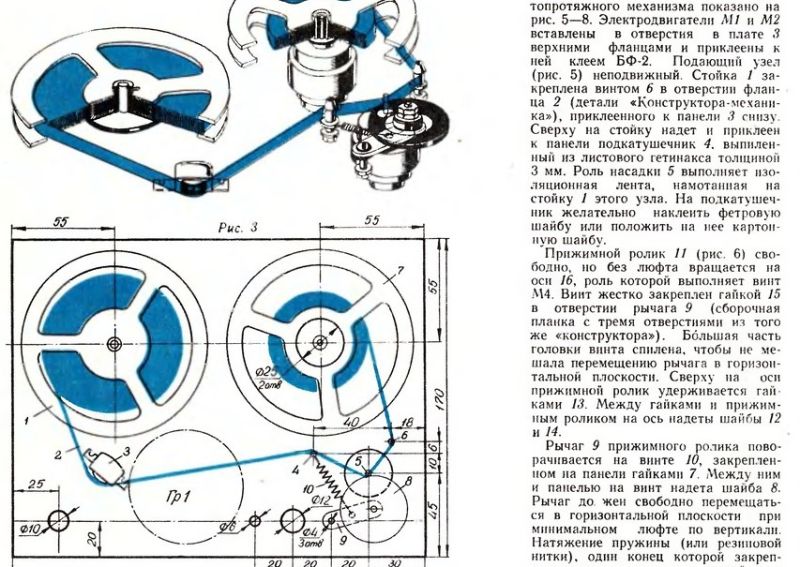
However, I used a different circuit diagram. As far as I recall, it was based on three transistors and included a correction circuit. When recording onto magnetic tape, low frequencies are attenuated, whilst high frequencies are amplified. The magnetic head itself also reads the signal unevenly — at high frequencies, the signal fades because the wavelength becomes comparable to the spacing between the gaps in the head’s core. Therefore, the amplifier must be supplemented with a correction circuit, usually consisting of an additional resistor and two capacitors.
In my case, the circuit lacked a power amplifier, and the mechanism lacked a casing. I connected it to a radio, fitting the mechanism in place of the record player. I remember the moment when it all started playing! Of course, it wasn’t a tape recorder in the full sense of the word, but rather a player. I got the reels of recordings from a neighbour. The tape speed was approximately 9.52 cm/s. It could be adjusted using a potentiometer, but I soon grew tired of this and added a stabiliser based on a classic feedback circuit.
It was the late 1970s. This success gave me a boost, and I decided to build a more complex, high-end piece of equipment. The problem lay in constructing the mechanical part. I had the entire tape-transport mechanism from a mass-produced monophonic valve tape recorder. However, it had certain drawbacks — the tape speed was 4.76 and 9.52 cm/s, whilst Hi-Fi equipment requires at least 19.05 cm/s, and professional equipment achieves speeds twice as high. This problem could be solved by changing the diameter of the rollers on the motor; however, the mechanism only allowed the use of reels with a diameter of up to 15 cm, which was definitely insufficient at a speed of 19.05. There was also no room for a recording head. Naturally, I wanted separate tracks for recording and playback.
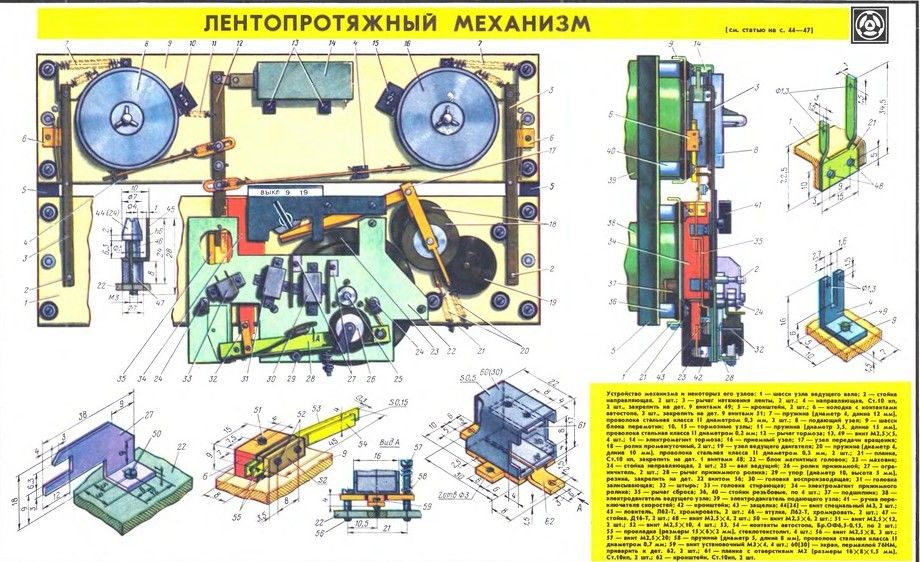
The only solution, therefore, was to build my own tape-transport mechanism using components from this tape recorder. The most important components were the shaft with the flywheel, the motor and the roller pressing the tape against the shaft, as I was unable to make these myself under the circumstances — nor was there any point in doing so. For the reel-to-reel drive, I wanted to use separate motors, which I ‘borrowed’ from old turntables. This solution is fully in line with the concept of Hi-Fi tape recorders and greatly simplifies the mechanics. In cheap tape recorders designed for winding onto reels, clutches connected by a belt or rubber rollers to a single motor are used, which causes an uneven load and affects the tape’s feed speed.
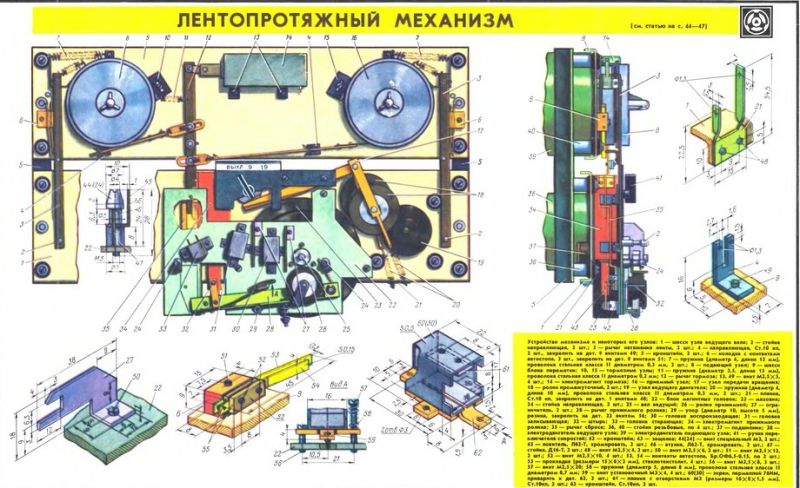
I had originally planned to mount the whole assembly on a support plate made of thick aluminium alloy. Today, however, I believe that this would not be a good solution due to the transmission of vibrations. It is better to construct the winding and belt-feed mechanisms on separate plates, connected by a metal angle bracket via rubber inserts. I came across this solution in an amateur design described in the aforementioned magazine ‘Radio’. However, as can be seen, it also has a serious drawback — the torque from the motor shaft to the flywheel is transmitted via a rubber roller. I understand that the author intended this to simplify speed adjustment; however, if the roller is left stationary for a prolonged period whilst in contact with the motor shaft and the flywheel, it becomes deformed, causing vibrations and an uneven belt feed. I am familiar with this phenomenon from cheap record players. In this case, I would prefer to use a rubber belt and choose a different method of speed adjustment, such as an electronic one. However, at that time it was much more complicated than it is today.
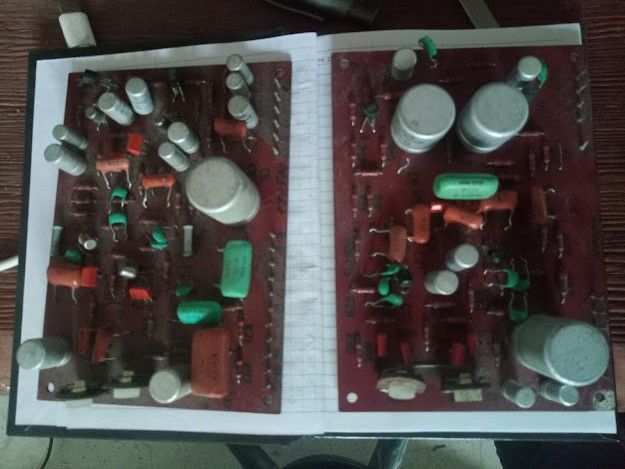
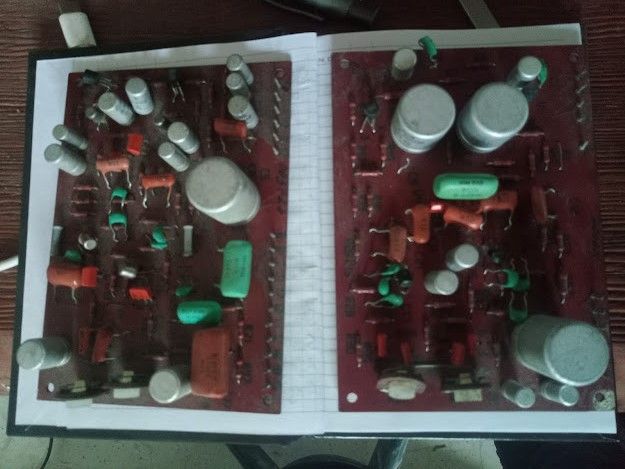
I didn’t build the electronics myself, as I was unable to produce printed circuit boards of sufficient quality at home. I bought a set of three boards, mass-produced for similar designs. They have survived to this day, which suggests that I didn’t manage to complete this project. But let’s take it one step at a time. One of these boards contained the playback circuit (amplifier), the second the recording circuit, and the third the voltage regulator and the erase and bias current oscillator (I’ve lost that board).
I also bought some high-quality heads (I used one of them as an acoustic filter coil in a QRP direct-conversion transceiver ).
Conclusion: despite the complexity of the subject, it is possible to build an analogue reel-to-reel tape recorder yourself, and its quality and ease of use can be superior to those of the era when they were at their peak. I don’t know how it was in Poland, but in the Soviet Union, building such mechanisms was not exactly legal, as it required lathe work that was only available in state-run factories. These factories, in turn, had to fulfil party quotas. However, many DIY enthusiasts somehow managed to come to an arrangement with the lathe operators, and at specialist exhibitions one could come across high-quality designs.
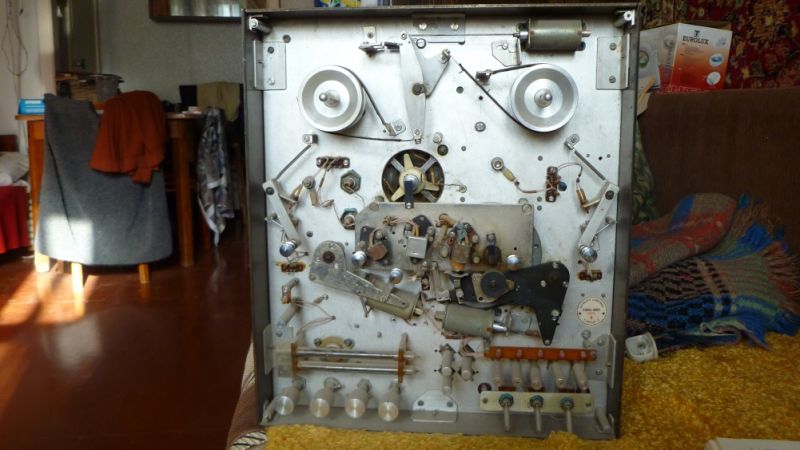
Such as, for example, this amateur-built tape recorder by I. Zamotkin from Saratov.
Modern components make it possible to build playback and recording circuits with low distortion, a wide and flat frequency response, and good noise suppression. Microcontrollers, in turn, enable the implementation of highly effective control circuits for the tape transport mechanism and motor speed stabilisation. However, the question arises — does it make sense? For me, it does, because creating things is a pleasure.
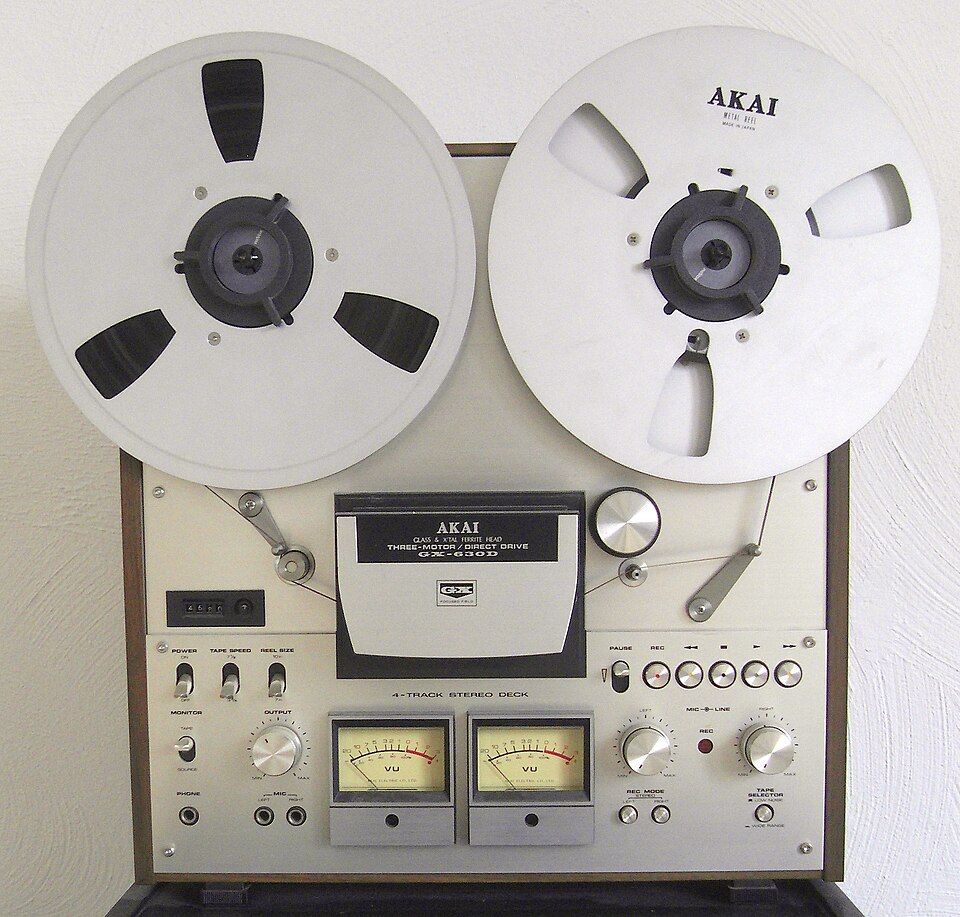
By Erkaha – Own work, CC BY-SA 4.0, https://commons.wikimedia.org/w/index.php?curid=39897046
This raises the question: is it possible to build a high-quality reel-to-reel tape recorder yourself? In my opinion, under modern conditions, it certainly is. However, it is a project requiring knowledge and skills not only in electronics but also in mechanics.
It should be noted that the popularity of tape recorders coincided with the post-war period, whilst the heyday of this technology was in the mid-1960s. Many models were produced at that time, including in Poland (ZK-120, ZK-240, etc.). The Hi-Fi segment was dominated by Japanese manufacturers, including AKAI. In the professional market for news and studio tape recorders, the best-known products are those of the Swiss company NAGRA, founded by the Pole Stefan Kudelski.
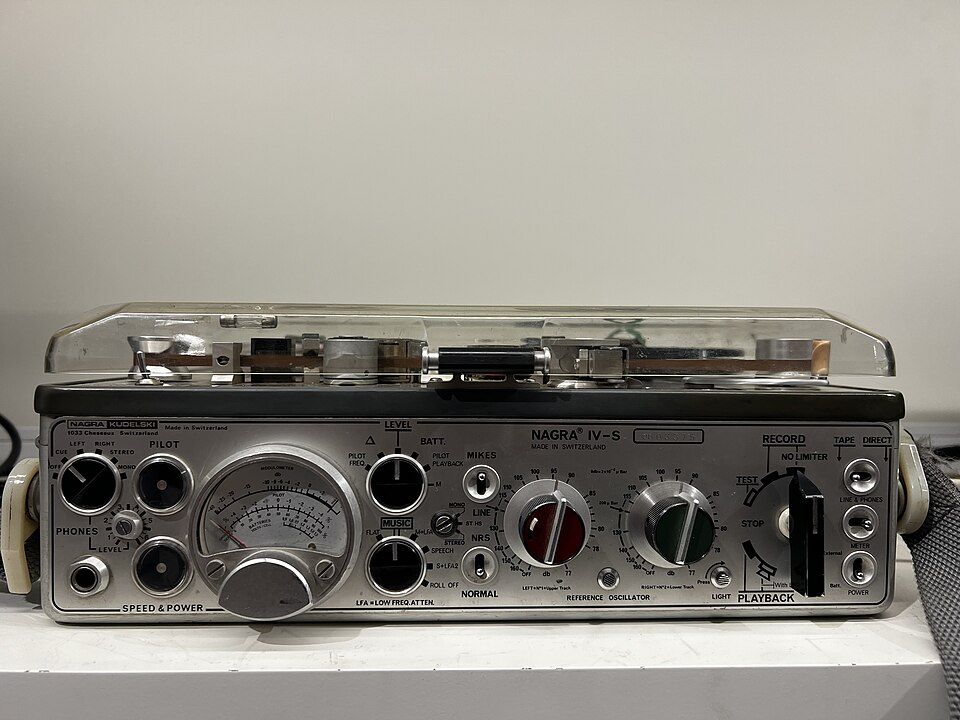
By Havana nocą – Own work, CC BY-SA 4.0, https://commons.wikimedia.org/w/index.php?curid=138181173
Due to the price of mass-produced tape recorders and the desire to achieve better performance or ease of use, many amateur designs were created. Here, one could find a wide variety of designs — ranging from toys and pocket tape recorders right through to semi-professional equipment. Among the former, it is worth mentioning Janusz Wojciechowski’s popular book *Contemporary Electronic Toys*, which describes several designs.
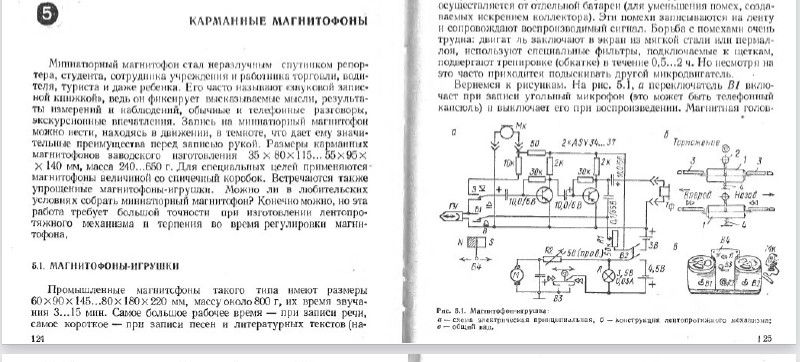
In my opinion, they are very complex from a mechanical point of view; they require precise workmanship and a tight fit between the mechanical components. I am not sure whether anyone would be able to replicate one of these designs. A drawback of these designs is the absence of a belt drive shaft, which causes the belt’s speed to be uneven — it increases as it is wound onto the take-up spool.
As a beginner, I once built a simpler design, described in the magazine ‘Radio’ No. 8, 1974.
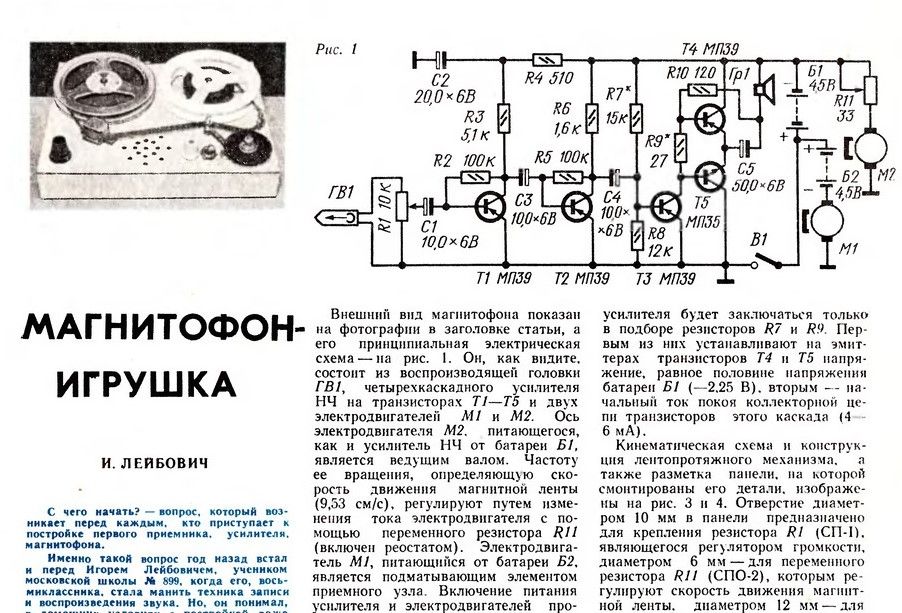
Its mechanical part consisted of two electric motors from toys. One of these drove the spool winding mechanism, whilst the other served as the tape feed shaft and flywheel. I mounted the entire mechanical assembly on a plywood panel, although the article recommended using a plastic sheet, which I couldn’t find in the countryside. I took the rubber ring, which presses the tape against the shaft, from an old record player, as recommended by the author. It had a larger diameter and was thinner than a typical one, but it worked perfectly.
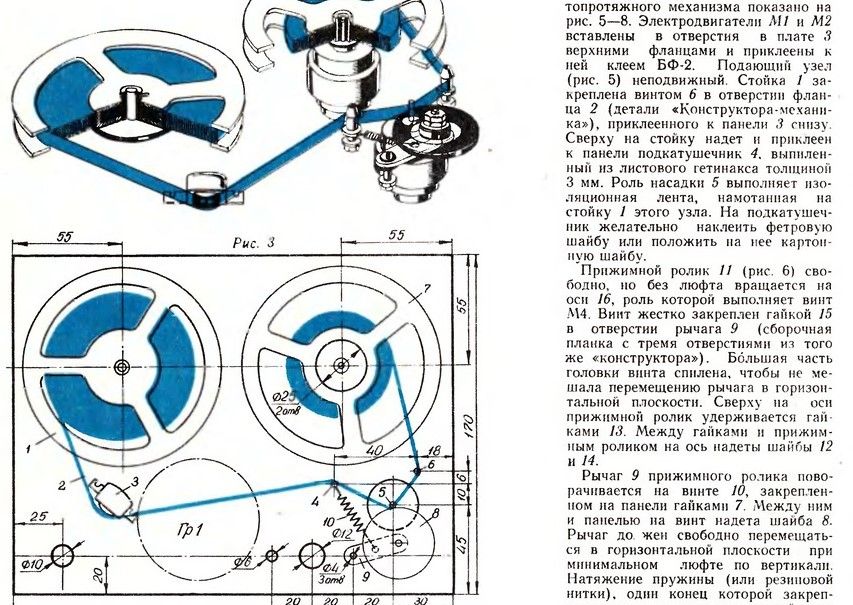
However, I used a different circuit diagram. As far as I recall, it was based on three transistors and included a correction circuit. When recording onto magnetic tape, low frequencies are attenuated, whilst high frequencies are amplified. The magnetic head itself also reads the signal unevenly — at high frequencies, the signal fades because the wavelength becomes comparable to the spacing between the gaps in the head’s core. Therefore, the amplifier must be supplemented with a correction circuit, usually consisting of an additional resistor and two capacitors.
In my case, the circuit lacked a power amplifier, and the mechanism lacked a casing. I connected it to a radio, fitting the mechanism in place of the record player. I remember the moment when it all started playing! Of course, it wasn’t a tape recorder in the full sense of the word, but rather a player. I got the reels of recordings from a neighbour. The tape speed was approximately 9.52 cm/s. It could be adjusted using a potentiometer, but I soon grew tired of this and added a stabiliser based on a classic feedback circuit.
It was the late 1970s. This success gave me a boost, and I decided to build a more complex, high-end piece of equipment. The problem lay in constructing the mechanical part. I had the entire tape-transport mechanism from a mass-produced monophonic valve tape recorder. However, it had certain drawbacks — the tape speed was 4.76 and 9.52 cm/s, whilst Hi-Fi equipment requires at least 19.05 cm/s, and professional equipment achieves speeds twice as high. This problem could be solved by changing the diameter of the rollers on the motor; however, the mechanism only allowed the use of reels with a diameter of up to 15 cm, which was definitely insufficient at a speed of 19.05. There was also no room for a recording head. Naturally, I wanted separate tracks for recording and playback.
The only solution, therefore, was to build my own tape-transport mechanism using components from this tape recorder. The most important components were the shaft with the flywheel, the motor and the roller pressing the tape against the shaft, as I was unable to make these myself under the circumstances — nor was there any point in doing so. For the reel-to-reel drive, I wanted to use separate motors, which I ‘borrowed’ from old turntables. This solution is fully in line with the concept of Hi-Fi tape recorders and greatly simplifies the mechanics. In cheap tape recorders designed for winding onto reels, clutches connected by a belt or rubber rollers to a single motor are used, which causes an uneven load and affects the tape’s feed speed.
I had originally planned to mount the whole assembly on a support plate made of thick aluminium alloy. Today, however, I believe that this would not be a good solution due to the transmission of vibrations. It is better to construct the winding and belt-feed mechanisms on separate plates, connected by a metal angle bracket via rubber inserts. I came across this solution in an amateur design described in the aforementioned magazine ‘Radio’. However, as can be seen, it also has a serious drawback — the torque from the motor shaft to the flywheel is transmitted via a rubber roller. I understand that the author intended this to simplify speed adjustment; however, if the roller is left stationary for a prolonged period whilst in contact with the motor shaft and the flywheel, it becomes deformed, causing vibrations and an uneven belt feed. I am familiar with this phenomenon from cheap record players. In this case, I would prefer to use a rubber belt and choose a different method of speed adjustment, such as an electronic one. However, at that time it was much more complicated than it is today.
I didn’t build the electronics myself, as I was unable to produce printed circuit boards of sufficient quality at home. I bought a set of three boards, mass-produced for similar designs. They have survived to this day, which suggests that I didn’t manage to complete this project. But let’s take it one step at a time. One of these boards contained the playback circuit (amplifier), the second the recording circuit, and the third the voltage regulator and the erase and bias current oscillator (I’ve lost that board).
I also bought some high-quality heads (I used one of them as an acoustic filter coil in a QRP direct-conversion transceiver ).
Conclusion: despite the complexity of the subject, it is possible to build an analogue reel-to-reel tape recorder yourself, and its quality and ease of use can be superior to those of the era when they were at their peak. I don’t know how it was in Poland, but in the Soviet Union, building such mechanisms was not exactly legal, as it required lathe work that was only available in state-run factories. These factories, in turn, had to fulfil party quotas. However, many DIY enthusiasts somehow managed to come to an arrangement with the lathe operators, and at specialist exhibitions one could come across high-quality designs.
Such as, for example, this amateur-built tape recorder by I. Zamotkin from Saratov.
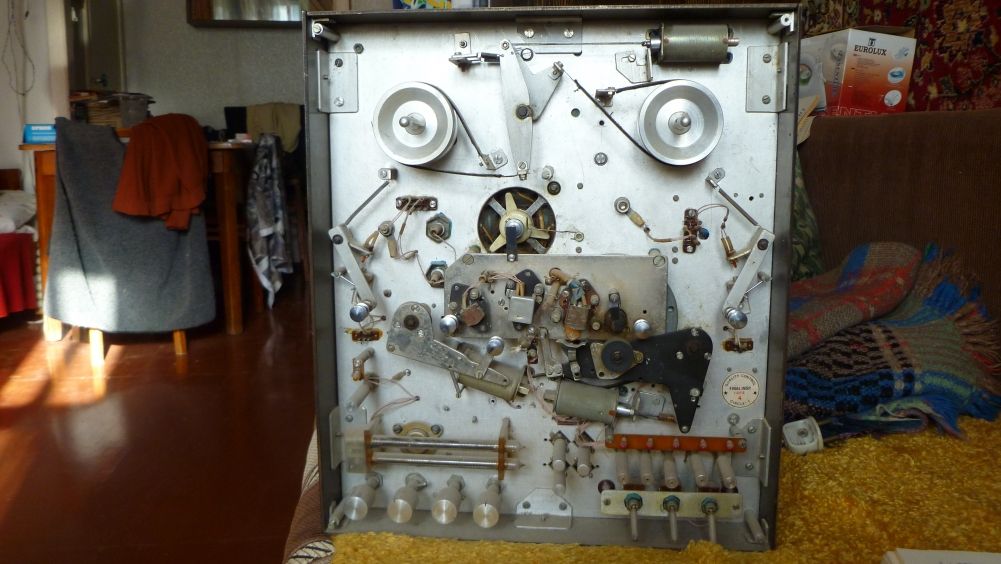
Image source: https://forum.vegalab.ru/showthread.php?t=39410&page=120
Modern components make it possible to build playback and recording circuits with low distortion, a wide and flat frequency response, and good noise suppression. Microcontrollers, in turn, enable the implementation of highly effective control circuits for the tape transport mechanism and motor speed stabilisation. However, the question arises — does it make sense? For me, it does, because creating things is a pleasure.

andreyatakum wrote 872 posts with
rating 1176 .
Live in city Antalya.
Been with us since 2021 year.
Comments
I wonder if the trend will make a comeback, like vinyl records? Whilst the trend for ordinary cassette players is unlikely to return, what about a reel-to-reel tape recorder like this? What do you think? Unfortunately,... [Read more]
Yes, but ultimately these parameters will be determined by the medium – that is, the audio tape. [Read more]
Anything is possible – but to what end and at what cost (though who’s going to stop the rich from doing so)? There was a time when people used to build their own cars. [Read more]
Hi, I’d go for the tubes. The tape recorder looks like a decent piece of Soviet kit. Best regards [Read more]
If you’re going to have a go at it, you might as well make the most of modern technology – the tape recording should be digital. Then the pursuit of perfect rotational stability, and the reduction of sound... [Read more]
But it gives rise to new ones. I suppose you realise how wide a bandwidth such a tape recorder needs to carry in order to be able to record and play back an audio signal in digital form? [Read more]
If you want to capture a large amount of data for digital recording, wouldn’t it be better to use a video recorder? Instead of a video signal, we record a digital signal. Do we already have movement stabilisation... [Read more]
Yes, I do. But I also see no reason to solve old problems in the ‘old’ way. For example, Kudelski seems to have recorded a rotation synchronisation signal onto the tape. What’s to stop us from ‘embedding’... [Read more]
But it is making a comeback. And the Chinese are already offering tape-feed mechanisms. And I’m sure there are more cassette players in readers’ wardrobes and cellars than there are reels or records. [Read more]
That’s right. Cassette recorders, which just a few or a dozen or so years ago could be bought for a symbolic one zloty, now fetch prices of up to several hundred zlotys. Mind you, it’s sentiment rather... [Read more]
It hadn’t occurred to me, but it’s an interesting idea..... [Read more]
Perhaps it’s worth picking up one or two of these TVs, along with a working VCR – whilst they’re still very cheap. Who knows, maybe watching films on old VHS tapes will come back into fashion one day,... [Read more]
No, that won’t give an analogue sound. But you can actually achieve better results than with an analogue sound by using a video recorder to record sound with frequency modulation in the video track. I’ve... [Read more]
I reckon so too, and what’s worse, this original digital recording seems to have already been compressed – at least not very skilfully. I can compare them because I have a few old original records... [Read more]
My friend seems to have missed a few things. Cassette players – perhaps not quite on the same scale as analogue turntables – are making a comeback. Teac currently offers both a dual-cassette deck and... [Read more]
Heh, that actually reminded me of the instructions for building your own ‘Paweł’ cassette recorder from *Młodych Techników* in 1985 and 1986: https://mlodytechnik.pl/files/gfq/85-nw-11-miniaturowy_magnetofon.pdf https://mlodytechnik.pl/files/nmq/85-nw-12-miniaturowy_magnetofon_ii.pdf https://mlodytechnik.pl/files/rcq/86-nw-01-miniaturowy_magnetofon.pdf Best... [Read more]
For 40 years, the idea of building a spool-type speaker has been on my mind, but I think I’ve got over it now. There are so many factory-made designs out there that it would be rather difficult to create... [Read more]
Well, I actually had a similar idea, but I never got round to putting it into practice. I once needed a voice recorder for my journalism work and for learning foreign languages. [Read more]
I used to dream of carrying out this project. But back then, my skills weren’t up to it :( [Read more]