logo elektroda
logo elektroda
X
logo elektroda

Which submersible well pump – 8 m lift for lawn sprinkler?

internick 143394 48
Best answers

What kind of pump should I install in a well with the water surface 5–8 m below ground to water the lawn with a hose and sprinkler?

For lawn watering with a sprinkler, choose a pump based on the required working pressure and flow, not just the advertised maximum head; an 8 m-head pump is too weak, and even 9 m of suction is borderline when the summer water level drops to 8 m [#12279034][#12279110] For a sprinkler you need roughly 15 m of head plus hose and sprinkler losses, so a cheap submersible or diaphragm pump is not a good continuous-irrigation solution [#12279034][#12442458][#12280498] If you only want to fill buckets or watering cans, a cheap submersible pump will work, but it will not build the pressure needed for sprinklers [#12448520] If you keep the pump in the well, use a model intended for that duty and protect the suction side with a basket/check valve so the hose does not drain back and debris does not get in [#12279355] A 3/4" hose will not damage the pump, but narrower or longer hose adds resistance and reduces real flow, so a larger-diameter hose and fewer bends help [#12562002][#12556779]
Generated by the language model.
ADVERTISEMENT
Treść została przetłumaczona polish » english Zobacz oryginalną wersję tematu
  • #1 12278985
    internick
    Level 36  
    Posts: 3081
    Help: 273
    Rate: 554
    Hello.

    I have a well (12 circles with a diameter of 1 meter) where the water level is 5 meters (spring and autumn) and 8 meters (summer) below the ground.

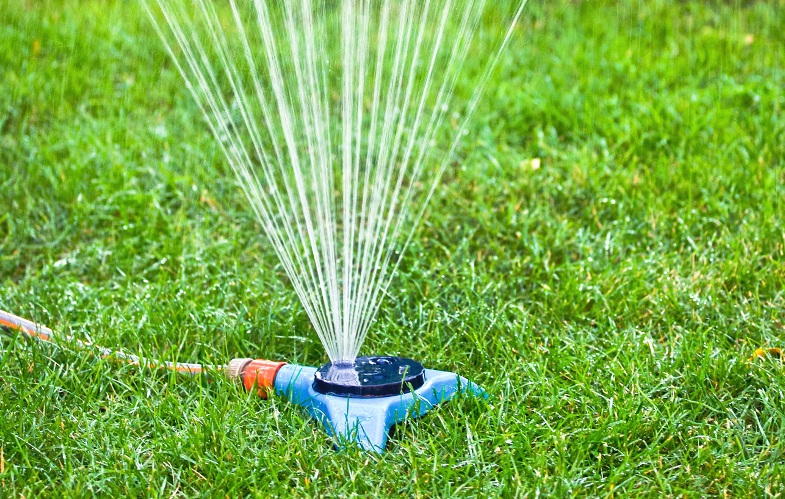
    I would like to put a pump into the well and use the water discharged from it to water the lawn using a garden hose and a sprinkler like this:
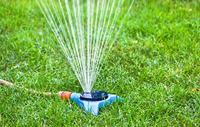
    Which submersible well pump – 8 m lift for lawn sprinkler?

    I was browsing the offers of stores and I am confused, because the pumps are different and I do not know which one to buy. Here are some examples that seem fine to my taste:
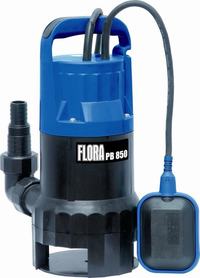
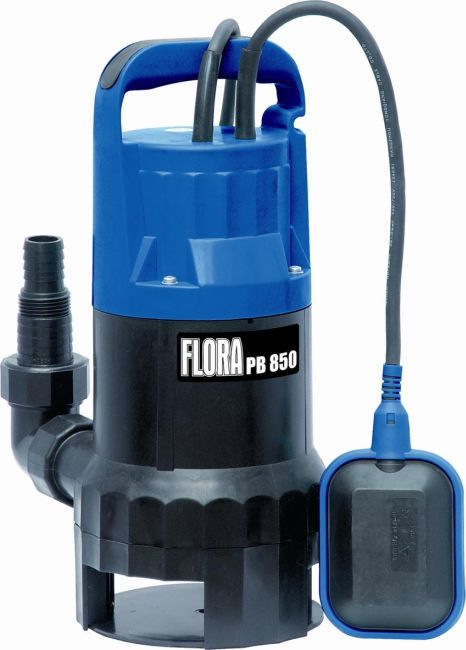
    Which submersible well pump – 8 m lift for lawn sprinkler?

    - maximum water lifting height 8 m, so on the borderline, because one circle protrudes above the ground to a height of 1 meter

    Besides, if the switch is deep in the well, how is it turned on? Permanently the switch can be pressed and only the plug can be removed from the socket? Does she keep pumping until it hits the bottom?

    The second one I found looks like this:
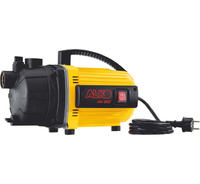
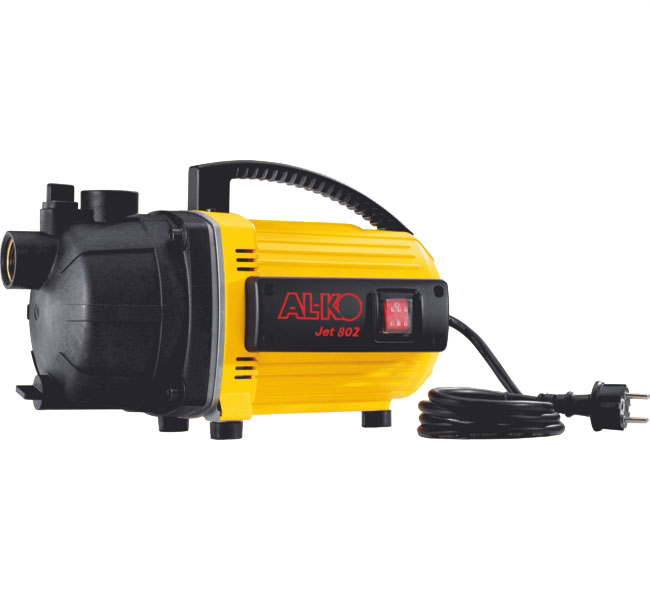
    Which submersible well pump – 8 m lift for lawn sprinkler?

    - water lifting height: 35 m, so much more than the one indicated above and there will be no problems with turning it on.

    The third is like this:
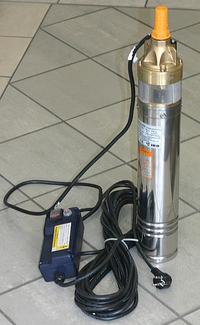
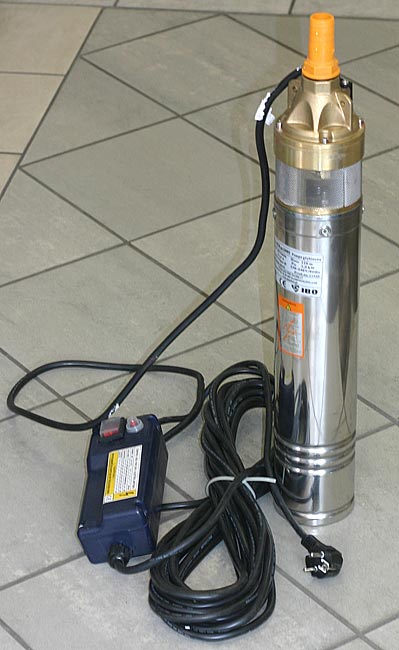
    Which submersible well pump – 8 m lift for lawn sprinkler?

    Which of these pumps would be most suitable for watering your lawn using well water?

    With which technology, theoretically, would I have the highest pressure in my hose?

    If I wanted to use a 3/4 "hose, wouldn't it hurt the pump? Specs say 1".
  • ADVERTISEMENT
  • #2 12279034
    vodiczka
    Level 43  
    Posts: 30198
    Help: 1183
    Rate: 4293
    The catalog lifting height does not directly translate into the height / depth of the well. The losses in the water supply hose and the sprinkler itself must be taken into account. The first one has a head that is too low, you need a minimum of 15 m plus the pressure needed for the proper operation of the sprinkler. 1 atmosphere = 10 m water column.

    The second ALKO-Jet pump is not a submersible pump, theoretically it should be suitable because its maximum suction depth is 9m, but when the water level drops to -8 plus 1 drain above the level, it will be extremely and may not suck in.
  • ADVERTISEMENT
  • #3 12279095
    internick
    Level 36  
    Posts: 3081
    Help: 273
    Rate: 554
    In that case, the submersible pump can probably be rejected, because I do not intend to spend ~ 3000 PLN for this purpose, and I can see that only such pumps have more than 15 m of lifting.
  • #4 12279110
    vodiczka
    Level 43  
    Posts: 30198
    Help: 1183
    Rate: 4293
    In general, do not look at the head, but at the pump characteristics, because the maximum head means zero water flow - i.e. the pump will raise the water to the given height, but nothing will come out of the hose and the maximum performance is given at zero head - the pump achieves this performance when it pumps water over the same level.

    Added after 1 [minutes]:

    mantoch wrote:
    In that case, the submersible pump can probably be rejected, because I do not intend to spend ~ 3000 PLN for this purpose, and I can see that only such pumps have more than 15 m of lifting.

    They are also cheaper, depending on the performance you are interested in

    Added after 3 [minutes]:

    You can buy Alkojeta, drill a hole 10 cm above the ground in the lining and pass the suction hose through it, it should be enough.

    Added after 18 [minutes]:

    See this ALKO product: TDS 1201/4 submersible pump about 700 PLN
  • #5 12279250
    internick
    Level 36  
    Posts: 3081
    Help: 273
    Rate: 554
    There will be no problem with the hole in the circle just above the ground. And with what hose will the water be sucked? 1 "or 3/4"? Besides, what will happen if this type of pump sucks in some foreign body? Does it have a filter, will it break immediately? A total of 2.5 cm in diameter of the hose is not so little.
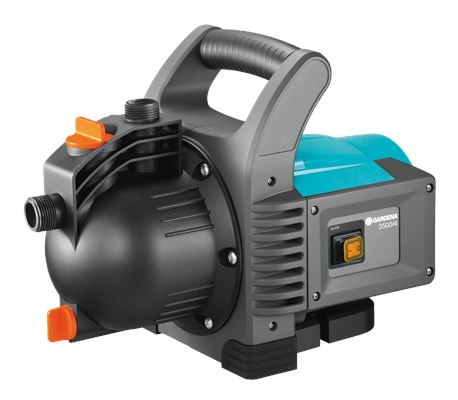
    I found Garden like this:
    Which submersible well pump – 8 m lift for lawn sprinkler?
    Its specification:
    Moc znamionowa 	800 W
    Maks. wydajność 	3600 l/h / 951,02 gal/h
    Maks. ciśnienie 	4,1 b / 59,5 psi
    Maks. wysokość samozasysania 	7 m / 22,97 stopy
    Maks. wysokość podnoszenia 	41 m / 134,51 stopy
    Napęd pompy 	Jet
    Ciężar 	7 kg / 15,43 funty
    Długość kabla 	1,5 m / 4,92 stopy
    Kabel sieciowy 	H07 RNF
    Klasa zabezpieczenia 	IP X4

    Therefore, will it be better than the AL-KO Jet 802?
  • #6 12279355
    vodiczka
    Level 43  
    Posts: 30198
    Help: 1183
    Rate: 4293
    In summer you will not suck, look at the height of the self-priming.
    Balance the pump I mentioned above.

    mantoch wrote:
    Besides, what will happen if this type of pump sucks in some foreign body? Does it have a filter, will it break immediately? A total of 2.5 cm in diameter of the hose is not so little

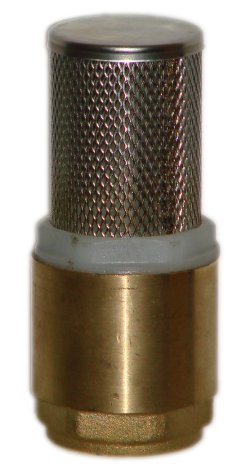
    At the end of the suction hose, a basket with a check valve is attached to avoid flooding the pump every time it is started. The basket should have a mesh or other protection that will not let foreign objects pass.
  • #7 12279453
    internick
    Level 36  
    Posts: 3081
    Help: 273
    Rate: 554
    I like the AL-KO TDS 1201/4 pump very much. And I'll probably be tempted by it.

    Are you writing about something like that?

    Which submersible well pump – 8 m lift for lawn sprinkler?
  • #8 12279471
    soniak2
    Level 21  
    Posts: 600
    Help: 42
    Rate: 139
    If you have a covered well, you can do some fixing and permanently attach this pump, e.g. at -1m.
  • #10 12280498
    vodiczka
    Level 43  
    Posts: 30198
    Help: 1183
    Rate: 4293
    mosfetkiler wrote:
    You can also think of an electromagnetic diaphragm pump

    Good for filling hen drinkers but not for sprinklers, capacity too low. The cousin has one (he pumps water from -8 m through a 3/4 inch hose, 25 m 2 m up the hill) and the efficiency is very low. Filling the bucket takes approximately 30 seconds.
  • #11 12281203
    Anonymous
    Anonymous  
  • ADVERTISEMENT
  • #12 12283849
    vodiczka
    Level 43  
    Posts: 30198
    Help: 1183
    Rate: 4293
    Jerzykowski wrote:
    These pumps are good if someone comes across one of Russian production.

    Russian ones are more durable but just as inefficient. The very principle of operation (vibrating diaphragm) limits the efficiency.
  • #13 12284191
    Anonymous
    Anonymous  
  • #14 12287780
    vodiczka
    Level 43  
    Posts: 30198
    Help: 1183
    Rate: 4293
    Jerzykowski wrote:
    Come on, don't talk anymore.

    Have you ever connected two or more sprinklers simultaneously on a long cable from a deep well?
  • #15 12287888
    tzok
    VIP Meritorious for electroda.pl
    Posts: 38690
    Help: 3162
    Rate: 6461
    I have two such diaphragm products. Russian. They do it, but you can't keep them in the well all the time - the aluminum housing corrodes, not to mention the steel screws that just dissolve. I replaced the screws with stainless ones and I painted the casing with Hammerit and it is better, but for the winter it is better to remove it from the well.
  • ADVERTISEMENT
  • #16 12441863
    Andrzej Mazur
    Level 13  
    Posts: 92
    Help: 1
    Rate: 45
    If the use of a similar pump, e.g. eurotec for PLN 85, would work in my well, I do not have water deep, because 3 m including one concrete above the ground, if it is drier, the water will drop a little from 2 meters. At the moment, I have a traditional solution with a bucket and you have to turn your hand. It is a bit of a pain when I have to water the plants, I would like to do something similar to a tap and make a pump switch under my hands as the watering can is full, I turn it off. What do you think, such a pump is enough so that I do not have to stand for half a minute for the bucket to be full ???
  • #17 12441964
    tzok
    VIP Meritorious for electroda.pl
    Posts: 38690
    Help: 3162
    Rate: 6461
    Enough, only for the winter you have to take it out of the well.
  • #18 12442038
    Andrzej Mazur
    Level 13  
    Posts: 92
    Help: 1
    Rate: 45
    The well does not freeze, so it should not defrost the pump and you can always submerge it, e.g. a meter under water. How fast do you think it will pump water for these 3-5 meters of lifting? Eurotec from the description has the highest efficiency compared to other similar pumps. Lifting height 82m and capacity 1080l / m
  • #19 12442317
    Anonymous
    Anonymous  
  • #20 12442458
    Grzegorz Siemienowicz
    Level 36  
    Posts: 3587
    Help: 146
    Rate: 600
    Hello,
    When designing irrigation, it is worth doing it from the beginning to the end so that there will be no disappointments:
    Every sprinkler (or a group of sprinklers in automatic irrigation) has a range of pressure at which it works and a range of efficiency -> For this, an appropriate pump is selected (giving the appropriate capacity and pressure at the level of sprinkler operation (not the maximum).
    The following are not suitable for irrigation:
    and) Submersible pumps like this one, for example that do not give the right pressure;
    b) Diaphragm pumps like this one which are not suitable for continuous operation and cannot be continuously submerged in water;
    Suitable :
    and) Submersible peripheral pumps such as this one , rather for small allotments;
    b) Submersible screw pumps such as this one , rather for small allotments;
    ... but the above is not suitable for direct work in a vertebral well.
    c) Submersible pumps such as this one ;
    d) Submersible pumps for operation in tanks, such as this one ;
    e) Single-stage suction pumps such as e.g. ta ;
    f) Multistage suction pumps such as e.g. ta .

    greetings
  • #21 12442496
    Andrzej Mazur
    Level 13  
    Posts: 92
    Help: 1
    Rate: 45
    Jerzykowski wrote:
    Andrzej Mazur wrote:
    The well does not freeze, so it should not defrost the pump and you can always submerge it, e.g. a meter under water.
    What do you need a pump for in winter? You're just going to get me out of the well.
    If there is really a risk of damaging the pump, I can pull it out of the well for the winter. Grzegorz Siemienowicz, I will not use the pump for irrigation, but I want to have running water by the well so that I can plug Pompe into the socket and the water will pour itself into the watering can without any effort. Plants grow on a large area, but one bush each and there is no possibility of using sprinklers. I don't know if using a submersible pump is a good idea.
  • #22 12442633
    Grzegorz Siemienowicz
    Level 36  
    Posts: 3587
    Help: 146
    Rate: 600
    If you want to use the pump only occasionally for a specific purpose and only in the season, I would consider the cheap one peripheral suction pump.
  • #23 12448012
    Andrzej Mazur
    Level 13  
    Posts: 92
    Help: 1
    Rate: 45
    What's the price of this pump? It will be used almost every day, but very briefly because I need a few watering cans. I have a question about the diaphragm pump that I mentioned earlier. In the well, the water is not perfectly clean because there are garbage there or the valves in the diaphragm pump will not hang when they find garbage?
  • #24 12448520
    Grzegorz Siemienowicz
    Level 36  
    Posts: 3587
    Help: 146
    Rate: 600
    The peripheral suction pump can be purchased below PLN 150.
    The diaphragm pump should be removed from the water each time, which in my opinion is acceptable only on plots visited on weekends.
    The problem is that both are designed for clean water.
    If you want to fill only buckets and watering cans with water that is not very clean, a cheap submersible pump will suffice, it will not generate pressure, but you do not need to fill the buckets. In any other context, it will be better than any other in your case .
  • #25 12448620
    vodiczka
    Level 43  
    Posts: 30198
    Help: 1183
    Rate: 4293
    Grzegorz Siemienowicz wrote:
    Always remove the diaphragm pump from the water

    Kuzyn has a diaphragm pump. Sinks in spring, stretches out before winter.
  • #26 12448912
    Grzegorz Siemienowicz
    Level 36  
    Posts: 3587
    Help: 146
    Rate: 600
    I quoted this from the manuals for some diaphragm pumps.
    I also know the common causes of failure of these pumps, which prove it.
  • #27 12532817
    Daniel 2004
    Level 12  
    Posts: 102
    Rate: 37
    Until now, I used a diaphragm pump in the well. Russian seems to be so popular, only 230W.
    It is used for watering and filling a small reservoir to water from a watering can in some areas.

    The well is 6 meters to the bottom, and the water surface is about 80 cm from the bottom.

    The 230W diaphragm pump is not a performance demon. This watering goes down a bit.

    The pump broke after 4 years. When correcting the mounting, I saw how it sparked from above and that was where it stopped working. I suspect that the power cord in the housing was torn off, because it was attached to the chain so that it was simply tight, i.e. when the pump was pulled out, someone probably pulled the cable more than once, instead of the chain ...


    I analyzed the sense of buying an impeller pump, but I can see that the lifting height fluctuates around 5-6 meters, and it is often a parameter cheated in the specification and overstated. As a result, most of them will probably have a similar performance, or slightly higher, than the diaphragm one, and you have to pay for the rotor from PLN 160 upwards.

    You advise gentlemen what to buy.

    Initially, I was considering the Garland GBS 750 or GBS 550 rotor. But it's probably not a good idea.

    I'm slowly coming to the conclusion that he can buy a membrane one again, but instead of 230W is 300-400W? I just don't know what company.

    Today, while in Nomi, I saw such 300W pumps, but the price of PLN 119 POWER UP, and Nomi is usually expensive.

    I do not want to pack in expensive pumps because it is only used for watering and filling a water tank the size of a bathtub.

    But I've already gone crazy with the amount of these pumps.

    I would like to add that this Russian diaphragm pump, due to my aunt's amnesia for such matters, was constantly submerged in a well for 4 years, be it summer or winter.
  • #28 12544583
    Andrzej Mazur
    Level 13  
    Posts: 92
    Help: 1
    Rate: 45
    Grzegorz Siemienowicz wrote:
    If you want to fill only buckets and watering cans with water that is not very clean, a cheap submersible pump will suffice, it will not generate pressure, but you do not need to fill the buckets. In any other context, it will be better than the others in your case.
    Well, I like this idea the most, the cheapest pump can be bought at the price of a diaphragm pump and the efficiency is several times higher, which is quite important to me, because standing for a minute by the bucket is a bit onerous, best if it was done fairly quickly. On the Allegro there are many cheap pumps up to PLN 100 with a plastic housing. for 130 you can buy with a cast iron housing for sewage. Are the plastic ones enough ??? And the second thing, every time I want to turn on the pump, the water from the hose will run back into the well and I'll have to wait for the hose to fill up. can it be improved somehow by using a check valve at the pump, what do you think?
  • #29 12544823
    Daniel 2004
    Level 12  
    Posts: 102
    Rate: 37
    I am going to use a check valve myself, because one day I forgot to take the end of the pipe out of the tank and it sucked everything back :) Not to mention the fact that each time the pump has to fill the hose with water again.

    I think that with this "higher" efficiency compared to the membrane one it is a big exaggeration.

    Unfortunately, I do not have a point of reference.

    As I wrote above, the parameters of lifting height and power are important. Cheap centrifugal pumps often have quite a lot of data, including their power.

    I am not convinced that the cheap rotor will be more efficient at, say, 6 meters depth of the well relative to the diaphragm. And especially the rotor pumps around PLN 100, in my opinion, it would be a fiction that would be relatively efficient and durable.

    Still some cheap centrifugal pumps have some protection that they will run for 30 minutes and then turn off.
  • #30 12544915
    Andrzej Mazur
    Level 13  
    Posts: 92
    Help: 1
    Rate: 45
    Daniel 2004 wrote:
    I think that with this "higher" efficiency compared to the membrane one it is a big exaggeration
    The diaphragm pump is about 1000L / ha, the impeller is about 7000L / ha, and my well is 3 meters more efficient and the difference will be significant.

    Added after 6 [minutes]:

    For example, this one should work with us. And the efficiency is very high. It should also be permanent. http://allegro.pl/pompa-zatapialna-do-wody-brudnej-sciekow-1600w-sit-i3390268336.html

Topic summary

✨ The discussion revolves around selecting the appropriate pump for watering a lawn from a well with varying water levels (5m in spring/autumn and 8m in summer). Participants emphasize the importance of considering the pump's lifting height, pressure, and flow rate, noting that the maximum head does not equate to effective water flow. Submersible pumps are recommended for their efficiency, with specific models like the AL-KO TDS 1201/4 and EINHELL BG-DP 7535 being highlighted. Concerns about pump durability, especially for diaphragm pumps, are raised, with suggestions for using check valves to prevent backflow. The need for a pump that can handle debris in the water is also discussed, with recommendations for filters and proper installation to avoid damage.
Generated by the language model.

FAQ

TL;DR: Tests show real output of budget submersibles drops to 40 L / min—less than half the label—because "1 atmosphere = 10 m water column" [Elektroda, vodiczka, post #12279034] Choose a pump rated ≥15 m head plus 2 bar to run lawn sprinklers.

Why it matters: Correct sizing prevents dry-running, poor spray and early pump failure.

Quick Facts

• Min. dynamic head for most garden sprinklers: 15 m + 2 bar = 35 m total [Elektroda, vodiczka, post #12279034] • Surface jet pumps: max suction depth 9 m; beyond that they starve [Elektroda, vodiczka, post #12279034] • Diaphragm pump spec: 1 100 L/h (18 L/min), 50 m stated head [Elektroda, Daniel 2004, post #12556779] • Multistage submersible AL-KO TDS 1201/4 ≈ 700 PLN retail [Elektroda, vodiczka, post #12279110] • Entry-level peripheral surface pump < 150 PLN [Elektroda, Grzegorz Siemienowicz, post #12448520]

Which pump type best drives a lawn sprinkler from a 5–8 m water level?

Use a multistage submersible or a multistage surface jet. They deliver both the lift and 2–3 bar pressure a sprinkler needs. The AL-KO TDS 1201/4 cited in the thread supplies 35 m head at usable flow, enough for one rotating or two static sprinklers [Elektroda, vodiczka, post #12279110]

How much pressure and head do garden sprinklers actually need?

Most consumer sprinklers work between 2 bar and 4 bar and require 0.9–1.2 m³/h flow [RainBird, 2023]. Convert pressure to head: 1 bar ≈ 10 m. Add the vertical lift from water surface to sprinkler height. Example: 5 m lift + 20 m friction + 20 m pressure ≈ 45 m total head.

Can I use a surface jet pump if summer water drops to 8 m?

Only if the pump’s suction limit is ≥9 m and the inlet sits 10 cm below the ring, as suggested [Elektroda, vodiczka, post #12279110] Any further drop starves the impeller and flow stops.

Will a ¾" hose damage a pump that has a 1" outlet?

It will not damage the pump, but it will raise friction losses and lower pressure at the sprinkler. Expect about 15 % less flow per 20 m hose length when necking down one size [PumpHandbook].

How do I keep water from draining back into the well after shut-off?

Install a spring-loaded brass check valve directly on the pump outlet. Thread it with a 1" nipple as described by the user [Elektroda, Andrzej Mazur, post #12559135]

What filter or basket should I fit on the suction line?

Attach a foot-valve basket with mesh fine enough to stop sand and debris but coarse enough (≈1 mm) to avoid clogging. "The basket keeps trash out and prevents re-priming every start" [Elektroda, vodiczka, post #12279355]

Can I leave a submersible pump in the well over winter?

Yes if the well never freezes and the housing is corrosion-resistant. Aluminium diaphragm pumps corrode; stainless multistage units cope well. One user removes the diaphragm pump each autumn to avoid damage [Elektroda, tzok, post #12287888]

How many sprinklers can one household pump run?

Divide pump flow at 3 bar by sprinkler demand. A 3 600 L/h pump at 3 bar will drive three 1 200 L/h sprayers. Attempting more causes low pressure and patchy coverage.

What happens if the pump runs dry?

Impellers overheat within minutes and the seal burns. Fit a float switch or electronic dry-run guard; many multistage submersibles include this protection [Grundfos, 2022].

How do I pass the suction hose through a concrete ring safely?

  1. Drill a 10 cm hole 10 cm above ground level [Elektroda, vodiczka, post #12279110]
  2. Slide a PVC sleeve and seal with silicone.
  3. Feed a reinforced hose with foot valve attached.

How can I measure my pump’s real output?

  1. Place a 10 L bucket under the hose.
  2. Time how long it takes to fill.
  3. Flow (L/min) = 600 ÷ seconds. Repeat with the sprinkler attached to gauge pressure losses.
Generated by the language model.
ADVERTISEMENT