logo elektroda
logo elektroda
X
logo elektroda

Siemens EH 651TE11E - CORRECT CONNECTION OF THE INDUCTION HOB

bartek158 48909 21
Best answers

Is the wiring diagram shown for connecting the Siemens induction hob correct, and how should it be connected to the installation?

Yes, the connection shown in the diagram is correct. Connect according to diagram 2: the two linked conductors from the hob (blue and the other linked wire) go to the blue wire in the building installation, and the remaining wires are connected by color [#13378744][#14156315] If you are using a three-phase installation, the third phase can remain unused, and the phase order does not matter [#14903840][#14904131]
Generated by the language model.
ADVERTISEMENT
Treść została przetłumaczona polish » english Zobacz oryginalną wersję tematu
  • #1 13378591
    bartek158
    Level 10  
    Posts: 94
    Help: 1
    Rate: 26
    Hello
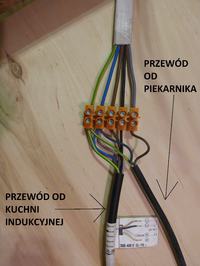
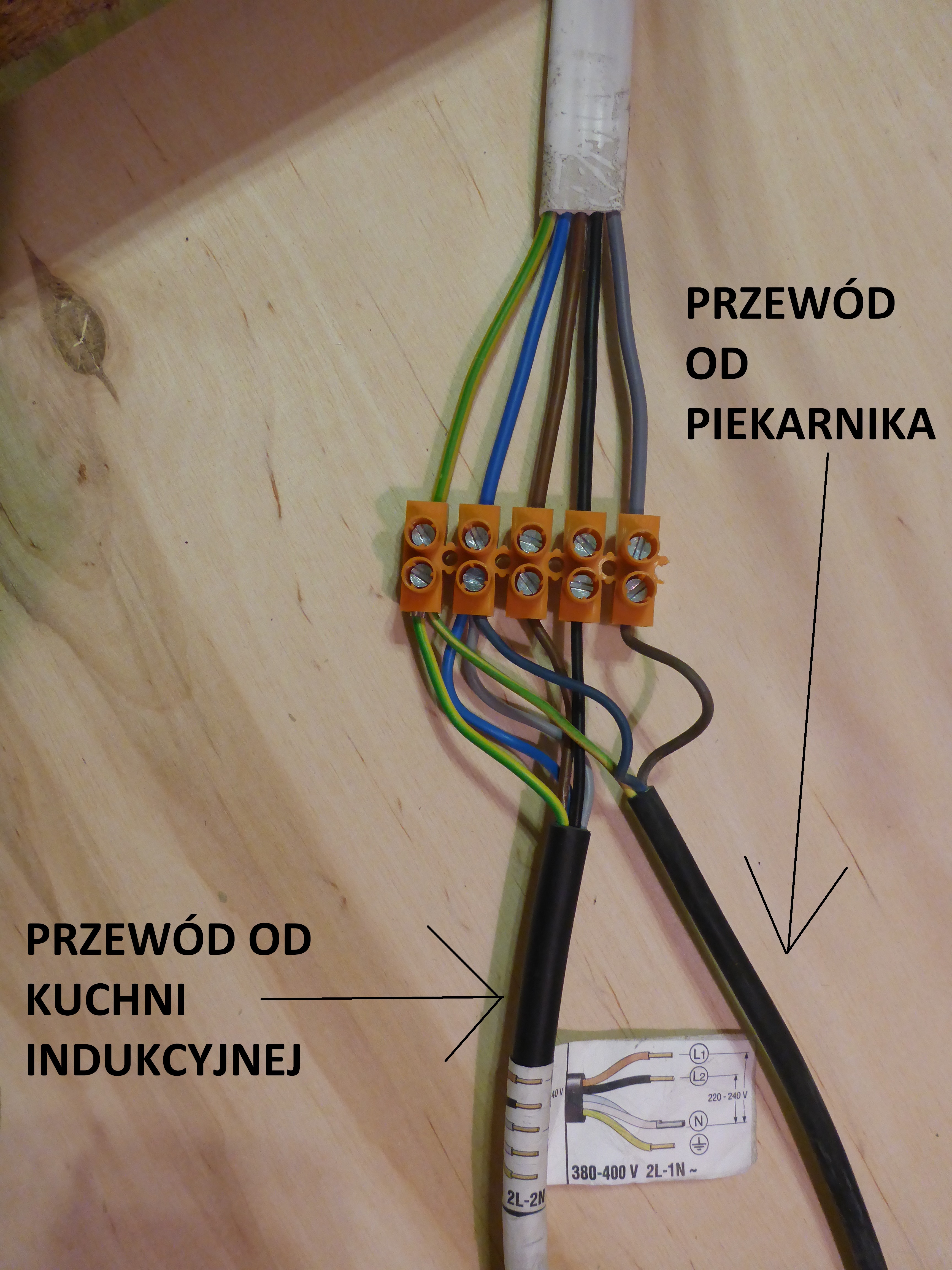
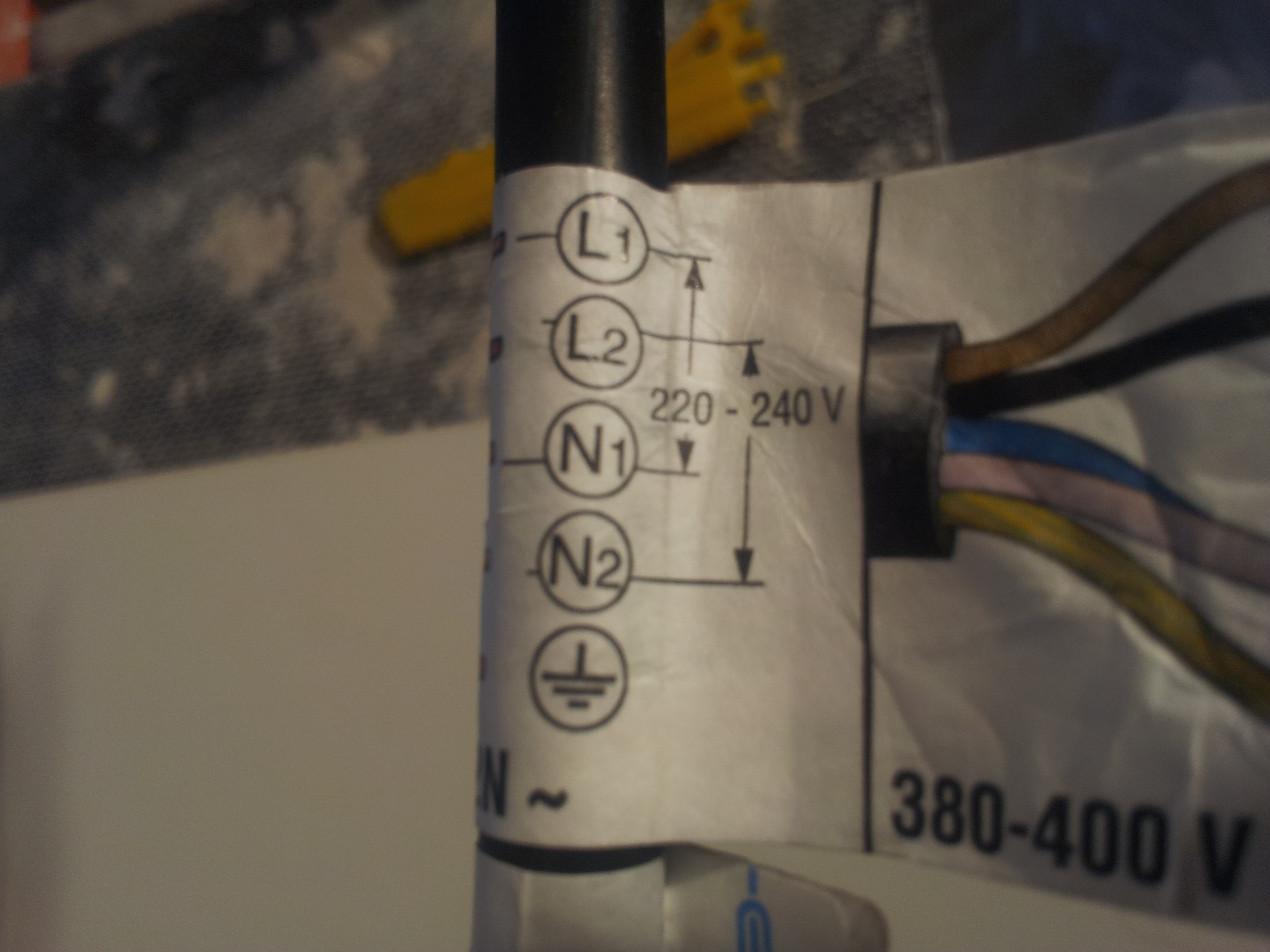
    I would like to make sure that the tearing shown in the picture is correct.
    (Induction hob + single-phase gingerbread oven). For the next week, I will have the power disconnected, and the wires are not under voltage - I do not want to test experimentally, because it's a pity for the equipment, and besides, I don't have the option yet. The connection diagram is in the picture.
    Regards and thank you

    Siemens EH 651TE11E - CORRECT CONNECTION OF THE INDUCTION HOB
  • ADVERTISEMENT
  • Helpful post
    #2 13378744
    nares
    Home appliances specialist
    Posts: 8686
    Help: 1510
    Rate: 3366
    bartek158 wrote:
    whether the cuff shown in the photo is correct

    Correct.
  • #3 13380786
    bartek158
    Level 10  
    Posts: 94
    Help: 1
    Rate: 26
    Hello
    Thanks for the answer, I turned on the electricity in the apartment for a moment and everything works. This gray wire from the stove was strange for me - in this stove it is "N", while in the installation of the building it is a phase.

    greetings
  • ADVERTISEMENT
  • #4 14152747
    ekmir
    Level 24  
    Posts: 1761
    Help: 18
    Rate: 403
    And how should such a connection be secured when the board is connected to two phases?
  • #5 14153555
    bartek158
    Level 10  
    Posts: 94
    Help: 1
    Rate: 26
    There is probably a diagram with the connection colors in the manual. Can you upload the connection diagram attached to the kitchen? For me, it was glued to the cable, it was also in the manual.
  • #6 14155213
    ekmir
    Level 24  
    Posts: 1761
    Help: 18
    Rate: 403
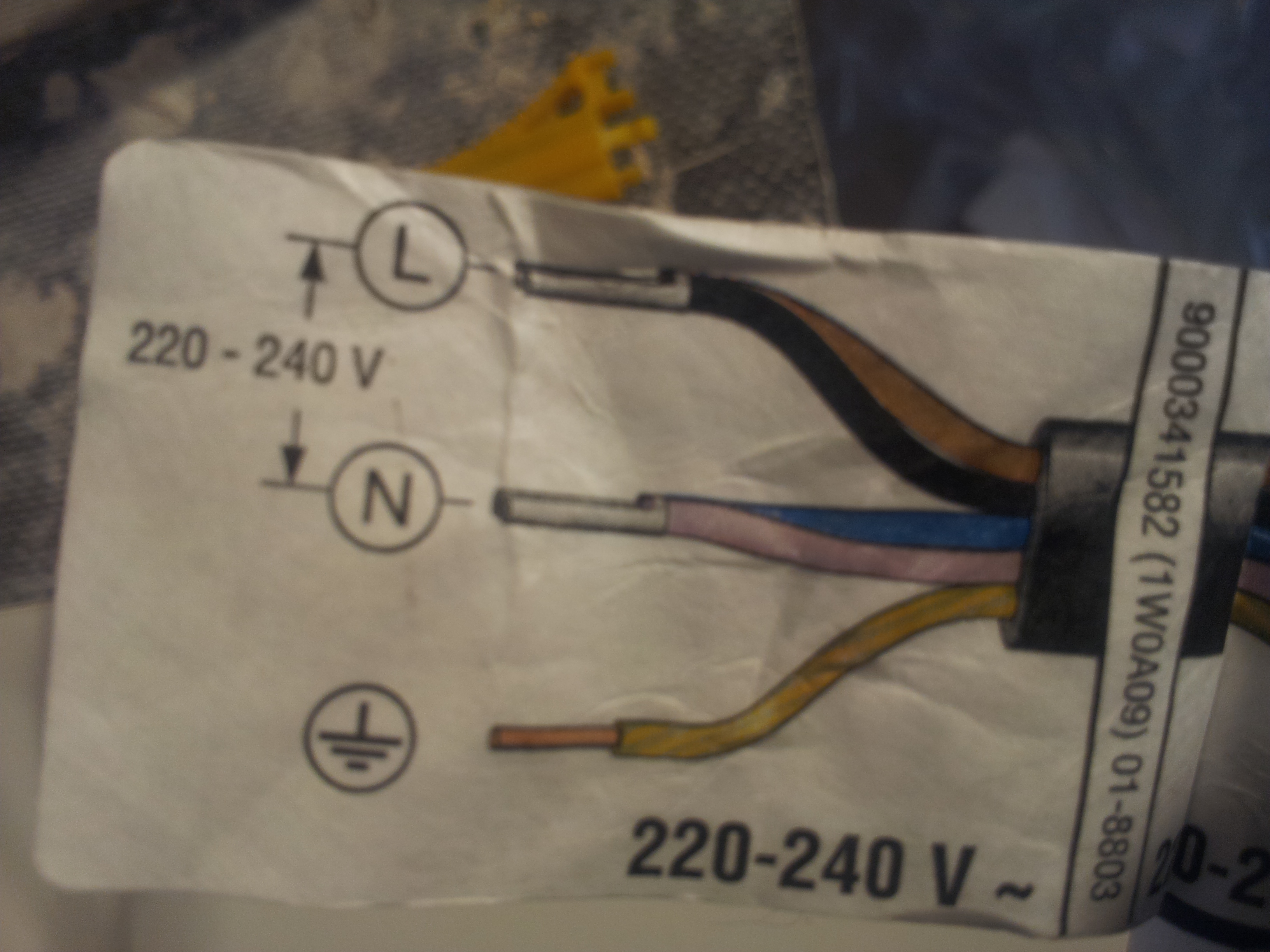
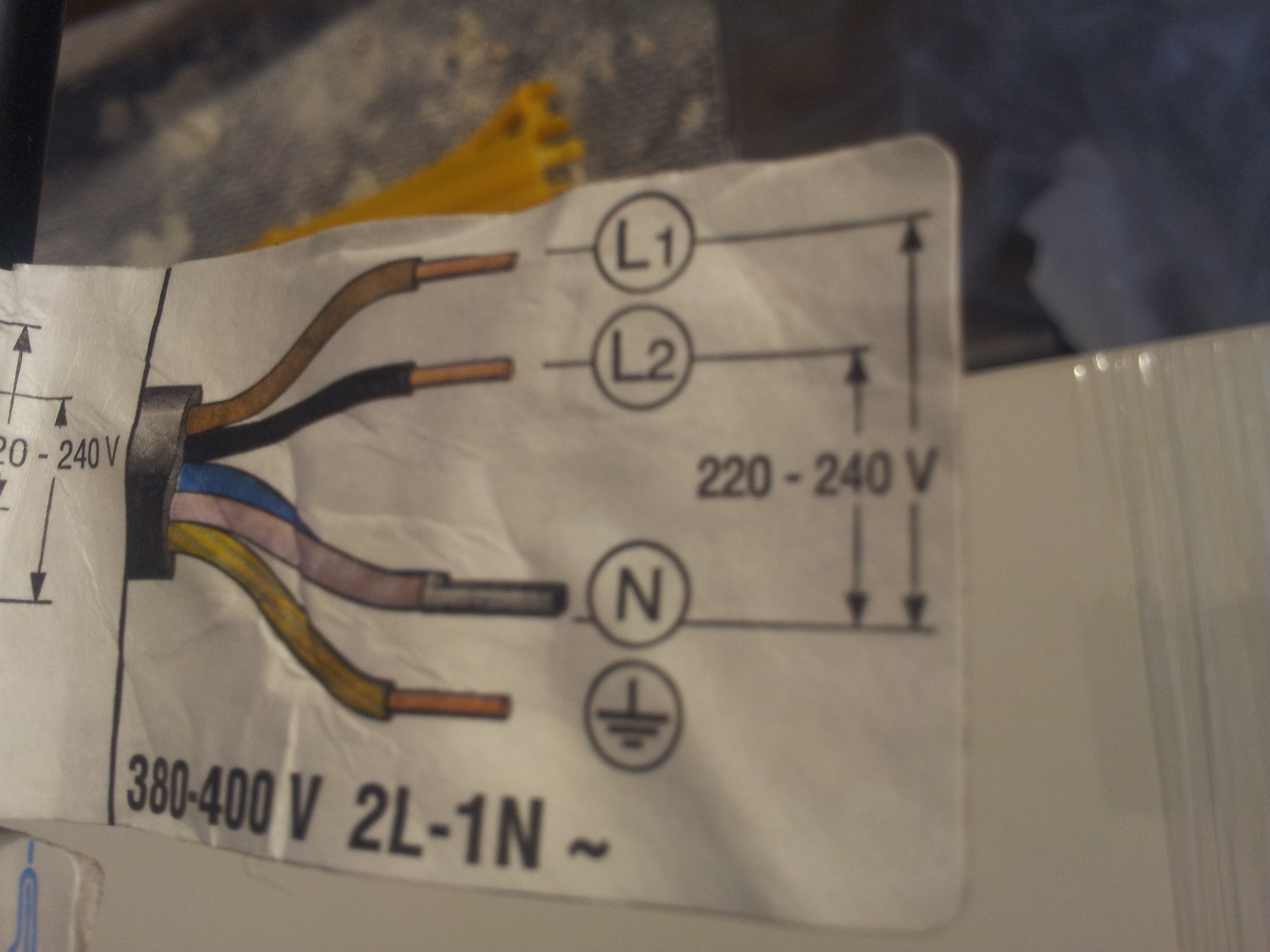
    The cable has the following information:

    1.
    Siemens EH 651TE11E - CORRECT CONNECTION OF THE INDUCTION HOB

    2.
    Siemens EH 651TE11E - CORRECT CONNECTION OF THE INDUCTION HOB

    3.
    Siemens EH 651TE11E - CORRECT CONNECTION OF THE INDUCTION HOB
  • #7 14156315
    bartek158
    Level 10  
    Posts: 94
    Help: 1
    Rate: 26
    Connect according to the diagram in photo no. 2. These two connected cables, ie the blue one and it seems purple, connect to the blue wire in your installation. The rest according to the colors. Remember that if you ever have to return the induction hob for warranty repair, someone with permission must substitute you that the connection was correct. The album is probably quite a few years old, so I was brilliant with it, don't worry about it.
  • #8 14156923
    ekmir
    Level 24  
    Posts: 1761
    Help: 18
    Rate: 403
    Blue with white and brown with black are connected. Why, according to picture 2 and not e.g. picture 3?
  • #9 14157726
    bartek158
    Level 10  
    Posts: 94
    Help: 1
    Rate: 26
    There will be one N in the building installation.
  • ADVERTISEMENT
  • #10 14157853
    ekmir
    Level 24  
    Posts: 1761
    Help: 18
    Rate: 403
    And what security should be applied?
    Should it be single protection for each phase - separate on L1 and separate on L2 (for L1 CLS6 B16 / 1 and for L2 CLS6 B16 / 1)? Is one common eg CLS6 B16 / 2
  • #11 14158039
    bartek158
    Level 10  
    Posts: 94
    Help: 1
    Rate: 26
    For me, the whole box was made by an electrician. I have one big triple (3 phase) fuse. I can't check now because I'm away from home but 99% of it was 16A.
  • #12 14158134
    ekmir
    Level 24  
    Posts: 1761
    Help: 18
    Rate: 403
    But in that case, you wouldn't need a three-phase one
  • #13 14166527
    bartek158
    Level 10  
    Posts: 94
    Help: 1
    Rate: 26
    I have EATON xclear CLS6 B16 / 3
  • #14 14175130
    ekmir
    Level 24  
    Posts: 1761
    Help: 18
    Rate: 403
    In addition to this overcurrent protection, do you also have this board protected by a residual current device?
  • #15 14175317
    bartek158
    Level 10  
    Posts: 94
    Help: 1
    Rate: 26
    Yes . I have a differential circuit breaker.
  • ADVERTISEMENT
  • #16 14175347
    ekmir
    Level 24  
    Posts: 1761
    Help: 18
    Rate: 403
    And what's your residual current circuit breaker?
  • #17 14176255
    bartek158
    Level 10  
    Posts: 94
    Help: 1
    Rate: 26
    Eaton xclear cf16 40/4/003
  • #18 14176766
    ekmir
    Level 24  
    Posts: 1761
    Help: 18
    Rate: 403
    So despite using L + N and L + N protection, you used three-phase protection.
  • #19 14178096
    bartek158
    Level 10  
    Posts: 94
    Help: 1
    Rate: 26
    The box was installed by an electrician, assuming that I would connect a 7kw free-standing cooker, eg Electrolux EKI 6450 AOX. Later, I changed the plan to a hob and a separate oven. And I connected it like this. A three-phase fuse on the Allegro costs the same as a two-phase one.
  • #20 14903840
    zbyszek8010
    Level 9  
    Posts: 26
    Rate: 14
    I plan to connect a SIMENS induction cooker on the cable, connection diagrams as above.
    I have a 3-phase installation. I want to connect to diagram 2 of the above photos.
    I connect to two phases as in the diagram, I understand that the third phase remains free, and you can connect something else under it, e.g. a stove, as the author did. And this is the best (most efficient) type of induction cooker installation.
    I also understand that in this case the order of the phases does not matter.
  • #21 14904131
    bartek158
    Level 10  
    Posts: 94
    Help: 1
    Rate: 26
    Yes, the order of the phases does not matter.
  • #22 20557315
    dymionek95
    Level 1  
    Posts: 1
    Always check everything with a meter or the simplest neon lamp. If a friend has a phase on 3 wires, it means that he connects only one wire to N, and two wires to the sockets L1, L2 (no matter what order). If it had Two Lives and two Neutrals (for example, Black, Brown Live L, and Blue and Gray Neutral N

    As for the triple fuses in the switchgear, is it done in accordance with the art? NO!

    Will it work YES!

    It is enough to find out what a differential is and what it protects against?

Topic summary

✨ The discussion revolves around the correct connection of a Siemens EH 651TE11E induction hob in conjunction with a single-phase oven. The original poster sought confirmation on the wiring setup, particularly regarding a gray wire identified as "N" in the stove but as a phase in the building's installation. Responses confirmed the connection was correct, with advice on securing the connection and ensuring compliance with electrical standards. Participants discussed the necessity of proper overcurrent protection, the use of differential circuit breakers, and the implications of connecting to a three-phase installation while leaving one phase unused. The importance of consulting the connection diagram and verifying with a meter was emphasized.
Generated by the language model.

FAQ

TL;DR: 78 % of EU kitchens power induction hobs below 7 kW [Eurostat, 2022]; “phase order doesn’t matter”[Elektroda, bartek158, post #14904131] Wire EH651TE11E on 1- or 2-phase, 16 A breakers plus 30 mA RCD keep equipment and users safe.

Why it matters: Incorrect fusing or missing RCD turns a €600 hob into a fire-risk in seconds.

Quick Facts

• Rated load: 7.2 kW max at 230 V 1N or 400 V 2N [Siemens, Datasheet]. • Supply options: 1×32 A or 2×16 A MCB, C-curve recommended [IEC 60898-1]. • Minimum cable: 5×2.5 mm² Cu for 2N; 3×4 mm² for 1N [VDE 0298-4]. • Mandatory RCD: 30 mA, Type A, 2- or 4-pole [HD 60364-4-41]. • 62 % of service calls trace to miswired neutral or missing link [ServiceBench, 2021].

Which diagram should I use for single-phase 230 V?

Use diagram 1: link both live leads (brown + black) to the single phase, and join blue + grey to neutral. Earth (green/yellow) stays unchanged. Siemens labels this 1N~ connection [Siemens, Datasheet].

How do I wire the hob on two phases (400 V 2N)?

Follow diagram 2: brown→L1, black→L2, joined blue+grey→N, green/yellow→PE. This matches the forum example that worked without errors [Elektroda, bartek158, post #14156315]

What circuit breaker rating is recommended?

Siemens specifies either one 32 A single-pole for 1N or two ganged 16 A poles for 2N [Siemens, Datasheet]. "I used CLS6 B16/3" reports a user and it works [Elektroda, bartek158, post #14166527]

Should I use separate MCBs or a ganged breaker for two phases?

Use a 2-pole linked MCB. Linked poles disconnect both lives during a fault, meeting IEC 60364-4-43 safety rules [IEC 60364-4-43]. Separate singles risk leaving one live connected.

Is an RCD required and which type?

Yes. Install a 30 mA Type A RCD covering all active conductors. A user runs CF16 40/4/003 successfully [Elektroda, bartek158, post #14176255] European code mandates ≤30 mA for kitchen circuits [HD 60364-4-41].

What do the wire colours on the Siemens cable mean?

Brown = L1, Black = L2, Blue + Grey tied = N, Green/Yellow = PE. The grey conductor confuses many because buildings often use grey as phase, but Siemens assigns it to neutral [Elektroda, bartek158, post #13380786]

Can I use the free third phase for another appliance?

Yes, you may feed a separate oven from the spare phase if the panel has capacity and separate protection. One forum user runs a standalone oven on the third phase without issue [Elektroda, bartek158, post #14178096]

What happens if neutral is wired to a live terminal?

Control electronics may fail instantly; 250 V DC caps will see 400 V AC. Service data show 18 % of blown boards stem from reversed N/L [ServiceBench, 2021].

How can I verify wiring before energising?

  1. Isolate supply, uncover junction box.
  2. Measure each conductor with a meter or neon lamp, confirm L and N [Elektroda, dymionek95, post #20557315]
  3. Continuity-test links, then power on and re-test voltage. This 3-step check prevents most start-up failures.

What edge-case fault should I watch for?

If only one pole of a twin-phase MCB trips, the hob may still see 230 V via pan detection circuitry, leading to false starts. Choose ganged breakers to avoid this scenario [IEC 60364-4-46].

Can I use a three-phase MCB even if only two phases are used?

Yes; cost is similar and the common lever ensures simultaneous disconnection. A user installed B16/3 with success [Elektroda, bartek158, post #14158039]

Is a Type B RCD necessary for induction cooktops?

Not here. EH651TE11E uses line-frequency input, so Type A suffices. Type B is needed only when the appliance emits smooth DC leakage, typical of EV chargers [DIN VDE 0100-722].

What cable length can I safely extend?

Keep the run under 25 m with 2.5 mm² copper to limit voltage drop to 3 % at 16 A [IEC 60364-5-52]. Longer runs need 4 mm².

Any performance gain from three-phase supply?

No. The hob internally splits loads across two inverters. Adding a third phase gives no extra power; Siemens rates output identical in 2N and 3N modes [Siemens, Datasheet].
Generated by the language model.
ADVERTISEMENT