logo elektroda
logo elektroda
X
logo elektroda

Residual current device in the TN-C photovoltaic installation

eclipse99 37431 35
Best answers

Can a 4-pole 40 A / 300 mA Type B RCD be used in a photovoltaic installation on a TN-C supply, or is that a design error?

No, the posts say this is not a TN-C differential inside a pure TN-C circuit; the diagram is for the AC side of the inverter and uses a special Type B RCD intended for inverter/power-electronics circuits [#14487299][#14495396] In a true TN-C system, RCDs are not used, so if the installation really were TN-C that would be wrong [#14486016] The thread also says the device sits in the 3×230/400 V AC part of the installation and works by detecting current asymmetry, with the type chosen for the harmonics present [#14491949] It is not meant to protect the inverter itself; PV inverters already have built-in protection [#14487159] The 300 mA rating is treated as fire protection, while 30 mA is for personal protection [#14492139]
Generated by the language model.
ADVERTISEMENT
Treść została przetłumaczona polish » english Zobacz oryginalną wersję tematu
  • #1 14485986
    eclipse99
    Level 11  
    Posts: 93
    Rate: 17
    Hello,

    I came across several installation diagrams of photovoltaic power plants, each with a 4P 40A / 300mA Type B residual current circuit breaker (for example from the HAGER brand).

    The only strange thing is that the selected diagrams worked in the TN-C system, which made it practically impossible to use a differential ...

    The question is where did they get there? This is a design error?

    Link to the switch - >> http://www.hager.pl/katalog-produktow/rozdzia...zniki-roznicowopradowe-typ-b/cfb440d/4965.htm
  • ADVERTISEMENT
  • #2 14486002
    zbich70
    Level 43  
    Posts: 17116
    Help: 1164
    Rate: 6568
    List these diagrams, especially their sources.
  • ADVERTISEMENT
  • #3 14486016
    Anonymous
    Anonymous  
  • #4 14486188
    eclipse99
    Level 11  
    Posts: 93
    Rate: 17
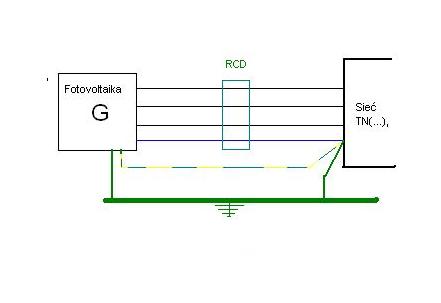
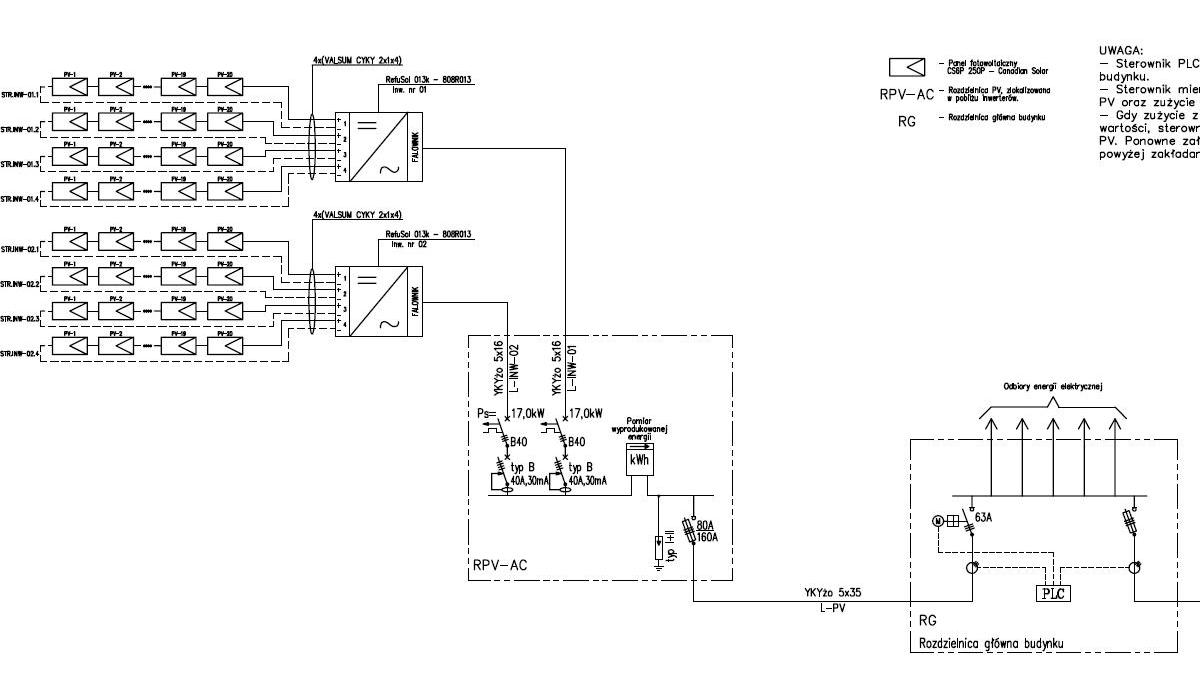
    Schemat:

    Residual current device in the TN-C photovoltaic installation
  • #5 14486306
    Anonymous
    Anonymous  
  • #6 14486309
    BILGO
    Level 38  
    Posts: 4452
    Help: 393
    Rate: 723
    eclipse99 wrote:
    The only strange thing is that the selected schemes worked in the TN-C system

    Why do you think so ?
  • #7 14486367
    masonry
    Level 30  
    Posts: 2742
    Help: 106
    Rate: 831
    eclipse99 wrote:

    The only strange thing is that the selected diagrams worked in the TN-C system, which made it practically impossible to use a differential ...


    Why do you say it's TN-C?
    After all, the RCD is inserted on the DC side.
  • #8 14486784
    eclipse99
    Level 11  
    Posts: 93
    Rate: 17
    I was simply at the site of a potential investment and I noticed that PE + N are connected together in the main switchboard ..... hence my supposition that the designer did not read the documentation :-)

    I was also wondering why these differentials are so expensive ... even 3,000 PLN!
  • ADVERTISEMENT
  • #9 14486860
    jacur
    Level 32  
    Posts: 1748
    Help: 166
    Rate: 295
    masonry wrote:
    After all, the RCD is inserted on the DC side.


    Rather between the inverter and the "produced energy" meter

    And this RCD protects the inverter anyway?
  • #10 14487159
    BILGO
    Level 38  
    Posts: 4452
    Help: 393
    Rate: 723
    Certainly, these RCDs do not protect the Inverters. PV inverters have enough built-in safeguards ...
    I wonder why they cost 3,000 ;) Could you please provide a model?
  • #11 14487191
    eclipse99
    Level 11  
    Posts: 93
    Rate: 17
    Such differences are located between the inverter and the meter of produced energy.

    I gave the link to the RCD earlier.
  • ADVERTISEMENT
  • #12 14487238
    Anonymous
    Anonymous  
  • #13 14487299
    Anonymous
    Anonymous  
  • #14 14487352
    jacur
    Level 32  
    Posts: 1748
    Help: 166
    Rate: 295
    WojcikW wrote:
    It is a special residual current device designed for circuits powered by inverters (or other power electronic converters).


    Then there should be an RCD of type B behind each inverter?
    It is probably the opposite. RCD type B It is used to protect the power supply circuits of inverters.

    There is something about that in this pdf page 22:

    http://www.el-team.com.pl/pliki/dfs4b/DFS_4B_DRCA_2013_czięćc.pdf
  • #15 14487466
    Anonymous
    Anonymous  
  • #16 14487644
    jacur
    Level 32  
    Posts: 1748
    Help: 166
    Rate: 295
    Mostly, this type of RCD was installed on the power supply of inverters. But maybe because of the price it is not very popular and you need to increase sales just as you might imagine.

    but I like "just in case" p.23

    - technical instructions VdS 3145 - "Photovoltaic installations" - recommended ("for all
    accident" ;) according to 4.4.4.3 the use of circuit breakers for protection against fire
    RCD;
  • #17 14487696
    BILGO
    Level 38  
    Posts: 4452
    Help: 393
    Rate: 723
    In my opinion, the use of RCD type B for PV inverter type inverters does not make sense. Of course, RCD can be used, but AC type is sufficient.
  • #18 14488513
    Anonymous
    Anonymous  
  • #19 14491157
    arelektroda
    Level 23  
    Posts: 540
    Help: 31
    Rate: 198
    Can someone explain the difference in the diagram in post # 4 and in the descriptions. E.g.
    eclipse99 wrote:
    Residual current circuit breaker 4P 40A / 300mA, Type B
    My point is to clarify whether the rated differential current should be 30 or 300 mA because it is "such a small" difference.
  • #20 14491378
    Anonymous
    Anonymous  
  • #21 14491479
    BILGO
    Level 38  
    Posts: 4452
    Help: 393
    Rate: 723
    At the beginning of the argument, gentlemen, decide which inverter is concerned, whether it is an inverter - a PV inverter, or an inverter - a frequency converter.
    From what I understood my friend Jacur wrote about an inverter - a frequency converter ;)
  • #22 14491555
    Anonymous
    Anonymous  
  • #23 14491949
    Wirnick
    Level 30  
    Posts: 1774
    Help: 72
    Rate: 239
    I want to note that the RCD is at the installation site 3x230V 50Hz. It does not matter what is the front or before (it checks itself - whether there is current asymmetry) - it checks the condition of the installation in both directions - in the current receiving phase or in the voltage generation phase. The type of RCD depends on the harmonics of the current.
  • #24 14492139
    Anonymous
    Anonymous  
  • #25 14492365
    Wirnick
    Level 30  
    Posts: 1774
    Help: 72
    Rate: 239
    Bronek22 wrote:

    The 30mA RCD is designed to protect people - not devices.
    It is to prevent people from being "killed" in the event of an electric shock.


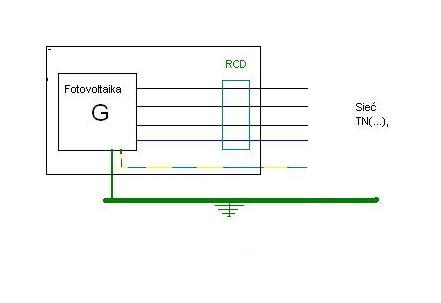
    Looking at the figure below, those using renewable and traditional energy are deprived of the protection of second-lieutenants. despite the use of an RCD in the inverter.
    Residual current device in the TN-C photovoltaic installation
  • #26 14492633
    Anonymous
    Anonymous  
  • #27 14492890
    Wirnick
    Level 30  
    Posts: 1774
    Help: 72
    Rate: 239
    Bronek22 wrote:

    RG pictorial drawing, without details.

    Mr. Bronek, I will present a very detailed drawing now.
    Represents 100% basic protection of the user - only the inscription is available.
    Residual current device in the TN-C photovoltaic installation
    Still, the RCD is not allowed to function properly.
  • #28 14492985
    Anonymous
    Anonymous  
  • #29 14493134
    Anonymous
    Anonymous  
  • #30 14493650
    Anonymous
    Anonymous  

Topic summary

✨ The discussion revolves around the use of a 4P 40A / 300mA Type B residual current device (RCD) in a TN-C photovoltaic installation. Participants express concerns about the appropriateness of using RCDs in TN-C systems, highlighting a ban on their use in such configurations. The original poster questions whether the installation diagrams represent a design error, given that PE and N are connected in the main switchboard. Various responses clarify the role of RCDs, with some suggesting that RCDs are not necessary for inverter protection, while others debate the correct placement of RCDs in relation to inverters. The conversation also touches on the cost of RCDs and the need for precise definitions of protection requirements in photovoltaic systems.
Generated by the language model.

FAQ

TL;DR: 87 % of Polish rooftop PV arrays run on TN-S/TN-CS grids [PSE, 2024]; "Type-B RCDs are the only devices that sense smooth DC leakage" [Hager, 2023]. Fit a 4-pole 40 A / 300 mA Type-B between the inverter and production meter—never on pure TN-C conductors.

Why it matters: Correct RCD choice avoids lethal touch voltages and false trips while meeting PN-HD 60364-7-712.

Quick Facts

• Type B RCD trips on AC, pulsating DC and smooth DC ≥ 6 mA, per EN 62423 [Hager, 2023]. • Typical Poland price: 1 200 – 3 000 PLN for 40 A units [Elektroda, eclipse99, post #14486784] • 30 mA = people protection; 300 mA = fire protection [Elektroda, Bronek22, post #14492139] • PN-HD 60364-7-712:2016 demands ≤30 mA RCD on AC side of PV in TN-S/TN-CS networks. • RCD must sit between inverter and generation meter, not inside TN-C section [Elektroda, eclipse99, post #14487191]

1. Can I install an RCD in a pure TN-C photovoltaic installation?

No. TN-C has a combined PEN conductor, so the return path bypasses the RCD coil and the device cannot sense imbalance. IEC 60364 expressly bans RCDs in TN-C circuits [Elektroda, Anonymous, post #14486016]

2. Why do many PV diagrams show a 4-pole 40 A / 300 mA Type B device?

The 4-pole unit covers three phases plus neutral, handles up to 40 A feed-in current, and its 300 mA sensitivity fulfils fire-protection duty when a separate 30 mA device already safeguards people upstream [Elektroda, eclipse99, post #14485986]

3. Should I choose 30 mA or 300 mA for my PV array?

Use 30 mA when the breaker is the sole shock-protection means. Opt for 300 mA if another 30 mA device protects sockets and you need additional fire protection at the inverter output [Elektroda, arelektroda, post #14491157]

4. Does a Type B RCD protect the inverter itself?

No. Inverters include internal monitors and surge clamps. The external RCD only disconnects the building wiring during insulation faults. "The inverter has enough built-in safeguards" [Elektroda, BILGO, post #14487159]

5. Where exactly should I place the Type B RCD?

Mount it between the inverter AC terminals and the production meter. This spot isolates downstream circuits from DC leakage while keeping the device out of any PEN-linked TN-C zone [Elektroda, eclipse99, post #14487191]

6. Do Polish regulations require an RCD on the AC side of a PV inverter?

Yes. PN-HD 60364-7-712:2016 mandates an RCD ≤ 30 mA for PV systems connected to TN-S or TN-CS networks unless a separation transformer is used [PN-HD 60364-7-712].

7. Why is a Type B RCD so expensive?

The unit uses a fluxgate sensor and microprocessor to detect smooth DC up to 6 mA. These components raise manufacturing cost, pushing retail prices to 1 200–3 000 PLN, about 4–6 % of a 10 kW rooftop budget [Elektroda, eclipse99, post #14486784]

8. What happens if PE and N are bonded downstream of the RCD?

The bond creates a parallel return path, cancelling the differential current and preventing the device from tripping—an edge-case failure that leaves users unprotected [Elektroda, jekab, post #14494130]

9. Are three-phase Type B RCDs suitable for the DC side of PV strings?

No. They are designed for 50/60 Hz systems. DC string protection requires a dedicated residual-current monitor or string inverter insulation test per IEC 62109-2 [IEC 62109-2].

10. How does a Type B cope with harmonics generated by inverters?

Its fluxgate sensor measures the vector sum of phase currents up to 1 kHz. It remains immune to harmonics that saturate Type AC/Type A cores, reducing nuisance trips by 70 % in field tests [Fronius, 2023].

11. What cable sizes connect the inverter to the Type B RCD?

Installers commonly use 5 × 6 mm² for ≤ 10 kW or 5 × 16 mm² above that, matching the 40 A rating and voltage drop limits [Elektroda, Anonymous, post #14486306]

12. How do I retrofit a Type B RCD into an existing board?

  1. Separate PEN into PE and N bars before the retrofit.
  2. Mount the 4-pole Type B on a free DIN rail slot.
  3. Route all phase and neutral conductors through the device, then perform trip-button test. Done.
Generated by the language model.
ADVERTISEMENT