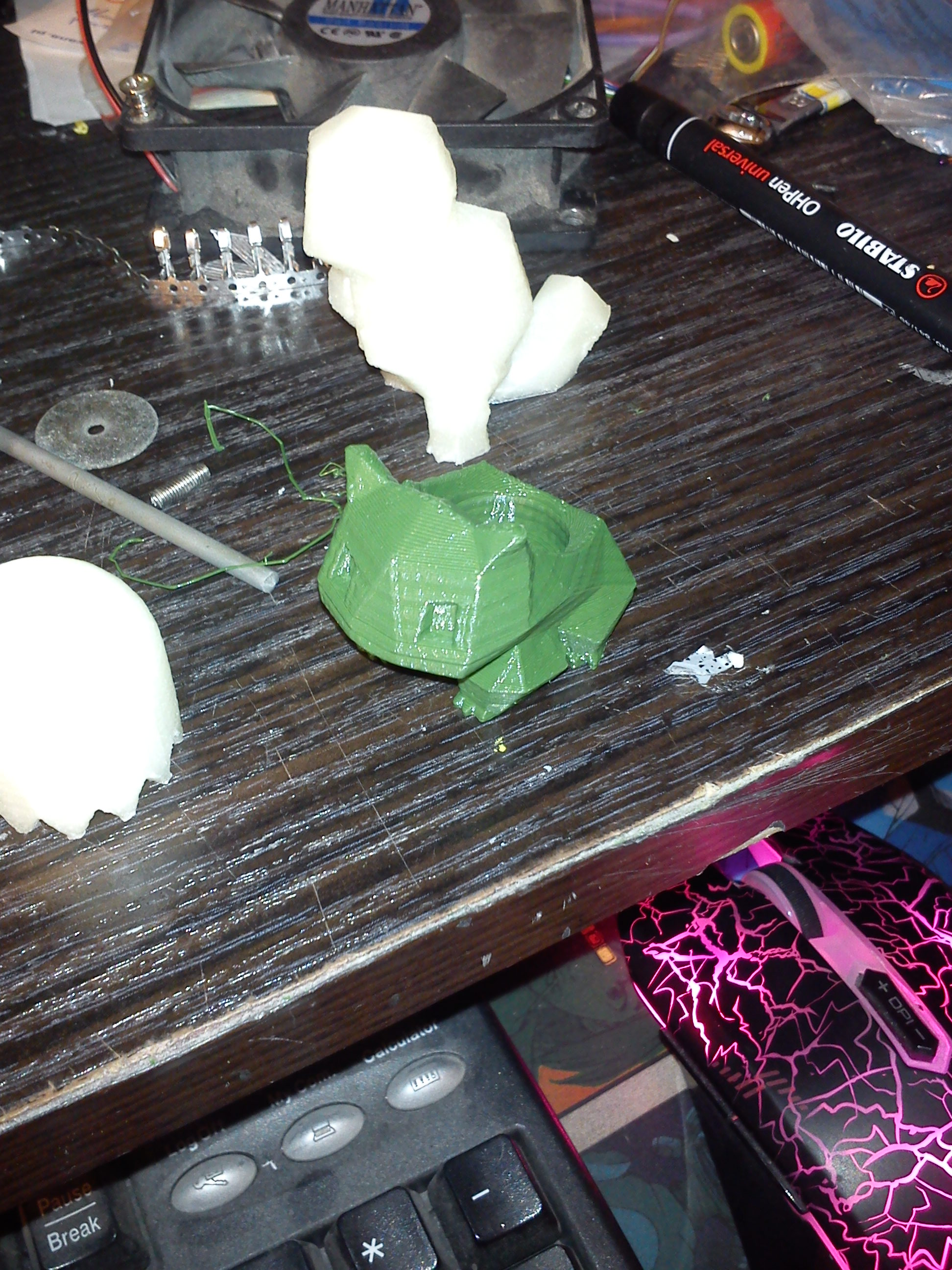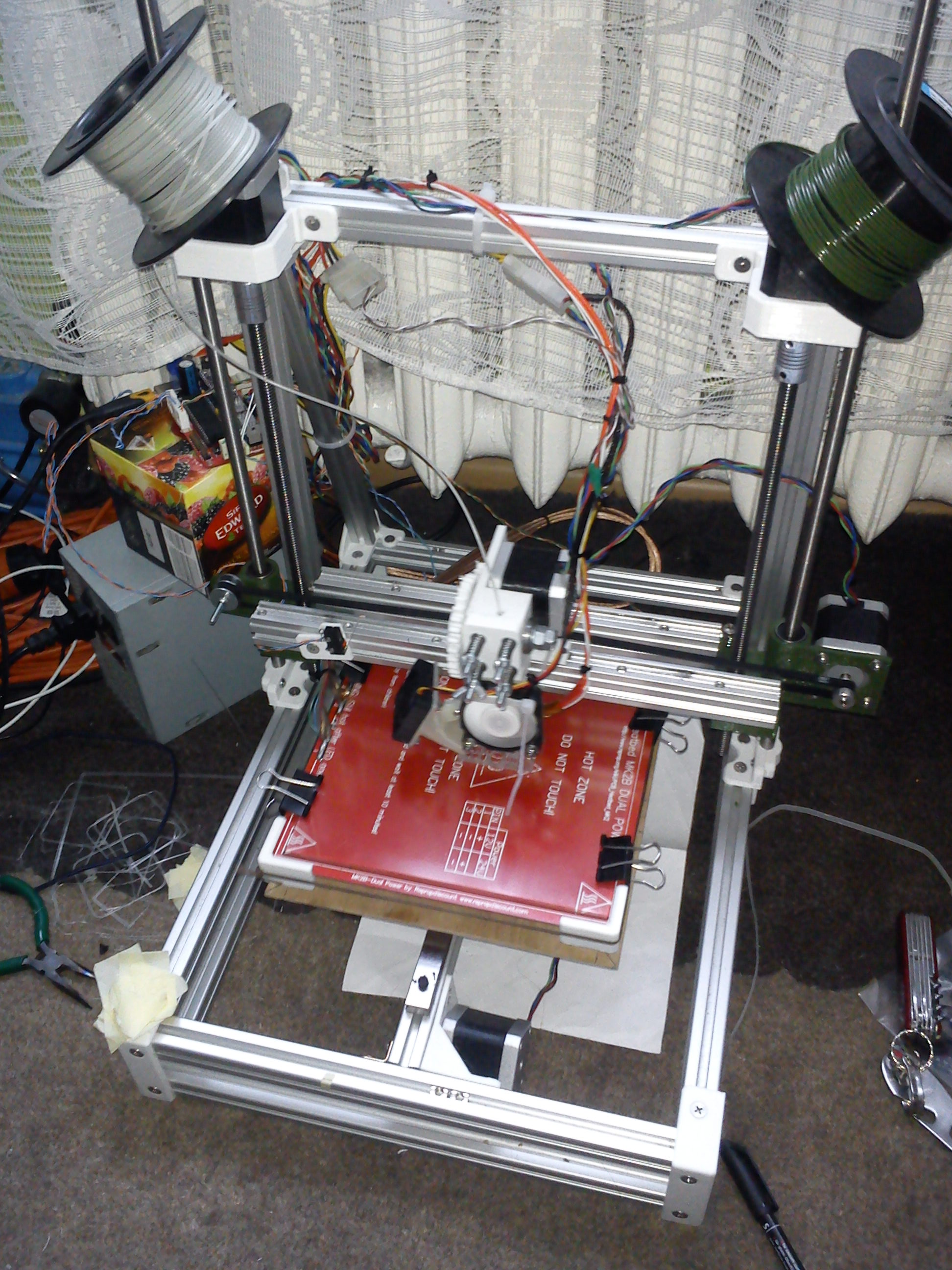
Hello, hello and hello!
The idea of building a 3D printer has been on my mind for about a year, I finally took it as an engineering subject and got motivated.

I decided to model it after the existing Artifex, as you can see.
In general, the main criterion for selecting components was price, unless the difference was small.
The choice therefore fell on:
-an aluminium profile frame;
-rails with bogies on the X and Y axes (best idea ever!!);
-trapezoidal screws;
-extruder with gearbox;
-fullmetal head from China.
Reviewing other projects, I come to the conclusion that from a technological point of view this is a higher-end design than, for example, the Prusa i3, and I will explain why right away.
A very popular solution is to construct the X and Y axes on shafts and linear bearings. This solution seems to be much cheaper, as the components are a few zlotys each on Allegro. I have such a solution applied to the Z-axis and what I noticed - huge clearances in the X-axis, which is perpendicular to the bearings. I calculated some 0.28 mm with free movement, and 0.06 mm in the Y axis.
After testing, I can conclude that it is even bigger when printing faster.
This may significantly limit the speeds we will be able to achieve. I don't know how much better the case will be if I buy decent bearings, but then the price of the rail with the carriage is no longer so high.
Of course the Prussians print amazingly anyway, but if it can be better....
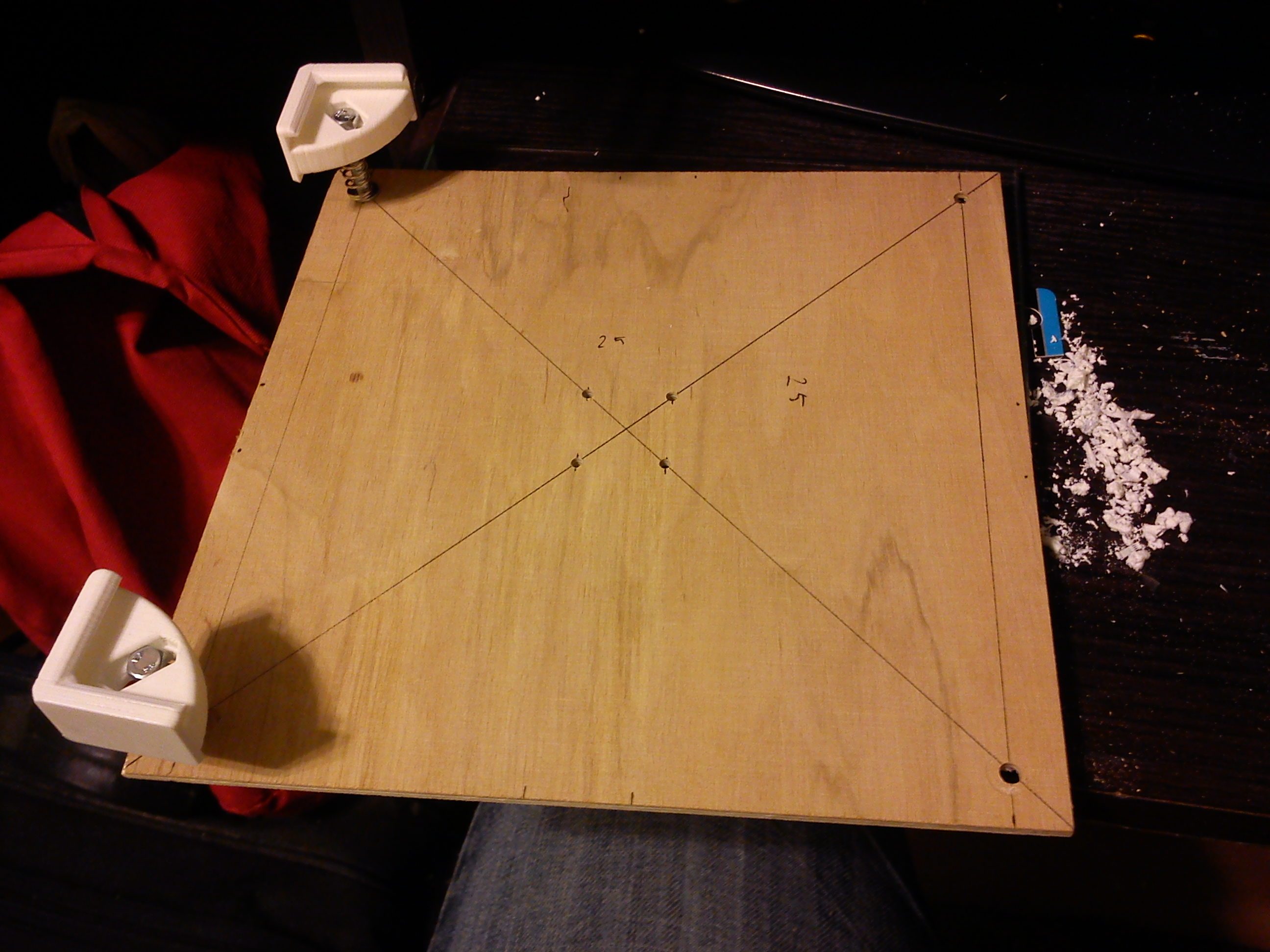
Don't use plywood for the table base either, unless temporarily. It shakes like it's having an epileptic seizure.
Moving on.
Putting the printer together itself is somehow not particularly difficult. The 3D printed parts make it all come together nicely. It wasn't until getting the printer up and running that I encountered another wave of problems.
The big problem turned out to be the Chinese head, because of the heat sink. Its core right on the heat block was incredibly thick, so that cooling at the most critical point was severely limited. This caused the head to clog during operation. The problem was solved by removing the excess material and hot-tightening the nozzle to the heat block. Currently it performs quite well for heads that can be bought for $4 each.

Generally the printer will work on anything that will let it move, but it is worth getting the extruder right or buying a Goliath and an E3D head. The solution is not cheap, but if someone can afford it and doesn't want to tear their hair out, it should be a pretty good solution. Or at least everyone praises them.
The price of the whole thing isn't even as frightening as some people scare, it cost about PLN1000-1200 and a lot of costs could be cut. I bought 3 times as many screws as I needed, trapezoidal nuts with flange are 2 times more expensive than trapezoidal ones, if a friend prints the parts for us at cost, we are another 200-300 zł ahead.
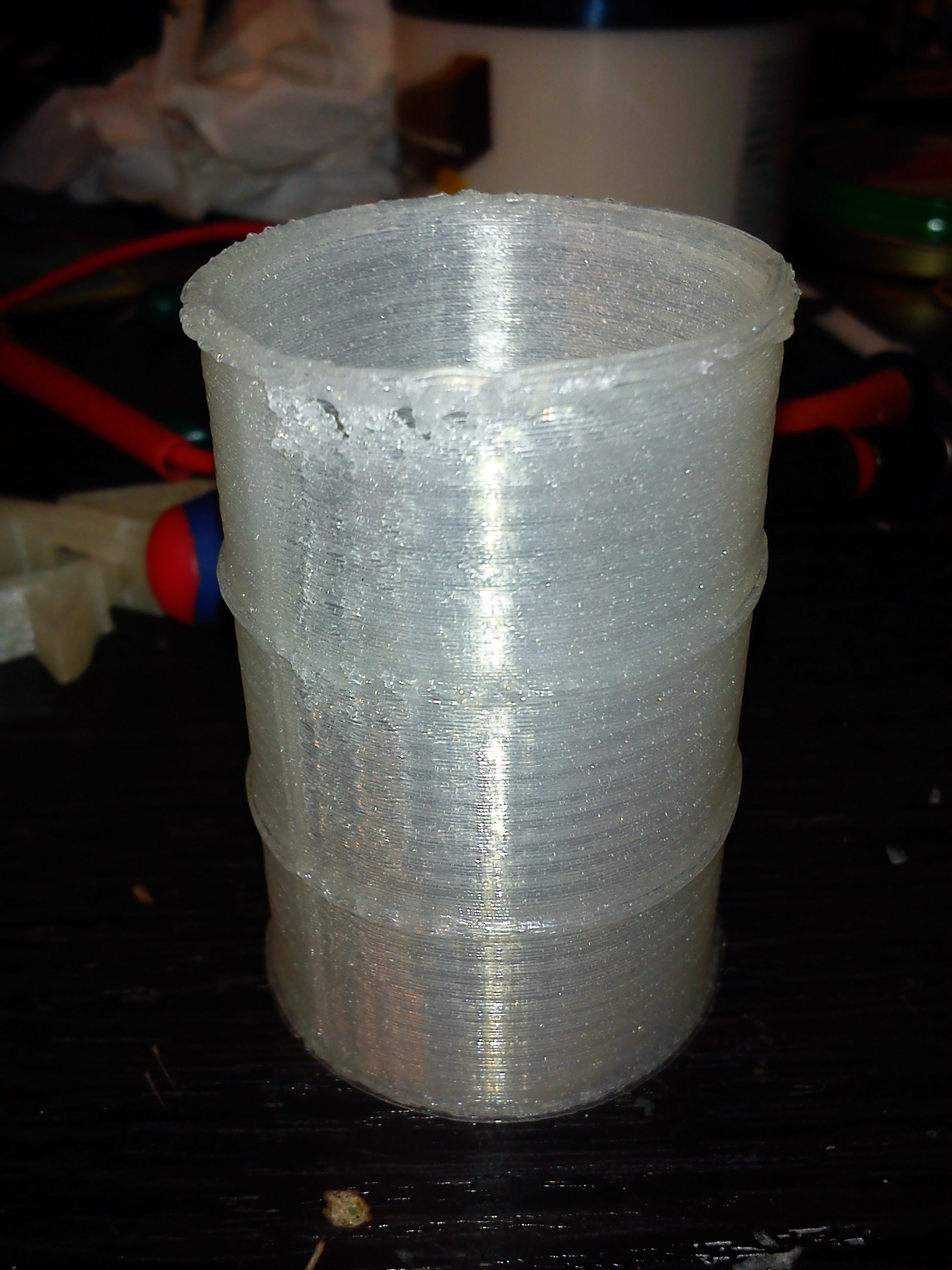
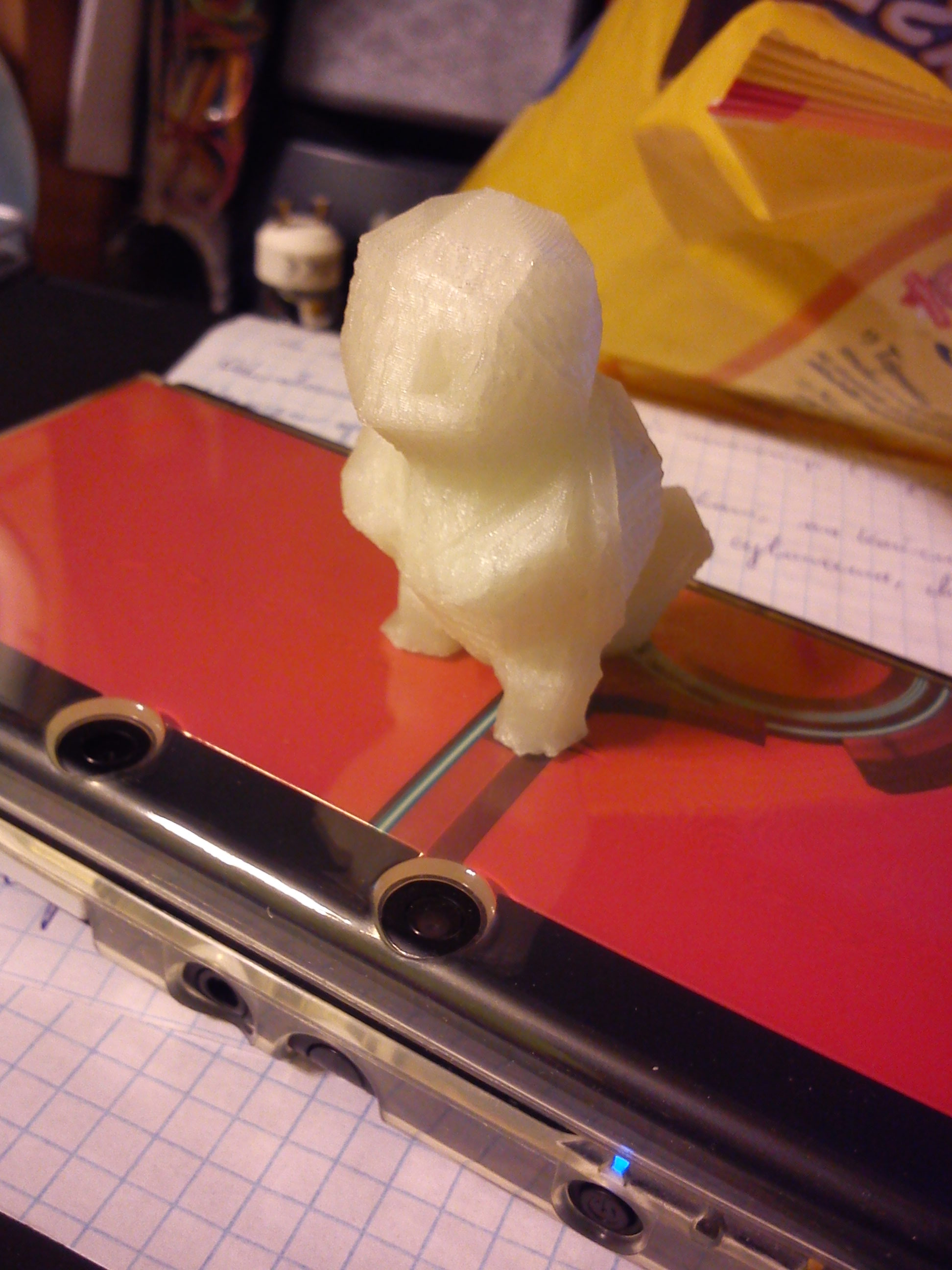
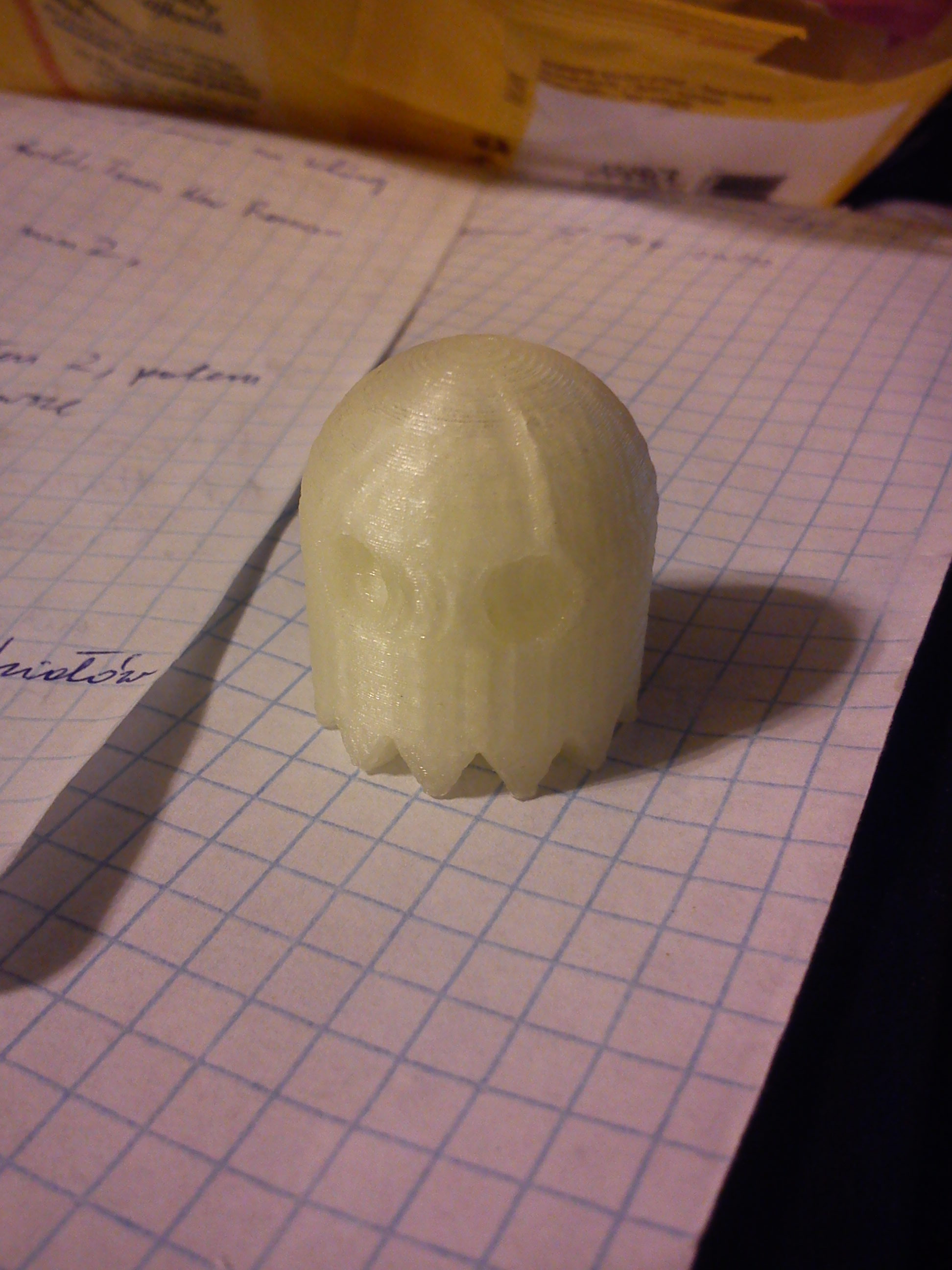
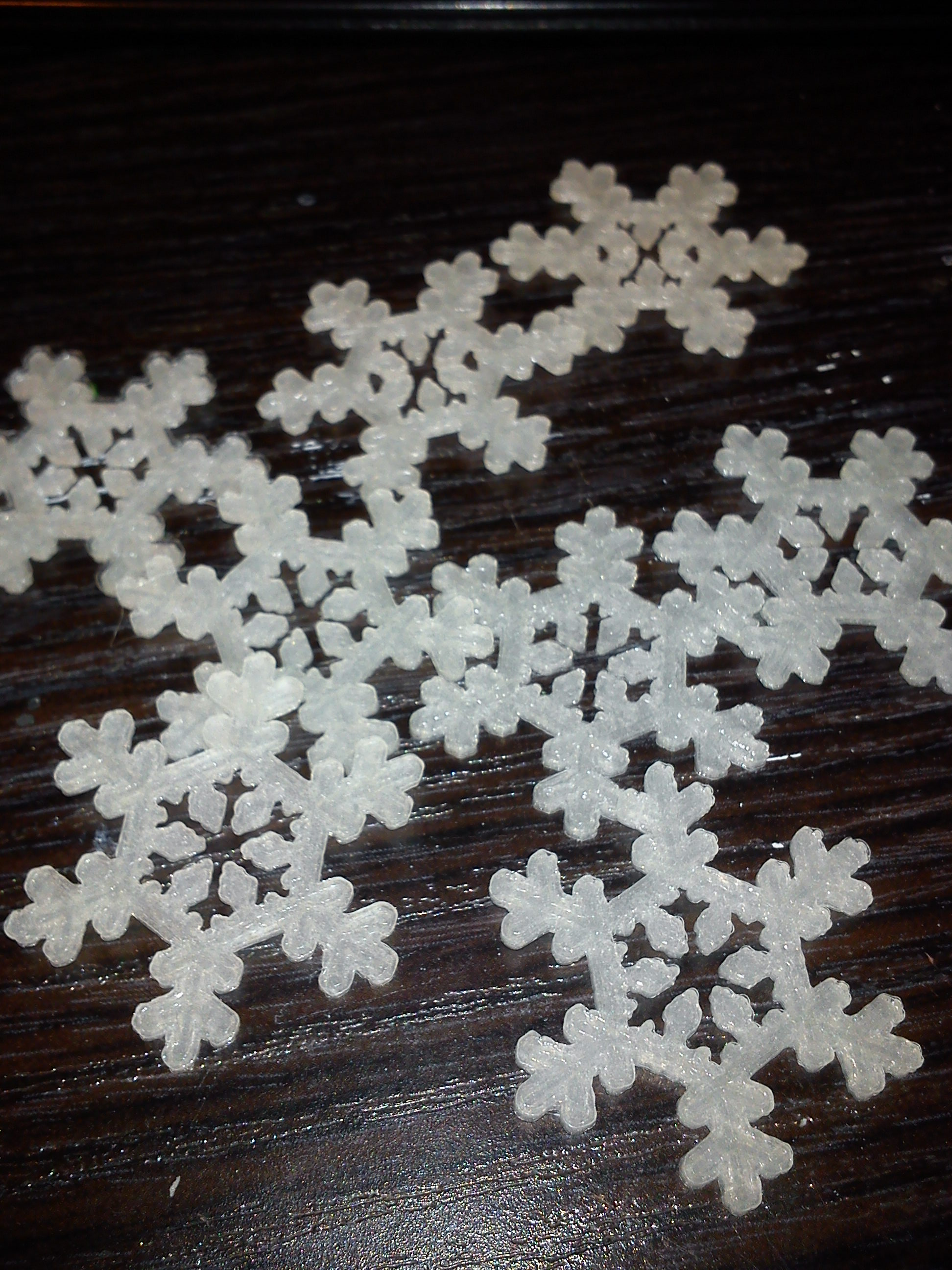
The printer is still being modified, but it is already printing quite well. Below is a sample print where I increased the speed during printing to 170%. The holes on the top could probably be avoided with cooling and the Lift Z option in the slicer.
Cool? Ranking DIY
 massive.