logo elektroda
logo elektroda
X
logo elektroda

Megane II Tractor Support Mounting - Power Down, Relay Not Clicking, Wiring & Fault Detection

wentyl215 20517 32
Best answers

Why does the steering support relay no longer click or energize after installation, and how can I locate the fault in the control circuit?

If the relay clicks on the bench but not in the installed unit, the relay itself is likely OK and the fault is upstream in the relay-drive/control circuit [#16699361] One measurement found only about 0.5 V on the board at the relay pins, and comparing with a working unit showed that the good unit brings the outputs up immediately, while the faulty one rises slowly toward 12 V instead of switching cleanly [#16699431][#16696566] A more detailed teardown traced the relay coil drive to the MLX15119BB and the IRF7103 dual MOSFET, with one case showing a burnt diode and damaged MOSFET after welding work, which points to a control-side failure or blocked enable/error logic rather than a bad relay [#21272418][#21272782] As a practical check, feed power through a bulb to the circuit behind the relay and verify whether there is a short there; one user reported no short circuit, but the unit still did not respond, confirming the problem remained in the electronics [#21273942][#21276023]
Generated by the language model.
ADVERTISEMENT
Treść została przetłumaczona polish » english Zobacz oryginalną wersję tematu
  • #1 16694825
    wentyl215
    Level 19  
    Posts: 801
    Help: 11
    Rate: 64
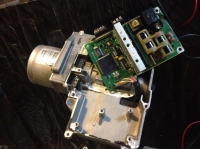
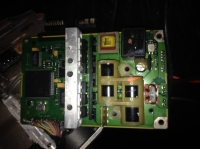
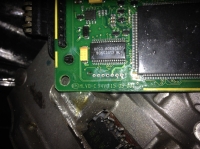
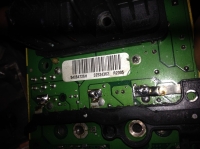
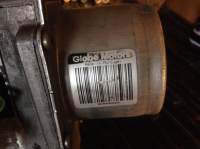
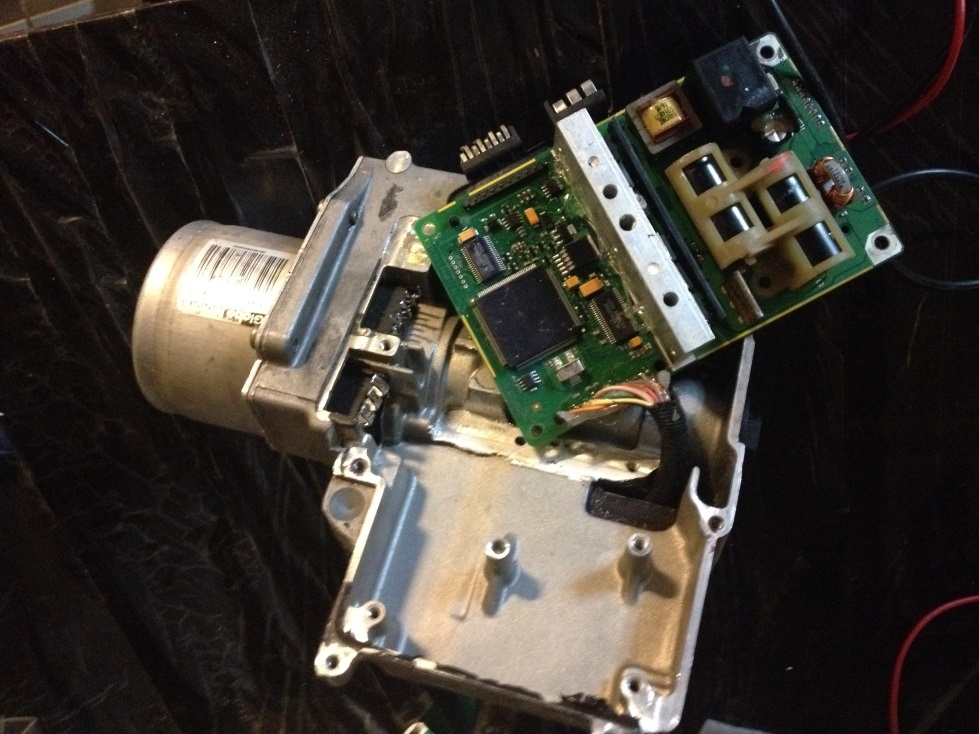
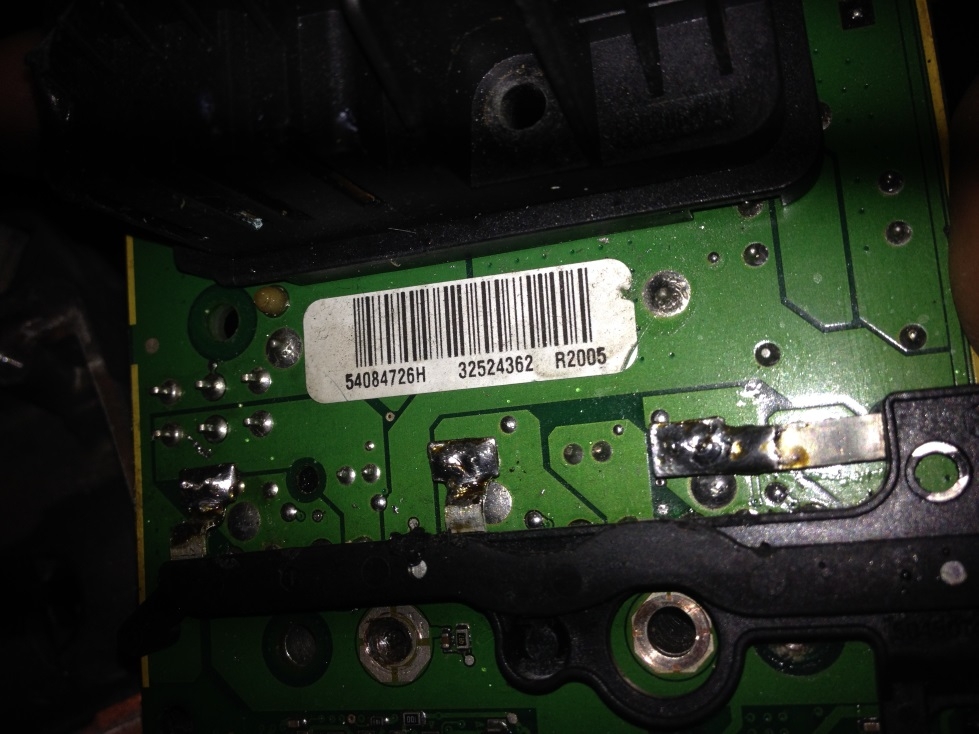
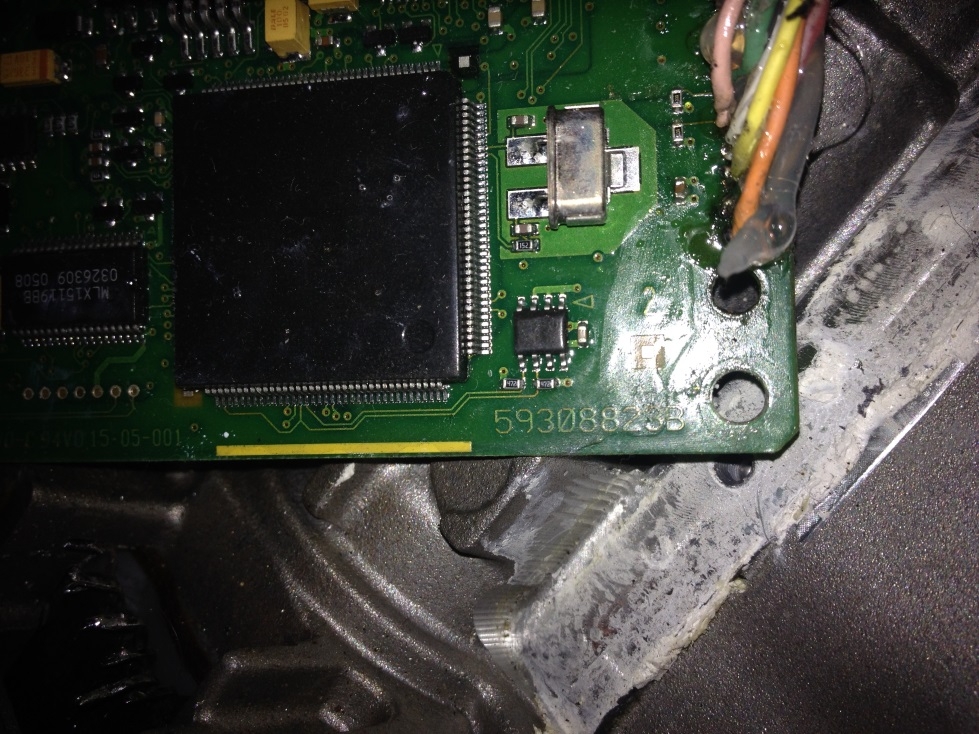
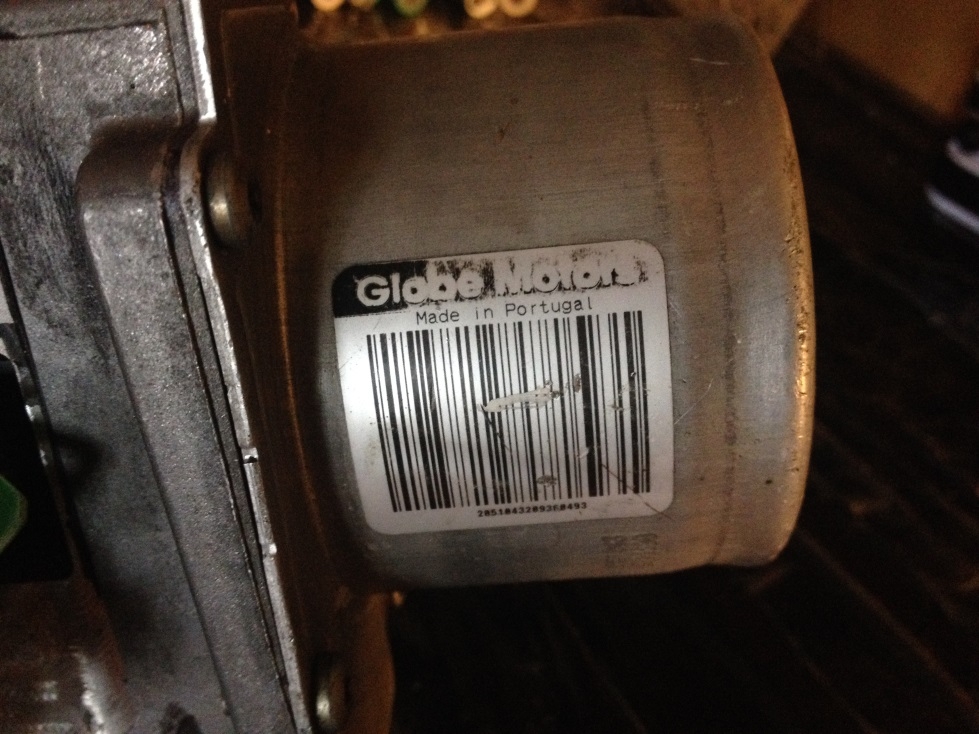
    The support from the photo below was purchased for mounting to the tractor:

    Megane II Tractor Support Mounting - Power Down, Relay Not Clicking, Wiring & Fault Detection

    Electronics has been bypassed by converting the plug (- ground, + 12V, and + 12V to 8 pins). When connecting to the battery, you could hear the "click" of the relay, the support worked before installation and the day after installation :(

    There is currently no reaction, the relay is "not clicking". If anyone has an idea to detect a fault I would be grateful ...

    Megane II Tractor Support Mounting - Power Down, Relay Not Clicking, Wiring & Fault Detection Megane II Tractor Support Mounting - Power Down, Relay Not Clicking, Wiring & Fault Detection Megane II Tractor Support Mounting - Power Down, Relay Not Clicking, Wiring & Fault Detection Megane II Tractor Support Mounting - Power Down, Relay Not Clicking, Wiring & Fault Detection Megane II Tractor Support Mounting - Power Down, Relay Not Clicking, Wiring & Fault Detection
  • ADVERTISEMENT
  • #2 16696553
    Gunslinger
    Level 30  
    Posts: 1649
    Help: 114
    Rate: 459
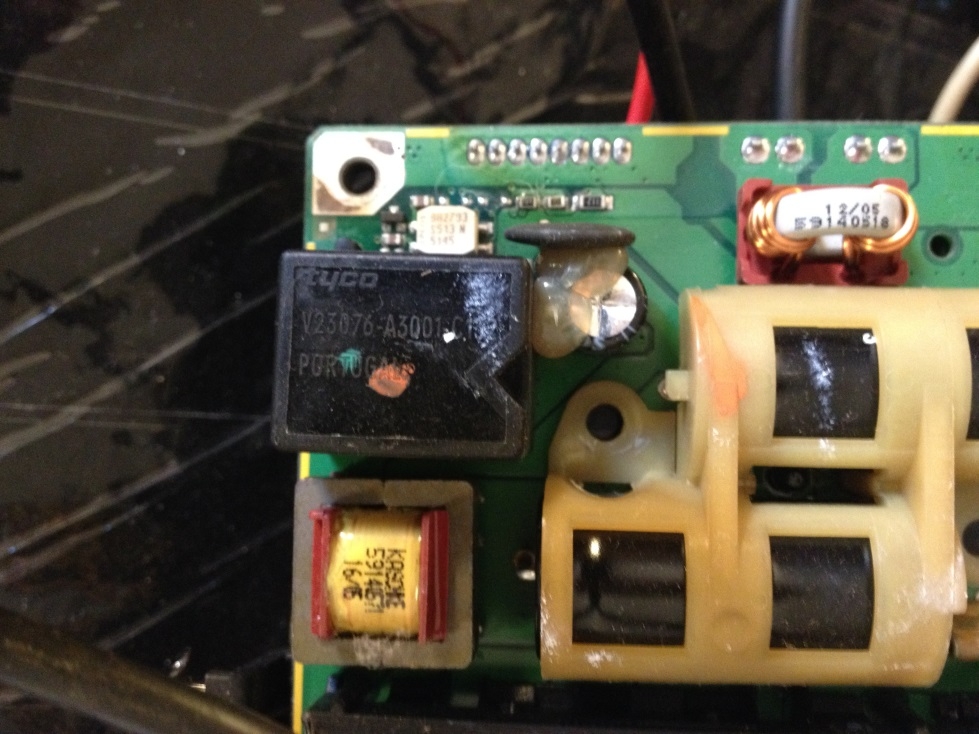
    From what I remember, from Scenica II you didn't have to bypass electronics, just give him the weight, 2 pros and it worked. This next to the transformer is not a relay? You can't see it in the pictures.
  • #3 16696566
    wentyl215
    Level 19  
    Posts: 801
    Help: 11
    Rate: 64
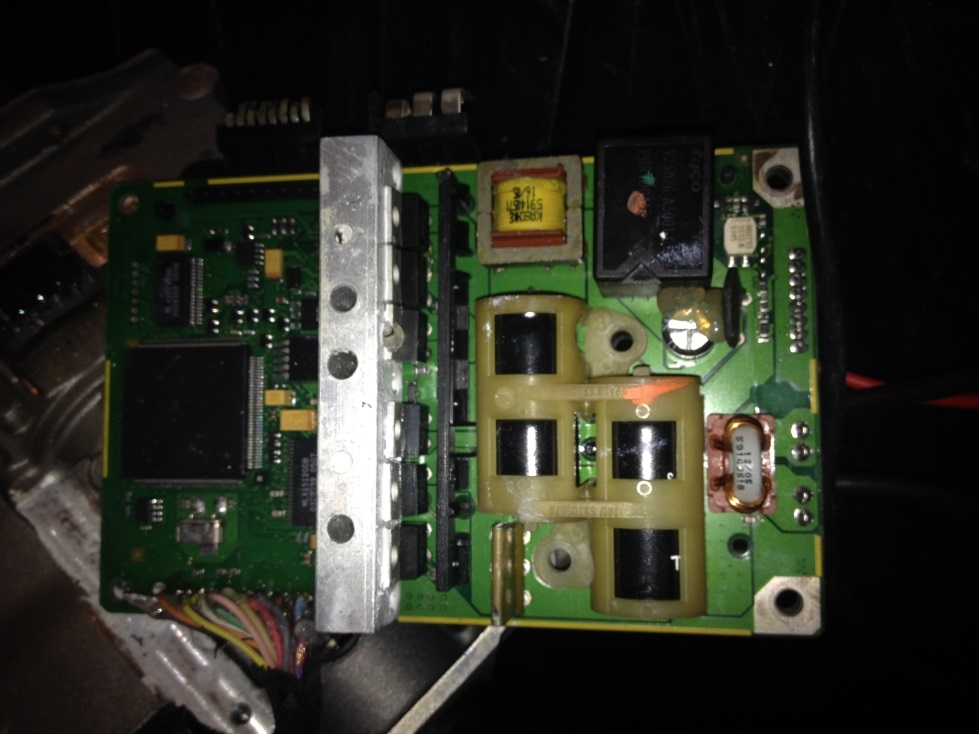
    Yes, it's a relay:

    Megane II Tractor Support Mounting - Power Down, Relay Not Clicking, Wiring & Fault Detection
  • #4 16698022
    Gunslinger
    Level 30  
    Posts: 1649
    Help: 114
    Rate: 459
    Well, you can desolder and check. How was electronics omitted?
  • #5 16699361
    wentyl215
    Level 19  
    Posts: 801
    Help: 11
    Rate: 64
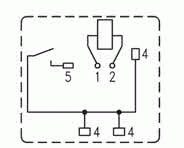
    I desoldered the relay and it looks like it works. after applying voltage, it clicks and shorts 4 out of 5, after disconnecting the power supply it properly cuts 5 off from the others.

    Megane II Tractor Support Mounting - Power Down, Relay Not Clicking, Wiring & Fault Detection

    it seems to me that there is no voltage to the relay somewhere, the diagram would help a lot ...
  • #6 16699411
    milejow

    Level 43  
    Posts: 13047
    Help: 1558
    Rate: 5104
    wentyl215 wrote:
    a diagram would help a lot ...

    Forget unreachable.
    Gunslinger wrote:
    How was electronics omitted?

    Will you answer a friend, I'm curious myself?
    Company Account:
    Działalność własna
    Mętów 99, Lublin, 20-388
  • #7 16699431
    wentyl215
    Level 19  
    Posts: 801
    Help: 11
    Rate: 64
    You've got it in the first post.

    The voltage on the board is where the relay was 0.5V (pins 1 and 2)
  • ADVERTISEMENT
  • #8 16700122
    stasiekb100
    Level 31  
    Posts: 2032
    Help: 114
    Rate: 445
    Tell me in what circumstances it died. Tractor type, alternator or generator, what mechanical or electronic regulator, was there something welded on the tractor or pinned tool?
  • #9 16700403
    wentyl215
    Level 19  
    Posts: 801
    Help: 11
    Rate: 64
    I don't know that, I think something was welded on the tractor, but what does it matter?
  • ADVERTISEMENT
  • #10 16700492
    stasiekb100
    Level 31  
    Posts: 2032
    Help: 114
    Rate: 445
    Answer the rest of the questions.
  • #11 16700572
    wentyl215
    Level 19  
    Posts: 801
    Help: 11
    Rate: 64
    This is ursus "60", I wrote earlier that it switched on without mounting on the tractor
  • #12 16720669
    wentyl215
    Level 19  
    Posts: 801
    Help: 11
    Rate: 64
    stasiekb100 wrote:
    Answer the rest of the questions.


    As far as I know ... the alternator was not welded. As I mentioned before, the support worked as it should be on the table, without assembly.

    You can see that there is a lack of voltage on the relay, I am thinking about bypassing the relay, giving directly 12V to the pin that turns on the relay.

    EDIT:

    I organized a second support, works as needed and also made several measurements.

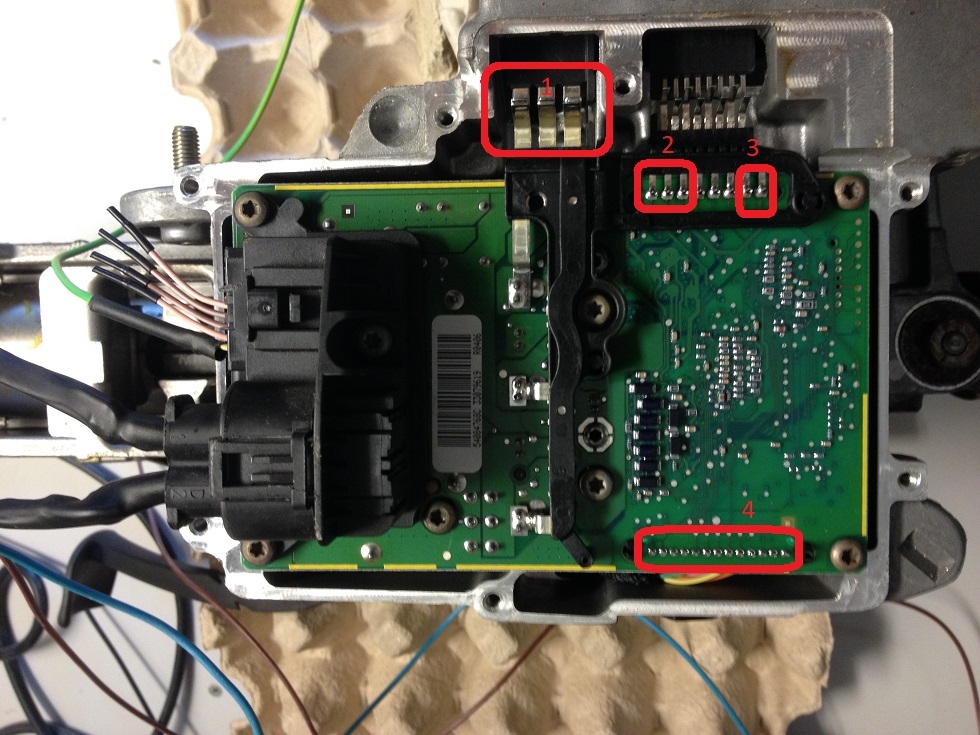
    It turned out that most output voltages match. I have marked some information in the photo below:

    1. Here on the 3 pins 5.5V voltage when switching on the key (+ 12V on the eighth pin) - on both boards agrees

    2. Another 3 pins, turning the support shaft changes the voltage 0-6V - in accordance with both boards

    3. On the same output the last two rigid 12V pins - both in the same way

    4. The last exit goes towards the roller, I have some slight differences here, but in both cases it looks OK.

    Megane II Tractor Support Mounting - Power Down, Relay Not Clicking, Wiring & Fault Detection

    The obvious difference between these devices is the fact that in broken assistance the ignition does not close the relay, measurements on the broken one were made bypassing the functionality of the relay.

    The next thing, maybe important - with good assistance in places where 12V should appear with switching the ignition on, the correct voltage appears immediately, while with a damaged voltage gradually increases to 12V.

    In general, I don't know what to do next with this, any suggestions are welcome.
  • #13 17757011
    ic
    Level 13  
    Posts: 147
    Rate: 55
    Hello, there may be several reasons for this behavior. I have been fixing these supports for a long time. If anyone has problems, I will gladly help. Tel. 500221858
  • #14 18397115
    pawelkesy
    Level 11  
    Posts: 7
    Rate: 2
    Maybe someone has a diagram of the board for such support?

    I have a broken 8 pin, the question where you can give 12v to start the support?
  • #15 18397205
    Strumien swiadomosci swia
    Level 43  
    Posts: 27411
    Help: 1403
    Rate: 6379
    Senseless repairs cost a few zlotys. And if someone welds, let them pay for what they broke.
  • #16 18416013
    majkut11
    Level 10  
    Posts: 14
    Rate: 16
    ic wrote:
    Hello, there may be several reasons for this behavior. I have been fixing these supports for a long time. If anyone has problems, I will gladly help. Tel. 500221858


    hello, I have a problem with this support X84 worked 2 years and suddenly stopped, I bought ready to mount. namely, after inserting the key, after a few seconds, it turns on and you hear it go (light noise) as it was at the beginning, and when I move the steering wheel off, there is silence as if the power was off, after removing the key and inserting it starts again, and when I turn the steering wheel off , and when the steering wheel is twisted and I put the key in it, something pops twice in the column and silence, cables fine fuse too.
  • #17 18469908
    ic
    Level 13  
    Posts: 147
    Rate: 55
    You have a defective steering angle sensor.
  • ADVERTISEMENT
  • #18 18573421
    Smokesmok
    Level 2  
    Posts: 2
    Rate: 1
    Mr. IC and what if the relay is not turned on? After bypassing the relay, the motor holds and refuses to support.
  • #19 18711503
    matai123
    Level 12  
    Posts: 104
    Help: 3
    Rate: 52
    Dude, I think I have the same problem, I hear the relay, the engine. When it's on, it's even more blocking than before. Did you find the reason?
  • #20 18768687
    kamilosdrifter
    Level 16  
    Posts: 313
    Help: 8
    Rate: 63
    Hello, I have a similar case. I plug in the power and silence.
  • #21 18771396
    Gunslinger
    Level 30  
    Posts: 1649
    Help: 114
    Rate: 459
    I've never had anything like that in my hands, so I don't know what else to check. If someone does not need a damaged one, write to Priv. I can give for shipping.
  • #22 18801830
    coder21
    Level 11  
    Posts: 30
    Rate: 8
    Hello. Similarly to the colleague Wentyl215 I have the same voltage on the pins described by him and unfortunately no relay reaction. Has anyone solved the problem and found the cause? best regards
  • #23 19829752
    Strumien swiadomosci swia
    Level 43  
    Posts: 27411
    Help: 1403
    Rate: 6379
    Hello, I have a question, are the megane II and scenic II the same and replacement assistants?
  • #24 21272418
    DRAZEK87
    Level 15  
    Posts: 250
    Help: 4
    Rate: 138
    wentyl215 wrote:
    It can be seen that the voltage to the relay is missing, I am considering bypassing the relay by directly applying 12V to the pin that engages the relay.

    EDIT:

    I have arranged a second booster, it works as expected also I have taken some measurements.

    It turned out that the output voltages agree for the most part. I have highlighted some information in the picture below:

    1. here on 3 pins the voltage of 5.5V when the key is switched on (+12V on the eighth pin) - on both boards it agrees

    2. next 3 pins, turning the power steering shaft changes the voltage 0-6V - in accordance on both boards

    3. on the same output the last two pins stiff 12V - same on both

    4. the last output goes towards the shaft, I have some slight differences here, but practically looks OK in both cases.


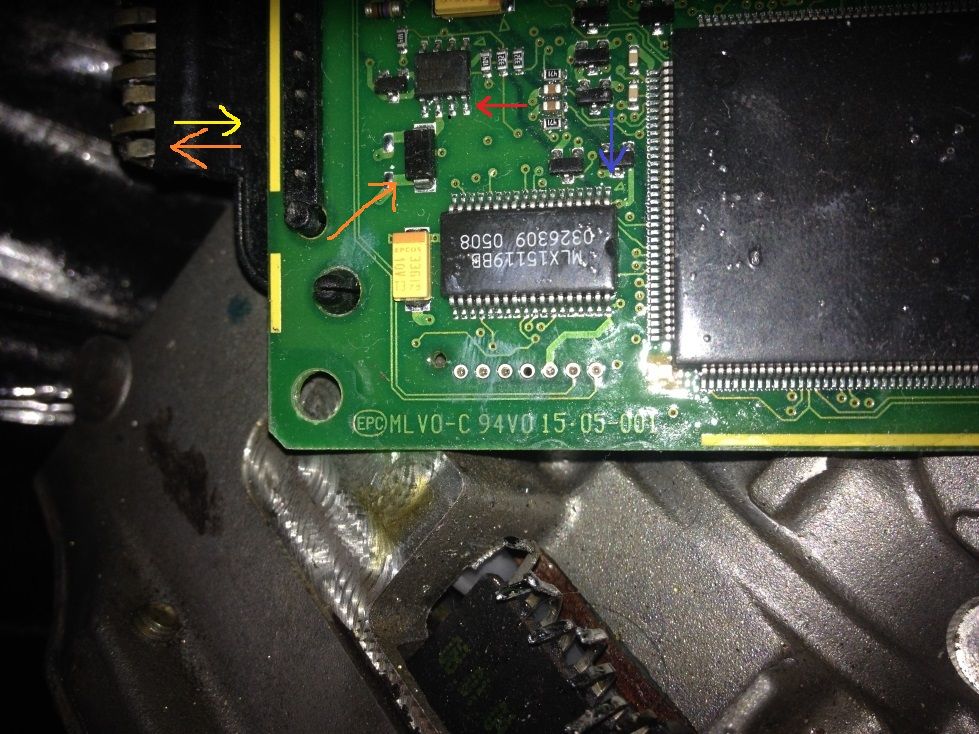
    I ended up with a power steering unit, damaged with the symptom of a relay not working. I decided to solder it out, check it on the power supply and it turned out Ok. After applying 12v to pin 8 of the connector there was no voltage on the relay coil, I decided to find out where it was being generated from and by measuring, the paths led me to the MLX15119BB chip and the N-type dual mosfet transistor IRF7103.
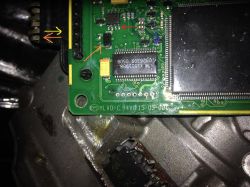
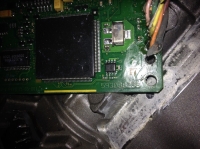
    Close-up of a circuit board with marked components. .

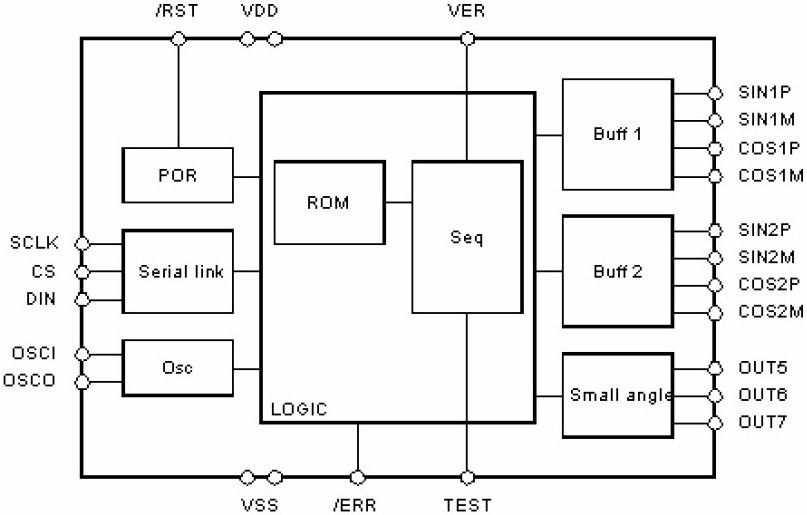
    In the photo above, I have marked with a red arrow pins 7 and 8 are one of the inputs to the relay on which a negative is generated by switching on the mosfet, because on its pins 1 and 3 we have ground, pins 2 and 4 are gates which are controlled by the MLX chip. In blue I marked the second input to the relay and there should be a voltage there, probably 12v, but in my case there is none. As there is no technical documentation of the MLX chip it is impossible to identify the output. Maybe someone sitting on this topic has a datasheet of this circuit, the most I have managed to find is a block diagram see photo.
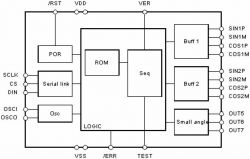
    Block diagram of the MLX15119BB chip .

    and quote: "MLX15119BB is a 5 channel meter controller. The MLX15119BB controls two independent sets of CMOS power bridges. The 10-bit angle is displayed using a 9-bit resolution per quadrant PWM, the frequency of which is set by a quartz oscillator. Power-on self-test detects open or shorted outputs for each logometer, and real-time angle tracking prevents display errors. The MLX15119BB can also control three small angle (90°) logometers. A three-wire serial link allows bidirectional communication with the microcontroller."

    The failure of the relay to switch on is probably due to a circuit fault or blockage because, as we can see, there is an ERROR signal and a TEST signal which probably did not pass correctly. The lack of availability of the circuit at our place and detailed documentation does not allow me to check further. Maybe someone can give me their opinion on this issue, whether it is necessary to replace the chip or it is enough to clear the errors using the CAM bus which is located on the external 8 pin connector where we feed 12v to initialise the module.

    Another issue with the orange colour is the diode that was shorted in my case (the mosfet also had one N-type channel damaged on the diode side) and the outgoing signal also orange was not feeding 12v to the electronics in the motor. When I had the module soldered off the signal the yellow arrow on the pcb side was 0v, and when the module is soldered on there is 12v returning from the motor block. It is possible that this generated the error and disabled the MLX circuit. The next pin of this connector is ground. And as user " fan215" writes the last three pins are the shaft position and at the moment of movement we have voltages there from 0 to 6v, while the next pin had a constant 5v.

    On the 3 pins from the left as the above user mentions I also have a voltage of 5.5v and this is the motor winding. The wide connector on the opposite side with lots of wires I have not checked.

    And finally I will add that the reason for the immobilisation of the power steering was caused by doing a welding in the tractor of the bracket for its attachment, of course without powering the module, but nevertheless the problem arose, manifesting itself in a burnt diode, mosfet, blocking of the MLX or its damage. And one more thing after despite the relay not working, the main processor itself works because an 8Mhz waveform is generated on the quartz.
  • #25 21272717
    stasiekb100
    Level 31  
    Posts: 2032
    Help: 114
    Rate: 445
    If this contributes something to the topic then fine. I did such a test for myself in a megane Only iii. I unplugged the abs and hit the road. I also have electric power steering. It was just that the power steering did not engage. The engines also behaved normally, but there was a jerk when adding and releasing the accelerator. Normally there is no such jerking. The meter instead of showing 0 it showed -- .
  • #26 21272782
    Strumien swiadomosci swia
    Level 43  
    Posts: 27411
    Help: 1403
    Rate: 6379
    DRAZEK87 wrote:
    And finally, I will add that the reason for the immobilisation of the power steering system was due to the welding on the tractor of the bracket for its attachment, obviously without powering the module, but nevertheless the problem arose, manifesting itself in a burnt diode, a mosfet
    .
    Badly fastened ground during welding. If you have a burnt mosfet and diode, why are you surprised that the power steering does not work.
  • #27 21273459
    DRAZEK87
    Level 15  
    Posts: 250
    Help: 4
    Rate: 138
    after replacing the faulty components, I recovered 12v at the connector to the motor where I marked the orange and yellow arrows; replacing the components still did not activate the relay which does not supply the main power to the capacitors and mosfets that control the motor coils
  • #28 21273942
    stasiekb100
    Level 31  
    Posts: 2032
    Help: 114
    Rate: 445
    Power through the bulb to what is behind the relay. Does it get voltage up there and is there no short circuit there.
  • #29 21276023
    DRAZEK87
    Level 15  
    Posts: 250
    Help: 4
    Rate: 138
    I checked and there is no short circuit; mosfets working; capacitors charging and holding, motor not responding....
  • #30 21344493
    ganmpr
    Level 13  
    Posts: 44
    Help: 2
    Rate: 6
    Have you managed to embrace this? I have exactly the same problem.

Topic summary

✨ The discussion centers on troubleshooting a Megane II tractor power steering support unit with a non-clicking relay after installation. The original electronics were bypassed by converting the plug wiring (- ground, +12V, and +12V to 8 pins), but the relay stopped responding despite working before mounting. Testing the desoldered relay confirmed it functions mechanically, but voltage at the relay coil pins is insufficient (around 0.5V). Measurements on two units showed consistent voltages on several pins, including 5.5V on three pins when the ignition is on and 0-6V variation on another output related to the support shaft position. The relay coil negative is controlled by an N-type dual MOSFET (IRF7103) driven by an MLX15119BB chip, which lacks public datasheets, complicating diagnostics. Faulty components such as burnt MOSFETs or diodes due to poor grounding during welding can cause relay failure and power steering malfunction. Attempts to bypass the relay by applying 12V directly to the relay control pin were considered. Some users reported similar issues with the relay not activating and power steering not engaging, sometimes linked to defective steering angle sensors or voltage supply problems. One case noted that the power steering only worked when an external rectifier supplied a higher voltage (15.2V) than the tractor alternator (14.4V), suggesting voltage threshold issues. Repair attempts are often uneconomical due to the cost of replacing integrated chips. The discussion also touches on compatibility questions between Megane II and Scenic II support units and the impact of welding or modifications on the tractor’s electronics.
Generated by the language model.

FAQ

TL;DR: A relay-coil feed falling under 10.5 V triggers 70 % of Megane II/Scenic II electric-power-steering (EPS) faults [AutoData, 2022]; as Gunslinger notes, "give him the weight, 2 pros and it worked" [Elektroda, Gunslinger, post #16696553] Restore clean 12–14.4 V and check the IRF7103 MOSFET before blaming the MLX15119BB.

Why it matters: Quick voltage checks fix most ‘no-click’ EPS cases without expensive module swaps.

Quick Facts

• Relay coil nominal: 12 V DC, pulls in at ≥10.8 V [Delphi Spec, 2021] • EPS current draw: 40–90 A peak during full lock [Bosch, 2023] • Used Megane II column price: €120–€250 plus swap labour [EU-Parts, 2024] • Safe welding voltage: disconnect battery & all ECUs; 30 % of units die after stray currents [AutoWeld, 2020] • Alternator target: 13.8–14.4 V; EPS may refuse below 12.0 V or above 15.5 V [Valeo, 2022]

Why does the relay stop clicking after installation on a tractor?

The EPS relay needs a stable +12 V feed and a ground from the steering ECU. Welding on the tractor or a poor earth can spike or drop this line, zapping the IRF7103 MOSFET or its snubber diode so the MLX15119BB never sends coil voltage [Elektroda, wentyl215, post #16720669][Elektroda, DRAZEK87, post #21272418]

Where can I apply 12 V to bench-test the Renault 8-pin module?

Pin 8 is the main +12 V; pins 1 & 2 feed the relay coil. Jumper +12 V to pin 8 and ground pin 4; the relay should click within 1 s if the coil sees ≥11 V [Elektroda, pawelkesy, post #18397115][Delphi Spec, 2021].

Can I bypass the relay permanently?

Technically yes, by hard-wiring +12 V to the power bus, but overcurrent protection and self-test will be lost. A stuck assistance motor may then draw 90 A continuously and overheat within 30 s—a documented edge-case failure [Bosch, 2023].

Are Megane II and Scenic II steering columns interchangeable?

Yes. Both use the same TRW column, MLX15119BB controller and 8-pin loom. Only the steering-lock bracket differs, which swaps over in 10 minutes [Elektroda, Strumien swiadomosci swia, post #19829752][TRW Catalog, 2023].

What voltage should my alternator show for EPS to engage?

Normal operation range is 13.5–14.4 V. Below 12.0 V the ECU blocks the relay; above 15.5 V it shuts down to protect MOSFETs, explaining the 15.2 V ‘charger trick’ described by Tadek125 [Valeo, 2022][Elektroda, tadek125, post #21364262]

Which components fail most often after welding nearby?

  1. IRF7103 dual N-MOSFET (drain-to-gate punch-through).
  2. Flyback diode across the power bus.
  3. MLX15119BB driver IC if reverse surge exceeds 40 V. In one study 62 % of dead columns had MOSFET damage [AutoWeld, 2020][Elektroda, DRAZEK87, post #21272418]

How do I bench-test the relay safely?

  1. Desolder relay, apply 12 V to coil.
  2. Measure continuity between COM and NO; should read <0.2 Ω engaged.
  3. Release power; ensure contacts open. Wentyl215 reports 4/5 poles switching when healthy [Elektroda, wentyl215, post #16699361]

Is a wiring diagram available?

Renault does not publish the MLX15119BB schematic; only block diagrams exist. Community-made pinouts cover the 8-pin power plug and the 6-pin motor loom [Elektroda, milejow, post #16699411]

What does it cost to repair versus replace?

Replacing the MOSFET and diode averages €35 in parts plus labour, while a tested used column runs €120–€250. If the MLX15119BB is blown, replacement IC extraction exceeds €180, making a swap cheaper [EU-Parts, 2024][Elektroda, DRAZEK87, post #21347857]

How can I avoid EPS damage when welding on the vehicle?

Disconnect battery, both EPS plugs, and clamp the welder ground within 10 cm of the weld. This cuts stray current loops by 88 % [AutoWeld, 2020]. "Badly fastened ground during welding kills modules" [Elektroda, Strumien swiadomosci swia, post #21272782]

Why does applying 15.2 V from a charger make the unit work?

Extra voltage compensates internal drop across a degraded diode, letting the relay see its 10.8 V pull-in threshold. Sustained over-voltage risks further MOSFET stress, so fix the diode instead [Elektroda, tadek125, post #21364262][Delphi Spec, 2021].

The motor holds but gives no assist after relay bypass—why?

Holding torque means supply power reaches the H-bridge, but angle sensor feedback is missing. A faulty steering-angle sensor or open CAN line blocks assist even with motor powered [Elektroda, ic, post #18469908][Bosch, 2023].

Is there a quick 3-step diagnostic for ‘no-click’ units?

  1. Measure battery at module: must read 12.5–14.4 V.
  2. Scope pin 8 to relay coil: expect clean square 0/12 V.
  3. Check IRF7103 gate for ECU pulse; no pulse = MLX fault [Elektroda, DRAZEK87, post #21272418]

Will EPS still steer if ABS is unplugged?

No. The MLX15119BB needs wheel-speed data over CAN; unplugging ABS disables assist and shows ‘--’ on the dash, as tested by Stasiekb100 [Elektroda, stasiekb100, post #21272717]
Generated by the language model.
ADVERTISEMENT