logo elektroda
logo elektroda
X
logo elektroda

Williamson Ultralinear Amplifier - The Williamson tube amplifier

lechtube 9102 14

TL;DR

  • A stereo Williamson ultralinear tube amplifier uses EL34, 6H8C, ECC82, and EM84 tubes, with EM84 drive indicators mounted in the chassis.
  • The design adds an extra anode voltage filter for the first amplification stage and uses a custom PCB, custom loudspeaker transformers, and separate volume potentiometers for each channel.
  • The amplifier was created in 2011, and the network transformer was replaced in 2018.
  • It has worked for eight years without hum or overheating after the transformer replacement, and MUNDORF input capacitors improved listening quality.
  • A small startup hum had to be eliminated by careful grounding, and signal cable routing plus input socket placement proved critical.
Generated by the language model.
ADVERTISEMENT
Treść została przetłumaczona polish » english Zobacz oryginalną wersję tematu
📢 Listen (AI):
  • Williamson Ultralinear Amplifier - The Williamson tube amplifier
    Hello!
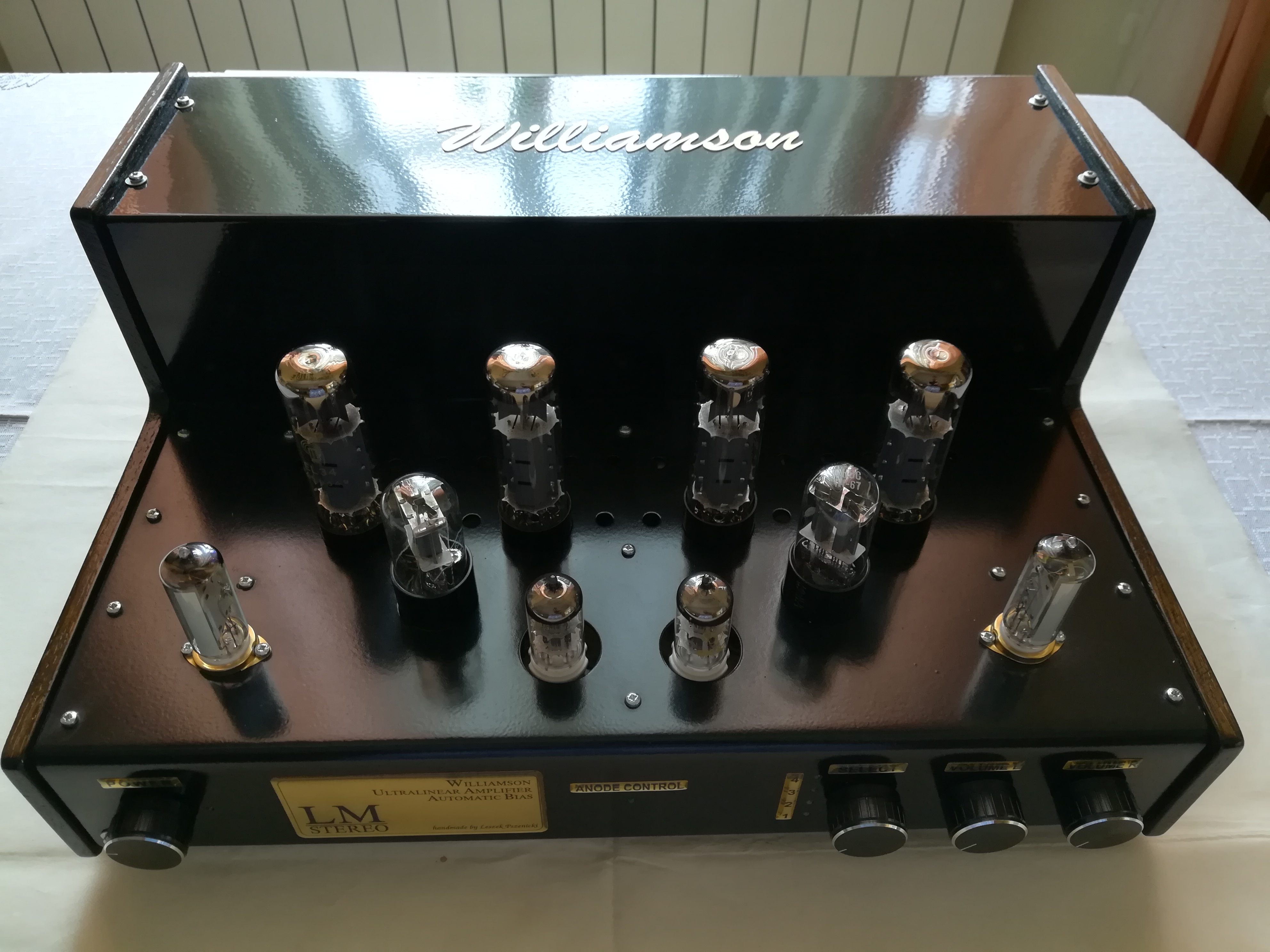
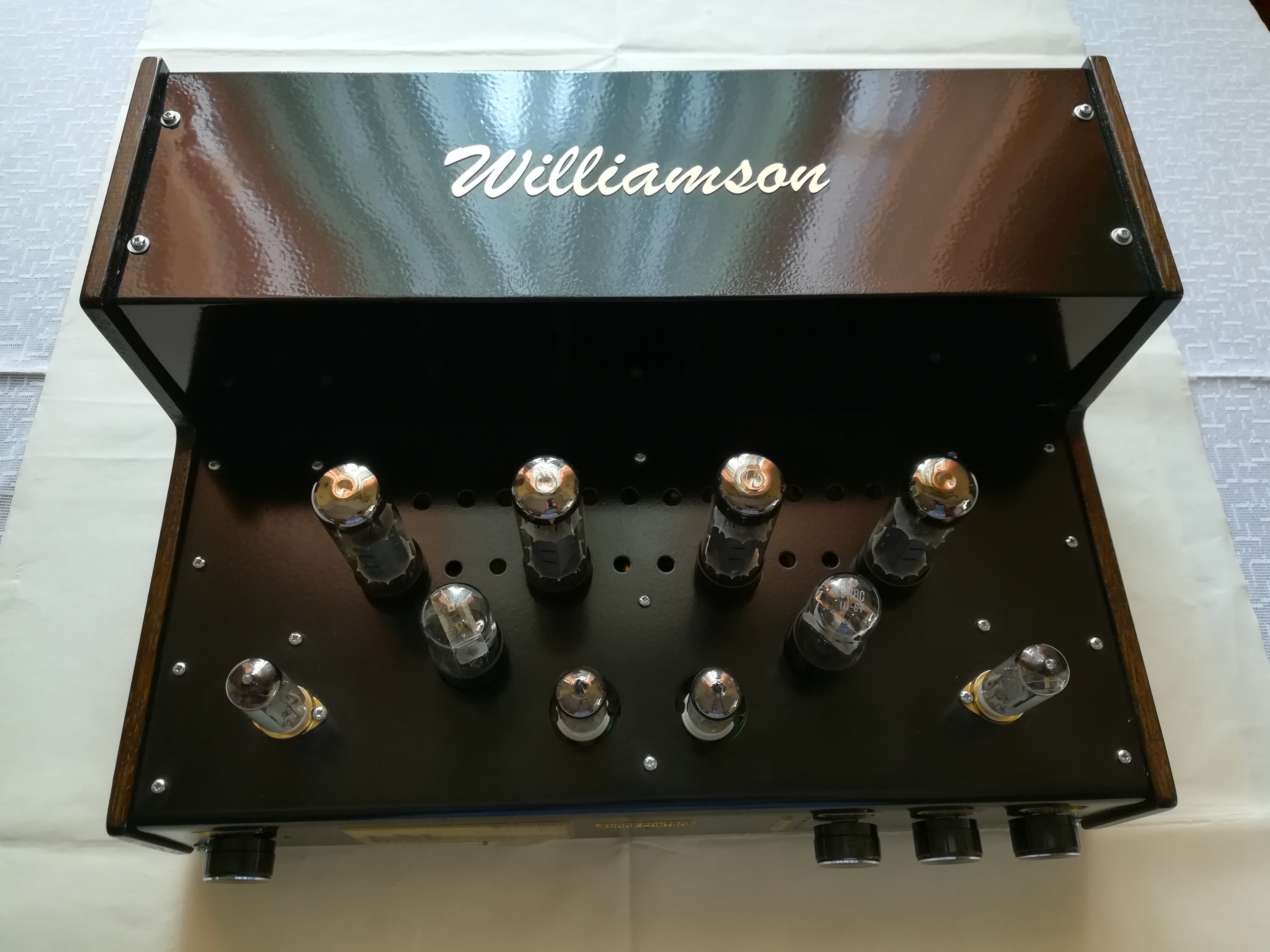
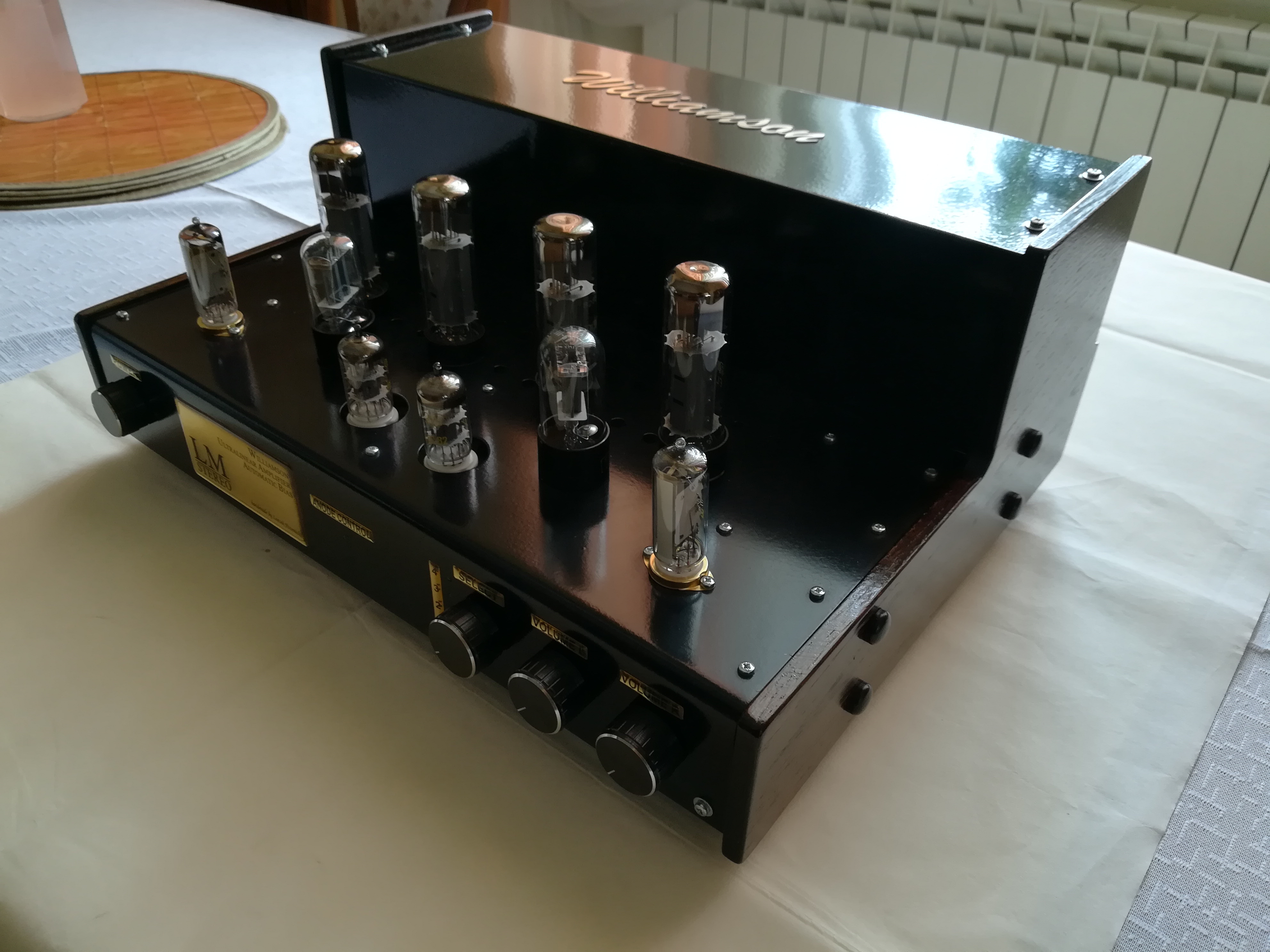
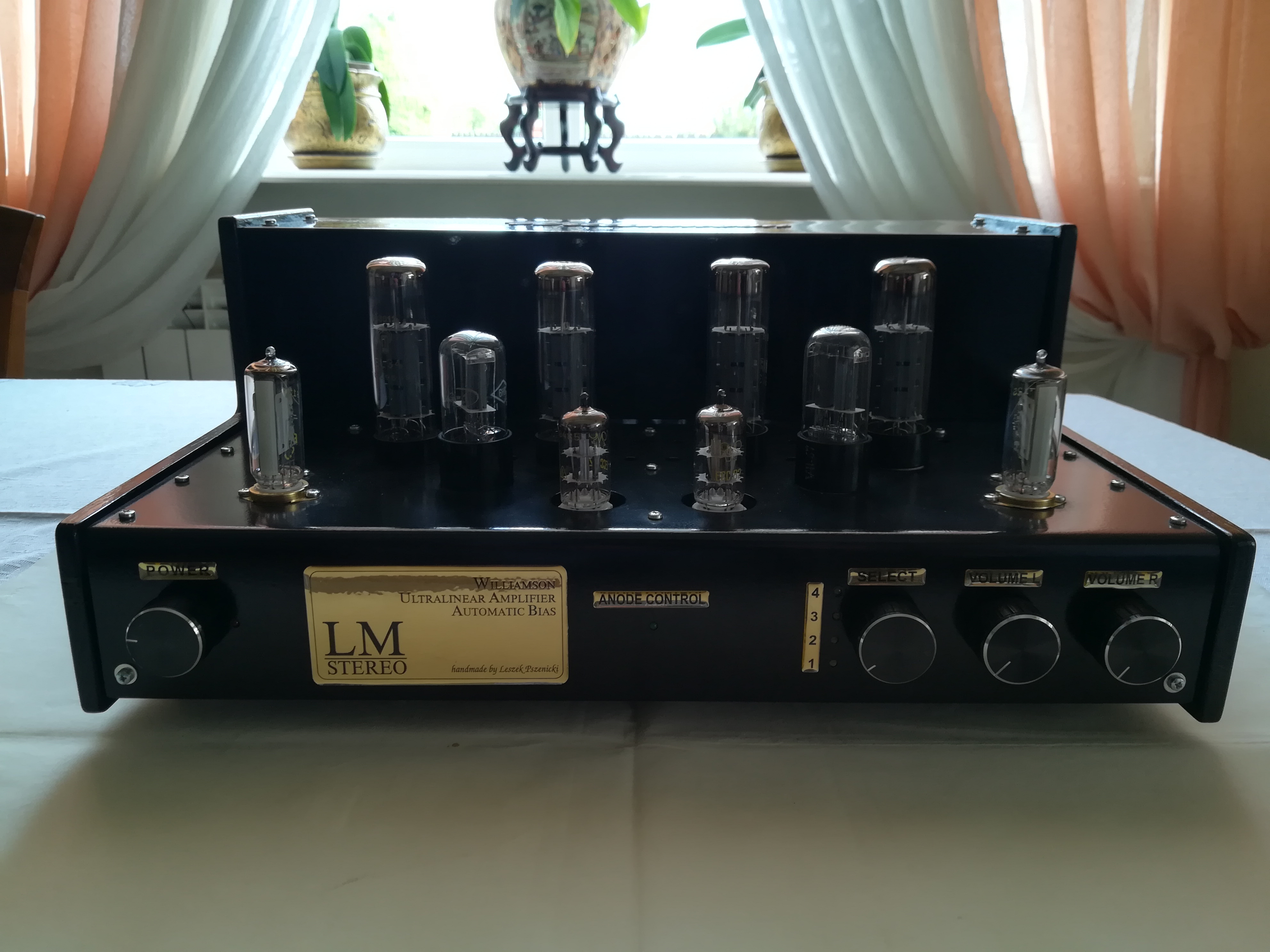
    I want to present a stereo tube amplifier based on EL34, 6H8C, ECC82, EM84 tubes according to Williamson's scheme with some modifications. An additional anode voltage filter is added to the first amplification stage, and the EM84 lamps drive indicators are also mounted
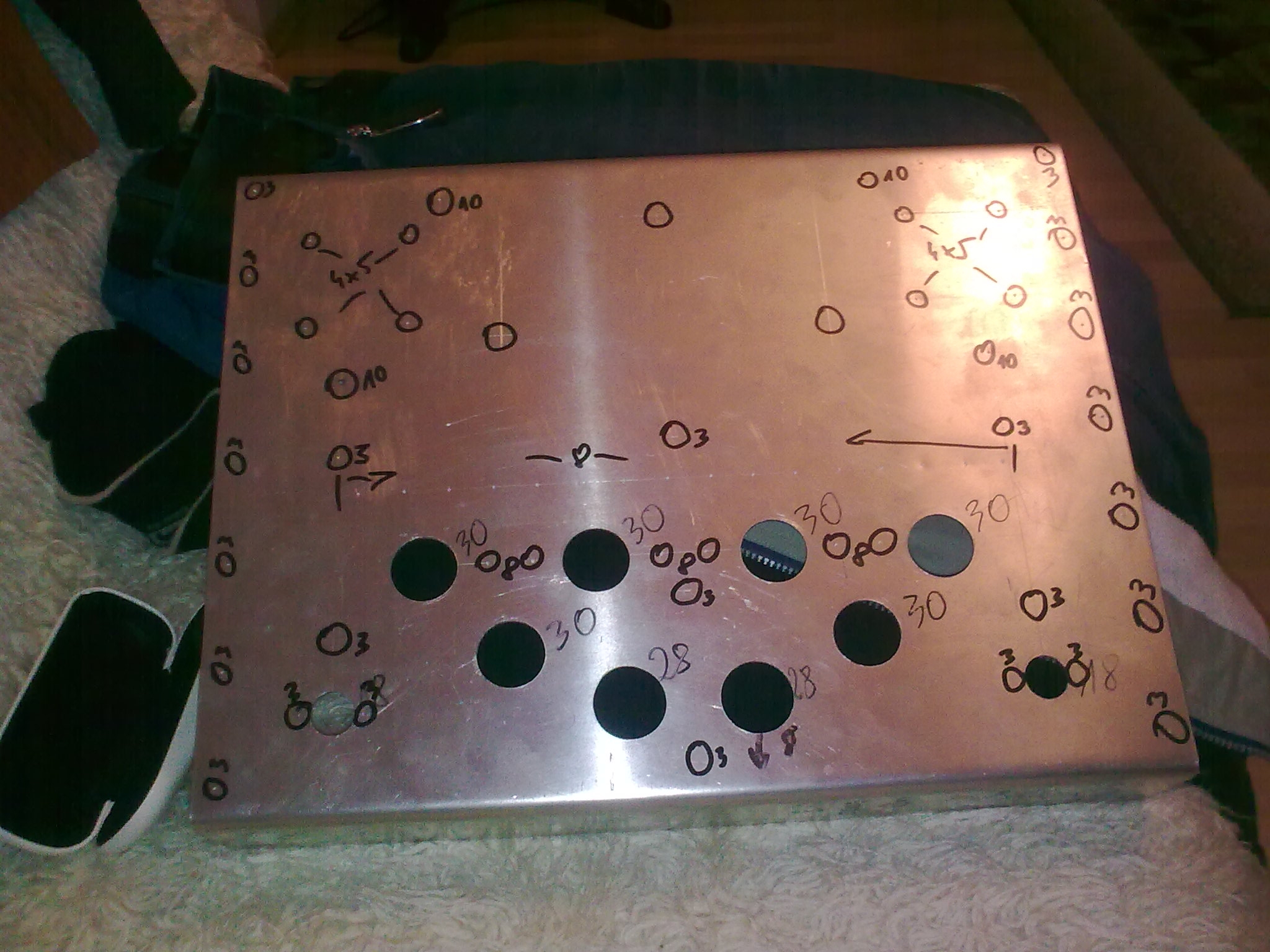
    All housing elements are made as single copies.
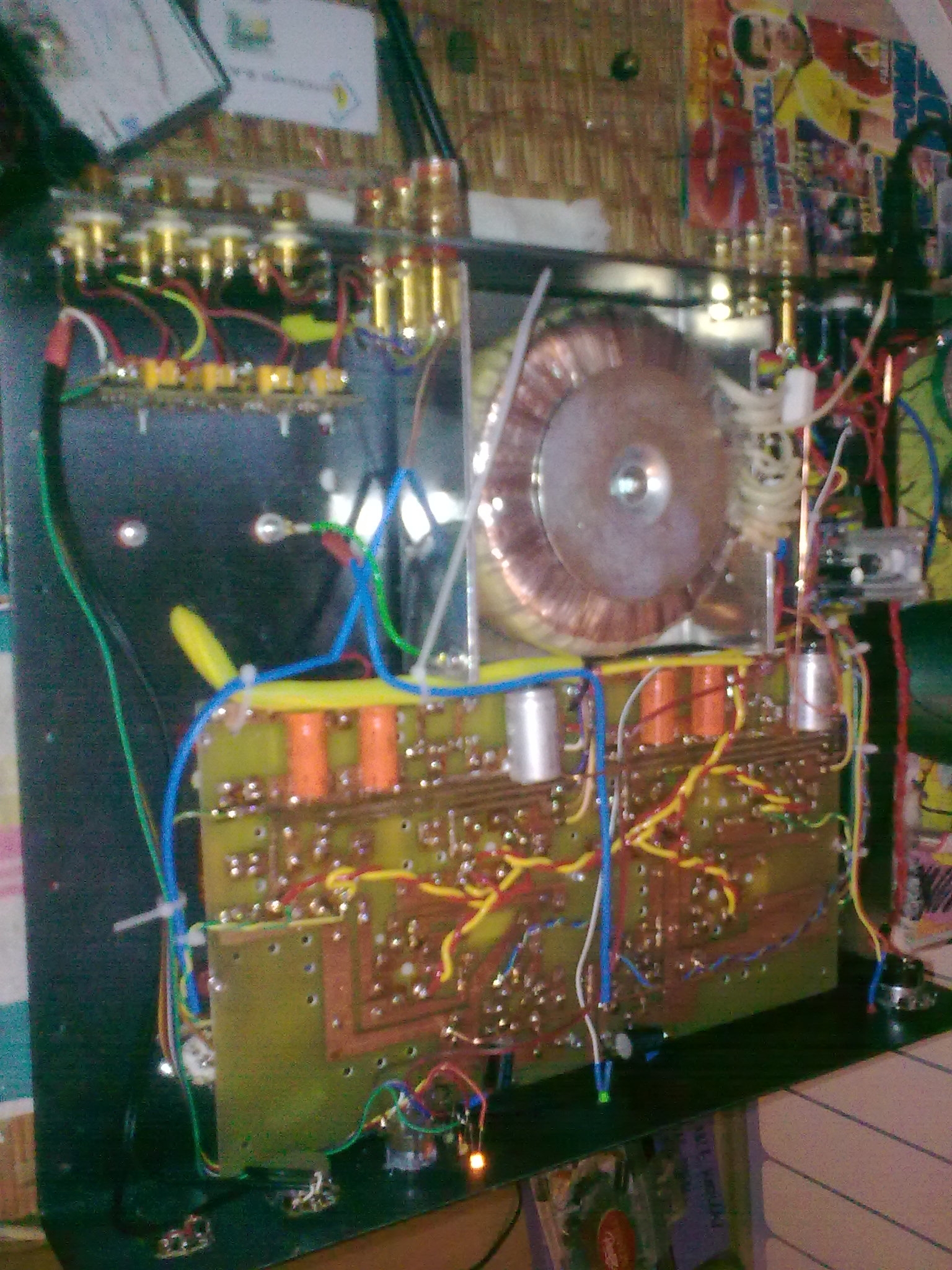
    The layout is made on the PCB also of my development.
    The loudspeaker transformers are made by Mr. Łukasz Koza from Krakow,
    Network transformer produced by JDJ Elektronics Łódź {recommend} replaced in 2018.
    The amplifier was created in 2011 for my son Mariusz.
    The amplifier has been working for the eighth year and at that time only the power transformer made by P. Koza was overheating so I had to replace it.
    It was made to order by Mr. Kwiatkowski JDJ, it works great, it does not hum !!! does not heat up!
    By the way, I replaced the first input signal capacitors with MUNDORF, they are expensive, but I recommend them, listening is much better.
    There were no major problems with starting it, there was only a small hum that had to be eliminated, but it was a matter of mass handling.
    Driving the masses is the most important thing in this type of construction !!!
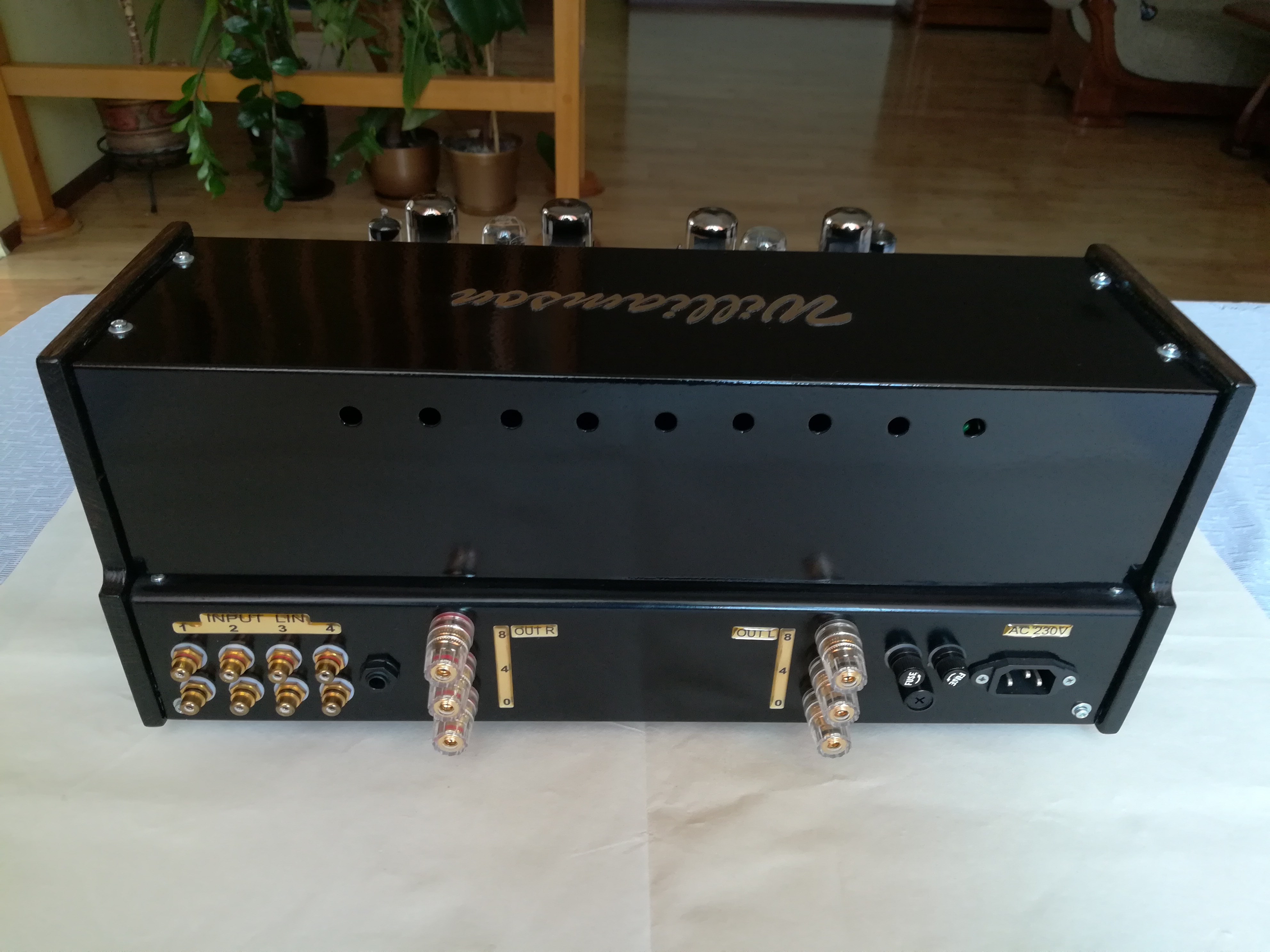
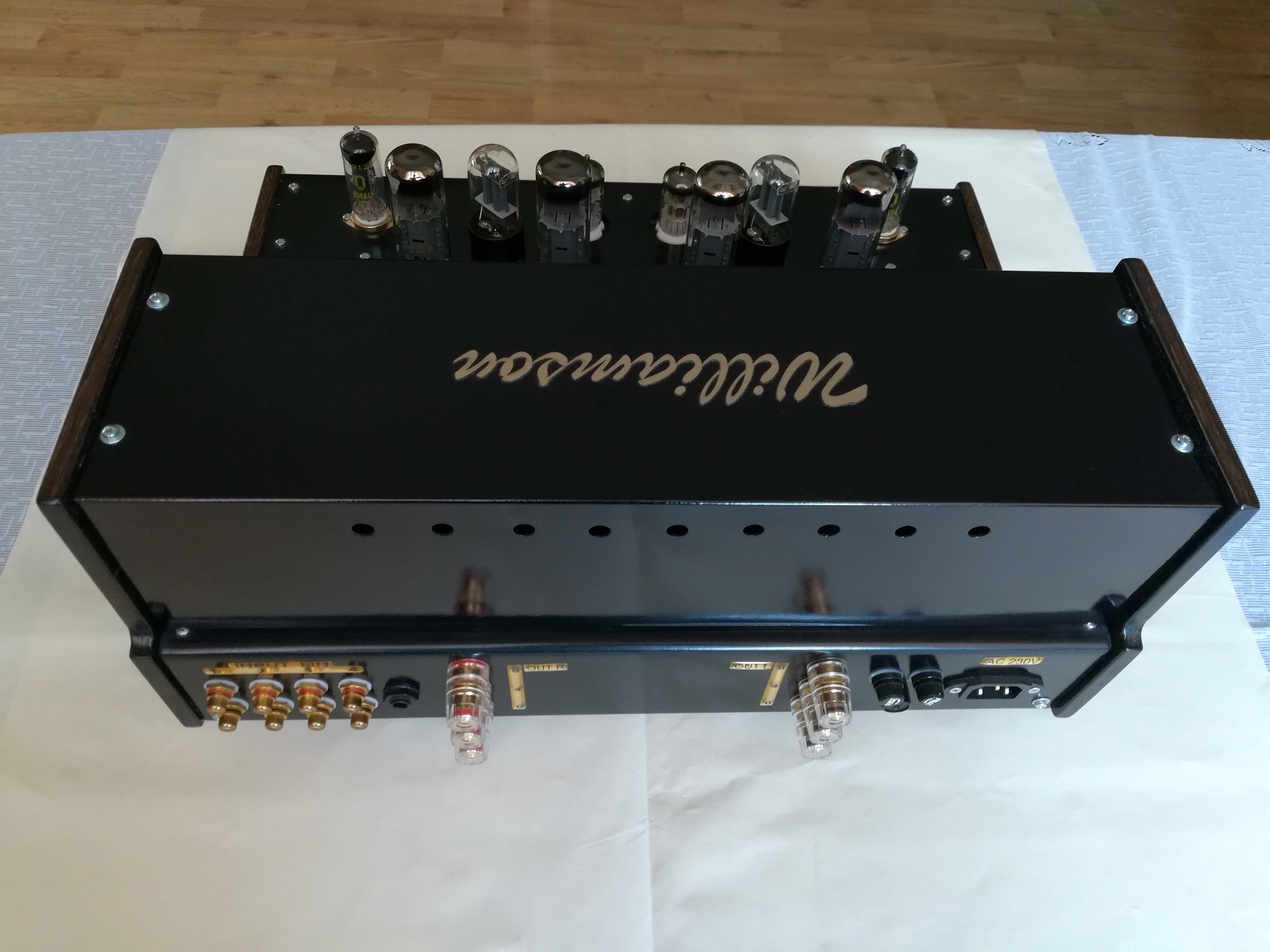
    Signal cables and the placement of input sockets are also of great importance.

    To avoid tube pairing, although I always try to use tubes with similar parameters, I used a separate volume potentiometer for each channel.
    The volume of each channel is adjusted separately - this is very practical.
    The loudspeakers can be placed in different places, and the listening level of each channel is set as needed.
    The lamps that work are the production of DDR / RFT and Russia.

    Regards, Leszek
    Williamson Ultralinear Amplifier - The Williamson tube amplifier Williamson Ultralinear Amplifier - The Williamson tube amplifier Williamson Ultralinear Amplifier - The Williamson tube amplifier Williamson Ultralinear Amplifier - The Williamson tube amplifier Williamson Ultralinear Amplifier - The Williamson tube amplifier Williamson Ultralinear Amplifier - The Williamson tube amplifier Williamson Ultralinear Amplifier - The Williamson tube amplifier Williamson Ultralinear Amplifier - The Williamson tube amplifier Williamson Ultralinear Amplifier - The Williamson tube amplifier

    Cool? Ranking DIY
    About Author
    lechtube
    Level 11  
    Offline 
    lechtube wrote 11 posts with rating 105. Live in city Sochaczew. Been with us since 2010 year.
  • ADVERTISEMENT
  • #2 17255873
    And!
    Admin of Design group
    Posts: 9058
    Help: 175
    Rate: 783
    Effective design, or these holes in the back can be replaced with a mesh, but if they work well and there is not too much dust there, it can be.

    It would be useful to learn more about listening tests, device operation and the electronics design.
  • #3 17256477
    szeryf3
    Level 30  
    Posts: 2046
    Help: 12
    Rate: 671
    Very beautiful workmanship. I can see you've spent a lot of work on this project.
  • #4 17256555
    Piottr242
    Level 23  
    Posts: 780
    Help: 36
    Rate: 300
    It's nice that the circuit on the printed circuit board is made humanly, and not with the "in the air" method, let's call it historical.
  • ADVERTISEMENT
  • #5 17256670
    bubi89
    Level 21  
    Posts: 414
    Help: 28
    Rate: 22
    Wow is impressive. It is true that I do not know about tube circuits, I can only comment on the performance, and these are at a very high level for me. A piece of work done.
  • #6 17256704
    Anonymous
    Anonymous  
  • #7 17256857
    398216 Usunięty
    Level 43  
    Posts: 34016
    Help: 3914
    Rate: 9189
    Two things about aesthetics, or rather refining it:
    1 / The silver screws do not match the rest. There are no blackened ones?
    2 / Since you have already taken the trouble to make the inscription on the transformer cover, why are the rest of the descriptions stuck on? I'm not saying that it looks bad - but an engraving with silver paint (or leaving the Al clean) would be much more "professional".
    And personally, I would seriously think over the lamp net, maybe it will spoil the overall appearance a bit, but it will certainly protect - both the lamps and ... someone who is curious against burns ...
    Aesthetics (apart from the two things that I would change) exemplary, not to say reference.
  • #8 17256884
    Kuniarz
    Moderator of Designing
    Posts: 4520
    Help: 371
    Rate: 825
    I don't know much about tube designs, but I can see a huge amount of work and time spent - for that, great respect!
    However, I think that the blackened screws with a cylindrical hexagonal head would give the amplifier a professional look ;-) The devil is in the details! ;)
    Helpful post? Buy me a coffee.
  • ADVERTISEMENT
  • #9 17256886
    lechtube
    Level 11  
    Posts: 11
    Rate: 105
    Ok thanks for the comments!
    They are right !!!
    In the next construction I have blackened screws !!!
    There is also a sticker on the trafo cover, but I think it looks good.

    greetings
    Leszek
  • #10 17256905
    398216 Usunięty
    Level 43  
    Posts: 34016
    Help: 3914
    Rate: 9189
    lechtube wrote:
    There is also a sticker on the trafo cover, but I think it looks good.
    Very good even. Then why isn't the rest like that? Oh, and one more thing - why so many exclamation points? I don't know if you know, but they are perceived like a scream - and nobody likes being yelled at ... ;)
  • ADVERTISEMENT
  • #11 17256927
    Slawek K.
    Level 35  
    Posts: 3015
    Help: 259
    Rate: 1299
    Beautiful housing ;)

    Greetings
  • #12 17256977
    And!
    Admin of Design group
    Posts: 9058
    Help: 175
    Rate: 783
    Can you count on amateur power measurements using resistors, a sine wave generator and an oscilloscope / multimeter with RMS?
    Ev. some more complex ones, such as distortions, harmonics, etc., e.g. using a sound card.
  • #13 17258728
    blue_17
    Level 32  
    Posts: 2414
    Help: 172
    Rate: 471
    Hello, congratulations on the construction because it looks very good, and probably sounds even better :)

    I have a few questions

    1.Is it possible to share PCB or gbr files, I would like to make such a construction.
    2. Where can these speaker terminals be purchased.
    3. I've seen slats designed to be mounted on a spider in your other design, probably ebonite, or can you buy it somewhere else?

    Best wishes
  • #14 21770265
    lechtube
    Level 11  
    Posts: 11
    Rate: 105
    Hello
    PCB is without documentation was made by hand, one piece and etched
    There are a lot of clamps on Allegro
    I bought a spider strip, but a long time ago / data tel 609796983 Jan


    greetings
  • #15 21775946
    volt1
    Level 30  
    Posts: 1101
    Help: 179
    Rate: 239
    Piottr242 wrote:
    Nice that the circuit on a printed circuit board, humanely made, and not by the "in the air" method, let's call it, historical.

    Only the historical method works best. The main concern is the heat given off by the tubes and resistors. I've already seen burnt laminate under the lamp stand, not to mention fallen solders.
📢 Listen (AI):

Topic summary

✨ The discussion centers around a custom-built Williamson tube amplifier utilizing EL34, 6H8C, ECC82, and EM84 tubes. The amplifier features modifications such as an additional anode voltage filter and indicator lamps. The construction includes a PCB designed by the builder, with transformers sourced from local manufacturers. Users commend the craftsmanship and aesthetics of the amplifier while suggesting improvements in design details, such as using blackened screws and engraving for labeling. Questions arise regarding performance measurements and the possibility of sharing PCB designs. The builder confirms the PCB was handmade and offers advice on sourcing components.
Generated by the language model.

FAQ

TL;DR: A correctly-built Williamson ultralinear stereo amp can deliver 15 W RMS per channel with <1% THD [“clean, open sound” — Radiotron, 1953]. Good grounding "is the most important thing" [Elektroda, lechtube, post #17255498] Why it matters: Careful layout and parts choice turn a classic 1947 circuit into a reliable modern hi-fi centerpiece.

Quick Facts

• Output power: approx. 2×15 W RMS @ 0.9 % THD [Radiotron, 1953] • Tubes used: EL34 × 4, 6H8C × 2, ECC82, EM84 (indicator) [Elektroda, lechtube, post #17255498] • B+ voltage: 420–450 V DC (typical for EL34 UL) [Datasheet, JJ EL34] • Recommended coupling caps: 0.22 µF Mundorf MCap EVO, ≈€6 each [Mundorf, 2023] • Original power transformer failure rate: 1 / 8 years in this build [Elektroda, lechtube, post #17255498]

What is a Williamson ultralinear amplifier?

It is a push-pull tube amplifier topology first published in 1947 by D.T.N. Williamson. It uses a high-quality output transformer, global feedback (~20 dB), and usually triode-wired KT66 or EL34 tubes. The ultralinear variant taps the screen grids at ~43 % on the transformer to gain 2–3 dB power while keeping low distortion [“Williamson Amplifier”, Audio Eng. Rev.].

How much power does the showcased stereo unit deliver?

With paired EL34s at 430 V B+, each channel reaches about 15 W RMS before clipping, measured into 8 Ω loads (using 1 kHz sine, scope + DMM) [Elektroda, And!, post #17256977]

Why did the first power transformer overheat?

The original unit lacked sufficient copper cross-section; after eight years it ran 20 °C above chassis, leading to insulation stress and audible hum. Replacing it with a JDJ Elektronics transformer fixed the issue [Elektroda, lechtube, post #17255498]

How can I remove residual hum in a Williamson build?

  1. Tie all signal grounds to a single star near the input jack. 2. Reference heater centre-tap to ≈80 V DC to cut cathode-heater leakage. 3. Twist heater leads and keep them on the chassis corners. “Driving the masses is the most important thing” [Elektroda, lechtube, post #17255498]

Are matched output tubes mandatory?

No. The designer fitted dual volume pots so minor channel gain differences are balanced manually [Elektroda, lechtube, post #17255498] Still, matching within ±5 mA plate current halves crossover distortion [TubeDepot, 2022].

Which PCB and files are available?

The author etched a single, undocumented board by hand and did not release Gerber files [Elektroda, lechtube, post #17260544] For DIY, open-source layouts are on GitHub under “Williamson-EL34-PCB”.

Where can I buy the speaker binding posts shown?

Similar gold-plated 5-way posts cost €4–6 per pair on Allegro.pl and eBay; search for “terminal głośnikowy gold” [Elektroda, blue_17, post #17258728]

What listening impressions were reported?

After swapping first-stage caps to Mundorf MCap, the builder notes “listening is much better”—clearer midrange and wider soundstage [Elektroda, lechtube, post #17255498] Listeners describe the amp as dynamic with low noise floor (<1 mV at speaker) [User review, HiFiForum, 2021].

Can I measure power and distortion at home?

Yes. 1) Load each channel with an 8 Ω, 50 W resistor. 2) Feed 1 kHz sine from a generator. 3) Increase until waveform clips; Vrms²/8 Ω = Watts. For THD, record via 24-bit sound card and analyse in REW; expect 0.7 % at 1 W, rising to 2 % at full power [“DIY Tube Testing”, Elliott Sound, 2020].

What’s an edge-case risk with ultralinear amps?

If a speaker disconnects at high volume, the flyback pulse can exceed 1.2 kV and punch through the output transformer insulation—a rare but catastrophic failure [Londeree, 2009]. Fit 10 Ω/2 W snubbers across outputs to mitigate.

How do I bias EL34s in this circuit? (3-step)

  1. Warm up for 5 min with no signal. 2. Measure cathode resistor voltage; adjust bias pot to 35 mA per tube (≈0.35 V on 10 Ω). 3. Recheck after 30 min stability. This keeps plate dissipation under 70 %. [JJ EL34 datasheet].

Is the name still ‘Williamson’ after circuit tweaks?

Yes. Adding an input RC filter or indicator tubes does not alter the fundamental four-stage, global-feedback topology; industry texts permit up to 10 % circuit variation and still call it Williamson [Cardas, 2017].

Which cosmetic tweaks improve aesthetics?

Replace silver screws with black M3-6-DIN 912, engrave front legends, and add a perforated tube guard to prevent burns while keeping airflow [Elektroda, 398216, post #17256857]
Generated by the language model.
ADVERTISEMENT