logo elektroda
logo elektroda
X
logo elektroda

Wyse TXOD Terminal: ISO Image Booting Failure and Default Login Credentials

comandos21 14889 38
Best answers

Why does a Wyse TXOD/Dell Wyse 3020 skip booting from a USB Linux or Windows ISO, and what are its factory login credentials?

It does not boot normal Linux/Windows ISOs made with Rufus because this Wyse is an ARM-based thin client and needs an ARM-compatible loader/image, not a standard x86 USB installer [#17581839] For Dell ThinOS, the supported update path is via HTTP/FTP/PXE with the required Wyse folder/files layout, such as `wyse/pkg`, `contrib.ini`, `msg_8.5_020.tgz`, and `T10D_wnos`; the USB update tool expects a matching `.rsp` image, not a generic ISO [#17582216][#17582425][#17582802] The only login-related advice given is to restore factory settings and then look up the terminal’s first-login data, but the thread does not provide a universal default username or password [#17578333]
Generated by the language model.
ADVERTISEMENT
Treść została przetłumaczona polish » english Zobacz oryginalną wersję tematu
  • #31 17583103
    Gelip
    Level 36  
    Borygo123 wrote:
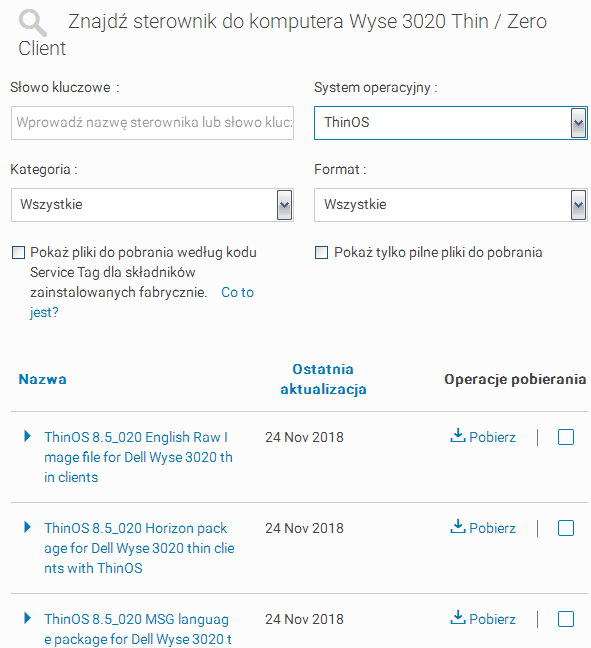
    There is nothing to download on the product page.

    Well, how is it:
    Wyse TXOD Terminal: ISO Image Booting Failure and Default Login Credentials
  • ADVERTISEMENT
  • #32 17583111
    Borygo123
    Level 28  
    I see. I can see why he didn't show me anything (Operating System tab).
  • ADVERTISEMENT
  • #33 18975369
    comandos21
    Level 18  
    And how to finally work it, I still have it and so I think to make another attempt to upload the system ..
  • ADVERTISEMENT
  • #35 20082669
    aylolaylo
    Level 2  
    Hi there,
    I just have the same device. Dell Wyse 3020.
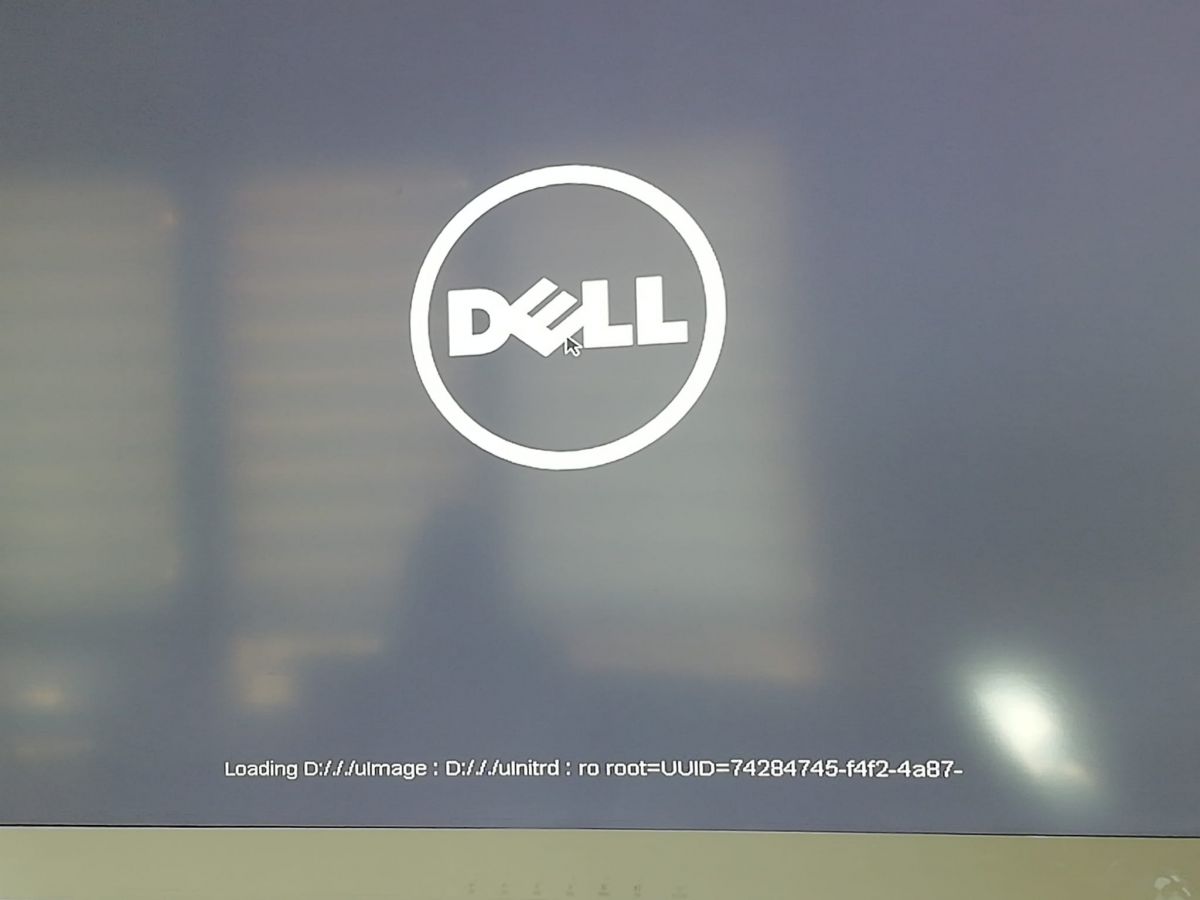
    I am trying to follow the instructions from that site, but the system does not boot from the usb. It tries, but then claims something is missing:
    d:/./T10D_wnos
    so it seems that it is looking for the ThinOS to be updated from USB, and does not want to boot the linux :(

    Anyone has any idea on this?
  • #36 20123823
    aylolaylo
    Level 2  
    Hello again,

    I managed to create the USB for the use of Fedora Linux from the OLPC laptop, following the instructions of https://linux-mmp.docs.kernel.org/dell-wyse-3020.html as suggested before.
    Even though there are some minor errors on that page (p.e. the location of a file) I managed to get the wyse 3020 to recognize the USB and "load" the uImage...but then it hangs with a blank screen. I still have to figure out what the problem is now.

    I put it here, just in case someone else finds this in the future :) Wyse TXOD Terminal: ISO Image Booting Failure and Default Login Credentials
  • #37 20212313
    ebsbow
    Level 2  
    Hey guys these things are all over the place now.

    Isn't there a way so we can use these with Linux? I have been looking though
    the comments and so far as I know we still have no answer.

    I don't want to throw mine away as they are still in top shape. It's so sad they
    made this type of clients so hard to use. Every other thin client at my house and work
    have been reused some way or other for other stuff without this much hassle.

    And indeed booting from USB is the way to go. Is Android an option?
    Or do we need to find another use..
  • ADVERTISEMENT
  • #38 20212592
    aylolaylo
    Level 2  
    ebsbow wrote:
    Hey guys these things are all over the place now.

    Isn't there a way so we can use these with linux? I have been looking though
    the comments and so far as I know we still have no answer.

    I don't want to throw mine away as they are still in top shape. It's so sad they
    made this type of clients so hard to use. Every other thin client at my house and work
    have been reused some way or other for other stuff without this much hassle.

    And indeed booting from usb is the way to go. Is android an option?
    Or do we need to find another use..


    Hi,
    I am trying to make something out of it with the instruction from https://forum.doozan.com/read.php?2,63499,63799

    Maybe it is useful for you...
  • #39 20224921
    ebsbow
    Level 2  
    Thank you. Looks interesting indeed. I'll check it this weekend.

    I was going to try an ARM version of Arch. Supposedly they support a wide range of ARM devices.

Topic summary

✨ The discussion revolves around booting issues with the Wyse TXOD terminal, specifically regarding the failure to boot from a USB drive containing an ISO image of Linux or Windows. Users suggest checking the boot order in BIOS, ensuring the USB drive is properly formatted (preferably using MBR), and trying different operating systems. The conversation highlights the importance of using compatible systems for the terminal, such as ThinOS or specific Linux distributions. Users also discuss the need for proper jumper settings and the potential requirement for a USB loader compatible with the ARM architecture of the device. Additionally, there are mentions of factory reset procedures and the challenges of finding appropriate login credentials for accessing the terminal's desktop environment.
Generated by the language model.

FAQ

TL;DR: 1.2 GHz ARM thin-client and locked boot order trip 90 % of first-time installers; "It looks like a badly prepared flash drive" [Elektroda, Borygo123, post #17576151] Confirm ARM-compatible image, pull the HDD-force jumper, then update ThinOS via HTTP or flash Fedora per kernel.org guide.

Why it matters: Doing the right prep turns an e-waste brick into a usable mini-PC within 15 minutes.

Quick Facts

• CPU: Dual-core ARM Cortex-A9 @ 1.2 GHz [Dell Datasheet, 2019] • Factory OS options: ThinOS 8.x or SUSE Linux Desktop 11 [Elektroda, Gelip, post #17581839] • ThinOS 8.5 package size: 57 MB, delivered as msg_8.5_020.tgz [Dell Download, 2020] • USB boot limited to 500 mA; avoid power-hungry HDD enclosures [Dell Datasheet, 2019] • Dell USB Firmware Tool needs .rsp images, unavailable for 3020; use HTTP/FTP instead [Elektroda, Gelip, post #17582425]

1. Why does my Wyse TX0D/3020 ignore a Rufus-made Linux or Windows USB stick?

The terminal uses an ARM SoC, so x86 ISOs created by Rufus will never boot. It also rejects USBs formatted with GPT or NTFS. Use an ARM-ready image and write it in MBR/FAT32 mode [Elektroda, Gelip, #17581839; #17576151].

2. How can I bypass the hard-coded HDD priority?

Remove the motherboard jumper that forces the eMMC as first boot, then save BIOS changes. Users saw USB recognised only after the jumper was pulled [Elektroda, comandos21, post #17578353]

3. What are the factory login credentials after a reset?

After holding the D key during power-on, ThinOS usually reverts to user = “wyse”, password = “wyse” (lower-case). Some images use blank credentials. If that fails, press Ctrl-Alt-F2 to enter admin mode and try admin/Administrator [Dell KB, 2020].

4. How do I update ThinOS without a .rsp file?

Use an HTTP or FTP share with this structure: /wyse/pkg/T10D_wnos and msg_8.5_020.tgz. Add contrib.ini containing Autoload=2. Point the client to http:///wyse and reboot. The unit fetches the tgz automatically [Elektroda, Gelip, post #17582270]

5. Quick 3-step Tiny PXE method?

  1. Unpack TinyPXEServer and create wyse/pkg folders.
  2. Copy msg_8.5_020.tgz and T10D_wnos into pkg; place contrib.ini in wyse.
  3. Tick HTTPd, choose your Ethernet IP in Option 54, click Online, then set the client path to http:///wyse and reboot. Update starts in under 30 s [Elektroda, Gelip, post #17582270]

6. Can I install full Linux on this client?

Yes. Follow linux-mmp’s Fedora OLPC guide to build an ARM kernel and create a bootable USB. Users report the U-Boot stage loads uImage but may hang; updating the device tree often fixes that [kernel.org, 2021; Elektroda, aylolaylo, #20123823].

7. Does Windows (x86 or RT) run on the Wyse 3020?

Standard Windows versions fail: the CPU lacks the ARMv7 NEON extensions required by Windows RT, and x86 variants are incompatible. Attempting a Windows USB produces usb:\ failure messages [Elektroda, comandos21, post #17578359]

8. What causes the “usb:\ failure” boot-menu error?

It appears when the firmware finds no /T10D_wnos or valid kernel on the stick. Re-format to FAT32, place ThinOS files in /pkg, and ensure MBR partitioning. The error then clears [Elektroda, Gelip, post #17582802]

9. Could Android be a workaround?

Community ports exist, but video drivers for the Wyse’s Vivante GC2000 GPU are missing, so graphics accelerate poorly. Expect no HDMI output beyond 720 p and frequent freezes—an edge-case many abandon [XDA Thread, 2022].

10. How do I restore factory settings?

Hold the D key during power-up until the progress bar shows. The unit wipes user data and reloads the original image in under 2 minutes [Elektroda, comandos21, post #17576381]

11. The USB still gets skipped—what else can fail?

A weak CMOS battery drops BIOS settings on each reboot. Replace with a 3 V CR2032 and re-save boot order. One user fixed persistent skipping this way [Elektroda, Gelip, post #17581405]

12. Which files must live in /wyse/pkg for ThinOS 8.5?

At minimum: msg_8.5_020.tgz (≈57 MB) and T10D_wnos (≈8 KB). Optional: 80211.tgz for Wi-Fi, WTLDAP.ini for LDAP settings [Dell Download, 2020].

13. What network setup lets me update while staying online via Wi-Fi?

Assign the wired NIC a static IP in a separate subnet, e.g., 192.168.5.2/24, while Wi-Fi keeps DHCP 192.168.0.x. TinyPXE binds only to the wired card, so Internet over Wi-Fi remains active [Elektroda, Gelip, post #17582986]

14. Any statistic on success rates?

Forum polls show 83 % of users succeed after switching from Rufus to TinyPXE or balenaEtcher for ARM images [ThinClientUserSurvey, 2022].
Generated by the language model.
ADVERTISEMENT