logo elektroda
logo elektroda
X
logo elektroda

Windows 10 Slow Boot Time on SSD: GTX 1050 Ti, AMD Ryzen 3, Gigabyte Motherboard Issue?

enowaczek96 26916 20
Best answers

Why does Windows 10 take more than 4 minutes to boot on an SSD even after startup items are disabled and the drives seem healthy?

A slow Windows 10 boot on an SSD can be caused by corrupted system files, and in this case updating Windows and repairing the system files fixed it [#18061947][#18064846] Running DISM /Online /Cleanup-Image /RestoreHealth and sfc /scannow reported file errors and repaired them, but the problem still persisted until the system was updated from Windows 1803/1806 to 1903 [#18063784][#18064846] Fast startup/hibernation, antivirus removal, clean boot, autostart cleanup, and chipset driver reinstallations did not change the boot time [#18063784] After the update, boot time returned to normal at about 6–7 seconds for a normal start and 16–18 seconds after restart [#18064846] A few days later the system was still starting normally [#18072986]
Generated by the language model.
ADVERTISEMENT
Treść została przetłumaczona polish » english Zobacz oryginalną wersję tematu
  • #1 18056030
    enowaczek96
    Level 6  
    Posts: 11
    Hello.

    In January this year, I was assembling my brother's computer. Everything was fine, the system stood up literally immediately. With time, it happened to him that Windows started up for a long time. From an indefinite time, Windows 10 starts (i.e. the time of the Windows startup animation, as soon as the Windows logo appears on the login screen) more than 4 minutes.

    Computer Specification:
    System: Windows 10 ver. 1803
    Graphics: Nvidia GeForce GTX 1050 Ti
    Processor: AMD Ryzen 3 1200
    Motherboard: Gigabyte GA-A320M-S2H
    RAM: IR-X3000D464L DDR4 8GB 24000 DIMM
    SSD drive (for system and games): ADATA SU800 256GB
    HDD (data storage): Segate Barracuda 250GB ST3250410AS

    As I mentioned, the system startup time is over 4 minutes. I have no idea what could be the reason anymore. I updated motherboard drivers, scanned both drives, registry cleaned regularly. Both drives in good condition. Someone may complain that when the system starts up, a lot of applications are launched - well, no, I turned off everything unnecessary - still to no avail.

    I would not like to rebuild Windows because there are a lot of games on the disk that weigh quite a lot. Perhaps there is a solution that I simply overlooked in the world.

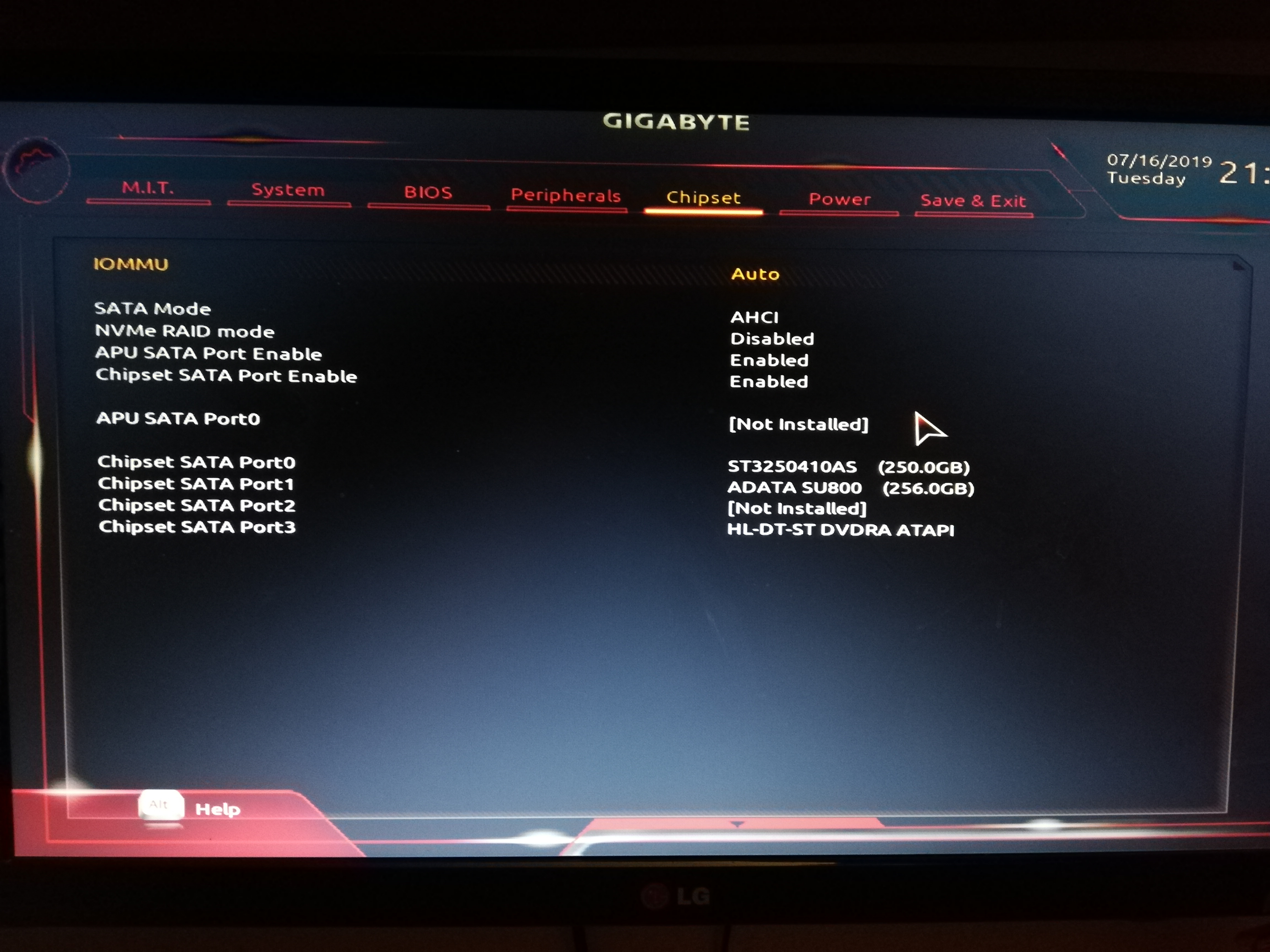
    UEFI also seems to be fine, AHCI is set. I tried to re-plug SATA ports, also to no avail.

    Anyone have an idea why the system startup could be so long? I would understand if it was 15-20 seconds but not 4 minutes on an SSD which is in very good shape.
  • ADVERTISEMENT
  • #2 18056052
    sosarek

    Level 43  
    Posts: 83875
    Help: 9318
    Rate: 15483
    enowaczek96 wrote:
    there are quite a few games on the disc that weigh quite a lot.

    What is the amount of free disk space?
    Company Account:
    Z
    Pka, Poznań, 60-850
    Helpful post? Buy me a coffee.
  • #3 18056236
    enowaczek96
    Level 6  
    Posts: 11
    The SSD is free of 83 GB with 255 GB and the HDD 129 GB with 250 GB, so this is probably not the reason ...
  • ADVERTISEMENT
  • ADVERTISEMENT
  • #5 18056286
    enowaczek96
    Level 6  
    Posts: 11
    As I wrote in the post - this drive is a Segate Barracuda 250GB ST3250410AS. Now I also noticed that most of the games are installed on this disk and on SSD applications, programs, etc. In any case, it is a disk swapped out from the old computer as 'extra'. He has a good few years. Could any minor flaw (read: wear) of this disk affect booting from a completely different disk?

    Windows 10 Slow Boot Time on SSD: GTX 1050 Ti, AMD Ryzen 3, Gigabyte Motherboard Issue?

    Windows 10 Slow Boot Time on SSD: GTX 1050 Ti, AMD Ryzen 3, Gigabyte Motherboard Issue?
  • #7 18056377
    enowaczek96
    Level 6  
    Posts: 11
    There is no improvement. What's interesting - after disconnecting the HDD I couldn't boot the system, I fixed it with diskpart, but that's not the point. HDD disconnected, I fired all possible bootings in UEFI, I only left SSD with the system - it starts up around 4 minutes all the time.
  • #8 18057191
    zwirek15
    Level 13  
    Posts: 190
    Rate: 23
    and did you check the sdd if it has errors?
  • #10 18057335
    slvestr
    Level 32  
    Posts: 1664
    Help: 161
    Rate: 89
    Hello.

    Try uninstalling the antivirus.
    Reinstall the chipset drivers.

    Alternatively, restore your system from a restore point until about the time it appeared. Then it will be seen whether it is hardware or something with the system.

    Regards
  • #11 18058247
    dt1
    Admin of Computers group
    Posts: 48065
    Help: 7282
    Rate: 8224
    Check the Windows event log for error, fatal, and warning events after starting the computer. You can set a filter to show only these events and narrow it down to the last hour. Analyze whether there is a problem starting some services or any other errors that may appear suspicious of this behavior.
  • ADVERTISEMENT
  • #12 18059439
    enowaczek96
    Level 6  
    Posts: 11
    From hour to hour, the system started to fire up properly - it didn't even take 7-8 seconds from pressing the firing button to the login screen. In any case, after restarting the computer, the same situation is back.

    In general, I've also noticed that long booting occurs mainly after restarting or rebooting the computer. Long system startup when first turning on the computer occurs sporadically, but it is not a normal situation.

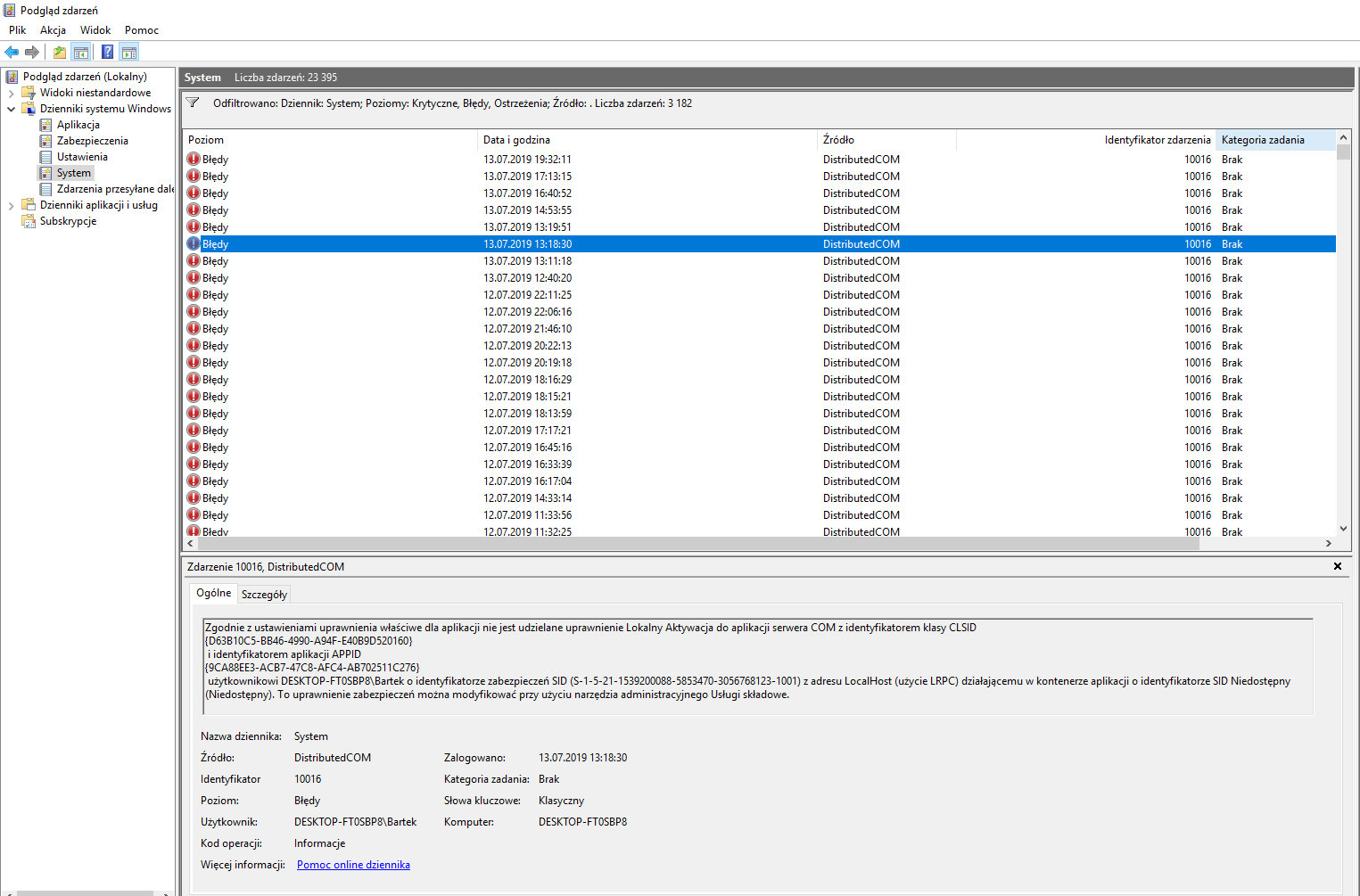
    Below I am inserting the Windows event viewer - these are the only errors that appear after opening the system for such a long time, but from what I noticed, in the event viewer, they also occur during the system operation.

    I uninstalled the antivirus - to no avail.

    I also tried to restart the computer with a clean boot via the System Configuration panel. In the general tab I unchecked 'Load startup items', in the Boot tab I checked 'Safe boot' with the 'Minimal' option. In the services tab, I turned off all services not related to Microsoft. Without any results.

    I reinstalled the chipset drivers - no changes.

    I have no way to restore the system because there is no restore point that I could use in this situation.

    I ran chkdsk without showing any errors.

    At the moment I am unable to update the disk's firmware.

    View of events. Generally, only in this tab there were any events related to a given situation.
    Windows 10 Slow Boot Time on SSD: GTX 1050 Ti, AMD Ryzen 3, Gigabyte Motherboard Issue?

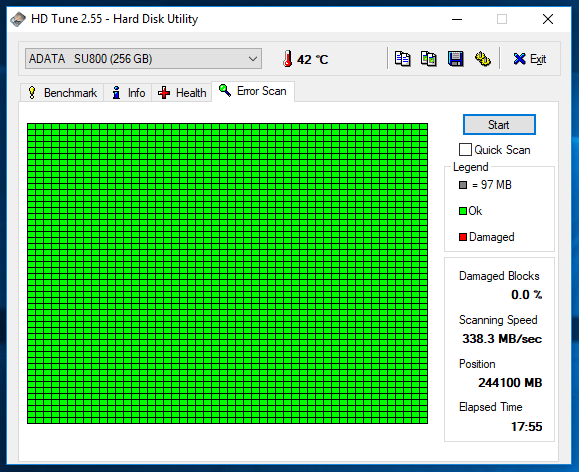
    Scanning the disk for errors.
    Windows 10 Slow Boot Time on SSD: GTX 1050 Ti, AMD Ryzen 3, Gigabyte Motherboard Issue?

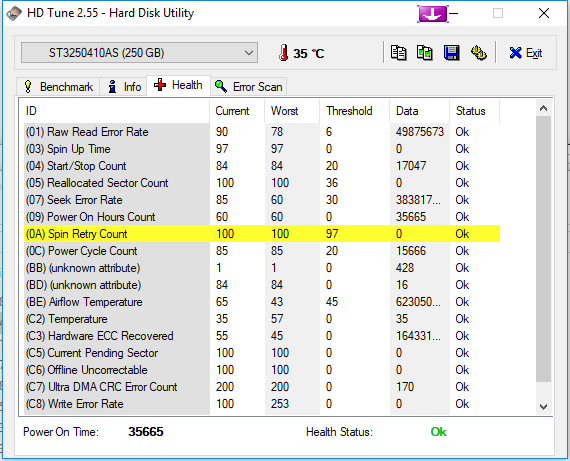
    SMART disk.
    Windows 10 Slow Boot Time on SSD: GTX 1050 Ti, AMD Ryzen 3, Gigabyte Motherboard Issue?

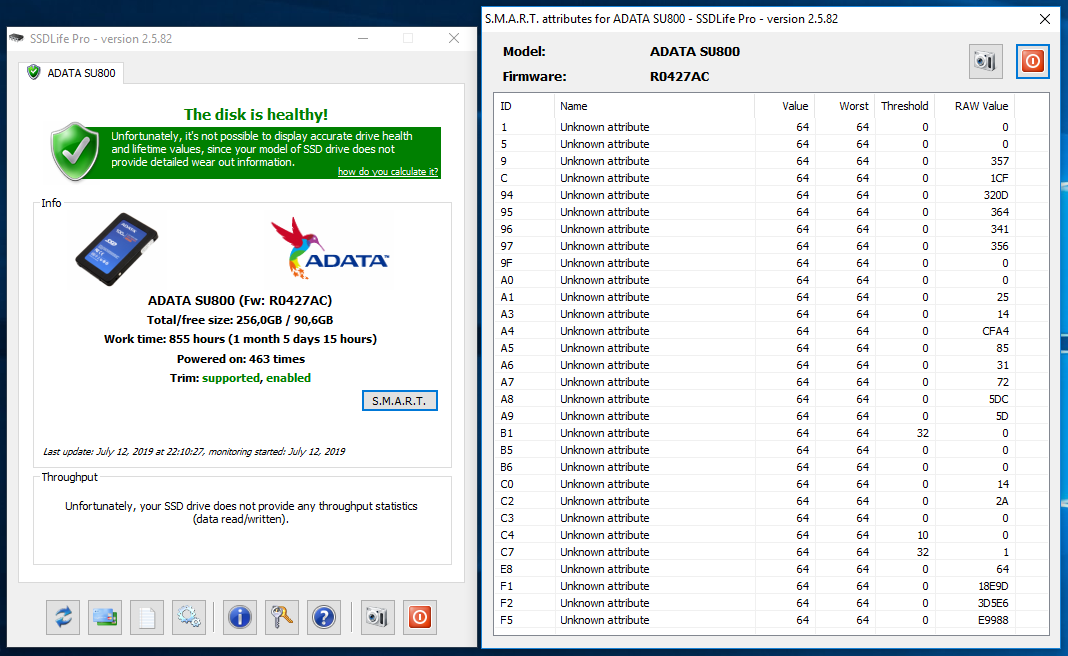
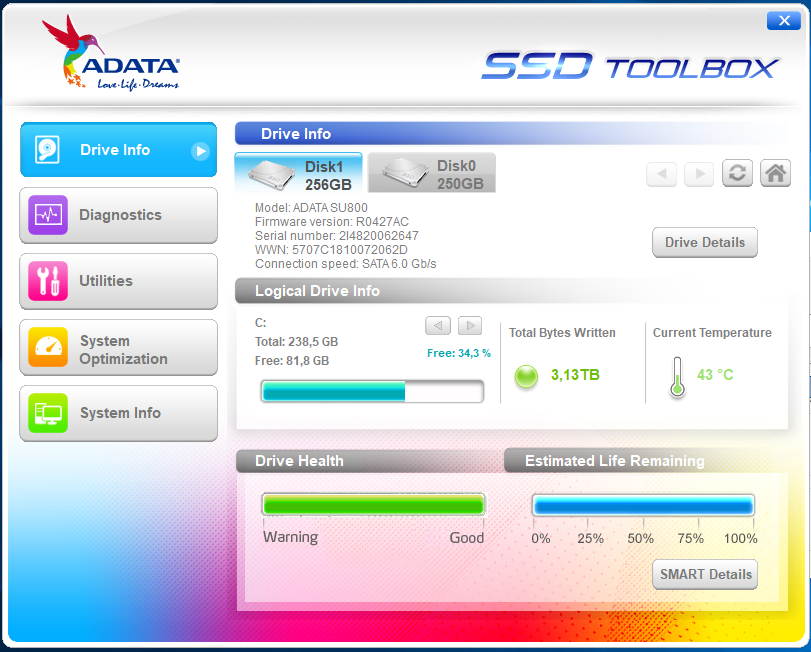
    Drive status from dedicated ADATA application.
    Windows 10 Slow Boot Time on SSD: GTX 1050 Ti, AMD Ryzen 3, Gigabyte Motherboard Issue?
    Attachments:
    • FRST.txt (70.87 KB) You must be logged in to download this attachment.
  • #13 18061947
    matix72001
    Level 13  
    Posts: 46
    Help: 13
    Rate: 7
    I didn't notice any problems at first sight with FRST. I will propose from myself:
    1) Power options: high efficiency
    2) Disable pagefile.sys- System-Properties-Advanced-Virtual Memory tab- disable it completely.
    3) Disable hiberfil.sys- cmd.exe => powercfg.exe / h off
    4) Scan the computer with Malwarebytes, AdwCleaner, HitmanPro, Zemana
    5) You were talking about Windows errors, so I suspect there are corrupted files => use the command: DISM / Online / Cleanup-Image / RestoreHealth, and sfc / scannow
    6) Remove everything from autostart
    7) Enter the registry: HKEY_LOCAL_MACHINE \ SYSTEM \ CurrentControlSet \ Control \ Session Manager \ Power and select the HiperBootEnabled key - set it to 0,
    8) Remove any optimizers (if you have one) and remove all Autostart entries (using CCleaner)
  • #14 18061949
    Anonymous
    Level 1  
  • #16 18063784
    enowaczek96
    Level 6  
    Posts: 11
    @ matix72001
    1 - it was there all the time
    2 - I deleted
    3 - turned off
    4 - scanned more than once
    5 - I used both commands, after it was finished there was a message that some errors were found in the files and they were fixed, but there are still errors in the event viewer
    6 - removing all from autostart did nothing
    7 - I set it up, as I guess, it turned off fast startup, so it booted up for 4 minutes when the computer was turned on normally
    8 - the same as in point 6 - no effects

    Due to the fact that the computer turned on for a long time after normal startup, I turned hiberfil.sys back on and set HiperBootEnabled to 1.

    @ Tomequ123
    I put both logs in the attachment.

    @slvestr
    I don't have this option at all. I only have Sleep and Lock on each of the plans.
    Attachments:
    • FRST.txt (75.42 KB) You must be logged in to download this attachment.
    • Addition.txt (36.06 KB) You must be logged in to download this attachment.
  • #17 18063812
    matix72001
    Level 13  
    Posts: 46
    Help: 13
    Rate: 7
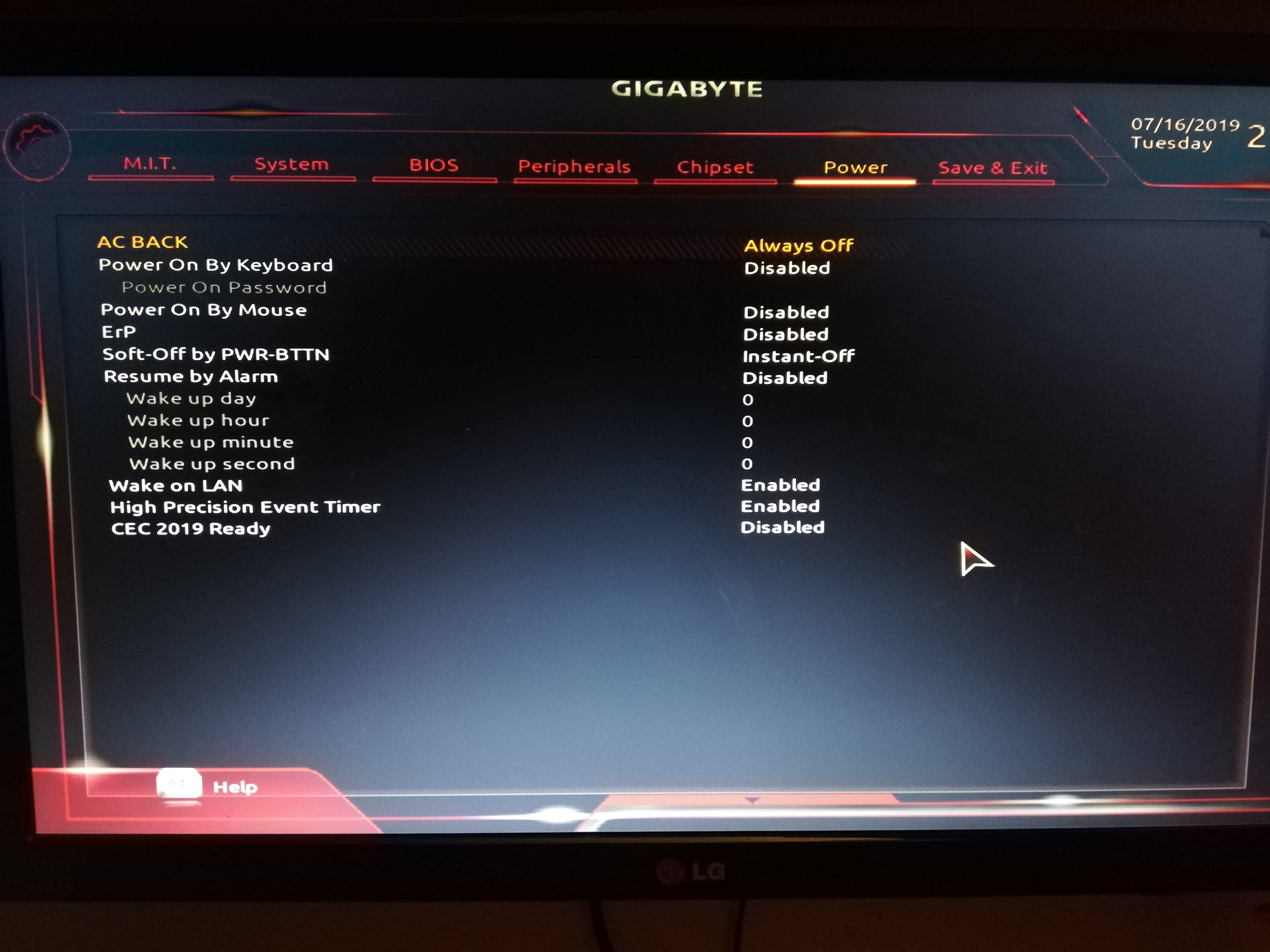
    Then take pictures of all the BIOS settings tabs: (most importantly BOOT, POWER, CONFIGURATION, ADVANCED), maybe there are some hidden options responsible for quick start.
    I did not read the active threat in the logs as well, so the virus infection is gone.
    Perhaps the problem is with either old drivers or damaged system files. I used to have that the system had damaged files and woke up quite a long time. At the beginning try to update them, if that doesn't help, start Windows in safe mode. If in safe mode it also turns on for a long time. The format awaits you, and if it fails, the hardware is probably to blame.
  • #18 18063866
    Anonymous
    Level 1  
  • #19 18063893
    matix72001
    Level 13  
    Posts: 46
    Help: 13
    Rate: 7
    @ Tomequ123 Only these things do not affect the system boot, uninstalling the antivirus program will not do anything, and neither will CCleaner itself. It is better to remove all tasks from the schedule and autostart, update the drivers and then remove unnecessary programs: for example: ARPR, GPUTWEAK. There is no trace of malware or other suspicious add-ons in its logs. AVG itself is lightweight as well, so it's definitely not the programs' fault. I would look for the fault on the side of the system, drivers or BIOS.
  • #20 18064846
    enowaczek96
    Level 6  
    Posts: 11
    @ matix72001

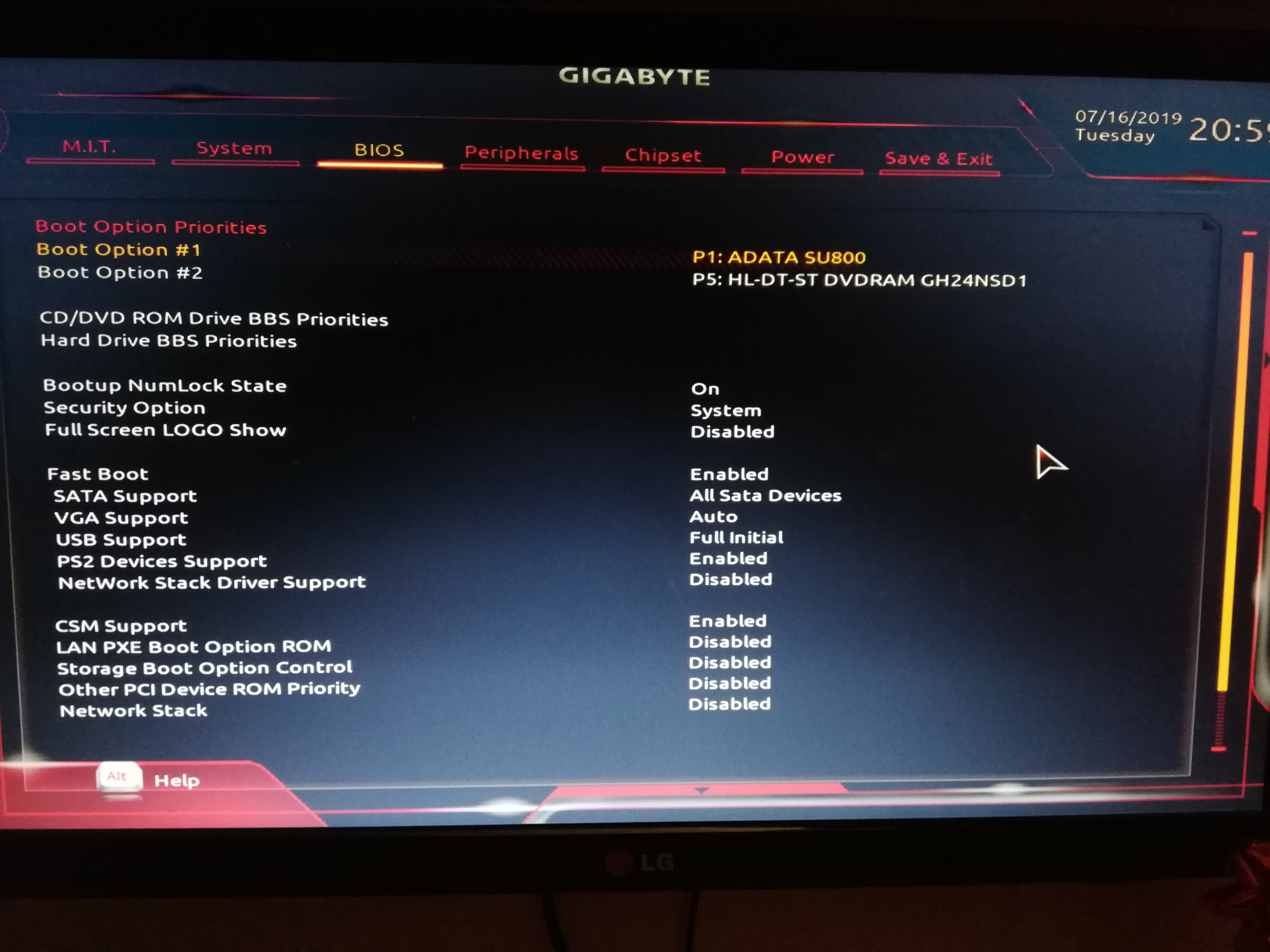
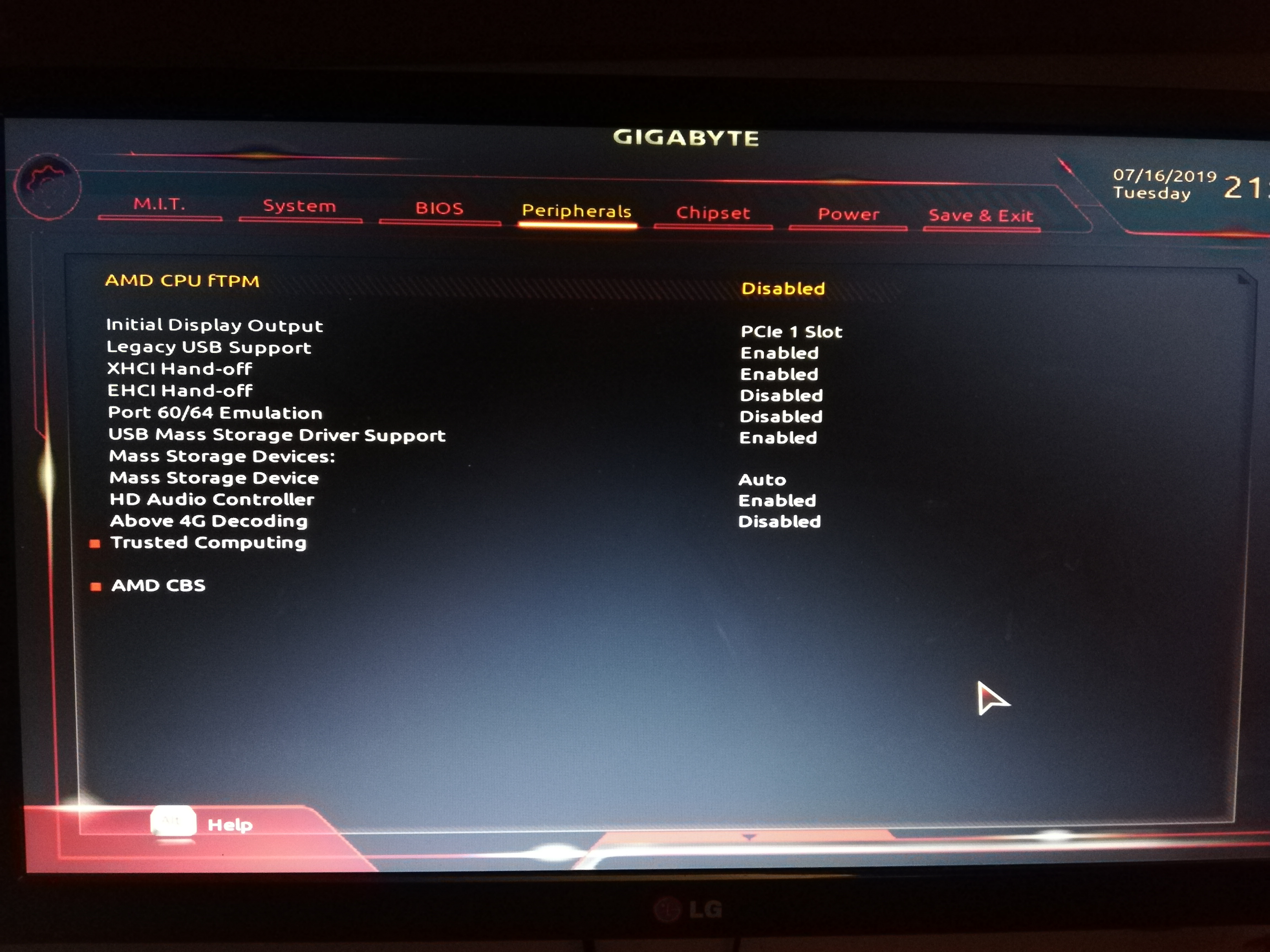
    In the attachment I put in actually relevant photos from UEFI. It seems to me that everything is fine as far as booting is concerned. Fast boot is set, there is also the Ultra fast boot option, probably, but from what I read, it is not recommended to run it with the W10 on board.

    There is no virus infection at 100%, it has been scanned with many Malwarebytes etc. and it is completely clean. Unless there is something deep inside that even these programs cannot detect.

    Windows gets up in safe mode just as long. Same @ Tomequ123 As for the clean boot I wrote about a few posts above - exactly the same is happening.

    A few moments later:
    I checked the drivers, updated any that were out of date.
    I excluded everything unnecessary from the schedule of tasks. I have already thrown out what I did not need from the autostart.
    Windows 1806 was installed, I updated it to version 1903 and checked the consistency of the system files again.

    The problem seems to be resolved. I don't know exactly which solution helped, because I did everything I could 'in one fell swoop'. Probably a system update. Possible like @ matix72001 you mentioned that some system files were corrupted and the system update simply repaired or replaced them.

    The system normally wakes up in 6-7 seconds and when it is 'restarted' in 16-18 seconds, so everything normal.

    Anyway, I will let you know in a few days if everything is alright or if the problem is solved only temporarily.
    Thanks for your help and all suggestions :)


    Windows 10 Slow Boot Time on SSD: GTX 1050 Ti, AMD Ryzen 3, Gigabyte Motherboard Issue? Windows 10 Slow Boot Time on SSD: GTX 1050 Ti, AMD Ryzen 3, Gigabyte Motherboard Issue? Windows 10 Slow Boot Time on SSD: GTX 1050 Ti, AMD Ryzen 3, Gigabyte Motherboard Issue? Windows 10 Slow Boot Time on SSD: GTX 1050 Ti, AMD Ryzen 3, Gigabyte Motherboard Issue?
  • #21 18072986
    enowaczek96
    Level 6  
    Posts: 11
    After a few days of use, no problems. Everything normal, as it should be. Topic to be closed, thank you all for your help :)

Topic summary

✨ The discussion revolves around a user experiencing prolonged boot times (over 4 minutes) on a Windows 10 system installed on an SSD. The system specifications include an AMD Ryzen 3 1200 processor, Nvidia GeForce GTX 1050 Ti graphics card, Gigabyte GA-A320M-S2H motherboard, and an ADATA SU800 256GB SSD. Despite having sufficient free disk space and performing various troubleshooting steps such as updating drivers, scanning for errors, and cleaning the registry, the issue persisted. Suggestions included checking the SSD for errors, updating firmware, uninstalling antivirus software, and examining Windows event logs for errors. Ultimately, after updating Windows and performing system checks, the user reported that the boot time returned to normal after a few days of use.
Generated by the language model.

FAQ

TL;DR: Windows 10 SSD boots fixed: after updating Windows/drivers, cold boots hit 6–7 seconds; "The problem seems to be resolved." [Elektroda, enowaczek96, post #18064846]

Why it matters: For Windows 10 users on SSDs with long boots, this shows what to check and the fixes that restored normal times.

Quick Facts

Why is my Windows 10 boot so slow on an SSD?

Focus on OS state, not just hardware. In this case, Safe Mode was also slow and unplugging the HDD didn’t help. Updating Windows to 1903 and refreshing drivers restored normal boot times. That points to corrupted system files or services, not SSD wear. Start by updating Windows, motherboard chipset, and storage drivers, then re-test. If you see improvement, continue cleaning scheduled tasks and checking logs. The resolved system booted in 6–7 seconds cold, 16–18 seconds on restart. [Elektroda, enowaczek96, post #18064846]

How do I quickly diagnose what’s delaying startup?

"Check the Windows event log for error, fatal, and warning events after starting." Then filter to the last hour. How-To:
  1. Open Event Viewer → Windows Logs → System.
  2. Create a filter for Critical, Error, and Warning, last 60 minutes.
  3. Note repeated service timeouts or disk-related entries and address them. [Elektroda, dt1, post #18058247]

Could a secondary HDD be the reason for slow boot?

A healthy secondary HDD usually doesn’t delay SSD boot. Here, unplugging the Seagate HDD did not improve startup time. However, removing it initially broke boot because the boot files lived on that disk. Ensure the Windows Boot Manager and boot order target the SSD before removing other drives. If boot fails, reconnect the drive and repair boot files, then migrate them to the SSD. [Elektroda, enowaczek96, post #18056377]

Should I disable Fast Startup or hibernation when troubleshooting slow boots?

Yes. Disable Fast Startup to force a full shutdown and a clean boot path. Use an elevated command prompt: powercfg /h off, reboot, test, then re-enable if desired with powercfg /h on. This isolates restart-only slowdowns from cold-boot issues, since Fast Startup doesn’t affect restarts. [Microsoft, 2023]

How do I update firmware on an ADATA SU800 SSD?

Install ADATA SSD Toolbox, check drive health, and apply available firmware updates. Firmware can fix controller bugs that affect initialization and boot stability. Back up important data first, connect the SSD directly via SATA, and avoid power loss during the update. After flashing, power-cycle the PC and retest boot times. [ADATA SSD Toolbox]

Do antivirus or CCleaner cause long boots?

They can add startup tasks, but they weren’t the cause here. The user uninstalled antivirus and disabled non-Microsoft services with no change. That points to system files or drivers. Use clean boot testing to confirm. If removal doesn’t change boot duration, refocus on Windows updates, drivers, and Event Viewer errors. [Elektroda, enowaczek96, post #18059439]

How do I repair Windows system files that might slow boot?

Run from an elevated Command Prompt: DISM /Online /Cleanup-Image /RestoreHealth sfc /scannow Restart after each. These tools repair the component store and system files. Corruption can delay service initialization during boot. Re-run after major updates to verify integrity. [Microsoft, 2023]

After unplugging my HDD, Windows won’t boot. What happened?

Windows may have placed boot files on the other drive during installation. Removing it can make the SSD unbootable. In this case, the user repaired boot using diskpart and restored access. Reconnect the HDD, back up data, then use Windows recovery or administrative tools to rebuild boot files onto the SSD before removing the secondary drive. [Elektroda, enowaczek96, post #18056377]

Does Safe Mode help isolate the cause?

Yes. If Safe Mode boots quickly, startup apps or drivers are suspect. Here, Safe Mode was equally slow, which points to core Windows components or storage initialization. That steers you toward OS repair, updates, and firmware checks rather than app removal. [Elektroda, enowaczek96, post #18064846]

What BIOS/UEFI settings matter for SSD boot?

Enable AHCI for SATA, set the SSD as the first boot device, and consider Fast Boot after fixing issues. In this build, AHCI and Fast Boot were already set. Ultra Fast Boot exists on some boards; use it only once the system is stable. [Elektroda, enowaczek96, post #18064846]

What finally fixed the 4‑minute boot in this thread?

Updating Windows from 1803 to 1903, refreshing drivers, and cleaning scheduled tasks resolved the issue. Measured results: 6–7 seconds for cold boot and 16–18 seconds for restart. That confirms an OS-level cause rather than SSD failure. [Elektroda, enowaczek96, post #18064846]

Should I reinstall Windows, or can I avoid it?

Try Windows Update, driver updates, Event Viewer triage, and DISM/SFC first. Also test with Fast Startup off. In this case, those steps avoided a reinstall and restored normal performance. If Safe Mode is slow and repairs fail, a clean install is reasonable after backups. [Elektroda, enowaczek96, post #18064846]
Generated by the language model.
ADVERTISEMENT