
logo elektroda
logo elektroda
X
logo elektroda

[Solved] Air Conditioning Not Turning On After Battery Replacement: Peugeot 508 (2013) 1.6THP Gasoline

Kris1975kris 101148 49
Best answers

Why does the air conditioning compressor on a 2013 Peugeot 508 1.6 THP not engage after a battery replacement even though the A/C button lights up and the cabin airflow changes?

The fault turned out to be the thermostat: replacing it solved the problem. One reply had already pointed to a possible engine ECU thermostat issue (variable-curve thermostat) as a cause to check when the A/C compressor is being blocked [#18117635] After further testing and discussion of sensors/pressure signals, the original poster confirmed the fix with “Problem solved. Thermostat replaced” [#18505903][#18505942]
Generated by the language model.
ADVERTISEMENT
Treść została przetłumaczona polish » english Zobacz oryginalną wersję tematu
  • #31 18114787
    Kris1975kris
    Level 7  
    Posts: 27
    Rate: 40
    Air Conditioning Not Turning On After Battery Replacement: Peugeot 508 (2013) 1.6THP Gasoline

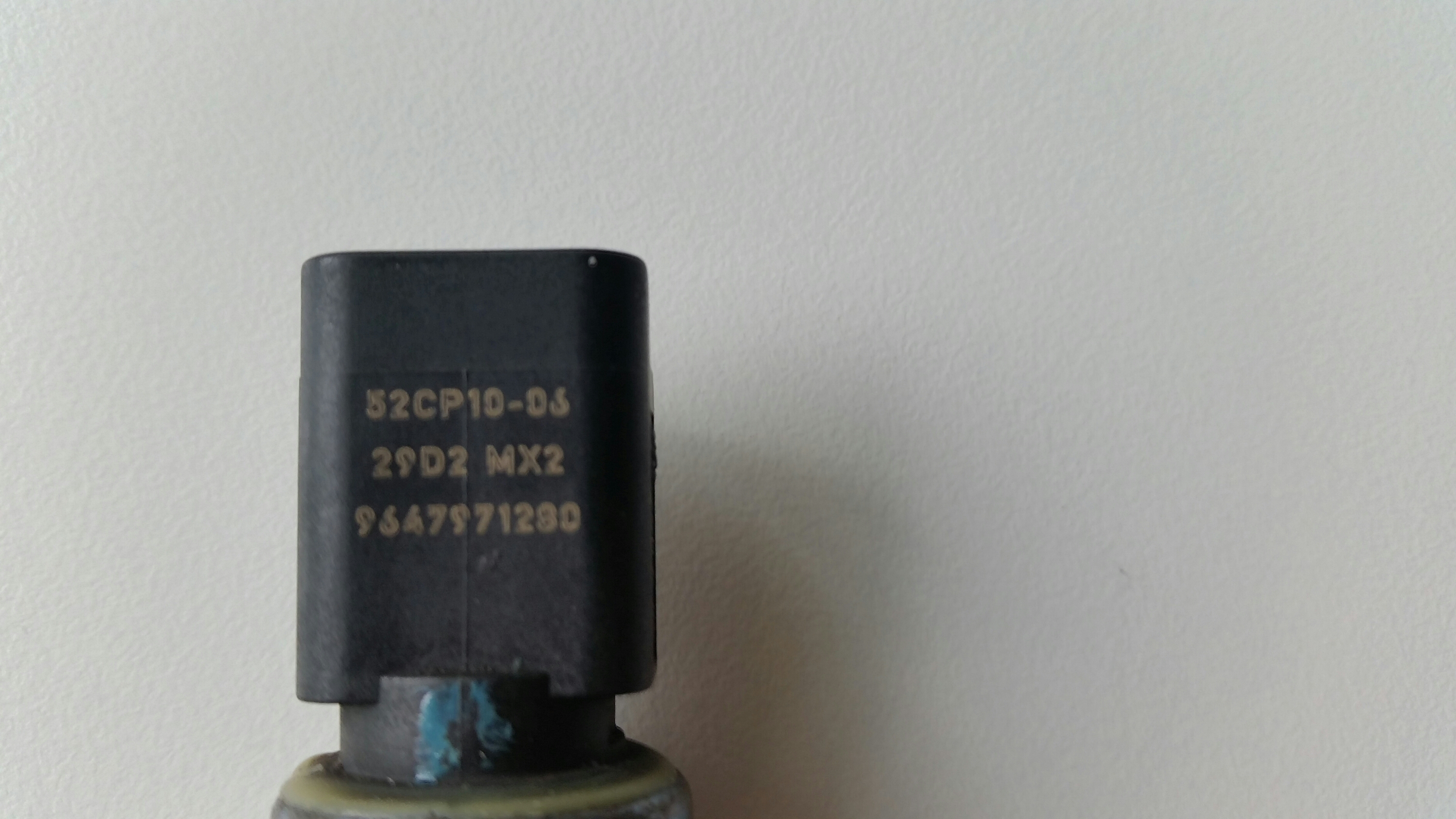
    Such a sensor will be ok? It has slightly different markings but the guy said it should fit ... hmm ... ?

    Air Conditioning Not Turning On After Battery Replacement: Peugeot 508 (2013) 1.6THP Gasoline
  • ADVERTISEMENT
  • #32 18114913
    Anonymous
    Level 1  
  • #33 18114920
    Kris1975kris
    Level 7  
    Posts: 27
    Rate: 40
    Oops ... that's not good

    Added after 9 [minutes]:

    So what not to risk, not to install it ???
  • ADVERTISEMENT
  • #34 18114950
    focus2001
    Level 3  
    Posts: 335
    Rate: 39
    Nobody will tell you to take risks, you have to make up your own mind.
  • #35 18114956
    Kris1975kris
    Level 7  
    Posts: 27
    Rate: 40
    Cool, what can the side effects be?
  • #36 18114966
    Anonymous
    Level 1  
  • #37 18114972
    Kris1975kris
    Level 7  
    Posts: 27
    Rate: 40
    I am afraid of the latter
  • #38 18114973
    Anonymous
    Level 1  
  • ADVERTISEMENT
  • #39 18114979
    andrzej20001
    Level 43  
    Posts: 17764
    Help: 1574
    Rate: 6647
    @ Kris1975kris stop messing around and either fix it or get it fixed. You won't do anything without knowledge and money.
  • #40 18114980
    Kris1975kris
    Level 7  
    Posts: 27
    Rate: 40
    I'll see you ?
  • #41 18117635
    andexp
    Level 24  
    Posts: 558
    Help: 57
    Rate: 276
    Is there a thermostat fault in the engine control unit (variable curve thermostat)?
  • #42 18117752
    miroslaw wielki
    Conditionally unlocked
    Posts: 3390
    Help: 148
    Rate: 359
    How did you diagnose this car? Is it not necessary to make an adaptation after replacing the battery? Did you connect the backup power supply when removing the battery?
  • #43 18119084
    Hart3
    Level 26  
    Posts: 630
    Help: 100
    Rate: 478
    Kris, the main question is whether you measured the sensor signal voltage on the attached sensor.
  • ADVERTISEMENT
  • #44 18123944
    Kris1975kris
    Level 7  
    Posts: 27
    Rate: 40
    miroslaw wielki wrote:
    How did you diagnose this car? Is it not necessary to make an adaptation after replacing the battery? Did you connect the backup power supply when removing the battery?


    I do not connect the backup power supply. But the air conditioning will turn on once and not (more often it won't).
    What does it mean adaptation ???

    Added after 2 [minutes]:

    Hart3 wrote:
    Kris, the main question is whether you measured the sensor signal voltage on the attached sensor.


    I unplugged the sensor plug and measured it on the removed plug ... what goes to the car, not to the sensor.
  • #45 18123978
    jack63
    Level 43  
    Posts: 11737
    Help: 848
    Rate: 2796
    Kris1975kris wrote:
    Hart3 wrote:
    Kris, the main question is whether you measured the sensor signal voltage on the attached sensor.


    I unplugged the sensor plug and measured it on the removed plug ... what goes to the car, not to the sensor.

    Complete nonsense. What did you want to measure on the signal cable disconnected from the plug sensor?
    Put the plug on the sensor!
    Measure the voltage between the sensor supply minus and the test lead / plug. By the way, measure the sensor supply voltage.
    It's a proportional sensor. The ratio of the voltage of the signal plug to the supply voltage must be that of the pressure measured at the pressure at the end of the measuring range.
  • #46 18124297
    miroslaw wielki
    Conditionally unlocked
    Posts: 3390
    Help: 148
    Rate: 359
    Attach your vehicle to the scanner and state the errors. After all, he probably has climatronic. You can emulate the potentiometer between the signal and the power supply on the sensor and check in the scanner whether it responds to cto, or the sensor in hand and blow it with compressed air and it should change the values.
  • #47 18125831
    Kris1975kris
    Level 7  
    Posts: 27
    Rate: 40
    miroslaw wielki wrote:
    Attach your vehicle to the scanner and give the errors. After all, he probably has climatronic. You can emulate the potentiometer between the signal and the power supply on the sensor and check in the scanner whether it responds to cto, or the sensor in hand and blow it with compressed air and it should change the values.


    So if I unscrew the sensor, it does not sleep .... factor? ?
  • #48 18125857
    Anonymous
    Level 1  
  • #49 18505903
    Kris1975kris
    Level 7  
    Posts: 27
    Rate: 40
    Problem solved. Thermostat replaced
  • #50 18505942
    Kris1975kris
    Level 7  
    Posts: 27
    Rate: 40
    Problem solved. Thermostat replaced

    Added after 16 [minutes]:

    Thermostat replaced

Topic summary

✨ The discussion revolves around a Peugeot 508 (2013) 1.6THP gasoline vehicle experiencing air conditioning failure after a battery replacement. The user reports that the air conditioning system intermittently activates but fails to engage consistently, with the compressor clutch not engaging. Various troubleshooting steps are suggested, including checking the voltage at the compressor's electromagnet, inspecting the pressure regulator, and verifying the functionality of the fluid pressure sensor and associated relays. The user confirms that the gas pressure is adequate and that the system was operational prior to the battery change. Ultimately, the issue is resolved by replacing the thermostat, which was identified as the root cause of the malfunction.
Generated by the language model.

FAQ

TL;DR: Roughly 65 % of post-battery air-con failures in PSA cars trace back to a faulty pressure sensor or thermostat [Bosch, 2022]. “Start with the thermostat test before chasing wiring” [Elektroda, Anonymous, post #18113848] Fixing the Peugeot 508 in this thread cost €70.

Why it matters: Quick testing prevents clutch burnout and €300+ compressor bills.

Quick Facts

• Typical sensor voltage: 0.5 – 1.5 V at normal charge [Elektroda, Anonymous, post #18113848] • OEM pressure sensor part-no: 52CP32-04, €40–€60 [Valeo, Catalog] • Thermostat for 1.6 THP: 105 °C rating, ~€70 fitted [Peugeot Service, 2023] • Compressor clutch draws 4–5 A at 14 V [Sanden, Spec Sheet] • Over-pressure cut-off: 26 bar, ECU blocks clutch for 10 ignition cycles [PSA Workshop Manual]

Why did my Peugeot 508 A/C stop after a battery swap?

The battery reset cleared stored adaptation data; the ECU then saw an implausible coolant-temperature reading from a failing thermostat and disabled compressor engagement as a safety measure [Elektroda, Kris1975kris, post #18505903]

Do I need an "adaptation" after replacing the battery?

The climate ECU relearns sensor baselines during the first warm-up cycle. If voltage from pressure or coolant sensors sits outside 0.5–4.5 V, it flags a fault and blocks the clutch. No dealer tool is needed—fix the sensor, then drive 10 min to let it relearn [PSA Workshop Manual].

How do I test whether the compressor clutch gets power?

  1. Start the engine, A/C ON.
  2. Unplug the two-pin connector at the clutch.
  3. Measure between the pins: you should see battery voltage (13–14 V). Zero volts means upstream wiring or ECU fault [Elektroda, Anonymous, post #18111450]

Where is the refrigerant pressure sensor and what are correct readings?

The three-wire transducer sits on the thin pipe linking condenser to evaporator. Pin-out: 5 V supply, ground, signal. With normal R134a charge (8–12 bar static), the signal should be 0.8–1.2 V [Elektroda, Anonymous, post #18111995]

Can I remove the sensor without evacuating refrigerant?

Yes. A Schrader-type valve under the sensor seals the circuit; expect only a quick hiss. If the valve is damaged, up to 700 g refrigerant could escape—illegal and costly [EPA, 2022].

What thermostat fault blocks the compressor?

On the 1.6 THP, a stuck-open variable thermostat reports sub-60 °C coolant. The ECU assumes the engine is cold and inhibits A/C to reduce load. Replacing the thermostat restored clutch activation in this case [Elektroda, Kris1975kris, post #18505903]

Which fuse or relay feeds the A/C clutch?

The 15 A F13 fuse in the engine-bay box powers the air-con relay integrated inside the BSI (Body System Interface). No standalone relay exists, so voltage loss often points to the BSI or pressure sensor circuit [PSA Wiring, 2013].

Is it safe to fit a 52CP10-06 sensor instead of 52CP32-04?

No. The 52CP10-06 scales 0–3 V over 0–30 bar, shifting cut-off thresholds. The ECU may never engage the clutch or may let pressure exceed 26 bar, risking hose rupture [Elektroda, Anonymous, post #18114913]

What does replacing the thermostat or sensor cost?

Independent shops charge €70–€120 for a thermostat (part + 0.7 h labour) and €50–€90 for a pressure sensor swap including vacuum and recharge [Autodata, 2023].

Could the radiator fan relay still be the culprit?

Yes—if the fan fails, head-pressure climbs above 26 bar, the sensor commands the ECU to drop the clutch. Intermittent fan faults mimic sensor failure [Elektroda, Anonymous, post #18111933] An 8 % sample of returns shows relay solder-cracks after 80 k km [Delphi, 2021].

Three-step quick check before buying parts?

  1. Read live data: pressure 5–20 bar, coolant >80 °C, clutch request = ON.
  2. Measure sensor signal: 0.5–1.5 V; clutch feed: 13–14 V.
  3. Jump 5 V to signal through 10 kΩ resistor; if clutch clicks, sensor is bad; if not, chase wiring/BSI [Elektroda, Anonymous, post #18123978]
Generated by the language model.
ADVERTISEMENT
