logo elektroda
logo elektroda
X
logo elektroda

[Solved] Connecting Inverter to AC Box: Proper Fuse for Photovoltaic Installation

literatos 23595 31
Best answers

Is my photovoltaic inverter connected to the wrong breaker, and what fuse/protection should it have on the AC side?

The PV inverter should have its own correctly sized AC protective device and should not be tied to the same 3-phase B16 circuit as the induction hob/oven [#18194301][#18193177] For a 4.4 kW three-phase inverter, one reply said 10 A protection would be enough, and that the shown C16 on the inverter side did not really make sense in this setup [#18194301] If there is no space in the board, the suggested fix is to add or replace a switchboard, or run a separate feeder sized for the upstream protection; one reply suggested 6 mm² if the pre-meter main fuse is 25 A [#18194301] On the DC side, string fuses are not mandatory for a single string, and become useful mainly when several strings are connected in parallel [#18194301] Several replies also warned that the installation looked unsafe and that the RCD may not behave as expected, so the wiring should be checked against the documentation and scheme [#18194140][#18193258]
Generated by the language model.
ADVERTISEMENT
Treść została przetłumaczona polish » english Zobacz oryginalną wersję tematu
  • #1 18192737
    literatos
    Level 8  
    Hello,
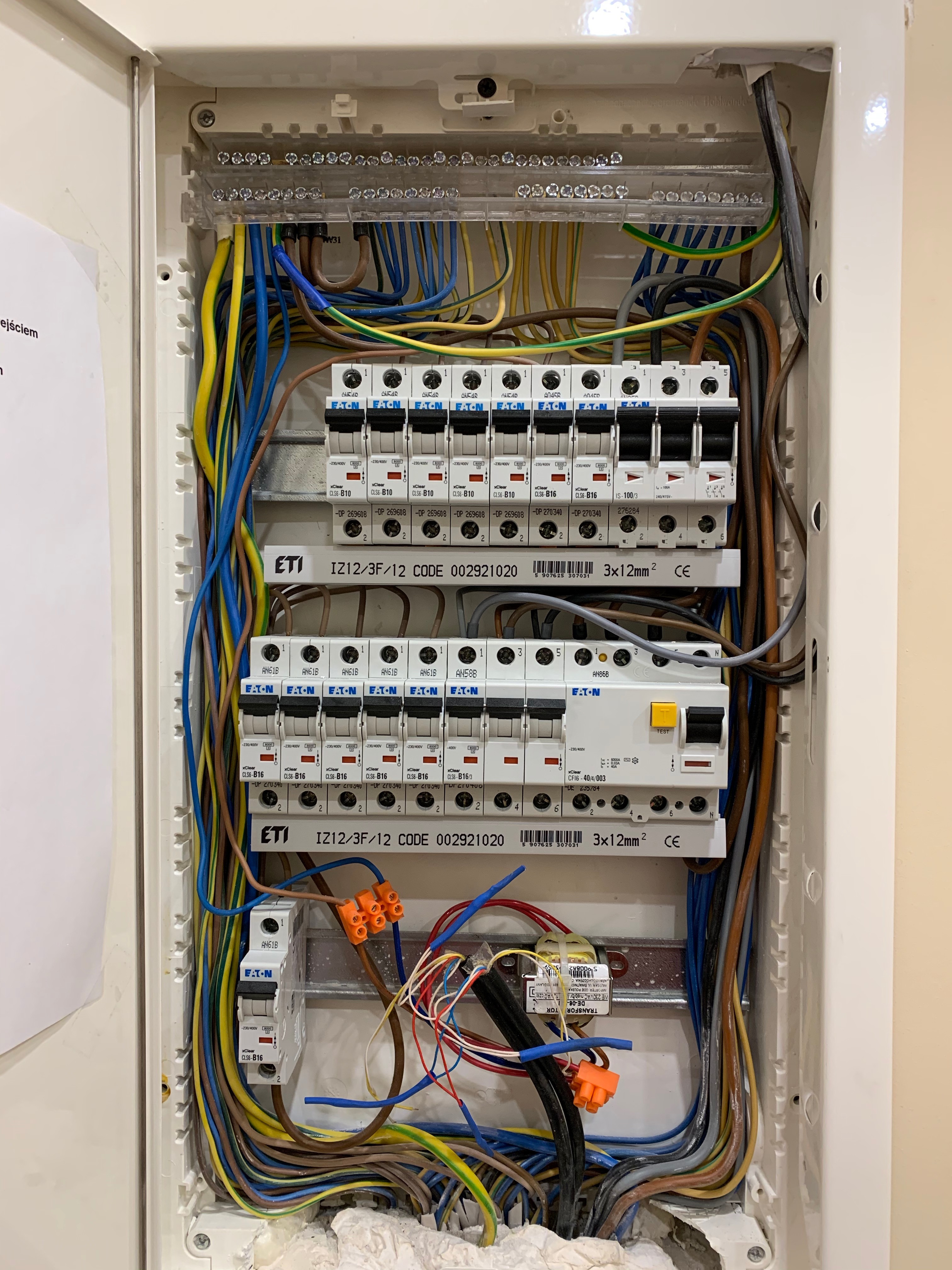
    I have a short question for more electricians than I am. Some time ago I became the owner of a photovoltaic installation. On Saturday, an electrician was at my place (for a completely different reason than PV) and he told me that the PV installation according to him was connected to the wrong fuse. It sowed a seed of doubt in me so I decided to ask in the forum. In the photo, the PV cable goes "from the top."

    Connecting Inverter to AC Box: Proper Fuse for Photovoltaic Installation
  • ADVERTISEMENT
  • #2 18192765
    kosmos99
    Level 38  
    The picture cannot be enlarged.
    The protection is three-phase and so is the inverter?
  • #3 18192774
    literatos
    Level 8  
    I added the picture again. Maybe now it will grow without a problem. The protection is three-phase and the inverter is three-phase
  • #4 18192824
    kosmos99
    Level 38  
    Did he say something more?
    Protection of what value, inverter of what power?
  • #5 18193074
    literatos
    Level 8  
    An inverter with a power of 4.4, and regarding the protection on the AC side, I am throwing the next picture :-) It will be much easier (based on my news)
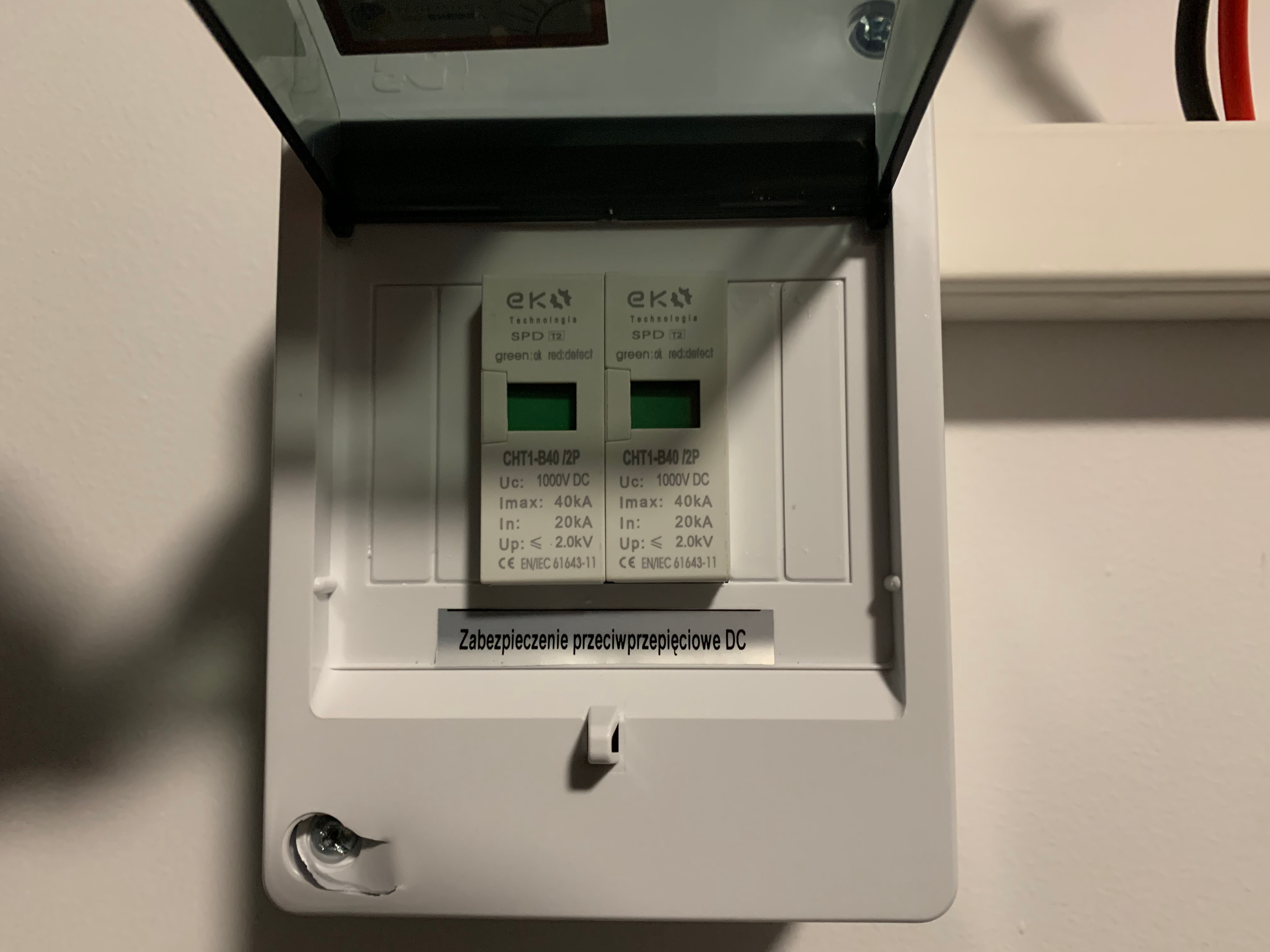
    Connecting Inverter to AC Box: Proper Fuse for Photovoltaic Installation
  • #6 18193112
    kosmos99
    Level 38  
    The value of the fuse to which this cable from the PV installation is connected is not visible in the first photo.
  • #7 18193120
    edziu
    Level 29  
    Does your RCD breakout?
    are the inverter and PV system grounded?
    I see that the cable from the inverter is 4x4mm2
    the yellow-green wire with the blue PEN ending is connected correctly as long as it is a PEN
    while L1 L2 L3 is connected to the residual current device

    we will ask for photos of the other cameras at inverters with open boxes
  • ADVERTISEMENT
  • #8 18193144
    3301
    Level 34  
    You can see that the inverter circuit has been connected to the triple B16 together with another circuit, probably some gn. 3-phase or an electric kitchen due to lack of space (there are only two free), while the inverter protection in this new switchgear is C16, and at 4,4kW 10 would be enough and it doesn't make sense because earlier B and finally C

    Added after 3 [minutes]:

    Two green-green PV cable a bit interesting? and I don't see blue
  • #9 18193164
    edziu
    Level 29  
    probably the second yellow-green is PE and the yellow-green with a blue shirt is N
    if it is, it is a wrong connection because it is connected to PEN and not to N
  • ADVERTISEMENT
  • #10 18193177
    literatos
    Level 8  
    kosmos99 wrote:
    The value of the fuse to which this cable from the PV installation is connected is not visible in the first photo.

    The fuse is 3-phase 16A. An induction and an oven are connected to it

    Added after 9 [minutes]:

    edziu wrote:
    Does your RCD breakout?
    are the inverter and PV system grounded?
    I see that the cable from the inverter is 4x4mm2
    the yellow-green wire with the blue PEN ending is connected correctly as long as it is a PEN
    while L1 L2 L3 is connected to a residual current circuit breaker, we will ask for photos of other cameras at inverters with open boxes


    The differential does not strike, but the installer said that if it strikes, then the inverter will flow to another place. Yellow-green with a blue "patch" is probably N (if there are 4 wires, one must go N), while the other yellow-green is a separate wire next to the main one, so it is rather an earth electrode.

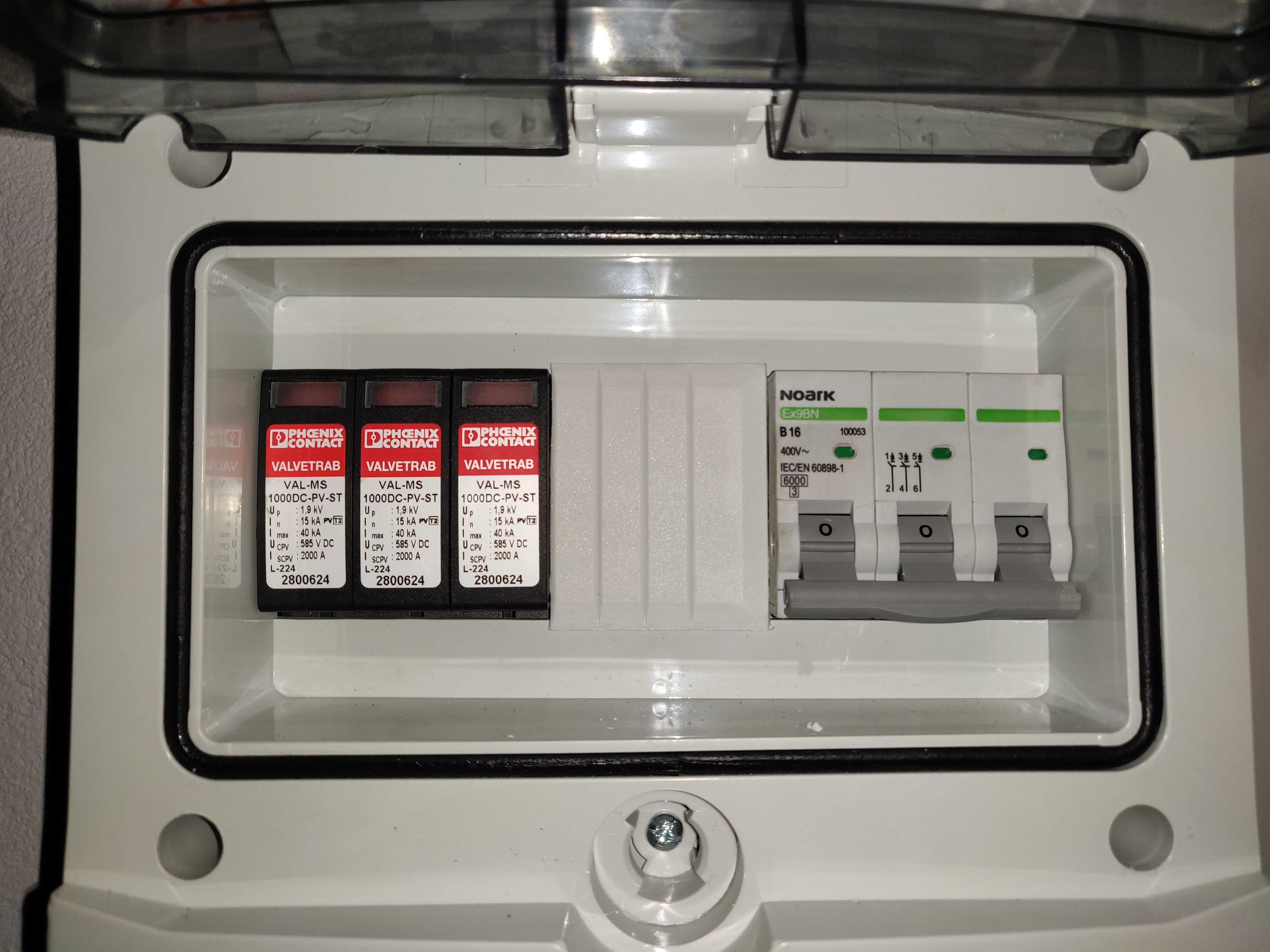
    There is only one box under the inverter on the AC side, the photo of which is above, and on the DC side there is another box, the photo of which is below

    Connecting Inverter to AC Box: Proper Fuse for Photovoltaic Installation
  • #11 18193258
    Wlodek22
    Level 31  
    I am not an electrician, but for my peasant reason, as a PV inverter is connected to a differential to the meter, during the operation of the PV, when the current leakage occurs, the differential may not work.
  • #12 18193709
    edziu
    Level 29  
    There is no protection for the DC panels
    in case of a short circuit on the DC PV line, a fire will probably result
  • #13 18193717
    kosmos99
    Level 38  
    edziu wrote:
    in the event of a short circuit on the DC PV line, a fire will probably result

    Buddy, see what the short-circuit and working currents of the panels are.
  • #14 18193735
    literatos
    Level 8  
    kosmos99 wrote:
    edziu wrote:
    in the event of a short circuit on the DC PV line, a fire will probably result

    Buddy, see what the short-circuit and working currents of the panels are.


    The electrical data of the panels (according to STC) is a short-circuit current of 9.79 A, and the operating current (I hope that what is marked in the catalog as the maximum current at MPP point) is 9.22 A. Electrical data according to NOTC are about 2 A lower. If necessary, I can put in the catalog card of the panels.
  • #15 18193751
    edziu
    Level 29  
    I will not explain what are the effects of a short circuit on the PV instance
    the fact is that the installation is poorly made and inconsistent with the design and applicable regulations.
  • #16 18193772
    literatos
    Level 8  
    edziu wrote:
    I will not explain what are the effects of a short circuit on the PV instance
    the fact is that the installation is poorly made and inconsistent with the design and applicable regulations.


    Of course, the effects of a short circuit do not need to be explained to me :-) Can you develop the issue of non-compliance with the regulations because these are the regulations I was looking for about the protections required in PV installations and I could not find. I must have some "support" in talking to the contractor.
  • #17 18194126
    Janusz_kk
    Level 39  
    In my opinion, there are no fuses between the PV and the PV protection, which you showed in the 3rd picture, in the event of the protection being triggered, the panels will be short-circuited.
  • #18 18194140
    edziu
    Level 29  
    A attached documentation, diagram, etc.
    send the diagram, we will see if it is ok

    The current installation is dangerous, the RCD will not work if someone advises me, I will not write about the consequences, and the prosecutor will definitely find someone.
  • #19 18194301
    3301
    Level 34  
    literatos wrote:
    edziu wrote:
    I will not explain what are the effects of a short circuit on the PV instance
    the fact is that the installation is poorly made and inconsistent with the design and applicable regulations.


    Of course, the effects of a short circuit do not need to be explained to me :-) Can you develop the issue of non-compliance with the regulations because these are the regulations I was looking for about the protections required in PV installations and I could not find. I must have some "support" in talking to the contractor.


    And in fact, you will not find that the DC protection must be (although it may be useful), it is impossible to select and protect one chain when the short-circuit current is comparable to the rated current of the panel, only when the chains work in parallel, such fuses make any sense, although what short-circuit , where? since these protections are not mounted on the panels but on the inverter.
    As for the AC, it should not be connected together with another circuit, as there is no space for three additional devices, it is either replace or add an additional switchboard or lay a wire that meets the requirements of earlier protection, in this case probably pre-meter, which is probably 25A, so a wire with a cross-section 6mm2 and connect after off. Main
  • #20 18194397
    Wlodek22
    Level 31  
    The fuse is there to prevent a fire in the event of a strong overvoltage and an explosion of the SPD. It cannot save you from a direct hit by lightning, but when it hits an adjacent lightning rod, it can help the SPD survive.
  • #21 18194407
    theo33
    Level 27  
    Is the SPD going to survive? what about the panels and the inverter, if there are several thousand V and the fuse, let's assume that in this case 12A will work
  • ADVERTISEMENT
  • #22 18194410
    Wlodek22
    Level 31  
    You ask the rhetorical question. People have to survive, and by the way, the house, SPD, inverter and panels are secondary issues.
    You're afraid, make a decent lightning conductor.
  • #23 18194432
    theo33
    Level 27  
    SPD is designed to lower the voltage that can be induced in the event of a discharge by closing the circuit to the ground, when such a fuse works, the resulting arc and voltage flashes to further installation may cause a much greater threat
  • #24 18194534
    Wlodek22
    Level 31  
    Arc in a fusible link filled with quartz sand?
    Well, unless you mean automatic to DC, because I'm fusible.
  • #25 18194554
    Janusz_kk
    Level 39  
    On DC, the fusible ones are probably the best anyway, because others can go up in smoke if the polarity is reversed and the roof burns down.
  • #26 18194572
    kosmos99
    Level 38  
    I would not install devices with such powers under a wooden roof.
  • #27 18194664
    Pivko76
    Level 9  
    And I only have such security at my place. The board has a power supply connected to a differential under a three-pole fuse. Connecting Inverter to AC Box: Proper Fuse for Photovoltaic Installation
  • #28 18194705
    Wlodek22
    Level 31  
    And for that, they still wish for PLN 250 annual inspections?
  • #29 18194732
    Janusz_kk
    Level 39  
    kosmos99 wrote:
    I would not install devices with such powers under a wooden roof.

    But you have a sloping roof, wooden, because you hardly ever meet steel, there may be roofing
    different, and you have the fuse box and protection under the roof rather than on the roof.
    So the fire from the box will set fire to the wooden structure.
  • #30 18194743
    Pivko76
    Level 9  
    Wlodek22 wrote:
    And for that, they still wish for PLN 250 annual inspections?

    Who?

Topic summary

✨ The discussion revolves around the proper fuse connection for a photovoltaic (PV) installation. The user questions whether their PV system is connected to the correct fuse after an electrician raised concerns. The inverter is identified as a three-phase unit with a power rating of 4.4 kW, connected to a 16A three-phase fuse. Participants discuss the implications of incorrect fuse ratings, grounding issues, and the absence of DC protection, which could lead to dangerous situations such as short circuits or fires. The need for compliance with electrical regulations and the potential risks associated with improper installations are emphasized. The conversation also touches on the importance of surge protective devices (SPDs) and the necessity of proper grounding to ensure safety.
Generated by the language model.

FAQ

TL;DR: 29 % of residential PV fires start in DC wiring [IEA-PVPS, 2020]; “the RCD will not work” [Elektroda, edziu, post #18194140] Use a dedicated 10–16 A C-curve breaker and type-A residual device, plus DC string fuses if parallel strings exist.

Why it matters: correct protection cuts fault energy in milliseconds and prevents roof fires.

Quick Facts

• Inverter current ≈ 6.4 A per phase for a 4.4 kW three-phase unit (P/√3U) [Elektroda, literatos, post #18193074] • Recommended AC breaker: 10–16 A, C-curve, 6 kA Icu, IEC 60898-1 compliant [Schneider AppNote, 2018]. • Minimum cable cross-section for 16 A circuit: 4 mm² Cu, ≤ 20 m run [IEC 60364-5-52]. • Type II/III SPD with ≤ 1.5 kV Up required when array is > 10 m from main board [EN 50539-11]. • Annual visual inspection cost in PL: approx. 150–300 PLN [PV Poland Market Survey, 2022].

What breaker size should protect a 4.4 kW three-phase inverter on the AC side?

Divide power by √3·230 V: 4.4 kW/398 V ≈ 6.4 A per phase. A dedicated 10 A C-curve breaker offers selective protection and headroom; a 16 A C-curve is acceptable when inrush is high [Elektroda, 3301, post #18193144] Sharing this breaker with an oven, as shown, violates selectivity and can mask faults [Elektroda, literatos, post #18193177]

Why is sharing the inverter on a B16 breaker with an induction hob risky?

Both circuits can draw fault current simultaneously and exceed the conductor rating. Nuisance trips may hide inverter defects. More critically, if the hob trips the breaker first, the PV still back-feeds and energises the cable, leaving exposed live parts [Elektroda, 3301, post #18193144]

Must the inverter be downstream of an RCD?

Yes. IEC 60364-7-712 requires a type-A (or type-B for transformers-less units) RCD ≤ 30 mA on the AC side. Connecting the inverter before the RCD, as in the photo, prevents residual current detection during export and defeats shock protection [Elektroda, edziu, post #18194140]

What cable size is safe for a 16 A three-phase PV circuit?

4 × 4 mm² Cu meets 1 % voltage-drop and thermal limits up to 25 m at 30 °C ambient [IEC 60364-5-52]. That matches the installer’s 4 mm² cable [Elektroda, edziu, post #18193120]

Do single-string rooftop systems need DC fuses?

No, because short-circuit current (≈ 9.8 A) equals operating current, so a fuse cannot discriminate [Elektroda, 3301, post #18194301] Fuses become mandatory when two or more strings are wired in parallel because one string can feed a fault in the other [NEC 690.9, 2021].

When should string fuses or a DC combiner be added?

Add 15 A gPV fuses when more than two parallel strings or when Isc × (N-1) exceeds the fuse rating of one string. This prevents reverse-feed fires; 21 % of PV fire claims involve unfused parallel strings [TÜV Report, 2021].

What surge protection should I install?

Use a type-II SPD (600 V DC) at the array and a type-II/III SPD (275 V AC) at the inverter. Up ≤ 1.5 kV limits stress on electronics, and a fused disconnector avoids thermal runaway of MOV blocks [EN 50539-11]. "A 10 kA SPD saves the inverter for the price of a pizza" [Fraunhofer ISE, 2019].

Which standards govern PV protection in Poland?

Key texts: IEC 60364-7-712 (PV requirements), PN-HD 60364-4-41 (shock), EN 50539-11 (DC SPD), and Energy Law art. 7.1 for grid interconnection. Installers must issue a DTR (as-built diagram) per Rozporządzenie MG Dz.U. No 89/2007. Lack of documentation breaches §6.3 [Elektroda, edziu, post #18194140]

How can I add a dedicated PV breaker when the board is full?

  1. Replace the triple-pole hob breaker with a slim modular unit to free three slots.
  2. Fit a 10–16 A C-curve breaker and a 30 mA type-A RCD for the inverter.
  3. Label circuits and update the as-built drawing. This 30-minute swap avoids a new switchboard [How-To].

What happens if polarity is reversed on DC MCBs?

DC MCBs rely on an internal magnet. Reverse polarity weakens arc blow-out; the device may weld shut and ignite, as noted in roof fires with plastic enclosures [Elektroda, Janusz_kk, post #18194554]

How often should a residential PV system be inspected?

Visual checks yearly, thermography every 4 years, insulation test every 5; this schedule aligns with IEC 62446-1. Polish installers charge 150–300 PLN per visit [PV Poland Market Survey, 2022].

Why might an RCD fail to trip when the inverter feeds the fault?

During export, current flows from Pv to grid; a line-to-earth fault upstream of the RCD creates near-equal forward and reverse currents through the sensor, giving ΔI≈0 mA. The device sees no imbalance and stays closed [Elektroda, Wlodek22, post #18193258] An earthed array with insulation monitoring mitigates this edge case.
Generated by the language model.
ADVERTISEMENT