logo elektroda
logo elektroda
X
logo elektroda

Equal intersection - who and why takes precedence?

MARCIN.SLASK 29535 33
ADVERTISEMENT
Treść została przetłumaczona polish » english Zobacz oryginalną wersję tematu
  • #31 18448006
    Goro
    Level 12  
    Posts: 21
    Ture11 wrote:
    Goro wrote:
    So, in this situation, giving my solution is the most effective, the simplest, and in practice, the most dynamic.

    ... and that's what solving various problems is all about.


    But do you have a driving license? :-)

    (if you have it, give it back).


    Hahahaha :spoko: :D
  • ADVERTISEMENT
  • #32 20550547
    luko1208
    Level 1  
    Posts: 1
    Equal intersection - who and why takes precedence?


    Hello, if anyone can tell me.

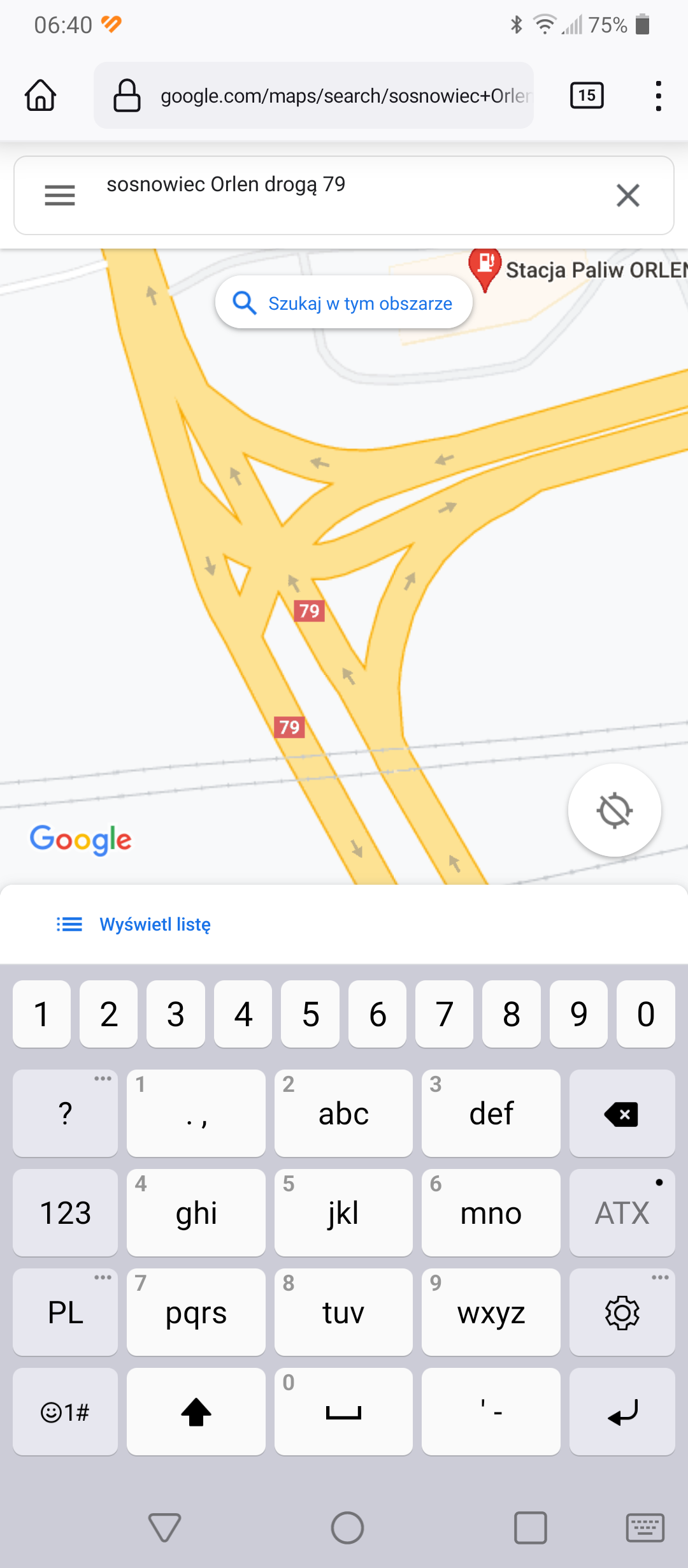
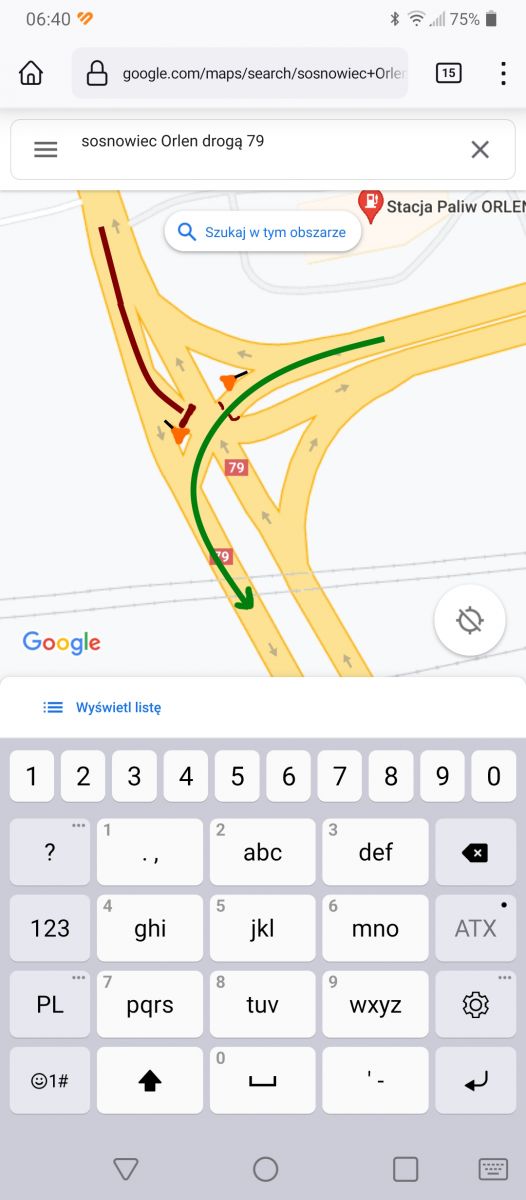
    The intersection is at the exit from S1 to Jaworzno at the current Orlen station, road 79 is a priority road. Now, who has right-of-way when making a left turn? One vehicle wants to turn left from Route 79 and the other wants left onto Route 79 - their paths intersect so someone must be ahead of someone? I say the right-hand rule, and a friend who lives there says that we who turn left have the right of way over those who turn left from Route 79. Both turns are marked with Yield signs, both vertical and horizontal.
  • ADVERTISEMENT
  • #33 20550588
    Madrik
    VIP Meritorious for electroda.pl
    Posts: 12461
    Help: 622
    Rate: 1163
    luko1208 wrote:
    ...
    Both turns are marked with give-way signs, both vertical and horizontal.


    No, they're not "both".
    This is a multi-lane intersection and where the signs are placed is crucial.

    And so, for people turning left from the national road 79 to the connector to S1, the sign is placed in front of the lane for the opposite direction and also in front of the road for people turning left from the connector to DK79.

    For those turning left from the connector on DK79, the sign is in front of the main road for those coming from the left.

    Thus, a person turning left from DK79 is obliged to give way to both vehicles from the opposite direction on DK79 and vehicles turning left from the connector from S1.

    A person turning left from the S1 connector to DK79, after passing his A7 sign, has priority over those waiting for a left turn from DK79, because their A7 sign is in front of the road they are using.

    Simple and obvious.
    The right-hand rule applies only in the absence of other markings and signals, and your friend is right and understands the rules and road markings better.

    If you prefer the logic why this is so, then the S1 road and its exits have priority over the entrance, because otherwise it would lead to traffic clogging - vehicles cannot exit because they must give way to those entering, and you cannot enter because exiting vehicles do not slow down places.
    Equal intersection - who and why takes precedence?
  • #34 20924951
    1234noobsaibot1234
    Level 1  
    Posts: 1
    People make it difficult for themselves, C, even when he reaches the center line of the road, there is still no one on the right, it is not the case that when he turns left, he is already on the right, A, what counts is what is before the turn, not after the turn. Knowing that you cannot enter the intersection without having a way to leave it, only C can enter the intersection and immediately turn left (knowing that A is also standing in front of the intersection because he is waiting for B).

Topic summary

✨ The discussion revolves around the precedence rules at equal intersections, particularly focusing on vehicles A, B, and C. Participants debate the right-of-way dynamics, emphasizing that vehicle C generally has priority over A and B, but the situation can become complex when all vehicles are at a standstill. The right-hand rule is frequently referenced, indicating that vehicles must yield to those on their right. Various scenarios are presented, including intersections with additional signage like STOP and YIELD, which further complicate the decision-making process. The conversation highlights the lack of clear legal regulations for such intersections, leading to confusion and the need for drivers to communicate through gestures to establish who proceeds first.
Generated by the language model.

FAQ

TL;DR: 31 % of urban road crashes in Poland occur at uncontrolled or equal-priority junctions [Polish Police, 2022]. “The law does not regulate this situation” [Elektroda, andexp, post #18412300] At a three-leg equal intersection the right-hand rule applies until one driver voluntarily yields.

Why it matters: Knowing the sequence prevents deadlock, fines and collisions.

Quick Facts

• Right-hand rule (pol. "zasada prawej ręki") applies only when there are no signs, lights or traffic officer [PoRD, Art. 25]. • Enter a junction only if you can leave it—blocking is a 200 PLN fine plus 2 points [PoRD, Art. 90a]. • Failing to yield priority costs 350 PLN and 6 points in 2024 [PL Tariff, 2024]. • Trams keep priority over cars even at equal intersections, unless a sign or signal says otherwise [PoRD, Art. 28]. • Approx. 12 % of Polish accidents in 2022 were due to failure to yield [Polish Police, 2022].

1. Who moves first at the three-leg equal intersection shown in post #18403237?

Vehicle C starts, because nothing approaches from its right. C then stops ahead of A. Next B passes C, as A remains on B’s left; finally A and then C exit in turn [Elektroda, Gienek, post #18403470]

2. Can C legally enter if it will have to stop inside the junction?

No. Article 25(4) forbids entering when the exit is blocked. If C foresees it must halt within the box, it must wait, even though it has priority [PoRD, Art. 25 ust. 4].

3. What if all three drivers stop and stare?

Polish law lacks a tie-breaker. One driver must voluntarily waive priority by gesturing or creeping forward; the others then follow the right-hand rule sequence [Elektroda, andexp, post #18412300]

4. Does the STOP sign for tram tracks change priority?

Yes. The STOP obliges every vehicle to halt before the rails; after stopping, standard priority applies. A car that ignored the STOP would lose priority and risk a 300 PLN fine [PoRD, Art. 49].

5. How does priority work when a tram appears?

A moving tram keeps precedence over all road users on intersecting lanes, even at equal junctions, unless signals or a sign revoke that right [PoRD, Art. 28].

6. At the S1–DK79 multi-lane exit (post #20550547), who yields when both cars turn left?

The car leaving S1 and joining DK79 has priority, because its A-7 sign is placed before the main carriageway only; the DK79 left-turn lane has its A-7 ahead of both conflict paths, so that driver must yield to the S1 vehicle [Elektroda, Madrik, post #20550588]

7. What penalty applies for forcing another driver to brake or swerve?

Forcing priority is treated as failure to yield: 350 PLN and 6 demerit points [PL Tariff, 2024]. In crashes, insurers may assign 100 % liability to the offender [KNF, 2023].

8. How do four cars resolve a deadlock at a four-way equal junction?

Each has a vehicle on the right, so no one possesses immediate priority. One driver must signal a waiver; afterwards the sequence proceeds clockwise. This mirrors the three-car stalemate described above [Elektroda, tata1, post #18406908]

9. Edge case: what if C blocks the box and B cannot enter?

C would violate Art. 25(4). In a collision, C could be found solely at fault despite the initial right-hand advantage [PoRD, Art. 25 ust. 4]. “Who enters the intersection without the slightest chance of leaving it?” [Elektroda, g107r, post #18404332]

10. How to clear a three-car equal junction efficiently?

  1. Each driver stops, checks right side.
  2. Driver with free right (often C) signals and moves.
  3. Remaining drivers proceed using right-hand rule. Total junction occupancy under 12 s in practice [ITS, 2021].

11. Do small roundabouts follow the same rule?

Yes. Without signs or road markings, the vehicle from the right enters first. UK mini-roundabouts often see all cars stop; eventually one proceeds and flow resumes [Elektroda, Anonymous, post #18403356]

12. Is flashing headlights a legal way to waive priority?

Yes, but it should not dazzle. The flash must be brief and clearly interpreted; misuse can attract a 200 PLN fine for improper light signalling [PoRD, Art. 29].

13. Statistic: How common are equal intersections in Polish cities?

Approx. 18 % of urban junctions in cities ≥100 k residents are unsigned equal crossings [World Bank Urban Audit, 2021].

14. Failure fact: what’s a typical cause of crashes at equal junctions?

Driver distraction accounts for 42 % of equal-junction collisions, outranking misinterpreted priority rules [Polish Police, 2022].
Generated by the language model.
ADVERTISEMENT