logo elektroda
logo elektroda
X
logo elektroda

Splitting UPC Cable Network Signal for Multiple Devices in Different Rooms via RJ45

radassz 20634 15
ADVERTISEMENT
Treść została przetłumaczona polish » english Zobacz oryginalną wersję tematu
  • #1 18642766
    radassz
    Level 10  
    Posts: 112
    Rate: 39
    I have internet from UPC cable network.
    Splitting UPC Cable Network Signal for Multiple Devices in Different Rooms via RJ45
    Network cables for devices (TV, radio, android box) come out of the router. Three to one room and one to the second.
    In this second (room) I need to hook up cable terminated RJ45 to two devices.
    How to do it ?
    I know that you can "cut" the cable itself into two plugs. But then speed is limited. I don't want to.
  • ADVERTISEMENT
  • #2 18642772
    Andrzej Ch.
    Level 33  
    Posts: 2230
    Help: 222
    Rate: 387
    You need to buy a switch, if your internet speed is greater than 100Mbps, it would be good if the switch also had a bandwidth of more than 100 Mbps, i.e. 1Gbps. D-Link switches are a good choice
  • ADVERTISEMENT
  • #3 18642774
    Kozakowski
    Level 18  
    Posts: 123
    Help: 29
    Rate: 42
    Buy a switch and you will be able to connect as many devices as you have in it. (4.8 etc.)
  • ADVERTISEMENT
  • #4 18642782
    radassz
    Level 10  
    Posts: 112
    Rate: 39
    BTW
    Is the switch configured somehow?
    And the network cable itself going to the switch (from the router) should be regular or twisted pair?
  • #5 18642786
    Andrzej Ch.
    Level 33  
    Posts: 2230
    Help: 222
    Rate: 387
    Buy a non-configurable switch, then it is "transparent" in the network. New types of switches automatically recognize whether the connected cables are crossover or not. The cable, of course, is a twisted pair coming from your router
  • #6 18642789
    Kozakowski
    Level 18  
    Posts: 123
    Help: 29
    Rate: 42
    All cables must be twisted pairs. (except power 😊 ;)
  • ADVERTISEMENT
  • #7 18642795
    radassz
    Level 10  
    Posts: 112
    Rate: 39
    Thanks.
    One more thing.
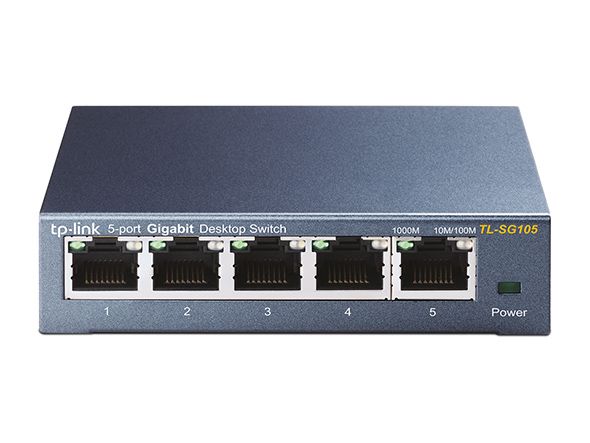
    Initially, the choice fell on the TP-LINK TL-SG105 switch
    And so for my complete enlightenment ;) - where to plug the cable coming from the router?
    5 ?
    Splitting UPC Cable Network Signal for Multiple Devices in Different Rooms via RJ45
  • #8 18642800
    Kozakowski
    Level 18  
    Posts: 123
    Help: 29
    Rate: 42
    Whatever. I don't see an uplink there so it will work anywhere
  • #9 18642802
    Andrzej Ch.
    Level 33  
    Posts: 2230
    Help: 222
    Rate: 387
    You can plug the cable from the router into any LAN port.
  • #10 18642804
    Anonymous
    Level 1  
  • #11 18642807
    radassz
    Level 10  
    Posts: 112
    Rate: 39
    and finally, any suggestion what switch to look for? What to pay attention to?
    Will the above be ok price/utility.
  • #12 18642824
    Andrzej Ch.
    Level 33  
    Posts: 2230
    Help: 222
    Rate: 387
    What you chose is fine. When choosing, you should be guided by:
    - operating speed of 100/1000 Mbps depending on the internet speed,
    - the number of available LAN posts (adjust to the number of devices connected by cable),
    - it would be good if the switch had a metal housing - it dissipates heat better, less problems caused by poor cooling.
  • #13 18643822
    sebap
    Level 41  
    Posts: 7139
    Help: 538
    Rate: 1076
    Me, instead of a Tp-Link switch, I would buy a Netgear GS-105 or 108, depending on how many sockets you need. Netgear has a lifetime warranty.
  • #14 18644889
    KOCUREK1970
    Network and Internet specialist
    Posts: 35132
    Help: 3786
    Rate: 5326
    sebap wrote:
    Me, instead of a Tp-Link switch, I would buy a Netgear GS-105 or 108, depending on how many sockets you need. Netgear has a lifetime warranty.

    I subscribe to this.
    Service matters in Netgear are a pleasure, in TPLink the road through agony.
  • #15 18646080
    radassz
    Level 10  
    Posts: 112
    Rate: 39
    The choice fell on Netgear, but which of:
    Unmanaged FastEthernet Switches - FS105v3 ,
    Gigabit Unmanaged Switches - GS105v5 ,
    SOHO Ethernet Switches - FS305 ,
    Home/Office Ethernet Switches - FS205
  • #16 18646517
    KOCUREK1970
    Network and Internet specialist
    Posts: 35132
    Help: 3786
    Rate: 5326
    radassz wrote:
    Gigabit Unmanaged Switches - GS105v5,

    This one without thinking - has 1Gb ports.

Topic summary

✨ To connect multiple devices in a second room using a UPC cable network, a network switch is recommended. Users should opt for a non-configurable switch, preferably with a bandwidth of 1Gbps, to maintain internet speed. Twisted pair cables should be used for connections. The cable from the router can be plugged into any LAN port on the switch. When selecting a switch, consider factors such as operating speed, number of LAN ports, and housing material for better heat dissipation. Popular choices include TP-LINK and Netgear switches, with a preference for Netgear due to better service and warranty options.
Generated by the language model.

FAQ

TL;DR: Wondering how to split one RJ45 into two devices? “You need to buy a switch.” Pick 1 Gbps if internet >100 Mbps. [Elektroda, Andrzej Ch., post #18642772]

Why it matters: For UPC cable users wiring multiple rooms, this avoids bottlenecks and speed loss from passive splitters.

Quick Facts

How do I connect two devices in another room when only one RJ45 is available?

Use an unmanaged Ethernet switch. It acts transparently, so no setup. Follow these steps:
  1. Power the switch.
  2. Run a twisted‑pair Ethernet cable from the router’s LAN to the switch.
  3. Plug each device into the switch’s LAN ports and test connectivity. Modern switches auto-detect cable type. That single room feed now serves multiple devices. [Elektroda, Andrzej Ch., post #18642786]

Do I need to configure the switch?

No. Use a non‑configurable (unmanaged) switch. It is transparent to your network. “Buy a non-configurable switch, then it is ‘transparent’ in the network.” Just plug it in and connect devices. The router will continue assigning addresses as before. [Elektroda, Andrzej Ch., post #18642786]

Which port on my switch should the router cable use?

Use any LAN port. For a TP‑Link TL‑SG105, plug it into any slot. Devices on other ports will connect through the switch automatically. [Elektroda, Andrzej Ch., post #18642802]

Can I split the Ethernet cable into two RJ45 jacks without a switch?

Avoid passive pair-splitting. It limits speed. Use a small switch instead to preserve throughput. That avoids the slowdown you noted. A switch gives each device a proper Ethernet link. [Elektroda, radassz, post #18642766]

Fast Ethernet vs Gigabit: which should I buy for an internet plan over 100 Mbps?

Match your switch to your plan: 100 or 1000 Mbps. For plans over 100 Mbps, pick Gigabit. For 100 Mbps plans, Fast Ethernet suffices. Keep switch speed aligned with your service to avoid bottlenecks. [Elektroda, Andrzej Ch., post #18642824]

How many devices can I connect to a switch?

As many as it has ports. Four, eight, and more are common. Every occupied port serves one device. Choose a size that fits your current and future devices. Extra ports give room to grow. [Elektroda, Kozakowski, post #18642774]

What cable should I run between the router and the switch?

Use Ethernet twisted‑pair cable. Keep power cables separate. This is the required medium for RJ45 networking. [Elektroda, Kozakowski, post #18642789]

Do I need crossover cables, or will the switch handle it?

You do not need crossover cables. Modern switches auto‑detect crossover versus straight‑through. The feature is often called Auto‑MDI/MDI‑X. Use regular patch cords from your router to the switch. The switch will adapt automatically. [Elektroda, Andrzej Ch., post #18642786]

Which brand or model do forum users recommend for this use?

Netgear GS‑105 or GS‑108 are recommended alternatives. They include a lifetime warranty. Many users choose them for reliability. That warranty adds peace of mind for always‑on networking. [Elektroda, sebap, post #18643822]

From FS105v3, GS105v5, FS305, or FS205, which should I pick?

Pick the GS105v5. “This one without thinking - has 1Gb ports.” It supports Gigabit for higher‑speed plans. [Elektroda, KOCUREK1970, post #18646517]

Do I need a dedicated uplink port on the switch?

No. A dedicated uplink is not required on these small unmanaged switches. If there is no marked uplink, any port works for the router feed. Link LEDs will confirm connectivity. [Elektroda, Kozakowski, post #18642800]

Is a metal‑housing switch worth it for heat management?

Yes. A metal housing dissipates heat better. That reduces issues from poor cooling. Choose metal if the switch will sit in a warm or enclosed spot. It improves long‑term reliability. [Elektroda, Andrzej Ch., post #18642824]

Is D‑Link a good choice too?

Yes. D‑Link unmanaged switches are a good home choice. Ensure the model meets your speed needs. Select Gigabit if your plan is above 100 Mbps. That prevents a speed bottleneck. [Elektroda, Andrzej Ch., post #18642772]

Which has better service, Netgear or TP‑Link?

Forum feedback favors Netgear service. “Service matters in Netgear are a pleasure, in TPLink the road through agony.” Consider that if support experience matters to you. [Elektroda, KOCUREK1970, post #18644889]
Generated by the language model.
ADVERTISEMENT