logo elektroda
logo elektroda
X
logo elektroda

3D printing idea - decorative lantern/lamp

p.kaczmarek2 4161 2

TL;DR

  • Powstał 3D drukowany dekoracyjny lampion oparty na modelu „asian lantern” z Thingiverse, rozbudowany o własne modyfikacje do świątecznej lampy.
  • Elementy wydrukowano na Ender 3 Pro z PLA, bez podpór, a nawet przy 5% wypełnienia konstrukcja pozostaje sztywna.
  • Oświetlenie testowano kolejno z bateriową świeczką LED, modułem z żarówki LED i ostatecznie z oprawką E14 z własnym gwintem/nakrętką.
  • Folia z ekranu LCD może rozpraszać światło, choć kształt wnętrza utrudnia jej dobre przyklejenie.
  • Przy użytych żarówkach lampion nie nagrzewa się zauważalnie, ale mocniejsze źródło światła może odkształcić lub stopić PLA; ABS byłby bezpieczniejszy.
Generated by the language model.
ADVERTISEMENT
Treść została przetłumaczona polish » english Zobacz oryginalną wersję tematu
📢 Listen (AI):
  • 3D printing idea - decorative lantern/lamp
    Hello my dears
    To celebrate the upcoming holidays, I would now like to present a slightly looser project. This will be a 3D printed lantern based on a 3D model available under a CC licence and my various improvements.

    Used 3D model
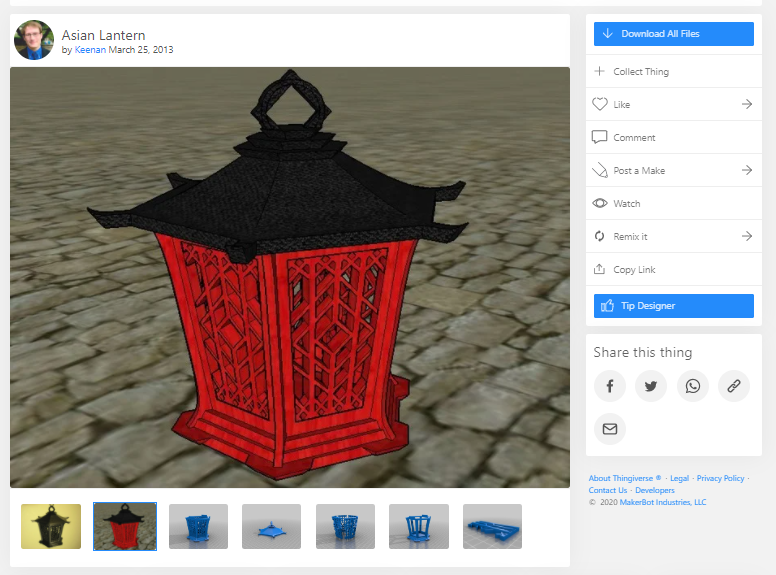
    The design is based on the 'asian lantern' model by Keenan from Thingiverse, from here:
    https://www.thingiverse.com/thing:65837
    This model is available for free under a Creative Commons licence:
    3D printing idea - decorative lantern/lamp
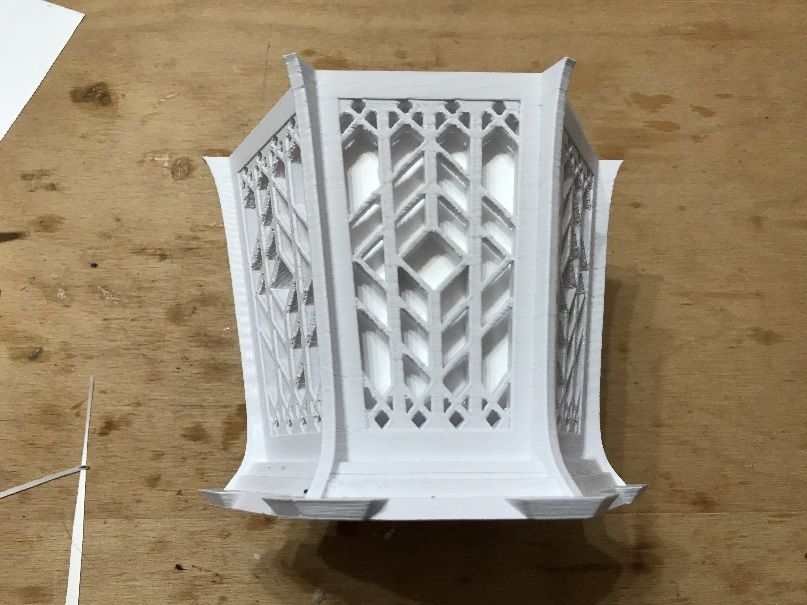
    This model consists of two parts - a canopy and a base. The canopy attaches to the hooks, with a press fit.
    But just printing it out is only the beginning, so below I will describe in detail the whole process of making my lamp.

    First printout
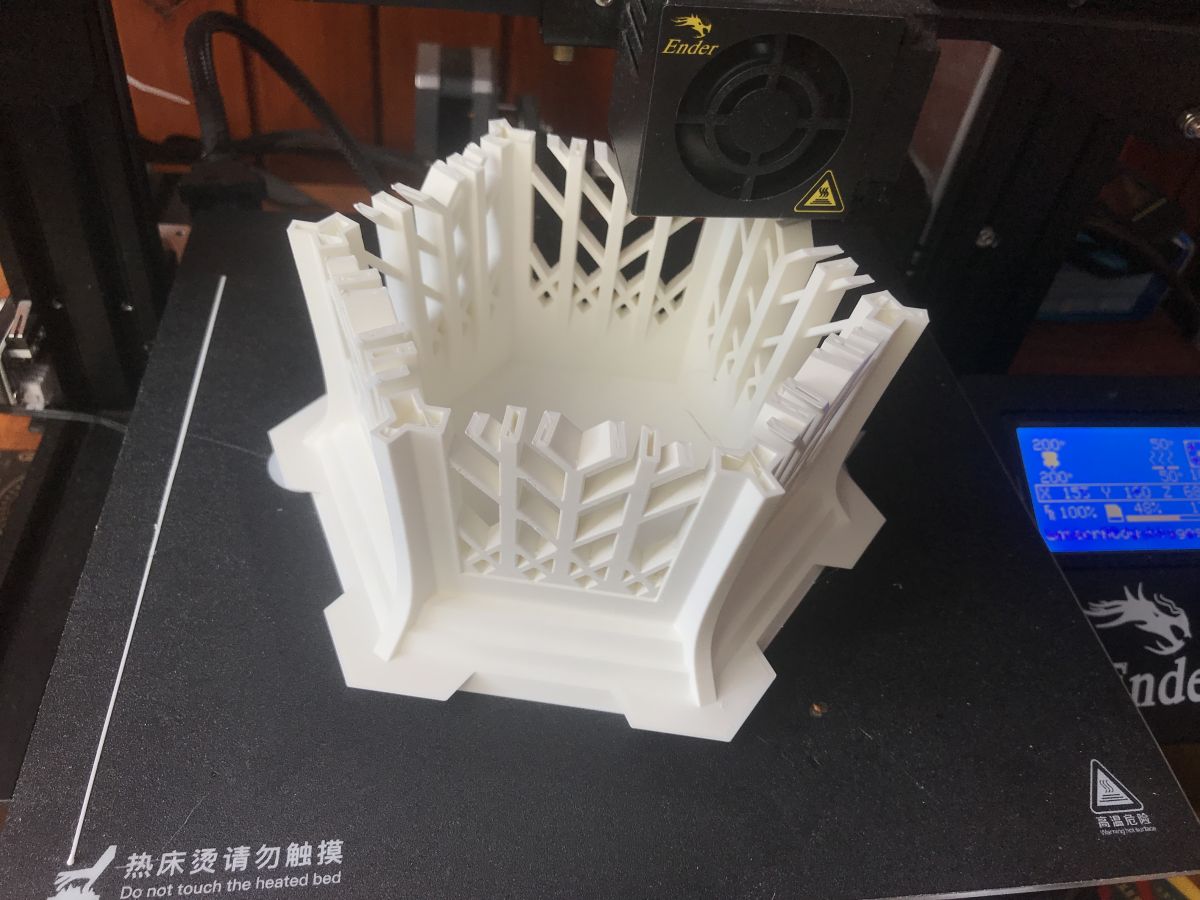
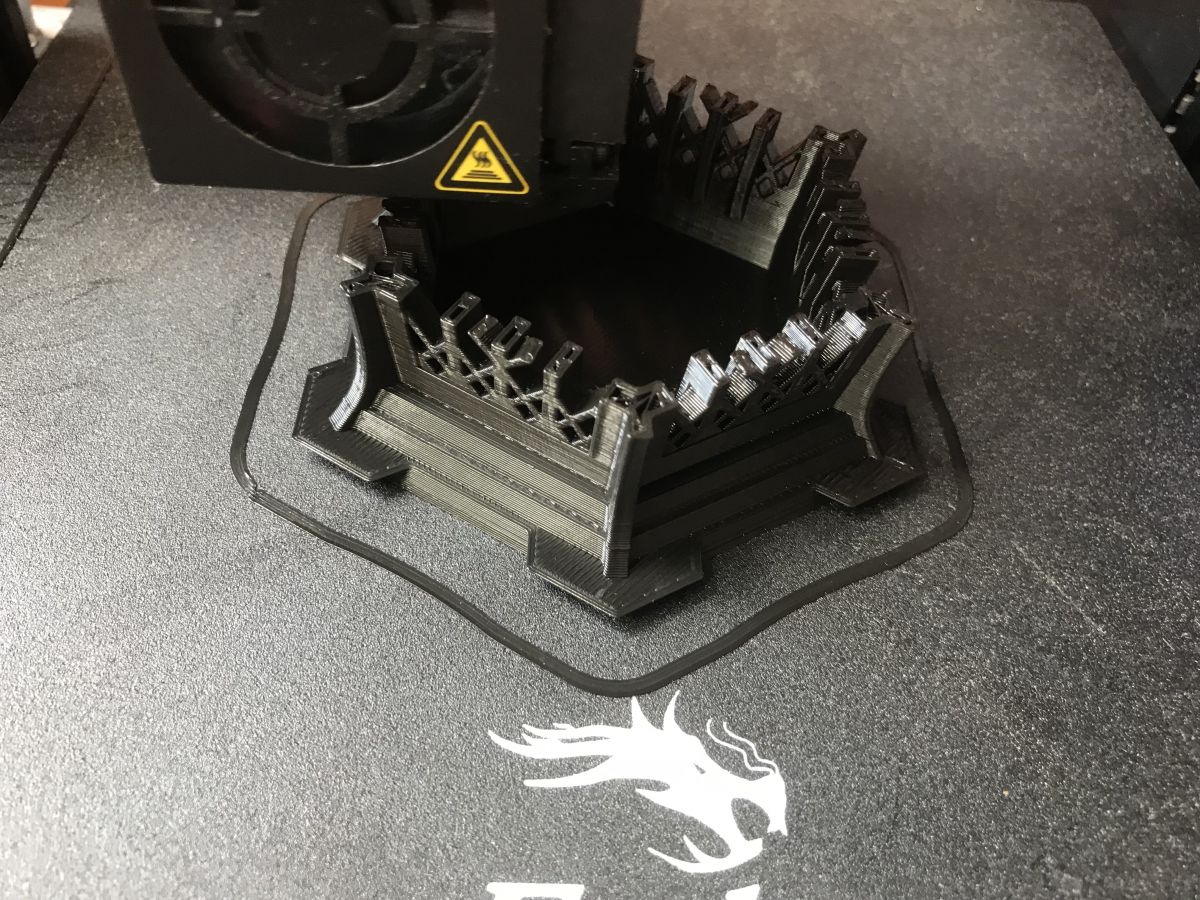
    I made the first print still using black PLA filament, then switched to white. The object does not require any support:
    3D printing idea - decorative lantern/lamp
    Print of white, larger:
    3D printing idea - decorative lantern/lamp
    At first, I printed the objects with the default fill value (infill):
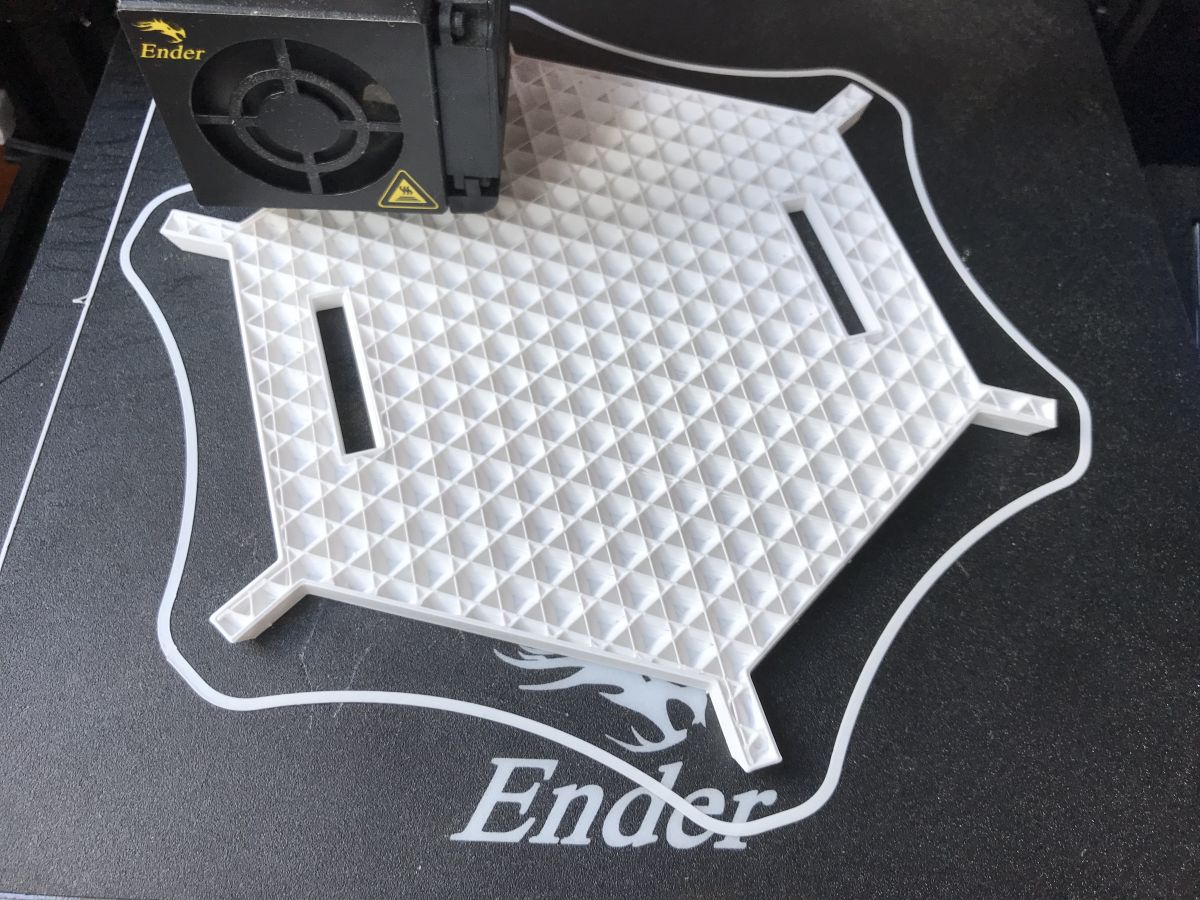
    3D printing idea - decorative lantern/lamp
    but you don't need that much of it, even at 5% it holds everything solidly.
    I printed everything on my 3D printer Ender 3 Pro.

    Connecting the lighting - the easiest way
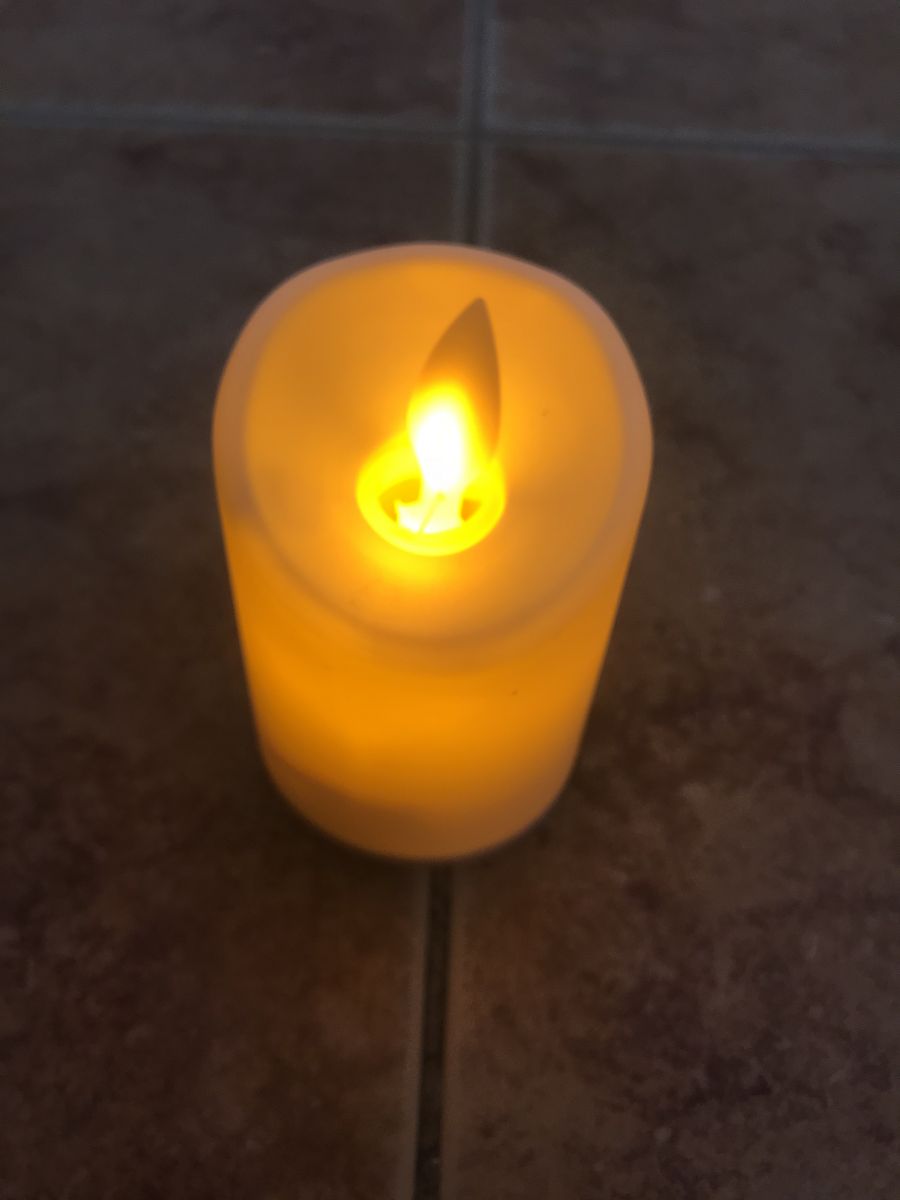
    The easiest (and safest!) is to use a simple, decorative battery-powered 'candle':
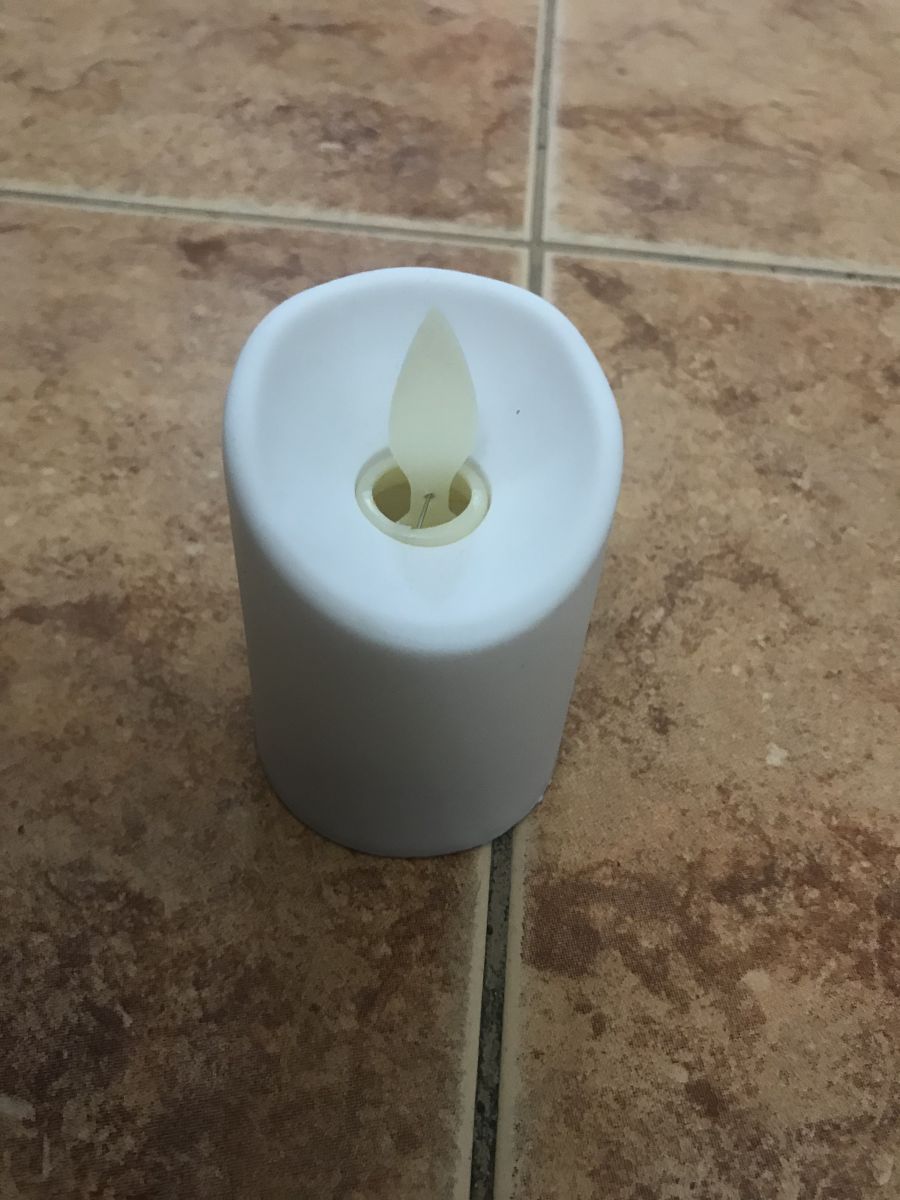
    3D printing idea - decorative lantern/lamp 3D printing idea - decorative lantern/lamp
    Such lights can be purchased in various sizes and look quite good with printed lanterns:
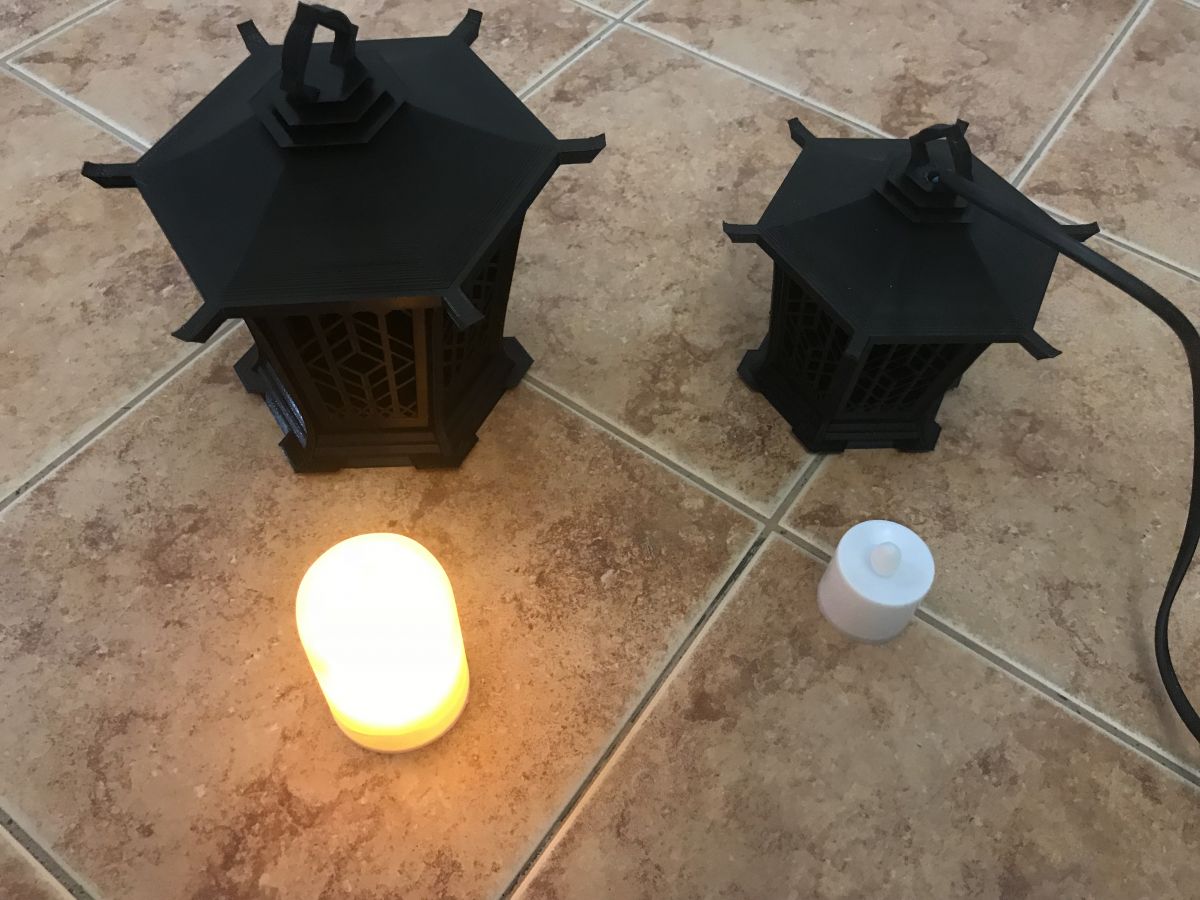
    3D printing idea - decorative lantern/lamp
    The effect when inserted is also nice, but is unlikely to provide us with any illumination:
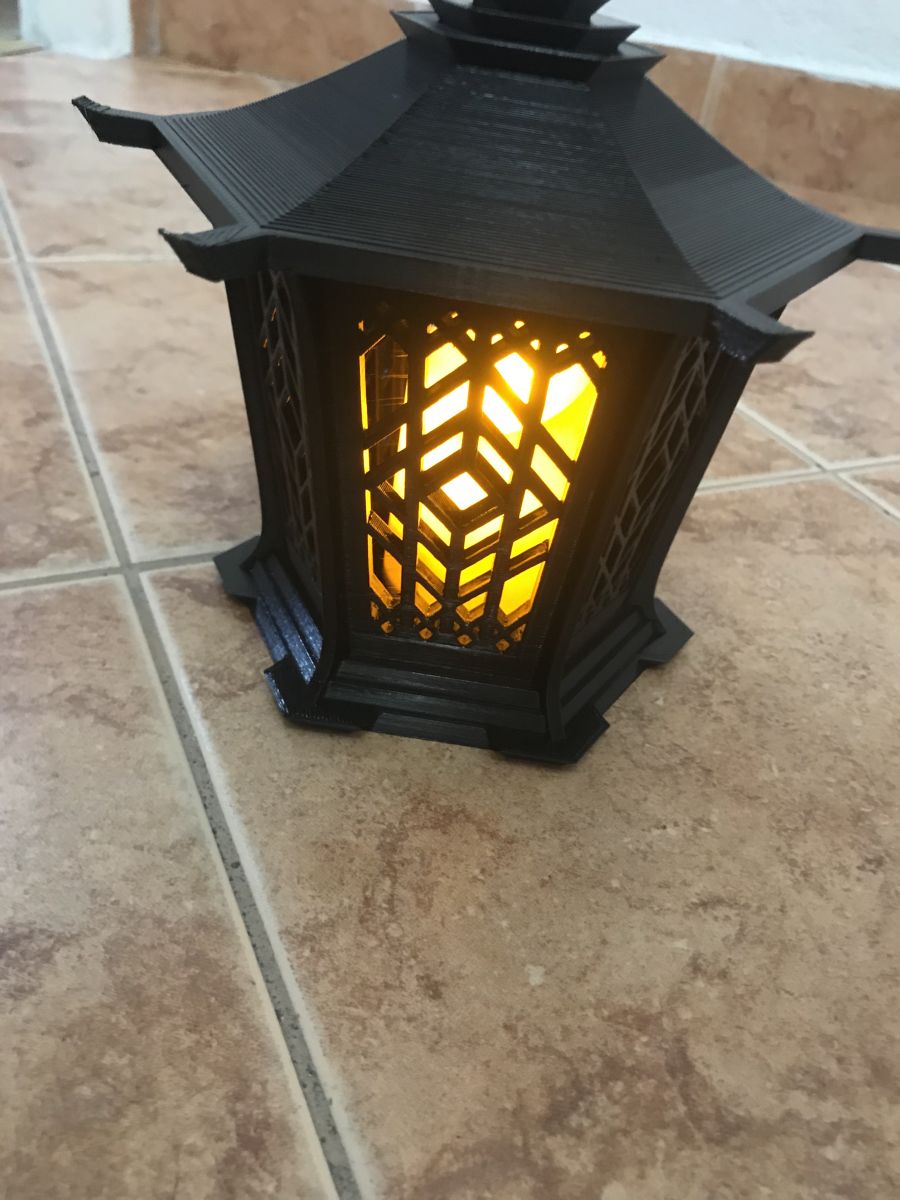
    3D printing idea - decorative lantern/lamp
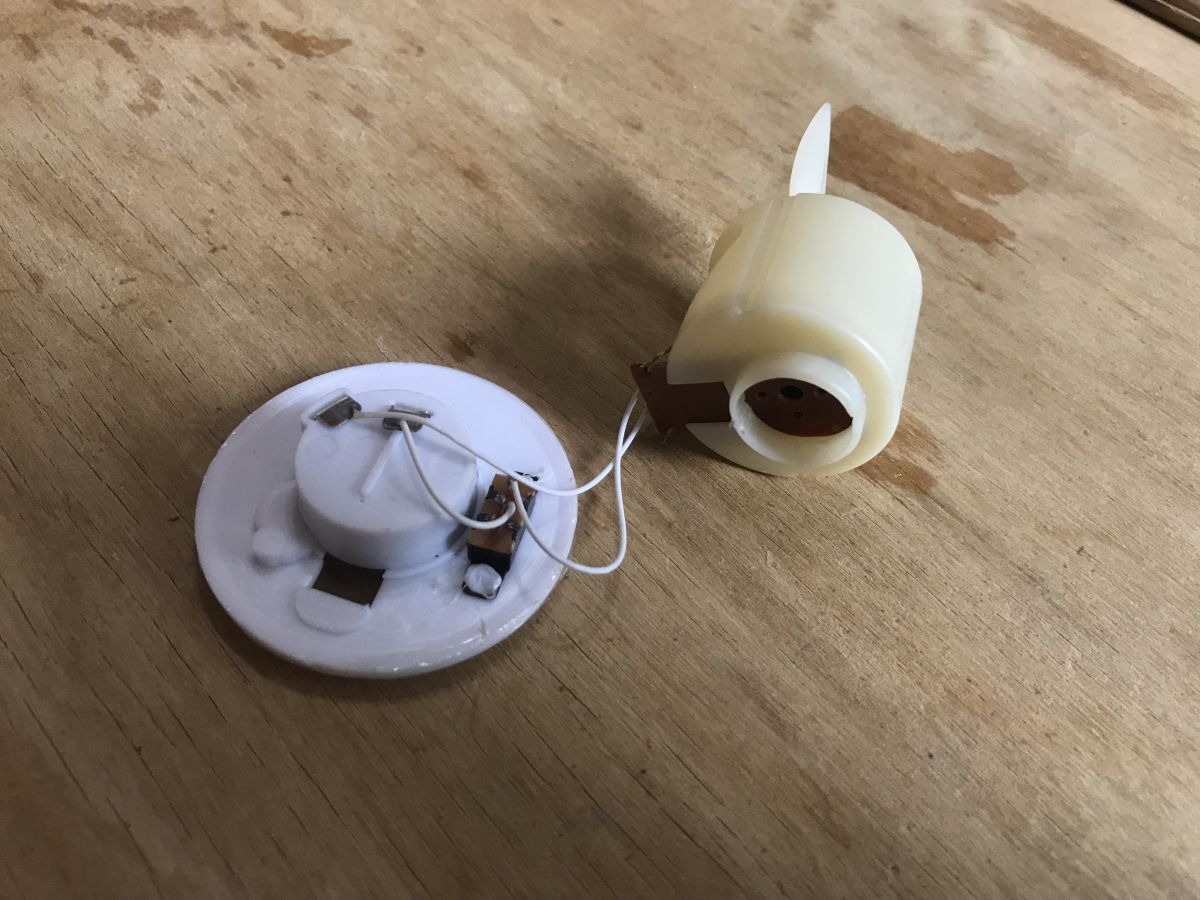
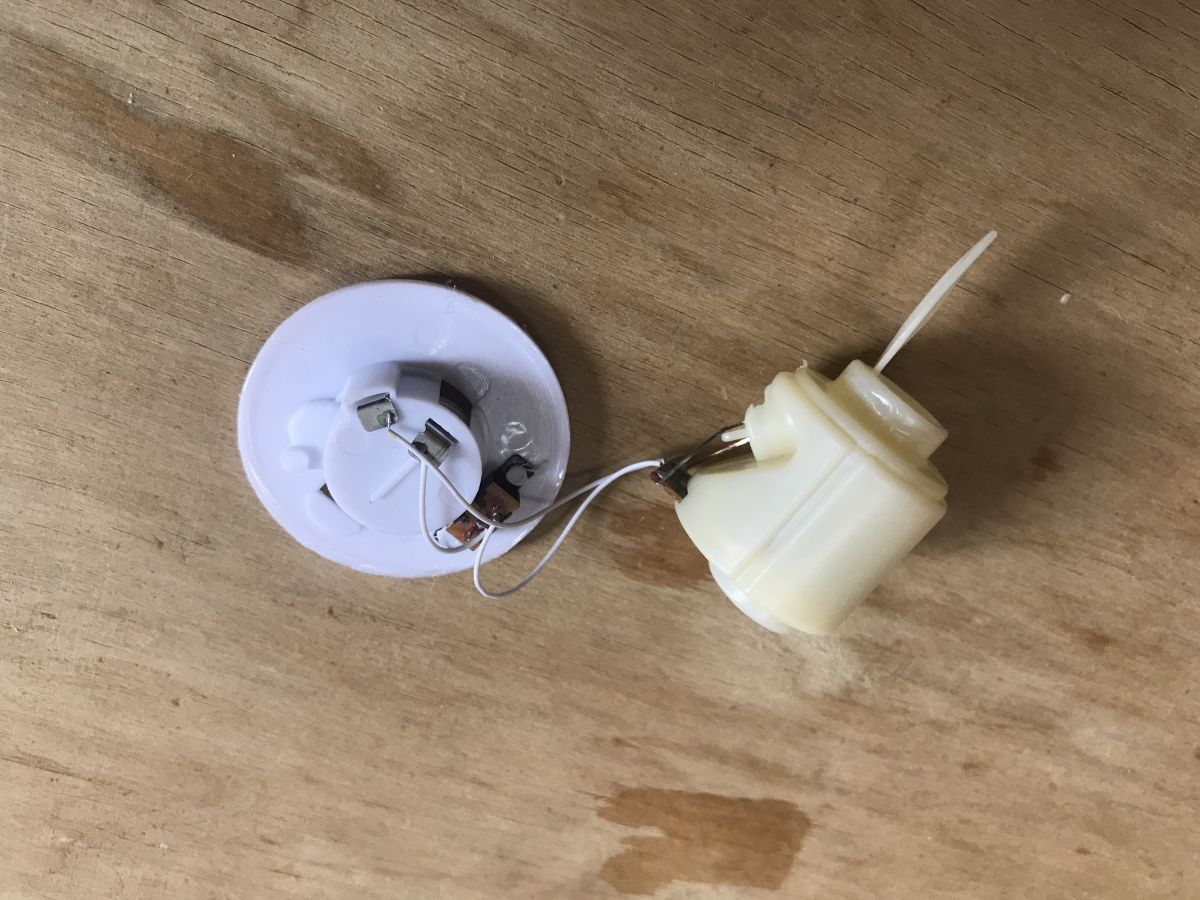
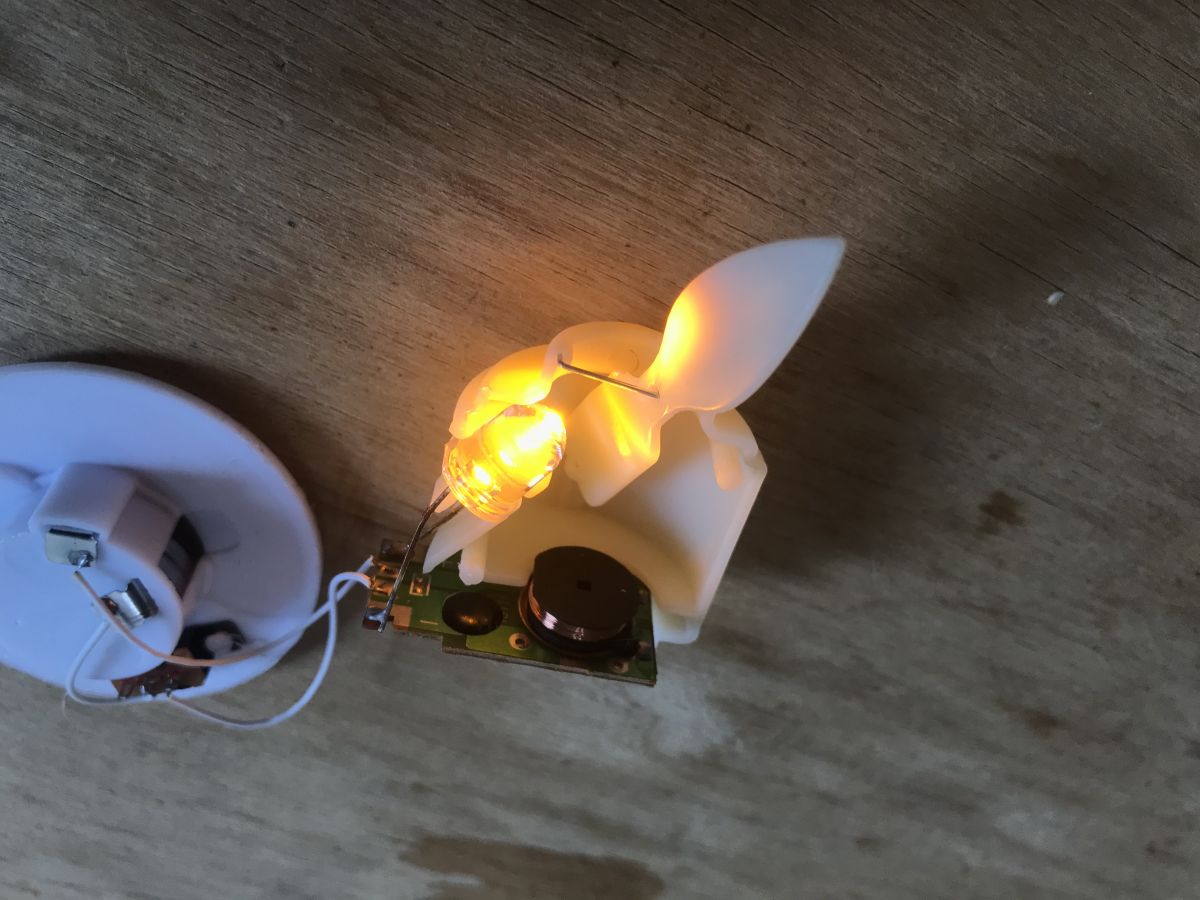
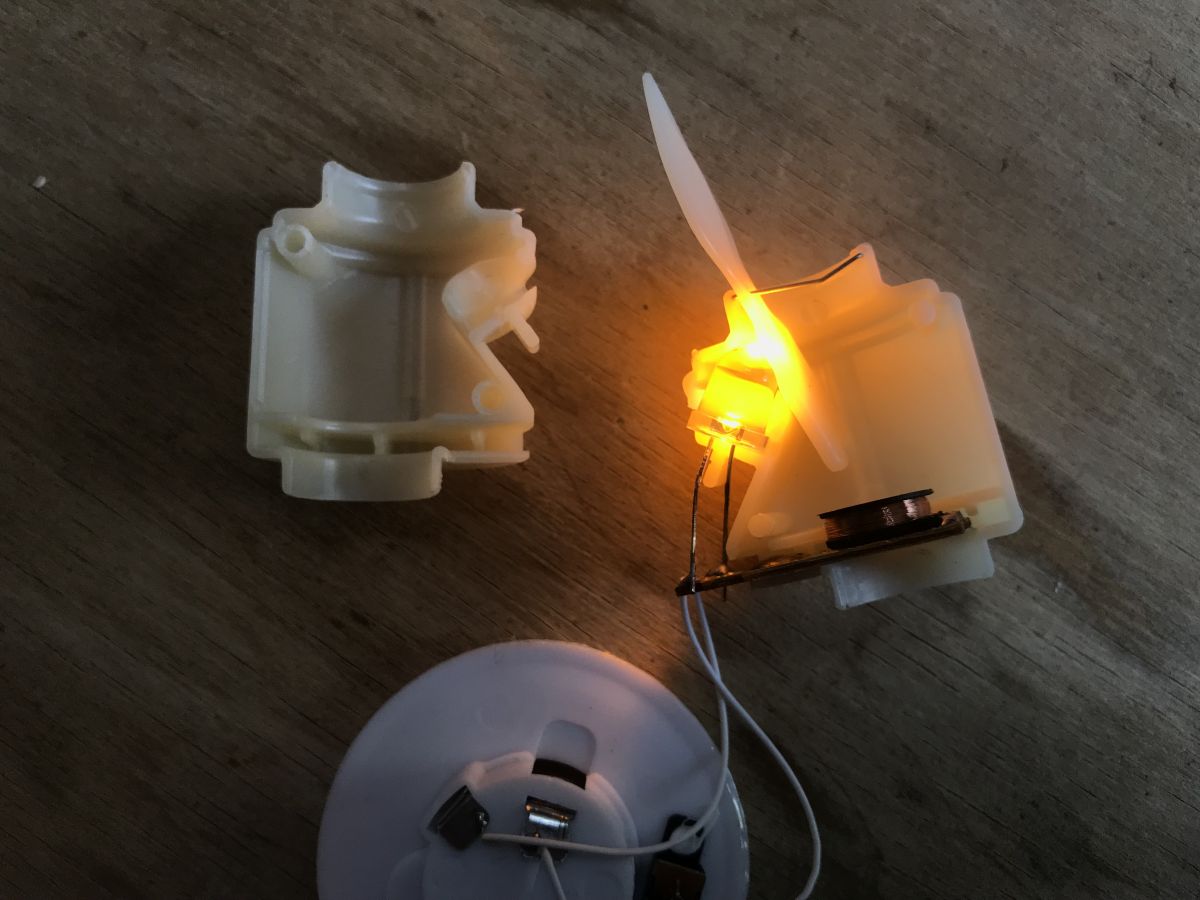
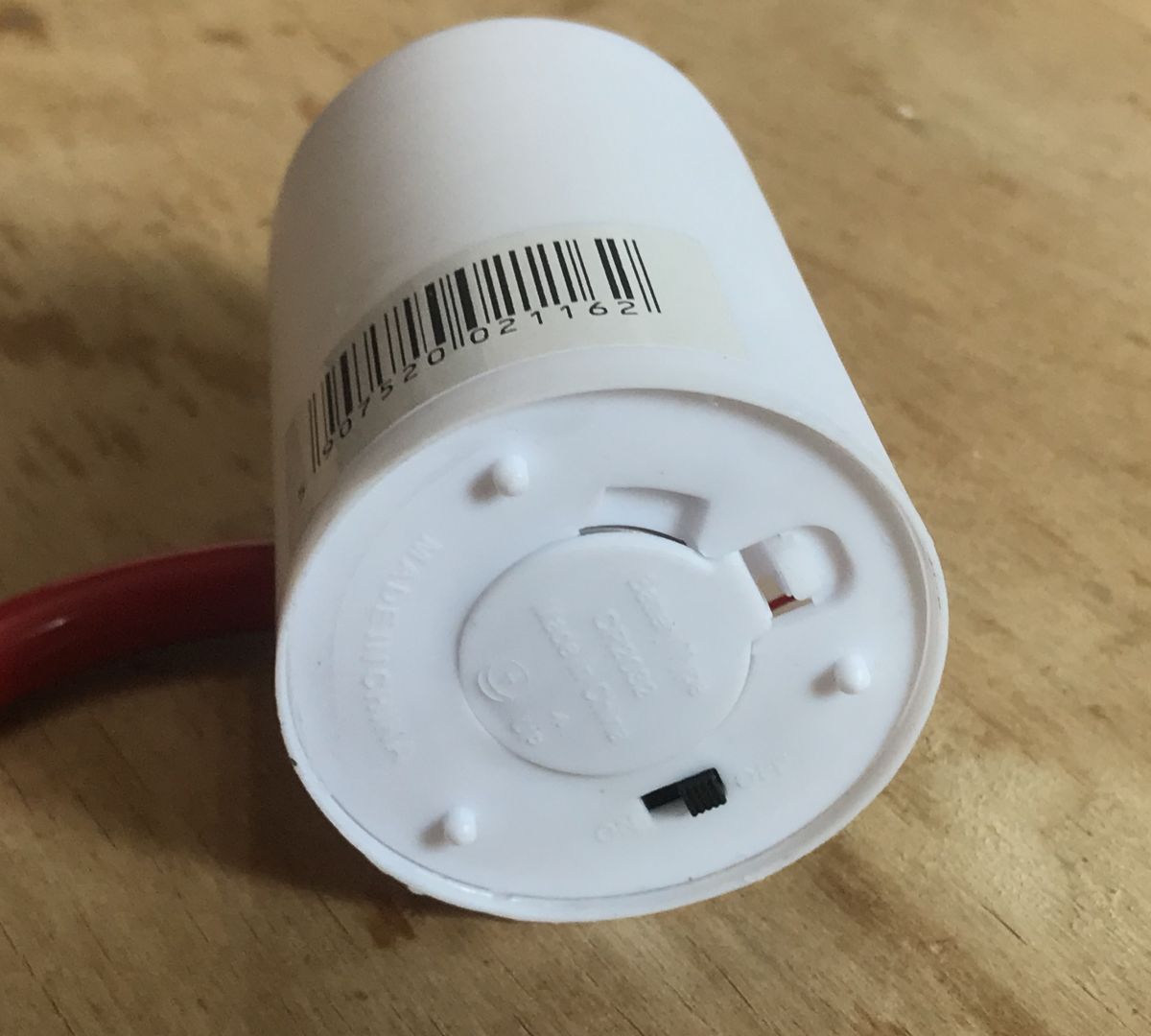
    By the way, the inside of these 'candle-lamps' is quite interesting. There is a fine circuit inside that is designed to replicate the behaviour of the flame, i.e. the LED blinking/dimming in a rather random way.
    The underside of the lamp:
    3D printing idea - decorative lantern/lamp
    Centre:
    3D printing idea - decorative lantern/lamp 3D printing idea - decorative lantern/lamp
    Unfolded measure:
    3D printing idea - decorative lantern/lamp 3D printing idea - decorative lantern/lamp
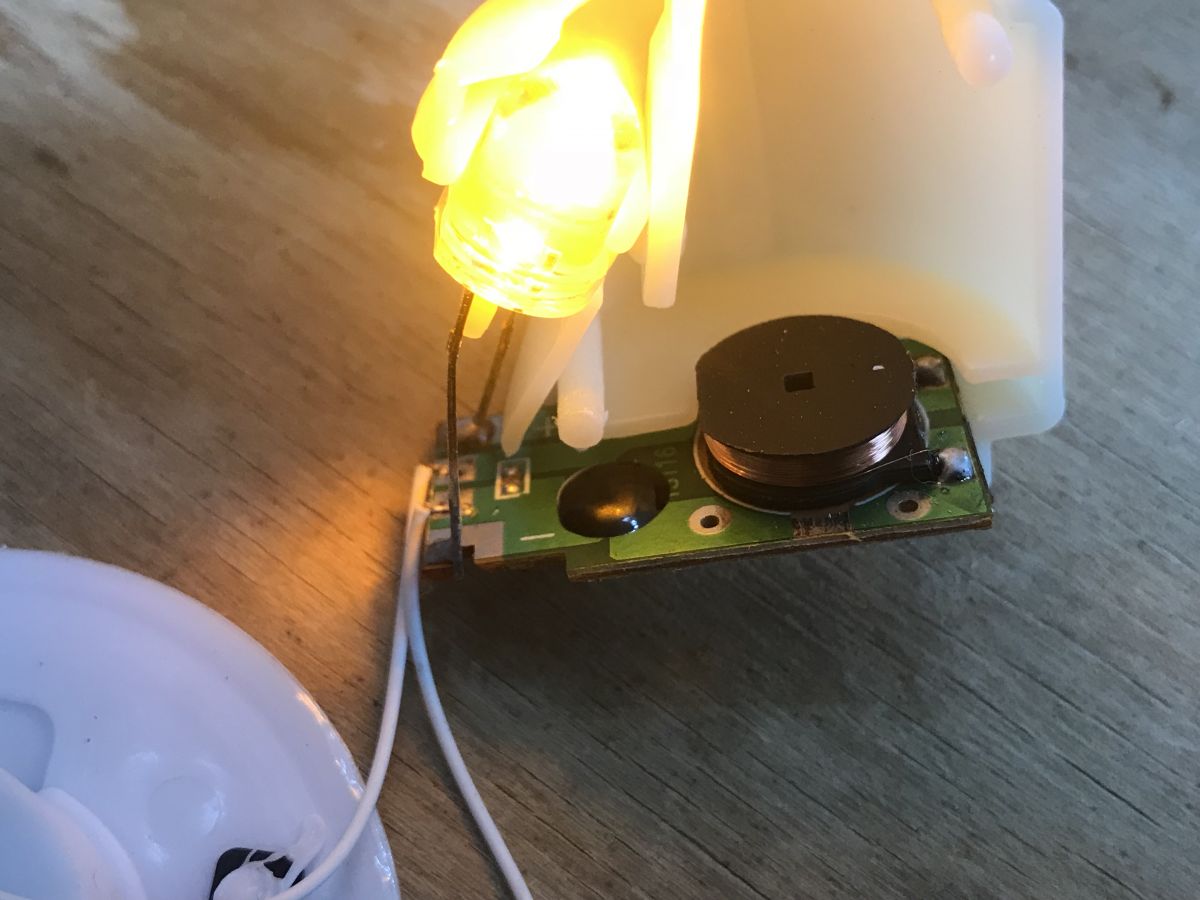
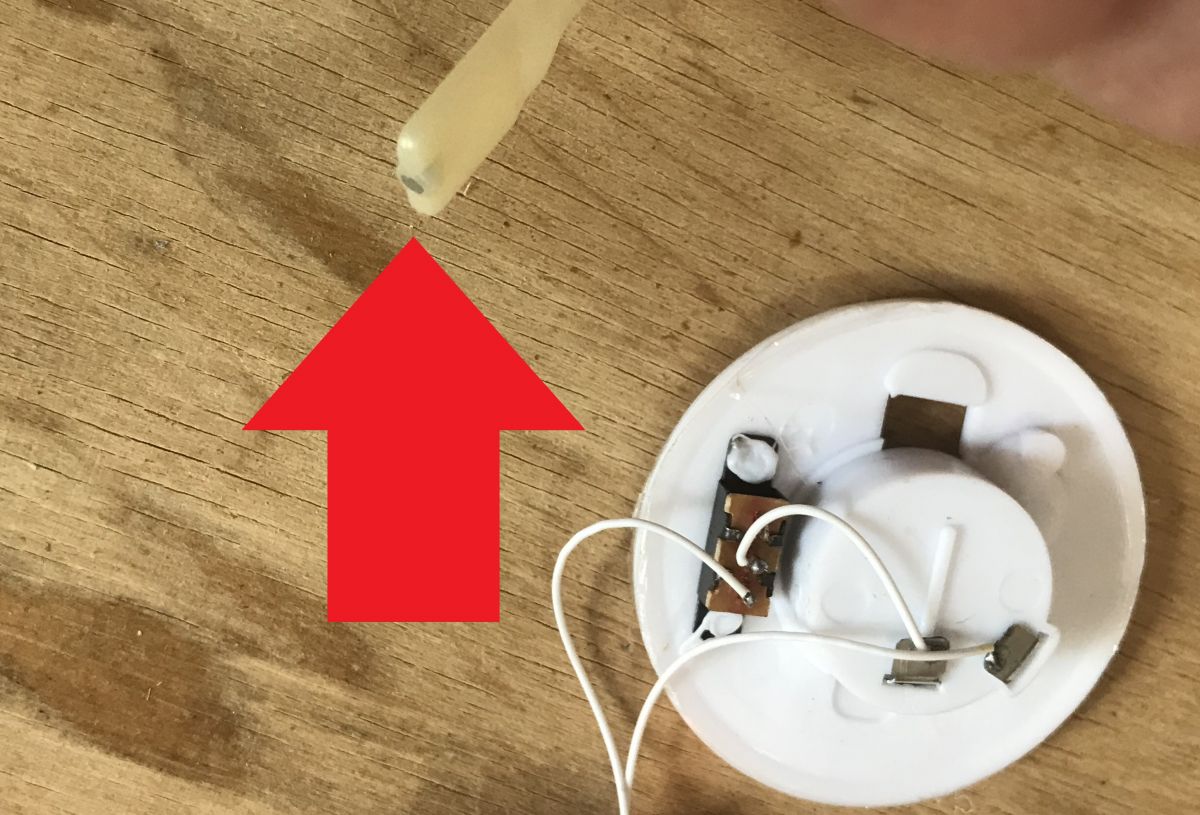
    You can see the coil:
    3D printing idea - decorative lantern/lamp
    And you can see the ferromagnetic element to which the coil responds:
    3D printing idea - decorative lantern/lamp
    There is also a 'black dot' on the board hiding some additional functionality, but you can already guess how it works. The coil reacts to field changes and based on this controls the brightness of the LED.


    Lighting connection - module from LED bulb
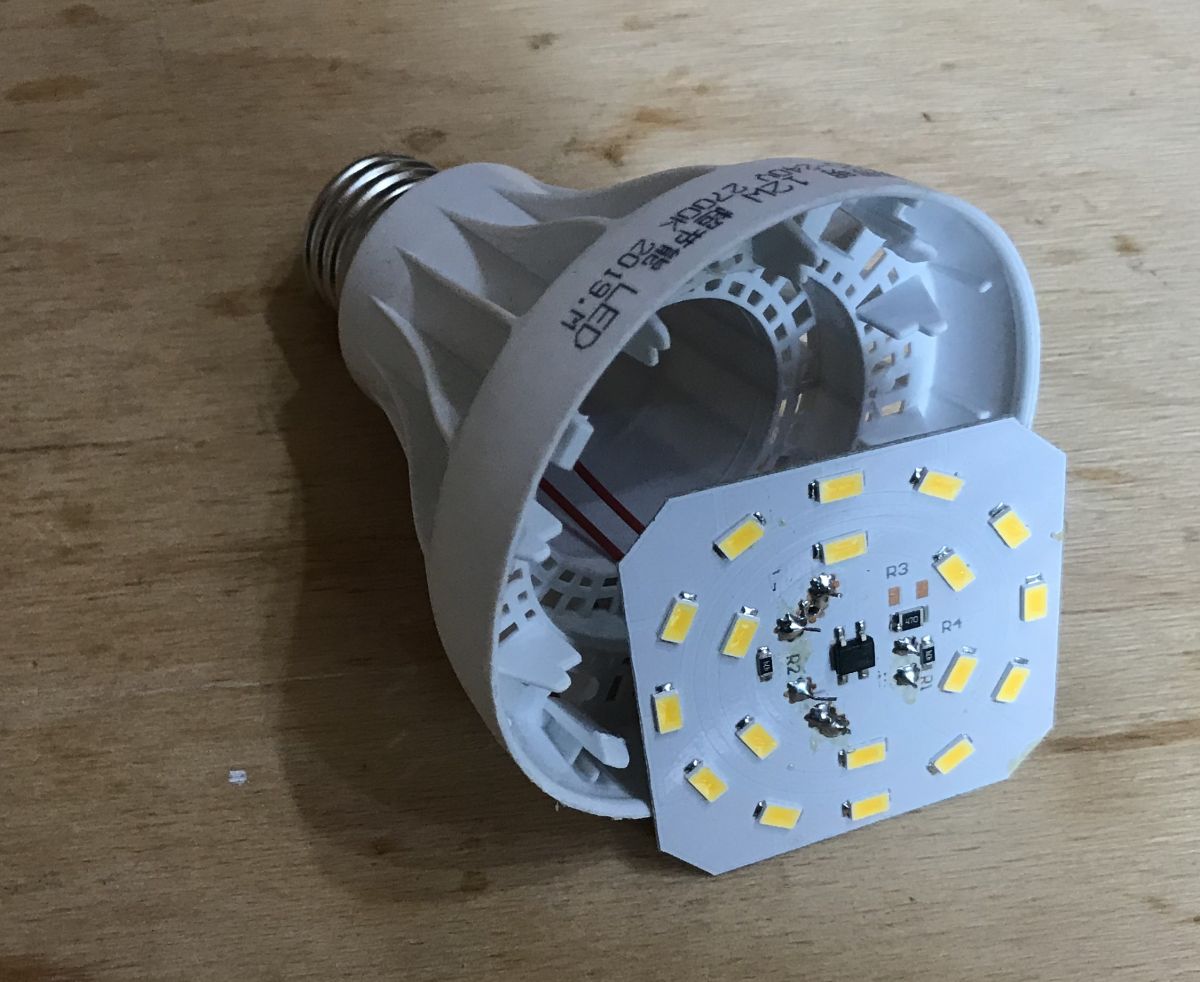
    The second, rather spontaneous lighting idea was an LED module from an LED bulb I ordered from China:
    3D printing idea - decorative lantern/lamp
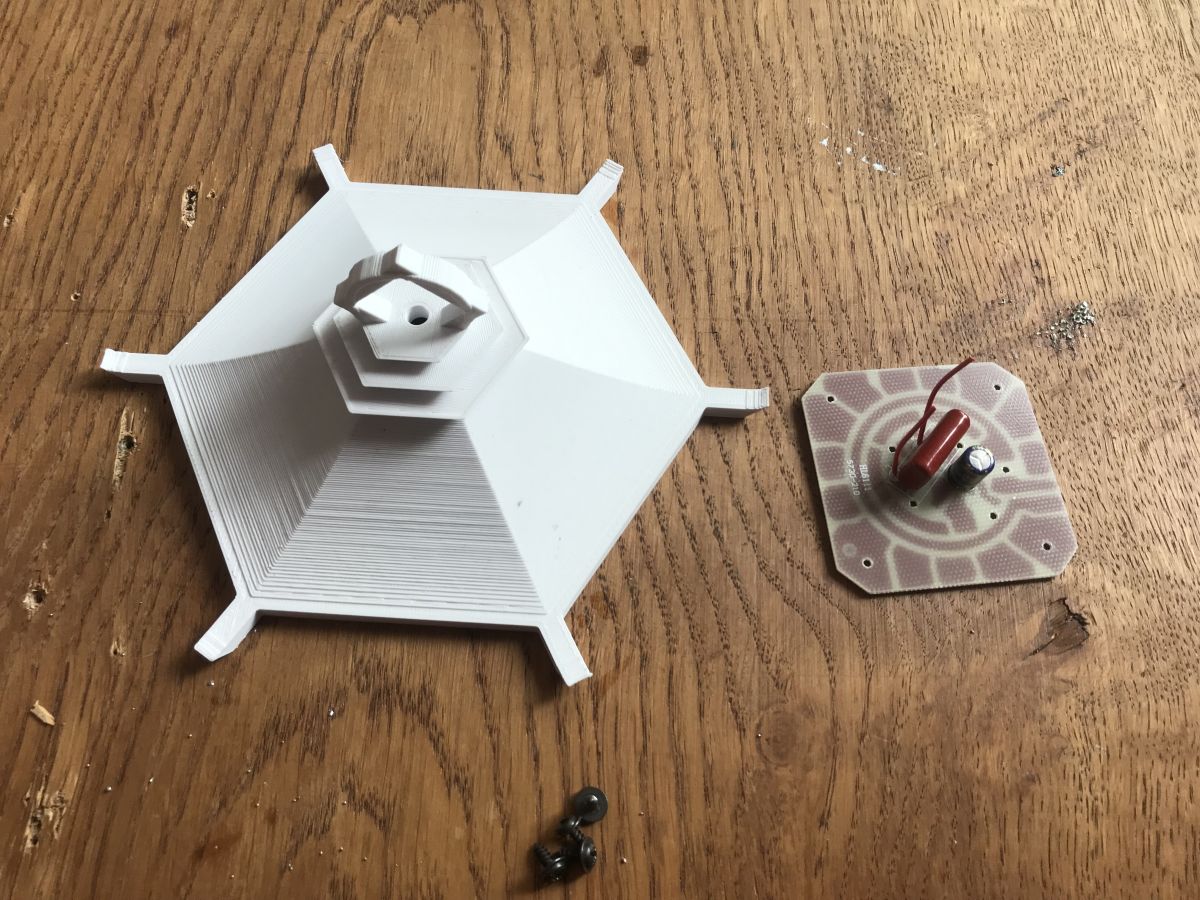
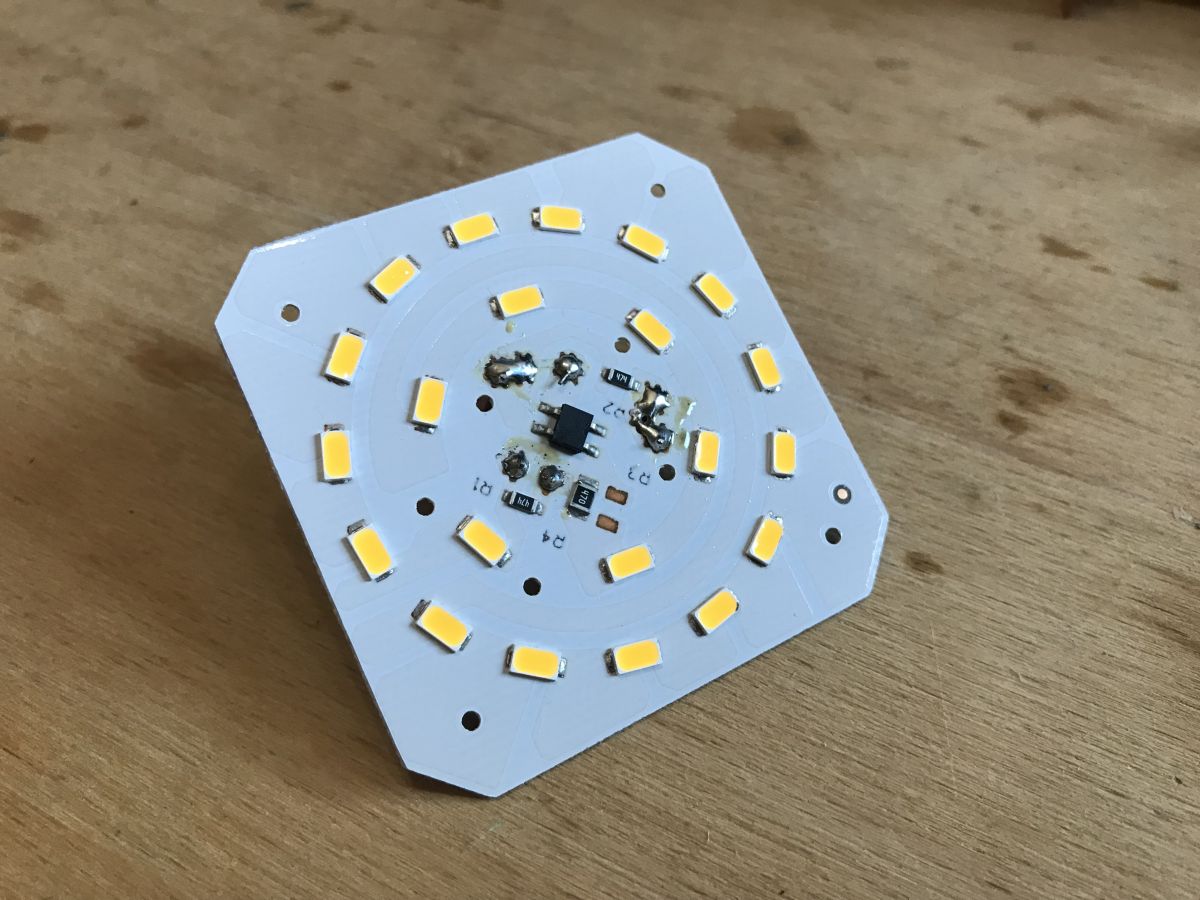
    The removed module (it has a capacitor on the back from a transformerless power supply):
    3D printing idea - decorative lantern/lamp
    3D printing idea - decorative lantern/lamp
    I wanted to fit it inside the lamp. For this purpose I printed the lamp canopies with a suitable indentation:
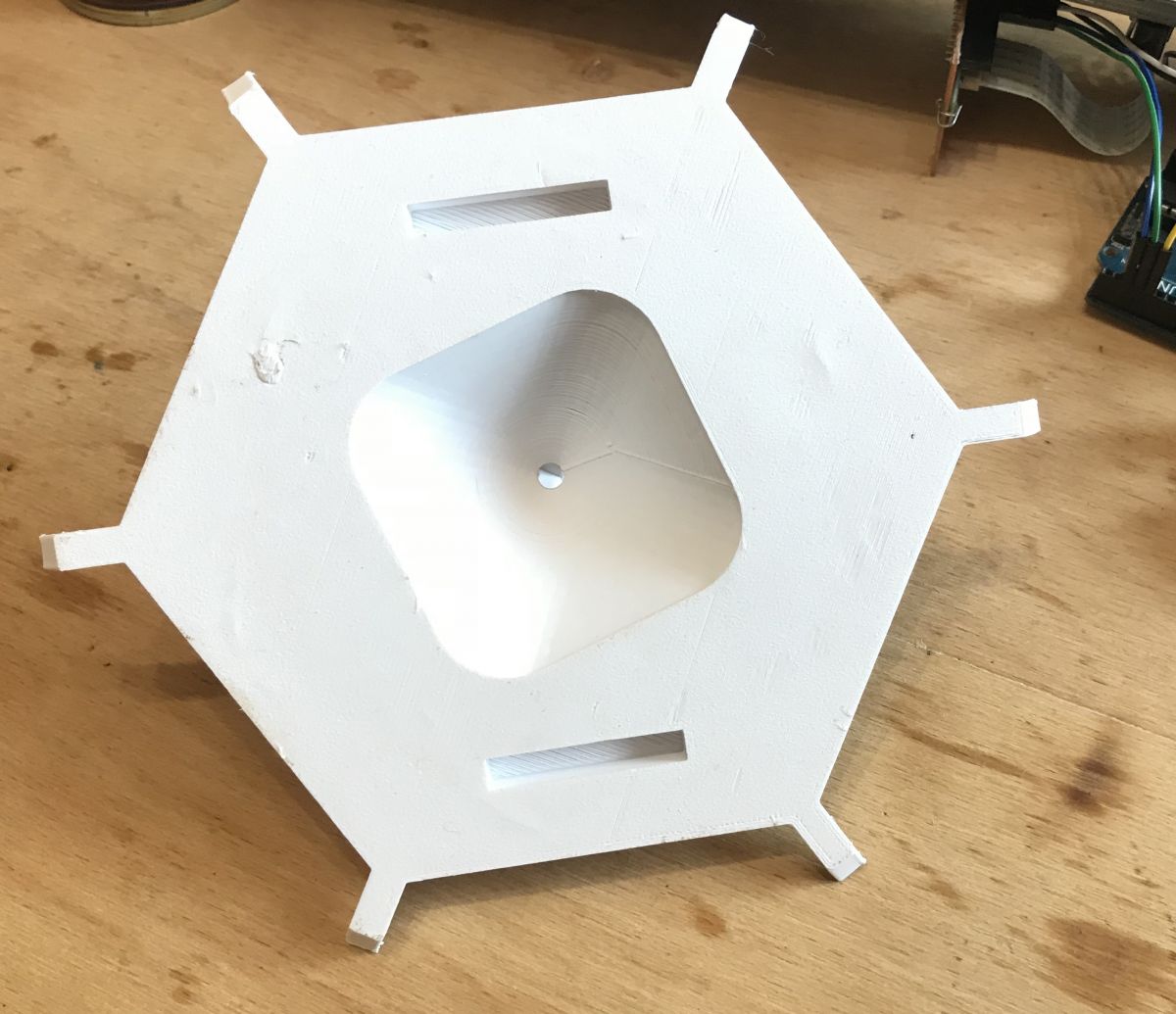
    3D printing idea - decorative lantern/lamp
    In the process of assembly (screwing on with screws):
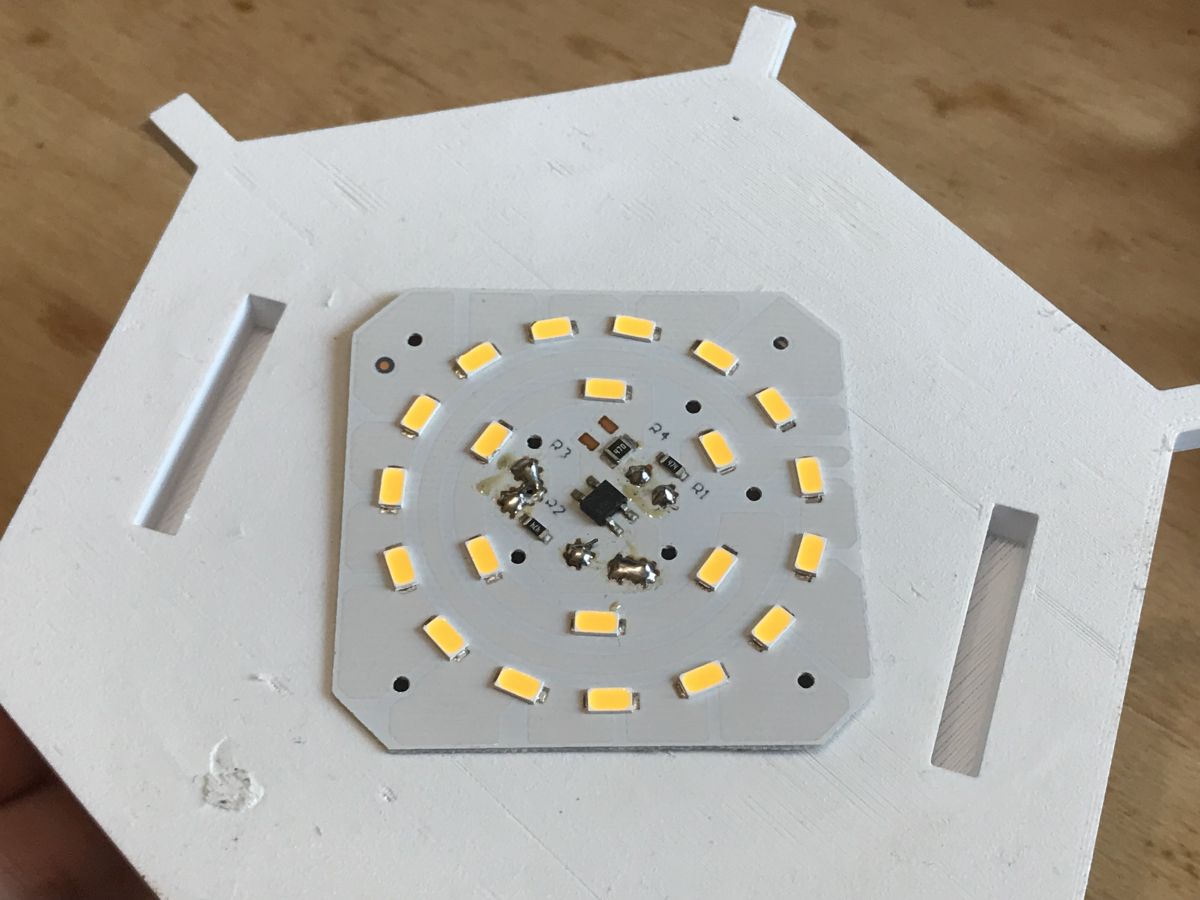
    3D printing idea - decorative lantern/lamp
    The effect is not bad, but in the end I gave up the idea because it is inconvenient and I am not sure that I will have such modules for replacement later.

    Lighting connection - bulb and E14 thread
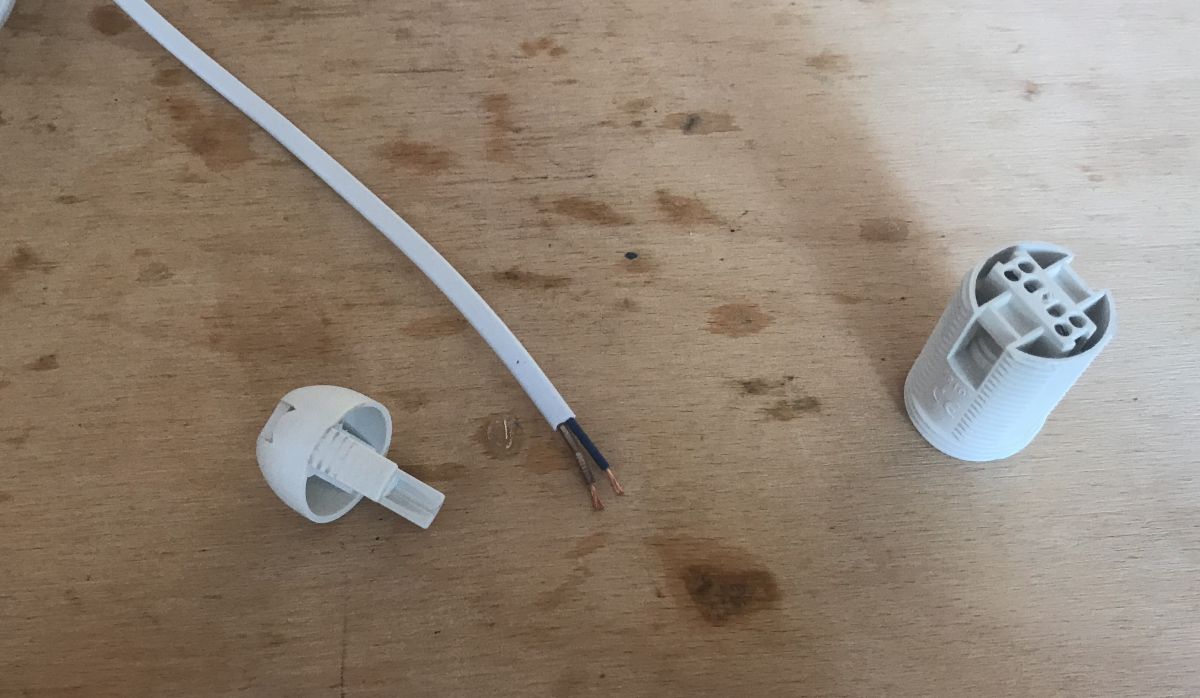
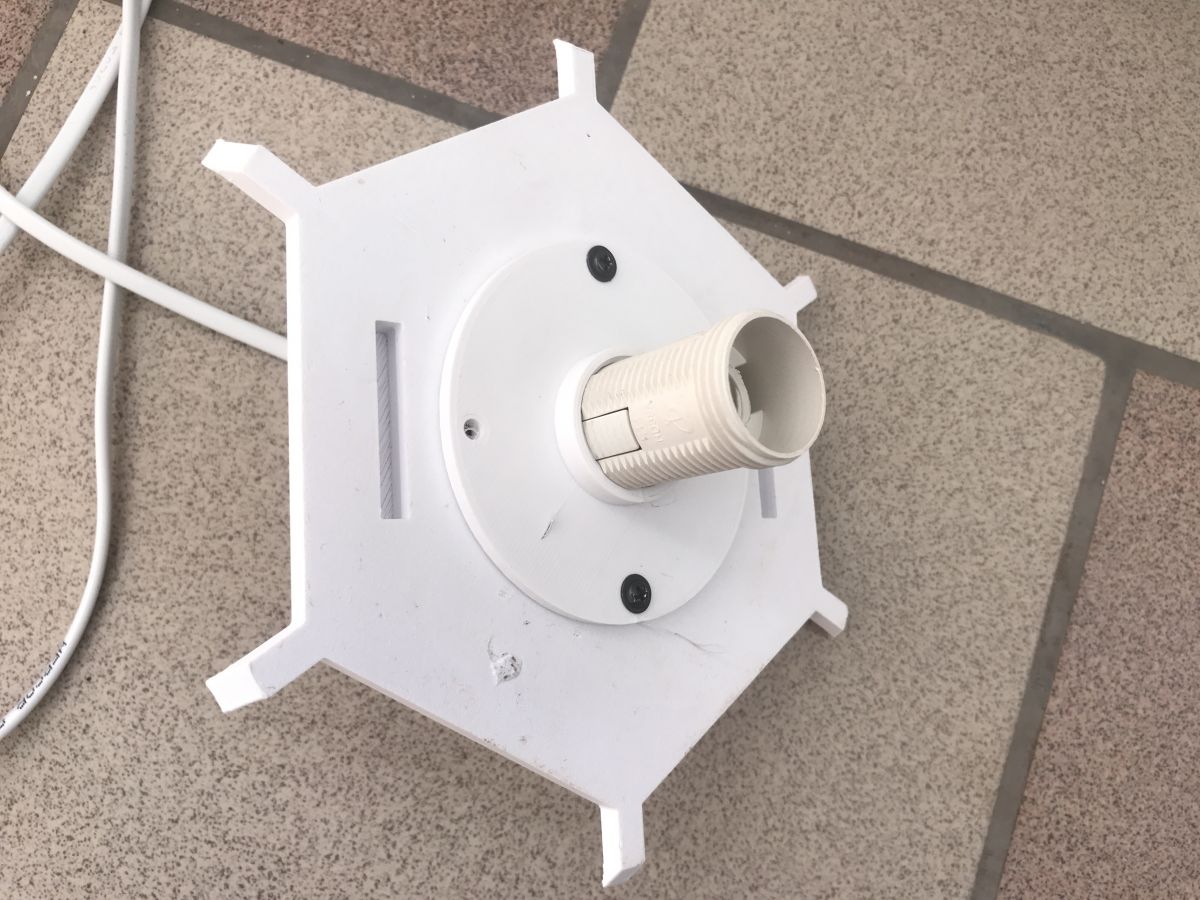
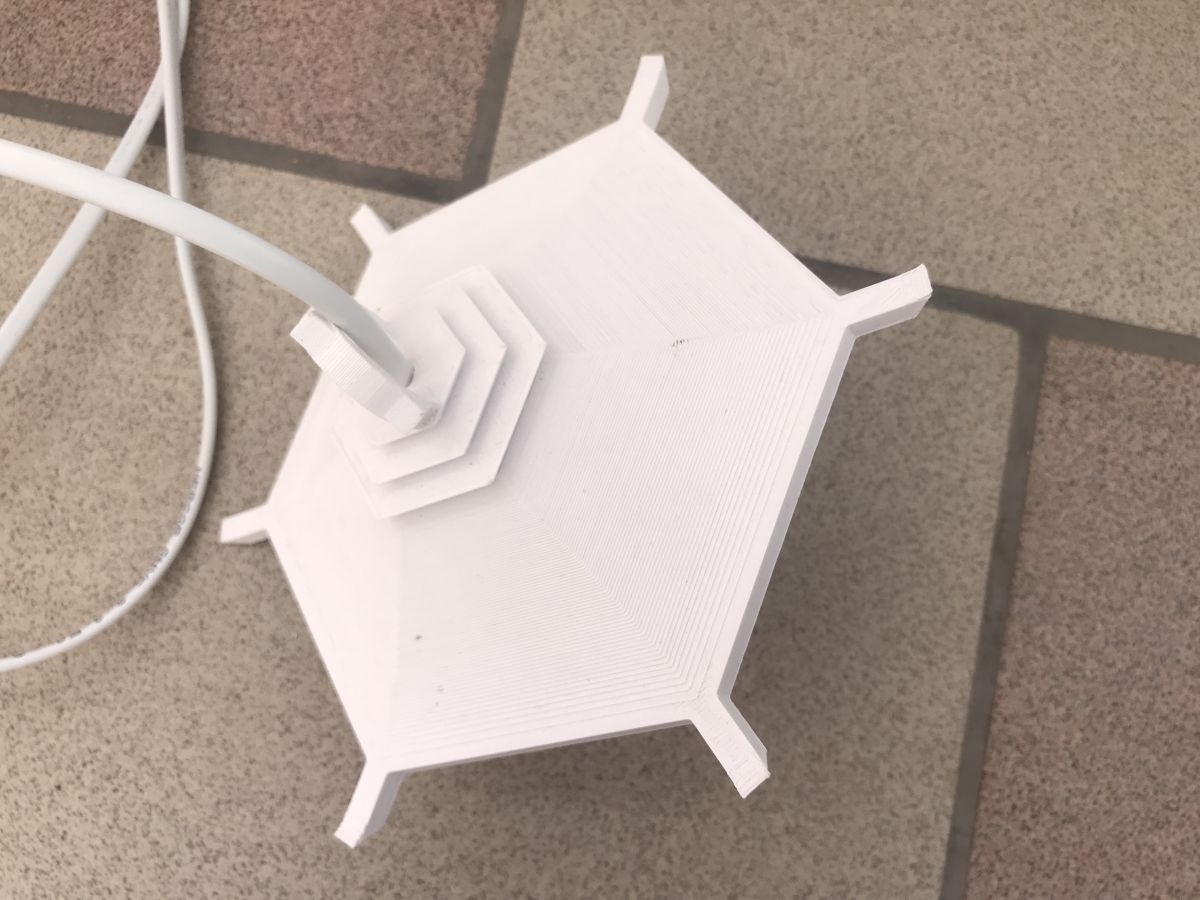
    In the end, I decided to fit E14 threaded fittings to the centre:
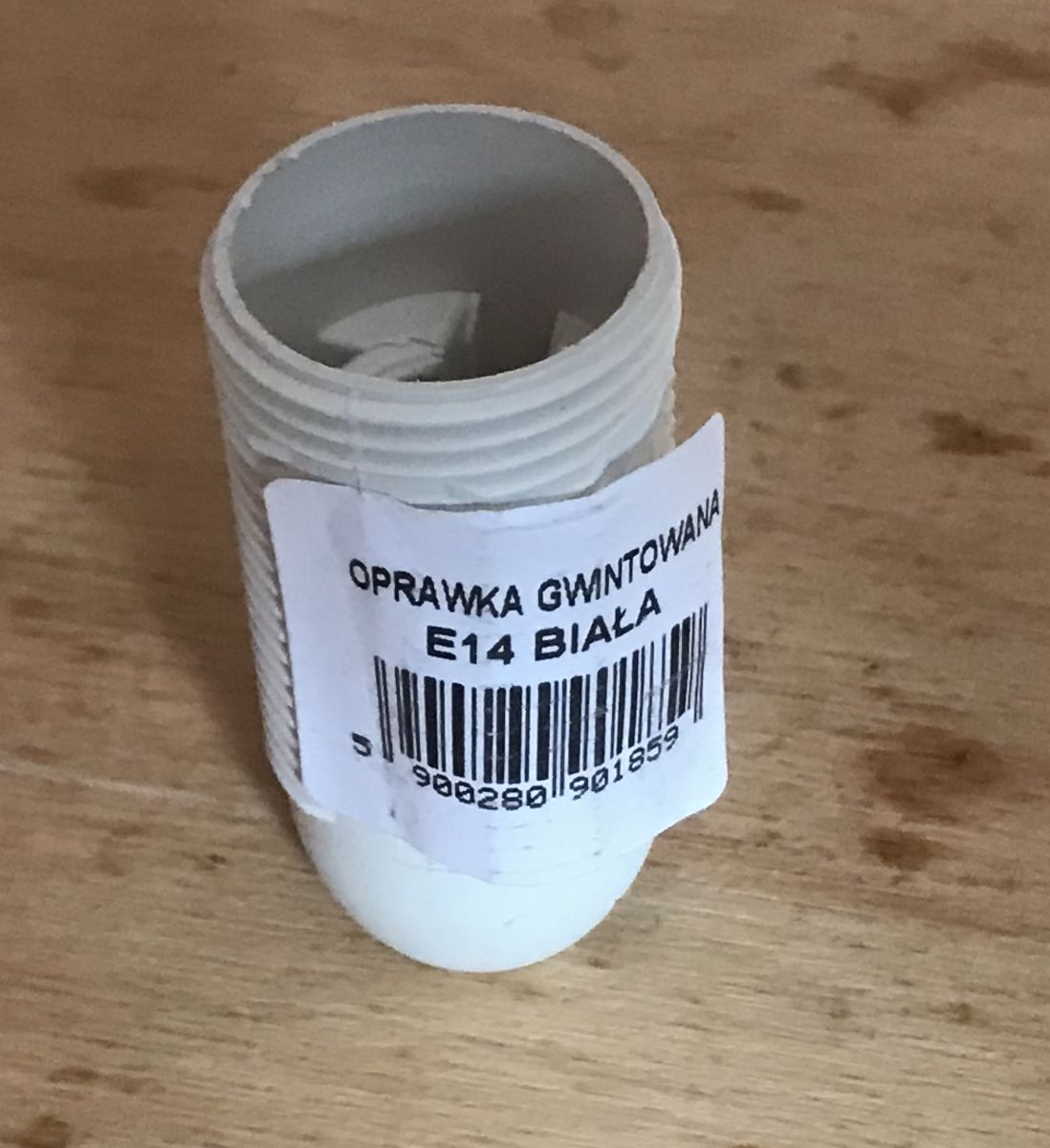
    3D printing idea - decorative lantern/lamp
    3D printing idea - decorative lantern/lamp
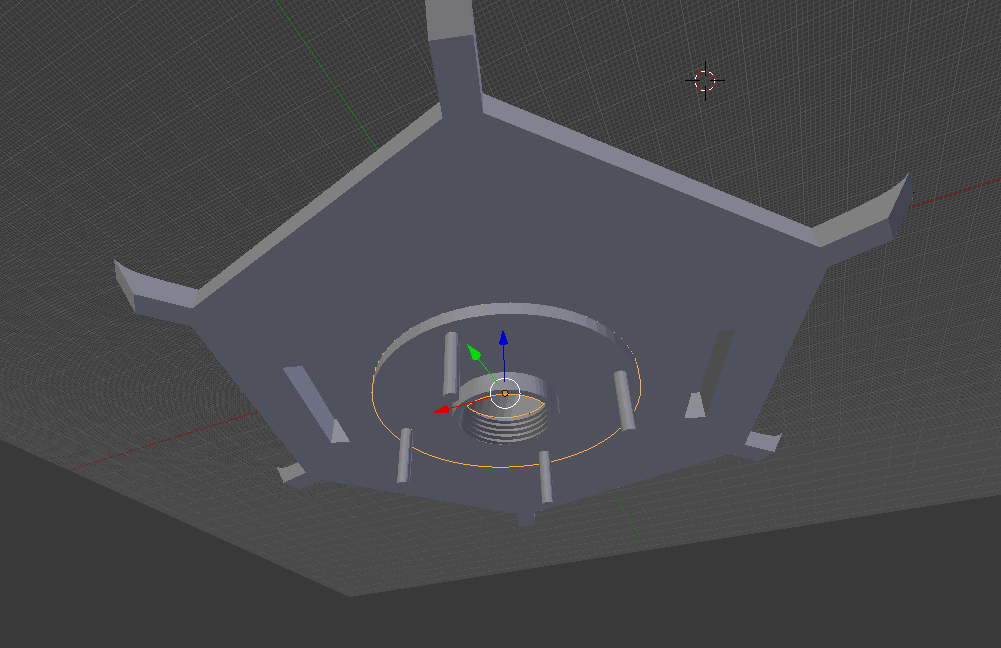
    For this purpose, I designed my own nut/thread for E14. It also has screw holes to connect it to the 'cap' from the lantern:
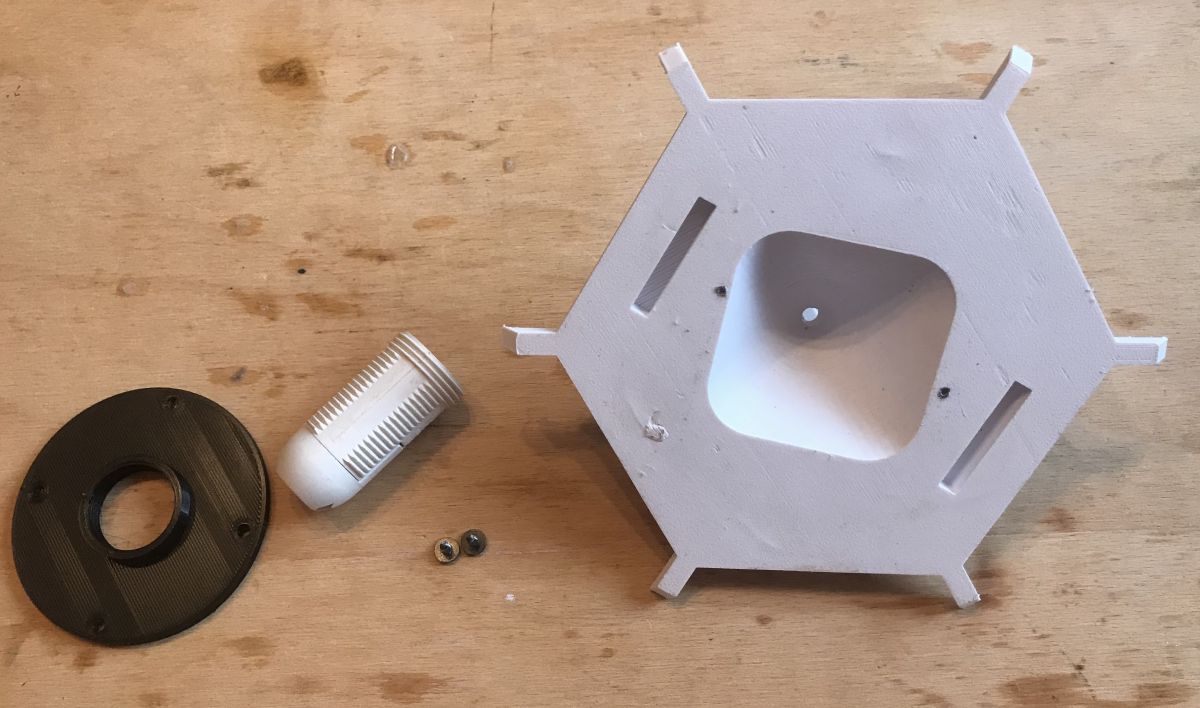
    3D printing idea - decorative lantern/lamp
    3D printing idea - decorative lantern/lamp
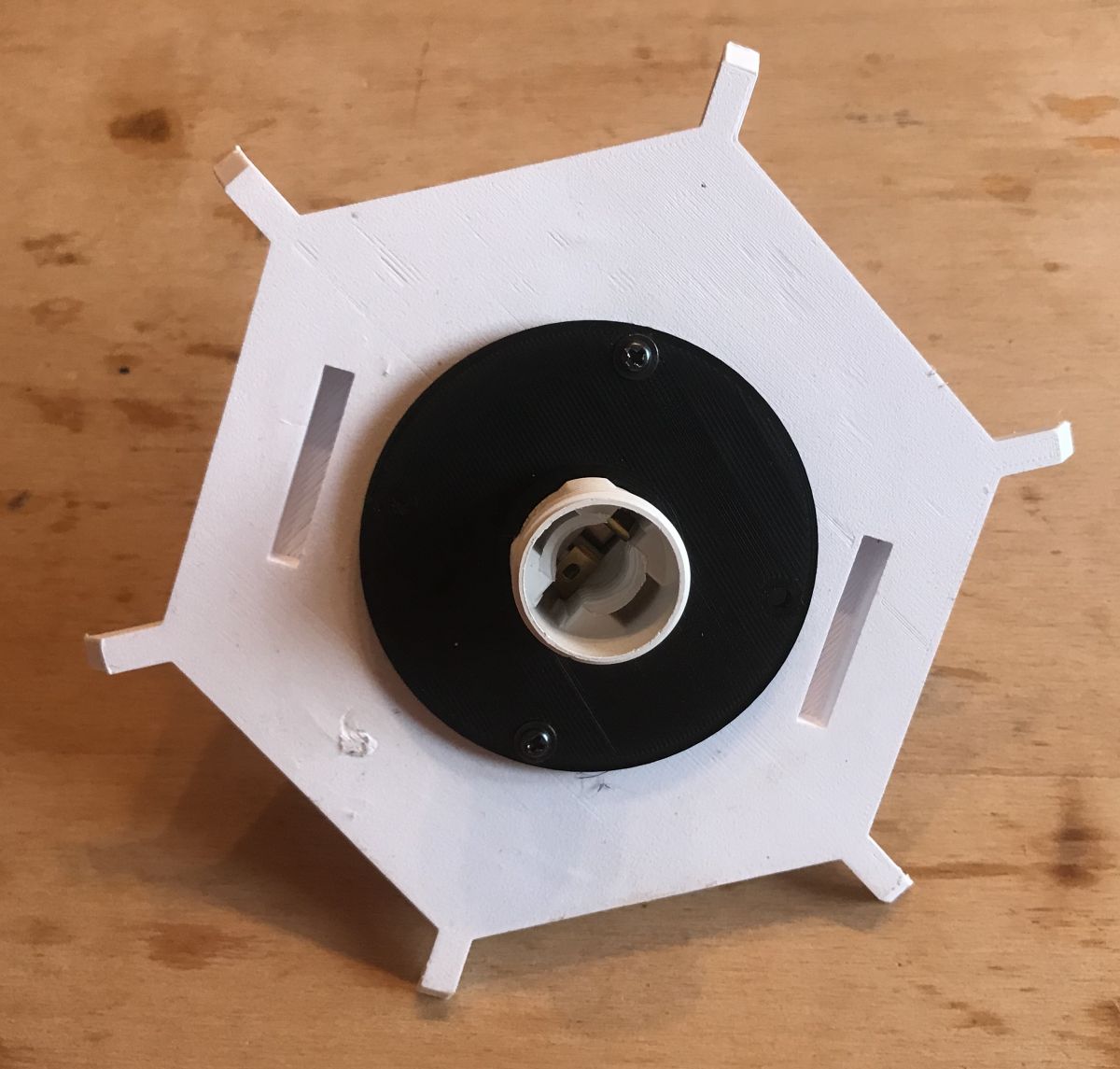
    Assembled:
    3D printing idea - decorative lantern/lamp
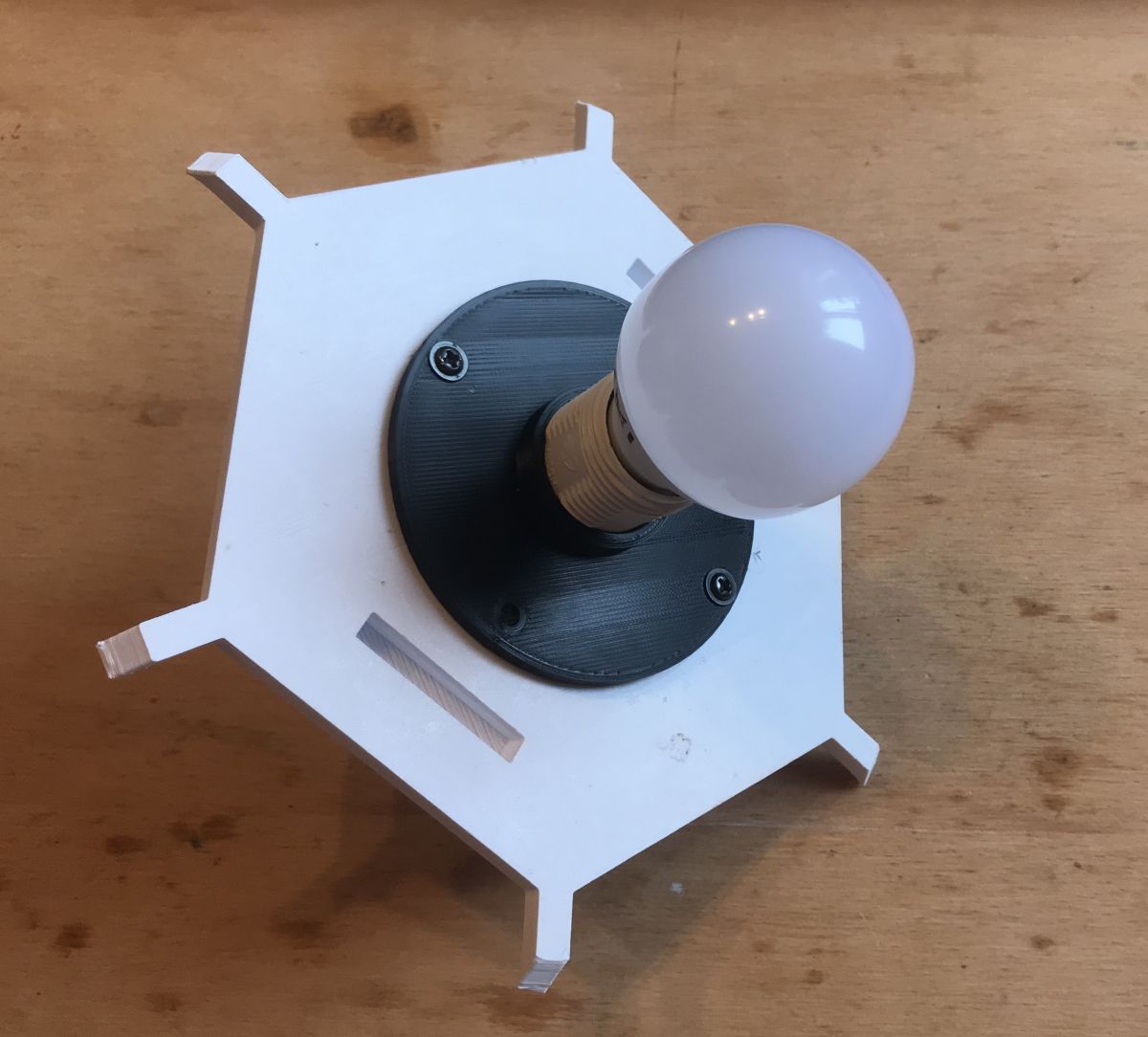
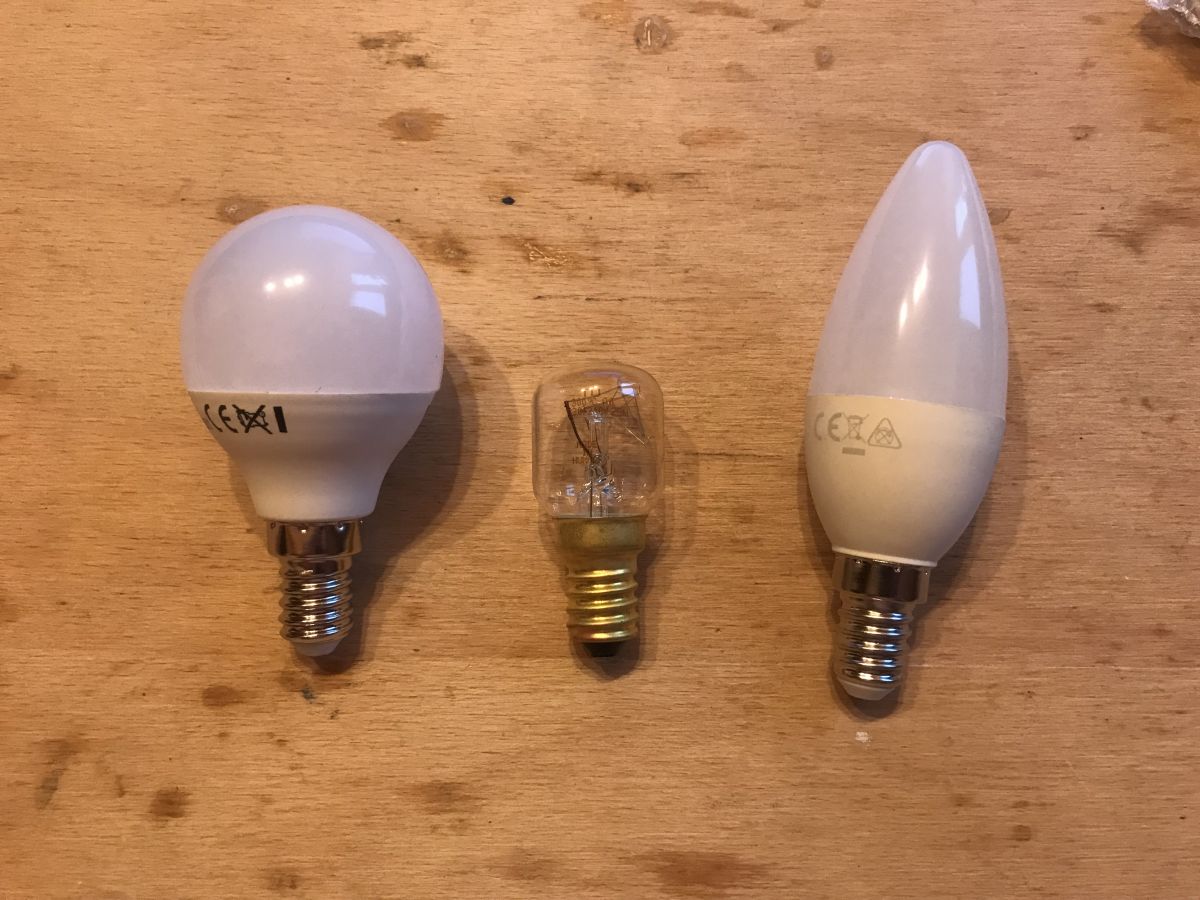
    The bulbs I had on hand; the largest one does not fit into the housing, while the milky LED one is just right:
    3D printing idea - decorative lantern/lamp
    Final result:
    3D printing idea - decorative lantern/lamp
    Same, but with a white mount:
    3D printing idea - decorative lantern/lamp 3D printing idea - decorative lantern/lamp


    Lighting diffusion
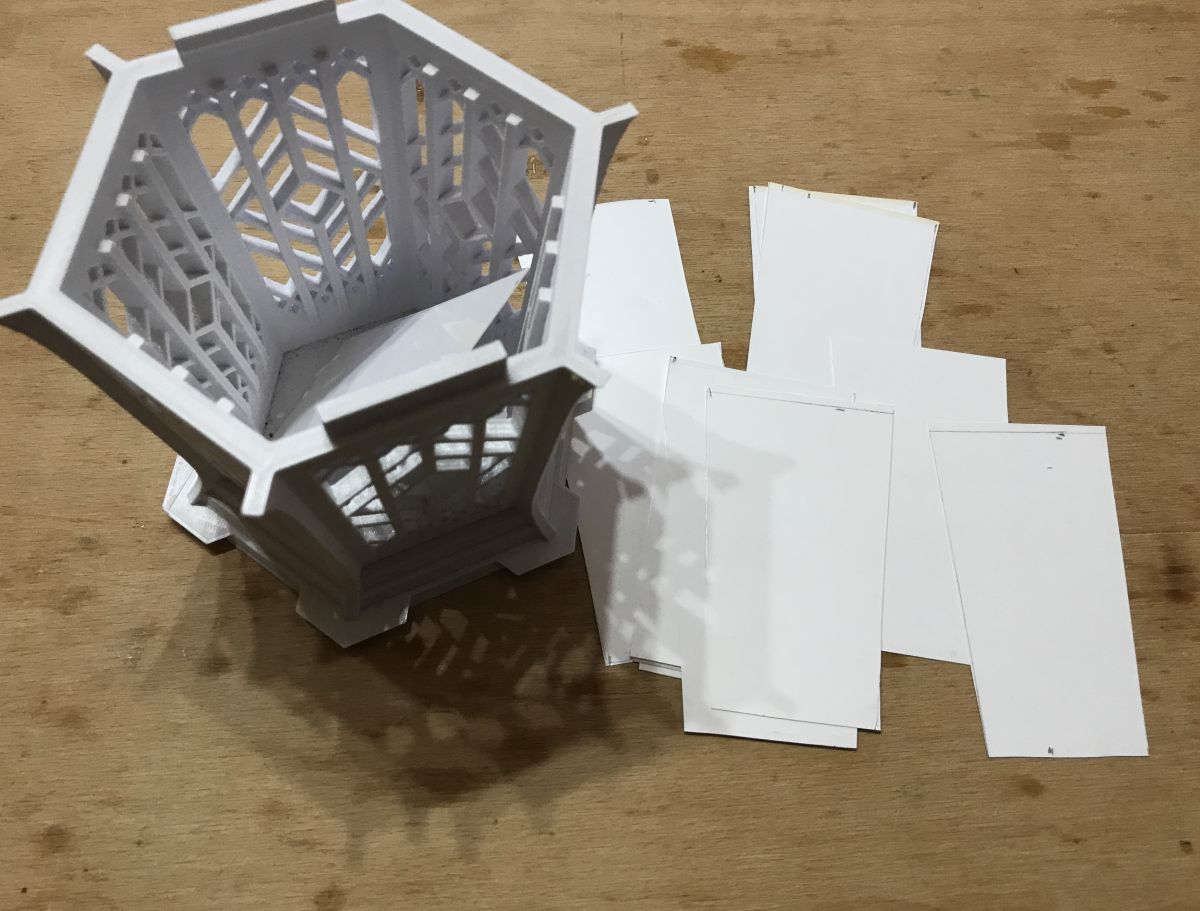
    A lamp made in this way may shine too brightly for some, but you can easily achieve a fuzzier lighting effect. All you need to do this is to use film pulled from an LCD monitor:
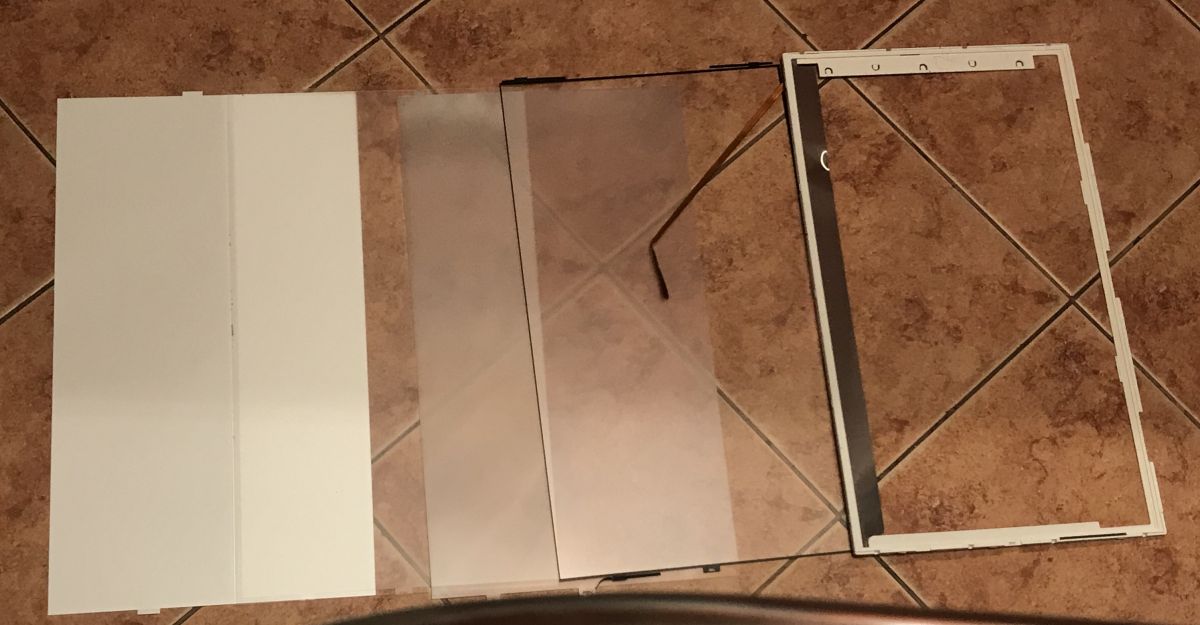
    3D printing idea - decorative lantern/lamp
    Cut out 'windows':
    3D printing idea - decorative lantern/lamp
    Glued:
    3D printing idea - decorative lantern/lamp
    But here their attachment could be improved a bit - the internal shape of the lantern makes it difficult to glue them on, it would need to be flattened.

    An important issue - heating of the filament
    In the case of the bulbs I used, the heating of the printed component is not noticeable at all, there is no problem with it. Nevertheless, it is worth pointing out that if one uses a stronger light source then by all means PLA can warp and melt, especially if the lamp is lit for a long time. This can partly be solved by using a more heat-resistant filament, such as ABS.

    Gallery
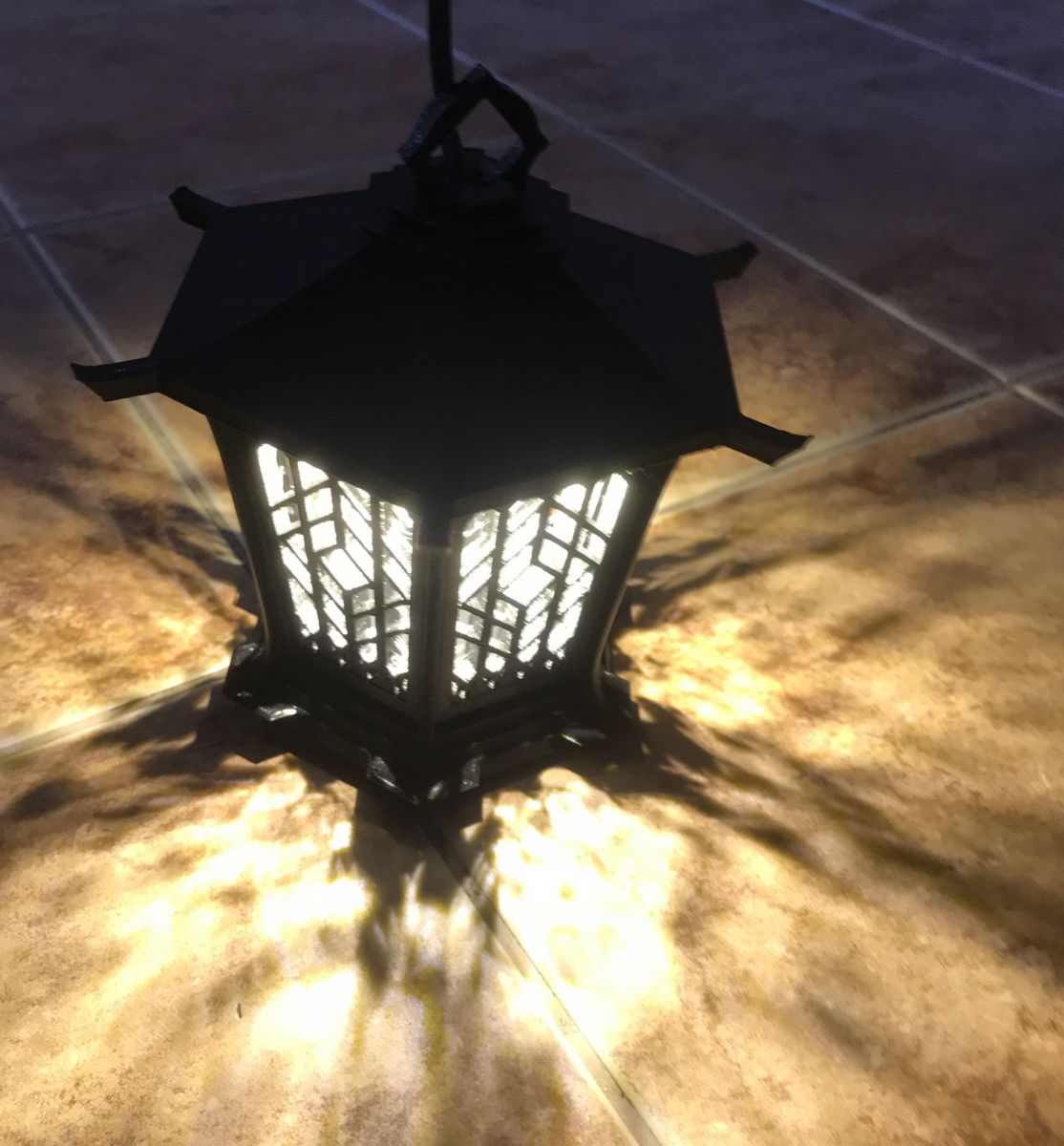
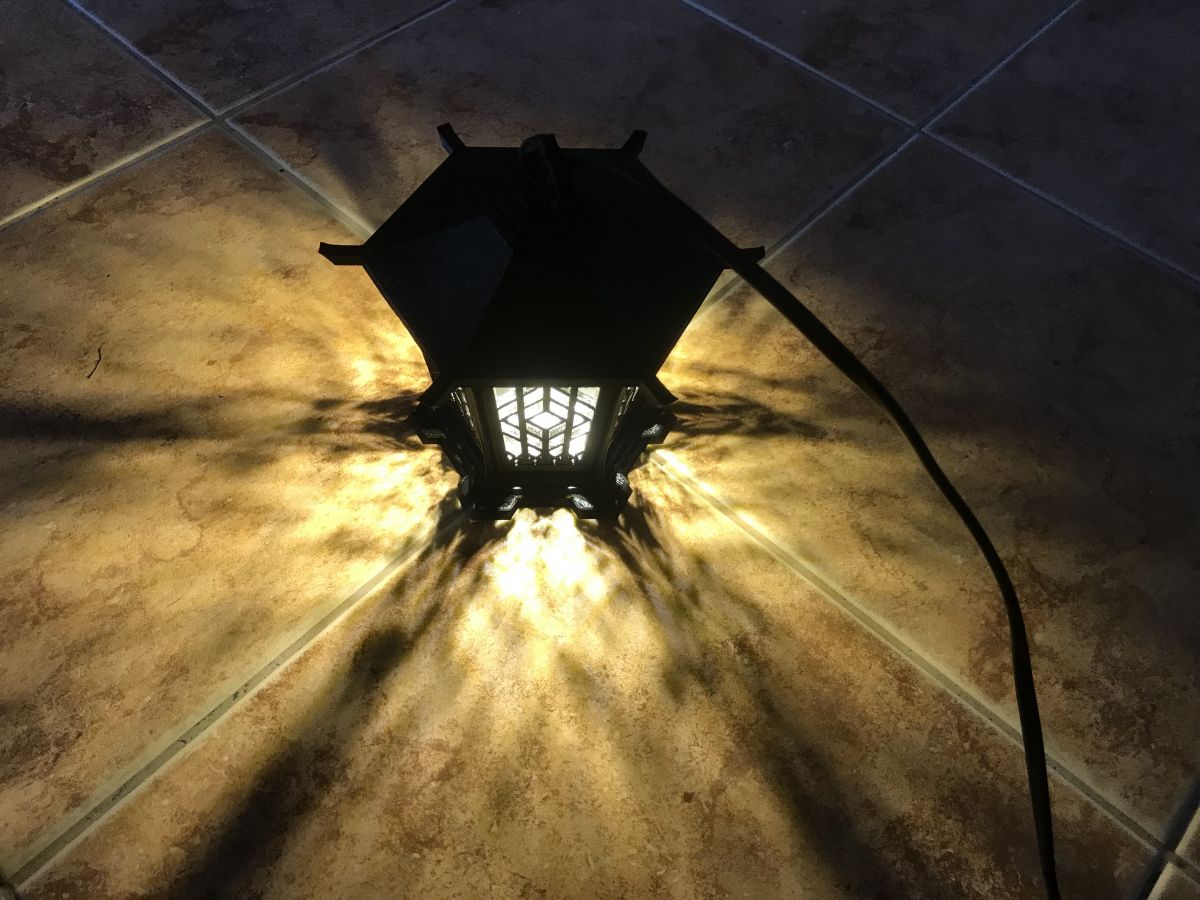
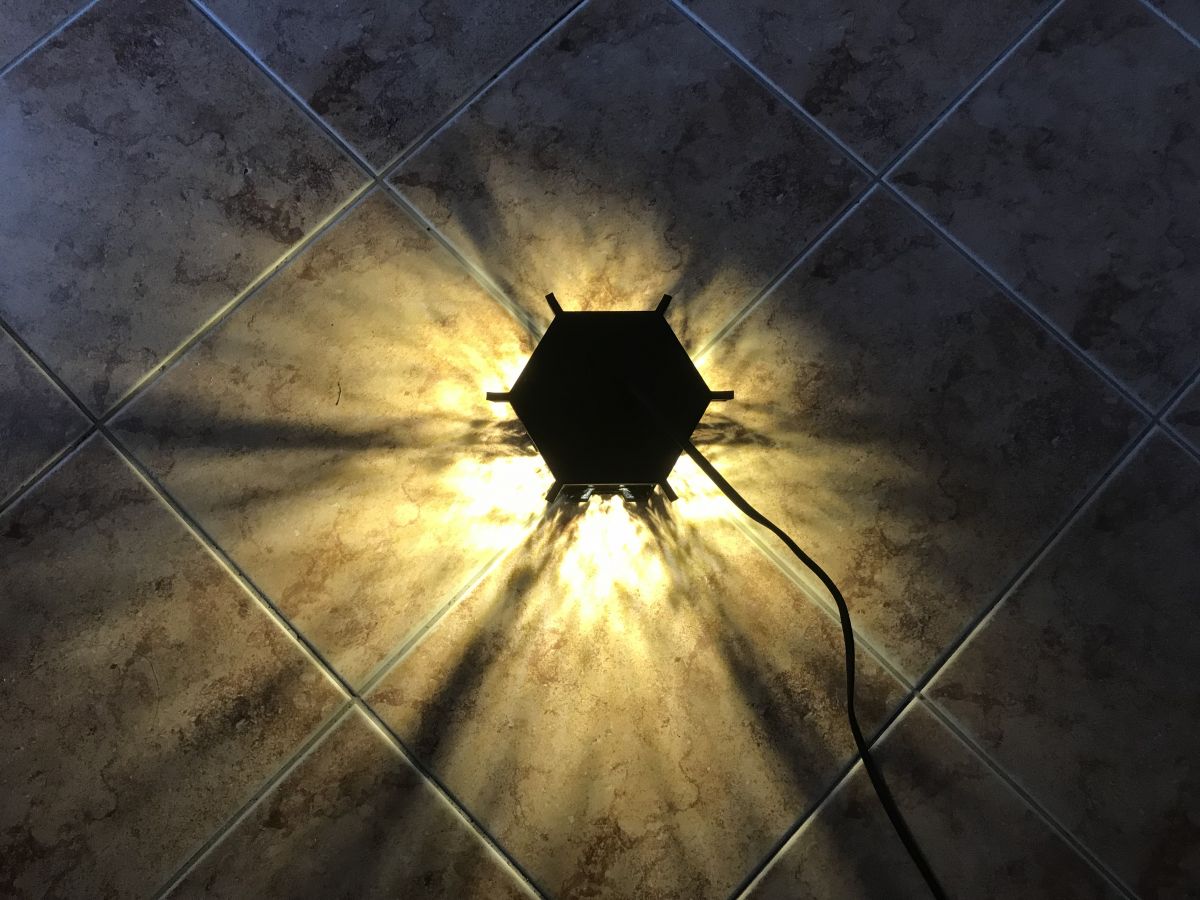
    Black lantern with LED module:
    3D printing idea - decorative lantern/lamp
    3D printing idea - decorative lantern/lamp
    3D printing idea - decorative lantern/lamp
    I'll add more photos when the opportunity arises.

    Summary Summary
    I am as happy as possible with the printed lights - in fact, I printed them as a gift for someone (on a specific request, having already selected the model in question from Thingiverse). For this reason I will give more pictures when I get the chance. The lights look good and don't get hot at all, and the use of 3D printing makes them even more attractive and easy to modify and customise. There is also no problem with making another lamp for the set - all you need is a filament of the same shade, print and you're done.
    Do you have any your Christmas projects based on 3D printing? Feel free to discuss and above all - happy holidays!
    I give a .blender scene with all the objects (modified lantern elements + my E14 mount) as an attachment:
    asianLante...ersion.zip (1.6 MB)You must be logged in to download this attachment.

    Cool? Ranking DIY
    Helpful post? Buy me a coffee.
    About Author
    p.kaczmarek2
    Moderator Smart Home
    Offline 
    p.kaczmarek2 wrote 14406 posts with rating 12345, helped 650 times. Been with us since 2014 year.
  • ADVERTISEMENT
  • #2 19131332
    LA72
    Level 41  
    Posts: 6582
    Help: 646
    Rate: 1648
    Looks cool.
    Won't the LEDs start to liquefy the plastic after being lit for a while?
  • #3 19131434
    p.kaczmarek2
    Moderator Smart Home
    Posts: 14406
    Help: 650
    Rate: 12345
    LA72 wrote:
    It looks cool.
    Won't the diodes start to liquefy the plastic after prolonged lighting?


    This was my first concern but in the case of the bulbs used, the heating is not sufficient to deform the housing. It is best to choose ones with low wattage, such as 3W. And in case of emergency, you can always use, for example, ABS filament more resistant to higher temperatures.
    Helpful post? Buy me a coffee.
📢 Listen (AI):

FAQ

TL;DR: Print the lantern with 5% infill, “choose low‑wattage bulbs, such as 3W,” and add E14 or a battery LED candle. [Elektroda, p.kaczmarek2, post #19130864] Why it matters: This FAQ helps makers quickly print, light, and safely diffuse a stylish 3D‑printed lantern without trial‑and‑error.

Quick Facts

Who is this 3D-printed lantern project for?

Makers with basic FDM skills who want a quick, decorative lamp. You can print on hobby printers like Ender 3 Pro and finish with either a battery LED candle or an E14 LED bulb. Safety and diffusion tips are included below. [Elektroda, p.kaczmarek2, post #19130864]

Do I need supports or high infill for this print?

No supports are needed. The author printed multiple sizes cleanly without support. Start with 5% infill, which held solidly in testing for this geometry. This saves filament and time while maintaining strength for the canopy and base. [Elektroda, p.kaczmarek2, post #19130864]

What’s the safest and easiest lighting option?

Use a battery-powered LED “candle.” It looks good, fits easily, and avoids mains wiring. It includes a small circuit that simulates flicker with a coil and ferromagnetic element for flame-like dimming. Insert it and you’re done. [Elektroda, p.kaczmarek2, post #19130864]

Will LEDs melt PLA if the lamp is on for hours?

With low-power bulbs used here, heating was not enough to deform the housing. The expert notes, “choose ones with low wattage, such as 3W.” For hotter sources or long runtimes, switch to ABS. [Elektroda, p.kaczmarek2, post #19131434]

How do I add a standard bulb holder (E14) to the lantern?

The author designed a printable E14 nut with screw holes. It mounts to the canopy and accepts common E14 LED bulbs. The milky LED bulb fit; a larger bulb did not. Test-fit before final assembly to confirm clearance. [Elektroda, p.kaczmarek2, post #19130864]

Quick how-to: installing the E14 mount

  1. Print the canopy with the E14 recess and the custom E14 nut.
  2. Screw the nut to the canopy through the provided holes.
  3. Thread in a small E14 LED bulb and close the lantern. [Elektroda, p.kaczmarek2, post #19130864]

Can I reuse an LED bulb module instead of a socket?

Yes, an LED bulb module with a capacitor supply was test-fitted by screwing it to an indented canopy. The effect worked but was inconvenient for replacements, so the author preferred the E14 socket approach for serviceability. [Elektroda, p.kaczmarek2, post #19130864]

How do I get softer, more diffuse light?

Line the inner window openings with diffuser film from an old LCD monitor. Cut panels to size and glue them inside. Note: the lantern’s internal shape complicates gluing; a flatter area would improve adhesion and finish. [Elektroda, p.kaczmarek2, post #19130864]

Which filament should I pick for heat and aesthetics?

White PLA gives a clean look and prints easily. If you plan brighter lamps or long sessions, use ABS for better heat resistance. The original builds showed no noticeable warming with low-power LEDs. [Elektroda, p.kaczmarek2, post #19130864]

What printer and settings were proven to work?

Ender 3 Pro handled the print without supports. Use ~5% infill and standard PLA profiles as a baseline. Scale is flexible; larger white versions printed cleanly. Adjust bulb size and canopy clearance accordingly. [Elektroda, p.kaczmarek2, post #19130864]

Do I need Tuya, Arduino Nano, OpenBeken, or CAN bus for this lantern?

No. The thread uses simple LED candles or an E14 LED bulb, with no smart-home stacks or microcontrollers required. Those platforms are unnecessary unless you add custom control later. The documented build is purely mechanical and electrical basics. [Elektroda, p.kaczmarek2, post #19130864]

Any edge cases or failure modes to watch for?

PLA can warp or soften if you use stronger, hotter light sources or enclose heat. Long runtimes intensify risk. Mitigate by choosing low-power LEDs, adding ventilation, or printing in ABS. Always test temperature after 30–60 minutes. [Elektroda, p.kaczmarek2, post #19130864]

What bulb size fits best in the printed housing?

A compact, milky E14 LED bulb fit the printed canopy; a larger bulb did not. Check dimensions before final assembly. If in doubt, print a quick test ring to verify clearance with your chosen bulb profile. [Elektroda, p.kaczmarek2, post #19130864]

Can I customize color or print multiple matching lamps?

Yes. Use the same filament shade to produce matching sets. The model’s two-part design allows quick reprints and color experiments. Print, assemble, and gift as needed using the same slicer profile for consistency. [Elektroda, p.kaczmarek2, post #19130864]

Where did the 3D model come from, and what’s the license?

The lantern is based on Keenan’s “asian lantern” from Thingiverse and shared under a Creative Commons license. The author modified parts and provided a .blend scene for the E14 mount integration. Respect the license terms. [Elektroda, p.kaczmarek2, post #19130864]
Generated by the language model.
ADVERTISEMENT