







 binder..jpg (455.62 kB)You must be logged in to download this attachment.
Dear forumers,
Like probably most of you, I've been struggling for years with the problem of a large number of electronic, mechanical and other small "appendages", often in individual pieces jumbled up somewhere under the OTHER label. The drawer organisers I have don't quite work, mainly because the size of a single drawer is too large. At the moment, for example, I could only separate the resistors into 8 groups, which is far too small to be able to quickly find the right value. It was then that I came up with the idea of using a document binder, into which would be clipped suitable trays with a dozen/dozen lockable compartments. I started scouring the shops and, unfortunately, found nothing that even partially fulfilled this idea. I abandoned the idea until I owned my first 3d printer. That project was a complete failure. However, after a few years, when my experience with 3d printing and design had increased somewhat, I decided to try again.
Project ideas:
- a4 size bins clipped into a typical binder with a height of approximately 80mm
- 3 layers of approximately 24-25mm each
- made using 3D printing technology with reasonable printing time
- various configurations of compartment sizes
- each compartment closed with a separate lid
The project was created in the Fusion360 application. Each tray is made up of 3 modules, each module has a 3-column layout, each column in turn can consist of 2, 3 or 4 compartments. The modules are joined by clips which, depending on the quality of the print, allow the print to be disconnected or are joined once and for all. After joining the three modules, a binder holder must be attached on one side and an additional stabilising connecting element on the other (although this is not essential). The lids of the compartments are inclined in such a way as to allow the individual lids to be pulled out. Unfortunately, this generates the need to print the guides at a certain angle, which in turn reduces the smoothness of the lid when sliding. In the end, however, this did not prove to be a major problem. In addition, each lid has spring-loaded latches that lock it in the maximum open/maximum closed position. The lids are also designed in 2 versions. Initially, I assumed that the lids would be labelled directly on them. Later, however, I also created a version that allows a card and transparent film to be inserted.
Printing a single module (1/3 of the tray) takes me about 5 hours. The walls are 0.8mm, so with a standard 0.4 nozzle there are 2 outlines. This is the optimum value for achieving the right rigidity. The printing time for a 1-binder set is as much as 50 hours or more. Personally, I printed the trays on one printer and the lids on the other. The latter required additional time for accurate sizing. This unfortunately required a lot of testing and corrections of dimensions within +-1%.
Summary:
Unfortunately I have not yet had the opportunity to test how the system performs in practice. After printing 2 layers, I started to notice some problems that didn't seem relevant to me before. I still think the idea is a good one, but this kind of organiser may not be as versatile as I originally thought. One problem is the not very configurable layout of the compartments. In the end, there were 3 types of modules (6, 9 and 12) and this is a bit too few. The ideal would be to be able to configure the sizes in each column as desired. Division into 3 columns could also be a problem, but this is forced by the design of the lids. A division into 2 columns, for example, could force the need to change the account under which the lids are set. Another problem is the way the modules are combined. Depending on the calibration of the printer, they may be difficult to disassemble or be connected virtually permanently. Ultimately, it should be possible to detach a single module and change to another. This would require redesigning the abutments that connect the modules.
What I am satisfied with:
- assumptions are largely fulfilled
- many items which are not too heavy can be stored in it
- the containers are relatively lightweight and yet do not look very fragile
- the lids hold quite firmly and are unlikely to open without reason
- the binder wrapping should protect the contents from slight injuries
- this is some basis for the design of the next version
- the design was made in practice, not on paper
What I am not satisfied with:
- poor configurability of compartment sizes compounded by difficult/impossible to dismantle modules and practical impossibility to swap sizes
- the smallest compartments are still much too large (for me, many small items do not even cover the bottom)
- heavier items make noise when handling the trays, plus there is of course a certain risk of spilling the contents as the trays are often turned upside down
- nevertheless long printing time
- no inside view due to opaque lid
- you have to get used to the way the tray opens and closes, sometimes the lid can slip out of the guide when closing it a little too gently
- the size of the tray could be a little smaller as it sometimes protrudes slightly beyond the protective wrapping
- the design under Fusion360 is very difficult to modify
What I would like to change in the next version:
- allow more extensive configuration of the layout, perhaps using openscad or openjscad
- a different system for connecting modules
- the possibility of generating additional partitions inside a given drawer
Some renders and images:
 binder..jpg (295.45 kB)You must be logged in to download this attachment.
  binder..jpg (263.63 kB)You must be logged in to download this attachment.
  binder..jpg (422.63 kB)You must be logged in to download this attachment.
  binder..jpg (493.99 kB)You must be logged in to download this attachment.
  binder..jpg (465.14 kB)You must be logged in to download this attachment.
  binder..jpg (460.8 kB)You must be logged in to download this attachment.
  layout..png (36.68 kB)You must be logged in to download this attachment.
Cool? Ranking DIY
 Although I'm slowly switching to strings


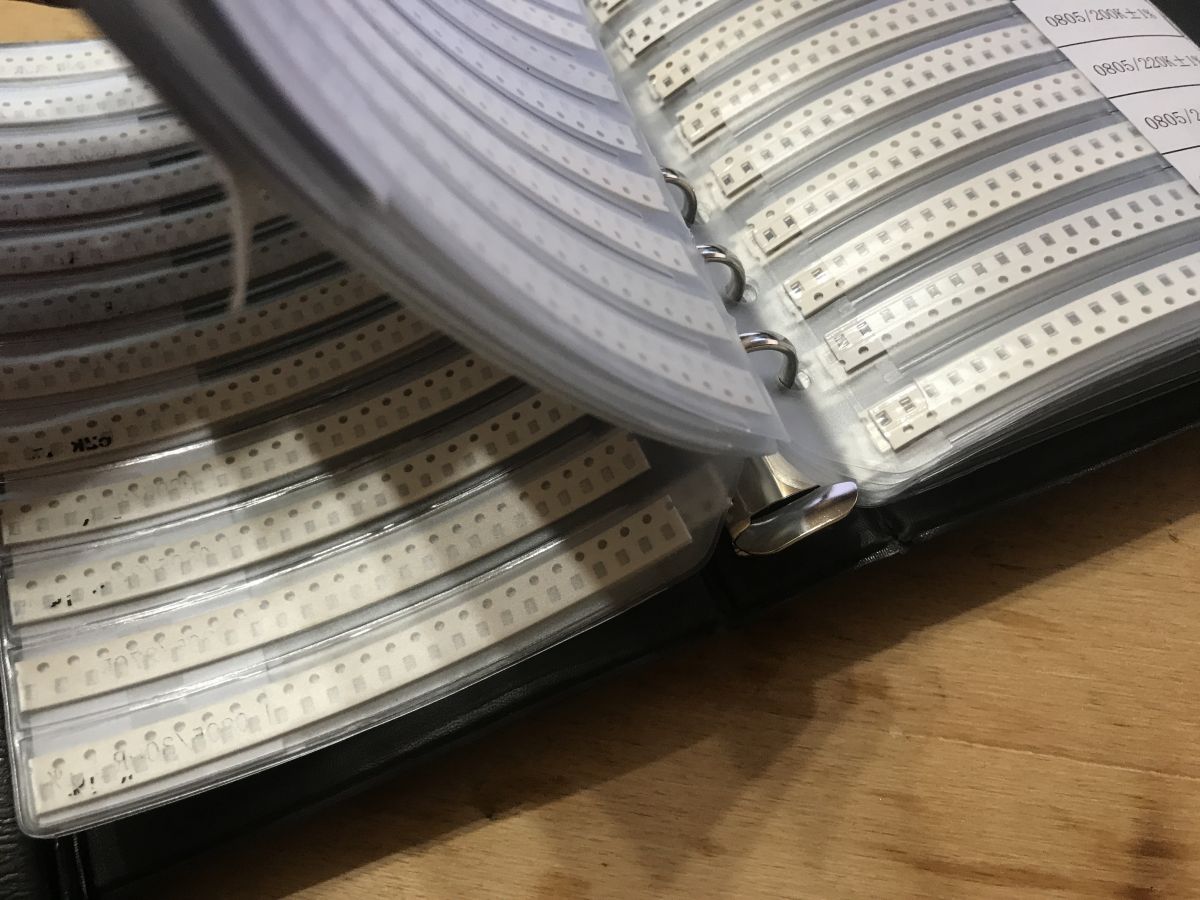

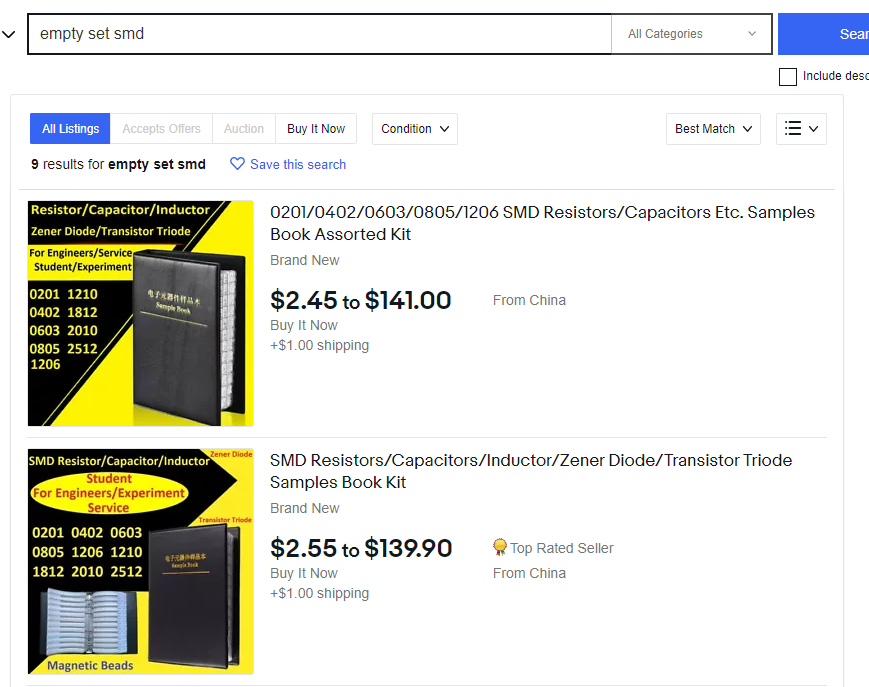
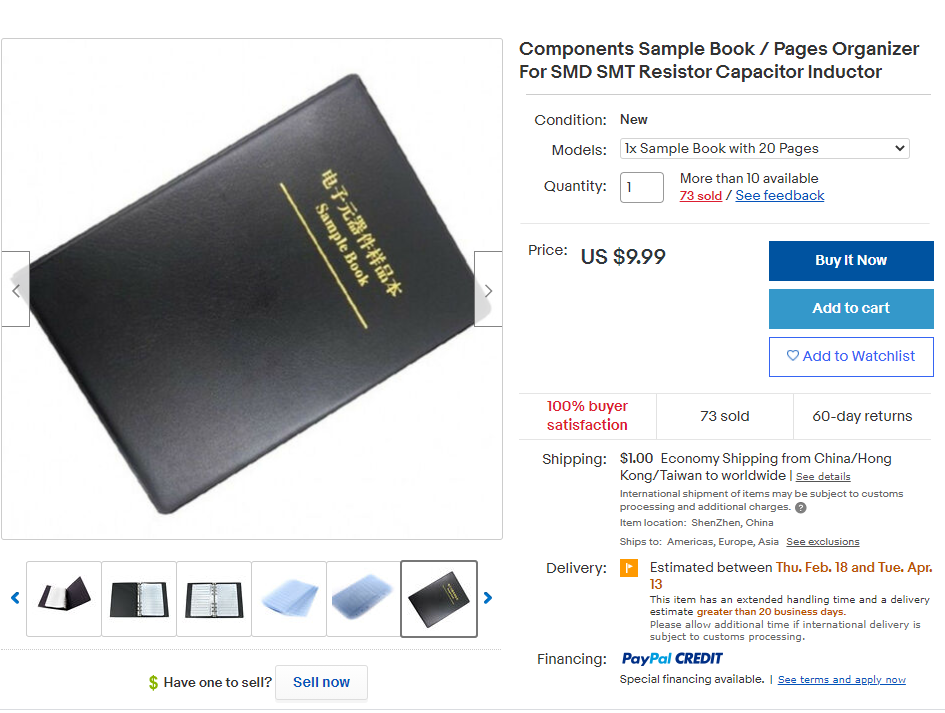
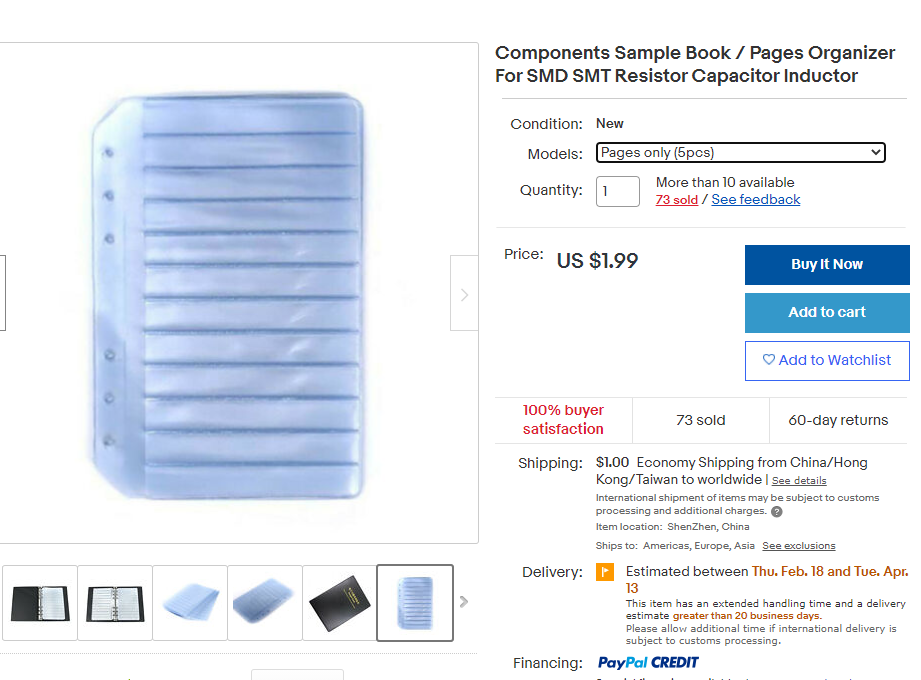

 In the age of SMD components, you have to look for smaller, better packed boxes. A nice degree of "packing" of elements in tape (resistors or SMD capacitors) is offered by strips clipped into A4 boxes (and these clipped into a binder, for example).
