logo elektroda
logo elektroda
X
logo elektroda

Refrigerator compressor using 3D printing

kaeltaz 4914 26
ADVERTISEMENT
Treść została przetłumaczona polish » english Zobacz oryginalną wersję tematu
📢 Listen (AI):
  • Refrigerator compressor using 3D printing

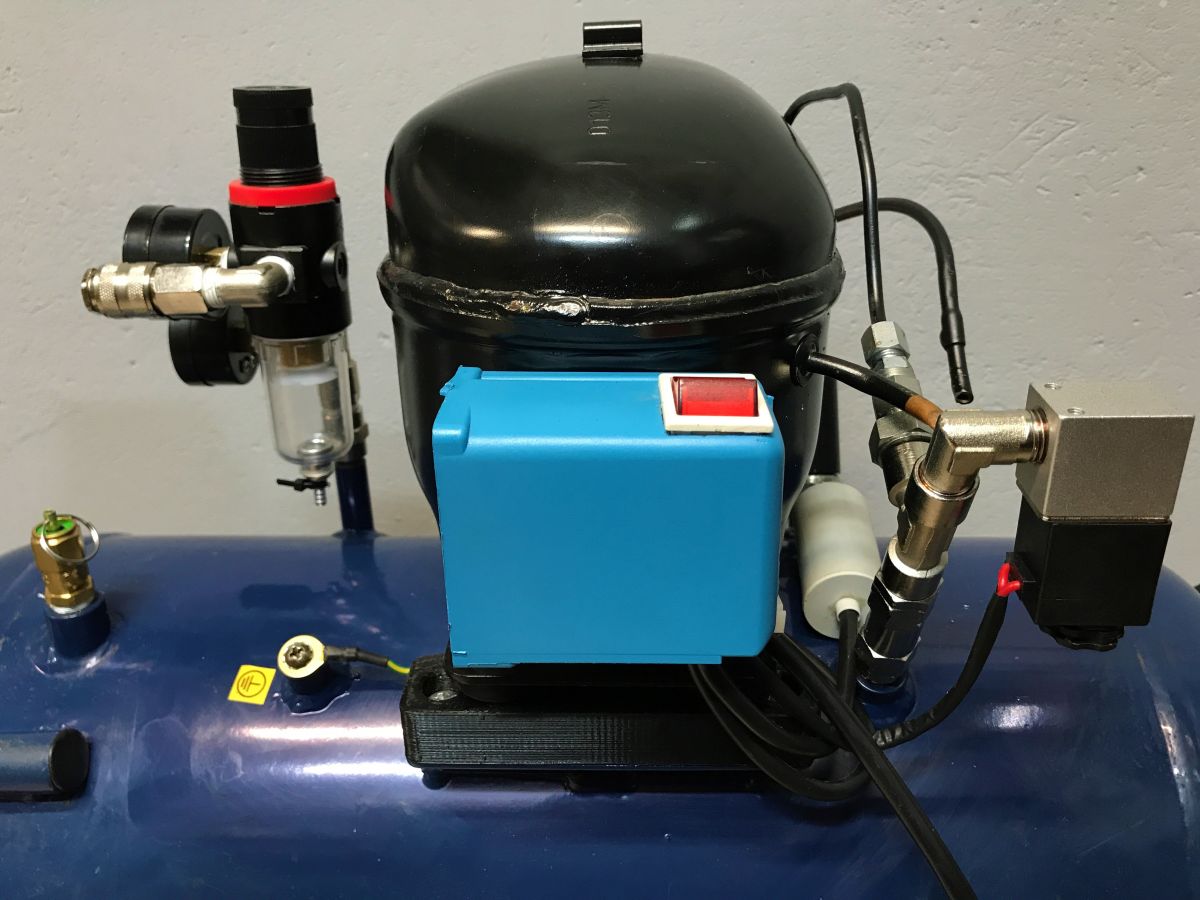
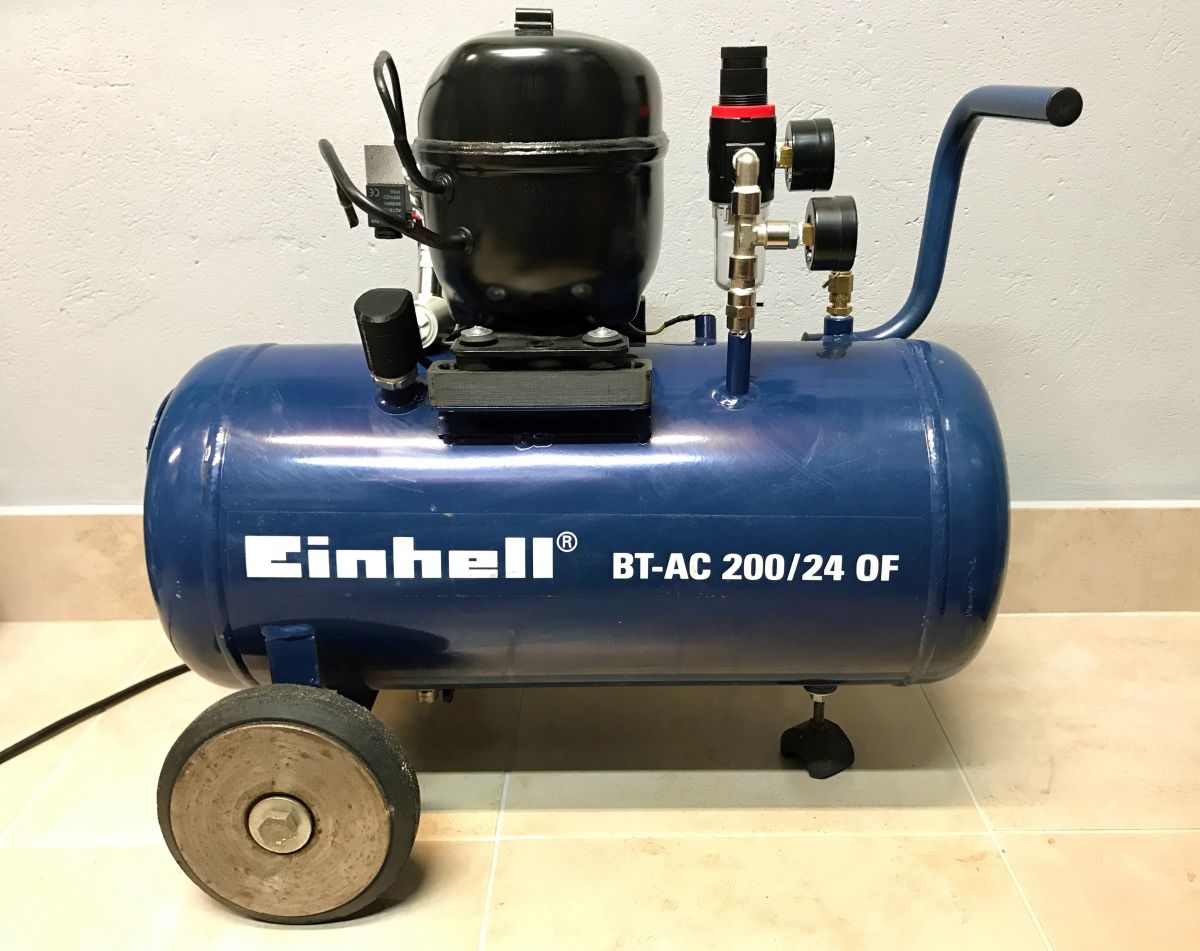
    Presenting a mini air compressor made by me using the unit from a refrigerator.

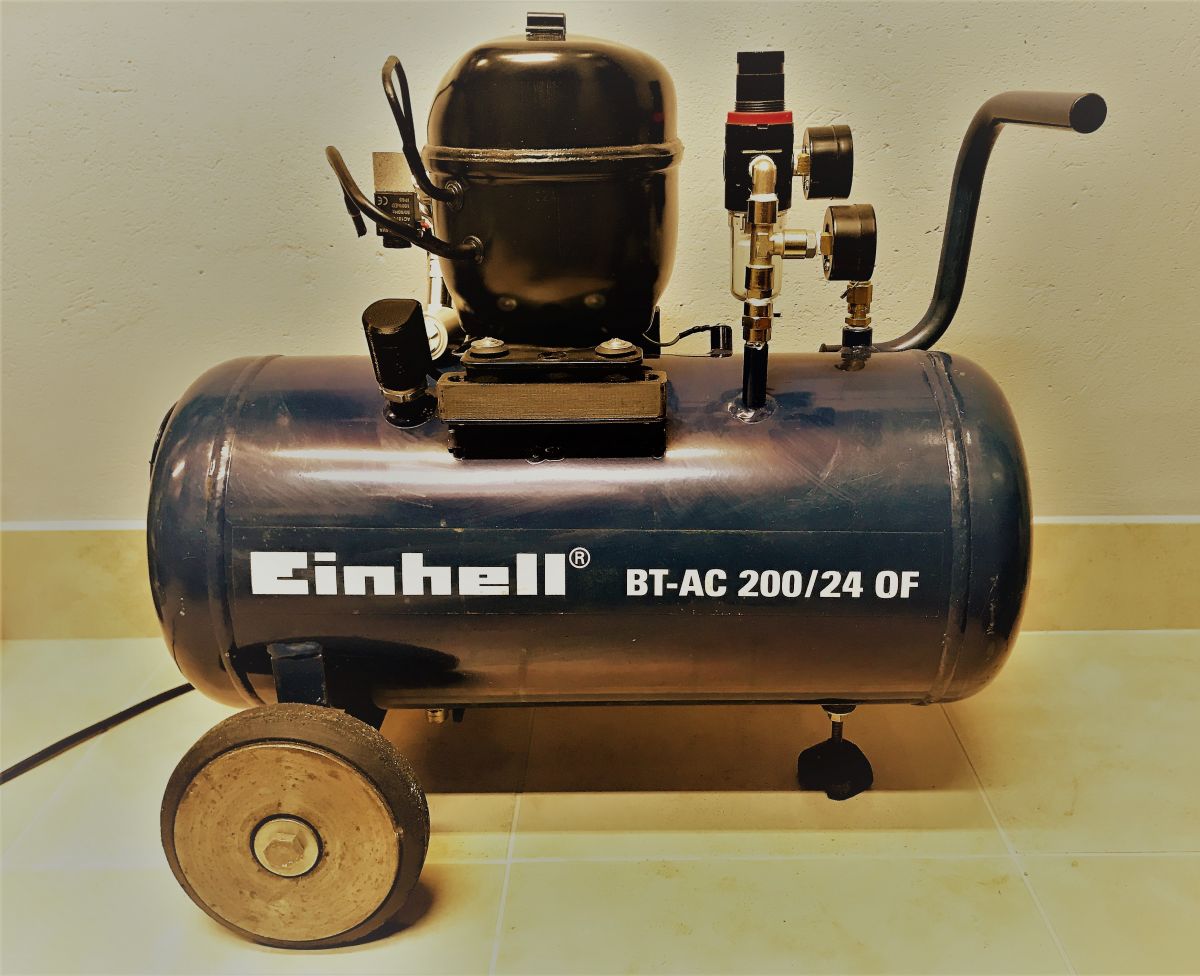
    The heart of the compressor is the genset pulled from an old fridge, which due to corrosion was only suitable to be given away for scrap. The 24 L tank was given to me as a gift from a friend; it came from an oil compressor (model pictured). :)

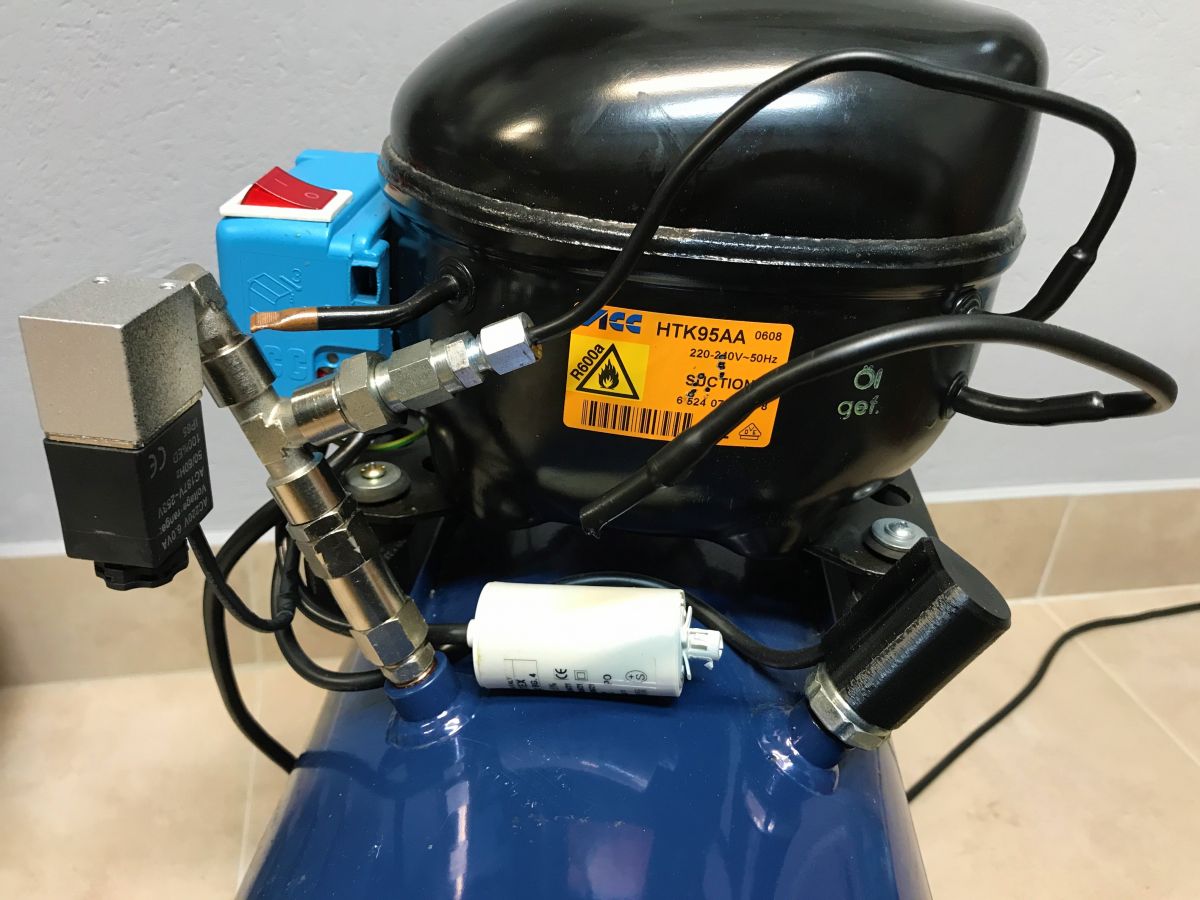
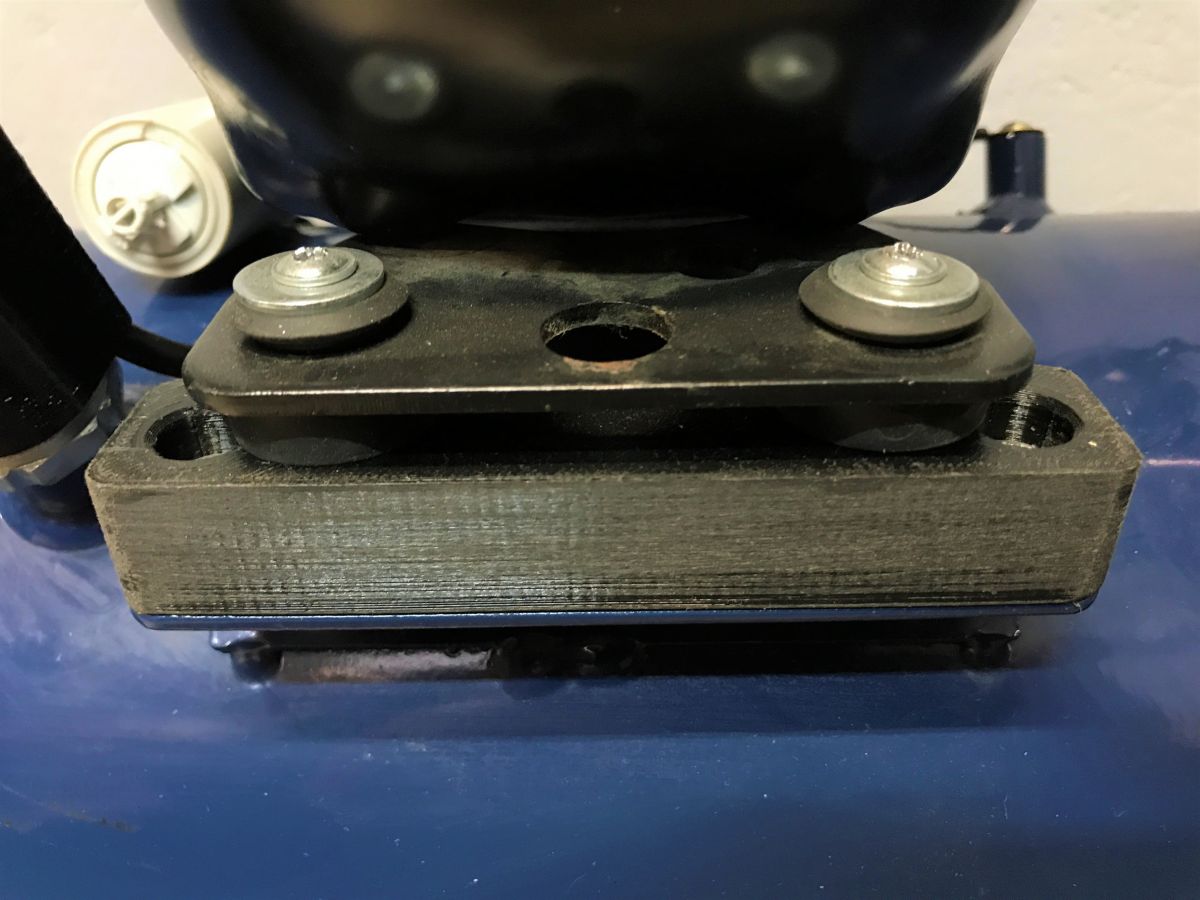
    I started by designing the parts with which I mounted the unit in place of the original compressor, these are two plastic parts sized to fit the mounting holes on the tank and the unit. The adapters were printed with PLA filament on my modified Ender 5 printer.
    Refrigerator compressor using 3D printing

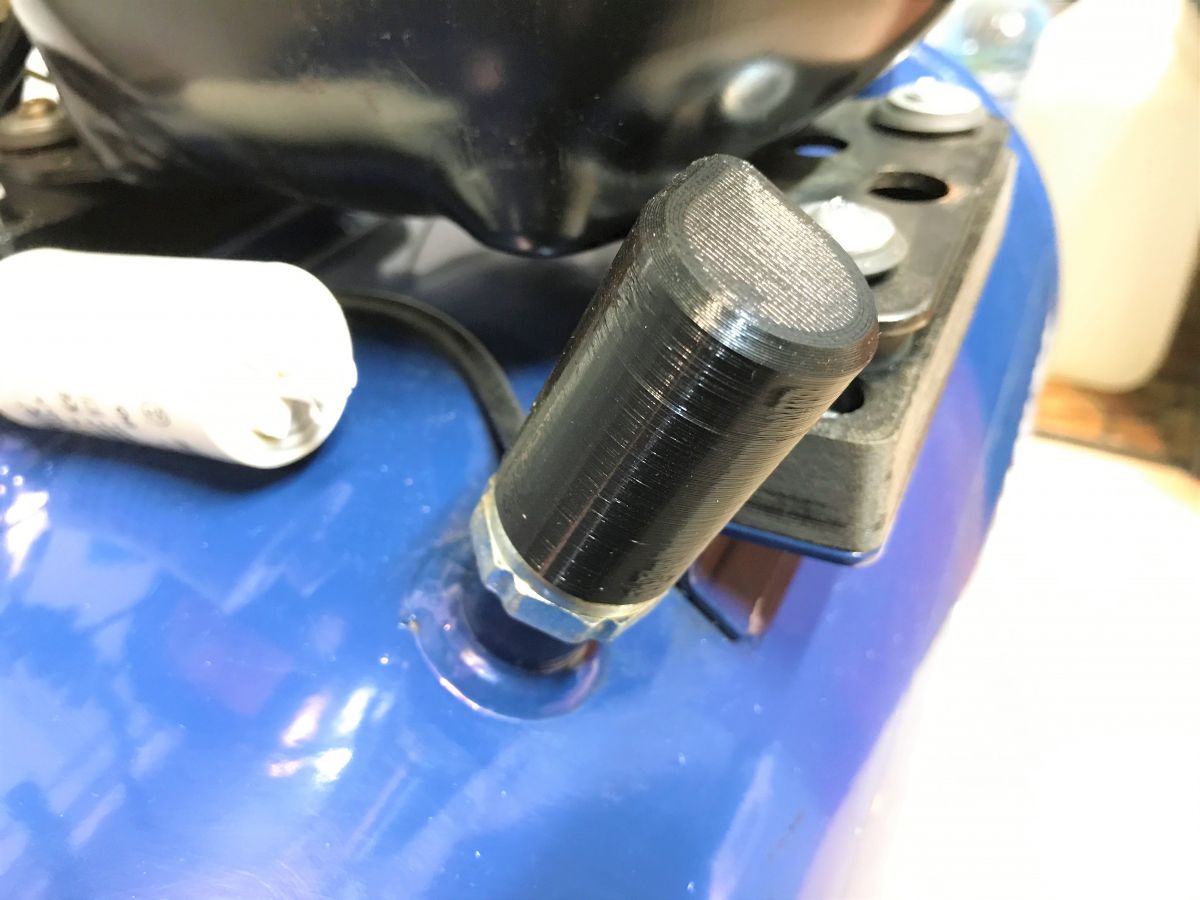
    The next printed item is a pressure switch cover to protect against electric shock. I got the pressure switch or pressure switch together with the tank from a friend.
    Refrigerator compressor using 3D printing

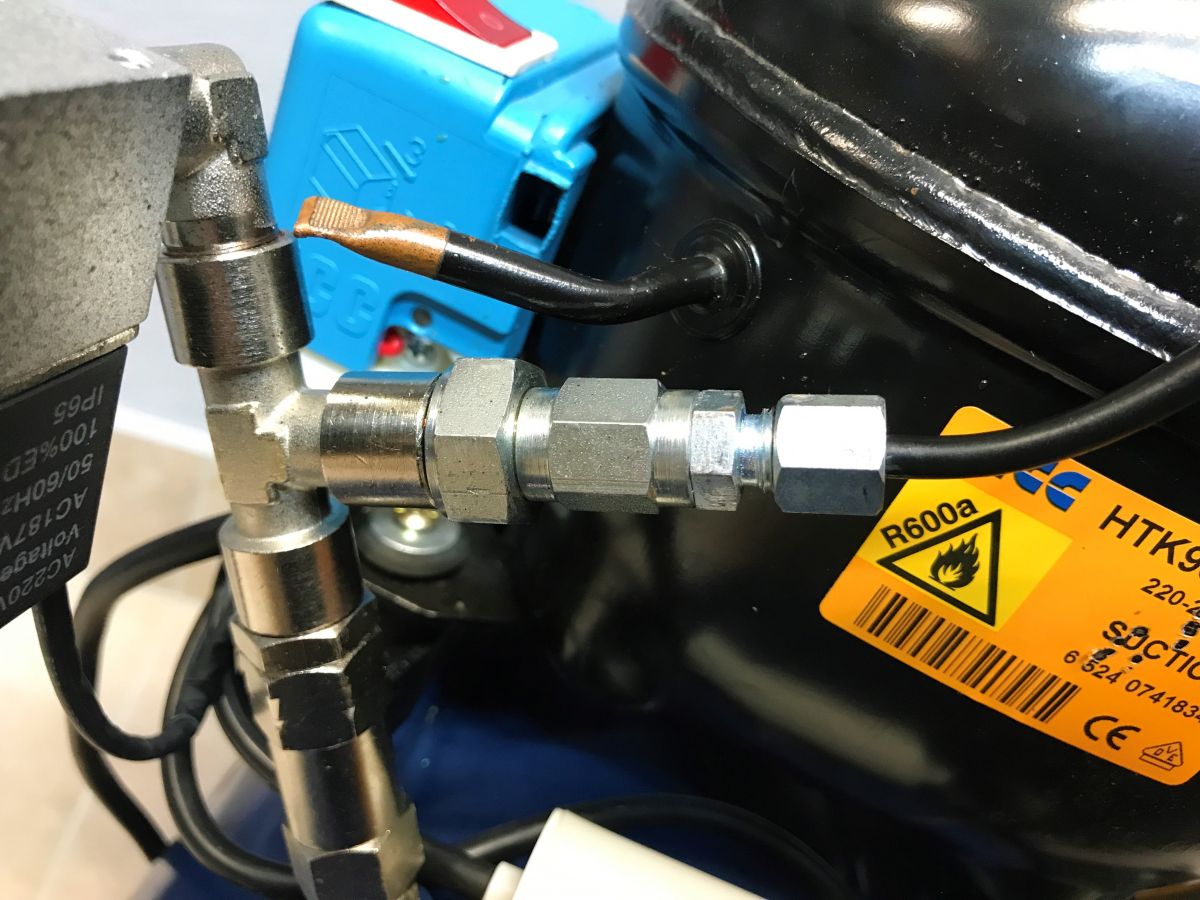
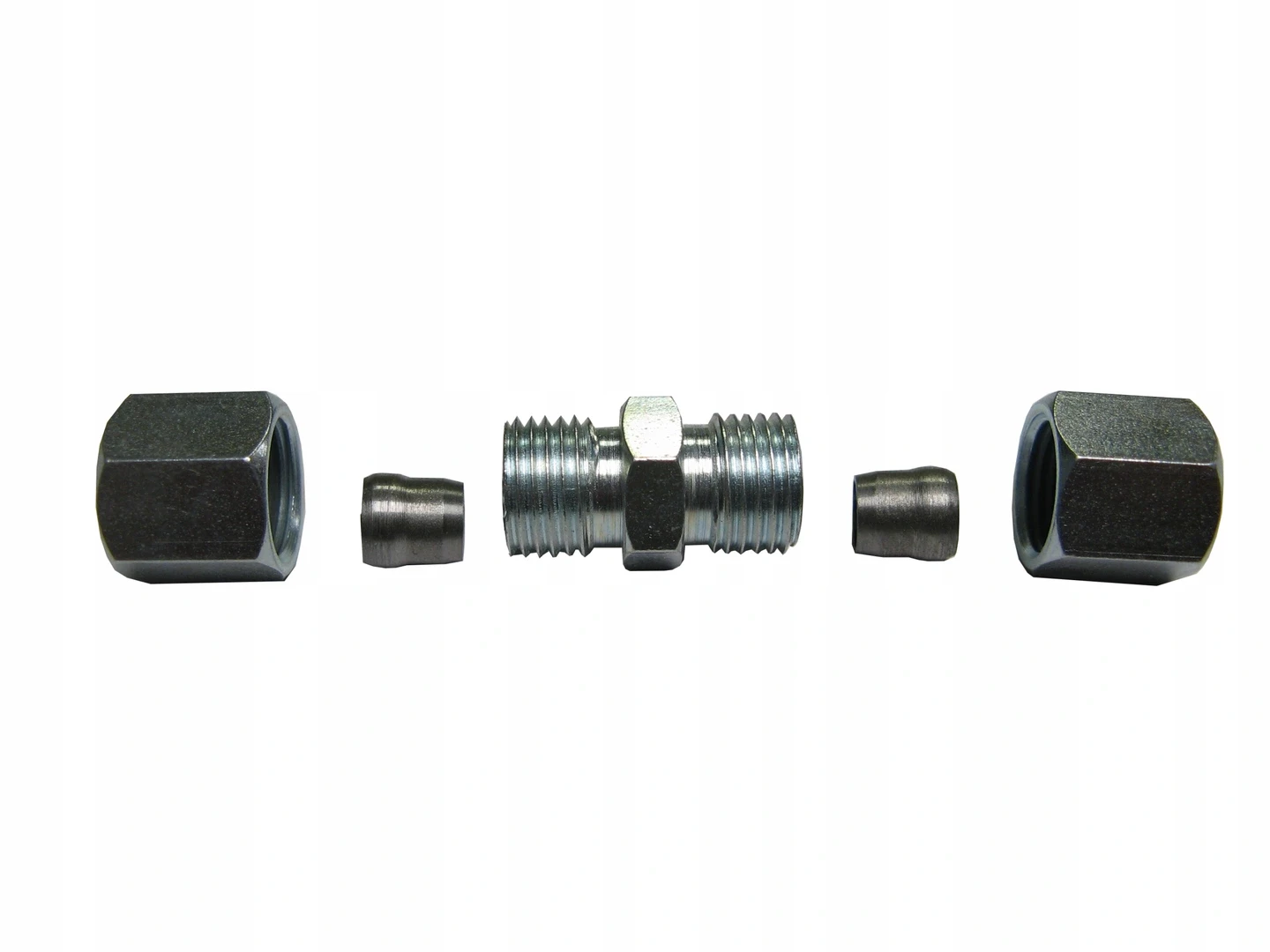
    What is interesting and worth noting is the way I implemented the introduction of compressed air into the tank. I didn't want to use any flexible hoses, worm ties etc. the connection had to be secure and reliable (leak-proof). The tube coming out of the unit is steel and 4.8 mm in diameter, the same as the brake pipes used in automotive applications, so I used a brake line connector without crimping.
    Refrigerator compressor using 3D printing

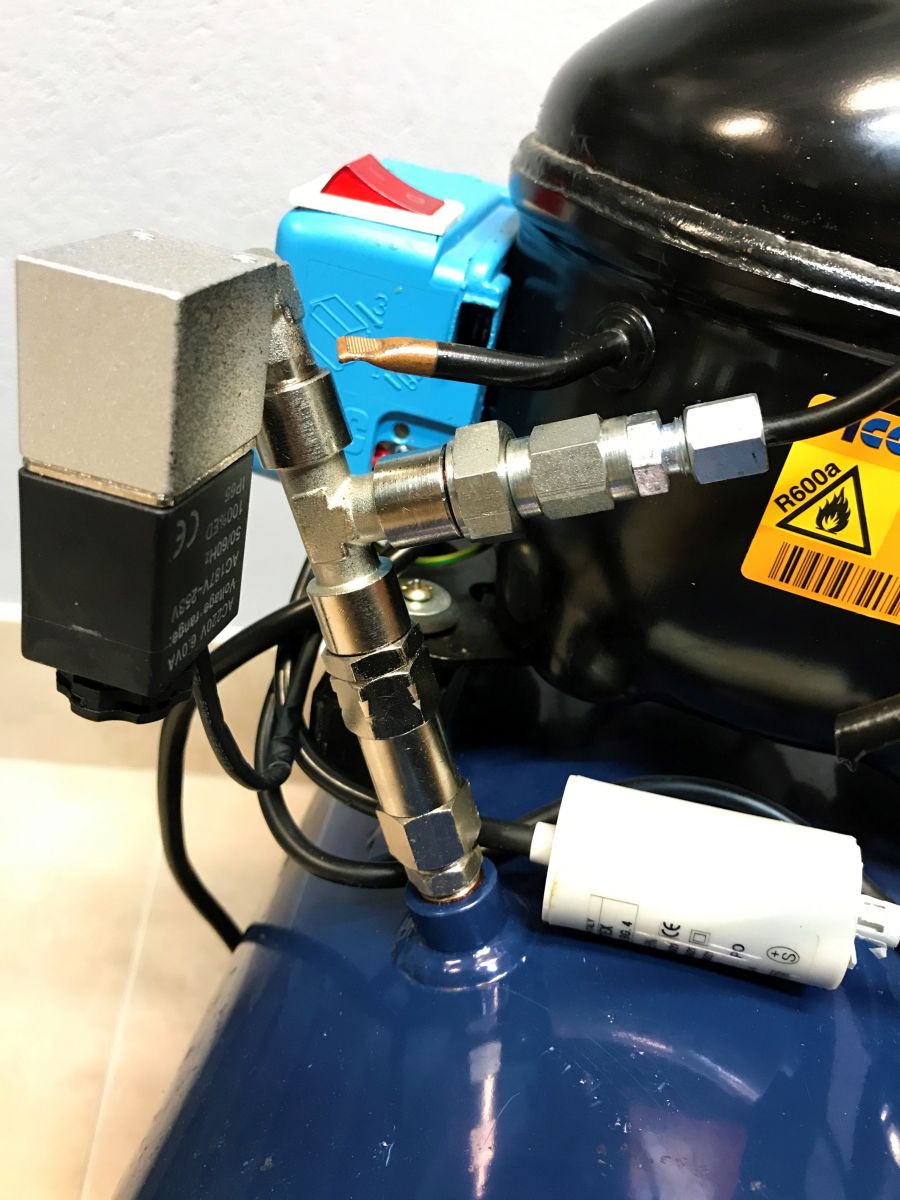
    Then there is an M10 coupler screwed in and a reduction from M10 to a standard 1/4 inch outlet. This created a very solid, secure and disconnectable connection between the unit and the rest of the compressor's pneumatic system.

    I used an electro-valve and a non-return valve in the role of the de-stressor that enables the unit to start. When the compressor is pressurised to 8 bar, it switches off the unit and the NO-valve through which the liquid escapes between the non-return valve at the tank itself and the unit. This makes it possible to start up again without pressure in the fridge compressor. I did not use a regular pressure switch with a pressure relief valve because the one that came with the cylinder did not have this option and I did not want to change it. :)

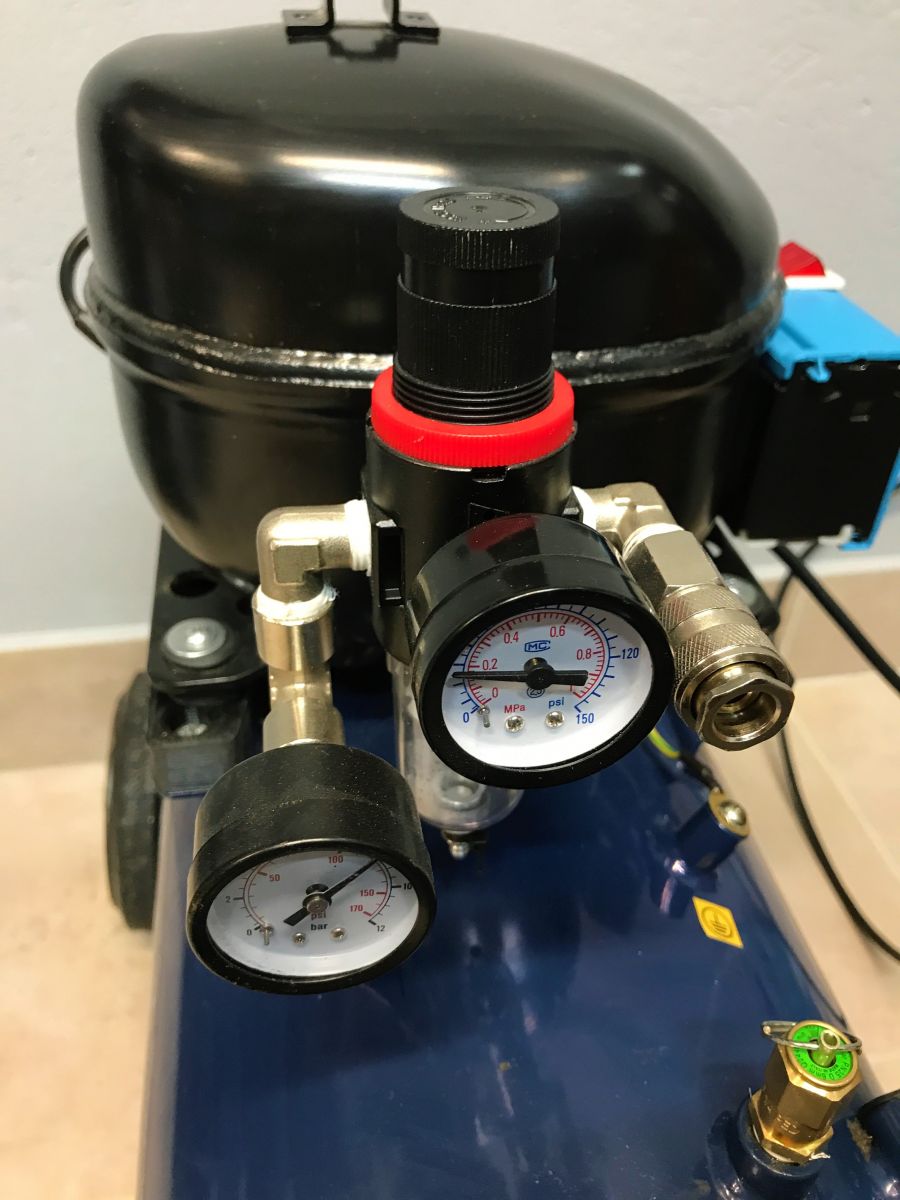
    On the outlet there is a standard pressure gauge in the tank, a regulator with dehydrator and pressure gauge and a quick pressure coupling. Such standard equipment on almost every compressor. In the tank itself, I also screwed in a new safety valve and a valve for draining the condensate.

    I made all the electrical connections in the factory fridge box, fitted a rocker switch on top which switches the compressor and solenoid valve via a pressure switch. Of course I did not forget the earthing. :)

    Below are the pictures and feel free to comment.
    Refrigerator compressor using 3D printing Refrigerator compressor using 3D printing Refrigerator compressor using 3D printing Refrigerator compressor using 3D printing Refrigerator compressor using 3D printing Refrigerator compressor using 3D printing

    Cool? Ranking DIY
    About Author
    kaeltaz
    Level 16  
    Offline 
    kaeltaz wrote 300 posts with rating 510, helped 1 times. Live in city Piotrków Trybunalski. Been with us since 2007 year.
  • ADVERTISEMENT
  • #2 19819154
    ADI-mistrzu
    Level 30  
    Do I see correctly that the air is taken in without a filter?
    What is the time it takes to inflate the tank from 0?
    In what pressure range does it operate (when does it turn on and when does it turn off)?
  • #3 19819330
    keseszel
    Level 26  
    How about switching the genset off and on. It was a problem for me, it had to be left on for a while, to cool down. It didn't do a great job, pumped a few times and then went out of service. It waits to be thrown away or for better times - the worst problem was switching it on. I didn't put a tank on it, I have a small fire extinguisher somewhere that was supposed to be used for that.
  • #4 19819517
    ArturAVS
    Moderator
    kaeltaz wrote:
    The compressor, once pressurised to 8 bar, switches off the chiller and the NO solenoid valve through which the liquid between the non-return valve at the tank itself and the chiller escapes. This enables a restart without pressure in the refrigeration compressor.

    And I like this solution with the solenoid valve, it minimises the risk of the engine locking up on start-up due to pressure. I guess this is one of the few similar designs presented on the forum equipped with a stress reliever.
  • #5 19819938
    27fwzm
    Level 7  
    Nice kit . Can the author of the compressor post the connection diagram .

    Added after 41 [seconds]:

    What is the stress reliever
  • #6 19819985
    ArturAVS
    Moderator
    27fwzm wrote:
    What is the strain relief

    The solenoid valve that drains the pressure between the compressor output and the check valve.
  • ADVERTISEMENT
  • #7 19820161
    avatar
    Level 36  
    What about the oil from the compressor - it's not all submerged in oil and a drop at a time when pumping doesn't come out ?
  • #8 19821041
    Ture11
    Level 39  
    keseszel wrote:
    e. Waiting to be discarded or for better times - the worst stubbornness was with the switching.


    Older gensets had electromagnetic starting, not posistor starting. You could yes start as often as you wanted.
  • #9 19821072
    domel.an
    Level 24  
    Very nice project.
    The only thing I would add is that this compressor on r600a runs on vacuum so hence the need for a de-stresser, starting problems and severe heating. If a compressor on r134a or r22 were used it would be easier. A dream would be to find a compressor on r404 from an old refrigeration (not freezer) counter.
    There is also the problem of cooling. Normally the compressor is cooled by returning cold refrigerant, so it would be nice to add a fan. As for the oil in the compressor, I recommend topping up with engine oil.
  • ADVERTISEMENT
  • #10 19821165
    ArturAVS
    Moderator
    domel.an wrote:
    On the other hand, the pinnacle of dreams would be to hunt down a compressor, e.g. from an old refrigeration (not freezer) counter for r404.

    I have such a two-piston pump in the compressor and it is no revelation. Yes it has a much higher capacity but after pumping a 60l tank to ~8 Bar it has to stand for a long time to cool down.
    avatar wrote:
    And what about the oil from the compressor - it is not all immersed in oil and after a drop when pumping does not come out ?

    Hermetic compressors are not all submerged in oil, the oil is only a few cm at the bottom and a special groove in the motor shaft acts as an oil pump transporting the oil upwards during operation and splashing it provides lubrication. The oil is at the outlet and a recovery separator would be useful.
    Ture11 wrote:
    You could start it as often as you wanted.

    Unless the thermal switch has tripped, and there are such in new compressors too.
  • #11 19821171
    avatar
    Level 36  
    For me, a compressor with oil in the air is not suitable for anything - not for painting and not for driving pneumatic equipment. no one is writing anything here about the dangers / emissions of chemical mess
  • #12 19821180
    ArturAVS
    Moderator
    After all, pneumatic equipment requires lubrication and such an oil mist suits them very well. Painting is a different matter, here you need a separator for both oil and condensation.
  • #13 19822649
    keseszel
    Level 26  
    I had no idea they were different. I've had some that needed to cool down. But you don't look a gift horse in the mouth ;-) .
    As for the oil mist, you used to give the oil separator in the form of a jar or some plastic bottle.
    But you have made a respectable compressor.... I normally envy you the quietness of pumping. That Eihel was loud as hell.
    And how long does it pump the whole tank until it shuts down?
    Can you upload a video?
  • #14 19823764
    kaeltaz
    Level 16  
    The compressor pumps a 24L tank to 8.2 bar in 7.5 minutes. In the pressure switch operating range of 6 - 8.2 bar, it takes 2 minutes to re-pump.
    So far there is no inlet filter as I don't know what to use.
    I have not noticed any oil spillage, the compressor is used in the electronics workshop for purging.
  • #15 19823976
    Rezystor240
    Level 42  
    @kaeltaz
    You brag about using a 3D printer and so on, the housing and the chiller stand. And some kind of holder for the capacitor is missing and it's just holding on to the wires and dangling like that. Couldn't something be printed?
    As for topping up the oil, and its presence in the compressed air. Just give a filter from the LPG, even from the car's installation. That way I get rid of the mist. The second thing, now this filter is enough, together with the tube, to lift above the height of the unit, and the oil collected in the filter simply drips back into the unit. Cheap good and effective ;)
  • #16 19824106
    domel.an
    Level 24  
    Rezystor240 wrote:
    I just give the filter from the LPG gas, even from the car installation. This way I get rid of the mist. The second thing, now this filter is enough together with the tube to lift above the height of the unit, and the oil collected in the filter simply drips back into the unit.


    The lpg filter will catch dirt (if there is any) and oil until it is saturated with oil itself.
    The oil will not drain into the unit, only into the valves. To get it into the compressor, you would have to pour through the intake tube.
    Cheap good, just not effective ;)
  • #17 19824213
    Rezystor240
    Level 42  
    domel.an wrote:
    The lpg filter will catch contaminants (if any) and oil until it is saturated with all the oil itself.


    That's right, it won't be right away, but over time until the entire filter is covered with oil, and this oil on the filter will accumulate oil in the form of a mist already completely.

    domel.an wrote:
    The oil will not drain into the unit, but into the valves. To get it into the compressor you would have to pour through the intake tube.


    Not quite how much this pump goes for, the author himself said about 7 minutes to completely fill. So the fill cycle and then the oil by gravity drains into the unit.

    This is why it is needed:

    Rezystor240 wrote:
    now this filter is enough together with the tube to lift above the height of the aggregate
  • ADVERTISEMENT
  • #18 19824326
    domel.an
    Level 24  
    Rezystor240 wrote:
    then the oil drains by gravity into the unit.


    With the stubbornness of a maniac you insist on your own.
    I see that you have no idea how a refrigerator compressor is built. There are valves above the piston, and suction is taken from the crankcase, while compression comes out through a tube outside the compressor. If you don't understand my explanation, cut up a burnt compressor and you will see tangibly that you are wrong.
    It can be solved in a different way by using another solenoid valve, a capillary and a timer, but with this kind of use there is no point in playing around.
  • #19 19824389
    ArturAVS
    Moderator
    He doesn't need to cut and peek, there is already an article describing the construction.
  • #20 19824850
    Rezystor240
    Level 42  
    @domel.an

    I have a build like this to my credit and I know what I'm saying, at the time I hadn't applied it yet, it's been on the forum for 4 years and built another couple of years back.
    https://www.elektroda.pl/rtvforum/topic3521431.html
    And someone mentioned it in this topic too. Also, once in a while, maybe a year I top up the unit with gear oil, hydraulic oil. All in all, whatever is at hand and has worked for so many years....
    The way I top up is that I take off the air filter, put on a tube and the genset sucks the oil from the container itself. About 200ml, no more, and the chiller will extrude the excess itself, in the form of a mist. But if at least this filter turns the mist into condensed oil, it continues to collect in the container, and is drained off along with the condensate.
  • #21 19826770
    korn85
    Level 15  
    You can, after all, safely pour compressor oils into the compressor :) There is also a piston there so this type of oil will be suitable without any problem :)
  • #22 19827230
    domel.an
    Level 24  
    Rezystor240 wrote:
    I have this construction on account and I know what I'm talking about

    I don't think you know though. In order for oil to get into the crankcase of a refrigerator compressor, because that's the one we're talking about here, through the discharge tube, it would have to have some "dwarf" lifting the plate off the discharge valve :D
    korn85 wrote:
    You can, after all, confidently pour compressor oils into the compressor

    You can, but why, when you can use ordinary automotive semi-synthetic for such applications. Transformer and gearbox oils, on the other hand, are definitely out.
  • #23 19827241
    ArturAVS
    Moderator
    domel.an wrote:
    In order for oil to enter the crankcase of a refrigerator compressor, as this is what we are talking about here, through the discharge pipe, it would have to be lifted by some "dwarf" from the discharge valve

    Possibly a proper made separator. I once made one for a friend in the form of a copper pipe fi about 30mm, inside was a vertical baffle which was hit by the compressor outlet flow. On the opposite side was a tube for the cylinder and non-return valve. The bottom was moulded in the form of a funnel and a plastic ball covered with rubber lay on the bottom. When the compressor was switched off it floated above the funnel (floating in the oil) and underneath I gave a 3mm fi capillary connected to the suction. When it was switched on again, the oil dripped out and the discharge pressure pushed the ball up, sealing the oil return.
  • #24 19827290
    ADI-mistrzu
    Level 30  
    There are ready-made solutions of this type.
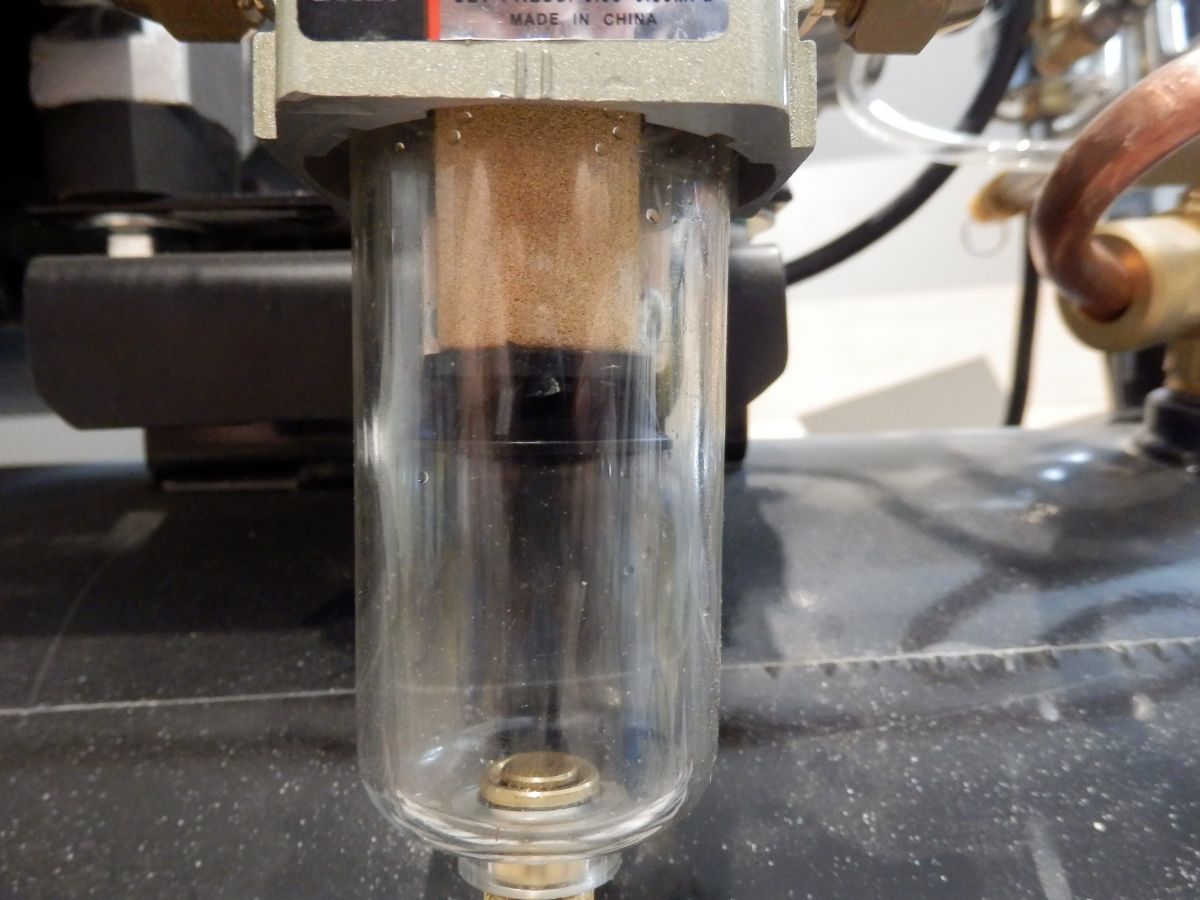
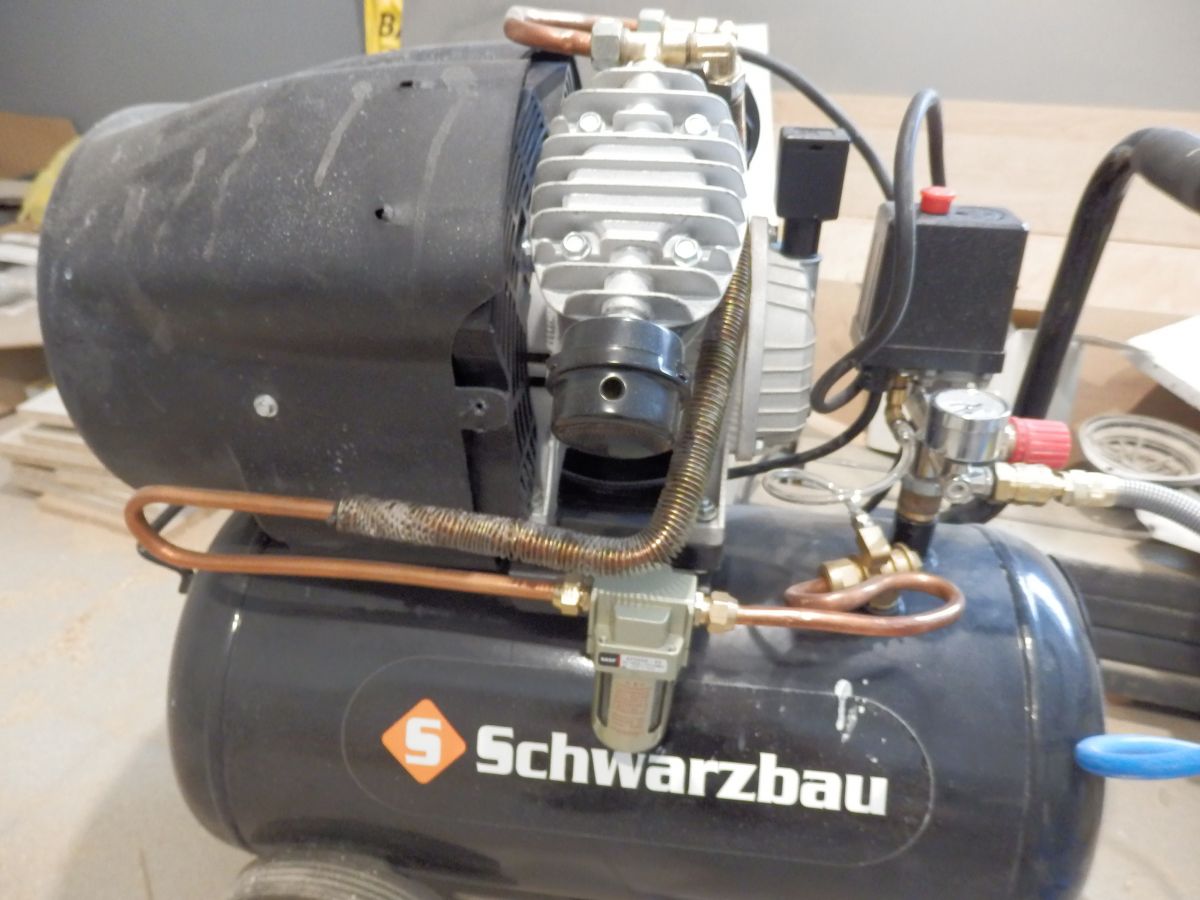
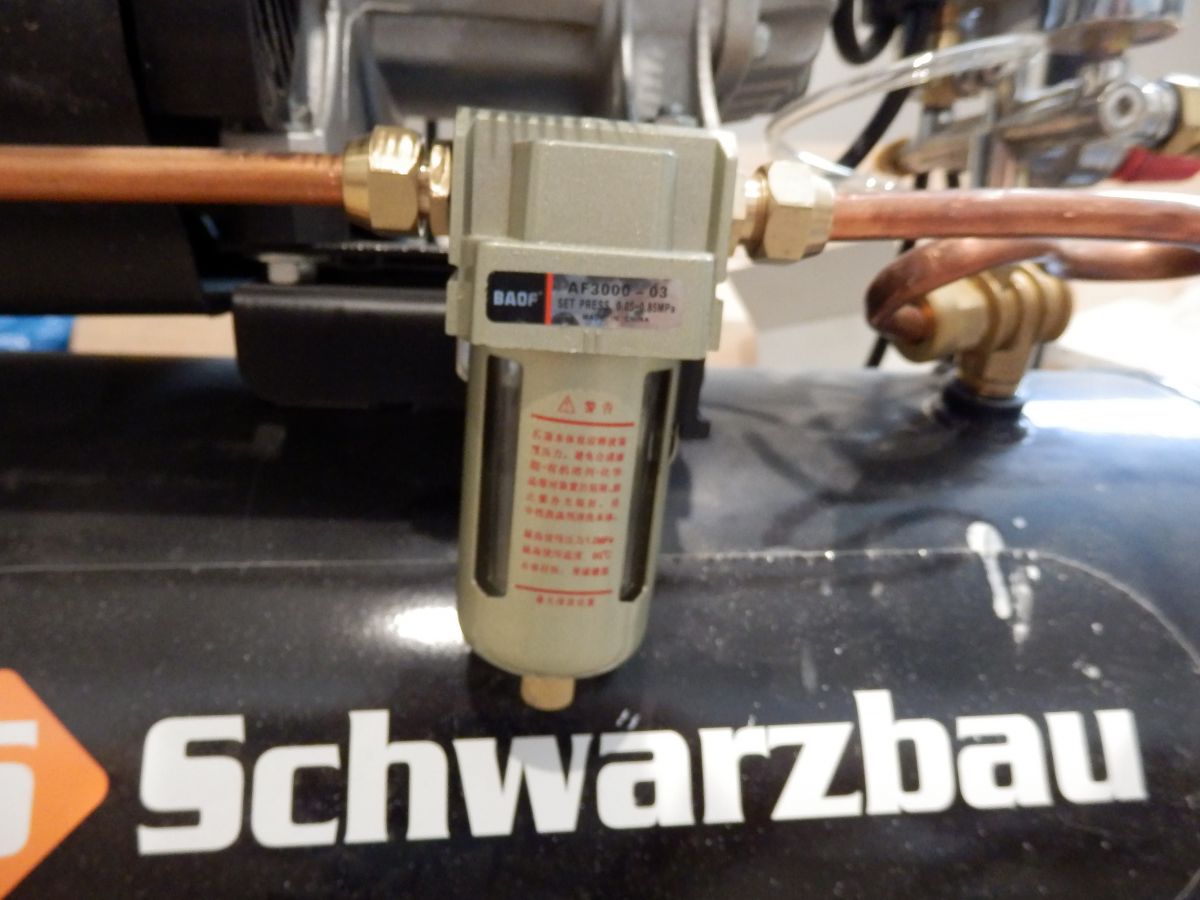
    I once slightly modified my two piston compressor, changed the tubes to copper and lengthened them (better heat dissipation) and added a filter with automatic drain.
    Refrigerator compressor using 3D printing Refrigerator compressor using 3D printing Refrigerator compressor using 3D printing Refrigerator compressor using 3D printing Refrigerator compressor using 3D printing Refrigerator compressor using 3D printing

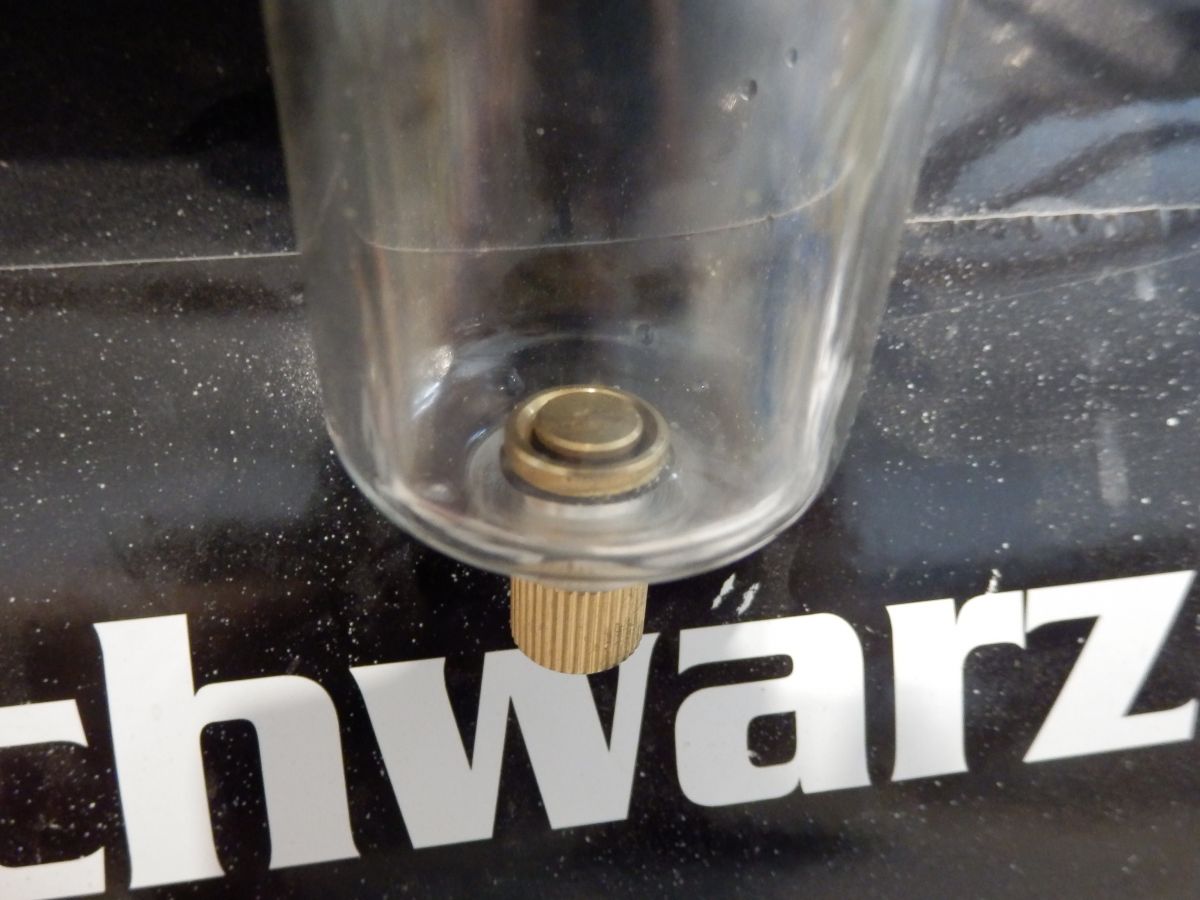
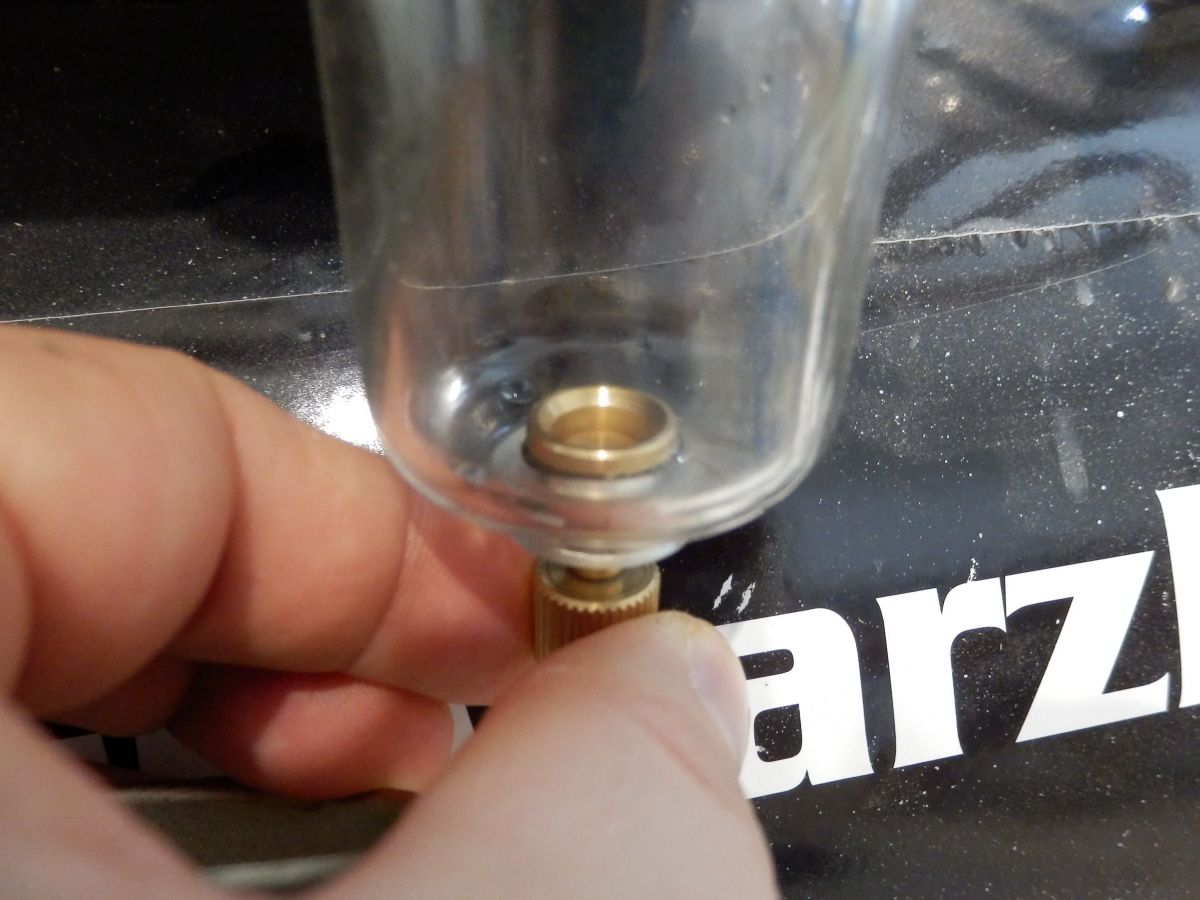
    The FIlter is made of baked brass balls, easy to clean, reliable and offers little resistance to air (compared to, for example, polyester).
    When the compressor finishes, a de-stresser is activated which dumps the air in the tubes, then a valve in the filter rises and dumps the accumulated liquid. You can screw a spigot in there and connect a tube to it, but I don't mind a bit of water dripping out sometimes.

    This was to prevent water pooling in the tank.
  • #25 19827301
    ArturAVS
    Moderator
    ADI-mistrzu wrote:
    This was to prevent water collecting in the tank

    On factory compressors there is a condensate drain valve in the bottom of the tank, you can't avoid this because water vapour will always collect.
  • #26 19827440
    ADI-mistrzu
    Level 30  
    @ArturAVS is aware of this, but there is significantly less water collecting in the tank since this inlet filter was fitted.
    The idea was precisely that the condensate would start to appear in the filter and not in the tank after cooling down. This is why there are elongated copper tubes beforehand (although more would have been useful).

    But that's beside the point.
  • #27 19827670
    domel.an
    Level 24  
    @ArturAVS #23 Congrats on the idea, I have written about this before, only that instead of a ball an electrovalve. Your patent is an automaton in itself and needs no control. Bravo!
📢 Listen (AI):
ADVERTISEMENT