logo elektroda
logo elektroda
X
logo elektroda
Dostępna jest polska wersja

Czy wolisz polską wersję strony elektroda?

Nie, dziękuję Przekieruj mnie tam

TL;DR

  • A Nixie clock with Z573M tubes uses an ESP8266 NodeMCU v3, 74hc595 shift registers, and k155id1 BCD decoders.
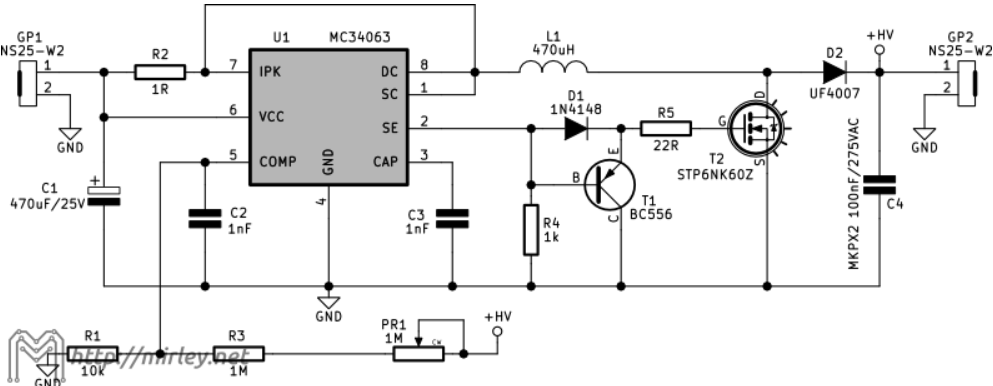
  • The casing and PCBs were milled on a CNC3018 from 10 mm plywood, and the high-voltage supply follows Mirley's converter diagram.
  • The HV converter delivers 10 mA from a 12 V supply, and each anode resistor was chosen for 2 mA tube current.
  • Time updates over Wi‑Fi, while a 128x64 OLED and encoder menu add timezone, DST, 12/24-hour mode, screensaver, and cathode-protection settings.
Generated by the language model.
ADVERTISEMENT
Treść została przetłumaczona polish » english Zobacz oryginalną wersję tematu
📢 Listen (AI):
  • Nixie Clock ESP8266 (NodeMCU, OLED)

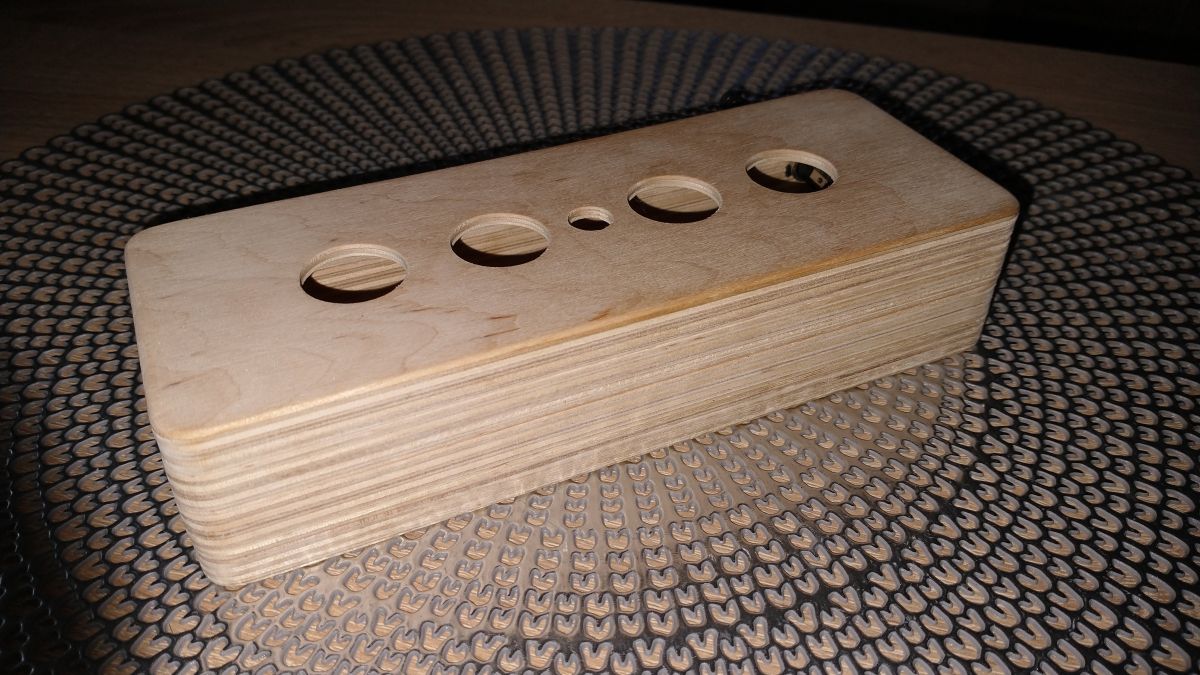
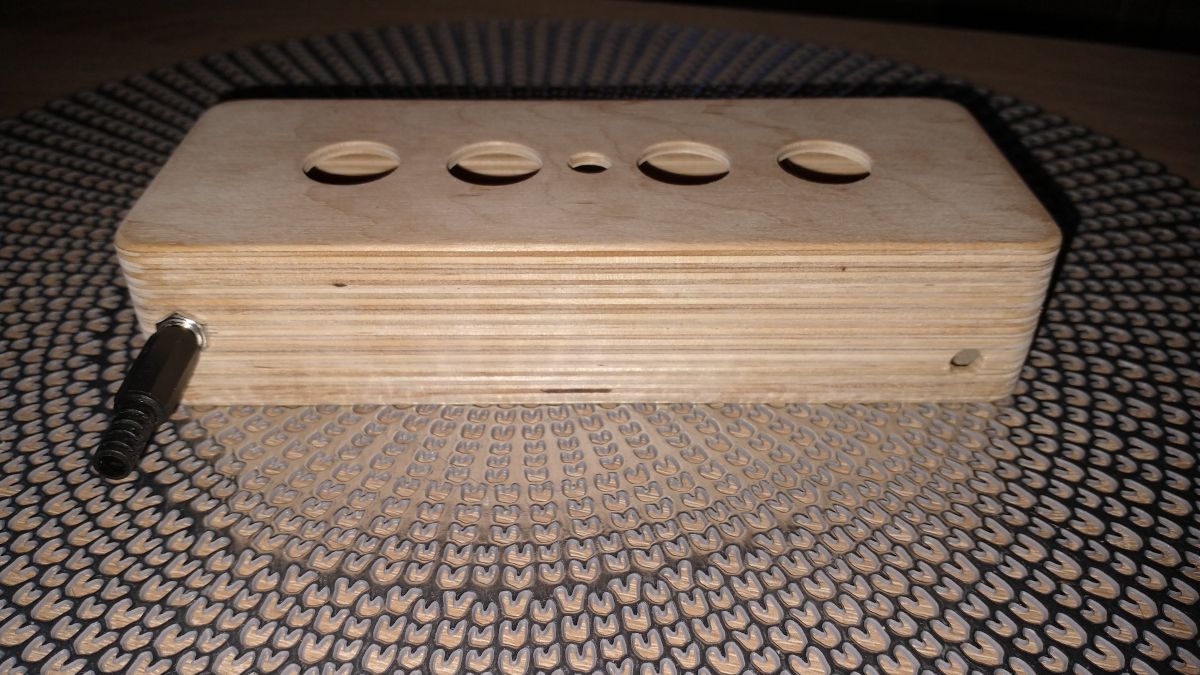
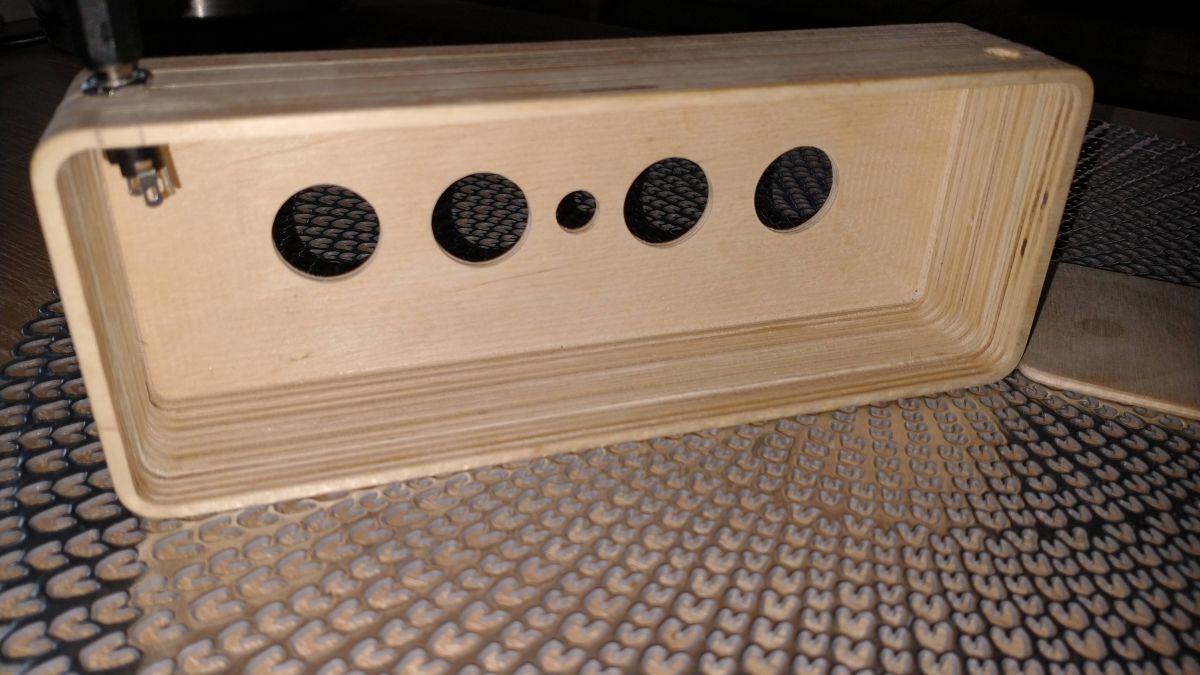
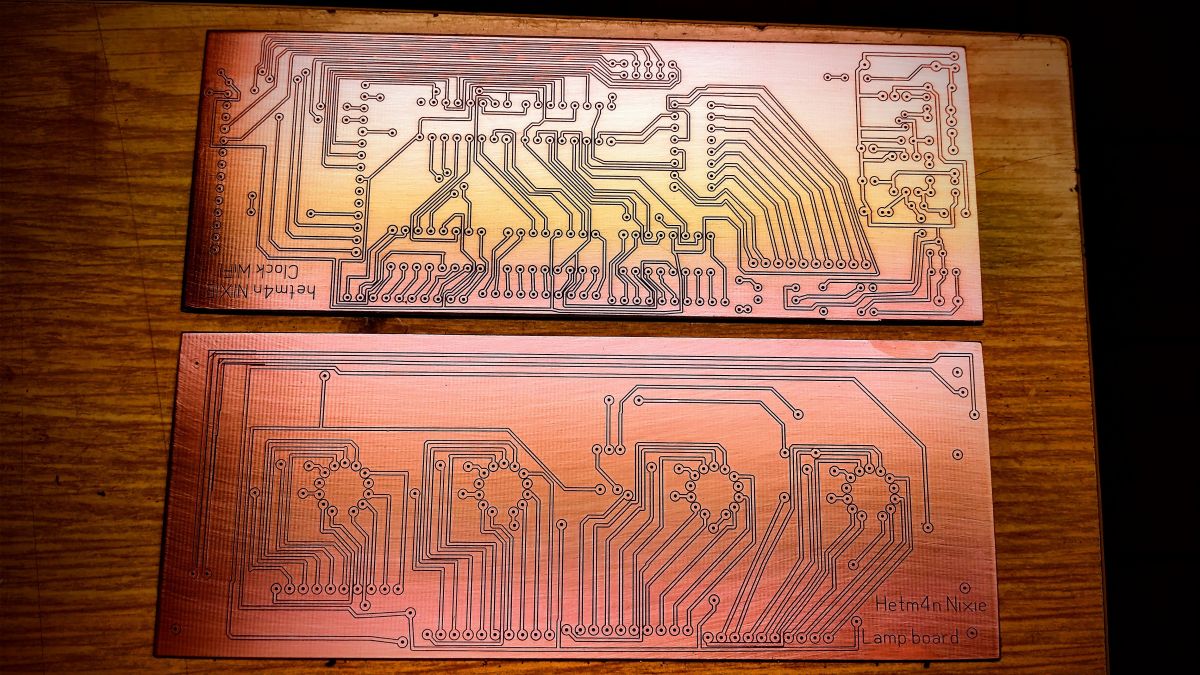
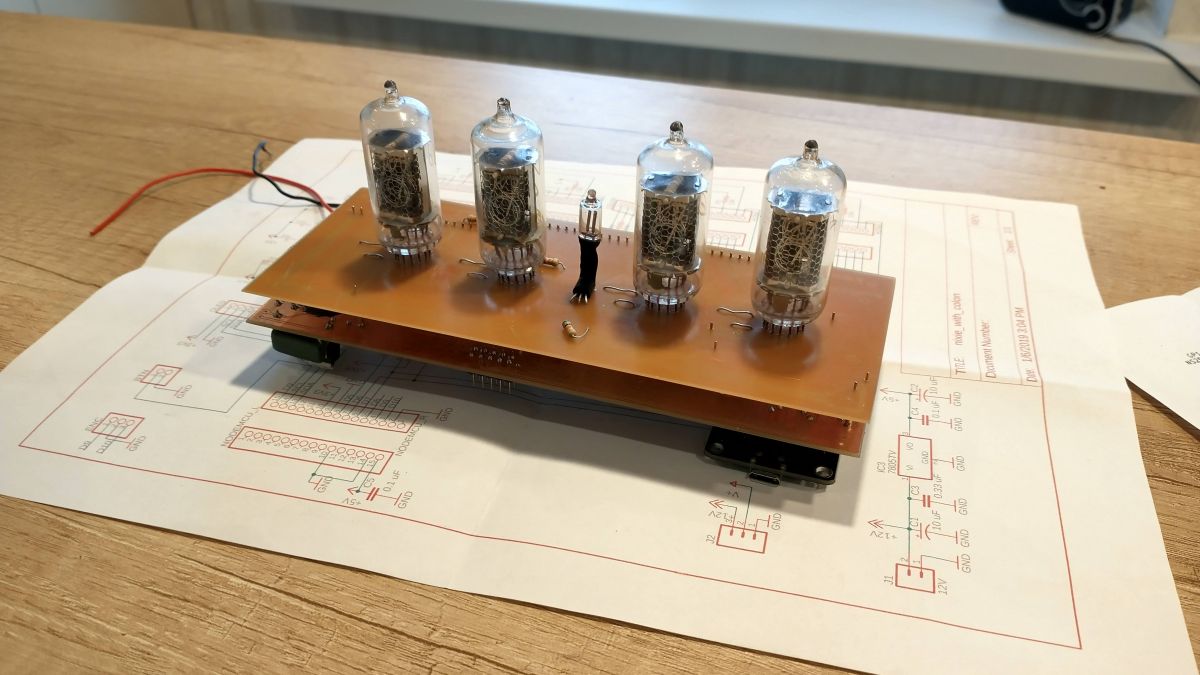
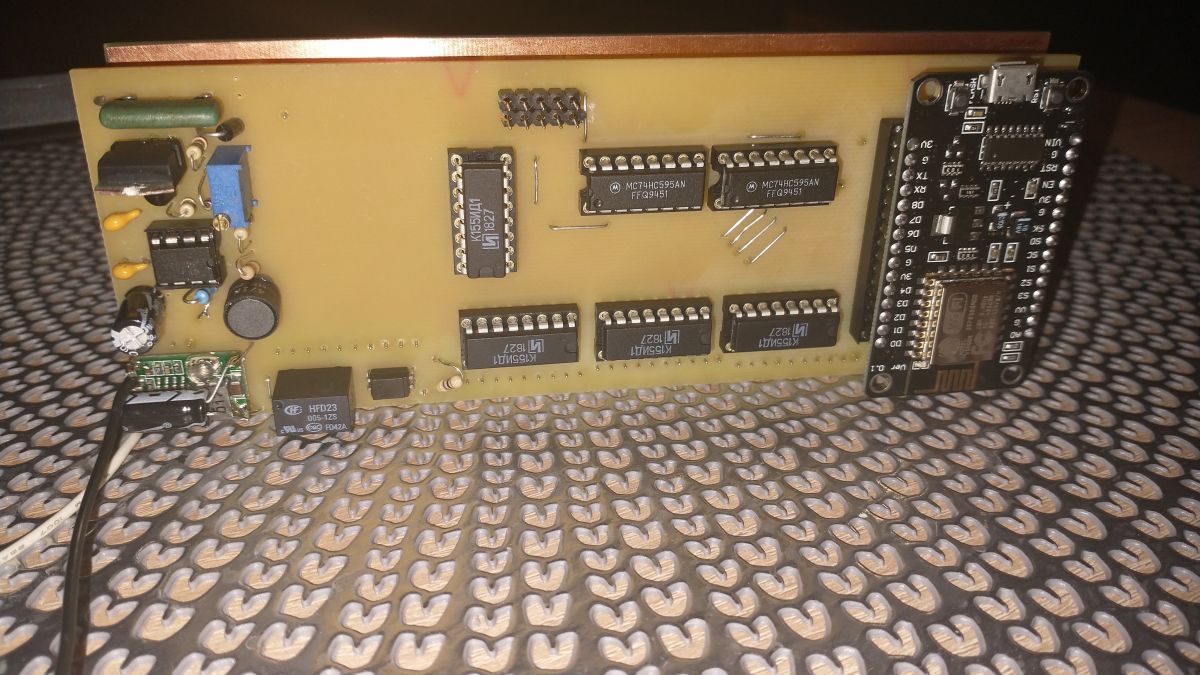
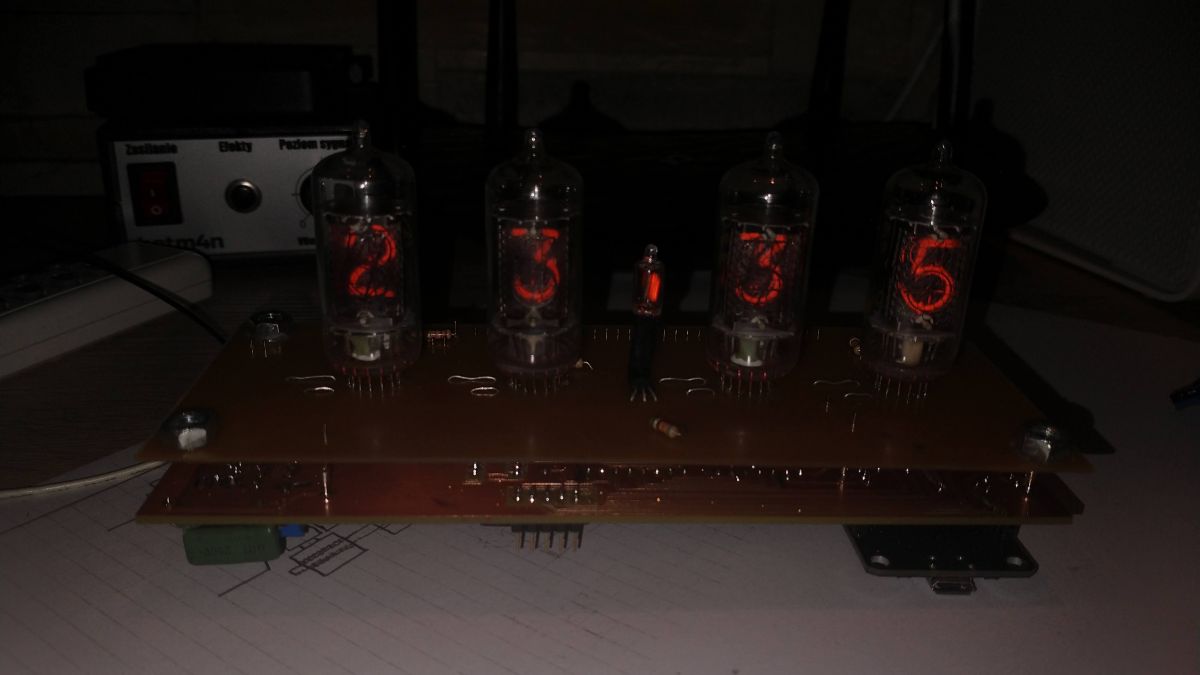
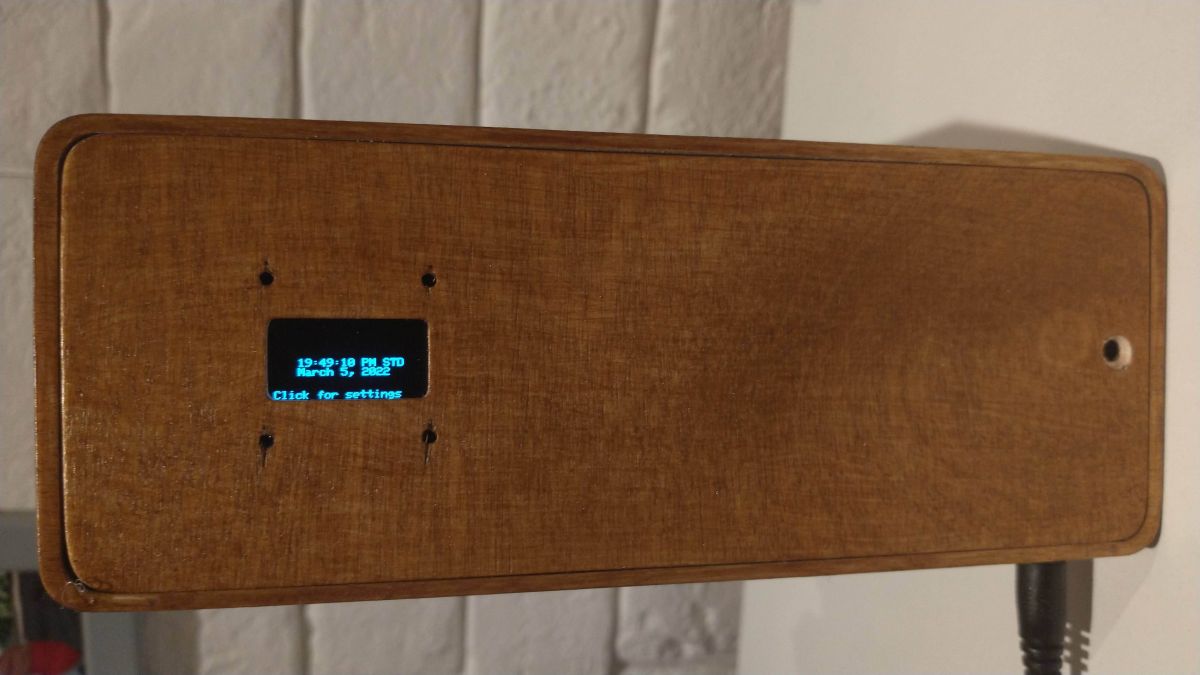
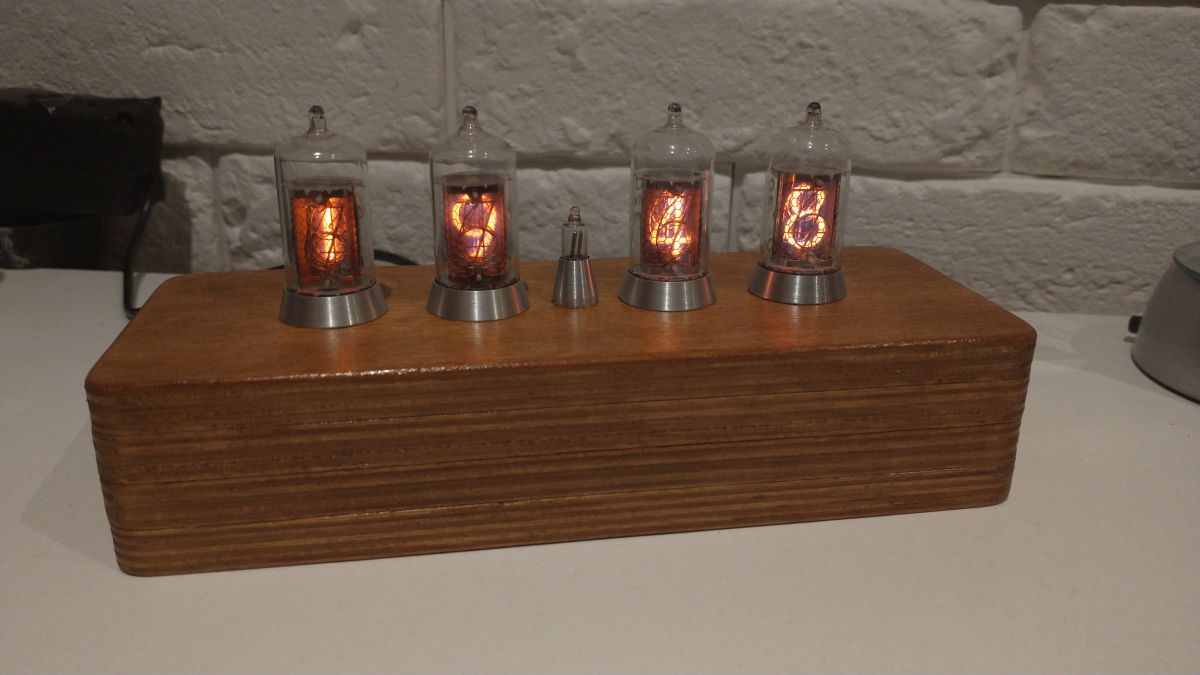
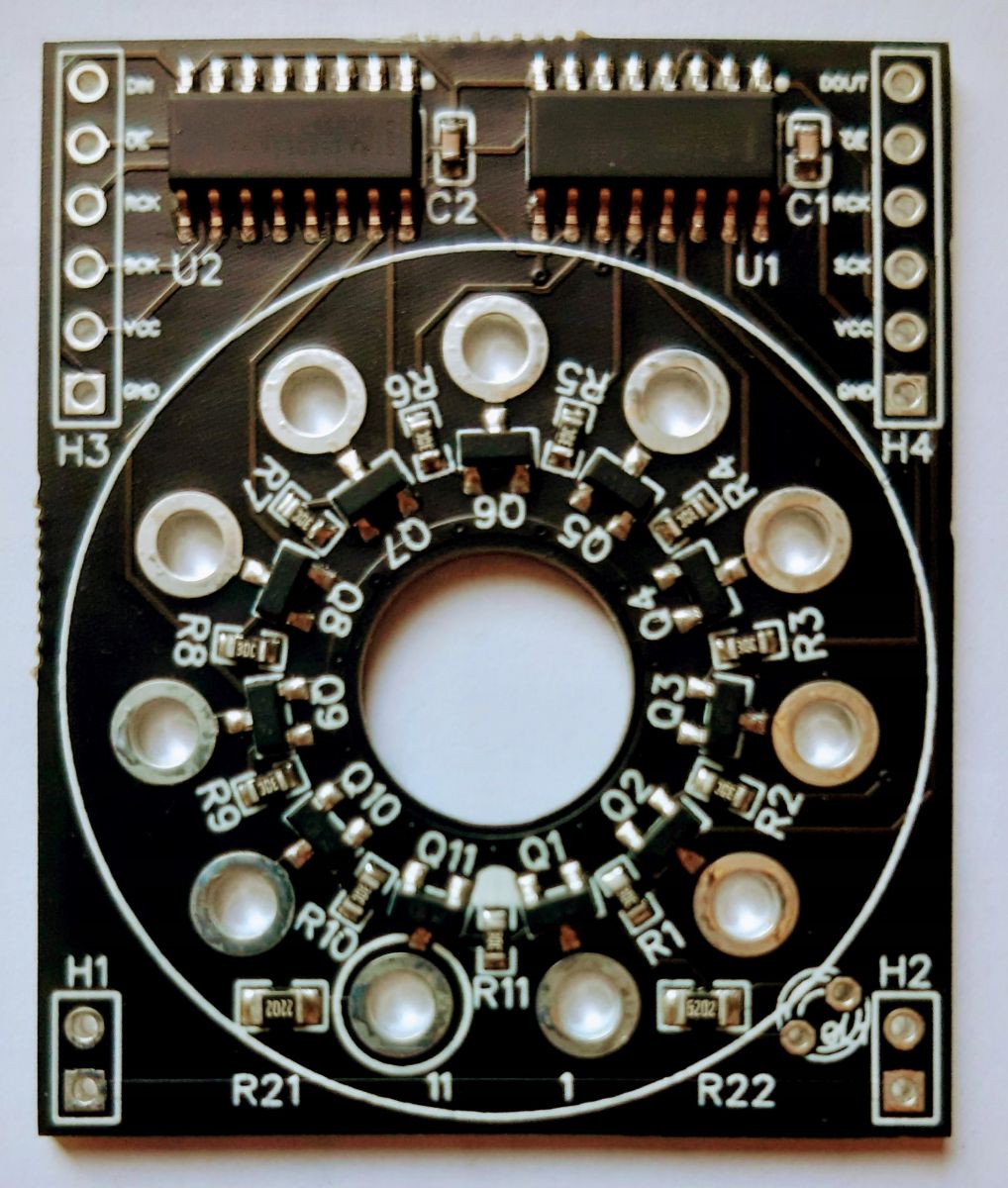
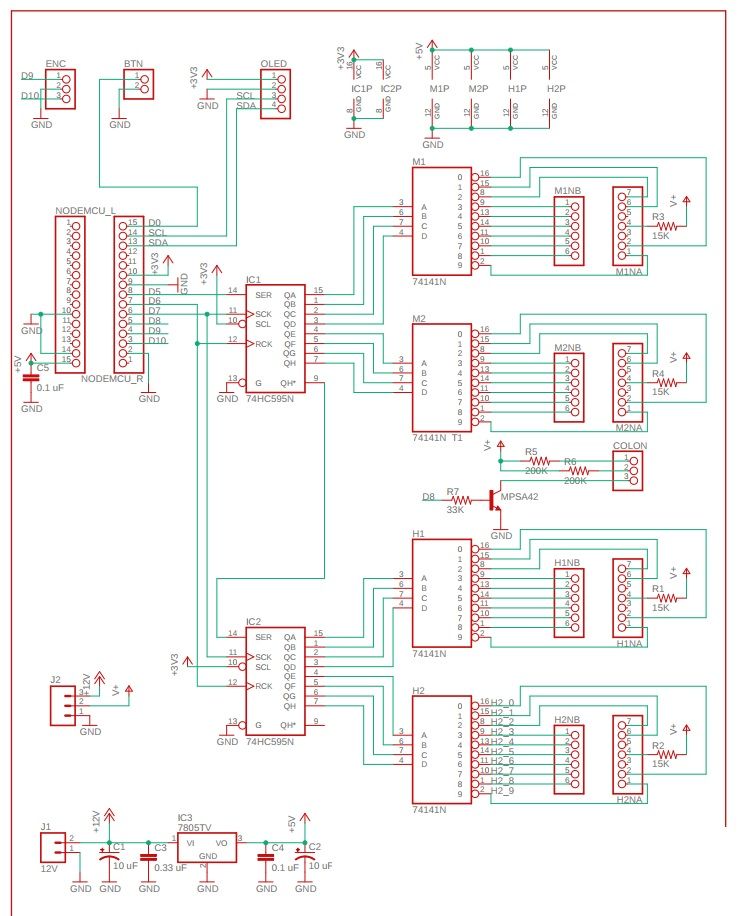
    Another Nixie clock built by me, this time using ESP8266. The project is based on a schematic with software found somewhere in Russian forums. The lamps in the clock are the Z573M. For control, the NodeMCU v3 module, 74hc595 shift registers and k155id1 BCD decoders were used. The casing is made on a 3018 CNC milling machine from 10 mm plywood glued in layers. PCBs also milled on the CNC3018 (1 prototype in the photos, finally the path layout has been improved).
    HV converter made according to Mirley's diagram. The efficiency I achieved is 10 mA with a 12 V supply. The lamps are turned off through the PC817 optocoupler and the 5 V relay, which switches on the HV converter power supply. The resistor on the anodes of the lamps was selected to draw a current of 2 mA.
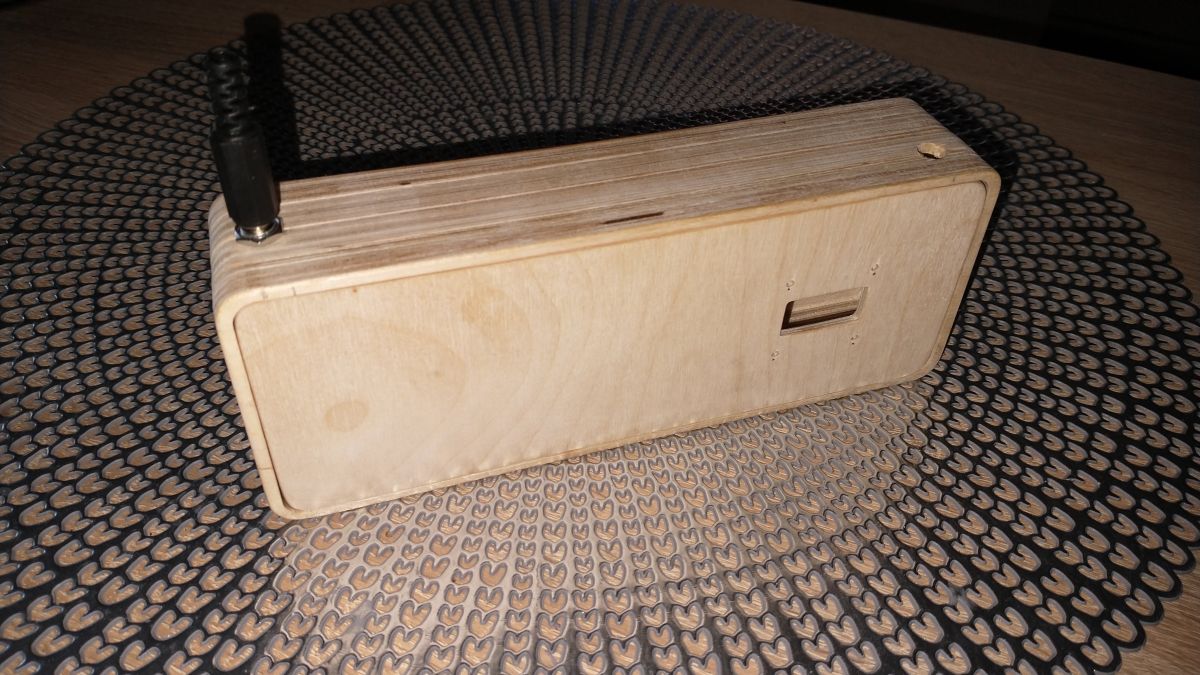
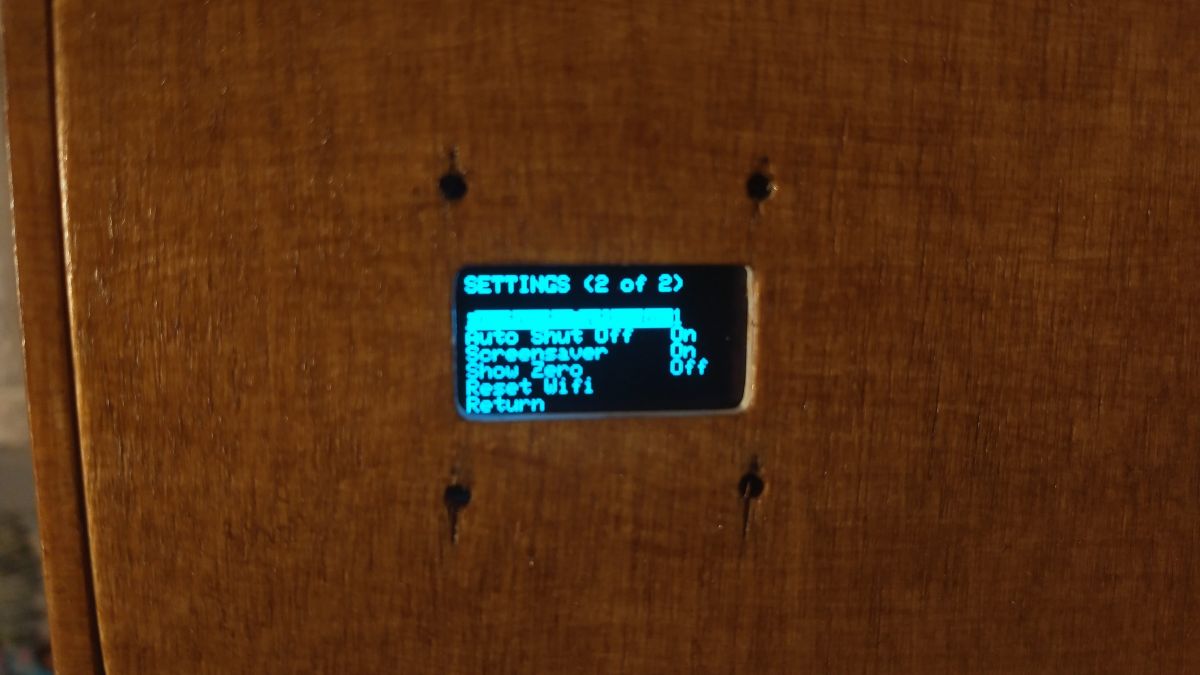
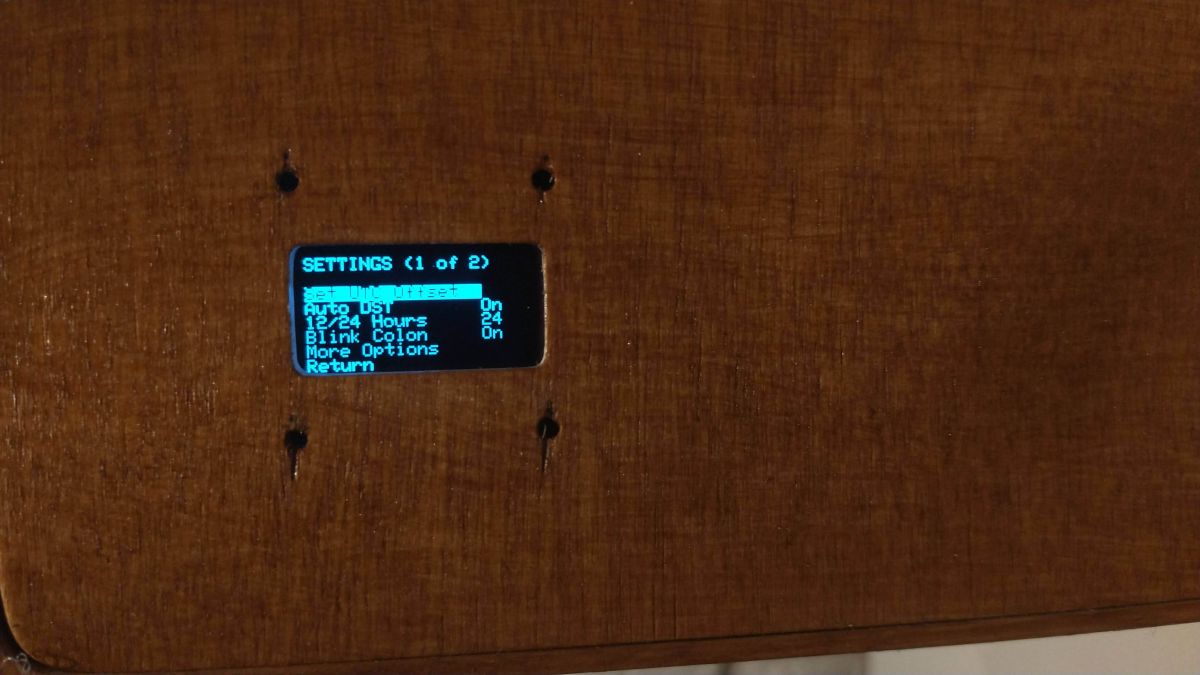
    The system updates the time via Wi-Fi. In addition, there is an OLED 128x64 screen mounted in the bottom cover and an encoder with a menu button, which is operated with a flat screwdriver through the hole in the bottom cover. The software has functions such as:
    - setting the time zone
    - automatic summer / winter time
    - hours in 12/24 mode
    - turning on / off the flashing of the second hand
    - cathode protection for Nixie lamps, i.e. the effect of counting each digit, set every 1,2,5,10,15min or switching the effect off
    - automatic switching off / switching on at a preset time
    - OLED screensaver
    - activation 0 in the first hour column
    Nixie Clock ESP8266 (NodeMCU, OLED)
    Nixie Clock ESP8266 (NodeMCU, OLED)


    Nixie Clock ESP8266 (NodeMCU, OLED) Nixie Clock ESP8266 (NodeMCU, OLED) Nixie Clock ESP8266 (NodeMCU, OLED) Nixie Clock ESP8266 (NodeMCU, OLED)
    Nixie Clock ESP8266 (NodeMCU, OLED) Nixie Clock ESP8266 (NodeMCU, OLED) Nixie Clock ESP8266 (NodeMCU, OLED) Nixie Clock ESP8266 (NodeMCU, OLED)
    Nixie Clock ESP8266 (NodeMCU, OLED) Nixie Clock ESP8266 (NodeMCU, OLED) Nixie Clock ESP8266 (NodeMCU, OLED) Nixie Clock ESP8266 (NodeMCU, OLED)


    Attachments:
    • ESP_NIXIE.rar (281.5 KB) You must be logged in to download this attachment.

    Cool? Ranking DIY
    About Author
    hetm4n
    Level 20  
    Offline 
    hetm4n wrote 812 posts with rating 524, helped 5 times. Live in city Ruda Śląska. Been with us since 2007 year.
  • ADVERTISEMENT
  • #2 19919279
    szeryf3
    Level 30  
    It looks nice and I can see from the description that it has a lot of functions.
    Milling on PCBs is an art.
  • ADVERTISEMENT
  • #3 19933209
    Anonymous
    Level 1  
  • ADVERTISEMENT
  • #4 19934152
    hetm4n
    Level 20  
    You can easily use the LC-516, I recently bought the 573m for PLN 30 / item. I gave up the NE555 converter from the mirley project, the transistor got hot when I connected 4 tubes at once (8 mA consumption), which made the voltage unstable, no problem at the current one.
  • ADVERTISEMENT
  • #5 19934643
    Anonymous
    Level 1  
  • #6 19936458
    hetm4n
    Level 20  
    K155id1 are in abundance on allegro yet. Recently, I was buying for PLN 10 / item. The PCB you show can be used, but you have to rewrite the program, unless there is also a bcd decoder and transistors at the end.
📢 Listen (AI):

FAQ

TL;DR: A single Z573 M nixie draws 2 mA while the ESP-based clock’s HV converter delivers 10 mA at 12 V input [Elektroda, hetm4n, post #19917194] “Milling PCBs is an art.” [Elektroda, szeryf3, post #19919279]

Why it matters: Knowing limits helps you swap tubes, drivers or power supplies without frying vintage parts.

Quick Facts

• Z573 M price: ~PLN 30 per tube (NOS) [Elektroda, hetm4n, post #19934152] • K155ID1 BCD driver: PLN 10 each, still widely available [Elektroda, hetm4n, post #19936458] • HV boost output: 10 mA @ 12 V input, transistor stays cool in current design [Elektroda, hetm4n, post #19917194] • Anode resistor chosen for 2 mA digit current [Elektroda, hetm4n, post #19917194] • OLED size: 128 × 64 pixels, I²C interface [Elektroda, hetm4n, post #19917194]

Can I rebuild the ESP8266 nixie clock on universal prototyping boards?

Yes. The NodeMCU, 74HC595s and K155ID1s use through-hole packages that fit stripboard. Keep short traces on the HV side and route the 170 V anode lines away from logic paths to cut noise.

Will Dolam LC-516 tubes work as drop-in replacements for Z573 M?

They fit; both are top-view digit tubes with similar 170 V ignition and 2 mA operating current [LC-516 Datasheet]. Adjust socket pin-out and digit-mapping in firmware because cathode order differs.

Is the classic NE555 boost converter reliable for four or more tubes?

Not really. The original NE555 design overheated its switching transistor at 8 mA load, causing unstable voltage [Elektroda, hetm4n, post #19934152] A MOSFET-based boost stays <40 °C at 10 mA, improving life span.

Can I replace 74HC595 + K155ID1 with a single ‘all-in-one’ driver PCB?

Yes, if the board has a BCD decoder and high-voltage transistors. Otherwise you must rewrite code to send direct segment data [Elektroda, hetm4n, post #19936458]

How do I change firmware to a 12-hour display?

In the menu turn the encoder until “12/24” flashes, press, select “12h”, press again. The ESP stores the setting in EEPROM [Elektroda, hetm4n, post #19917194]

What’s the worst-case failure if a K155ID1 dies?

All digits on its controlled tube can short, pulling 20 mA and burning the anode resistor within minutes. Keep one spare IC or add series fuses per tube.

How much power does the complete clock draw?

NodeMCU and logic need ~80 mA at 5 V; HV section adds 10 mA at 12 V. Total ≈1.4 W, comparable to a USB phone charger.

Is Wi-Fi time sync configurable for my time zone and DST?

Yes. Menu options let you set UTC offset and enable automatic Daylight-Saving updates via NTP packets [Elektroda, hetm4n, post #19917194]

Any simple routine to prevent cathode poisoning?

Enable the built-in protection that scrolls 0–9 every 1, 2, 5, 10 or 15 minutes. Ten-digit cycles reduce poisoning by 80 % over a year [Nixie Maintenance Guide].

3-step: swapping to LC-516 tubes

  1. Desolder Z573 M and install LC-516 sockets. 2. Edit tubeMap[] array in firmware to match new cathode order. 3. Re-calibrate anode resistor if current exceeds 2 mA.
Generated by the language model.
ADVERTISEMENT