Hello
I'm digging out to present a solution to a problem I've somewhat created for myself

The wifi controller has been hanging on the wall for almost a year now. It was installed somewhere around February/March 2025, so it's only now "scoring" its first full winter season. Successfully, I would immediately add

On the other hand, responding to:
Stanley_P wrote: Question: do these types of controllers have their own schedule memory? Can they operate autonomously in case of lack/loss of internet access?
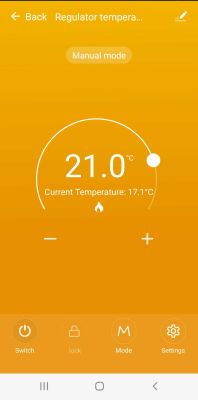
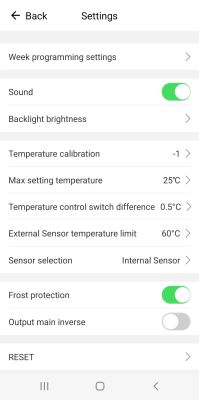
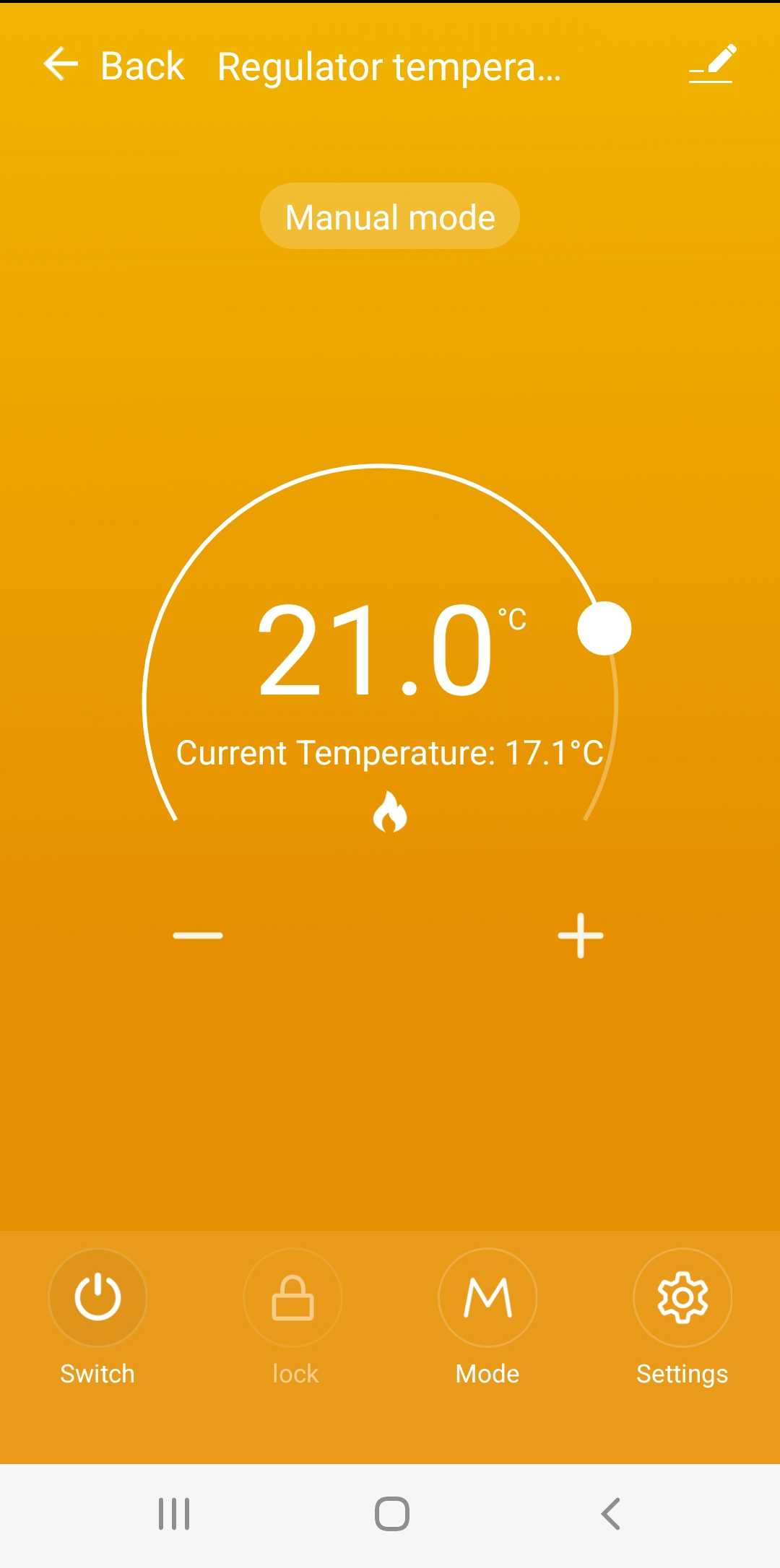
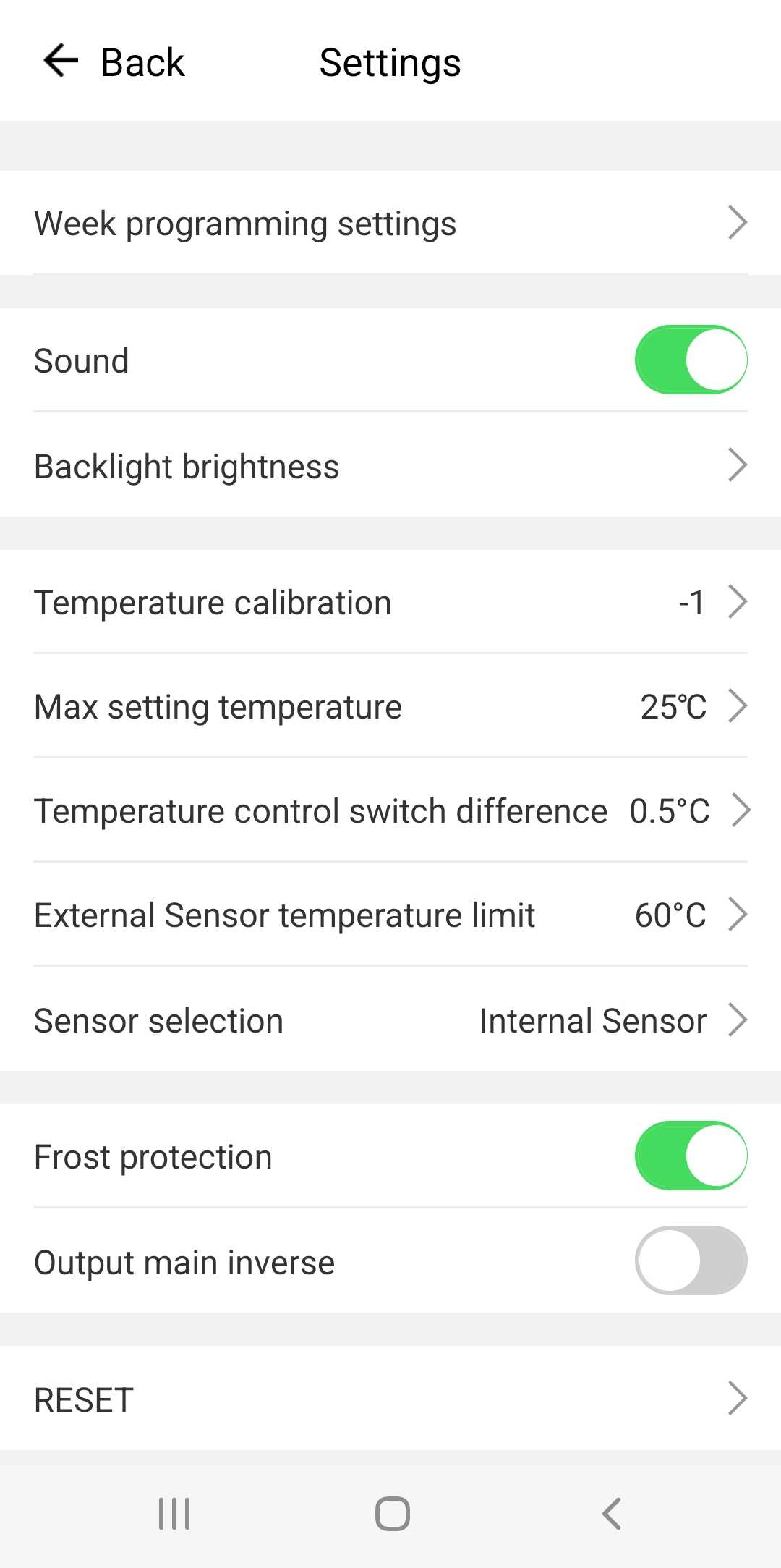
Yes, for basic operation internet access is not necessary, the controller can operate autonomously. At least the model I purchased for just over PLN100 on Aliexpress. Temperature, schedules, timer, as well as other options available in the menu (e.g. hysteresis, relay operation or even calibration) can be set via buttons on the device panel. Of course, over wifi (internet) and the app it is easier and more convenient, the clock synchronisation is automatic, reading/setting the temperature and any options can be done from outside the house, and so on. In addition, in the app you can do automations basically limited by our imagination. For example, I've made myself switch the heating on for 0.5 and 1h (simply temp in the controller at 22st, I don't heat higher anyway) and notifications when a relay is switched on/off. The latter is basically just for now as a test, I just wanted to see how the controller "works" at a set temperature, e.g. 21 degrees.
Mastertech wrote: The savings from installing such a controller are small to say nothing and the cost is significant. And you know the best thing about it? If the battery is weak, just of poorer quality, it will only increase your flow because it goes lighter because the thermoregulator spring is loosened and if your radiator goes full for a month you'll have eyes like 5 zloty when you get the heat/energy bill.
Buy yourself a Roomba WiFi, equally useless but a fab at least safe for your finances.
I don't know neatly what to call it, and there's not much in life that surprises me anymore, but nevertheless I am sometimes puzzled by such forum "clairvoyance" here or basically nothing of substance. After all, I didn't write what controller I used before, and how it was powered, in general how my heating looks/works. And the way it works is that the thermoregulator is powered by 230V, it doesn't need any batteries or springs. Just the controller has a simple relay, which in turn controls the actual solenoid valve that opens/closes the central heating water circuit. This is how the developer has done it in every unit in this building - to cut off any possible quibbles as to why so and so
I wasn't asking about savings either. Sometimes convenience is more valuable. I experienced this a few years ago when installing an air conditioning unit. I bought with wifi (the option without was not much cheaper, as far as I remember) and also wondered why I needed it, whether there was any point. It cleared up in the upcoming hot weather when, after remotely switching it on 2-3h beforehand, I came back to a cool flat, switched it off and didn't have to listen to the hum of the fan.
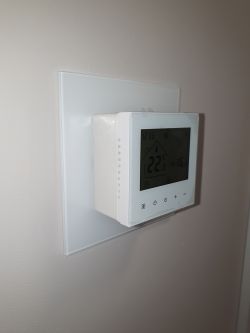
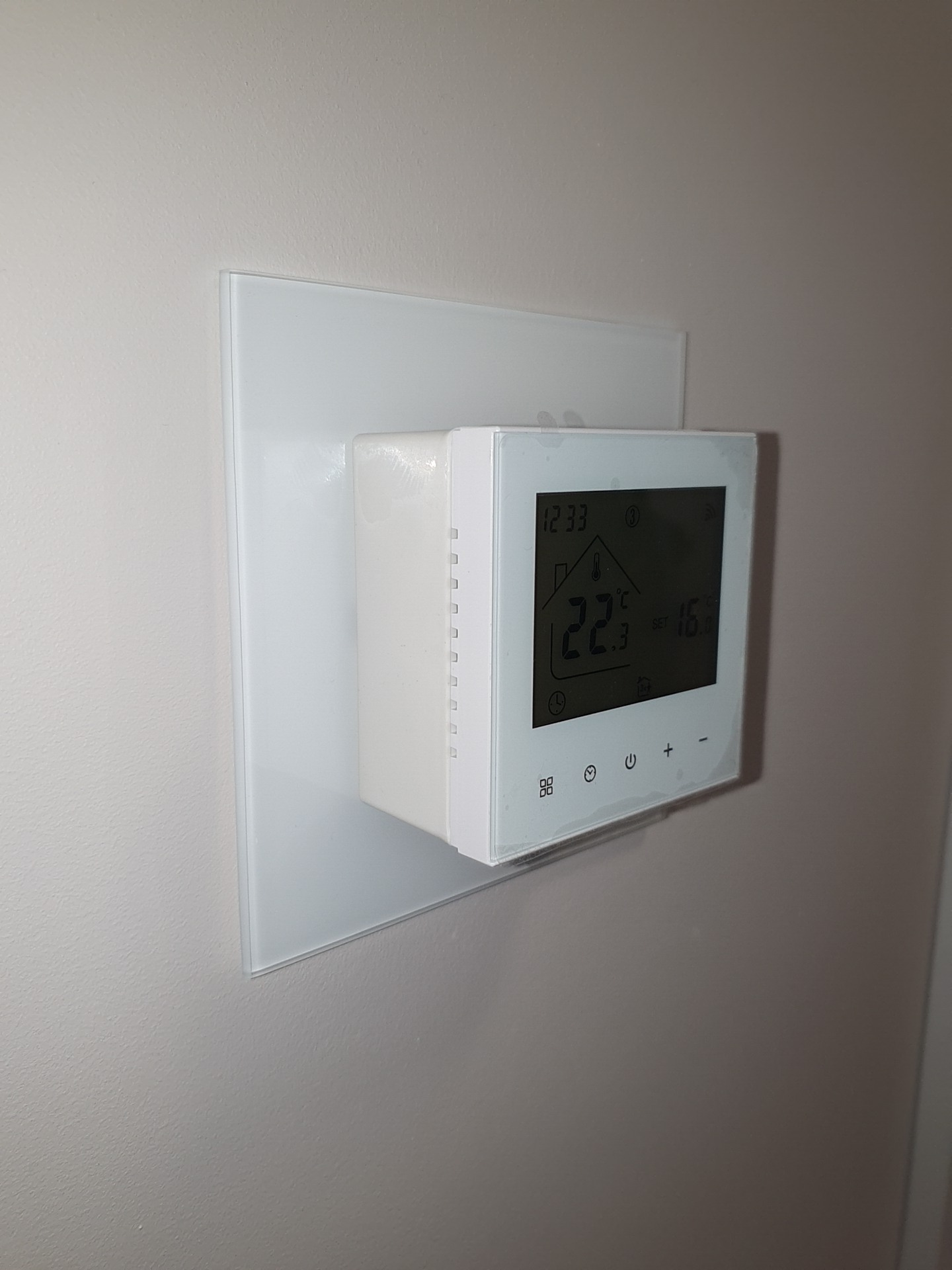
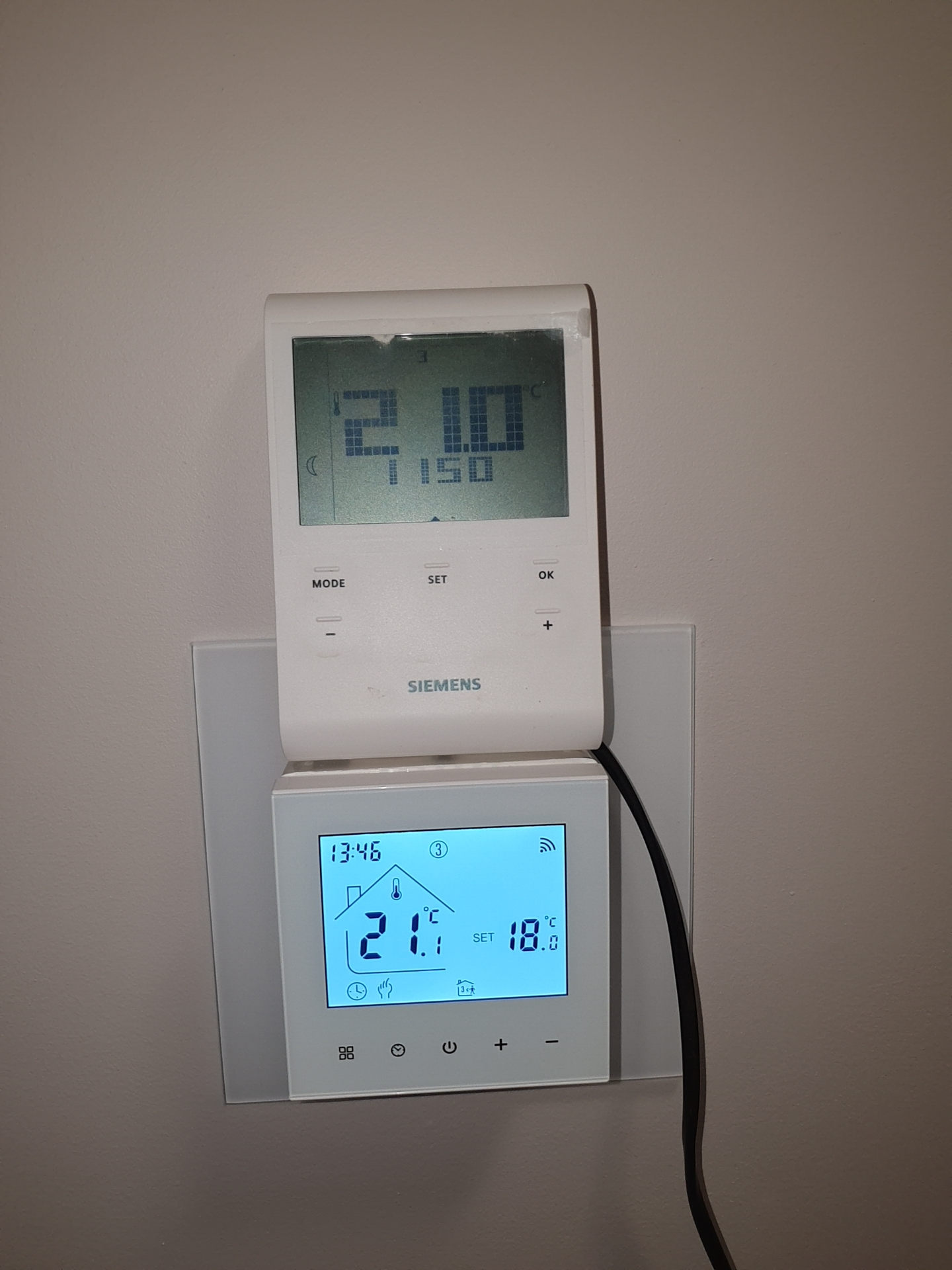
Likewise at the moment - I'm just out and about and can see and control what's happening to the temperature in the property. I'll be able to turn it on and warm it up to optimum in good time before I return. This is just one example . the "convenience surcharge" amounted to just over 100PLN. Plus about 1.5 hours for the replacement, and even that was only so much time because it took a bit of "fiddling" with the mounting, as the predecessor was surface-mounted. Unfortunately I was unable to find a similarly mounted model with wifi. I also didn't want to forge a hole in the wall, the renovation was recent, and unfortunately I didn't think about replacing the controller at the time. In the end, the controller was mounted in a surface box, also purchased from a slant-eyed shop for a few zlotys. The aesthetics turned out so-so, but not too bad either, I've already got used to it
Aaaa, and also in order to mask the marks on the wall from the previous one (slightly different dimensions), I put a glass so-called 'dirt plate' under the box, which is mounted under the light switches. The cost of this tile was probably around 25PLN. So the total cost of the replacement is, let's say, about 150 PLN. I can manage somehow, maybe even without visiting Stork
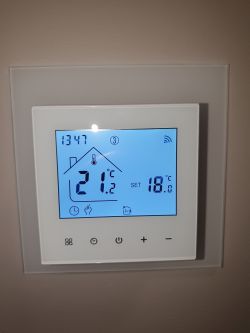
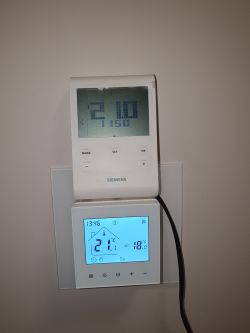
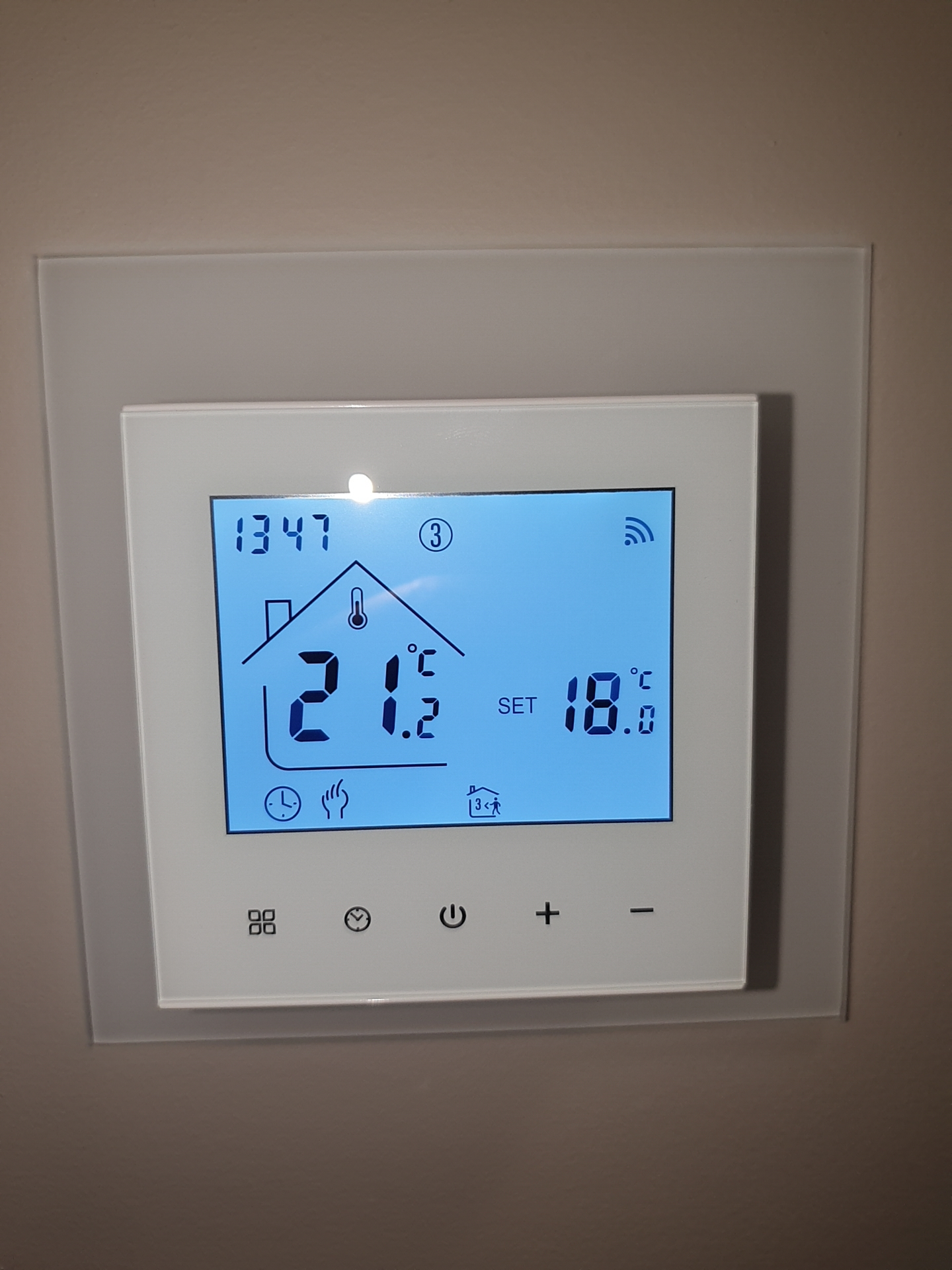
What have I gained compared to the "original"? Apart from the aforementioned remote control basically from anywhere, the automatic clock synchronisation, the ease of configuration via the app, the possibility of creating additional automations? The new controller shows both temperatures at the same time: the current temperature and the setpoint. The original displayed one, either-or. I'm more comfortable with the current solution, you can immediately see what and how. Also the backlighting of the screen has been added, which was apparently spared in the predecessor. Oh, originally fitted by the builders of the building: Siemens RDE100.
Was it worth it? For the price, yes in my opinion. The PLN500 price tag was a bit on the high side, at that amount I would probably let it go.
The downside? The controller is on Tuya. For the time being, I lack the knowledge and also the desire/ability to change to something independent such as Home Assistant. After all, in the event of a "W", if the Chinese one starts to fail, I can always go back to the "original".
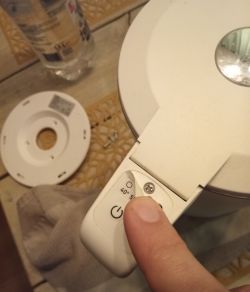
Below are photos of the installed unit and screenshots from the app. Unfortunately, there is no photo of the Siemens when it was still attached to the wall, but there is a comparison with the new one. If there is interest I will add photos of the assembly of the "guts".
Regards.