


logo elektroda
logo elektroda
X
logo elektroda

Zasada przepływu prądu w przekształtniku dwukwadrantowym – dodatnie/ujemne I, U

sadekpozdro 96 1
ADVERTISEMENT
  • #1 21822711
    sadekpozdro
    Level 1  
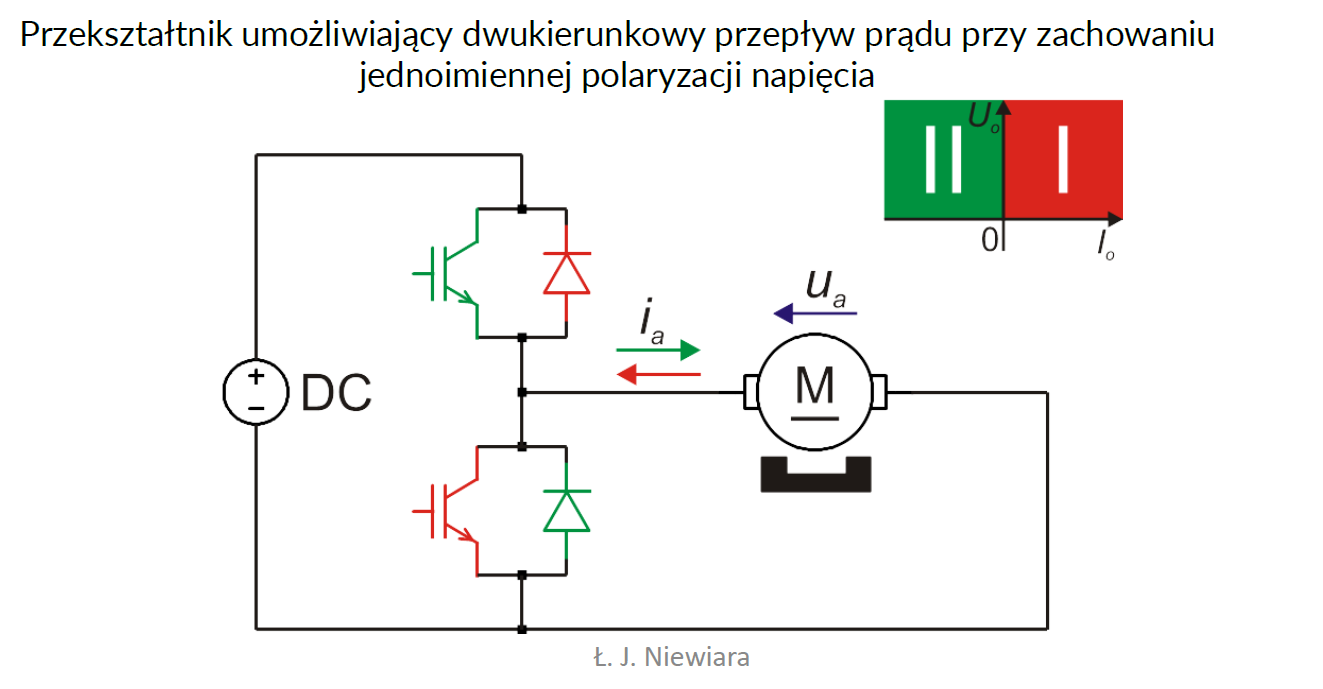
    Diagram of a DC converter enabling bidirectional current flow


    Czy jest ktoś w stanie wytłumaczyć (najprościej jak się da) na jakiej zasadzie płynie prąd w każdym kwadrancie? Jak mamy kwadrant, gdzie napięcie jest dodatnie, a prąd ujemny, to rozumiem to na takiej zasadzie, że tracimy energię na rzecz ruchu silnika i prąd płynie przez zielony tranzystor przez silnik i wraca do zasilania (-). A jak mamy kwadrant, gdzie napięcie jest dodatnie oraz prąd dodatni, to rozumiem, że to jest hamowanie: jest wytwarzana energia i prąd płynie od silnika przez czerwony tranzystor i wraca do zasilania (-). TAK?

    AI: O jaki dokładnie układ przekształtnika dwukwadrantowego chodzi? Masz na myśli konkretny schemat (np. mostek H, buck-boost), czy ogólną zasadę działania?
    Ogólną zasadę
    AI: Chcesz wyjaśnienia dla wszystkich kwadrantów pracy, czy tylko tych dwóch, które opisałeś? Jeśli tak, to których konkretnie?
    Te, które opisałem
  • ADVERTISEMENT
  • Helpful post
    #2 21823017
    jarek_lnx
    Level 43  
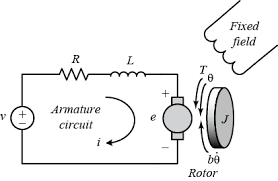
    Draw yourself an electrical model of a motor made up of an SEM proportional to rotation, a resistor and a coil.
    Electric motor diagram with back EMF, resistor, and inductor in armature circuit
    This will explain where the current of the lower transistor comes from and why the current flows in the same direction after switching (laws of commutation)

    Looks like a school assignment to me, I could describe how the current flows through each component, but my style of answer probably won't hit the teacher's fancy, you should give the answer as you were taught, not as a random guy from the internet will describe.

    sadekpozdro wrote:
    If we have a quadrant where the voltage is positive and the current is negative, my understanding is that we are losing energy to the movement of the motor and the current flows through the green transistor through the motor and back to the power supply (-). And if we have a quadrant where the voltage is positive and the current is positive, my understanding is that this is braking: there is energy being produced and current is flowing from the motor through the red transistor and back to the power supply (-). YES?
    Yes. It can be added that in practice such a circuit will be controlled by a PWM waveform i.e. the transistors will be cycled off. If energy is flowing to the motor and we turn off the green transistor, the inductance will keep the current flowing in the same direction by opening the green diode. And during braking, turning off the red transistor will cause the current to return to the power supply through the red diode.
ADVERTISEMENT