First of all, I would like to congratulate my colleague Sqerty for his very cool ideas and willingness to make videos and for his hard work. I am always interested to see people who, like me, like to tinker and build something out of something.
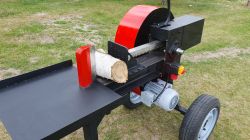
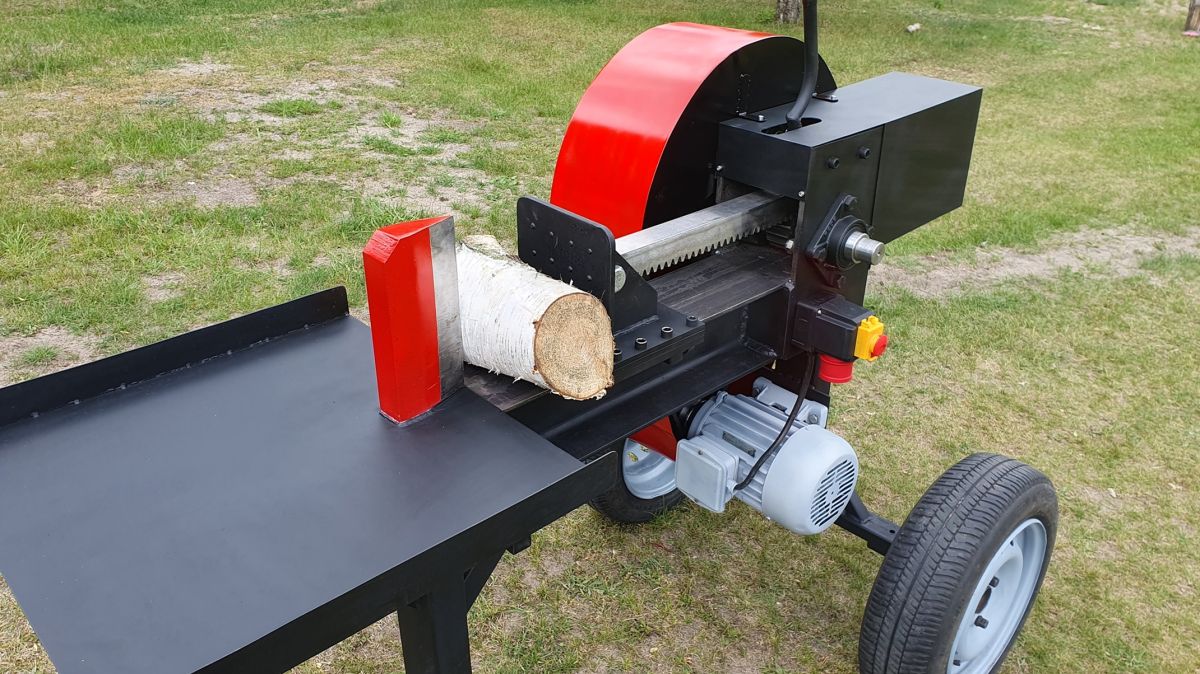
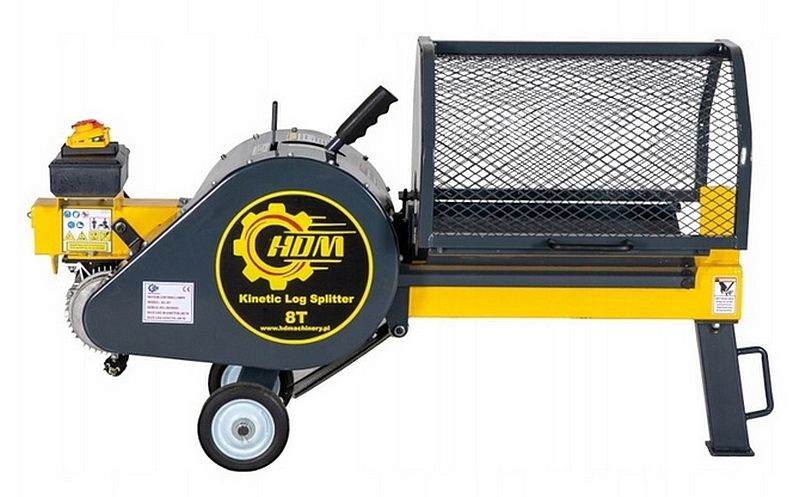
As for the splitter, with my kinetic I have eaten my teeth on it,in a few points I will try to outline my problems I have had it (and maybe suggestions, thoughts, what strikes my eye or what I would improve ).
1 The blade , what steel did you use - I the equivalent of hardox 500 , which makes the cutting knife really sharp and I don't have to sharpen it every now and then.
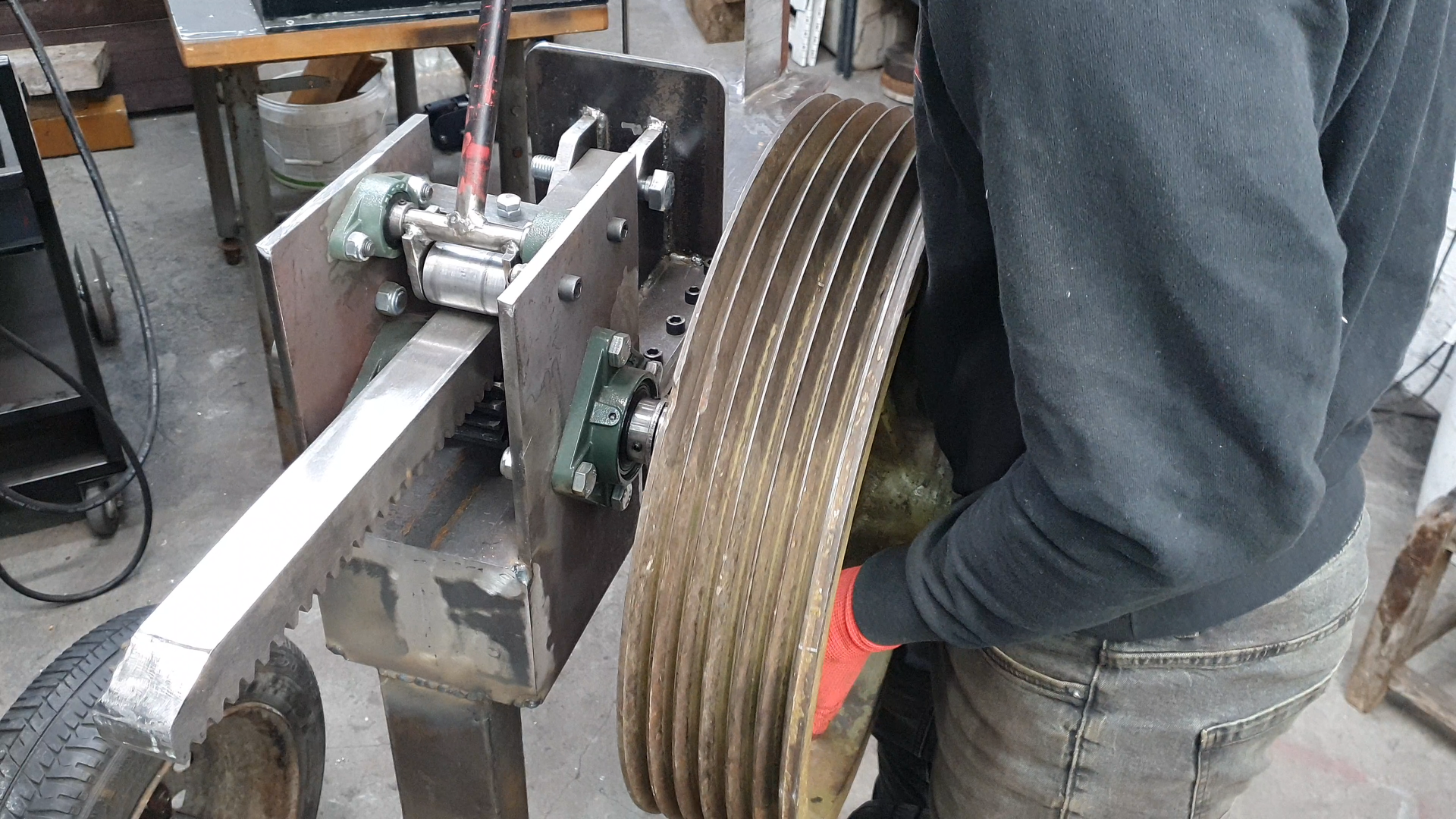
2 Piston base - I don't see any play there, more than once I've had a log or bark get between the base and the I-beam and block the piston retraction.
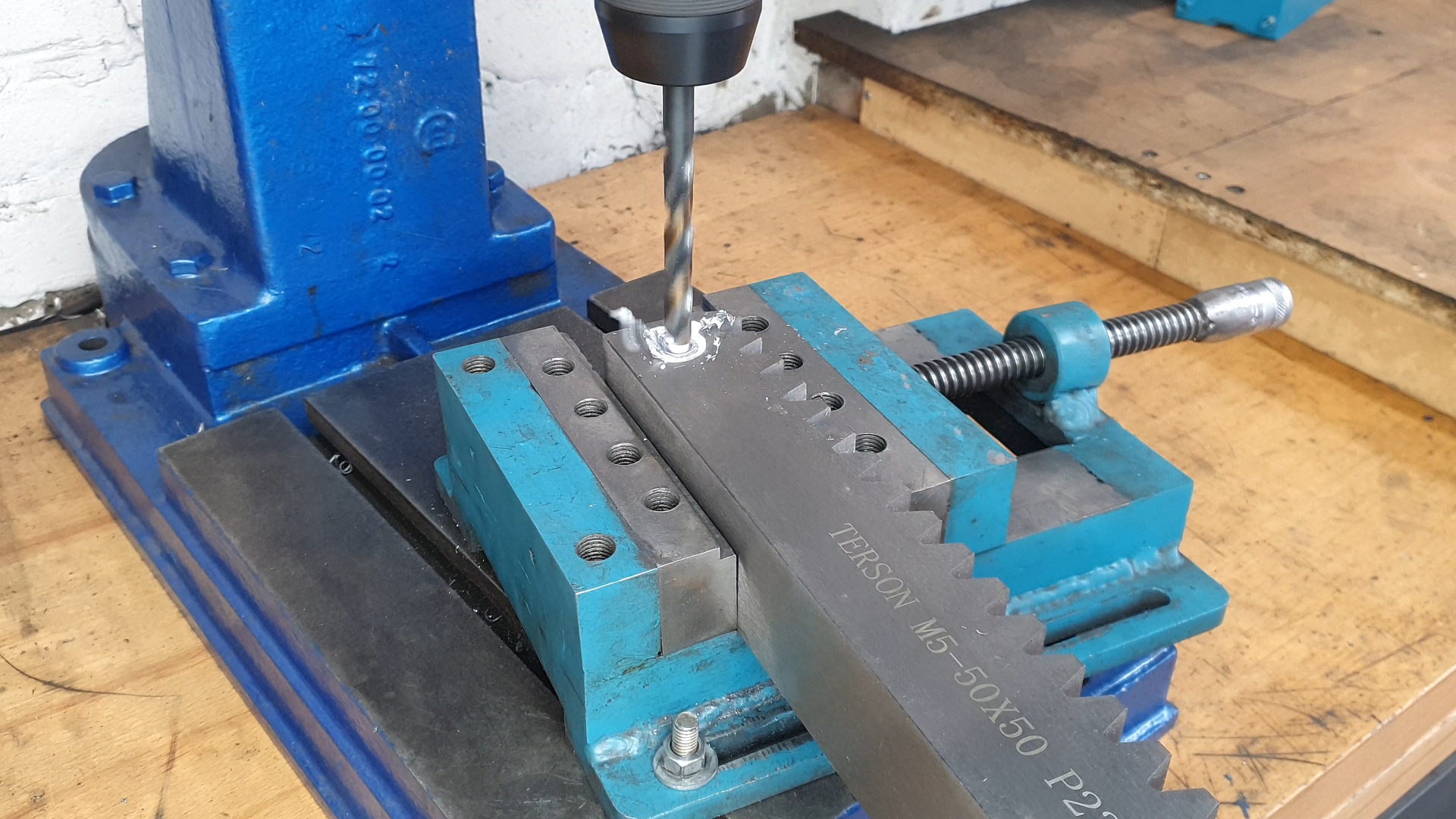
3 Toothed bar - I used an M4 module made from C45 steel bought from EBMiA.co.uk, I think - not hardened, and I'll tell you why later.
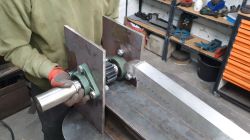
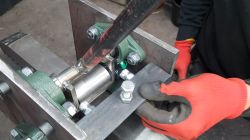
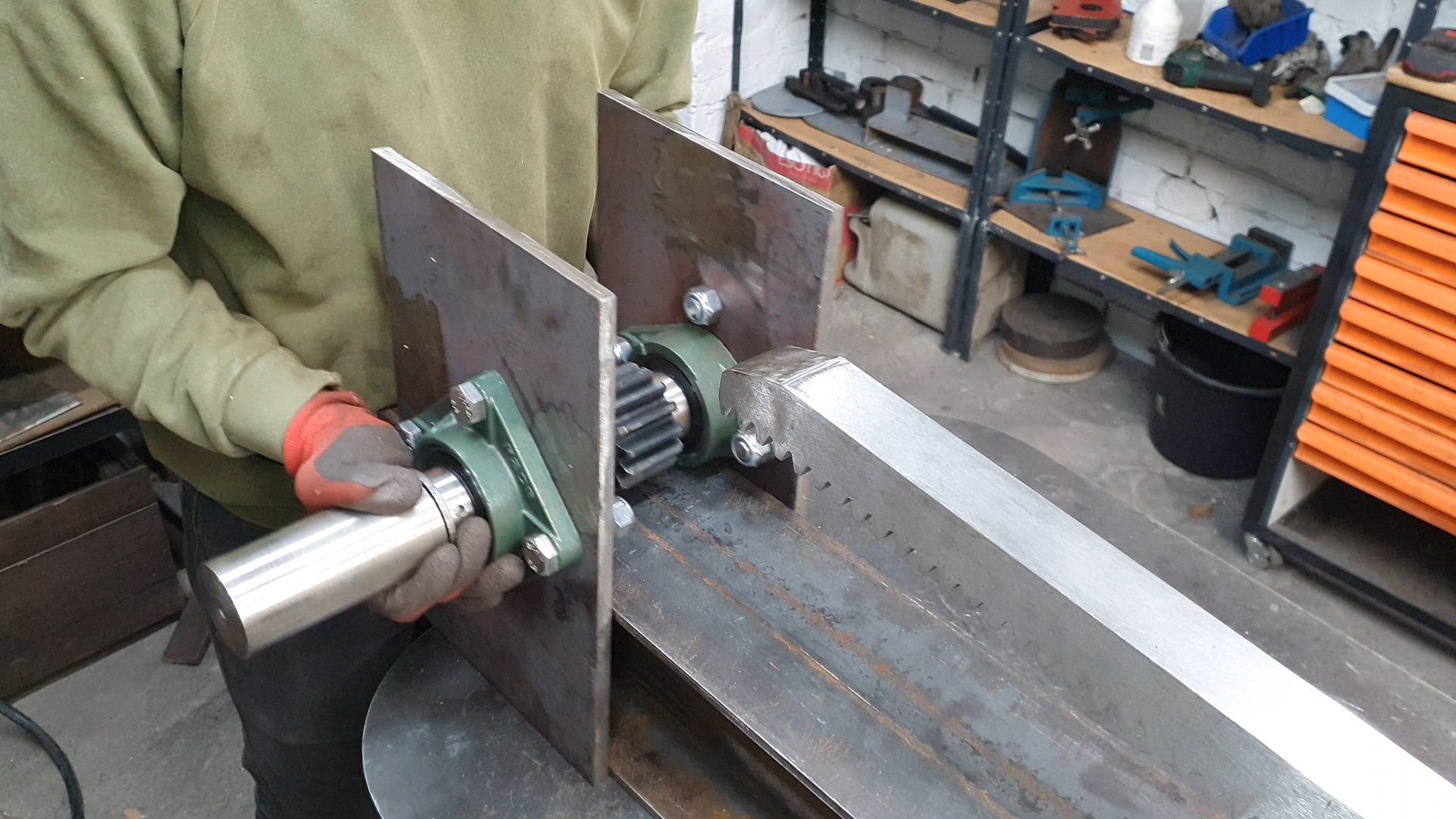
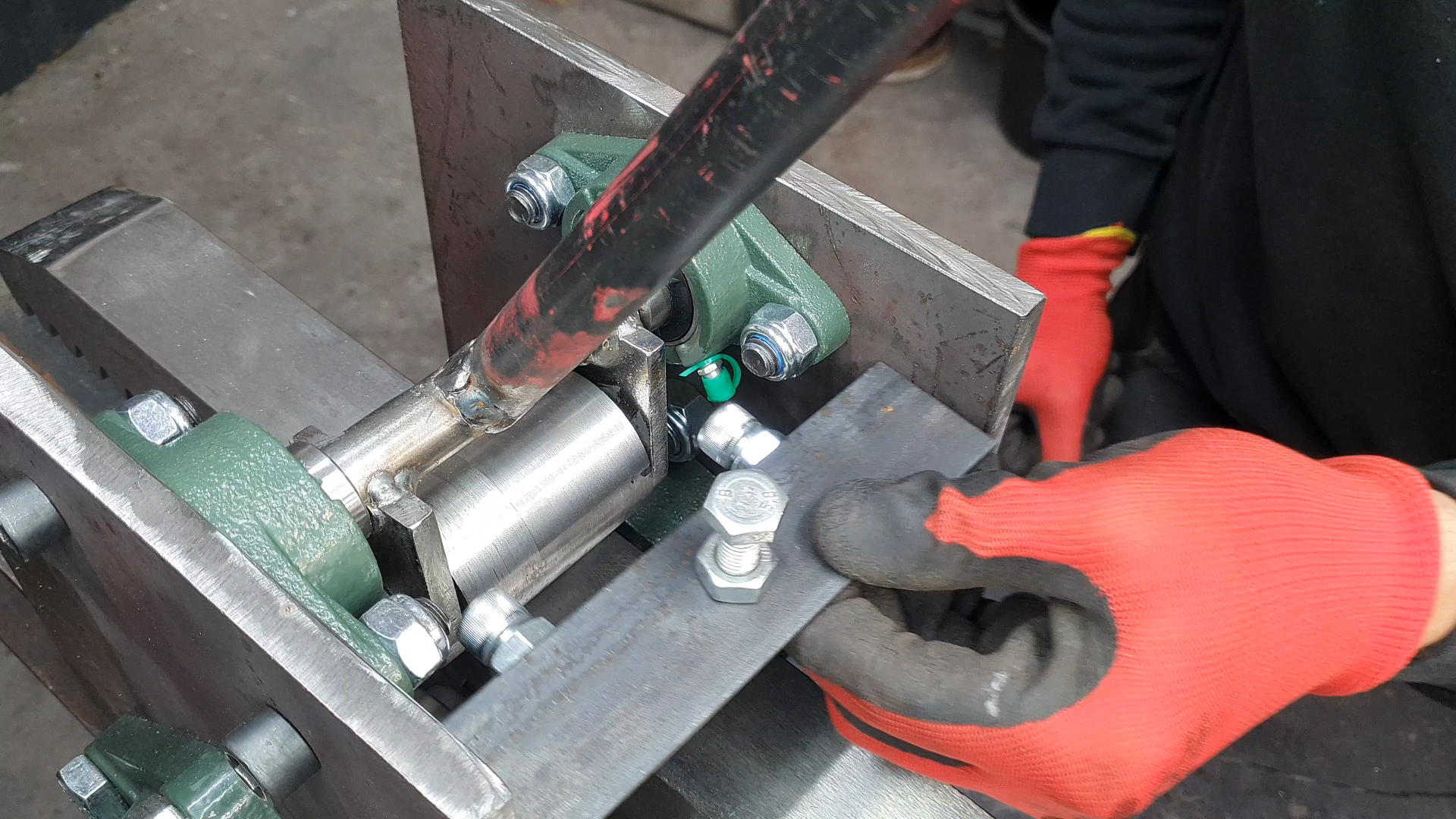
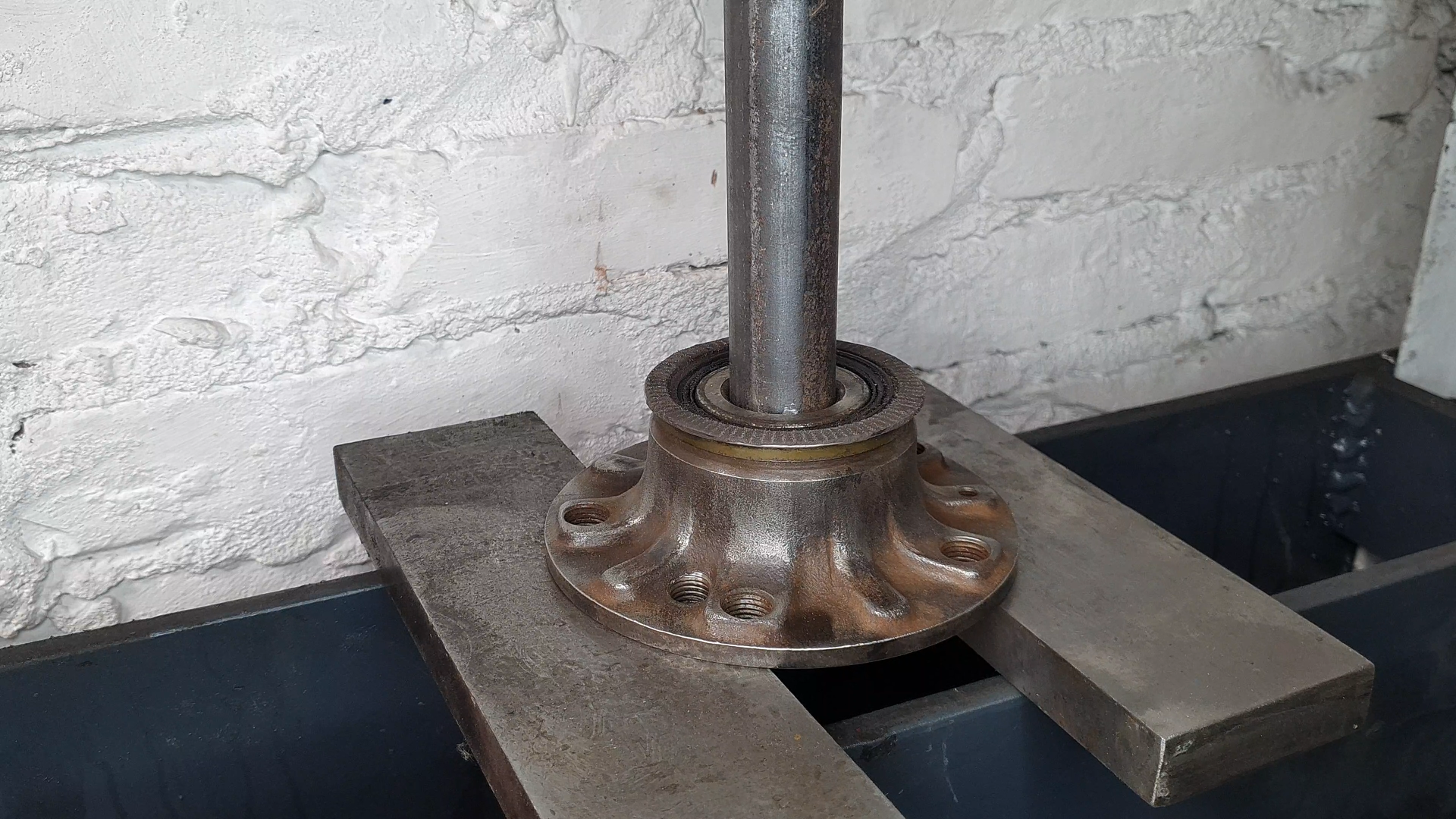
4 Trigger - or rather pressure roller , I did as you did - except that I don't have a lathe so like a closer thick walled tube I ground with various inventions on a drill to fit the bearings into it and it holds , but as I think I gave more bearings.
A strong trigger mount is of huge importance , poor pressure , play between the shaft teeth and the slat will cause them to wear quickly - and the loads are high.
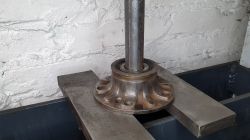
5 The pinion shaft - this is simply a tragedy I had an unhardened one made of C45 steel milled into the shaft. From a knotty tree it lost its teeth after a few hours of use. Making such a shaft was bordering on the miraculous, only one craftsman made such a shaft at a decent price - as some business jans wanted 2000 zloty for one - can you believe it?!
The steel that was used was 40HM (and here it was important that it was hardened). And it was a shot in 10, after hours of working with normal or knotty wood there is no sign of wear on the teeth. In my opinion, it is better to risk the teeth on a toothed bar than on a shaft.
On the other hand mate, what steel was used in your gear wheel ?
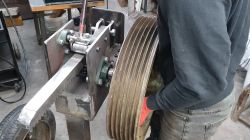
6 Flywheel - why only one ? I have 2 wheels with similar weights each around 55kg, I think an even load on each side is important. I would forget to add, turning such a 40 cm diameter wheel will not be cheap either, I managed to buy one on the cheap.
8 Engine - What rpm does it have (as we know 3 KW)? At my place there is a petrol Chinese fake honda 6.5 HP with a reducer giving 1800rpm (without it 3600rpm max). AI tells me that this 6.5HP is about 4.8 kW.
Jenak I probably don't use higher revs like 900-1200 (it's halfway up the throttle control lever) due to the fact that the faster the wheels turn the teeth on the shaft do too, and the slat also needs to mesh quickly and decisively or the teeth get wasted.
9 V-belt - there is no overload clutch of any kind here, I have the V-belt tensioned so that on one side it spins the wheels and on the other the engine pulley slides over it when a tree gets stuck on the blade.
Also due to the overload I would not want to wreck the engine mechanism.
10 Distance of material between the piston and the blade. In my opinion, the block between the piston and the blade should be at least 20 - 30 cm before the piston impales it on the blade. This is simply my observation from the fact that it is only when the teeth mesh that the piston moves into action, and here there is often not enough of this "momentum to transfer the energy well". This is especially important on a knotted tree (the effects are poor when you barely let go of the plunger and here the block cannot penetrate the blade well).
And that's probably it for the more important points about the splitter. Overall, do I regret making it ? No - for maybe needs it is sufficient, but it does have some limitations like heaviness with large knots and crooked cut wood especially one where the crooked cut is on the knot and on both sides of the block, but such I cut with a chainsaw and it goes nicely then.
Obviously the original from the USA is different from those built "at home" and I have this impression that the shaft which has completely milled holes was not by chance designed that way , what do you think ?
And to the great health and safety experts. This machine is safe if you know what you are doing. I've worked on it for a few seasons and I know it. And experience tells me
- Let go of the crooked knotty tree, here you don't even know how it will behave in a hydraulic - it can always strain and shoot out.
- Stand on the side of the splitter - behind the piston pushing the block (don't have the block in front of you between the blade piston).
- Don't keep your hand on the trigger - just enough to engage the list on the shaft (you may get a bouncing trigger on your hands)
- Never put the knotted side on the blade of the knife - always on the plunger - otherwise there is a good chance that the blade will not go into the tree.
Thanks for reading my experiences, I hope they are useful to someone