







Good morning.
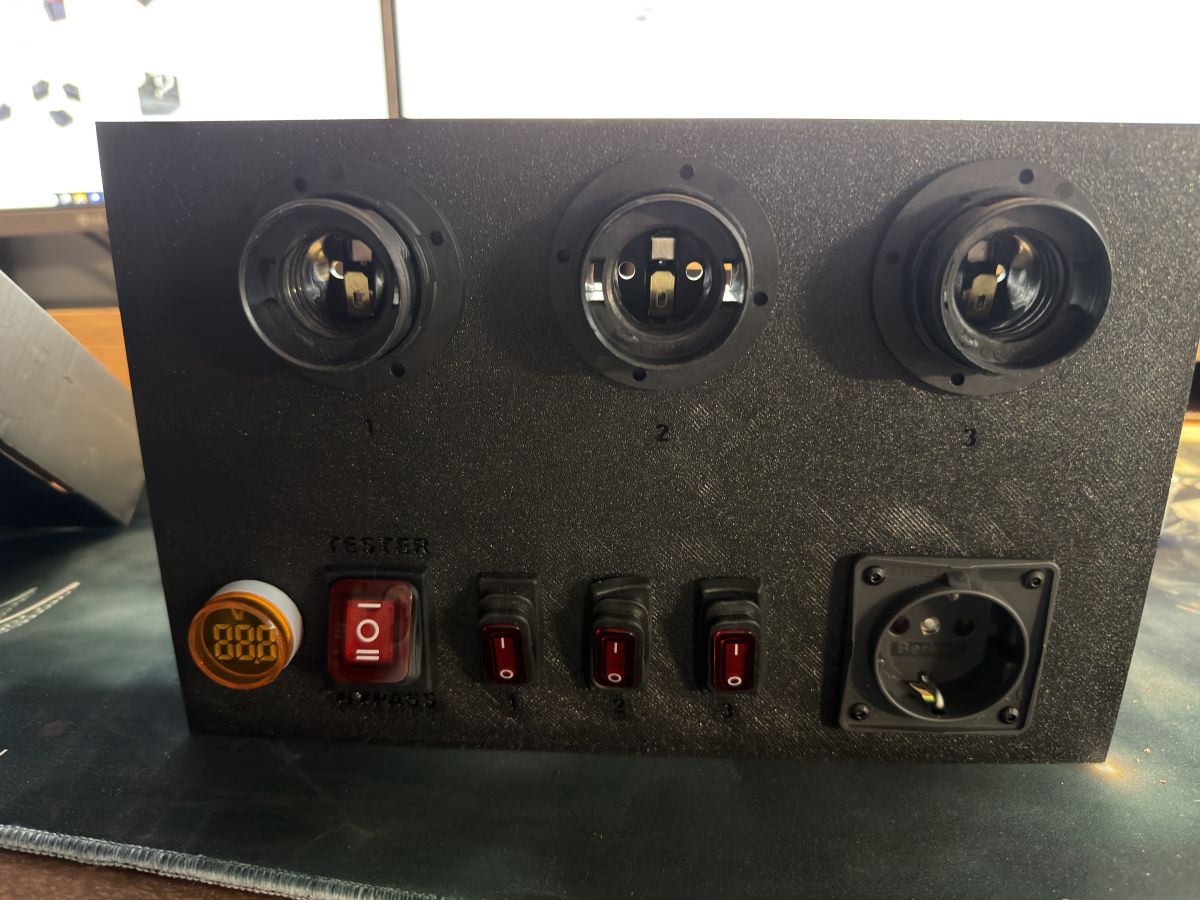
My first project. Some time ago I wanted to repair an old radio from my father-in-law as a gift for my wife, but I didn't want to burn it out extra. So I came up with a bulb tester. It was supposed to be as simple as possible, but somehow I got worked up and added a few extra components. I plan to add one more - an ammeter on the output. The whole layout, as well as the design with the case printing, realised by me.
Key information about the design:
1. Enclosure: Designed in CAD and printed on an Ender 3 V3 Plus. The walls are 4 mm thick, which provides great rigidity.
2. Assembly: All components (sockets, panel) are mounted with M3 screws screwed into brass inserts molded into the plastic. This avoids the threads becoming worn in the print.
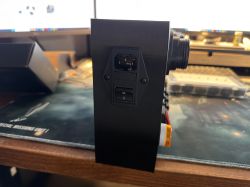
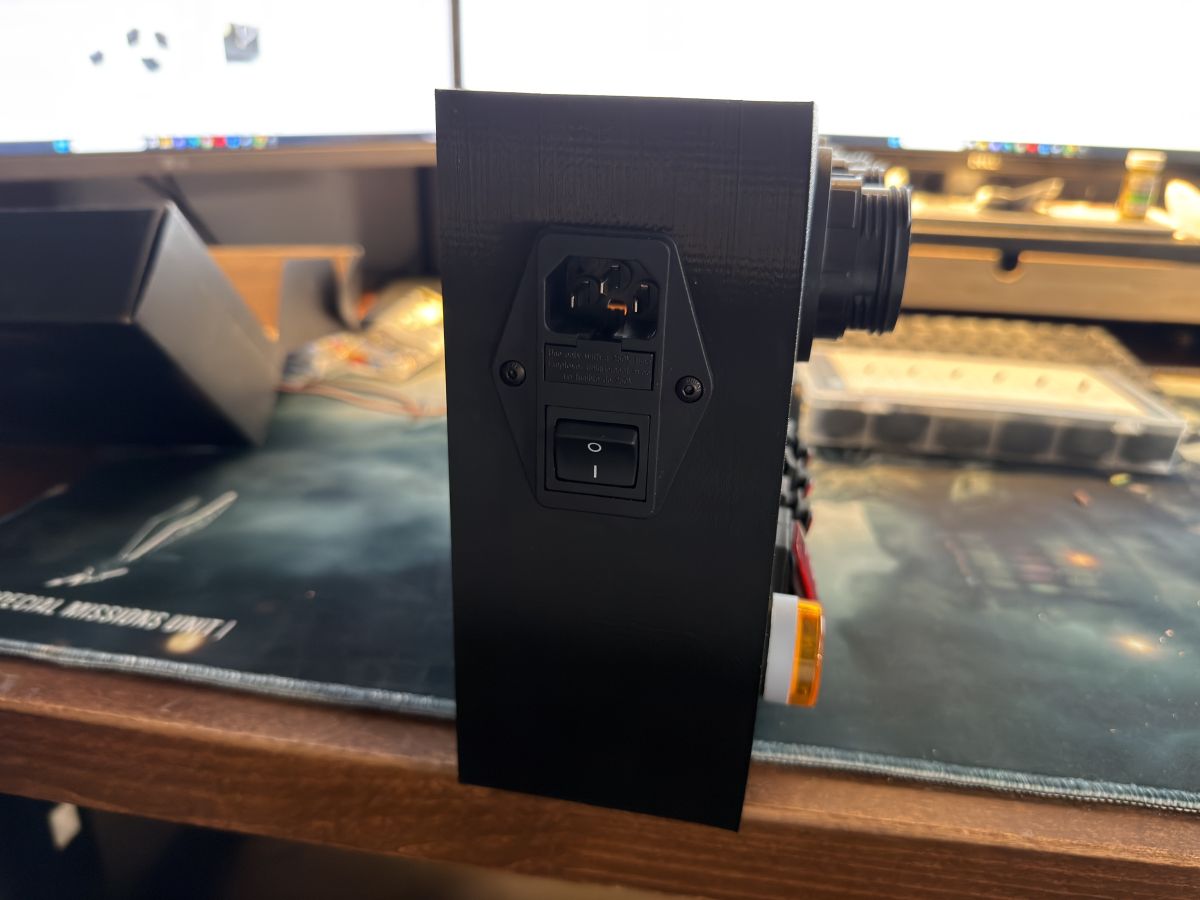
3. Power supply: I used an IEC socket with a double 6A fuse. The filter limits the continuous current to 6A (about 1380W), which is sufficient in my conditions.
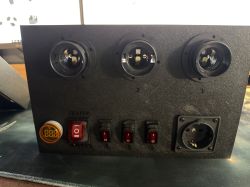
4. Operating logic: The main switch KCD4 allows you to select TESTER mode (via the bulbs) or BYPASS mode (direct). The three switches KCD3 allow the selective connection of bulbs of different wattages, giving control over the limiting current.
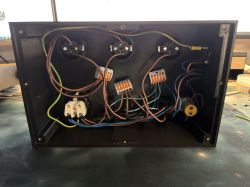
5. Safety: the PE protective conductor is pulled directly from the power socket to the pin in the Schuko output socket.
6. Interior: Connections based on WAGO 221 connectors (star topology) and LgY 1.5 mm² wires.
7. Monitoring: AD16 voltmeter plugged in directly behind the input socket (piggyback), so it works independently of the tester mode. (As an indicator that the IEC socket is switched on.
8. We plan to add an Ammeter on the output to monitor the current drawn.
My first project. Some time ago I wanted to repair an old radio from my father-in-law as a gift for my wife, but I didn't want to burn it out extra. So I came up with a bulb tester. It was supposed to be as simple as possible, but somehow I got worked up and added a few extra components. I plan to add one more - an ammeter on the output. The whole layout, as well as the design with the case printing, realised by me.
Key information about the design:
1. Enclosure: Designed in CAD and printed on an Ender 3 V3 Plus. The walls are 4 mm thick, which provides great rigidity.
2. Assembly: All components (sockets, panel) are mounted with M3 screws screwed into brass inserts molded into the plastic. This avoids the threads becoming worn in the print.
3. Power supply: I used an IEC socket with a double 6A fuse. The filter limits the continuous current to 6A (about 1380W), which is sufficient in my conditions.
4. Operating logic: The main switch KCD4 allows you to select TESTER mode (via the bulbs) or BYPASS mode (direct). The three switches KCD3 allow the selective connection of bulbs of different wattages, giving control over the limiting current.
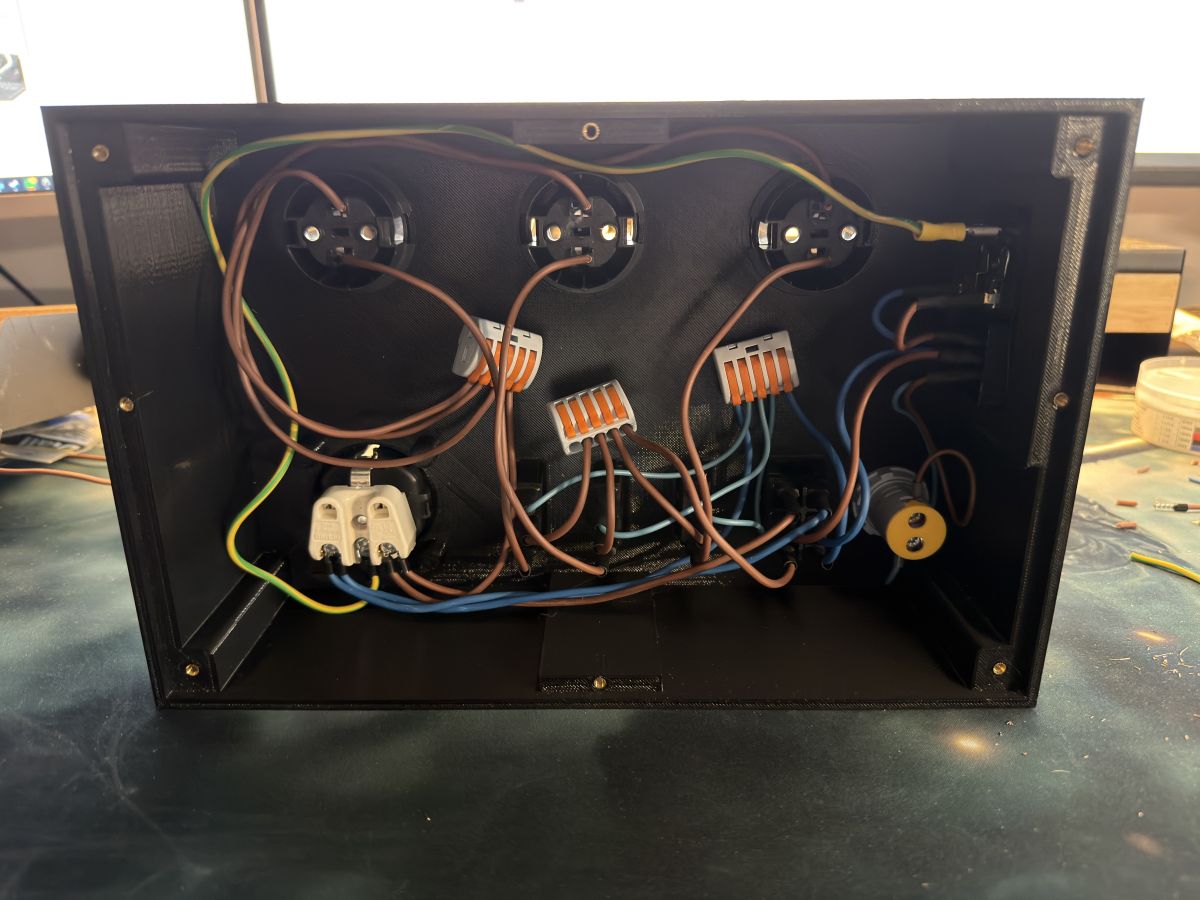
5. Safety: the PE protective conductor is pulled directly from the power socket to the pin in the Schuko output socket.
6. Interior: Connections based on WAGO 221 connectors (star topology) and LgY 1.5 mm² wires.
7. Monitoring: AD16 voltmeter plugged in directly behind the input socket (piggyback), so it works independently of the tester mode. (As an indicator that the IEC socket is switched on.
8. We plan to add an Ammeter on the output to monitor the current drawn.
Cool? Ranking DIY

