logo elektroda
logo elektroda
X
logo elektroda

Capacity test - UPS for router with USB and PoE, 15 and 30 W versions

p.kaczmarek2 1047 4

TL;DR

  • UPS-15-POE and UPS-30-POE miniature UPS units keep a 9/12 V router, USB devices, and two 12/24 V PoE loads running during mains loss.
  • Both models use a 10400 mAh battery pack made of 4×2600 mAh cells, and the test checked DC and USB output with an LD35 artificial load.
  • Measured capacity averaged about 6.8 Ah at 5 V, or 34 Wh, which matches the label once converter losses are included.
  • The 30 W model drew more than 2 A at 12 V, while the 15 W version managed a little under 1 A, and charging from mains reached about 24 W.
  • Exceeding the allowed current makes the UPS lock up and flash the LEDs, and the 15 W versus 30 W split may be mostly marketing.
Generated by the language model.
ADVERTISEMENT
This content has been translated flag-pl » flag-en View the original version here
📢 Listen (AI):
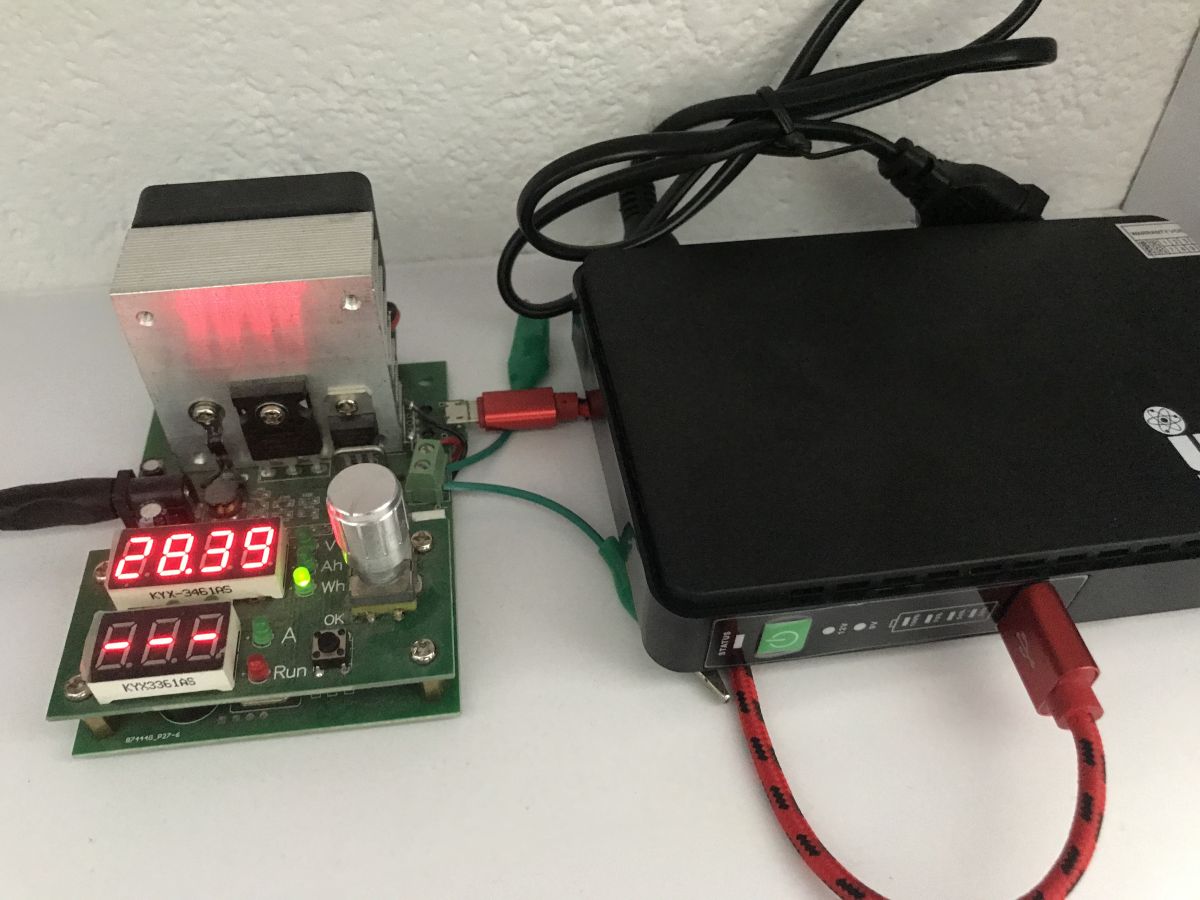
  • Test board with LED readout connected by cables to a black UPS unit
    The miniature uninterruptible power supplies (UPS) shown here provide uninterrupted operation for a 9/12 V router, USB devices (5 V) and two PoE devices (12/24 V), such as surveillance cameras. They declare a battery capacity of 10400 mAh. Two models will be tested - 15 W and 30 W, UPS-15-POE and UPS-30-POE. I will check their actual capacity here and also examine the current capacity. The 15 W version costs PLN130 and the 30 W version costs just PLN190.
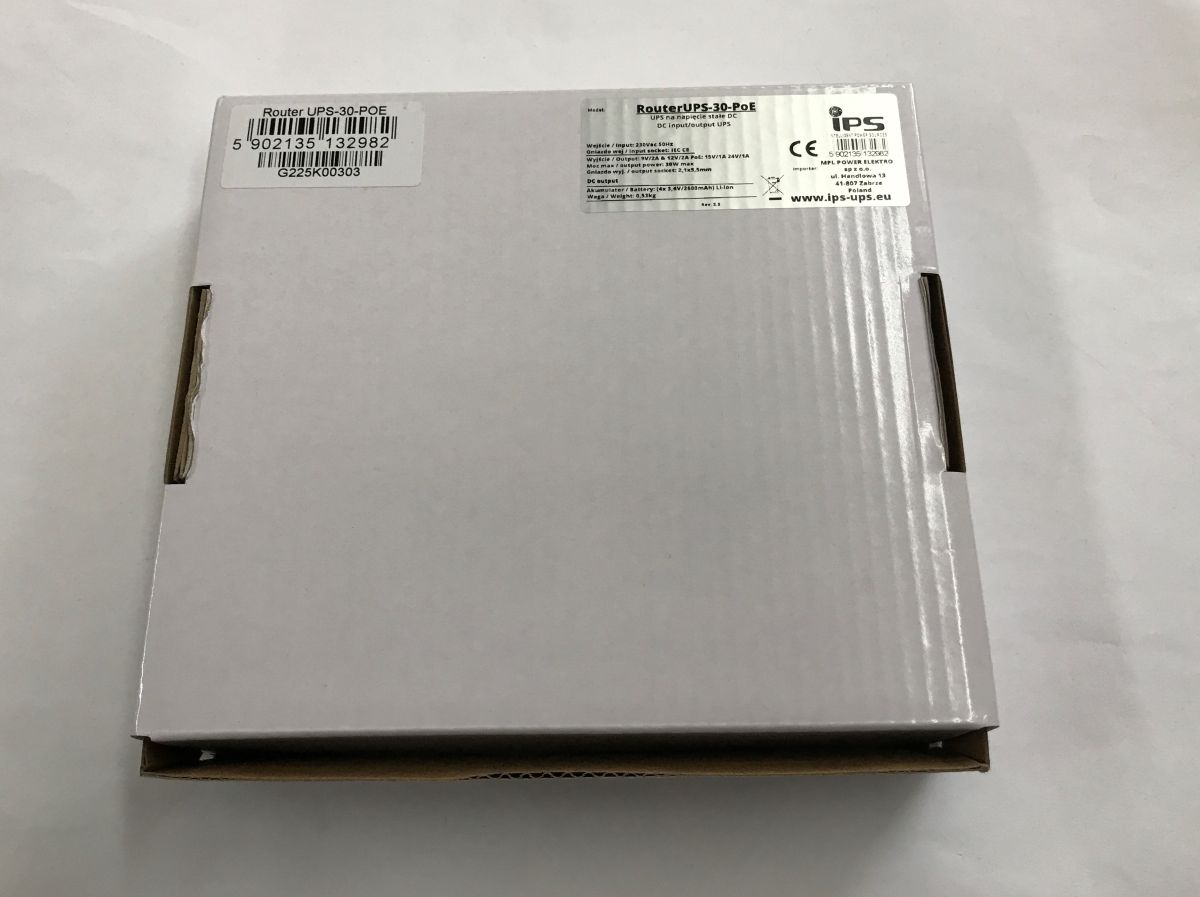
    White box with “Router UPS-30-POE” label and barcode on a light background
    Let's start with the contents of the kit. It is similar in both cases. Device, power cable, DC Jack cable-splitter (for two devices), manual.
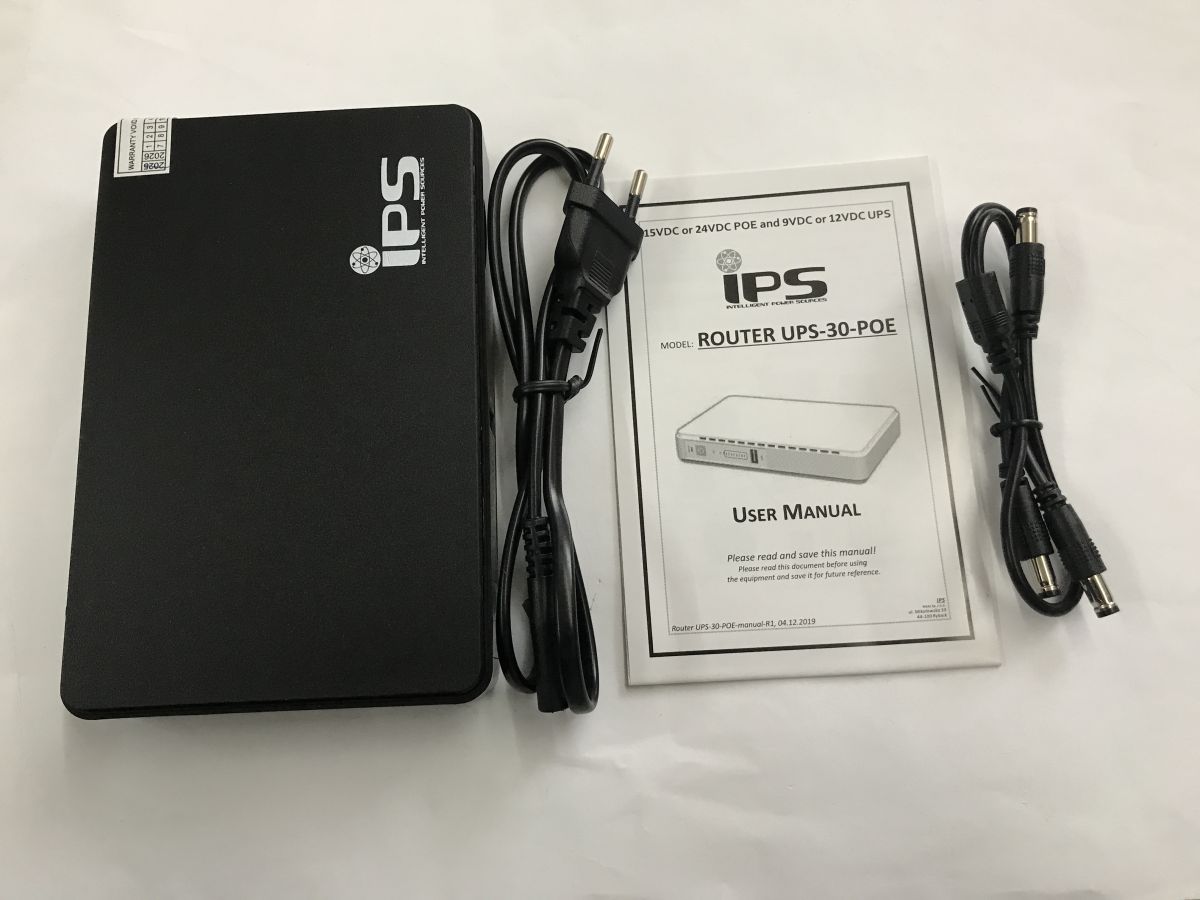
    IPS router UPS kit: black unit, power cord, Router UPS-30-POE manual, and DC jack cable
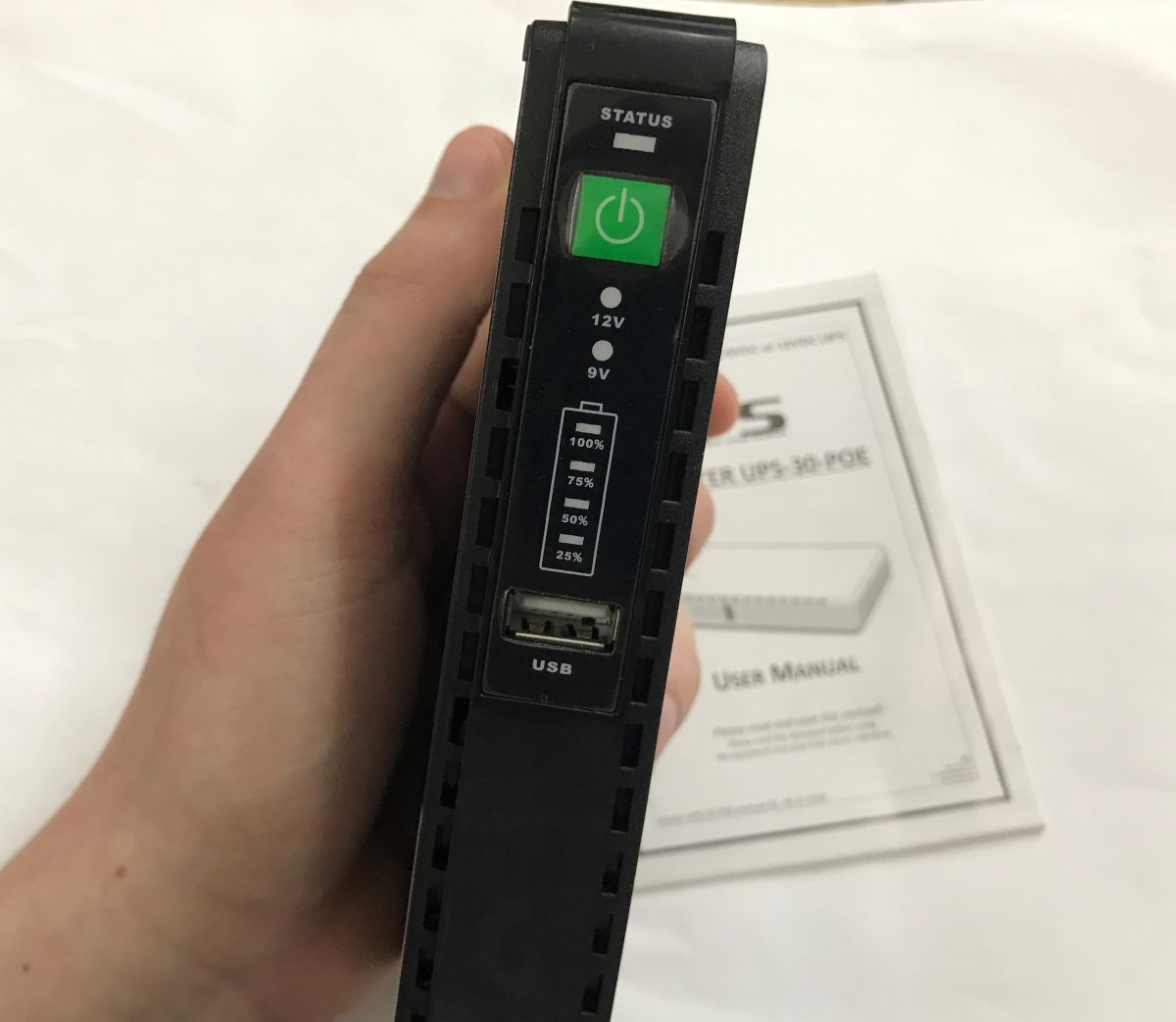
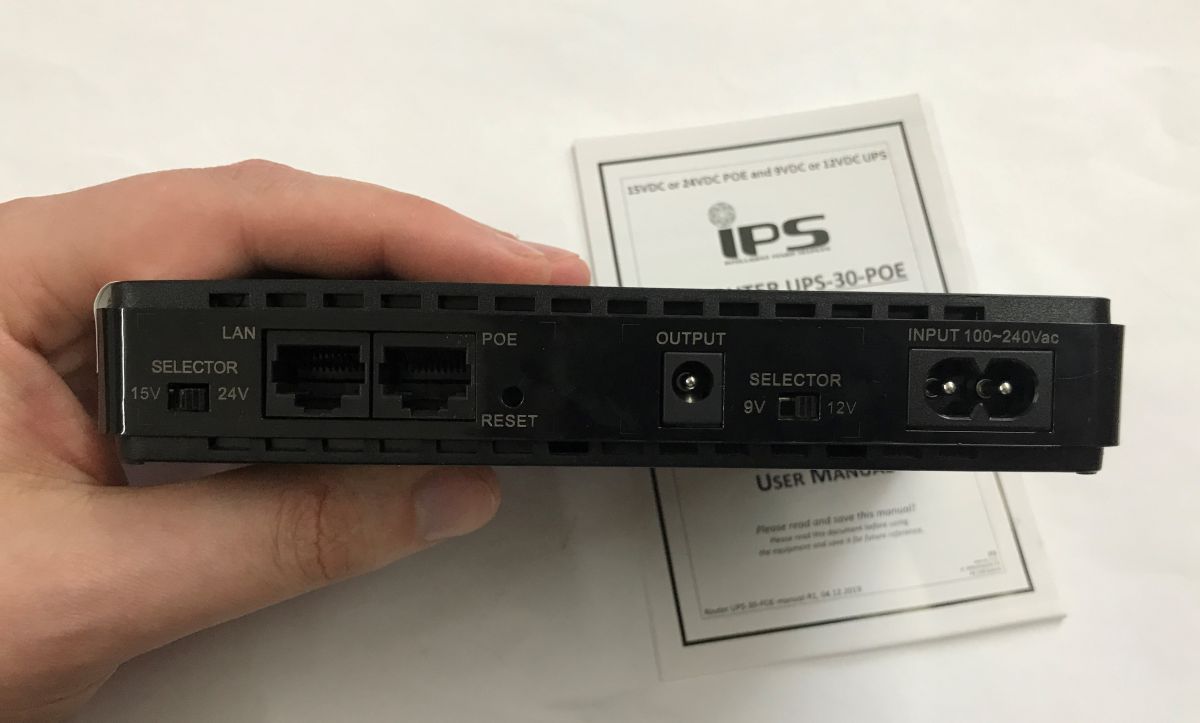
    The UPS has an on/off switch on the front, LEDs showing operating mode and charge status, USB output. On the back there is a 100-240 VAC input and a DC and two PoE outputs.
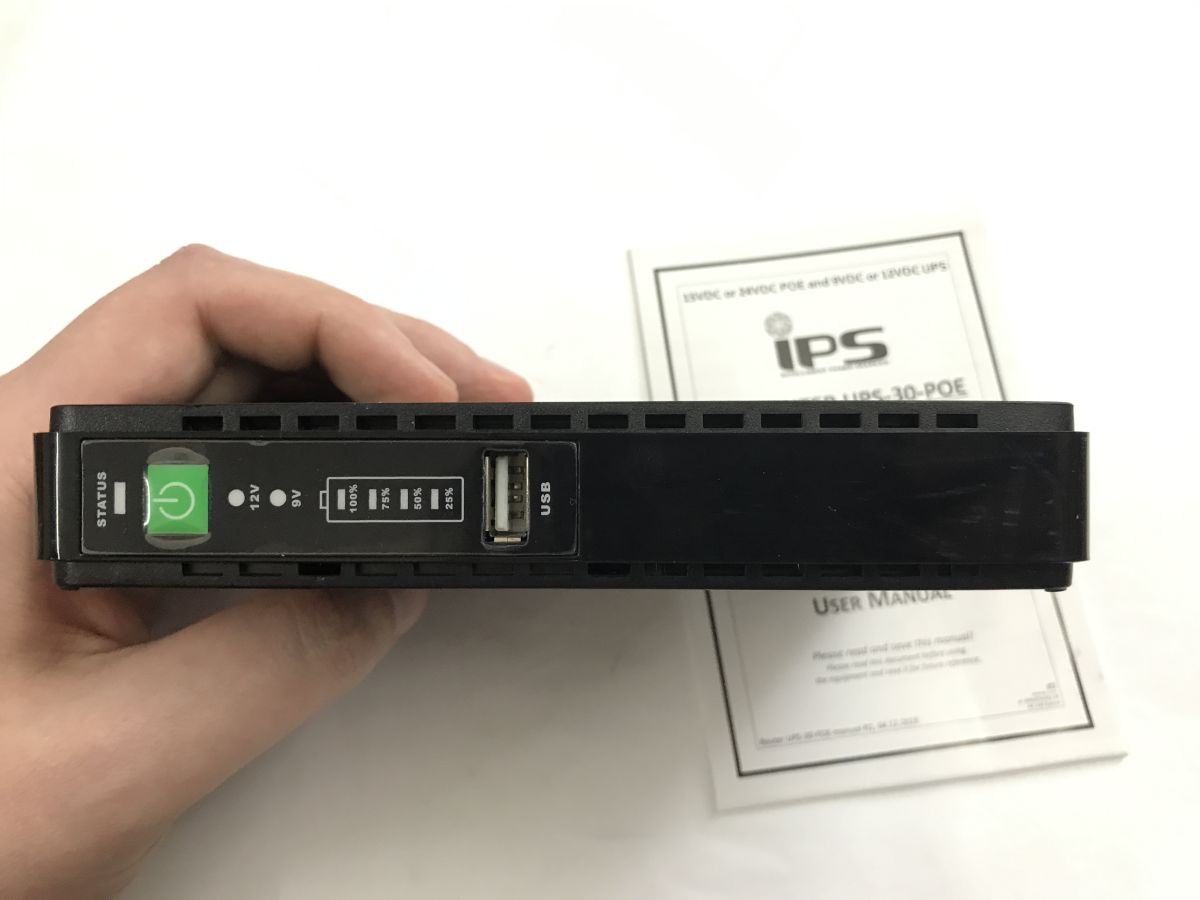
    Front of a black IPS mini UPS with power button, 9/12 V indicators and a USB port, held in a hand Hand holding a black mini UPS with green power button, 12V/9V LEDs, battery indicator, and USB port Rear panel of a mini UPS with LAN/PoE ports, DC output, 9/12 V and 15/24 V selectors, and AC input
    A clear photo of the instructions. It states the capacity: 4*2600 mAh, for a total of 10,400 mAh. This is repeated for both devices.
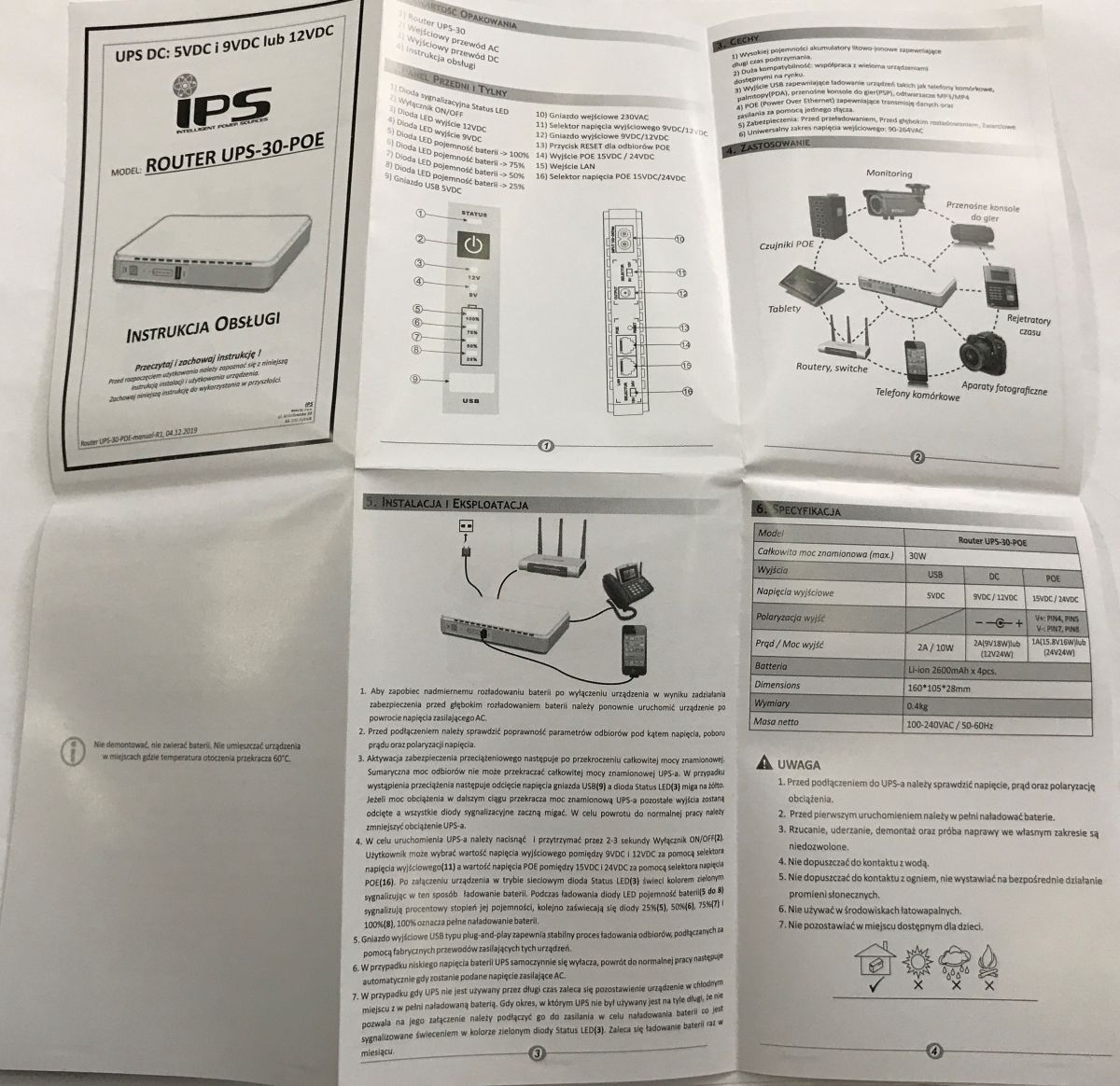
    Opened manual for Router UPS-30-POE showing panel diagrams and a specifications table

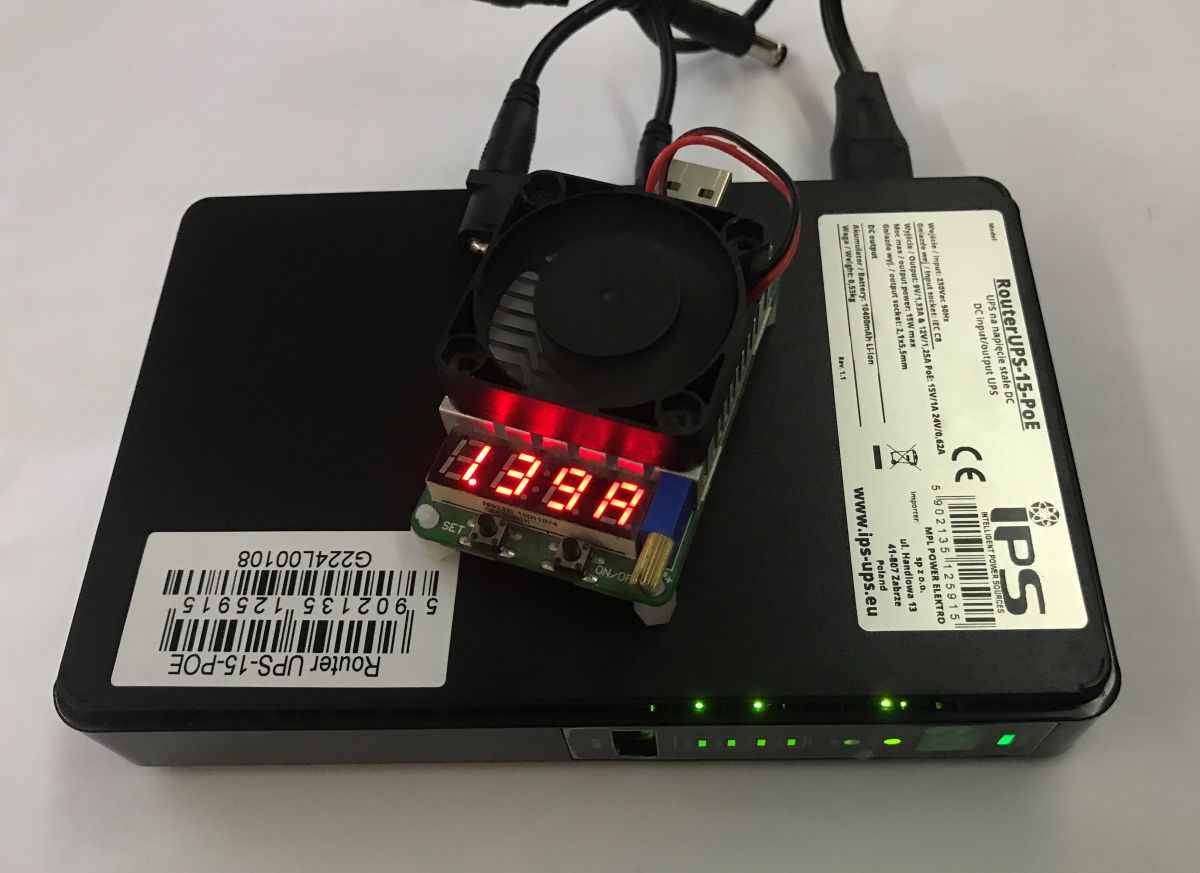
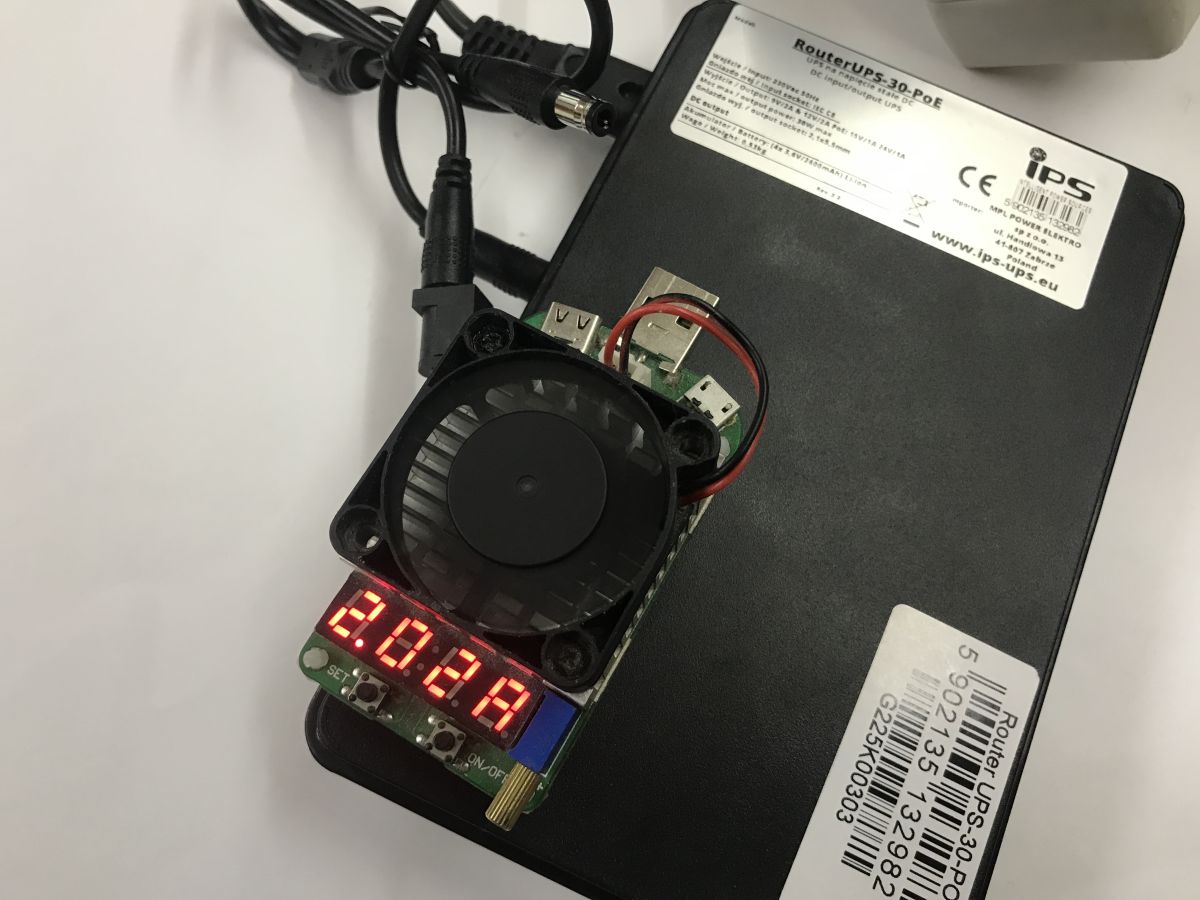
    I started with the load tests. Basically it is fine, according to the information on the case, although I only checked the DC and USB output. I used an LD35 artificial load for this. The 30 W version at 12 V managed to draw more than 2 A, and the 15 W version just over less than an amp.
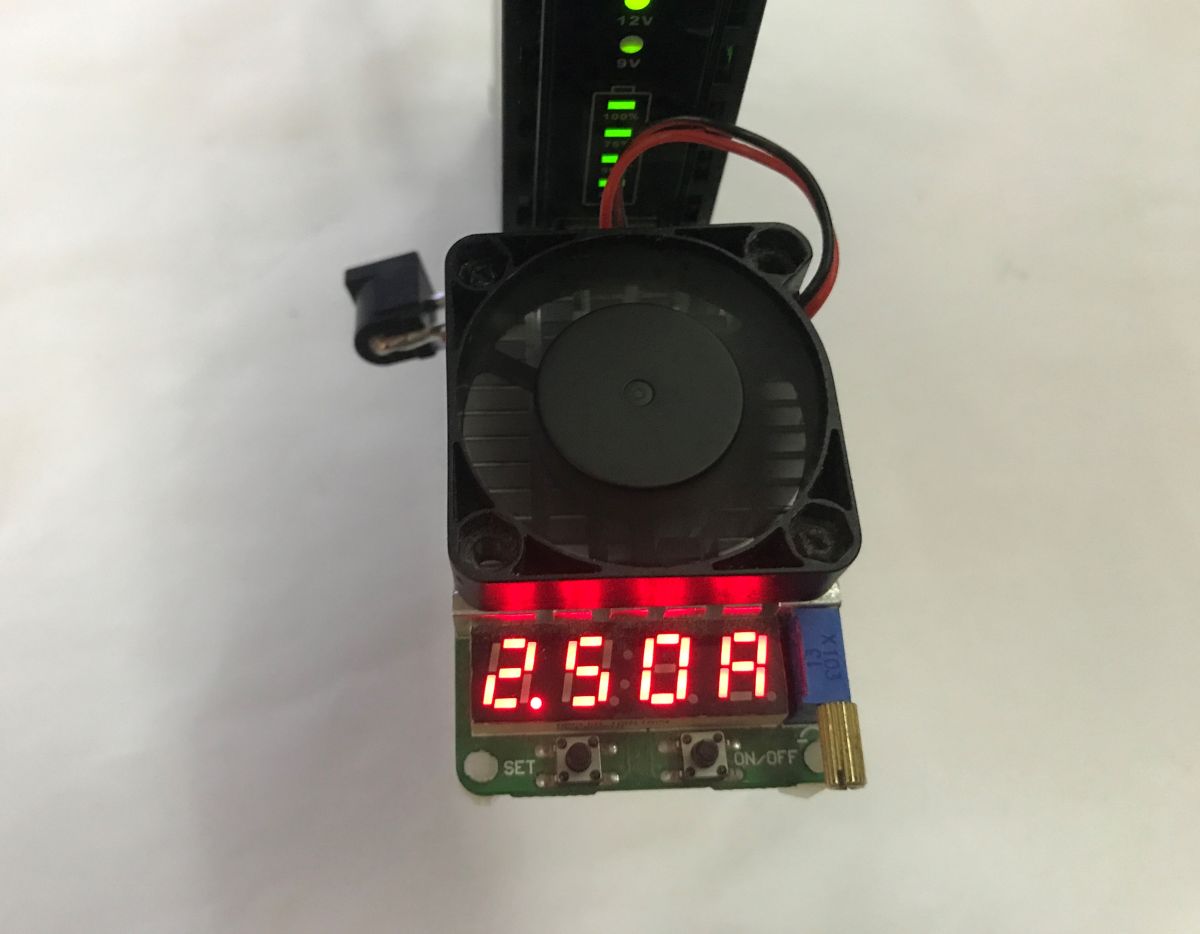
    Electronic load with fan and red LED readout “2.50A” connected to a UPS in the background Black RouterUPS-15-POE UPS with a test module and LED display reading 13.92 Black RouterUPS-30-POE UPS with a small fan module and red LED display placed on top
    When the permitted current is significantly exceeded, the UPS locks up and flashes the LEDs. It can only be unlocked by pressing the button longer.


    I then checked the capacity of the cells inside. I repeated the test several times, because the first time I happened not to fully charge the whole thing (explanation in a later paragraph).
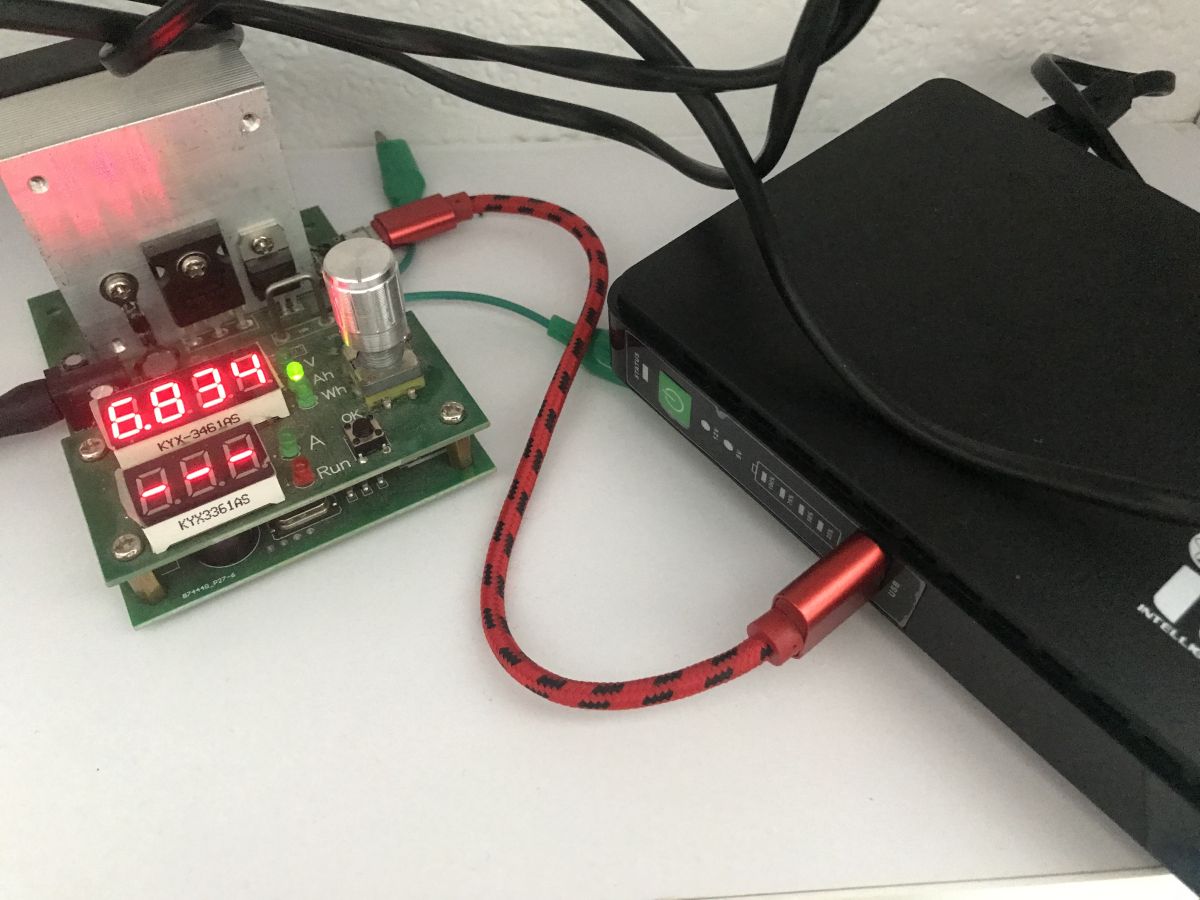
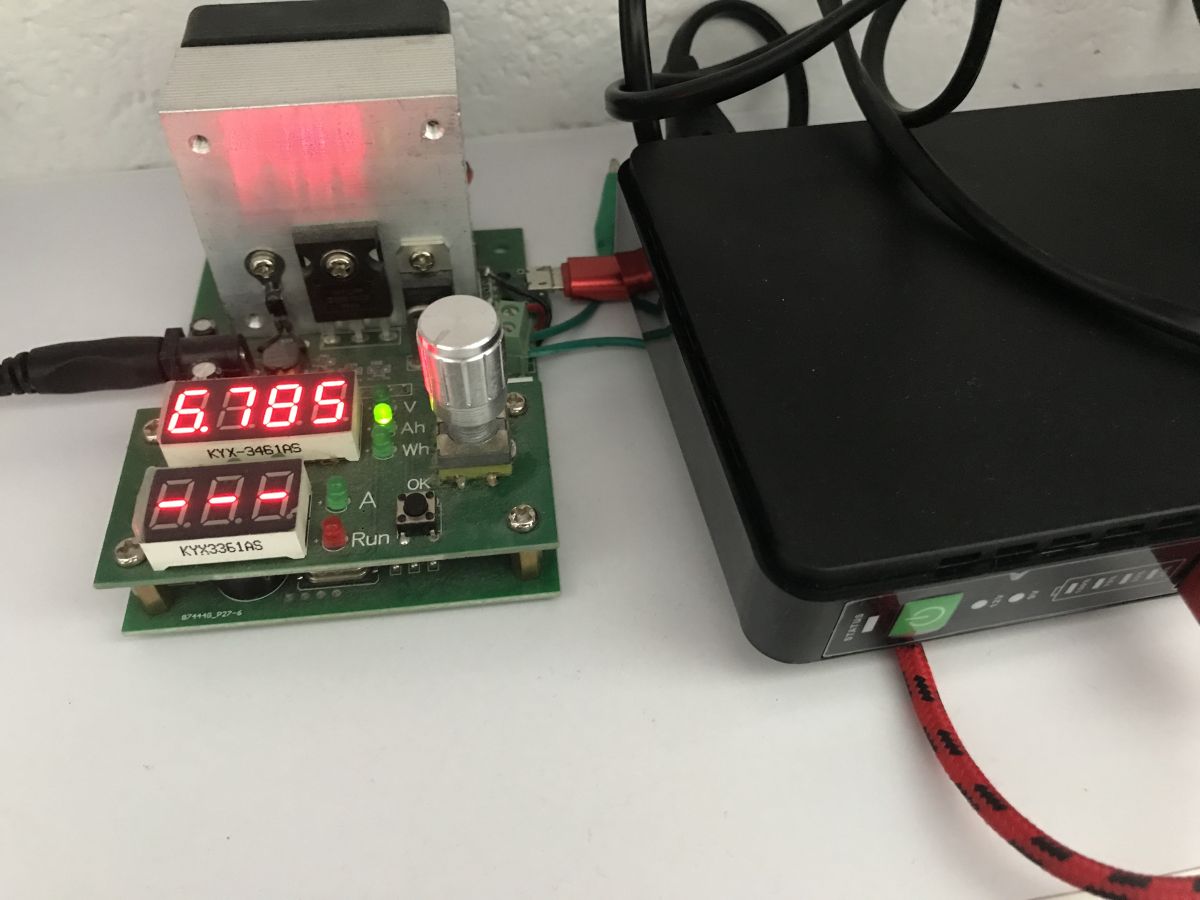
    UPS connected to a meter; red LED displays show 6.834 and 2.51, with cables on a desk Green circuit board with red LED readout 6.785 next to a black UPS unit and cables
    Similar results came out for both units, averaging around 6.8 Ah at 5 V, or 34 Wh. The battery in the middle was supposed to be 10400 mAh, but that's at 3.7 V. In theory it comes out to 38.48 Wh, but there are still losses on the inverters. I once estimated this for myself in a topic about powerbanks:
    Test of Baseus powerbanks - PPBD10K, PPBD20, PPBD30K - actual capacities
    I've taken myself a conversion factor there - 0.65. 6.8/0.65 = about 10.46 Ah per cell, ideal.

    In addition, I checked the charging - a good 24 watts this can draw from the mains:
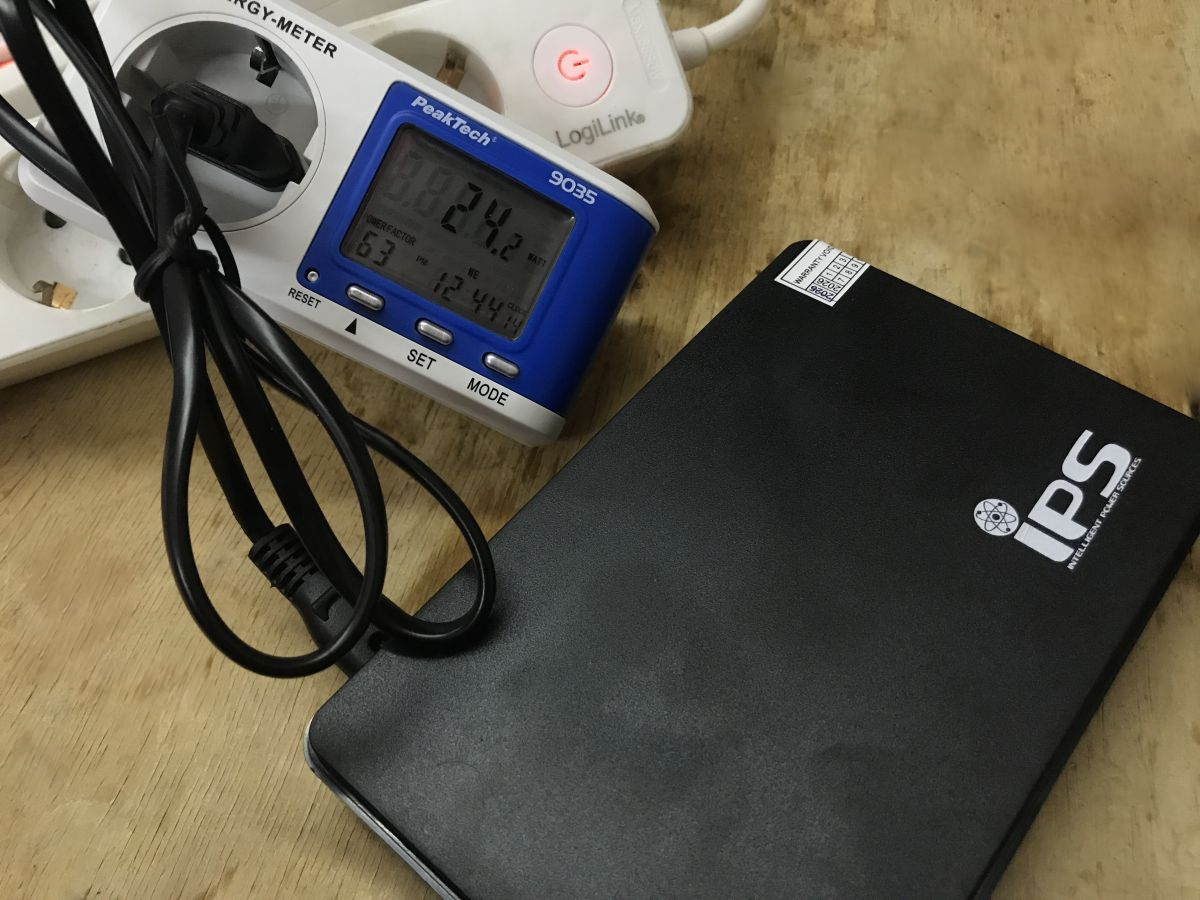
    IPS mini UPS on a table next to a PeakTech 9035 power meter and power strip
    Only when charging does the power drop to less than 1 W.
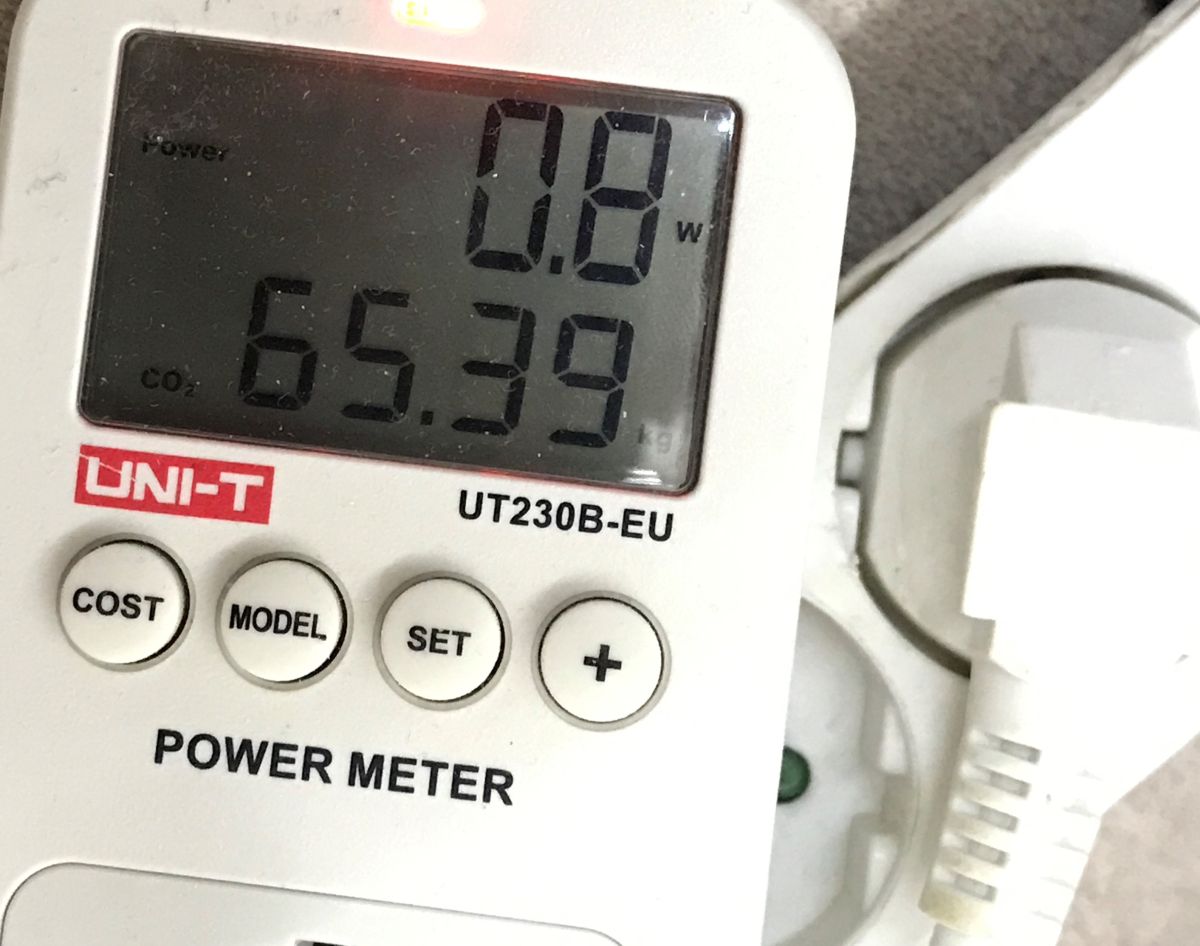
    UNI-T UT230B-EU power meter display shows 0.8 W and 65.39 kg CO₂
    I still have an interesting observation - the UPS indicates for some time that it is fully charged and yet draws increased power, i.e. in practice it continues to charge.

    In summary , the router UPSs fully deliver what the manufacturer promises. I measured their capacity and from my conversion ratio it came out to be practically 1:1 what it says on the label, and you also have to remember that I have included losses on the converters. The current capacity is not bad either. You can easily connect a router, a camera or maybe even a small Raspberry for home automation control, as long as you can fit in these 2 A from USB or use a step-down converter on the DC output.
    I'm a bit puzzled by this division into different powers, since the capacitance is the same. Are there really two different converters inside, one cheaper, the second more expensive, or is this just a marketing ploy? I haven't checked that, the whole thing is unlikely to be made to open conveniently, and I didn't want to damage the case visibly when I mounted it in its final location.
    What is your opinion? Is such a UPS for a router useful, do you use this type of equipment?

    Cool? Ranking DIY
    Helpful post? Buy me a coffee.
    About Author
    p.kaczmarek2
    Moderator Smart Home
    Offline 
    p.kaczmarek2 wrote 14333 posts with rating 12235, helped 648 times. Been with us since 2014 year.
  • ADVERTISEMENT
  • #2 21878141
    Jogesh
    Level 28  
    And what is the voltage on the PoE?
    It's a pity it couldn't be opened.
  • ADVERTISEMENT
  • #3 21882792
    Szyszkownik Kilkujadek
    Level 37  
    All nice, but what if the battery wears out and needs to be replaced?
    Classic ~230 V UPSs have an easily replaceable gel battery. And here?
  • ADVERTISEMENT
  • #4 21882856
    żarówka rtęciowa
    Level 38  
    Hello

    Szyszkownik Kilkujadek wrote:
    Classical ~230 volt UPSs have an easily replaceable gel battery.


    These are AGM batteries and do not have gel, gel batteries come with the word "gel".
  • #5 21883301
    Szyszkownik Kilkujadek
    Level 37  
    @żarówka rtęciowa you are right. I was referring to the AGM.
📢 Listen (AI):

FAQ

TL;DR: These mini router UPS units delivered about 34 Wh usable energy; the reviewer said they "fully deliver what the manufacturer promises". This FAQ helps router, camera, and Raspberry Pi users judge real capacity, current limits, and whether the 15 W or 30 W version fits their backup needs. [#21877314]

Why it matters: A small UPS only helps if its real watt-hours, output limits, and port types match the device you must keep online during a blackout.

Model Stated battery capacity Tested usable output Approx. price
UPS-15-POE 10400 mAh ~6.8 Ah at 5 V / ~34 Wh PLN 130
UPS-30-POE 10400 mAh ~6.8 Ah at 5 V / ~34 Wh PLN 190

Key insight: The two versions delivered similar usable energy, so the real buying decision is output power, not battery size. The 30 W model mainly buys more current headroom on the 12 V output.

Quick Facts

  • Both models state 4 × 2600 mAh = 10400 mAh, and the author measured about 6.8 Ah at 5 V, or roughly 34 Wh usable output after conversion losses. [#21877314]
  • The UPS-15-POE cost PLN 130, while the UPS-30-POE cost PLN 190, despite the same stated battery capacity. [#21877314]
  • On the tested 12 V DC output, the 30 W version delivered more than 2 A, while the 15 W version delivered just under 1 A. [#21877314]
  • During charging, the unit could draw about 24 W from the mains, then dropped to below 1 W only near the end. [#21877314]
  • The housing and manual show outputs for USB 5 V, DC 9/12 V, and PoE 12/24 V, targeting routers, USB devices, and PoE equipment such as cameras. [#21877314]

What actual capacity did the UPS-15-POE and UPS-30-POE deliver in testing compared with the advertised 10400 mAh?

Both units delivered very similar real capacity: about 6.8 Ah at 5 V, which is roughly 34 Wh of usable energy. The advertised 10400 mAh refers to the internal cells at 3.7 V, not to the 5 V output, so the measured result is consistent with converter losses and matches the label well in practical terms. [#21877314]

How do you convert a UPS battery rating of 10400 mAh at 3.7 V into usable Wh or 5 V output capacity?

Convert it to energy first: 10.4 Ah × 3.7 V = 38.48 Wh. Then account for conversion losses on the electronics. In this thread, the author used a 0.65 factor from earlier power bank tests, which makes 6.8 Ah at 5 V align closely with the stated internal capacity. That is why 10400 mAh on the cells does not equal 10400 mAh on the USB side. [#21877314]

Why does this router UPS show full charge for a while and still keep drawing higher power from the mains?

Because the charge indicator reaches “full” before the charging power truly falls to its final idle level. The author observed that the UPS still drew elevated power from the mains for some time after it already indicated full charge, and only later dropped to below 1 W. That means the visible full-charge state can appear earlier than the actual end of charging. [#21877314]

How can I test the current limit of a mini UPS like the UPS-15-POE or UPS-30-POE using an LD35 electronic load?

Use an LD35 artificial load to raise current gradually on the output you want to test. "LD35 is an electronic load that draws controlled current from a power source, letting you verify voltage stability, current limits, and shutdown behavior under repeatable conditions."
  1. Connect the LD35 to the USB or DC output.
  2. Increase current step by step while watching voltage.
  3. Note the highest stable current before shutdown or lockup. [#21877314]

What happens when the current limit is exceeded on these router UPS units, and how do you unlock them afterward?

They lock up and flash the LEDs when you exceed the allowed current by a clear margin. The author showed that the unit does not recover automatically; you must press the front button for longer to unlock it and return it to normal operation. That lockup is the thread’s main failure-mode observation during overload testing. [#21877314]

How much power can the 15 W and 30 W versions really supply on the DC 12 V output?

In the author’s 12 V DC test, the 30 W version supplied more than 2 A, while the 15 W version supplied a little under 1 A. That means the stronger unit clearly offers much more current headroom on the DC output, even though both models use the same stated battery capacity of 10400 mAh. [#21877314]

What is the PoE output voltage on this UPS, and how do the 12 V and 24 V PoE ports differ in practice?

The thread states that the UPS has two PoE outputs: 12 V and 24 V. The author did not measure the PoE ports directly, so the practical difference in delivered voltage under load was not verified here. The safe conclusion is only that the unit is intended to support two PoE voltage options for compatible devices such as surveillance cameras. [#21877314]

What is PoE, and how does a PoE output from a mini UPS power devices like IP cameras?

"PoE is a power-delivery output that sends DC power over Ethernet-style cabling, letting one connection feed compatible network devices, such as surveillance cameras, without a separate local power adapter." In this thread, the UPS is presented as able to power two PoE devices at 12/24 V, with cameras given as the main example. [#21877314]

How would battery replacement work in this kind of compact router UPS after the internal cells wear out?

The thread does not show a replacement procedure, and that is the key limitation. A later comment raised the battery-wear question, while the author had already said the case was unlikely to be made to open conveniently and was not opened to avoid visible damage. So replacement may be difficult or non-service-friendly in practice. [#21882792]

What is an AGM battery, and how is it different from a gel battery in classic 230 V UPS systems?

"AGM battery is a sealed lead-acid battery that stores electrolyte in absorbent glass mat separators, while a gel battery uses gelled electrolyte; they are different battery types, even though both appear in backup-power equipment." In the thread, one commenter corrected another by stating that classic UPS units use AGM, not gel, unless the battery is explicitly marked gel. [#21882856]

UPS-15-POE vs UPS-30-POE: which one is the better choice for a router, camera, or Raspberry Pi if both use the same stated battery capacity?

The 30 W version is the better choice when your device needs more current headroom; the 15 W version is the cheaper choice when it does not. Both models showed about 34 Wh usable energy, but the 30 W unit exceeded 2 A at 12 V, while the 15 W unit stayed just below 1 A. The thread therefore points to output capability, not battery size, as the main differentiator. [#21877314]

What is an LD35 artificial load, and why is it useful for testing USB and DC outputs in small UPS devices?

"LD35 is an artificial load that simulates a device by drawing a set current, which makes USB and DC output tests measurable, repeatable, and easy to compare across power sources." The author used it to check whether the UPS outputs matched the current claims on the case and to observe overload behavior when the limit was exceeded. [#21877314]

How long can a 34 Wh mini UPS realistically keep a 9 V or 12 V router running during a power outage?

A 34 Wh UPS can run a load for about 34 ÷ power in watts hours. Using only thread numbers, that means about 2.3 hours at 15 W or about 1.1 hours at 30 W in ideal terms. Real router runtime can be longer if the router draws less, but the thread does not give a measured router wattage, so a watt-hour calculation is the most accurate answer here. [#21877314]

What should I check before powering a router, surveillance camera, or Raspberry Pi from a USB, DC jack, or PoE output on a mini UPS?

Check the required voltage, the current draw, and the correct output type first. This UPS offers USB 5 V, DC outputs for 9/12 V router use, and PoE outputs at 12/24 V. The thread also warns about current limits: the 30 W model handled over 2 A at 12 V, while the 15 W model stayed below 1 A, and overload causes lockup with flashing LEDs. [#21877314]

Why might two router UPS models have the same battery capacity but different advertised power ratings, and could that come from different internal converters?

Yes, different internal converter stages are the most plausible explanation mentioned in the thread, but it was not verified by teardown. The author explicitly questioned whether the models use two different converters or whether the split is partly marketing, because both declare the same 10400 mAh battery pack while showing very different current capability at 12 V. [#21877314]
Generated by the language model.
ADVERTISEMENT