logo elektroda
logo elektroda
X
logo elektroda

KNX - How to connect a weather station in a hotel project with 12 rooms?

sebusebus 5829 5
ADVERTISEMENT
Treść została przetłumaczona polish » english Zobacz oryginalną wersję tematu
  • #1 13185831
    sebusebus
    Level 2  
    Posts: 3
    Welcome.

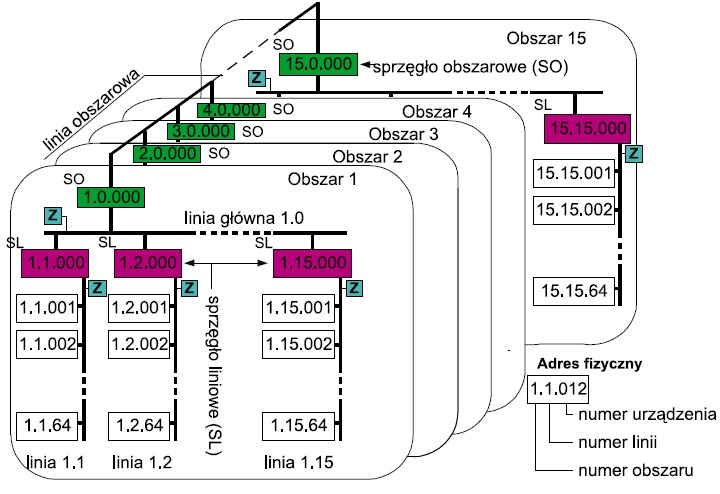
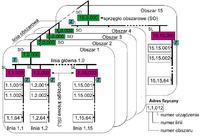
    Here is a typical topology diagram of a KNX system for which I have a question.
    KNX - How to connect a weather station in a hotel project with 12 rooms?

    I am drawing up a theoretical design that I would like to see reflected in practice. The example hotel has 12 rooms. Well, when selecting the equipment for the 12 rooms, I was thinking of including them in one area, with the individual rooms arranged on the main line (1.01.x - 1.12.x). One of the devices that will appear is the weather station, so the device that all the rooms will work with. And now the question.
    Should this station be routed on a separate bus on the main line (1.13.1), thus locating an additional power supply, or can it be attached to an existing bus (e.g. 1.01. 64 )?
    Greetings
  • ADVERTISEMENT
  • #2 13187849
    klusekbb
    Level 10  
    Posts: 10
    Help: 1
    You can connect to the existing bus, but such a solution would be cumbersome and not very practical. I suggest running a separate bus on the main line.
  • ADVERTISEMENT
  • #3 13188073
    sebusebus
    Level 2  
    Posts: 3
    It would be more practical to plug in the existing bus and save on an additional power supply. Please make sensible contributions from those who have had some contact with KNX.
  • ADVERTISEMENT
  • Helpful post
    #4 13189260
    wienob
    Level 10  
    Posts: 3
    Help: 2
    But why are you combining? Optimise! How many of these devices do you have in total for 12 rooms? 20? 30? 40?

    You can use combo actors, roomcontrollers and you will have 1 device per 1 room.

    Up to 63 devices you put everything on one line, including the weather station. Stick to the KISS principle.

    There is only one exception:
    if you are very concerned about the security of the installation, the resistance to its sabotage. In that case, you must isolate each room from the rest of the installation. This will be very expensive (each room with its own power supply and coupling). It all depends on your assumptions and the requirements of the theoretical investor, who, I will tell you straight away, will want the cheapest installation :)

    I work with KNX on a daily basis, I have a lot of experience in it ;] Theory by theory, practice by practice unfortunately (it all comes down to cost).
  • ADVERTISEMENT
  • #5 13191030
    sebusebus
    Level 2  
    Posts: 3
    Thank you very much for your reply.

    So the device can be attached anywhere and line selection is just a matter of addressing?

    I completely agree with you, however this is a theoretical project so I am more concerned with clarity than cost. Hence I will add it to the existing line and leave the rooms separate.

    You wrote about room controllers and I have a question about them, specifically this one:

    http://www.knx-gebaeudesysteme.de/sto_g/Engli...MANUALS/RMS_21_PH_PL_V1-2_2CDC514046D4003.PDF

    Does it fulfil the same role as regular actuators? What puzzles me is that it doesn't need 230V voltage like the others.

    Greetings
  • Helpful post
    #6 13196835
    wienob
    Level 10  
    Posts: 3
    Help: 2
    Yes, it performs the same role as the individual actuators with one disadvantage - it is a central device, so if it goes down, you have no control over the whole room. Neither outputs nor inputs work. If you use separate KNX devices (distributed inputs, distributed outputs) you have more resistance to possible failures. If the binary input of a switch at the bedside "fails", at most you won't be able to switch on the reading lamp, but the heating and blinds will continue to work. The choice is yours, the solution will depend on your assumptions.

    And the fact that this device does not need 230V is just cause for rejoicing :) Easier and cheaper to install, greater reliability :) fewer cables.... KISS ;]

    As for addressing: you address the device as it is physically connected (as the name suggests: physical address). Of course, if you have one line and you program the devices as 1.2.3, 1.3.4, 2.4.9 then they will see each other and work, but it will introduce "organisational" chaos, you won't be able to figure out yourself later what is connected where.
ADVERTISEMENT