

logo elektroda
logo elektroda
X
logo elektroda

CO valve control with Sterr RTW101 wireless programmer - tips and optimisation

DarkowKor 2391 4
ADVERTISEMENT
Treść została przetłumaczona polish » english Zobacz oryginalną wersję tematu
  • #1 15100248
    DarkowKor
    Level 10  
    Hi,

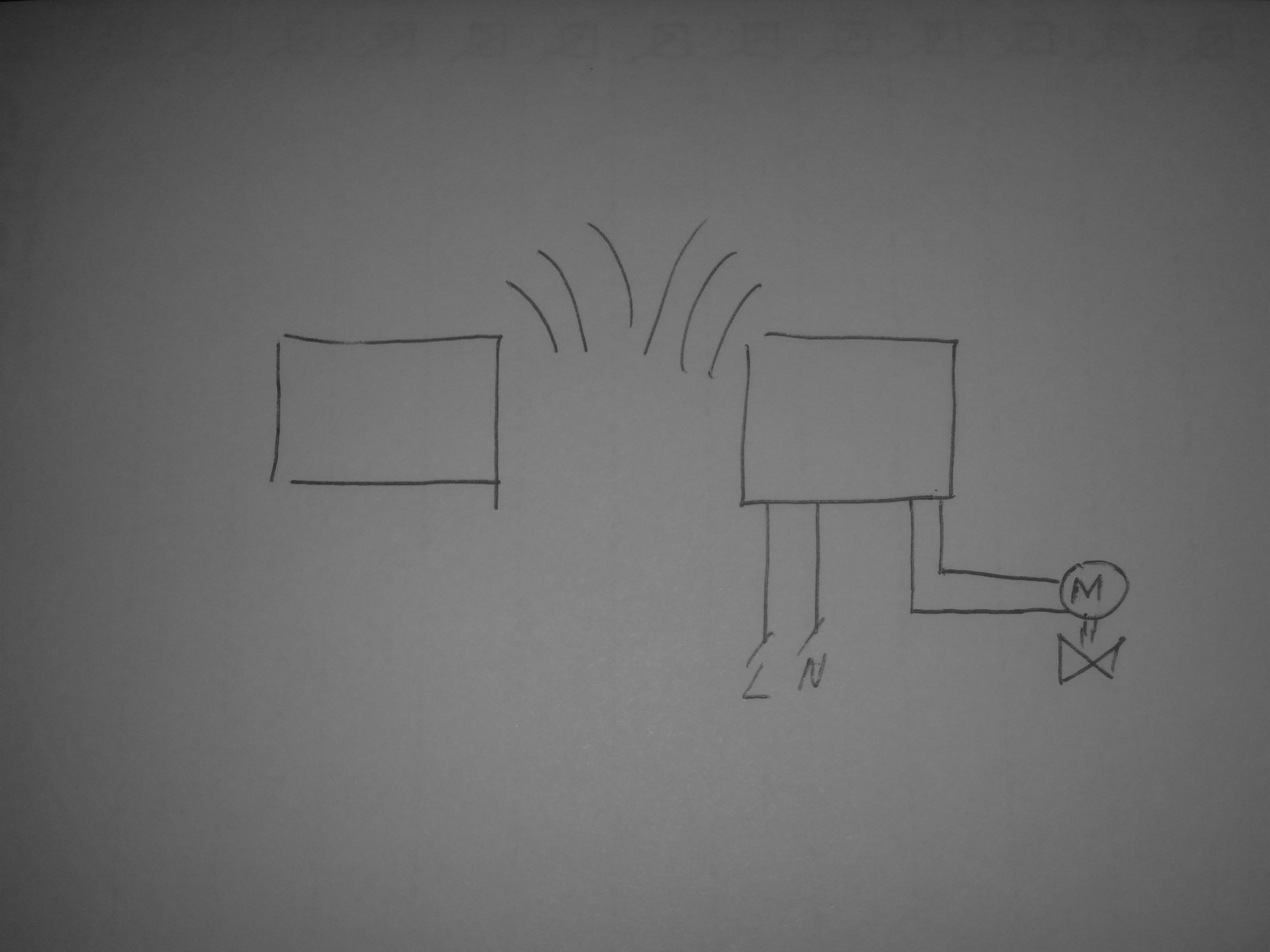
    I would like to put an additional valve on the central heating so that I can cut the heating when I go away, or reduce the temperature at night.
    To do this I want to use a wireless programmer. To its receiver, I want to connect a solenoid valve with actuator and spring (On/Off), controlled on 230 VAC, two or three wires.
    Since it is a valve on water, it would be sensible to connect it to a differential, correct? Should the pipe also be connected to PE?
    Does anyone perhaps have any ideas on how to further optimise this? I'm talking about using elements like how a valve with an actuator will use less current than one with a solenoid.
    Has anyone had to deal with the Sterr RTW101 programmer?
    http://sklep.sterr.pl/rtw101-termostat-pokojowy-bezprzewodowy-regul,3,1,1
    Can you recommend a valve? Does it matter if it's NC or NO since you can connect both to the programmer?
    Thanks.
    CO valve control with Sterr RTW101 wireless programmer - tips and optimisation
  • ADVERTISEMENT
  • #2 15211324
    kamil12239
    Level 17  
    DarkowKor wrote:
    Does anyone perhaps have any ideas on how to further optimise this? I'm talking about using components like how a valve with an actuator will use less current than one with a solenoid.


    The controller will keep the output contact open all the time when the set temperature is exceeded, i.e. if you give an actuator which will open or close the water access will be powered all the time. The question is whether the actuator will have some kind of overload protection in it? If you have one in mind, let me know.
    In my opinion a system with an electro-valve would be better. Let's say you are home more often than away. In this case you would give a NO valve because when you are there it has to heat and the solenoid will not draw current. And when you leave, you will override the solenoid and shut off the water supply. Such a valve consumes somewhere around 5W of power, which is not much, is it? With an NC valve you have a closed valve and then when you are at home it has to be powered all the time to keep it open.

    DarkowKor wrote:
    controlled at 230 VAC, two or three wires

    If controlled 230 then it should have three wires the coil has three inputs: power and protection, if for example you want 24V then either through a power supply or through a transformer but this is an extra cost.

    DarkowKor wrote:
    Since this is a valve on water, it would be sensible to connect it to a differential, correct? Should the pipe also be connected to PE?


    As in a boiler room it is mandatory that there should be a differential on each circuit.
    If the installation is new professionally done then you should have equalisation connections and to these connections the Pipe should be plugged in.
  • ADVERTISEMENT
  • #3 15225857
    DarkowKor
    Level 10  
    Thank you for taking up the subject after such a long time.

    I want to add a valve on the CO "district heating" pipe, so I don't have a boiler room and therefore don't know if the pipes are earthed or not. The building is from 2002, so I hope they are.
    As for the valve, I was thinking of this http://washservice.pl/pl/p/Zawor-kulowy-12-cala-mosiezny-z-silownikiem-napedem-A80/130 There are 3 and 4 wire versions. The latter have a control, so a high signal from the control will not cause overload or overheating.

    Greetings.
  • ADVERTISEMENT
  • #4 15304972
    Jacek Rutkowski
    Level 28  
    Welcome,
    you can use any version of the valve. The 2 wire version is in the second class of insulation and does not require grounding....
ADVERTISEMENT