





logo elektroda
logo elektroda
X
logo elektroda

CH heating - Improving the operation of the CH - additional control

mza02 3222 8
ADVERTISEMENT
Treść została przetłumaczona polish » english Zobacz oryginalną wersję tematu
  • #1 15218000
    mza02
    Level 11  
    Welcome,

    In my parents' house, a central heating system has been installed, with a Viessman boiler and a FERROLI distributor (1 low temperature floor circuit, one for radiators)

    I will not elaborate on how badly such a setup can be messed up, and on the lack of competence of both the Viessman staff and the supposedly ferrorla service technician.

    Anyway, I managed to put it together - one problem remained.

    The DADO (FERROLI) electronics control the boiler via a voltage-free on/off.

    A voltage-free COM/NO from the room thermostat goes to the electronics. And this is OK.
    Unfortunately, voltage thermostats in the bathrooms are installed (supplied with 230 and controlling the valves).

    Currently, a bridged COM/NO from the room thermostat goes in place of the thermostat plug-in.

    The result is that the underfloor heating only works when there is a need for heat in the radiators, which is not comfortable but can be done in a pinch.

    I can't connect bathroom thermotats, for obvious reasons (voltage).
    I don't want to replace these thermostats, as this control will be an additional security and separation for 2 bathrooms.

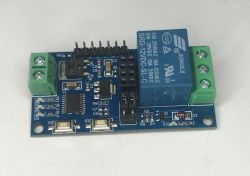
    The idea is to connect a relay with a 230 V coil to the bathroom valve control location (in parallel). And even 2 (to two places) outputs from the relay in parallel will go as to the DADO control as a bathroom thermostat. It must be voltage-free.
    In the relay circuit, only the short circuit/not is important - no currents will flow there.

    The result will be independent control of the heating in the bathroom and the radiators in the house.

    Question: using e.g. Relay 230V AC 8A - 2 x NO NC - changeover contacts
    (http://sklep.megapleszew.pl/p/pl/398/przeka%C5%BAnik+230v+ac+8a+-+2+x+no+nc+-+styki+prze%C5%82%C4%85czne.html)
    will it be good?
    Won't it introduce too much load on the coil side?
    Will it be reliable (for years)?

    Maybe other ideas implementing this idea?
  • ADVERTISEMENT
  • Helpful post
    #2 15218227
    Robsonem
    Level 12  
    Hello ,
    as usual a question begs a question :) .

    First, however, a truism:
    Any on/off control of a heat source with a possible variable flow temperature is not the happiest solution, and especially if the boiler (here this Viessmann) is condensing (you lose out on condensation and gas savings - manually setting its operating temp with an allowance/reserve to what the circuits might need at the expected outside temperatures, for a whole period, before approaching the boiler again and manually correcting the setting again). If it's condensate, you might want to check what Viessmann offers on the input in addition to the on/off control, Isn't there an Opentherm like DADO? In an ordinary (low-temperature) boiler, such a control would also be better, as it does not force the boiler to operate at the highest parameters even if they are not required at the moment, thus minimising losses

    Do the thermostats mentioned cut off the underfloor heating in the bathroom or the radiator loops?
    As far as the underfloor heating system is concerned, I would like to remind you that it is so time-consuming that it should operate continuously (approx. 2 h reaction time to temperature change!!!), especially if it is the only source of heat in the room. Of course, I allow it to be switched off when it assists the heating and I allow it to be switched off for longer periods when the room is used (according to the switch-offs) intermittently. :)

    However, if the thermostats in the bathrooms turn off the radiator heating - you can, of course, connect via relays their request for heat in parallel with the request from the DADO.
    For a complete understanding of the operation of the system, however, it would be useful to know from where the parameter goes to the bathrooms - if from the DADO: then it is calling for heat and an additional call from the bathrooms should not contribute anything....
    If the bathrooms are the "parasite", then the solution with the relays will work, but the radiators will get a rather high parameter, because it will be the same as the temperature set on the boiler

    As far as relays are concerned - their coils have such small powers that they should not overload the contacts of 230V thermostats (these probably have a large/much higher load capacity than the relay coil current, indicated on the device and/or in their instructions) ...
  • ADVERTISEMENT
  • #3 15218358
    mza02
    Level 11  
    Truism. I have not described everything.
    The 100-W boiler is weather connected, so its output is controlled by the temperature from outside.
    Apparently the boiler: VITODENS 100W has the option: an OPEN Therm device, but both the DADO and VIESSMAN service stated that this would not work together and recommended configuring the Weatherman to VIESSMAN, on/off from DADO).

    (My first thought was to connect everything to the DADO and let it control the boiler).

    Second question:
    There are two circuits: a low-temperature floor and a radiator circuit.
    The room thermostat (located in the hallway) controls ALL the radiators via the DADO (radiator).
    And currently also the underfloor (bridge) via the DADO. i could not connect the bathroom ones as they are not on/off (low temperature).

    The low-temperature circuit only applies to the underfloor and the separation between the upper and lower bathroom is via valves which are controlled by thermostats in the upper and lower bathroom. (The thermostats only cut off the underfloor, the radiators have a person circuit).

    The DADO has a place for an on/off thermostat that will control this (currently bridged).

    I can make a jumper there and then the circuit will run 24 hours - but why?
    You don't need to heat at night - you can start at 6:00 and by 8 the floor will be warm.
    The thermostats have a 24H setting with night setback.

    AHa, and to quote my mum: I want a warm floor in autumn and I don't want a warm floor, I have to have heat in the house ...
  • Helpful post
    #4 15218784
    Robsonem
    Level 12  
    Okay - so Vitodens is, as I "googled" condensate (this time the name didn't lead into the raspberries :) ) The solution with running the boiler according to its weathervane and the rest of the control "on a parasite" as I call it - is not entirely bad - the downside of this solution is that the boiler 7D/24H maintains the parameter - but this is actually how the "pure" weathervane works. On the other hand, I wonder how it is with this "Open"? - such a nice protocol, nomen omen open, everyone wants it, but when it comes to it, it doesn't work? - i wonder if the professionals questioned know what they are talking about - I have seen too much in my life, so I sometimes doubt it.... :)

    To control the underfloor - as much as possible pass the signal from the valves via relays (potential-free) to the DADO - the gain is that the pump for the underfloor will only run when it is needed (even if the radiator thermostat is not calling for heat). Mum "who knows what she wants" will be pleased.... :D .

    If the OPENTHERM had not come out (I add the instructions from Ferroli and the instructions, unfortunately in a foreign language, on how to switch on the "opener" to the Vissmann - if this were to help) I would have combined whether, for example, by means of another 2 relays (potential-free) not to put the boiler out of operation: no voltage on the DADO pumps = no need for boiler operation. However, directly with the weathervane connected, I do not know if any of the boiler jumpers will cause the boiler to stop on the central heating. - you can ask Vissmannow if they know 100%. I have found the Vitodens 100 W installation and service manual with the layout of its terminals, also included. Eventually, to achieve boiler shutdown on the central heating system, you can also trick the weather sensor with a resistor - telling it: it's summer. Beware of frost!!! So that such a switch-off does not, for example, cause some part of the installation to freeze....
    Switch the resistor on accordingly instead of the weather sensor. NOTE: depending on the programme, the boiler may react to this with a delay or "catch" a sensor error if it notices an incorrect resistance value during the switchover
    Attachments:
    • IMIS_Vitodens_100-W_WB1B_9-35kW__02_2008_.pdf (4.99 MB) You must be logged in to download this attachment.
    • vitodens_100_ot-module_ii.pdf (635.63 KB) You must be logged in to download this attachment.
    • DADO_Ferroli_Instrukcja.pdf (1.26 MB) You must be logged in to download this attachment.
  • ADVERTISEMENT
  • #5 15221118
    mza02
    Level 11  
    Thanks again Robson.
    I followed the OT trail as early as yesterday. phone call (another one) to Vieśman - well yes it supports OT but on the Polish market we don't release OT devices - need to check.

    I couldn't work, at 3pm at my parents'.
    I prepared the relays for the test.
    Following the DADO instructions, I connected the on/off relay and hooked up the boiler to the OT.

    And it works - i.e. DADO reports no errors. OT is a two-way protocol so they are probably talking about something.

    In summary, the boiler is connected to the weathervane and to the DADO via OT.
    To the DADO still a radiator thermostat (one), and floor thermostats. Everything works well (in the DADO you can view the status of the thermostats on/off).
    The low temperature pump starts according to the status of the bathroom thermostats, the calorifer circuit pump, lives a life of its own, also starts when the floor one is running.

    It seems to me that it should be OK, but I get the impression that the boiler only implements the weather policy.
    (7D/24H maintains the parameter - if that means keeping the TEMP constant according to the curve, then the OT does contribute something :-) )

    Better behaved than yesterday after the signal from the underfloor the temperature on the boiler 40-45 and one flame. Which is OK.
    However, after the signal from the radiators somehow nothing much has changed (outside +11, so maybe that's a good thing).
    However, there is no apparent dependence on the status of the thermostats in the boiler operation. I will still wait for winter.
    Maybe not quite, it happened that the temp on the boiler dropped to 36-37 and it did not fire (no flame on the display) when off. However, switching on any circuit did not affect the furnace quickly, but with a delay of a few minutes.
    I know it is not like in electric heating (immediately and often). We shall see.

    The ultimate test would be to connect the Weather Sensor to the DADO :-) . I don't know if the Vie¶man weather sensor can be connected to the DADO (the original one for the DADO is 1,5kpln !?).

    There was another complication:
    The cables from the thermostats are routed to a location away from the boiler. Where the underfloor controls the valves of the circuits.
    The sensor from the radiators is connected to a cable that (now goes to the DADO). I had to run an extra cable for the underfloor to the DADO. And it doesn't like it.

    A 3-core cable is available. Question:
    Can I connect 2 sensors/transmitters on/off with a 3-core cable.
    My tests on the DADO confirm this: shorting x1-x2 (o1x1 o2x2) does not affect the indications for the sensors. Shorting o1-o2 causes both sensors to indicate the same thing.
    But I ask if there is no long term contraindication and if the described situation is permanent (no change of polarity?).

    If you can then the parents will be happy.
  • ADVERTISEMENT
  • Helpful post
    #6 15221430
    Robsonem
    Level 12  
    Connecting the 2 control contacts via a 3-core cable is 99% possible. To know how to do it right, it is best to find with an ohmmeter the common contact on the DADO inputs = those two terminals which show a short circuit when the device is switched off (external relays also disconnected :) ). Under these two (even one is enough as there is a nice short circuit) the common wire of both relays. The other two wires respectively to the relay contacts indirectly shorted by the 230V~ signal. If this works, there should be no change (polarity) after time or other negative effects - maybe you have already managed to connect it this way - to be checked ...

    Weather sensor from Viessmann to Dado? It's a lottery what characteristics are used there. From the description of the DADO and without checking the Viessmann in the dark both are NTC sensors. You can already connect the one from the Viessmann to the DADO - from the diagram it is a low voltage sensor - you won't break it - and the first test to see if it is OK will be if the DADO shows a temperature close to the current temperature on it - the next is to check the above at a (preferably significantly) different outside temperature - then you have won the lottery of using sensors with the same characteristics for both units.... :)
    Good luck in satisfying :)

    Added after 1 [hour] 12 [minutes]:

    By the way - temperature sensors are just resistors suitably sensitive to temperature changes. Having the characteristics from the manufacturer or determining it experimentally (plugging in several different resistors and reading the indicated temperature), it is possible to replace practically every sensor of such a system with another of similar characteristics. I am not talking, for example, about special sensors, e.g. very fast ones (industrial temperature stabilisation systems), or very accurate ones (laboratories), or ones for special (extreme) temperatures. These prices for sensors are usually a hefty margin for the product owner, and as a curiosity I will mention that I heard how a sensor from a fridge probably from Samsung was a good match for the weather sensor of one of the leading "boiler makers" :P Of course the prices were different :) I will point out that sensors measuring water and sensors measuring air usually have different characteristics (because the range of operation is different)
  • #7 15224267
    mza02
    Level 11  
    Viešman's OpenTherm is a sham. The service is not bad - we don't support OT - then why is it in the instructions?
    And yes the connection shows no errors, but the only thing it causes is the furnace running continuously on the weathervane.
    I'm going to change the connection to a contact on/off - fortunately DADO has this option.
    Transmitting 2 signals on a 3 wire cable works. :-)

    The other thing is the cool thing about these relays. My 2 channel distributor (underfloor and radiators) and thermostat based installation can be connected to DADO for any number of heating zones and it works beautifully. And it only costs 20pln per zone.

    Of course, you also need a cable connection.
  • #8 15224388
    Robsonem
    Level 12  
    I don't have to be right, but from experience - "we don't support OT" means that they don't have a human being at Vissmann who knows "what it comes with". They made the connector, perhaps outsourcing the interface development to an external company, and as long as they don't have 'in-house' OT controllers (hardly attractive to implement marketing-wise) then they don't want to support it further by shunting customers onto their dedicated (usually more expensive) products.
    Perhaps the OT without the advice (knowledge) of the product owners works fine, it's just not clear without their support how it affects the boiler automation modes.

    Let me remind you - in general, the weathervane works precisely in such a way that a parameter is systemically prepared according to the weather curve in accordance with the most demanding circuit. All in all, there is no room here for turning off the pump = stopping the boiler - apart from the "summer" mode or intentional shutdowns e.g. at night . Thus, switching the OT on to the boiler, as long as you do not switch off the weathervane in the boiler, may not interrupt the boiler when the circuit/circuits via the OT are not crying out for heat - because the OT as a rule is used to connect a modulating controller.... If this is how the boiler sees it (this is DADO's intention as it appears to me from the description) without extensive automation of its own, providing for e.g. night-time lowers or shutdowns on the basis of this OT thermostat, then without turning off the boiler's weathervane, it may not react to suggestions from the OT

    YES! You can build zones yourself based on simple relays - such simple automation can work in many cases - IN THE RELAY IS POWER! :)

    PS. Your "empirical" approach to the matter is an excellent resource for Viessmen and non-Viessmen alike on how to work effectively with OpenTherm - you have more than one beer with them :)
  • #9 15519124
    mza02
    Level 11  
    The problem has been solved:
    Having a 2-channel distributor (floor and radiators) and a thermostat-based installation, any number of heating zones can be connected to the DADO and it works beautifully. And it only costs 20pln per zone.

    The result is independent control of the heating in the bathroom and the radiators in the house.

    Unfortunately, Opentterm does not work (DADAO and Viessman).

    But it's fine - the boiler is controlled by the weathervane and is switched on when needed by a thermostat for the radiator circuit and/or by two independent thermostats for the floor circuit. You can connect as many additional zones (thermostats) as you like.
ADVERTISEMENT