logo elektroda
logo elektroda
X
logo elektroda

Integration of SATEL INTEGRA ETHM-1 with the ITEAD SONOFF S20 module

Duch__ 13647 16

TL;DR

  • An ESP8266-based SONOFF S20 socket was reprogrammed to switch 230V power according to the arming state of a SATEL INTEGRA 128 alarm system via ETHM-1.
  • Custom Arduino IDE firmware polls the SATEL ETHM-1 for zones, inputs, outputs, and faults, computes CRCs manually, and ignores invalid replies.
  • The processor handles only one TCP/IP connection at a time, and the author randomizes retry intervals after receiving a BUSY response.
  • When the programmed zone is armed, the relay turns off and cuts 230V power; when disarmed, it turns the receiver back on.
  • Tests showed correct operation, and a watchdog reset is included as backup; the ESP8266 must be powered from 3.3V, with TX/RX at the same level.
Generated by the language model.
ADVERTISEMENT
Treść została przetłumaczona polish » english Zobacz oryginalną wersję tematu
📢 Listen (AI):
  • Integration of SATEL INTEGRA ETHM-1 with the ITEAD SONOFF S20 module

    Hello.

    Today presents a device that I programmed a few days ago. It is used to automatically switch off the 230V receiver after arming the SATEL INTEGRA 128 alarm system.

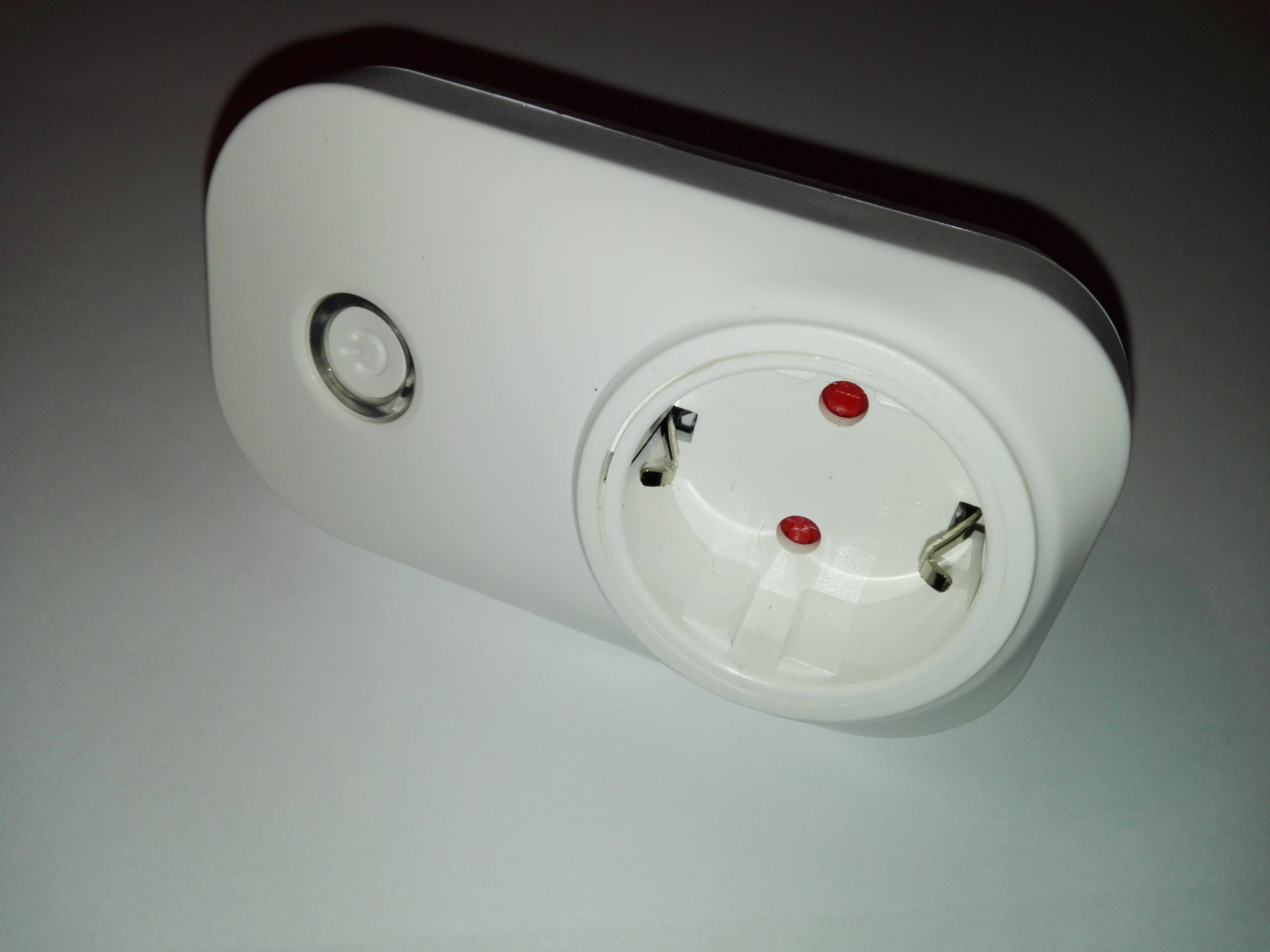
    For the implementation of the project, I used a ready-made SONOFF S20 socket from ITEAD, purchased for ALLEGRO. From the very beginning, I knew that the original embedded ESP8266-12E software goes into oblivion and replaces it with its own software written in the ARDUINO IDE.

    The principle of operation is as follows:
    The processor connects to the SATEL ETHM-1 module. It sends a query to the ETHM module about the status of zones, inputs, outputs and failures, calculating the CRC of data to be sent, and after receiving the data, it checks whether the CRC of the received data is correct. I do not use ready-made frames. The processor counts everything on foot, I only indicate to him which command of the Integration protocol I am asking about. Incorrect data is ignored.

    After receiving the answer from the ETHM-1 module and its verification, a transition to control the relay takes place. In my case, if the zone programmed in the module is armed, the relay is turned off and 230V is cut off from the connected receiver. The opposite situation occurs after disabling the standby - the 230V receiver is turned on.

    The ranges of the random polling time of the ETHM-1 module at the time of arming and disarming are set individually. Thanks to this, when the alarm system is armed, I can ask about the arming status more often than when disarmed.

    Unfortunately, the ETHM-1 module is able to handle only one TCP / IP connection at a time. If at a given moment another device tries to ask for integration, the answer is "BUSY" - BUSY.
    The ESP8266 processor detects this state, randomizes the time after which it re-joins.

    Each connection with ETHM-1, regardless of whether it is successful or not, ends with disconnecting from the WIFI and waiting for a specific randomly selected time. After the time has been counted down, the procedure is repeated.

    Briefly, the procedure works as follows:

    Connection with WIFI -> Connection with ETHM-1 -> Asking questions -> Disconnecting from ETHM -> Disconnecting from WIFI -> Relay control -> Waiting for the drawn time.

    Signaling by LEDs:
    Blue on: relay is activated
    Green slowly blinking: pause time measurement
    Green fast blinking: connecting to WIFI
    Green goes out briefly: ETHM BUSY status detected

    The tests carried out so far indicate the correct operation of the system, but just in case I used the software WATCHDOGA - in the event of an error, it should reset the processor.

    Time for photos and a video of the action:
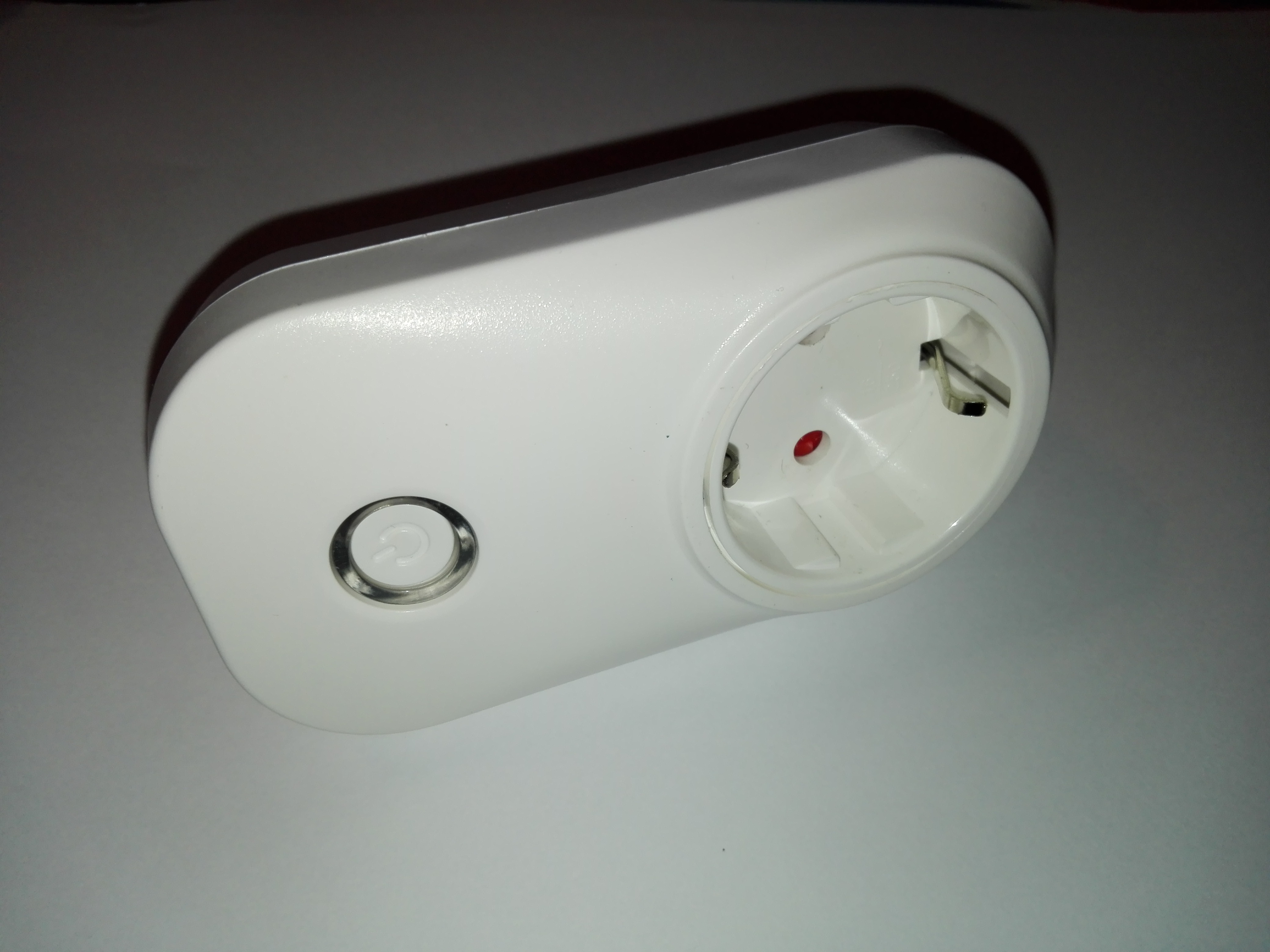
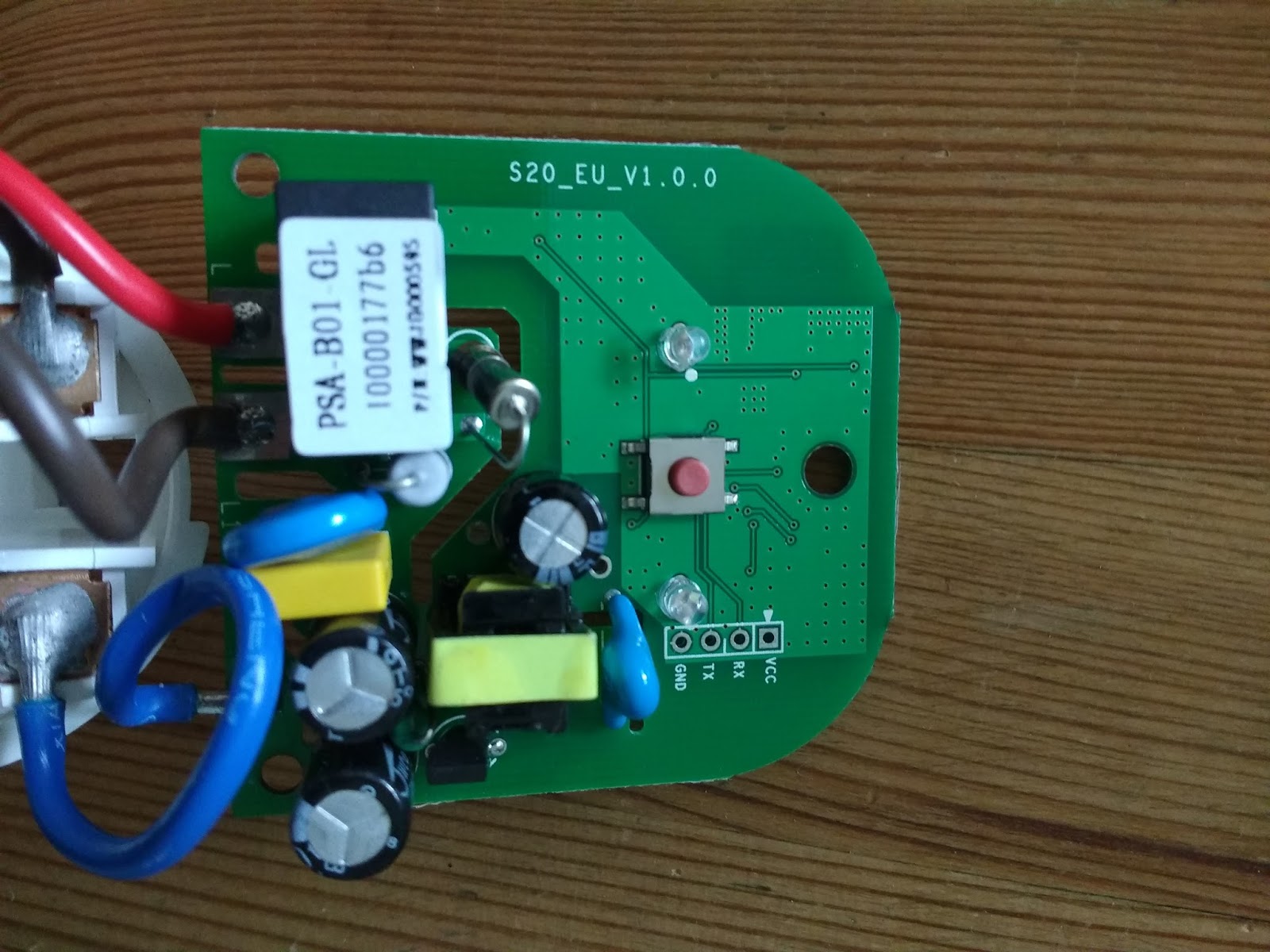
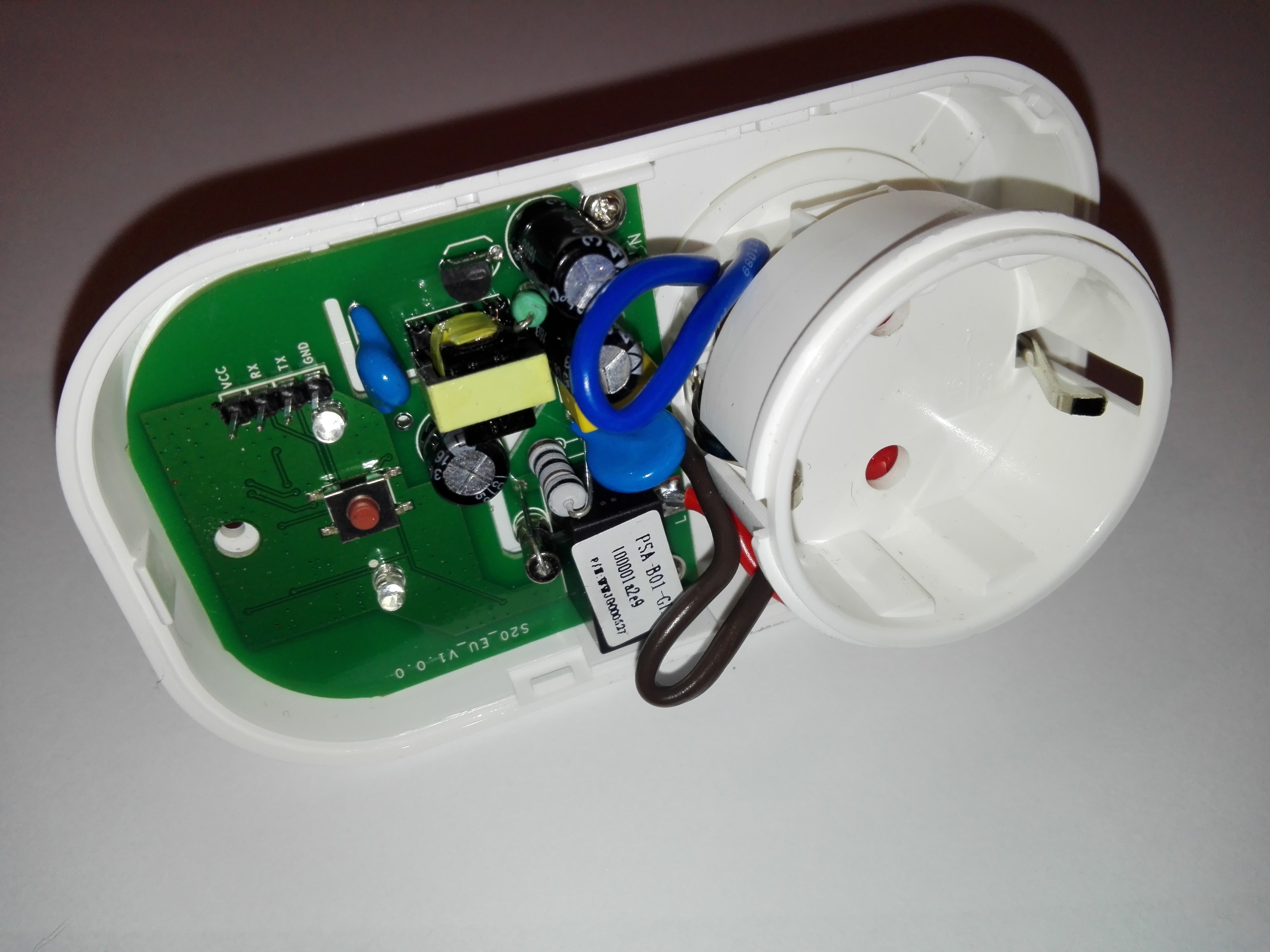
    Integration of SATEL INTEGRA ETHM-1 with the ITEAD SONOFF S20 module Integration of SATEL INTEGRA ETHM-1 with the ITEAD SONOFF S20 module Integration of SATEL INTEGRA ETHM-1 with the ITEAD SONOFF S20 module


    In the attachment, soft ready to be uploaded after entering your configuration data. I would like to remind you that the processor must be powered from 3.3V, and the TX and RX lines also tolerate the same voltage level.

    Feel free to comment.

    !!!!! ATTENTION !!!!!
    THERE ARE TENSIONS DANGEROUS TO HEALTH AND LIFE IN THE PRESENTED SYSTEM.
    I CANNOT BE LIABLE FOR LOSS OR DAMAGES ARISING FROM THE USE OF THE INFORMATION CONTAINED IN THIS SUBJECT.
    \


    .................................................. ..........
    mod: suvorov
    Also worth reading:

    Satel Integra - system installation and configuration - selected issues


    I invite you to read the other guides, highlighted topics and articles on security systems :
    Stationary security. Alarm systems, Cameras, Intercoms, Gate and roller shutter drives, Home automation. Highlighted topics and guides.
    If you cannot find the answer to your question in the above-mentioned topics, please visit the forum
    https://www.elektroda.pl/rtvforum/forum77.html


    I also encourage you to visit the General Guides section, where you will find materials from other forum sections, including those for those who are starting their adventure with electronics. :
    https://www.elektroda.pl/rtvforum/forum510.html
    Attachments:
    • SATEL SONOFF S20.txt (16.17 KB) You must be logged in to download this attachment.

    Cool? Ranking DIY
    About Author
    Duch__
    Level 31  
    Offline 
    Duch__ wrote 2338 posts with rating 1597, helped 33 times. Live in city Opole. Been with us since 2004 year.
  • ADVERTISEMENT
  • #2 16292527
    skyguy
    Level 15  
    Posts: 321
    Help: 19
    Rate: 185
    Board Language: polish
    It looks pretty good, congratulations on the project, it took some work, it cost both modules to get along.
    One question, why didn't you do it with the dedicated socket from Satellite ASW-100 E after ABAX?
    Is it about distances?
  • #3 16292558
    Duch__
    Level 31  
    Posts: 2338
    Help: 33
    Rate: 1597
    Board Language: polish
    I just don't have an ABAX module in Integra. But I have ETHM. An additional advantage is the possibility of remote control via the Internet.
  • ADVERTISEMENT
  • #4 16292559
    krisRaba
    Level 31  
    Posts: 1999
    Help: 94
    Rate: 434
    Board Language: polish
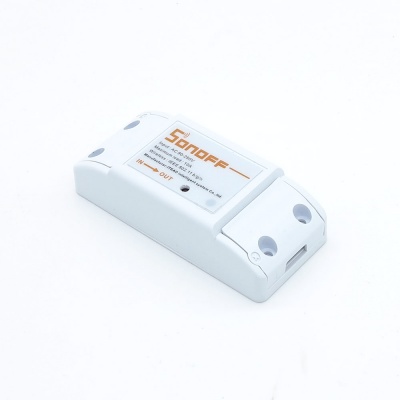
    Do you have a photo of this tile from the bottom?
    I admit that a very interesting thing with this socket, i.e. that you can freely reprogram the brick "from the store shelf" :)
  • #5 16293157
    piterek-23
    Level 33  
    Posts: 3321
    Help: 162
    Rate: 426
    Board Language: polish
    krisRaba wrote:
    Do you have a photo of this tile from the bottom?

    Found on the web:

    Integration of SATEL INTEGRA ETHM-1 with the ITEAD SONOFF S20 module Integration of SATEL INTEGRA ETHM-1 with the ITEAD SONOFF S20 module
  • #6 16293317
    krisRaba
    Level 31  
    Posts: 1999
    Help: 94
    Rate: 434
    Board Language: polish
    piterek-23 wrote:
    krisRaba wrote:
    Do you have a photo of this tile from the bottom?

    Found on the web:

    Integration of SATEL INTEGRA ETHM-1 with the ITEAD SONOFF S20 module Integration of SATEL INTEGRA ETHM-1 with the ITEAD SONOFF S20 module


    Oh, thank you so much :-) I was curious if they gave a module there or if they transferred everything to their PCB :-)
  • #7 16294278
    Duch__
    Level 31  
    Posts: 2338
    Help: 33
    Rate: 1597
    Board Language: polish
    Do any of your honorable colleagues have any experience in coding integration? At the moment I know where to set the key and how to turn it on. However, I did not find any information about the data encoding / decoding method.
  • #8 16294545
    krzbor
    Level 29  
    Posts: 1731
    Help: 40
    Rate: 1044
    Board Language: polish
    I do not have Integra, but I was interested in this socket - it is ESP, and the programming lines are easily accessible. Unfortunately, I did not find this socket on Allegro. I found an interesting ITEAD website where we have a schematic of the devices. The described socket Link and another layout Link which is more accessible and cheaper.
  • #9 16294761
    Duch__
    Level 31  
    Posts: 2338
    Help: 33
    Rate: 1597
    Board Language: polish
    Are available. Search for "smart socket" :D

    There are also other modules:
    Integration of SATEL INTEGRA ETHM-1 with the ITEAD SONOFF S20 module . Search for "itead".
  • ADVERTISEMENT
  • #11 16302890
    Duch__
    Level 31  
    Posts: 2338
    Help: 33
    Rate: 1597
    Board Language: polish
    I am familiar with the subject, but I am not interested in setting domotics.
  • #12 16309627
    Duch__
    Level 31  
    Posts: 2338
    Help: 33
    Rate: 1597
    Board Language: polish
    After consulting Satel and trying many times, I was able to figure out the encryption. Now I just need to get it over to ESP.
  • #13 16309706
    xury
    Automation specialist
    Posts: 7068
    Help: 876
    Rate: 1486
    Board Language: polish
    The worst thing is that you can only connect to ETHM-1 with one device at a time. I just tested domoticza and everything is fine, but unfortunately it takes all the time to connect so you can't do anything else.
  • #14 16310233
    Duch__
    Level 31  
    Posts: 2338
    Help: 33
    Rate: 1597
    Board Language: polish
    That's why I hang up after each question and give other devices a chance to ask a question. I even noticed that Guardx after ETHM cannot get along with heavily loaded integration.
  • ADVERTISEMENT
  • #15 16327454
    Duch__
    Level 31  
    Posts: 2338
    Help: 33
    Rate: 1597
    Board Language: polish
    Anyone have an idea for some WEBCONFIG to set network parameters, zone, IP address of the ETHM module to make such a universal soft?
  • #16 16384271
    mgis
    Level 9  
    Posts: 7
    Board Language: polish
    Have you considered the default state of the relay when it fails to establish a connection for some time? Is nothing changed?
    And whether the default state after energizing the network is the relay turned off?
  • #17 16388329
    Duch__
    Level 31  
    Posts: 2338
    Help: 33
    Rate: 1597
    Board Language: polish
    The default device state is turned off. If he fails to establish a connection with ETHM or does not receive a response from it, he leaves the original state as previously set.
📢 Listen (AI):

Topic summary

✨ The discussion revolves around the integration of the SATEL INTEGRA ETHM-1 module with the ITEAD SONOFF S20 smart socket. The user has developed a system that automatically switches off a 230V receiver upon arming the SATEL INTEGRA 128 alarm system. The original firmware of the SONOFF S20, based on the ESP8266-12E, was replaced with custom software written in the Arduino IDE. The system queries the ETHM-1 module for the status of zones and inputs, ensuring data integrity through CRC checks. Participants discuss the advantages of using the ETHM-1 over the ABAX module, the reprogrammability of the SONOFF S20, and challenges related to data encoding and connection limitations with the ETHM-1. The conversation also touches on the default states of the relay and the need for a universal configuration interface for network settings.
Generated by the language model.

FAQ

TL;DR: Only 1 concurrent TCP/IP session is allowed by SATEL ETHM-1 [Elektroda, Duch, post #16292011]; “I hang up after each question” [Elektroda, Duch, post #16310233] The ESP-reflashed SONOFF S20 cuts 230 V to any load when the alarm arms. Why it matters: You gain low-cost, Wi-Fi-based power control that respects alarm status.

Quick Facts

• ETHM-1 supports exactly 1 TCP/IP client at a time [Elektroda, Duch, post #16292011] • SONOFF S20 relay: 10 A @ 250 VAC rating [ITEAD Wiki, S20] • ESP8266 logic & supply: 3.3 V only [Elektroda, Duch, post #16292011] • Typical SONOFF S20 price: ≈ US$9–12 (Q2 2025 online average) [eBay Market, 2025] • Default relay state after power-up: OFF [Elektroda, Duch__, post #16388329]

What hardware is required to mirror this integration?

You need a SATEL INTEGRA panel with an ETHM-1 Ethernet module, an ITEAD SONOFF S20 smart socket, a 3.3 V USB-to-TTL programmer, and a 230 V load. The ESP8266 inside the S20 is re-flashed with Arduino-IDE firmware that implements the SATEL Integration protocol [Elektroda, Duch__, post #16292011]

Why not just use Satel’s ASW-100E ABAX socket?

The author lacks an ABAX transceiver, but already owns ETHM-1; using ETHM gives remote IP control without extra radios [Elektroda, Duch__, post #16292558]

How does the ESP8266 talk to ETHM-1?

On every cycle it: 1. Connects to Wi-Fi, 2. Opens a TCP socket to ETHM-1, 3. Sends Integration-protocol frames it crafts byte-by-byte, CRC included, 4. Parses the reply, 5. Closes ETHM and Wi-Fi, 6. Drives the relay [Elektroda, Duch__, post #16292011]

What happens when ETHM-1 returns “BUSY”?

The ESP detects the BUSY reply, blinks the green LED briefly, randomises a new delay, disconnects, and retries later—thus avoiding connection starvation [Elektroda, Duch__, post #16292011]

How do I flash new firmware to the SONOFF S20 safely?

Supply 3.3 V to VCC and connect TX/RX at the same level, hold GPIO0 low during reset, then upload via Arduino IDE. Never feed 5 V; the ESP and serial lines are 3.3 V-only [Elektroda, Duch__, post #16292011]

Can I add a web-based configuration page?

Yes. Host a minimal WebConfig on the ESP8266; store SSID, password, ETHM IP, and zone in SPIFFS. The thread author is seeking such a universal soft [Elektroda, Duch__, post #16327454] Libraries like ESPAsyncWebServer ease implementation [Espressif, 2024].

How frequently does the socket poll the alarm panel?

Polling intervals are randomised per armed state: faster when armed, slower when disarmed. This minimises connection conflicts, yet keeps status fresh; exact times are user-set in firmware [Elektroda, Duch__, post #16292011]

Is encryption mandatory for the Integration protocol?

Panels from firmware 1.12 require 128-bit key-based frame encryption. The author decoded the algorithm after SATEL support hints and now embeds it in ESP code [Elektroda, Duch__, post #16309627]

What do the LEDs on the S20 indicate after reflashing?

Blue LED solid = relay ON. Green fast blink = Wi-Fi join. Green slow blink = delay countdown. Green short off pulse = ETHM BUSY detected [Elektroda, Duch__, post #16292011]

Are there cheaper or alternative ESP-based switches?

The simple Sonoff Basic uses the same ESP8266, costs ≈ US$6, and shares the ITEAD open schematic [ITEAD Wiki, Sonoff][eBay Market, 2025].

What safety precautions are critical?

Relay contacts carry mains; expose only after isolating power. Observe 3.3 V logic levels. “THERE ARE TENSIONS DANGEROUS TO HEALTH AND LIFE” warns the author [Elektroda, Duch__, post #16292011]

Quick 3-step build checklist

  1. Solder 4-pin header to S20 programming pads.
  2. Flash custom firmware via 3.3 V USB-TTL.
  3. Wire socket, pair Wi-Fi, test arming-triggered switching. Each step must end with mains disconnected.
Generated by the language model.
ADVERTISEMENT