


FAQ
TL;DR: Domoticz can run as a master on Ubuntu and pull devices from remote RPIs; a 3‑node (1 master + 2 slaves) setup works and “You can even connect dozens of raspberries.” Use Domoticz Remote, Dummy + API, or MQTT/HTTP. [Elektroda, wampirek, post #16833354]
Why it matters:** It shows how to centralize sensors like DS18B20 and GPIO from multiple RPIs into one Domoticz server with minimal rewiring.
Quick Facts
- Architecture: Run Domoticz on Ubuntu as master; add each RPI via Hardware → Domoticz Remote with its IP, user, and password. [Elektroda, wampirek, post #16826453]
- Scale: Confirmed 1 master + 2 slaves; users report “dozens” of RPIs, even across locations. [Elektroda, wampirek, post #16833354]
- Data paths: Push readings using Domoticz API over HTTP or via MQTT; Dummy hardware represents virtual devices. [Elektroda, xury, post #16803722]
- 3‑step onboarding: create user on RPI, add Domoticz Remote on master, approve devices in the list. [Elektroda, wampirek, post #16826453]
- Edge case: Older builds showed GPIO sensors on slaves not visible on the master; verify your version. [Elektroda, DJ MHz, post #16827650]
Can Domoticz on Ubuntu read sensors from a remote Raspberry Pi?
Yes. On the Ubuntu Domoticz, add Hardware → Domoticz Remote, enter the RPI’s IP, login, and password. After a moment, devices from that RPI appear in Devices; click the green arrow to add them to master. [Elektroda, wampirek, post #16826453]
Do I add the entire RPI GPIO to Domoticz or separate devices?
Add and update separate devices. Use Dummy hardware to represent virtual sensors/switches, then feed data via the Domoticz API using HTTP or MQTT. “Dummy is used for such things.” [Elektroda, xury, post #16803722]
How many RPIs can one Domoticz master handle?
Users report one master with two slaves running stably and note you can connect “dozens of raspberries,” including remote locations beyond your LAN. This scales well for multi‑site installs. [Elektroda, wampirek, post #16833354]
How do I add an RPI as a remote Domoticz hardware? (3 steps)
- On the RPI, create a Domoticz user with permission to share devices.
- On the Ubuntu master, add Hardware → Domoticz Remote; enter the RPI IP, login, and password.
- Open Devices; click the green arrow to add and name each device. [Elektroda, wampirek, post #16826453]
Should I use MQTT or HTTP for sending readings like DS18B20?
Both work. Domoticz accepts updates via its JSON API over HTTP, and many prefer MQTT for decoupled messaging. Read values with a script and publish to the master. [Elektroda, xury, post #16803722]
Do I need Domoticz installed on every Raspberry Pi?
For a master/slave design, install Domoticz on each RPI (slaves). The Ubuntu master then aggregates their exposed devices. ESP‑based nodes can also collect and share data. [Elektroda, DJ MHz, post #16829053]
Known issue: why don’t GPIO sensors from a slave show on the master?
An older Domoticz build had a bug where GPIO sensors on slaves didn’t display on the master. Update and retest if you hit this behavior. [Elektroda, DJ MHz, post #16827650]
Can I push DS18B20 readings without running Domoticz on the RPI?
Yes. Write a Python script to read DS18B20 and send values directly to the master using HTTP GET/POST to the Domoticz API. This skips slave Domoticz. [Elektroda, Sickboy, post #16843485]
What does “slave” mean in this Domoticz context?
It’s a subordinate node that collects local devices and exposes them to the master. Or, as one user said, “slave sub‑units.” [Elektroda, xury, post #16805059]
Can I mix RPIs with ESP/ESPMega devices in one system?
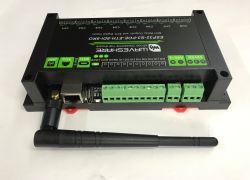
Yes. You can have Domoticz masters and slaves plus ESP/ESPMega nodes that collect and share results to the master over the network. [Elektroda, DJ MHz, post #16829053]
What is Tuya?
Tuya is a global AIoT platform and app ecosystem used by many smart‑home brands. It provides cloud, app, and device enablement. [“Tuya Inc.”]
What is Arduino Nano?
Arduino Nano is a compact, breadboard‑friendly microcontroller board, historically based on the ATmega328P, programmable via the Arduino IDE. [“Arduino Nano - Wikipedia”]
What is OpenBeken?
OpenBeken is open‑source firmware for many Tuya/Beken and other Wi‑Fi chips, positioned as a Tasmota/ESPHome alternative with MQTT and HA support. [“OpenBK7231T_App — GitHub”]
What is CAN bus?
CAN bus is a robust, differential, multi‑master serial bus used in vehicles and industry; classic CAN runs up to 1 Mbit/s. [“CAN bus”]
Quote to remember on architecture?
“So you can do something like slave sub‑units.” It captures the mental model for distributing nodes cleanly. [Elektroda, xury, post #16805059]
Where do I learn Domoticz API endpoints for scripting?
Start with the Domoticz API JSON URLs documentation referenced in the thread. It shows the GET/POST patterns you’ll call from scripts. [Elektroda, xury, post #16805281]