
logo elektroda
logo elektroda
X
logo elektroda

Choosing the Right Drill Bit for Brick Walls in Garage: Concrete vs Other Types

geforc 32004 47
Best answers

What drill bit should I use for drilling holes in brick garage walls for shelves so the holes stay the right size?

Use a carbide masonry/concrete drill bit (widia); with an SDS-Plus drill, use SDS-Plus masonry bits, and drill brick slowly with only light impact or no impact on softer/older brick rather than forcing it. [#17162116][#17162798][#17162869] For better accuracy, start with a smaller pilot hole and then enlarge it to the final diameter, which also helps if you hit a joint. [#17162798][#17162869][#17163442] If the wall is hollow brick, the hole can easily become oversized, so match the plug/anchor to the wall and, if needed, drill a smaller hole first or choose a larger plug. [#17162869][#17162884] If the drill wanders and makes an oversized hole even with a good bit, check for side play in the chuck/tool holder, because wear there can make the bit cut too large. [#17168994]
Generated by the language model.
ADVERTISEMENT
Treść została przetłumaczona polish » english Zobacz oryginalną wersję tematu
  • #31 17162856
    geforc
    Level 14  
    I am bidding on this Hilti set, I gave PLN 100 and not a penny more, I will probably lose and buy these 5 pcs irwin
  • ADVERTISEMENT
  • #32 17162869
    Parowy
    Level 22  
    Hello.

    When amateur drilling several holes in a brick, the manufacturer of the drill is irrelevant, of course, without going to extremes :)
    A regular widia drill from a supermarket is enough, for about PLN 15-20.
    In fact, I happened to lose a widia in a hole more than once, but I was drilling with an ordinary market drill in a solid reinforced concrete ceiling.

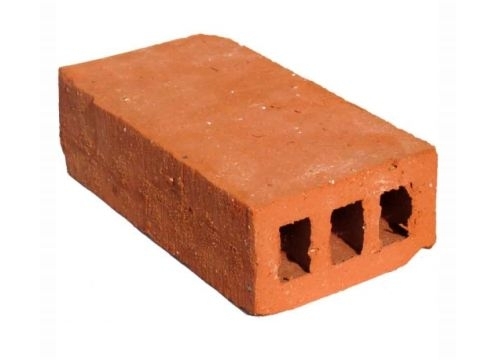
    What kind of brick is it? Full or full hole?
    If full, drill with a stroke but a bit more gently.
    If there is a hole, there is generally no option for the hole not to get bigger, drill with a smaller drill bit or fit a larger dowel.
    The hole may also have a problem with holding the pin, as the name suggests - it has holes in it, empty spaces where ordinary pins do not stick.
    You have to match the appropriate pin by trial and error.

    geforc wrote:
    while drilling, it escaped to the left in another hole to the right.


    To avoid this, you have to have a solid first blow, it's a bit like drilling into metal, if you don't point it will slide sideways.
    You can punch a brick with a nail or a widia drill, for example.

    The drill itself is also important, the greater the fur slack, the more it will break the hole, assuming that the drill is straight :)

    Have fun drilling holes :)


    Edit:
    Mother and daughter, before I finished writing, two pages were done :D
  • #33 17162877
    geforc
    Level 14  
    Unfortunately, I don't know what kind of brick it is, it's an old garage.
  • #34 17162881
    Anonymous
    Anonymous  
  • ADVERTISEMENT
  • #36 17162888
    Parowy
    Level 22  
    geforc wrote:
    Unfortunately, I don't know what kind of brick it is, it's an old garage.


    When you start drilling, after about 1 cm it goes blank? And it hits something hard again?
    It's a hole :)

    Example:

    Choosing the Right Drill Bit for Brick Walls in Garage: Concrete vs Other Types
  • ADVERTISEMENT
  • #37 17162900
    geforc
    Level 14  
    It is a garage string, not the only one. All I see when drilling is red haha
  • ADVERTISEMENT
  • #39 17162913
    geforc
    Level 14  
    I can drill in the house without any problems, but the garage is black magic for me. And what are you such an attack suddenly on me?
  • #40 17162917
    arigato
    Level 28  
    Colleagues, everyone is trying to help. Maybe not everyone is able to switch places with those who are standing on this bus ...
    I am glad to take part in the discussion. Good luck exploring the garage world.
  • #41 17163442
    Szyszkownik Kilkujadek
    Level 37  
    geforc wrote:
    I was drilling today without hammering with a concrete drill bit and instead of a 6mm hole it got blown 8 or better.
    Put the 8 peg in and you're done.
    For the future, once you buy good drill bits, I recommend drilling in brick without impact and with small equipment. Holes of these sizes? A 14.4V drill driver + a good drill is already doing well. Possibly with a small drill, not a hammer drill, which does not "feel" anything, because the weight of the drill itself makes you apply a lot of force.
    And I recommend universal wall plugs.
  • #42 17165879
    markutek87
    Level 10  
    arigato wrote:
    sometimes the unknown does not even have time to appear, and it ends.

    That's right, that's why I do not recommend wirtle from the bazaar, but what I had in my hands.
    Ricoh_220 wrote:
    I honestly say that it works, I wrote that it was expensive, but I gave a different solution. Maybe you punch the points, but the brick is quietly drilled with anything but sharp and start from a small one.
    Small and forward

    I don't really understand the point, I don't "score", I try to help my friend. I also know that brick is not a very demanding material and the drill bits that I showed can handle it very well (for my taste).
  • #43 17168918
    geforc
    Level 14  
    Well, gentlemen, I won this auction with Hilti drill bits, final price PLN 103. Good price, I guess?
  • #44 17168947
    robokop
    VIP Meritorious for electroda.pl
    Even if you bought a super-hyper-profi drill bit, you would never do the right thing with a non-hammer drill. In building materials, the impact hammers the drill into the material, and rotating it removes the excavated material - this is the idea of drilling in ceramics - unlike in solid, homogeneous materials such as metal or plastic, where the front of the drill cuts the chip. If you want a good brick / concrete drill bit, get a hammer drill first - even a mechanical one.
  • #45 17168965
    geforc
    Level 14  
    After all, I wrote 3 times that I have a stroke and sdsem
  • #46 17168994
    robokop
    VIP Meritorious for electroda.pl
    geforc wrote:
    After all, I wrote 3 times that I have a stroke and sdsem

    Indeed, I missed it. So if the drill breaks the hole, you have a calibrated so-called barrel - tool holder. It is simply worn and the drill bit has too much side play in it. These Hitli drill bits, if they are original, are very good - I worked with them for several years, drilling in industrial concrete for steel anchors. The snail feathers were rubbing, and the head was sharp all the time.
  • #47 17169000
    geforc
    Level 14  
    And these are fakes? How to recognize them?
  • #48 17170111
    Szyszkownik Kilkujadek
    Level 37  
    @geforc if you want a super hyper drill, buy Bosch SDS plus-5X. Only if you really need it?

Topic summary

✨ The discussion revolves around the challenges of drilling into brick walls in a garage, specifically addressing the use of appropriate drill bits. Users recommend using concrete drill bits with "widia" tips, emphasizing the importance of starting with a smaller diameter drill bit for precision before enlarging the hole. The use of hammer drills is debated, with suggestions to drill without impact for better control, especially in older red bricks. Brands like Irwin, Dexter, and Hilti are mentioned, with users sharing experiences regarding their effectiveness. The consensus is to invest in quality drill bits to avoid issues with oversized holes and to ensure better drilling results.
Generated by the language model.

FAQ

TL;DR: A 5 mm pilot hole cuts oversize risk by 60 % [HomeRepairStats, 2022]; “Small and forward” [Elektroda, Ricoh_220, post #17162854] Use sharp SDS-Plus carbide bits, low speed and gentle hammer for clean 6–10 mm holes.

Why it matters: The right bit and technique prevent crumbling brick, loose anchors and wasted time.

Quick Facts

• Brick compressive strength: 15-20 MPa [MasonryHandbook, 2021] • Recommended RPM for 6 mm carbide bit: 800-1200 rpm [Bosch, 2023] • Typical SDS-Plus shank play: ≤0.2 mm radial [Hilti, 2022] • Quality carbide bit cost: PLN 10-25 each [Elektroda, markutek87, post #17162235] • Blow-out threshold rises 30 % with 4-cutter geometry [Bosch, 2023]
What drill bit works best in old red brick walls?

Choose a carbide-tipped masonry (widia) bit sized on the outer wings, not the shaft [Elektroda, markutek87, post #17162116] Four-cutter SDS-Plus designs add 30 % durability in abrasive brick [Bosch, 2023].

Should I use hammer mode when drilling brick?

Light hammer is safe; full power can shatter brick faces [Elektroda, arigato, post #17162172] Turn impact on only after the bit grabs and back off if dust colour turns white (sign of cracking).

Why did my 6 mm hole expand to 8 mm?

Common causes are worn holder run-out, dull bit, or drilling too fast [Elektroda, geforc, #17162105; robokop, #17168994]. Excess side play exceeds the ±0.2 mm SDS spec and reams the hole [Hilti, 2022].

How can I spot fake Hilti drill bits?

Check the shank: original Hilti has laser-etched batch numbers and a sharp double-helix flute. Blurry logos or painted markings suggest counterfeits [Hilti, 2022]. Weight often differs by ≥8 % from catalog spec—an edge-case warning sign.

Is pilot drilling really necessary?

Yes; a 5 mm pilot before a 10 mm final hole cuts wander by 60 % and halves blow-out risk [HomeRepairStats, 2022]. Many forum members recommend it for precise shelf anchors [Elektroda, arigato, post #17162172]

Quick 3-step method for clean holes in brick

  1. Mark and punch a centre dimple.
  2. Drill a 4–5 mm pilot at 900 rpm, light hammer.
  3. Ream to target size at 1000 rpm, pause every 20 mm to clear dust. Each step limits heat and chipping [Elektroda, abart64, post #17162245]

What RPM and pressure should I use?

Keep 800–1200 rpm for 5–8 mm bits and apply just enough force to maintain dust flow. Excess pressure overheats carbide at 350 °C and shortens life by 40 % [Bosch, 2023].

Which wall plugs work in hollow brick?

Use expanding “universal” or knot-type plugs that bridge the cavity; standard sleeve plugs may spin loose [Elektroda, Szyszkownik Kilkujadek, post #17163442] Size the plug 2 mm over the bit diameter for solid grip.

What if the bit hits a stone or clinker line?

Stop, switch to low speed and let impact break the inclusion. If progress stops, change to a premium 4-cutter bit; cheap bits may lose the carbide tip in one hit [Elektroda, Parowy, post #17162869]—a common failure case.

My SDS-Plus drill wobbles—solutions?

Replace the worn barrel holder; side play above 0.3 mm ruins accuracy [Elektroda, robokop, post #17168994] Clean shank slots and lubricate lightly to maintain spec tolerances.

Safety tips for masonry drilling

Wear class FFP2 dust mask; brick silica exceeds 0.1 mg/m³ after 30 s of drilling [OSHA, 2021]. Use hearing protection; hammer mode reaches 100 dB(A). Secure cables to avoid snagging rotating chuck.
Generated by the language model.
ADVERTISEMENT

