logo elektroda
logo elektroda
X
logo elektroda

230V Controller for Monthly 5-Minute Well Water Pump Activation

janusz-szcz 2010 24
Best answers

How can I control a 230V well pump so it switches on for 5 minutes once every 30 days and then stays off for the next 30 days?

Use a controller with a real-time clock, such as a small PLC/programmer or a microcontroller with a relay, because a simple timer or delay-based sketch will not reliably keep a 30-day cycle after power loss. A microcontroller plus relay is technically enough for 30 days = 2,592,000 s and 5 minutes = 300 s, but it should be paired with an RTC; otherwise, after a reset the cycle starts over from the beginning [#18798617][#18799940] A PLC like Zelio Logic SR2A101BD / SR2A101FU is a practical option because it already includes the I/O and power-supply side and uses an RTC, so you only need to program the monthly pump trigger [#18799832][#18800786] If you want a ready-made relay, one example mentioned was a cycle relay with up to 100 days, such as CRM-2H-UNI [#18800891] Simple weekly/seasonal timers like Zamel/ZCM22/PU were considered less suitable because the program memory is limited and the interval is not a true fixed 30-day repeat [#18798589][#18799940] Also, time control is risky if the actual water level can vary, because a dry run may damage the pump and 5 minutes may be too short or too long [#18809009]
Generated by the language model.
ADVERTISEMENT
Treść została przetłumaczona polish » english Zobacz oryginalną wersję tematu
  • #1 18796748
    janusz-szcz
    Level 11  
    Posts: 103
    Rate: 48
    Good Morning,
    I'm looking on the forum and finding what I can find are circuits to control the pump, but everything works in short intervals, of the order of minutes/hours....

    Instead, I need a 230V controller that will switch on a small 230V well water pump once in about 30 days for 5 minutes and switch off for another 30 days....

    Please support.
  • ADVERTISEMENT
  • #2 18796785
    Mol
    Level 31  
    Posts: 1168
    Help: 152
    Rate: 102
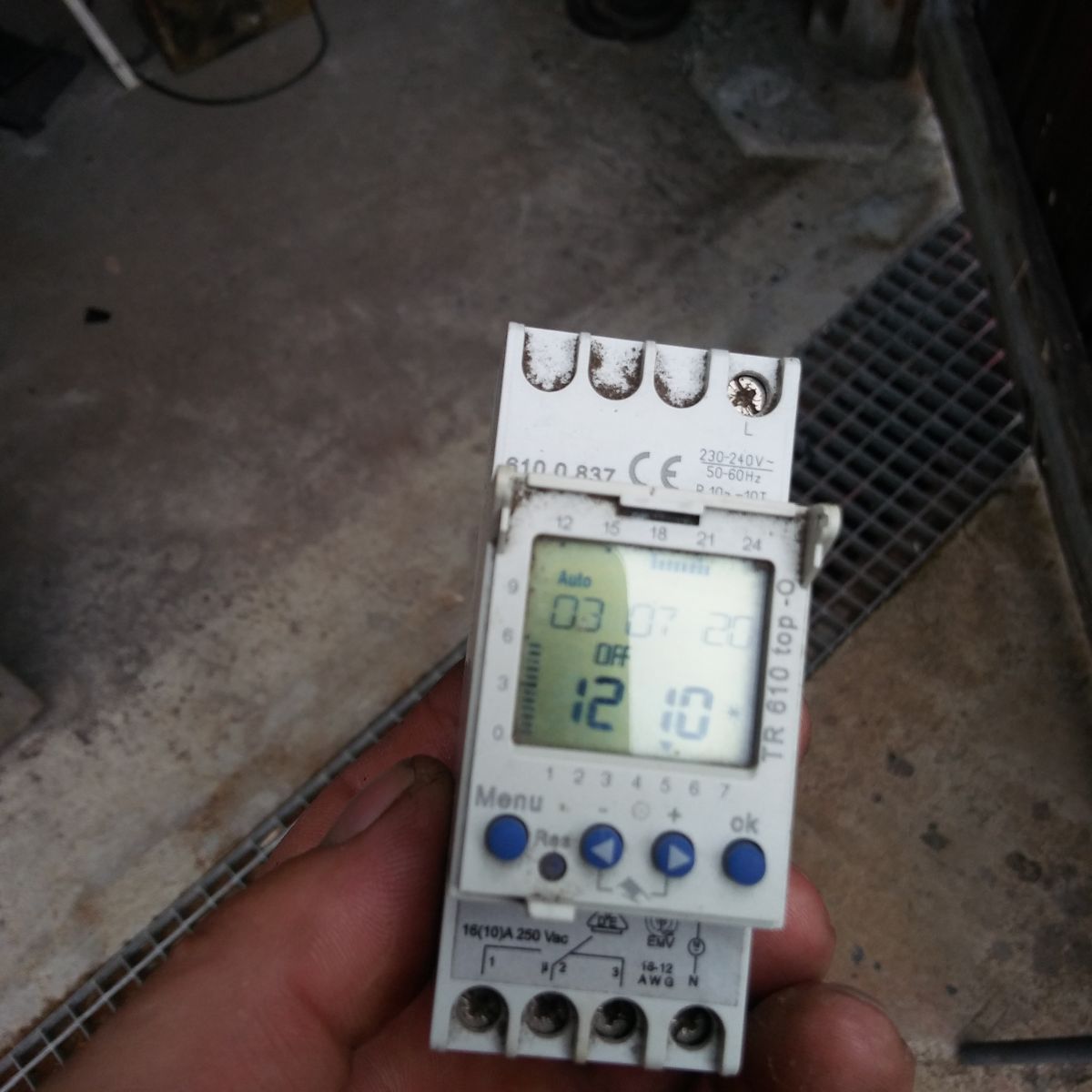
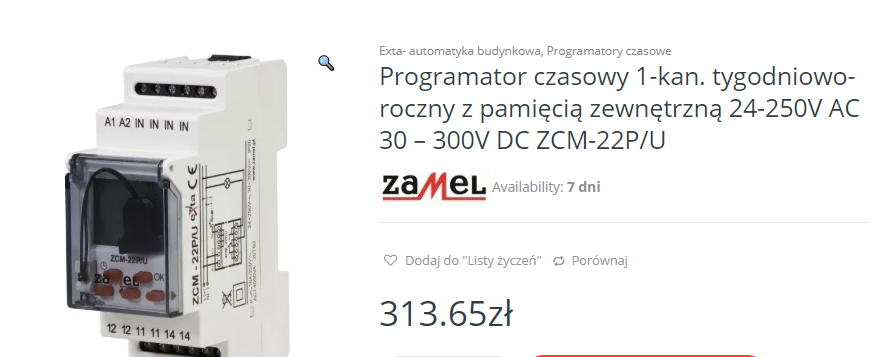
    For example, something like this, only a little expensive ZEG-ZCM22/PU
  • #3 18796790
    vieleicht
    Level 37  
    Posts: 2163
    Help: 463
    Rate: 453
    How about something like this?
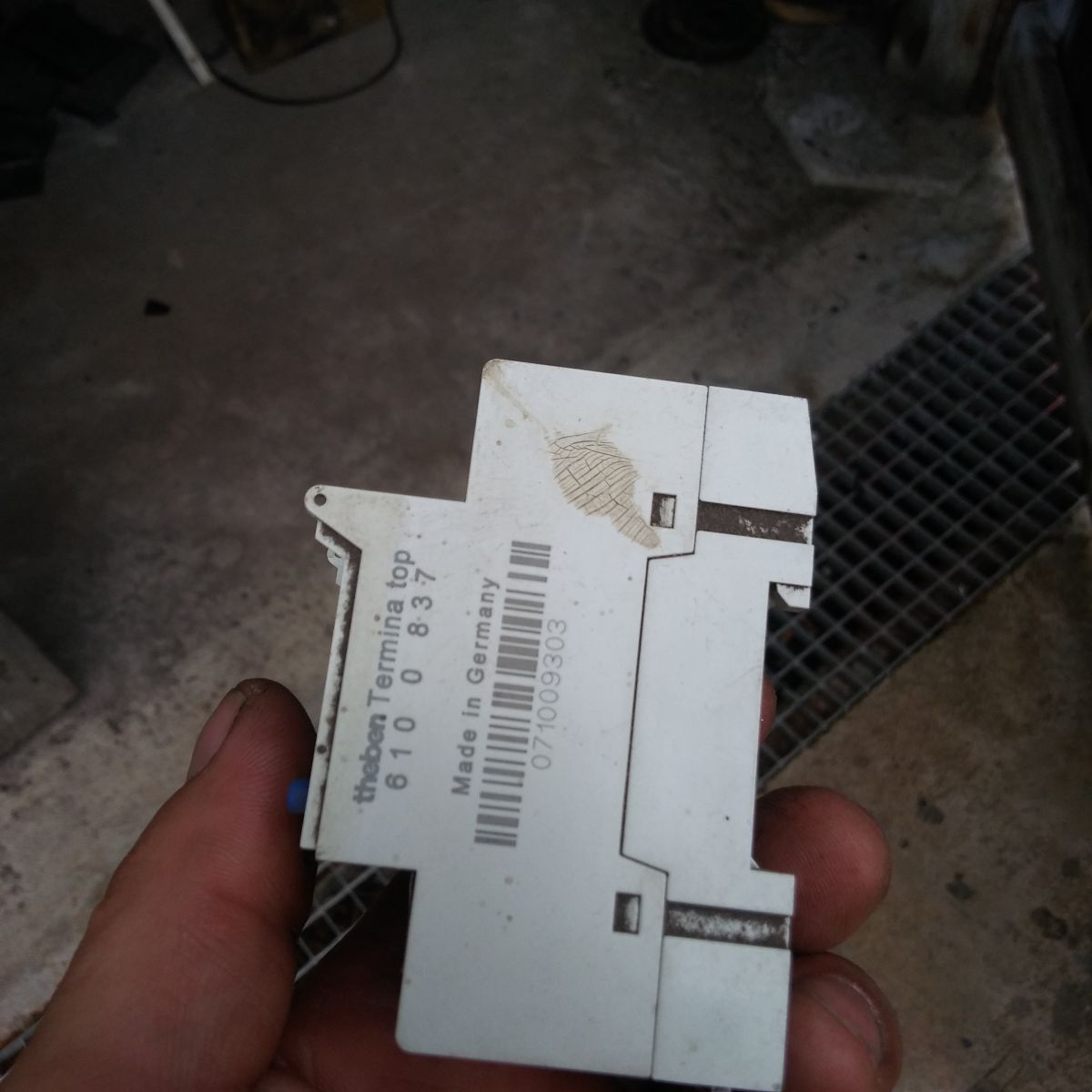
    230V Controller for Monthly 5-Minute Well Water Pump Activation .

    @Mol warned me
  • #4 18796815
    Mierzejewski46
    Level 37  
    Posts: 5077
    Help: 339
    Rate: 1059
    I can send you for half price. Hardly worked 230V Controller for Monthly 5-Minute Well Water Pump Activation 230V Controller for Monthly 5-Minute Well Water Pump Activation .
  • ADVERTISEMENT
  • #5 18797687
    bhtom
    Level 39  
    Posts: 4480
    Help: 444
    Rate: 600
    Welcome,

    Colleague @Mierzejewski46 can you explain how on a weekly timer you only set a switch-on interval of 30 days?

    Greetings.
  • #6 18797772
    Mierzejewski46
    Level 37  
    Posts: 5077
    Help: 339
    Rate: 1059
    bhtom wrote:
    can you explain how on a weekly timer you only set a switch-on interval of 30 days?
    .
    Ha. Good question. It won't set. I myself don't know what I have8-O .
  • #7 18798589
    bhtom
    Level 39  
    Posts: 4480
    Help: 444
    Rate: 600
    Welcome,

    Mol wrote:
    For example, something like this , just a bit expensive ZEG-ZCM22/PU
    .

    This Zamel won't quite work either, as each on/off programme has to be entered manually into the memory, you run out of programmes - the timer stops switching the pump on/off. The author simply wanted an interval of 30 days regardless of the date.

    Regards.
  • #8 18798617
    Rezystor240
    Level 42  
    Posts: 9240
    Help: 689
    Rate: 1647
    All you need is some lightweight microcontroller, a time of 30 days is 2592000s to 5 minutes is 300s. Plus some relay and even the simplest charger to power it.
    What's complicated about that?
  • #9 18799151
    vieleicht
    Level 37  
    Posts: 2163
    Help: 463
    Rate: 453
    Or a gsm switch. And make a phone call once a month.
  • ADVERTISEMENT
  • #10 18799288
    Rezystor240
    Level 42  
    Posts: 9240
    Help: 689
    Rate: 1647
    vieleicht wrote:
    Or a gsm switch. And call once a month.
    .

    This can be forgotten.
  • #11 18799553
    Mierzejewski46
    Level 37  
    Posts: 5077
    Help: 339
    Rate: 1059
    bhtom wrote:
    This Zamel won't quite work either, as each on/off programme has to be manually entered into memory, the programmes run out - the timer stops switching the pump on/off. The author simply meant an interval of 30 days regardless of the date.
    .
    And he won't be repeating the programme. Will it loop? Because the one I showed is a weekly fact, but once set it works for a whole year.
  • ADVERTISEMENT
  • #12 18799744
    xury
    Automation specialist
    Posts: 7071
    Help: 876
    Rate: 1486
    Simplicity. A piece of script for any uc.
  • #13 18799832
    edziu
    Level 29  
    Posts: 1866
    Help: 47
    Rate: 180
    In my opinion, the Zelio Logic e.g. SR2A101BD will work well or SR2A101FU ( 230V )
  • #14 18799901
    vieleicht
    Level 37  
    Posts: 2163
    Help: 463
    Rate: 453
    Rezystor240 wrote:
    vieleicht wrote:
    Or a gsm switch. And call once a month.
    .
    You can forget about that.
    .
    Well, it is up to the questioner to decide whether he will remember or not.
  • #15 18799928
    ADB-6
    Level 34  
    Posts: 3113
    Help: 249
    Rate: 699
    Rezystor240 wrote:
    A lightweight microcontroller of some sort will suffice, a time of 30 days is 2592000s to 5 minutes is 300s. Plus some relay and even the simplest charger to power it.
    What's complicated about that?
    .

    For example, an Arduino Uno with the factory pre-installed "Blink" program, where you just insert the times given by a colleague:

    void setup() {
      pinMode(LED_BUILTIN, OUTPUT);
    }
    
    // Program powtarza cykl włącz-wyłącz w nieskończoność.
    void loop() {
      digitalWrite(LED_BUILTIN, HIGH);   // Włączenie pompy
      delay(300000);                       // Czas pracy pompy (w ms)
      digitalWrite(LED_BUILTIN, LOW);    // Wyłączenie pompy
      delay(2592000000);                       // Czas wyłączenia (w ms)
    }
    .

    :roll:
  • Helpful post
    #16 18799940
    vieleicht
    Level 37  
    Posts: 2163
    Help: 463
    Rate: 453
    This as we go into microcontrollers, it would be more reliable to use a real time clock. It's not enough for the proposal @adb-6 to be powered from the charger, because on every reset (e.g. power failure) the 'blink' starts from the beginning.
    It is worth considering whether a ready-made programmable timer, e.g. one similar to that of zamel's, is consequently not the simplest to implement and at the same time acceptable in terms of price taking into account all aspects related to e.g. power supply backup, relay circuitry, charging of controller batteries, making of the case, etc.
  • #17 18800786
    pafciowaw
    Automation specialist
    Posts: 2439
    Help: 480
    Rate: 364
    Using a PLC has the advantage that you don't need to build I/O and power supply circuits as you do with microcontrollers - and you just need to focus on the programme it is going to execute.
    The PLC has a real-time clock which can control the pumping trigger time; in addition, a "trap" can be added to the program: if it is time to pump and there is no mains power, the program can retry the pump contactor until it is confirmed that pumping has taken place (5 minutes recommended) - then it waits for the next pump (after a month).
  • #18 18800840
    janusz-szcz
    Level 11  
    Posts: 103
    Rate: 48
    Thank you to all colleagues for your suggestions.
    1. gsm is the last resort - need to remember to call :) .
    2. Zamel and Zelio are out - price (leaving aside other potential disadvantages)
    3. microcontroller - reluctant, but a worthy proposal

    vieleicht wrote:
    It is worth considering whether a ready-made programmable timer e.g. similar to that of Zamel, consequently is not the easiest to implement and at the same time acceptable in terms of price taking into account all aspects related to e.g. power supply support, relay circuit, charging of controller batteries, making of housing etc.
    .
    4. the thoughts of VIELECHT are indeed the closest to me, I wonder if such a METRON PUm.010 will manage - it has 6 seasonal blocks, so I guess if I use 2 pieces, they will cover the whole year...????

    https://allegro.pl/oferta/roczny-programator-...fications-platformmessage&item=7617914063
  • Helpful post
    #19 18800891
    vodiczka
    Level 43  
    Posts: 30170
    Help: 1183
    Rate: 4288
    janusz-szcz wrote:
    And I need a 230V controller that will turn on a small 230V well water pump once every 30 days or so for 5 minutes and turn it off for another 30 days...
    Just out of curiosity - why once every 30 days and for such a short time? Are you remotely watering the succulents or something like that?

    Here's something cheaper with a cycle of up to 100 days and if you do a good search online you can probably find even cheaper ones too. https://www.ebmia.pl/specjalny/100820-przekaznik-crm-2h-uni.html
  • #20 18800938
    janusz-szcz
    Level 11  
    Posts: 103
    Rate: 48
    vodiczka wrote:
    From pure curiosity - why once every 30 days and for such a short time? Are you remotely watering the succulents or something like that?
    .

    Every 30 days you have to pump out the water collecting in the well. Times rehearsed by the developer.
    There is no possibility of using level-controlled floats - which would be optimal in my opinion, due to the costs.

    Thank you for the link to the relay and the simple solution, I will look for something similar but cheaper. If you find something, I would also like to know...
  • Helpful post
    #21 18808882
    edziu
    Level 29  
    Posts: 1866
    Help: 47
    Rate: 180
    Liquid level sensor e.g. CPW-2zC MicroBest
    cool and precise
  • Helpful post
    #22 18808981
    bhtom
    Level 39  
    Posts: 4480
    Help: 444
    Rate: 600
    Welcome,

    edziu wrote:
    Fluid level sensor
    .
    janusz-szcz wrote:
    No level control floats available


    Let's read with understanding...

    Greetings.
  • Helpful post
    #23 18809009
    willyvmm
    Level 31  
    Posts: 1754
    Help: 164
    Rate: 356
    And what happens if more water arrives than has been rehearsed by the developer? (e.g. an emergency? )
    Or if it is completely empty, switching on the dry pump for 5 minutes can, in extreme cases, damage it.
    On the other hand, 5 minutes may not be enough and not pump out all the water. (e.g. clogged drain/feed).
    Time control of a process that is independent of time is highly risky.
  • #24 18809201
    edziu
    Level 29  
    Posts: 1866
    Help: 47
    Rate: 180
    bhtom wrote:
    Hello,

    edziu wrote:
    Fluid level sensor
    .
    janusz-szcz wrote:
    No level control floats are available
    .

    Let's read with understanding...

    Greetings.


    A probe is the same as a Float?
  • #25 18809478
    janusz-szcz
    Level 11  
    Posts: 103
    Rate: 48
    willyvmm wrote:
    And what happens if more water arrives than has been rehearsed by the developer?
    .
    Inweestor has been instructed about this. Nevertheless, he wants it his way. The customer is our master! :)

    Added after 1 [minute]:

    bhtom wrote:
    Let's read with understanding....
    .
    This is good advice, but any other advice can also be good :)

Topic summary

✨ A user seeks a 230V controller to activate a well water pump for 5 minutes every 30 days. Various suggestions include using microcontrollers, GSM switches, and programmable timers. Some users recommend specific models like ZEG-ZCM22/PU, Zamel, and Zelio Logic (SR2A101BD, SR2A101FU). Concerns are raised about the reliability of timers and the potential risks of dry running the pump. Alternatives such as a liquid level sensor (CPW-2zC MicroBest) are also discussed, emphasizing the need for a solution that can handle varying water levels and ensure safe operation.
Generated by the language model.

FAQ

TL;DR: A 100-day cycle relay can automate a 230 V well pump; “a lightweight microcontroller will suffice” [Rezystor240, #18798617]. Costs start around €35 and programming takes 3 lines of code [Elektroda, vodiczka #18800891].

Why it matters: Hands-free monthly pumping prevents stagnant water and pump damage.

Quick Facts

• Max timer cycle: 100 days (CRM-2H-UNI) [Elektroda, vodiczka #18800891] • Typical small well pump load: 0.5-1 kW Submersible Pump Guide, 2023 • Energy per 5-min run: ≈0.06 kWh at 750 W (author calc) • CRM-2H-UNI street price: PLN 120–150 (€27–35) EBMiA product page • EU mains tolerance: 230 V ±10 % (EN 50160 standard)

Which ready-made timer meets a 30-day ON/OFF cycle?

The CRM-2H-UNI relay offers programmable cycles from 0.1 s to 100 days, covering the required 30-day OFF and 5-minute ON periods [Elektroda, vodiczka #18800891].

Can I re-use a weekly timer by repeating events?

No. Weekly timers like ZEG-ZCM22/PU run out of memory because every month needs manual entries, and the schedule stops once filled [bhtom #18798589].

How do I program an Arduino for this job?

Upload a modified Blink sketch: set HIGH for 300 000 ms (5 min) and LOW for 2 592 000 000 ms (30 days) [ADB-6 #18799928]. Add a 230 V relay shield for load isolation. "A factory Blink plus two numbers is enough" [ADB-6 #18799928].

Do I need a real-time clock (RTC) with a microcontroller?

Yes, if mains outages occur. Without an RTC the Arduino resets and restarts the delay cycle, shifting the schedule [vieleicht #18799940]. An RTC (e.g., DS3231) keeps absolute time and resumes correctly.

Is a PLC like Zelio Logic overkill?

A small PLC costs more (~€120) but includes built-in power supply, relay outputs, and RTC, reducing wiring work [edziu #18799832]. It also lets you add retry logic if power is lost during the pumping window [pafciowaw #18800786].

What happens if the well is empty or overflows?

Dry-running for 5 minutes can overheat and seize the pump; excess water may flood if inflow exceeds pump capacity [willyvmm #18809009]. Time-only control ignores these edge cases.

Can GSM control serve as a fallback?

Yes. A GSM switch lets you start the pump with a free call, but you must remember each month [vieleicht #18799151].

How much power will the pump use yearly?

A 750 W pump running 5 minutes monthly consumes 0.06 kWh per run; annual use is 0.72 kWh—about €0.15 at €0.21/kWh (stat) (author calc).

Why not add level sensors instead of a timer?

The site lacks room for floats, and the investor insists on timed control [janusz-szcz #18800938]. Capacitive probes were suggested [edziu #18808882] but dismissed by the client [bhtom #18808981].

How do I wire the timer to a single-phase pump?

  1. Feed 230 V L and N to the timer’s supply terminals.
  2. Connect L through the timer’s NO relay contact to the pump motor; N goes direct.
  3. Add a 6 A fuse and earth the pump casing. Follow enclosure IP54 for well pits (how-to snippet).

What’s the cheapest compliant solution?

A CRM-2H-UNI relay (~€35) plus DIN-rail box and 6 A relay meets CE safety, totaling under €50—including edge-case cost of a spare fuse [cost calc; product page].

How precise is long-delay timing?

Electro-mechanical relays drift ±1 % per month; digital timers with crystal RTC drift <1 minute per month (CRM-2H-UNI datasheet). A 1 % drift may shift pumping by 7 hours over a year.
Generated by the language model.
ADVERTISEMENT