logo elektroda
logo elektroda
X
logo elektroda

Controlling a 200W street lamp with the Faac slh 868 remote control - connecting the Faac xr2 868 c

jacekp22 1158 11
ADVERTISEMENT
Treść została przetłumaczona polish » english Zobacz oryginalną wersję tematu
  • ADVERTISEMENT
  • Helpful post
    #2 19133789
    adamjur1
    Level 42  
    Posts: 7040
    Help: 766
    Rate: 994
    you still need:
    12V DC 1-2A power supply, contactor with coil for 12V DC and min 1 NO contact but for 250V min 5A.
    Regards. J.
  • ADVERTISEMENT
  • Helpful post
    #3 19133795
    spinacz
    Level 42  
    Posts: 8542
    Help: 1196
    Rate: 2621
    Yes, it is possible, but only channel 2 works that one press will light and the other will turn off the lamp, if you want to use channel 1 additionally you need a bistable relay.
    You need a 24VDC 1.5A power supply
    A contactor with a 24VDC coil
    Suitable connection.
  • ADVERTISEMENT
  • ADVERTISEMENT
  • #5 19135185
    spinacz
    Level 42  
    Posts: 8542
    Help: 1196
    Rate: 2621
    Yes, you will do what you want on something like this.
  • #6 19135350
    adwlodar
    Level 28  
    Posts: 1067
    Help: 111
    Rate: 245
    jacekp22 wrote:
    I would like to control a 200w street lamp
    .
    1. what kind of lamp is it?
    2. colleagues above condemn you to a contactor - I suspect a decent interface relay with an EMC module would suffice and you immediately have protection for the drive/controller against a pulse from the coil.
  • Helpful post
    #8 19135645
    adwlodar
    Level 28  
    Posts: 1067
    Help: 111
    Rate: 245
    Okay, so we have some 0.9A of operation + a large inrush current to go with it. How much? We don't know, because the manufacturer is silent.
    So, my suggestion:
    - https://findernet.pl/wszystkie-kategorie/553-...c-styk-agsno2-406190244000-1234567890123.html - here you have a relay that can withstand 120A peak current for 5ms.
    - https://findernet.pl/wszystkie-kategorie/1344...30-zaciski-srubowe-9505spa-1234567890123.html - DIN rail socket for the relay - makes it easy to mount and replace the relay in case of failure
    - https://findernet.pl/wszystkie-kategorie/1410...-polaryzacja-a1-9902902499-1234567890123.html - an additional module for the socket in the form of an LED indicating that the relay is switched on + a very important extinguishing diode used to eliminate overvoltages generated during operation of the relay coil - a very short, high-voltage impulse which may damage the electronics which control the relay
  • #9 19160689
    jacekp22
    Level 5  
    Posts: 15
    Rate: 6
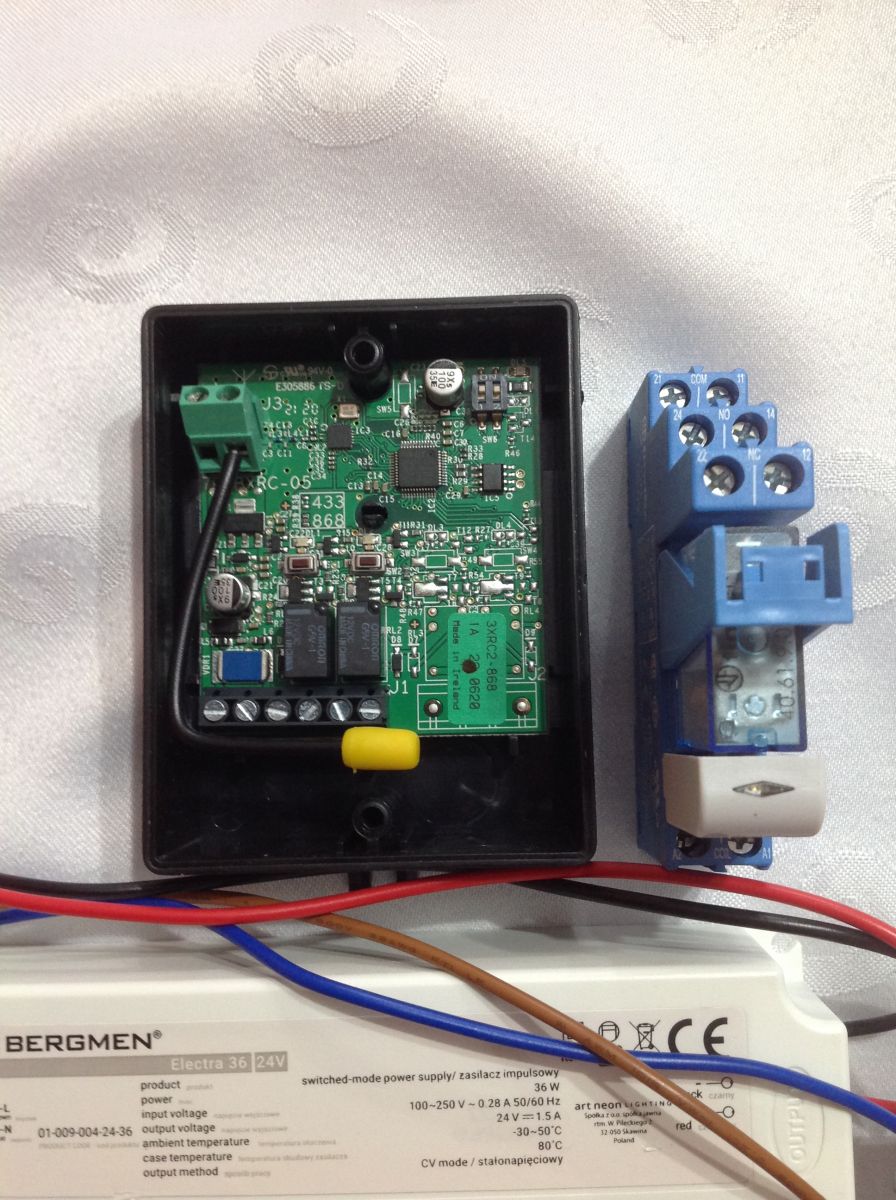
    I already have all the necessary components. How do I truthfully connect the relay with the radio and the lamp?
    Controlling a 200W street lamp with the Faac slh 868 remote control - connecting the Faac xr2 868 c
  • #10 19163349
    jacekp22
    Level 5  
    Posts: 15
    Rate: 6
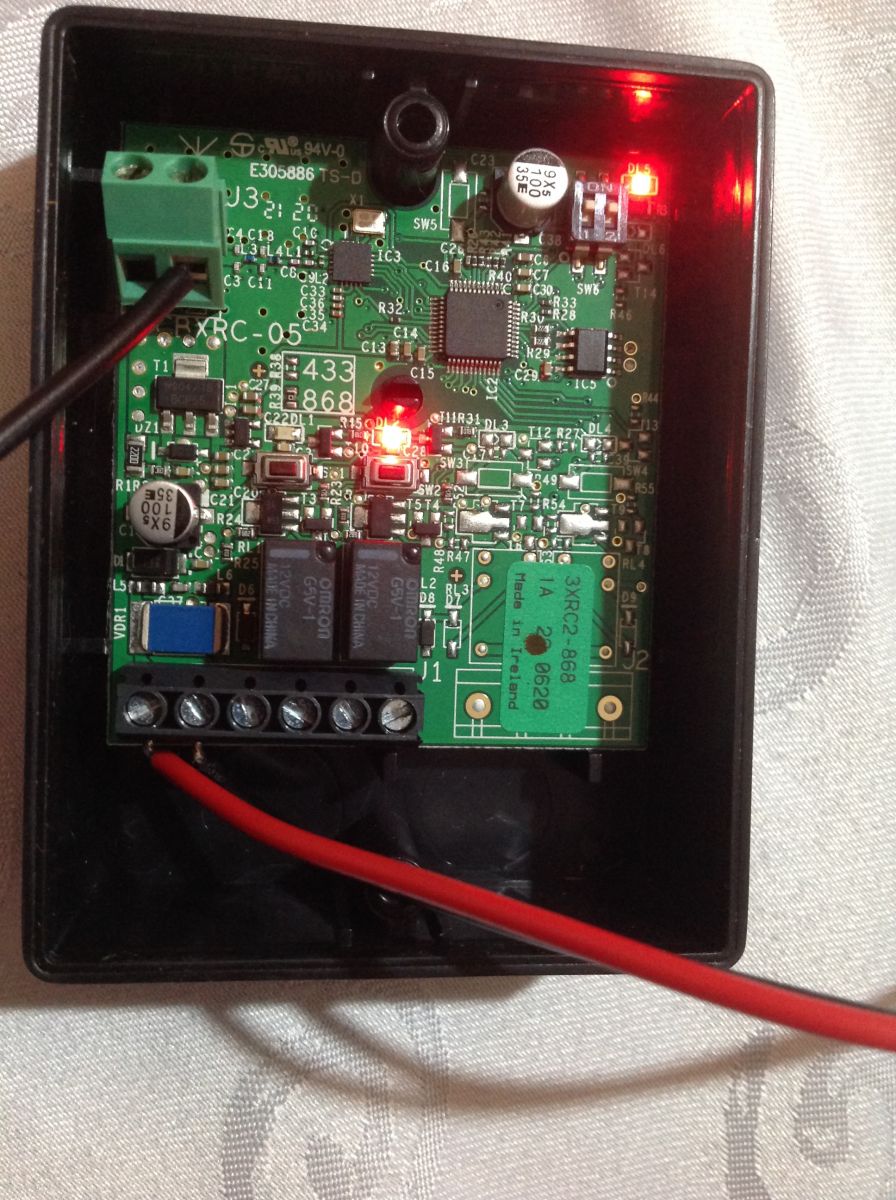
    I programmed the remote there are 2 channels, the first pulsed the second fixed, there is no voltage on both. Controlling a 200W street lamp with the Faac slh 868 remote control - connecting the Faac xr2 868 c
  • #11 19163411
    spinacz
    Level 42  
    Posts: 8542
    Help: 1196
    Rate: 2621
    And it won't because there are relay contacts and not a voltage output.
  • #12 19163465
    jacekp22
    Level 5  
    Posts: 15
    Rate: 6
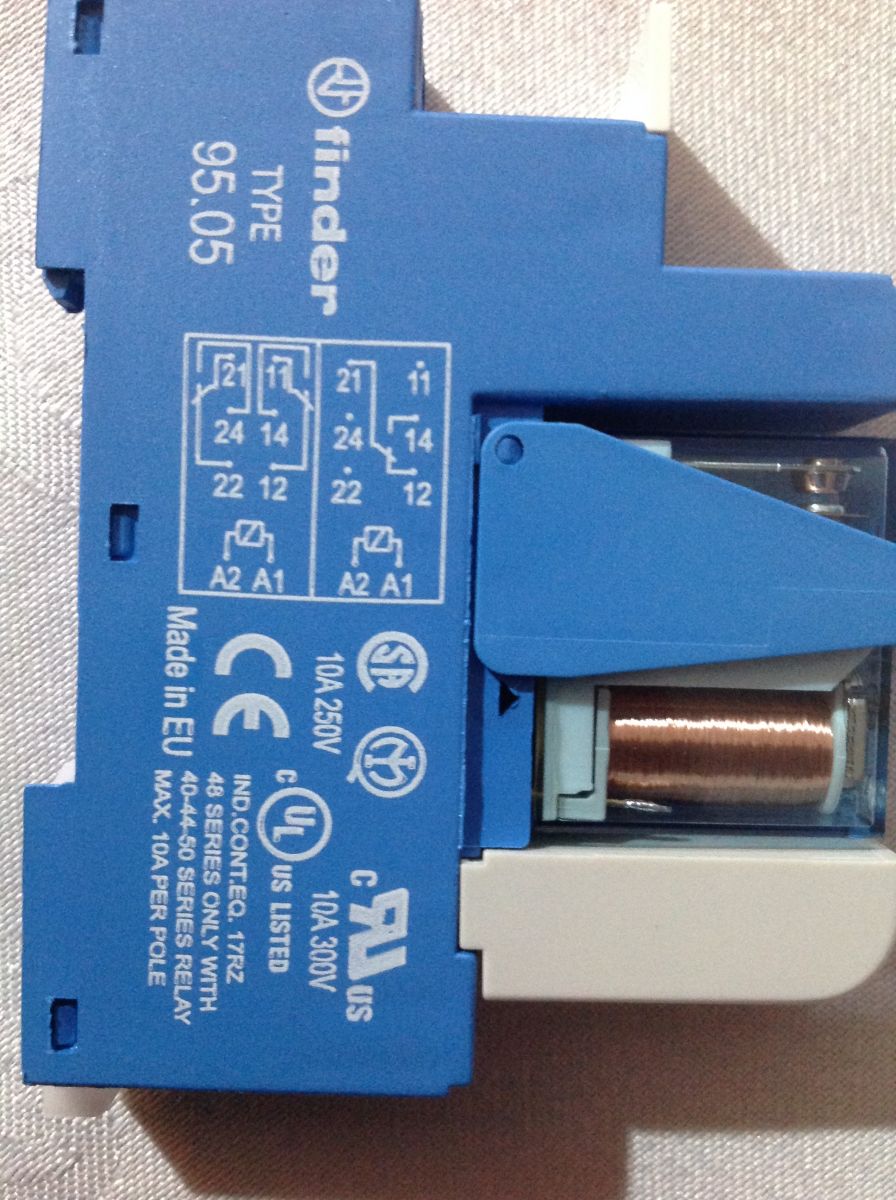
    Under which pins to connect the cables from the radio and under which from the 230v lamp? Controlling a 200W street lamp with the Faac slh 868 remote control - connecting the Faac xr2 868 c

Topic summary

✨ The discussion revolves around controlling a 200W street lamp using a Faac slh 868 remote control and the Faac xr2 868 c receiver. Users inquire about the necessary components for connecting the receiver to a 230V system. Key components identified include a power supply (12V or 24V DC), a contactor or relay with appropriate specifications, and additional protective modules. Users share links to specific products and discuss the functionality of the remote channels, noting that channel 2 can toggle the lamp while channel 1 requires a bistable relay. There are also inquiries about the correct wiring connections for the relay, radio, and lamp.
Generated by the language model.

FAQ

TL;DR: To switch a 200W 230V LED street lamp (≈0.9A) with a FAAC SLH 868 remote, pair an XR2 868 C with an interface relay and EMC suppression; “here you have a relay that can withstand 120A peak current for 5ms” for LED inrush. This guide is for DIYers/installers wiring the XR2 to safely control 230V lighting. [Elektroda, adwlodar, post #19135645]

Why it matters: You’ll protect the receiver, handle LED inrush, and get reliable remote ON/OFF without nuisance failures.

Quick facts:

Quick Facts

Can the FAAC XR2 868 C switch a 200W 230V LED street lamp?

Yes, but use it only as a control. Drive an interface relay/contactor that switches the 230V lamp. An EMC-suppressed interface relay protects the receiver electronics from coil transients. This approach suits LED loads with driver inrush. [Elektroda, adwlodar, post #19135350]

What parts do I need for a straightforward 24V build?

Use a 24VDC 1.5A power supply and a contactor with a 24VDC coil. Configure Channel 2 as latching for ON/OFF. Wire the receiver’s dry contacts to command the coil, and let the contactor switch the 230V lamp. [Elektroda, spinacz, post #19133795]

Can I build the setup with 12V parts instead of 24V?

Yes. Use a 12VDC 1–2A power supply and a contactor with a 12VDC coil. Choose a device with at least one NO contact rated 250V and 5A minimum on the mains side. [Elektroda, adamjur1, post #19133789]

Are these parts OK: UKD1-12 24VDC coil contactor + 24V 1.5A PSU?

Yes. That contactor and a 24V 1.5A power supply will let you do what you want. Ensure correct wiring and channel configuration on the receiver. [Elektroda, spinacz, post #19135185]

How do I wire the XR2 receiver, relay/contactor, and the 230V lamp?

  1. Power the XR2 and use a 24VDC 1.5A supply that matches your relay/contactor coil.
  2. Use the receiver’s channel relay contacts to switch the coil supply, and set Channel 2 to latching.
  3. Route the 230V line through the contactor’s NO contacts to the lamp; neutral goes direct to the lamp. [Elektroda, spinacz, post #19133795]

Why do I measure zero volts on the XR2 outputs?

Because they are dry contacts. The receiver output is a relay, not a power source. “There are relay contacts and not a voltage output.” Use those contacts to switch your coil supply. [Elektroda, spinacz, post #19163411]

Which channel should I use for reliable ON/OFF toggling?

Use Channel 2, which is latching (one press ON, next press OFF). Channel 1 is pulsed; to make it ON/OFF you need an external bistable relay. [Elektroda, spinacz, post #19133795]

What current and inrush should I design for with a 200W LED lamp?

Expect about 0.9A running at 230V. LED drivers can hit high inrush. A relay rated for 120A inrush for 5ms (e.g., Finder type) handles that safely. “A relay that can withstand 120A peak current for 5ms.” [Elektroda, adwlodar, post #19135645]

Do I need an EMC/suppression module or diode across the coil?

Yes. Add an EMC module or diode to clamp coil back‑EMF and protect the receiver. “A very important extinguishing diode” eliminates overvoltage spikes when the coil switches. Many DIN relay sockets accept plug‑in LED/EMC modules. [Elektroda, adwlodar, post #19135645]

What mains contact rating should I choose for the switching device?

Use contacts rated for 250VAC and sized for LED inrush. A 16A interface relay with a 120A/5ms inrush rating is appropriate for a 200W LED load. This avoids welded contacts and nuisance failures. [Elektroda, adwlodar, post #19135645]

Is a heavy contactor required, or will an interface relay suffice?

A decent interface relay with an EMC module is sufficient and protects the drive/controller from coil pulses. This keeps the receiver safe while switching the mains with proper ratings. [Elektroda, adwlodar, post #19135350]

Where do I connect the XR2 and the lamp wires?

Use the XR2 channel’s dry contact to switch the DC supply feeding the relay/contactor coil. Do not bring 230V into the receiver. Put the mains line through the contactor’s NO to the lamp; neutral goes straight to the lamp. [Elektroda, spinacz, post #19163411]
Generated by the language model.
ADVERTISEMENT