logo elektroda
logo elektroda
X
logo elektroda

The most shot-put components - a few words about noise filters and RIFA capacitors

filipcichowskidev 1536 40
ADVERTISEMENT
Treść została przetłumaczona polish » english Zobacz oryginalną wersję tematu
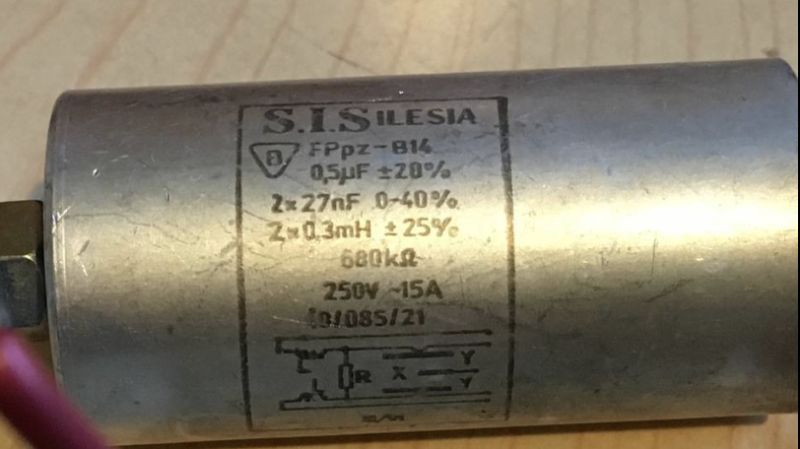
  • Metal enclosure of S.I.S Silesia EMI filter with printed electrical specifications

    In Polish measurement equipment it is common to find filters manufactured by Silesia . The diagram on the chassis allows discussion of each part of this filter - the purpose of the choke at the input is to suppress common mode interference ( common-mode interference ), that is, interference that occurs simultaneously on the L and N wires relative to PE. Two capacitors of type Y form a low impedance path to earth for high frequency currents. The capacitor type X is intended to suppress differential interference ( differential-mode ), i.e. that which occurs between the L and N conductors. It acts as a shunt for high-frequency currents, allowing them to flow past the receiver (the rest of the device).

    What are the problems with them?

    These filters were built using paper capacitors. The filter housing was filled with tar and the whole thing was sealed with epoxy resin. After years, this resin often cracks and moisture gets inside. The capacitors get leakage, so several things can happen. It usually ended up that when plugged in, the filter explodes with a big bang or slowly expands, pelting the inside of the unit with tar. The repair is to remove the filter, which can be replaced with a modern factory design made with film capacitors, or it can simply be cut out, reckoning with a higher level of interference. The tar can be easily removed with either extraction petrol or WD-40.

    The story is very similar with RIFA capacitors.
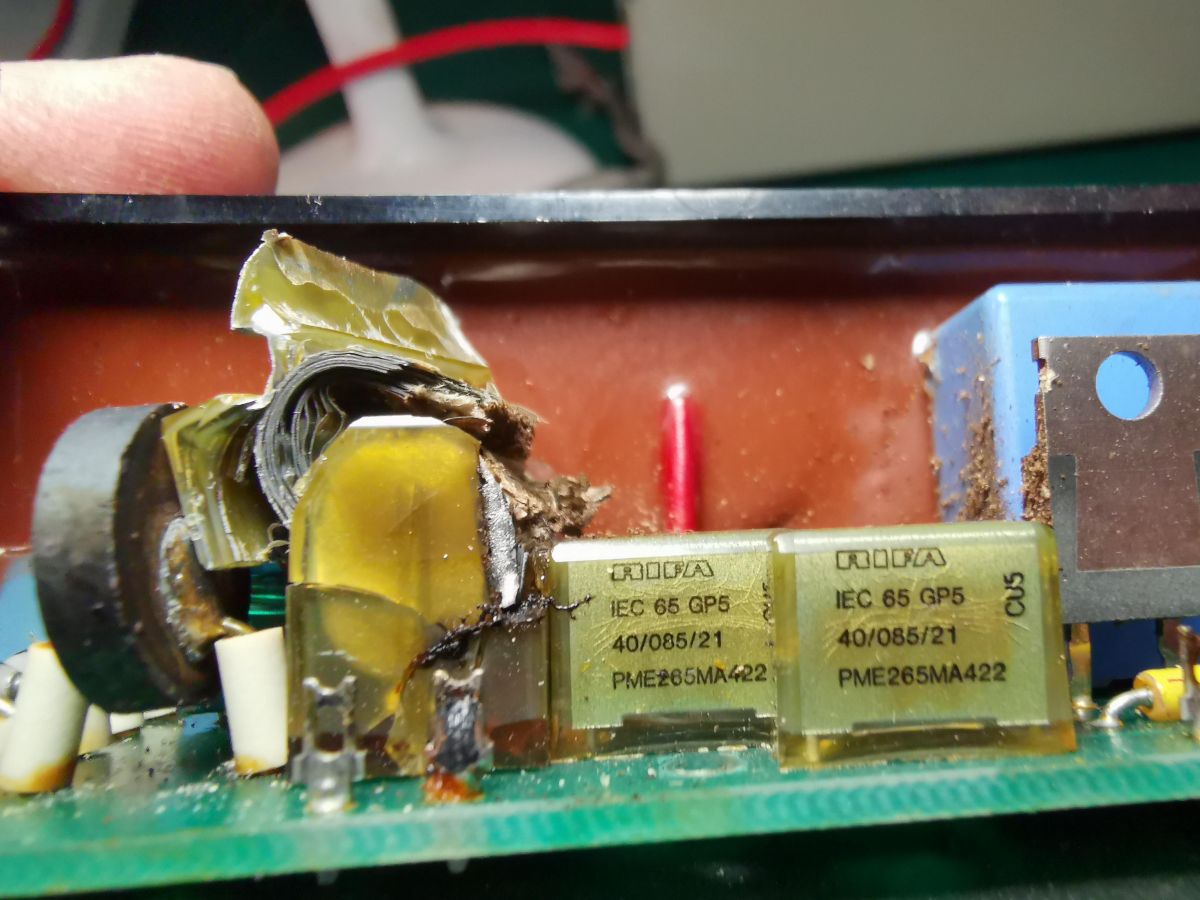
    Damaged RIFA paper capacitor on a PCB, partially blown open with foil exposed


    Some say that Surstromming is the worst thing the Swedes have given the world, but my poll winner is these paper capacitors. The EEV Blog forum community often jokes that an extension of the name RIFA is " replace if found, always! " The capacitor housing is simply a layer of resin that cracks after years and leakage occurs. I have repaired quite a lot of Tektronix brand measuring equipment by simply replacing the RIFs with good quality polypropylene capacitors WIMA or Wurth Electronics .

    The problem is not Tektronix's domain - in HP digital oscilloscopes from the 1990s, such capacitors sat in filters integrated into the socket and switch. Worst case - it's hard to get such a filter for anything.

    Cool? Ranking DIY
    About Author
    filipcichowskidev
    Level 9  
    Offline 
    filipcichowskidev wrote 42 posts with rating 49, helped 1 times. Been with us since 2025 year.
  • ADVERTISEMENT
  • #2 21775605
    ArturAVS
    Moderator
    What do you see as the problem? These were the elements then, and these were used. Every filter from the factory has a data sheet with the most important parameters to help you choose a replacement.
  • #3 21775678
    filipcichowskidev
    Level 9  
    >>21775605

    The problem I see is that someone could be electrocuted by such a faulty filter.

    Such components were used then, but today we have 2025 and better capacitors.

    Let me give you an example from work: we had a power supply from a German company called EA. A colleague tested the equipment with Sonel, each electrical device had an insulation measurement between N and PE and L and PE. The power supply failed the test - there was 10 mA flowing between PE and L. I'm leaving aside the fact that something could have happened to someone - the equipment for a lot of money was taken out of service. I open it up, and there what? Probably about 10 RIFA capacitors on the board (there were two), some of which were already cracked. I replaced them the same day with Wurthy and the power supply passed the measurement.
  • #4 21775687
    ArturAVS
    Moderator
    And what did you expect from such a vintage piece of equipment? That each component would hold its parameters for 50 years?

    filipcichowskidev wrote:
    Such components were used then, but today we have 2025 and better capacitors.

    So before measurements, they had to be upgraded to modern components. They met the conditions for the time.
  • #5 21775704
    filipcichowskidev
    Level 9  
    >>21775687

    This was a 2013 power supply.... I would expect it to be working normally like this after 12 years when someone has shelled out 20k to buy professional equipment. Surely normal capacitors could have been given.

    And to upgrade a unit like this, you need to know the problem exists, which is why this article was written ;)
  • #6 21775715
    ArturAVS
    Moderator
    filipcichowskidev wrote:
    This was a 2013 power supply...


    And it doesn't have to meet current legal/technical requirements. What matters is that it met them at the time it entered the market. The same applies to electrical installations, for example.
    Does a car, in factory condition from, say, 2000, have to meet current standards? No. The law (cannot) work retroactively.
  • #7 21775749
    filipcichowskidev
    Level 9  
    I see that this has not resonated.

    No standard that I know of allows 10 mA to flow between PE and L. This is already a noticeable current flow. A healthy person should be fine if such a current flows through them for several seconds, but someone could have a heart defect that was never detected and hurt themselves.

    And such a power supply MUST meet PL and in-house standards to be approved for use.
  • #8 21775815
    ArturAVS
    Moderator
    filipcichowskidev wrote:
    And such a power supply MUST meet PL and in-plant standards to be approved for use.


    The current standards are a different matter, the plant standards are "standards internal " and are not of general application in the legal sense of them (the standards). A device that complied with safety standards at the time it was manufactured/entered the market is not obliged to comply with current requirements. The currently applicable law is the PN. If you connect/start today, e.g. a rectifier from 1969, is it safe to use? By today's standards, no, by former standards, yes. And it is legal.
  • #9 21777760
    filipcichowskidev
    Level 9  
    Regulations and standards aside, let's both agree that if we have a leakage of 10 mA, that's a problem that needs to be fixed?
  • #10 21777777
    ArturAVS
    Moderator
    Of course! I don't remember the exact value anymore, but it was a few uA.
  • ADVERTISEMENT
  • #11 21778064
    filipcichowskidev
    Level 9  
    Slightly more, as according to EN 50699 0.75 mA under normal conditions.
  • ADVERTISEMENT
  • #12 21778433
    398216 Usunięty
    Level 43  
    As for the topic itself - it was posted in the wrong section in my opinion. There are much more appropriate places on the forum for this type of topics treating typically occurring defects in electronic equipment.
    As for the content... well, I can partly understand the Author's bitterness, but without exaggeration. There are many similar cases (faulty components failing "by themselves" after many years) in electronics and I do not see anything strange in it. It is just that time did not allow to thoroughly check the durability of an element during several or several dozen years of work in nominal conditions. It is true that some PU devices were aged after assembly and left the factory only when, after a "visit" to a climate/aging chamber, they were still fully operational (e.g. Revox and its reel-to-reel tape recorders). But, after all, nobody (at least at the time - those few decades ago) predicted that equipment would last forever. Everything wears out over time and there is no stopping it. The trick is to keep this process within some reasonable limits. Nowadays, for example, electrolytic capacitors are expected to last several years longer than the time until the end of the warranty on the equipment with them. This is a normal law of the market - equipment must naturally wear out so that the customer is forced to buy a new one, and this in turn screws up production, etc., etc....
    Can you resent that a Chinese amplifier (sorry for the example, I'm talking about my own backyard - half a century of working in audio services) breaks down after three or four years - it MUST break down for you to buy a new one.... Otherwise there would be no progress in electronics, and yes - each newer version by the way somehow stands out with something new/better something the customer wants.
    And as for PZ themed components - remember that these are the components that work most often in the least favourable conditions - voltage spikes, elevated temperatures (mounting close to the power supply for example) and they work so longest of all the components used in a particular piece of equipment; From "good morning" (power on) to the end....
    I was reminded of a series of "red" electrolytic capacitors that ELWA released a long time ago (about 40 some years ago I think). The casing was made of plastic and the sealant was made of resin of extremely poor quality and applied in a manner that violated all standards - the sealant was already porous when it left the production line. The body itself is also made of plastic with untested resistance to electrolyte migration. As a result, capacitors in this series were already failing even in equipment that had just left the factory - on its way to the shop.... And if the designer contrived to have such a capacitor in the power supply.... it could end in a not small explosion. Every service technician who was active at the time knew this and the first thing he did was to replace all the red electrolytes with other ones - in a normal aluminium can.

    Added after 4 [minutes]:

    filipcichowskidev wrote:
    No standard I am aware of allows a flow of 10mA between PE and L.
    This is probably (?) not disputed by anyone. The problem arose AFTER the fault occurred (fired PZ capacitors) - so who's to blame?
    Factory new equipment certainly did not allow such current to flow between PE and L.
  • #13 21778451
    tos18
    Level 42  
    Not just the Rifa. Wima MP3 X2 - it blazed like New Year's Eve and smoked up the whole room.It made a mess of the power supply by throwing black stuff all around.
    Just a malfunction.
  • #14 21779811
    koko0
    Level 18  
    Rifles commonly used in Revox equipment. Some do not replace them to this day, and write that the device after service.....
  • ADVERTISEMENT
  • #15 21779829
    DJ MHz
    Level 26  
    I recently replaced the Rify in the softstart with new Rify. Good to know :D next time I will give something better
  • #16 21779893
    gregor124
    Level 27  
    >>21775704
    A little strange when you consider that RIFA AB ended capacitor production in 1988.
    And new buyer Finvest Oy rebranded RIFA as Evox Rifa AB in the same year.
    And finally Evox RIFA in 2007 was acquired by KEMET (an American-Taiwanese business).
    From this it follows that someone would pack old capacitors into a new product in 2013?
    Helpful post? Buy me a coffee.
  • #17 21780088
    DJ MHz
    Level 26  
    Yes, tme sells as Kemet, but parts come branded Rifa
  • #18 21780449
    Ktoś_tam
    Level 39  
    filipcichowskidev wrote:
    Unaware of capacitor leakage, he plugs the meter into the mains, and it was so unfortunate that the capacitor between the L and PE wires had a leakage - the current electrocuted Zdzis.

    Why did the current electrocute Zdzisio if, as you write, there is PE? Was the installation also faulty? Well yes, old installation and nails instead of fuses. Perhaps to add to the drama there was phase-to-phase voltage in the socket and the whole situation took place in a bath filled with water, obviously Zdzisiu was taking a bath at the time. The tracks and chassis were also bad?
  • #19 21780512
    Wawrzyniec
    Level 38  
    Some people have quite a fantasy or a lack of foundation in the subject they assume.
  • #20 21780555
    filipcichowskidev
    Level 9  
    The story is, of course, exaggerated and coloured, inserted for humorous reasons - with a working installation, the differential should work.

    However, in many older houses I have seen some hmmm odd solutions: the use of a 300 ohm flat cable in the wall (when you plugged in the hoover at this guy's place, you could feel with your hand where the cables run), old-type sockets without pins, fuses on nails.... Hence the inspiration - you might be surprised how in houses from the 70s and 80s some owners powder the dead so that you can't see the decay - they save these improvements in the name of the unknown, instead of doing it once and right.

    I've also seen Polish appliances that are supposedly built to Class II protection, yet with protruding metal parts.

    This does not change the essence of the matter - such a device is not functional, even if it does not kill anyone.
  • #21 21780688
    Wawrzyniec
    Level 38  
    filipcichowskidev wrote:
    The electric shock protection in his house can be forgotten
    Why? After all, he has a neutral.
    filipcichowskidev wrote:
    with a working installation, a differential should work.

    What differential, where in the TNC the differential. Any voltage appearing on the appliance housing is shorted to the neutral pin and there is no possibility of shock.
  • #22 21780692
    filipcichowskidev
    Level 9  
    >>21780688

    That's right, only this pin has to be had. You can still find surface-mounted sockets without pins in DIY stores today. What happens if you install such and there is a puncture to the housing on a Class I device?

    You are not focusing on the essence of the matter, but on a made-up story.
    That's not the point - it's about mains filters and RIFs.
  • #23 21780716
    Wawrzyniec
    Level 38  
    filipcichowskidev wrote:
    That's right, only this pin needs to be had.

    filipcichowskidev wrote:
    I have an old two-wire installation with zeroing
  • #24 21780722
    Gismot
    Level 18  
    filipcichowskidev wrote:
    an Zdziś, after many years, decided to start up a frequency meter on his retirement from ZURiT 30 years ago. You can forget about electric shock protection in his house - he has an old two-wire installation with neutral and solid fuses self-made from nails. So good, in fact, that there has never been a need to replace them. Unaware of the leakage of the capacitors, he connects the meter to the mains and, as it happened, the capacitor between the L and PE wires leaked - the current electrocuted Zdzis. Although he survived, he fell to the floor and was injured. Because of his old age, he now has to lie in bed wearing cat gloves and rubbing himself with badger fat.

    The frequency meter is probably of Polish manufacture so is made in protection class I and is fitted with a power cable with a 2P + PE plug. Therefore, a power socket with a protective pin (earthing) is required and this is described in the operating manual. However, many users disregard this.


    filipcichowskidev wrote:
    However, in many older houses I have seen hmmm bizarre solutions: the use of a 300 ohm flat cable in the wall (if you plugged in a hoover at such a person's house, you could feel with your hand where the cable runs), old-type sockets without pins, fuses on nails....


    Is this topic finally about noise filters or about domestic electrical installations that have been made not according to standards by a "pseudo electrician" ?


    filipcichowskidev wrote:
    I have also seen Polish devices built supposedly within protection class II, yet with protruding metal elements.
    I have also seen Polish devices built supposedly within protection class II, yet with protruding metal elements
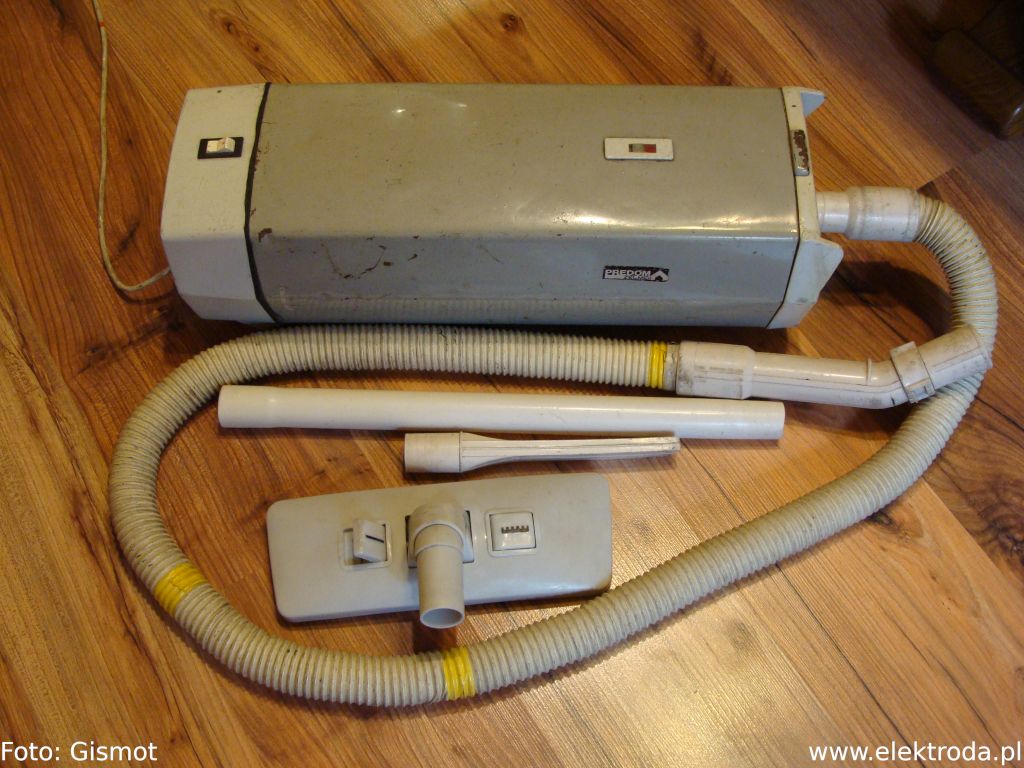
    E.g. Polish audio equipment, hoovers, frania spinning washing machine, etc. are made in protection class II.

    Take the ZELMER hoover type. 251, which is made in protection class II and has a metal housing.
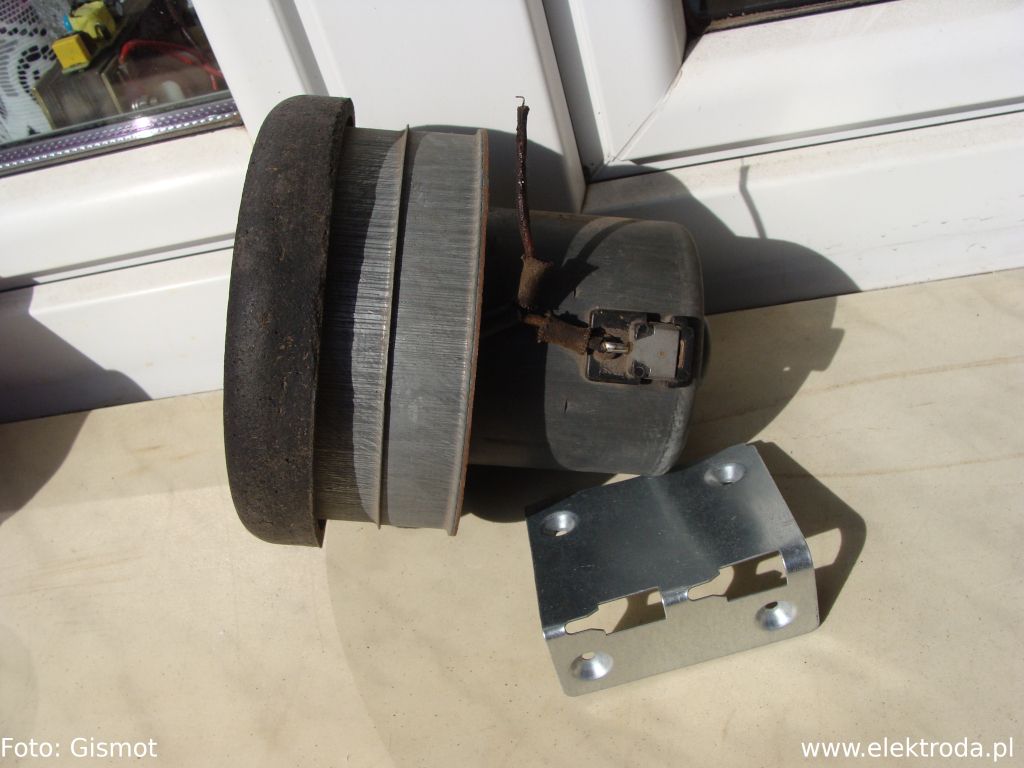
    It is equipped with an RH 5500 motor together with a MIFLEX KSEPpz - 011 anti-interference filter.
    Is this equipment safe? as much as possible, as the motor is isolated from the housing by rubber spacers.

    Old Zelmer type 251 vacuum cleaner with hose and nozzle on wooden floor Damaged MIFLEX KSEPpz-011 interference filter with burnt wire visible

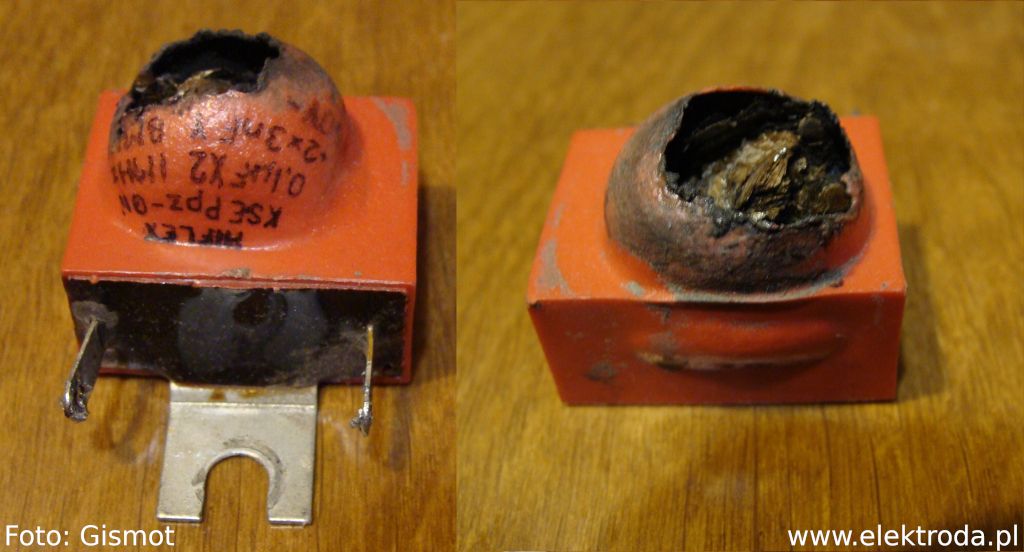
    And this is how the faulty MIFLEX anti-interference filter KSEPpz - 011 looks like:
    Damaged MIFLEX KSEPpz-011 interference filter with burnt casing
  • #25 21781203
    ArturAVS
    Moderator
    filipcichowskidev wrote:
    You are not focusing on the substance of the matter, but on a made-up story.

    Not true.
    filipcichowskidev wrote:
    It is about web filters and RIFs

    This is unfortunately due to your
    filipcichowskidev wrote:
    The story is obviously exaggerated and coloured inserted for humorous reasons - with a working installation a differential should work.

    I don't know what's humorous about misuse and "flouting" safety? First we protect and then we power . Do you know this principle? Every electronic component has its purpose and its associated drawbacks and life span. The defects you write about are not strange. Safety, is not only about components/devices but above all about Correct installation supplying them.
  • #26 21781219
    filipcichowskidev
    Level 9  
    I have therefore adapted the message to the specifics of this forum. The article in English appeared on other forums and there the discussion was quite different - people posted pictures of the most frequently damaged filters, advised each other of the replacements - hence my surprise that here the discussion was only about the history, while the main topic was pushed aside. I have edited the article.

    In any case, I can see that it doesn't pay to write anything on Elektroda because the discussion here is not in any way developmental. On EEVBlog I always learn something new, and here.... Just look at what was in the article about the Tektronix Type 107 - the most important thing was that for "fan" I said "windmill".... Fortunately, in English it's simply "fan".

    >>21781203

    What's humorous about misuse of equipment? It's hard to say what exactly. During breaks at work, engineers older than me often showed me videos from the ElectroBOOM channel where, for example, Mehdi made an electric guitar connected to 230V. Probably some of it was directed, obviously not everything that appears on the internet is true. I can't name the factor that made us laugh. If I offended someone's electrical feelings well, it happens :D

    >>21780722

    This is where my mental shortcut came in. You are right, it is possible to make a device with metal elements in the second class. The Maci Mini, for example, are made that way. It's all nice as long as the insulation is realised in a permanent way. What I have in mind - in some Polish devices I have seen the leads to the mains transformer protected only with oil shirts, which were already blown off at the assembly stage. After many years, these shrouds sometimes fall apart and bare wires remain. It's not too bad if the soldered connection is permanent, but there have been cases where the tin was missing and the cable fell out on its own. If it "touched" this metal element, then we have a problem. Of course, this is unlikely to happen, but I find that when working with electricity a little paranoia never hurts and I simply test with an insulation meter before I set about repairing anything. Of course, something can still happen when plugged in.

    "But 40 years ago it worked, what are you throwing around..." - i know what to look out for before plugging an old bugger into the mains. But some people don't know what could go wrong and they could get themselves hurt. Making you aware. When rummaging through any mains-powered appliance I wear insulating gloves and goggles.
  • #27 21781231
    ArturAVS
    Moderator
    filipcichowskidev wrote:
    I have therefore tailored the message to the specifics of this forum.

    And the specifics are? Concern for safety?
    filipcichowskidev wrote:
    The article in English was published on other forums and there the discussion was quite different

    You are on the .pl version, we take care of security here.
    filipcichowskidev wrote:
    films from the ElectroBOOM channel

    If you base your knowledge on these kinds of videos.... I have no questions.
    filipcichowskidev wrote:
    On breaks at work, engineers older than me would often show me videos from the channel

    I don't think you 'caught' the irony in what they were showing you.

    At this point, I perceive your "Article" as mocking electroda.co.uk. There is never a joke with safety rules, the life and health of others or yours depends on it.
  • #28 21781250
    filipcichowskidev
    Level 9  
    >>21781231

    And why would I write derision on a forum where I contribute? You are looking for an enemy where there is none. Gulson himself has moved my writings to the main one, so if the administrator doesn't see a problem then maybe there really isn't one?

    I don't base my knowledge on satirical content. I described in the post above how I approach unfamiliar equipment. Do you see any flaws in this approach? We can discuss based on facts, but I won't engage in ad personam attacks - a moderator, I think, is unbecoming. Tell me how many people on this forum check equipment with an insulation meter before they start messing around with it? Well, a minority, I think, since quite a few people in the section devoted to repairing white goods and household appliances have at their disposal at most a meter from the Biedronka shop. And you are trying to convince me that I am ignoring safety by putting poor Internet users, who are incapable of analysing facts, at risk?

    You accuse me of not understanding irony, but you didn't understand it yourself. I have no problem distinguishing fiction from reality.

    I've given up, Elektroda didn't meet my expectations, but I'll leave this account because sometimes it's worth downloading a scheme. It's a pity, because I have a pretty cool computer to describe below, but as you can see it's not worth it.

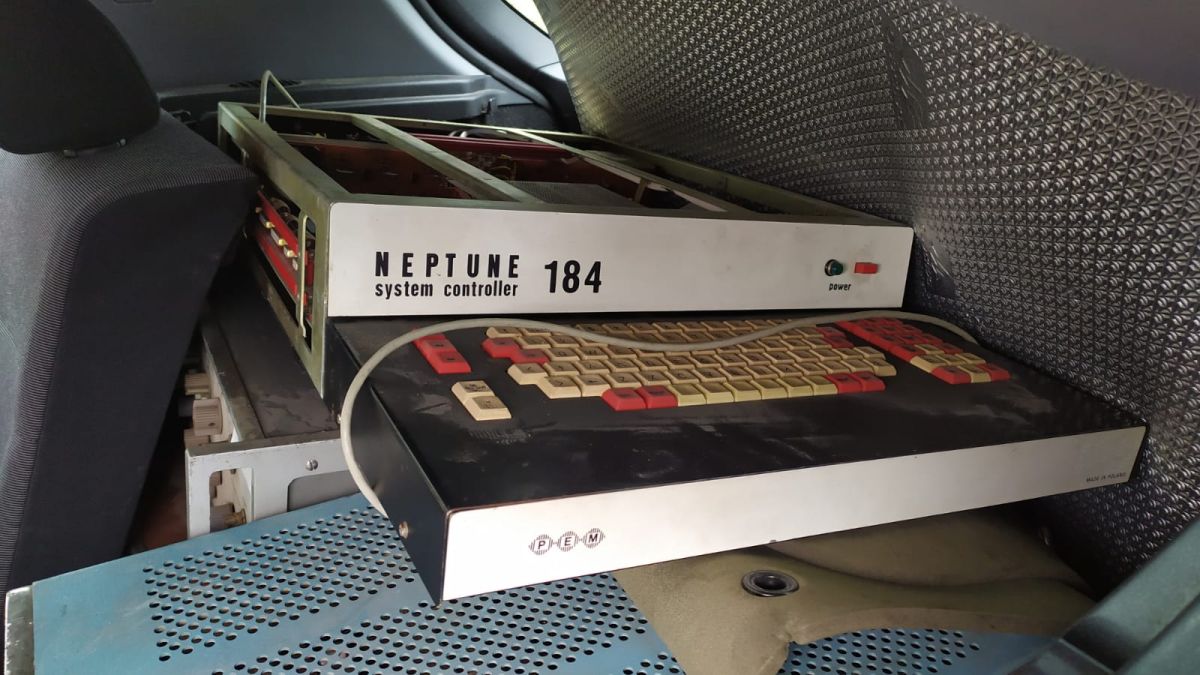
    Old Neptune 184 system controller and keyboard in a car trunk Text about Neptune 184 computer used at EWA nuclear reactor in Świerk
  • #29 21781263
    ArturAVS
    Moderator
    filipcichowskidev wrote:
    You are looking for an enemy where there is none. Gulson himself has flipped my writings to the main one, so if the admin doesn't see a problem then maybe there really isn't one?

    This is just your interpretation.
    filipcichowskidev wrote:
    I do not base my knowledge on satirical content. I described in the post above how I approach unfamiliar equipment. Do you see any flaws in this approach?

    You could have written accurately, detailing the problem. You didn't.

    filipcichowskidev wrote:
    We can discuss based on facts, but I will not engage in ad personam attacks - a moderator, I think, is not befitting.


    Therefore, for my own sake and out of respect for others. I will not respond to you in the manner you expect.
  • #30 21781353
    Wawrzyniec
    Level 38  
    filipcichowskidev wrote:
    I know what to look for before plugging an old heb into the mains

    Probably not really though since your messages are of the following type: In an old two-wire installation with a neutral pin (i.e. TNC), a differential should trip if there is a puncture on the appliance housing. How would you connect it so that it could work? And work properly?
ADVERTISEMENT