logo elektroda
logo elektroda
X
logo elektroda

Google ends support for Nest Learning Thermostat (1st and 2nd generation) - from 25 October 2025

p.kaczmarek2  7 1038 Cool? (+11)
📢 Listen (AI):

TL;DR

  • Google will end support for the Nest Learning Thermostat 1st gen (2011), 2nd gen (2012), and 2nd gen EU (2014) on 25 October 2025.
  • The thermostats will be removed from Google Nest and Google Home apps, losing remote control, status checks, notifications, assistant integrations, Home/Away Assist, and Nest Protect shutdown links.
  • They will still work locally on-device with schedules, temperature modes, and settings, but Google says software and security updates will stop.
  • Forum commenters use the announcement to argue for thermostats with local control, Home Assistant compatibility, and independence from cloud-based vendor decisions.
Generated by the language model.
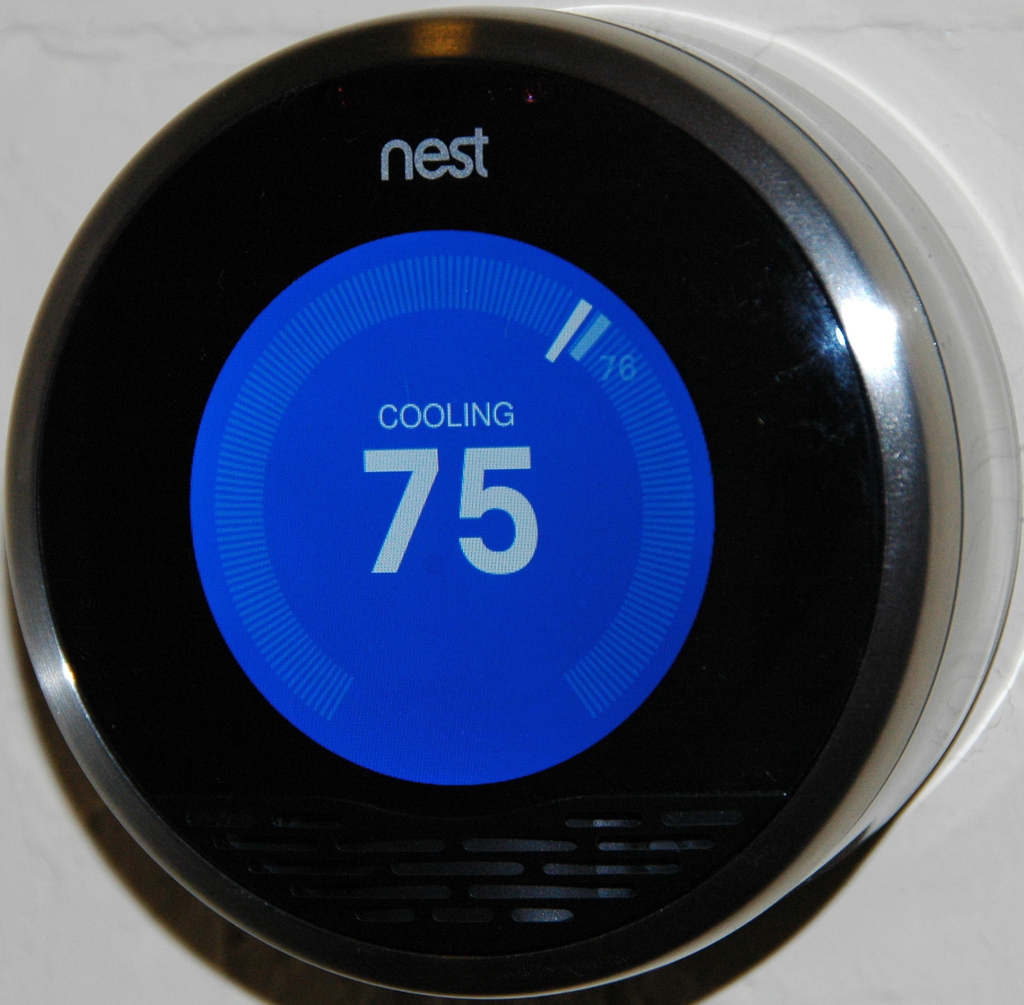
Nest thermostat with blue display set to cooling at 75°F
Google has announced the end of support for older models of the Nest Learning series of thermostats. From 25 October 2025, these devices will no longer connect to Google Nest or Google Home apps. This means that equipment advertised as smart will suddenly lose much of its functionality and disappear from the app panel itself.

This applies to the Nest Learning Thermostat 1st gen (2011), 2nd gen (2012), and 2nd gen EU (2014) models.

What exactly will happen to the thermostats?
- The thermostat will be disconnected from the app and removed from your account.
- You will not be able to control it remotely, check status or receive notifications.
- Integrations with assistants and features such as Home/Away Assist will stop working.
- Nest Protect will no longer work with the thermostat (no emergency shutdown).

The device will continue to operate locally: control directly on the thermostat, support for schedules and temperature modes, access to settings available on the device itself. However, software and security updates will no longer be made available, which may affect long-term functionality.

Source: https://support.google.com/googlenest/answer/16233096

And what are the comments from users?
https://news.ycombinator.com/item?id=45147385

1. Preference for thermostats that are compatible with local automation - many users appreciate devices that work with Home Assistant and ZigBee/Z-Wave, highlighting that this increases independence from cloud-based services and makes them independent of manufacturers' decisions.
2. growing reliance on open-source solutions - some point out that they are developing open-source versions of Nest thermostats themselves, continuing the life of the hardware with local software and without dependence on Google.
3. Outrage at the manufacturer's decision - frustration towards Google/Nest is strong as users feel let down by the withdrawal of support, although the hardware technically still works.
4. Profitability of advanced thermostats - some people feel that it is not at all necessary to overpay for 'smart' hardware with a closed cloud infrastructure when a solid cheap thermostat can last decades without issue.
5. difficulty in finding durable and locally-enabled products - users complain that it is difficult to find devices that offer a modern user interface and at the same time work without internet connectivity.
6) Growing consumer awareness - more and more people admit that when buying smart appliances, they are starting to choose those that can be connected to Home Assistant and are independent of remote services.
7. Confidence in brands such as Honeywell and Reolink - there is an emerging recognition that it is worth investing in equipment from manufacturers that offer local control and do not make the user dependent on subscriptions or the cloud.
8. Practical concerns about the future of equipment - users note that equipment ceases to be 'smart' once support leaves and local operation becomes a key feature for longer life.
9. Frequent comparisons to ordinary 'dumb' thermostats - some argue that a traditional, reliable mechanical thermostat can last for generations, putting current digital products in an unfavourable light.
10. Encouragement of changes to the IoT business model - comments suggest that the technology company should allow the user to manage the device locally even after support ends, rather than forcing the user to buy new hardware.

My comment: here we have the typical problem of subscriptions and cloud services. The customer supposedly 'buys' the product outright, but the manufacturer can still disable or functionally restrict it at any time. In practice, this is acquiring the rights to use the hardware while remaining at the mercy of the manufacturer, who may deliberately restrict older product series to sell more newer copies. Most users don't give it a second thought, but in effect hand over control of their own device to a corporation. So instead of actual ownership, we have a kind of lease with unclear terms, where a software update can introduce restrictions instead of improvements, and the end of support becomes an excuse for 'forced' hardware replacement. This leads not only to additional costs for the user, but also to waste and faster product obsolescence. For this reason, I recommend buying products that at least give some sort of local control option, completely without the cloud.

Information about the Nest thermostat range: https://en.wikipedia.org/wiki/Nest_Thermostat
Source of title image: https://en.wikipedia.org/wiki/Nest_Thermostat#/media/File:Nest_front_official.png (Public Domain)

About Author
p.kaczmarek2
p.kaczmarek2 wrote 14434 posts with rating 12399 , helped 650 times. Been with us since 2014 year.

Comments

pikarel 07 Sep 2025 11:07

I fully agree with the opinion of my colleague @p.kaczmarek2. It's a good thing that my gas boiler, which is 25 years old, has a thermostat on the knob and I only occasionally clean the thermocouple of... [Read more]

DJ_KLIMA 07 Sep 2025 22:18

And that's how you make $, good but not too cool. To make it cool, buy new, it'll be cool, but you don't know how long it'll be cool. [Read more]

Erbit 08 Sep 2025 10:14

I have had home automation for over 10 years. Among the company devices, I have devices like Sonoff with Tasmota software preloaded. All the automation components (and I have close to 200 of them) work... [Read more]

aadeer 11 Sep 2025 14:16

Somewhere in the smart home topics there were a lot of complaints about Matter, including I think @pkaczmarek2 . But it could be a solution. The disadvantage is the lack of flashing - probably some EU... [Read more]

Erbit 16 Sep 2025 22:05

. Do you send it out ? I also do this because running it locally at home is, as I wrote earlier, inefficient and too hardware intensive. [Read more]

aadeer 17 Sep 2025 12:56

No, only via telegram, the transcription goes locally. Via n8n I receive and dump the note to a folder on my server, and every so often a script fires up from cron that converts this to text, calling a... [Read more]

p.kaczmarek2 18 Nov 2025 21:40

Users no longer have remote control via Google's servers over Nest thermostats, but the thermostats continue to send 50 MB of data per day to Google: [Read more]

FAQ

TL;DR: On October 25, 2025, 3 Nest Learning models “will no longer connect to the Nest app”; local scheduling still works, but remote features end. [Google, 2025]

Why it matters: This FAQ helps Nest owners decide what to do next and how to keep heat running without the cloud.

Quick Facts

  • Cutoff date: 25 October 2025; affected: Nest Learning Thermostat 1st gen, 2nd gen, and 2nd gen EU. [Google, 2025]
  • After cutoff, remote control, Home/Away Assist, and Nest Protect link stop; on-device control and schedules continue. [Google, 2025]
  • Affected model years: 2011 (1st gen), 2012 (2nd gen), 2014 (2nd gen EU). [Wikipedia, Nest Thermostat]
  • Reported data behavior: units can still send ~50 MB/day to Google even without remote control. [Elektroda, p.kaczmarek2, post #21755607]
  • Forum consensus: prefer local automation (Home Assistant, Zigbee/Z-Wave) to avoid cloud lock-in. [Elektroda, p.kaczmarek2, post #21655449]

What exactly happens to my Nest on October 25, 2025?

Your thermostat is removed from your account and disconnected from Nest/Google Home apps. Remote control, status, notifications, Home/Away Assist, and Nest Protect emergency shutoff stop. On-device control, schedules, temperature modes, and local settings remain. No more software or security updates after that date. [Google, 2025]

Will my heating still work without the app?

Yes. You can adjust temperature on the thermostat, run schedules, and use basic modes locally. The cloud features stop, so no remote changes, automations, or assistant integrations. Keep a local schedule set before the cutoff to avoid surprises. [Google, 2025]

Which models and years are affected?

Nest Learning Thermostat 1st gen (2011), 2nd gen (2012), and 2nd gen EU (2014) lose app support. Newer Nest models are not listed in this cutoff. Check your unit’s model generation and release year if unsure. [Wikipedia, Nest Thermostat]

What features go away versus stay local?

Gone: app access, remote control, Google Assistant integrations, Home/Away Assist, and Nest Protect emergency shutoff. Stay: on-device control, scheduling, temperature modes, and device settings. “Local operation continues after support ends.” [Google, 2025]

How do I keep using my Nest locally after the cutoff?

Follow these steps:
  1. Set or update schedules on the thermostat itself.
  2. Disable or block internet for the thermostat at your router.
  3. Verify heat cycles and temperature changes locally for a day. These steps preserve local control and reduce cloud errors. [Google, 2025]

Will my thermostat get security or bug fixes after October 25, 2025?

No. Google states software and security updates will no longer be provided. That increases long‑term risk if the device remains online. Consider isolating it from the internet or planning a replacement path. [Google, 2025]

Is my old Nest still sending data to Google after remote features ended?

A user report shows thermostats can still transmit about 50 MB of data per day to Google, despite remote control being removed. If privacy matters, block internet access at your router or VLAN. “50 MB/day” is the observed figure in that test. [Elektroda, p.kaczmarek2, post #21755607]

How can I avoid cloud lock‑in for thermostats and HVAC?

Choose devices that support local control and open protocols. Users recommend Home Assistant with Zigbee or Z‑Wave, and hardware that works without vendor clouds. Expert tip: “Buy products that at least give some sort of local control option.” [Elektroda, p.kaczmarek2, post #21655449]

Can I integrate my setup with Home Assistant without the cloud?

Yes. Many users run full local automations. One example uses Sonoff hardware flashed or preloaded with local firmware and keeps everything offline, using VPN for remote access when needed. This approach avoids vendor shutdowns. [Elektroda, Erbit, post #21656470]

Will Matter fix this problem for new devices?

Matter targets local, interoperable control through a common standard. A user notes that with Matter you can onboard devices to your hub without cloud dependence, then govern internet access via router rules. Results vary by device. [Elektroda, aadeer, post #21687089]

What is Tuya?

Tuya is an IoT platform company that provides cloud and embedded solutions used by many smart‑home brands. Devices may use Tuya chips, apps, or cloud services behind the scenes. [Wikipedia, Tuya]

What is Arduino Nano?

Arduino Nano is a compact microcontroller board used for DIY electronics and automation. It supports numerous sensors and can control relays, thermostats, and displays in custom HVAC projects. [Wikipedia, Arduino Nano]

What is Tasmota?

Tasmota is open-source firmware for ESP-based devices. It enables local control via MQTT or HTTP, removing the need for vendor clouds and allowing direct integration with Home Assistant. [Tasmota Docs]

What is CAN bus?

Controller Area Network (CAN bus) is a robust serial bus used in vehicles and industry. It lets microcontrollers and devices communicate reliably without a host computer. [Wikipedia, CAN bus]

Which brands are viewed favorably for local control?

Forum users cite Honeywell for HVAC and Reolink for cameras as examples of brands with strong local options, reducing subscription and cloud reliance. Evaluate specific models for offline features. [Elektroda, p.kaczmarek2, post #21655449]

Should I replace my unsupported Nest or keep it?

Keep it if local control and schedules meet your needs. Isolate it from the internet for safety. Replace it if you require remote control, integrations, or continued updates. “I recommend buying products that give local control.” [Elektroda, p.kaczmarek2, post #21655449]
Generated by the language model.
%}