I first tested it in April and it was immediately obvious that it was a beta version. My first impressions were actually quite negative. The Android app hardly worked at all. On iOS, it was actually quite OK. After getting in touch with Zamel and seeing that the promised features were good enough, I decided to go ahead and use the system. A few months later, I started renovating my house and, whilst I was at it, bought 10 actuators; I’ve been testing the system on a daily basis since August.
As of today, many features listed on the official extalife.pl website are still missing.
These include, amongst others:
1. Logic functions (two-month delay)
2. Heating control
3. Full configuration of actuators via the app (many configuration options shown in the official actuator manuals are missing)
4. Compatibility with exta free. This is theoretically due to be added by the end of 2017, but given the delay in adding other features that were already supposed to be there – I wouldn’t count on it happening this year. Zamel himself is also quite sceptical about this. Fortunately, they’re quite reasonable to deal with, so you can find out how the work is progressing.
5. Online software updates for the EFC-01 controller – requires manually downloading the software onto an SD card
6. Online software updates for receivers and transmitters – requires manually downloading the software onto an SD card
Communication between receivers and transmitters works fine, but when several receivers are paired with a single transmitter (e.g. the same remote control button), the reporting of the receiver’s status to the central controller almost always fails. All the drawbacks of radio communication are evident in this solution – many receivers transmit at the same time and, as a result, the central controller receives nothing but interference. Unfortunately, the system itself is too technically simple to overcome these drawbacks. The lack of mechanisms such as CSMA/CD or CSMA/CA means that the system very often becomes out of synchronisation with the central controller. However, when controlling directly from the application itself – i.e. the central controller – it works reasonably well. On the other hand, when using transmitters paired with multiple devices, the system is unreliable. Zamel is tackling these issues by treating the symptoms (forcing the controller to read the status of receivers – currently only in the planning stage; not yet implemented) rather than changing the underlying design, which is of course much more difficult but offers an almost 100% guarantee of success.
There is still a lack of many actuators, transmitters and sensors familiar from the Exta Free series.
Personally, I also really miss what Fibaro has in its transmitters – the ability to define different actions depending on what happens when the transmitter button is pressed – 1 click, 2 clicks, or holding down. Currently, pressing a button triggers a specific action in the receiver. I’d be very pleased if I could define different actions for a given button depending on whether I press it once, twice or hold it down. For example, when holding down a button, I’d like to trigger a scene rather than a simple receiver action such as on/off. Unfortunately, Zamel has no plans to include this

That’s a shame, because the transmitters and receivers have their own software and, in theory, you could do whatever you like here – the system has the potential to be developed further, but the current design is quite basic and limited.
I think they’re still at least a year away from realising the system’s full potential. They’ve released the system now, probably to gauge the market and gauge interest, but this may put many people off. It seems to me that there is a lack of confidence in the project’s success here, and consequently limited funding, resulting in slow development.
Anyone wishing to buy this should bear in mind that it is still in beta, and the information provided in the official documentation and on the manufacturer’s website is inaccurate, as many features are simply not yet available. At this stage of development, it’s hard to call this a smart home. It’s really just basic automation, though of course it sounds better from a marketing perspective.







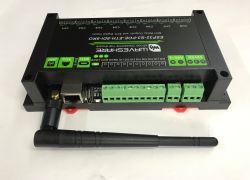
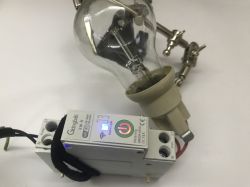
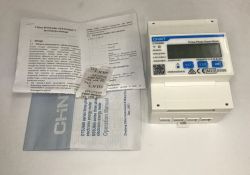
 Despite everything, I’m keeping my fingers crossed for Zamel because it’s a very reliable company and one I’d recommend. I’ll be keen to follow the product’s progress.
