


Smart Home wireless technology - a guide
The hallmark of smart home systems being developed today is to expand their capabilities while simplifying how they are installed and configured. At the moment, the average smartphone user, able to set up Wi-Fi access, will be able to automate their home without the costly involvement of specialists.
When we become the owner of a secondary market flat or house, we are additionally burdened with the baggage of very costly renovations and building alterations to bring the property up to a satisfactory level of quality. What if we want to become the owner of an automated home?
Smart home technology enthusiasts opting for the installation of a smart home system that does not require the wiring to be laid out for it can save hundreds of zlotys with this choice.
Smart Home how to get started? `
The smart home systems market is growing rapidly. There are now at least a few starter kits available in the shops to start the adventure of automating the home and improving the security of the household. The kits vary in their wealth of equipment and price spectrum. A set allowing the control of temperature, humidity, containing motion detectors, a contraption can be purchased for a few hundred zlotys. There is no upper limit, as the Fibaro systems start at amounts well over PLN 1,500. It is worth choosing a system which we will be able to install on our own, thus not generating additional costs. In many cases, the installation of the systems is very simple and does not trouble the average user. Let us look at how to start such an installation.
Why ZigBee technology?
Alarm and smart home systems must be based on a reliable communication protocol for the individual devices that make up the system. The system should work properly even if one of its components fails. For this to happen, the network formed by the nodes should be of type mesh . A broken node in such a system is intelligently bypassed and an alternative path is found, so that communication and management of devices is still possible. The ZigBee communication protocol provides just this type of device interconnection.
Another characteristic that underpins this system is its energy efficiency. Thanks to minimal energy requirements, the end devices, specific detectors, are able to operate without changing batteries for many years, ensuring the safety of the occupants and increasing their comfort of life.
Heart of the Smart Home system - hub/central unit
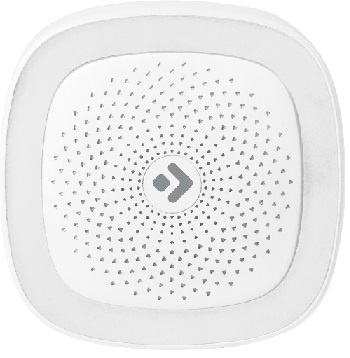
The construction of each smart home system begins with a discussion of its heart, the hub often referred to as the gateway device this often supports several communication standards, which allow the system to be controlled on the one hand and the user to control it remotely on the other. The user controls the hub via an app available for smartphones, connecting to it via the internet and Wi-Fi. In addition, the hub can act as a siren and warn of detected threats with a light signal.
Configuration, management, arming the system, querying detectors for their status, all these functions are performed by this device.
Secure window openings, doors, gates
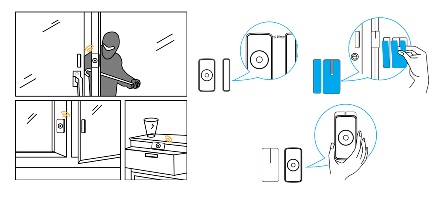
A signal that a window or door has been opened while we are away from home indicates an attempted burglary. In order to detect this type of unauthorised action, windows and doors should be secured with a multifunctional sensor. The reed switch is a small component consisting of two parts, which are fixed in parallel on the moving window/door sash and its frame. The multifunctional smart home sensor is also suitable for securing office cupboard doors storing important company documents, garage doors, ceiling flaps leading to the attic, etc.
Motion detectors
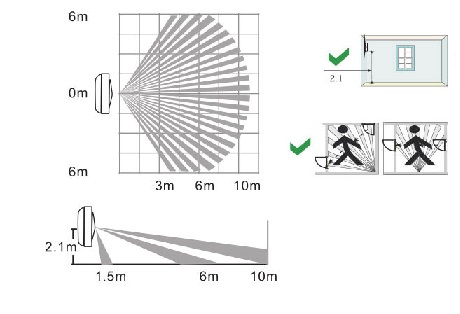
Motion sensors detect the presence of people in guarded premises. They allow the user to obtain information about an approaching attacker and can also determine the occupancy of rooms in the house. As the installation of the sensor is simply a matter of sticking it to a selected spot on the wall, the user only needs to be mindful of its detection areas in order to make optimal use of its capabilities.
Flood detector - bathroom guard
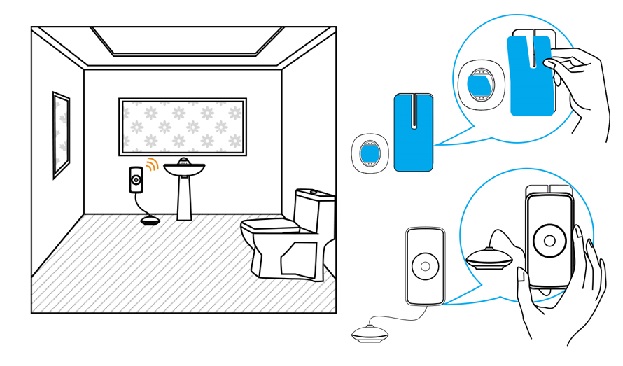
The flooding detector is distinctive due to its design. It consists of a detector and a probe which, thanks to its small size, can be placed even in inaccessible areas at risk of flooding. Here again, the advantage of wireless communication of the system components is worth emphasising. Installation of the detector takes seconds and requires no chiselling, no destruction of tiles, wall structure or additional wiring. It is a good idea to protect all rooms with water and sewage system valves with a flood detector. This is most often the floor area around the shower, bath, washbasin, washing machine, wc, but also the dishwasher and sink. In detached houses, we should consider protecting basements. Particularly in hard-to-reach or infrequently visited areas, it is worth placing a flood detector to prevent the damage that a water leak can cause.
Autonomous sensors
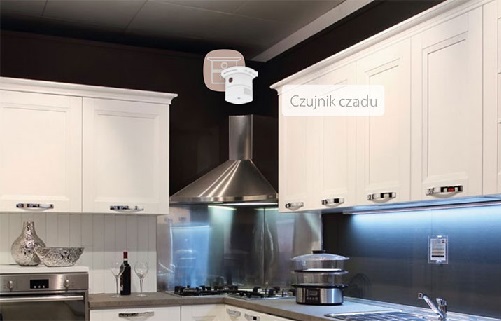
Alarm systems can include standalone sensors that will also serve their purpose without being connected to a hub/central unit. This type of device can include sensors for detecting chad and smoke detectors. The standalone sensor in such cases is equipped with systems to warn the user of the danger, such as a siren and an LED beacon. The downside of using these system components autonomously is the lack of control and monitoring, available remotely from the hub management application.
Remote management of a smart home system
The strength and usefulness of the Smart Home is determined by its ability to be managed remotely using mobile devices. The system administrator, thanks to the appropriate application, can monitor the home environment, as well as remotely issue commands to household appliances. How easy it is to use the app to configure the chimney detector and update it can be seen in the example instructional video of Ferguson's SmartHome system.
Intelligent socket - remote control of electrical appliances
With smart sockets, the user gains the ability to remotely control connected devices. It becomes possible to schedule the activities of these devices and create scenes involving them. An additional plus is often the ability to monitor the electricity consumed by a device.
IP cameras - remote home monitoring
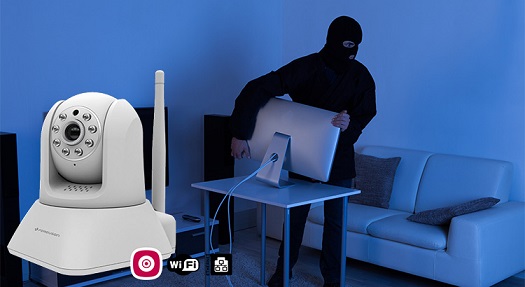
Smart Home system administrators concerned about application alert signals have the ability to view and record video from their home thanks to IP cameras. Current cameras provide Full HD video recording, have a built-in microphone and speaker, and LEDs to illuminate the room in night-time conditions. Thanks to the motors installed in the camera, the user can rotate the camera from their smartphone or tablet, monitoring the room in which it has been placed.
Infrared transmitter - one to rule them all
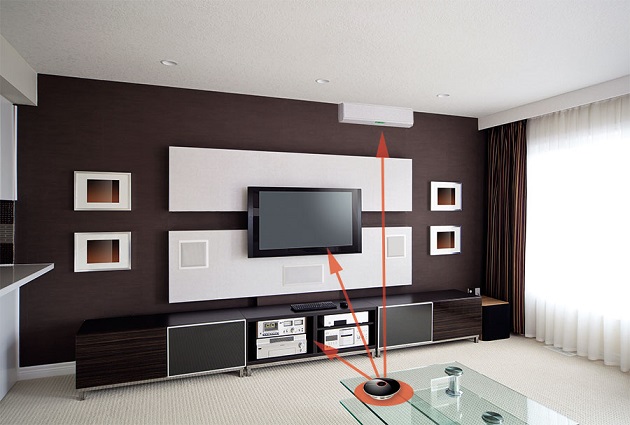
Smart home systems can include IR transmitters. These are devices that can be taught to operate and control all the white goods/appliances that normally need to be managed by an IR remote control. Using a single transmitter, we can remotely control the TV set placed in the room, the DVB-T/S/C receiver, home cinema, air conditioner, roller blinds, LED lighting and so on. Timers and the ability to create scenes are very useful functions of the IR transmitter.
Smart Home - it's the present
The smart home is slowly becoming ubiquitous. ZigBee technology, used to manage household appliances/RTVs, is now being used by some of the world's biggest companies. The LG smart fridge, the Indesit’u smart washing machine are just a few examples of the use of this wireless protocol. Developments in the technology itself are making it more accessible and cheaper every year. Home management from a smartphone by a Kowalski is not a distant future, but a turn of events for which we are already mentally ready. SmartHome Security Kits show how easy it is to do it yourself.
Sponsored article //gulson
The hallmark of smart home systems being developed today is to expand their capabilities while simplifying how they are installed and configured. At the moment, the average smartphone user, able to set up Wi-Fi access, will be able to automate their home without the costly involvement of specialists.
When we become the owner of a secondary market flat or house, we are additionally burdened with the baggage of very costly renovations and building alterations to bring the property up to a satisfactory level of quality. What if we want to become the owner of an automated home?
Smart home technology enthusiasts opting for the installation of a smart home system that does not require the wiring to be laid out for it can save hundreds of zlotys with this choice.
Smart Home how to get started? `
The smart home systems market is growing rapidly. There are now at least a few starter kits available in the shops to start the adventure of automating the home and improving the security of the household. The kits vary in their wealth of equipment and price spectrum. A set allowing the control of temperature, humidity, containing motion detectors, a contraption can be purchased for a few hundred zlotys. There is no upper limit, as the Fibaro systems start at amounts well over PLN 1,500. It is worth choosing a system which we will be able to install on our own, thus not generating additional costs. In many cases, the installation of the systems is very simple and does not trouble the average user. Let us look at how to start such an installation.
Why ZigBee technology?
Alarm and smart home systems must be based on a reliable communication protocol for the individual devices that make up the system. The system should work properly even if one of its components fails. For this to happen, the network formed by the nodes should be of type mesh . A broken node in such a system is intelligently bypassed and an alternative path is found, so that communication and management of devices is still possible. The ZigBee communication protocol provides just this type of device interconnection.
Another characteristic that underpins this system is its energy efficiency. Thanks to minimal energy requirements, the end devices, specific detectors, are able to operate without changing batteries for many years, ensuring the safety of the occupants and increasing their comfort of life.
Heart of the Smart Home system - hub/central unit
The construction of each smart home system begins with a discussion of its heart, the hub often referred to as the gateway device this often supports several communication standards, which allow the system to be controlled on the one hand and the user to control it remotely on the other. The user controls the hub via an app available for smartphones, connecting to it via the internet and Wi-Fi. In addition, the hub can act as a siren and warn of detected threats with a light signal.
Configuration, management, arming the system, querying detectors for their status, all these functions are performed by this device.
Secure window openings, doors, gates
A signal that a window or door has been opened while we are away from home indicates an attempted burglary. In order to detect this type of unauthorised action, windows and doors should be secured with a multifunctional sensor. The reed switch is a small component consisting of two parts, which are fixed in parallel on the moving window/door sash and its frame. The multifunctional smart home sensor is also suitable for securing office cupboard doors storing important company documents, garage doors, ceiling flaps leading to the attic, etc.
Motion detectors
Motion sensors detect the presence of people in guarded premises. They allow the user to obtain information about an approaching attacker and can also determine the occupancy of rooms in the house. As the installation of the sensor is simply a matter of sticking it to a selected spot on the wall, the user only needs to be mindful of its detection areas in order to make optimal use of its capabilities.
Flood detector - bathroom guard
The flooding detector is distinctive due to its design. It consists of a detector and a probe which, thanks to its small size, can be placed even in inaccessible areas at risk of flooding. Here again, the advantage of wireless communication of the system components is worth emphasising. Installation of the detector takes seconds and requires no chiselling, no destruction of tiles, wall structure or additional wiring. It is a good idea to protect all rooms with water and sewage system valves with a flood detector. This is most often the floor area around the shower, bath, washbasin, washing machine, wc, but also the dishwasher and sink. In detached houses, we should consider protecting basements. Particularly in hard-to-reach or infrequently visited areas, it is worth placing a flood detector to prevent the damage that a water leak can cause.
Autonomous sensors
Alarm systems can include standalone sensors that will also serve their purpose without being connected to a hub/central unit. This type of device can include sensors for detecting chad and smoke detectors. The standalone sensor in such cases is equipped with systems to warn the user of the danger, such as a siren and an LED beacon. The downside of using these system components autonomously is the lack of control and monitoring, available remotely from the hub management application.
Remote management of a smart home system
The strength and usefulness of the Smart Home is determined by its ability to be managed remotely using mobile devices. The system administrator, thanks to the appropriate application, can monitor the home environment, as well as remotely issue commands to household appliances. How easy it is to use the app to configure the chimney detector and update it can be seen in the example instructional video of Ferguson's SmartHome system.
Intelligent socket - remote control of electrical appliances
With smart sockets, the user gains the ability to remotely control connected devices. It becomes possible to schedule the activities of these devices and create scenes involving them. An additional plus is often the ability to monitor the electricity consumed by a device.
IP cameras - remote home monitoring
Smart Home system administrators concerned about application alert signals have the ability to view and record video from their home thanks to IP cameras. Current cameras provide Full HD video recording, have a built-in microphone and speaker, and LEDs to illuminate the room in night-time conditions. Thanks to the motors installed in the camera, the user can rotate the camera from their smartphone or tablet, monitoring the room in which it has been placed.
Infrared transmitter - one to rule them all
Smart home systems can include IR transmitters. These are devices that can be taught to operate and control all the white goods/appliances that normally need to be managed by an IR remote control. Using a single transmitter, we can remotely control the TV set placed in the room, the DVB-T/S/C receiver, home cinema, air conditioner, roller blinds, LED lighting and so on. Timers and the ability to create scenes are very useful functions of the IR transmitter.
Smart Home - it's the present
The smart home is slowly becoming ubiquitous. ZigBee technology, used to manage household appliances/RTVs, is now being used by some of the world's biggest companies. The LG smart fridge, the Indesit’u smart washing machine are just a few examples of the use of this wireless protocol. Developments in the technology itself are making it more accessible and cheaper every year. Home management from a smartphone by a Kowalski is not a distant future, but a turn of events for which we are already mentally ready. SmartHome Security Kits show how easy it is to do it yourself.
Sponsored article //gulson