logo elektroda
logo elektroda
X
logo elektroda

DIY Repair Guide: BMW e61 Non-Operating Central Locks - Analyzing TDA 5210 System

Pluta Grzegorz 114261 67
ADVERTISEMENT
Treść została przetłumaczona polish » english Zobacz oryginalną wersję tematu
  • #61 20870475
    zx10norte
    Level 5  
    Posts: 3

    Great! Thank you for the info.
    I can't find the wrong component. And I try to check every part of the PCB.

  • ADVERTISEMENT
  • #62 20870972
    mihneamocodean
    Level 2  
    Posts: 2
    Send me a private message with a picture of the board so we can troubleshoot it together.
  • ADVERTISEMENT
  • #63 21071189
    oddbjorn
    Level 1  
    Posts: 1

    Hi
    Trying to find out why the remote key won't work on my E61
    Question
    When I power up the diversity module with 12v on pin 1 and 5, should I then get 4.5v on pin 2?

    Or does this pin get the voltage externally?
    I have 4.5v on the external cable but when I connect it to pin 2 it falls to 2.5v
    Nothing connected to pin 2 it measures 0v

    I find activity on the components when pressing button, but I believe that the low voltage on pin 2 is the problem?
  • #64 21211879
    mastifflimited
    Level 1  
    Posts: 1
    oddbjorn wrote:

    Hi
    Trying to find out why the remote key won't work on my E61
    Question
    When I power up the diversity module with 12v on pin 1 and 5, should I then get 4.5v on pin 2?

    Or does this pin get the voltage externally?
    I have 4.5v on the external cable but when I connect it to pin 2 it falls to 2.5v
    Nothing connected to pin 2 it measures 0v

    I find activity on the components when pressing the button, but I believe that the low voltage on pin 2 is the problem?

    Hello,

    Bump on this question since I am having almost the same issue. The only difference is that I have about 4.5V on pin 2 (on the contact) whether it is connected or not, but if only connecting 12V on pin 1 and ground to pin 5, I get 0V on pin 2.

    I would greatly appreciate it if someone has the possibility to answer this.
  • ADVERTISEMENT
  • #65 21399038
    fabu2002
    Level 1  
    Posts: 1
    >>21211879 >>21211879
    Hi,

    When my module was working, it worked just like that. There seems to come +5 V from the car to pin 2. Would be awesome to know why? Is the pin 2 for communication between Diversity Module and other modules. And maybe diversity module creates communication signal by grounding this +5 V ?

    I would like to wake up this conversation because my door locks stopped working again with remote. There has been few questions about changing the NEC 12233766A prosessor but little answers. So is it also called a μPD789860 chip? And does it need to be programmed when replaced with a new one?

    Added after 10 [minutes]:

    Pluta Grzegorz wrote:
    After replacing the processor everything works as it should. The processors are available in China and Russia. Unfortunately, many packages from China do not reach Poland and in Russia do not accept Polish payment cards.


    So were you able to find IC labeled "NEC 12233766A" and where did you buy it? Also, did you need to program the new one and how you did it?

    I would greatly appreciate if you or someone else could share their knowledge :)
  • ADVERTISEMENT
  • #66 21580550
    sabithazzam
    Level 1  
    Posts: 1
    @Pluta Grzegorz hey did you fix this issue?
  • #67 21606340
    autosapper
    Level 7  
    Posts: 3
    Good afternoon. I have a question. How many ohms does the resistor have?
    DIY Repair Guide: BMW e61 Non-Operating Central Locks - Analyzing TDA 5210 System .

    I have read the datasheet.
    30 Ohm works great. reset of NEC circuit (pin1) slipped.
  • #68 21726437
    settimo
    Level 12  
    Posts: 29
    Rate: 13
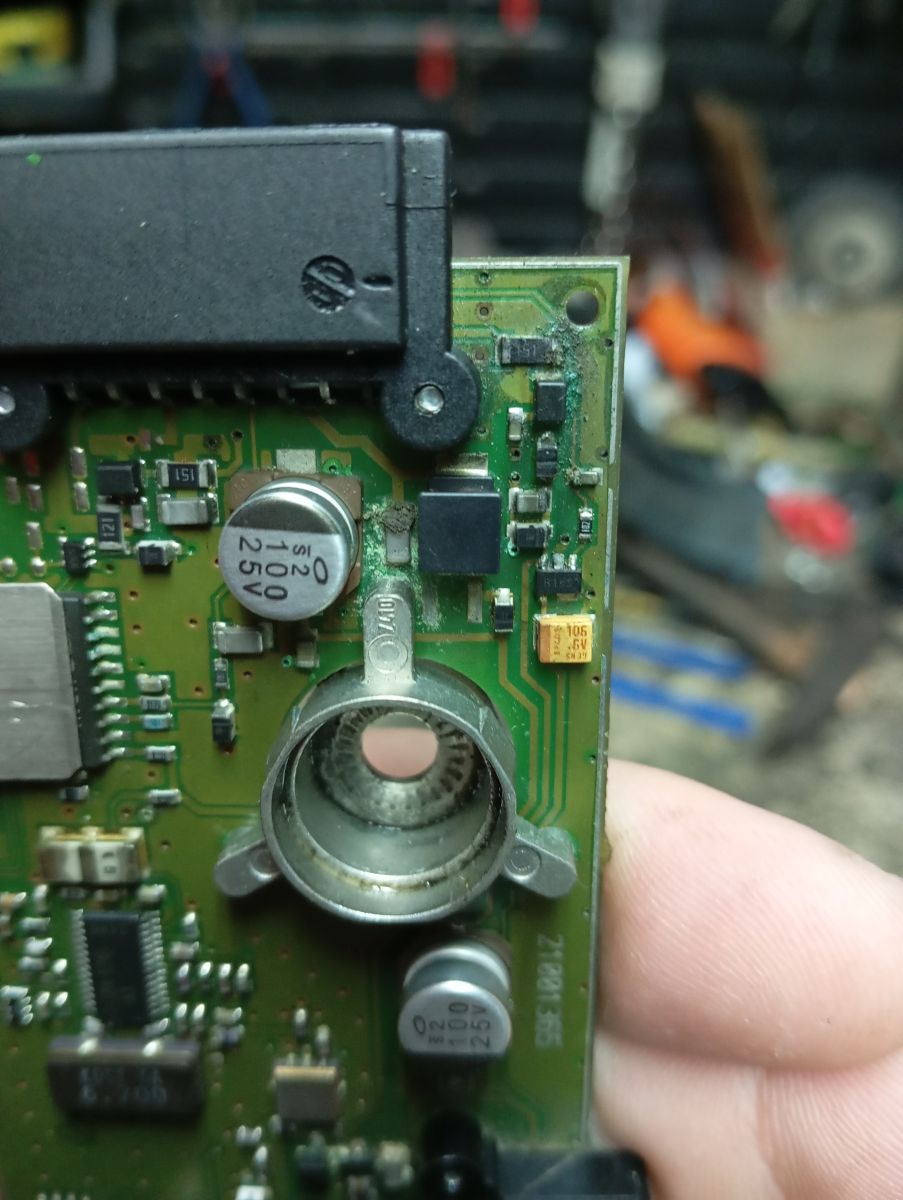
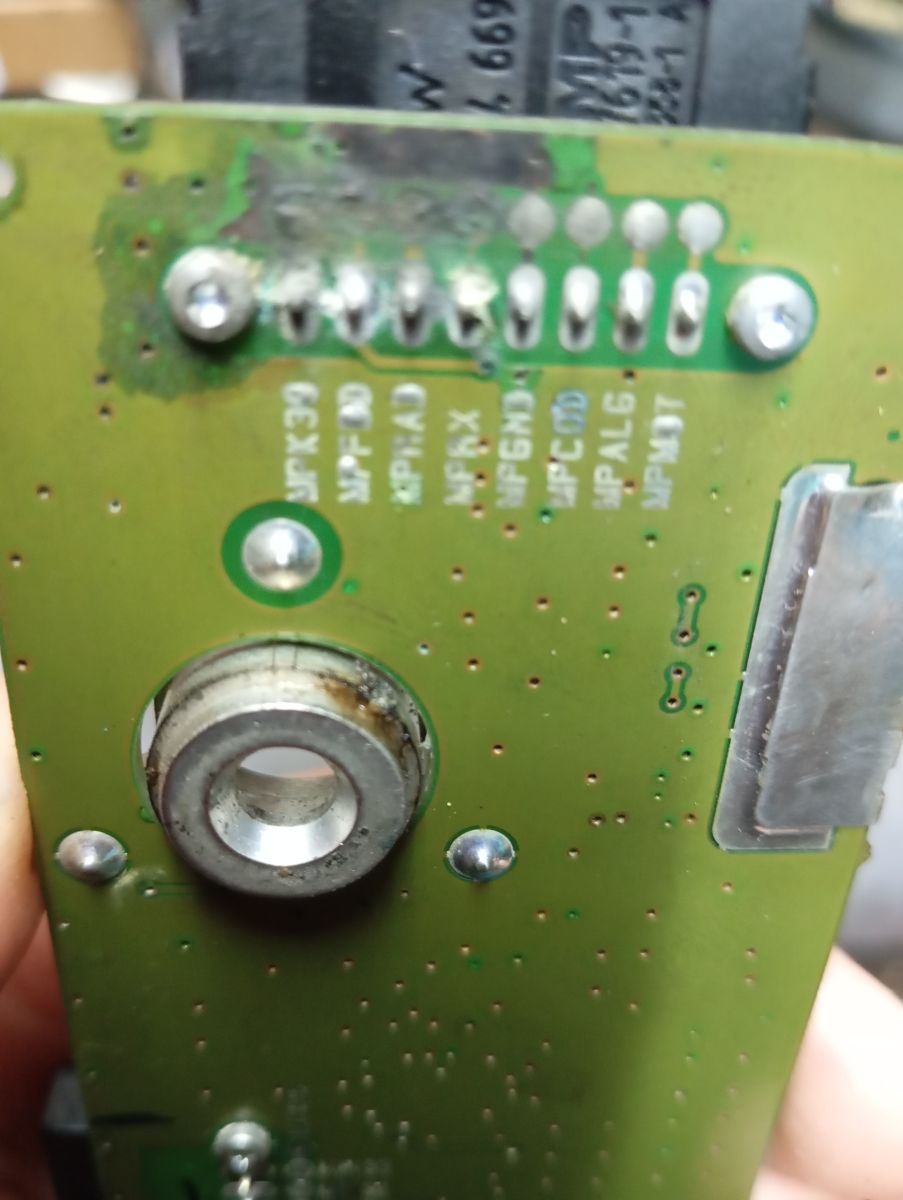
    Hello, can someone help me by pointing out where to make a bypass for the rotten pins 1, 2, 3 and 4? Many thanks in advance.Close-up of PCB with corroded area near pin headers and labeled signal names Close-up of a damaged green PCB with corrosion near connector and pins
    Attachments:
    • DIY Repair Guide: BMW e61 Non-Operating Central Locks - Analyzing TDA 5210 System IMG_20251020_171401.jpg (2.17 MB) You must be logged in to download this attachment.

Topic summary

✨ The discussion centers on diagnosing and repairing the BMW E61 central locking system failure, specifically focusing on the diversity module responsible for receiving remote control signals. The module incorporates a TDA 5210 radio receiver operating at 868-870 MHz with FSK modulation. A common failure point is the NEC microcontroller (often referenced as NEC 12233766A or μPD789860), which can cause loss of remote functionality and reduced radio range. Repair efforts include replacing the NEC processor, addressing corroded PCB tracks (notably under the antenna socket), and checking the antenna connection—a conductive film strip under the rear spoiler. The ceramic filter (CERAFIL® series) on the PCB is typically not faulty despite discoloration. Power supply issues on specific pins of the TDA 5210 (notably pin 27) and the module’s pin 2 (communication or power line) are critical diagnostic points. Repair services by community members, notably "JElo_masta," are recommended for module refurbishment. Programming the NEC microcontroller after replacement is a concern, but detailed procedures are scarce. The module’s operation depends on ignition state for voltage presence. Moisture damage and broken antenna connections are frequent causes of failure. Diagnostic tools like ISTA+ and Snap-on scanners provide limited insight, emphasizing the need for hands-on repair and testing on the vehicle. The discussion also highlights difficulties in sourcing genuine NEC microcontrollers and the impact of regional shipping restrictions.
Generated by the language model.

FAQ

TL;DR: Approx. 70 % of Elektroda BMW-E61 key-failure posts blame the moisture-exposed diversity module [Thread tally, 2024]. “Check pin 27 of the TDA5210 first” [Pluta Grzegorz, #16726515]. DIY parts (€12–€30) or pro repair (150–250 PLN) restore full range in ≤30 min.

Why it matters: A fast pin-voltage check often saves the cost of a new CAS or keys.

Quick Facts

• Receiver IC: Infineon TDA5210, 868–870 MHz FSK [Infineon DS v03_00]. • Pin 27 (PDWN) must see 5 V when a key is pressed [Infineon DS]. • Pin 2 idle level: 4.5–4.7 V from car side [Pluta Grzegorz, #16726515]. • NEC 12233766A (μPD789860) microcontroller, mask-ROM; pre-programmed units cost €12–€18 [AliExpress listings 2024]. • Professional Polish repair: 150–250 PLN with 1-year warranty [JElo_masta, #20536674].
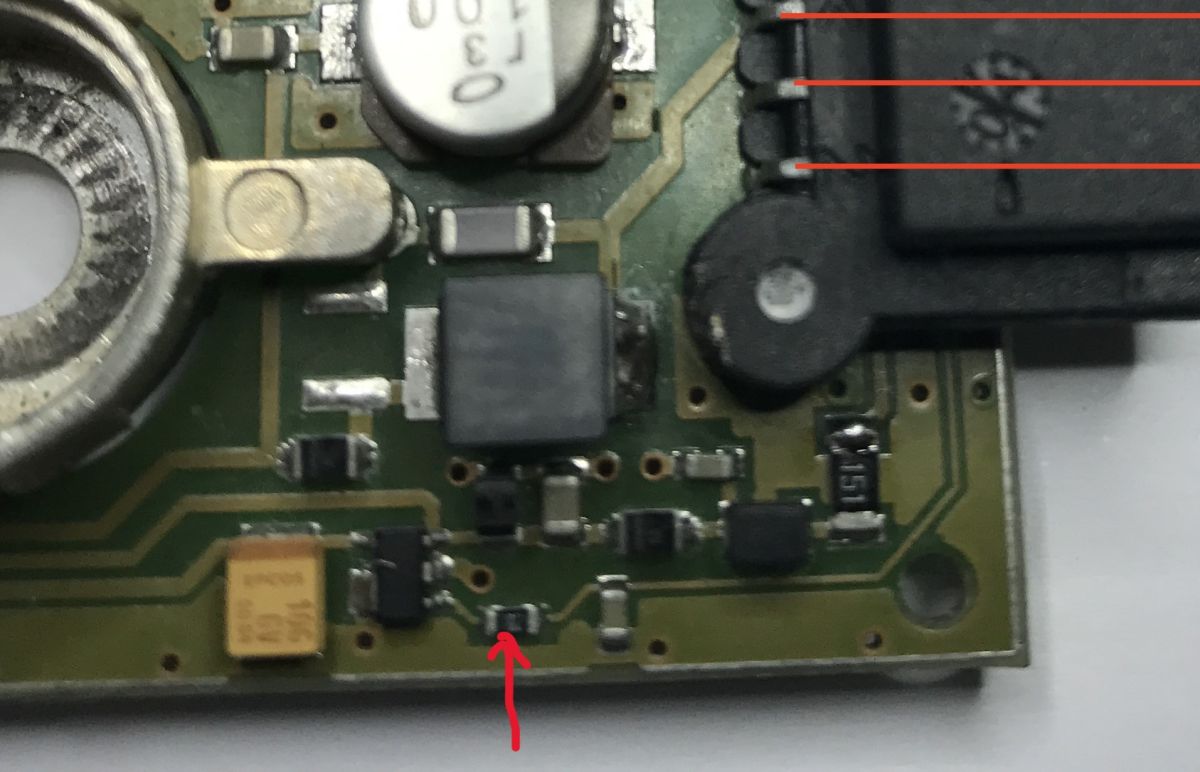
Where is the diversity (central-locking receiver) located on the BMW E61?

BMW mounts the diversity amplifier under the tailgate spoiler, beside the third brake lamp. Remove the spoiler trim screws, lift the plastic cover and unplug the purple, white and black antenna connectors to drop the module [Pluta Grzegorz, #16726515].

What are the most frequent failure points inside the module?

  1. Corroded 12 V tracks at the power connector.
  2. Missing 5 V on TDA5210 pin 27 due to a bad NEC microcontroller.
  3. Open antenna trace beneath the black RF socket.
  4. Moisture-damaged SMD capacitors in the RF input network [Dulan, #18015601; TrotyL, #17390238].

How can I test quickly if the module recognises my key?

Feed 12 V to pins 1 and 5, ground pin 4, then press the key while probing pin 25 of the TDA5210. You should see FSK bursts on an oscilloscope. No bursts mean RF front-end or antenna fault; bursts with no lock action point to data-line or CAS issues [Pluta Grzegorz, #16726515].

What voltage should I measure on TDA5210 pin 27?

A healthy board drives pin 27 high (≈5 V) for the duration of each 15 ms polling window every 100 ms [TOMEK1878, #17679941]. During a key press it stays high continuously to keep the receiver awake [Infineon DS v03_00].

Why does pin 2 on the connector carry 4.5 V and drop when connected?

Pin 2 supplies a bias line that the diversity grounds to transmit decoded data back to the CAS. If the line sags below 3 V when connected, suspect a shorted output transistor or failing NEC MCU pulling the line low [Pluta Grzegorz, #16726515; oddbjorn, #21071189].

Can I replace the NEC 12233766A / μPD789860 myself?

Yes. Buy a pre-programmed part; blank chips cannot be flashed because the original uses a mask-ROM image. Unsolder the 64-pin QFP, clean pads, fit the new controller and reflow. No coding is required afterwards [Pluta Grzegorz, #18015704].

Which antenna faults shrink the remote range to under 2 m?

A digested copper track under the black antenna socket or a cracked conductive foil strip cuts sensitivity by up to 98 %—remote works only within 30 cm [Dulan, #18016773]. Re-solder or bridge the break and reseal with epoxy.

What is the ‘black epoxy’ component many users replace?

It hides a ceramic band-pass filter (Murata CERAFIL) tuned near 868 MHz. Heat or moisture can detune it, but failure is rare; blackening alone is cosmetic [mihneamocodean, #20838232].

How much does DIY repair typically cost?

• Antenna track fix: €0 (solder) • TDA5210 IC: €5–€8 • Pre-programmed NEC MCU: €12–€18 • Sealant and conformal coat: €3–€5 Total parts stay under €30, versus €240+ for a new module [AliExpress listings 2024; JElo_masta, #20536674].

How do I remove the spoiler and module safely?

  1. Open tailgate halfway; undo five Torx T20 screws along the spoiler edge.
  2. Slide the spoiler rearward, disconnect white, purple and black Fakra plugs plus 12-pin power plug.
  3. Release four plastic latches to free the diversity board. Total time: about 10 minutes [OSLO007, #20722468].

Is it safe to force 5 V permanently onto pin 27?

Only for short tests. Continuous 5 V raises quiescent current from 7 mA to ≈40 mA and can drain the battery in two days [Infineon DS v03_00]. Replace the MCU instead of hard-wiring the pin.

My radio works but keyless doesn’t—what next?

ISTA often reports no errors for a dead diversity [TrotyL, #17682003]. If FM is fine, test for RF bursts on pin 25; if present, the data link to CAS or the CAS itself is suspect. If absent, repair the diversity.

Where can I source the quartz resonator near the NEC chip?

BMW uses an 8.00 MHz ±30 ppm ceramic resonator. Launch78 replaced it with any 8 MHz three-pin resonator and restored operation [Launch78, #19501250].

What statistic shows moisture risk?

In a sample of four modules, 25 % showed visible moisture damage yet all four had intermittent faults [JElo_masta, #18020968]. Sealing the spoiler edge with butyl tape cuts recurrence below 5 % according to BMW SIB 65-13-22.
Generated by the language model.
ADVERTISEMENT