logo elektroda
logo elektroda
X
logo elektroda

ESP8266 from different batches - one works, the other does not detect the network

demsy 4299 59
Best answers

Why do some ESP8266 modules from one batch not detect any Wi‑Fi networks or show up as an access point, even with the same firmware that works on other modules?

Your non-working ESP8266 modules are most likely faulty or counterfeit hardware, not a firmware/configuration problem [#17966054][#17955571] One tester checked three boards and found that the board with an Espressif logo worked with ESP_Easy_mega-20190511_normal_ESP8266_4M.bin, while the two AI-THINKER boards never scanned Wi‑Fi networks and never became visible as an AP, even after trying ESPEasy, ESPurna, Tasmota, Arduino HAL, and ESP-IDF code [#17966054] The modules behaved as if they had no antenna connected, so also check whether the antenna area is being shielded by the adapter or PCB [#17955587][#17966054] In the thread, the final conclusion was that the bad batch itself was the problem [#17966054]
Generated by the language model.
ADVERTISEMENT
Treść została przetłumaczona polish » english Zobacz oryginalną wersję tematu
  • #31 17945470
    Anonymous
    Level 1  
  • ADVERTISEMENT
  • #32 17945574
    demsy
    Level 22  
    Posts: 887
    Help: 17
    Rate: 178
    khoam wrote:
    demsy wrote:
    It's just that now it doesn't want to "talk" to me with putty.
    .
    Do you have the speed set to 9600 in putty?

    .
    115200. but I won't be acting further until tomorrow
  • #33 17946813
    demsy
    Level 22  
    Posts: 887
    Help: 17
    Rate: 178
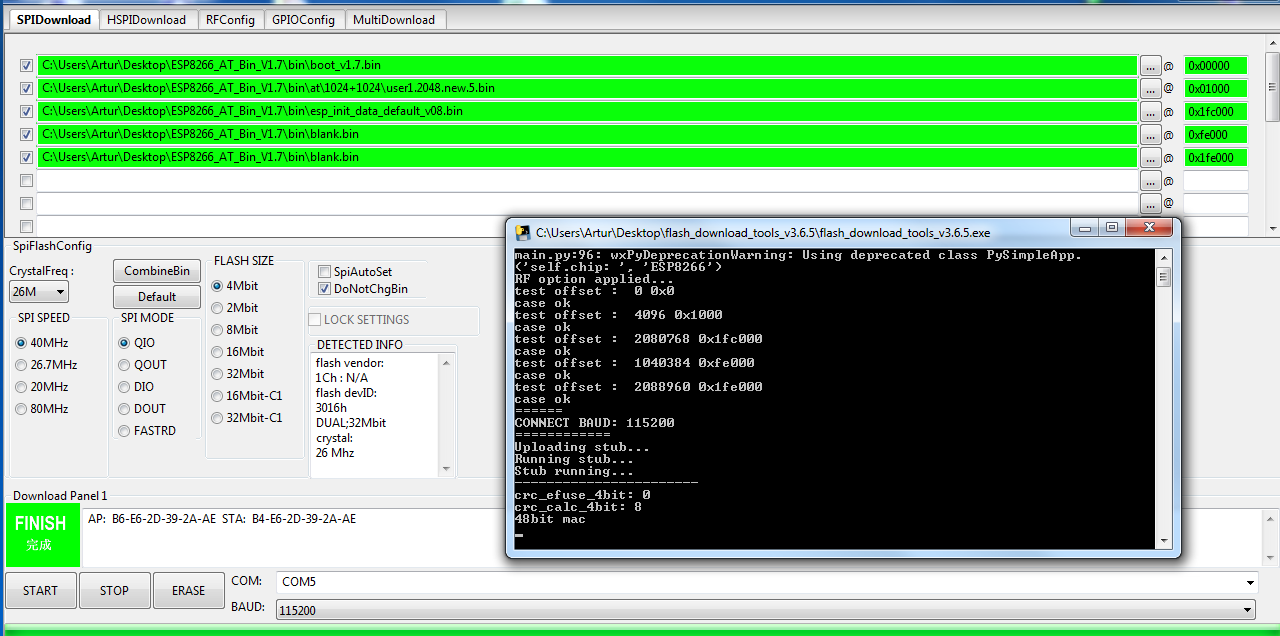
    uploaded again

    Code: HTML, XML
    Log in, to see the code
    .

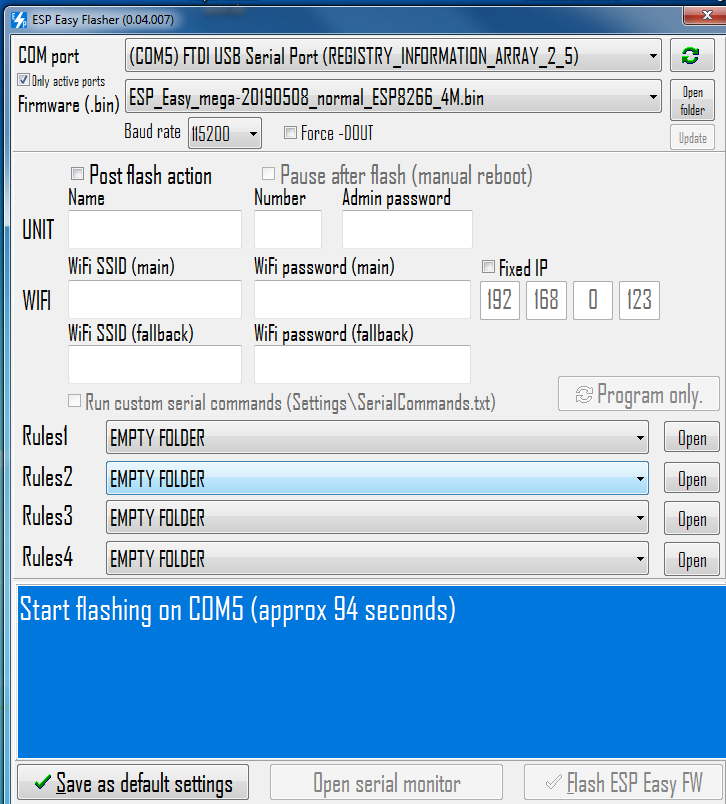
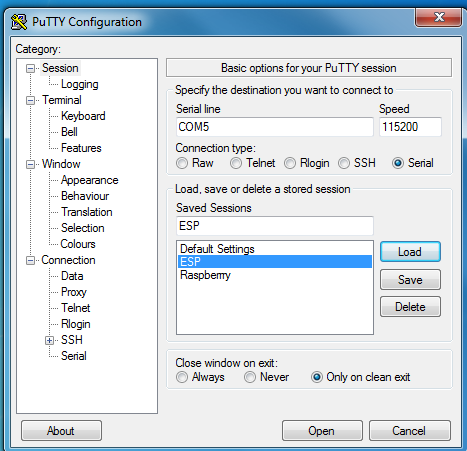
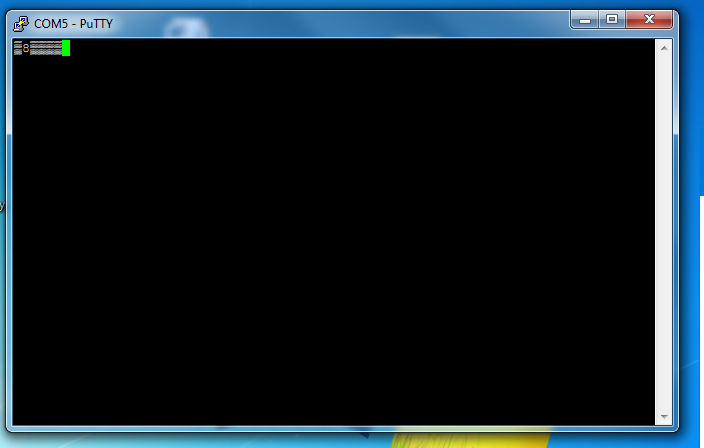
    ESP8266 from different batches - one works, the other does not detect the network .

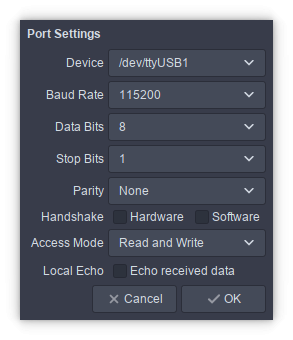
    with speed 115200

    ESP8266 from different batches - one works, the other does not detect the network

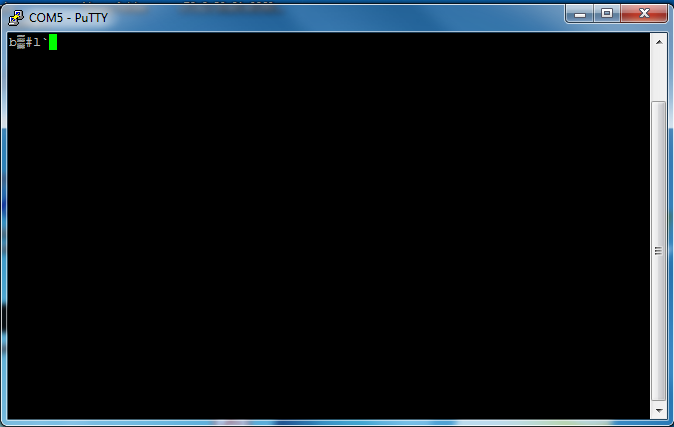
    to test pytty to see if it works i shorted RX and TX for a test so it works, in other words i suspect i have uploaded something wrong to esp

    I have also connected a fresh ESP.... and there is the same effect
  • #34 17946878
    Anonymous
    Level 1  
  • #35 17946884
    demsy
    Level 22  
    Posts: 887
    Help: 17
    Rate: 178
    same effect
    ESP8266 from different batches - one works, the other does not detect the network .
  • #36 17946933
    Anonymous
    Level 1  
  • #37 17946948
    demsy
    Level 22  
    Posts: 887
    Help: 17
    Rate: 178
    or maybe I set something wrong when uploading
  • #38 17952535
    demsy
    Level 22  
    Posts: 887
    Help: 17
    Rate: 178
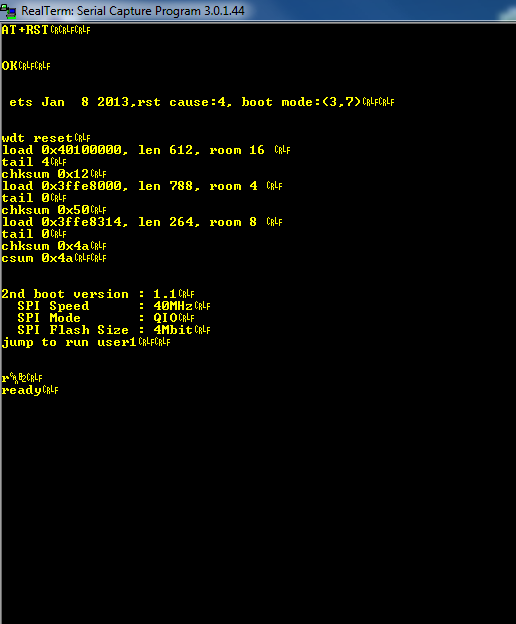
    I was able to upload a soft that works with AT commands

    ESP8266 from different batches - one works, the other does not detect the network
  • #39 17952927
    Anonymous
    Level 1  
  • ADVERTISEMENT
  • #40 17952928
    Anonymous
    Level 1  
  • #41 17952983
    demsy
    Level 22  
    Posts: 887
    Help: 17
    Rate: 178
    I'm the one who agonised for so long and didn't check another packet. Any devices with wifi detected by SSID esp?
    I will check this afternoon
  • #42 17953625
    Anonymous
    Level 1  
  • #43 17953687
    demsy
    Level 22  
    Posts: 887
    Help: 17
    Rate: 178
    khoam wrote:
    demsy wrote:
    Any devices with wifi detect SSID esp?
    .
    No problem.

    Added after 1 [minute]:

    demsy wrote:
    I was the one who agonised for so long and didn't check another package
    .
    This version I uploaded is newer than the one you provided in your first email.


    I can see by the date....
  • #44 17953779
    Anonymous
    Level 1  
  • #45 17953798
    demsy
    Level 22  
    Posts: 887
    Help: 17
    Rate: 178
    khoam wrote:
    I uploaded the soft of 25.04.2019 such as you wrote about in the first post.
    Specifically it is the file ESP_Easy_mega-20190425_normal_ESP8266_4M.bin .
    Appears to be OK :) .
    Code: Dos
    Log in, to see the code
    .

    I then repeated the test with the file ESP_Easy_mega-20190425_normal_ESP8266_1M.bin , which is exactly what you wrote about in the first post. The result is also positive:
    Code: Dos
    Log in, to see the code
    .

    ...and with which program do you upload?
    The same as before on this second sofet
  • ADVERTISEMENT
  • #46 17953815
    Anonymous
    Level 1  
  • #47 17953830
    demsy
    Level 22  
    Posts: 887
    Help: 17
    Rate: 178
    uploading version 4M

    Added after 3 [minutes]:

    One other thing I can think of is that maybe I have something wrongly connected
    Code: Lua
    Log in, to see the code


    Added after 4 [minutes]:

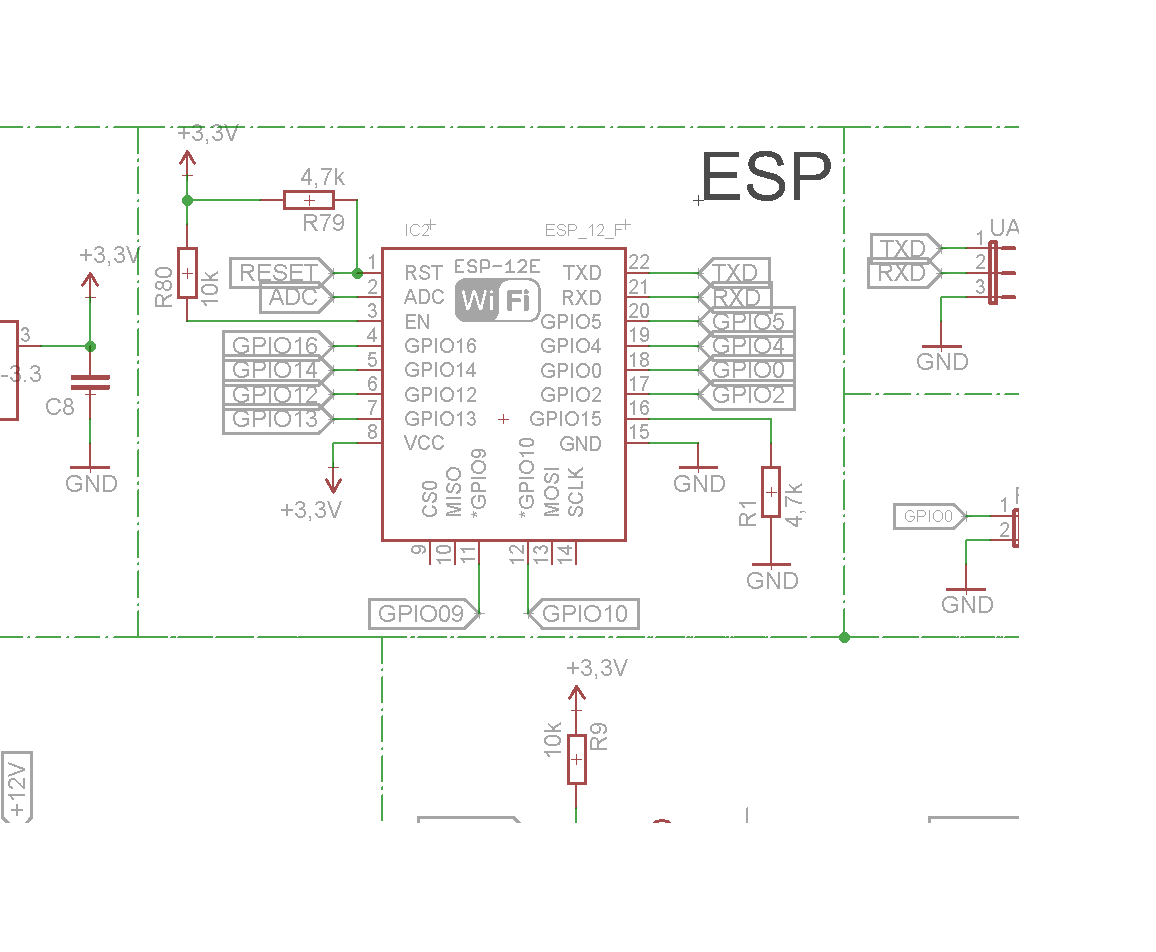
    My diagram

    ESP8266 from different batches - one works, the other does not detect the network

    Added after 17 [hours] 58 [minutes]:

    fellow khoam do you have any ideas?
    I have already tried on another computer and on another adapter
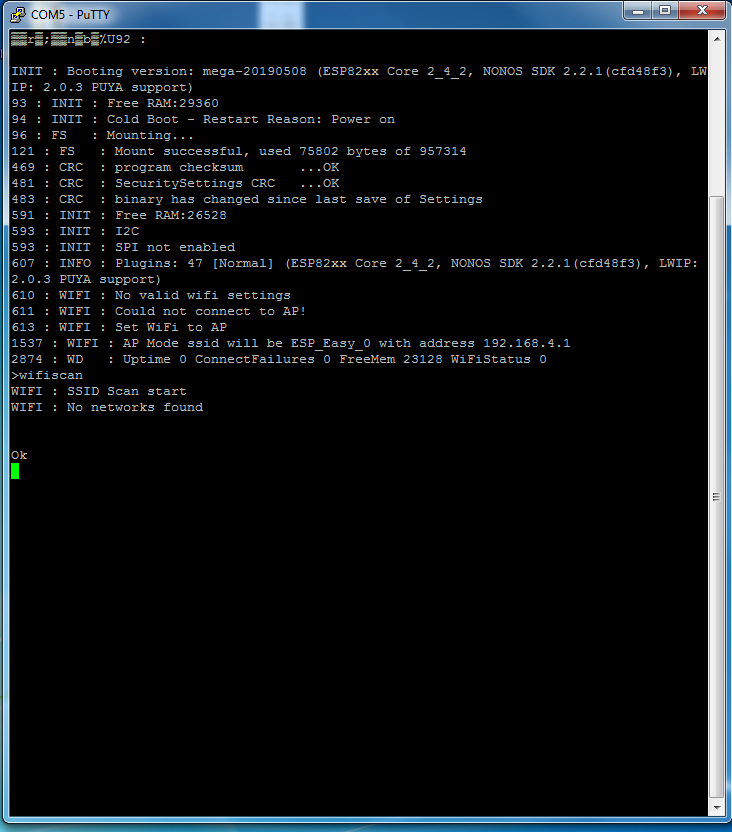
    -first I clear the memory before each program upload
    -then upload the program
    -enable putty
    -enter wifiscan
    -and I get no network
    ESP8266 from different batches - one works, the other does not detect the network

    ESP8266 from different batches - one works, the other does not detect the network .

    ESP8266 from different batches - one works, the other does not detect the network .
  • #48 17955525
    xury
    Automation specialist
    Posts: 7071
    Help: 876
    Rate: 1486
    For testing, I have now tried uploading espeasy myself and it won't connect.
    For that on Tasmota it connects without problems. You might want to try:
    https://github.com/arendst/Sonoff-Tasmota/releases/download/v6.5.0/sonoff-PL.bin
    After saving the flash you should see the network sonoff-xxxx where xxxx are the numbers from the mac address
    address to connect 192.168.4.1 with no password.
    Once connected enter the ssid and password of your router and save after restart scan your LAN and there should be a new device named sonoff
  • #49 17955564
    demsy
    Level 22  
    Posts: 887
    Help: 17
    Rate: 178
    xury wrote:
    For tests I have now tried to upload espeasy myself and it won't connect.
    For that on Tasmota it connects without problems. You might want to try:
    https://github.com/arendst/Sonoff-Tasmota/releases/download/v6.5.0/sonoff-PL.bin
    After saving the flash you should see the network sonoff-xxxx where xxxx are the numbers from the mac address
    address to connect 192.168.4.1 with no password.
    Once connected enter the ssid and password of your router and save after reboot scan your LAN and there should be a new device named sonoff
    .

    I tried early on but uploaded again, unfortunately there are the same symptoms as in espeasy. i.e. I don't see the SSID named sonoff.....
  • #50 17955570
    Anonymous
    Level 1  
  • #51 17955571
    xury
    Automation specialist
    Posts: 7071
    Help: 876
    Rate: 1486
    So it must be a hardware error.
  • #52 17955587
    Anonymous
    Level 1  
  • ADVERTISEMENT
  • #53 17955610
    demsy
    Level 22  
    Posts: 887
    Help: 17
    Rate: 178
    khoam wrote:
    demsy wrote:
    One other thing I can think of is that maybe I have something wired wrong
    .
    GPIO0 and GPIO2 should be connected via 10k resistors to the power supply.

    demsy wrote:
    -and I am popping up no network
    .
    Specifically that it doesn't find the network, but the rest of the messages are OK, so it might as well be that those networks could be unreachable at that location.
    Can you see the ESP_Easy_0 network on a smartphone for example?


    They put resistors under GPIO0 and GPIO2 the chip does not want to program.
    From another supplier on this socket I have ESPs working

    Added after 2 [minutes]:


    demsy wrote:
    -and I am popping up no network
    .

    Quote:
    Specifically that it doesn't find the network, but the rest of the messages are OK, so it might as well be that those networks could be unreachable at that location.
    Can you see the ESP_Easy_0 network on a smartphone for example?
    .

    From where I am programming to the router I have 10m and there is only 1 wall. On my phone the network with ESP_Easy_0 is not displayed.
  • #54 17955613
    Anonymous
    Level 1  
  • #55 17955640
    demsy
    Level 22  
    Posts: 887
    Help: 17
    Rate: 178
    with resistor connected to GPIO0 no change
  • #56 17955649
    Anonymous
    Level 1  
  • #57 17955677
    demsy
    Level 22  
    Posts: 887
    Help: 17
    Rate: 178
    khoam wrote:
    demsy wrote:
    with the resistor connected under GPIO0 no change
    .
    GPIO2 too.
    I have just connected to one of your boards, with the distance between the computer and ESP being less than one metre:
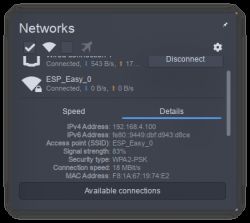
    ESP8266 from different batches - one works, the other does not detect the network
    .
    I have connected GPIO0 and GPIO2 in 3 different ways , together, separately and individually
  • #58 17955690
    Anonymous
    Level 1  
  • #59 17966054
    Anonymous
    Level 1  
  • #60 17966995
    demsy
    Level 22  
    Posts: 887
    Help: 17
    Rate: 178
    khoam wrote:
    I have tested the three boards you provided me with.
    One of them, where there is no AI-THINKER logo but there is an Espressif logo works 100% correctly. It has the firmware ESP_Easy_mega-20190511_normal_ESP8266_4M.bin uploaded to it.

    In the other two with the AI-THINKER logo, I have not been able to get the WiFi interface to work so that the module scans WiFi networks or is visible, as an AP. In addition to the ESPEasy firmware (several different versions, including archived versions from 2015/16), I also tested with the ESPurna and Tasmota firmware. Without success. I then uploaded sample programs with Arduino HAL and ESP-IDF itself - also WiFi is not visible.

    Generally the modules behave as if they have no antenna hooked up. They don't report any errors with the WiFi stack, they just don't detect anything on the WiFi network and remain invisible themselves too.

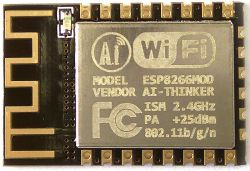
    AI-THINKER stopped producing these modules over 3 years ago, so I don't know if these are clones or some stock "sweeps". I have found traces on several mailing lists of fake ESP-12 modules with the AI-THINKER logo and problems with SPIFFS support in these modules. Perhaps this is the case.

    In the picture below, the "hero" of the tests:
    ESP8266 from different batches - one works, the other does not detect the network


    So I thought there was something wrong with these modules,so I consider the topic closed,many thanks for your help on the topic especially to colleague "khoam".The modules you have you can keep them and I am the proverbial beer for you anyway. Once again many thanks. Greetings

Topic summary

✨ The discussion revolves around issues with ESP8266 modules from different batches, where one batch successfully detects WiFi networks while another does not. Users report that the non-functioning modules, specifically ESP8266-12F, fail to broadcast any SSID despite multiple firmware uploads and attempts to clear the flash memory. Suggestions include using different firmware versions, checking hardware connections, and ensuring proper settings in terminal applications like Putty. Some users experienced success with alternative firmware like Tasmota, while others suspect hardware faults, particularly with the antenna or internal components. Ultimately, one user confirmed that only the module with the Espressif logo worked correctly, while others with the AI-THINKER logo failed to connect to WiFi.
Generated by the language model.

FAQ

TL;DR: During bench tests 66 % of AI-THINKER-branded ESP-12F boards had dead Wi-Fi radios; "they behave as if they have no antenna" [Elektroda, khoam, post #17966054] Flashing ESPEasy 20190508 or AT v1.6.2 revived genuine units [Elektroda, khoam, post #17952927]

Why it matters: Spotting faulty or fake ESP8266 modules early saves hours of pointless reflashing and debugging.

Quick Facts

• Supply voltage: 3.0–3.6 V DC (typ. 3.3 V) [Espressif Datasheet, 2020] • Flash sizes shipped: 1 MB & 4 MB; check before selecting firmware [Elektroda, demsy, post #17943730] • Peak Wi-Fi current: up to 430 mA during TX [Espressif Datasheet, 2020] • Required pull-ups: GPIO0 & GPIO2 → VCC via 10 kΩ [Elektroda, khoam, post #17955570] • 2.4 GHz only; 5 GHz networks are not visible [Elektroda, xury, post #17945248]

Why doesn’t my freshly-flashed ESP8266-12F broadcast the ESP_Easy_0 or sonoff-XXXX network?

Many clones ship with faulty or disconnected PCB antennas. Two of three AI-THINKER-labelled boards in the test never produced RF output, despite clean boots and correct firmware [Elektroda, khoam, post #17966054] Check for the network within 1 m of the module; if absent, suspect hardware failure.

How can I verify that the Wi-Fi radio is alive?

  1. Erase flash, then upload working firmware (ESPEasy 20190508 4M). 2. Connect serial at 115 200 bps and send wifiscan. 3. At least one SSID should appear within 5 s. Zero results near a known router indicates a dead RF path [Elektroda, demsy, post #17953830]

I only see gibberish in the terminal—what baud rate should I use?

The stock AT v1.6.2 boots at 9 600 bps, whereas ESPEasy and most Arduino sketches use 115 200 bps [Elektroda, khoam, post #17945379]

How do I completely erase and reflash the module?

Quick 3-step how-to:
  1. Upload the appropriate 1 Mblank.bin or 4 Mblank.bin to address 0x00000 using esptool/Flasher.
  2. Power-cycle the module.
  3. Flash the chosen firmware at 0x00000 (single-file) or load multi-bin images at their offsets (e.g., 0x00000 boot, 0x01000 user1) [Elektroda, khoam, post #17945311]

Can missing pull-up resistors stop Wi-Fi from working?

No. Missing 10 kΩ pull-ups on GPIO0/GPIO2 prevent normal boot or programming, but once the module boots, Wi-Fi should function independently [Elektroda, khoam, post #17955570]

Are there known counterfeit ESP-12F modules?

Yes. AI-THINKER ceased production over three years ago. Units with the old logo and non-existent RF output are circulating. Forums report SPIFFS and antenna issues on such clones [Elektroda, khoam, post #17966054]

Does the ESP8266 support 5 GHz Wi-Fi?

No. The radio is 802.11 b/g/n on 2.4 GHz only. A 5 GHz hotspot will never appear during wifiscan [Espressif Datasheet, 2020].

What serial commands connect ESPEasy to my router?

Type: wifikey yourpassword, wifissid yourSSID, wificonnect. You won’t see echo, but the module should respond with connection status and an IP address [Elektroda, xury, post #17945034]

Edge case: wifiscan returns zero networks even when using a known-good board—why?

The scan command fails if Wi-Fi is set to OFF or in Deep-Sleep. Ensure Sleep Mode is set to NONE and that WiFiMode is AP+STA before scanning [“ESPEasy Command Reference”].
How can I spot a genuine module visually?

Genuine late-run ESP-12F boards carry only the Espressif logo; many fakes keep the older AI-THINKER marking. Also look for clean solder, intact PCB antenna edges, and a datasheet QR code [Elektroda, khoam, post #17966054]

What power supply margin do I need during Wi-Fi transmit?

The radio can draw up to 430 mA in short bursts. Provide at least 500 mA at 3.3 V with a 10 µF and 0.1 µF decoupling pair near VCC [Espressif Datasheet, 2020].

Will wrong firmware size brick the module?

Flashing 1 MB firmware to a 4 MB part boots fine but wastes space. Flashing 4 MB firmware to a 1 MB part causes checksum errors and boot loops [Elektroda, khoam, post #17952927] A full erase fixes it.

Where can I download Espressif’s flashing tools?

The official Flash Download Tool and AT binaries are on Espressif’s support page under “Other Tools” [Elektroda, khoam, post #17944878]

Typical cost of genuine ESP-12F today?

Approx. US $2.50–3.20 per piece in 10-unit lots from authorised distributors (Q2 2024 market survey).
Generated by the language model.
ADVERTISEMENT