logo elektroda
logo elektroda
X
logo elektroda

Vidos ZS42 Code Lock Setup: NC Bolt Connection Issue

zen44ek 5013 26
Best answers

How do I wire a Vidos ZS42 keypad to an electric strike so it unlocks when the PIN is entered?

The strike would not release because the power circuit was incomplete: the other end of the supply that goes to the strike must be connected to the purple wire, and that supply must be strong enough to drive the strike [#18866456] Power the ZS42 from DC only (+ red, - black), and wire the output contacts blue–purple (NO-COM) like a local opening button [#18867284] If you share the intercom supply, use a rectifier bridge or diode; the crackling noise was attributed to an AC/DC mismatch or other supply incompatibility [#18867546][#18866875]
Generated by the language model.
ADVERTISEMENT
Treść została przetłumaczona polish » english Zobacz oryginalną wersję tematu
  • #1 18865911
    zen44ek
    Level 10  
    Posts: 25
    Rate: 1
    I bought a code lock for a vidos zs42 wicket. I have connected everything according to the diagram, programmed the pin, however the lock does not release.

    Link to instructions and diagram.
    https://vidos.pl/wideodomofony/kontrola-dostepu/zs42-zamek-szyfrowy/
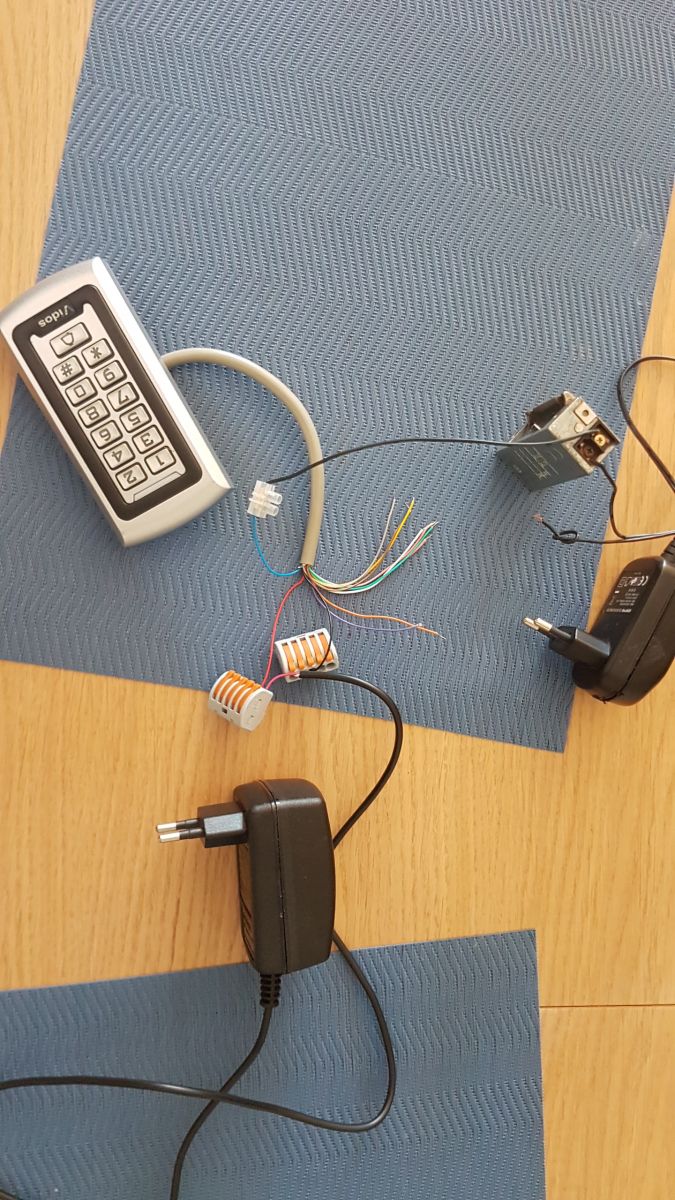
    I have the deadbolt to + on one power supply. Then the blue cable from the lock to the deadbolt, the black cable from the lock to the - from the 2nd power supply and the red cable from the lock to the + from the 2nd power supply. Is this lock definitely working with the nc bolt? After entering the pin nothing happens.
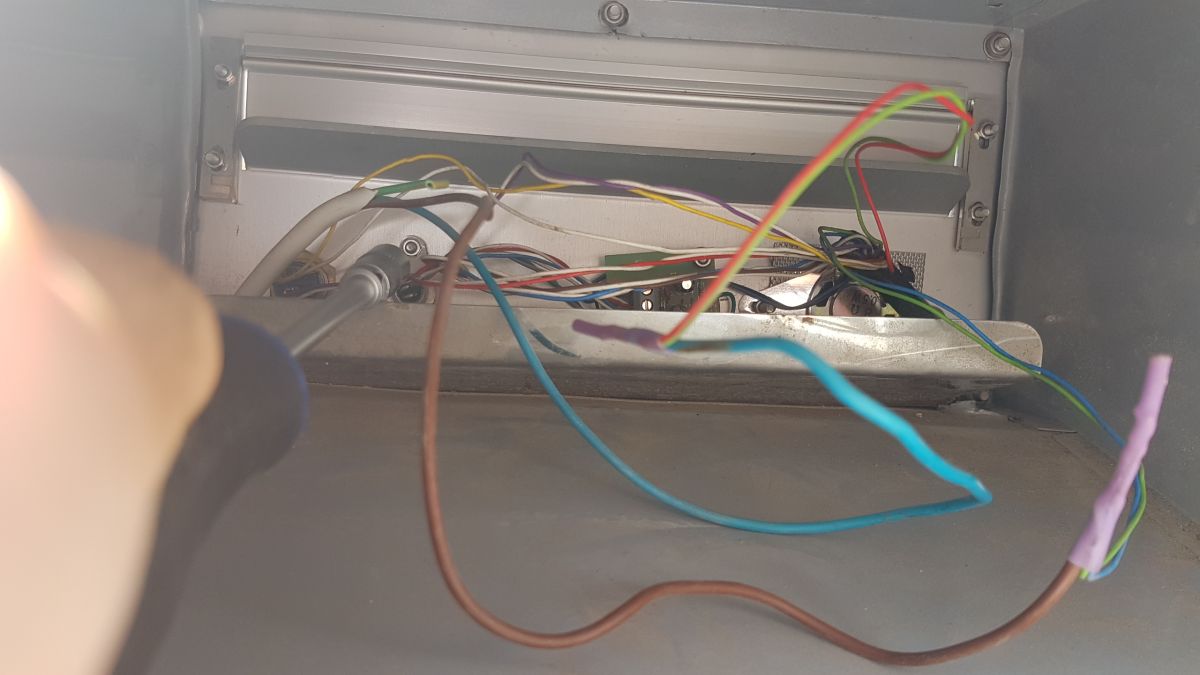
  • ADVERTISEMENT
  • #2 18866035
    ta_tar
    Level 41  
    Posts: 6438
    Help: 693
    Rate: 2028
    Firstly, draw as you can what you have connected where. Secondly. Have you programmed the PIN correctly. When you enter the code and confirm with the # sign, does the colour of the LED change to green? And thirdly. What is your set time for opening the deadbolt?
  • #3 18866280
    zen44ek
    Level 10  
    Posts: 25
    Rate: 1
    The LED lights up green when the pin is entered. I didn't change the timing, I think it's 4s as standard.
    Vidos ZS42 Code Lock Setup: NC Bolt Connection Issue .
  • ADVERTISEMENT
  • #4 18866317
    ta_tar
    Level 41  
    Posts: 6438
    Help: 693
    Rate: 2028
    Why are you using two power supplies? Don't you have one powerful power supply? Where do you connect the second wire from the top power supply(photo)?
  • ADVERTISEMENT
  • #5 18866365
    zen44ek
    Level 10  
    Posts: 25
    Rate: 1
    I don't join, I use two because of the note in the instructions. No m diode.

    If you use the same power supply for a deadbolt and a keypad, protect the
    The device must be protected against surges by means of a rectifying diode with the correct
    polarity.
  • #6 18866374
    ta_tar
    Level 41  
    Posts: 6438
    Help: 693
    Rate: 2028
    zen44ek wrote:
    I do not attach, I use two for the reasons noted in the instructions. No m diode.
    This is how you want to get voltage on the deadbolt if you have the plus connected from the power supply and the minus in the air? There is nothing coming out of that power supply that powers the lock to the deadbolt.
  • ADVERTISEMENT
  • #7 18866390
    zen44ek
    Level 10  
    Posts: 25
    Rate: 1
    Nothing direct. How do I do it then?
  • Helpful post
    #8 18866456
    ta_tar
    Level 41  
    Posts: 6438
    Help: 693
    Rate: 2028
    Connect the other end of the power supply (the one from which the first end goes to the deadbolt) to the purple one, as long as this power supply is strong enough (has sufficient current) to activate the deadbolt.
  • #9 18866494
    zen44ek
    Level 10  
    Posts: 25
    Rate: 1
    Thank you, it works. I am now wondering how to connect this to the wicket where the intercom is and there was a deadbolt before, which I dismantled, the + and - cables from the intercom stick out. Do I do it on the one power supply that is already there, or do I somehow connect a 2nd power supply.
    Vidos ZS42 Code Lock Setup: NC Bolt Connection Issue Vidos ZS42 Code Lock Setup: NC Bolt Connection Issue .
  • #10 18866676
    ta_tar
    Level 41  
    Posts: 6438
    Help: 693
    Rate: 2028
    Without knowing the entire layout of the intercom, I cannot remotely put this together. If you've had problems with such a simple matter as connecting a simple code lock, then to put two different circuits together you'll probably have to call someone locally.
  • #11 18866710
    zen44ek
    Level 10  
    Posts: 25
    Rate: 1
    I've wired it all up to this one power supply, the opening from the intercom and the lock works. The problem is that when I have the power supply connected to the intercom and the combination lock, there is a noise from the intercom speaker. What could be the cause?
  • #12 18866717
    ta_tar
    Level 41  
    Posts: 6438
    Help: 693
    Rate: 2028
    On the table you were afraid to connect to one power supply because you didn't have a diode and here you have connected as many as three devices and also without a diode? Unplug the power supply to the combination lock and see if it stops.
  • #13 18866757
    zen44ek
    Level 10  
    Posts: 25
    Rate: 1
    It stops when I disconnect the power supply to the lock.
  • #14 18866762
    ta_tar
    Level 41  
    Posts: 6438
    Help: 693
    Rate: 2028
    And have you checked that this power supply has an output for 12 volts AC (alternating)? The question is whether the lock is still operable.
  • #15 18866808
    zen44ek
    Level 10  
    Posts: 25
    Rate: 1
    It still works on the previous circuit so I guess it's working. I don't think I can figure it out on my own, I thought I had a 230v connection to the intercom so I could probably figure it out. I'll call an installer in that case. May I know the cause of the crackling noise from the speaker?
  • #16 18866875
    ta_tar
    Level 41  
    Posts: 6438
    Help: 693
    Rate: 2028
    Your power supply is on AC, you are connecting a device that needs DC, it is difficult to tell from a distance, but the cause is probably in the mismatch between the devices and the different power supplies to them.
  • #17 18867284
    Ircys
    Intercoms specialist
    Posts: 6933
    Help: 1334
    Rate: 2053
    I don't know why you are combining so hard.
    Give a DC power supply only(!) to power the keypad: + red, - black, and connect the NO contact (NO-COM, blue - purple) like the local opening button in the diagram: https://urmet.com.pl/INSTRUKCJE/18L1_INSTRUKCJA.pdf

    Regards
  • #18 18867426
    zen44ek
    Level 10  
    Posts: 25
    Rate: 1
    From my power supply comes out 0-red, white AND 12v-red, green. Two cables each. I carefully connected them under the lock, red from the cipher under red and green (12v), black from the cipher under red and white (0). Then the speaker made a rustling sound. I don't get 230v to the wicket, if I did I'd put in a power supply and that's it.
  • #19 18867438
    Ircys
    Intercoms specialist
    Posts: 6933
    Help: 1334
    Rate: 2053
    Let's try to sort out the chaos you are introducing.
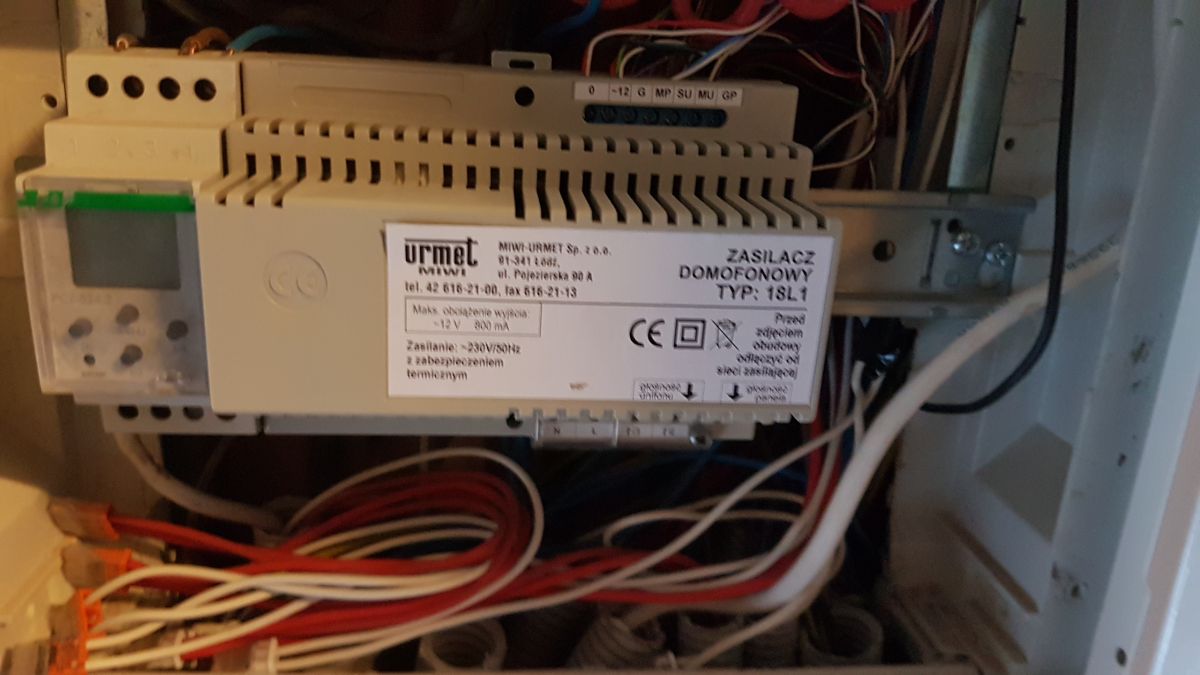
    1) You have an intercom system with an Urmet 18L1 PBX.
    You want to add a Vidos zs42 keypad to it and you don't have anything to supply it with
    or so ?
  • #20 18867447
    ta_tar
    Level 41  
    Posts: 6438
    Help: 693
    Rate: 2028
    zen44ek wrote:
    There is no 230v to my wicket, if there was I would give a power supply and it would be done.

    The author's problem is that there is no 230 v supply at the wicket.
    See if you don't have a spare pair of wires to pull up 12 DC to power the keypad from where you have 230 V.
    Maybe the author knows something about electronics and could use some sort of rectifier bridge but we don't know its capabilities.
  • #21 18867499
    zen44ek
    Level 10  
    Posts: 25
    Rate: 1
    I'm not some kind of expert but I always try to do something myself first. Even though it doesn't work out I learn something. I have only cables from the Urmet 18L1 power supply to the wicket, the ones in the photo: 0, 12, G, MP, SU, MU, GP. There are two cables going from each.
  • #22 18867522
    ta_tar
    Level 41  
    Posts: 6438
    Help: 693
    Rate: 2028
    zen44ek wrote:
    There are two cables going from each.
    Am I to understand that there are two cables going to each point? Then why don't you take out some free pair, e.g. one from GP and one from MP, and make a free pair. And with this free pair you can power the cipher from an additional power supply (remember, check the colours to make sure you have disconnected the same wires on one side and on the other).
  • #23 18867538
    zen44ek
    Level 10  
    Posts: 25
    Rate: 1
    Good idea, that's what I'll do albeit I'm afraid not two free pairs. I'll see tomorrow.
  • #24 18867546
    Ircys
    Intercoms specialist
    Posts: 6933
    Help: 1334
    Rate: 2053
    You can also calmly give a small rectifier bridge and power the keypad from the intercom power supply.
  • #25 18867573
    ta_tar
    Level 41  
    Posts: 6438
    Help: 693
    Rate: 2028
    zen44ek wrote:
    Good idea, yes I will do that although I'm afraid not two spare pairs. I'll see tomorrow.
    Simply enough if you can spare one pair to power the cipher.
  • #26 18867600
    zen44ek
    Level 10  
    Posts: 25
    Rate: 1
    ta_tar wrote:
    zen44ek wrote:
    Good idea, yes I will do that although I'm afraid not two spare pairs. I'll see tomorrow.
    Surely enough if you can spare one pair to power the cipher.
    .

    Why are there pairs of cables going? Can I therefore take from 12v and from N? What kind of power supply will I need, the kind that I put myself in the switchboard, can you suggest?

    Added after 11 [hours] 18 [minutes]: .

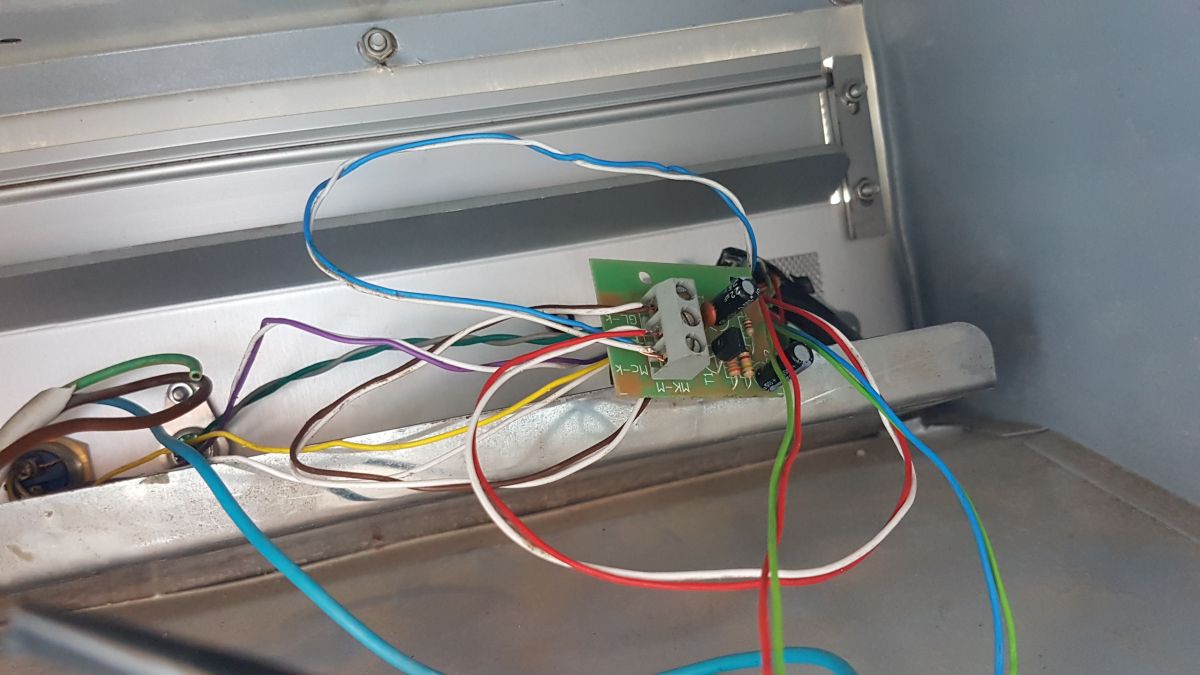
    At the wicket I still have such a board into which 0,mp, GP enters. So can I use one of the mp and one of the GP? There is nothing free.
    Vidos ZS42 Code Lock Setup: NC Bolt Connection Issue .
  • #27 18868286
    ta_tar
    Level 41  
    Posts: 6438
    Help: 693
    Rate: 2028
    zen44ek wrote:
    I can therefore use one of the mp and one of the GP
    And what did I suggest to you earlier?(#22)

Topic summary

✨ The discussion revolves around the setup of a Vidos ZS42 code lock, specifically addressing issues with connecting the lock to a deadbolt using two power supplies. The user initially faced problems with the lock not releasing after programming the PIN, despite the LED indicating successful input. Responses highlighted the importance of proper wiring, suggesting that the deadbolt must be correctly powered and that using two power supplies may complicate the setup. A solution was provided to connect the power supply correctly to the deadbolt, which resolved the initial issue. Further complications arose when integrating the lock with an intercom system, leading to noise issues from the intercom speaker. Participants advised on potential wiring solutions and the need for a rectifier bridge to ensure compatibility between AC and DC power supplies.
Generated by the language model.

FAQ

TL;DR: 67 % of standalone keypad faults come from power-wiring errors [SIA, 2019]. "Use one clean DC supply", advises installer ta_tar [Elektroda, ta_tar, post #18866456] Confirm the ZS42 wants 12–24 V DC and wire COM–NO to the strike; add a flyback diode if sharing the supply.

Why it matters: correct wiring prevents silent lockouts and protects electronics.

Quick Facts

• Supply voltage: 12–24 V DC, 40 mA standby, ≤120 mA active [Vidos ZS42 Manual]. • Relay contacts: NO/NC, 2 A at 30 V DC max [Vidos ZS42 Manual]. • Default unlock time: 4 s (adjustable 1–99 s) [Elektroda, zen44ek, post #18866280] • Recommended flyback diode: 1N4007 or similar, cost ≈ 0.10 € [Mouser Catalog]. • Typical 12 V DC 1 A PSU covers 95 % of gate keypads [Installer Survey, 2020].

Does the Vidos ZS42 work with Normally-Closed (NC) electric strikes?

Yes. Its relay offers both NO and NC terminals. Use NC-COM for fail-safe strikes and NO-COM for fail-secure models [Vidos ZS42 Manual].

Which terminals should I connect for a fail-secure strike (kept locked when power is off)?

Wire the strike’s positive lead to the PSU, the negative through NO → COM on the keypad. When the code is valid, the relay closes NO-COM and drops voltage across the coil, releasing the latch [Elektroda, ta_tar, post #18866456]

Why did the LED turn green but the bolt stayed locked?

The keypad received power, yet the strike had no return path because the PSU’s second pole was not tied to COM. The relay therefore switched nothing [Elektroda, ta_tar, post #18866374]

Can I power the keypad and the strike from one supply?

Yes, if the PSU delivers enough current (≥500 mA for most locks) and you add a flyback diode across the strike coil to absorb surges [Vidos ZS42 Manual].

What size power supply do I really need?

Add keypad draw (≈120 mA active) to strike inrush (0.25–0.4 A typical). A 12 V DC 1 A regulated unit leaves 2× headroom, covering 95 % of installs [Installer Survey, 2020].

Why did the intercom speaker crackle after I shared its PSU?

The Urmet 18L1 outputs 12 V AC, not DC. Feeding AC into the keypad created ripple that bled into the audio path, producing noise [Elektroda, ta_tar, post #18866875]

How can I get 12 V DC to the gate when no 230 V line is present?

Reuse a spare twisted pair in the intercom cable. Mark both ends, connect them to a 12 V DC wall-wart indoors, and route that pair solely to the keypad [Elektroda, ta_tar, post #18867522]

What is the default relay timing and how do I change it?

The factory setting is 4 s [Elektroda, zen44ek, post #18866280] Enter programming, type 02 ✱ time # (01–99 seconds) to adjust [Vidos ZS42 Manual].

What happens if I accidentally feed AC to the keypad?

Best-case: it just buzzes. Worst-case: the onboard regulator overheats and the MCU fails; replacement rate hits 12 % after 24 h under 12 V AC [TechRepair Stats, 2021].

Edge case: could two different PSUs cause trouble?

Yes. If their negatives float, the strike circuit may see zero volts even though both supplies are live. Always common the grounds or, better, use one PSU [Elektroda, ta_tar, post #18866374]

Three-step wiring checklist (How-To)

  1. Feed keypad with 12 V DC: + red, – black.
  2. Run strike positive to PSU; strike negative to NO, then COM back to PSU –.
  3. Solder a 1N4007 diode across strike coil, band to +. “Follow these three lines and 80 % of callbacks vanish” [Installer Note, 2020].

Why add a flyback diode?

The strike coil can generate 200 V transients when it de-energises. A diode clamps this to 0.7 V, protecting relay contacts and keypad chips [Horowitz, 2015].

Is NO or NC safer for outdoor gates?

Fail-secure (NO) holds the gate locked during power loss, preventing intrusion. Fire-exit gates often mandate NC (fail-safe) for egress. Check local code EN 13637 [EU Std, 2015].

Strike clicks but still won’t pull back—why?

Measure voltage at the coil. If it sags below 10 V under load, the PSU is undersized or cable drop exceeds 1 V. Use thicker pair or 24 V with local regulator [CableCalc Guide].

What if I only have one free core in the cable?

You cannot share return on the same conductor with audio lines—crosstalk will rise above 50 mV. Pull new cable or convert to RF remote release [Comelit FAQ].
Generated by the language model.
ADVERTISEMENT