logo elektroda
logo elektroda
X
logo elektroda

Simple controller for WS2812, Bluetooth and remote control, SP620E, up to 600 LEDs for £15

p.kaczmarek2 1644 2

TL;DR

  • SP620E is a Bluetooth controller for WS2812 addressable LED strips with a remote, ready-made animations, and music-reactive modes.
  • BanlanX pairs over Bluetooth and adds cloud login, location permission, favorites, brightness, animation speed, sensitivity, and three audio input modes.
  • It costs under a dozen zlotys in China or around 30 locally and can drive up to 600 LEDs with a suitable USB power supply.
  • The app found the controller quickly, and the interface exposed several hundred animations plus multiple music modes and free sample songs.
  • The main drawback is the lack of a physical button, so losing both the remote and phone leaves no way to switch the lights on.
Generated by the language model.
ADVERTISEMENT
Treść została przetłumaczona polish » english Zobacz oryginalną wersję tematu
📢 Listen (AI):
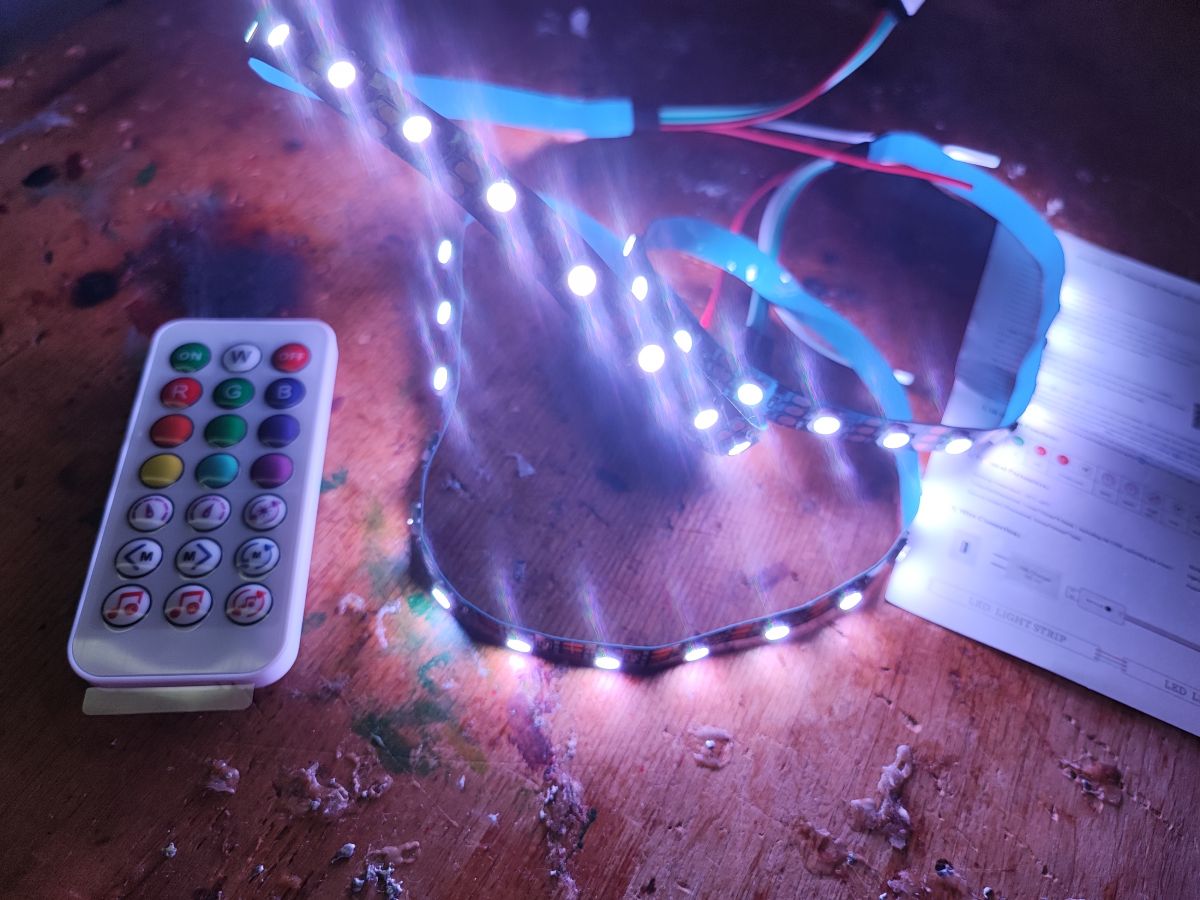
  • LED controller set with a remote and glowing LED lights. .
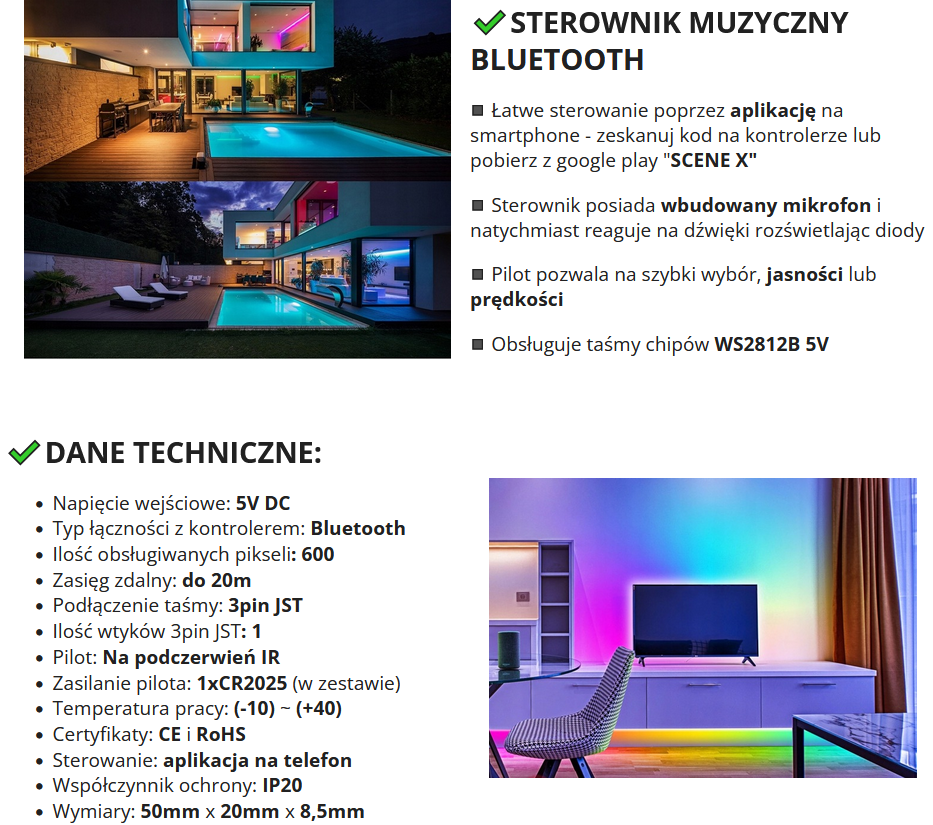
    The strip controller of individually addressable LEDs presented here offers a wide range of ready-made animations and can also animate the LEDs to the rhythm of music. You can buy it for just under a dozen zlotys in China, or alternatively you can order it for around 30 zlotys in our country. Of course, all you get for this amount is the controller and remote control - separately, you will need a belt and a power supply with a USB connection and sufficient current capacity.
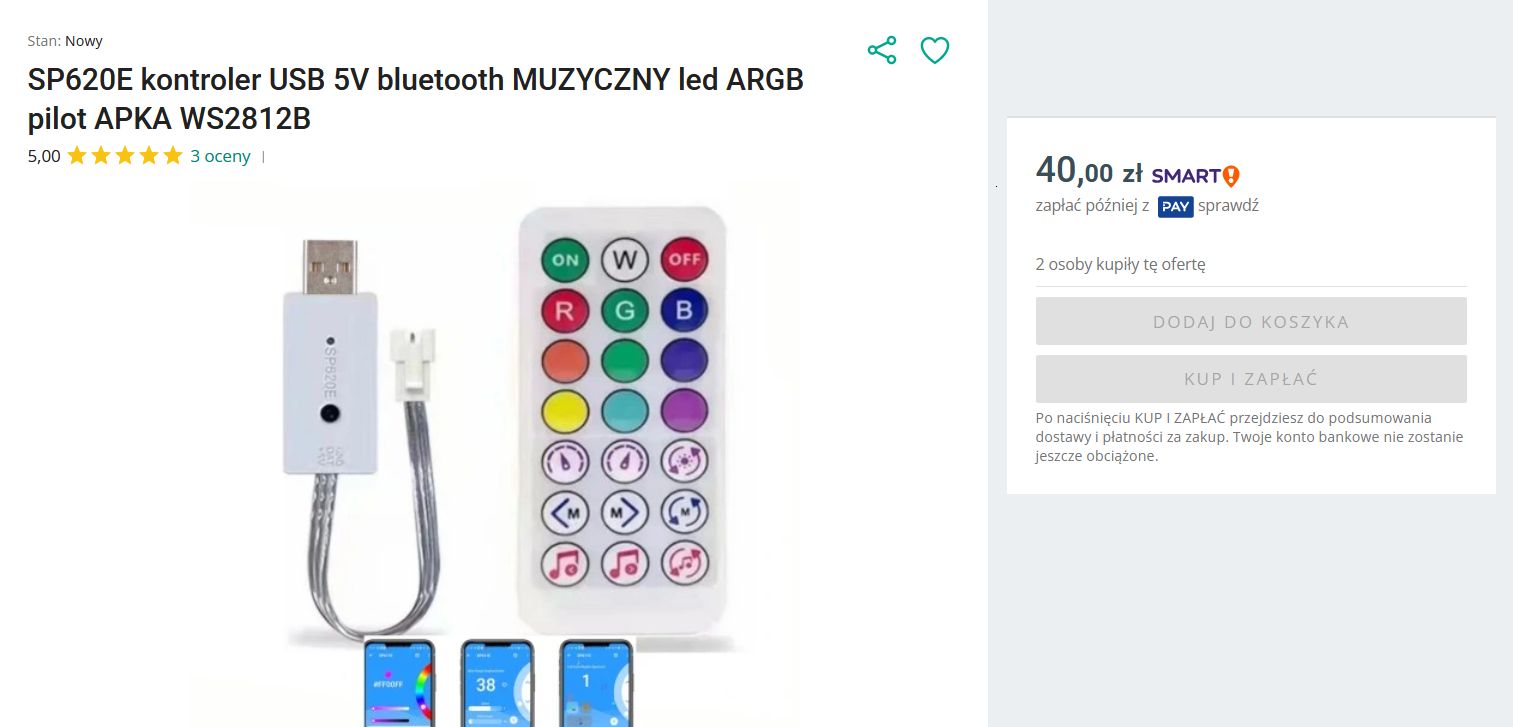
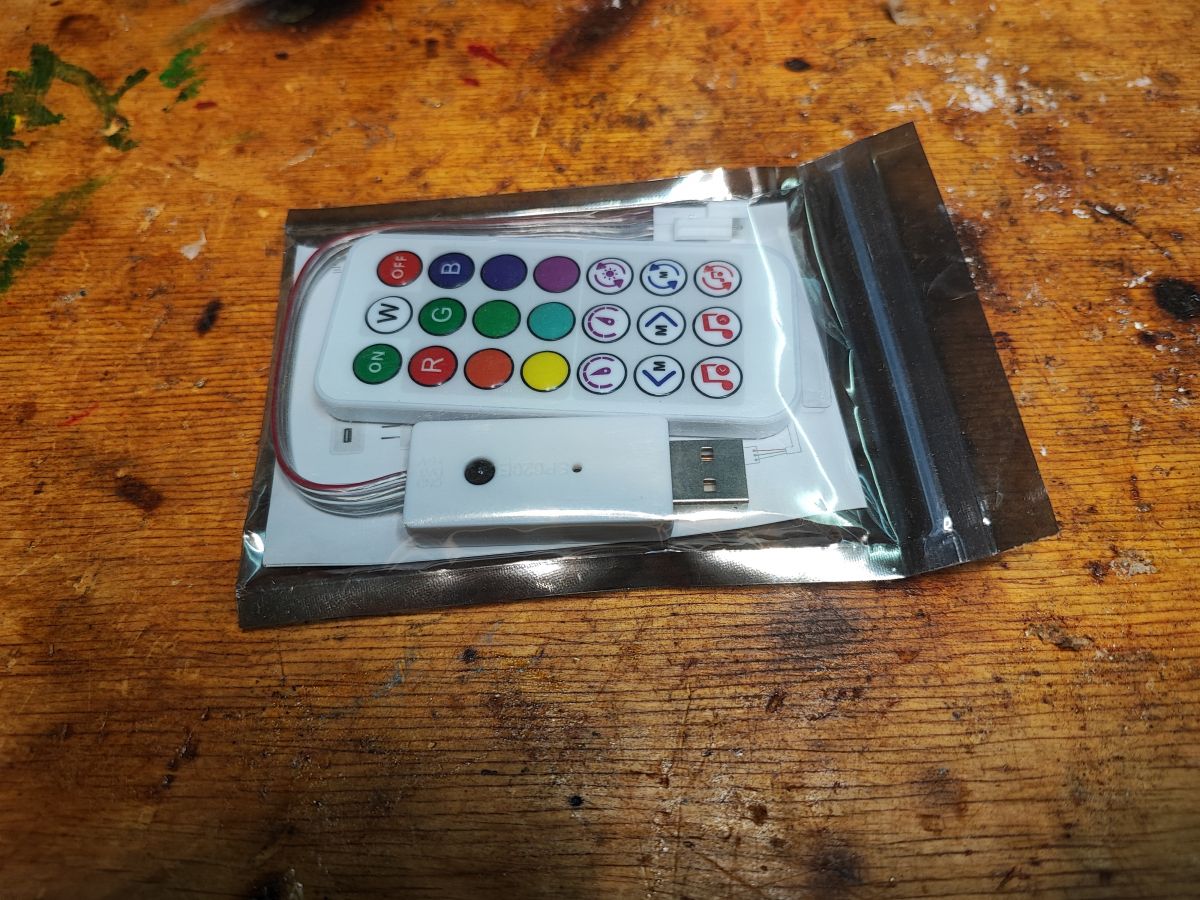
    USB 5V LED RGB controller with remote. .
    The battery for the remote control is included. The number of LEDs supported is up to 600 (provided we have a suitable power supply). The strip should have a three-pin JST connector.
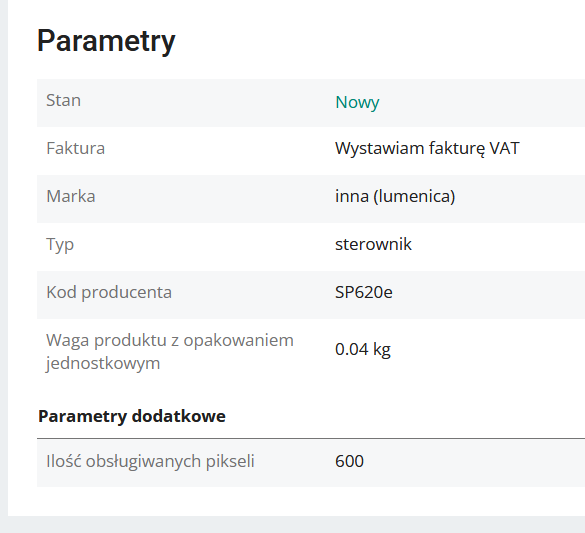
    Table with LED controller specifications, including brand, type, and weight. Bluetooth music controller for LED strips with function description and technical specifications. .
    Let's see what's in the kit:
    LED strip controller with remote and wires in a plastic packaging. .
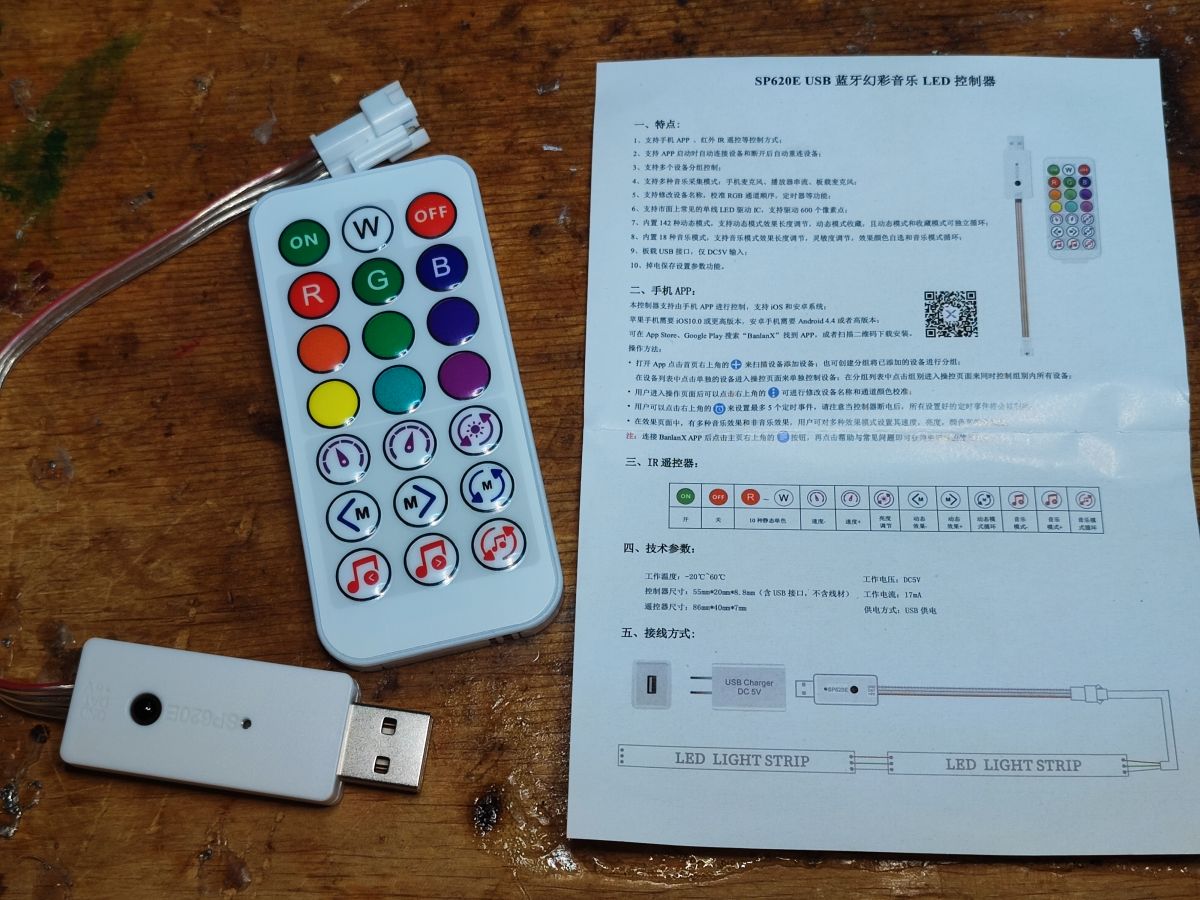
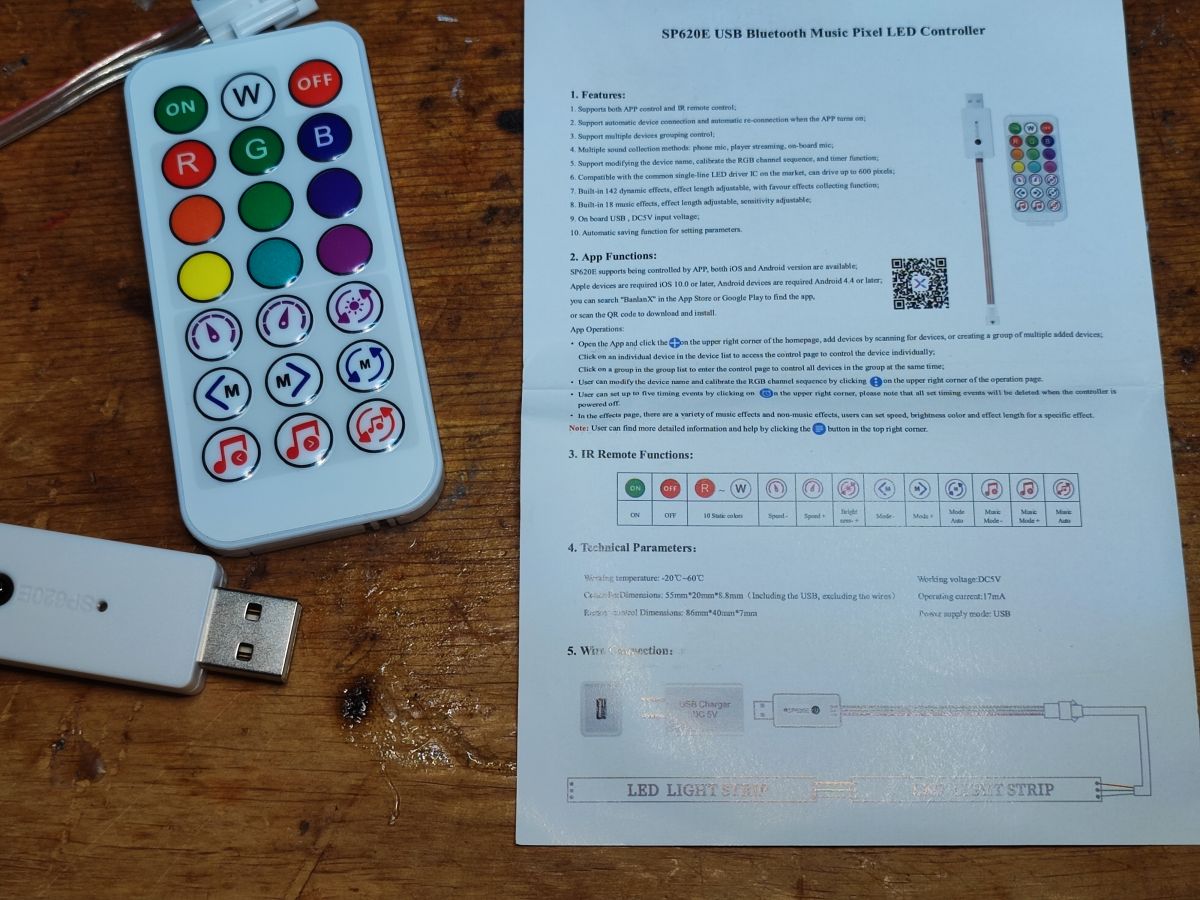
    Instructions:
    Remote and instructions for USB LED controller USB controller and LED remote with instruction manual. .
    There is a suitably protected battery in the remote control:
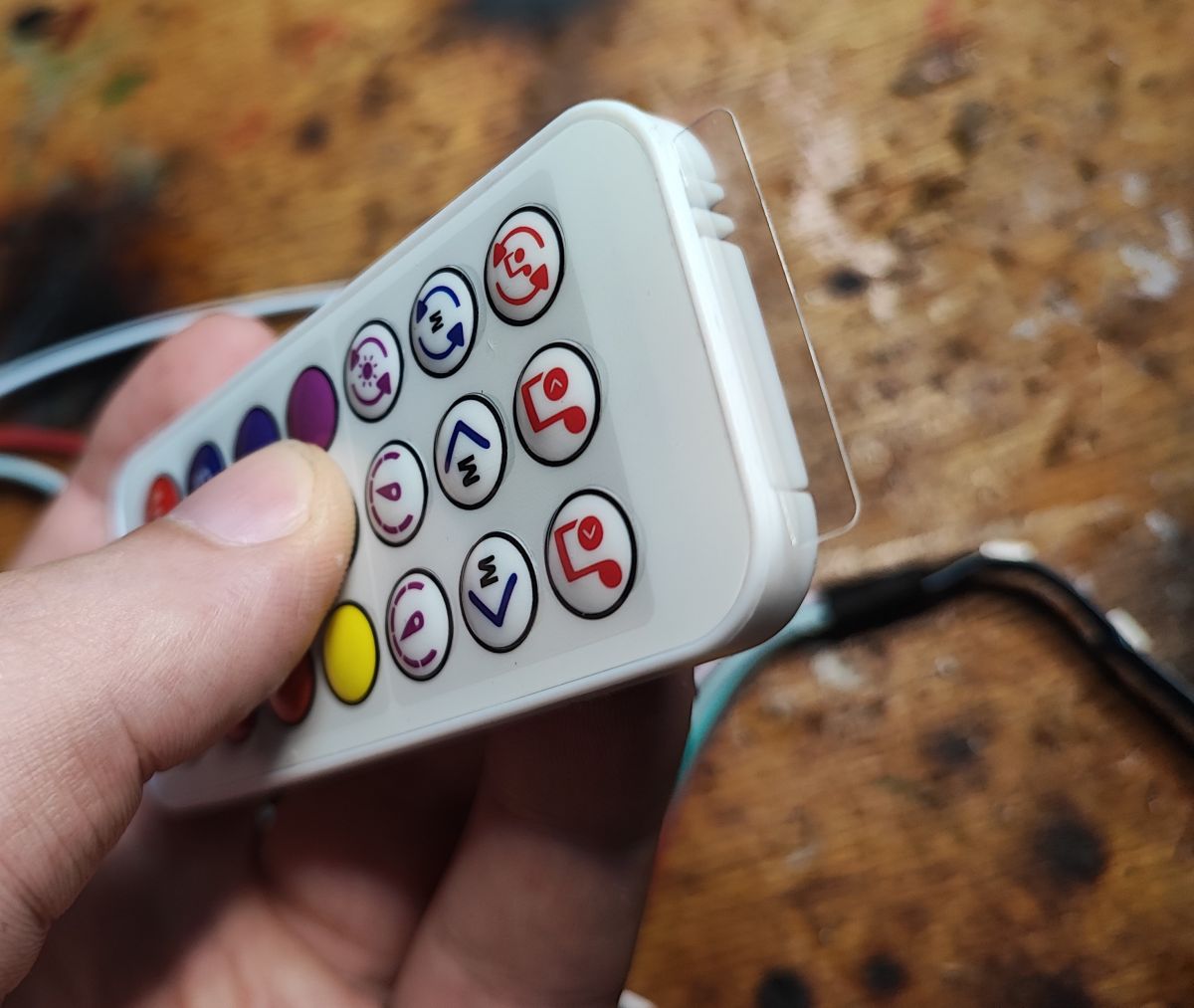
    LED controller remote held in hand with visible transparent battery cover. .
    The controller has such a plug that it is impossible to connect the strap wrong. We only need to ensure ourselves that the power supply used has the correct current capacity.

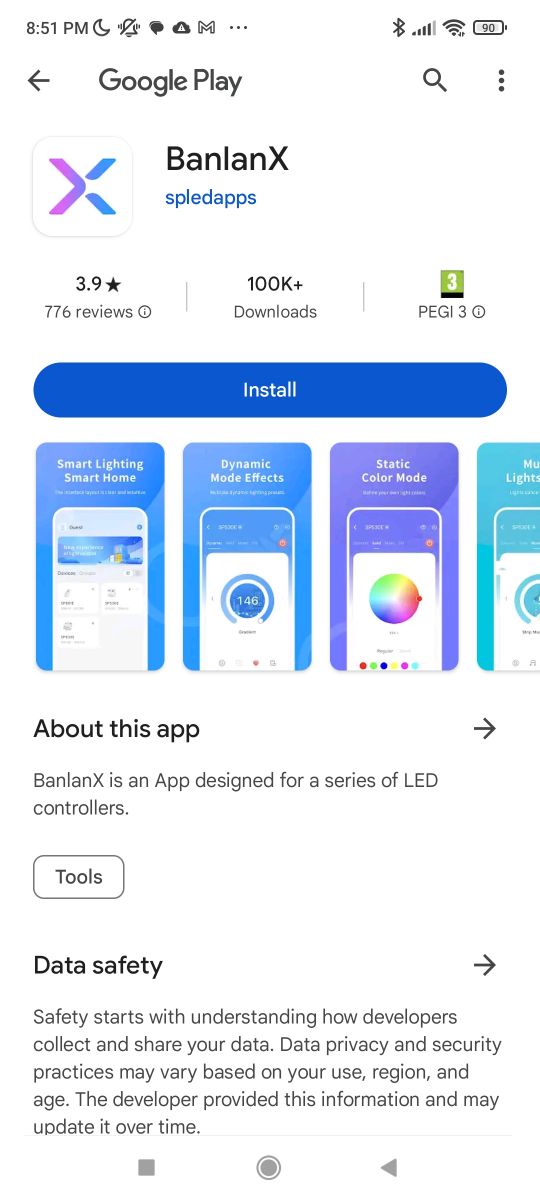
    Now we need to pair the device with the phone. You will need an app. I scanned the QR code from the instructions. The item description mentioned the SceneX app, but it looks like it has been renamed BanlanX:
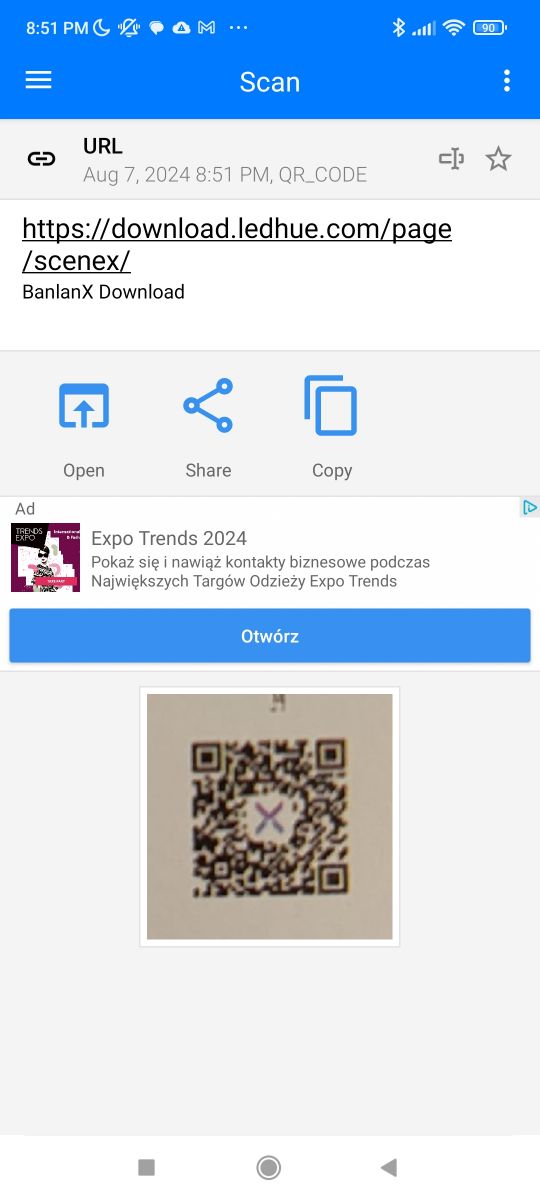
    Screenshot of a QR code scanning app with the scan result displayed. Website with app download and Google Play icons on a light background. Screenshot of the BanlanX app on Google Play Store .
    Bluetooth also needs to be enabled.
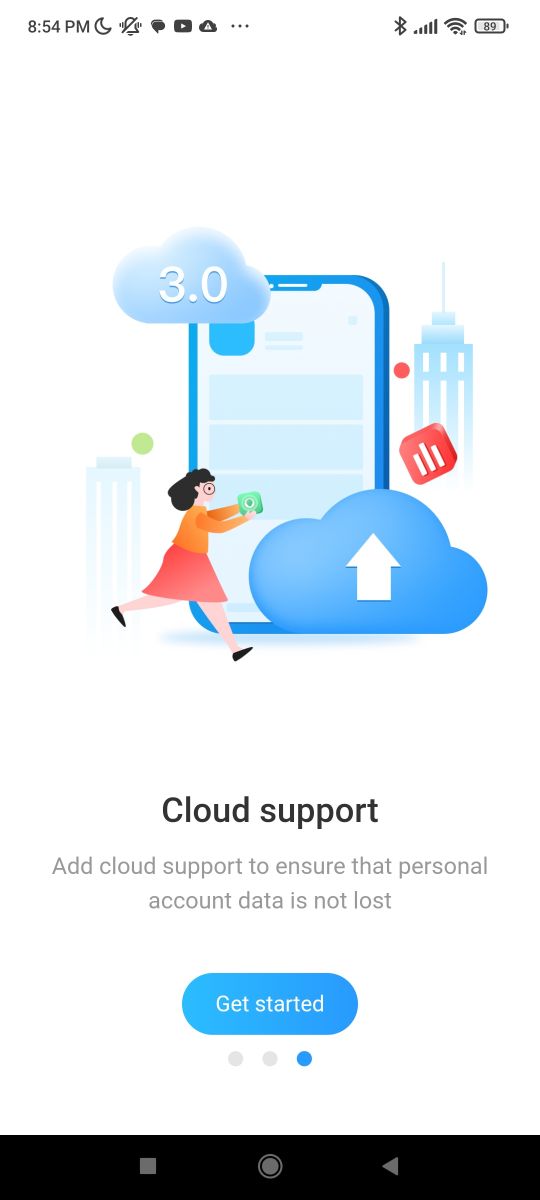
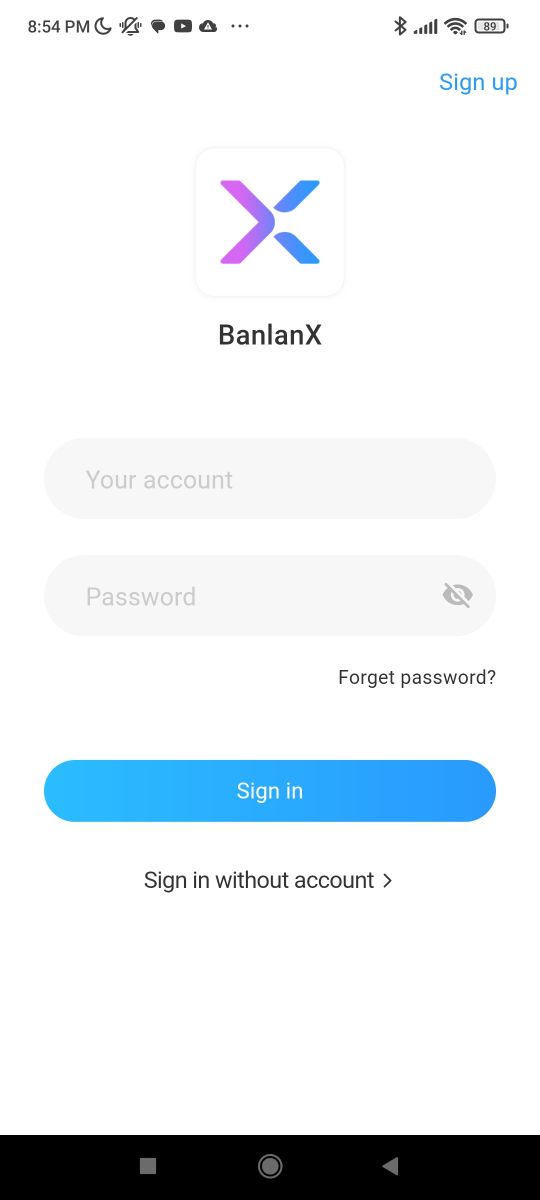
    The app boasts cloud support, but you can also try the product without logging in:
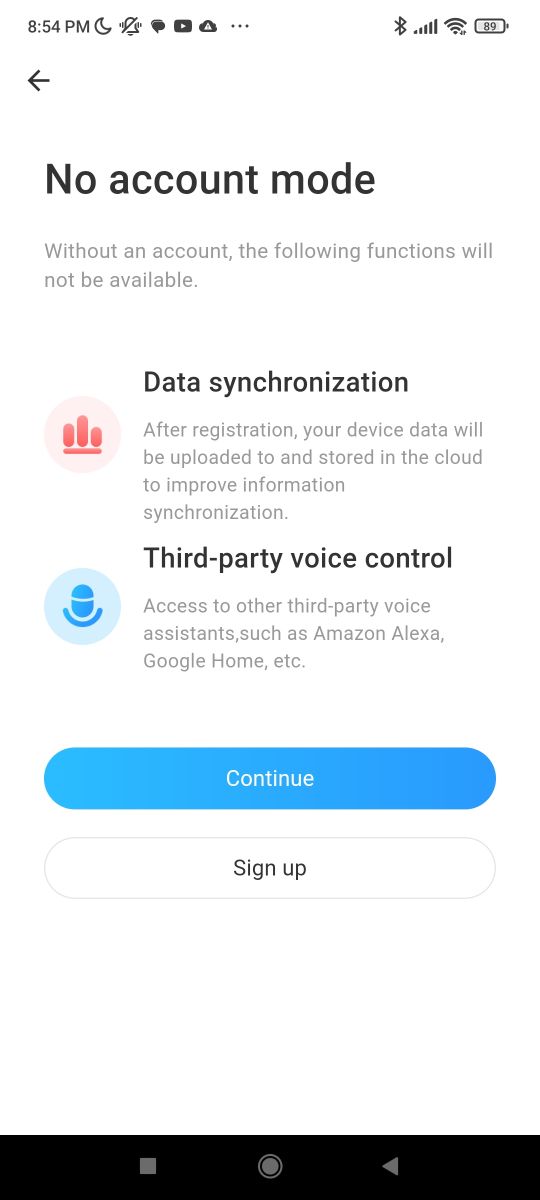
    App screen showing no account mode options. App screen with cloud support option. BanlanX app login screen on a smartphone with options for signing up, logging in, and signing in without an account. .
    Permission to access the location is also required, reportedly for pairing purposes only:
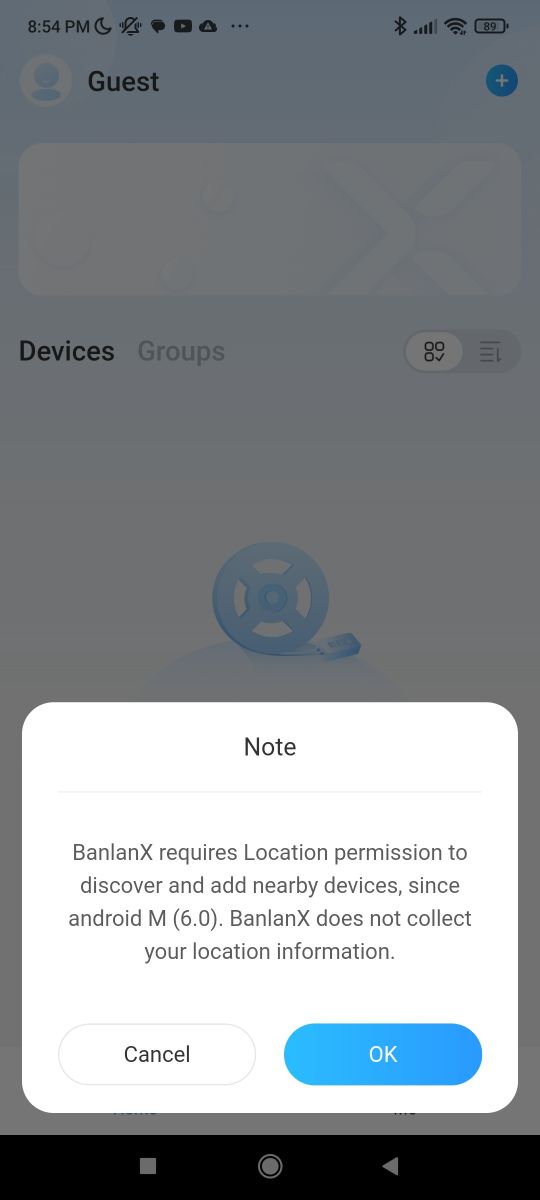
    BanlanX app location permission dialog. .
    I powered the belt controller from USB. The app found it momentarily:
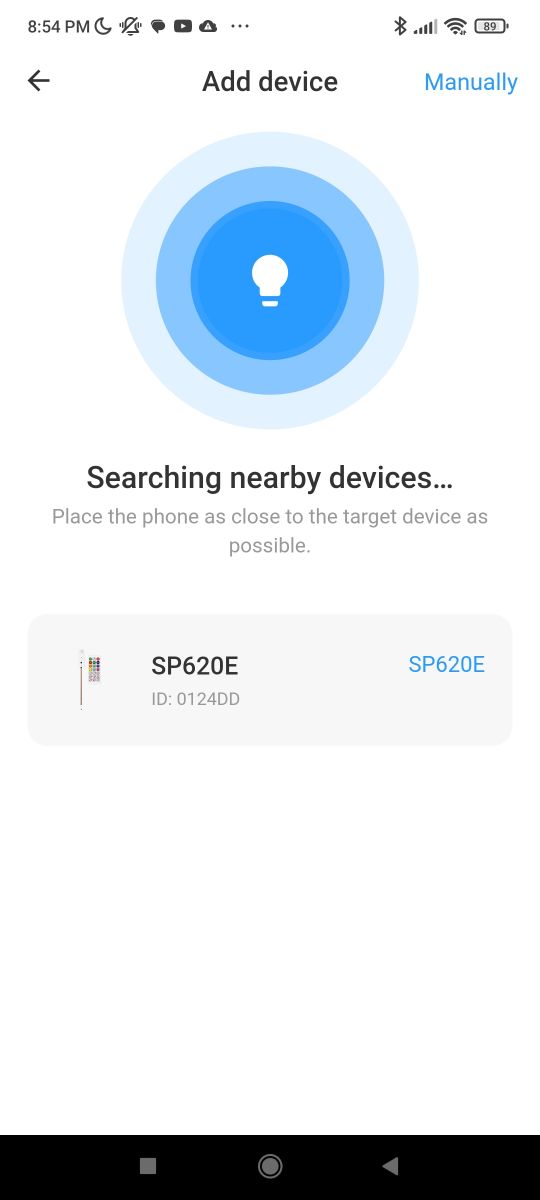
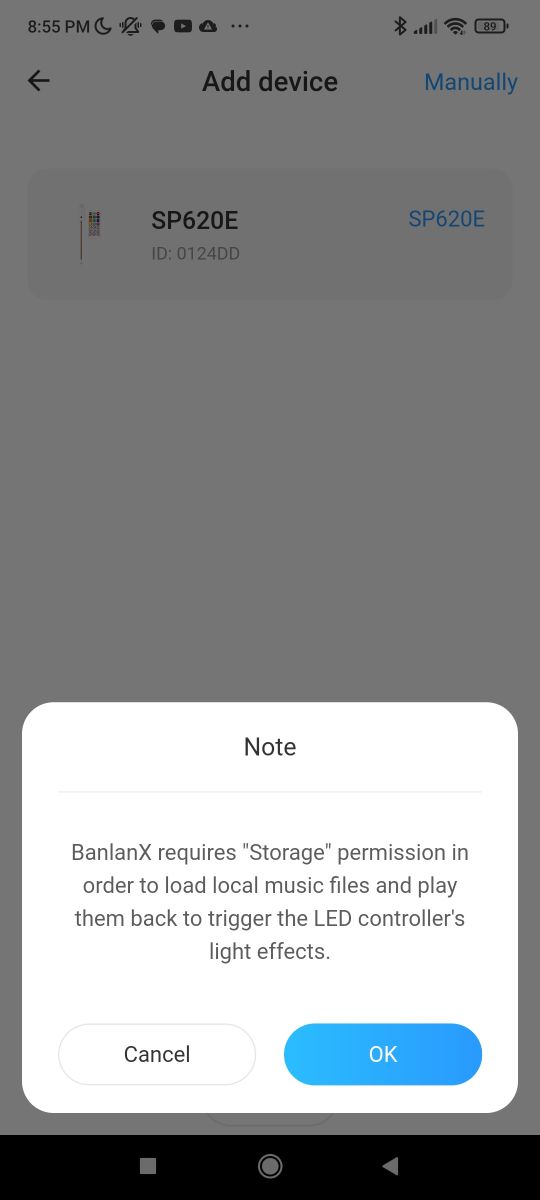
    Smartphone app searching for nearby devices, with device SP620E visible on the list. BanlanX app screen with a note about storage access permissions. .
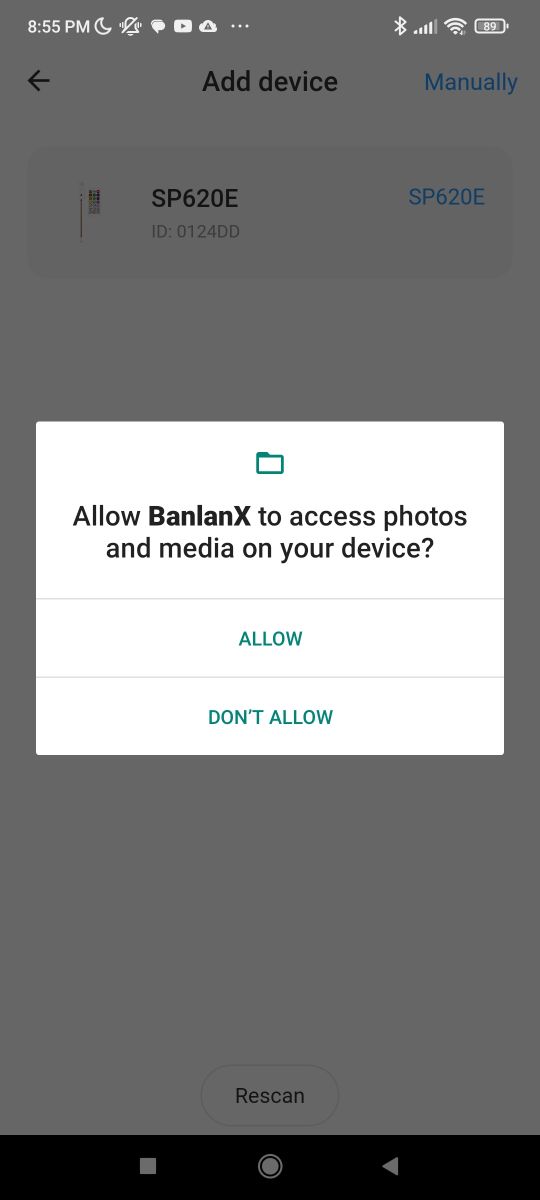
    The app also requires additional permissions - access to storage (to play music?) and access to the microphone (although the microphone is also on the bar controller itself):
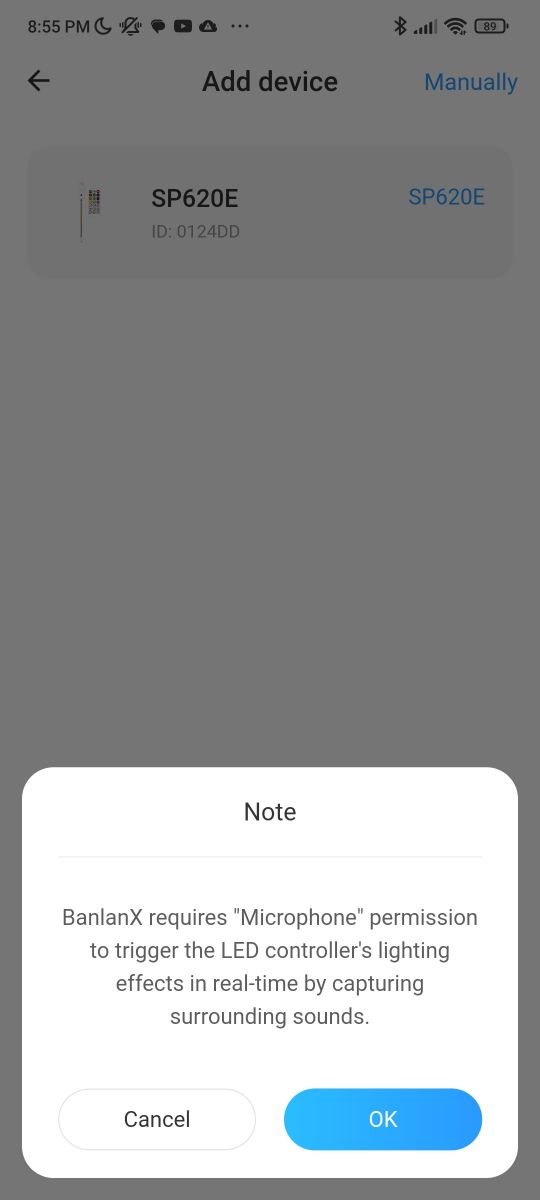
    BanlanX app screen with a microphone permission request message. BanlanX app screen asking for access to photos and media. .
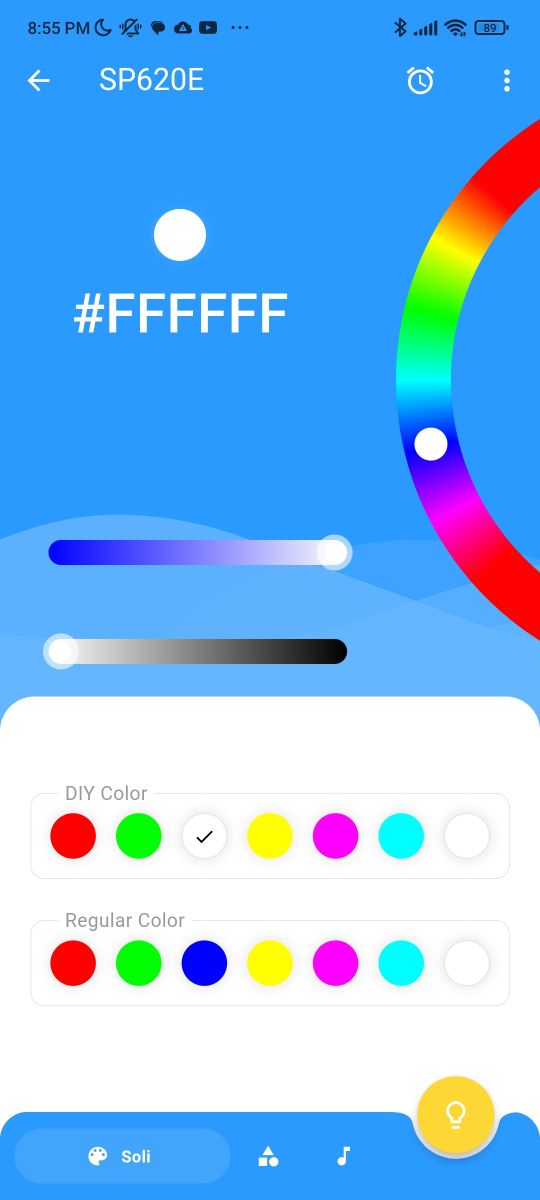
    Time for linking. This is what the controller interface looks like:
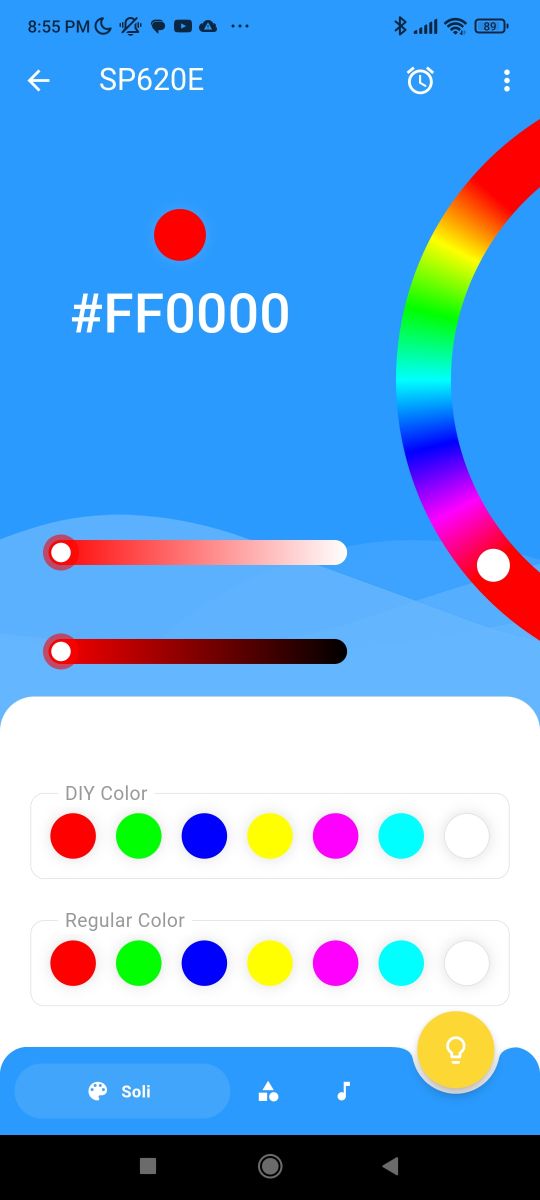
    LED controller app interface with color wheel App interface for controlling LED controller with color palette. .
    The interface turns out to be very rich. The choice of colour is not all:
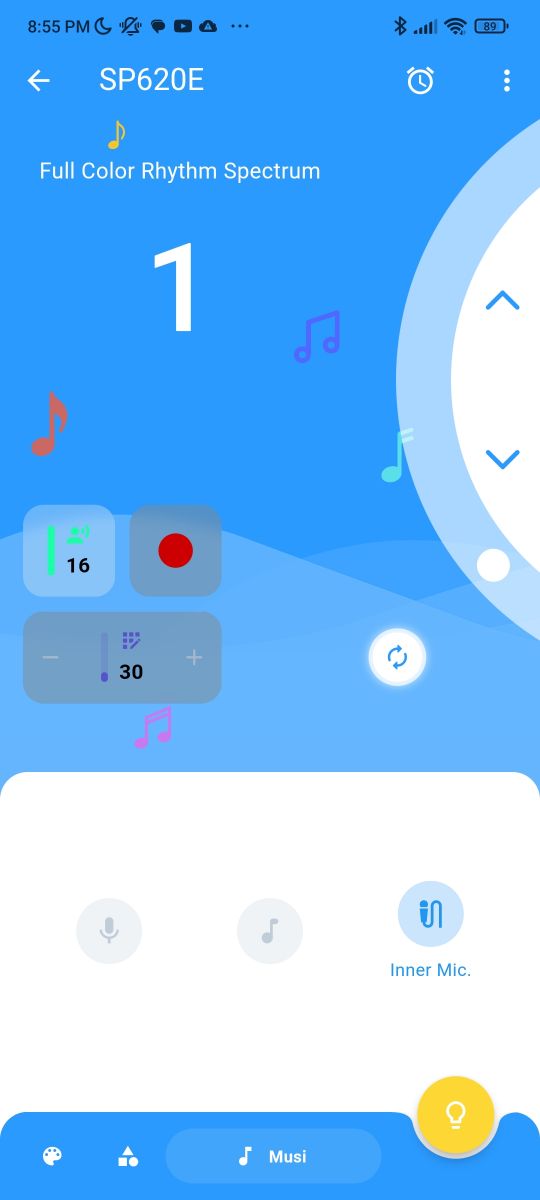
    LED controller app interface with music modes selection. .
    Here we have several hundred different animations with the possibility to choose your own favourites. Of course, the animations are repeated in different colour versions, so there aren't that many, but the choice is still considerable.


    .


    .


    .
    The bar also offers several music modes. There are examples of free songs in the app. Here are three of them:


    .


    .


    .
    I don't have the rhythmic feel to judge this effect, I leave the decision to you. Additionally, there are many more of these musical modes out there, and there are parameters such as animation speed and sensitivity.

    Summary .
    I tested this controller a bit longer but didn't record any more videos, because I don't know if anyone would watch a dozen footage of how the LEDs flash.... I certainly gave a positive review:
    + large number of animation and music modes
    + possibility to create a list of favourite modes
    + parameterisation of modes, speed of animation, brightness, sensitivity to sound
    + remote control (can be controlled at all without pairing with a phone)
    + easy to install
    + three audio input modes (from phone, from phone microphone, from device)
    + you also have to admit that the whole thing can be assembled by anyone, without soldering and even without screwdrivers....
    The downside, on the other hand, is as usual one and the same:
    - the lack of a physical button on the controller's casing, so if you lose the remote control and your phone, you won't be able to switch on the light
    Surely this controller will come in handy, if only to pre-test the strips before connecting and running something of your own, e.g. on NodeMCU and WLED.
    Do you use this type of gadget or do you prefer DIY solutions? Feel free to discuss. .

    Cool? Ranking DIY
    Helpful post? Buy me a coffee.
    About Author
    p.kaczmarek2
    Moderator Smart Home
    Offline 
    p.kaczmarek2 wrote 14403 posts with rating 12336, helped 650 times. Been with us since 2014 year.
  • ADVERTISEMENT
  • #2 21350430
    szeryf3
    Level 30  
    Posts: 2046
    Help: 12
    Rate: 671
    I used to have one controller marked on allegro, which was described on this forum, that I tweaked. But that's in the past tense.
    Now I'm trying to find it and to no avail.
    What did it have?
    It was radio controlled, not linked to the cloud and 12-24 volts.
  • #3 21350436
    p.kaczmarek2
    Moderator Smart Home
    Posts: 14403
    Help: 650
    Rate: 12336
    You can always go DIY too, about 5 years ago I just ran a WS2812 on a PIC:
    PIC18F45K50 as WS2812 LED strip driver (theory+library) .

    Added after 1 [hours] 43 [minutes]: .

    szeryf3 wrote:
    .
    It was radio controlled, not tied to the cloud and 12-24 volts.

    MiBoxer FUT007 and similar fit the description. MiBoxer is in series with RF only and in series RF + WiFi (Tuya)

    Added after 17 [seconds]:

    Miboxer Mi light LED strip controller FUT036 - version without WiFi (RF only), comparison .
    Helpful post? Buy me a coffee.
📢 Listen (AI):

FAQ

TL;DR: Up to 600 LEDs and "easy to install" make the SP620E a low-cost choice for beginners who want WS2812 effects, Bluetooth control, and a remote without soldering. This FAQ helps you pair it, power it safely, and decide when DIY options like NodeMCU/WLED or RF-only MiBoxer make more sense. [#21348852]

Why it matters: This thread shows where a cheap ready-made controller saves time, and where DIY or RF-only alternatives solve privacy, flexibility, or offline-control needs better.

Option Control method Best fit Main limit
SP620E Bluetooth app + remote Fast WS2812 setup without tools No physical button on the case
NodeMCU + WLED DIY custom controller Building your own features and logic Requires your own setup and build
PIC WS2812 driver DIY microcontroller approach Simple custom strip driving Requires development work
MiBoxer FUT007 / similar RF-only radio control 12–24 V use without cloud tie-in Different class than WS2812 app controller

Key insight: The SP620E is strongest as a no-solder test and starter controller for addressable strips. If you need deeper customization or stronger offline independence, the thread points toward DIY NodeMCU/WLED or RF-only MiBoxer instead.

Quick Facts

  • The SP620E was described as costing just under a dozen złoty from China, or about 30 zł locally, and that price covers the controller and remote only. [#21348852]
  • The controller supports up to 600 LEDs, but only if the USB power supply has enough current capacity for the chosen strip length. [#21348852]
  • The strip should use a 3-pin JST connector, and the plug shape helps prevent incorrect strip connection during setup. [#21348852]
  • The setup supports three audio input modes: phone audio, phone microphone, and the controller’s own built-in microphone. [#21348852]
  • The remote battery is included, and the complete assembly needs no soldering and no screwdriver. [#21348852]

How do I pair an SP620E WS2812 LED controller with the BanlanX app over Bluetooth step by step?

Pair it in three basic steps. 1. Power the controller from USB and connect a WS2812 strip with the 3-pin JST plug. 2. Install the app from the QR code; the thread notes SceneX appears to have been renamed BanlanX. 3. Turn on Bluetooth, grant the requested pairing permissions, and link the controller when it appears in the app. The author reports the device was detected after power-up and then opened a rich control interface with color, animation, and music settings. [#21348852]

What power supply current should I choose for an SP620E controller running up to 600 WS2812 LEDs from USB?

Choose a USB power supply with enough current capacity for your actual strip length, because the thread gives no amp value. It states the SP620E can handle up to 600 LEDs only provided the power supply is adequate. In practice, the safest thread-based rule is simple: size the supply for the strip first, then use the controller. If the supply is too weak, the setup may power inconsistently even though pairing and control still appear correct. [#21348852]

Why does the BanlanX app ask for Bluetooth, location, storage, and microphone permissions when connecting to the SP620E?

It asks for those permissions because the app uses Bluetooth for pairing, location reportedly for pairing only, storage likely for music-related functions, and microphone access for sound-reactive modes. The author explicitly notes Bluetooth must be enabled, location access is said to be required only for pairing, and the app also requested storage and microphone permissions. The thread also notes the controller itself has a microphone, so phone microphone permission is not the only way to run music modes. [#21348852]

Which music input modes does the SP620E support, and how do phone audio, phone microphone, and the controller's built-in microphone differ in practice?

The SP620E supports three audio input modes: phone audio, phone microphone, and the controller’s built-in microphone. In practice, phone audio uses music available through the app, phone microphone reacts to sound captured by the phone, and the built-in microphone reacts from the controller side. The author says the app includes example songs and also exposes sound sensitivity and animation-speed settings. He did not judge rhythmic accuracy, so the thread confirms the modes exist but does not rank them by responsiveness. [#21348852]

What is a 3-pin JST connector on a WS2812 LED strip, and why does it help prevent incorrect connection?

"3-pin JST is a strip connector that links an addressable LED strip to the controller with a keyed plug shape, helping align the connection correctly and reducing wrong-way insertion during setup." In this thread, the author says the strip should have a 3-pin JST connector and adds that the controller plug makes incorrect connection impossible. That does not remove the need for a suitable USB power supply, but it does simplify first installation. [#21348852]

What is WLED on NodeMCU, and when is it a better choice than a cheap SP620E Bluetooth controller?

"WLED on NodeMCU is a DIY controller setup mentioned in the thread as a way to run something of your own, giving you a custom alternative to a fixed-function Bluetooth strip controller." It is a better choice when you want to move beyond pre-testing and build your own behavior instead of relying on the SP620E’s ready-made app and remote. The thread positions SP620E as a quick starter, while NodeMCU and WLED are the next step for custom work. [#21348852]

SP620E vs a DIY NodeMCU/WLED controller: which is better for addressable LED strips if I want easy setup, customization, or offline control?

Pick SP620E for easy setup, and pick NodeMCU/WLED for customization. The thread praises SP620E for no-solder installation, remote control, many animations, favorite-mode lists, and app settings for brightness, speed, and sound sensitivity. It points to NodeMCU with WLED when you want to run your own solution instead of a ready-made controller. For offline control, SP620E can still work locally through the remote and Bluetooth without cloud login, but it lacks a physical button on the case. [#21348852]

How can I test a WS2812 strip with an SP620E before building my own controller on NodeMCU or a PIC?

Use the SP620E as a quick pre-test tool before your DIY build. 1. Connect the strip through its 3-pin JST plug. 2. Power the controller from USB with enough current capacity. 3. Verify color, animations, and music response using the remote or BanlanX app. The author explicitly says this controller is useful for pre-testing strips before connecting and running something of your own, for example on NodeMCU with WLED. A later reply also points to a PIC-based WS2812 driver as another DIY path. [#21348852]

What are the main pros and cons of the SP620E controller according to real-world use, including remote control, app features, and the missing physical button?

Its main strengths are convenience and mode variety, while its main weakness is the missing physical button. The author gives a positive review for the large number of animation and music modes, favorite lists, parameter control for brightness, speed, and sound sensitivity, three audio-input modes, remote control, and tool-free installation. He lists one clear downside: there is no physical button on the controller casing. If you lose both the remote and your phone, you cannot switch the light on. [#21348852]

How do I control an SP620E LED strip if I want to avoid cloud login and use only local Bluetooth control?

Use the SP620E without logging in and control it locally over Bluetooth or with the remote. The thread says the app advertises cloud support, but you can try the product without signing in. It also confirms the remote can operate the controller without pairing to a phone at all. That gives you two local-control paths: Bluetooth app access after pairing, or direct remote use when you want to skip cloud login entirely. [#21348852]

Which radio-controlled 12-24 V LED controller without cloud access matches the forum description, such as MiBoxer FUT007 or similar models?

MiBoxer FUT007 and similar models match that description in the thread. A reply states that MiBoxer FUT007 fits the request for a radio-controlled controller that is not tied to the cloud and works on 12–24 V. The same reply adds that MiBoxer has both an RF-only series and an RF + WiFi series linked with Tuya. If you want the cloud-free variant, the RF-only series is the relevant branch named in the discussion. [#21350436]

How does MiBoxer RF-only control compare with Bluetooth app control on the SP620E for convenience, privacy, and reliability?

MiBoxer RF-only favors offline radio control, while SP620E favors app-driven Bluetooth control with more on-screen settings. The thread describes MiBoxer as available in an RF-only series that is not tied to the cloud, and contrasts that with SP620E, which uses the BanlanX phone app plus a remote. For privacy and independence from login, RF-only control is the cleaner fit named in the discussion. For convenience in changing colors, animations, and sound settings from a phone, the SP620E approach is richer. [#21350436]

What can I do if my SP620E shows up only briefly in the BanlanX app and then disappears during pairing?

Start with a clean three-step retry. 1. Re-power the controller from USB and keep Bluetooth enabled. 2. Grant the app the requested permissions, especially Bluetooth and location for pairing. 3. Try linking immediately when the controller appears. The author reports the device was found only momentarily before linking, so brief visibility can occur during setup. If it still vanishes, the thread gives one hard check: confirm the power source has sufficient current capacity for the connected strip. [#21348852]

How do brightness, animation speed, and sound sensitivity settings affect the visual modes on an SP620E controller?

They let you tune how intense, how fast, and how reactive the effects look. The thread says the app supports parameterization of modes, including brightness, animation speed, and sound sensitivity, across both animation and music modes. Higher brightness changes output intensity, speed changes motion pacing, and sensitivity changes how strongly sound-reactive effects respond. The practical benefit is that the same preset can be made calmer or more aggressive without changing hardware or reconnecting the strip. [#21348852]

What is the difference between a WS2812 addressable LED strip controller and a simpler non-addressable 12-24 V RGB controller?

A WS2812 controller drives an individually addressable strip, while a simpler 12–24 V RGB controller belongs to a different product class. The thread explicitly presents SP620E as a controller for individually addressable LEDs and separately discusses a 12–24 V radio-controlled alternative such as MiBoxer FUT007. That means the SP620E focuses on per-strip animations and music effects, while the 12–24 V option is discussed as a simpler RF-controlled alternative, not as the same type of addressable controller. [#21350436]
Generated by the language model.
ADVERTISEMENT