logo elektroda
logo elektroda
X
logo elektroda

Simple LineFollower. Without uC. Self-assembly - Made in China - Review.

CMS  10 2736 Cool? (+11)
📢 Listen (AI):

TL;DR

  • A self-assembly line-following robot kit from China runs without a microcontroller and uses the PCB as both circuit board and chassis.
  • Two photoresistors, bright LEDs, an LM393 comparator, and 8550 transistor motor drivers steer the two geared motors by sensing the black line.
  • The kit includes two AA batteries, two 10 kOhm potentiometers, 100uF capacitors, and a simple schematic with a test track.
  • It draws 35mA at 3V and works well enough to make people laugh, though the third wheel is only a screw and feels weak.
Generated by the language model.
I am again, my beloved readers. And this is thanks to quite a large package that I recently received from Kamil. But about this, you could read in a separate subject

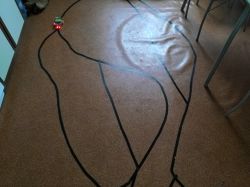
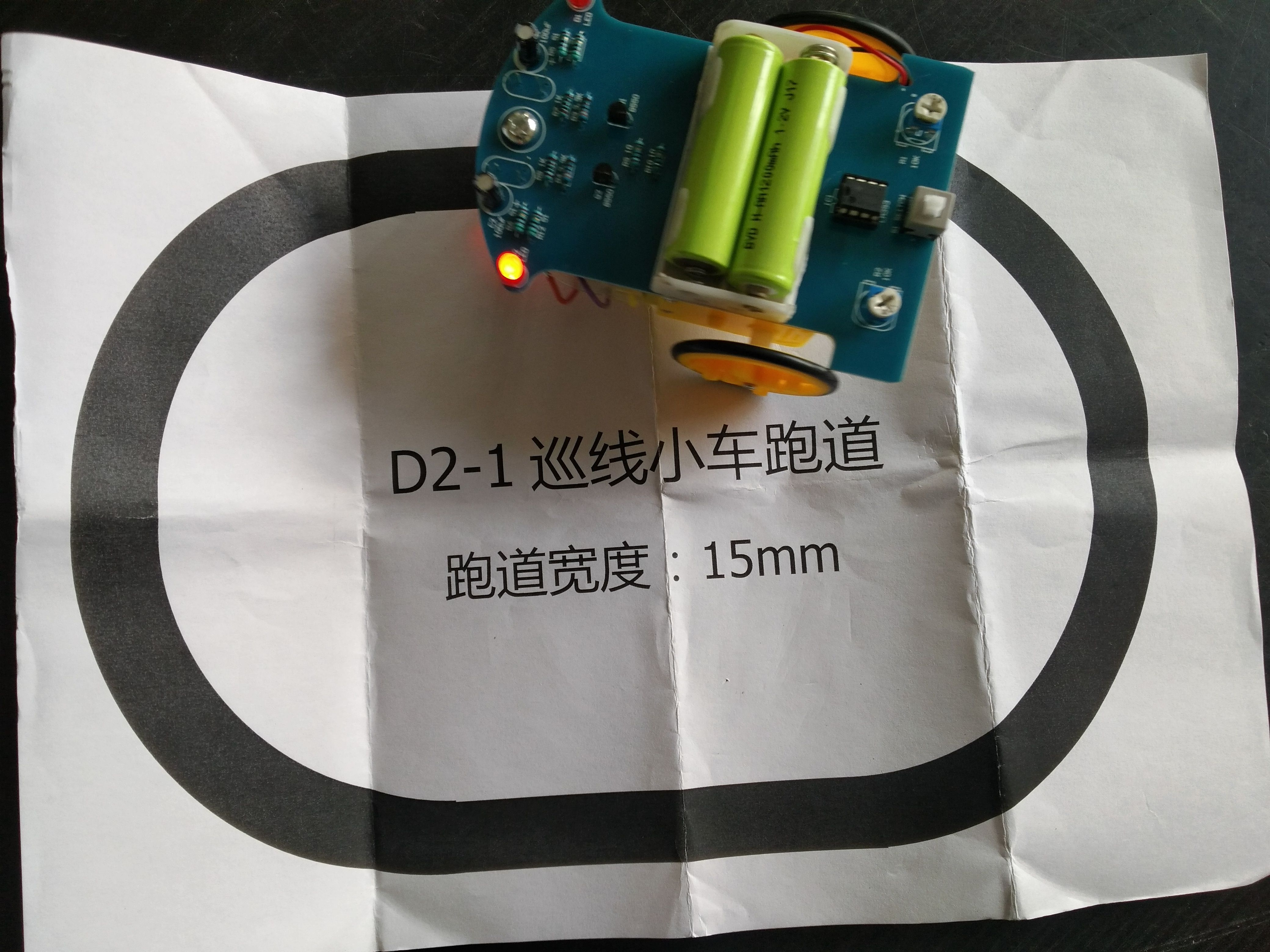
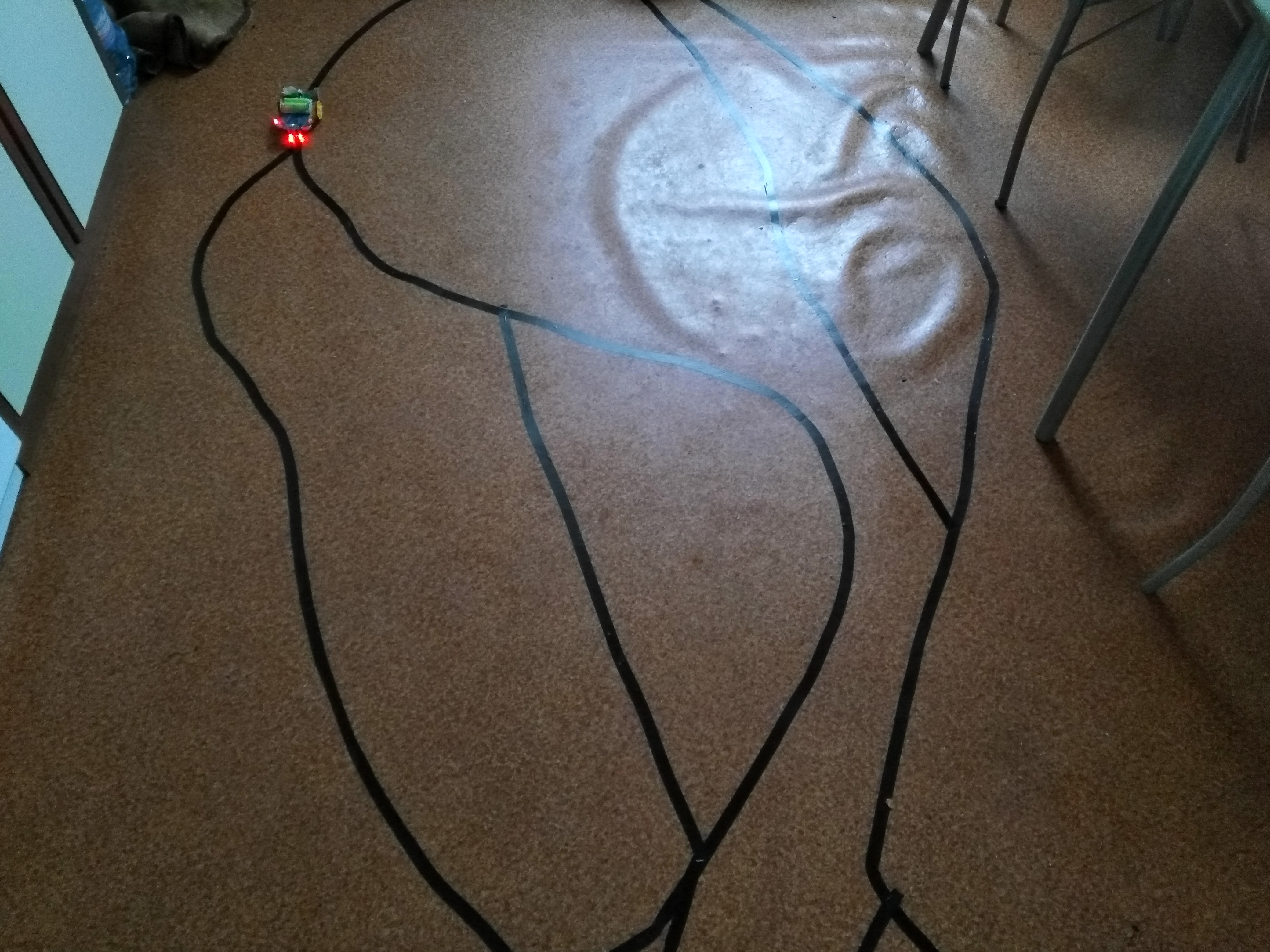
This time I will present you a toy that I was very skeptical about. Because who and why would buy it and admire this "invention"? However, after I put it together and started it, I started laughing like a child. Immediately afterwards, when I released him on the table at work, it turned out that this gadget not only makes me laugh. And when I took it home and showed it to my Emi, a moment later, she was sitting on the kitchen floor with a roll of black electrical tape in her hand and pasting the routes. "Robocik called" her sweetie "and asked if she could keep him :) . Ah, those women :) .


The toy is very simple in its construction. And as some young readers will probably be surprised, it does not have any microcontroller in its structure. And yet, it is very good at moving along the designated line.

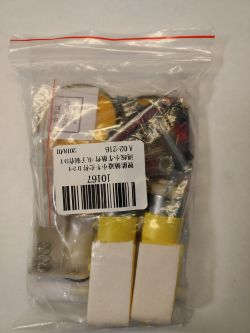
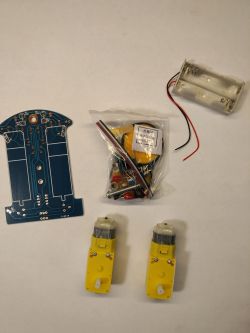
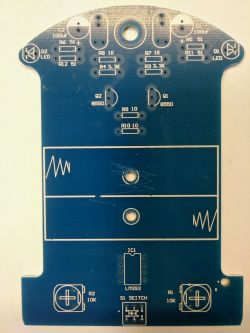
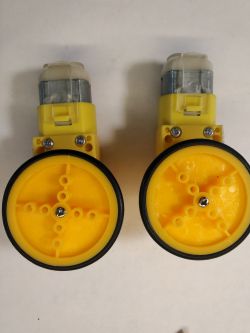
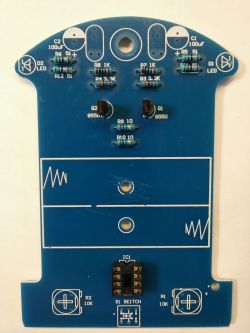
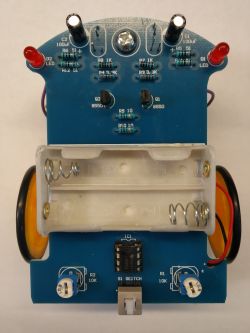
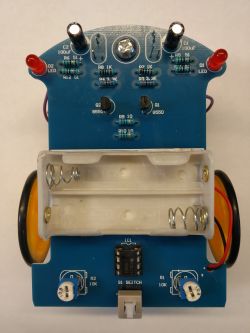
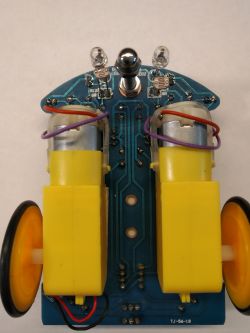
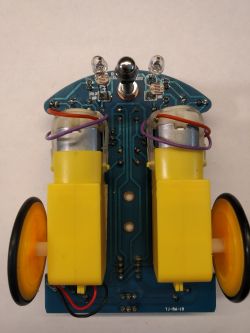
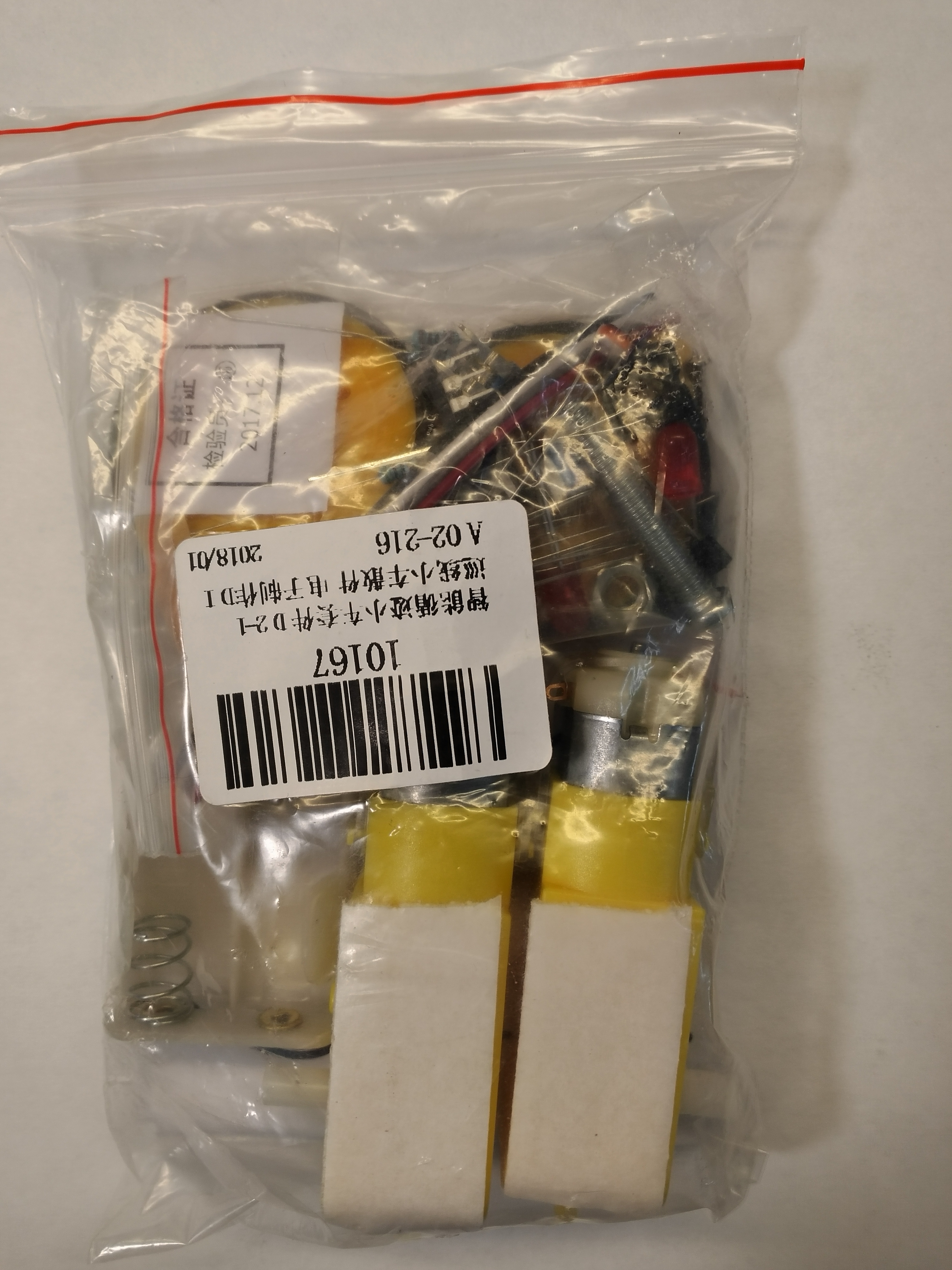
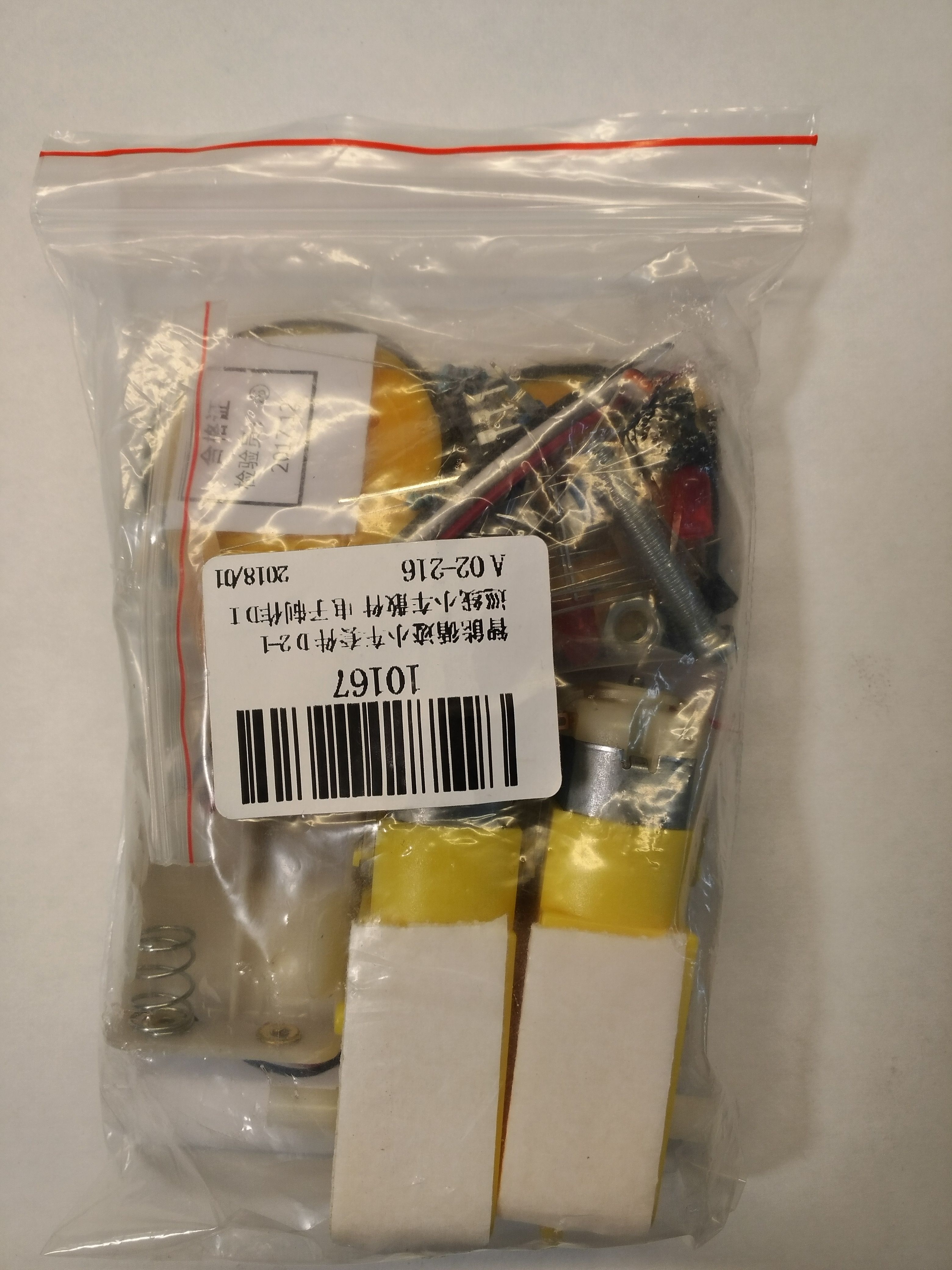
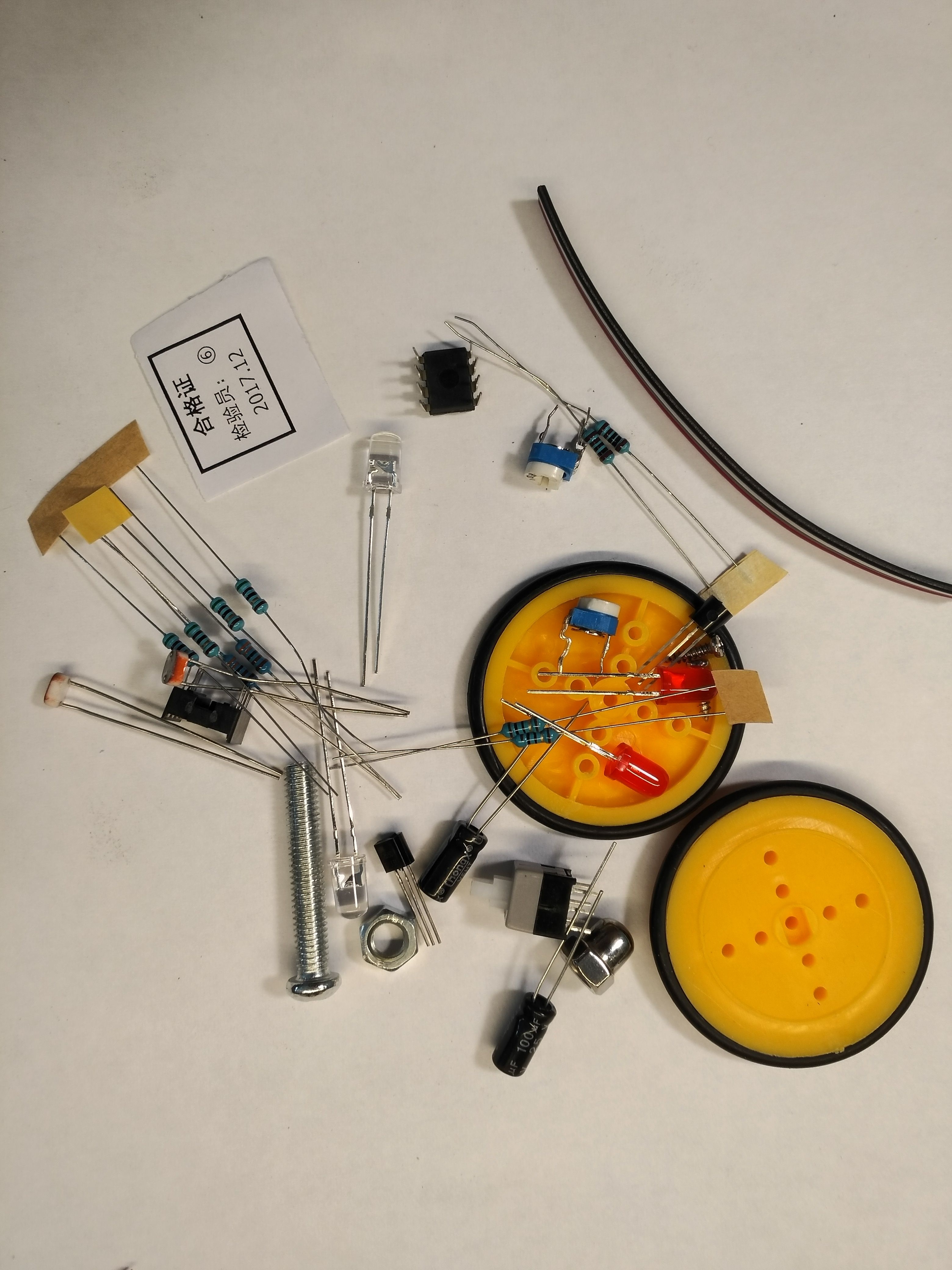
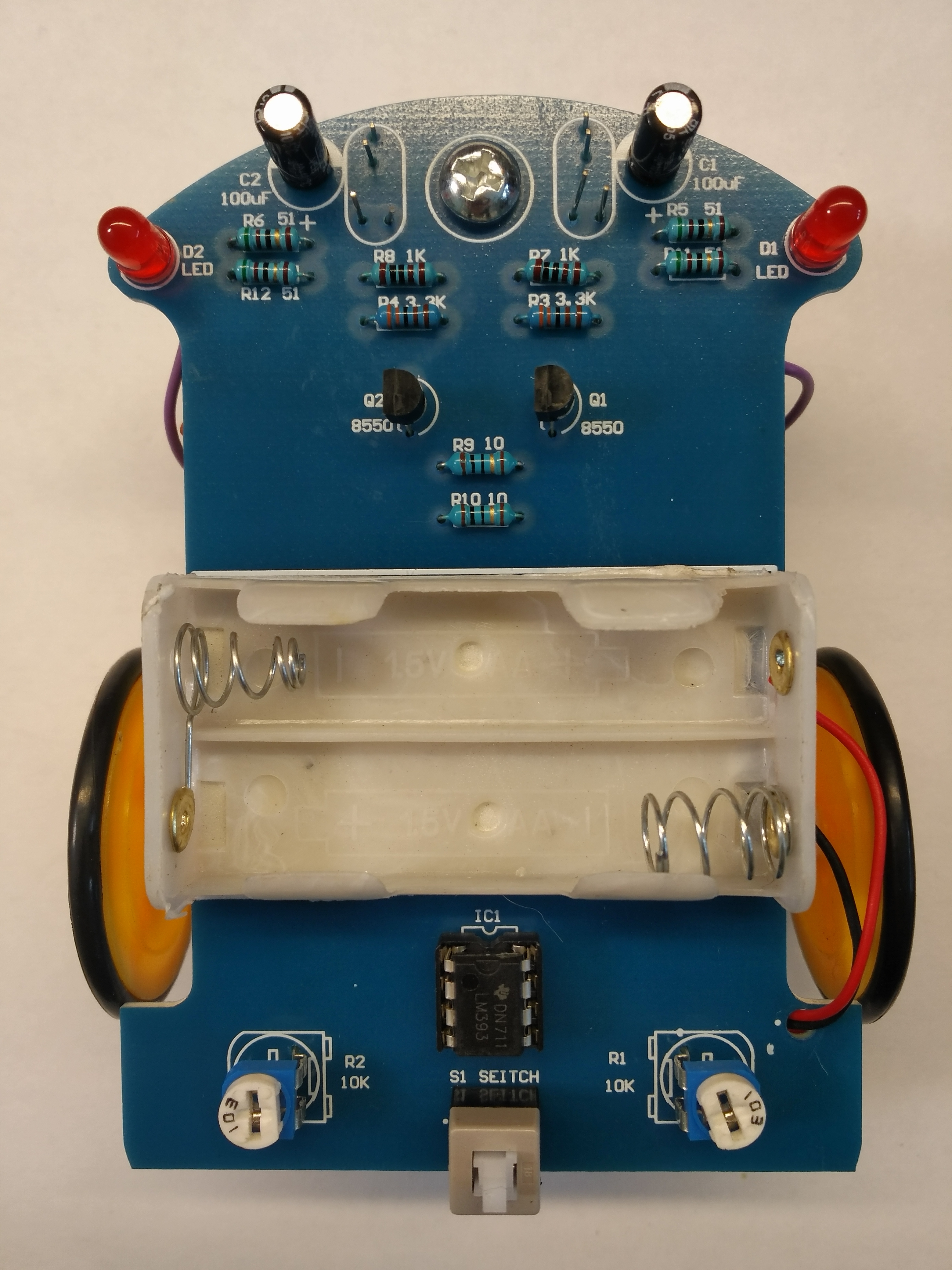
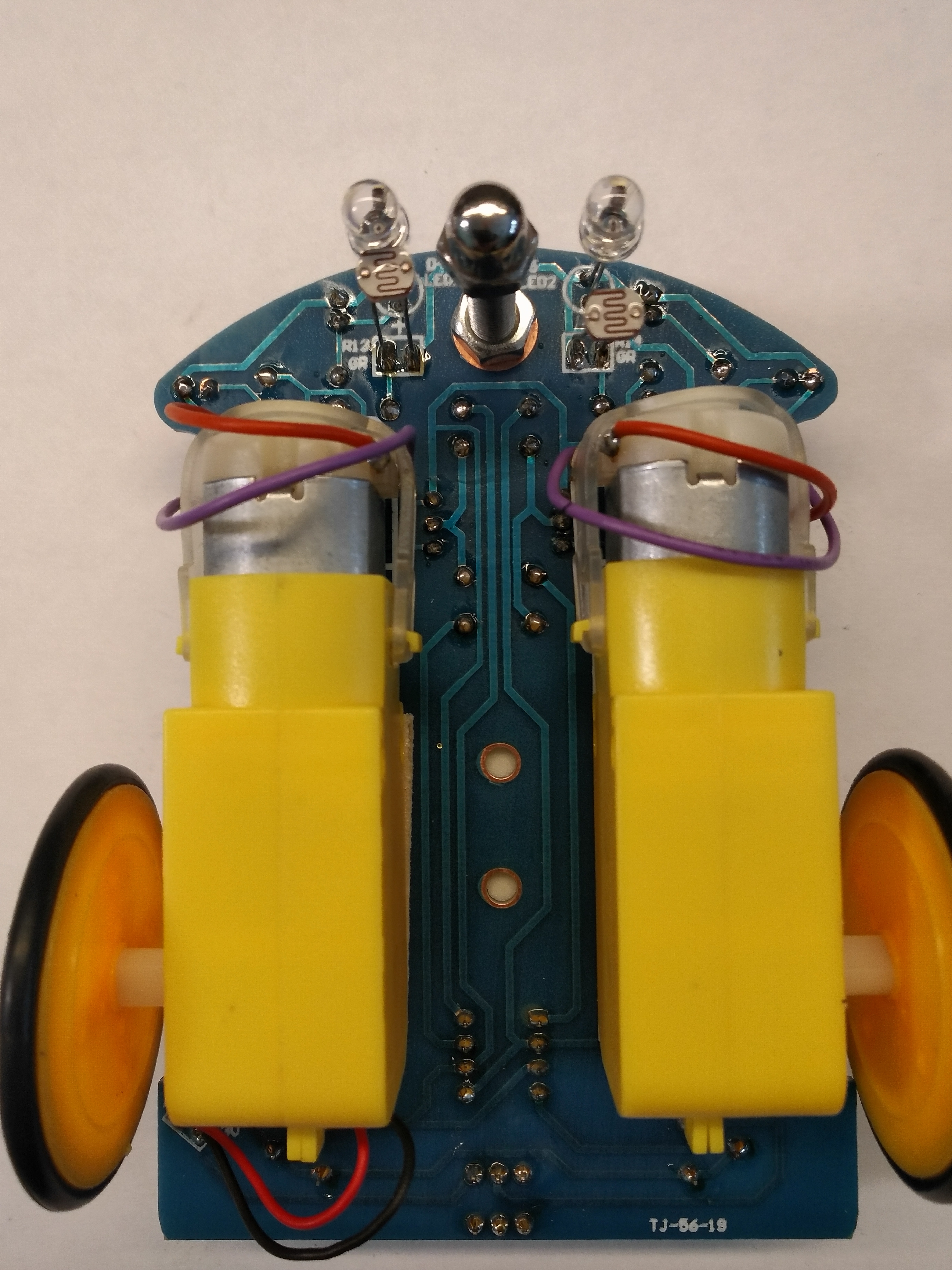
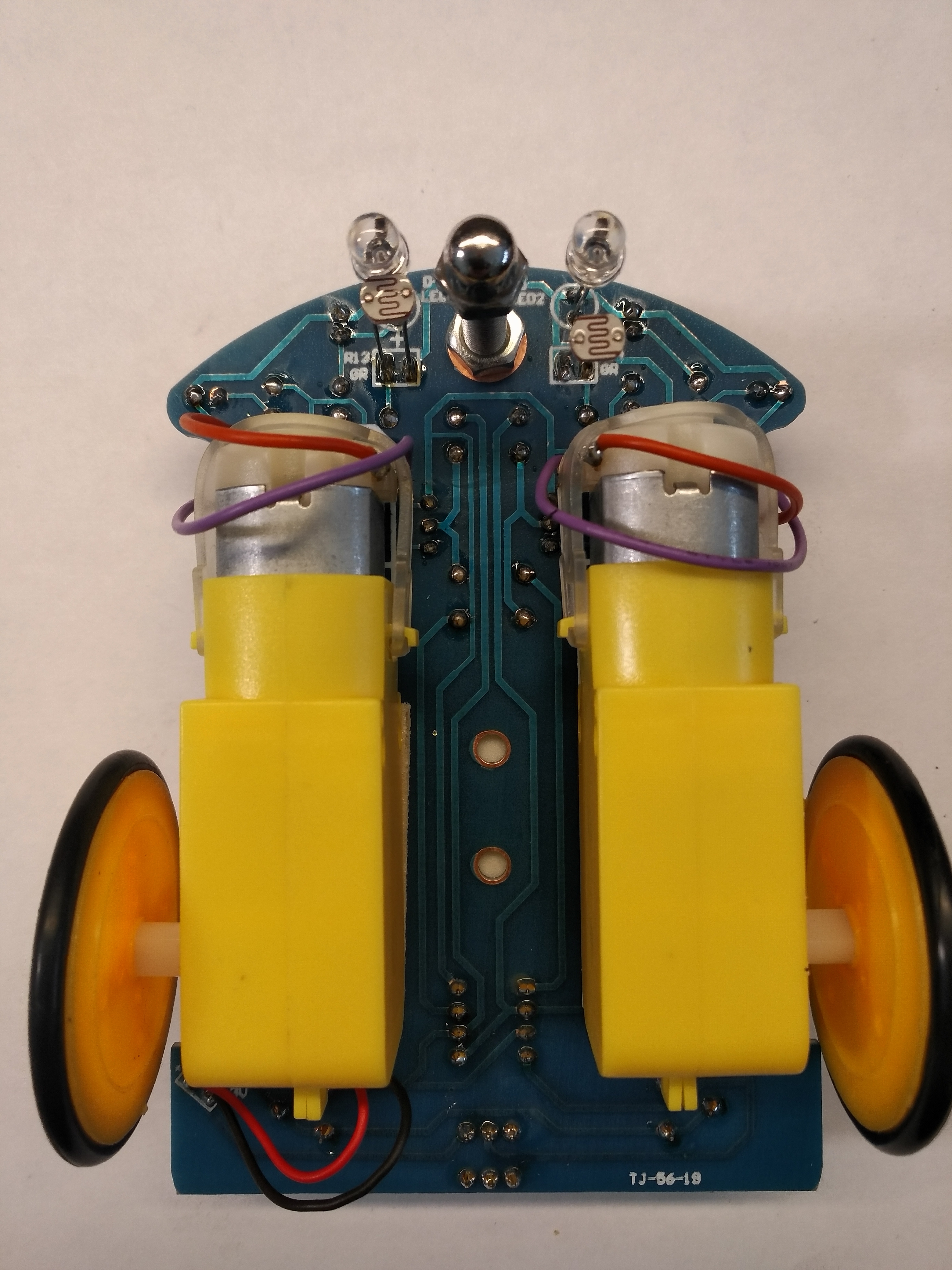
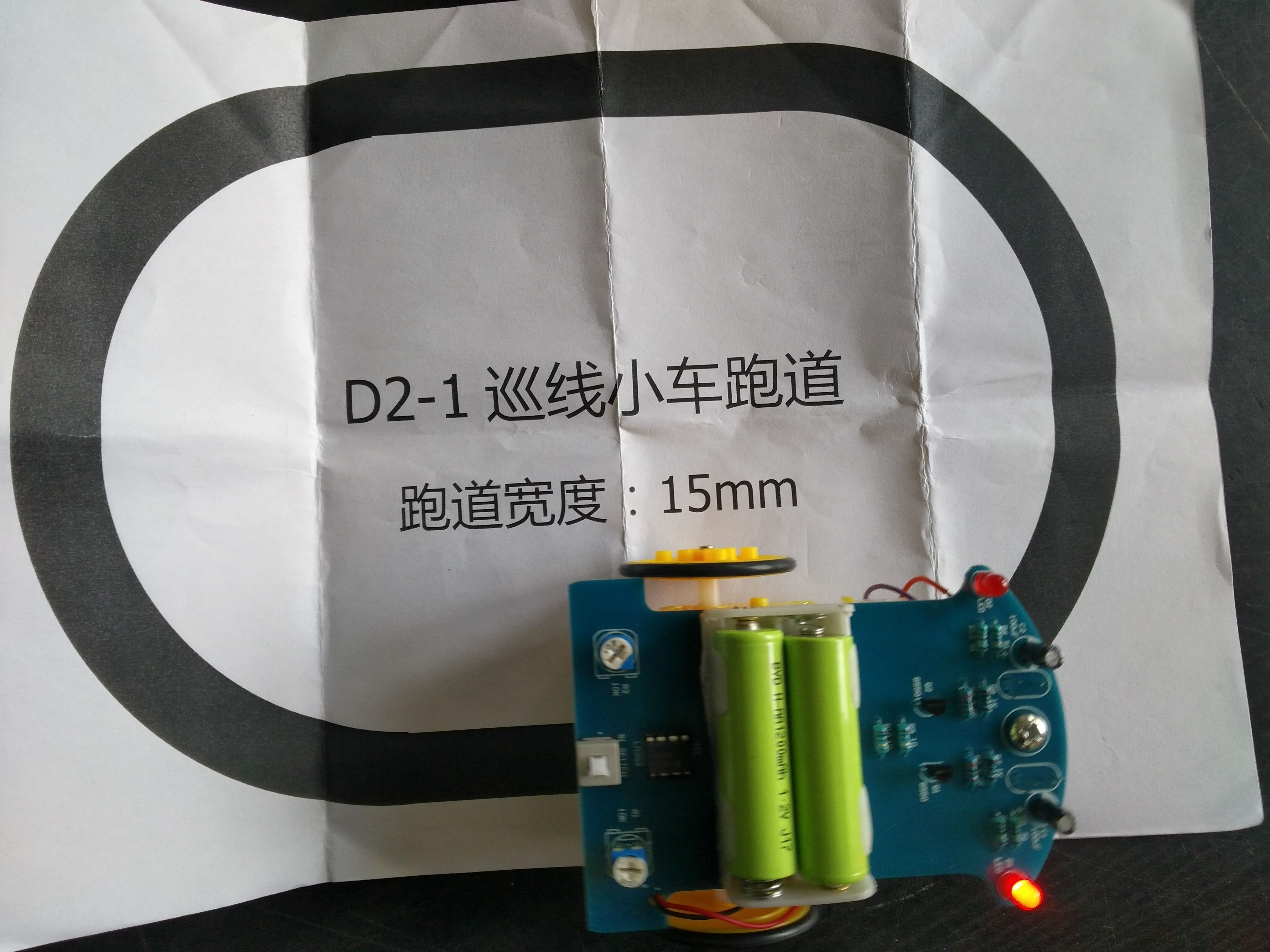
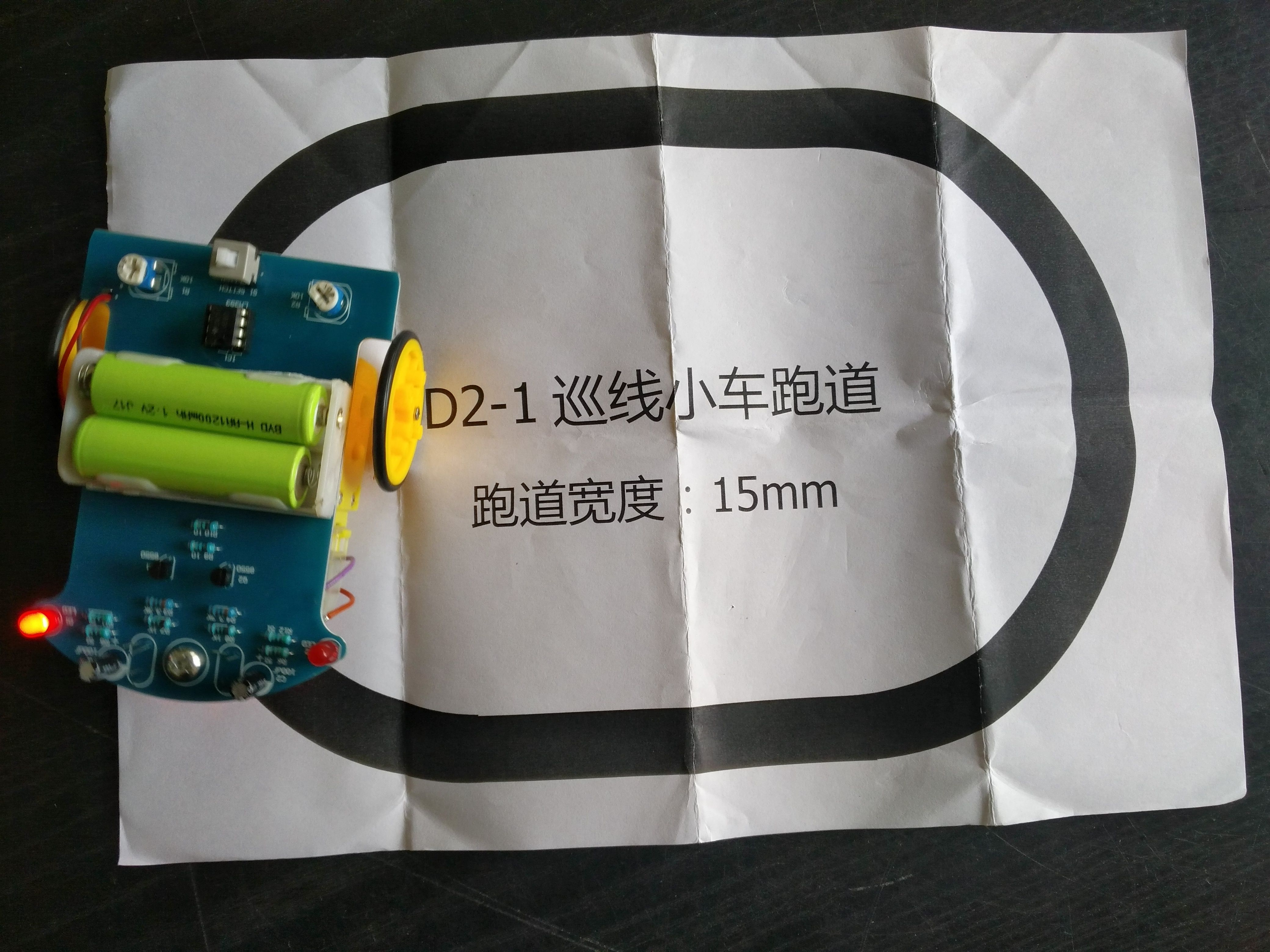
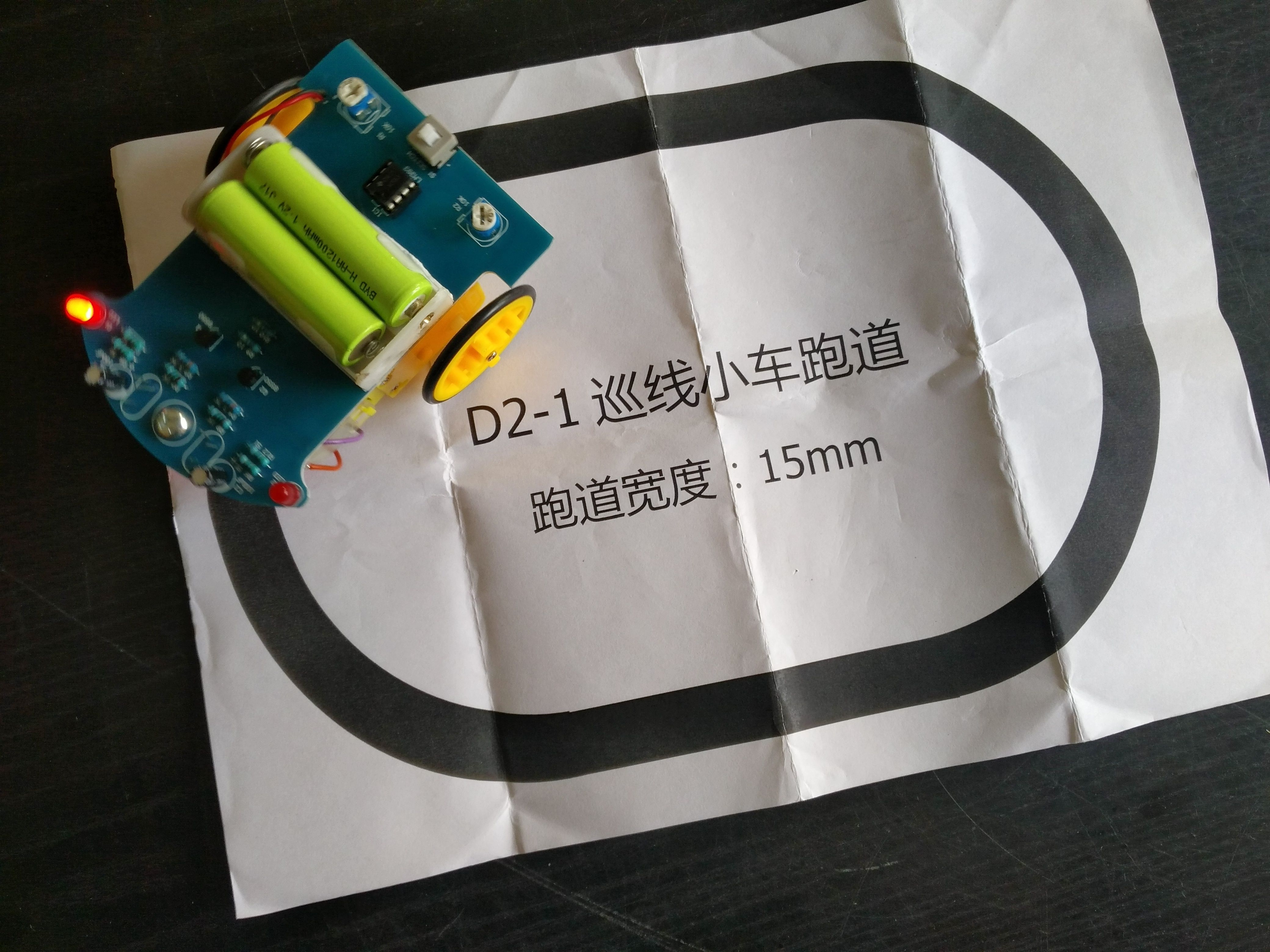
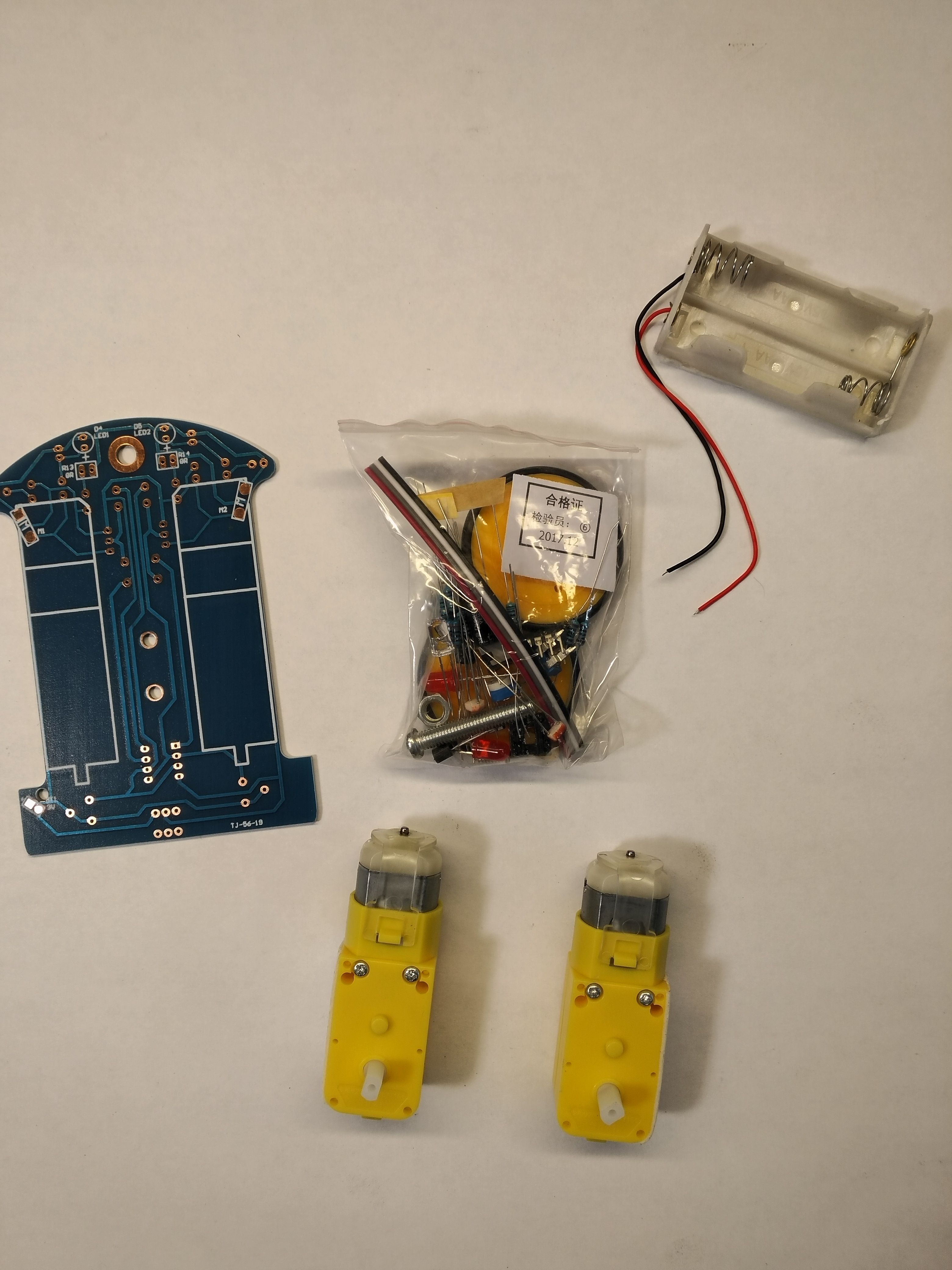
What we get in the set, you can see in the photos below:
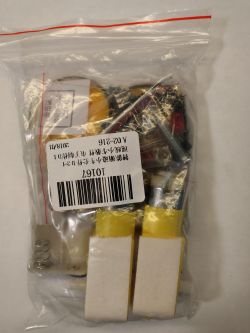


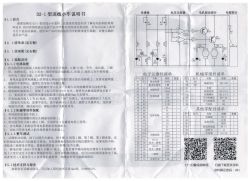
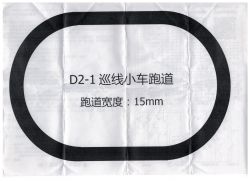
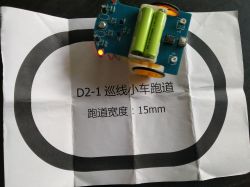
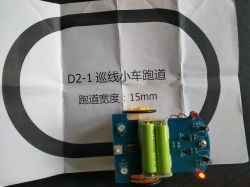
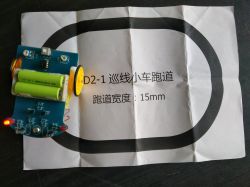
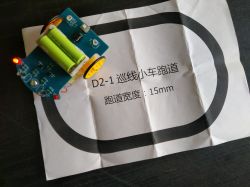
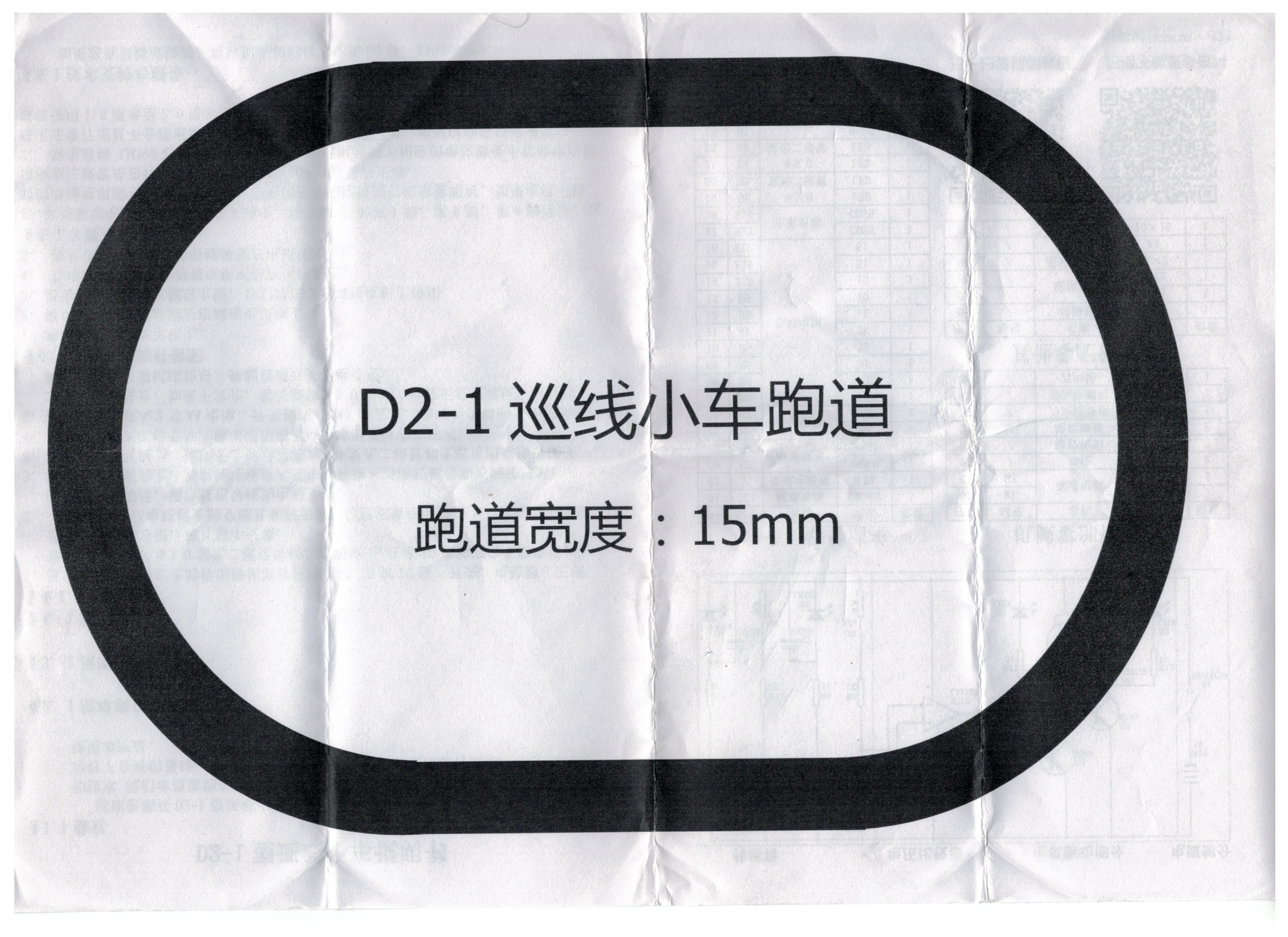
There is even a schematic and a "test track".
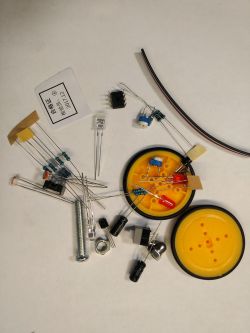


The set includes:

1. Two geared motors. They are glued with double-sided foam tape, which allows them to be quickly mounted to the PCB.
2. Two wheels, with "tires", and screws to screw them to the axles of the motors.
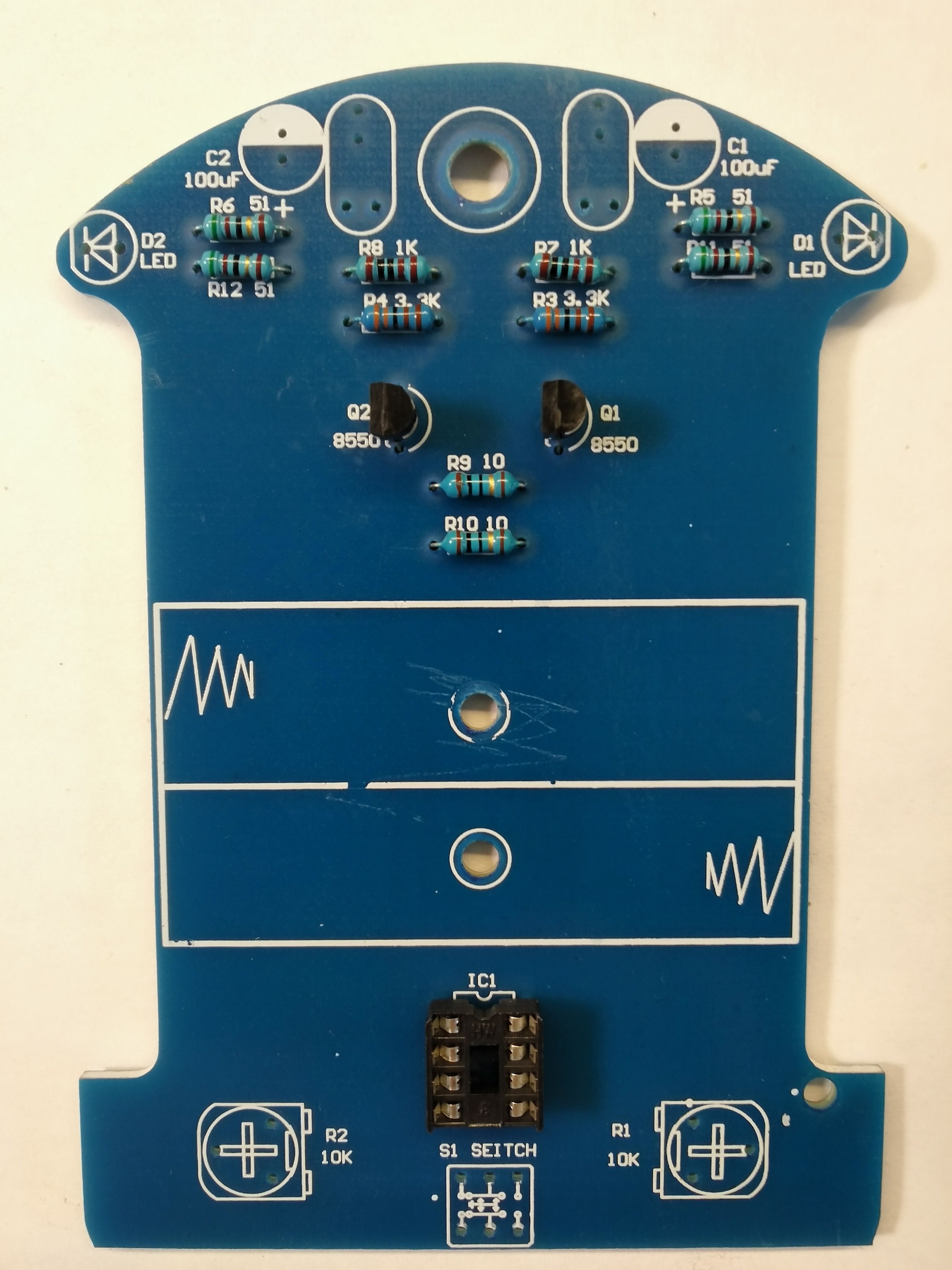
3. LM393 double operational amplifier and a socket for it.
4. Basket for two AA batteries. Stuck with double-sided adhesive tape.
5. Switch button S1.
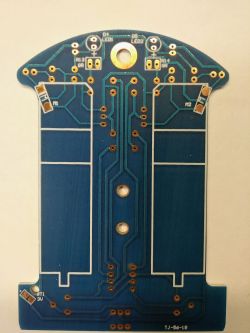
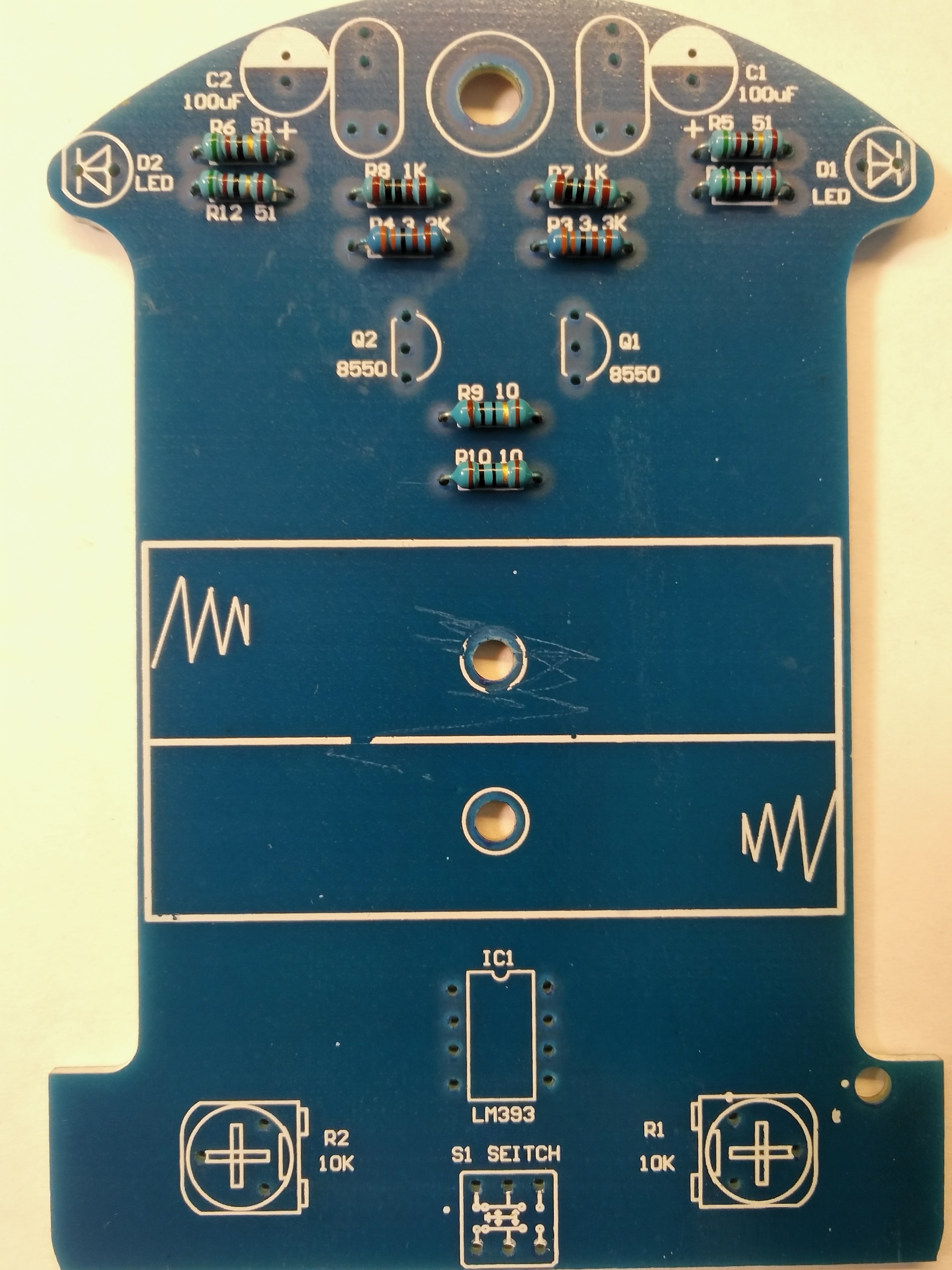
6. The PCB which is also the supporting structure of the whole "robot".
7. Two bright red LEDs in transparent housings. Cooperating with photoresistors.
8. Two red LEDs in diffusion casings. Facilitating system adjustment.
9. Two photoresistors. Acting in conjunction with bright LEDs, functions of sensors.
10. Two 10kOhm mounting potentiometers. To adjust the system.
11. Two 8550 transistors as drivers for the motors.
12. Ten resistors with different values.
13. Two electrolytic capacitors 100uF / 25V
14. M4 screw with a decorative nut, with a rounded head. It functions as a third wheel, and that is a very weak solution.

The system consumes 35mA at a voltage of 3V.
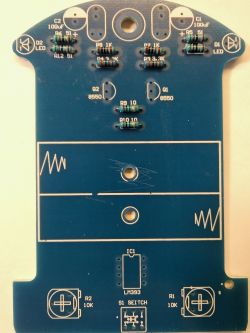


The system is very easy to assemble. As always, start with the lowest elements. It also suggests that you solder the wires to the pins on the motors before sticking everything together with double-sided tape.

I must say that with this DIY Kit, I am very pleased. This is a gadget that can really teach you a lot and show that you can do something interesting on discrete components (apart from the integrated op-amp), without using the ubiquitous microcontrollers.
The attached diagram will allow even very beginner electronics to understand the principle of operation of this gadget. Those slightly more advanced should understand it without even looking at this banal pattern.

Summarizing. I believe that if someone wants to learn something and build a toy that will make many people smile, then this gadget is a bull's eye.
If someone likes to combine, you can experiment with different LEDs that work with photoresistors. Can you change them to infrared (IR) and see what happens, will the photoresistor react at all, to this band? Or maybe ultraviolet (UV) diodes and mark the route so that it is visible only to our robot. Then just dress him up in a stuffed rat or some spider and you can get your mother-in-law's number :) sesese ...


Best regards.
CMS
About Author
CMS
CMS wrote 8440 posts with rating 2581 , helped 256 times. Live in city Warszawa. Been with us since 2004 year.

Comments

gulson 30 Apr 2018 14:35

The gadget I took casually turned out to be a great entertainment module. If someone has children, it can guarantee fun for long hours associated with the assembly itself, pasting the path by observing... [Read more]

wiktor13570 30 Apr 2018 14:46

In my opinion, the best of the tested putties so far. [Read more]

398216 Usunięty 30 Apr 2018 17:15

Maybe that's why? Comparator based circuit I suppose? I did something similar once (also) for entertainment purposes. Somewhere else it lies in the junk ... As for marking the route with tape - I... [Read more]

1 Marcin 30 Apr 2018 19:47

Hello, I have to admit that I bought this car in December for children, but it has not been launched yet. It is soldered, only to insert the batteries. I wonder what to replace this screw with to make... [Read more]

CMS 30 Apr 2018 20:01

This nut is a failure, when the insulation on the bends wrinkles, it gets stuck in these places. That's why in the video it's weighed down with stones (I stole from a flower). I think that if you... [Read more]

VIGOR_PICTURES 01 May 2018 00:04

Oh no! This CMS again! You open the fridge and there he and his Chinese toys ... Just a joke ;) . A no-nonsense idea may be ... A LEGO brick circle. Back in the day, in the SYSTEM series with aircraft,... [Read more]

Simon79 01 May 2018 10:50

I have this kit and I confirm, a small simple thing, and it enjoys. As for the screw, the more "professional" LineFollower designs use support balls, e.g .: https://obrazki.elektroda.pl/8181283700_1525164618_thumb.jpg... [Read more]

szeryf3 02 May 2018 08:41

@CMS thank you for the reviews of the future toy for my grandson. I hope I can play with it. [Read more]

CMS 02 May 2018 12:28

I feel like Grandpa will have more fun :) . [Read more]

radiomechanik 14 May 2018 11:44

I know this topic for a good quarter of a century :-) On this principle, I used to service an automatic acetylene burner for cutting steel sheets and plates. Although in the beginning of the 90s, the... [Read more]

FAQ

TL;DR: Assembly takes under 30 minutes and the finished line-follower draws just 35 mA at 3 V, a “small simple thing, and it enjoys” [Elektroda, CMS, post #17192582][Elektroda, Simon79, post #17196962]

Why it matters: The kit teaches core analog-control concepts without any code.

Quick Facts

• Powered by 2 × AA cells, 3.0 V nominal [Elektroda, CMS, post #17192582] • Average current draw: 35 mA on white paper [Elektroda, CMS, post #17192582] • Street price: PLN 15 (~US $4) [Elektroda, gulson, post #17195835] • Sensors: 2 photoresistors + red LEDs; comparator: LM393 dual [Elektroda, CMS, post #17192582] • LM393 operates from 2 V to 36 V supply (TI datasheet)

What parts are included in the Chinese line-follower kit?

You get a pre-etched PCB, two 3–6 V geared motors with wheels, LM393 and socket, two photoresistors, four LEDs (two clear, two diffused), ten resistors, two potentiometers, two 8550 driver transistors, two 100 µF capacitors, AA battery holder, slide switch, M4 screw and nut for the rear support, plus a printed schematic and paper test track [Elektroda, CMS, post #17192582]

How can it follow a line without any microcontroller?

Each photoresistor forms a voltage divider whose level is compared by the LM393. When the left sensor sees more reflected light than the right, the comparator enables the right-side motor, steering the robot back onto the line. The process repeats at about 10 kHz, fast enough for smooth motion [Elektroda, CMS, post #17192582]

How long does assembly take and what tools are required?

Most users report 20–30 minutes. Needed tools: low-power soldering iron, rosin flux, side cutters, small Phillips screwdriver and double-sided tape (included). Solder motor wires before fixing them to the PCB for easier access [Elektroda, CMS, post #17192582]

How do I tune the sensors for reliable tracking?

  1. Place the robot over the supplied black line.
  2. Adjust each 10 kΩ trimmer until its red indicator LED glows only when the sensor sits over white background.
  3. Move the robot sideways; both LEDs should toggle within 2 mm of the edge. Repeat until balanced. A balanced pair keeps straight travel even at 0.3 m/s [Elektroda, CMS, post #17192582]

Why is the screw used as the third wheel a problem?

The rounded nut drags on tape folds, snagging and stopping the robot. "This nut is a failure" notes the reviewer [Elektroda, CMS, post #17196275] Excess friction also raises current spikes to 120 mA, cutting battery life by half.

What can replace the rear screw?

Swap it for a 8 mm ball caster (≈PLN 7) or clip a LEGO 2×2 swivel plate with a small wheel, as suggested by another reader [Elektroda, VIGOR_PICTURES, post #17196678] Both options roll freely and reduce drag.

Where can I buy such a small ball caster?

Look for “mini omni ball 8 mm” used in micro-sumo robots. Hobby stores ship worldwide; weight is under 2 g. Local 3D-printing communities also share printable housings that fit 6 mm steel balls (Thingiverse ID 314665).

Can I switch to infrared or ultraviolet LEDs?

Yes. Photoresistors peak at 550 nm but still respond to 850 nm IR at about 30 % sensitivity. Replace the red emitters with 5 mm 850 nm diodes and retune the trimmers. UV (395 nm) yields weaker response (<10 %) and may fail under bright room light [“CdS Cell Spectral Response”].

How long will it run on fresh alkaline AA cells?

Two 2000 mAh AA cells deliver ≈57 hours at the 35 mA cruise current. In practice, turns and stalls raise the average to 60 mA, giving about 30 hours continuous play—still a full weekend of fun [Elektroda, CMS, post #17192582]

Is 3 V really enough for the LM393 and motors?

Yes. The LM393 works from 2 V upward (TI datasheet). The brushed motors start reliably at 2.5 V with no load; line tracking adds only 5 mN·m, so 3 V is safe.

What common failure modes should I watch for?

  1. Tape adhesive on the floor gums the rear screw causing stalls.
  2. Photoresistor leads crack if bent repeatedly.
  3. Dead batteries drop below 2 V; the comparators latch and the robot spins. Edge case: Strong sunlight blinds the sensors, sending the bot off-track.

Quick three-step first-run checklist?

  1. Solder, then mount components lowest to highest.
  2. Calibrate trimmers over the printed track until both indicator LEDs toggle sharply.
  3. Insert batteries, place on a 15 mm-wide black tape loop, and flip the switch. The robot should follow the loop continuously.
Generated by the language model.
%}