logo elektroda
logo elektroda
X
logo elektroda

Cell welding machine on Chinese DIY driver

kulek855  22 54870 Cool? (+21)
📢 Listen (AI):

TL;DR

  • A DIY cell welding machine uses a 1300 W transformer, a Chinese 40 A controller from AliExpress, and homebuilt electrodes.
  • The housing is made from microwave-oven sheet metal with a plywood front, and the handle uses aluminum flat bars, springs, screws, OSB, and plastic.
  • The secondary winding measured 3.3 V and 750 A initially, with a 25 mm2 cross-section wire.
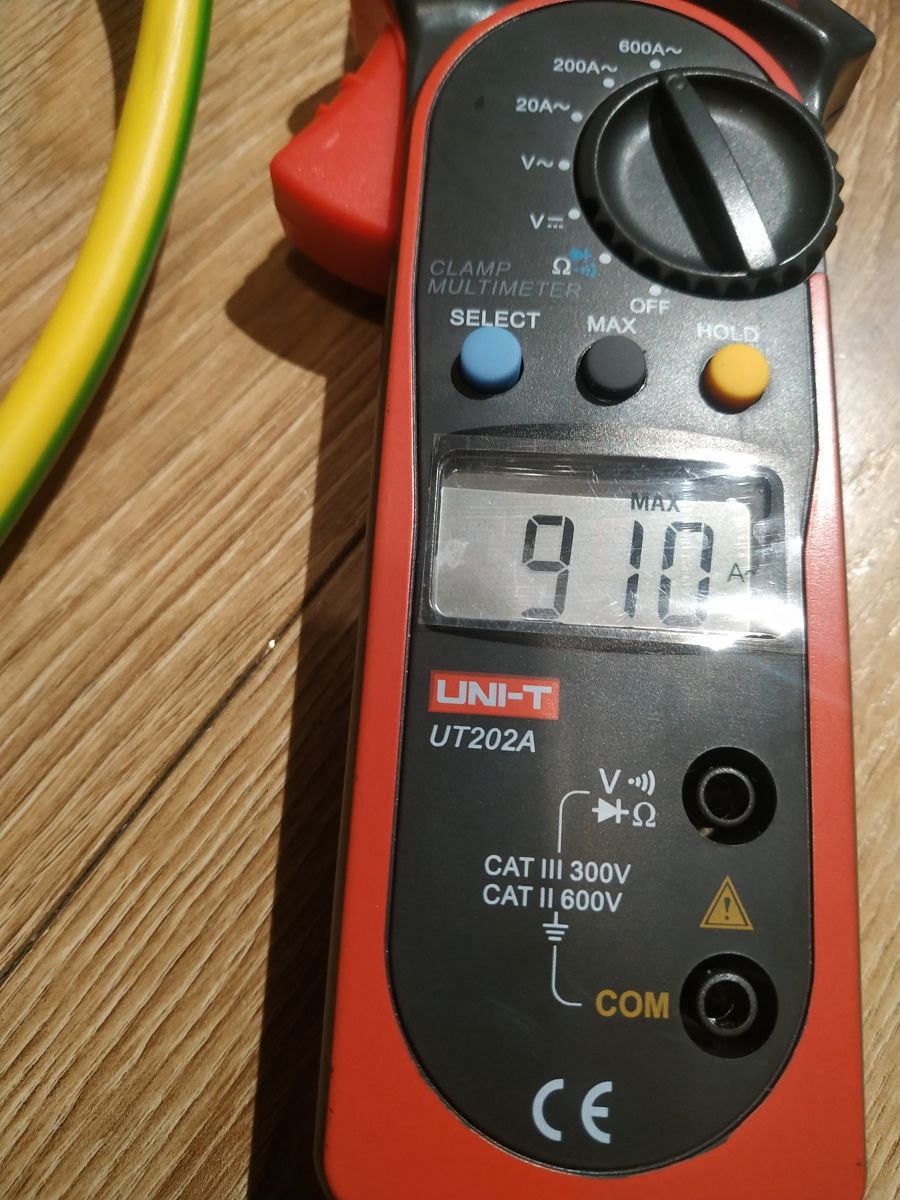
  • After reworking insulation with Kapton tape and paper, the secondary rose to 5 V and the short-circuit current reached 910 A.
  • Remaining upgrades include changing the cable from 25 mm2 to 35 mm2, pressing ring terminals with a hydraulic press, and replacing aluminum handle parts with copper.
Generated by the language model.
Hello
I would like to present for evaluation, possibly to indicate errors and defects of my cell welding machine.

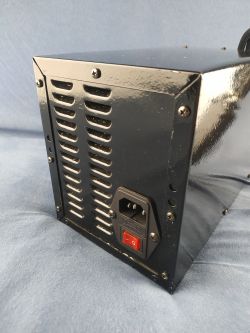
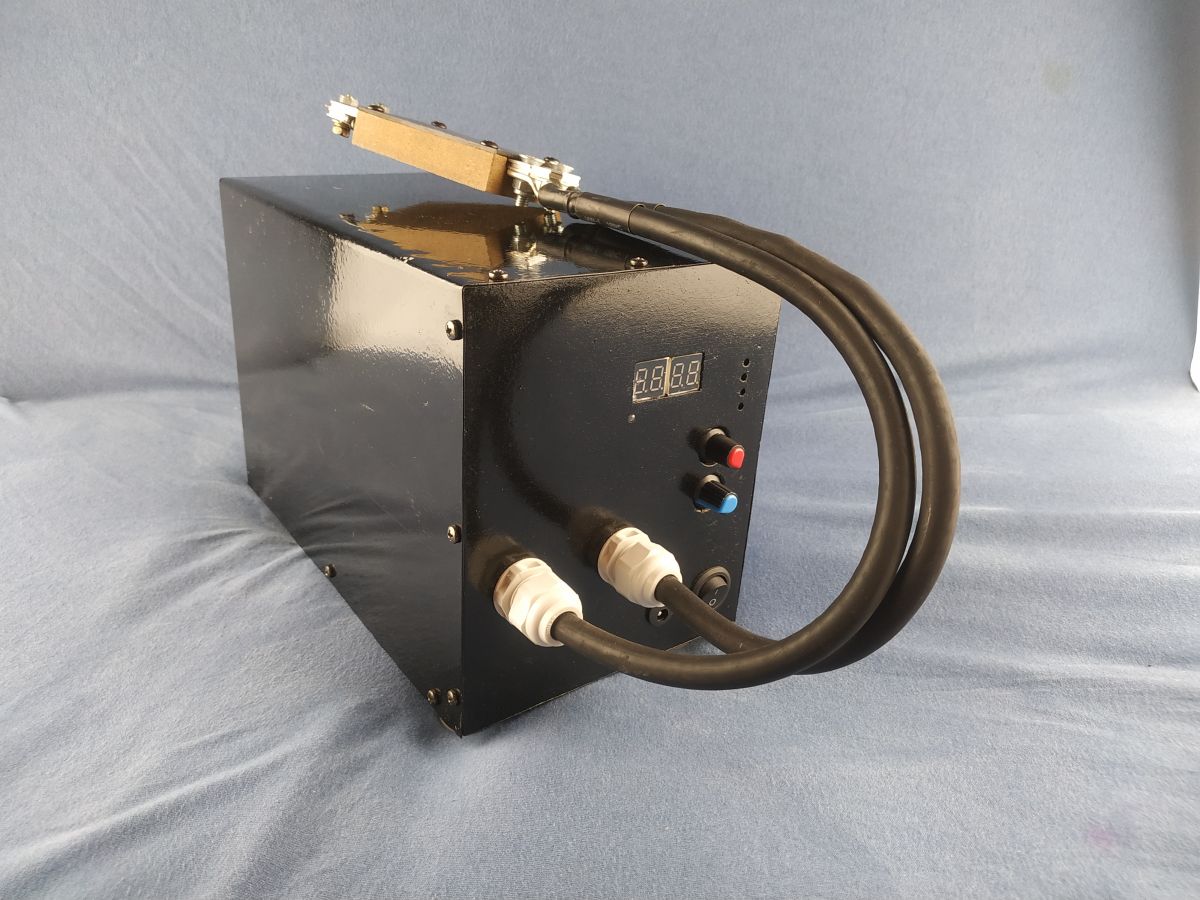
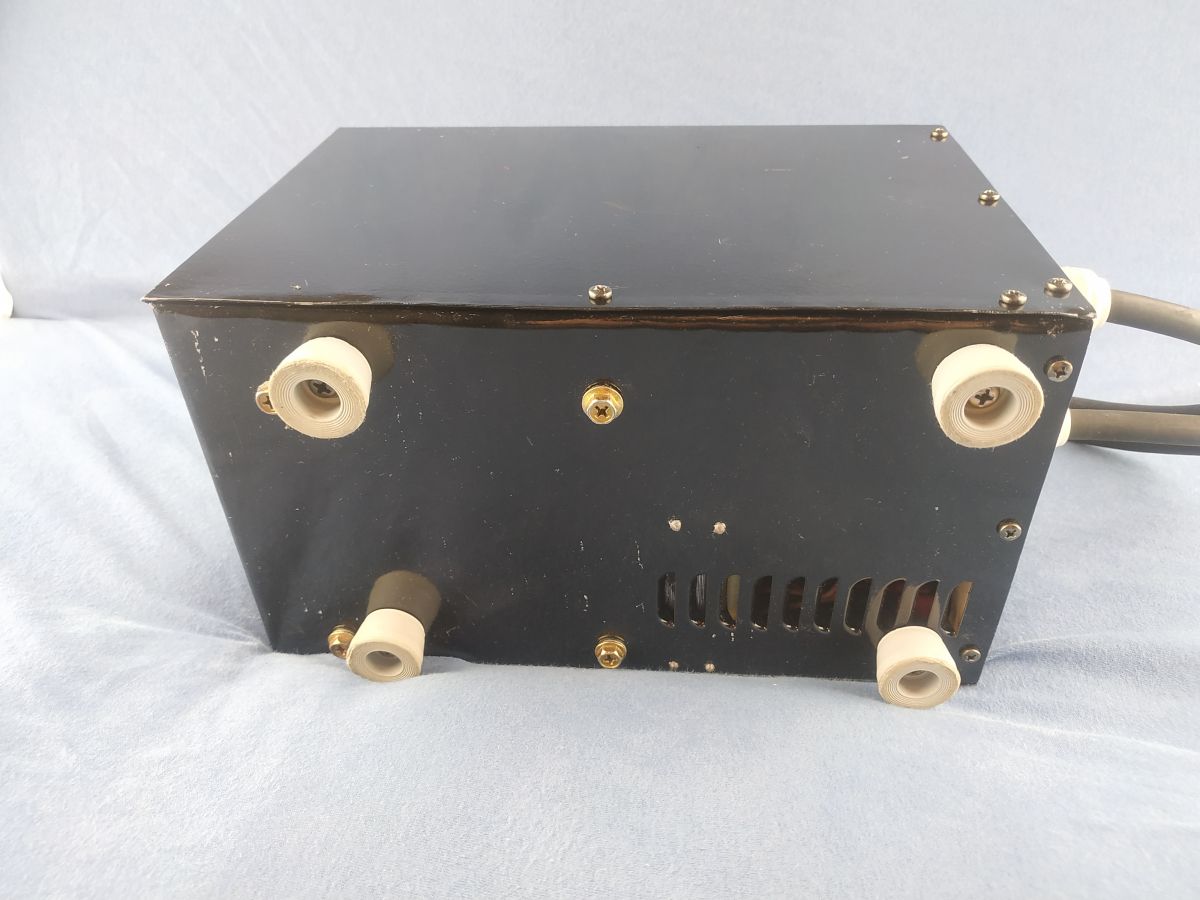
I do not have access to professional tools, so the housing looks like it looks. It is made of metal sheets left over from a microwave oven, the front part is made of plywood because of easier processing.

What should be changed in it:
- convert the cable from 25 mm2 to 35 mm2
- press the ring terminals with a hydraulic press
- replace aluminum elements with copper ones in the handle with electrodes

Initial parameters:
1300 W transformer
Secondary winding cross-section 25 mm2
The voltage of the secondary winding is 3.3 V
Short-circuit current on the secondary winding 750 A (the meter has a scale of up to 600 A)
The 40 A driver and electrodes were purchased on aliexpress.

Current parameters:
Secondary winding voltage 5V
Short circuit current on the secondary 910 A


A video showing the production of the welding machine:


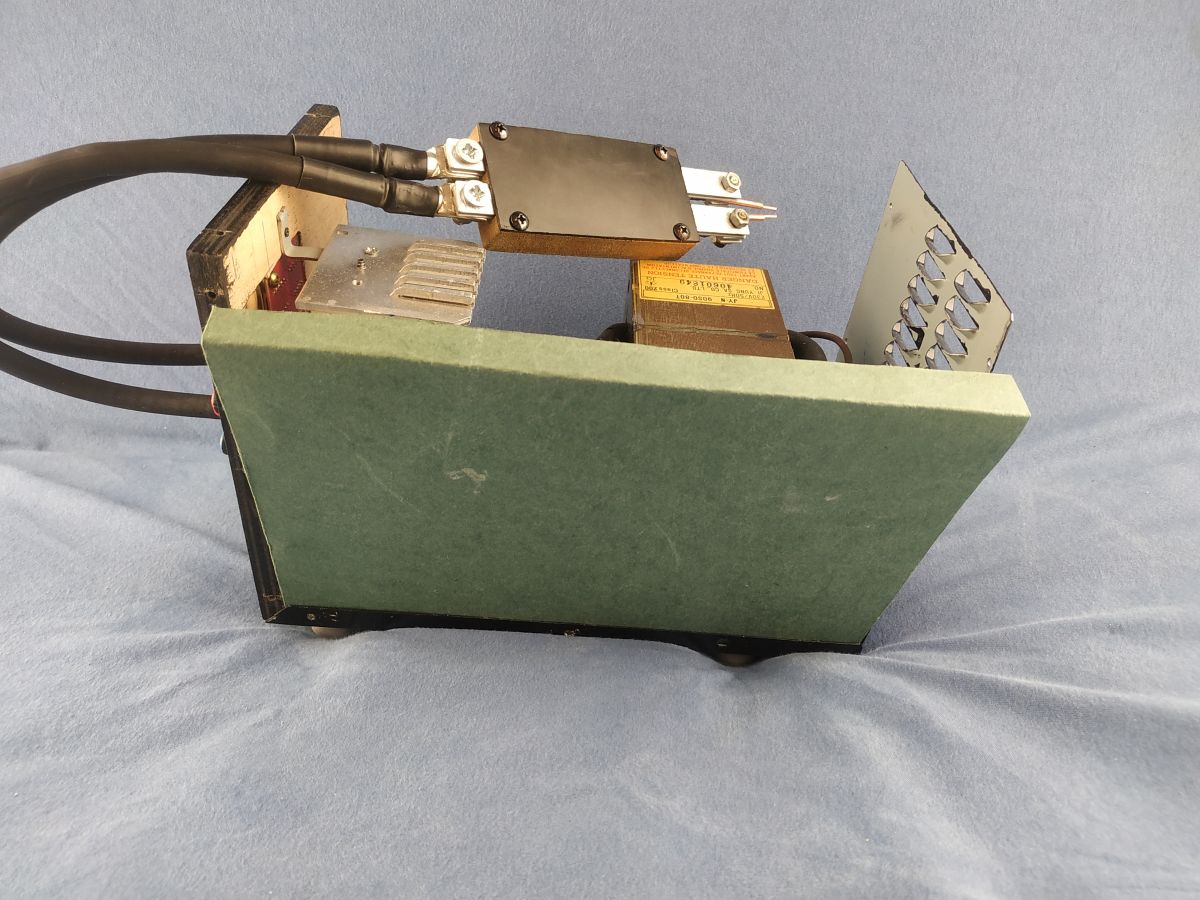
Photos of the welding machine:
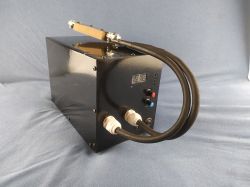
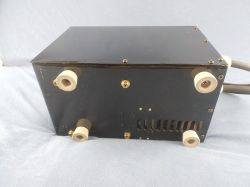
Homemade spot welder with a metal casing and cables. Rear panel of a spot welder with a switch and ventilation holes Amateur-built cell welder enclosure.

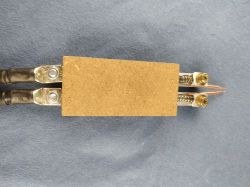
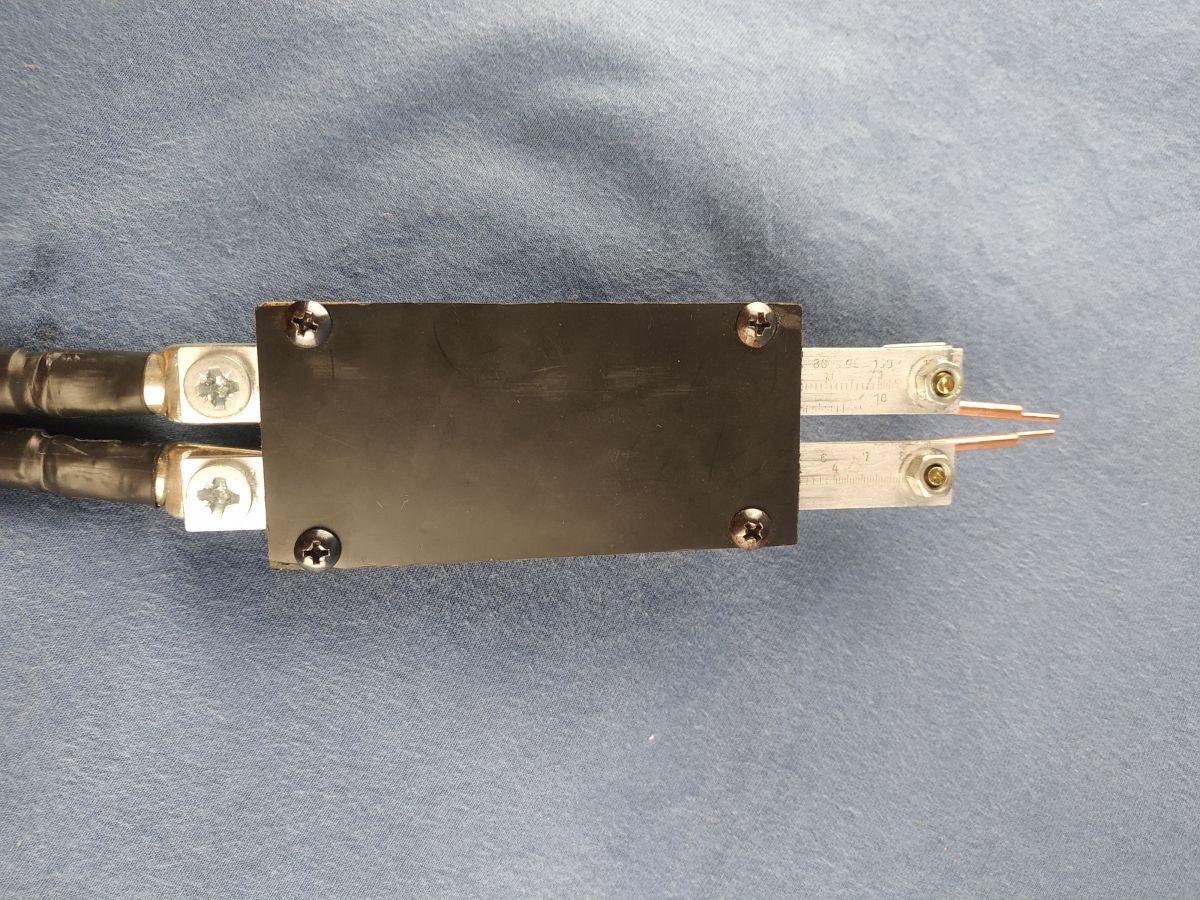
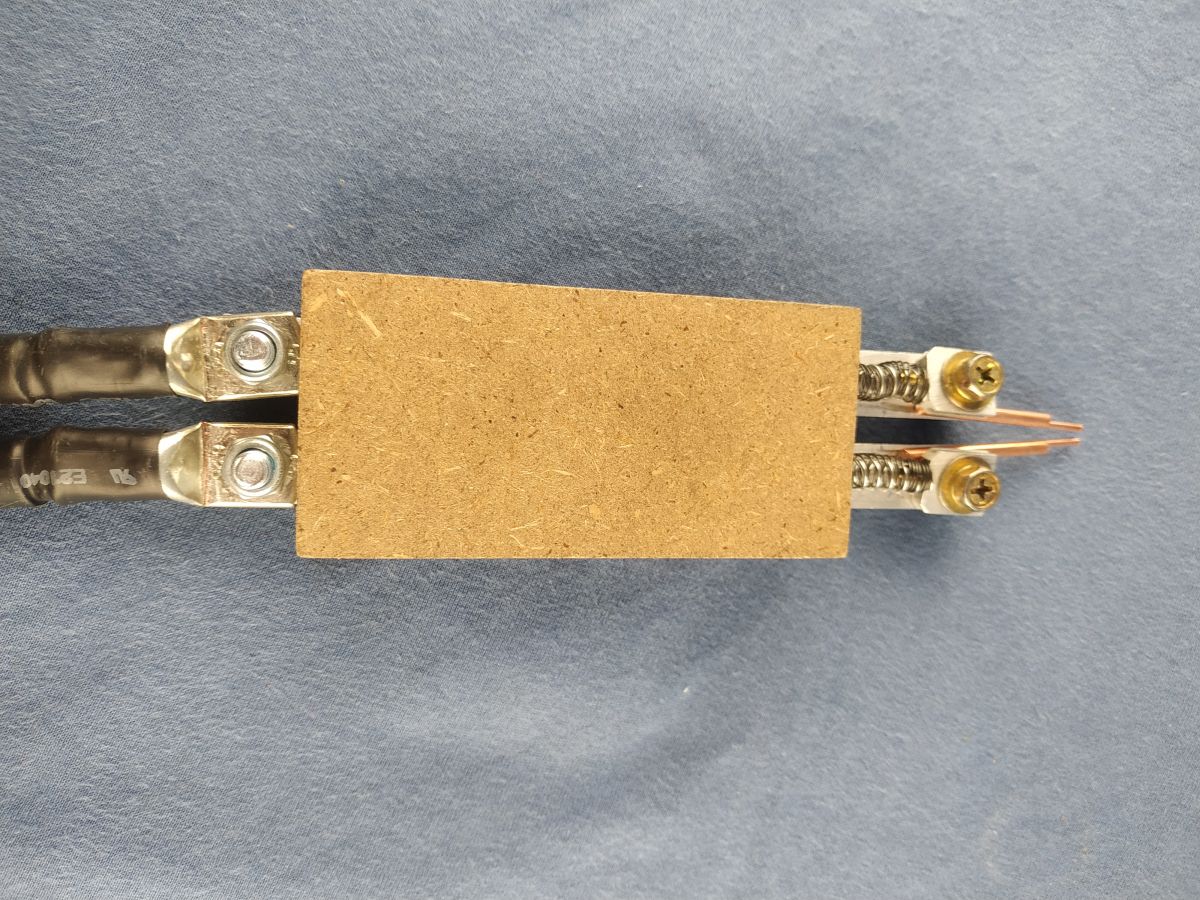
To make the handle of the welding machine, I used aluminum flat bars, dedicated welding electrodes, springs, screws, OSB and plastic.
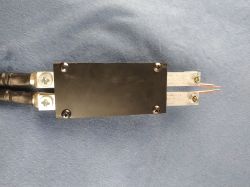
Handle of a cell welder with aluminum components and copper electrodes on a blue fabric background. Homemade welding machine handle made from wooden board, cables, and metal components.

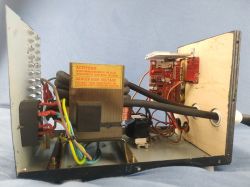
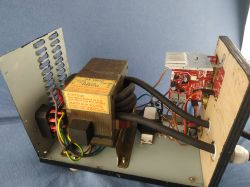
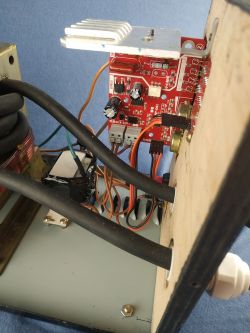
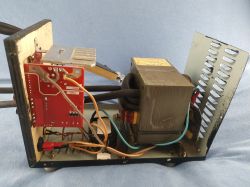
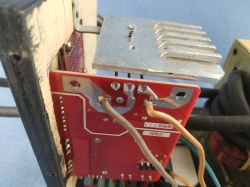
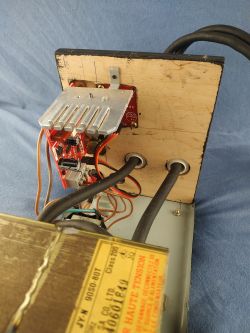
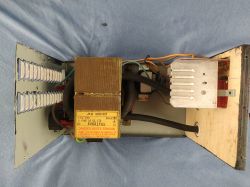
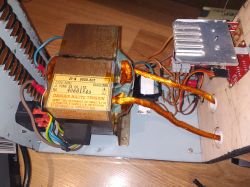
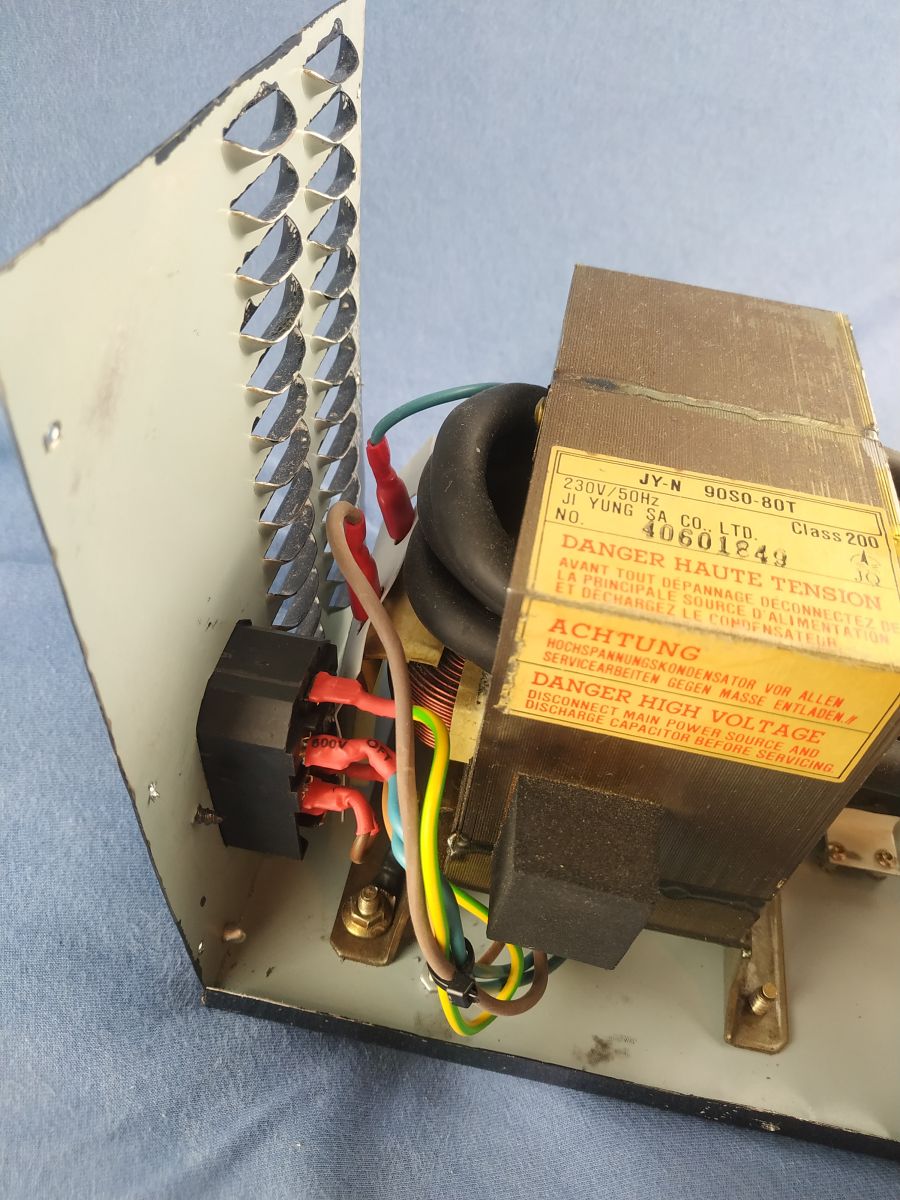
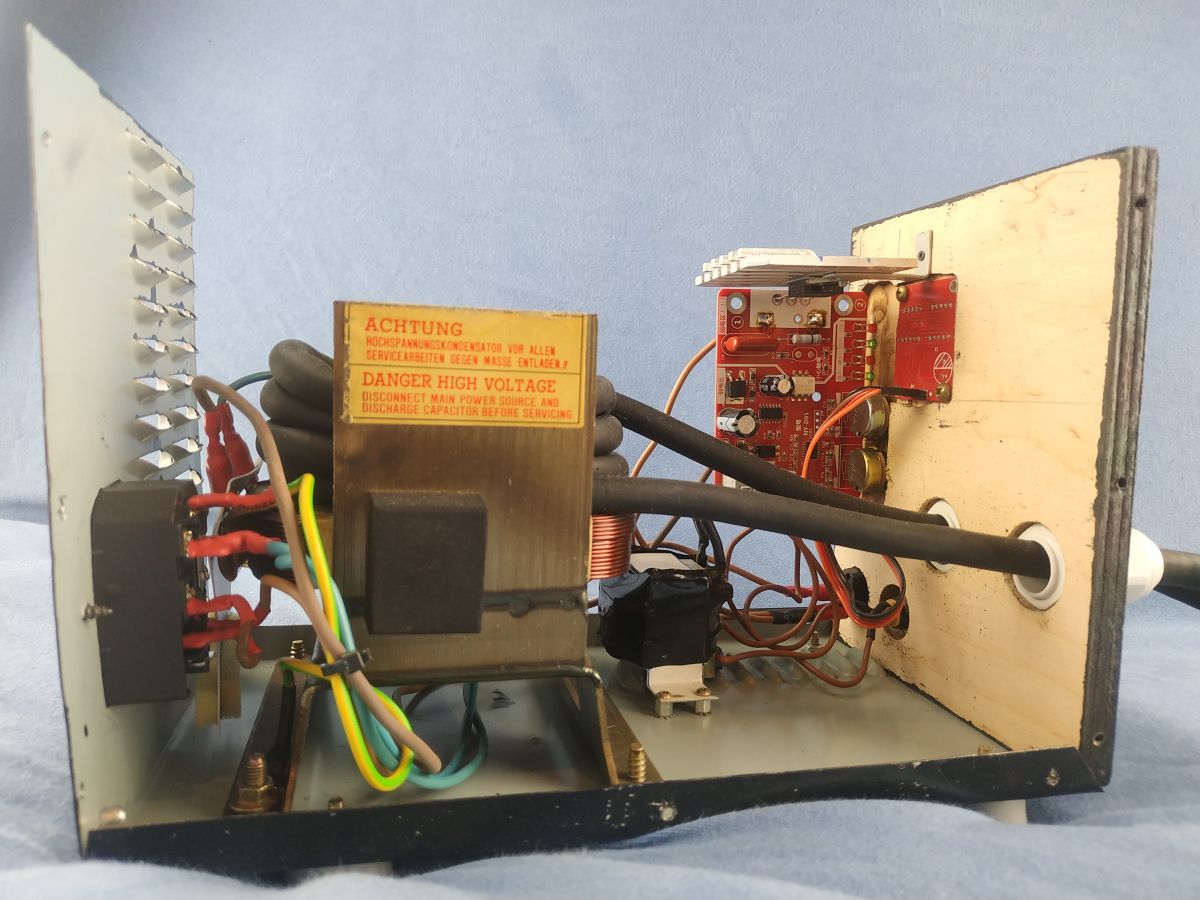
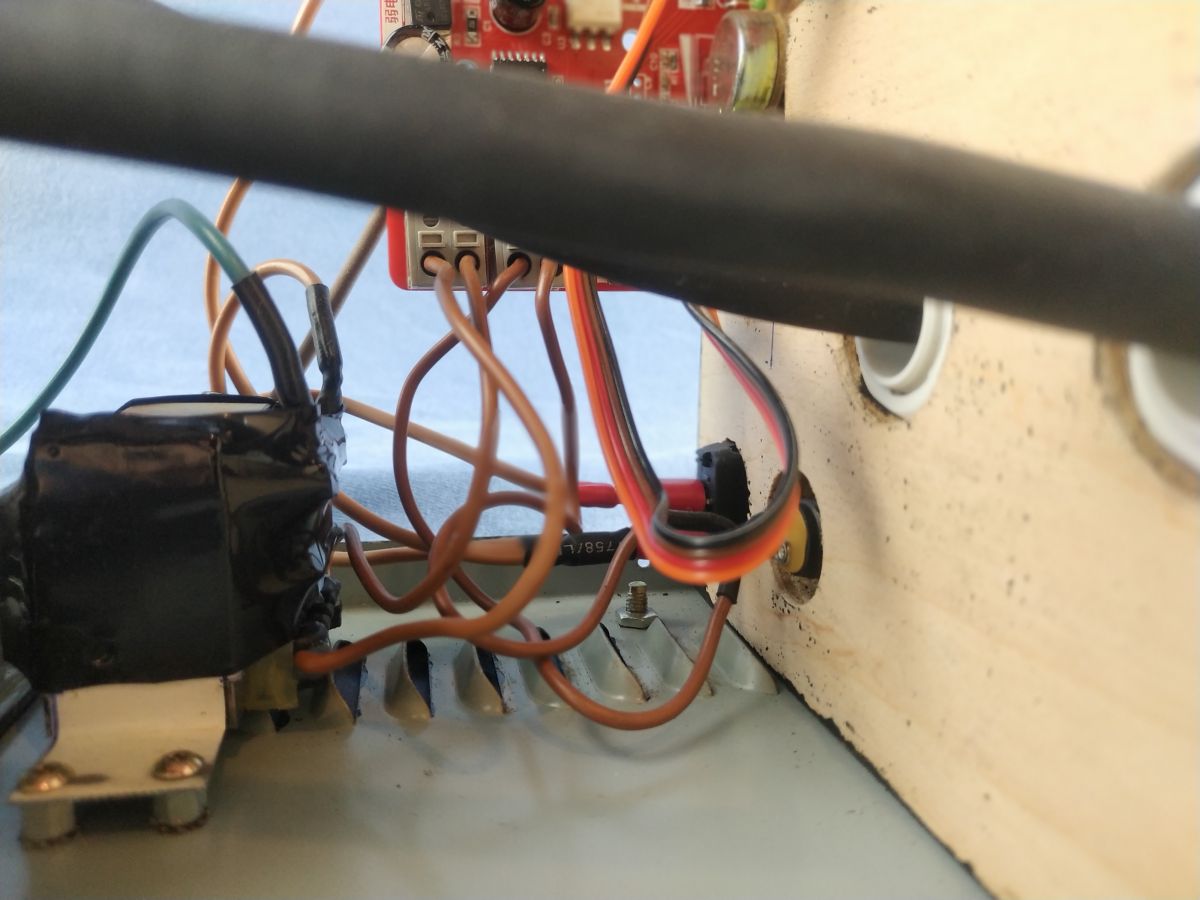
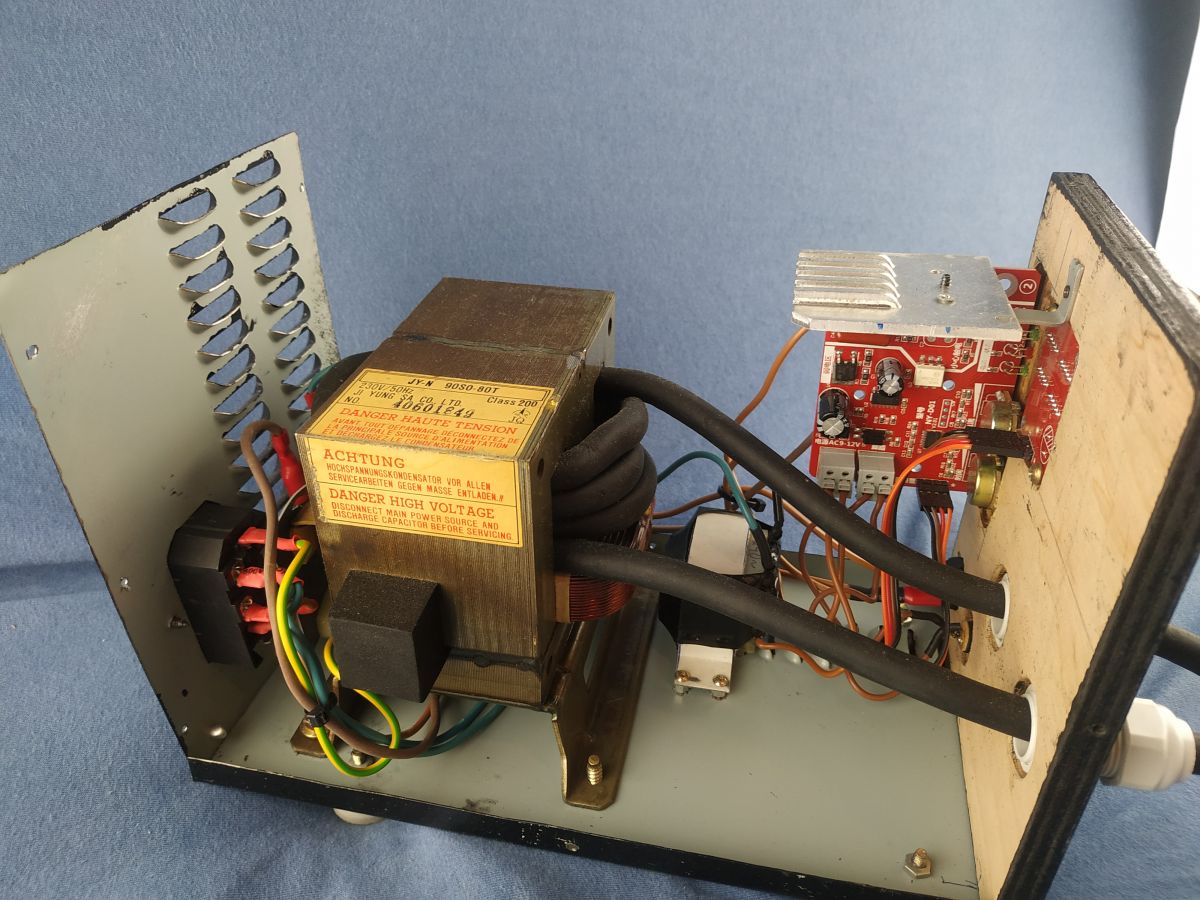
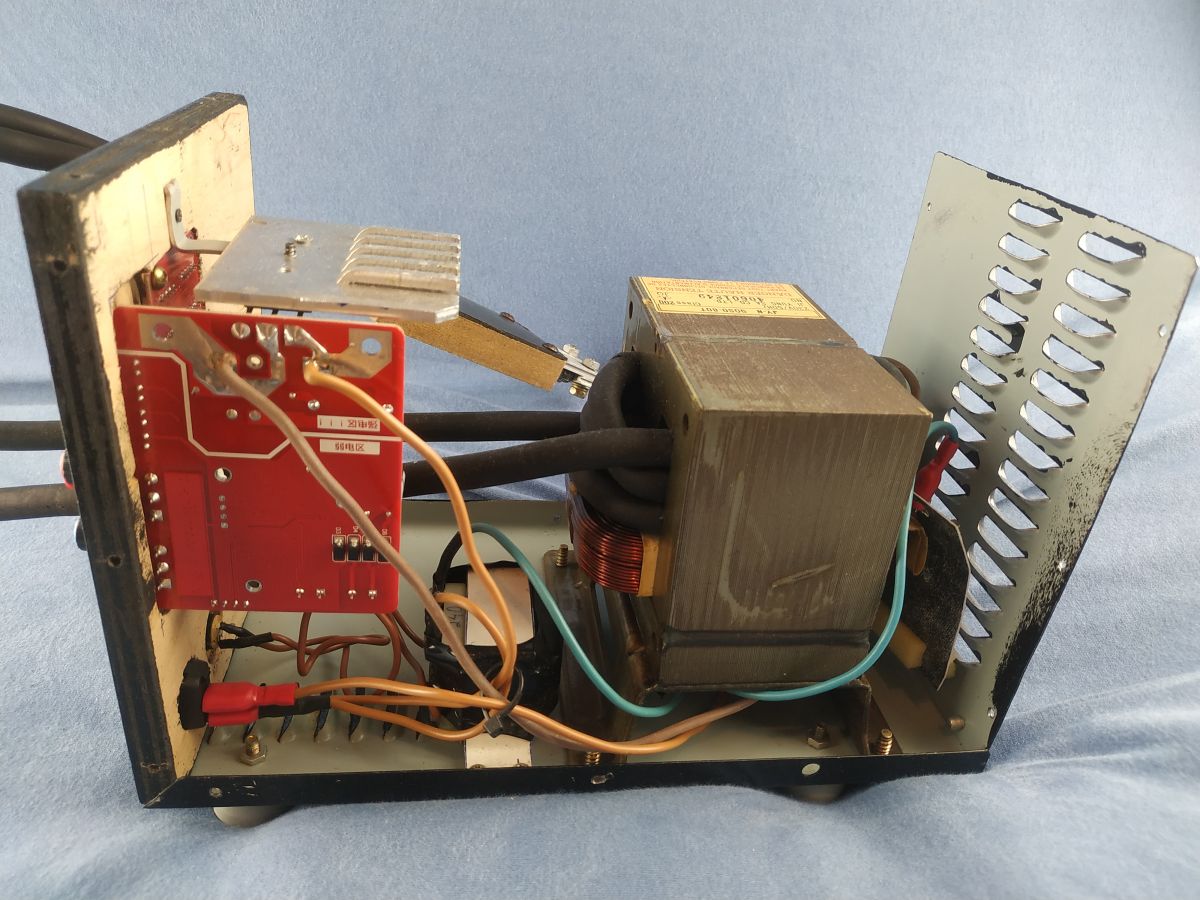
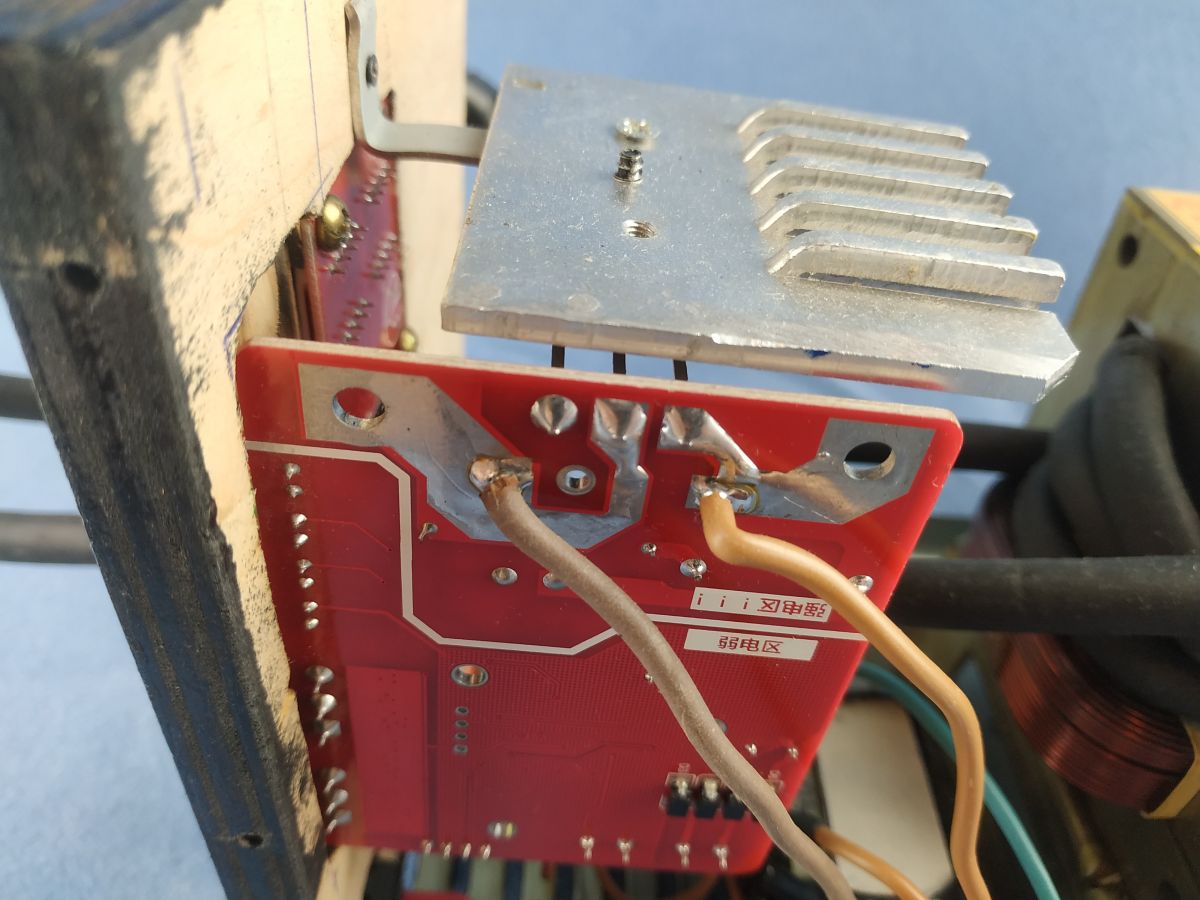
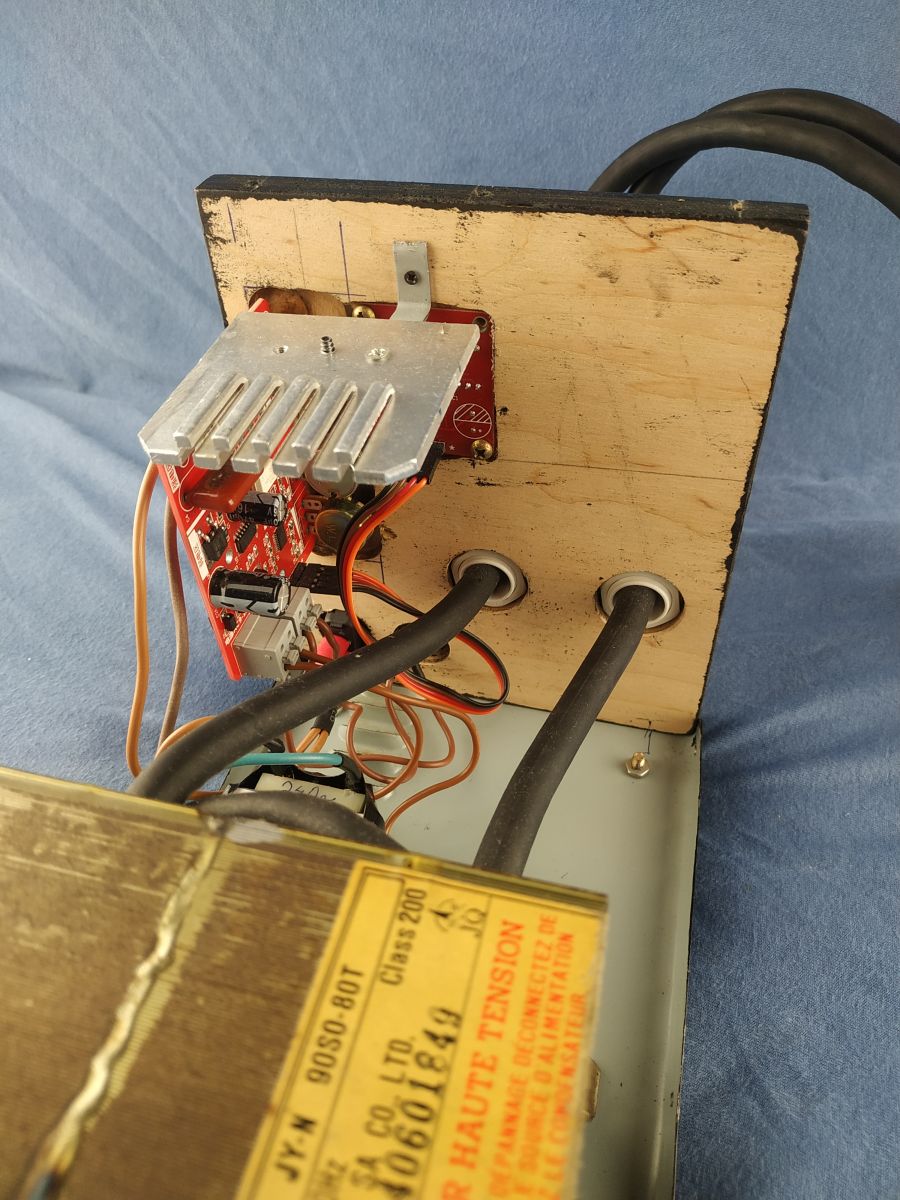
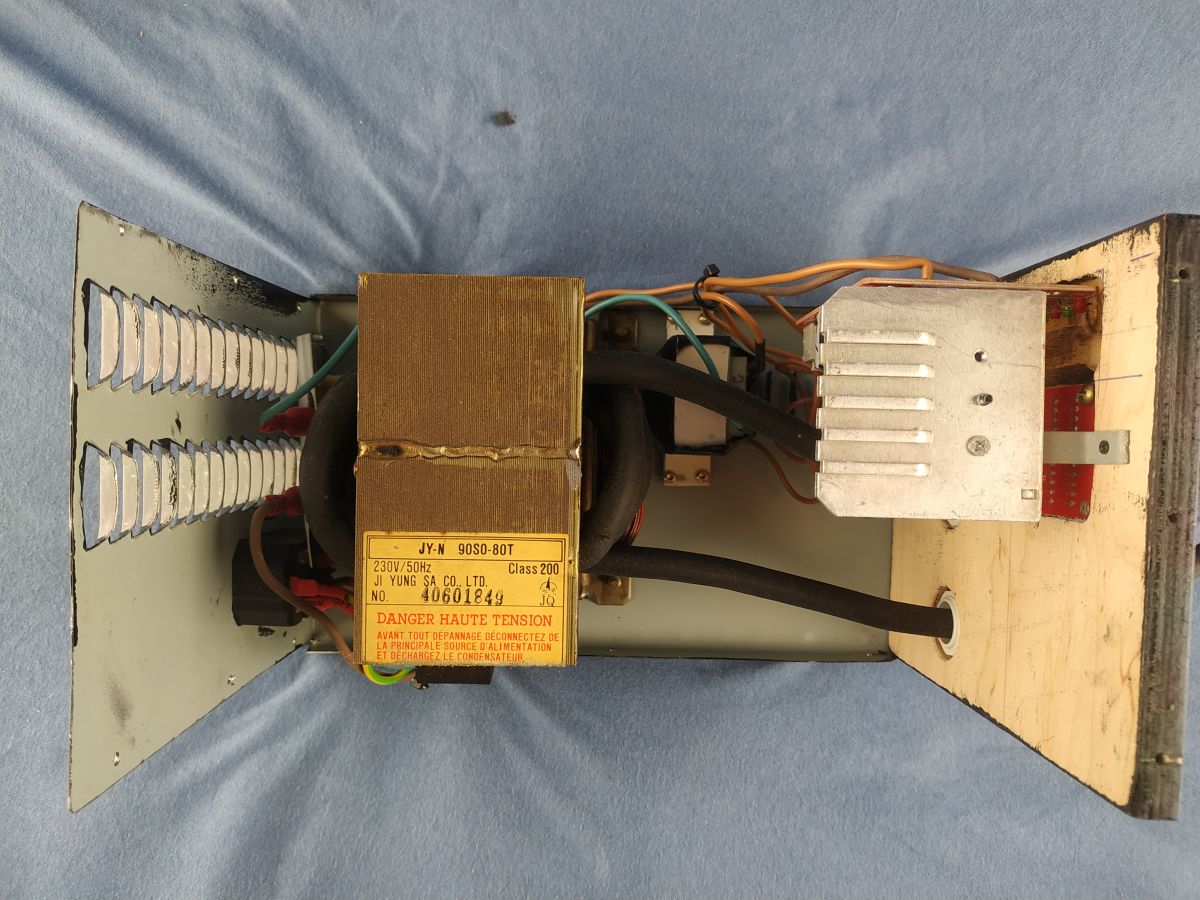
The inside of the welding machine
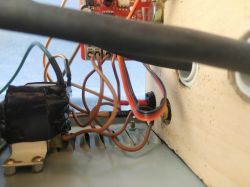
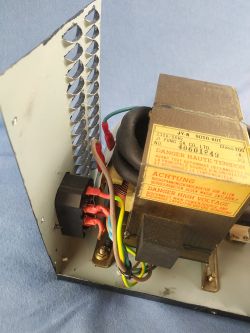
Interior of a homemade welder made from microwave oven sheet metal. Interior of a homemade welding machine made from metal sheets and plywood. Interior of a DIY spot welder with visible wires and components. Interior of a homemade spot welder made from a transformer and electronic components. Interior of a homemade welder with visible electronics and wires. Homemade welder with visible transformer and internal electronics. Close-up of electronic components inside a DIY spot welder. View of the rear part of a homemade welder made from recycled materials, with electronic components and wires. Interior of a homemade welder showing the transformer and electrical components.

I temporarily insulated the side wall of the welding machine with paper (probably barley) before any contact with the controller.
Handmade welder crafted from aluminum components and recycled materials.

Update 9/11/2020.

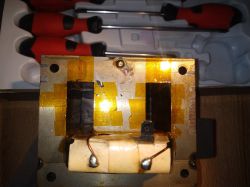
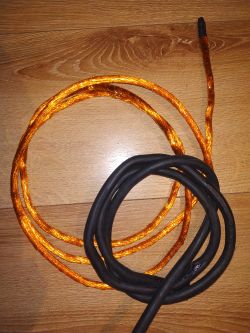
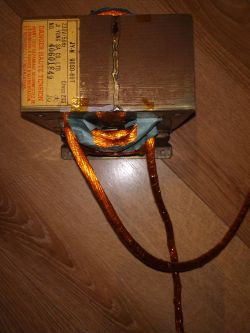
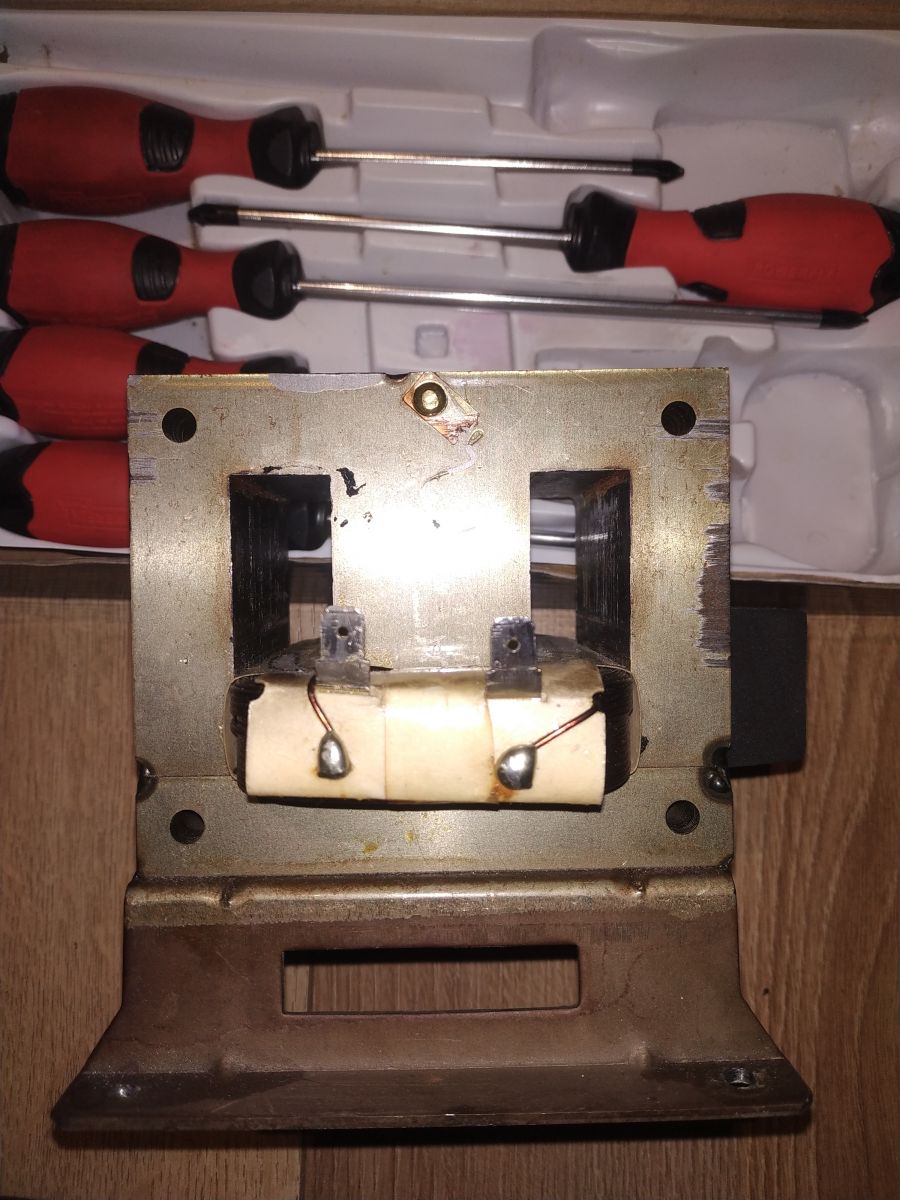
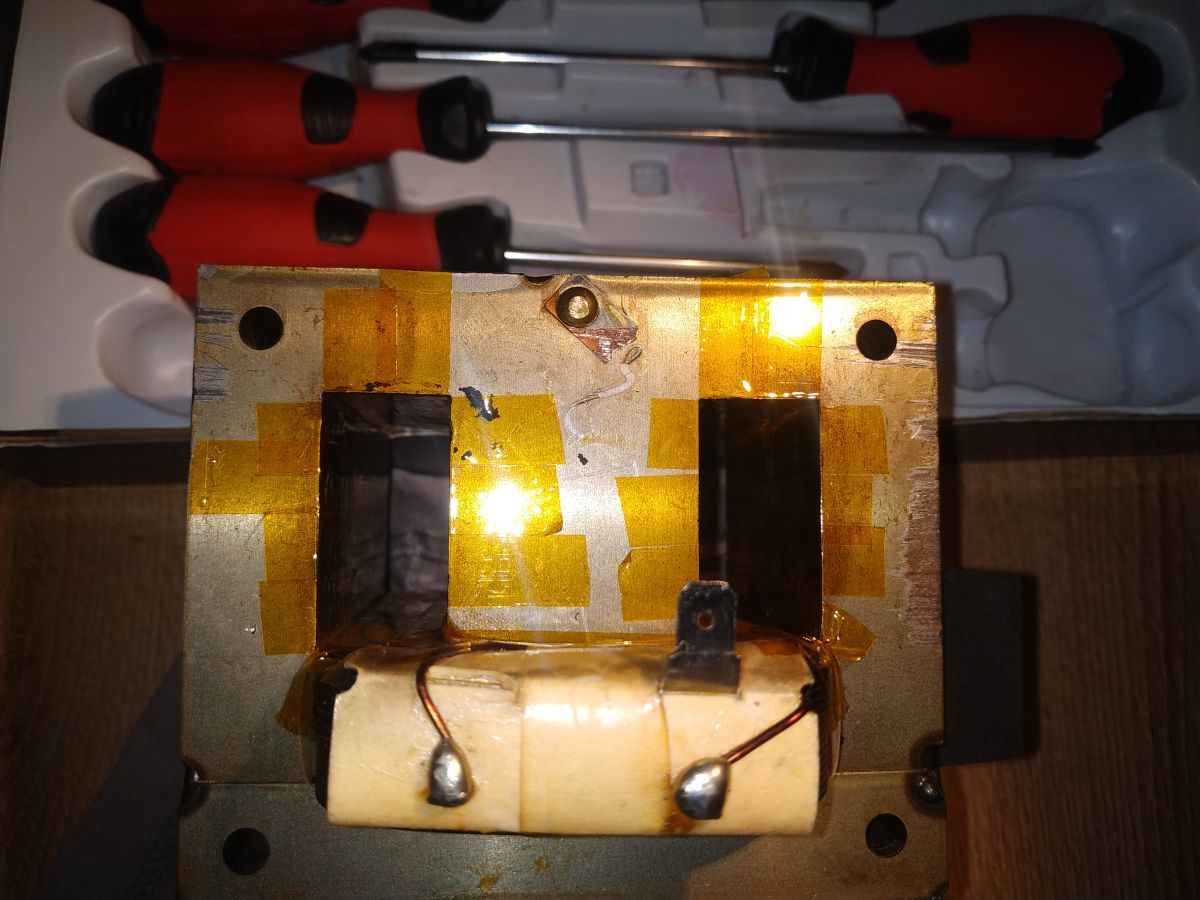
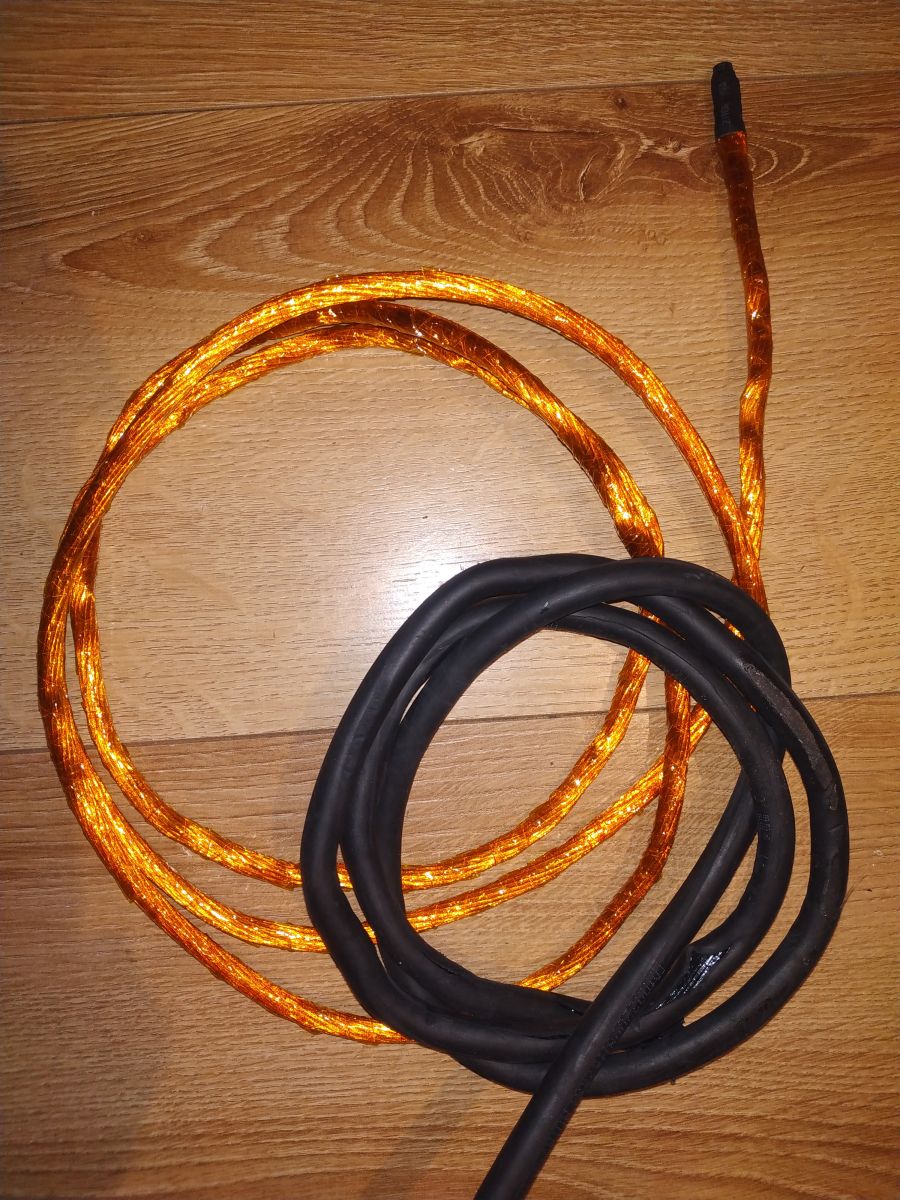
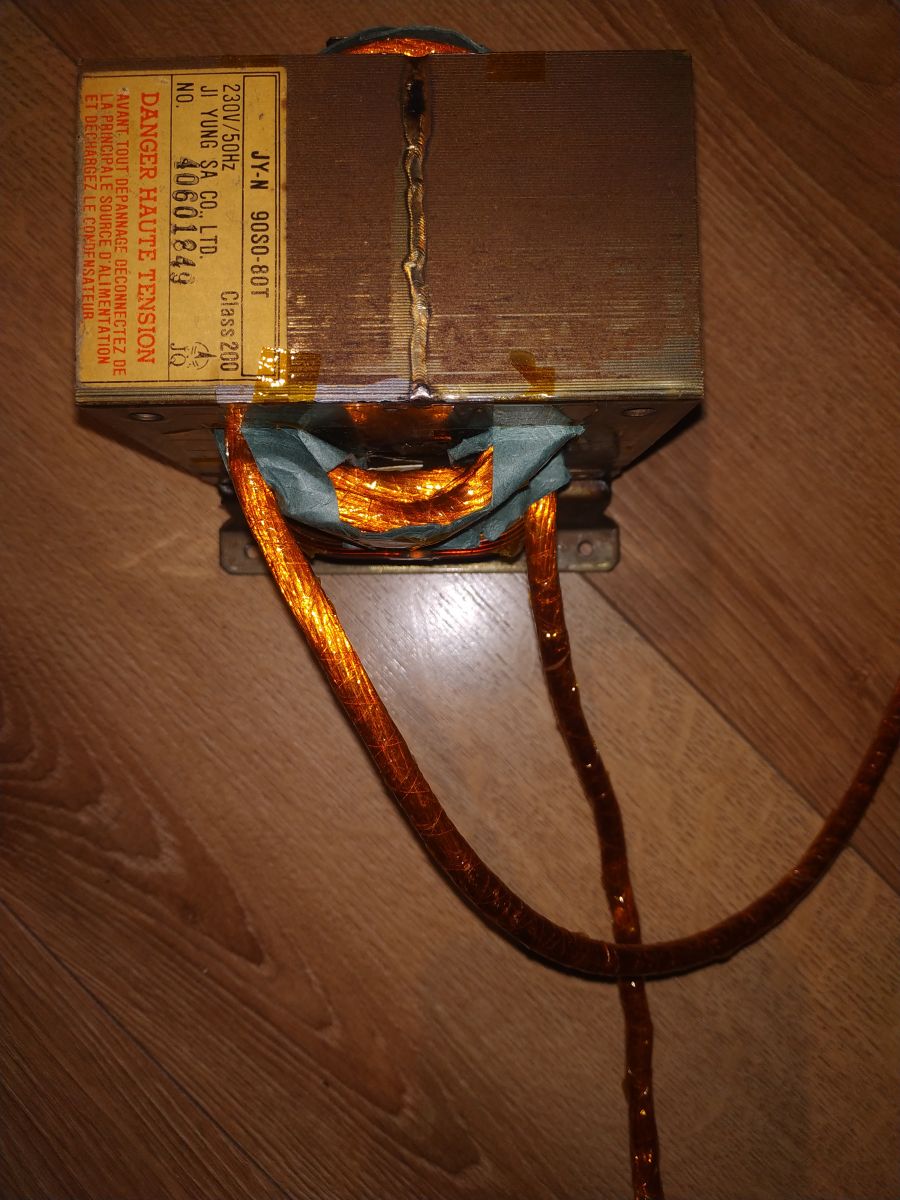
Today I made modifications to the welding machine. The insulation was stripped from the 25 mm2 wire, instead I used two layers of Kapton tape and paper insulation (probably barley). Thanks to this, a few more turns came in and the voltage increased to 5 V.
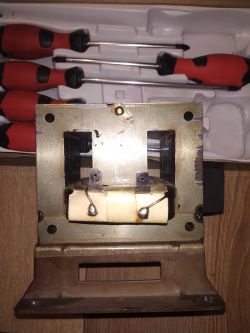
View of the DIY welder interior with transformer parts and tools in the background. Close-up of a transformer with wrapped wires and yellow insulation tape. Coils of cables on a wooden floor. Transformer with wound copper wire, top view. Interior of a homemade spot welder using a transformer and copper wires.

Update 10/11/2020.
I have assembled everything, the result is 910 A. All that is left to do is to make electrode handles and the project is completed.
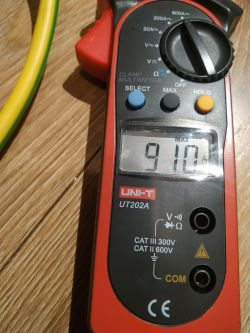
Multimeter showing current reading of 910 A

About Author
kulek855
kulek855 wrote 335 posts with rating 121 , helped 10 times. Live in city Nisko. Been with us since 2008 year.

Comments

Darek05 08 Nov 2020 21:04

Hi Pretty decent execution, - how do the seals come out? - what are your welding times, number of pulses? I will add right away that your output voltage is too low, I recently finished my welding... [Read more]

radomski99a 08 Nov 2020 21:18

From this you should get at least 900-1100 A. There are many mistakes here, but the best way is to look for yourself rather than ask for advice. I have been building my welder for over 1.5 years, perfecting... [Read more]

kulek855 08 Nov 2020 22:19

The welds at 0.15 mm nickel plate come out nice for me, that's what I use. 1 pulse, time 0.2, I set the welding power to the maximum value. Yes, realizes that the voltage is low. When I need more... [Read more]

dariuszw4 09 Nov 2020 13:24

Nice layout, nicely made, I made a welding machine myself, but I went the simpler way, my control system consists of exactly 10 electronic components, smooth pulse time adjustment using a sliding resistor,... [Read more]

kulek855 09 Nov 2020 15:49

If it works and it works without failures, that's fine. Thanks for the opinion. So I quickly checked the new electrodes: https://obrazki.elektroda.pl/6749135000_1604933420_thumb.jpg htt... [Read more]

KrRis 09 Nov 2020 16:38

I have a question: how did you record a video on YouTube that you can see everything how you work? A webcam on the head or what? Best regards and congratulations on a successful project. [Read more]

kulek855 09 Nov 2020 18:02

Thanks. The key here are two photo bulbs placed on tripods. Sometimes I put on softboxes, they give a better effect. I shot the film with the Redmi 6 phone placed on a photo tripod. Regards too. [Read more]

KrRis 09 Nov 2020 18:11

Well, this video came out very well and professionally, it's nice to watch. I asked because I would like to start having fun with filming my work and uploading it to my website (or YouTube, in fact).... [Read more]

kulek855 09 Nov 2020 18:38

I used the Triopo GX-1127 Carbon with the Triopo B2 head and a phone mount for a few zlotys. You can safely use a cheap tripod - it does not matter when you are on the phone. I have the following lighting... [Read more]

radomski99a 09 Nov 2020 21:22

See here the same driver with pure nickel 0.2 mm thick, the welding machine is able to weld any number of plates. Now I'm waiting for copper. I want to weld copper plates 0.2 mm. https://youtu.be... [Read more]

SylwekK 10 Nov 2020 09:40

I will add that you are not truthful ;-) If you don't believe me, I invite you to see my design. Link at the bottom in featured. [Read more]

radomski99a 10 Nov 2020 10:20

SylwekK, do you weld anything other than a nickel-plated plate? With pure nickel, the higher the tension, the better the welding. [Read more]

SylwekK 10 Nov 2020 10:32

I weld, e.g. stainless steel. [Read more]

radomski99a 10 Nov 2020 10:40

I meant welding to cells. There, either nickel-plated steel or almost pure nickel is used (almost, because the nickel content is 99.6%), it is about the shortest possible welding time. I am welding nickel... [Read more]

Darek05 10 Nov 2020 11:11

Maybe so, but in your construction the length of the cables leading to the electrodes has been reduced to the necessary minimum and the 2.9 V looks that it is enough. In my welding machine it did not work,... [Read more]

SylwekK 10 Nov 2020 11:25

@ radomski99a, see the bottom of the post. Nickel-plated sheet (i.e. the most popular). The lowest parameters that I can set, i.e. 10ms / 10ms, create a durable and nice weld. https://www.elektroda.pl/rtvforum/viewtopic.php?p=17903368#17903368 ... [Read more]

Darek05 10 Nov 2020 11:26

Yes, I blew inductive bridges. It is possible that the welding sockets used are an effect of this. [Read more]

Block3r 11 Nov 2020 19:53

I was interested in this driver from Aliexpress. Is there a fundamental difference between the 40A and 100A versions? [Read more]

kulek855 11 Nov 2020 20:43

In a single-phase network, 40 A is more than enough. [Read more]

FAQ

TL;DR: A 5 V secondary winding that delivers 910 A "gives a perfect weld every time" [Elektroda, Darek05, post #19031015] Raising voltage from 2-3 V to 4-5 V cuts failure rate from >60 % to ~0 %. Why it matters: Correct voltage-current pairing prevents weak joints and cell damage.

Quick Facts

• Secondary voltage sweet-spot: 4–5 V AC [Elektroda, kulek855, post #19030568] • Short-circuit current achieved: 900–1 100 A with 25–35 mm² cable [Elektroda, radomski99a, post #19031051] • Typical nickel strip: 0.15–0.2 mm, 99.6 % Ni [Elektroda, radomski99a, post #19034217] • Recommended pulse: 10 ms pre-pulse + 20–60 ms weld [Elektroda, Darek05, post #19031015] • Ali-express driver: 40 A version handles up to 3 kVA on 230 V mains [Elektroda, kulek855, post #19037803]

Is the 40 A Chinese driver enough, or should I buy the 100 A unit?

On a single-phase 230 V line, the 40 A Triac board already supplies peak currents above 900 A; upgrading to 100 A brings little benefit unless your mains breaker exceeds 32 A and wiring is oversized [Elektroda, kulek855, post #19037803] The higher-rated board mainly adds thermal headroom, not extra weld energy.

How can I raise the secondary voltage on a microwave transformer?

  1. Strip the PVC insulation off the 25 mm² cable. 2. Re-wrap with two layers of Kapton plus paper to gain space. 3. Add one or two extra turns; builders gained 1.7 V doing this [Elektroda, kulek855, post #19030568]

Which cable gauge and length should I use?

Use 25 mm² for flexible electrode leads or 35 mm² for fixed wiring under 30 cm. Each extra 10 cm of 25 mm² drops about 0.1 V at 900 A [Elektroda, kulek855, post #19030568] Keep total loop length below 80 cm to minimize resistive loss.

Can this DIY welder join copper cell tabs?

Pure copper needs roughly triple energy density versus nickel due to high thermal conductivity. Users are experimenting with 0.2 mm Cu but expect to push voltage toward 6 V and shorten pulse to <30 ms to avoid sticking [Elektroda, radomski99a, post #19033461]

Which safety precautions are essential?

Strip the magnetic shunts, insulate the secondary with Kapton, crimp lugs hydraulically, and bond the case to earth. Failure to remove shunts can cut current by 30 % and overheat the core [Elektroda, Darek05, post #19034279]

At what AC phase does the Chinese driver fire the Triac?

Oscilloscope tests show zero-cross detection followed by an adjustable 0–4 ms delay, so the Triac usually gates within the first 60 electrical degrees (Mads Barnkob, 2019). This early-phase conduction maximizes RMS current while limiting EMI.

How was the build video filmed so clearly?

A Redmi 6 phone sat on a Triopo GX-1127 carbon tripod with B2 head; two 50 × 70 cm softboxes using 85 W photo bulbs provided even lighting [Elektroda, kulek855, post #19032920]

My clamp meter tops out at 600 A—how can I measure peak current?

Use a 10 mm² loop through the jaws five times; divide the displayed value by five to extend range to 3 000 A. Alternatively, place a 0.001 Ω shunt and read voltage across it (1 mV = 1 A) “Keithley Low-Resistance Guide”. An expert warns: "Accuracy falls when duty-cycle exceeds 10 %".

How do I remove inductive bridges (magnetic shunts) safely?

  1. Pry off the transformer’s side plates to expose the shunts. 2. Tap each laminated block out with a flat chisel. 3. Re-varnish gaps to prevent buzzing. This boosts secondary current by up to 40 % [Elektroda, mmaker, post #19046894]
Generated by the language model.
%}