logo elektroda
logo elektroda
X
logo elektroda

Slot machine - Bartop arcade

siewnik  34 4419 Cool? (+44)
📢 Listen (AI):

TL;DR

  • Built a bartop slot machine arcade cabinet focused on a pleasing enclosure inside and out, meant to evoke 90s arcade nostalgia.
  • Used a cardboard mock-up to test ergonomics, then assembled the plywood case with M5 screws and threaded repair screws for easy disassembly.
  • Made the cabinet from 18 mm plywood, painted it with white primer, two coats of RAL 1013 beige and black, then finished it with matt varnish.
  • Reused an old basement monitor, a friend's PC, AliExpress buttons, and rear-mounted USB speakers, all driven by Batocera software.
  • Spent about a month on the project, and the finished machine is now occupied by other household members, leaving no quiet time to play.
Generated by the language model.
Good morning!

With this year's lovely winter underway, I decided to create a Bartop slot machine. My main goal was the enclosure itself. It was intended to be as aesthetically pleasing on the inside as it was on the outside. Ultimately, the whole thing is supposed to be fun and evoke the nostalgia of my teenage years, when I was faced with the difficult choice of going for an Italian ice cream on a hot day or squeezing out the seventh sweat in an arcade. I'm sure the atmosphere of the 90s arcade skirmishes won't be 100% evoked, but a substitute and a momentary return to the past is enough for me, where the only duty was to take out the rubbish and do homework. The rest of the time was up to me to manage.
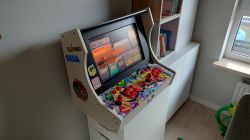
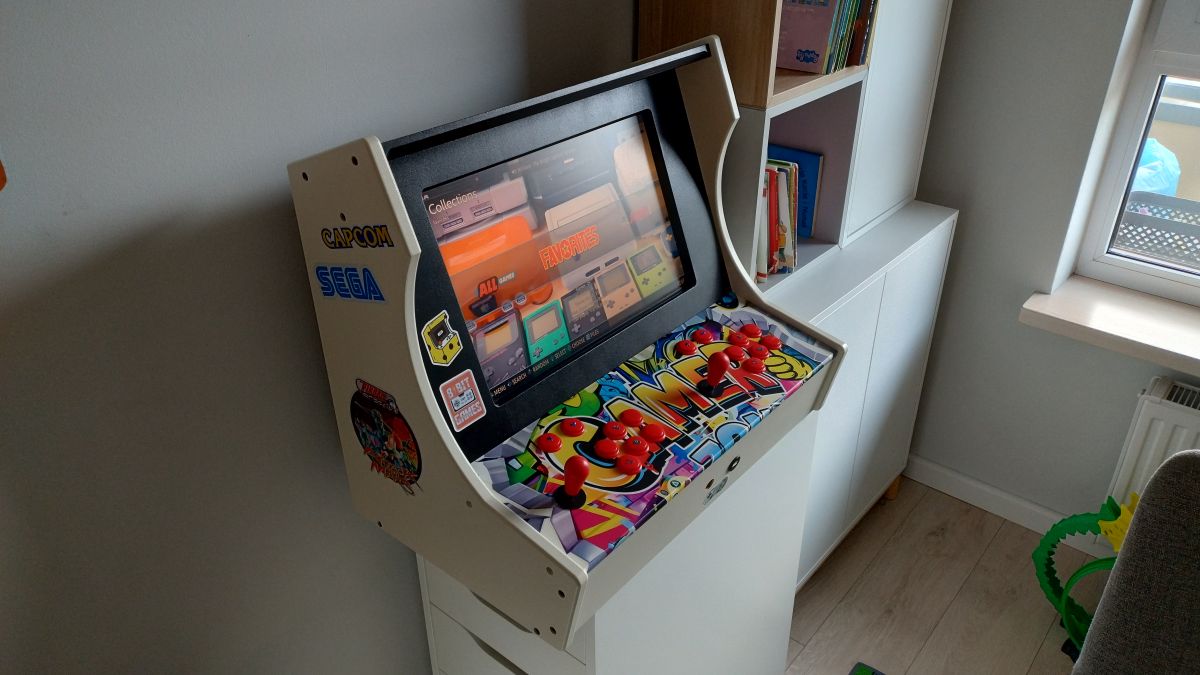
Retro gaming arcade cabinet with colorful joysticks and buttons, placed in a bright room, with visible stickers on the cabinet. .

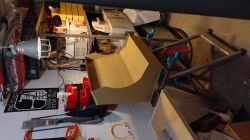
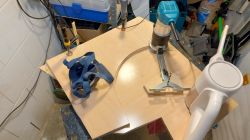
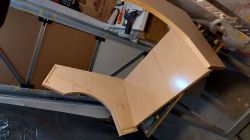
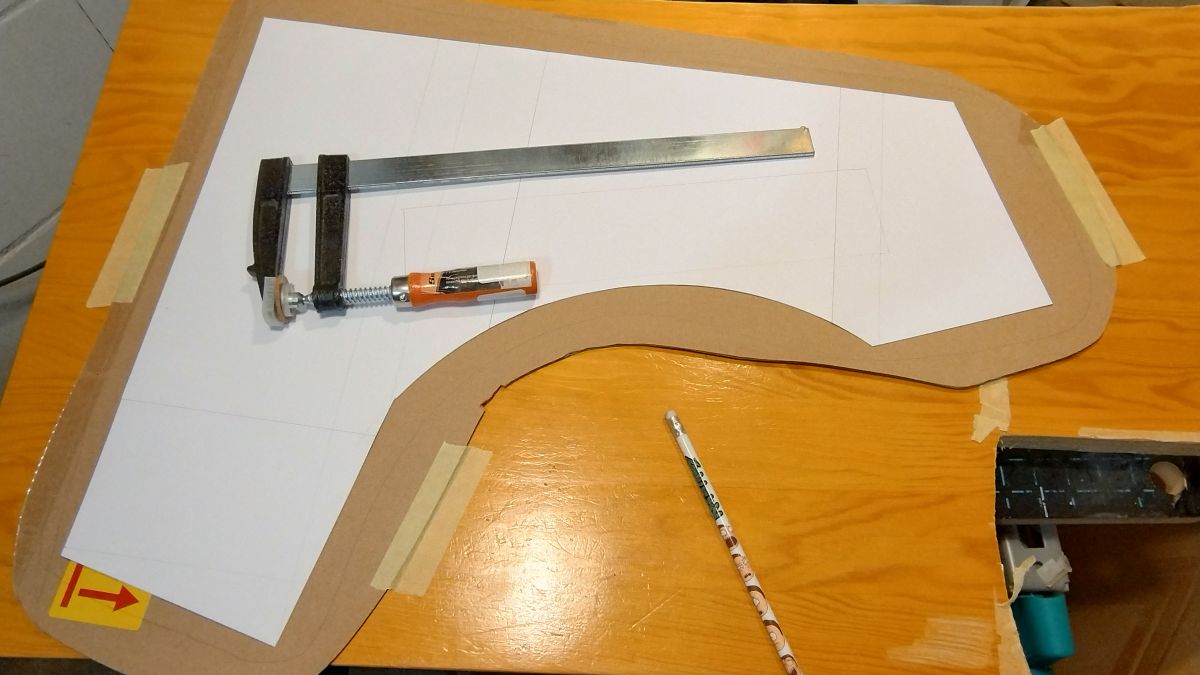
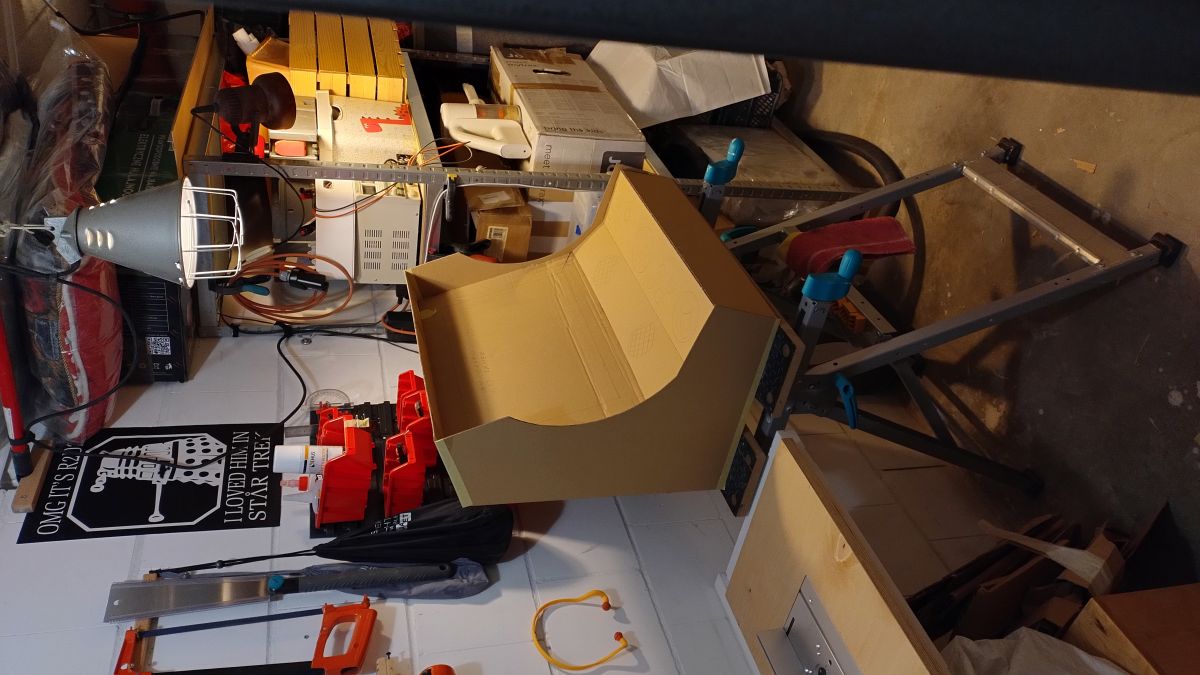
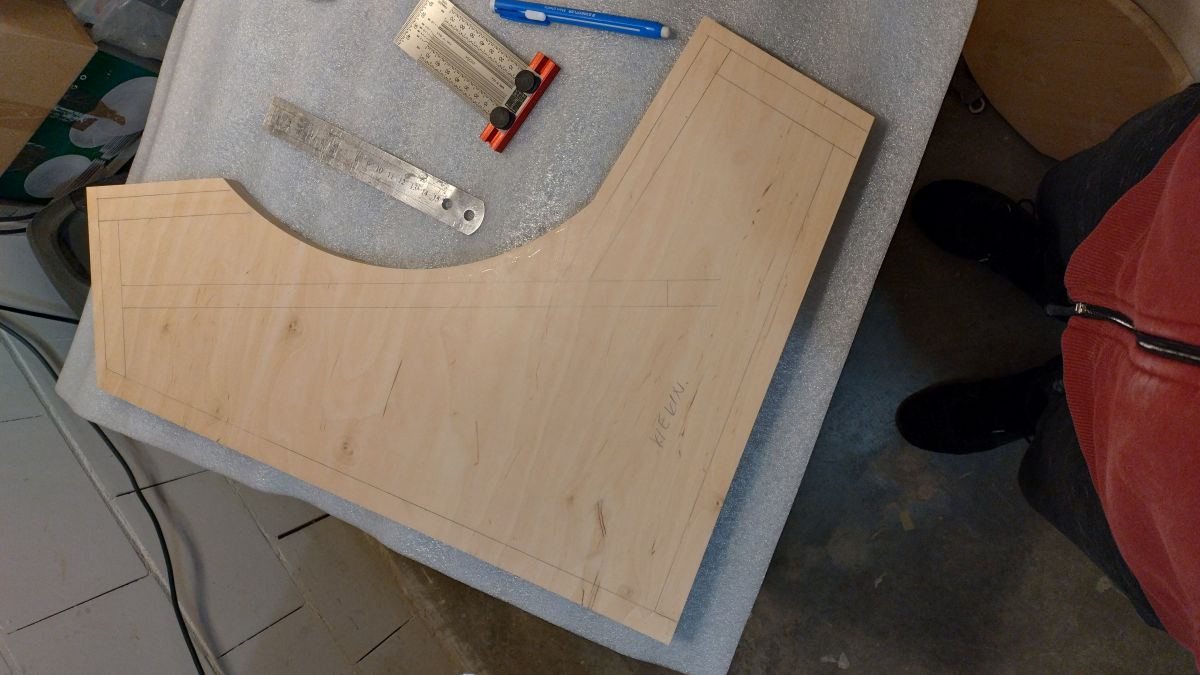
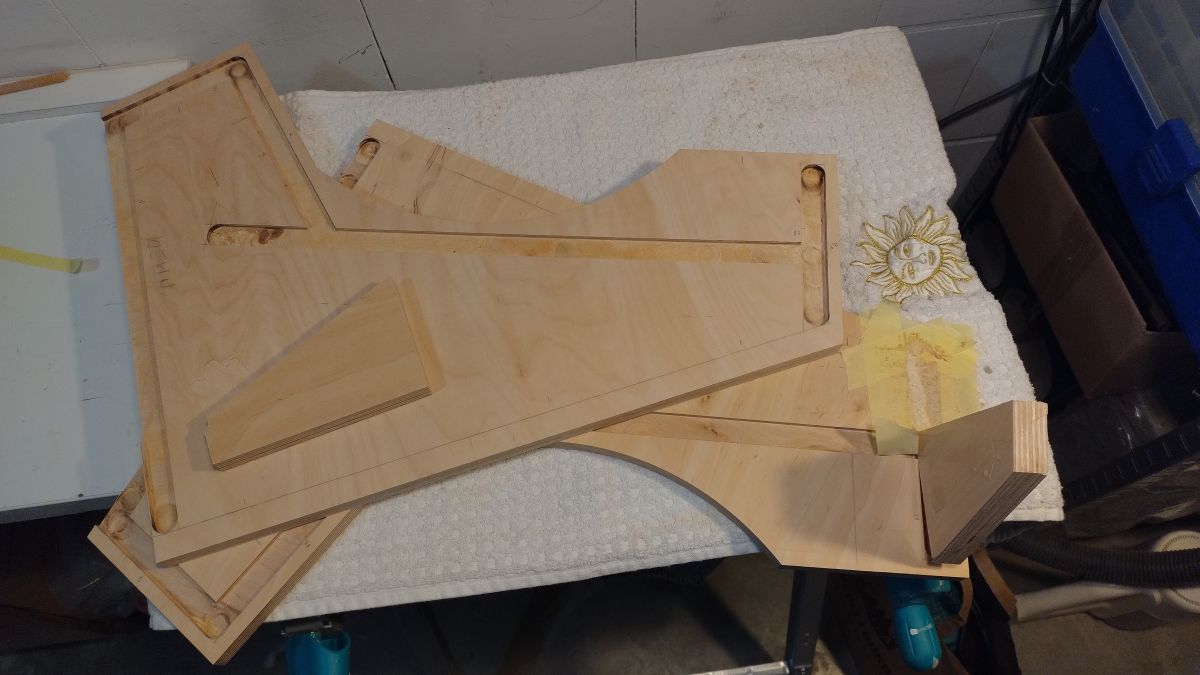
Before I started, I looked around at other people's work. After making an initial selection, I set about building a template for the sides and then a cardboard model to test the ergonomics of the finished case.
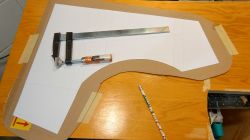
Side template for a Bartop arcade machine on a workshop table. .
Cardboard model of a bartop arcade machine in a workshop. .

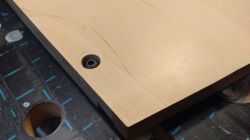
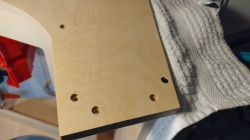
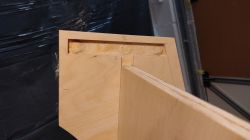
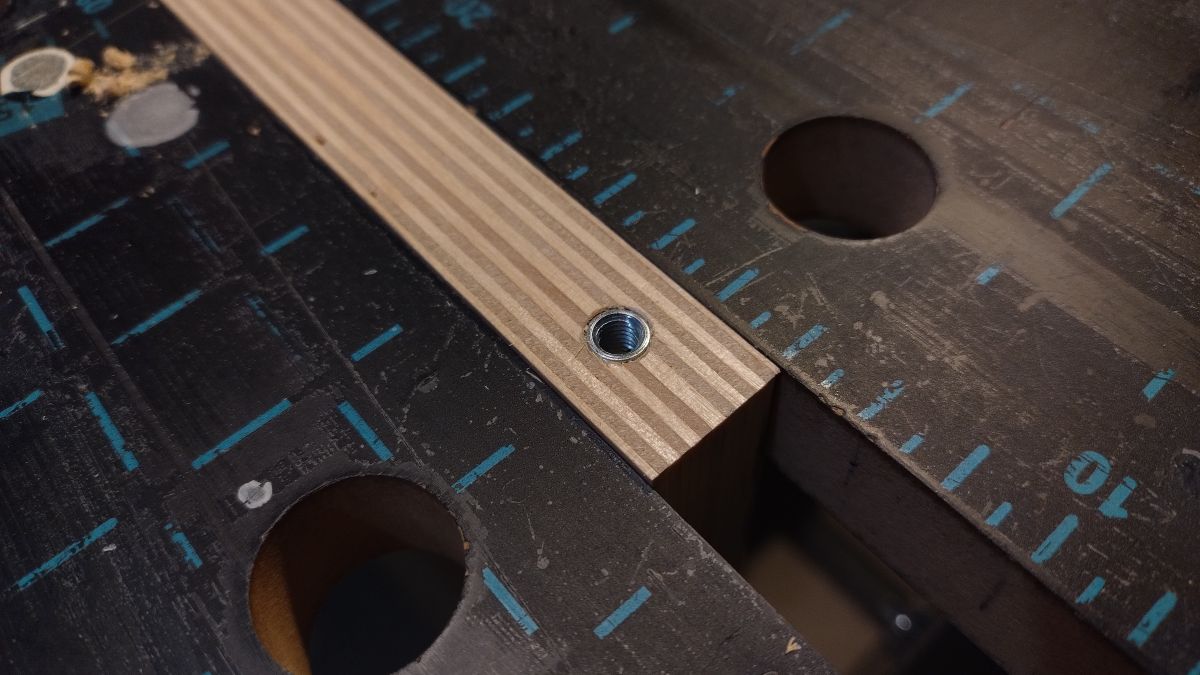
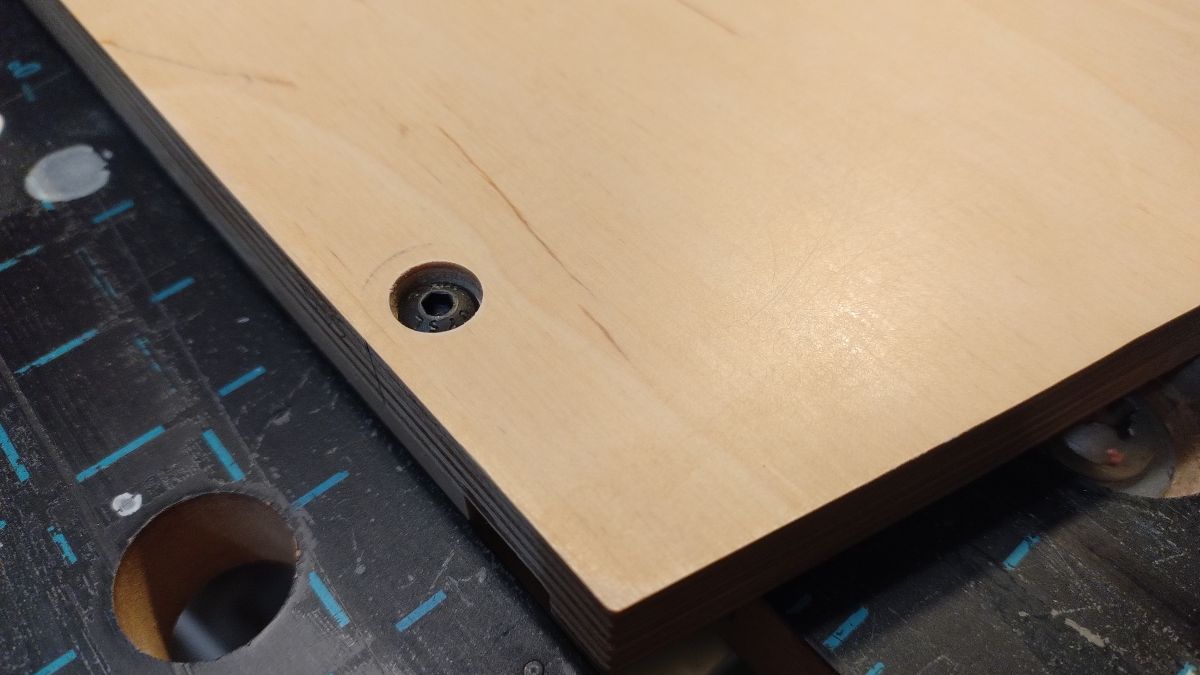
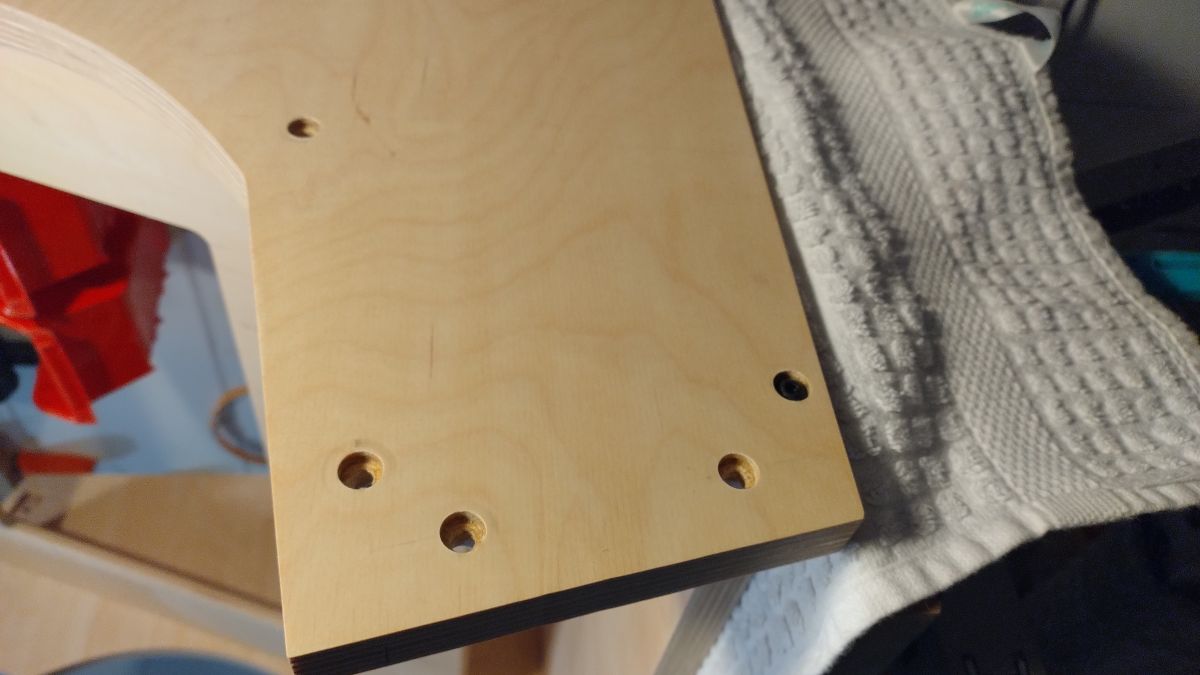
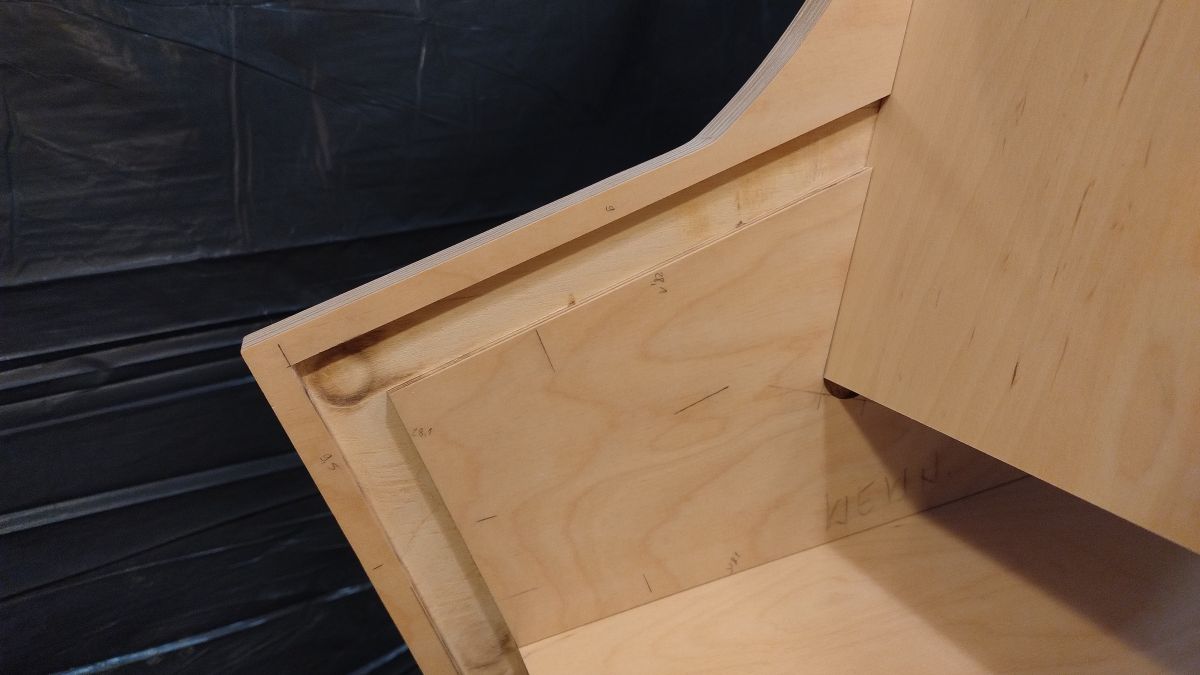
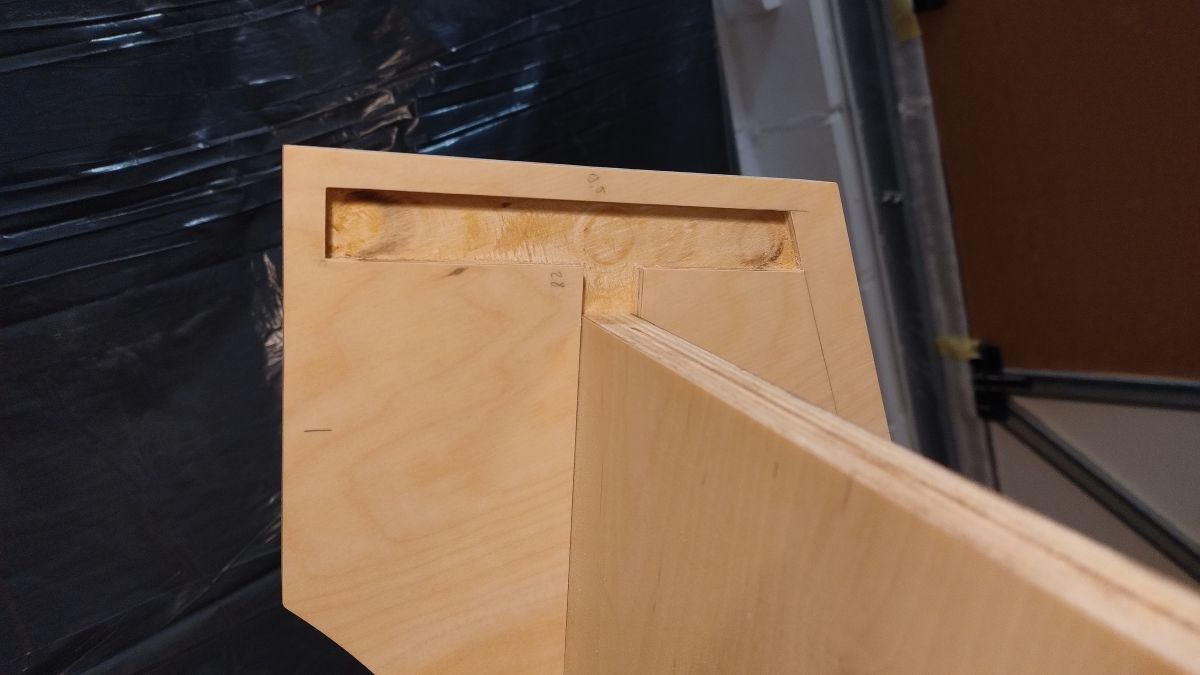
I made all the connections with M5 screws and repair screws, threaded so that it can be easily disassembled if necessary.
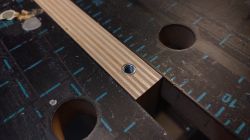
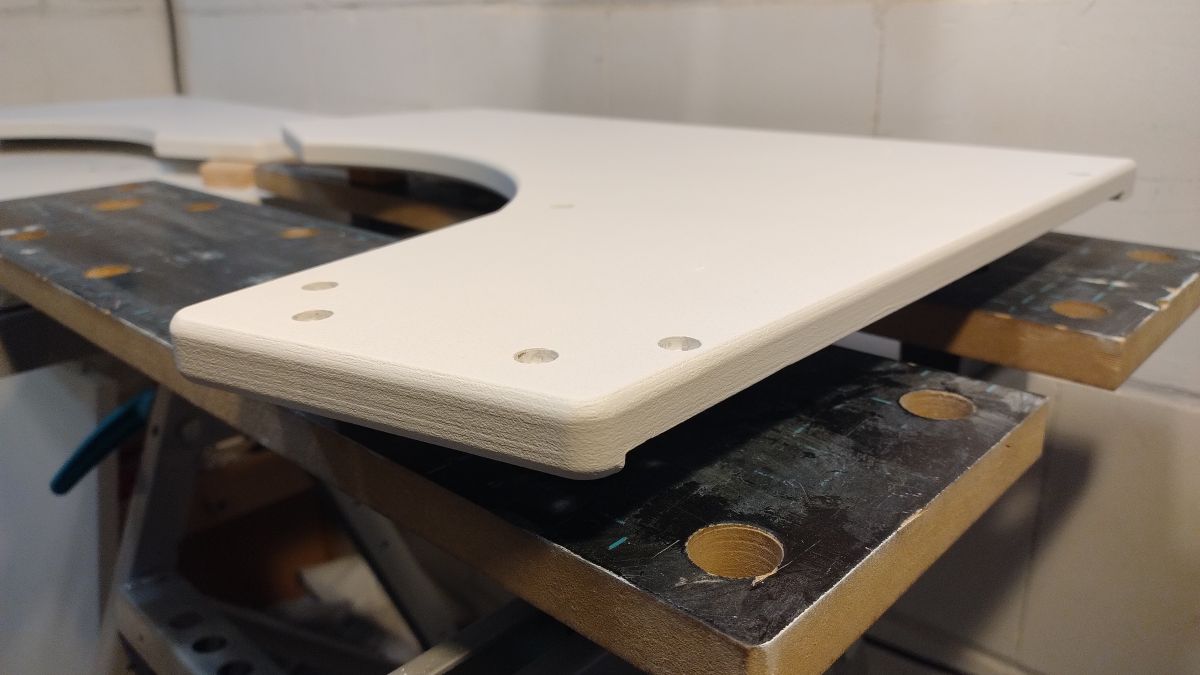
Plywood board with threaded insert on a workbench. .
Close-up of a wooden board corner with a screw. .
Wooden enclosure with holes for screws. .
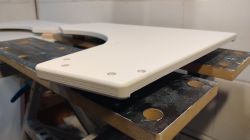
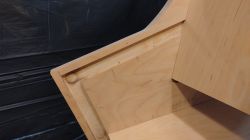
Close-up view of the side panel of a plywood arcade machine case. .

- I made the case using 18 mm thick plywood.
- I ordered the set of buttons from AliExpress.
- The stickers were also ordered from a dealer in the middle state.
- I painted the whole thing with matt acrylic paints, white as a primer, followed by two coats each of RAL 1013 'beige' paint and black. At the very end a layer of matt varnish. This is my unlikeliest part of the work, but very important as it gives the final finish.
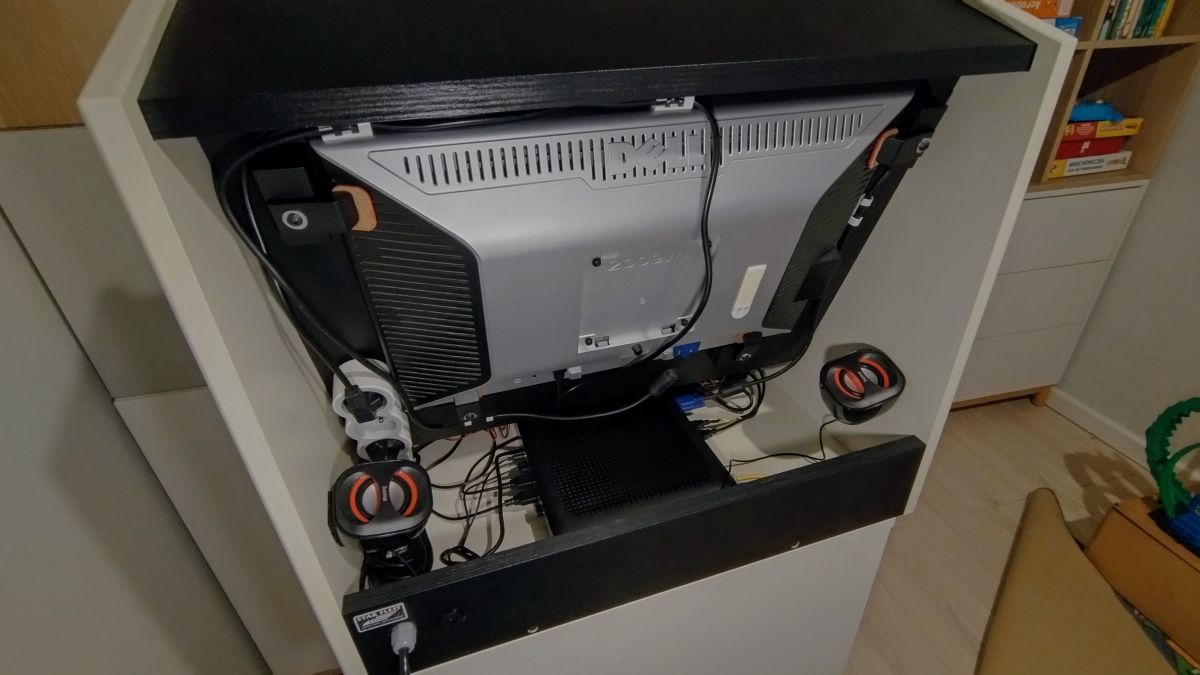
- The monitor I used was an old one, lying in the basement and getting dusty, the computer was given to me by a friend on the condition that we drank a couple of beers each while playing the slot machine. USB powered speakers mounted on the back of the case.
- The whole thing runs on "Batocera" software.
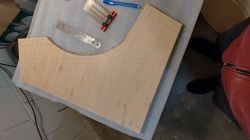
Plywood template for a Bartop arcade machine with measuring tools next to it. .
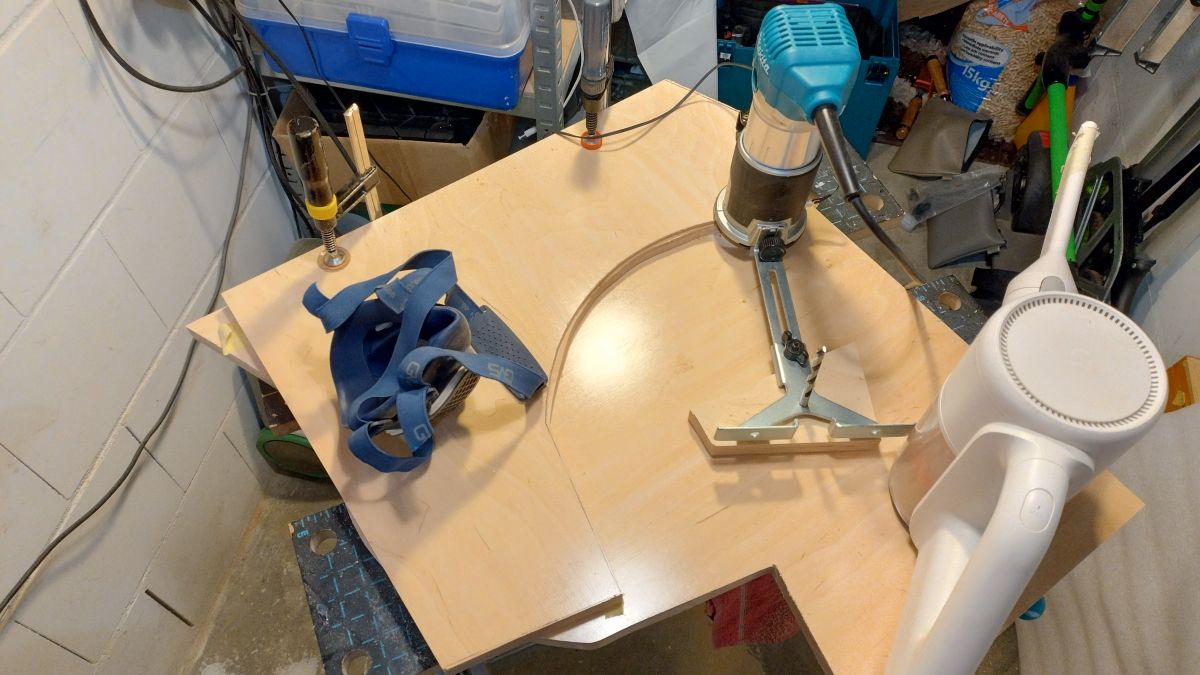
Working on an arcade machine cabinet project in a workshop. .
Initial stage of building a Bartop arcade cabinet from wooden plywood. .
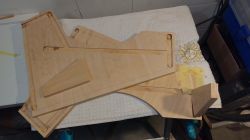
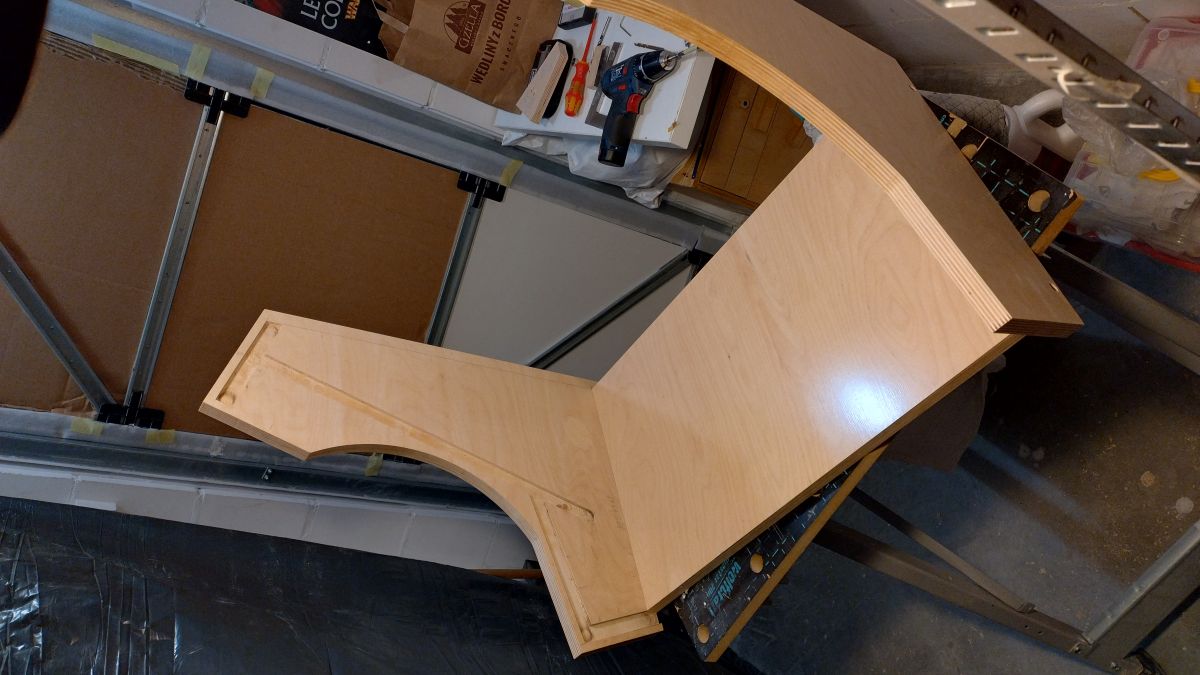
Wooden parts for bartop arcade cabinet on a workshop table. .
Close-up of a wooden arcade cabinet assembly. .
Close-up of plywood used in the construction of a gaming machine cabinet. .
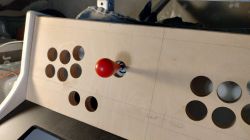
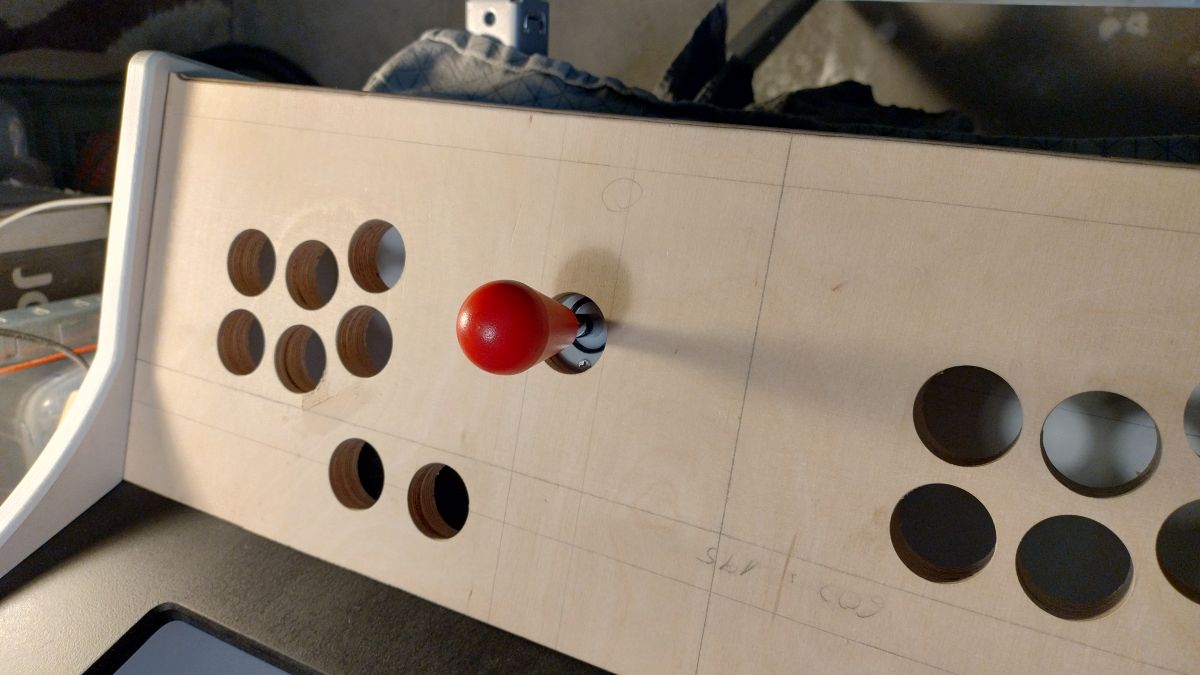
Arcade game control panel with a wooden frame and a red joystick knob .
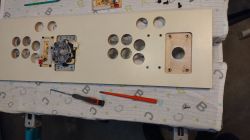
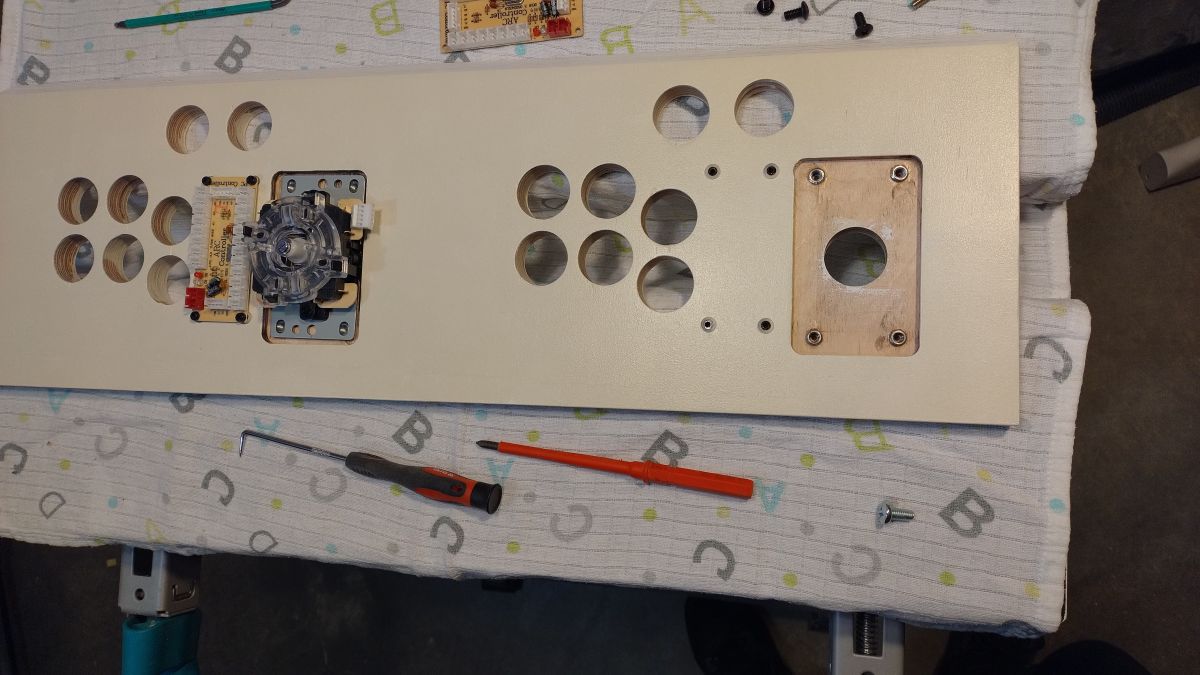
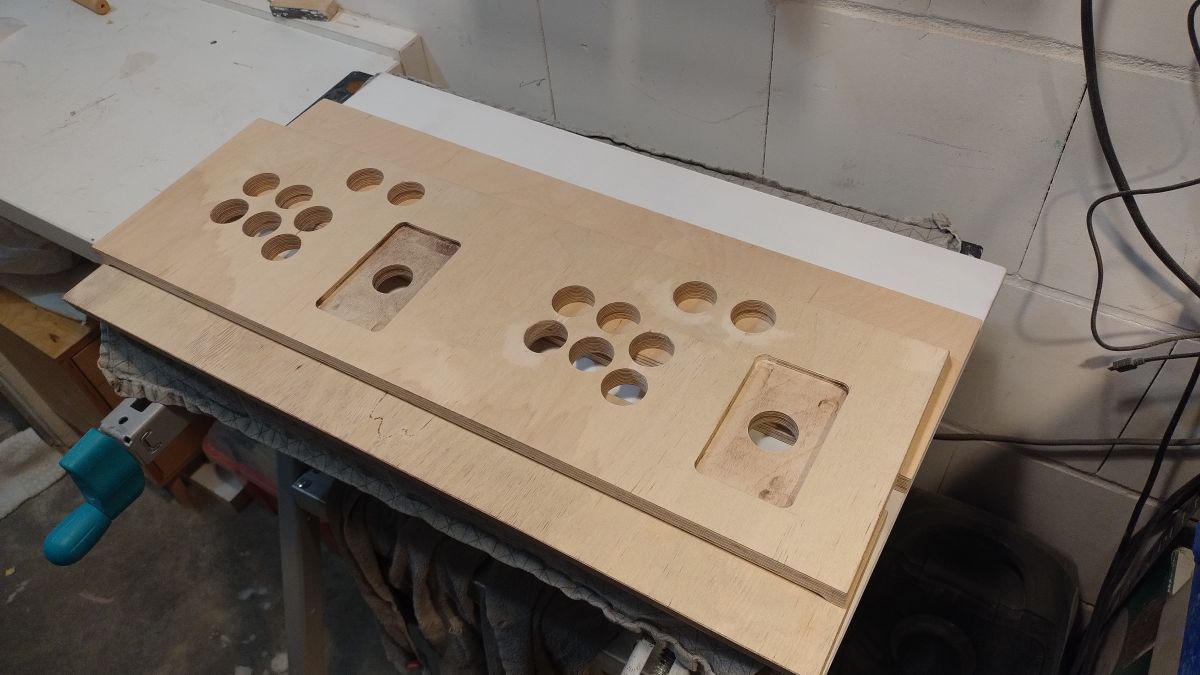
Front panel of a bartop arcade game machine under construction, with holes for buttons and a joystick. .
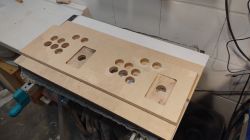
Plywood front panel of arcade machine with button holes. .
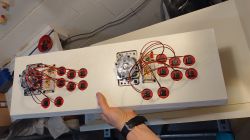
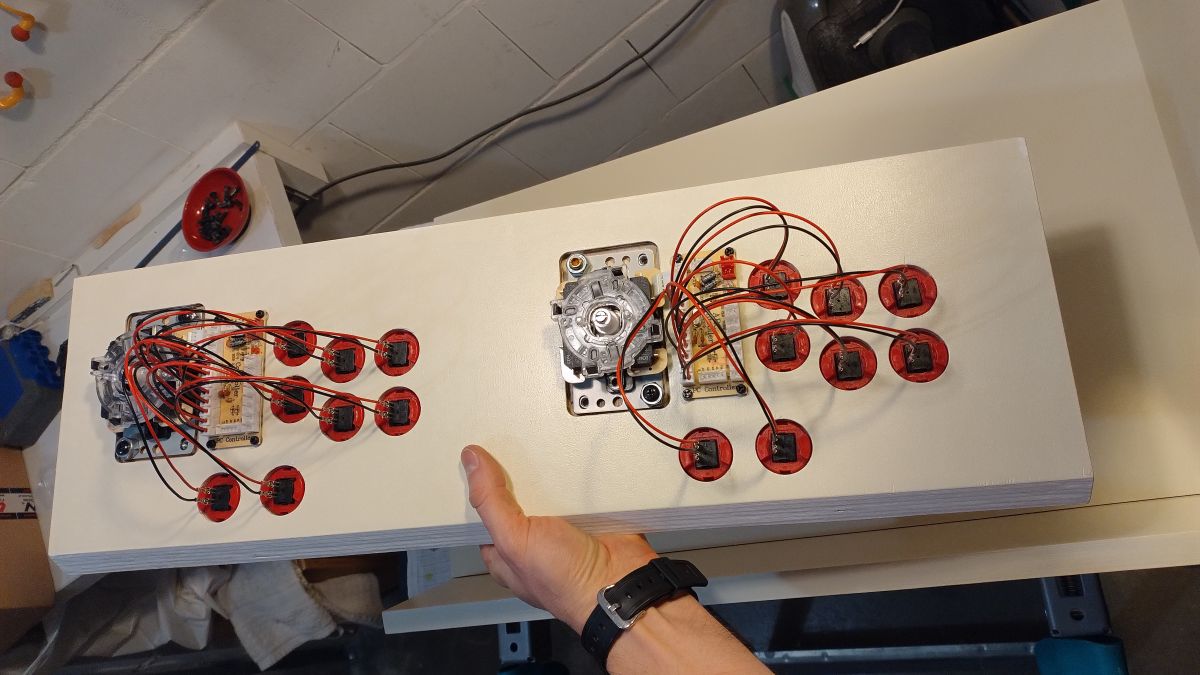
A hand holding a game machine control panel with installed buttons. .
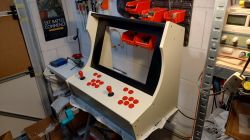
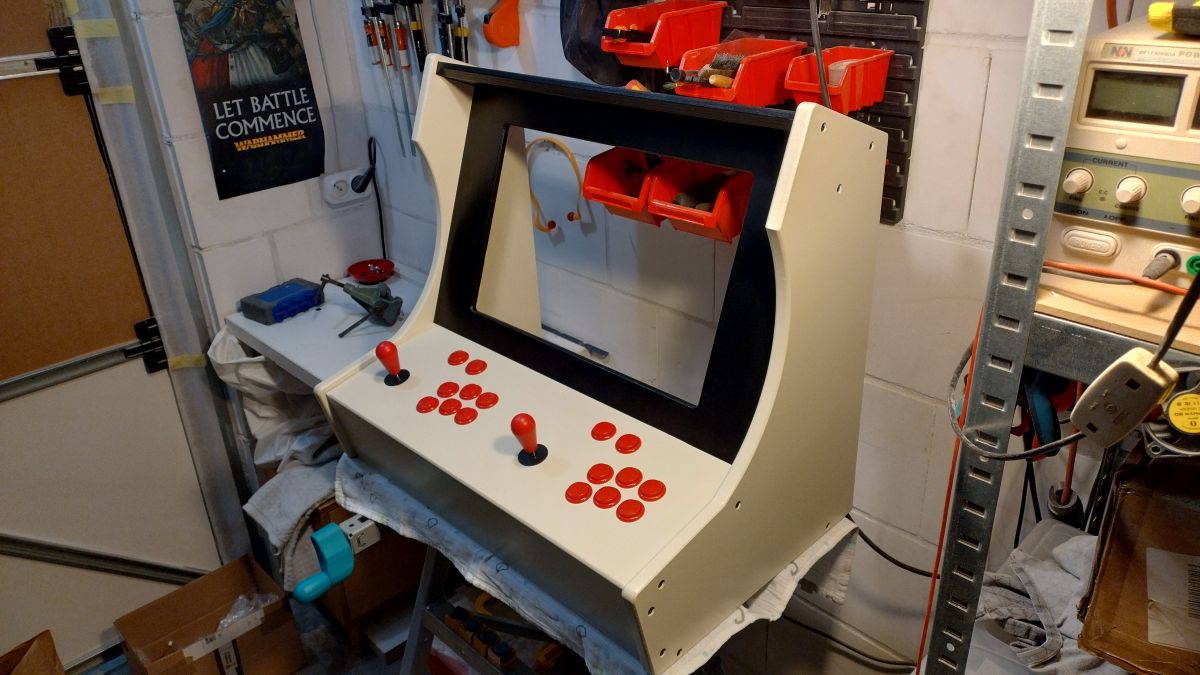
Homemade bartop arcade machine with red buttons and joysticks on a white background. .
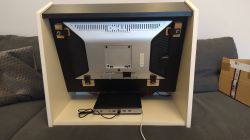
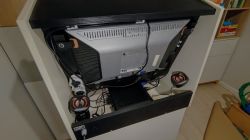
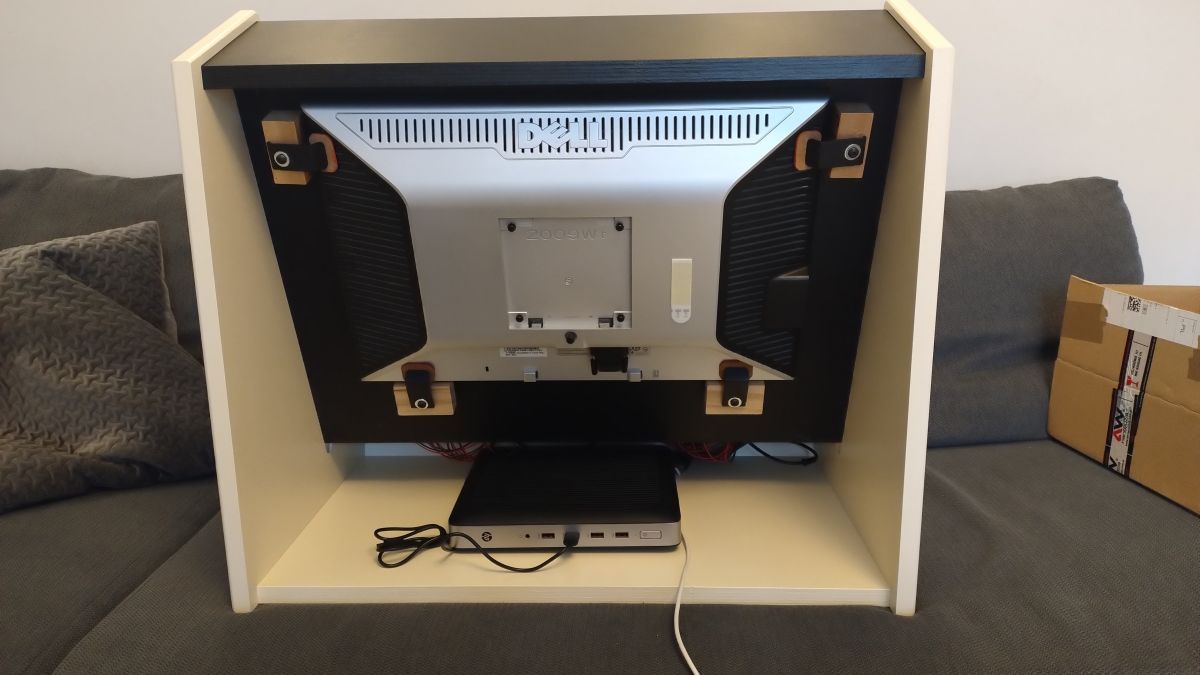
Back of a monitor mounted in a homemade arcade game cabinet. .
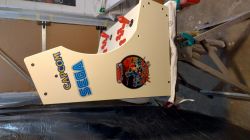
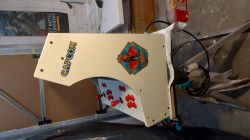
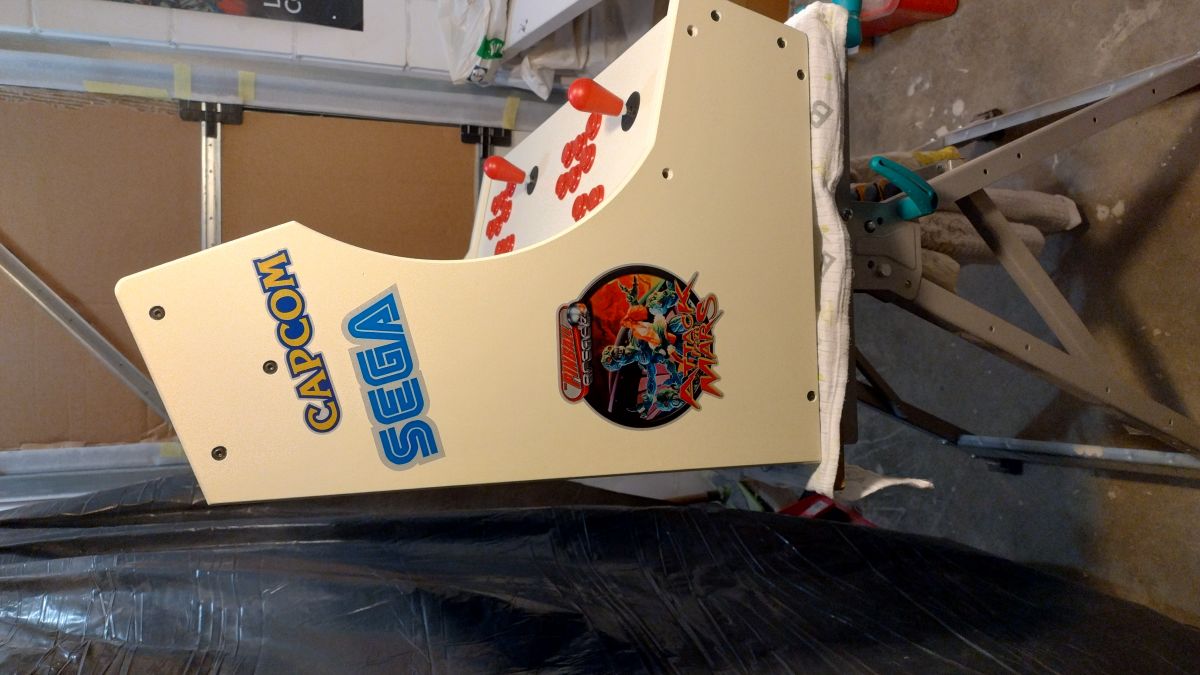
Wooden Bartop arcade game cabinet with Capcom, Sega, and Attack Mars stickers in progress. .
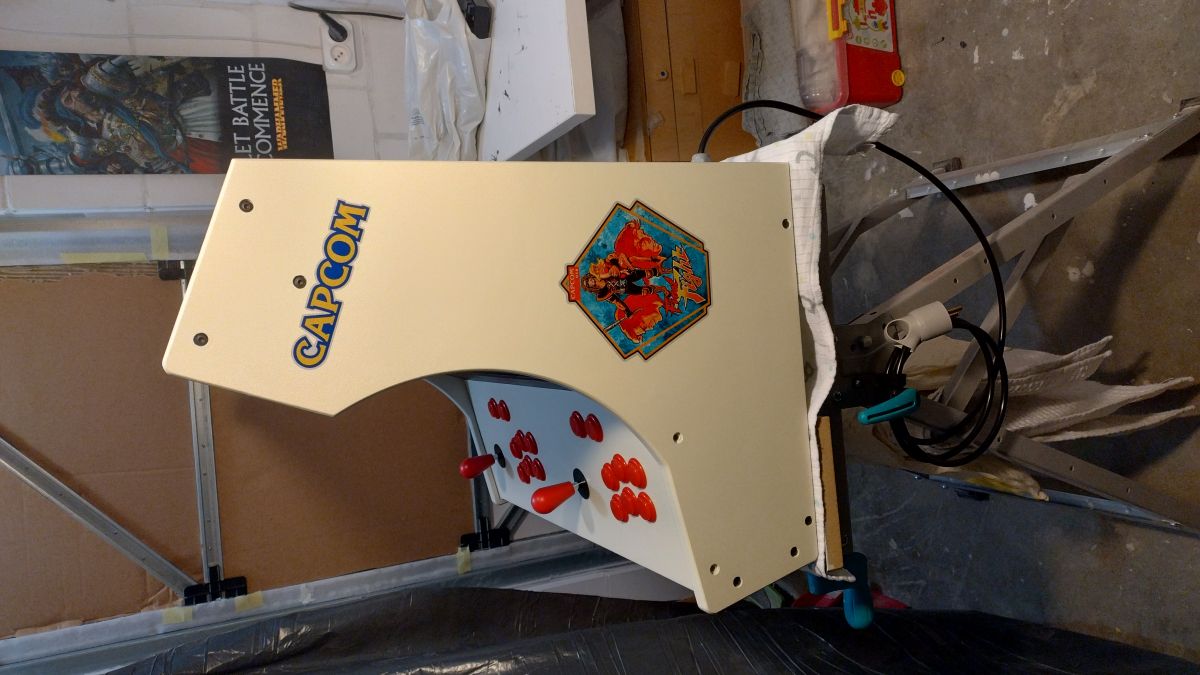
Bartop arcade cabinet with Capcom logo, stickers, and red buttons. .

Back of a Bartop arcade machine showing the monitor and speakers. .

Currently I have no way to push myself to the hardware and play quietly, it is occupied by the other household members. I spent about a month on the project, in the evenings for about 3 h/5 days a week. It was a lot of fun and also taught me a lot.

Greetings, Yonada resident ;-) .

About Author
siewnik
siewnik wrote 206 posts with rating 122 . Live in city Piła. Been with us since 2005 year.

Comments

gulson 08 Feb 2025 21:51

Super! A dream! They already sell off-the-shelf solutions and retro controllers on aliexpress, but in my opinion they are of questionable quality. I see you used an HP terminal ? How does it work for... [Read more]

siewnik 08 Feb 2025 22:14

. - I bought the controllers as a set in which there was a set of buttons, joystick and module with USB. Plugging the whole thing in sees it as a normal gamepad, such a plug and play. https://pl.aliexpress.com/item/1005006881834466.html?spm=a2g0o.order_list.order_list_main.59.421f1c24wFiI4h&gatewayAdapt=glo2pol -... [Read more]

misiek1111 08 Feb 2025 22:35

Nice, but you won't fire up Centipede or Tempest - no trackball or shift encoder. [Read more]

siewnik 08 Feb 2025 22:38

. I'm not that much of a retro fan. I grew up on the Amiga 500 and C64 plus arcade brawlers and this hardware satisfies that 100% [Read more]

Daro1003 09 Feb 2025 09:27

Can you write something more about the Batocera software? What is it like - do you install it on a terminal like Windows or Linux? Does it run on any system already? I have a spare terminal and monitor... [Read more]

efi222 09 Feb 2025 10:02

Beautiful work. Graffiti on the panel hand-painted, or a kind of sticker? [Read more]

siewnik 09 Feb 2025 10:08

. Batocera is a "front end" system based on Linux. It can be installed directly on the hard disk or run from a flash drive (without interfering with the system you already have on your PC. There are plenty... [Read more]

William Bonawentura 09 Feb 2025 12:21

You cut out such a fiddly format for mounting the monitor. Didn't you think about using the VESA holes? [Read more]

siewnik 09 Feb 2025 13:28

Yes, I thought about it, but in the end I made a mount for the monitor bezel to avoid drilling holes in the side walls, just because I had the most work to do with them and didn't want to cripple it :-)... [Read more]

skywalker2 09 Feb 2025 15:42

Cool project. I have a now vintage DELL FX160, 8GB RAM , 128GB SSD. Will it work, anyone tried anything on a similar HW? Ubuntu won't boot due to a specific SIS graphics chip. [EDIT] It did boot, just... [Read more]

siewnik 09 Feb 2025 20:32

If you have a PlayStation or X-box controller of some kind, that will work too. [Read more]

skywalker2 10 Feb 2025 08:11

I have one from the Xbox 360, I just need to buy a USB receiver. [Read more]

siewnik 10 Feb 2025 09:15

I am still waiting for mine. I ordered on AliExpress: https://pl.aliexpress.com/item/1005007219779803.html?spm=a2g0o.order_list.order_list_main.11.2b2b1c24KUERh2&gatewayAdapt=glo2pol [Read more]

kris8888 10 Feb 2025 11:17

. So you still have to make a hole with a "Drop a coin" sign 😀 . Cool design, I like it, you get a plus from me. I only ever thought of buying myself some damaged automatic, restoring it and putting... [Read more]

siewnik 10 Feb 2025 11:33

. In the process of making one I had this fiendish idea to fit a coin drop. That way I would take away from the youngsters the pocket money they get ;-) . As for restoration it's a rather unprofitable... [Read more]

misiek1111 10 Feb 2025 11:53

. Possibly, however, you have to take into account that: - the body is armoured, - it has transport wheels, - there is a CRT monitor inside, not an LED monitor, - it has a coin slot, - it smells... [Read more]

siewnik 10 Feb 2025 12:03

You're right, everyone appreciates something different about such equipment and there's no arguing with that. I simulate the CRT monitor through SHADERS and it works sensationally :-) , for me it's enough,... [Read more]

skywalker2 10 Feb 2025 13:10

Young people today convenient, which means instead of a coin changer you would have to think about a payment terminal ;-) . I was thinking more of something like the one pictured https://obrazki.elektroda.pl/6711420400_1739189388_thumb.jpg... [Read more]

OPservator 10 Feb 2025 13:32

. Among gamers, wired still dominates - while mice are being abandoned in favour of wireless mice, keyboards are no easy matter, and in order to exploit the advantage of a mechanical keyboard, it has... [Read more]

FAQ

TL;DR: Built from 18 mm plywood, this bartop shows that "plug and play" arcade hardware can still look clean inside and out. It suits DIY builders who want a home arcade without custom electronics: a USB encoder made the controls act like a standard gamepad, and Batocera ran smoothly on an HP t630 with 8 GB RAM for Dreamcast, PSX, and older systems. [#21431010]

Why it matters: This project answers the two hardest bartop questions at once: how to make the cabinet look finished, and how to keep the electronics simple.

Option Hardware noted in the thread Setup path Reported result
HP t630 terminal 8 GB RAM Batocera on disk or USB Dreamcast and PSX ran smoothly
Raspberry Pi Used by many builders Batocera commonly installed on it Good when you do not need high-end systems
Older PC / Dell FX160 Legacy graphics mentioned Use the project image for old computers Confirmed to boot after choosing the old-hardware image

Key insight: The smartest shortcut was not the cabinet shape but the control method: a bundled USB arcade encoder let the whole panel appear as a normal gamepad, removing almost all wiring complexity for a first bartop build.

Quick Facts

  • The cabinet used 18 mm plywood, M5 screws, and repair screws so the body could be disassembled later without destroying the joinery. [#21430836]
  • The build took about 1 month, worked in evenings for roughly 3 h/day, 5 days/week, which is about 60 hours of hands-on time. [#21430836]
  • The finish used 1 white primer coat, then 2 coats of RAL 1013 beige, 2 coats of black, and a final layer of matte varnish for the visible surface. [#21430836]
  • The later update added a rear power switch, Ethernet socket, smooth volume control, and planned ventilation using 1 mm perforated aluminium sheet. [#21798653]

How do you build a bartop arcade cabinet from plywood so it looks neat both inside and outside?

Use a template first, then test ergonomics with a cardboard mock-up before cutting the final wood. This build used 18 mm plywood, M5 screws, and repair screws, so the cabinet stayed rigid and still came apart for service. The clean result came from planning the side profiles early and avoiding shortcuts during assembly and finishing. The builder also chose plywood over cheaper sheet goods because he preferred working it accurately and wanted a better final look inside and outside. [#21430836]

What is Batocera, and how is it installed on a terminal or PC from a hard drive or USB flash drive?

"Batocera is a front-end system based on Linux that runs emulators through a game-focused interface, and its key trait is that it can boot directly from a hard drive or from a USB flash drive without altering the existing PC system." You install it either to the disk or to a USB stick, then boot the terminal or PC from that device. The thread describes it as practically plug and play, with tutorials on the Batocera site and YouTube, plus BIOS files needed for some platforms. [#21431382]

How do you connect AliExpress arcade buttons and a joystick to a PC using a USB encoder so they show up as a gamepad?

Buy a kit that includes the buttons, joystick, and USB encoder, then plug the encoder into the PC. In this project, the complete AliExpress set appeared as a normal gamepad with no custom driver work. 1. Connect each button and joystick switch to the included encoder. 2. Plug the encoder into a USB port. 3. Verify that Windows or Batocera detects it as a controller. That made the control panel effectively plug and play. [#21431010]

What kind of performance can an HP t630 thin client with 8 GB RAM deliver in Batocera for Dreamcast, PSX, and older arcade systems?

An HP t630 with 8 GB RAM can handle Dreamcast, PSX, and older systems smoothly in this use case. The builder explicitly reported smooth play on Dreamcast and PSX, while older systems ran as expected without issues. That makes the t630 a practical low-cost bartop platform when your target library stops well below PS3-class emulation. For a two-player cabinet focused on 1990s and early-2000s games, the reported performance was already sufficient. [#21431010]

HP t630 terminal vs Raspberry Pi for a bartop arcade machine — which is better for emulation performance and ease of setup?

The HP t630 looked better for easy Dreamcast and PSX performance, while Raspberry Pi was presented as the lower-power baseline. The thread gives one hard result: the HP t630 with 8 GB RAM ran Dreamcast and PSX smoothly. It also states that Batocera is commonly installed on Raspberry Pi, which means setup is well supported, but stronger hardware matters once you want more demanding systems. If you already have a thin client, it offers a simple path with confirmed results. [#21431382]

Why would someone mount a monitor by its bezel instead of using the VESA holes in a bartop cabinet?

Mounting by the bezel can preserve the cabinet sides and reduce visible drilling. The builder chose a bezel-style support specifically to avoid making holes in the side walls, because those panels had taken the most work and he did not want to damage them. He also felt this method required less effort than a VESA-based solution in his particular layout. That choice prioritized finish quality over using the monitor's standard rear mounting points. [#21431738]

What materials work best for a DIY arcade cabinet: plywood vs MDF vs furniture board?

Plywood worked best here because it balanced strength, finish quality, and the builder's preferred working method. He said he could have used MDF or ordinary furniture board, but chose the more expensive plywood because he did not like working with those materials. The finished cabinet used 18 mm plywood and achieved a cleaner, more durable result than the low-quality ready-made units discussed in the thread. If workmanship matters more than minimum cost, plywood was the clear choice in this build. [#21433204]

How do you paint and finish a bartop arcade cabinet with acrylic primer, RAL 1013 beige, black paint, and matte varnish?

Paint it in layers, not in one pass. This cabinet used matte acrylic paints: white as a primer, then two coats of RAL 1013 beige, then two coats of black, and finally a matte varnish layer. The builder called painting his least favorite stage, but also one of the most important because it determines the final finish. That sequence helped turn a plywood shell into a cabinet that looked intentionally styled rather than workshop-rough. [#21430836]

What is a VESA mount, and how does it help when installing a monitor in a custom arcade enclosure?

"VESA mount is a monitor mounting standard that uses threaded holes on the back of the display, letting you attach the screen to brackets or a frame in a repeatable, centered way inside custom furniture or enclosures." In a bartop cabinet, it can simplify alignment and support because the monitor hangs from its own factory mounting points. The thread raised VESA as an alternative, but the builder rejected it to avoid drilling the cabinet sides. [#21431617]

What are CRT shaders in Batocera, and how do they recreate the look of an old arcade monitor on an LCD screen?

"CRT shaders are display effects that simulate an old cathode-ray-tube monitor, and their key characteristic is that they alter the LCD image to mimic vintage scanlines, softness, and arcade-style screen character." The builder used CRT shaders instead of fitting a real CRT, and said the effect worked sensationally for his nostalgia target. That gave him the visual feel of older hardware without needing a heavy original monitor, transport wheels, or a full restoration path. [#21433242]

Which controllers work best with Batocera for a home arcade build, including USB arcade encoders, Xbox 360 pads, and PlayStation controllers?

USB arcade encoders are the easiest fixed-control option, while Xbox and PlayStation pads are practical alternatives. The thread confirms three working routes: an AliExpress joystick-and-button kit with USB encoder, a PlayStation controller, and an Xbox controller with USB receiver. The USB encoder has the cleanest setup because the system sees it as a normal gamepad. If you want a cabinet panel, choose the encoder kit; if you want quick testing, use an existing console pad first. [#21432477]

How do you get Batocera running on older hardware like a Dell FX160 with legacy graphics that struggle with Ubuntu?

Use the Batocera image intended for older computers rather than assuming the default image will boot. In the thread, a Dell FX160 with 8 GB RAM and 128 GB SSD initially seemed blocked by its SiS graphics, because Ubuntu would not boot. The user then reported success after downloading the image for old computers from the bottom of the project page. That is the key edge case: older graphics can fail on one image and work on another. [#21431960]

What extra controls would you need for games like Centipede or Tempest that use a trackball or spinner instead of a standard joystick?

You would need a trackball or a spinner, not just a standard joystick and buttons. One reply pointed out that games like Centipede or Tempest would not play correctly on this cabinet because it lacked a trackball and a shift encoder, meaning the control panel did not match those arcade input types. That is a hard compatibility limit, not a tuning issue. A standard bartop panel suits brawlers and console-style games better than every classic arcade title. [#21431040]

What practical upgrades are worth adding after the cabinet is finished, like a rear power switch, Ethernet port, volume control, and ventilation grille?

The most useful upgrades are service and comfort features on the back panel. In the January 4, 2026 update, the builder added a rear switch for starting the computer, an Ethernet connector, and smooth volume control. He also planned a ventilation grille made from 1 mm perforated aluminium sheet. Those changes matter because they improve day-to-day use without reopening the entire cabinet. They also make a shared family machine easier to manage over time. [#21798653]

How do you stay safe when routing and milling plywood parts for an arcade cabinet, especially when changing cutters and avoiding accidental startup?

Always unplug the router before touching the cutter. The builder described accidentally pressing the switch while changing a cutter with the tool switched off but still plugged in, and said he almost lost a finger. After that, he changed his routine and now disconnects power every time. Another user suggested tying the spindle key to the plug with a wire so you cannot forget to unplug it. That simple habit directly addresses the accidental-start hazard. [#21453247]
Generated by the language model.
%}