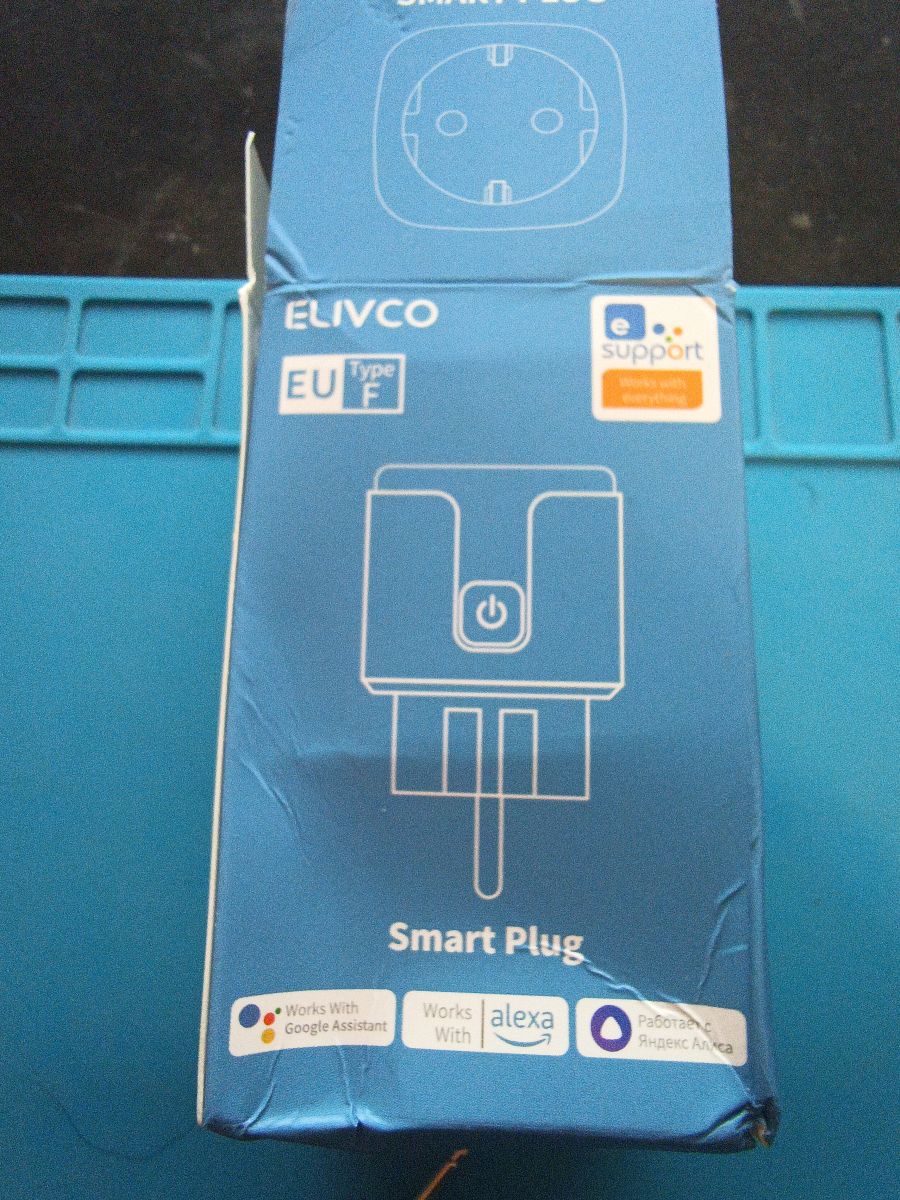
The ELVICO ELC-SP02 is a Zigbee eWelink smart plug built around an EWL-ZBS02-LG_V2 module with a BL702C10 chip and BL0937 metering.
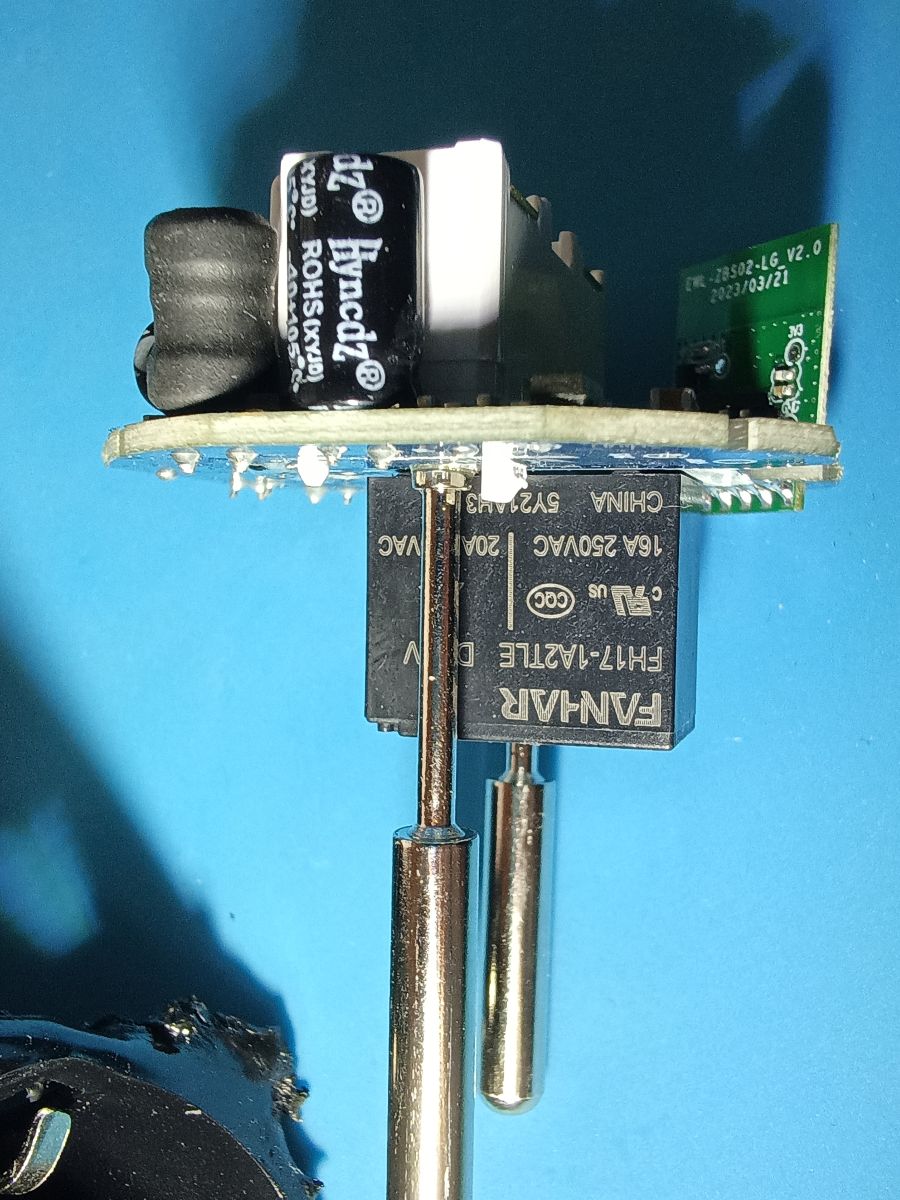
Inside, a BP2525 generates 5 V, an AMS1117 makes 3.3 V, and a FANHAR FH17-1A2TLE relay switches the load through a MOSFET.
GPIO27 handles the button, GPIO8 drives LED 1, GPIO2 and GPIO1 read BL0937 CF and CF1, and GPIO14 controls the relay.
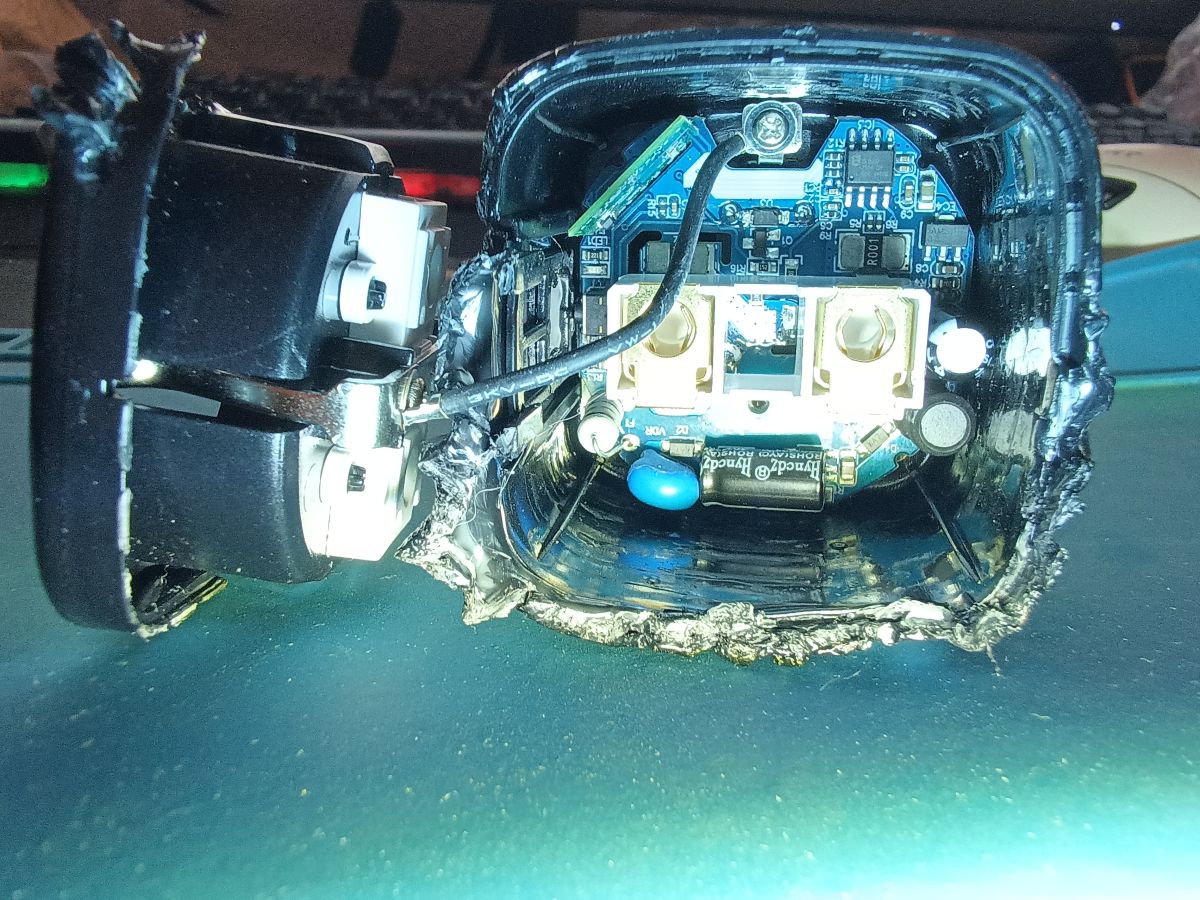
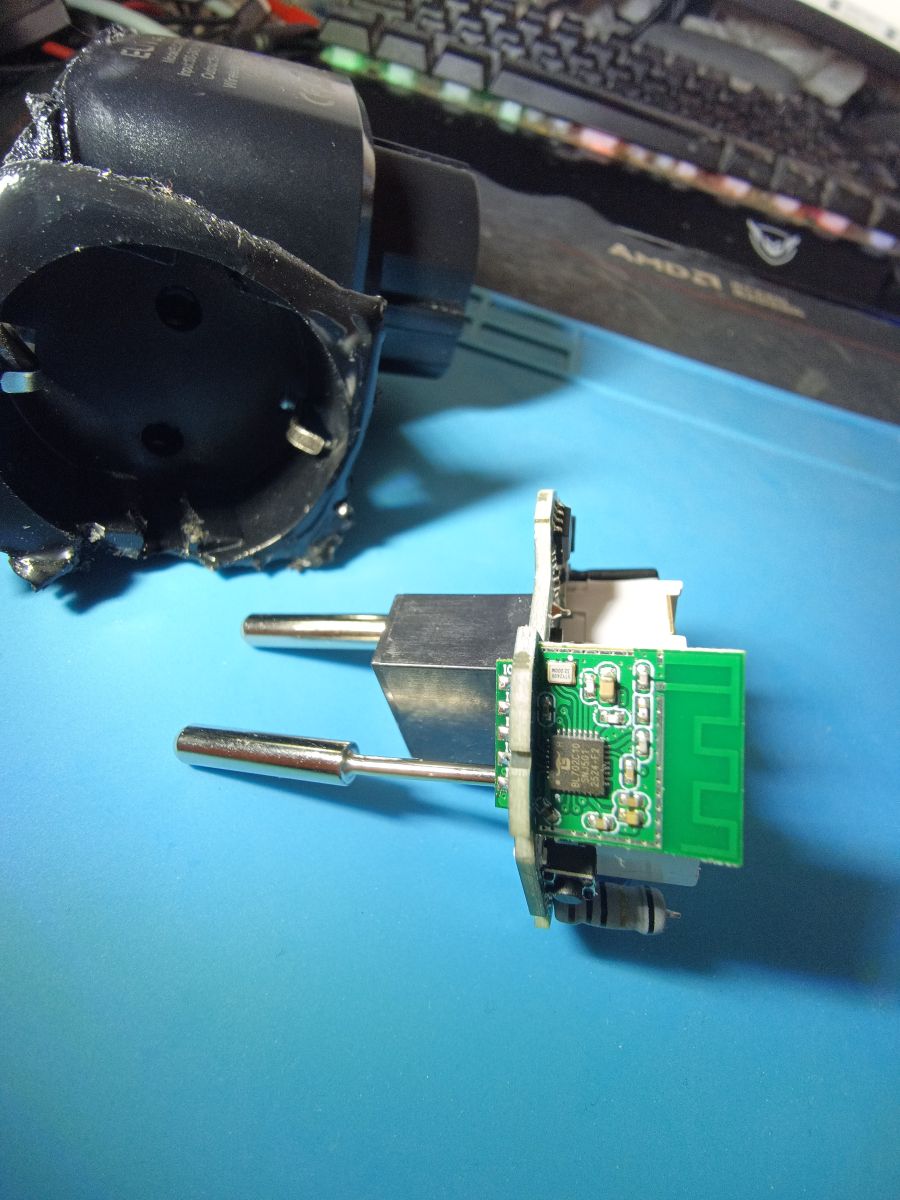
The thick plastic case is heat-closed by edge tabs and very hard to open, but the board removes easily after one screw.
AI summary based on the discussion. May contain errors.
Here is a teardown of an 'ELVICO Smart Plug'. It is intended for Zigbee using the eWelink platform. I have been hunting for bouffalolab-based devices, as my project has been porting those chips to Zephyr RTOS for a few years, and we just got BLE working, enabling usages similar to OpenBeken or Tasmota.
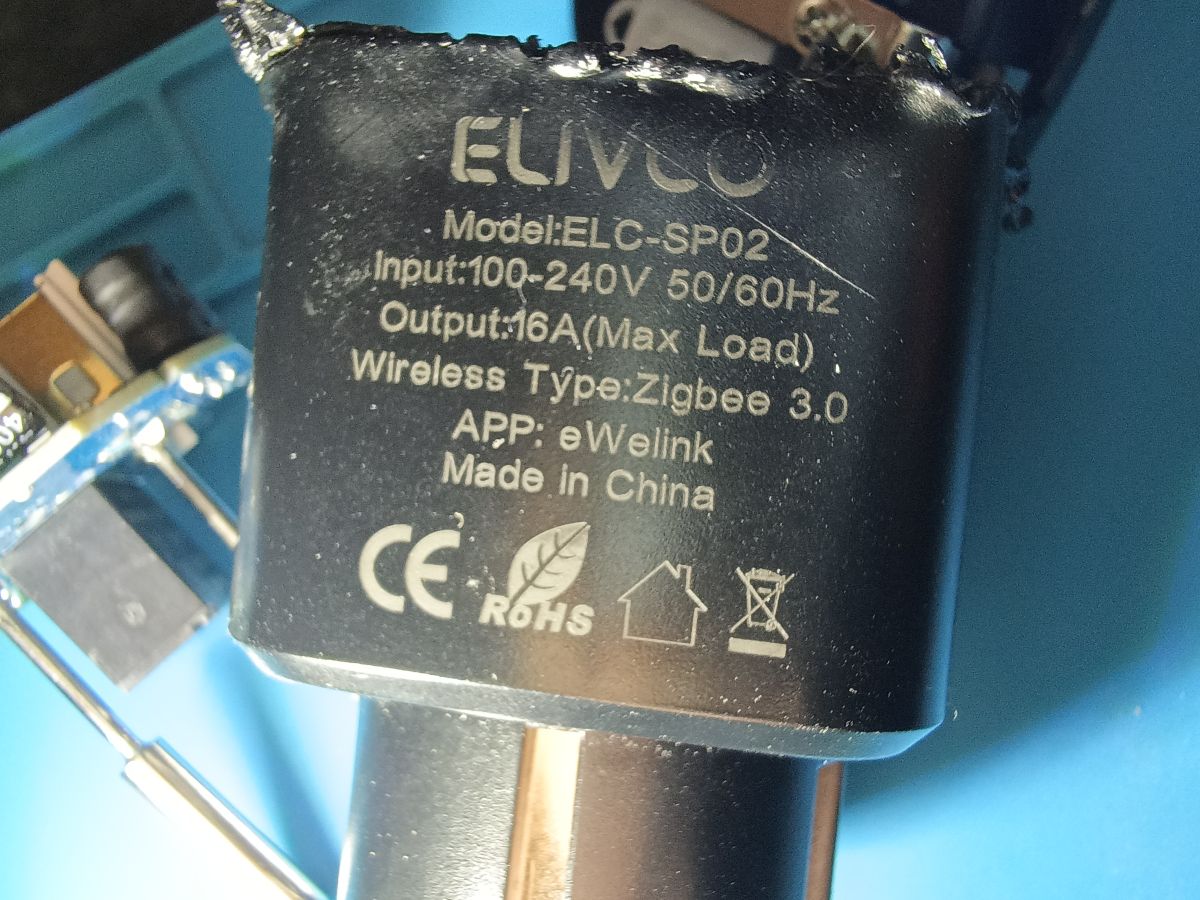
The marking on the outside is 'ELC-SP02'. The case is thick plastic and heat-closed by tabs on the edges, and very hard to open. The board inside is held by a single screw, then easily pulls out.
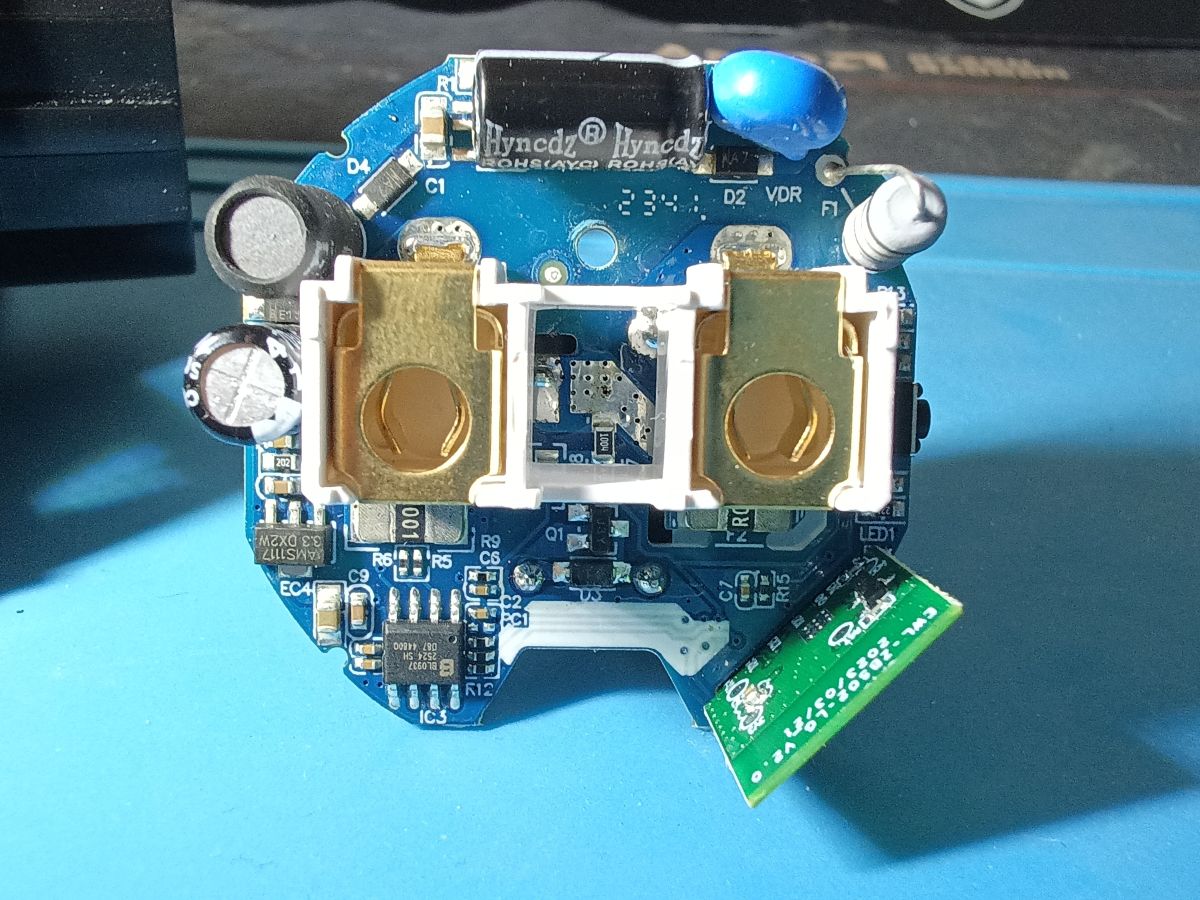
The design is as such:
Ground is passed through from front to back.
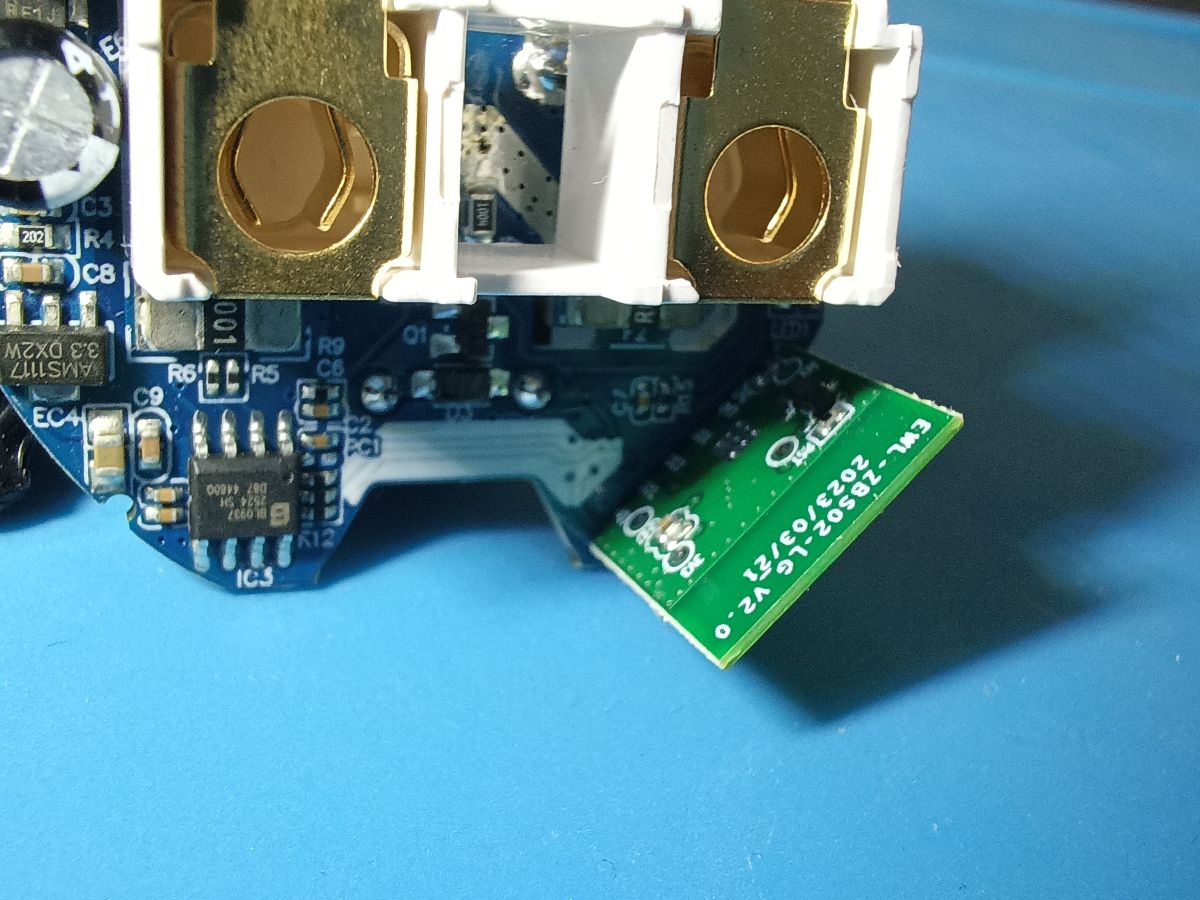
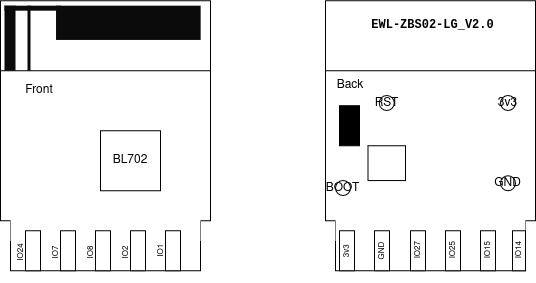
Zigbee is provided by a BL702C10 chip with date markings of 2025, mounted on an EWL-ZBS02-LG_V2 module marked 2023 (??). This is a 1 megabyte flash version, and the module provides its 32 MHz crystal but not much else.
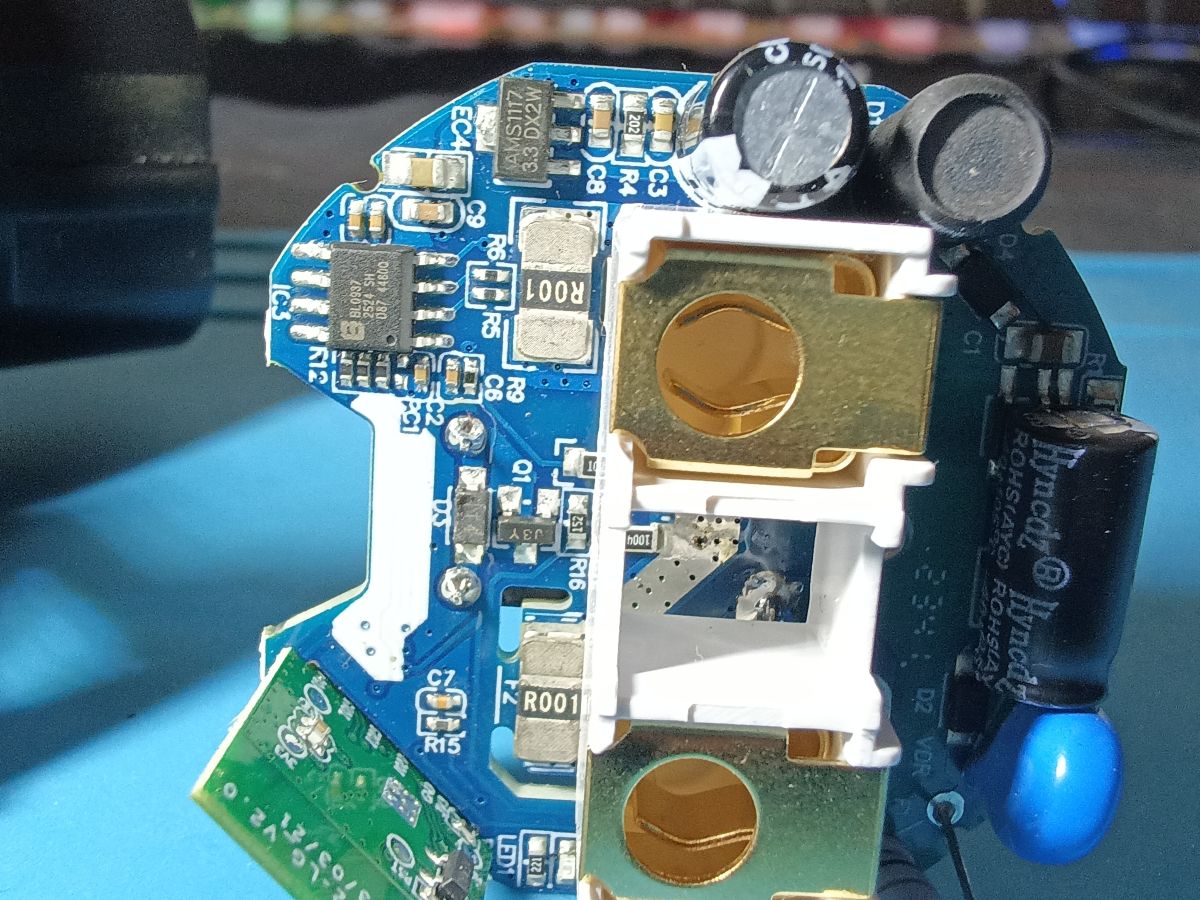
The energy metering chip is BL0937, there are 2 LEDs available to control, and a button.
5 V power is provided by a BP2525 chip, and 3.3 V power is provided by an AMS1117 LDO.
The switching capacity is provided by a 'FANHAR' FH17-1A2TLE 5 V relay.
The button is connected to GPIO27, LED 1 is connected to GPIO8, LED 2 is also connected to GPIO27 via a 10 kΩ resistor.
BL0937 CF, CF1 and SEL go to the chip via 1 kΩ resistors. CF goes to GPIO2, CF1 goes to GPIO1, SEL goes to GPIO15.
The relay is driven by GPIO14 -> 1.5 kΩ -> mosfet.
These modules are cool, but I noticed an interesting issue that is not present here.
A socket marked as 20A failed after a few weeks with a load of around 15A. The relay was damaged and melted. Fortunately... [Read more]
Vdragonb
20 Mar 2026 16:58
This one does look to have it rated effictively 16A as advertised, and generally feels good quality (thick plastic, thick board, protection and good assembly), however it was not very cheap... [Read more]
p.kaczmarek2
15 Apr 2026 22:49
Interesting, can you write a bit more about your project? [Read more]
Vdragonb
16 Apr 2026 09:44
All the informations are gathered there and in the zephyr documentation: https://github.com/zephyrproject-rtos/zephyr/issues/83663
For now there is no low power control for bouffalolab, so it's not... [Read more]
insmod
16 Apr 2026 09:54
Isn't BTHome advertisement-only protocol?
A user wouldn't be able to switch relay.
Boot2 is open-source, you might be able to adapt it, instead of porting mcuboot.
https://github.com/bouffalolab/bouffalo_sdk/tree/master/examples/boot2_isp
And... [Read more]
Vdragonb
16 Apr 2026 10:26
Yes, BTHome is advertisement only, but it's also very simple.
Boot2 is not flexible enough (can't do 2 stage ram bootloading needed for swapping flash on bl60x with internal flash for example), and... [Read more]
FAQ
TL;DR: With 1 MB flash and a 5 V relay, this teardown shows a Zigbee plug built around BL702C10; as the author notes, "feels good quality". It helps Zigbee tinkerers, reverse engineers, and firmware porters verify GPIOs, power rails, and realistic current claims before reuse or heavy-load deployment. [#21866321]
Dlaczego to ma znaczenie: This FAQ turns a raw teardown into a fast reference for identifying chips, tracing GPIOs, checking relay credibility, and judging whether the hardware suits Zigbee, BLE, or custom firmware work.
Wariant
Oznaczenie prądowe
Zaobserwowana jakość / wynik
Kluczowy szczegół
ELVICO ELC-SP02
16A reklamowane
Dobra jakość wykonania, gruby plastik i płytka
Przekaźnik FH17-1A2TLE 5 V
Tańsze gniazdo porównawcze
20A na obudowie
Awaria po kilku tygodniach przy ok. 15A
Oznaczenie przekaźnika wskazywało realnie 10A
Najważniejszy wniosek: Printed current ratings alone are not enough. In this thread, the safer signal is the full hardware stack: relay marking, board thickness, assembly quality, and whether the internal parts match the advertised load class.
Quick Facts
Zigbee control uses a BL702C10 on an EWL-ZBS02-LG_V2 module, and the observed version has 1 MB flash plus a 32 MHz crystal. [#21866321]
The power path is split into 5 V from BP2525 and 3.3 V from an AMS1117 LDO, which separates relay supply from logic supply. [#21866321]
Energy metering uses a BL0937; its signal lines route through 1 kΩ resistors, with CF→GPIO2, CF1→GPIO1, and SEL→GPIO15. [#21866321]
User I/O is compact: the button is on GPIO27, LED 1 on GPIO8, and LED 2 shares GPIO27 through a 10 kΩ resistor. [#21866321]
The relay stage uses GPIO14 → 1.5 kΩ → MOSFET → 5 V relay, while a separate forum report describes a different "20A" socket failing near 15A and revealing a relay effectively rated 10A. [#21866321]
How do you open the ELVICO ELC-SP02 Zigbee smart plug without damaging the thick plastic case or the board inside?
Open it by releasing the edge tabs carefully, because the case is thick plastic and heat-closed. 1. Work around the perimeter instead of forcing one side. 2. Separate the shell slowly until the tabs release. 3. Remove the single board screw, then pull the PCB straight out. The author states the enclosure is “very hard to open,” but the board comes out easily after that one screw is removed. [#21866321]
What chips and modules are used inside the ELVICO ELC-SP02, and what does each one do?
The plug uses BL702C10 for Zigbee, BL0937 for energy metering, BP2525 for 5 V power, AMS1117 for 3.3 V regulation, and an FH17-1A2TLE 5 V relay for load switching. The BL702C10 sits on an EWL-ZBS02-LG_V2 module. That gives you radio control, metering, two DC rails, and relay switching in one compact board. [#21866321]
What is the BouffaloLab BL702C10, and why is it interesting for Zigbee and BLE projects?
“BL702C10” is a wireless SoC that provides Zigbee control, and in this thread it is notable because the project already ported these chips to Zephyr RTOS and recently got BLE working. That makes the ELC-SP02 interesting for reuse in Zephyr, OpenBeken, or Tasmota-style experiments. The specific device shown uses a 2025-marked BL702C10 on a module with 1 MB flash. [#21866321]
What is the BL0937 energy metering chip, and how are its CF, CF1, and SEL pins typically connected?
“BL0937” is an energy-metering chip that outputs measurement signals for power-monitoring functions, with separate CF, CF1, and SEL pins used for interfacing to a controller. In this plug, all three lines go to the BL702C10 through 1 kΩ resistors. CF goes to GPIO2, CF1 goes to GPIO1, and SEL goes to GPIO15. [#21866321]
How is the GPIO mapping laid out on the ELC-SP02 for the button, LEDs, relay, and BL0937 signals?
The GPIO map is explicit. The button uses GPIO27, LED 1 uses GPIO8, and LED 2 also ties to GPIO27 through a 10 kΩ resistor. The relay drive starts at GPIO14. The BL0937 lines map as CF→GPIO2, CF1→GPIO1, and SEL→GPIO15, each through a 1 kΩ resistor. [#21866321]
Why is LED 2 on the ELVICO ELC-SP02 connected to GPIO27 through a 10 kΩ resistor along with the button?
LED 2 shares GPIO27 with the button through a 10 kΩ resistor, so the design multiplexes one control/input line instead of using a separate GPIO. The thread gives the wiring, not the firmware logic. Practically, that means GPIO27 is not dedicated only to button sensing, because one LED also hangs on that node through a resistor. [#21866321]
What power supply design does the ELC-SP02 use with the BP2525 and AMS1117, and how does it generate 5 V and 3.3 V rails?
It uses a two-stage supply. The BP2525 generates 5 V, and the AMS1117 LDO derives 3.3 V for the low-voltage logic. That split fits the board layout described in the teardown: the relay runs from 5 V, while the BL702C10 and support logic use 3.3 V. [#21866321]
How is the relay driven on the ELC-SP02, starting from BL702C10 GPIO14 through the 1.5 kΩ resistor and MOSFET stage?
The BL702C10 drives the relay indirectly. GPIO14 feeds a 1.5 kΩ resistor, that resistor drives a MOSFET stage, and the MOSFET switches the 5 V relay coil. This arrangement keeps the controller from driving the relay coil directly and matches the FH17-1A2TLE 5 V relay used on the board. [#21866321]
What does the EWL-ZBS02-LG_V2 module provide in this smart plug besides the BL702C10 itself and the 32 MHz crystal?
It provides very little beyond the BL702C10 and its 32 MHz crystal. The author explicitly notes that the module supplies the crystal “but not much else.” The observed module is marked EWL-ZBS02-LG_V2, while the BL702C10 on it carries date markings from 2025 and the module marking shows 2023. [#21866321]
How does the ELVICO ELC-SP02 compare with cheaper smart plugs in build quality, safety, and realistic current handling?
The ELC-SP02 comes across as better built than cheaper plugs discussed in the thread. It has thick plastic, a thick board, protection, and good assembly, and the author says it feels like a realistic 16A design. By contrast, another socket marked 20A failed after a few weeks at around 15A. [#21866779]
Why do some smart plugs advertised as 20A fail around 15A, and how can the relay part number reveal the true rating?
They can fail because the internal relay may not match the printed claim. In the thread, a socket marked 20A melted after a few weeks near 15A load, and the preserved relay marking traced back to a real rating of only 10A. Checking the relay part number gives a harder limit than the label on the housing. [#21866573]
What should you check in a smart plug teardown to verify whether a claimed 16A or 20A rating is believable?
Check the relay marking first, then inspect board thickness, assembly quality, protection features, and overall build. In this thread, those cues support the ELC-SP02’s advertised 16A more than the failed 20A example. A plug that melts around 15A despite a 20A label is a clear edge case showing why internal parts matter more than exterior printing. [#21866779]
How could the BL702C10 in the ELC-SP02 be reused with Zephyr RTOS, OpenBeken, or Tasmota-style projects?
It could be reused as a BouffaloLab-based target for custom firmware work. The author says their project has been porting these chips to Zephyr RTOS for a few years and “just got BLE working,” enabling uses similar to OpenBeken or Tasmota. The teardown also gives the GPIO map, which is the practical starting point for any port. [#21866321]
What is eWeLink in the context of Zigbee smart plugs, and how does it relate to the hardware inside the ELC-SP02?
“eWeLink” is a smart-home platform that the plug is intended to use, while the actual board hardware is a separate stack of Zigbee, metering, power, and relay components. In this device, eWeLink is the ecosystem target, and the hardware behind it is BL702C10 plus BL0937, BP2525, AMS1117, and a 5 V relay. [#21866321]
Where can you identify the relay, module, and metering chip markings on the ELVICO ELC-SP02 board when doing a teardown?
You can identify them directly on the PCB after removing the board from the case. Look for the BL702C10 mounted on the EWL-ZBS02-LG_V2 module, the BL0937 metering chip, and the relay marked FANHAR FH17-1A2TLE 5 V. The thread also includes multiple board photos and a module diagram to help match those markings visually. [#21866321]
AI summary based on the discussion. May contain errors.







Comments
These modules are cool, but I noticed an interesting issue that is not present here. A socket marked as 20A failed after a few weeks with a load of around 15A. The relay was damaged and melted. Fortunately... [Read more]
This one does look to have it rated effictively 16A as advertised, and generally feels good quality (thick plastic, thick board, protection and good assembly), however it was not very cheap... [Read more]
Interesting, can you write a bit more about your project? [Read more]
All the informations are gathered there and in the zephyr documentation: https://github.com/zephyrproject-rtos/zephyr/issues/83663 For now there is no low power control for bouffalolab, so it's not... [Read more]
Isn't BTHome advertisement-only protocol? A user wouldn't be able to switch relay. Boot2 is open-source, you might be able to adapt it, instead of porting mcuboot. https://github.com/bouffalolab/bouffalo_sdk/tree/master/examples/boot2_isp And... [Read more]
Yes, BTHome is advertisement only, but it's also very simple. Boot2 is not flexible enough (can't do 2 stage ram bootloading needed for swapping flash on bl60x with internal flash for example), and... [Read more]